For a distinguished and appropriately documented book on the history of the United States, Fifteen thousand dollars ($15,000).

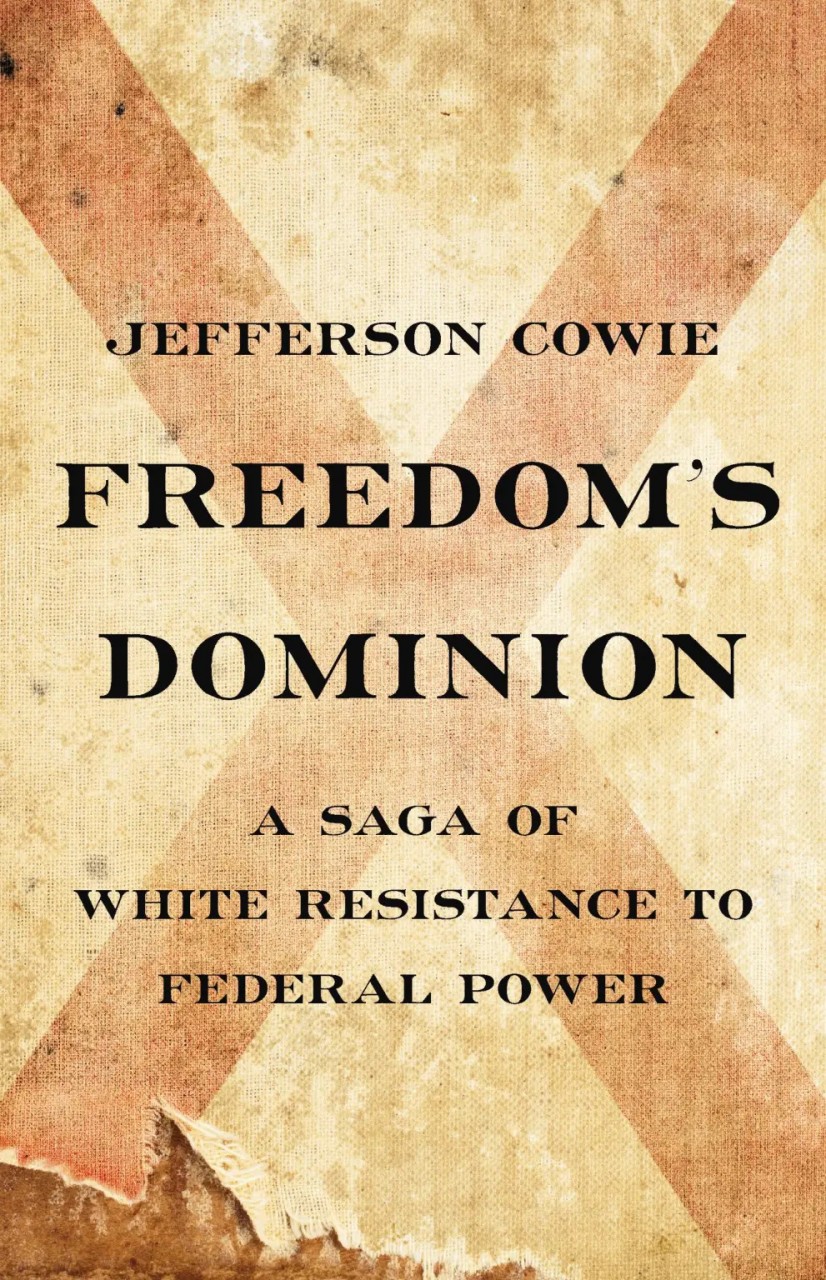
Freedom’s Dominion: A Saga of White Resistance to Federal Power, by Jefferson Cowie (Basic Books)

A resonant account of an Alabama county in the 19th and 20th centuries shaped by settler colonialism and slavery, a portrait that illustrates the evolution of white supremacy by drawing powerful connections between anti-government and racist ideologies.
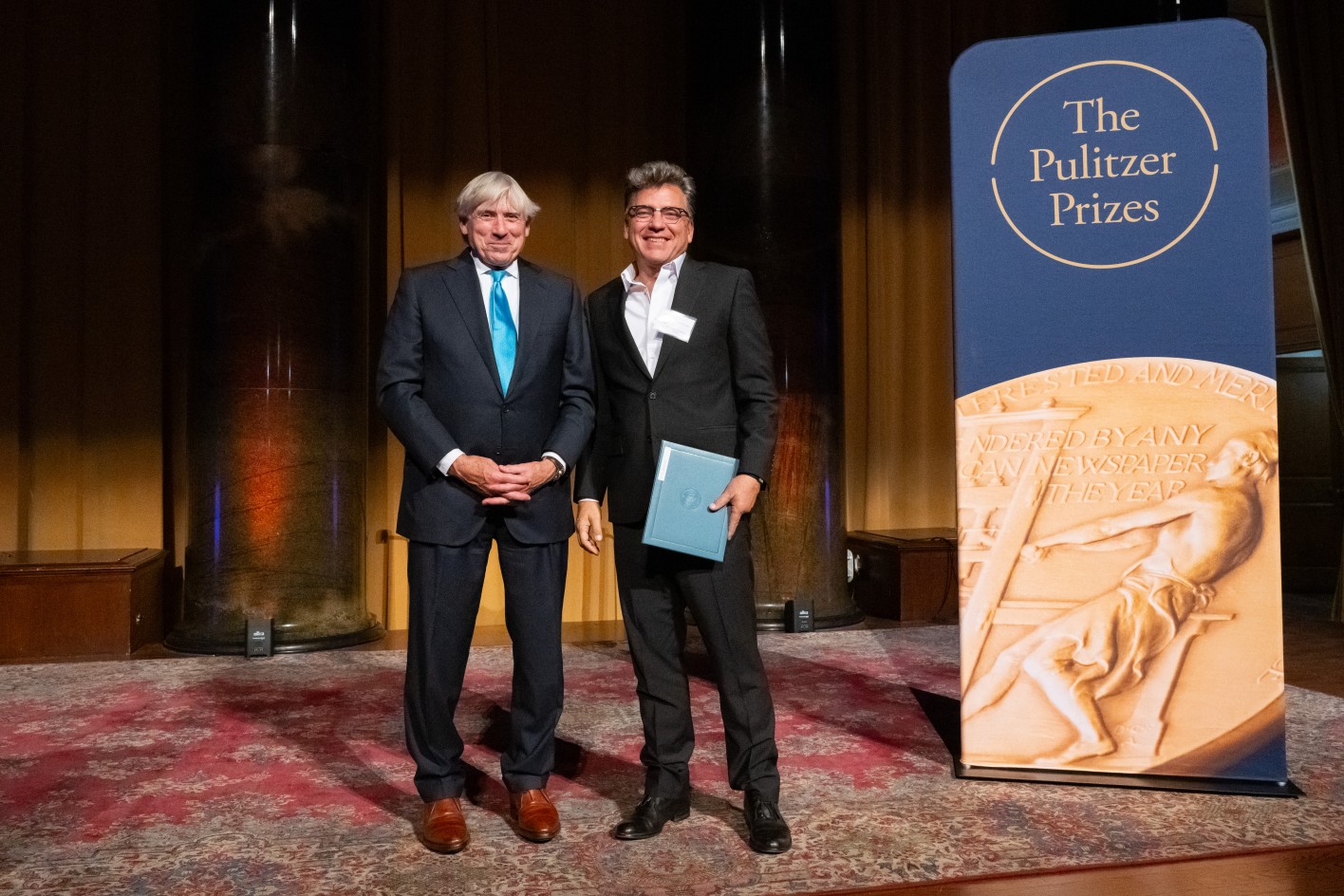
Jefferson Cowie accepts the 2023 Pulitzer Prize for History from Columbia University President Emeritus Lee Bollinger. (Diane Bondareff/The Pulitzer Prizes)

Winning Work

Freedom’s Dominion: A Saga of White Resistance to Federal Power


A prize-winning historian chronicles a sinister idea of freedom: white Americans’ freedom to oppress others and their fight against the government that got in their way.  
 
American freedom is typically associated with the fight of the oppressed for a better world. But for centuries, whenever the federal government intervened on behalf of nonwhite people, many white Americans fought back in the name of freedom—their freedom to dominate others. 
 
In Freedom’s Dominion, historian Jefferson Cowie traces this complex saga by focusing on a quintessentially American place: Barbour County, Alabama, the ancestral home of political firebrand George Wallace. In a land shaped by settler colonialism and chattel slavery, white people weaponized freedom to seize Native lands, champion secession, overthrow Reconstruction, question the New Deal, and fight against the civil rights movement. 
 
A riveting history of the long-running clash between white people and federal authority, this book radically shifts our understanding of what freedom means in America.

Biography

Jefferson Cowie holds the James G. Stahlman chair in history at Vanderbilt University. He is the author of three books, including Stayin’ Alive: The 1970s and the Last Days of the Working Class, and his work has appeared in numerous outlets including Time, the New York Times, Foreign Affairs, and Politico. He lives in Nashville, Tennessee. 

Finalists

Nominated as finalists in History in 2023:

Garrett M. Graff

A comprehensive analysis of the country’s best-known political crime, a finely-crafted synthesis of multiple sources into a comprehensive account that is engaging, humanizing and funny.

Michael John Witgen

A piercing analysis of exploitative colonial arrangements made by the U.S. in the settling of the Old Northwest, and of Native resistance.

The Jury

Thavolia Glymph(Chair)

Professor of History & Law, Duke University

Elizabeth K. Hinton

Associate Professor of History & African American Studies and Professor of Law, Yale University

Jean O’Brien

Professor of History, University of Minnesota

Andrés Reséndez

Professor of History, University of California, Davis

Robert O. Self

Mary Ann Lippitt Professor of American History, Brown University

Winners in History

Ada Ferrer

An original and compelling history, spanning five centuries, of the island that became an obsession for many presidents and policy makers, transforming how we think about the U.S. in Latin America, and Cuba in American society.

Marcia Chatelain

A nuanced account of the complicated role the fast-food industry plays in African-American communities, a portrait of race and capitalism that masterfully illustrates how the fight for civil rights has been intertwined with the fate of Black businesses.

W. Caleb McDaniel

A masterfully researched meditation on reparations based on the remarkable story of a 19th century woman who survived kidnapping and re-enslavement to sue her captor.

David W. Blight

A breathtaking history that demonstrates the scope of Frederick Douglass’ influence through deep research on his writings, his intellectual evolution and his relationships.

2023 Prize Winners

Kyle Whitmire of AL.com, Birmingham

For measured and persuasive columns that document how Alabama's Confederate heritage still colors the present with racism and exclusion, told through tours of its first capital, its mansions and monuments–and through the history that has been omitted.

Staff of The Wall Street Journal

For sharp accountability reporting on financial conflicts of interest among officials at 50 federal agencies, revealing those who bought and sold stocks they regulated and other ethical violations by individuals charged with safeguarding the public’s interest.