The Washington Post, by David Finkel
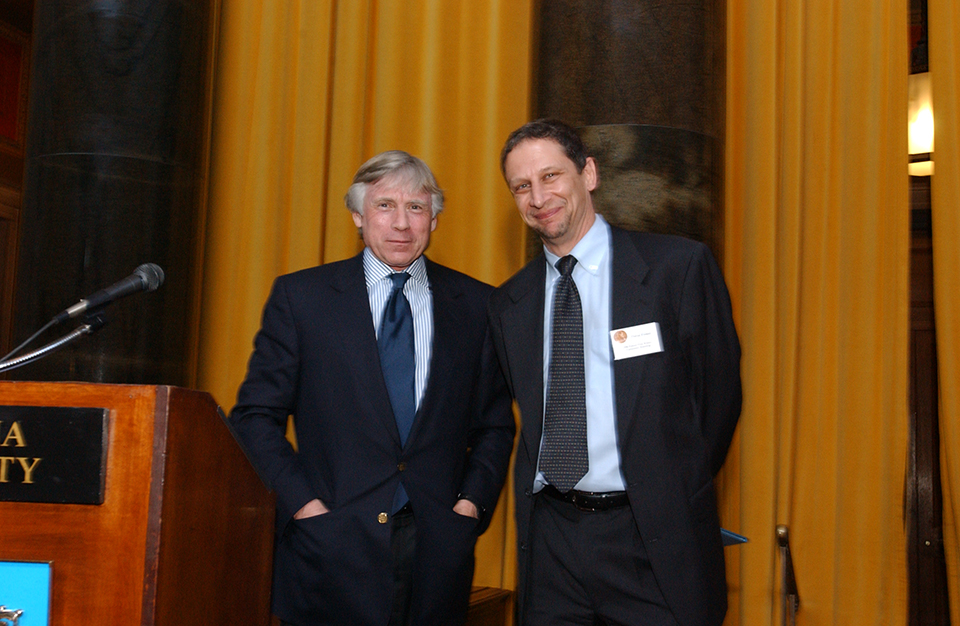
Columbia University President Lee C. Bollinger (left) presents David Finkel with the 2006 Pulitzer Prize in Explanatory Reporting.
Winning Work
EXPORTING DEMOCRACY
A Call From the Sheiks
By David Finkel
She chews gum constantly, likes jazz, likes beer, reads Anthony Trollope and misses pork. She always introduces herself as an American. She believes in democracy and in American efficiency. She likes it when the staplers in the supply room are in a neat line, speaks endlessly about "transparency" and "capacity building," says that "I'm living a life I'm proud of," and every so often, when Yemen gets to her, as it inevitably gets to everyone, including Yemenis, she announces, "I'm going to be quiet for a few minutes" and shuts her office door. And then 10 minutes later opens it and gets back to work.
SANAA, Yemen -- On the first day, which would turn out to be the best day, the one day of all 180 days when everything actually seemed possible, the president of Yemen hadn't yet dismissively referred to an American named Robin Madrid as an old woman.
The president's foreign minister had yet to insist that a program of Madrid's -- funded by the U.S. government to bring democracy to Yemen's most lawless corners -- had to end immediately.
The president's interior minister had yet to restrict her from traveling to these corners.
The official newspaper of the president's political party had yet to publish a story suggesting that she was a spy.
On the first day, June 15, 2005, none of the 14 tribal sheiks who gathered in a conference room to meet with Madrid about her program had been followed by the internal police. None had been called by the police in the middle of the night. None had been summoned to the president's palace and told that Americans aren't to be trusted. And none had been hurt, killed or nearly killed, which would happen to one of the men on the 88th day of the program when he would be ambushed by three carloads of men with machine guns in an ongoing tribal war, the very thing that Madrid and the men hoped the program could end.
"So much of this work is done in the dark, or at least the dusk," Madrid would say wearily when that happened. But on the first day, she was so happy to have even reached the point of a first day that the very first words she said when she stood to address these 14 men weren't about war or death or terrorism, all of which would come up soon enough, but about the promise of the moment at hand.
"Let me congratulate you for the courage and the vision to start this," she said with an earnestness that would be painful in hindsight, and as she paused so her words could be translated into Arabic, there was a good, wide smile on her face.
Now the men were smiling, too.
Now they were clapping.
And that's how this began.
What happened over the next six months -- a period of time that ended three days ago -- was an experiment in the very meaning of democracy.
How it ended is this: Yemen, as of Dec. 15, was an embryonic democracy of 20 million people, 60 million guns, ongoing wars, active terrorists, extensive poverty, pervasive corruption, a high illiteracy rate, an infamous port where al Qaeda attacked the USS Cole in 2000, a notorious patch of valley that is the ancestral homeland of Osama bin Laden, and a widespread belief that the United States is the reason life here for so many is so miserable.
On June 15, when Robin Madrid's six-month program began, it was pretty much the same thing.
Does this mean her program failed? Was a $300,000 program to bring democratic values to such a place a waste of money and time? Did it actually succeed?
The answers, which aren't as simple as yes or no, explain what can happen when the United States tries to use democracy as a way to reform the world. The promotion, packaging and exportation of democracy is now America's foreign policy, more so than at any other time in U.S. history. Its most visible example is Iraq -- but that's the extreme version.
More typical of what is going on every day, in every part of the world, continuously and invisibly, can be found in the details of what happened to an unknown program in Yemen, and to a cast of characters stretching from Washington to one of the world's most troubled and mysterious countries, all with differing definitions of what democracy means.
There was Madrid, who tends toward skepticism in her work, but who very much wanted to believe in some gun-toting, dagger-wearing tribal sheiks who asked her for help.
There were the sheiks themselves -- some rough, others educated, some eager, others inscrutable -- who either genuinely wanted help or just wanted to use Madrid as a way to get money.
There was the president of Yemen, Ali Abdullah Saleh, who insists that he wants Yemen to become more democratic, perhaps out of genuine desire or perhaps because one of the world's poorest countries needs to position itself to get whatever help it can from whoever is willing to give it.
And there was President Bush, who wants to give money to people like Saleh, some Yemeni sheiks and Robin Madrid because he has turned democracy into something exportable, much like food aid, as a way to fight terrorism.
This is the importance of Madrid's program. It perfectly represents the momentous, even radical, notion that Bush put forth in January in his second inaugural address that "it is the policy of the United States to seek and support the growth of democratic movements and institutions in every nation and culture, with the ultimate goal of ending tyranny in our world."
Democracy as commodity: In such a calculation, Operation Iraqi Freedom is one part of Bush's foreign policy; Yemen: Tribal Conflict Mitigation Program is another, along with hundreds of other programs funded under the Bush administration, such as Promoting Democracy Through Community Radio in Congo, $35,000; Supporting the Electoral Process in Mongolia, $109,725; and Increasing the Transparency and Accountability of Governmental Institutions in Moldova, $36,386.
In total, the United States will spend at least $1 billion this year on these programs. An exact figure is difficult to know because democracy promotion has evolved from a theory into an industry that sprawls all over Washington, encompassing the State Department, the U.S. Agency for International Development, the National Endowment for Democracy and dozens of for-profits and nonprofits around Washington that live and die on government contracts and grants. USAID, which allocates the most money for democracy promotion by far, says it will spend at least $1.2 billion, which it spent in 2004. A State Department spokesman declined to give a figure, saying, "The problem is, it falls into so many categories it's difficult to tease out."
The one thing that everyone agrees on is that since Sept. 11, 2001, the amount of money the Bush administration is steering to promote democracy in Islamic countries of the Middle East has increased dramatically, even at the expense of other regions of the world. To help in this, there is a new office in the State Department called the Middle East Partnership Initiative, overseen by a deputy assistant secretary of state named J. Scott Carpenter, who candidly acknowledges, "We don't know yet how best to promote democracy in the Arab Middle East. I mean we just don't know. It's the early days." But that's no reason not to try, he says, especially in such urgent times. His approach: "I think there are times when you throw spaghetti against the wall and see if it sticks."
This is his attitude not only for Iraq, but also for Yemen, which shares a porous thousand-mile-long border with Saudi Arabia, is crisscrossed with smuggling routes and was described not that long ago as a haven for terrorists. "You have a poor country that's important to us strategically because we don't want to see it become a failed state," he says. "Yemen's right at this point where it could go either way. It's a race against time."
Carpenter is not alone in such direness: Freedom House ranks Yemen barely above "not free," Save the Children ranks it as the fifth-worst place in the world to be a mother or child, and the United Nations Development Program ranks it as No. 151 of 177 countries on its Human Development Index, which makes it one of the least-developed countries in the world
A Yemeni joke: "God went down to Earth to check it out. He didn't recognize anything until he came to Yemen. 'Oh yeah, I remember this place. Just as I created it.' "
Or as Mohammed Al-Tayeb, a longtime government official in Yemen, puts it, "So we are almost a dying nation."
Or as Robin Madrid says, "Absolutely I want to change it. I mean, I hate seeing people suffering. I hate it."
She is 65, a grandmother and the country director in Yemen for a Washington-based nonprofit called the National Democratic Institute for International Affairs (NDI). She works in an office with bombproof windows and lives in a house with round-the-clock guards.
She has been married several times, first to a Chicano activist, then to an Iranian Marxist, then to a development specialist with the World Bank. Before NDI, she worked in Washington, Indonesia and various parts of the Middle East, where she dodged stones thrown by young boys whose anger she tried to understand, and never learned Arabic, something she continues to regret.
She chews gum constantly, likes jazz, likes beer, reads Anthony Trollope and misses pork. She always introduces herself as an American. She believes in democracy and in American efficiency. She likes it when the staplers in the supply room are in a neat line, speaks endlessly about "transparency" and "capacity building," says that "I'm living a life I'm proud of," and every so often, when Yemen gets to her, as it inevitably gets to everyone, including Yemenis, she announces, "I'm going to be quiet for a few minutes" and shuts her office door. And then 10 minutes later opens it and gets back to work.
"The workaholic," her staff calls her.
"Dr. Robin" is what the sheiks started calling her after she told them she has a PhD in anthropology.
She arrived in Sanaa on May 5, 2001, just after midnight and still remembers her first view from her taxi of what was ahead: "Potholes. Mangy dogs. Burned-out lamps." But she also remembers a walk the next day at twilight, when partway across an old stone bridge, she caught her first glimpse of the gingerbread buildings of the Old City. "I cried. I mean, it was magical." And then being in front of her hotel the following day when a man dropped his machine gun, which hit the ground and fired a bullet into a car tire a few feet from where she was standing. "First there's this horrible city, then there's this beautiful city, then I almost get shot," she says of those first few days.
And then she settled in to do the typical work of democracy promotion: Working with Yemen's various political parties. Trying to increase the political participation of women, who exist throughout much of Yemen as shadows. Trying to help Yemen's marginalized parliament, where one day, a cartoon circulates of President Bush and Saddam Hussein sitting next to each other washing their socks over a caption that reads, "Saddam washes the shame of the Arabs and Bush washes the blood of the innocents."
She worked with that parliament, worked with those women, built a good relationship with the government, stayed late, came in on weekends, oversaw a $2 million annual budget, increased her staff from five to 23, and watched democracy in Yemen inch forward, or since it's hard to tell sometimes, maybe backward. Unlike development work, in which a school is either built or it isn't, or charitable work, in which a village is either fed or it isn't, democracy work is hard to quantify. Either direction, though, it was work she loved, if not for the realities then for the possibilities.
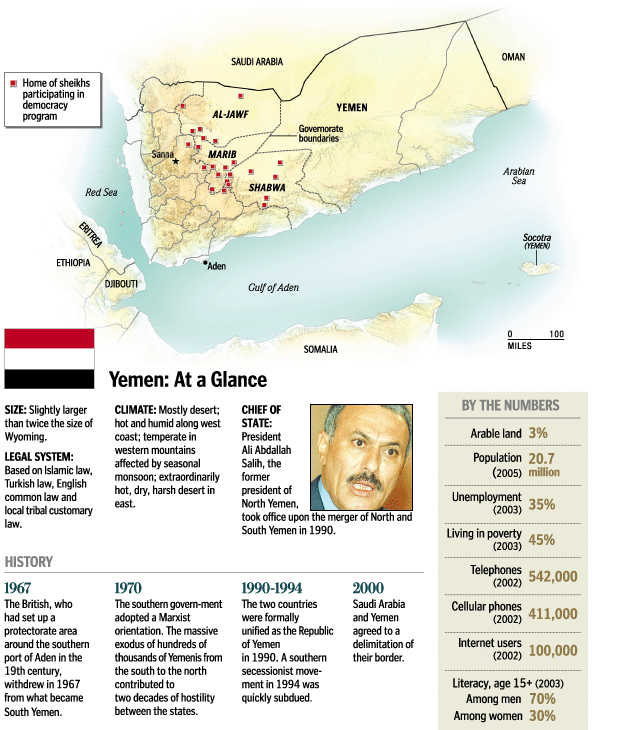
Nowhere in any of this was a thought of working with tribes, which exist well beyond any of the core institutions NDI works with in the 50 countries worldwide where it operates. One day in spring 2004, however, this began to change when several sheiks from Yemen's most isolated governorates, one of which is called Al Jawf and another of which is called Marib, approached NDI, said they were starting an organization to stop revenge-based killings, and asked for help. What surprised Madrid wasn't the request, because she frequently is asked to help, but that sheiks from such places would make contact with a U.S.-based organization.
What is known about Marib: It is where, in 2002, a pilotless U.S. drone being controlled remotely by the CIA fired a missile into a car on an isolated road, incinerating six suspected al Qaeda terrorists.
What is known about Al Jawf is even less. It is always described the same way, as a lawless place beyond any government control -- and a place Americans never go.
Madrid's answer was no, with an explanation that NDI's mission is to work with parliaments, women's groups and political parties, not to start organizations.
But the anthropologist in her was curious enough to suggest a meeting with some of the sheiks so they could tell her about their lives. A first meeting led to a second, and then a third. Madrid learned about the lack of functioning schools and health clinics, the lack of police and courts, the lack of pretty much everything. They told her about how the simplest disagreement between two members of different tribes could result in words being exchanged, shots being fired, roads being blocked, villages being evacuated, houses being destroyed, lives being lost and full-blown wars. They explained that families of the dead are supposed to be compensated with blood money, but since no one has any money, justice revolves around revenge killings, which is what they were hoping to solve.
The meetings continued through the spring, continued through the summer, and were still happening on Sept. 2, 2004, when, in Washington, the Office of Conflict Management and Mitigation, which is part of USAID's Bureau for Democracy, Conflict and Humanitarian Assistance, announced it had $8 million to spend on projects to help end conflict and spread democracy to "geo-strategically important" countries and was now accepting applications.
The notice appeared on a Web site called Fedgrants.gov about 9 a.m.
A few minutes later, at NDI's headquarters on M Street NW:
"Sent: Thursday, September 02, 2004 9:16 AM. An announcement was just posted on FedGrants for DRL RFP for conflict management, mitigation and reconciliation. . . . Not sure if folks at NDI would be interested, but at least one of the objectives listed is related to our work. . . ." NDI wasn't the only organization monitoring Web sites for newly available government money; in Washington, such trolling is a profession. There was no way for NDI to know how many other people at competing organizations had seen the notice, but a guiding rule in a business as competitive as democracy promotion is to act fast. Soon a meeting was underway to decide which of NDI's country programs would formally apply for the grant, and soon after that Yemen became the choice.
That gave Madrid and a colleague from Washington two weeks to come up with a proposal. Which of course turned out to be about the sheiks because by this point Madrid had become convinced of their sincerity. "Of course they want money," she said. "Poor people want money. But they also want us to help them project their voice, they want training and they want access to the rest of the world."
The proposal:
For $743,002, it said, NDI would shape tribal men from Al Jawf, Marib and a third governorate called Shabwa into an organization with an executive board, officers, bylaws, a code of conduct and various committees. It would assist them in setting up offices. It would teach them how to keep records. It would train them in conflict resolution. It would support them in negotiating truces, setting up no-shooting zones around places such as health clinics and schools, and organizing seminars in conflict prevention. And it would help them establish credibility with international donors so that at the end of NDI's program they would be self-sufficient enough to attract money and continue on their own.
The proposal was 16 pages long. Single-spaced.
"Perhaps overly ambitious," Madrid would acknowledge later.
What happened between Oct. 1, 2004, and June 15, 2005, was that the bureaucracies of two countries took over. The proposal was reviewed, eviscerated and completely rewritten.
The focus on the sheiks changed. The money was cut in half. The project was delayed. And the whole thing disappeared for a while into the part of democracy promotion that isn't the soaring words of an inaugural speech, but the commodification of democracy into something suitable for export.
Meanwhile, in Yemen -- where the U.S. Embassy had to shut down for two days because of a security threat, another al Qaeda trial was underway and the Yemeni government announced that "extremist" forms of Islam are being taught to 330,000 children in 4,000 underground schools -- there were problems with the proposal as well.
In December, the USAID mission, which originally endorsed the NDI program, sent an e-mail saying that because of "the sensitivity of the project," NDI had to agree to "coordinate very closely with the U.S. Embassy and USAID in order to manage potential risks" from the program. These risks included "increased tensions between tribal groups and the government, and the possibility of strained relations" between the Yemeni government and the United States.
What the e-mail didn't say, but what was becoming clear, was that President Saleh was becoming increasingly suspicious of this little program. One of the ways Saleh has remained in power since 1978 has been by keeping the tribes divided, and a program that would unite sheiks from a dozen tribes and three governorates -- sheiks in control of about 25,000 men armed with machine guns, grenades and heavy artillery -- would certainly be a "potential risk." Would such a program affect Saleh's cooperation on counterterrorism if it went forward?
That was the embassy's growing concern, which left Madrid suddenly worried about this insistence on close coordination. "It would be disastrous for our work in Yemen if we were to become seen as an arm of the Embassy," she wrote to her supervisor in Washington.
"I would strongly suggest walking away from this program under conditions like this," came the reply. "Let's get out."
She almost did, but a final conversation produced a compromise: a six-month , $300,000 program to research tribal conflicts, rather than a program that would unite sheiks to end them.
USAID was happy with this. Madrid wasn't, but made peace with it by deciding to use some of the $300,000 to keep working with the sheiks anyway, which was exactly what she was doing on June 15 when the program officially began.
"Let me congratulate you," she told 14 sheiks at the first board meeting of the Yemeni Organization for Development and Social Peace.
Smiles.
Applause.
And things fell apart from there.
Twenty-five days later:
"One of them is carrying a gun," a man named Ali Chahine, who is a trainer in conflict resolution, whispered to Madrid.
They were looking at 25 sheiks -- the entire membership of the Yemeni Organization for Development and Social Peace -- who had driven across the sands and mountains of Yemen to the coastal city of Al Mukalla for a three-day workshop that, judging by the agenda, could have been occurring on any weekday at any Holiday Inn in the United States. This was the first step, to teach these men how to be a legitimate, self-sustaining nongovernmental organization (NGO), and Chahine would be leading them in sessions such as "Team Effectiveness Training" and "NGO Organizational Structure."
"Oh, a lot of them are carrying guns," Madrid whispered back, trying to reassure him. "It's just part of their jewelry."
But the fact was, she was wondering about them, too. A few she knew well. A few more she knew somewhat. But half of them she was now seeing for only the first time, and enough had happened in the past 25 days to make her, if not suspicious, at least wary.
The worst of it: When she heard that someone in the U.S. Embassy had described her program as a project "to find out where the terrorists are hiding." "If people are talking like that, it'll kill us," she said, so upset she was shaking. "It puts my local staff at risk, it puts all of my programs at risk. It could be a disaster."
But she also was wondering whether these sheiks would stick it out through the long slog of becoming an NGO. She looked at a sheik who, in addition to his handgun, was wearing a jewel-encrusted watch, probably bought with the monthly stipends many sheiks discreetly receive every month from Saudi Arabia. Would he care about writing proper bylaws?
How about the one who can't read or write and has several wives, one of whom he married when she was 11? Could he learn proper accounting methods?
Or how about the sheik whom Madrid knew best of all, a man from Marib named M'Fareh Mohammed Buhaibeh who was one of the sheiks to first approach NDI? In the months since, as Sheik M'Fareh emerged as the leader of the organization, Madrid had spent many evenings with him learning about his life. He grew up in a village where people lived in tents made of camel hide. His school was a blanket on the sand. "How old are you?" Madrid asked him once, and when this stooped man with such old hands and exhausted eyes said he was 55, she felt a fresh wave of sadness for the whole place. Would someone like him have the patience to keep at this for this six months?
But the sheiks had questions, too -- about her.
In the beginning, all they had wanted to do was form some kind of committee to take on the problem of revenge killings; now, 15 months later, here they were attending a three-day workshop on the Arabian Sea because that is what an American told them they needed to do. "You have to meet certain requirements," she had said to some of them one day, explaining that no organization would give them money until they were established as a legitimate NGO -- so they became an NGO. "How many of you have used Excel before?" she had asked another time, explaining the need to keep books -- so they learned about the computer program.
More on faith than understanding, they had gone along with what she had said, but they were wondering whether, in the months ahead, she would stick with them.
Sheik M'Fareh once asked her this, and her answer -- "Promises are cheap" -- didn't exactly put him at ease. So they wondered: Does she understand the risks they are taking? That the government could somehow punish them? Or arrest them?
Does she understand the pressure had already begun? Because a few days before the retreat, the president had summoned 10 of the sheiks to his palace to ask them what they were doing working with an ajooz , an old woman. "Welcome, Americans," he had sarcastically greeted them, several of the sheiks said. "Be careful of the Americans," one recalled him saying. Another recalled, "He said some bad words. He said, 'Don't trust the Americans. They will not give you aid, and, if they do, it won't be more than $100.' He said they are all liars." Several said that after leaving the palace they were followed, and that on the drive to the retreat they were stopped at checkpoints, something that, because of their status, had not happened to them before.
Everyone wondering about everyone: That's what was happening 25 days into the program. In this atmosphere, Chahine went to the front of the conference room and said to the sheiks, "Look at each other. See each other. Think: Can I work with these people? Do we have the will to work together?
"We have to trust each other," he said, and with that introduction they settled in for three days of work.
They did trust-building and team-building exercises. They learned about turning "problems into objectives" and how to be "preventative rather than reactive." They nodded solemnly when one sheik said, "Suffering has brought us together," and came up with a list of projects to do, including helping in schools, furnishing empty health clinics and solving a tribal conflict in each governorate in a way that wouldn't involve paying blood money. They kept their guns holstered and their daggers sheathed and were heartbreakingly earnest when Chahine asked them to write down their own private hopes of what they wanted to accomplish.
"Our children finishing school," one wrote.
"Democracy in the whole Arab world," another wrote.
And to write down the most important moment of their lives.
"Coming here."
"The establishment of our NGO."
"This retreat."
"Thank you, Dr. Robin," some of the sheiks said in unison at the end of the retreat, and then, optimistic and hopeful, they drove off across a wobbly country where, in the course of a day, everything can seem to change.
Because six days after the end of the retreat, several of the sheiks were gathered at NDI, discussing something that had happened the day before. The president had given a speech in which he said he might not run for reelection in 2006. He then went on to talk about Yemen's need for democracy, about the countries of the world that were now Yemen's friends, and about one organization of one such country that had begun working with some Yemeni sheiks to solve the problem of revenge killings. And then said, either laughingly or mockingly, depending on the translation, "Solving the problem of revenge of 20 million people with $300,000?" And then asked why this organization was working with some sheiks instead of through proper channels in the Yemeni government. And said either adamantly or threateningly, depending on the translation, "We do not want anyone to interfere in our internal affairs."
It had rained after the speech, clearing the streets into the night. But now, this next day, the sun was out, children could be heard chanting at the schools behind the high walls, traffic was again moving along the street named in honor of a Palestinian boy who was shot and killed by Israeli soldiers as he cowered against his father, and the bombproof windows were open at NDI, where the light coming in revealed a worried woman who was saying to the sheiks, "I do support this. From my heart."
Her anxiety was evident, though, so much so that one of the sheiks felt compelled to say something to encourage her.
His name was Rabea al-Okaimi. He is from Al Jawf. Soon, while trying to mediate a spiraling war between his tribe and another, a war that has been continuing off and on for 25 years, he would drive into an ambush of machine guns.
Right now, though, on day 33 of this six-month program, what he said to the only American he knows was this:
"We're very proud of you."
Madrid blinked in surprise.
"And," he said, " we will continue."
© 2005 The Washington Post Company
EXPORTING DEMOCRACY
A Place Called Al Jour
By David Finkel
SANAA, Yemen -- Word of the ambush of Sheik Rabea al-Okaimi came by cell phone. It was Rabea himself calling, late in the afternoon this past Sept. 11, from an isolated part of Yemen called Al Jawf. At the very time memorial services were underway in Washington and New York, an agitated man in Al Jawf was describing what happened a few hours before. He was in a car. He was cut off. There was a shootout. Two of the attackers were injured. He has to go, he said, he'll call back, and the telephone connection went dead.
The next day, he called again. Calmer, he said he was on his way to a meeting to help settle an escalating war between his tribe and a neighboring one when the attackers arrived in three cars. He and his guards dove into a ditch. The attackers bunkered themselves in another ditch. Both sides had Kalashnikov assault rifles. Bullets went back and forth for more than an hour. He thought the two men who were hit were severely wounded. "It's like American films," he said, "but it was real," and then the connection went dead again.
There was no word from Rabea the next day, or the next several after that, and in Sanaa, the capital of Yemen, at the office of a Washington-based organization called the National Democratic Institute for International Affairs (NDI), the worries of its director, Robin Madrid, grew a little more.
These ambushes and conflicts are why she received $300,000 from the U.S. government as part of its effort to promote democracy around the world. She had been given six months to address the problem of tribal conflicts in Al Jawf and two other troubled parts of Yemen, but, at the halfway point, her project to help this country had again and again been hobbled and reshaped by the very fact that this is a country that needs so much help.
The near-assassination of Rabea, a man vital to Madrid's project because of his importance as one of the most powerful sheiks in Al Jawf, was just one example. By this point she had expected to have seen Al Jawf for herself. Her plan was simple enough -- she and an interpreter would get in a car and go. But in Yemen, nothing turns out to be so simple.
If you're an American, you can't travel to Al Jawf without the permission of the Yemeni government, and permission means a trailing truck of armed soldiers who won't leave you alone, even if you explain that the people you're meeting with won't speak candidly in front of soldiers with guns.
So Madrid had requested an appointment with the minister of the interior to talk about this, and when two weeks went by without a response, she talked to a contact at the U.S. Embassy who urged her to just go. But then she spoke to a tribal sheik she had been working with who beseeched her to do no such thing because it would backfire in ways she couldn't imagine. All of which meant that on the day she was thinking she would have been in Al Jawf, she was instead still in Sanaa, worrying about her program, when she suddenly rose from her desk because of a popping sound outside.
There were three gunshots. Then a pause. Then a burst. "Staff," she shouted, "away from windows and doors!" There was another burst, followed by a police car speeding by with open windows and wagging machine guns, followed by more pops, an unnerving silence, and then, as if nothing had just happened, her 3 o'clock appointment walked in.
Ahmed Jabeli seemed unfazed by the commotion, perhaps because he had just returned from Al Jawf. Maybe Madrid couldn't travel, but Jabeli, a Yemeni she hired to help with the tribal-conflict project, could go anywhere he wanted, and he was here to tell Madrid about the place where Rabea nearly died. About its geography. About its buildings. About its colors. About the boiling desert sun. About the night sky filled with too many stars to count. About everything an American can only imagine until she could find a way to get there herself.
"Four words," he began. "They are very poor."
And just like that, Al Jawf was reduced from mystery to its essence.
"When you come to Al Jawf, don't bring money. You won't need it," Rabea had said several weeks before the ambush, extending an invitation as a way to explain why he wanted Robin Madrid's program to succeed. "In Al Jawf, everyone is poor."
"We are talking about violence. We are talking about armed confrontation. We are talking about people who are killed every day," one U.S. Embassy official said, cautioning against such a visit. "They are the border of Saudi Arabia, and that's where al Qaeda is."
"We don't have terror in our area," Rabea said. "What we have are tribal wars, poverty and illiteracy." His only caution about visiting: Not only is he one of the few people from Al Jawf ever to have met an American, he is also one of the few to have positive feelings about a place that most people there hate because of Iraq, Abu Ghraib, the Palestinian issue, a widely believed rumor that the United States wants to invade Yemen, and a recent increase in fuel prices urged on Yemen by the World Bank, which is assumed to be under U.S. control.
"You will need to be tolerant. You will hear nasty things. 'Americans do this. Americans do that,' " he said -- and on Sept. 23, 12 days after the ambush and in the first moments of a trip into a part of Al Jawf that has never seen an American, that's exactly what was taking place.
"I want the hurricane to destroy the U.S.," a man was saying after hearing a report on a battery-powered radio about Hurricane Rita approaching Texas.
"So the U.S. knows that God is bigger," another man said. The two men and a dozen others were sitting on the sand in a very dark desert, finishing a midnight dinner of freshly killed goat after a four-hour drive over rocks and through ravines. It was too dark to see anything other than the silhouettes of the men as they unshouldered their assault rifles and talked about whether "the U.S. will do to Yemen what it did to Iraq," as one of them said.
Off to the side there was an orange glow as a man inhaled a cigarette. This is Rabea. He is 38 years old. He has three wives. He has 11 children. Thirteen days ago, he didn't smoke. Twelve days ago, he began.
What is Al Jawf to the U.S. government? It's a place of concern because of terrorism. What is it to Robin Madrid? It's a place in need of democracy and rescue. What is it to Rabea? That's what he would try to answer over the next three days, beginning the next morning when the sun rose early and hot over a landscape empty and vast.
Just as there are no police here, or courts or government or law, there are also no roads, only smoothed tracks in the dirt and sand, which Rabea and his armed guards drove along until they arrived at a village called Aal Shinnon. It has no electricity, no functioning school, no functioning anything, only an angry man who, when the subject of the United States came up, said, "We're ready for the Americans. If they come, we will kill them."
Next stop: a village called Al Muhtoon, where a man said of the United States, "It's the biggest country in the world, and it doesn't do much good for the world." Why, he asked bitterly, doesn't American money come here? He was standing outside the health clinic, which had bullet holes in the front gate, trash in the courtyard, a padlock on the door and nothing visible inside except a broken scale, a rusted bed frame and a dust-coated sink. A year ago, there was a doctor here, the man said. He stayed for two months, waiting for the government to send equipment and medicine, and when nothing showed up he went away.
And so it went in village after village, until Rabea arrived at his destination for this first day, a dusty town of 5,000 people called Mymerra. This is the village where Rabea was raised, along with 22 brothers and sisters, in a house that has seven photographs on the walls, one of which is of Osama bin Laden. "He is considered a great fighter here," Rabea explained.
There may be no greater compliment in Al Jawf, where tribal wars are so common that over the past 40 years, according to one estimate, 5,730 people have been killed. One of those wars is between Rabea's tribe, called the Shawlan, and a neighboring tribe, called the Hamdan, in which 75 people have been killed over 25 years of intermittent fighting, seven of them in the past several months.
What begins such a war? Someone wants to dig a well, or build a house, or siphon some rainwater runoff, on land that bordering tribes claim as their own. Out come the assault rifles, the grenades, the missile launchers. And soon entire villages are on the move to somewhere momentarily safe, until one more truce can be worked out in a place stitched together not by a shared vision of civilization but by temporary agreements written on flimsy pieces of paper.
This is what happened in Mymerra two weeks before when it was shelled and evacuated, and this is what Rabea wanted to show -- the effects of fighting on even one village and its residents.
So here was a man displaying the glass eye he got after a grenade explosion in 1985.
And here was a man showing a bullet hole in his upper left arm that he got in the 1990s.
And here was a man, a teacher, parting his hair to show where he was shot in the head in July, one of the first victims in this new round of fighting that began when someone chose the wrong spot on a blurry border to build a little house.
"Hamdan," he said when asked who shot him. He said he was in the back of a car that was sprayed by machine guns. Where did it happen? Outside the provincial capital of Al Jawf. It was raining, he said, and at first he thought he was hearing thunder. Then his right hand went limp. Then one of his eyes was closing. Then came blood. Then came a long drive back to Mymerra, which has one of the few functioning medical facilities in Al Jawf -- a small private hospital where for 200,000 Yemeni rials, which is equivalent to $1,036, which was all of the teacher's savings, a doctor dug into his head and saved his life.
This happened on July 25.
Eight days later, a Hamdan sheik named Abdullah Hassan al-Iraqi was walking along a street in Sanaa when he was shot in the back of the head. A month after that, Mymerra was evacuated, and Rabea was diving into a ditch and turning into a smoker.
And now, because of an agreement that Hamdan would apologize to Rabea by giving him 44 Kalashnikovs, the people of Mymerra were back, resuming what life is like for them when there's peace.
Men, most of whom don't work, were standing around in clusters. Women were returning on donkeys from the morning's search for water. Children were roaming wherever. The school had been closed for so long that a chalk outline of a child's hand on a classroom wall was fading. The public health clinic remained closed as well. And Rabea was in the courtyard of his house, surrounded by men waiting to see if he would invite them inside for a free lunch, which they knew he would do because such are the obligations of a sheik.
One was the teacher, who said, "I don't have a great life, so I don't feel bad about being shot. You either live or die."
Another was a man who had just finished praying at a mosque. "I asked God to destroy America," he said of his prayer.
The next day, Rabea headed toward the front line of the war, and however sad or unsettling or surreal Al Jawf seemed the day before only increased in intensity.
Because as he drove through a moonscape that truly was in the middle of nothing, a cylindrical shape appeared on the horizon, which turned out to be a lookout tower with bats in the stairwell and five men on top who are there day and night scanning the sky. They were looking for approaching missiles, one man said. Far in the distance, just visible, was another lookout tower, presumably with men on top watching them. "Hamdan," the man said.
Then came a village of a few lonesome houses where a man knelt in his front yard and stripped off his clothing while describing a recent battle in which two people were killed and four were injured, including him. He had a hole in his shoulder and a fresh gash across his back. "Is there a truce?" he asked Rabea
"Yes," Rabea assured him.
"I don't trust this," the man said. He put on his clothes, buckled a belt that held his dagger, and hung his assault rifle over his shoulder. "We are ready," he declared.
And now came the village closest to the front, Al Hessn, which looked like something from the Middle Ages and felt like something still under attack. The amount of damage was striking: The mosque was crumbling, some houses were wrecked, and many others had been hit by bullets and mortars, including the most prominent building of all, a 350-year-old castle where Rabea lives part of the year with his third wife.
As intimidating as a castle with thick walls and turrets might seem, it was not safe. In fact, nothing is safe when there isn't a truce, Rabea said, not in Al Hessn or anywhere else. You can be killed in the mosque, he said. You can be killed in the market. You can be killed in school. You can be killed as you sleep in your bed. "If you're crazy, they don't kill you," he said. "If you're crazy, you're safe. So the only way out is to become crazy."
And if you're not crazy? You travel everywhere with armed guards, one of whom this day was Rabea's 19-year-old nephew Salih, who said one of the pleasures of life in Al Jawf is to pull the trigger of an assault rifle. He has seen "many" die, he said, the most recent in this very castle a couple of weeks before. It was a shot to the head, he said, and it was probably the worst thing he had seen. "We brought him downstairs and he was talking for about an hour," he said, and whenever shooting would erupt he would shudder and move his hands along the ground "as if searching for his gun."
The gun, of course, was a Kalashnikov. A new one costs about $350. A bullet costs 36 cents. Somehow in this poor place, everyone finds the money for at least one Kalashnikov and multiple clips, the only exception being an elderly man who instead was carrying a menacing-looking Chinese rifle.
The man, Saleh Ali al-Hadj, is a sniper. He said he used to be a farmer, and then the war began, and since then he had watched over Al Hessn from the same spot for "25 years and seven months, minus eight days." To get to the spot, he removed a seven-inch key from his belt, bent down and unlocked a miniature door that seemed straight out of a fairy tale. He crawled through the opening, climbed up a spiraling stairway and emerged on top of the tallest turret in the village.
There, mounted to the floor and covered with canvas, was the only American export ever to reach Al Hessn, a .50-caliber machine gun.
The sniper of Al Hessn explained what he knows about America. Its president is named Bush. It wants to invade Yemen. And it makes a machine gun whose bullets can accurately reach the Hamdan village he was looking at now through binoculars, where a man was climbing onto a tractor and a woman and child were walking hand in hand.
One other thing about the Hamdan village: Rabea's third wife is from there. She is Hamdan. And her father is a sheik who helps direct the Hamdan side of the war.
"These are very complicated matters," Rabea said, trying to explain how a Shawlan could marry a Hamdan, but they are really not complicated at all. They met during a truce, and during a truce, anything feels possible. Peace will be permanent. Aid will be coming. Development will be right behind. Modernization is inevitable.
From time to time, Rabea has tried to share this vision with the men around him whose love is for fighting and who seem so utterly filled with despair. "If this were not going on, you could go out and see things," he told them. "You would know things."
"You have money," he said they answer. "You can travel. You have options. We have nothing."
"You would have opportunities," he said.
And sometimes they might listen, he said, and sometimes they might say to him that what they need is money, not fantasies, and unless he gives them some they will fire their guns at Hamdan and ruin the truce.
Blackmail? Desperation?
What's the difference? Rabea asked. He is continually peeling bills off the bankroll he keeps on the front seat of his car for just such occasions, because what else is there to do?
"In America, any problem has a solution," he said of what he has gleaned from reading newspaper articles, seeing images of the United States on satellite TV, and most recently meeting with Robin Madrid. "You have courts. You have law. You have democracy. You have accountability."
Here, he said, there is only fighting. "I hate it," he said at the end of this day. "I hate killing. I wish I didn't have enough money to buy even a pack of cigarettes in exchange for no fighting."
A sheik's wish: that Al Jawf could be like other places in the world. Like the United States? "It's impossible," he said. Maybe like the United Arab Emirates, where he visited once and didn't have to carry a gun.
Sleep this night was as it always is for Rabea: on a pillow under which is his Kalashnikov. Six hours later, he awakened to news that there had been shootings in one of the villages he'd been in two days before.
Soon after sunrise, he went to the village to find out what happened because a sheik in Al Jawf is the court, the law, the democracy, the accountability and the solution. It turned out that four people had been shot by a man who suspected three of them of taking one of his guns. He went looking for them, found them hanging onto the side of a pickup truck they had flagged down for a ride, and opened fire. All three men were hit and injured, and the driver, whose only role in this was to stop and give three people a ride, was killed.
"Where is he?" Rabea asked and was directed to a house in another village about a mile away.
So he went to that village and was escorted into a room lined with 20 tense men, including one at the far end, who abruptly stood up, grabbed his assault rifle and said he didn't do anything wrong.
The killer. Who was baby-faced, biting his lip, and might be all of 18.
He brushed past Rabea and went outside, and Rabea stayed where he was. There was no point in following him because what would he do with him? In the United States he might be arrested, tried and imprisoned, but here, where there are no functioning jails, courts or police, justice has nothing to do with the individual, only the tribe. Better, then, for Rabea to stay where he was and to settle the matter quickly, before there could be time for a revenge killing, which could spiral into more.
The deal he proposed: The family of the dead man would be given four assault rifles, and the killer would be told to go away.
Agreed.
A potential war averted. Justice has been done.
"Very, very sad," Rabea said back in the car, on his way to one last stop, to see the injured men. He wound his way back to the small private hospital in Mymerra, where the three men were inside. One was shot in the thumb. He would be fine. One was shot in the chest and elbow. He would recover. The third was the most serious. The bullet passed through him near his spine. He was in surgery for four hours, and now he was wrapped in iodine-soaked bandages and mumbling incoherently as another man sat next to him holding his hand, a third man stood guard with his gun, and dozens more pressed in on a doctor in the corridor who said to Rabea, "We're worried about keeping him here. We're worried he's in danger."
There was nowhere else for the man to go, though, no facility except this one, where the only reason he had been admitted was that the people who brought him promised to pay. How? they were asked. They motioned to the pickup truck they had arrived in. It was the truck of the dead driver who had stopped to give the three men a ride.
This is Al Jawf, the place that Robin Madrid hopes to rescue.
"The most difficult days ever," Rabea said of these past weeks, heading home now and worrying about something new. The truce settlement called for Hamdan to surrender 44 of its Kalashnikovs to Shawlan, but so far it had surrendered only two.
What would he do if the rest weren't turned over? That's what he was worried about. He would have no choice, he said sadly. In his wishes, Robin Madrid's program would succeed, but until then, there was only one answer.
"We will attack them," he said.
Two weeks later, as the two-thirds mark of her six-month program closed in, Robin Madrid was summoned to a meeting with Thomas C. Krajeski, the U.S. ambassador to Yemen.
She had been working increasingly long hours, trying to launch the research part of the program that was a condition of her $300,000 grant from the U.S. government. With the help of a University of California researcher, she had developed a 15-page questionnaire whose answers would lead to a definitive list of every tribal conflict in Al Jawf and two other governorates, a list on which future programs about ending tribal conflicts could be based. She had hired a team of Yemeni researchers who would spend a total of six weeks in the governorates administering the questionnaire to 450 people from every tribe and sub-tribe, and she had worked out arrangements with some sheiks from each of the governorates to help the researchers with access and oversee their safety.
None of this had gone easily. It is no simple thing, for instance, to find researchers in Yemen conversant enough in the language of Western-style questionnaires to follow instructions such as "Insert into the questionnaire one copy of Sections Three and Four for each conflict discussed."
More difficult were some of the discussions with the sheiks, who astonished the woman they affectionately call Dr. Robin by asking for $200 a day to help the researchers.
"There is not a chance," she told them, because her organization's per diem for Yemen is $17.25. "Not. A. Chance."
"Exasperated, she said that there are two types of organizations in the United States -- those that hand out the money they get, and those, like hers, that use the money to go to a place and do work. NDI is "a huge building in Washington" with "an accounting department of 25 people," she explained. "The reason I'm telling you this is because you heard the president say we got $300,000 for the program, and you think, 'Wow.'" But the truth is that "very little of it gets to Yemen."
That's one truth; another is that every day has come with similar difficulties. All, though, have been resolved except for one -- an increasing lack of cooperation from the Yemeni government.
At first, officials all the way up to the president had seemed supportive. But then came signs that they were starting to worry about a program that would unite two dozen sheiks whose historic inability to get along with one another is one of the reasons the president has remained in power for 27 years. And now the U.S. ambassador had summoned Madrid to tell her about a meeting he had the day before with Yemen's foreign minister -- a meeting in which the minister was almost certainly speaking on behalf of the president.
The minister's message: " 'We want the program stopped. Immediately,'" Madrid told her staff after returning from the embassy.
The ambassador told her that he tried to negotiate, she said, going over their conversation. "He clearly thinks this is an important program," she said, "but he's also aware, increasingly aware, of how nervous it makes people in the government. He said, 'Look, it's your decision if you want to shut the whole thing down.' He doesn't want to shut it down. But what he does want to do" -- to let things settle -- "is delay the start of the research."
For how long?
Give it a month, he'd said, maybe more. He mentioned that Yemen's president was scheduled to visit Washington in early November to meet with President Bush and suggested delaying the project until after his return.
So that's what she will be doing, she told her staff, slowing the project down -- and now, two days later, she was breaking the news of this to the sheik who had initially approached NDI in March 2004 asking for help and had been waiting expectantly since.
When she was done, all that the sheik, whose name is M'Fareh Mohammed Buhaibeh, could think to say was, "If you become weaker, they will turn against us."
"Do you have some recommendations?" she asked. "Some ideas?"
"Our work should continue the same," he said. "Because we are not doing anything wrong."
"When they tell me I have to delay the research, I don't have much choice," she said of the pressure.
"You dare to work with the tribes, and the tribes dare to work with you. So the pressure is both ways," he said.
"Do you have any ideas?" she asked again.
"Yes," he said. "You should ask for a meeting with the president, and ask him to let this proceed."
The president, of course, was the one who once referred to her dismissively as old and worthless, an ajooz . And whose newspaper just the day before had accused her of spying under a headline that said, "American Democratic Institute -- Hidden Objectives!" That's what she was thinking, but what she said was, "There's a possibility that there will be a meeting with him in the United States."
"You should do it here," M'Fareh said.
"We've tried," she said.
"Then you'll just have to do it in Washington," he said, and that's how the fourth month of a six-month project came to an end, with Rabea in Al Jawf, worried about 42 Kalashnikovs, and Madrid in her office, worried about a president in whose hands her project to help Rabea and everyone like him now rested.
"He is ajooz," a frustrated staff member said of the president.
"No," Madrid said, knowing better than that. "I am."
© 2005 The Washington Post Company
EXPORTING DEMOCRACY
The President's concerns
Program Weighs Leader's Edict, Tribes' Needs
By David Finkel
"Until now, I have not seen any results. But I still have hope."
SANAA, Yemen -- Sometimes the exportation of democracy out of America means the importation of something less than democracy into America.
On Nov. 8, Ali Abdullah Saleh, the president of Yemen, flew into Washington for a three-day visit.
Officials with the National Democratic Institute for International Affairs (NDI) were hoping to meet with Saleh to discuss their work in Yemen, including a program about tribal conflicts that he had made clear he wanted shut down. But the 63-year-old president had more urgent priorities. He was expecting his reward for being an ally in the U.S. war against terrorism: money. Lots of money.
In a democracy, though -- as Saleh should know -- things don't always go according to expectations.
His first meeting was with a government agency called the Millennium Challenge Corp. (MCC), where he was officially informed that because of corruption, fiscal irresponsibility and lack of democratic reform, Yemen was being suspended from a program that would have meant at least $20 million in development aid next year and hundreds of millions of dollars after that.
Next was the World Bank, which recently cut assistance to Yemen by one-third, from $420 million to $280 million, again because of corruption and fiscal irresponsibility. The president hoped that the bank would change its decision, but it didn't.
Then came a meeting with Secretary of State Condoleezza Rice, whom Saleh told the MCC's decision needed to be reconsidered. She reminded him, point by point, of how many of the MCC's eligibility benchmarks Yemen had failed to meet. Civil liberties. Control of corruption. Rule of law. Economic freedom. He reminded her of how cooperative Yemen had been with the United States on counterterrorism. One has nothing to do with the other, she said, not in this case -- but if Yemen kept pursuing democracy, economic aid would follow.
Next up: talks with various Bush administration officials about counterterrorism and democracy, and then the big moment -- the White House, the Oval Office, and President Bush himself, who reiterated the point made in every previous meeting, that the United States appreciates its friends.
And then, after all that, NDI got its turn.
It had hoped to sponsor a dinner in Saleh's honor, or at least a reception, but instead got 30 minutes on the morning of day three.
"It was a very friendly meeting," NDI's president, Kenneth Wollack, said afterward.
He said they discussed all of NDI's programs in Yemen, including its work with the Parliament, political parties and women and its role in next year's elections.
"The president strongly encouraged NDI to enhance its efforts," he said.
"It was very friendly," he repeated.
And the tribal program?
"The issue of working in certain parts of the country did come up, and he said, 'Let's discuss this issue when we have more time, in Sanaa.' He wasn't hostile at all. He just wanted more time to talk about it."
That, Wollack said, was the extent of the conversation. Time was up, and he and NDI's chairman, former secretary of state Madeleine Albright, left so Saleh could move on to whatever was next on his schedule.
Which turned out to be a stroll among Washington's monuments.
Followed by lunch in Georgetown, a little shopping and a doctor's visit.
And then he headed home.
Home: where portraits of His Excellency Ali Abdullah Saleh, leader of Yemen for 27 years and recipient in the last election of 96.3 percent of the vote, are everywhere. In stores. In restaurants.
On billboards, such as the one announcing the $100 million mosque Saleh is building near his main palace. On banners attached to streetlights, some of which work, most of which don't. In the dens of private homes, where Yemenis gather every afternoon to chew the leaves of a narcotic plant called khat and talk about Yemen's chaotic politics and increasing deterioration. And in hotels with blast walls like the one where Robin Madrid, NDI's Yemen director, was talking to Les Campbell, her Washington-based supervisor, about the chances that Saleh would meet with them.
"It could be any moment," Campbell, who oversees operations in 13 countries in the Middle East for NDI, said, "or it could be no moment."
It was Dec. 3, NDI's tribal democracy program was down to its last 12 days, and Campbell wanted to continue the conversation from Washington before time ran out. The program, funded for six months and with $300,000 by the U.S. government as part of its foreign policy of promoting democracy to combat terrorism, was designed to research and help solve some of the tribal conflicts that have destabilized a part of Yemen that the United States suspects is a terrorist refuge. As the six months had gone by, however, Saleh had made it increasingly clear he was against a program that would teach two dozen tribal sheiks, in control of about 25,000 armed fighters, how to get along, even if the aim was to bring peace and development to one of the most ignored parts of the world.
He had met with the sheiks and told them not to trust the Americans, and he had met with Americans and told them not to trust the sheiks. He had made a speech in which he all but accused NDI of interfering in Yemen's internal affairs. His party newspaper suggested Robin Madrid was an American spy. Four months into the program, his foreign minister informed the U.S. ambassador to Yemen that the program needed to end, and that's one of the reasons Campbell was hoping to meet with Saleh, "to try to determine through speech, body language, anything, where we could go."
Campbell wanted the program to continue, and told Madrid to apply for more government money. Madrid wanted the program to continue, too. So did the U.S. ambassador. Despite episodes of infighting, so did the sheiks. But as with everything that occurs in Yemen, Saleh's is the voice that matters most.
He has run Yemen since 1978, ascending from the military after Yemen's two previous leaders were assassinated within months of each other. "People laughed at his speechmaking. He looked like a comical figure in his uniform. The CIA guy was taking bets -- this guy won't be around in spring," Robert D. Burrowes, an expert on Yemen who teaches at the University of Washington and has been traveling to the country since 1975, said of Saleh's first days. "And 27 years later, here he still is."
Like Harry S. Truman, Burrowes said, Saleh grew into the job. The military uniform became a suit. The wild hair calmed down. The confidence, always there, only increased, especially after Saleh oversaw the unification of North Yemen and South Yemen into one country in 1990, an accomplishment that is highlighted on his official Web site with admiring quotes from other world leaders.
"The unification of Yemen is the only positive event in modern Arab history," said Moammar Gaddafi.
"Yemen unity represents a strong tribute to power and protection, and dignifies the Islamic world," said Saddam Hussein.
Hussein, Gaddafi, Yasser Arafat, Hafez Assad of Syria -- their neighborhood is the one Saleh and Yemen have been part of. Hussein was giving millions of dollars to Yemeni Baathists right up until the U.S. invasion. Saudi Arabia has been paying monthly stipends to Yemeni sheiks for decades; Sheik Abdullah bin Hussein al-Ahmer, the most powerful sheik in Yemen, is said to receive about $1 million a month. With a population that is 99.99 percent Muslim, thousands of religious schools, a growing Wahhabi influence, and a law based primarily on sharia principles, Yemen seemed as far from Western values as any country on the Arabian Peninsula.
And yet somewhere along the line, after unification, Saleh began moving Yemen toward democracy. Throughout much of the 1990s, Yemen was regarded as the leading democratic force in the Arab world, and while that may not seem like much of a distinction in the West, it was to Saleh, especially as Yemen's economy worsened, its water began running out, its modest oil reserves began running out, Arab monetary contributions diminished, and he needed to find new sources of foreign aid.
Enter the United States -- which had stopped giving aid to Yemen after it sided with Iraq in the 1991 Persian Gulf War, and started again after the attack on the USS Cole in 2000 -- with its expectations of democracy.
"He leads the charge in promoting democracy and human rights," is how Saleh now describes himself on his Web site, and maybe that's the kind of leader he has grown to be.
Or maybe, as Burrowes said, "he is telling us what we want to hear him say."
Long sanguine about Yemen, Burrowes has become so pessimistic about its future because of corruption that instead of describing Yemen as a democracy, as he used to do to the point of being considered an apologist for Saleh, he now calls it a "kleptocracy -- a government of, by and for thieves." As for the kind of leader Saleh has grown into, Burrowes said, "He has become a very good dictator."
That's one description; another came from U.S. Ambassador Thomas C. Krajeski as he explained Saleh's unease with NDI's tribal program: "His ability to resolve tribal disputes in a variety of ways, whether by offering favors, offering concessions, applying pressure -- this has been his method, and he has been successful at it, where many before him failed. He considers it his responsibility, and he considers it his success. I think that any involvement by the United States, by any international agency, but especially perhaps the United Sates, will raise his antennae. And in this case, we are certainly going to listen to what the president says."
Waiting for Saleh's call, Campbell and Madrid decided that if it came, Campbell would go alone, just in case Saleh was upset with Madrid. Madrid kept her cell phone on anyway. So did Campbell. Two days passed in silence. "I don't think it's going to work out," Campbell said, but at 10 a.m. on Dec. 5, his phone rang with instructions to go to the palace right away.
Without Madrid, then, who has believed in and worked harder on this program than anyone, at times to the point of exhaustion, Campbell went to see the man who has believed in it least of all. He was escorted through one gate, escorted through a second, and was heading toward a third when he saw Saleh off to the side, standing not on the dirt and rocks that dominate this part of Yemen, but on a lovely lawn of green grass. They shook hands and went inside, and 15 minutes later Campbell was back out.
"Kind of a formal meeting room," he said in the car afterward, describing what happened.
"He sat in his customary seat at the front of the room. There were the usual greetings. Then he started to speak. He said that he very much appreciated NDI's work in the country. That he trusted our motives. That he knew our motives were pure and he knew that we were in Yemen to provide assistance and help.
"But that there were some issues, and particularly the issue of blood feuds, which is how they translated it, that predated NDI in Yemen and in fact go back hundreds of years and are impossible for us to fully understand. He said that it is a big issue in Yemen, that he has instituted committees and other things to deal with this problem. He said, 'I don't care if you have $100 million or $500 million to spend on the problem, you as foreigners are not going to solve it.' He said, 'I would really prefer that you concentrate on the things that you do best.'
"So I said, 'I do understand that, I understand what you say. It's very clear.' I said, 'Having said that, I wonder if there are not misunderstandings about what we're trying to do,' and then he sort of interrupted me, not in a rude way, but he jumped in and he said, 'There have been misunderstandings.' He said, 'Some people high within the government, but even normal people, they think that you are either the CIA or the FBI.' He said, 'That's what people think,' and he said, 'I know that that's not true, and I don't distrust your motives, but if you continue down this path people will think that you are the FBI or the CIA.'
"And I interrupted him and said, 'That would be terrible because I've spent 10 to 12 years at NDI trying to convince people we're not the CIA, so if people are thinking we're the CIA, that's not something I want.' He said, 'Well they will think that because this is an area that you really shouldn't be involved in. You have a mandate here in Yemen, and we appreciate what you do. But this is not it.'
"So.''
"That was the end of that conversation."
A few minutes passed.
"I mean, there was no equivocation," he said. "There's no way of mistaking that message anymore. Just very clear."
He sighed.
One conversation done, and one to finish, which had begun as soon as he walked out of the palace and his cell phone rang.
"Hi, Robin," he said.
"I'll tell you when I see you. I'm not comfortable discussing it on the phone."
"I would like to thank NDI and Dr. Robin."
A few hours later, still waiting to catch up with Madrid, Campbell was visiting a sheik who had seated him in a place of honor in his den, which happened to be directly under a portrait of Saleh that was propped up on a curtain rod.
The sheik, named M'Fareh Mohammed Buhaibeh, was one of the sheiks who originally approached NDI and asked for help in solving tribal conflicts, which led to Robin Madrid's involvement, which led to the $300,000 grant from the U.S. government, which led ultimately to that morning's meeting with Saleh, which M'Fareh knew absolutely nothing about as he continued to speak.
"When NDI started working with us, others started to hear of our needs. The lack of education. Our health needs. Our need for water," he said, and the more he went on, the more uncomfortable Campbell became. Nodding. Wondering what to say. Looking away when M'Fareh said, "NDI became our outlet to clarify this picture to others."
Then came a knock on the door and in walked Madrid, who didn't know, either. Not the outcome. Not yet.
"We're just going through some of the background," Campbell said as she sat next to him under the portrait of Saleh.
"How are you?" M'Fareh asked her, smiling at his American friend, and then turned back to Campbell. "NDI in general, and Dr. Robin in particular, gathered us as one," he said. "She is the only person to have reached out to these tribal divisions."
A wince now.
"We have values. We have ethics. We wish for order. We wish for stability. We wish for democracy. We wish for all good things," M'Fareh went on about the tribes, and then said of Saleh's government, "They live on divide and rule. When they see us having relations with internationals, it makes them very angry."
Almost inaudibly, Campbell said, "I'll say."
Madrid looked at him. "Oh, you've found this out?"
"Yes."
"Uh-oh," she said.
And maybe that's the moment she realized.
"We need to talk about the Saleh meeting," Campbell whispered to her.
But it would be a few more minutes until they could, until dusk, when the mosque near M'Fareh's house, along with hundreds of mosques across Sanaa, and thousands across Yemen, issued the evening call to prayer. M'Fareh rose with the echoes and excused himself to pray, and if Madrid didn't realize before, she did when Campbell began by saying, "Saleh brought up the issue."
Not NDI. But Saleh, because he had something he wanted to say.
Methodically, Campbell told her everything. About the compliments. About the rest of it. "I'm sure that he's not fully understanding what we're doing," he said. "I mean, there's no question about that. But how would you ever get a full hour with the president to get him to actually listen? It's just never going to happen."
Madrid was facing him, holding a pen and a yellow legal pad as she listened. She is always taking notes, which she dutifully types into her computer each day and condenses once a week into summaries that she e-mails to Washington. Her notes on the tribal program run hundreds of pages. But now she put the notepad down.
"Even with an hour of explanation, I'm not sure," she said quietly.
And she then fell silent as M'Fareh came back into the room and Campbell said to him, "So I met with President Saleh earlier today."
Now M'Fareh was silent, too.
"He said, 'I don't care if you have $100 million or $500 million, you're not going to solve that problem,'" Campbell said. "Our point of view is that we don't think we're solving any problem. We just think that we're helping people get together to solve their own problems. And we don't have any ulterior motives in this, other than we think we can help bring some development and democracy to the country."
He paused for translation, and so he could figure out how to say what was next.
"But it's difficult to know what to do when we run up against this kind of blockage," he said. "And we also don't want to jeopardize the other work we're doing."
And there it was, what six months had come down to, one question to be answered, which had to do with what democracy as foreign policy actually means.
In Washington, when that question is asked, it is mostly in terms of congressional funding levels, competition for that money in governmental offices and nongovernmental organizations, and the rhetoric of a political leader trying to convince the nation of a strategy.
"So it is the policy of the United States to seek and support growth of democratic movements and institutions in every nation and culture, with the ultimate goal of ending tyranny in our world," President Bush said this year in his second inaugural address.
But on the far side of such rhetoric was its reality: a teetering program in a teetering place where the question of democracy's meaning turned out to be a decision about whom to ignore.
A president who is vital to the U.S. war on terrorism?
Or a sheik who represents a country's most-forgotten people and was now saying so earnestly as to be heartbreaking, "We are citizens. We are Yemenis. The problem is they don't want to reach out to us because we will speak openly about all of the problems. And they don't want that to happen."
He paused for translation. And then said:
"Do you think that's okay? Have you asked yourself that question?"
"No," Campbell said. "I don't think it's okay. I don't think we as an organization should be dictated to about who we can and can't speak with. Either we're welcome in Yemen or we're not. I feel pretty strongly about that. Either we're welcome here or we're not."
"Then I request that since you work in Yemen, you keep working with us," M'Fareh said.
"Well," Campbell said, standing. "It was very nice to meet you."
"Likewise," M'Fareh said. "And we'll have a lot of meetings in the future."
" Inshallah," Campbell said. God willing.
Outside now:
"So it was real straightforward?" Madrid asked.
"Yeah," Campbell said. "He looked me in the eye the entire time."
And as the program came down to its final days, that's how the decision was made.
On the last day, which was last Thursday, there were at least four tribal wars going on in various parts of Yemen.
President Saleh was in Aden, basking in the chants of delegates at his political party's conventions as they begged him to run for reelection and remain in power for seven more years. "Democracy is our national choice," he told them, which was his way of saying yes.
President Bush was in the White House, watching reports of smiling people with ink-stained fingers and declaring, "May God bless a free Iraq."
Les Campbell was one his way back to Washington, where at NDI they were waiting to hear about a new Yemen proposal they had submitted to the U.S. Agency for International Development's Office of Conflict Management and Mitigation, this one for 15 months and $645,000 and with the word "tribal" no longer in the title.
Sheik M'Fareh was on the telephone in Sanaa, asking one of Robin Madrid's assistants if NDI was abandoning him and the other sheiks who had sought its help.
And Robin Madrid was in her house, blinking back sudden tears. She had been talking about the success of her other programs, that maybe there would be other ways to keep working with the tribes, that presidents can't be ignored, and that, "I'm a guest in this country, and that's a really important thing." She had said, "If this were the 19th century, what I would be doing is missionary work for Christianity. Now I'm a missionary for democracy, and the only way to do that is with a little humility. Be not so damn sure I'm right. Because if I'm wrong, I'm going to be on an airplane out of this country, and they're going to have to clean up the mess. That really ought to encourage some fear and humility on my part." She had said of the work she'd been able to do with the tribes, "We know them better, and they know us better, and that's a critical basis for the future," and had said of her program: "It was our highest-risk program, and it failed. In terms of what we were funded for, it failed."
And then she had heard what one of the sheiks had said about these past six months of his life.
The sheik was Rabea al-Okaimi, of Al Jawf, the one who was nearly assassinated on day 88 of the program when he was ambushed by rival tribesmen. He is the one who, instead of figuring out ways to end tribal conflicts with the help of NDI and the United States, found himself in the middle of a war that destroyed houses, emptied villages, caused numerous injuries to his fighters and cost seven people their lives. Who, as Saleh was ending NDI's program, worked out a truce in which his tribe would receive 44 assault rifles from the other side as payment for the attempt on his life, and then agreed to accept only 20, even though it was a breach of tribal law, because he didn't want the fighting to resume.
And who was now taking temporary refuge in Saudi Arabia, unaware of what had happened to the tribal program as he described what it had meant in his corner of Al Jawf:
"I could tell my people the world has not forgotten us. They are paying attention."
And added: "Until now, I have not seen any results. But I still have hope."
How do six months begin?
"Let me congratulate you for the courage and the vision to start this," Robin Madrid had said on the morning of June 15.
How do six months end?
"Oh my," she said as Dec. 15 drew to a close. "Oh my."
© 2005 The Washington Post Company
Biography
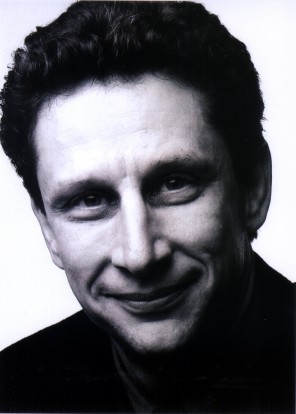
David Finkel, 50, is a staff writer at The Washington Post, currently assigned to the national staff. He has also worked for the Post's foreign staff, for which he covered the wars in Iraq and Kosovo, and the Sunday magazine. Before joining the Post in 1990, Finkel was a staff writer for the St. Petersburg Times and theTallahassee Democrat.
Among Finkel's journalism honors are a Robert F. Kennedy Journalism Award in 2001 for a series of stories about worldwide patterns of illegal migration, a Sigma Delta Chi award in 1999 for his reporting from Kosovo, a Missouri Lifestyle award in 1995 for a story about racial and class conflict in Washington, DC, and a distinguished writing award from the American Society of Newspaper Editors in 1986 for a variety of work. He has also been an ASNE finalist for deadline and non-deadline writing, and is a three-time Pulitzer finalist for explanatory reporting and feature writing.
A 1977 graduate of the University of Florida, Finkel is married, has two daughters and lives in Silver Spring, Maryland.