Finalist: David Scharfenberg, Alan Wirzbicki and Marcela García of The Boston Globe
Nominated Work
Half-empty schools, of which Boston has too many, aren’t good for students.
After years of false starts and delays across multiple administrations, Boston Mayor Michelle Wu and Superintendent Mary Skipper say they’re ready to take on one of the most thankless challenges in public education: closing and consolidating schools to improve the overall academic experience for students.
Like many other cities, Boston’s public school enrollment has been falling for more than a decade — but political and educational leaders have been dodging that problem and its implications for almost as long.
Just as a budgetary matter, it doesn’t make sense to maintain so many unused seats. But the core problem posed by under-enrolled schools isn’t financial. Students’ educations are harmed when schools have so many empty seats that it’s not viable to offer sports teams, clubs, and a wide variety of classes.
“When some of the schools are larger, but then some are very small, at that tiny scale, it’s very, very difficult to sustain the range of academic offerings” and extracurriculars that students, “especially high schoolers,” need, the mayor said last year.
The Globe profiled one of the high schools bearing the brunt of enrollment declines last year. The Jeremiah E. Burke High School in Roxbury, where enrollment is half what it was two decades ago, lacks extracurriculars like a school newspaper and the range of academic offerings that other high school kids take for granted.
Districtwide, 32 of the 119 school buildings have “utilization rates” below 84 percent over the past five years — which the district considers “not ideal.” And several enroll less than half their capacity. The five-year utilization rate at the Burke (which was recently renamed Albert D. Holland High School of Technology) is 58 percent, according to the district.
A long-range facilities plan released by the district in January suggested that as many as half of the district’s buildings could close in the most extreme realignment scenario, though Skipper said the district wasn’t contemplating closing that many.
There are many reasons for the enrollment decline, including the inescapable demographic reality that families are having fewer children. BPS also faces competition from private, parochial, and charter schools, as well as from the Metco program, which buses some Boston kids to suburban public schools.
The problem has been known, and largely ignored, for years. In 2013, this editorial board wrote that “[d]emographic shifts point to sparsely attended high schools for many years to come.” Two years later, an audit commissioned by former mayor Martin Walsh said the district could save millions by closing undersubscribed schools. At the time, BPS served about 57,000 students; the figure was just under 48,000 last year.
From a political standpoint, mayors know they’ll take plenty of heat from teachers and parents for school closures — but likely won’t get credit for any of the long-term improvements that might result from an efficiently run district that spends more of its money in the classroom and less on heating, maintenance, and duplicative staff. When spring 2024 came and went without any major closures or consolidations, some education advocates feared the Wu administration was joining its predecessors in kicking the can down the road.
Still, Skipper said in an interview with the Globe editorial board last week that addressing the district’s facilities was a high priority. “We see this as urgent work,” she said.
If Wu and Skipper are serious about finally right-sizing the district, they deserve the public’s support through what is bound to be a contentious process. But the public deserves something too: a specific and detailed vision from the city, with measurable goals, for how the district will reinvest money freed up by consolidation.
The downsides and dangers of school closures are abundantly clear. They’re disruptive for parents, staff, and students, and can harm neighborhoods that lose local institutions. Children from closed schools can feel stigmatized, especially at the high school level. In cities that did not handle closures well, such as Chicago, they have dealt academic setbacks to some affected students.
But those are reasons to approach closures carefully, not reasons to avoid them. The cost of not closing and consolidating schools is high, too, even if it’s harder to see. A conservative estimate is that the district would realize about $40 million in annual savings if it had no under-enrolled schools; that’s what the district pays in “soft landing” funds to schools whose enrollment goes down (the district’s overall budget is about $1.5 billion).
Over the next few weeks, the Globe will outline some ideas for better ways the district could use that money — adding more high-dosage tutoring, for instance, or offering more bilingual education. It’s not meant to be an exhaustive list. But those are the kinds of ambitious investments that the district should be promising to students and families as schools are closed, merged, and reconfigured. The goal should not just be fewer schools, but fewer schools that are consistently better.
In an interview with the editorial board, Wu said that school reconfigurations would be “a multiyear process to manage transitions thoughtfully and individually” and that her promise to families was a “guarantee that every person who is disrupted by this, it’s because there’s benefit that they experience from it.” The district has developed a rubric to evaluate schools that focuses on three main criteria: the utilization rate and two measures related to the building’s physical characteristics.
Wu and Skipper didn’t offer a specific timetable but said some changes could be voted on by the School Committee in spring 2025. Wu said the process would leave “enough planning time for families to adjust and and plan their lives around it.”
Let’s hope they stick with it and succeed. Education is vital to maintaining Boston’s viability as a top-tier city. More than ever, the city needs to prepare students for careers in a changing economy and hold onto middle-class families. To accomplish those things, quality schools for all students are essential. As painful as it will be, the process that the city is contemplating is essential to meeting those goals, both by getting kids out of under-enrolled schools and investing the savings back into education.
Opposition — and there’s almost certain to be opposition — will focus on the hardships of closing schools, which are real. But Wu, Skipper, and the city’s political and business leadership can’t cede the conversation to skeptics who dwell only on those downsides. At every opportunity, officials ought to be offering a positive vision for how reconfiguring the district is a chance to give more students in Boston what every one of them deserves: a quality education.
District leaders should take the academic performance of schools into account as they decide which ones to close or consolidate.
Last week, the state designated Fenway High School and two other public schools in Boston as “schools of recognition” — an honor reserved for only a few dozen high-performing schools statewide.
One of the district’s own assessments of the high school of about 400 students in Mission Hill, though, is more mixed. In the rubric the district has developed to guide school closure, merger, and reconfiguration decisions in the years ahead, Fenway flunks one of the three main criteria because its 1925-vintage building doesn’t offer a “continuum of services,” which the district says includes “appropriate support spaces, classroom number and size, accessibility and location of classrooms and support spaces.”
Overall school enrollment in Boston is declining and there’s widespread recognition that the city needs to close some facilities — both to get kids out of schools that are too under-enrolled to sustain the classes and services they deserve, and to reinvest financial savings into the classroom. Mayor Michelle Wu and Superintendent Mary Skipper both say closing, consolidating, and restructuring schools is a priority.
But the divergent assessments of Fenway High School point to how difficult it may be to translate that broad goal into specific school-by-school decisions.
Would the district seriously consider closing a school that the state has honored for its performance, or risk disrupting its success by merging it or moving it to a different building? Conversely, would it really leave open a struggling school just because it’s in a newer building?
In theory, the answer to both questions is yes. Currently, the district’s rubric for evaluating schools does not directly consider academic performance. According to Skipper, the district’s focus is on buildings themselves. “What we’re trying to look at with this lens is, where are there schools that they can’t even possibly reach [our] benchmark, because the facility itself is the barrier?” she told the Globe editorial board.
There is some pragmatic appeal to the district’s approach. Building conditions are generally objective and clear: a school either has enough classrooms or it doesn’t; it’s either compliant with the Americans with Disabilities Act or not. Closing a school because of poor academic performance can also feel punitive and arouse pushback from teachers and students who feel they’ve been blamed or labeled failures. Given the strong emotions that school closings tend to provoke, there’s a political logic to choosing criteria that are facilities-based.
And one of the district’s criteria does indirectly reflect academic performance. A school’s utilization rate — the measure of how many of its seats are filled — reflects to some extent how desirable the school is in the city’s school choice system. Educational quality is one of the factors that often influences families’ selections.
But failing to take academic outcomes more explicitly into account also ignores what experts who’ve studied school closures in other cities have concluded. Closing schools shouldn’t just be a cost-savings exercise; it should result in better educational experiences for all students affected so that their sacrifice is worthwhile. And to make school closures raise academic performance, researchers say, districts need to be intentional about closing weaker schools and moving students to higher-performing ones.
Margaret Raymond at Stanford’s Center for Research on Education Outcomes, which conducted a 26-state study of closures in 2017, said one of the lessons was clear: “Close all the bad schools,” she said in an interview with the Globe editorial board, and move their students to higher-achieving schools.
The CREDO study suggested that for many students, transferring to a new school neither hurt nor helped them — but for those who transferred from a bad school to a better school, there were noticeable positive impacts.
Others echo that view.
“What we find in Philadelphia is when you move students to schools serving higher-achieving peers, that tends to mediate any adverse impacts from moving them,” said Matthew P. Steinberg, an education economist who analyzed the closure of about 10 percent of Philadelphia’s schools in the early 2010s.
That’s not to say Skipper should throw out the rubric the district developed, with its emphasis on bricks-and-mortar evaluations. But as the process unfolds, the district should be clear that it won’t ignore academic performance in its decisions.
Districts that have gone through the school closure process offer other lessons for Boston, too.
Chicago closed 50 schools in 2013 — a divisive saga for the city that’s often held up as a case study in how not to close schools. Test scores fell for students from both closed and receiving schools, and while reading scores recovered quickly, the setback for math was more long-lasting. Graduation rates didn’t improve for students from closed schools.
Chicago’s experience provides a checklist of things Boston should avoid.
First, although the city took schools’ academic records into account, the closures there were not strictly performance based and some of the receiving schools in Chicago were not considered high quality by the district.
Second, Chicago’s process was rushed: Teachers and families had just a few months to prepare. Boston should make sure any closures are announced early enough to give families time to plan ahead.
“You’d want students to be coming into schools that were set up well, where teachers are ready, where there’s been opportunity for students and staff to get to know each other. That didn’t necessarily happen” in Chicago, said Elaine Allensworth, the director of the UChicago Consortium, which issued a critical report in 2018 of the city’s school closures. (Wu and Skipper have said there will be ample time for families to adjust to any school closures or consolidations in Boston.)
While the school district in Chicago did put money into some programming at the receiving schools — including a safe routes to school program — it didn’t have a specific curricular or educational strategy tailored to the needs of transferring students. In addition to things like extra tutoring at receiving schools, “you need supports on the front end for students whose schools are closed so they don’t feel like failures,” Allensworth said.
Finally, in Chicago, the district played a complicated game of musical chairs with facilities, meaning that some schools were receiving an influx of new students and moving to a new facility at the same time, which added more stress to already difficult transitions.
There are more positive examples from other cities, too. One strategy used in New York City, which closed 29 low-performing high schools in the 2000s, was to give students at closing schools a choice: they could transfer to a different school or they could finish out their academic career at the school, which would shrink by one class a year until the last cohort graduated. A study afterward indicated that students who stayed at their old school as it wound down may have had slightly higher graduation rates.
In an interview, Skipper said she would be open to some kind of phased-in high school closures but was wary of creating situations where a senior class would be the only one remaining at an otherwise empty school.
However conscientious the district is, though, the reality is that closing schools is likely to be difficult. The best reason to close and consolidate schools is for future students, so that they’re more likely to attend fully enrolled schools in appropriately sized buildings. When New York closed schools, the overall impact on the students who were already enrolled in those schools was minimal. But for younger students — the ones who would have likely enrolled in those schools — there was a benefit. “They actually turned up somewhat better off. They had higher graduation rates than would have been expected,” said the study’s author, James J. Kemple.
But the district also owes it to students currently enrolled to do everything possible to ensure they come out ahead in the process — and a proven way to do that is to make sure as many students as possible are moving from lower-performing schools to better ones.
‘High-dosage tutoring’ has produced eye-popping results.
It’s a spring morning at John Hay Community Academy, a proud public school in a scruffy neighborhood on Chicago’s West Side, and three first-graders are lined up against a bright blue wall in the hallway: Faye, her beaded braids framing a pink Barbie shirt; Ka’mari, her hands neatly clasped behind her back; and A’Kyng, a grin peeking out from behind his paper mask.
Just across the hall, at a small rectangular table, Felicia Mason, a member of the school district’s burgeoning Tutor Corps, taps on a screen and pulls up a series of short words for her charges to sound out: “m-e-ss — mess,” “m-i-ss — miss,” “m-u-s-t — must.”
A’Kyng’s arms are swinging. Faye is twisting at the waist. And with each correct pronunciation, they take an eager step toward the table.
It’s a giddy little race to academic proficiency — and a glimpse into what may be the single most promising public education intervention in America.
It’s called “high-dosage” or “high-impact” tutoring.
While the exact form varies from district to district, the basic parameters are the same. Small groups of students — usually two, three, or four at roughly the same academic level — meet with a tutor several days per week for the sort of intensive, individualized instruction they can’t get in a typical classroom. The tutors are well-trained. The materials are aligned with the curriculum. And the 30- to 60-minute sessions are built into the school day.
This isn’t the standard public school tutoring offering — volunteers offering occasional homework help at sparsely attended after-school programs.
It’s consistent. It’s purposeful. Dozens of high-quality studies have demonstrated it can have powerful effects.
One pair of randomized control trials, conducted a decade ago when Chicago was just starting to experiment with the intervention, found it doubled or tripled the learning of a group of mostly low-income Black and Latino high school students.
That’s an eye-popping result.
Indeed, high-dosage tutoring outperforms just about every popular strategy for improving academic performance — from “no-excuse” charter schools to extended school days, lengthened school years, vacation academies, and summer school.
At this point, there’s really no debate about the intervention’s effectiveness, when done well. As one researcher put it in the mid-1980s, tutoring sessions are “the best learning conditions we can devise.”
The real questions have always been: How do you scale up this costly, labor-intensive intervention? And as you move from small, tightly controlled experiments to broad adoption, will you still be able to realize substantial gains?
The COVID-19 pandemic offered a unique opportunity to test these questions: With districts all over the country facing staggering learning loss, the federal government poured tens of billions of dollars into academic recovery and encouraged local officials to use evidence-based strategies like high-dosage tutoring.
Some states, including Tennessee, North Carolina, and Maryland, responded by building tutor corps, tapping a mix of classroom teachers, teachers’ aides, retired teachers, teachers-in-training, parents, and college students to deliver individualized instruction at scale. Several large school districts built programs of their own.
It’s too early to make any definitive judgments about how it’s all worked out. But there are signs that a reasonably well-implemented program can make a real difference.
Take a recently published study by researchers at the University of Chicago Education Lab on scaled-up, high-dosage tutoring programs in Chicago and Fulton County, Ga., in the 2022-2023 academic year. While the results for reading were inconclusive (data collection continues), preliminary data showed substantial gains in math — the equivalent of two-thirds of a year of learning, or enough to completely wipe out the effects of the pandemic for the average student.
And that was under less-than-ideal conditions, said Monica Bhatt, senior research director at the Education Lab. The districts were “still trying to get their tutoring off the ground,” she said, and doing it less consistently than they might, but researchers still found “these really encouraging, sizable effects.”
This kind of success won’t be repeated everywhere. Going big is a challenge. That’s the story of education reform writ large, and it no doubt applies to tutoring.
Indeed, a recently published review of 265 tutoring studies conducted over the last half century in wealthy, industrialized nations found that as the number of students served expanded, the effects dropped to a half or a third as great.
But those reduced impacts were “still very impressive,” as the researchers put it. And large-scale programs that employed best practices — establishing student-to-tutor ratios of at least 3:1, for instance, and providing sessions at least three times per week — saw substantially smaller drop-offs.
In fact, US-based studies published after 2009 and using standardized tests to measure progress generally showed no drop-off as well-designed programs got larger (though there was no way to judge the largest programs of all, since there were so few studies on them).
With good evidence that the “best learning conditions we can devise” can be scaled, it’s incumbent on districts that have struggled to make up for pandemic learning loss — and struggled, for decades, to close stubborn achievement gaps between white students and Black and Latino students — to seriously consider a significant investment in high-quality, high-dosage tutoring.
That includes Boston, which has experimented with the intervention in a small number of schools but hasn’t made it a priority.
The conditions for a robust program are actually quite good here.
Boston has a surfeit of underutilized school buildings, and long overdue closures could free up considerable resources for high-dosage tutoring.
The city also has a rich philanthropic infrastructure and several strong public service organizations, such as City Year and Boston Partners in Education, that are already active in the schools. The universities in the area could be key partners, too, offering up thousands of students as tutors and deploying highly skilled researchers to test different models and track progress.
Besides, there’s history here.
Boston, though it lags on high-dosage tutoring now, is actually the birthplace of the movement.
A miracle on Commonwealth Avenue
It all started with Match Charter Public High School, which opened its doors at the turn of the century.
Determined to give its mostly low-income students of color an edge, the school did some early experimentation with tutoring.
But as founder Michael Goldstein earlier this year told CommonWealth Beacon, the people Match recruited to “do an hour here and an hour there” didn’t seem to move the needle.
So after the school moved into an old auto parts store on Commonwealth Avenue in 2002, the administration got creative, turning the vacant upper floor of its new building into a dorm for live-in tutors.
Members of the school’s burgeoning “Match Corps” — recent college graduates paid a modest stipend through the federal AmeriCorps program — subsisted on peanut butter sandwiches, slept three to a room, and occasionally complained about how tough it was to bring a date home at night when they had so many roommates.
But working with small groups of students for multiple sessions each week, the tutors helped turn the school’s disadvantaged student body into one of the highest achieving in the state.
By 2005, 69 percent of the school’s sophomores were testing “advanced,” the highest possible rating, on the math portion of the Massachusetts Comprehensive Assessment System — the fourth-highest share in the state. And the school ranked 18th in English.
Early replication efforts caught the eye of researchers at the University of Chicago, and they joined with Saga Education, a nonprofit spun out by Match administrator Alan Safran and former Match student Antonio Gutierrez, to test the model in a group of Windy City high schools.
The remarkable results — this was the research that found students doubling or tripling their learning — led to a modest expansion, built on philanthropic dollars and federal Title I funds earmarked for schools with large numbers of low-income students. Then, when COVID hit, Chicago went big: creating a sprawling Tutor Corps.
In the 2023-2024 academic year, the district spent $12 million — most of it pandemic relief funds — on the corps, placing over 600 tutors in 229 of the district’s lowest-performing schools. And the district pledged to continue funding the intervention in any school that wanted to keep it in place after the pandemic funds dried up this fall.
Latrese Mathis was all in.
She’s the principal at Hay Community Academy, and like any school leader, she has plenty to juggle; on the morning a member of the editorial board paid a visit in the spring, she was steering arriving students around Zeus, a growling neighborhood dog who had made his way onto the school grounds.
For all that she has to deal with day-to-day, though, integrating the Tutor Corps had been easy, she said.
The district provides the school’s tutors — three full-time and one part-time last year — with dozens of hours of training. And an on-site coordinator manages the tutors and connects them to the teachers.
“It all works together,” Mathis said.
The school was able to offer tutoring to 68 of its roughly 265 students. So administrators targeted students who were in “Tier 2″ (just below grade level) and “Tier 3″ (two to three years behind grade level). The aim was to move as many as possible into “Tier 1″ (at or above grade level) by the end of the school year. And they were making progress.
Tier 1 appeared in green on a pyramid administrators used to track student achievement, and “in every classroom,” said Kelley Gercone, the on-site manager of the tutors, “our green is getting greener.”
Academics may be at the core of the intervention, but Mathis said there is an important social-emotional component, too.
Students need to feel connected to adults in the building if they’re going to take chances and grow, she said. And the tutors, with their small-group work, were in an especially good position to forge those connections.
Mason, the tutor who played the pronunciation game with her students Faye, Ka’mari, and A’Kyng in the hallway, is from the neighborhood and has put two of her own children through the Hay.
“I know everybody,” she boasted, with a wide grin.
She’d started at Hay five years earlier, assisting in pre-kindergarten classes and pitching in with office work. But when the tutoring program launched, the principal suggested she give it a try and she hasn’t looked back.
In the spring, she was working 30 hours per week and making $20 per hour — not quite as much as she’d like but more than she was making before. And the work felt meaningful.
She remembered testing one second-grader at the beginning of the year who said he couldn’t read basic words like “a” and “the.” “I said, ‘are you playing with me?’ ” He wasn’t. Mason “wanted to cry,” but she got to work instead. And by the middle of the year “he could do it like that,” she said, snapping her fingers.
The other tutors in the building were younger than Mason. One was a college student. Another had just finished her student teaching (a happy side effect of the tutoring program is that it can be a pipeline for districts eager to find new teachers; the Hay last spring employed one former tutor as a teacher’s assistant and another was doing some substitute teaching).
Younger teachers and tutors have a natural connection with the students. But Mason had no trouble forging ties.
In between classes, the little ones swarmed her for hugs. And if the older students were messing around, she wasn’t afraid to give them some gentle discipline — “nuh-uh, you ain’t going to do that” — and a little extra tutoring while she was at it.
“Now give me a word,” she’d say.
Scaling up
Boston Public Schools has done some experimentation with high-dosage tutoring.
Last year, the district provided about 350 of its roughly 50,000 kids with a mix of online and in-person services.
City Year corps members served another 1,000 or so with their own version of intensive tutoring.
Lesley Miller, the school system’s chief of teaching and learning, said the district is well acquainted with the research on high-impact tutoring and is pondering an expansion. But she acknowledged that the focus has been elsewhere.
When the district received its allotment of pandemic relief funds, officials decided to put most of the money into onetime expenditures instead of long-term investments, since the pandemic largesse would eventually run out.
The dollars went to summer learning academies, new curricula, and an on-call online tutoring service — live, late-night help with a math problem if you needed it — that didn’t measure up to the built-into-the-school-day, high-dosage model that districts like Chicago pursued.
Boston’s strategy may have been fiscally prudent. But it foreclosed the possibility of landing on a truly transformative strategy — and then figuring out how to sustain it, even at a reduced level, in the future.
That’s what the Fulton County Schools, which serve about 90,000 students north and south of Atlanta, have done.
The district made a big investment in high-dosage tutoring during the pandemic — funding a paraprofessional at each elementary school who could run small-group sessions, deploying still more tutors through an AmeriCorps program, and paying for outside vendors that offered online and in-person tutoring.
Cliff Jones, chief of staff for the schools, said the district had to pare back this fall with pandemic funding expiring: It is no longer guaranteeing a paraprofessional in every elementary school. But it is providing schools with modest high-dosage tutoring allotments of $5,000 to $15,000, money that principals can combine with other discretionary dollars allocated to their schools to hire paraprofessionals on their own — or to pay for outside vendors.
The AmeriCorps program is still going strong, too, serving 43 of the district’s 58 elementary schools. And the district has even carved an “intervention bloc” into the daily schedule, paying high school students to walk to nearby elementary schools and tutor kids — an intervention that, research suggests, can be highly effective.
“We started this high-dosage, small-group [program] to address learning loss,” Jones said, “but we have found that it’s now part of our school district DNA.”
The Fulton approach is just one.
Saga Education, the nonprofit that spun out of Match High School and has emerged as a leading force in the national high-dosage tutoring movement, lays out several other options in a detailed guide to keeping high-dosage tutoring programs in place after the pandemic.
Federal funds for English language learners and disabled students can be spent on tutoring for those populations, Saga points out. And several of the other sources the organization identifies seem almost tailor-made for Boston.
Here in the higher education capital of the world, federal work-study dollars could put a small army of college students to work as high-dosage tutors in city schools. And AmeriCorps funding could be useful, too.
City Year, one of the best known AmeriCorps programs in the country, has about 65 corps members working in Boston classrooms and they’re already providing a version of high-dosage tutoring — offering individualized help for struggling students during class or pulling out small groups for special attention.
Monica Roberts, the executive director of City Year Greater Boston, said the central obstacle to scaling up is recruiting more corps members: It’s hard to get young people to commit to a year of service when the annual stipend is $27,300 in one of the most expensive cities in the country.
But the district could help by funding larger stipends. And if it closed some of its underutilized schools, it could convert them to apartments for tutors, in a nice echo of the Match program that launched the high-dosage tutoring movement two decades ago.
There are ways to tap older talent, too.
Boston Partners in Education, which has been placing adult mentors in city schools since 1966 — usually for an hour per week — could transition at least some volunteers to the more demanding schedule of the high-dosage tutor.
And if the school system paid tutors, executive director Erin McGrath said, the organization could go a step further — recruiting and managing a cadre of retirees willing to provide intensive math and reading help for a stipend.
Building a larger high-dosage tutoring program — whatever the labor source — would be expensive.
Estimates of the per-pupil cost range from $500 to $2,500. That means a program that targeted, say, 10,000 kids who were falling behind in math and reading — or about 1 in 5 students in the district — would cost anywhere between $5 million and $25 million.
That’s real money. But even on the upper end, it’s less than 2 percent of the district’s $1.5 billion operating budget, and a conservative estimate is closing schools to account for enrollment declines would free up tens of millions of dollars.
There would be no need to ramp up quickly — in fact, moving fast could be a mistake. When the city of Nashville went big with pandemic relief funds, it faltered. Moving deliberately and tapping the best expertise is the way to go.
Gutierrez, the former Match student who cofounded Saga, said his organization has had some basic advisory communications with his hometown district about high-dosage tutoring but nothing more, “which is a bummer, because I love Boston,” he told the editorial board. “The superintendent can give me a call at any time.”
Boston schools chief Mary Skipper would be wise to take him up on that.
The future of tutoring
Even the districts that have managed to scale up high-dosage tutoring over the past couple of years have significant room for growth.
The 10,000 students Chicago’s program served last year is impressive. But there are 320,000 kids in the district.
To go bigger, officials need to identify ways to stretch the tutoring dollar. And the Chicago schools are partnering with Saga Education on that project now.
Saga works with the Chicago schools on two levels.
It provides training and curriculum for the sprawling, district-run Chicago Tutor Corps.
But it also offers direct, soup-to-nuts service at 22 city high schools — hiring site directors, recruiting tutors through its own AmeriCorps program, and pushing the tutoring model in new directions.
This spring, a member of the editorial board got a look at the latest iteration in a fourth-floor classroom at Schurz High School in Chicago’s Irving Park neighborhood.
It was a hybrid affair.
On any given day, one large batch of students would click through self-guided, computer-based lessons while a single tutor floated from desk to desk, helping kids as they needed it; this was a cheaper, less labor-intensive form of tutoring.
In the other half of the classroom, smaller groups of students would engage in a more labor-intensive, expensive model — three or four kids meeting with single tutors.
The following day, the two halves of the class would switch places.
This was a way to serve more kids for less money. And research suggests the stripped-down approach can still yield strong results.
But the cost-saving maneuvers weren’t the only innovation.
The 3:1 or 4:1 intensive tutoring that half the class did each day — it wasn’t in-person, it was remote. Students logged onto their laptops in class, strapped on headsets with microphones, and worked with live tutors on the other side of the city, out in the suburbs, or halfway across the country.
Nicole Milberg, chief of teaching and learning for the Chicago Public Schools, said it’s a challenge finding qualified math tutors, especially “in the communities where we believe we need [tutoring] the most” — high-poverty areas on the South Side and West Side of the city.
Going remote meant massively expanding the labor pool.
It meant tapping talent like Dinesia Anderson, who logged in from her home in Hinesville, Ga., on the day of the editorial board visit to tutor a group of three Schurz High freshmen.
A former teacher, she signed up for a year of service with Saga because she wanted the opportunity to work with small groups of students more intently.
And she got it.
Over the course of the 50-minute session, the group considered one math problem after another. “Think #2: In 3 weeks over the summer, Jessica made $192. On average, how much money did Jessica make per week?”
At times, the kids worked on their own problems — at others, two of them watched as the third sketched out an equation on screen.
Anderson adroitly moved from student to student and frequently nudged them toward collaboration. “Can you fix his work?” she asked one of her students, Dejalle Ramirez, 15.
In an interview after the tutoring session, Ramirez said she didn’t love math at the start of her freshman year. She still didn’t at the end. But she’d grown to like it, she said. She felt more confident with numbers. And “math lab,” as the high-dosage tutoring sessions are called, was easily one of her favorite classes.
One of her most productive, too.
Over the course of the school year, Ramirez’s score on the assessment Saga periodically uses to measure students’ progress went from 47 percent to 63 percent, to 80 percent, to 93 percent.
That’s real progress.
The kind of progress Boston schools should pursue.
Online, in person, hybrid. There are all sorts of ways the district could build a high-dosage tutoring program.
What matters is that it gets going. That it takes a shot. That it takes care to build a quality program.
Boston’s students, after all, deserve nothing less than the best learning conditions we can devise.
Only about 7 percent of English language learners in the Boston Public Schools are enrolled in dual-language programs, a proven approach that provides some lessons in the student’s native language.
Susana González moved to Boston from the Dominican Republic nearly nine years ago, settling in Roxbury, where she started a family with her now-husband.
The couple’s first daughter, Alaia, is now a second-grader at the Orchard Gardens K-8 School, which she has attended since pre-K. At first, it was hard for Alaia to learn English, and she was sent to speech therapy, which she still receives. Her mother, who works as a bilingual teacher’s assistant at a preschool, said that Alaia does pronunciation exercises in therapy, but she still struggles with writing and subjects like English language arts.
Despite that, Alaia now primarily speaks English. In fact, while both of her parents mostly speak to Alaia in Spanish — and always have — the 8-year-old has lost her ability to easily understand and speak Spanish. “It is sometimes very hard to speak with her,” González said. “She’d say, in Spanish, ‘mami, no entiendo lo que me dices, ¿cómo se dice en inglés?’ And I repeat it to her in Spanish but she insists that I tell her in English.”
Alaia has struggled to learn because she has never been taught in Spanish — her biggest asset, her primary language — at Orchard Gardens, according to her mom, whose proficiency in English is limited. González and her husband are now in the process of switching Alaia to the Hurley K-8 School, one of BPS’s eight schools that offer bilingual education for English language learners, which the couple said they didn’t know was an option in the district. “It’s very hard for me to help her with homework because I don’t understand,” González said. “I had to put her in an after-school program so they can help her with homework because I can’t.”
Educating students whose first language isn’t English, like Alaia, is one of the most urgent challenges facing the Boston Public Schools.
A third of students in the district — or about 16,800 — are classified as English language learners. At the younger grades, the ELL numbers are even higher: 47 percent of kindergartners and 51 percent of pre-kindergarteners are non-native English speakers.
For this group of students, the district has to juggle two tasks: teaching them to speak and write English, as required by federal law, while at the same time teaching them academic subjects like math and science.
It’s a daunting challenge — one the district hasn’t always met.
Consider the district’s latest test scores, which paint an abysmal picture for English language learners. Only 4 percent of ELLs in grades 3-8 and 2 percent of ELLs in grade 10 met or exceeded expectations on the English MCAS test in 2024, while 8 percent of ELLs in grades 3-8 and 6 percent of ELLs in grade 10 did so on the math MCAS test.
Academic research suggests that the best way to serve these students is through bilingual education programs that deliver some instruction in their native language, while also teaching them English — like the one at the Hurley. Decades ago, bilingual education was controversial — Massachusetts even banned it for a time.
Now, though, legal restrictions are gone and the barriers are staff and money. Bilingual education is expensive, qualified bilingual teachers are hard to find, and Boston’s bilingual education offerings are relatively scarce.
There’s no magic formula to solve those problems. But there’s also no question that expanding the district’s bilingual education offerings for families like González’s would be a far better use of money than keeping underutilized school buildings open. Boston needs to consolidate schools so that it can direct as many of its resources as possible into closing gaps that have festered for far too long.
The legacy of misguided ‘English-only’ policies
For English language learners, the recent history in Massachusetts has been bleak. A political movement in the late 1990s and early 2000s spearheaded by conservative Silicon Valley millionaire Ron Unz drove voters in Arizona, California, and Massachusetts to pass restrictive language laws — so called English-only laws — which severely limited the use of the native language in the education of English learners. The Commonwealth’s voters approved English-only education in a 2002 referendum.
In Boston, the impact was immediate. A University of Massachusetts Boston study found that, from 2003 to 2006, high school dropout rates for English learners almost doubled and that MCAS test score gains for them were lower than those of other student populations; as a result, achievement gaps between ELL students and other BPS groups widened.
In the next decade, things didn’t improve — despite federal intervention, task forces appointed to address the needs of ELL students, and, in 2017, state legislation that effectively repealed the 2002 law. “The district has not created equitable conditions to ensure that all English learners progress both academically and in English language development,” read a comprehensive audit of BPS by state education authorities released in spring 2020, just as the COVID-19 pandemic began.
In 2018, the four-year graduation rate for English learners was the second-lowest among all student groups at 63 percent. Between 2015 and 2018, the dropout rate for English learners grew by roughly 34 percent and was the highest among all groups.
Recent BPS data show that the graduation rates of multilingual learners in Boston are much lower than the average; their dropout rates are nearly double the average.
At the crux of these poor outcomes is the insufficient amount of bilingual education the district offers.
Research shows that programs that use English learners’ primary language in instruction — like dual-language programs, which form part of what is known as bilingual education — are more likely to close achievement gaps. A large-scale, longitudinal study published in 2017 found “that English-only and transitional bilingual programs of short duration only close about half of the achievement gap between English learners and native English speakers, while high-quality, long-term bilingual programs close all of the gap after 5–6 years of schooling.”
And yet, according to figures provided by the district, only 7 percent of English learners — or about 1,200 students — are currently enrolled in the district’s dual-language programs. The rest, including Alaia, learn under what is dubbed an English immersion approach, where teachers teach academic subjects in English with limited support in students’ native languages. Lessons are typically taught in English, but the teacher can use various tools or techniques — like speaking slowly, using simple words, or offering visual aids like pictures and videos — to help students follow along even if their English proficiency is low.
A growing need
English learners are often described as the fastest-growing student segment in K-12 education nationwide. About 1 in 10 American K-12 students is an English language learner. In the Bay State, the share of public school students with ELL status more than doubled between 2003 and 2018 — from 6 percent to 14 percent.
Additionally, many English language learners have special needs, which further complicates the challenge of educating them. In Boston, nearly 1 in 4 English learners has a disability.
The majority of English learners in the district are native Spanish speakers. But ELLs who speak Haitian Creole as a first language are an emerging demographic — Boston has the third-largest population of Haitians in the country. Small numbers of native Portuguese, Vietnamese, Chinese, Arabic, and Somali speakers attend BPS, according to last year’s data from the district.
In an ideal world, all ELLs would be enrolled in bilingual programs — which could also serve as attractive options for English-speaking families who may want their child to learn a second language. But Boston only has eight verbal dual-language programs (it also has an American Sign Language program). Dual-language programs include the Mario Umana Academy K-8 in East Boston (Spanish-English), the Mattahunt Elementary School in Mattapan (Haitian Creole-English), the Rafael Hernández K-8 School in Roxbury (Spanish-English), and the Margarita Muñiz Academy in Jamaica Plain, the district’s first and only dual-language high school (Spanish-English).
Building these bilingual education programs requires money, primarily to hire certified bilingual teachers. But there is fierce competition nationwide to hire qualified teachers since so many districts are also contending with rising numbers of ELL students. In fact, the national shortage of bilingual teachers is the main reason why districts across the country aren’t expanding bilingual and dual-language education, according to a recent paper from The Century Foundation, a public policy research nonprofit.
Many school systems have been offering targeted cash incentives like hiring or retention bonuses for bilingual educators — for example, up to $8,000 in Houston for new hires. In Boston, though, according to a district spokesperson, bilingual teachers’ pay is not differentiated from non-bilingual educators’ pay. The spokesperson said BPS would like to explore bonuses for bilingual educators and had discussed the idea with the teachers union.
The path forward
Rebuilding all the infrastructure needed for bilingual education in Massachusetts takes time, given that the pipeline of bilingual teachers withered during the time the policy was illegal. More than anything, it will take millions of dollars — for sustained investment in curriculum, training and certification of specialized teachers and staff, professional development, and even emerging AI tools to support bilingual education.
In an interview, a BPS spokesperson said the district submitted to state education authorities nine new program proposals to teach multilingual learners. Of those, two are dual-language programs. “That’s a big first step and we want to continue to grow that,” the spokesperson said. “But we are trying to balance doing this well and doing this quickly.” (In the spring, state officials rejected 17 out of 19 new program proposals for multilingual learners the district wanted to implement this fall because they fell short of state criteria.)
Boston does have a program to train bilingual educators: The Bilingual Educators and Accelerated Community to Teacher Program, launched during the 2023-2024 school year, is a 12-month program that’s free to accepted applicants. The district’s spokesperson said the program had 18 graduates last year and the current cohort has 89 participants. Graduates are not required to teach in BPS, but they are strongly encouraged to. BPS is also offering a new bilingual inclusive education initiative, in which graduates of the accelerated teacher program can apply to be a teacher resident next school year at one of the district’s bilingual schools and earn a discounted master’s degree through a partnership with Stonehill College, the spokesperson said.
The district should launch more grow-your-own programs. These programs could help bilingual paraprofessionals or school staff become licensed teachers and create a career pathway for multilingual high school students to become educators.
To the disappointment of many experts and community leaders in Boston, though, the district doesn’t seem to be going all-in on bilingual education.
Last fall, Boston officials announced a new model to educate multilingual students. The approach involves educating non-native speakers in full-immersion general education classes. The idea is that they will have access to multilingual services but not guaranteed instruction in their native language.
Nine of the 13 members of the task force appointed to advise the Boston School Committee on multilingual education resigned in protest.
“The current plan is incomprehensible in its ignorance of what constitutes optimal educational practice,” Miren Uriarte and Rosann Tung, two of the members who resigned, wrote in a Globe op-ed. Indeed, the district could not point to research or studies that would support the plan.
“This is an English-only dumping operation,” Roger Rice, executive director of Multicultural Education, Training and Advocacy, said of the plan last year.
“We are trying to do something very different than we have in previous years. This is the first year of rolling out inclusion differently,” the district’s spokesperson told the Globe last week. “We are on month two of doing that and we’re doing it at very specific grades. We have to give it some time.”
BPS insists that the plan allows multilingual learners to be taught in the least-restrictive environment. They borrow that terminology from the special education world, where inclusive practices are encouraged, such as teaching students with disabilities in a general education classroom.
Mainstreaming special education students leads to better academic outcomes, social skills development, and many more benefits for students with disabilities. But students with disabilities and English language learners are two different populations, and what works for one isn’t necessarily best for the other. The way a former district official put it, BPS’s definition of inclusion, in the context of English learners, is misguided. The definition of inclusion, the former official said, should be celebrating different cultures and different languages and fully embracing multilingualism.
It remains to be seen how the district’s new approach will fare. But it is clearly not ideal. In the long term, increasing bilingual offerings — by attracting more bilingual teachers and rebuilding the pipeline to train them — is the most promising way to give non-native English speakers the education they need.
In just eight years, the Mattahunt Elementary School went from one of the worst in the state to winning a prestigious award for its remarkable improvement.
When Nadine Mode learned her son had been assigned to Mattapan’s Mattahunt Elementary School for pre-K in 2019, she was alarmed.
“It wasn’t on my list at all. That wasn’t a school I wanted for my son,” Mode, a Mattapan resident, said in an interview. “I was so scared for my son.”
Her concerns weren’t unfounded. At the time, the Mattahunt had a reputation for chronic underperformance. Ranked in the bottom 1 percent of Massachusetts public schools in 2015 and 2016, it was closed by Boston Public Schools in 2017 to avoid a state takeover, then reopened after a staff overhaul. Mode worried that the school wouldn’t provide the support her son, Jayden, who had a speech delay, needed.
So when Mode, a biochemist, received a call from a Mattahunt staff member, she communicated her hesitations. The staff member then invited her for a visit, which marked the beginning of a change in perspective. Mode met a pre-K teacher and the principal, Walter Henderson, who reassured her that the Mattahunt was no longer the same struggling school it had been in the past. Henderson highlighted the school’s new curriculum, new teachers, and other improvements, Mode said.
The visit persuaded Mode to give the Mattahunt a chance — though reluctantly. “I decided, ‘OK, I’m going to let him stay until I find a new school,’ ” she said.
Five years later, Jayden is still at the Mattahunt. Now in third grade, he’s thriving academically in an inclusion classroom. (He was recently diagnosed as being on the autism spectrum and has an individualized education plan.)
Mode has completely changed her mind. “I’m fully involved in the school” as a member of the the Mattahunt’s site council, she said, because “I have seen the work that the teachers are doing with the kids, and I also see how my son is at the school, academically, and at home.”
The Mattahunt’s transformation has been so striking that it was recently awarded the prestigious “School on the Move” award from EdVestors, a local education nonprofit that celebrates schools demonstrating exceptional progress in student outcomes. Its turnaround serves as a beacon of hope for Boston Public Schools at a time when the district is grappling with declining enrollment, persistent achievement and equity gaps, transportation woes, and aging school buildings.
So, how did the Mattahunt tackle challenges that continue to stymie many other schools in the district? Its journey may hold valuable lessons for the BPS and could inspire similar turnarounds in struggling schools citywide. It also points to the way closing schools, something the district needs to do to free up resources for academic programming, can be a catalyst for change.
Henderson, a commanding yet charismatic leader, is the first to credit the success to a team effort. According to a spokesperson for EdVestors, what set the Mattahunt apart was its strong team culture. While such concepts can often feel abstract, the energy in the school’s halls makes it tangible. There’s a sense of pride and ownership among staff and students alike, rooted in the experience of redesigning the school from the ground up after its closure.
Henderson had been principal for about a year at the Mattahunt when it closed in 2017. The previous school year, in 2016, less than 20 percent of Mattahunt students demonstrated proficiency in either English Language Arts or math.
When the school reopened, all teachers were asked to reapply for their jobs. The new vision for the Mattahunt included launching the nation’s first in-school Haitian Creole dual-language program, starting with pre-K for four year olds.
Called the Toussaint L’Ouverture Academy, the program now teaches 147 students in pre-K (K1), kindergarten (K2), and grades 1-6. Districtwide, the total number of multilingual learners whose first language is Haitian Creole stands at a little more than 1,100. The Mattahunt serves roughly 500 students, who are overwhelmingly Black (70 percent) and Hispanic (25 percent).
The school’s Haitian Creole classrooms in some grades now have waitlists, said Henderson in an interview. “We’ve had city councilors trying to get relatives of theirs in the program,” he said. The dual-language program’s founding class — the Mattahunt’s pioneers, as school staff calls them — are now sixth graders who’ll graduate this school year.
About the Mattahunt’s improved student outcomes: While nearly 33 percent of BPS students districtwide are chronically absent, the rate is 25 percent for Mattahunt students, according to data provided by EdVestors. That’s down from 43 percent in 2023 at the school.
To improve attendance, the school put different systems and people in place to proactively try to figure out what’s preventing children from going to school. “We have a student engagement action team, or SEAT,” Henderson said. “We have family liaisons, a social work piece, a hub coordinator. ... What’s stopping you from getting your child here? And then we help family troubleshoot problems.”
The school also has a parent mentor program in collaboration with St. Stephen’s Youth Programs, a nonprofit that focuses partly on promoting equity in education. There are seven parent mentors at the Mattahunt; they’re typically bilingual and work a couple of hours a day in classrooms. “They bring resources and support but it also strengthens family engagement,” said Erika Bowen, a teacher and lead strategist at the Mattahunt.
When it comes to English language learners, also called multilingual learners, the chronic absenteeism rate systemwide is 34 percent, while the Mattahunt’s is lower at 18 percent. Roughly 44 percent of the school’s students are ELLs. And test results that evaluate their English-language proficiency show that Mattahunt ELL students outpace the progress of their peers across the district.
Priscilla Joseph, K2 teacher in the dual-language program and one of its founding teachers, explained that K1 and K2 students in the program get about 70 percent instruction in Haitian Creole and 30 percent in English. In first grade, the ratio switches to 60 percent Haitian Creole and 40 percent English; while in second grade and up, it’s 50-50.
“What’s great about the Haitian Creole alphabet is that it’s phonetic and that means the kids are reading faster” than their monolingual peers, Joseph said.
The dual-language program’s success has resonated with other districts who want to better service students of Haitian origin. “We’re frontiering everything,” Henderson said. Representatives from the West Palm Beach, Fla., school district visited the Mattahunt to learn about their program.
“We told them, ‘we’re still trying to figure it out but this is how we adapted the curriculum,‘ ” Joelle Gamere said. She was also part of the team who launched the dual-language academy and its former director, and is now BPS’ multilingual and multicultural education chief. More recently, districts in Ohio and Indianapolis have reached out to the Mattahunt to learn best practices.
Walking through the school, cultural pride and bilingualism can be seen and heard everywhere. During a recent morning, fifth graders in a dual-language classroom took turns reading to their peers “Esperanza Rising,” a young adult novel written by Mexican-American author Pam Muñoz Ryan. Meanwhile, four year olds sang and danced to Haitian Creole educational songs in a pre-K dual-language classroom.
Mode, the parent who completely changed her opinion about the Mattahunt, is herself the daughter of Haitian immigrants. For her, the Haitian community and sense of belonging that the school fosters is part of its secret sauce. “We now have a food pantry” for families in need, she said. Since last year, she and others at the school have been planning to make and serve soup joumou — a traditional soup served in Haiti on January 1 to celebrate the country’s independence — for students and staff.
Because her son had a speech delay, Mode wanted him enrolled in a traditional classroom in the beginning. But she now wants to switch him to a dual-language classroom, partly because Jayden is asking for it, she said. “He really wants to understand his friends when they are speaking in Creole.”
The Mattahunt’s transformation is a testament to the value of bilingual education. And it’s a reminder that closing underperforming schools doesn’t have to be viewed as a hardship: By providing for fresh starts, it can be the prelude to improving the district’s ability to serve all its students.
Biography

David Scharfenberg has been the staff writer for the Boston Globe’s Ideas section since 2016. He has written about a wide range of topics - from the ethics of bringing extinct animals back from the dead to the mystique of Harvard Square. In addition to working as the Globe’s Ideas writer, Scharfenberg serves on the Globe editorial board, where he writes about housing, education, and politics. A Brown University graduate, he started his journalism career in California, where he won an award as the top education reporter in the state at a mid-size newspaper.

Alan Wirzbicki is the Globe's deputy editor for editorials and has worked at the paper since 2004. Along with the editorial page editor, he assigns, oversees, and edits the unsigned editorials that express the views of the Globe's editorial board. He also edits and writes a weekly email newsletter for the Globe, Are We There Yet?, about the future of transportation in Greater Boston. Prior to joining the editorial board in 2011, Wirzbicki was a correspondent in the Globe’s Washington bureau, where he covered the Massachusetts Congressional delegation. He is a native of Connecticut and a graduate of Harvard, where he was president of the Harvard Crimson student newspaper.
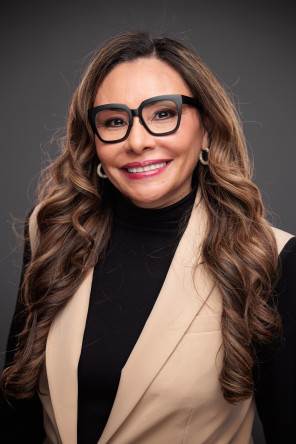
Marcela García is a columnist for The Boston Globe’s op-ed page. In her twice-a-week column, she covers a wide range of topics, from public education and immigration policy to social inequities and the Latinx community in Boston and beyond. In an effort to better serve Latinx audiences, García launched ¡Mira!, the Globe's first-ever weekly newsletter written in both English and Spanish. With ¡Mira!, García offers readers a bilingual view into politics, policy, people, pop culture framed through the immigrant experience. García also holds the title of Associate Editor, serves on the Globe editorial board, and occasionally writes editorials, the daily unsigned essays representing the view of the Boston Globe as a community institution. García has been part of the Globe opinion and editorial pages since early 2014 but has covered issues that affect the region’s Latinx communities for roughly 18 years. Previously, she was a correspondent for Telemundo Boston, a special contributor to the Boston Business Journal, and the editor of El Planeta, Boston’s largest Spanish-language publication. García, who’s originally from Monterrey, México, has lived in Boston for 23 years. She received a graduate degree in journalism from the Harvard Extension School in 2005 and holds a B.S. degree in Economics.