Finalist: Lisa Falkenberg, Joe Holley, Nick Powell and the late Michael Lindenberger of the Houston Chronicle
Nominated Work
“Horrifically, incomprehensibly.”
That’s how Gov. Greg Abbott described the actions of a gunman who slaughtered at least 18 children and their teacher Tuesday at Robb Elementary School in Uvalde.
The first word is apt — especially for the moms and dads who dropped off their little ones at school Tuesday morning, maybe lingering a little bit in the car line, just to crane their necks back and watch as that precious little body, that floppy ponytail or that lanky little stringbean frame, laden with backpack and lunch box, made it safely through the schoolhouse door, where, it seemed, they would be safe.
Horrific was the moment they got the news. Horrific will be their nights of endless tears. Horrific will be the bright, sunny mornings when they remember it wasn’t a dream. The bed is empty, no little lump beneath the blankets, waiting to be awoken.
But the second word Abbott used — “incomprehensibly” — is just as much cowardice as it is a bald-faced lie.
Of course it’s impossible to fathom why someone would shoot up an elementary school, or any school, but it’s hardly incomprehensible that it happened. It keeps happening, in Texas and across the nation. No one, especially not the governor of a state with some of the most inept, irresponsible and dangerous gun laws in the nation, should be confused, somehow unable to comprehend, the reasons for this never-ending tragedy of mass shootings in our country.
Yes, there are people evil enough, or sick enough, to kill. Yes, they can try to perpetrate a massacre in search of revenge or some grotesque fantasy of fame.
But there is one weapon, readily available in Texas, that will ensure efficiency and exponentially increase the chances of tragic success: the gun.
Whether it’s a handgun, rifle or semi-automatic invented for war, the governor has supported and the Legislature has passed law after law that have obliterated any semblance of good sense regulation — laws so permissive that they’ve even defied the objections of police chiefs and gun safety instructors, including the 2021 permitless carry bill that the governor bragged on Twitter allows any eligible Texan to carry a gun in public with “no license or training” needed. As though that were progress.
Texas lawmakers won’t even pass universal background checks to keep guns out of the hands of dangerous people even though about 80 percent of Texans support them.
Texas had 1 million registered weapons in 2021, more than second-place Florida and third-place Virginia combined. The United States leads all wealthy nations with its gun murder rate, and all nations in the rate of suicide by gun. And since September 2018, Texas has far more than its fair share of victims of mass shootings. Of the 2,000 such deaths recorded, 195 happened in Texas, far more than any other state.
Earlier Tuesday, before an 18-year-old gunman began killing innocent children, Abbott was busy with his usual politicking and Biden-beating on Twitter, talking about how Texas is a “law & order state” and how Texas is “doing the federal government’s job & securing the border.”
What kind of law-and-order state does so little to prevent the massacre of 18 babies in their own school? And who is going to do your job, governor, to secure our classrooms from mass shootings when you continually refuse to do so?
After Tuesday’s shooting, Abbott pledged state resources to help Uvalde heal and to “do everything that is necessary to make sure that crime scenes like this are not going to be repeated in the future.”
We’ve heard that before.
“It’s time in Texas,” Abbott said in 2018 after the school shooting in Santa Fe, “that we take action to step up and make sure this tragedy is never repeated ever again.”
Instead, when lawmakers needed his help passing gun reform bills, including a red flag law and another closing a loophole in background check requirements that were recommended in a task force Abbott convened himself, he backed away from everything, either letting bills die or flat out vetoing them.
“When you get 10 pro-Second Amendment bills to the governor, and he signs them all,” an NRA lobbyist crowed at the time to the Dallas Morning News, “I would rank it up there with one of the most successful sessions we’ve had since I’ve been doing this.”
And when mass shootings happened again in 2019 — first in El Paso and then in Odessa and Midland — Abbott still failed to act.
NRA-backed gun laws have failed to keep Texans, including our most precious and most vulnerable constituency — our children — safe. But they’ve thrilled the constituencies that truly matter in Republican primary politics: Second Amendment extremists and the gun lobby.
As we speak, the National Rifle Association is excitedly gearing up for its annual meeting in Houston this Friday, May 27-29, at the George R. Brown Convention Center. A website touts a showcase of “over 14 acres of the latest guns and gear,” and a “freedom-filled weekend for the entire family.” It notes: children get in free!
Founded to represent the interests of hunters and marksmen, and known for decades for expertise in gun safety, the NRA has morphed in recent decades into a morally, and fiscally, bankrupt lobbying apparatus in service to mostly gun manufacturers, opposing everything from background checks to research on gun crime.
Among the list of dignitaries expected to speak in Houston to the NRA are Abbott, former President Donald Trump, Sens. Ted Cruz and U.S. Rep. Dan Crenshaw.
But also on hand this weekend, in a fierce, strong, protesting posture, should be every single Texan, including sensible gun owners, who want to stop the madness, stop the killing, and stop the NRA’s stranglehold over Texas’ elected leaders.
There is room for loving the Second Amendment and for reasonable gun control. The late Antonin Scalia knew that. President George W. Bush knew that. Heck, even Trump knew that, when he ever-so-briefly challenged his party’s thralldom to the NRA and when he ordered the DOJ to ban sale of bump stocks. Gun control by itself may well not be enough to address the kind of madness these shootings represent. But it is an essential part of any reasonable response.
We call on Abbott, whose campaign war chest is comfortably overflowing in his reelection bid against Democrat Beto O’Rourke, to replenish his bankrupt conscience and do something, anything, to stop the blood of children and the tears of parents.
We call on O’Rourke as well to demonstrate the kind of leadership, passion and gun reform policy ideas that we’ve lost faith Abbott can provide.
And we call on ordinary Texans, some of whom will be watching the news and hugging their own babies tight, to take action.
Don’t just sit there and say, “My God, I have no words.”
Oh yes you do.
Go vote. Go fight. Those are all the words you need.
Frantic, wailing parents confined by yellow crime scene tape plead with police officers outside Robb Elementary, pushing and pacing with the desperation of pent-up animals headed to slaughter. Except it isn’t their own slaughter they’re trying to stop; it’s their children’s.
In cellphone footage that’s emerged from the chaotic scene that unfolded Tuesday as a teen gunman rampaged inside with an AR-15-style rifle, mothers and fathers are seen pleading, screaming for officers to do something to save their children, or at the very least, to let parents — without guns, without armor, with bare hands, if need be — charge into the school and give their babies a fighting chance.
“You know that they are kids, right?” a man yells in one video. “They’re little kids and they don’t know how to defend themselves!”
The officers refuse. Instead, as children faced an imminent threat inside, officers busied themselves corralling parents, patrolling the barrier with Tasers and even handcuffing and subduing parents on the ground if they didn’t comply, according to video and witness accounts.
For nearly an hour, as gunshots rang out through Robb Elementary, as bullets fatally pierced the little bodies of captive fourth-graders in two adjoining classrooms, as some children clung to hope by repeatedly calling 911 for help — “Please send the police now,” one girl begged more than an hour into the siege — no help came.
Earlier this week, Gov. Greg Abbott drew harsh criticism for saying the massacre of 19 elementary school children and their two teachers could have been worse. Nothing, many of us thought, could be worse.
We were wrong.
Revelations that Abbott’s initial heroic law enforcement narrative was a complete fabrication, and that many other details he relayed were false, only deepen the pain and rage.
“The reason it was not worse is because law enforcement officials do what they do,” Abbott said solemnly at a news conference Wednesday. “They showed amazing courage, by running toward gunfire, for the singular purpose of trying to save lives.”
In reality, newly emerging timelines from officials with the Texas Department of Public Safety depict excruciating delays, tragic false assumptions and a clumsy if not cowardly response by officers or their commanders sworn to protect the vulnerable children who needed them.
“They should have moved in,” Jesse Rodriguez, who lost a daughter and a niece in the shooting, told CNN. “I don’t think they had a right to sit there on their ass waiting.”
The governor, who says he merely relayed the information given to him, at first told us the gunman had engaged with a school resource officer. Never happened, law enforcement officials now say.
Apparently, after shooting his grandmother in the face, the gunman crashed a truck by the school, opened fire on people at a funeral home nearby, then roamed around outside the school building for 10 to 12 minutes. Having drawn two 911 calls by then, and by some accounts more, he entered the school, completely unobstructed through an unlocked door.
We were initially told officers couldn’t enter during an agonizing period of time because the gunman had barricaded the door. In fact, there was no barricade, DPS said Friday, and it didn’t appear anyone even tried to open the classroom door.
Law enforcement officers appear to have attempted to enter the school early but retreated after taking fire. As numbers of officers grew, they converged in the hallways outside the classrooms where children lay dead, dying or injured, and merely waited until the massacre was over.
Law enforcement officials have been consistent in crediting a special tactical unit led by U.S. Border Patrol agents with ultimately confronting the gunman and killing him.
But in one of the most maddening, most enraging revelations, media reports now indicate that the Border Patrol unit actually arrived much earlier than previously thought, shortly after the shooting began, and were ordered by the local commanding officer to wait nearly an hour before intervening.
But why?
“The on-scene commander considered it a barricaded subject and that no more children were at risk,” Texas Department of Public Safety Director Steve McCraw said. “Obviously, based upon the information we have, there were more children at risk and not a barricaded subject.”
The commander was identified as the Uvalde Consolidated ISD chief of police, listed on the district’s website as Pete Arredondo.
“It was a wrong decision. Period. There was no excuse for that,” McCraw said.
Uvalde’s police department is small, of course, but it’s not without equipment and training — its Facebook page even boasts of its own SWAT team — designed to prepare it for just such a horror as unfolded at Robb Elementary this week. But what’s so deeply shocking is that police officers, any police officers who are sworn to protect, would fail to respond at all. After the Columbine massacre, general guidance is for officers to immediately pursue and try to neutralize active shooters rather than waiting for back-up or to secure the scene.
We may never know how many lives could have been saved if the first law enforcement on the scene had done their jobs and acted with the courage we admire and sometimes take for granted in our first responders. We are reminded in this moment how precious it is.
But there are things we can know, and things the parents of murdered, injured or traumatized children in Uvalde deserve to know, about what happened on the darkest day of their lives. Chief among them: What on earth made the commanding officer assume the shooter was barricaded and not an active threat to students?
The governor has some explaining to do as well. He said Friday he was given bad information: “I was misled,” he said. “I am livid about what happened.”
He should be. But his administration only exacerbated the confusion at times, with DPS officials giving incomplete and inaccurate information even as they tried to clarify the timeline of events. Abbott has assured Texans that the truth will emerge through a thorough investigation overseen by the Texas Rangers and now the FBI.
We’ll hope so. But don’t ask us to trust. We hope the false narratives in this case don’t make suffering Uvalde families any more vulnerable to the kind of online harassment and outrageous hoax accusations that Sandy Hook parents have endured for years.
The families of Robb Elementary were failed in every conceivable way. Their sorrow and grief has been compounded by incompetence and apparently faltering courage.. Truth is the very least we owe them.
There is a message that those demanding gun reform in the wake of last week’s heart-wrenching murders in Uvalde need to hear: More laws regulating who can buy which guns, and how, won’t by themselves keep our children safe.
Unspeakably terrible events like the one last week — where the precious lives of 19 fourth graders and their two teachers were snuffed out like so many candles by a teen armed with weapons he’d bought days after his 18th birthday — have happened in too many different ways for them to be addressed by one set of gun reforms. Lawmakers must also look at the use of social media, at police protocols for how and when officers engage with shooters, and resources for treating mental health problems and identifying when a decline can signal danger.
But there’s another message, too, that gun rights advocates need to hear: Failure to act and the stubborn belief that any reform must be stopped at all costs, is akin to helping the next shooter pull the trigger.
We’ll say that again: Continued obstinacy — the unfathomable blanket objection to any reforms — in the face of this grim parade of death is a form of complicity.
We say this not to point fingers, nor to further inflame the culture wars, but to speak plainly, and to utter a heartfelt plea to those among us who cherish liberty and life, who respect the right to own guns and believe in doing so responsibly. It’s time to accept that some people are too dangerous to buy firearms at all, and that some guns are so dangerous that even law-abiding, mentally well citizens should have to jump through a few simple hoops to add them to their collection.
This is hardly a radical notion — it’s been at the heart of American gun laws since at least 1934 when Congress made owning machine guns, sawed-off shotguns and similar weapons illegal. It’s why federal law forbids firearms dealers from selling handguns to anyone under 21. It’s why most — but, maddeningly, still not all — gun purchases require a background check. It’s why fugitives, certain convicts, those discharged dishonorably from the military, those who have been committed, and anyone with a domestic violence conviction are forbidden to own firearms of any kind. And it’s why Congress approved, with votes from both parties, a 10-year ban on assault rifles in 1993. And it’s why, until the recent scourge of so-called permitless carry statutes in Texas and some other states, everyone seemed to agree that even if the Second Amendment gives Americans the right to carry a gun in public, it doesn’t bar requirements that owners get minimal training or an easy-to-secure permit.
And yet, in the decade since the Sandy Hook massacre in Newtown, Conn., the gun rights lobby, with all the many politicians in its thrall, has risen up after each tragedy to prevent meaningful reform. Rather than making our schools, our cities, ourselves safer, lawmakers in many states, especially in Texas, have made guns easier to buy and to keep.
Already this year, there have been 10 shootings defined as mass murders, where four or more people were shot to death, according to the Gun Violence Archive. Just since Sept. 30, 2018, more than 2,000 deaths have resulted from mass shootings, including 146 in Texas.
There was the tragedy at the First Baptist Church in Sutherland Springs, where a gunman killed 26 in November 2017. There were the school shootings in Santa Fe High School, which left eight students and two teachers dead, and in Florida’s Parkland High School, where 17 were killed. Another 60 were shot to death in Las Vegas in 2017, when a shooter turned his rifles on the crowd at a country music concert. Ten died earlier this month at a grocery store in Buffalo. Eleven were shot to death at a synagogue in Pittsburgh in 2018. Twelve others were killed in a movie theater in Aurora, Colo. in 2012.
A gunman using semi-automatic rifles and handguns killed 23 at an El Paso Walmart in August 2019, just weeks before another seven were shot to death by a gunman in Midland and Odessa, Texas. Another shooter killed 49 people at a gay nightclub in Orlando in June 2016.
So many deaths. So many shooters. So many guns.
And distressingly, so many pleas like this one to update our gun laws. What we’ve got in return is profound inaction.
Yes, two small changes were made since Sandy Hook. After the tragedy in Sutherland Springs, U.S. Sen. John Cornyn worked with Democrats to successfully add new penalties for when the military fails to report to the national firearms database personnel convicted of crimes that disqualify them from buying firearms. The shooter should have been blocked from buying his guns but wasn’t because the Air Force never added his name to the database. And just after the Las Vegas shooting, President Trump ordered the Justice Department to update rules to ban the sale of so-called bump stocks, small devices that the shooter there had used to fire his semi-automatic weapons as if they were fully automatic.
We applauded both those changes when they were made, but let’s not mince words. They were tiny steps taken against a sea of deaths.
More changes — and more courage — are needed.
We were heartened Thursday to learn Senate Minority Leader Mitch McConnell has asked Cornyn to lead talks with Sen. Chris Murphy, D-Conn., in hopes of settling on legislation that can earn the 60 votes — including at least 10 GOP votes — needed for passage. Any movement here is worth celebrating, but aware of the history of such short-lived efforts in the recent past, we remain only guardedly optimistic, Last year, Cornyn and Murphy spent weeks negotiating a modest expansion of who must register gun sales with the FBI’s background registry. Those talks broke down, with Murphy citing Cornyn’s intransigence.
Still, that they are trying again is cause for hope.
Expanding background checks is a good place to start. Two bills strengthening the system have already passed the U.S. House.
Others have signaled that a federal red flag law could be part of the ongoing discussions — something we’ve called for as recently as Wednesday. Lawmakers might also look at changes the red state of Florida made following the Parkland massacre, including raising the age from 18 to 21 for buying assault-style weapons. That could have prevented legal purchases of such weapons by the shooter in Uvalde.
Those who have been calling for gun reform for years no doubt see many other, stronger steps as necessary. We believe more most be done, too. Why not renew the assault rifle ban, for instance? But what’s most important now is that Congress shake off its shameful slumber and take concrete steps in the right direction. It won’t end the gun debate in America, and it won’t stop every future attack. But it will move us as a country off neutral.
The lives such new laws could save might just be headed out your own door, to school to church or to a movie theater near you.
On a sunny Sunday morning in the fall of 2017, a Stockdale volunteer firefighter stepped inside a small country church east of San Antonio and encountered the unimaginable. As a first responder, Rusty Duncan had dealt with pain, suffering and trauma, but nothing had prepared him for the horror he saw inside the bullet-riddled sanctuary of the First Baptist Church of Sutherland Springs.
Duncan walked slowly down the center aisle, he would later explain to a member of this board, taking note of blood-washed bodies, 26 in all, sprawled across and under bullet-riddled pews, huddled up against one wall, lying atop one another in the aisle at his feet. Near the front of the church, he paused beside a stack of bodies. He felt a slight tug on his pant leg.
Startled, he looked down and saw the pale hand of a small child reaching out from beneath a woman’s body. Pinned beneath the step-mother who had died trying to save him, 5-year-old Ryland Ward was alive, critically injured but alive. The lifeless bodies of a step-sister and a half-sister lay near their mother. Gingerly gathering the little boy in his arms, his blood-soaked body limp like a rag doll, Duncan carried him outside into the sun.
Two months later, a big, red firetruck led a procession of police and fire vehicles, sirens wailing and horns blasting, in a procession from University Hospital in San Antonio to Sutherland Springs. Behind the wheel of the lead truck was Duncan. In the passenger seat was a blonde-haired little boy, smiling and waving through the open window at well-wishers lining the road near the church. Ryland was home.
Nearly five years have passed. This week, 10-year-old Ryland Ward will be back in the hospital for surgery, as doctors continue working to repair massive damage done by the AR-15 bullets that burrowed into his body in five different places. It will be his 31st surgical procedure. His 31st.
“It’s crazy to me to see a child so young and so small go through something so tragic but still be strong,” Ryland’s mother, Chancie McMahan, told KSAT-TV in San Antonio.
McMahan said her son’s nightmares have gotten worse. She said the Uvalde shooting triggered his PTSD.
“It brought up memories from him being put through what he went through,” she said. “He saw everything and remembers it.”
A little boy in a tiny Texas town, seeing and remembering, represents a steadily growing number of men, women and children in towns and cities across the nation who have seen and who can’t help remembering. According to statistics compiled by the advocacy group Everytown for Gun Safety, they are witness to episodes of gun violence that kills roughly 40,000 Americans a year, including suicides by gun, a death rate from guns that’s 13 times higher than that of other high-income countries. They’re among approximately 85,000 who are shot and wounded every year. Since 2009, more than 2,000 people have been killed or wounded in mass shootings alone.
Survivors suffer. After the TV satellite trucks rumble away, after the nation’s horrified attention reverts to everyday life — until the next mass shooting — they remain to cope with physical pain and injury, with PTSD and depression, with ongoing financial burdens and steep medical costs and an inability to resume the lives they once knew. (Ryland, for example, can’t run the way he used to. A bullet shattered a growth plate in his leg, and the leg isn’t growing the way it normally would.)
Across the country, these are the “secondary injuries,” writes Elizabeth Williamson, author of a new book about the aftermath of Sandy Hook, where an 18-year-old shooter killed 20 first-graders and six educators in 2012. “Newtown,” she writes in Sandy Hook: American Tragedy and the Battle for Truth, “knows how the damage to bodies and lives radiates outward like fallout for years after a mass shooting, scarring a community in ways outsiders do not often see.” (An excerpt is published in the current issue of The Atlantic.)
From Newtown to Parkland, from Charleston to Thousand Oaks, from El Paso to Santa Fe , from Buffalo to Uvalde, those “secondary injuries” are part of the grim legacy burdening a nation that refuses to come to terms with a virulent national obsession with guns. It’s a grotesque obsession that disturbs and bewilders many Americans, as well as the rest of the world.
Ongoing injury also is the legacy elected officials choose for themselves when they mumble practiced pieties and suggest absurd “solutions” to the public health crisis we face — and then do nothing. Stiff-necked politicians hear the persistent pleas from constituents and the impolitic questions from reporters, and then scurry away.
In Santa Fe, where eight students and two teachers were shot to death four years ago, survivors, family members and school officials remember promises made by Gov. Greg Abbott and other elected officials. Politicians offered assurances they would take action to make sure that a mass shooting never happened again. Abbott formed an advisory committee - and pretty much ignored its recommendations.
Santa Fe resident Rhonda Hart lost her daughter Kimberly. What happened in Uvalde reignites the pain that never fully heals, she told KHOU-11 last week. “People won’t understand the pain it is until it happens to them, and I wouldn’t wish this on my worst enemy.”
She’s also angry that we have allowed it to happen again. “I feel very much like a duck right now,” she said. “I’m cool and collected on the outside, and underneath I’m paddling like crazy and mad as hell.”
In February, U.S. District Judge Xavier Rodriguez in San Antonio found in favor of 84 Sutherland Springs plaintiffs, ruling that the Air Force was primarily responsible for the worst mass shooting in Texas history when it failed to supply information about the shooter’s criminal history to the National Instant Criminal Background Check System (NICS). Rodriguez approved a multi-million-dollar settlement, thus providing a measure of relief to those survivors and family members who face a lifetime of steep medical costs, who can’t work for the rest of their lives, who can’t shake the mental and emotional trauma.
Just last week, the Justice Department appealed, which means that any justice for the Sutherland Springs group is months, if not years, away — if it ever comes at all.
Meanwhile, a grieving community on the western edge of the Texas Hill Country looks toward the ordeal that has afflicted a tiny community east of San Antonio for nearly five years.
In Sutherland Springs a little girl who ran like the wind will never walk normally again because of a debilitating foot injury. A retired Marine experiences what feels like torture; “I can’t turn it off,” he says. A young man paralyzed from the waist down lives with his wife and daughter in a mobile home where the hallway is too narrow for his wheelchair. An adult daughter can no longer work full time; her elderly mother, grievously wounded in the shooting, requires her constant care. A suddenly single father struggles to braid his daughter’s long, blond hair, even as he helps her cope with the loss of her mother (who was pregnant), her grandparents, three step-siblings, an uncle and an infant cousin. And a tough little guy who came home from the hospital in a firetruck needs all the strength and toughness he can muster.
Uvalde will have its own stories. So will the next town and the next — until the American people get fed up with craven politicians and acolytes of the NRA and take it upon themselves to demand that their leaders act — or to elect new leaders who will.
Just imagine: Hours after a gunman opened fire at Marjory Stoneman Douglas High School four years ago, Florida Republicans did something more than tweet out prayers from a hundred miles away: they showed up at the crime scene, stood in the blood-smudged hallways where 17 students and teachers were killed and surveyed the carnage with their own eyes.
What they saw was a suburban campus that had been transformed into a battlefield — papers blowing in the wind, abandoned backpacks piled up outside, blood pooling in certain areas — a scene that shook even the most ardent gun rights supporters to their core.
Richard Corcoran, then the conservative speaker of the Florida House of Representatives, had a long record of pushing looser state gun restrictions. The year before the Parkland shooting, he supported bills to allow concealed-carry permit holders to carry their guns everywhere from schools to polling places. Yet, one moment that night in the high school in Parkland seemed to change his heart, and his vote.
Michael Putney, a Miami political reporter, told ABC’s Ted Oberg for a recent, eye-opening series on Parkland’s aftermath that a police officer at the scene informed Corcoran at one point that he was standing on a blood stain where Chris Hixon, the school’s athletic director, was murdered trying to protect his students.
“I am told that this very conservative speaker of the Florida House, simply having seen this scene and having the Legislature in session, said ‘We’ve got to do something,’” Putney said.
Just 23 days later, Florida, a state led by a Republican governor and controlled by a Republican Senate and a Republican House, passed sweeping bipartisan gun control laws. Lawmakers raised the age to buy all guns from 18 to 21, instituted a three-day waiting period, created a red-flag law which has been used more than 8,000 times to remove guns from people deemed by a judge to be a danger to themselves or others, and spent hundreds of millions on school safety and mental health.
By simply showing up and witnessing the gruesome, horrific aftermath of one of the deadliest school shootings in the nation’s history, Republican politicians were apparently able to see past their partisan bubbles, past their own political calculations, past themselves, to take action that would truly save the lives of the people they represented.
Here in Texas? News broke this week that Gov. Greg Abbott, who was on hand the first few days after the Uvalde school massacre, hasn’t been back to Uvalde since June 5. Not even to attend a single funeral of the 19 children or two teachers slain that day by a deranged gunman and an AR-15. Grieving family members also say Abbott hasn’t bothered to call and check in.
“For everybody out there getting ready to vote, since this has happened, Governor Greg Abbott has yet to reach out,” said Angel Garza, whose 10-year old daughter, Amerie Jo, was among the students killed at Robb Elementary.
We wish we could say we were surprised. After all, Texans learned early on that within hours of the students and teachers being slain in their classrooms, Abbott opted to attend a campaign fund-raiser 300 miles away in East Texas.
Even if it’s the case that families holding private funerals didn’t want the governor to attend, Abbott should be asking himself why.
We aren’t among those blaming the governor for relaying erroneous information in a press conference about law enforcement’s heroic response. It seems he was truly lied to. But that’s no excuse for declaring early on that it “could have been worse” or for making a reprehensible comparison to the homicide rate in Chicago.
For someone considered to be a top presidential contender, Abbott has consistently fallen short at tragic moments that call for genuine leadership and real action. Despite promises of ‘never again’ after El Paso and Santa Fe, despite his high-profile convening of a task force to consider gun safety proposals and apparent openness to reforms such as red-flag laws, the governor ended up turning his back on lawmakers trying to pass such life-saving legislation.
We don’t doubt that the governor, like all Texans, was saddened and angered by the senseless loss of life in Uvalde. We just don’t believe he’s angry and sad enough. If he were, he’d find the words, find the will, find the way to transcend partisanship and rancor to push for the type of meaningful gun reforms that former Republican Florida Gov. Rick Scott, himself an NRA darling, signed after Parkland.
Next to Florida, Texas’ Republican leaders, with their empty platitudes and endless, drawn-out panels and studies and debates that never lead anywhere close to substantive change, seem rendered impotent by their servitude to the National Rifle Association. Or maybe they’re just callous after years of gerrymandered control of Texas government.
Texans — those we’ve lost, those grieving massacred loved ones and those of us praying our families won’t be next — deserve more than vague commitments from our governor to swing by Uvalde “many more times.”
If showing up is half the battle, the governor is failing.
How can we hold out hope that the governor will be moved to action when he can’t even be moved to visit a community mourning one of the worst massacres in our history? How can he move closer to a solution on gun violence when he seems intent on keeping his distance from the suffering it inflicts?
Abbott has never shown much of an appetite to challenge his Republican base. But the Uvalde massacre is a moment crying out for that. Step out of your bubble, governor. Meet with the victims’ families. Break bread with them. Listen to their stories about their beautiful children whose lives were cut short by senseless gun violence. Share tears and connect with them as humans, not just voters.
If that won’t spur you take action, to rally your fellow Republican lawmakers to do something more than issue reports and strongly worded statements, nothing will.
Stop us if you’ve heard this one. Guy walks into an unsuspecting public venue — this time, the Galleria — clad in black, baggy clothing, toting a Bible, a long gun, semi-automatic handgun, 120 rounds of ammo and donning a shirt emblazoned with the vigilante Punisher skull logo. A security guard spots him walking purposefully toward the Westin Galleria area where hundreds of young girls are competing in a dance competition.
These could easily have been the makings of another tragic Texas massacre. Perhaps the only reason we’re not referencing the body count at this point and telling you about all the young victims and their grieving Houston families is because one brave officer tackled the suspect before any shots were fired.
In a merciful foil to the deadly law enforcement delays in Uvalde, Kendrick Simpo, a 42-year-old Houston Police Department sergeant working his Saturday job at the Galleria, didn’t hesitate to pursue the suspect, Guido Herrera, trailing him swiftly but conspicuously without drawing his service weapon for fear of injuring bystanders, and taking him down within 10 feet of the dance competition in less than two minutes.
The incident happened in February. We’re just learning of Simpo’s courageous response because apparently, he viewed the incident as just another day at the office and didn’t talk about it much until he had to testify last week in Herrera’s trial. What kind of person potentially saves hundreds of lives and doesn’t try to grab credit? A damn hero. We were beginning to feel after Uvalde that they didn’t exist. Thank you, Sgt. Simpo, for reminding us they do.
Very likely because of his quick actions, the disturbing part of this tale isn’t bloodshed, the young lives lost or brutal crime scene descriptions of small bodies rendered unrecognizable by killing machines that have no place in civilian society.
No, the disturbing part is that, if Herrera did intend to kill people that day, nearly everything he did in preparation is apparently sanctioned by Texas’ gun-worshipping, NRA-fearing, Second Amendment-misconstruing absolutist gun culture. So much so that prosecutors struggling to hold him accountable in court had to rack their brains over what to charge him with so he’d serve any time at all.
In the end, as the Chronicle’s Nicole Hensley reported, Herrera stood trial last week for misdemeanor disorderly conduct, a Class B misdemeanor charge that left even the liberal judge who presided scratching his head. Herrera had also accepted a plea agreement on an unlawful carry charge related to a later incident when he showed up with a weapon at the FBI’s Houston field office. He received a stacked sentence of six months for the Galleria ordeal and one year for the FBI stunt.
“We have a genuinely dangerous situation with a genuinely dangerous person,” Criminal Court of Law No. 8 Judge Franklin Bynum said in court. “This situation, where someone is roaming around a federal building and malls with loaded firearms — and you’re in front of me? Why?”
Herrera’s defense attorney Armen Merjanian was happy to explain: “He’s a gun-loving Texan. He has a right to possess these weapons whether we like them or not.”
Don’t be mad at the lawyer for that comment; he’s just doing his job. Be mad at the legislators who passed the permissive gun laws he’s citing to get his client off.
We cannot think of a clearer example of the cognitive dissonance muddling the debate over guns and safety in Texas. A deadly mass shooting at the Galleria, had it happened, could have been a crime punishable by death. But because Herrera didn’t so much as point a gun at anybody, all steps leading up to that point — buying the assault-style weapon, nonchalantly toting a long gun in a family venue that bans firearms, donning 120 rounds of ammo — were legal and even theoretically championed by pro-gun activists as an expression of Second Amendment righteousness.
Indeed, because Texas doesn’t necessarily restrict who can carry a long gun, the only way prosecutors were able to charge Herrera with anything in the Galleria incident was by proving he carried his weapons in “a manner calculated to alarm.”
“Think about this,” Harris County misdemeanor bureau chief Nathan Beedle told the editorial board this week, “If I have the intent to do something — deadly conduct, aggravated assault, murder people — how long am I in a ‘manner calculated to alarm?’ It’s in those briefest of moments that we avoid a tragedy.”
Why on earth do we let it get so close?
The Legislature has passed so many exceptions to gun laws over the past 20 years that Beedle says a two-paragraph statute has grown to five pages.
How is this rational? It’s not. How is this allowed? Politics.
This editorial board supports the uniquely American constitutional right to keep and bear arms for personal protection, for sport, even for hunting deer for sausage and quail for dinner.
We simply believe in common sense restrictions that make it harder for people intent on killing others, or even themselves, to succeed.
Houstonians have a courageous police officer to thank for stopping a man who very well could have been planning mass murder that day. We have Texas lawmakers and Gov. Greg Abbott to blame for the fact he got so close.
Next time, we may not be so fortunate. Every parent in Uvalde knows that. By now, every Texan should, too.
With a large pink bow in her long brown hair, a young girl took to the mic along with other survivors of the Uvalde school massacre. They demanded accountability for law enforcement, including incident commander Pete Arredondo, who stood by as children and teachers were being shot at close range by a madman with an AR-15 and left to bleed to death in a classroom down the hall.
“Turn in your badge and step down,” yelled the girl, whom KSAT-TV identified as Katelyn Gonzalez. “You don’t deserve to wear one.”
From the mouths of babes. She said what adults should have said months ago.
It took three months to the day after the May 24 mass shooting for the Uvalde Consolidated School District board to fire Arredondo, the district’s police chief, in a closed-door termination hearing on Wednesday night. He not only failed to stop the most deadly school shooting in Texas history, there’s little evidence he even tried. Instead of rushing in to save as many lives as possible, he reportedly waited for equipment he already had and spent 40 minutes looking for keys he didn’t need to a door that was never even locked — a fact he would have discovered if he’d bothered to check the door.
Nor did he bother to attend Wednesday night as parents gathered, holding pictures of their murdered children. Arredondo didn’t even acknowledge the validity of the cries of grieving parents who have repeatedly called for his ouster.
Instead, his attorney reportedly released a 17-page statement published by the Texas Tribune calling the firing an “illegal and unconstitutional lynching” and “respectfully” requesting his job back, “along with all back pay and benefits and close the complaint as unfounded.”
Respectfully. Anyone with a shred of respect for the 19 children and two loving teachers slaughtered under his watch would either leave quietly or on his knees, begging for forgiveness. Anyone with respect would have taken responsibility for his failures instead of claiming he didn’t know he was in charge even though the active shooter plan that he co-wrote called for him to be in charge.
There’s plenty of blame to go around on the law enforcement response, as even young Katelyn can see. A Texas House report found there were nearly 400 law enforcement officers, including 91 state troopers, who responded that day. It deemed the overall police approach to the duty of rescuing innocent, dying children “lackadaisical.”
It seems clear that one of the other agencies, including the Department of Public Safety, should have taken control of the scene, a rare step but one that’s certainly justified when the commanding officer is either unable or unwilling to do his job. It’s at least comprehensible, if not forgivable, though, that many officers arriving on the scene were acting, or not acting, on bad information and flawed flawed assumptions communicated to them by the man they thought was in charge and should have known the building best: Arredondo.
We can’t imagine a more incompetent commander than Arredondo, who left his radio behind when he entered the school so was completely unaware of desperate, repeated 911 calls pleading for help from inside the classrooms. Arredondo told the House committee he merely “prayed” there weren’t any children in the classroom with the shooter and prayed that somebody else had established an incident command post outside.
At one point, an officer’s body camera footage captured Arredondo acknowledging that there were likely children in the room with the gunman and “there’s probably some casualties.”
Asked by the House committee what he would have done differently had he known injured victims were inside, Arredondo might as well have shrugged: “I guess if I knew there was somebody in there,” he said, “I would have — we probably would have rallied a little more.”
A little more. He guesses.
His lack of concern isn’t just infuriating. It’s nauseating. Was his inaction just incompetence, or was it even criminal? Investigators should determine that. Our hope is that Arredondo has greater accountability waiting for him than merely losing his job.
There are many reasons America is the only wealthy country in the world where mass shootings seem almost as common as severe weather reports. Loose gun laws allow angry young men whose brains aren’t fully formed to go buy a semi-automatic weapon made for war, along with as big a stockpile of ammo as he pleases, and breeze into any school that hasn’t already been turned into a fortress to kill innocents.
But what happened at Uvalde is all the more painful, all the more senseless, all the more profane, knowing that hundreds of law enforcement officers on the scene could have stopped it, but chose not to. Instead, officers handcuffed desperate parents who pleaded to go inside the school and attempt to save their children themselves. Some brave parents and officers did save lives that day.
We will never know how many more young lives could have been saved if police hadn’t put their own lives before those of defenseless children. Or if another officer had stepped up and taken over to fill the void of leadership. Or if another commander — one who brought his radio, adhered to his own active shooter plan, and followed the post-Columbine gospel of ending the threat, ending the killing, no matter the risk to the officer — had been in charge instead of Arredondo.
We’ll never know. We can only hope that Arredondo’s long-awaited firing Wednesday gives a small bit of comfort to the families who lost their precious loved ones that day — and serves as a lesson to law enforcement that inaction can be as fatal and unconscionable and punishable as the cruelest brutality.
Biography
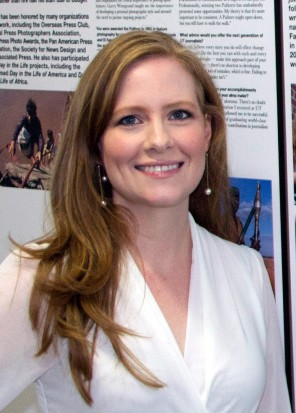
Lisa Falkenberg is the Houston Chronicle’s vice president/editor of opinion. A two-time Pulitzer Prize-winning journalist, Falkenberg leads the editorial board and the paper’s opinion sections.
In 2022, she shared a Pulitzer Prize in editorial writing for a series debunking the “Big Lie” of voter fraud and examining Texas’ long history of voter suppression.
Falkenberg wrote a metro column at the Chronicle for more than a decade and in 2015 was awarded the Pulitzer for commentary, as well as the American Society of News Editors’ Mike Royko Award for Commentary/Column Writing for a series that exposed a wrongful conviction in a death case and led Texas lawmakers to reform the grand jury system. She was a Pulitzer finalist in 2014.
Raised in Seguin, Texas, Falkenberg is the daughter of a truck driver and a homemaker, and the first in her family to go to college. She earned a journalism degree from the University of Texas at Austin in 2000. She started her career at The Associated Press, working in the Austin and Dallas bureaus. She joined the Chronicle’s Austin bureau in 2007 as a roving state correspondent.
Falkenberg is the mother of two daughters, ages 13 and 10, and a 3-year-old son.
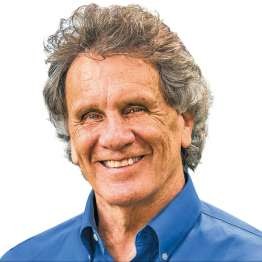
Joe Holley is a Pulitzer Prize-winning editorial writer for the Houston Chronicle who formerly served as editorial page editor and columnist for newspapers in San Antonio and San Diego and as a staff writer for The Washington Post. In 2022, he shared the Chronicle’s Pulitzer in editorial writing for a series debunking the “Big Lie” of voter fraud. He was a finalist in the same category in 2017 for editorials on gun violence. Holley has been a regular contributor to Texas Monthly and Columbia Journalism Review and is the author of two books, including a biography of football hero, Slingin' Sammy Baugh. He joined the Houston Chronicle in 2009 and after his retirement, continues to contribute editorials as an auxiliary member of the editorial board.
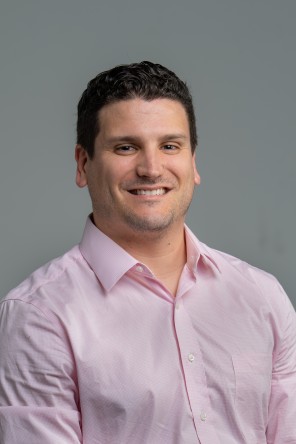
Nick Powell is an editorial writer for the Houston Chronicle. He was previously the Chronicle's Gulf Coast reporter, leading the way on stories as varied as the Santa Fe High School shooting, the global race for a COVID-19 vaccine and Galveston’s long delay in rebuilding public housing after Hurricane Ike. Before joining the Chronicle, Nick worked as an opinion writer, editor and podcast host at City & State NY. He previously covered New York City Hall as a reporter and was a contributor to Esquire. Nick was born and raised in New York City.
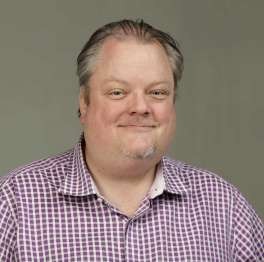
Michael A. Lindenberger was a Pulitzer Prize-winning journalist who was the Houston Chronicle deputy opinion editor for four years until July 2022 when he went to the Kansas City Star and served as the editorial page editor and vice president until his death in December 2022 after a brief illness. Prior to the Chronicle, he worked for 14 years at The Dallas Morning News, where he was a city hall reporter, transportation writer, and Washington correspondent for business before joining the editorial board as a columnist and editorial writer in 2016. He was also a state correspondent and bureau chief for The Courier-Journal in Kentucky and for many years was a contributing national legal affairs correspondent for Time and Time.com.
While leading the day-to-day operations of the Chronicle’s editorial board, Lindenberger contributed to a series debunking the “Big Lie” of voter fraud that was awarded the Pulitzer Prize in 2022.
A Kentucky native, Lindenberger was a cocktail aficionado and founded BourbonStory.com, a blog about the worldwide bourbon boom. He was also a teacher, public speaker and graduate of the Louis D. Brandeis School of Law at the University of Louisville and a 2012-13 John S. Knight Journalism Fellow at Stanford University.