Finalist: Lee Hockstader of The Washington Post
Nominated Work
MORE THAN two years after U.S. Park Police shot an unarmed young man to death after he was involved in a fender bender on the George Washington Parkway, there is a new glimmer of hope that justice may finally be done. Following foot-dragging, stonewalling and ball-dropping by federal investigators and the Justice Department, the new top prosecutor in Virginia’s biggest locality has opened what he says is an intensive probe into the unwarranted death of Bijan Ghaisar.
The inquiry was announced by Steve Descano, sworn in just a month ago as commonwealth’s attorney in Fairfax County, where Ghaisar was shot four times in the head by two Park Police officers. By meeting with the Ghaisar family’s lawyers and announcing that his office is working “tirelessly” and making progress, Mr. Descano has already offered the promise of more transparency, not to mention common courtesy, than federal officials managed over two years of their probe.
The federal investigation, opened shortly after Ghasair was shot at close range in November 2017, dragged on and on, ending only last fall. The announcement came from Jessie K. Liu, then-U.S. attorney for the District of Columbia, who said evidence was lacking that the officers, Lucas Vinyard and Alejandro Amaya, had “willfully” taken Ghaisar’s life, “with a bad purpose to disregard the law.”
That exquisite legal reasoning flew in the face of clear video of the shooting and the pursuit that preceded it, recorded by a Fairfax County police cruiser that trailed both the Park Police vehicle and Ghaisar’s car. It showed the officers, apparently exasperated, opening fire when Ghaisar’s car slowly crept away from them after he had driven off twice before. At no point did Ghaisar present a credible threat to the officers or anyone else. And exasperation is not a license to kill.
Ms. Liu, in announcing that federal officials had declined to seek a grand jury indictment, said that other authorities, including Virginia prosecutors, remained free to pursue the case. Mr. Descano’s predecessor, Raymond F. Morrogh, tried to present it to a county grand jury but was foiled when Ms. Liu twice refused to allow the FBI’s chief investigators to testify, saying she hadn’t had sufficient time to make a decision — although she did grant Mr. Morrogh full access to the case files.
The slate is now clean. Mr. Morrogh was voted out of office and replaced by Mr. Descano. Ms. Liu’s last day as U.S. attorney was Friday. It is now incumbent on Mr. Descano to pursue the case vigorously, as he has pledged to do, and on the new U.S. attorney, Timothy Shea, to provide him assistance as requested, including clearing FBI agents to testify.
Police officers are not above the law. It’s time for prosecutors to act on that plain truth in the Ghaisar case.
NEARLY 2½ years after an unarmed young accountant involved in a fender bender was shot to death by two U.S. Park Police officers in suburban Virginia, the federal government continues to dissemble, delay and drag its feet to impede justice. In the case of Bijan Ghaisar, who died for no good reason in 2017 at the age of 25, months drag into years, and what should be clear-cut and rational is rendered mystifying and opaque by government lawyers and law enforcement.
The latest example occurred last week when a Justice Department attorney tried to explain to a U.S. magistrate judge why the government had failed to turn over documents as ordered in a wrongful-death lawsuit brought by Ghaisar’s family. That judge had issued the order in January, with a deadline of Feb. 17. Now it was March 6. And instead of having produced the FBI investigative files on the shooting, the government had transmitted nothing but policy manuals from the Park Police. What, asked U.S. Magistrate Judge Ivan D. Davis, was the problem?
“It’s an extremely voluminous file,” said Kimere J. Kimball, the lawyer.
The judge suggested transmitting it by thumb drive.
“It’s a sensitive case,” said Ms. Kimball, who then suggested the government might formally request that some documents be withheld. The judge, cutting off Ms. Kimball and barely containing his anger, gave the government until this Friday.
That exchange neatly reflected the smokescreen that has poured forth from the government, which has had months to prepare for the family’s lawsuit, first filed in 2018. The FBI files, the product of an investigation that dragged on, inexplicably, for nearly two years, have already been turned over to Virginia prosecutors, who are weighing criminal charges. So how can it take months more to render the same files to the Ghaisar family, and what is so “sensitive” about the case, anyway?
The answer, Justice Department officials say, is mainly that the Ghaisar case involves two U.S. Park Police officers, Alejandro Amaya and Lucas Vinyard, killing a civilian. In fact, that is a non-answer. The fact that police officers pulled the trigger — in this case, without facing any threat to themselves or others — is no excuse, as the judge made clear in court. “There are plenty of cases in this court that are sensitive,” he said. “You do not not produce information because it is sensitive. The other side has the right to information that’s necessary to prove their claims.”
From the outset, however, officials in this case have done the opposite. In contrast with officer-involved shootings elsewhere, the Park Police officers’ names were withheld for 16 months after the incident, a show of open contempt for the Ghaisar family and the public.
As is plain from the dash-cam video of the Ghaisar incident, what’s really “sensitive” about the case is that the shooting was unwarranted. What has followed, first in the criminal case, now in the civil one, is a prolonged coverup that has left an indelible mark of disgrace on the Park Police, the FBI and the Justice Department.
WILL THE stonewalling over the U.S. Park Police killing of Bijan Ghaisar ever end?
It has been nearly three years since a pair of officers shot Ghaisar, a young accountant, after a fender bender and a low-speed pursuit in the Virginia suburbs. He was unarmed and posed no plausible threat; the police opened fire after he had stopped three times, then pulled away, as they ran at him with guns drawn. He died 10 days later.
That was November 2017. Yet there has been no public accounting from any official source to explain why the police carried out what amounted to an execution. This week, Sens. Charles E. Grassley (R-Iowa) and Mark R. Warner (D-Va.), who have made repeated inquiries, again demanded answers, this time from David Vela, acting director of the National Park Service, which oversees the Park Police. His agency’s refusal so far to offer an explanation arises from what the senators correctly regard as “tenuous and incoherent legal arguments.”
Its phony rationale for rebuffing all questions is that an investigation into Ghaisar’s death, by state prosecutors in Fairfax County, is “ongoing.” In fact, as the senators noted in their letter to Mr. Vela, federal law enforcement agencies have regularly briefed Congress about their own ongoing investigations, including, in the case of the FBI, the 2018 rampage by a gunman at Marjory Stoneman Douglas High School in Florida, and the 2019 mass shootings in El Paso and Dayton, Ohio. In the Ghaisar case, the FBI and Justice Department have already closed their two-year investigation, without charging the officers.
The real reason for the Park Police stonewalling is apparent — a code of silence intended to protect its own, even when they gun down a man for no defensible reason.
The senators asked Mr. Vela about two dozen questions about the shooting: Why did the officers, Alejandro Amaya and Lucas Vinyard, repeatedly draw their guns? Why did one try to smash Ghaisar’s vehicle window with his handgun grip? Had either been the subject of past disciplinary complaints? Why, after shooting Ghaisar, did they provide no lifesaving measures? And what justified the use of deadly force?
The answer is one the Park Police will not give: There was no justification — none for the officers’ reckless conduct; none for brandishing their weapons; none for pulling the trigger.
That is clear from a video of the incident, recorded by a Fairfax County police cruiser that trailed the Park Police vehicle for most of the incident. Both the Fairfax police chief, Edwin C. Roessler Jr., and Justice Department officials have briefed the senators, who commended their “openness.” By contrast, they wrote, Park Service staff, in their own briefing, in June, “refused to answer any substantive questions.”
Before the senators’ inquiry this week to Mr. Vela, one or both of them had written eight times in less than two years to various senior officials at the Justice Department, the FBI and the National Park Service. That they still have not received an answer to the most basic question — why was Ghaisar killed? — reflects a stunning degree of official arrogance and contempt for accountability.
IN THE alternative reality inhabited by the U.S. Park Police officers who killed Bijan Ghaisar, the unarmed motorist they shot to death in 2017 after his car was struck in a fender bender in Northern Virginia was “accelerating” toward one of them when they opened fire. In their bizarre account, as related to federal investigators in recent court filings, Ghaisar, a young accountant, was “zombie like” and his eyes were “glazed” — though another officer at the scene, from Fairfax County’s police force, said he could not see inside the vehicle — and Ghaisar’s erratic, dangerous driving and failure to stop when the officers tried pulling him over posed a deadly threat, which helped justify their decision to discharge their weapons again and again, striking Ghaisar four times in the head.
To believe that version of events requires disbelieving clear video evidence to the contrary. In the dash-cam video, recorded by the Fairfax police cruiser that took part in pursuing Ghaisar, the officer who first opened fire on Ghaisar was to the side of his vehicle — not in front of it and not in any apparent danger. And Ghaisar “accelerates” only in the sense that his Jeep goes from a standstill to perhaps 1 mile per hour, while turning his wheel away from the approaching police, before the first officer starts firing.
As for his driving, Ghaisar, 25, did exceed the speed limit and apparently failed to heed a stop sign. He did drive off after his car was struck from behind in Alexandria. But no one would call the police pursuit a high-speed chase, nor did he weave on the road.
The voluminous statements from the officers came this week in the pending civil suit for wrongful death filed by Ghaisar’s family. The officers will not testify in that lawsuit, government lawyers say, because they may still face state criminal charges in Fairfax County, where the shooting took place.
Taken as a whole, the officers’ story is an elaborate argument apparently designed to persaude authorities, or a court, or the public, not to trust what they can see with their own eyes. The officers gloss over the fact that when Ghaisar first pulls over, they rush at his car with guns drawn — something no responsible officer would do if the subject were deemed a real threat, nor in a routine traffic stop. As Ghaisar, perhaps understandably terrified, pulled away, one of the officers struck the Jeep window with his pistol — an act of amateurish rage that the other officer attempted to explain as an attempt to “mark” the vehicle. That’s preposterous.
Some time after the incident, a toxicology report showed there was marijuana in Ghaisar’s system, and a bag of weed along with a pipe were found in his Jeep; the officers also said they smelled marijuana in the car. But neither officer knew that when they opened fire, and the police are no more justified in shooting an unarmed man because he is high.
In the heat of the moment, law enforcement officers must often make instantaneous judgment calls about the use of force. In this case, the Park Police officers, Alejandro Amaya and Lucas Vinyard, made horrendous ones. Their frustration at Ghaisar’s repeated failures may be understandable. But in police work, frustration does not confer a license to kill.
FIVE MONTHS into his tenure as the top prosecutor in Virginia’s most populous locality, Fairfax County Commonwealth’s Attorney Steve T. Descano served notice that he was closing in on a decision in by far the highest-profile case he faces: the unwarranted fatal shooting of Bijan Ghaisar. That was in May — and still, unaccountably, Mr. Descano has not moved.
Ghaisar was the unarmed young accountant with no criminal record who was driving on the George Washington Parkway in November 2017 when, following a fender-bender, he encountered a pair of U.S. Park Police officers. After a short chase, during which he drove away three times when the officers tried to pull him over, they shot him to death.
The killing of Ghaisar, and the subsequent glacial response by law enforcement, has become a shameful mystery. Despite the existence of a clear videotape, recorded by a Fairfax County police patrol car that tailed the pursuit, the FBI took two years to complete its investigation. Justice Department prosecutors then declined to bring charges against the Park Police officers, justifying their decision with questionable legal claims. Since then, Justice has also made it clear that the FBI agents who handled the investigation are forbidden to appear as witnesses in the event state prosecutors convene a grand jury to seek an indictment, or in any trial.
Nonetheless, nearly all the FBI files in the case, including a trove of thousands of documents, were handed over to Fairfax prosecutors last December. Mr. Descano’s predecessor, Raymond F. Morrogh, tried to seek murder indictments against the officers then but was stymied by his inability to call the FBI agents to testify.
Mr. Descano took office in January, and the case file has been at his disposal since then. In May, he alerted the Justice Department that his office “is now nearing completion of its review of these materials.” He added, “All involved in this matter deserve a timely decision with respect to the investigation being conducted by my Office.”
We couldn’t agree more, but the unfortunate truth is that justice has already been grievously delayed in Ghaisar’s case, and any talk of timeliness at this point must be tinged with irony.
Granted, Fairfax prosecutors could face various legal hurdles if they seek charges against the two Park Police officers. As federal officers, the officers might assert immunity from state prosecution under the Constitution’s supremacy clause — a dubious claim but one for which Mr. Descano would have to be prepared. If he decides to go forward, Mr. Descano and his deputies will also have to find workarounds to resolve problems arising from the unavailability as witnesses of the FBI agents who investigated the case.
The fact remains that the killing of Ghaisar, who posed no plausible threat to the officers, himself or others, was a brutal and unjustified act. Federal authorities refused to rectify that injustice. It falls now to Mr. Descano, who, after nine months in office, has had ample time to weigh his options. Will he do the right thing?
IT IS a truism that police officers who cause deaths are rarely charged or convicted of a crime, except in the most extraordinary circumstances. The unwarranted killing in 2017 of Bijan Ghaisar, an unarmed young accountant shot to death by two U.S. Park Police officers after a fender bender, was just such an extraordinary circumstance.
Those two officers, Lucas Vinyard and Alejandro Amaya, were indicted Thursday by a Virginia special grand jury in Ghaisar’s death; each was charged with a single count of manslaughter and reckless discharge of a firearm. If convicted, the officers could face prison terms of up to 15 years.
There are truisms, and then there are plain truths. The commonwealth’s attorney in Fairfax County, Steve Descano, expressed one of the latter in a statement. Ghaisar’s actions on the night of Nov. 17, 2017, he said, should not “have led to his death.”
That it has taken nearly three years to bring charges against the two officers is mind-boggling evidence of the extent to which law enforcement officers so often elude justice, at least timely justice. Clear video footage of the incident, in which the officers, with guns drawn, rush at Ghaisar’s car as it rolls slowly away from them — despite the fact that he presented no apparent threat to them, himself or others — is a display of rogue, trigger-happy law enforcement. To suggest the officers were justified in firing their weapons 10 times into Ghaisar’s vehicle, hitting him four times in the head, is to contend that police are beyond the scope of justice.
Mr. Descano, elected a year ago as the top prosecutor in Virginia’s most populous locality, took a judicious approach with the grand jury, following nine months of reviewing the evidence. He sought a manslaughter charge because, he said, “I don’t believe the evidence would show the essential element for murder, which requires malice.”
Until now, impunity has been the common thread in the aftermath of Ghaisar’s death. A two-year FBI investigation produced some 11,000 documents, to supplement the dash-cam video that was recorded by a Fairfax County police patrol car that tailed the U.S. Park Police vehicle and Ghaisar’s car during a brief pursuit following the fender bender. Despite that cascade of evidence, the U.S. attorney’s office in D.C. and the Justice Department declined to charge the two officers.
In pursuing the case against them, Mr. Descano has taken a momentous step toward accountability and justice. The path ahead is unlikely to be easy. Almost certainly, the defendants will assert that as federal officers, they are immune under the Constitution’s supremacy clause from being charged by state prosecutors.
Mr. Descano says his office is prepared to argue that point in federal court. If and when it comes to that, the jousting between lawyers on each side may turn on arcane jurisprudence and precedent, given the unusual context of state prosecutors attempting to press criminal charges against federal officers. But the basic question will be straightforward: Will a man’s unwarranted killing by police be subject to accountability in a court of law? In a rational world, it should be.
Bijan Ghaisar, an unarmed young accountant, died three years ago this week, shot to death in his barely moving Jeep by two U.S. Park Police officers who approached him, guns drawn, after a minor fender bender in northern Virginia — and now assert, implausibly, that they felt threatened. The officers’ stance is preposterous, as a video recording of the incident makes clear. Whether it holds up in a likely federal court proceeding will be a test of whether the judge is persuaded by tortuous legal pleadings or the plain evidence before his eyes.
The officers, Lucas Vinyard and Alejandro Amaya, were indicted last month by a special grand jury in Virginia, each for a count of involuntary manslaughter and a count of reckless use of a firearm. They are now expected to prevail in an attempt to shift their cases from Fairfax County to federal court, where their prospects are likely to turn on a seemingly straightforward question: Could the officers reasonably believe that drawing their weapons and opening fire on Ghaisar was a “necessary and proper” exercise of their duties?
That question invites a review of the sequence of events in the minutes that preceded the shooting, which began when Ghaisar, whose vehicle was lightly rear-ended on the George Washington Memorial Parkway, drove off without stopping. When the officers, trailed by Fairfax police whose dash cam recorded the incident, first pulled Ghaisar over and baselessly pointed their weapons at him, was that “necessary and proper”? When, perhaps panicking, he drove off rather than roll down his window, and one of the officers pounded on the side of his car with his pistol, was that “necessary and proper” police conduct? In an encounter stemming from a trivial traffic incident?
And finally, when the officers opened fire after pulling Ghaisar over for the last time, each of them firing five times and one officer striking him repeatedly, was that “necessary and proper”? Considering that Ghaisar’s car was actually turning away from the officers and inching forward?
In fact, the officers’ conduct is a case study, ready-made for the police academy, of how not to handle what could and should have been a routine officer-involved event. How not to escalate. How not to rashly brandish service weapons. How not to allow exasperation become a pretext for the unwarranted use of lethal force.
To read the motions filed by the officers’ attorneys, in federal court, is to enter into an upside-down world where phony justifications are applied retroactively regardless of the fact that they don’t square with the truth. The video of Ghaisar’s shooting is a plain refutation of the officers’ assertions that they, or the public, were somehow in danger.
Three years is too long for justice in Ghaisar’s death. Too long for his family, and too long for the public. The passage of time has not blunted the sheer outrage of such an abuse of power and a failure of judgment — the very things we most fear from the people paid to serve and protect.
Biography
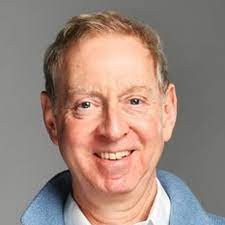
Lee Hockstader has been a member of The Post’s Editorial Board since 2004. He writes on a variety of subjects including immigration; politics; voting rights; foreign affairs and state and local issues in Virginia, Maryland and elsewhere. Before joining the Editorial Board, he spent 20 years as a Post reporter, working in more than 40 countries as a foreign correspondent based in Jerusalem, Rome, Moscow and Central America, in addition to stints as a local reporter and a national correspondent based in Texas.
Born in New York, Hockstader graduated from Brown University and was a Henry Luce Scholar in Southeast Asia. He has studied on year-long fellowships at Harvard and Stanford Universities, and, in 2014, was a recipient of The Washington Post’s Eugene Meyer Award.