Finalist: Jason Farago of The New York Times
Nominated Work
With Russia trying to erase Ukraine’s national identity, the fight to preserve, and build upon, Ukraine’s artistic heritage has taken on new urgency.
KYIV, Ukraine — At the thousand-year-old Cathedral of Saint Sophia here, standing on an easel in front of a towering Baroque golden altar, is a new, freshly painted icon that’s just a foot square.
It depicts a 17th-century Cossack military commander with a long gray beard. His eyebrows are arched. His halo is a plain red circle. He looks humble beneath the immense mosaics that have glinted since the 11th century — through Kyiv’s sacking by the Mongols, its absorption into Poland, its domination by the Soviet Union.
No gold. No gemstones. This icon has been painted on three planks of knotty wood: the planks, I learn, of an ammunition box recovered from the devastated Kyiv suburb of Bucha. Out of Bucha’s mass graves, in the wake of terrifying Russian atrocities against civilians, something new has come to Saint Sophia: an image of mourning and resolve, of horror and courage, of a culture that will not give up.
Why would a critic go into a war zone? Why should anyone care about a painting when cruise missiles are overhead? Because “this is a war about cultural identity,” said the curator Leonid Maruschak — one of so many writers, musicians and scholars I’ve met here who make no distinction between the survival of Ukraine’s people and land and the survival of its history and ideas. With Russia actively trying to erase Ukraine’s national identity, this country’s music, literature, movies and monuments are not recreations. They are battlefields. The true culture war of our age is the war for democracy, and Ukrainian culture, past and present, has become a vital line of defense for the whole liberal order.
Every war endangers cultural heritage. Walk through Kyiv or Lviv today, and on every other corner is a statue bundled in flame-retardant blankets. Hapsburg stained glass is sandwiched between particle board, and Soviet mosaics are overlaid with plywood. The appalling damage to theaters, libraries and religious sites (above all in Mariupol, the occupied city in Ukraine’s southeast) in these past four months alone broadens a horrendous tide of cultural destruction this century, in Syria, Iraq, Ethiopia, Mali, Armenia and Afghanistan.
But the risks to Ukrainian culture are more than mere collateral damage. For President Vladimir V. Putin of Russia, there is no Ukraine as such; he maintains that Ukraine is a Soviet fiction, that the Ukrainian language is a Russian dialect, that Russians and Ukrainians are “one people.” And so since February — indeed, since 2014, when the war first began in the east of Ukraine — cultural manifestations of Ukrainian independence have been directly in the cross hairs.
“You see how many historical fake justifications there are in the Russian motivation for this war,” the philosopher Anton Drobovych, one of Ukraine’s brightest young scholars, told me when we met up near his barracks on an island in the Dnipro River. In peacetime, Mr. Drobovych led Ukraine’s Institute of National Memory, an official institution tasked with re-examining the Communist era after years of whitewashes. Now he wears fatigues and combat boots, and takes Zoom meetings from the trenches with Western think tanks, as he works with the institute on an oral history of the invasion. “History is no less important than the army,” he said. “If I felt that it was less important, I would deal only with my anti-tank affairs.”
Despite the social-media propaganda, despite the missile warnings delivered via push notification, in cultural terms the war here is brutally old-fashioned. It’s a straight-up imperial war, and it’s turned contemporary Ukrainian culture into an archival enterprise — one in which preservation is everyone’s job, and new creations are rooted in history the enemy would deny. The exhibition “Crucified Ukraine,” at a museum in the shadow of Kyiv’s stainless steel Motherland Monument, includes exacting replications of three underground shelters that housed 120 Ukrainians for more than a month this winter. Film archivists have become experts in explosion risks, and librarians are digitizing Soviet-era photographs that were spirited out of Mariupol at the last minute. Heritage authorities are tracing monuments with 3-D scanners, creating a record in case they need to be rebuilt — a technology developed too late for many treasures in Syria.
Lviv, an hour from the Polish border, has become a hub for displaced people and displaced culture, too. Viktoriya Sadova has been showing new arrivals to the city around the memorial museum in Lonsky Prison, which was a Polish, then a Nazi, then a Soviet detention center. (She became the museum’s acting director after the war began on Feb. 24, and its regular leader was drafted.) Visitors from the occupied cities of Mariupol and Kherson scrutinize the exhibits of Soviet repression of Ukrainian partisans, and recognize the traumas immediately. “Eighty years have gone but nothing has changed,” she told me. “We still have the same occupant.”
Ms. Sadova has also been collaborating with museums in Kyiv and Kharkiv, exfiltrating their collections to safer locations west. There was no guidance from the culture ministry, no fuel, no cars; she thanked God for an emergency shipment of cardboard boxes from Poland. What makes her work? She glanced up at the sallow light of the former prison cell and, with a little laugh, quoted me a snatch of poetry Heidegger was fond of: “Where there is danger, there grows what saves.”
Right now that danger is starkest away from Kyiv. In the occupied eastern cities of Severodonetsk and Lysychansk, local history museums are presumed destroyed. The missiles come again and again in Kharkiv — the nucleus of the Ukrainian avant-garde in the early days of the Soviet Union. But no city can sleep easy, and no cultural institution is safe. On Thursday a barrage of Russian missiles struck Vinnytsia, a city west of Kyiv and hundreds of miles from the front. They blew up a music venue ahead of a pop concert; the performer Roxolana posted to Instagram that her sound engineer was among the dozens dead.
But with the withdrawal of Russian forces from the Kyiv region in April, and the return of some citizens who’d sought refuge westward, cultural life has partially resumed here. At the opera they’re performing “Nabucco,” with Verdi’s most stirring nationalist chorus, and buskers on the streets are singing “Stefania,” the folk-rap mash-up that won the Eurovision Song Contest this year. The independent designers on Reitarska Street are meeting the demand for patriotic style: blue-and-yellow knitwear, T-shirts with Javelins. Even the renowned nightclubs — which led The New York Times Magazine, just a few months before the war, to christen Kyiv “the Pandemic’s Party Capital” — are gingerly reopening for daytime dancing.
Between the air raid sirens, amid updates from the front, there grows what saves. “I had the feeling in the first days, and even now, that there was sand in my mouth instead of words,” said Olena Stiazhkina, a celebrated novelist and historian, when we met for Crimean Tatar food a few days after Kyiv’s most recent bombardment. Ms. Stiazhkina was born in Donetsk, the largest city in the Donbas, and fled when Russian-backed separatists fought to take control in 2014. Her novels, like many conversations here before February, oscillate between Ukrainian and Russian — or they used to; she’s done with Russian for now.
She has friends who fled Kyiv, but she couldn’t bring herself to leave home, not a second time. When we met she felt strong and sure, but she wondered what might happen to her in a decade. She mentioned Primo Levi, Paul Celan, Jean Améry, writers who survived the Holocaust and then killed themselves years later, and her eyes welled up.
What pushes her on is that Ukrainian archival impulse. “As a witness, I can write. As a writer, I cannot,” she told me. “I understood that I must be a witness, and that’s why I write a diary every day. And this time, I have a strong intention to finish it on the day of our victory.”
In 2014, after the Maidan revolution that brought down former President Viktor Yanukovych, Ukraine had a national rebirth, at least in part. The political revolution juddered, but the cultural explosion endured, producing a new generation of young filmmakers, photographers, designers and, especially, DJs and electronic musicians.
“After Maidan, the inability to channel that revolutionary energy into the state got redirected into music,” said the curator and writer Vasyl Cherepanyn, who directs the Visual Culture Research Center, Kyiv’s boldest independent art institution.
The country’s youthquake seemed more hedonistic than constructive, at least at first. (“Nightclubs,” Mr. Cherepanyn conceded, “are not the best place for critical thinking.”) Now, though, all of that cultural ferment is buttressing a season of unbelievable bravery. What Ukraine is proving, amid the slaughter, is that civil society can make a difference against a superior military force. Cultural power is real power. Ukrainian culture, as much as arms, is keeping all of our democratic dreams alive.
Mr. Drobovych described Ukraine’s culture as an explicit military asset. “It is contagious, and it spreads to the rest of the world,” he told me at the barracks. “It seems that this truth and justice, which is violated, simply explodes in people who create art. And I think that’s a huge part of why we’re going to win this war.”
On the dance floor at Closer, one of the clubs that made Kyiv’s reputation as a nightlife capital, I bumped into Serhiy Leshchenko, who before Maidan was an investigative journalist focused on corruption. After the 2014 revolution he entered Parliament; now he advises the Zelensky administration, though he still fits in among the club kids. No one was in the mood to let loose; phones pinged with Telegram notifications of attacks in the south of the country, and there’s curfew at 11 p.m. But even at just 100 beats per minute, the young revelers of Kyiv are nowhere near surrender.
“We have to do this,” Mr. Leshchenko shouted in my ear over the beat of the DJ. “War isn’t about death, war is about life.” The speakers thumped, the air alert app was silent; the blue and yellow flag fluttered above; the young Ukrainians in black held fast to each other, dancing in slow defiance. In danger there grows what saves.
Painting will not stop missiles. Music will not end suffering. But culture is not powerless — and a visit to Ukraine reaffirmed what it can do at its best.
High on a wall of the Palazzo Pitti, in Florence, hangs a famous painting that Rubens completed in the last years of his life.
At its center is Mars, the god of war, surging out in battle armor from the doors of the Temple of Janus.
In Roman peacetime, this temple’s gates were always closed. Now they have burst open, and the frenzy has begun.
Beneath Mars’s feet lie victims about to be trampled. You see a mother looking up with terror at the gathering violence, desperate to protect her wailing child.
Next to her are two figures who have fallen to the ground and are on the verge of destruction. One is a woman with a lute, her instrument already broken. Another is a personified Architecture, his compass falling from his hand.
These are “The Consequences of War,” as Rubens saw them in 1638. Civilians suffer, but not only them; culture is a casualty too.
KYIV, Ukraine — You do not have to go far outside of Kyiv to see how the massacre of civilians and the trampling of culture still come one after the other. In Borodianka, a nucleus of Russian atrocities about 45 minutes north of here — the drive is slower now that the bridges have been demolished — the Palace of Culture has had its windows blown out; its concert hall is dust-caked, and the ticket booths have been ripped asunder. Halfway between the capital and the Belarusian border, I had to contort my body through twisted studs to enter the leveled Ivankiv Historical and Local History Museum, its statuary now pitted, its embroideries scorched. It is far worse further east.
Here in Kyiv the masterpieces have, like many of its citizens earlier, gone underground. The Khanenko National Museum of Arts, in an old mansion on Tereshchenkivska Street, owns a smaller Rubens: a little oil sketch of a river god, normally on a blue wall beneath a Beaux-Arts skylight. I couldn’t see it when I walked over there; the whole collection is in hiding.
In the first days of the war, when Kyiv was besieged from all sides and half this city’s population fled, many Americans in the arts wanted to know what they could do, beyond the things everyone ought to do: support charities, support refugees. Museums and orchestras made their requisite statements of revulsion and allegiance. The Ukrainian national anthem was sung at the Metropolitan Opera; a Ukrainian folk song cold-opened “Saturday Night Live.” We have now all internalized the participatory prerogatives of social media: you must react, you must engage. The algorithms do not favor Rubensian allegory.
The authorities in Ukraine, up to the actor-turned-commander in chief, have not been shy in encouraging the domain of international culture to support the war effort. President Volodymyr Zelensky has addressed the gussied-up crowds at the Venice Biennale and the Cannes Film Festival; the Grammys, too. “On our land, we are fighting Russia, which brings horrible silence with its bombs — the dead silence,” said the president, in his olive T-shirt, to Olivia Rodrigo and Jazmine Sullivan and the rest of the assembled stars. “Fill the silence with your music.” (He was followed by John Legend twinkling at the piano for soldiers to “lay down those weapons”: perhaps an awkward message for defenders against an imperial invasion.)
Those of us in the rich and safe parts of the world, rich and safe as long as the nukes stay sheathed, surely get something out of this cultural solidarity. And during a war as morally unambiguous as this one, sure, why shouldn’t your local flamenco company say “Slava Ukraini” after its land acknowledgment? But that is to reduce this epochal war to just another “current thing,” which, in the United States at least, has already been eclipsed by new domestic outrages. Crimes against Ukrainian civilians still occur daily. The death toll on the front lines remains harrowingly high. If we are going to stick up for culture in wartime, it cannot be as simply another broadcast medium, not when far louder microphones speaking more accessible languages fail to turn our heads.
WHY LISTEN TO MUSIC, why look at art, why go to the theater when war is raging? Twenty years ago, in these pages, as the pile at Ground Zero still smoldered and the long war in Afghanistan had just begun, the critic Margo Jefferson gave an answer that’s always stuck with me.
The reason you need art in wartime, wrote Jefferson, is because “history cannot exist without the discipline of imagination.” Through art we establish similarities between past and future, near and far, abstract and concrete, that cast received certainties into doubt. We look and listen in a way that lets thinking and feeling run parallel to each other. And in extreme times, this sort of cultural appreciation can rise from an analytical to a moral plane. If we pay close attention — a task made harder with every meme-burst and iPhone rollout — art and literature and music can endow us with improved faculties to see our new present as something more than a stream of words and images. They can “provide ways of seeing and ordering the world,” as Jefferson wrote then: “not just our world, but those worlds elsewhere that we know so little of.”
Those cultural figures we lionize who lived through war, from Sophocles to Woolf, from Goya to Chaplin, from Kikuji Kawada to Wole Soyinka, knew better than we do that the clarity art can provide is not what you get from a lecture or a news report. Which isn’t to say that high culture will naturally lift you out of barbarism; dictators can love the ballet as much as democrats. It isn’t to say, either, that representing war is an impossible enterprise, or that documentary or testimonial modes have more limited aims than abstraction or epic. Artists foreign and domestic have been depicting the war here head-on since the origins of the fighting actually began eight years ago — in the Ukrainian director Sergei Loznitsa’s viperous satire “Donbass,” in Serhiy Zhadan’s raw novel “The Orphanage,” or in the Polish photographer Wiktoria Wojciechowska’s profound, prize-drenched war series “Sparks.”
It is simply to say that the best art depicting war matters for its own sake, and its full value lies in a realm beyond communication or advocacy. Implicitly, we already know this: There’s a reason that Picasso’s “Guernica” of 1937, which located a universe of grief in the bombardment of one Basque village, has been invoked amid the shelling of Fallujah, of Aleppo, and now of Mariupol, while Miró’s “Aidez L’Espagne,” a more immediate cry for help made the same year, has become a mere historical artifact. There’s a reason we return to the romance of “Casablanca” when we think of refugees in wartime, and the thriller of “The Battle of Algiers” when we consider anticolonial struggle; why the hieroglyphic “Blowin’ in the Wind” has endured beyond so many more explicit songs of protest.
Somewhere in the interstices between form and meaning, between picture and plotline, between thinking and feeling, art gives us a view of human suffering and human capability that testimonials, or even our own eyes, are not always able to. These war works are not important because they are “topical” — or, to use the vacuous catchphrase of our day, “necessary.” They are important because they reaffirm the place of form and imagination in times that would deny their potentialities. They narrate history at scales and depths that push notifications simply cannot deliver, and propaganda does not bother with. They are what allow us to discern, in the daily tide of images and insanities, any meaning at all.
Let us leave the contemporary onslaught and return to Florence: a tourist mecca now, a military stronghold in Rubens’s day. The war he painted has only just begun, but Mars carries a sword that’s already tipped with blood. As he charges forward he is looking back at his lover, Venus, who’s trying desperately to restrain him.
But love is nothing now. Mars is in the grip of another woman, the fury Alecto, whose hair stands on end and whose eyes bulge with madness.
Look past the faces, look to the bodies. The big gods writhe and corkscrew as they tumble from left to right. The lesser, innocent figures skid and shatter.
When Rubens began painting “The Consequences of War” around 1638, the Thirty Years’ War was only 20 years old. Never before had Europe known an orgy of death like the one Rubens was living through; it would not again until the 20th century. Compare this painting to Rubens’s earlier tableaus of mythical brutality, such as the anatomically crisp “Massacre of the Innocents” (circa 1610), and you see how the later picture bleeds and pools, runs and ripples.
Rather than depict the battles and the pestilence head-on, here it’s as if paint itself has gone to war. Rubens understood, amid unprecedented violence, that the times had turned the excesses of the Baroque into a mode of realism.
Or, put another way: he understood that the extremity of the Thirty Years’ War required an extremity in form, and that an allegory could show something other representations could not. It was a point he underscored with the last major figure in “The Consequences of War,” the one at far left. She is a young woman in a torn and ungirdled black dress. Her arms are thrust to the sky, her ruddy cheeks stained with fat tears. This wailing woman, as Rubens wrote to a fellow painter in Florence, is l’infelice Europa: “the unfortunate Europe who, for so many years now, has suffered plunder, outrage and misery, which are so harmful to all that they need no further specification.”
So harmful that they need no further specification. Even in the mid-17th century, scenes of brutality were already so potent and persistent that the whole Thirty Years’ War could be worn in Europe’s tangled gown, her unkempt hair, her hot pink face. If images of war were that ambient in the 1630s, then I don’t even know how to begin quantifying the supersaturation today. Yet our own age’s imagery of plunder and misery has less moral impact each year — as we dreadfully learned during the Syrian civil war, very probably the most documented in human history (until this one).
The omnipresent pictures and ongoing testimonies of Syrian atrocities over 10 whole years had an impact approaching zero. And I could feel it on the ground, this month, amid this appalling war’s hand-held cameras and influencer propagandists, its livestreams of Kh-22 missile strikes, its minute-by-minute Telegram updates of eastern horrors, its Instagram posts of a 4-year-old with Down syndrome struck dead by a Russian missile in a city park: These outrages in Ukraine have already become another thing to scroll past, just as we scrolled past Damascus and Aleppo.
WAR HAS BECOME THE ULTIMATE reflection of the digital addlement that the Polish novelist Olga Tokarczuk has identified as the primary challenge to artists and audiences today. On the phone screen, everywhere is just “somewhere,” Tokarczuk regretted in her 2019 Nobel lecture: “‘Somewhere’ some people are drowning as they try to cross the sea. ‘Somewhere,’ for ‘some’ time, ‘some sort of’ a war has been going on. In the deluge of information individual messages lose their contours, dissipate in our memory, become unreal and vanish.” How can any war photograph compel us, how can any work of war art preserve its importance, while swimming upstream in an undammable river of content? Soldiers, too, have phones alongside their AK-74s, and every day since Feb. 24 has brought another evanescent current thing.
Our only chance of getting from “somewhere” to somewhere, according to Tokarczuk, lies in a model of artistic creation that breaks the first-person-singular of the status update, and seeks “a story that would go beyond the uncommunicative prison of one’s own self.” American culture has grown fearful of stories like that — more universal ones, more comprehensive ones — but writing them has been the job of artists in wartime since Aeschylus staged “The Persians.” One cultural commitment we can make, as the world of yesterday passes into mist, is to rediscover the full human cost of our perpetual battles, even if their reflections in art are bound to be fragmentary. From those fragments we might yet constellate a view of the consequences of war, and of coming hazards we will not have the luxury to scroll beyond.
Audio produced by Adrienne Hurst.
Peter Paul Rubens, “The Consequences of War,” via Uffizi Galleries.
Against the appalling human cost of Russia’s invasion of Ukraine, its cultural toll may feel insignificant. But tallying the damage shows how central it is to the conflict.
When he first saw the ruined cathedral in 1918, the young writer Georges Bataille hardly knew what he was looking at. He had come home to Reims, whose cathedral had been the site of French coronations for a thousand years. As a boy he had stood in awe of the High Gothic cathedral, its massive rose window, its imposing gallery of kings. Now Bataille was 21, discharged from a brief stint in the French Army, and trying to recognize a cathedral whose roof was gone and whose nave was choked with debris.
Reims Cathedral stood hard by the Western Front, and amid the fathomless violence of World War I, beyond the trenches and away from the gas, the repeated shelling of the cathedral became one of the elemental symbols of its barbarity. French newspapers invoked Reims as proof of German inhumanity. German propaganda blamed France for bringing the destruction on itself.
In recent years I’ve thought too often of Reims’s admonition — a centuries-old monument exploded in minutes, the present betraying the past — when looking at the new cultural ruins of this century. In Afghanistan and Iraq. In Syria, in Armenia, in Ethiopia. Now, up close, in Ukraine.
“Corpses themselves did not mirror death more than did a shattered church,” the young Bataille first thought after seeing the ruins of Reims Cathedral. He might as well have been writing about the Monastery of the Caves, which has stood for centuries in the eastern Ukrainian town of Sviatohirsk — which endured airstrikes, shelling and sniper fire this spring, leaving marble statues shattered and wooden spires burned to the nails.
Yet after that first shock, amid the rubble of a century ago, Bataille made an observation about violence and culture that applies as much to Sviatohirsk as to Reims: that rubble can serve as the soil of cultural rebirth. Faith and doubt went together for him, and even the greatest abandonment had a fecundity that defied war. “One should not seek among her stones something belonging to the past and to death,” Bataille came to believe. “In her awful silence flickers a light that transfigures her vision: That light is hope.”
Every army attacks people. A few attack time as well. Over the past six months, with my extraordinary and dogged colleagues from The New York Times’s Visual Investigations team, I’ve been absorbed in the toll of cultural destruction brought on by Russia’s invasion of Ukraine. We identified 339 buildings, monuments and other cultural sites that the war has partially or totally destroyed. We paid closest attention to four in the Donbas: the industrial, largely Russian-speaking region of eastern Ukraine where a war has been ongoing since 2014. The Sviatohirsk monastery is the most famous and beautiful of them, but we also investigated a Soviet-era cultural center, a bilingual community library and a contemporary military commemoration, all now lost.
“They aim at the most important things: museums, libraries, the things on which we build our authenticity,” said Svitlana Moiseeva, a librarian we spoke to who had fled west from the Donbas.
Some of the cultural sites we documented were destroyed with intent — above all Ukrainian monuments, which have been smashed or dismantled on camera in several Russian-occupied regions. (Targeting cultural sites for destruction is a war crime, per the 1954 Hague Convention of the United Nations, to which both Russia and Ukraine are parties.) Others appeared to be collateral damage. Most of Ukraine’s ravaged cultural sites are like the shelled Reims Cathedral: perhaps not directly targeted, but destroyed with ruthless unconcern.
Over the summer, I’d traveled to liberated towns outside Kyiv. I walked through the wreckage of the Ivankiv Historical and Local History Museum, which burned down to the studs, and the house of culture in Borodianka, whose tattered theater had once hosted a thriving local arts program. The destruction is even more intense in the east of the country. Working with colleagues to document its scale, watching loop after loop of burning churches and battered archives, one matter became clear: The damage to arts and heritage was the inevitable product of a Russian invasion meant to extinguish a national culture.
President Vladimir V. Putin of Russia is prosecuting this war to inscribe Ukraine into a “Russian world.” He makes no secret of this. “We are one people,” Mr. Putin wrote in his notorious 2021 essay that negated Ukrainian nationhood and cast Ukrainian art and literature as Russian patrimony. This June, at an exhibition in Moscow, the Russian president explicitly analogized his war to the 18th-century imperial conquests of Peter the Great. Just this past Sunday, in a Russian television interview, he accused foreign adversaries of “aiming to tear apart Russia, the historical Russia.” The point of invading Ukraine, Mr. Putin reiterated, was “to unite the Russian people.”
Language, religion, historical memory: These, as much as territory, are the war’s contemporary battlefields. Against its appalling human cost, its cultural toll may feel insignificant, or luxurious — but culture is in every way a front of this imperial war, and the fate of more nations than one hangs on its defense.
What sort of culture can blossom out of charred ground? Some will have a nationalist, even propagandistic tenor, which is no sin amid a war of aggression. (By the time I got to the house of culture in Irpin in July, the musical group Kalush Orchestra had already filmed its video for “Stefania” — which was this year’s Eurovision Song Contest winner and has become an unofficial war anthem — in the crushed remains of its music hall.)
Ukraine, though, already has an incredible generation of artists, writers, filmmakers and musicians who came of age after the 2004 Orange Revolution and the 2014 Maidan revolution: writers like Serhiy Zhadan and Yevgenia Belorusets, artists like Mykola Ridnyi and Anna Scherbyna, who were already forging a new, postcolonial Ukrainian culture from the Donbas’s postindustrial landscape. They are in the vanguard of what we must hope, when this war ends, will be a new cultural settlement that succeeds the imperial violence of the past.
More than Bataille, this coming Ukrainian generation has kept me in mind of another author of humanity in extremes who lived in northern France after a global conflagration. Samuel Beckett, after spending World War II aiding the French Resistance, went to work in a ruined town in Normandy in 1945: a town called Saint-Lô, whose parish church, like Reims Cathedral before it, had crumbled beneath the bombs.
Beckett served there as a storekeeper and interpreter at a provisional hospital set up by the Irish Red Cross — and yet, as Beckett wrote in the wreckage, “‘Provisional’ is not the term it was, in this universe become provisional.”
It was in that martyr city, among hollowed houses and numberless casualties, where Beckett’s subtractive vision began to crystallize into a new art of bleak hope. Civilization seemed abandoned. Humanity appeared futureless. Yet somehow, in a wiped-out corner of Normandy, horror and sympathy fused into the existentialism of “Waiting for Godot” and, later, culminated in the black optimism of “Happy Days.”
In our century too — forgive my romanticism, but I really do believe it — there will be a new generation, Ukrainian and not only, to reinitiate our culture in the rubble of war. They will discover in the martyred city of Mariupol what Beckett discovered in Saint-Lô: “a time-honored conception of humanity in ruins, and perhaps even an inkling of the terms in which our condition is to be thought again.”
Many cultural institutions were not prepared to protect their collections and buildings before the Russian invasion, so ad hoc groups of arts workers and leaders stepped in to fill the breach.
LVIV, Ukraine — A month after the Russian army invaded Ukraine, the photographer Roman Metelskiy stood on the platform of this western city’s domed Art Nouveau railway station, watching trains full of women and children evacuating from the east. But he was waiting for a carriage from the other direction. This one, from the west, was full of Bubble Wrap.
Few Ukrainian cultural institutions had prepared for a full-scale invasion. Museums, churches, castles and libraries had neither materials nor guidance on how to preserve the country’s valuable art.
“We had to start from scratch,” Mr. Metelskiy said. “We were asking for packaging materials. For financial support. For advice on how to preserve and package things.”
So with the government on war footing, he and other arts professionals formed an ad hoc preservation committee, the Center to Rescue Cultural Heritage, over coffee in early March. (In this Hapsburg city, Mr. Metelskiy explained, “everything happens over coffee.”)
“We were pretty astonished,” Mr. Metelskiy said. “We thought that instructions already existed.”
Ivan Shchurko, a member of Lviv’s regional parliament who was at the coffee meeting that first day, remembered feeling scared and disoriented as they hunted for help. “We were looking for people with the same interests, the same values,” he said.
They contacted a dozen Polish museums and palaces, and on March 27, a train arrived from Warsaw laden with cardboard boxes and bags of Styrofoam beads. Another emergency shipment arrived on April 4, with wrapping materials and protective gloves from Norway and Denmark. Other supplies arrived from libraries in Germany, Latvia and Estonia, and museums in Britain and Slovenia.
Teams in Lviv stuffed the packing materials into vans or the back of their cars, ferrying the supplies cross-country to vulnerable institutions in Chernihiv, Dnipro, Kharkiv and Zaporizhzhia. By June, Mr. Shchurko and Mr. Metelskiy were presiding over mountains of foam core boards and reams of plastic film that filled the lobby of a university library: humanitarian aid of a more cultural kind.
“In times of war, there are two irreversible losses: people and our culture,” Mr. Metelskiy said. “The rest can be rebuilt.”
As the Ukrainian Army steps up its counteroffensive in the east this summer, heritage specialists in the west are engaged in a related battle: to preserve Ukraine’s monuments, museums, historical collections and religious sites. The Russian invasion is a culture war to its core, and heritage sites have been damaged both from errant shelling and targeted destruction. Ukraine has accused Russian-led forces of looting in the occupied cities of Mariupol and Melitopol. Regional museums outside the capital, Kyiv, and the northeastern city of Kharkiv have burned to their foundations.
But where Ukraine’s soldiers have relied on a central chain of command, its civilian army of scholars, curators, archivists and architects say they have had precious little guidance.
Officials in Kyiv and in regional administrations have certainly taken steps to keep the country’s heritage intact. The national culture ministry has hosted workshops, won commitments from international partners, and kept a public database of damaged and destroyed monuments for future legal claims.
“Before the full-scale war, we were not ready for such a barbaric action, although the ministry was doing our best to protect our cultural sites,” said Kateryna Chuyeva, a deputy minister of culture, during a March briefing on the destruction of Ukraine’s churches and historical archives. “But what we are witnessing now in western Ukraine is people are very much engaged in defending and protecting cultural sites.”
The ministry has been sparing with details on how many collections it has had a hand in evacuating, citing wartime exigencies. Yet interviews with museum directors and other heritage leaders in Lviv and Kyiv had a common refrain: If you wanted practical necessities, you had to find them yourself.
“Our officials who cut us off, and leave the cultural sphere with minimum resources, make us work even more,” Mr. Metelskiy said.
So by coordinating via WhatsApp groups and WeTransfer files, and raising funds on crowdfunding platforms they have made significant strides at preserving endangered icons and artworks — and they have done it mostly by themselves.
“It’s very hard, but it’s a very big chance to help my colleagues,” said Olha Honchar, the 29-year-old director of the Territory of Terror Memorial Museum, which documents the city’s Nazi and Soviet past. “From the first day of the war, we understood that the Lviv region would start to be a shelter, and Lviv museums would be mediators from donor countries.”
In early March, Ms. Honchar set up a nonprofit that has funneled financial support to more than 750 museum workers in eastern and southern Ukraine. The payments, mostly under $100 and delivered via smartphone app, have helped to keep employees of arts institutions above water as their salaries go unpaid.
While Ukrainian refugees were welcomed by European cultural institutions, those who stayed behind needed immediate humanitarian aid that those arts institutions were ill prepared to deliver. Foreign donors were reaching out — but they wanted spending controls that people caught up in war couldn’t provide.
“We need packing materials,” Ms. Honchar said. “But we also have to help people who work with these packing materials. We must support the human potential of culture in Ukraine.”
Lviv, which passed from Austrian to Polish to Soviet control in the 20th century, has had its heritage endangered before. The Nazis looted the city’s art collections during World War II; a Dürer drawing now in the collection of the National Gallery of Art in Washington was held in a Lviv library until 1941. After World War II, Soviet authorities suppressed not only abstract art, but also art with Ukrainian nationalist themes, and religious art — including the Baroque statues by Johann Georg Pinsel, the most important artist of the city’s Hapsburg era.
Now Pinsel’s screw-twist saints on the facade of Lviv’s St. George’s Cathedral are shrouded in gray plastic bags, wrapped with cordage and duct tape. Asked about those who threatened the cathedral’s artworks, Roman Kravchyk, the archpriest, fingered the jeweled crucifix around his neck and muttered, “May God have mercy on their souls.”
Ms. Honchar and her Lviv colleagues have helped evacuate collections from a few smaller, regional museums to the relative safety of Ukraine’s west. A few institutions in Kharkiv and Chernihiv also managed to move parts of their collections here. At least one museum in Odesa had the foresight to organize a major touring exhibition in January, to get its holdings out of harm’s way.
The Lviv National Art Gallery, the country’s largest art museum, with more than a dozen branches in the city and the surrounding region, made only perfunctory preparations before the invasion. Few initially thought the war would reach so far west, but one missile landed about 200 meters from one of the institution’s castles, with a fragile collection of Chinese and Japanese ceramics on its premises.
Vasyl Mytsko, a senior official at the museum, couched the evacuations in a dark optimism born from Ukraine’s tumultuous history. “In the Ukrainian language,” he said during an air alert, “we have a saying: We didn’t have happiness, so unhappiness helped us.”
The museum’s holdings are safe for now. The prizes of the painting collection have been moved to several undisclosed locations. But many of Pinsel's gilded statues remain on site, shrouded in simple black tarps.
Transporting art is a hazardous enterprise, and not only because in a war zone it might be more dangerous to move a collection than to let it stay put. Such evacuations require official approval, which was nearly impossible to obtain once the invasion began. Several museums in Kherson, now under assault as Ukraine tries to retake the city from Russian occupation, were ready to relocate their collections to safer grounds but could not get the necessary signatures.
“They were abandoned, I would say,” said Mr. Metelskiy, when asked about the dilemmas facing museum directors. “There weren’t any orders, any directions of what to do. And they couldn’t make a decision by themselves, because if they did, and something went wrong, they would have criminal responsibility. And now these places are either occupied or destroyed.”
In the absence of central planning, Ukraine’s cultural figures relied on horizontal connections. In Lviv, that meant leveraging contacts with institutions right across the border, in Poland.
Liliya Onyshchenko, head of the Lviv City Council’s Department of Historical Environment Protection, reached out to Polish colleagues, seeking hundreds of water-misting fire extinguishers, essential protection for the countless wooden churches of the Lviv region. Flame-retardant blankets were another critical ask; monuments across the city are now wrapped in protective materials sent from Warsaw, Krakow, Lodz and other Polish cities. (Some valuable monuments are also surrounded by cages or scaffolding so that, if a blast wave shatters them, the pieces will remain together.)
“It can’t be comprehended that such a thing is possible in the 21st century, especially when the library was burned down in Mariupol,” Ms. Onyshchenko said. She has spent her whole life in cultural preservation and takes it all very personally. “You give birth and raise a son,” she said, “and then some barbarian comes, who just in one day takes your child away.
“That’s the same with cultural heritage. You are working on it, restoring it, doing it in great detail, with love. And then one missile and it’s gone.”
Others in Lviv have looked to the United States, and to the Ukrainian diaspora. The Center to Rescue Cultural Heritage partnered with a nonprofit in Washington, the Foundation to Preserve Ukraine’s Sacral Arts, which provided some of the initial funding to transport boxes and foam.
Two Ukrainian-speaking conservators at the Metropolitan Museum of Art — one Ukrainian, one Polish — recorded videos on how to wrap a painting properly (with cotton tape between the face and the plastic) and how to carry them safely (with your hands on the sides of the frame, never the top).
One commitment of Lviv’s on-the-fly preservationists is that no one should be caught as flat-footed as they were. ”We also understand that our experience in the field of heritage preservation will be invaluable for the world community,” said Mr. Shchurko, standing in front of his organization’s amassed cardboard boxes.
“The war crystallized it all, it made everything brighter,” Mr. Shchurko went on. “We have always understood and said that our heritage is valuable. But the feeling of how important and valuable it is to us: This feeling comes only with losses.”
Oleh Chuprynski contributed reporting from Lviv.
Picasso, Braque and Gris learned new tricks from old masters of optical illusion. In the Metropolitan Museum of Art’s new show, they shatter modern art to pieces.
Paris, and the year is 1910; four years from now Europe will shatter, but painting is already in pieces. Georges Braque and Pablo Picasso aren’t even 30 yet, and in their studios in Montmartre they are making paintings that look like nothing that came before. Flat paintings. Fractured paintings. Paintings that boil down human experience to a stew of signs and symbols, and set the 20th century on the path to abstraction.
From their hero Paul Cézanne, they’d learned to break down and reassemble multiple perspectives. Scrutinizing central African sculpture in Paris’s colonial ethnology museum, they’d learned to clarify bodies into pure geometry. Crossing those two wires they jolt the history of western art, and spark a whole new kind of image that, for the first time in 500 years, is done with simulating real life. Not satisfied with revolutionizing painting, they then go on to forge an even more radical form: collage, which contaminated the realm of fine art with detritus from newspapers and the shops.
That, at least, is how the story of Cubism usually goes: a story of an utter break with illusionism. That’s how the textbooks still teach it. That’s how critics like me reflexively narrate it. And that’s the story that is getting an almighty shake-up right now in “Cubism and the Trompe L’Oeil Tradition,” an eye-bending, wonderfully frisky new exhibition at the Metropolitan Museum of Art. What if Picasso and Braque had other aims than shooting the starting pistol for abstract art? What if Cubism, for all its debts to Cézanne and central Africa, also drew on another, lower kind of imagery?
What if our view of Cubism as an art of no illusions was … all an illusion?
The exhibition, seven years in the making, overturns the modernist gameboard by putting these great puzzles of modern Paris — by Picasso, Braque and Juan Gris, many from the transformative gift that the cosmetics tycoon Leonard A. Lauder made to the Met in 2013 — alongside several dozen earlier paintings that aimed to tromper l’oeil: to trick the eye.
During the 17th century, trompe l’oeil had fans among both the European aristocracy and a new middle class, who paid top dollar for pictures of letter racks that appear to be stuffed with real envelopes, or wrinkled papers as if they were tacked right to the canvas. Trompe l’oeil artists were also highly in demand in the decorative arts, and wealthy patrons would hire peintres-décorateurs to shellac their drawing rooms with imitation marble and porphyry.
By the time of the Enlightenment, though, trompe l’oeil was badly out of favor: a juvenile amusement, no better than that, with none of the seriousness of high art. (It’s still a kind of image-making with mass appeal. New York has a commercial Museum of Illusions, a tourist attraction in the Meatpacking District whose optical mirages invite visitors to “Trick your eye and entertain your mind!”) Nevertheless trompe l’oeil, which could make cheap canvas look like lustrous stone, which made books and letters appear so real you could grab them, was rarely as simple as a one-liner.
It was a trickery that showcased its trickery. And this show, organized by Emily Braun and Elizabeth Cowling and full of rigorous scholarship and some naughty puns, proposes that the Cubists took lessons from these dissemblers that were decisive for how we see today. They’re lessons that may clarify matters if you’ve never really warmed to Cubism, which, for all its importance, still has an unfortunate reputation as forbidding or insidery. And they’re lessons that underscore just how the Cubists plunged into a new world, without fear, and gave us a vital example for a contemporary culture desperate for its own smashup.
Lesson one: A painting is just a painting. It’s a flat surface slathered with oils, rather than an illusionistic window on the world, and there’s nothing wrong with reminding viewers with a gotcha joke. Look here at one of the earliest Cubist pictures: Braque’s 1909 “Violin and Palette,” loaned from the Guggenheim. The musical instrument and the artist’s implement lie in planes so shallow that space becomes a mosaic. A nail, represented as nothing more than two perpendicular black lines, casts a shadow as bent as a dislocated shoulder. Black outlines give zero sense of depth, and hasty green brushwork in the top-right corner suggests a pulled-back curtain, as if all this is just a stage set.
Braque’s reduction of painterly space from three dimensions to two was a watershed — and even so, he was looking at how trompe l’oeil declined to simulate space via one-point perspective. Fake frames made it clear: The pictures were just pictures. Flat wood panels were painted to appear like … flat wood panels. The Irish-American artist William Michael Harnett, in an 1888 trompe l’oeil panel, depicts a violin and its bow, some sheet music, and even a horseshoe hanging from nails hammered into a wooden door, each stain and grain neurotically detailed.
Lesson two: Humble subjects can have profound meanings. Even still life, once seen as a workaday genre of simple copying, could have the highest philosophical complexity. Picasso’s and Braque’s Cubist still lifes of 1910-12 do away with the Cézannesque fruit bowl and absorb elements from earlier Dutch art, like string instruments, wine goblets and tobacco pipes. When seen alongside these rich 17th-century still lifes — one table with fading flowers, another with a half-burned pipe lighter; none is really trompe l’oeil; all are exactingly detailed — Cubist still life takes on a surprising dimension of melancholy and vanity.
These death-haunted predecessors give a surprising new sheen to another major Cubist motif: the newspaper, sometimes painted and sometimes pasted, whose mastheads and headlines collide with tables and slide into wine bottles. The received wisdom around Cubism treats these words and letters, especially the J-O-U of the Cubists’ favorite scandal sheet Le Journal, as signs set free of their original meanings. They feel more like a memento mori in this show, a reminder all our lives will one day be yesterday’s news.
Lesson three, the most important: Nothing about culture will ever be pure. High art should not, indeed cannot, be walled off from the world outside. The trompe l’oeil artists loved to paint letters, calling cards, books and etchings; the Cubists, by turn, infected French art with advertisements, sheet music and pulp novels. With the invention of collage in 1912, the Cubists opened a second path for modernism. You could hold to the independence and self-determination that would come to animate abstract art. Or you could give form to the modern world through aggregation, stitch-ups, reuse, misuse.
Picasso, in the bafflingly dense “Still Life with Chair Caning” of 1912, showed what was possible for an artist ready to slip between real and fake, found and painted. It’s another scene of a cafe table, laid with newspaper and glass, on which Picasso pasted what looks like the rattan caning of a cafe chair — but turns to be a commercial tablecloth printed with the image of caning. (This is an epochal Picasso, loaned from Paris to New York for the first time in 30 years.) Braque, the son of a housepainter, had a particular gift at simulating wallpaper, and mixed commercially printed decorations with painted replicas: a copy of a copy, a commodity devalued and revalued.
With its attention to visual trickery, “Cubism and the Trompe L’Oeil Tradition” concentrates mostly on Cubism’s second, more percussive stage, usually referred to as Synthetic Cubism. That focus leaves Picasso in slight shadow, gives Braque his fair due and crowns a new champion of media monkey business and painterly legerdemain. Step forward, Juan Gris: the eternal third wheel in Picasso and Braque’s classic rivalry, who graduates here to the TKO champion of Cubist illusion.
Over and over we see Gris push Cubist deceptions to their outer limits, as he found his way to a new scheme of images for a world moving faster than ever. In Gris’s boisterous 1913 “Violin and Engraving” (given by Lauder to the Met this year), classic Cubist motifs of instrument, wine bottle and wallpaper intersect with an appropriated engraving after Turner; he then painted a broken frame around the pasted picture, and told his dealer that buyers could replace it as they liked. “Flowers” (1914), another new Lauder gift, implies a lovers’ tryst through carefully laid wallpaper with marble and floral motifs.
He pasted in pages from vampire serials, war reporting, tobacco wrappers, even a mirror. He chopped headlines into one another, then sliced them into mismatched scenes, to produce new meaning through wild decontextualization. (Juan Gris: the original memelord.) It’s Gris, whose collages were smoother and more tightly locked up than Picasso’s and Braque’s, who most fully typifies what makes Cubism so important today: its absolute commitment to fashioning a new image worthy of the times, out of the past and the present, out of beauty and trash. He had all the best jokes, too. “We were like mountain climbers roped together,” Braque once said of himself and Picasso. In a still life with a violin, Gris needled their bromance rivalry with a newspaper headline about two adventurers fighting over a discovery: “Explorers at Odds …”
A new age needed new images, and there was no way out but through! Three young men in Montmartre understood that in different ways, but with equal intensity — and the Met’s exhibition, following on a small but important Gris retrospective last year in Baltimore and Dallas, confirms with panache that Cubism’s visual innovations did much more than just reflect a new world. When information got so fast they could hardly keep up, when crises seemed perpetual and war was on the way, the Cubists did something better than representing life; they constituted life through art. They made a whole new culture out of the shards they picked up, and in its pasted pieces — right down to the headline spelling G-R-I-S — they found themselves transformed.
You could say that those times demanded an art of that ambition, but ours do too, and everyone knows it’s not happening. Wars of intolerable brutality. Savage technologies. Epidemics not seen for a century. Climatic upheavals not seen for a whole geological epoch. And against this backdrop of disruption — nothing new? Autofiction and Anna Weyant? Self-esteem and “Stranger Things”? “The goal,” said Braque, “was not to be concerned with the reconstitution of an anecdotal fact, but with the constitution of a pictorial fact.” Who is going to face our time head-on, dive into the wreck, and constitute something new?
Cubism and the Trompe L’Oeil Tradition
Through Jan. 22, the Metropolitan Museum of Art, 1000 Fifth Ave., Manhattan; 212-535-7710; metmuseum.org.
Biography
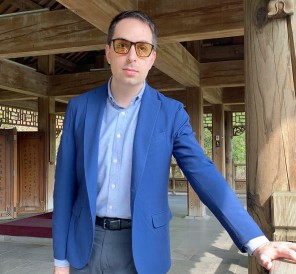
Jason Farago, critic at large for The New York Times, writes about art and culture in the United States and abroad. In 2022, he was awarded one of the inaugural Silvers-Dudley Prizes for criticism and journalism.
Mr. Farago began writing about art for The Times in 2015, and since then he has reviewed exhibitions, conducted interviews and reported features across the United States and in a dozen other countries. In 2020 he helped develop Close Read, a digital initiative that elaborates the meaning of a single work of art, detail by detail.
He previously wrote for The Guardian, serving as its first U.S. art critic and as an online opinion columnist. He has also been a regular contributor to The New Yorker, the BBC, NPR, The New York Review of Books and Artforum.
He co-founded and served as editor in chief of the art magazine Even, whose 10-issue run is collected in the anthology “Out of Practice” (Motto Books, 2018).
Mr. Farago was born in New York. He holds a bachelor’s degree from Yale University and a master’s degree from the Courtauld Institute of Art in London, both in art history. His last name rhymes with “Chicago.”