Finalist: Craig Jenkins of New York Magazine
Nominated Work
We talk about death every day now. It’s in the air. It’s on the ground. It’s waiting on the other end of cell phones buzzing in the wee, small hours. It’s peering back at us through laptop screens. It’s wafting into windows on sirens punctuating silent nights, slicing through our illusion of calm as steel does paper. It doesn’t hang around and wait its turn. Our bodies are intricate constructs, but fragile ones, too, prone to extraordinary feats and catastrophic failings. That’s the lesson of these maudlin days, if there is any sense to be made of them. It isn’t to learn a craft or start a business, to leave behind some brick-and-mortar monument to our impact, in order to proclaim to the ages, “Look, I was here.” It’s to get good at the dash, the dash through the phases and stages of life, the dash etched in granite between our beginnings and our endings.
I’ve listened to John Prine a lot this month, as the 73-year-old midwestern mailman turned Nashville figurehead fought a battle with COVID-19 that, as we learned Tuesday night, he regrettably lost. His music was a celebration of the fullness and the randomness of life. This is the through line joining the writer’s earliest songs to his last ones. In just four lines, “Sour Grapes” — a song Prine wrote at 14, when he first learned how to play guitar, and years later included on his 1972 sophomore album, Diamonds in the Rough — voices our nagging hunger for order, and the songwriter’s lack of interest in it: “I don’t care if the sun don’t shine / But it better, or people will wonder / And I couldn’t care less if it never stopped raining / ‘Cept the kids are afraid of the thunder.” “Lonesome Friends of Science,” from 2018’s The Tree of Forgiveness, tells the same story from the other side of his life: “The lonesome friends of science say / ‘The world will end most any day’ / Well, if it does, then that’s okay / ‘Cause I don’t live here anyway / I live down deep inside my head / Well, long ago I made my bed / I get my mail in Tennessee / My wife, my dog, and my family.”
There’s a world of wisdom and depth and humor and levity between those two milestones, years of wise, terse koans and nonsensical yarns. John Prine could be a whimsical writer, possessed of a keen sense of absurdism that drew humorists like Bill Murray and Stephen Colbert in as friends and admirers. Diamonds in the Rough’s “Yes I Guess They Oughta Name a Drink After You” is a breakup song and a bar anthem that refuses to follow the rules about country-music weepers. There’s a smirk in the delivery and a glee in the self-medication that flies in the face of the conventional (and frankly faulty) wisdom about barflies that says they’re all aching and miserable. “Often Is a Word I Seldom Use,” from 1973’s Sweet Revenge (an album rife with songs about mortality, graced with cover art depicting the artist stretched out in the front seat of a car, smiling, with a cigarette dangling from his mouth), takes death and division in stride, its main character exiting a relationship (or a life) with a sneer: “I’m cold and I’m tired / And I can’t stop coughing / Long enough to tell you all of the news / I’d like to tell you / That I’ll see you more often / But often is a word I seldom use.”
Between verses about the quickness of death and the joys of life and love, Prine wrote jarring story songs and protest anthems illuminating faults in the American experiment. Having narrowly escaped deployment to Vietnam after being drafted in the late ’60s, he wrote pointed antiwar tunes like “Your Flag Decal Won’t Get You into Heaven Anymore,” a biting rebuke of people who mistake faith for patriotism (“Your flag decal won’t get you into heaven anymore / They’re already overcrowded from your dirty little war / Now Jesus don’t like killing, no matter what the reason’s for”); “Sam Stone,” which laments the lack of opportunities for Vietnam vets coming home with addictions and post-traumatic stress disorder (“The time that he served / Shattered all of his nerves”); and “Take the Star Out of the Window,” which calculates the human cost of overseas conflict (“Don’t you ask me any questions / About the medals on my chest / Take the star out of the window / And let my conscience take a rest).” Sometimes Prine directed these lyrics at an audience that needed to be shaken loose from its trust in the goodness of its government, and sometimes he sang in the first person, humanizing the struggle to get through the day. You see his range in a 1976 Saturday Night Live appearance, where he played the plaintive love song “Hello in There” and followed with “The Bottomless Lake,” a corker about a family trip in a busted rental car that ends in everyone drowning.
Though his writing earned the respect of American songwriting giants like Bob Dylan (who covered his fellow midwestern bard on tour and later claimed “Lake Marie,” a chilling spoken-word narrative from 1995’s Lost Dogs and Mixed Blessings, as a favorite) as well as Johnny Cash and Kris Kristofferson (who cut a gospel version of Prine and Steve Goodman’s “The Twentieth Century Is Almost Over” to close their country supergroup the Highwaymen’s 1985 self-titled debut), John Prine’s revolution wasn’t just lyrical. He closed the gap between folk, rock, and country in a manner every bit as poignant as contemporary ’70s records from the Flying Burrito Brothers, Poco, and the Band. In the early ’80s, when his contract with Asylum Records ran its course, Prine jumped ship and co-founded Oh Boy Records, the imprint that handled his music for the remainder of his recording career. Where most songwriters who started out in the ’70s sold well early on, peaking for a few years and trending slowly downward, Prine saw his best chart week late in the game, when his final album, 2018’s The Tree of Forgiveness, opened at No. 5 on the Billboard 200. He got his flowers while he could smell them; he won this year’s Grammy Lifetime Achievement Award and came to 2019’s Americana Music Honors and Awards to play and collect trophies for Song and Album of the Year.
Prine beat cancer twice, once in the late ’90s and again in 2013, bouncing back both times with duet albums of favorite country songs. 1999’s In Spite of Ourselves and 2016’s For Better, Or Worse helped ease Prine back into the rhythm of recording while giving space to gifted women in country like Lucinda Williams, Morgane Stapleton, Amanda Shires, and Kacey Musgraves. Listen to anyone who’s worked in Nashville long enough, and you’re likely to hear a story of a fond encounter with Prine, whose impact on Americana, first as a musical pioneer and later as a friend and mentor to artists, cannot be understated. If people seem shellshocked this week, even knowing Prine was up against an illness that wreaks havoc on the bodies of seniors and people with compromised immune systems, it’s because the man seemed to be unsinkable. If there is any comfort right now, it’s in the fact that he’s been preparing us for this all along, singing songs about how quickly our time among the living can slip by if we’re not careful, how we ought to work, play, and love as long as these mortal forms allow. “The scientific nature of the ordinary man,” Prine sang on the Lost Dogs cut “Humidity Built the Snowman,” “is to go on out and do the best you can.”
Stan wars raged out of control in May. Taylor Swift fans tried to cancel Burger King for a tweet poking fun at her songs about ex-boyfriends. Barbz called for Usher’s head when he downplayed the prospect of a Verzuz battle between Nicki Minaj and Lil’ Kim, calling the Young Money chart-topper a “product” of the Bad Boy pioneer. Justin Bieber and Ariana Grande fans united against Tekashi 6ix9ine for the suggestion that their collaborative No. 1 single “Stuck With U” cheated its way past his comeback track “Gooba,” which landed at No. 3. Doja Cat caught smoke from every direction throughout the long Memorial Day weekend for dalliances in nebulous internet chat spaces and cavalier use of slurs popularized by racists on forums. Lana Del Rey got lit up by a coalition of Nicki, Beyoncé, and Cardi B fans last week for an Instagram post expressing frustration about the feeling that she isn’t allowed the same leeway for self-expression and sexuality as her peers earlier in her career; almost immediately it was noted that most of the singers she named were women of color, which drew accusations of racism and insinuations of a darker edge to the “Summertime Sadness” singer’s taste for the iconography of mid-20th-century Americana she has struggled to shake.
These cases are notable because they are all easily avoidable. They’re evidence of a slow and peculiar shift in the relationship between fans and the musicians they love over the last decade, as maintaining a social-media presence went from being a novelty to a necessity for public figures, and saying the right thing at all times on social media has become the ground-level expectation of prominent internet citizens. Social media is a bucking bronco; you can make an educated guess what it’ll do ahead of time based on history and experience, but you can never know for sure until you hop on. In 2018, Kevin Hart thought defiance would get him out of hot water for dry gay jokes in old tweets when it was announced that he’d be the host of the 2019 Academy Awards, and LGBTQ Oscar viewers balked. It did not. In 2018, Kanye West seemed blindsided by the passion in the reaction to a statement he made on TMZ saying African slaves in America may have chosen their captivity. These are all stories of celebrities being cavalier and overconfident, of the belief that the internet forgets everything in two days’ time.
Fandoms are fierce, dedicated, and organized. Their loyalty works two different ways. Modern fandoms are unparalleled in the arts of signal boosting on social media, racking up record sales and video views, and staging gestures of appreciation for their favorites. Megan Thee Stallion and Beyoncé’s “Savage” remix reached No. 1 this week in part because of strategic streaming parties scheduled throughout the days following the song’s release by Beyhive accounts like BeyLegion on Twitter. Showers of adulation from thousands of loving admirers can go to an artist’s head if they’re not careful. They can get a little too cozy, and they can get themselves in a lot of trouble. Last April, Lizzo hit at Pitchfork writer Rawiya Kameir’s evenhanded review of her album Cuz I Love You, and Lana went after NPR pop critic Ann Powers for what was a fairly reverent review of the singer’s exquisite Norman Fucking Rockwell album. Both albums charted well, with aggregated review scores in the 80s indicating nearly unanimous praise; both artists caught flak for fixating on the lone less-than-fawning review of their work. What they wanted, it seemed, was worship. Conditioning them to want it was, perhaps, a mistake. For all its great banter and interviews, Nicki’s Apple Music show “Queen Radio” has occasionally used its reach to sic fans on people who anger the rapper. That kind of heat isn’t easily quelled. Rev the kids up, and they only stop when they’re tired.
Fandoms are a place for people to find comfort and forge valuable friendships, but any organizing force capable of creating as much noise as artist-centric interest groups have been able to in the last decade also holds great destructive power. Now, toxicity in music fandom is a years-old practice. The visceral reaction to the 1913 premiere of Russian composer and conductor Igor Stravinsky’s The Rite of Spring is remembered, perhaps melodramatically, as a borderline riot. In 1979, nearly 50,000 rock fans packed into Chicago’s Comiskey Park to see a radio DJ detonate disco records after a White Sox doubleheader on what went down in history as “Disco Demolition Night.” The internet is a unique playing field and a fertile breeding ground for misinformation and targeted harassment. With so many voices and opposing ideas occupying the same space, it’s hard to parse truth from fiction. Nuance is scarce. Last week was a master class in the inability to stop a crowd that’s gotten an idea into its head. The shift over the people dragging Doja Cat to prematurely apologizing to her to dragging her written apology is proof it’s nearly impossible for the audience to be tamed and for the artist to control their own narrative. (The irony of boisterous “stans” borrowing a name from the Eminem song about a supporter whose love for his favorite artist devolves into violence is not lost on anyone, least of all Marshall Mathers, who is currently selling “Stan” sweatshirts to commemorate the 20th anniversary of the song and the album housing it.)
The consequences for stumbling in the court of public opinion are loud, swift, and severe, and the cabin fever everyone is experiencing in quarantine has ratcheted tensions up to ten. Suddenly, everyone has time. This does not bode well for anyone who speaks in error or out of turn or without a filter. Traversing the internet as a public figure means creating an image for yourself, whether you intend to or not. People watching your moves from afar create a profile in their heads, like detectives. Lana, whose tiff with Ann Powers centered around the singer’s insistence that she isn’t consciously playing a character, is seen as no-nonsense and outspoken, a firebrand who “won’t not fuck you the fuck up” for crossing her, who once led her following in a mass hex against the president. But in her eyes, the Instagram post that got her in trouble was her first declarative statement on the internet. Doja Cat is an internet humorist who is present as a celebrity as much for absurdism and prop humor as for music; “Mooo!,” the song that put her on a lot of listeners’ radars two years ago, is quite like Tekashi 6ix9ine’s “Gummo” and Lil Nas X’s “Old Town Road” in that all three songs made struggling rappers famous by marrying their internet savvy and sense of humor to a low stakes song with high replay value. Doja’s scandal underscores the fact that people don’t yet know her beyond the jokes, behind the bars, so they can’t gauge what she’s capable of.
Both performers seem trapped in gilded cages. Both got burned for leaning into the outspoken internet omnipresence audiences expect of pop stars and learned the lesson Taylor Swift uncovered in the Reputation era, that you can only control your narrative inside your constituency. Outside the castle walls, the wolves are hungry. That neither artist knows how people really see them, that neither could tell how the public would process the actions they’re being criticized for, speaks to the fact that, for celebrities, social media is one part echo chamber, where fans flatter them year round, and one part firing squad when they screw up.
Every now and then an artist comes along and changes their field so completely that their fingerprints seem present in everything that comes afterward. John Carpenter’s Halloween birthed many decades of creeping, suspenseful shots of horror-movie killers stalking their prey, picking off decadent, unsupervised teenagers one by one in locations conveniently out of reach of parents and police. Jimi Hendrix’s Are You Experienced? led generations of electric-guitar players to wield their instrument like a chainsaw, cutting through blues-rock grooves with stabs of guttural noise where his predecessors staged a more mannered attack. Remembrances of Kobe Bryant in the wake of the Laker legend’s untimely passing in the winter illustrated the influence not just of Kobe on basketball, but also of Dave Chappelle on millennials. The “Love Contract” sketch from Chappelle’s Show is half the reason people yell “Kobe!” when they throw anything at a basket, on the court or off. It’s one of a dozen tics and catchphrases we’ve forgotten we take after the comedian. (The “Racial Draft” gag resurfaces nearly every time a black celebrity loses the plot, as does Rick James’s “cocaine is a helluva drug” line, for many of the same reasons.) Chappelle’s piercing clarity with regard to matters of race and his ability to illustrate the absurdity of the American experience through calculated exaggeration are his great gifts to 21st-century thought. They’ve bled into the way we think and the way we speak.
You can’t stay cutting-edge forever. Chappelle’s retreat to the Ohio plains at the height of the success of his show, and his subsequent return to stand-up a decade later, are a clinic in the ways a lacerating wit can rust and the danger of receding into the comforts of an echo chamber. Jokes about transgender women in recent specials cast the comic, once a hero of the underdog, as an Establishment figure of a sort, punching down in the ways his work used to ridicule and detest. Doubling down when criticized put him in the league of millionaire comics who don’t get that their anxiousness to fight this generation means the tables have turned.
More fascinating than their objections to a changing world is their inability to see themselves as the old guard. They’re pining for simpler times, but what made those times simple is the dearth of outlets where people could express themselves. (Those glory days were marred by fines and complaints from angry politicians and parents; veteran comics’ habit of saying the era of “family values” conservatives was a better time for free speech than the present is a lie deserving of its own essay.) The latter-day Chappelle specials are brilliant, but also distractingly fixated on people who don’t love every joke in the absence of any demonstrable blowback for critics’ objections, a problem haunting every comic who pauses a set to complain to an audience of admirers about other people who don’t admire them. It’s a funny paradox. Either you care or you don’t. You’re not unbothered if you keep checking the comments.
This month, Chappelle made history by releasing the first official stand-up show footage performed to a socially distanced audience since the COVID-19 crisis closed clubs across the country. 8:46 is a clip released Thursday night from Dave Chappelle & Friends: A Talk With Punchlines, an event held in Ohio a week ago on June 6. It deals with the fallout from the death of George Floyd in Minneapolis last month and the protests in 50 states and around the world demanding racial justice and government action to curb police brutality. It’s Chappelle’s most poignant material in ages. The outrage is pure and unfiltered, more like a stressed-out bar hang or a video essay using historical parallels to illustrate what is acutely agonizing about 2020 than a gig meant to draw laughs. “This isn’t funny at all,” he says at one point, overwhelmed by the heaviness of his subject matter.
What’s different this time is that he’s almost exclusively boxing upward, or at least sideways, now. The targets are police violence and cable-news personalities trying to make sense of the day’s malaise. Conservative pundit Candace Owens catches hell for kowtowing to the alt-right. (The riff about Owens spent a little too much time showering her with nonspecific locker-room jabs and not enough spelling out what’s uniquely insipid about a black media figure swooping onto a story about police violence demonizing the dead and denying race as a factor in police brutality, performing equality for the sake of appealing to the white Republican gaze.) Don Lemon gets smoke for trying to shame celebrities into speaking up. Chappelle’s defense is sound. We know where he stands. The movement doesn’t need celebrity platitudes. The unveiling of the “I Take Responsibility” campaign, where famous white actors laid it on thick about privilege, happened earlier in the day, exemplifying the cloying corn that can come from forcing rich people to take a stand.
It was almost perfect. Overnight, an eagle-eyed Twitter user noticed a discrepancy between the closed captioning and the audio and video of the 8:46 performance, which currently lives on Netflix’s comedy channel on YouTube, specifically in the section on Don Lemon. At the 7:45 mark in the audio and video, Chappelle calls the CNN host’s show a “hotbed of reality” with a laugh, takes a sip of his drink, then the camera cuts to the audience and back to him telling the story about being called out on the air for his presumed silence on Minneapolis. The clip posted to Twitter shows a riff in the closed captioning that isn’t present in the video: “Don Lemon is a funny newscaster because he’s clearly gay, but … he’s the anomaly. He’s black and gay, but unlike my other black and gay friends, he’s got this weird self-righteousness …” Then it shows Chappelle preparing to do an impression of the anchor, which tracks with the silly voice he puts on at the 7:48 mark as he begins to recount what Lemon said on the air, which would suggest that a portion of the joke was cut that stayed in the closed captioning. By morning, as the clip spread on Twitter, captioning on 8:46 was disabled. Later in the day it was restored, but the words jump ahead of Chappelle by one line right at the section in question. (Vulture reached out to Netflix and is still awaiting comment.)
What happened here? What changed in a week? Is Chappelle just incapable of going 30 minutes onstage without proclaiming that he doesn’t get what makes queer folks tick but suddenly net-savvy enough to know to filter himself now? Or did he pull those lines because he’s beginning to see the light, because it undercuts his message about the chilling consistency of black pain and disenfranchisement across centuries to single out one subdivision of black man for ridicule? Whatever the case, Chappelle in middle age still mirrors his audience. We’re coming together, and fast nowadays; we still have a ways to go.
It’s disorienting looking back at the unrest of 2014 and 2015. At the hot summer night when the St. Louis Police Department faced a community incensed by the unfair policing and anti-Black violence that had culminated in the death of Mike Brown, armed with stun grenades and MRAPs, weapons of warfare, and the many months of civil disobedience and extralegal disruption that followed, and realizing it wasn’t the end of something but the tremors before an earthquake. The rift never healed. In November of 2014, when a second round of protests followed news of no indictment for Ferguson police officer Darren Wilson in the Mike Brown case, Donald Trump, then a tycoon and reality star barreling carelessly into politics, spoke on the situation on Twitter: “Our country is totally fractured and with our weak leadership in Washington, you can expect Ferguson type riots and looting in other places.” Four years into his presidency, we’ve been made painfully aware of what he would do to suppress a protest. The image of Trump holding a Bible upside down in front of a D.C. church where protesters decrying police brutality were cleared out with tear gas to make room for the photo op is one of the many indelible artifacts of a chilling chapter of American history.
The unwitting theme song of the wave of protests that carried on through 2015 — as news broke of the mass murder at Charleston, South Carolina’s Emanuel African Methodist Episcopal Church, and the death of Sandra Bland in a Texas jail — was Kendrick Lamar’s “Alright,” the cornerstone of the Compton rapper’s challenging, eclectic sophomore album To Pimp a Butterfly. Butterfly is a thesis about persecution and perseverance, a trip through a battlefield riddled with mines. The protagonist’s path to freedom takes him around predatory lending schemes (“Wesley’s Theory”), a rigged prison system (“Institutionalized”), gang violence (“Hood Politics”), alcohol abuse (“u”), and colorism (“Complexion”). In the middle of the album, “Alright” sticks out, invoking the steely composure of old Negro spirituals, songs about tarrying through tough times in search of the glory on the other side, in emancipation or in death. The Kunta’s Groove Sessions, Lamar’s small-venue To Pimp a Butterfly tour, turned “Alright” into a lengthy crowd participation exercise, as the audience chanted the chorus of the one song they hadn’t heard yet in the break before the encore. Lamar came out to stir the pot a little more before playing the song in full. The feeling was electric. We needed to hear that we would be alright. What wasn’t clear is how long it could take.
As weeks of unrest became a yearslong struggle for transparency amid mounting cases of unexplained incidents of police brutality, “Alright” grew a strange aftertaste. The sentiment suddenly felt premature, like the big hit landing too early in the live show. The world the song envisioned seems far away, though not out of reach. The moment requires a different kind of protest song. Rappers are putting in work; there’s a new one out almost every day, from sources both expected and unexpected. Indiana rhymer Freddie Gibbs’s “Scottie Beam” recounts an unnecessary police stop; Albany’s Conway addresses cops using deadly force against innocent Black citizens in the scathing “Front Lines.” Compton rapper YG (whose “FDT” was one of the defining anthems of our election anxiety in 2016) released “FTP,” the latest in a long line of powerfully rude songs about LAPD mistreatment; L.A. transplant Jay Cue’s new “Fuck Racists” seethes with retaliatory outrage. Meek Mill’s “The Other Side of America” employs the Philly artist’s spitfire raps and heartfelt verses to outline the conditions that drive people to do and sell drugs, critiquing a government that lines its own pockets while leaving many citizens to fend for themselves. Atlanta rhymer Lil Baby’s “The Bigger Picture” applies the clearheaded, emotive writing of songs like “Hurtin,” “No Friends,” and “Emotionally Scarred” to straightforward political messaging and comes out with the kind of protest song that also has designs on being a hit. The country’s current No. 1 song, DaBaby and Roddy Ricch’s “Rockstar,” now has a Black Lives Matter remix with a verse about run-ins with cops. Common points of outrage in songs coming out of every corner of the country are a damning indictment of the status quo. When Northeast boom bap guys, Midwest spitters, newly minted Southern trap stars, and Cali gangsta rappers agree you suck, you suck.
So far, though, the internet that weaponizes snark and gives new context and purpose to old songs and videos has picked intriguing contenders for the protest song of the moment. When a woman being detained outside a South Carolina strip club improvised a song about getting the officer fired, and enterprising internet users made a trap remix, the viral smash “Lose Yo Job” was born. Just as popular is a track from the mid-aughts Discovery Channel kids’ show Hip Hop Harry that came to be called “Go, Go, Go, Who’s Next?” In the show, the song — a wholesome knockoff of Terror Squad’s “Lean Back” — plays as Harry, a dancing anthropomorphic teddy bear who raps, leads the kids in a dance-off not unlike Soul Train lines and break-dance team battles. “Who’s Next?” picked up steam first as an innocuous TikTok dance challenge and later evolved into a response to cloying corporate gestures of support for Black Lives Matter on Blackout Tuesday, as brands that spoke up were quickly criticized for questionable track records on race.
In this climate, existing songs about race and justice are newly poignant. Streams of Kendrick’s “Alright” jumped up almost 800 percent as protests broke out across the country. N.W.A’s trenchant “Fuck tha Police” got a bump, as did YG’s “FDT.” Late Brooklyn rapper Pop Smoke’s 2019 smash “Dior,” might not seem like a first ballot theme song for marches against injustice, but there’s enough disappointment in the American prison system in the lyrics to make it work. Hip-hop’s social consciousness pokes through even when the artist is trying to be lighthearted.
Mainstream artists’ eloquent expressions of outrage fly in the face of faulty ancient wisdom about young rappers, which states they only care about debauchery and material wealth. (It was always a catastrophic misunderstanding of the outlaw character of drug dealers to flatten their role in society into destroyers of communities when the reality is much more opaque and morally gray.) Hip-hop has always had a strong political backbone. Run-D.M.C.’s “Hard Times” and Grandmaster Flash and the Furious Five’s “The Message” spoke to the struggles of the ’80s; in the ’90s, complicated gangsta rap figureheads like 2Pac and Ice Cube spoke truth to power, although their politics could run coarse and even wrongheaded, as anyone tracking the N.W.A legend’s month in disconcerting Twitter dispatches can attest. The outpouring of smart, relatable political analysis coming from artists at every level and in every region of hip-hop this month is proof the elders’ legacy is in good hands. The ability of their successors to synthesize prickly conversations about race, power, and policing into poignant music while neither watering down the message nor speaking in a manner that divides people (well, for the most part) is proof hip-hop is capable of rising to the occasion as tough times necessitate. The game still has its issues, but today, let’s lift up the people dreaming up a better world.
It’s a special kind of hell we live in right now when a celebrity who has admittedly never voted can claim to be running for president four months before the general election and catapult the internet into many days of trenchant debate about his motives for entering a race that he has yet to file any paperwork to join. That’s the rarefied air occupied by Kanye West, one of the most famous people on the planet and one of the least predictable figures in a sphere of American celebrities who move with careful intention, defined by the garrulousness of ever-present Twitch streamers and YouTube influencers, the pointed insouciance of political commentators, and the strategic poise of megawatt stars like Taylor Swift and Beyoncé. Kanye, by contrast, moves like summer rain: He sneaks up, empties out everything that’s been brewing upstairs, and moves on while we splash around the puddles he leaves behind. After dividing his fandom by showing loud support for Donald Trump over the last five years, West walked it all back during a peculiar Forbes interview last week, in which he insisted his MAGA years were an act of protest “to the segregation of votes in the Black community,” inspired in part by his admiration for the décor inside the Trump hotels. There is the chance that seeing the president he once called a father figure entering a White House bunker to avoid George Floyd protests is the impetus for all of this; the retraction comes with the caveat that West thinks Trump is “the closest president we’ve had in years to allowing God to still be part of the conversation.”
With filing deadlines in big-fish states like Texas already missed, and crucial states like Florida, New York, Illinois, Pennsylvania, and Ohio requiring paperwork and tens of thousands of petitions signed and filed in the next three weeks, the likelihood of Kanye following through on his July 4 announcement dims a little with every passing day. But the talk doesn’t die, because a popular musician and entrepreneur floating a White House bid is too irresistible a story to pass up, even when it’s not his third or even fourth such announcement — because social media, especially after “game theory,” is a place that often values protracted thought processes more than common-sense conclusions (and some of that trickles down to the media because the press is obliged to cover what moves people); and because four years after West’s 2016 psychiatric emergency, many of us in the audience and in the press still haven’t figured out how to deal with the auteur’s journey with mental illness or the possibility that it animates his ideological choices.
The Forbes profile is odd for a few reasons, most of which come from Kanye, who in it seems to be a fount of theocratic political takes and ideas that don’t seem deeply considered. He says he plans on structuring his administration after the fictional isolationist ethnostate of Wakanda, from Marvel’s Black Panther, and insinuates that the pandemic is divine retribution for American godlessness and that the vaccine will be tantamount to the biblical mark of the beast, then suggests that Planned Parenthood and teen suicide are tools in a plot by the Christian Devil to dethrone God. Much of it is textbook conservative youth-pastor logic; there are plenty of precedents for the pro-life, pro–school prayer, borderline anti-vaxx character who believes disease is a method of humbling mankind that West seems to have pivoted to. Where is it coming from? As much as it’s documented that he’s spending time around Elon Musk, Grimes, “Wash Us in the Blood” cinematographer Arthur Jafa, and others, West is also on good terms with Liberty University president Jerry Falwell Jr., son of the prickly televangelist, who fought to keep the school open in the early days of the COVID-19 outbreak, even as students fell ill. West is friendly with Joel Osteen and, in January, headlined Awaken 2020, an Arizona Christian conference featuring several controversial speakers, which abruptly booted homophobic firebrand Lou Engle from the bill as news of the artist’s involvement turned into criticism of Awaken’s lineup. To be fair, West’s personal pastor, Adam Tyson, and Michelle Tidball, the Wyoming therapist and life coach floated as his veep, seem mellow enough.
Some of West’s proclamations have been alarming, meandering, and impractical to a degree that draw similarities to the frenetic Life of Pablo days, where it seemed clear that something was up, but no one knew what until it came out that his personal physician had put him on involuntary psychiatric hold in late 2016. Forbes dispensed these stances as a bullet-pointed list of hot takes, a most unusual method of revealing the contents of a four-hour conversation with a star of this caliber. It seems patterned after the portion of a presidential candidate’s website that lists their platforms, but it ultimately robs the reader of the opportunity to hear West speak lucidly about what his life is like right now. The article serves up his most incendiary stances for pickup elsewhere on the internet; it wonders aloud if he understands the implicit humor of his position, but there’s nothing especially funny about this one. (It did seem funny onstage at the 2015 VMAs, when West accepted the Michael Jackson Video Vanguard Award and gave a rambling speech — “listen to the kids, bro!” — and promised to run in 2020. But we didn’t have the backstory we do today.)
Forbes also shared three Kanye “freestyles” from the interview. One celebrates the 1995 O.J. Simpson murder trial verdict as a victory for Black Americans and repurposes the lyrics about the death penalty from the second verse of “Wash Us in the Blood.” Another pokes fun at Trump’s masculinity: “How ‘bout we stop hiding in the bunkers and be a real man?” A third seems to be a fragment of a new song. The whole of the picture feeds into the old impression of Kanye West as a whimsical character with a tenuous grasp on the absurdity of some of his views, famously played for yucks by shows like South Park through the years. It is an image that needs reform, knowing what we now know about his wellness journey. TMZ suggested the artist’s family is concerned about what could be a “bipolar episode.” The lack of context regarding his diagnosis (and the timing of his more grandiose statements) in the Forbes piece and in coverage elsewhere on the internet, which questions the viability of the presidential bid but never entertains the possibility that the man giving all the outlandish pull quotes might not be doing so well right now, illuminate our inability to step back and ponder the ethics of the internet content mill when the subject is a world-famous rapper prone to puzzling public remarks that he later regrets.
As such, West, in all of his admitted political amateurishness and his poignant lack of coherent plans for leadership, has become the topic of a serious debate about the implications of a third-party candidate on the general election, as thinkers including actor Debra Messing called his run a plot to filch young Black voters from Joe Biden to help Trump win again. It’s a misunderstanding of the reasons Black voters would consolidate behind a centrist candidate — like, say, force of habit, or Republicans’ inability to even seem invested in the issues plaguing the community — and of the way Black hip-hop heads view Kanye in his Christian conservative years — which is either begrudging nostalgia, self-flagellating support, indifference, or open contempt — to treat it like an inevitability that people will march out in the middle of a pandemic to pull the trigger on a Kanye West presidency. It takes him at his word that he’ll see this thing through in his fifth year of proposing and delaying political plans. It falls into the common trap of sensationalizing what is likely another case of a billionaire spitballing fantastical plans for the future, like Elon Musk promising to put humans on Mars in 2022. (Even Elon thinks #Kanye2020 is far-fetched.) The cycle continues: Kanye says a thing, we all go the long way believing it, the idea proves untenable, and his sense that people are out to get him is reinforced, while the belief that he is coolly orchestrating loud drama for financial gain persists. What if we’re wrong, and what we see as promotional stunts is actually something much darker?
At some point, there needs to be a reckoning about the toxic relationship between Kanye West and the vox populi, how he pokes at it knowing it’ll overcorrect in response, how sometimes he is stirring the pot a little to keep his name warm, and how often it’s clear that he doesn’t even enjoy it. Last week looked a lot like the old-school tabloid days, where figures like Michael Jackson’s eccentricities were blown up and scandalized in service to the inevitable gasps and guffaws from audiences ever hungry for fresh drama. That ended badly, and this one has dark potentiality. This isn’t to say that West isn’t really planning to run for president or that his recent antics are some kind of a veiled cry for help. When the subject has a history with bipolar disorder and addiction, when he spent portions of 2018 railing against social media as a system of mind control, it behooves us to move more carefully when he appears to be acting in a way that seems counterintuitive to his peace of mind. There’s a way to say this bid seems like a bad idea without treating the subject like a circus bear, more fodder for giggles, gossip, and chatter. Last week wasn’t it.
Back when Mark Wahlberg was “Marky Mark,” and hip-hop and dance music rubbed elbows as siblings raised in the same household, when Queen Latifah and the Jungle Brothers dabbled in house, and your Eurodance hit wasn’t shit without a deep-voiced man rapping somewhere in the middle, creative, reckless party music ruled the day. In Atlanta, Kilo Ali made Bankhead bounce to “Donkey Kong” and “Hear What I Hear,” and Tag Team scored an unlikely nationwide smash in “Whoomp! (There It Is).” In Miami, Luther Campbell got hit with an obscenity trial for the Full Metal Jacket sample in “Me So Horny” but bounced back with “Banned in the U.S.A.” and “Pop That Pussy.” In Baltimore, Harlem-born, Miami-raised artist, journalist, and radio personality Frank Ski breached the Billboard Hot 100 with “Doo Doo Brown.” These records are timeless; their legacy lives on in samples. Missy Elliott flipped “Donkey Kong” for “Lose Control.” The loudest voice in French Montana’s “Pop That” is the Uncle Luke sample. Today, Cardi B and Megan Thee Stallion flip Frank Ski’s “Whores in This House” from 1993 on its head with “WAP,” a role reversal almost as smart as when India.Arie took the beat from Akinyele’s blow-job anthem “Put It in Your Mouth” and made “Video,” a poignant rejection of the themes of the original.
Cardi B and Megan Thee Stallion are the perfect vessels for a filthy Bmore club remake. Cardi is one of the rare artists to make it out of the career graveyard that is Love and Hip-Hop, a show about rappers making music you almost never hear after the credits roll. Her big hits lean toward street shit, but her projects always make time for a nasty one like “Trick” or “Bickenhead.” Megan made waves in the past two years for the raunchy Al B. Sure! flip “Big Ole Freak” and “Cash Shit,” where she upstaged DaBaby in a verse about scamming guys out of money and nudes. “WAP” is a pivotal single for both artists; Cardi took most of the year off to raise Kulture, her and Offset’s daughter, and Megan is looking to move on from the incident involving Tory Lanez, when she was shot in both feet to the crude bemusement of social media. The beat for “WAP,” by “Bickenhead” producers Ayo and Keyz, takes subtle cues from “Cash Shit.” It’s a minimalist affair, just a splash of sinister bass over spacious drum programming and the Frank Ski chop. It’s skeletal for good reason. The main thrust here is the lyrics. There is so much thrusting going on in the lyrics.
“WAP” is Class-A filth, a torrent of horny one-liners that restores the feeling of sneaking and listening to rap songs with X-rated lyrics as a kid, whether you came up blushing at the “Fuck Me” interlude in the middle of Biggie’s Ready to Die or staying up late to catch “Tip Drill” during BET Uncut. The chorus — “Yeah, you fucking with some wet-ass pussy” — might be the song’s tamest bar. Cardi’s in heat: “My head game is fire, punani Dasani / It’s going in dry, and it’s coming out soggy.” Stallion didn’t come to play either: “Your Honor, I’m a freak bitch, handcuffs, leashes / Switch my wig, make him feel like he cheating.” The video is a vibrant celebration of women of color — barring the white woman with a spray tan — notably devoid of any men and possessed of a pinch of Sapphic Wild Things energy. It’s boss shit … dom shit, really. The clip shares the hyperreal, “green screen or nah” energy that the more lurid dance sequences in Beyoncé’s Black Is King have. Some of these set pieces look like video games; it’ll be interesting to see how surreal music videos get as tech levels up. The only knock is YouTube forcing the duo to use a watered down (!) clean version of the song, since the video-streaming site is increasingly willing to cut payments to creators for use of profanity. “WAP” makes YouTube look like stringent network TV. Republicans crowing about the lyrical content makes it feel like 1992 as much as the sample does. Everything old is new again!
Pandemic nights are a drag. Everything is a blur. Days of the week feel indistinguishable from each other. 6 p.m. feels like midnight this winter. No matter how much you run the clock down with activities, the specter of the old life — of house parties, bar nights, concerts, and festivals — lingers, reminding us that we are, to varying degrees, profoundly and indefinitely alone lately. Social media’s been something of a balm. Quality group chats are lifelines. Twitter is a trip now that we all “have time.” Twitch is crucial. TikTok is a vast network of time-consuming rabbit holes if you play your cards correctly. It’s much easier to be in the mix when the event is digital, but you still have to be quick on the draw to get the most of the internet. You can catch the good Twitch clips on LiveStreamFails, but that kills the element of surprise. Verzuz comments sections are a priceless substitute for the sensation of drunkenly running into friends on music-festival grounds, but it’s not as fun watching a replay as it is to follow the night as it unfolds.
Fear of missing out went digital in 2020, and there’s no better illustration of this than nights spent over the past month and a half on Clubhouse, the (currently) invite-only voice-chat app now drawing celebrities, professionals, and onlookers in the know out of seclusion and into virtual meeting grounds. Clubhouse lets users interact in themed chat rooms where speakers run the floor and listeners can raise a hand and get called on by moderators to give input on the issue of the day, like a TED Talk with a question-and-answer session in the middle. It’s in beta for now, but it’s apparent that there’s value in the concept. Venture firm Andreessen Horowitz invested $10 million in the app; Twitter has rolled out “Spaces,” its own audio-chat-room feature. But if Clubhouse’s name, and room mods’ ability to control who gets to speak, suggests a reprieve from the noise and unruliness elsewhere on the internet, what’s true of any social-media endeavor remains the same: Give people the space to talk, and they will say too much.
This was never more apparent than on the early-December night when Chet Hanks — rapper, internet personality, and son of Tom — joined Clubhouse and hosted a room where he was met with several hours of criticism for his appropriation of AAVE and Jamaican patois. It was a clinic in the value and the unpredictability of the app. Listeners miffed by his behavior could sound off knowing he would have to hear and respond, a far cry from the often one-sided experience of telling someone about themselves on Twitter or Instagram, where feisty replies can be hidden, deleted, or simply ignored, and criticism can easily disappear with a block. For Hanks, it was a space where he could be humanized to people who’d only experienced him in clips of his more tasteless videos and where he could try to explain himself and win people over by pointing out that one of his favorite books is Alex Haley’s The Autobiography of Malcolm X. As the night dragged on, people who arrived late to the room began to rehash points and squabble among themselves — you can post rules of engagement in a room, but what you miss, you miss.
There’s no way to get a concise read on what has happened before you arrived unless people are talking it up on Twitter — which they continue to the more talk the app generates — or in a splinter room, where listeners who don’t make it past mods can talk among themselves. This happened on the Monday night this week that Azealia Banks joined and previewed music in a mostly mannered dialogue that irritated some fans, who started their own room to talk about feeling shut out of the conversation. After a while, the friend who convinced Banks to come into the first room popped into the second one to chastise everyone for hosting a counter-discussion about how they felt she deserved a better welcome. The main room was a success because Banks is a colorful, uncompromising New York character, frequently to a fault, but there were times when talk turned into prattle, and light steering might’ve helped. (Lil Mama dropping in at one point to promote new music in a room made for someone else to do that is Clubhouse being Clubhouse.)
It feels like everyone is selling something, or talking about branding, or talking themselves up as a brand; ego and the machinery of fame can get in the way of a great discussion. On the tenth anniversary of Diddy’s Last Train to Paris, the Harlem mogul joined a room on December 14 honoring the album, but the convo trailed off the subject quickly, so you heard more mention of the group who managed to make it happen — an admirable feat, admittedly — than reminiscences from the artist on the work in question. When Kevin Hart appeared in a room in late November titled “Is Kevin Hart Funny??” discussing issues like the joke in his Zero F**ks Given special about seeing “hoe-like activity” in his teenage daughter, Black women offering valid counterpoints were talked over, their criticisms drowned out by men admiring the comic. The day rap commentator and Twitch streamer Akademiks joined (two days prior to the Last Train to Paris room), salient points about his churlish coverage of violence in Chicago’s hip-hop scene were made, but the parts that made the rounds were the shouting match that ensued when Philly rapper and philanthropist Meek Mill jumped in and the surprising poise of Atlanta rapper 21 Savage in maintaining his cool in the room.
Clubhouse talks don’t necessarily end where they start or stick to their intended subject matter. Unless there’s experience with interviews and panels and a sense for when to veer a discussion back on track, it can get dicey. (It can get dicey even if a person does have hosting experience. Fox Soul’s Jason Lee’s room about heterosexual women dating bisexual men went well, with Tiffany Haddish celebrating an ex who once came out to her as bi, except for the stretch when a straight woman balked at the idea that her refusal to date men who’ve been with men might rate as homophobic. The worst part of the Banks room was when, as Banks discussed “separating the art from the artist,” a guy brought up Bill Cosby, sparking an unnecessary tangent about who still watches The Cosby Show.) Sometimes, this unpredictability is a riot. In a recent holiday-themed “moan room,” where contestants simulate sex sounds for cash prizes, TDE rapper Reason happened into unawares, was immediately made a judge, and suddenly found himself scoring random women’s sexual purring on a scale of one to ten. Actor Lakeith Stanfield was an unexpected participant in a men’s room days prior.
The app can be a place to chat shit, make connections, and talk shop; the best rooms are peaceful ones in which people commiserate over shared experiences around identity, taste, and work. A discussion about The Source brought out some of the hip-hop magazine’s venerable alumni. On Jay-Z’s birthday, December 4, Roc-A-Fella Records insiders like Just Blaze, Dame Dash, and Kyambo “Hip-Hop” Joshua shared stories about the heyday of the label and the experience of working around Jay. Beat battles give up-and-coming producers an audience with artists and industry figureheads without petitioning through email and social media. But as much as it can be a place for expressing pride in your region or country, it can also devolve into exclusivism, regionalism, and diaspora wars. As often as you might see venture capitalists of real-world renown offering business tips, or lurk on, say, Lupe Fiasco pontificating on science and music, there’s also plenty of empty motivational pablum, pseudoscience, chauvinism, colorism, shameless self-promotion, and abject mess. On one spicy evening this month, an entertainment vlogger hosted a room complaining of being sabotaged by an unnamed media figure, where speakers and listeners pieced together the actual story: that the vlogger had been caught stealing other people’s celebrity interviews through some diabolical trick of editing. True to form, the unexpected happened again, as journalists offered constructive criticism and advice on moving in media with integrity.
Clubhouse can often be a never-ending trade convention, like miles of influencer language and motivational mixers, where the best time is had when you sneak off elsewhere with friends. Ultimately, the experience is what you make it. If you’re a media figure of mild infamy — like Chet Hanks or Christie Smythe, former Bloomberg crime reporter who revealed she had quit to date Martin Shkreli, then popped in for a quick Q&A on Clubhouse, and dipped before it got too smoky — there is a chance to rinse your reputation and to get people to see a dimensionality in you that’s a little harder to relay through posts and captions. If you’re a fan of music, it’s a playground where you can learn the game, debate about eras, and maybe speak with your favorite artist. If you’re selling or promoting anything, there’s a sea of public relations and entrepreneurial specialists at your disposal. (Just be sure to check up on those credentials.) If you love mess, you won’t be disappointed.
It remains to be seen whether opening to the public will upend the precarious balance between chaos and chill that the young app currently enjoys; whether the many celebrity regulars will stick when the exclusivity wears off and anyone can log in and call them out for takes that aren’t necessarily very deeply considered; and, most important, whether or not we’re only interested in an audio app that is, on a certain level, replicating the experience of meeting strangers on ’90s chat lines primarily because we’re all stranded at home and lonely. The new “Creator Pilot Program” being tested suggests that there is interest in building careers on Clubhouse. That said, everything that stands to make the app more accessible also runs the risk of making the experience feel less unique. Such is the way of the internet.
Biography
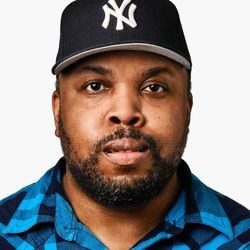
Craig Jenkins is the pop music critic for New York Magazine and its entertainment site Vulture, a position he has held since 2016. He has written for Pitchfork, Billboard, Spin, Noisey, and more, and studied English at Gordon College in Massachusetts. He lives in New York City.