For a distinguished book upon the history of the United States, Ten thousand dollars ($10,000).

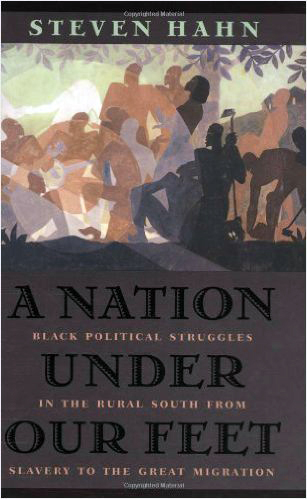
A Nation Under Our Feet: Black Political Struggles in the Rural South from Slavery to the Great Migration, by Steven Hahn (The Belknap Press of Harvard University Press)

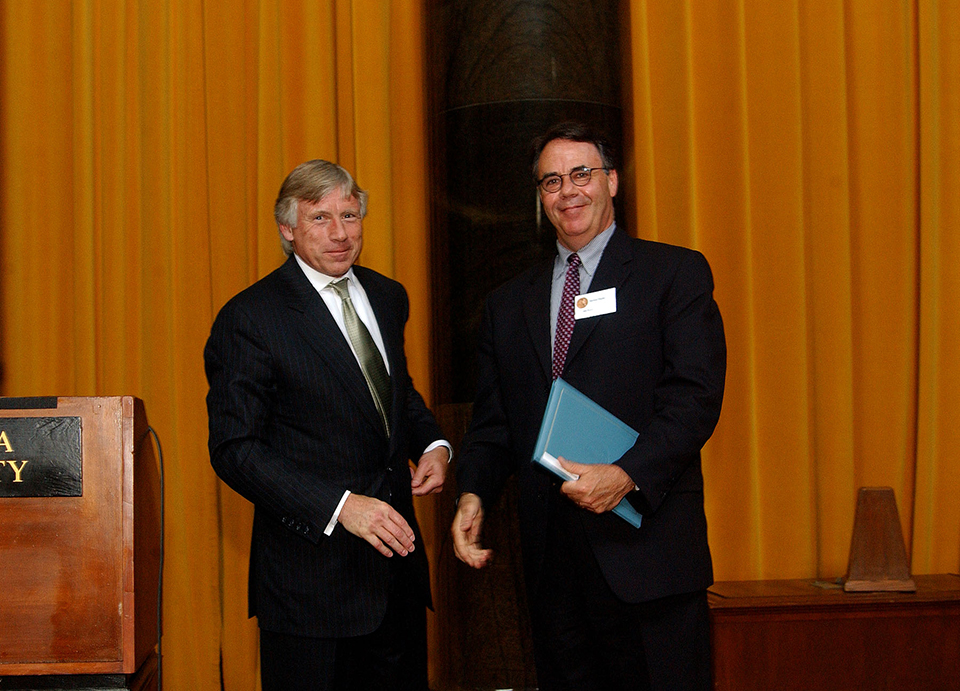
Lee Bollinger and Steven Hahn

Columbia University President Lee C. Bollinger (left) presents Steven Hahn with the 2004 Pulitzer Prize in History.

Winning Work

A Nation Under Our Feet: Black Political Struggles in the Rural South from Slavery to the Great Migration

This is the epic story of how African-Americans, in the six decades following slavery, transformed themselves into a political people--an embryonic black nation. As Steven Hahn demonstrates, rural African-Americans were central political actors in the great events of disunion, emancipation, and nation-building. At the same time, Hahn asks us to think in more expansive ways about the nature and boundaries of politics and political practice.

Emphasizing the importance of kinship, labor, and networks of communication, A Nation under Our Feet explores the political relations and sensibilities that developed under slavery and shows how they set the stage for grassroots mobilization. Hahn introduces us to local leaders, and shows how political communities were built, defended, and rebuilt. He also identifies the quest for self-governance as an essential goal of black politics across the rural South, from contests for local power during Reconstruction, to emigrationism, biracial electoral alliances, social separatism, and, eventually, migration.

Hahn suggests that Garveyism and other popular forms of black nationalism absorbed and elaborated these earlier struggles, thus linking the first generation of migrants to the urban North with those who remained in the South. He offers a new framework--looking out from slavery--to understand twentieth-century forms of black political consciousness as well as emerging battles for civil rights. It is a powerful story, told here for the first time, and one that presents both an inspiring and a troubling perspective on American democracy.

(From the book jacket)
Biography

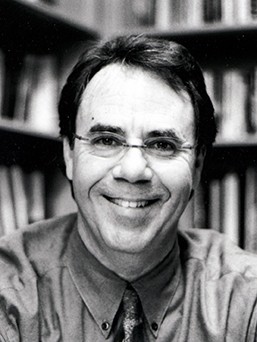
Steven Hahn was born on July 18th, 1951 in New York City. He was educated at the University of Rochester (BA) and at Yale University (MA, PhD) and is currently the Roy F. and Jeanette P. Nichols Professor of History at the University of Pennsylvania. A specialist on the history of the South, on the social and political history of the nineteenth century United States, and on the comparative history of slavery and emancipation, Hahn is the author of The Roots of Southern Populism: Yeoman Farmers and the Transformation of the Georgia Upcountry, 1850-1890 (Oxford University Press, 1983), and the co-editor of The Countryside in the Age of Capitalist Transformation: Essays in the Social History of Rural America (UNC Press, 1985), and Freedom: A Documentary History of Emancipation, Land and Labor in 1865 (forthcoming from Cambridge University Press). His scholarly articles have appeared in the American Historical Review, Past and Present and the Journal of Southern History.

Hahn has bee on the faculties of the University of Delaware, the University of California at San Diego, and Northwestern University before joining the History Department at Penn. He has received fellowships from the John Simon Guggenheim Memorial Foundation, the American Council of Learned Societies, and the Center for Advanced Study in the Behavioral Sciences at Stanford. He has won two Distinguished Teaching Awards (at UC San Diego) and has been recognized for teaching excellence (with selection to the Faculty Honor Roll at Northwestern). He is an elected Fellow of the Society of American Historians. And his scholarly work has been honored with numerous prizes: among them, The Allan Nevins Prize of the Society of American Historians; the Frederick Jackson Turner Award of the Organization of American Historians, the E. Harold Hugo Memorial Book Prize; and the ABC Clio America: History and Life Award of the Organization of American Historians. Hahn has also been actively involved with projects that promote the teaching of history in the public schools and that make humanities education available to diverse members of the community.

Finalists

Nominated as finalists in History in 2004:

The Jury

Drew Gilpin Faust(chair )

dean

Neil Foley

associate dean and professor, College of Liberal Arts

David A. Hollinger

Preston Hotchkis professor of American history

Winners in History

2004 Prize Winners

Daniel Golden

For his compelling and meticulously documented stories on admission preferences given to the children of alumni and donors at American universities.

Staff

For its compelling and comprehensive coverage of the massive wildfires that imperiled a populated region of southern California.