The Dallas Morning News, by David Leeson and Cheryl Diaz Meyer
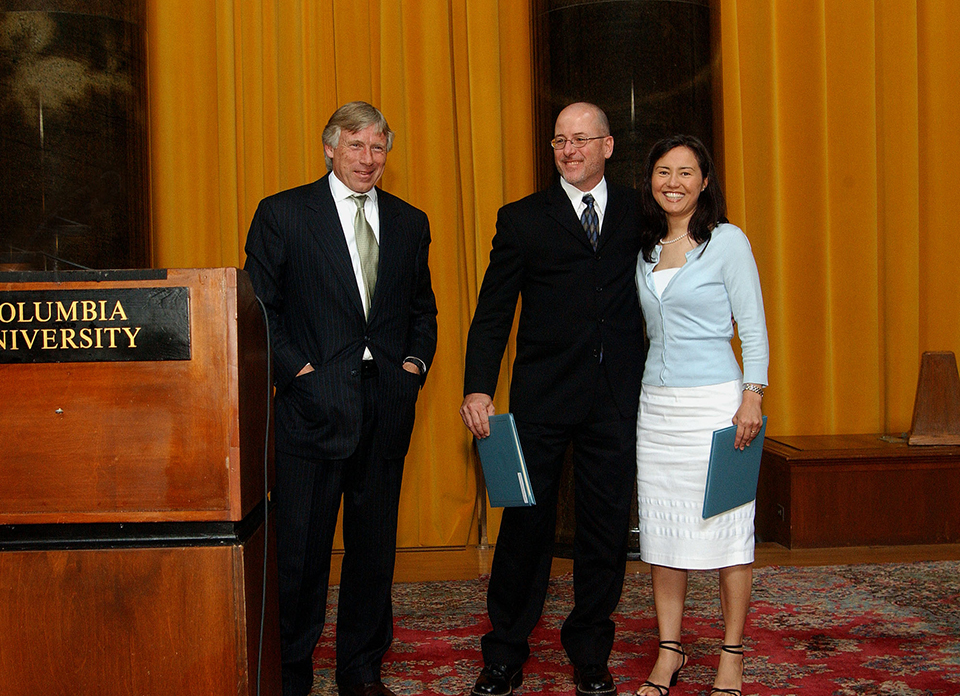
Columbia University President Lee C. Bollinger (left) presents David Leeson and Cheryl Diaz Meyer with the 2004 Pulitzer Prize in Breaking News Photography.
Winning Work
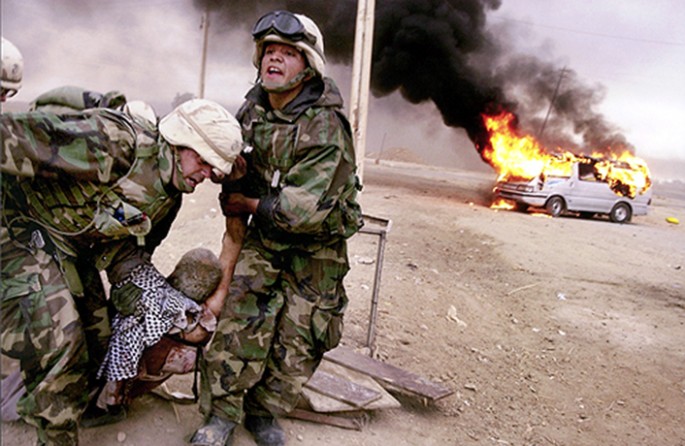
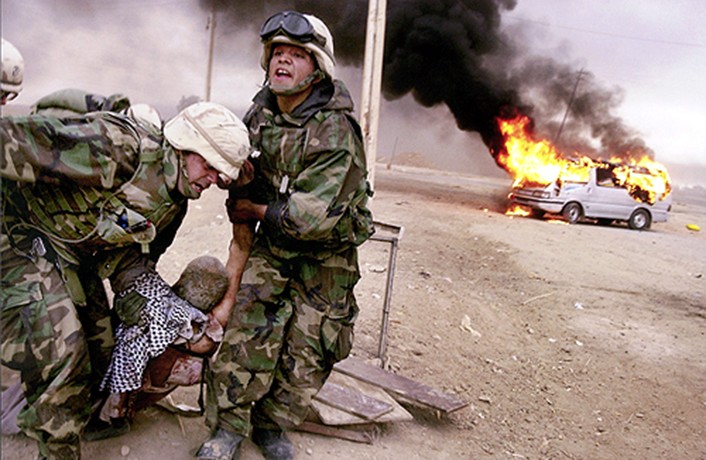
Risking their lives to save another, Lt. Jeffrey Goodman and Lance Cpl. Jorge Sanchez of the 2nd Tank Battalion drag a wounded civilian to safety after he was caught in the midst of battle on the road to Baghdad. (Cheryl Diaz Meyer)
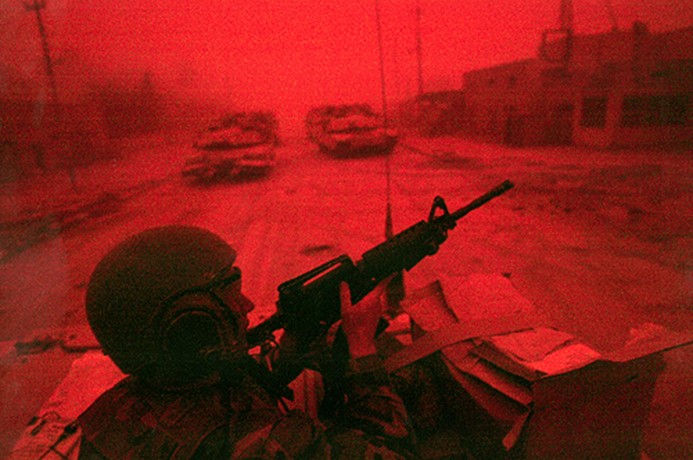
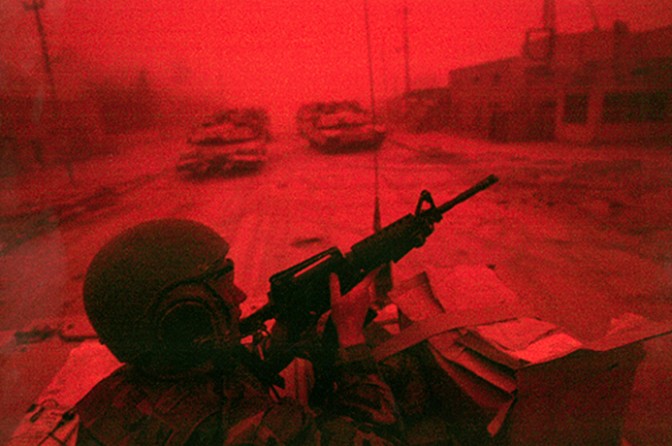
With the sunlight obliterated by a late March sandstorm, red and orange skies created an eerie and ominous welcome to troops of the 3rd Infantry Division as they advanced on Al Kifl. (David Leeson)
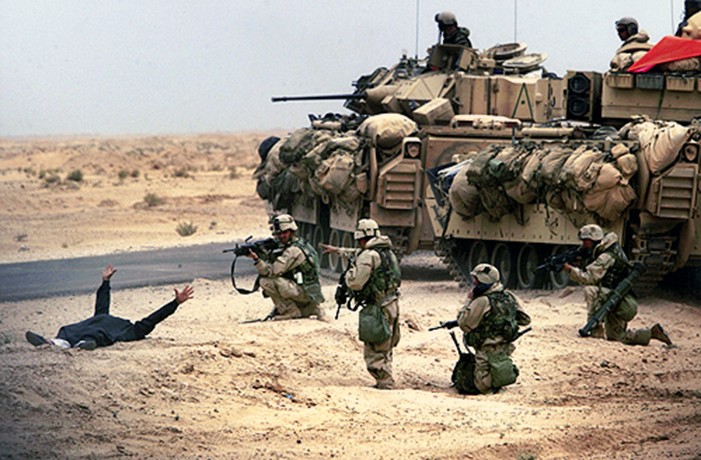
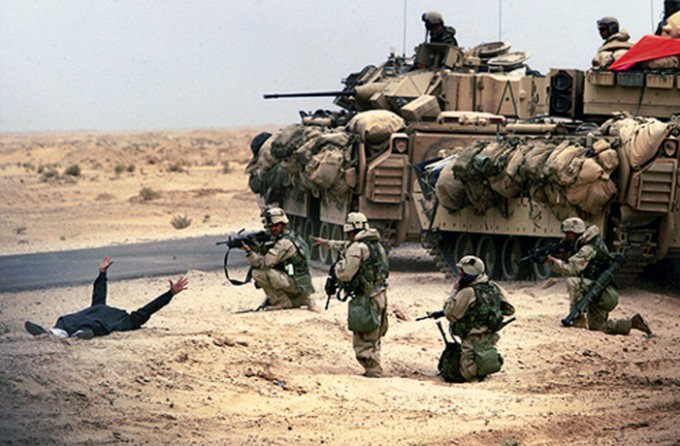
Arms outstretched in surrender after being stopped along a road en route to Baghdad, an armed suspect is surrounded by U.S. troops from the 3rd Infantry Division. On the fourth day of war, Iraq already was feeling U.S. might. (David Leeson)
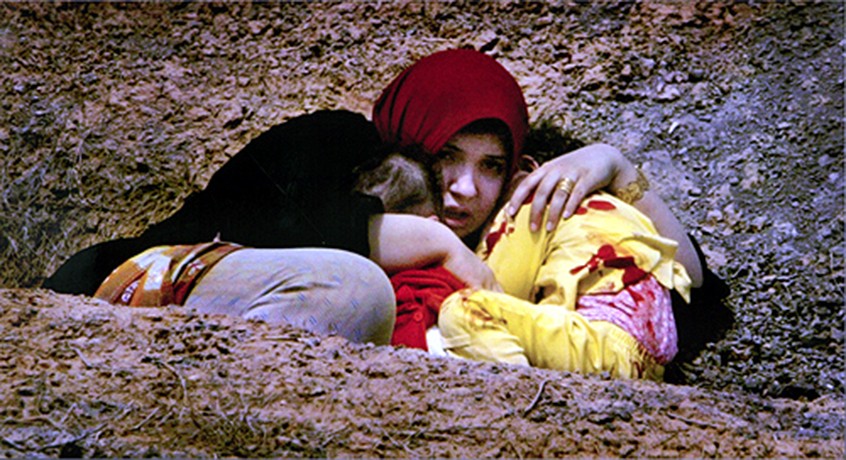
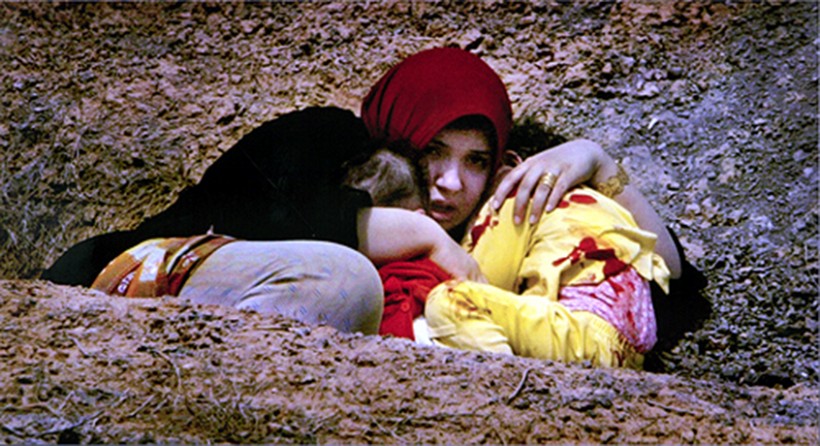
Caught in crossfire from the 3rd Intantry Division fighting through Northern Baghdad, a woman huddles in an open ditch with two terrified and bloodstained children. (David Leeson)
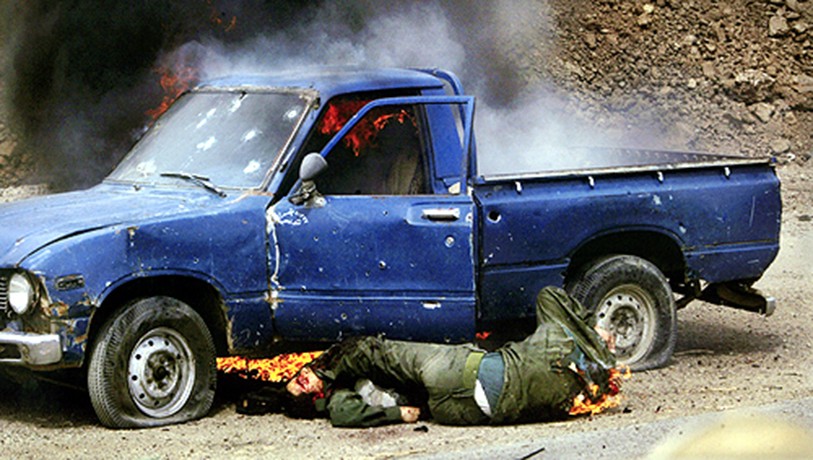
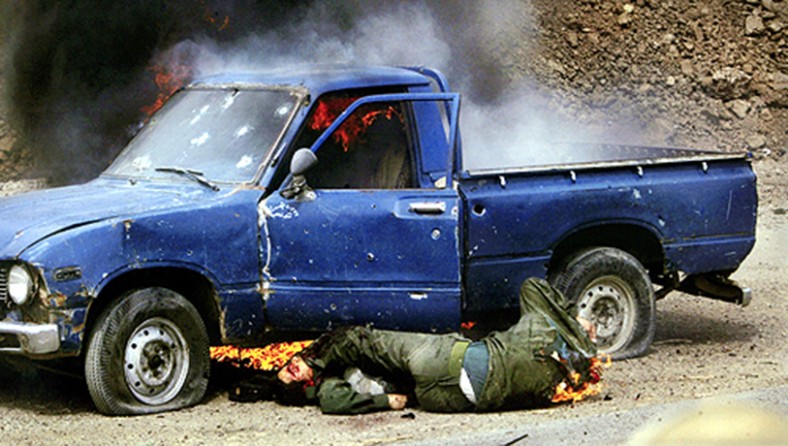
An Iraqi soldier's struggle for life is brief, and ultimately doomed after U.S. soldiers open fire on a truck in northern Baghdad. As flames burn thorugh the back of his uniform, he rolls out of the vehicle onto his dead companion - only to die in another burst of gunfire seconds later. (David Leeson)
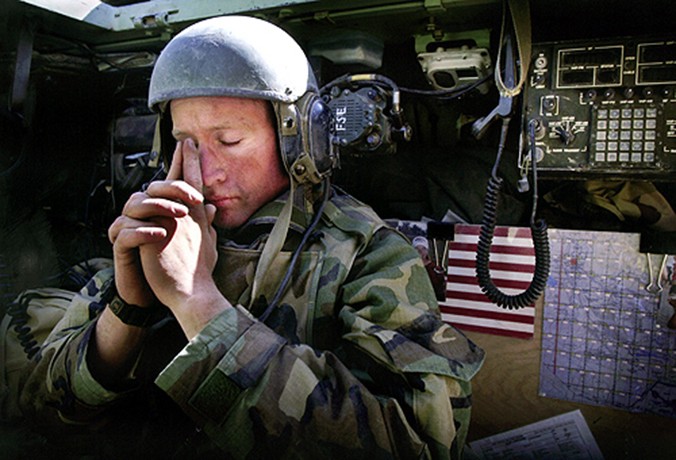
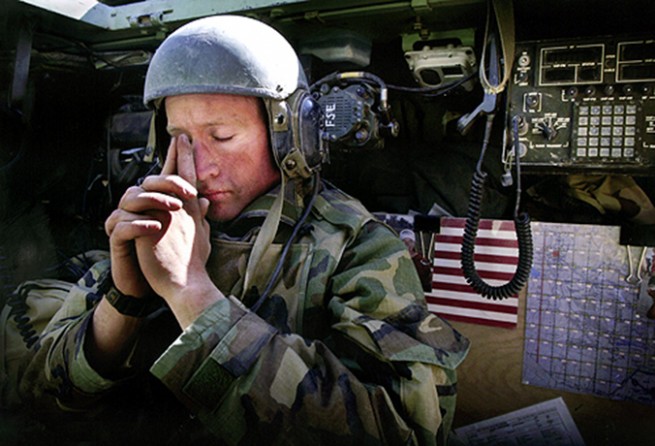
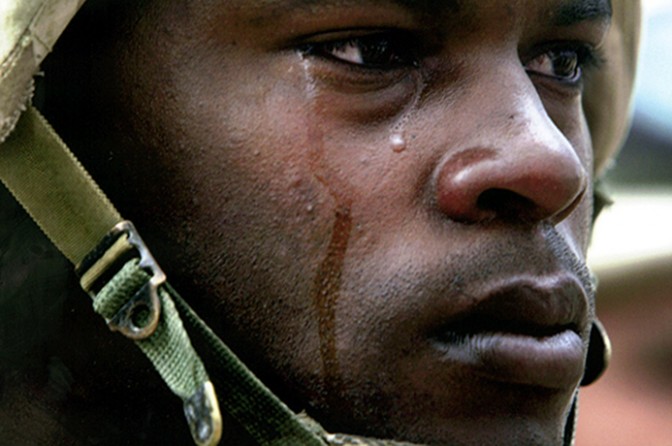
Taking advantage of the calm, Capt. Andy MacLean rests after a night of fierce fighting near Karbala. Two weeks into the war, quiet moments are seldom felt but gratefully accepted. (David Leeson)
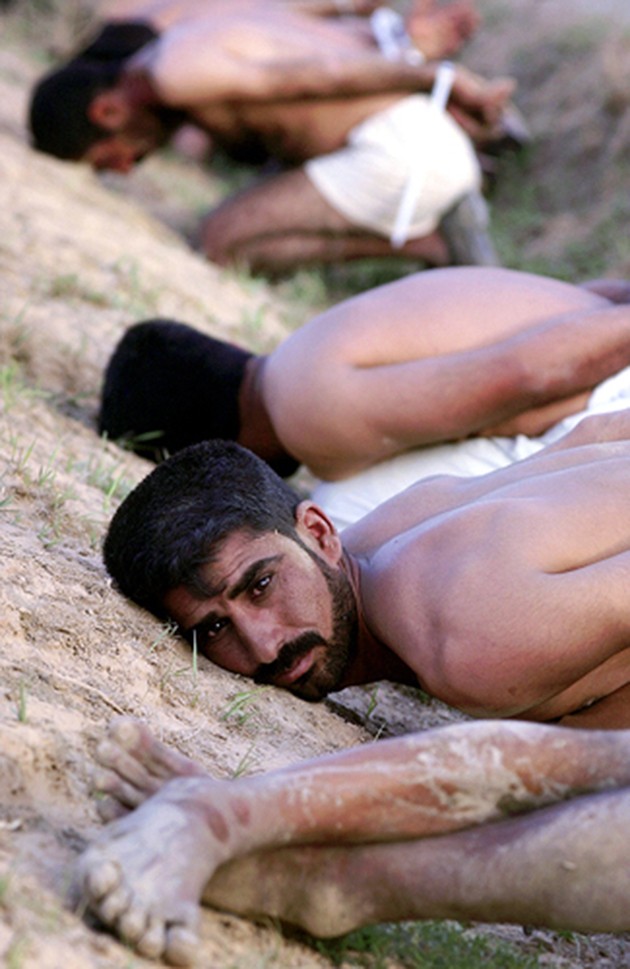
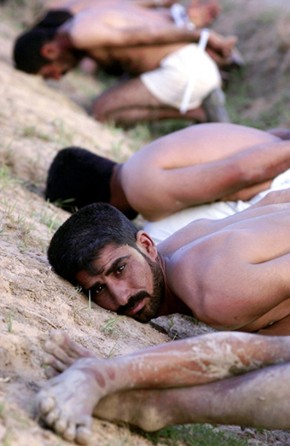
A pained stare, plastic ties and muddy, shoeless feet. In war, everyone is suspect. After a short firefight in Sayyid Muhammad, these men were rounded up, stripped, interrogated and later released. (Cheryl Diaz Meyer)
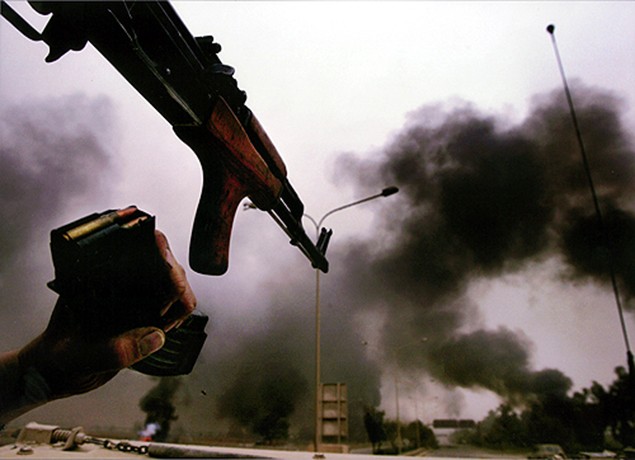
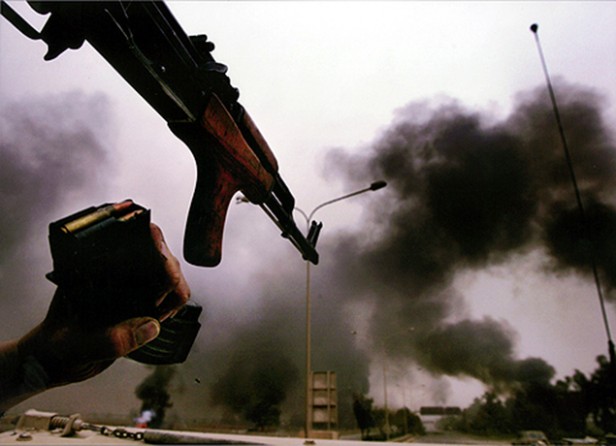
Surrounded by the smoke of destroyed Iraqi miliary equipment, Air Force Lt. John Blocher -- assigned to the 3rd Brigade Combat Team -- saves ammunition by using a recovered Iraqi-issued AK-47. (David Leeson)
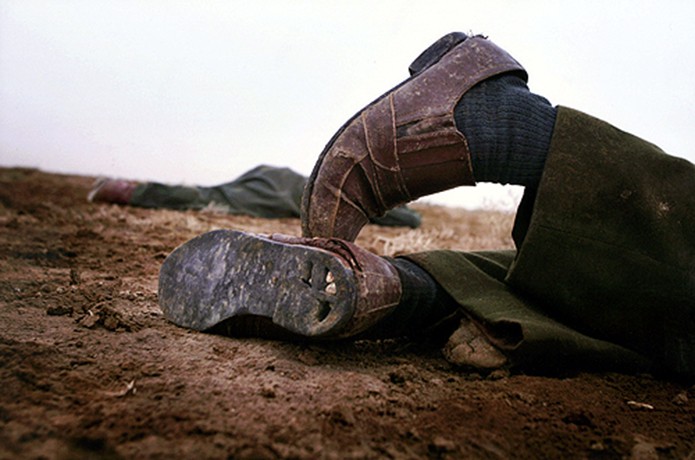
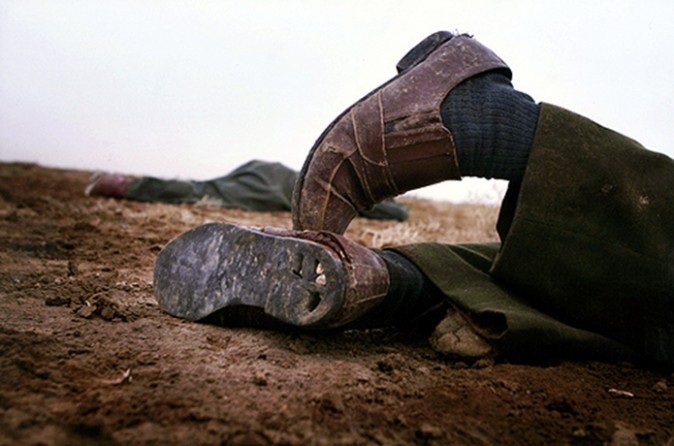
Soles on the worn-out civilian shoes of dead Iraqi soldiers tell the story of an ill-equiped army in a David-and-Goliath battle for their lives. (David Leeson)
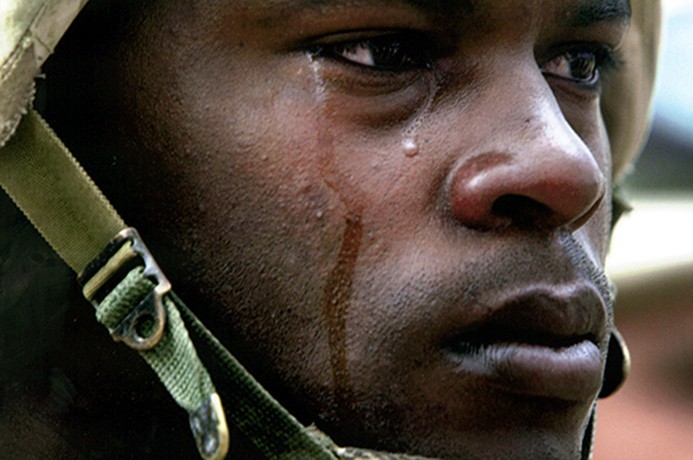
Squad leader and Staff Sgt. Lonnie Roberts stands at attention as troops from the 3rd Brigade Combat Team pay last respects to their fallen comrade, Pvt. Gregory Huxley, during a memorial for the 19-year-old in Baghdad. (David Leeson)
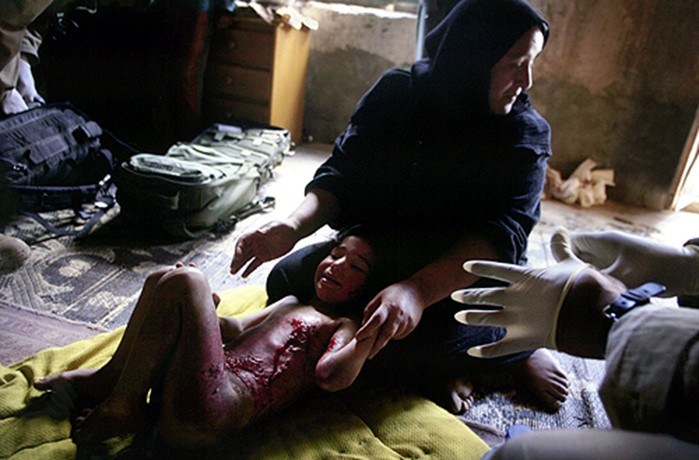
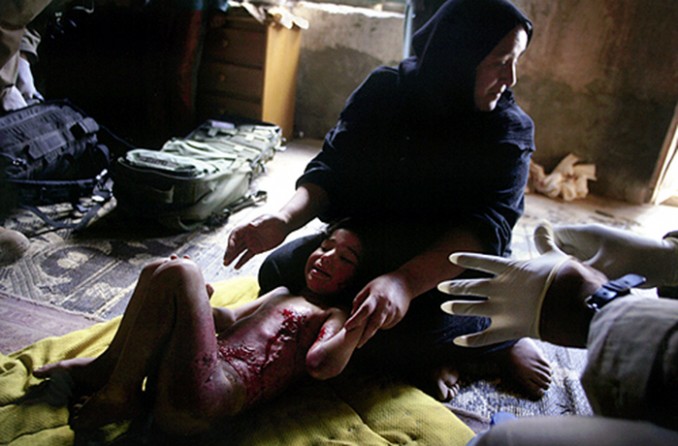
Screaming in pain from 10-day-old burns received during an aerial attack on Baghdad, Aya Hamad is comforted by her mother, Eimin Fvied. Later discovered by U.S. troops, the 6-year-old was transported to a local hospital for treatment. (David Leeson)
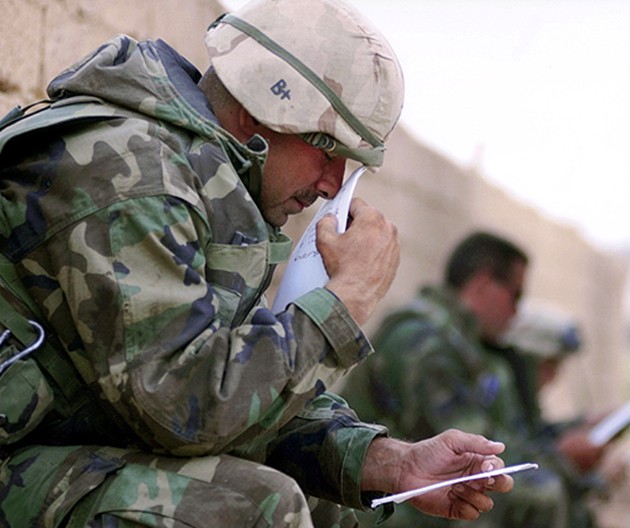
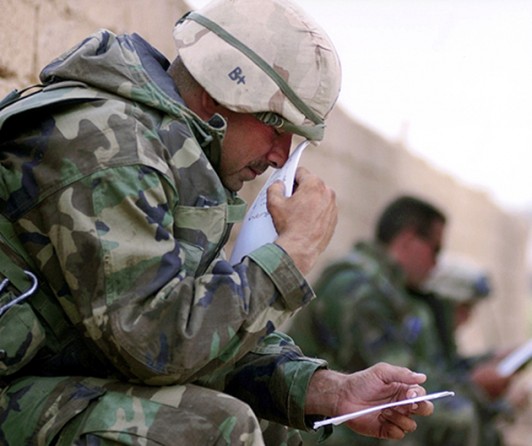
After three weeks and 300-plus miles of speed-and-maneuver warfare, Master Gunnery Sgt. Frank Cordero savors the first letters from his wife, Melissa. "I held that first one for about five minutes... Just to smell it and hold it." (Cheryl Diaz Meyer)
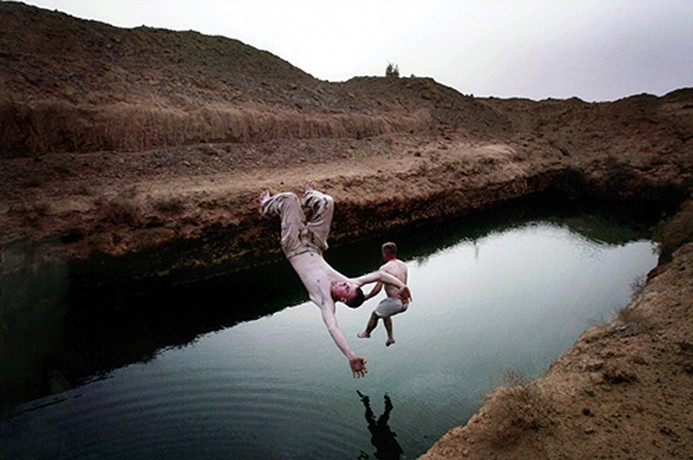
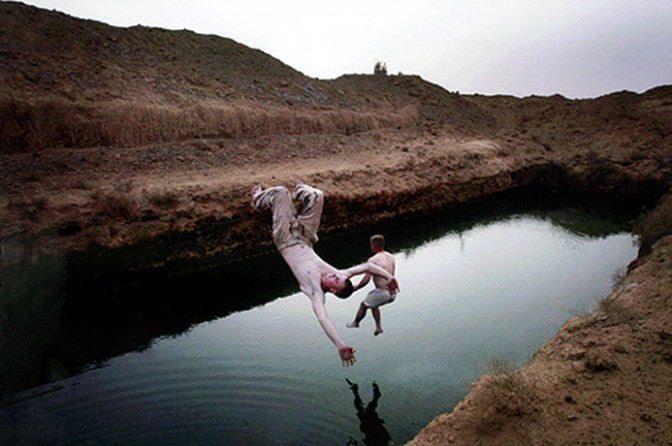
After weeks on their desert march to Baghdad, Spc. George Gillette and Spc. Robert Boucher take a chapter from boyhood and leap into the beckoning water of an irrigation pond. (David Leeson)
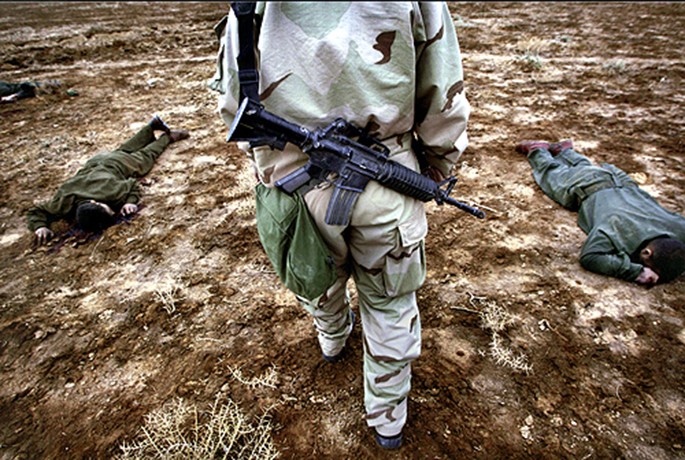
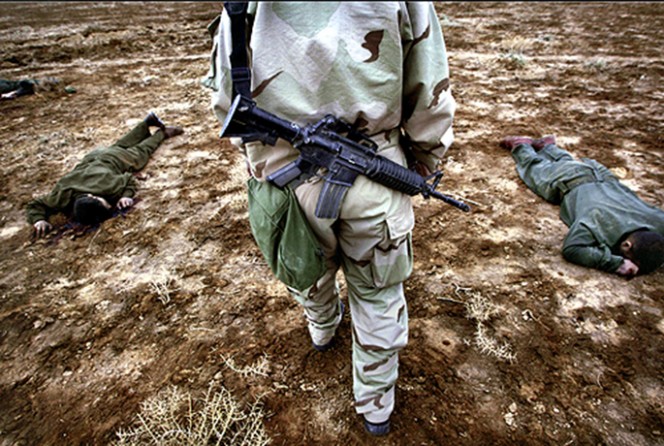
Walking past the bodies of Iraqi soldiers, a member of the 3rd Brigade Combat Team asks quitely, "Why do we do these things to one another?" (David Leeson)
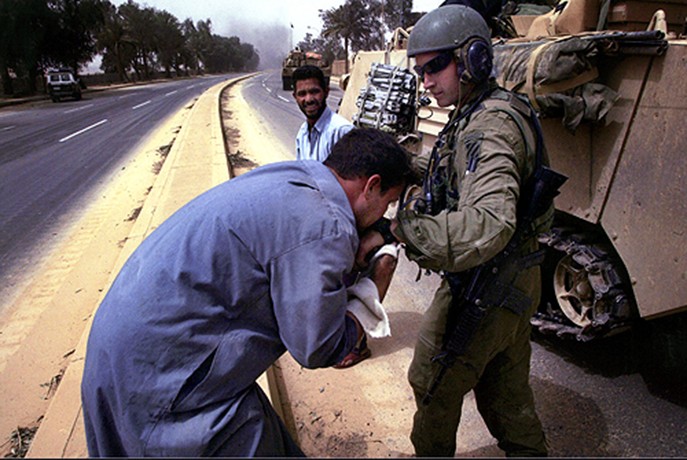
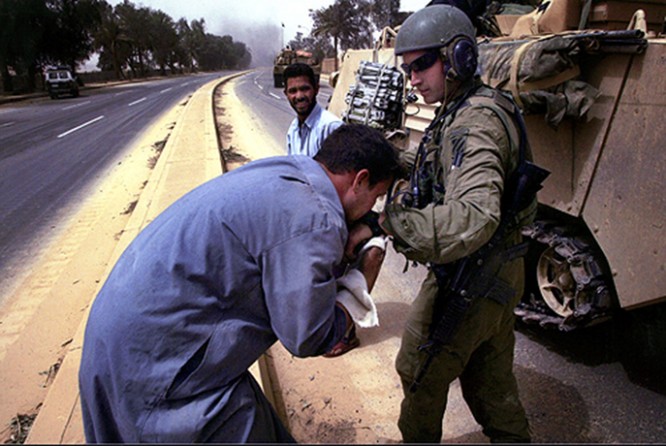
As Capt. Andy MacLean and fellow troops of the 3rd Infantry Division pushed deeper into Baghdad, they were greeted with mixed reaction. While some Iraqi civilians were resentful of American presence, others extended their warmth with smiles, waves, and in some instances, a kiss on the hand... a sign of respect. (David Leeson)
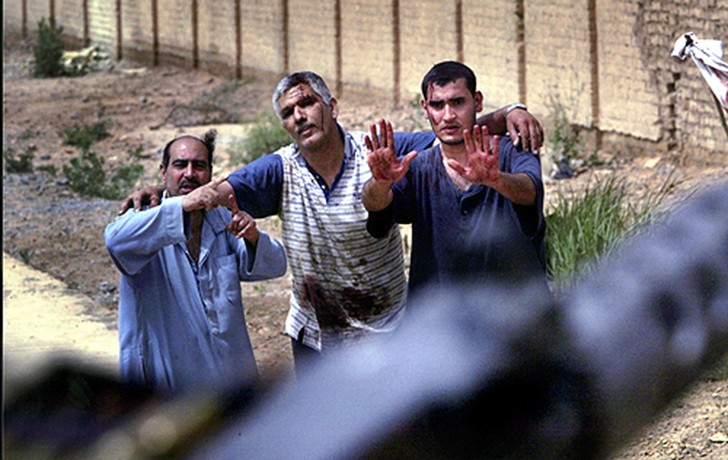
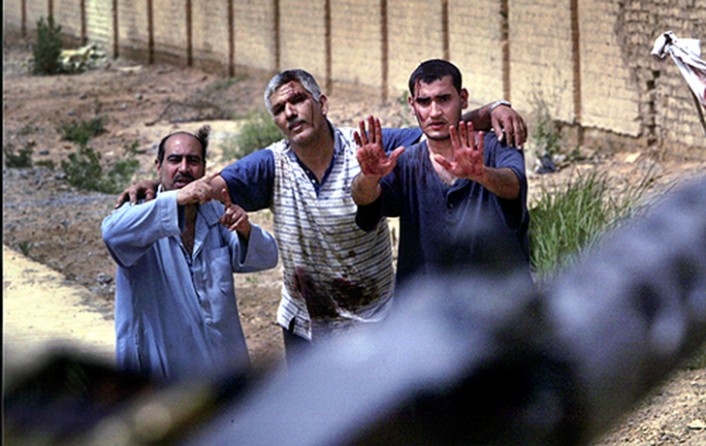
Wounded in an aerial bombing of Baghdad and seeking aid, Iraqi civilians raise their hands pleadingly toward advancing troops of the 3rd Infantry Division. (David Leeson)
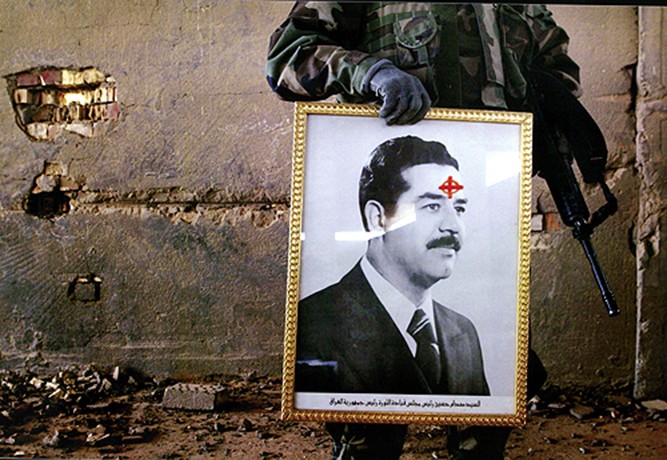
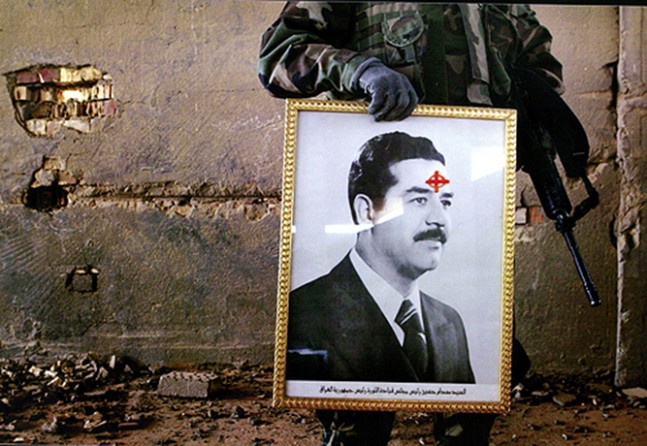
A bulls-eye drawn on a confiscated picture of Iraqi leader Saddam Hussein speaks volumes as U.S. troops from the 3rd Infantry Division clear out remanants from a building in Al Kifl. (David Leeson)
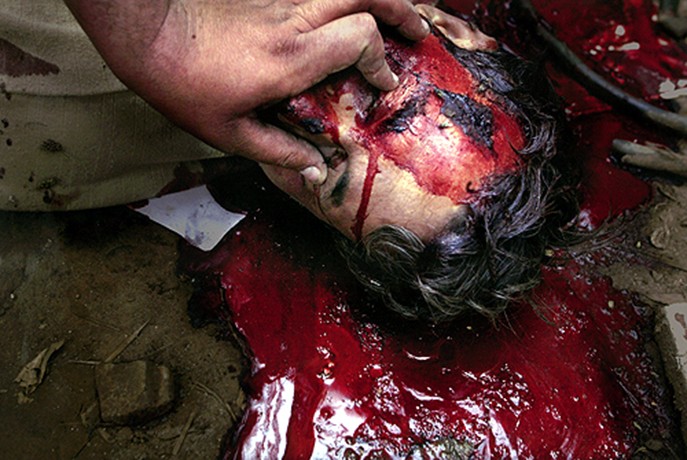
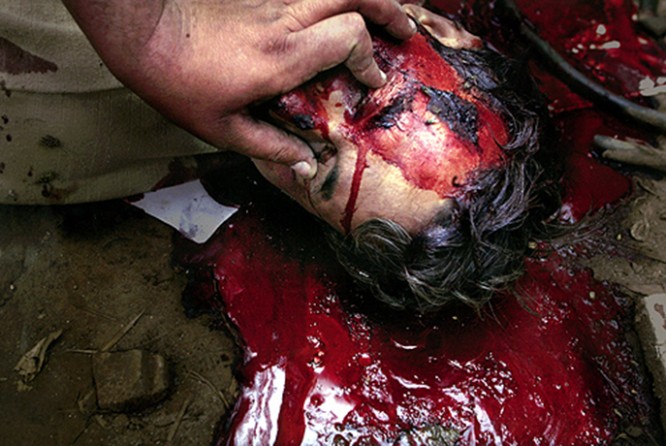
Killed during a thwarted bank heist, the eyes of the would-be robber are closed one last time. Later, he was moved into a Baghdad street where he was made a public example. "This is what happens when you steal," said one man. (David Leeson)
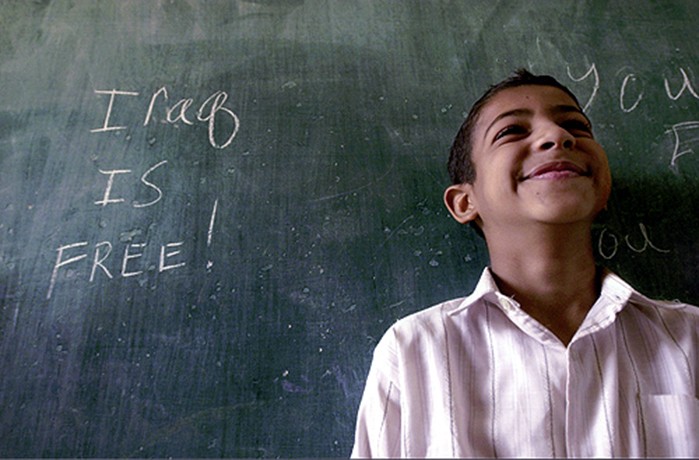
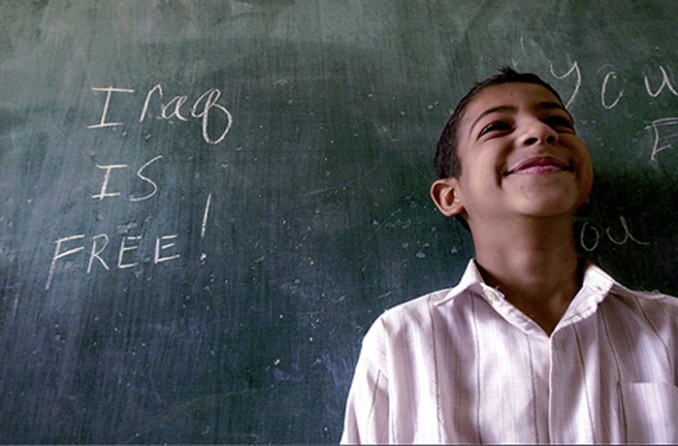
Standing proudly, 10-year-old Uniss Mohammad Salman was among students returning to Al Amtithal Elemtary School, one of the first in the city of reopen after the invasion of Baghdad. (Cheryl Diaz Meyer)
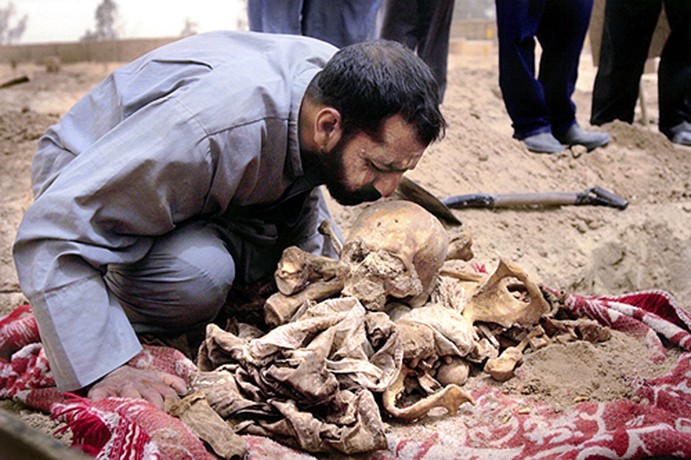
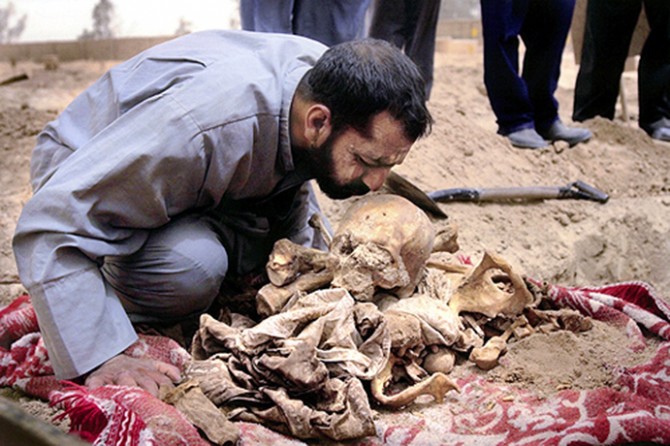
After a decade of uncertainty, Mohammad Bakar Whathiq is finally able to mourn his brother, a political dissident, discovered with others in a mass grave outside Baghdad. Long after his capture, the evil inflicted by Saddam Hussein on this countrymen will continue. (Cheryl Diaz Meyer)
Biography
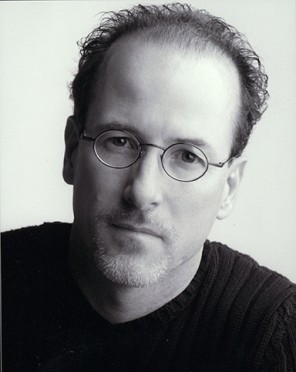
David Leeson has been a senior staff photographer withThe Dallas Morning News since 1984. He covered the war in Iraq as an embedded journalist attached to the U.S. Army 3rd Infantry Division, 3rd Brigade Combat Team, Task Force 2-69 Armored out of Fort Benning, Georgia. He was with the troops for six weeks and saw 23 days of sustained enemy contact in frontline action.
His work from Iraq, which included still and video, received global recognition that nationally included the New York Times, the Washington Post, the Los Angeles Times, Time and Newsweekmagazines, and MSNBC, ABC and CSPAN; his video was featured on ABC's "World News Tonight."
In 1994, he covered the civil war in Angola, earning him a second Robert F. Kennedy Journalism Award. In the same year, a photograph Mr. Leeson made of a family evacuating floodwaters in southeast Texas was named a finalist for the Pulitzer.
In 1991, Mr. Leeson, traveling with the 1st Marine Division, was among the first journalists to photograph Kuwait City following the Iraqi withdrawal during the Gulf War. The following year he returned to the Gulf for an exclusive look inside war-torn Baghdad.
In 1986, his story on Dallas homeless was honored with a Robert f. Kennedy Journalism Award for Outstanding Coverage of the Problems of the Disadvantaged.
In 1985, Mr. Leeson was a finalist for the Pulitzer for his photo coverage of apartheid in South Africa. He made two more trips to South Africa in the following years culminating with South Africa's first non-racial presidential election in 1994.
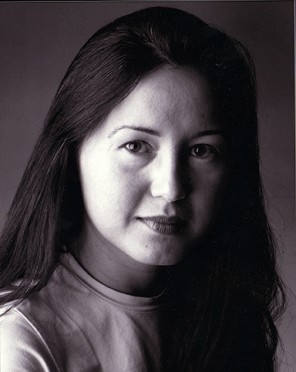
Cheryl Diaz Meyer has been a senior staff photographer with The Dallas Morning News since 2000. She covered the war in Iraq as an embedded journalist attached to the Second Tank Battalion of the First Marine Division out of Camp Lejeune, NC and returned to cover the aftermath in Baghdad.
Her work from Iraq was published in the New York Times,the Washington Post, the Chicago Tribune, the Los Angeles Times, Newsweek and Spiegel magazines, and MSNBC, ABC News and CSPAN.
In late 2001, Ms. Diaz Meyer traveled to Afghanistan to photograph the war on terrorism and its effects on the people trying to free themselves from the oppressive Taliban regime. She has received numerous award for her body of work there including the John Faber Award from the Overseas Pres Club.
In April 2002, Ms. Diaz Meyer traveled to the Philippines and Indonesia where she photographed Muslim and Christian extremism and the violence caused by religious hatred.
She has worked on such team projects as "Hidden Wars," where she visited Guatemala to document a country healing from 36 year of terror and civil strife.
In 1994, while on staff at the Star Tribune in Minneapolis, Ms. Diaz Meyer's coverage included the disappearance of Gianni Versace murderer Andrew Cunanan, the second inaugural of Bill Clinton and the Red River floods. She traveled to Russia, the Czech Republic and Slovakia to photograph life after the end of the Cold War.