The New York Times, by Staff
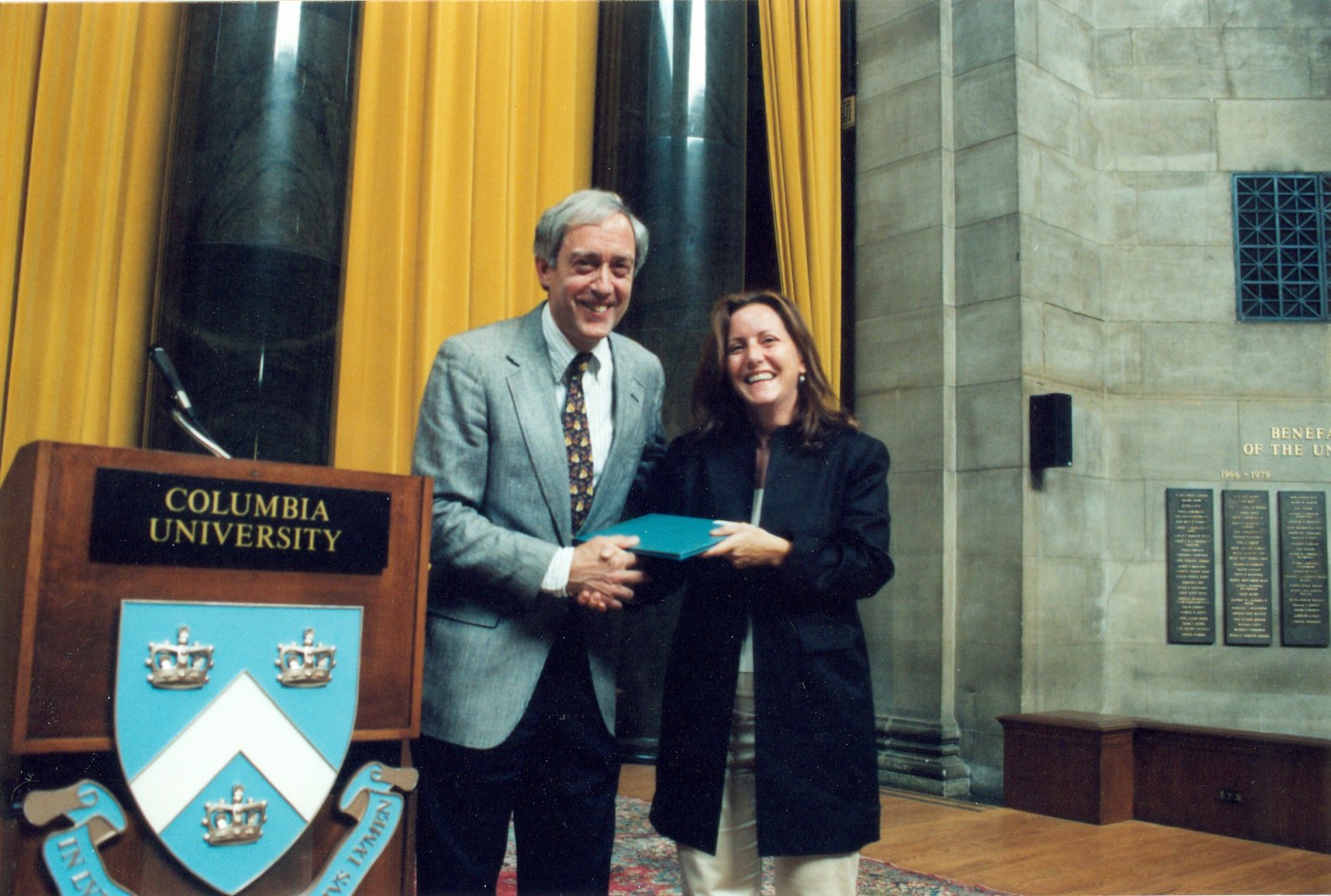
Columbia University President George Rupp presents Ruth Fremson, of The New York Times, with the 2002 Pulitzer Prize for Breaking News Photography.
Winning Work
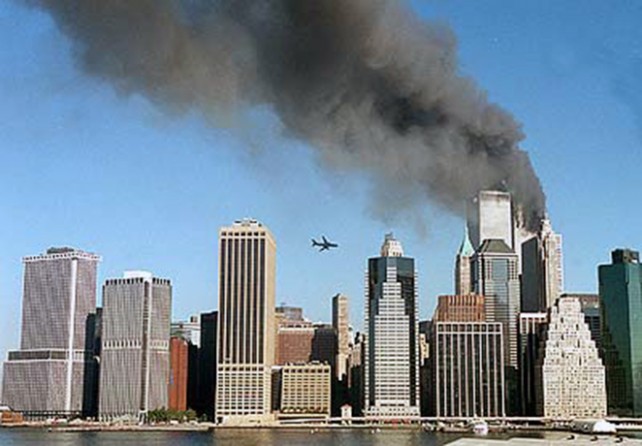
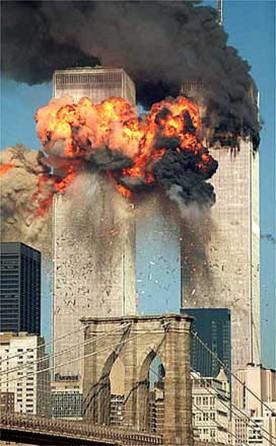
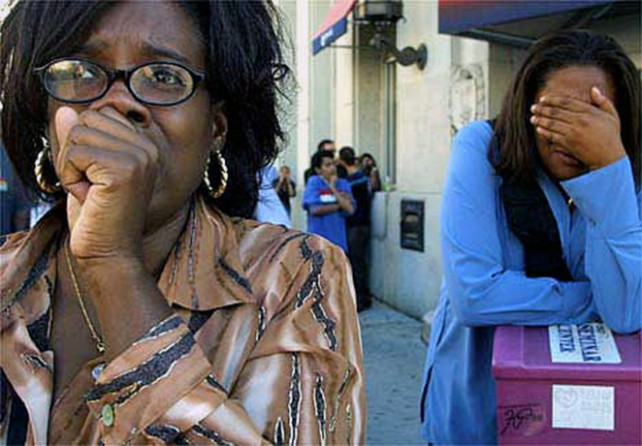
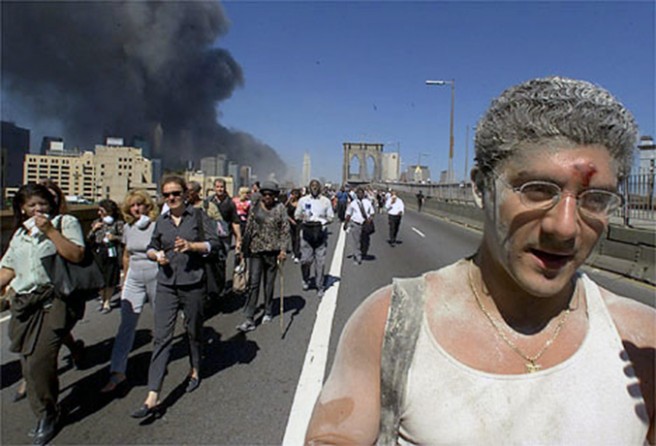

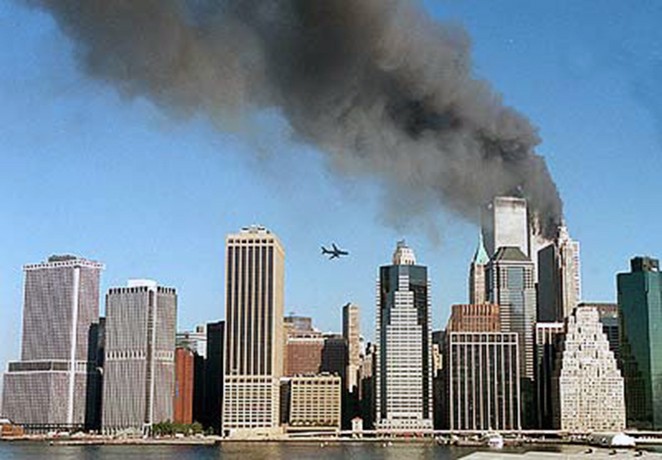
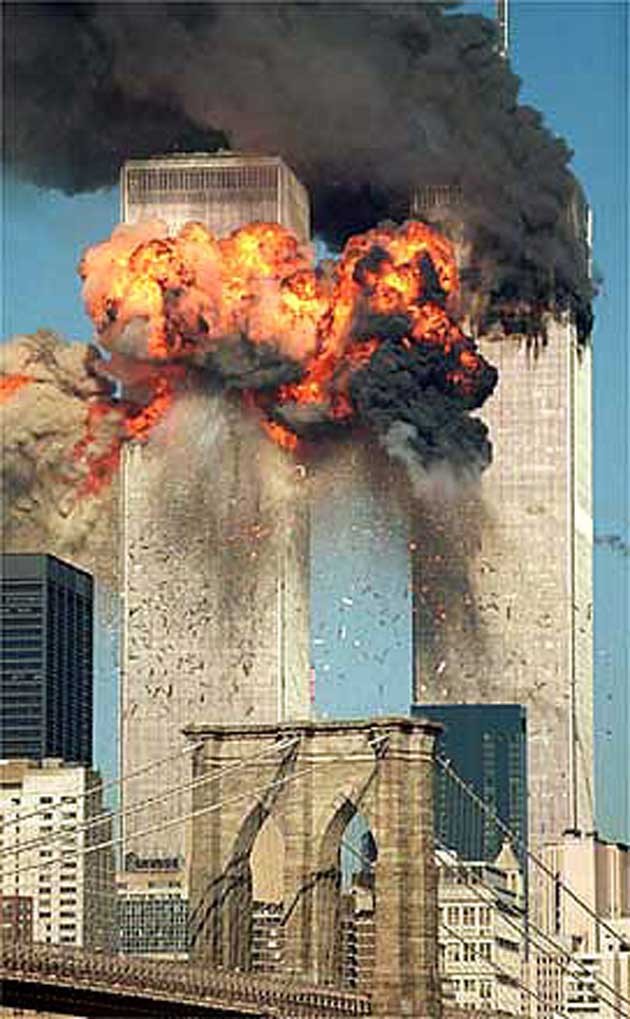
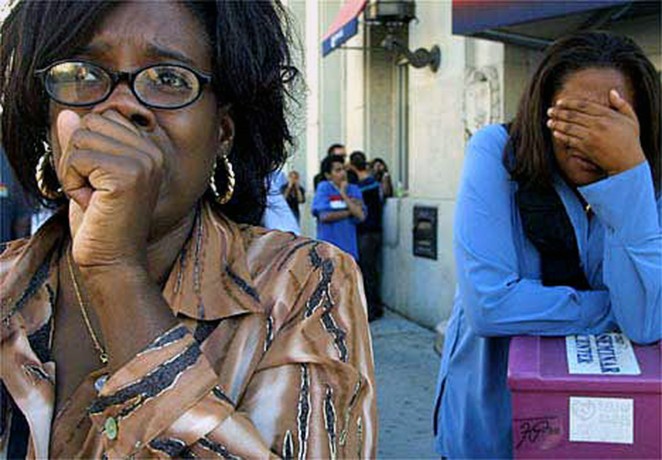
From about half a mile north, near Canal Street, people's expressions and gestures bore wittness to the sight they beheld: the collapse of 2 World Trade Center. (Angel Franco, The New York Times - September 11, 2001)
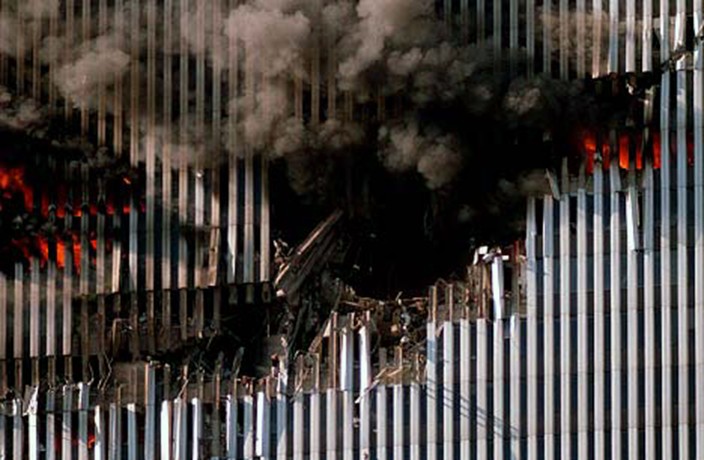
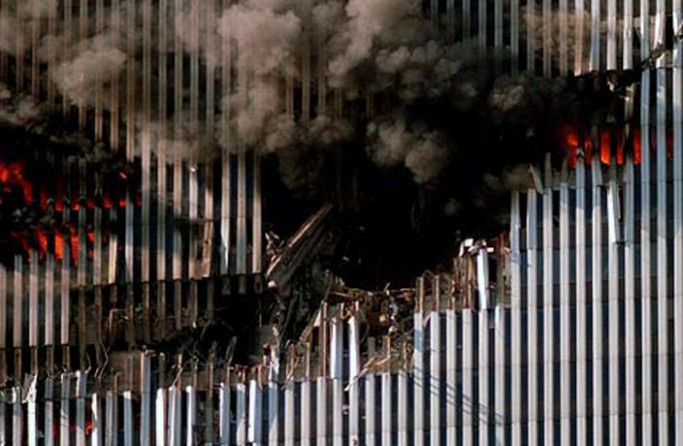
A person stands alone in the middle of a gaping hole in the World Trade Center, surrounded by smoke and flames, with nowhere to go and no way to be rescued. (Brian Manning, The New York Times - September 11, 2001)
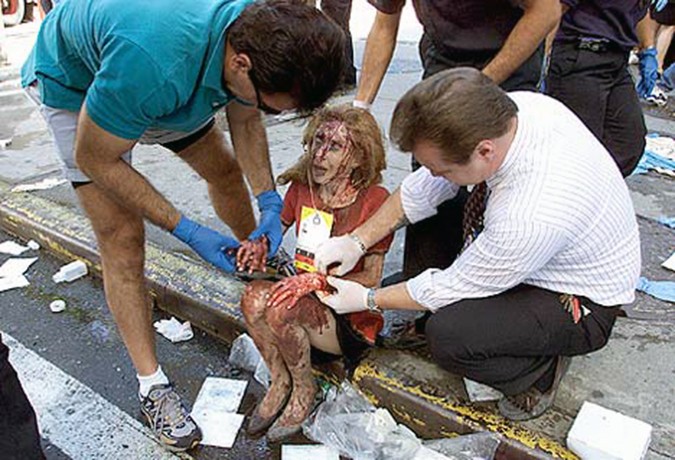
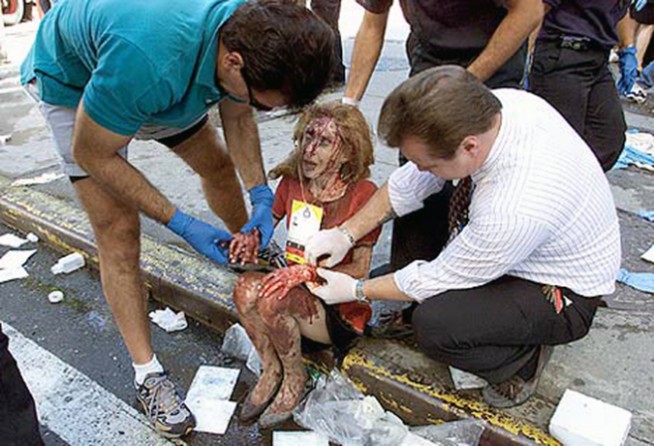
A victim from the World Trade Center attack is treated by emergency medical personnel on the east side of Church Street across from 5 World Trade Center. She was evacuated before the building collapsed. (Ruth Fremson, The New York Times - September 11, 2001)
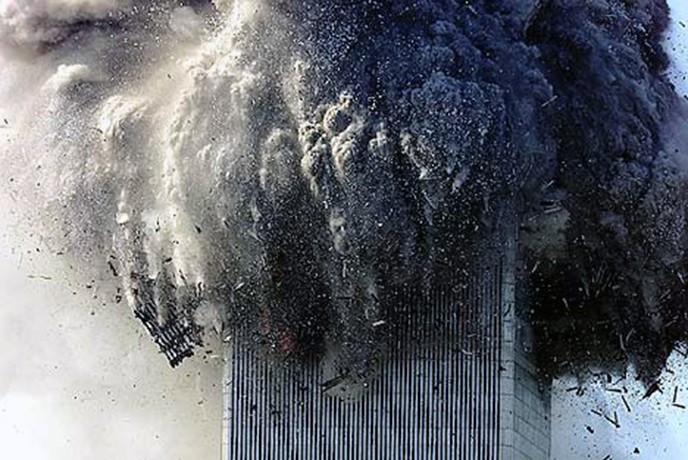
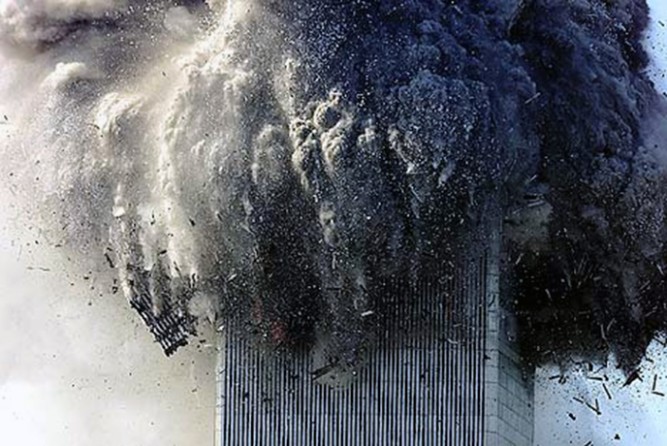
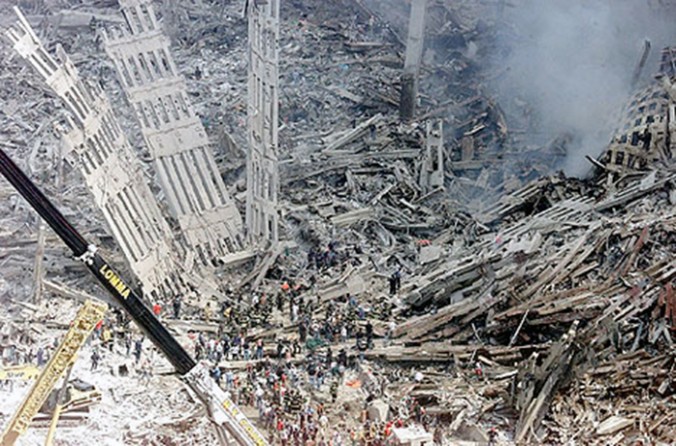
By the time the Twin Towers collapsed that morning, more than 2,900 people were dead, lower Manhattan was covered in ash-laden debris and the lot where two of the world's tallest buildings had stood for more than a generation had a new name, Ground Zero. (Chang W. Lee, The New York Times - September 11, 2001)
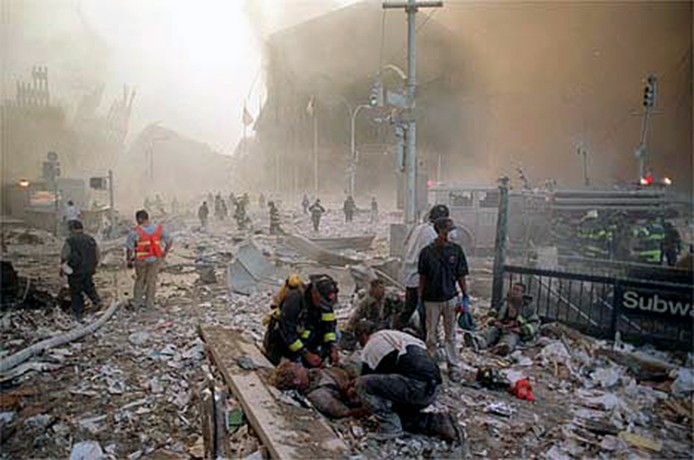
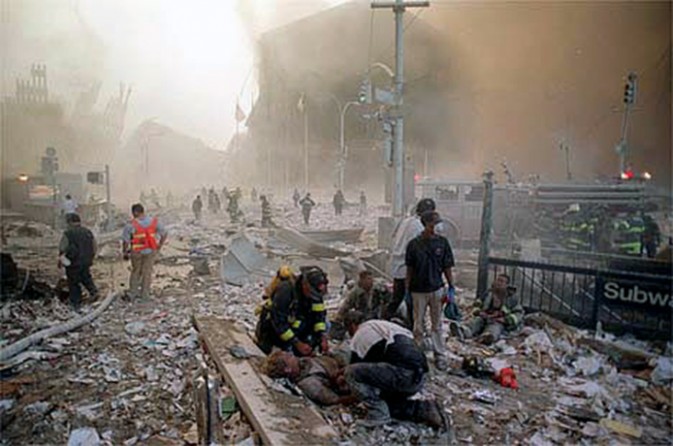
Firefighters and paramedics assist the injured in the immediate aftermath of the Twin Towers' collapse. (Justin Lane, The New York Times - September 11, 2001)
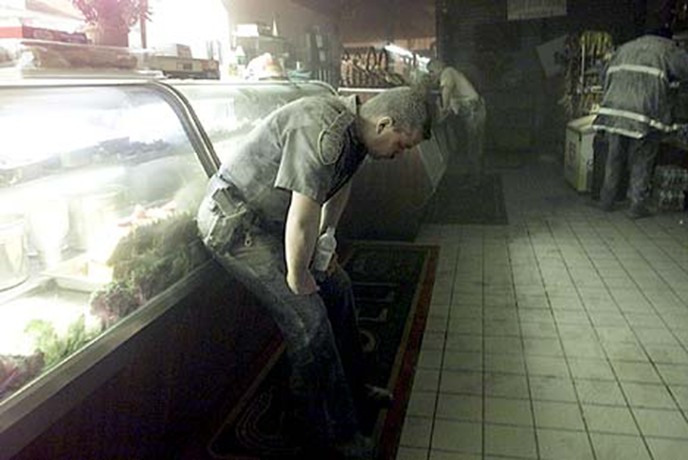
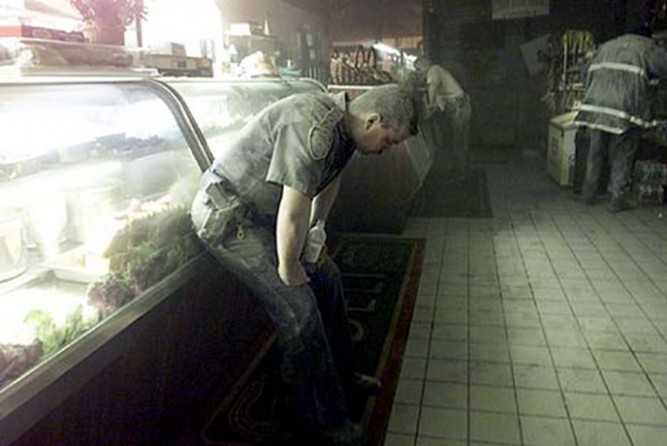
An exhausted New York City police officer, Richard Adamiak, 26, ducked into the Stage Door Deli on Vesey Street across from the World Trade Center Plaza after the collapse of the first tower -- and shortly before the second tower came down. (Ruth Fremson, The New York Times - September 11, 2001)
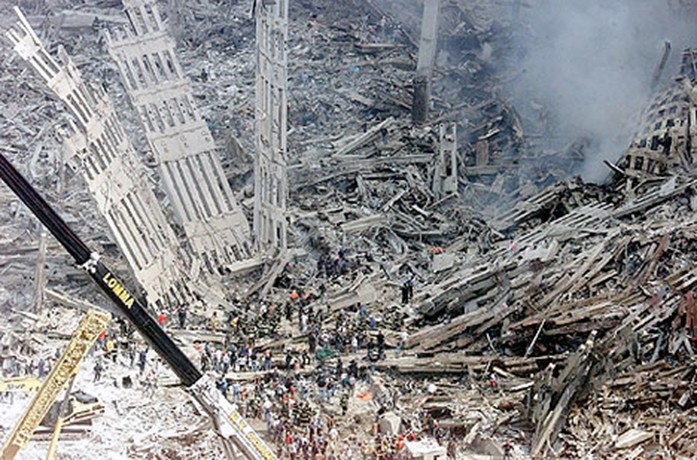
Rescue workers and medical personnel continued their efforts in the middle of a vast, nightmarish landscape on West Street 24 hours after the collapse of the World Trade Center towers. (Ruth Fremson, The New York Times - September 11, 2001)
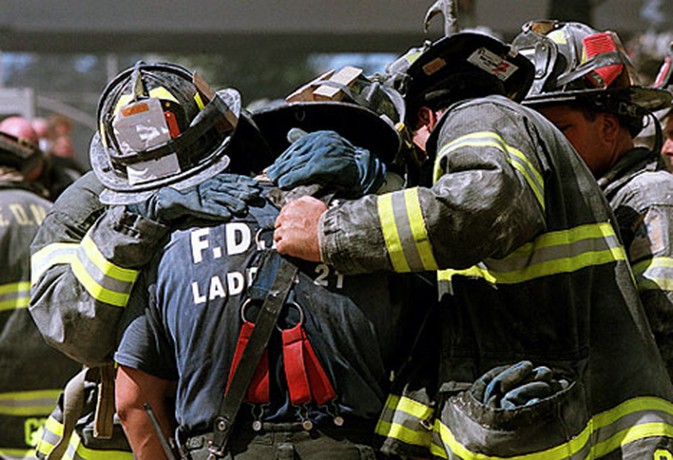
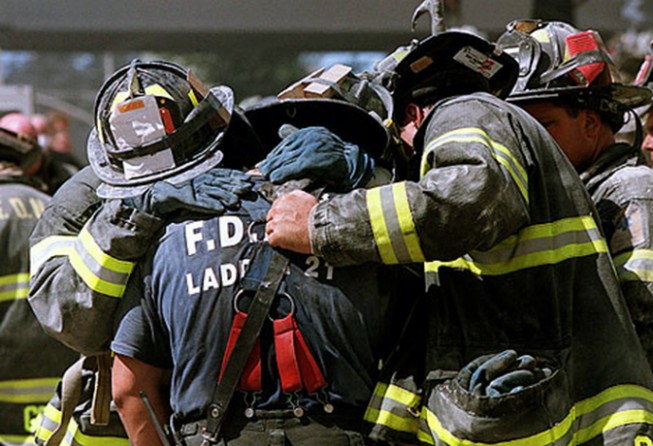
A firefighter of Ladder 21 is embraced by fellow firefighters after being told a family member, who is also a firefighter that responded to the World Trade Center attacks, could not be located after the buildings collapsed. (Krista Niles, The New York Times - September 11, 2001)
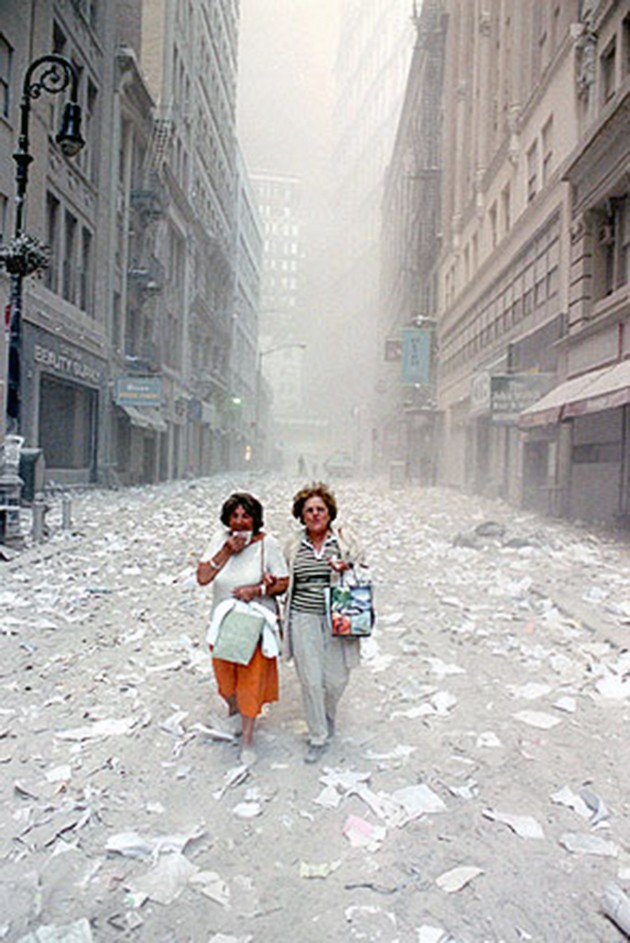
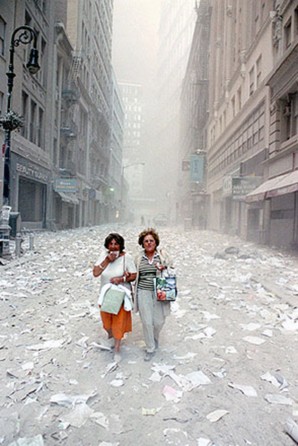
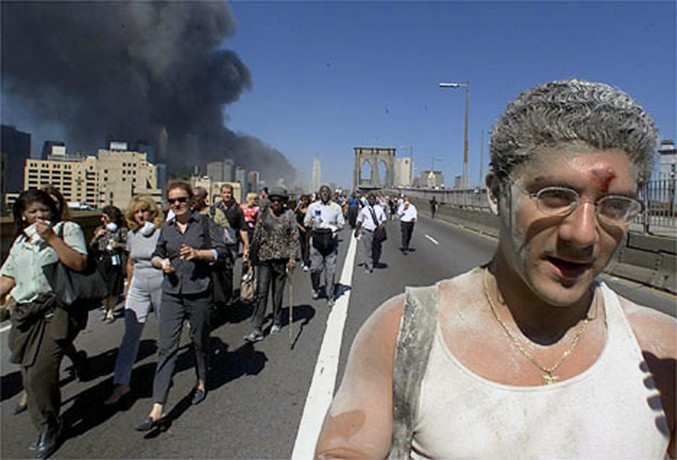
Two women made their way through the ash-covered streets of lower Manhattan in the immediate aftermath of the crumbling of the World Trade Center towers. (Justin Lane, The New York Times - September 11, 2001)
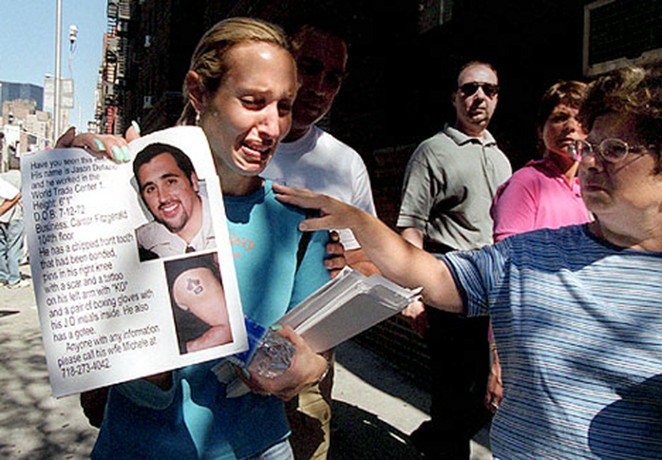
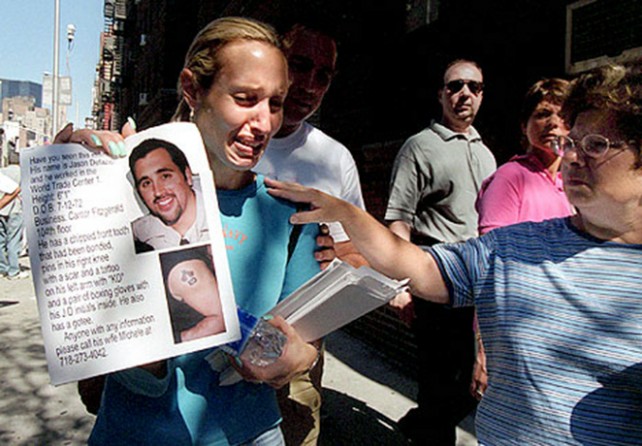
Michele DeFazio sobs as she holds up a poster of her missing husband Jason DeFazio, who worked at Cantor Fitzgerald on the 104th floor of One World Trade Center. (Krista Niles, The New York Times - September 11, 2001)
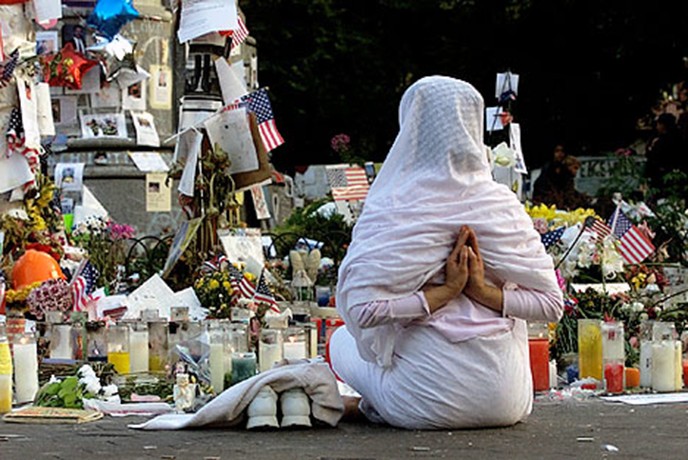
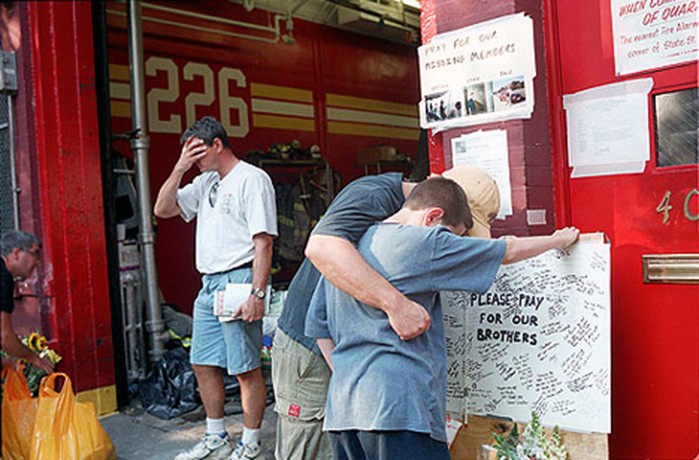
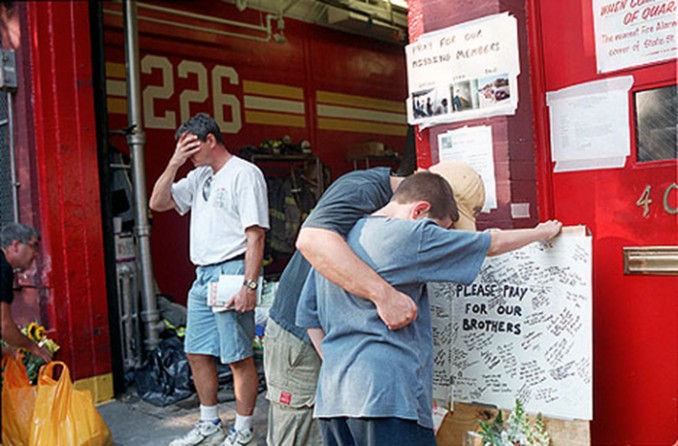
Fire Company 226 on State Street in Brooklyn Heights. Four of the five men who went out that day have not returned. (Nancy Siesel, The New York Times)
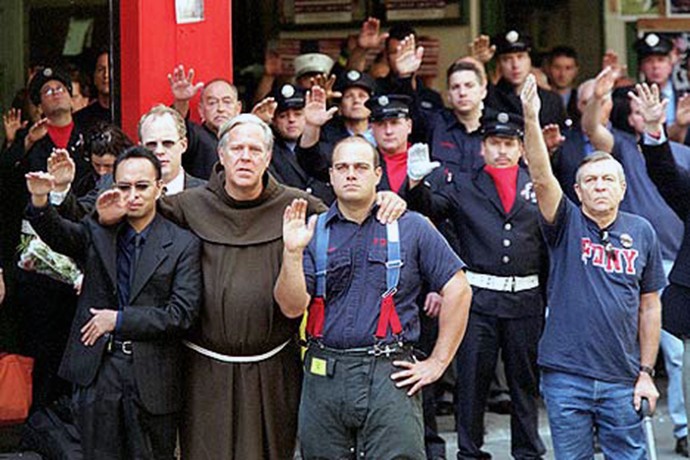
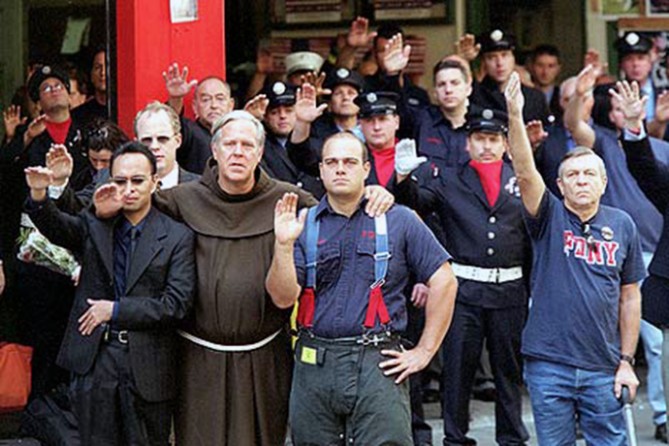
Father Michael Duffy, a Franciscan Priest, requested during a mass that everyone give a blessing in memory of Father Mychal F. Judge. (Suzanne DeChillo, The New York Times)

A tea set sits, covered in ash from the collapse of the World Trade Center towers, inside the Williamson family apartment on Cedar Street, across from the South Tower. (Edward Keating, The New York Times)
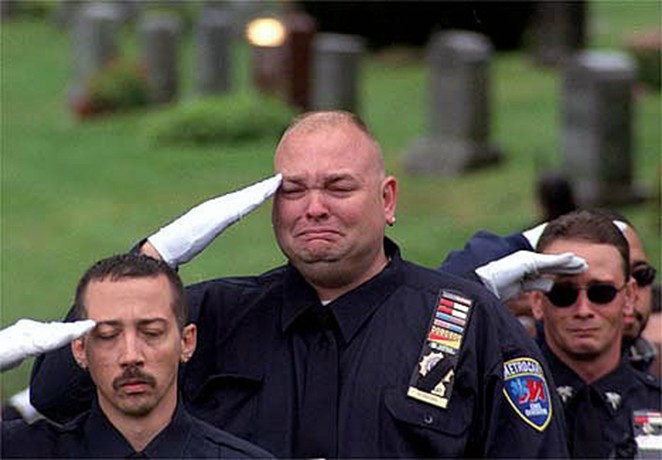
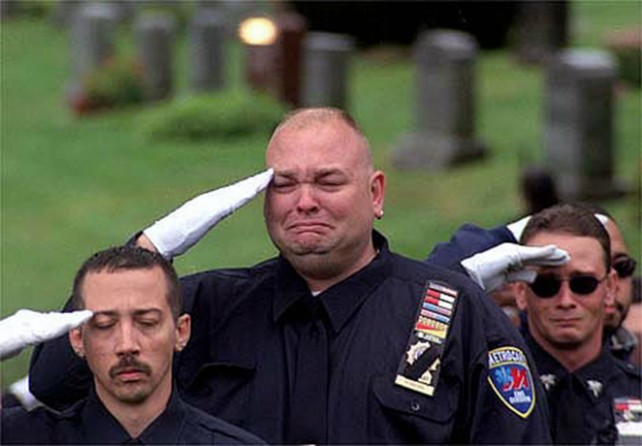
Jay Robbins sobs as he salutes his colleague, emergency medical technician Yarnel Merino, 25, who died in the attack on the World Trade Center. (George Gutierrez, The New York Times)
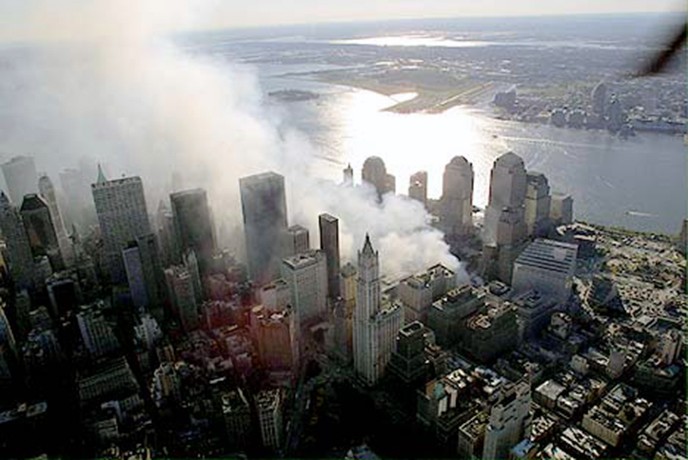
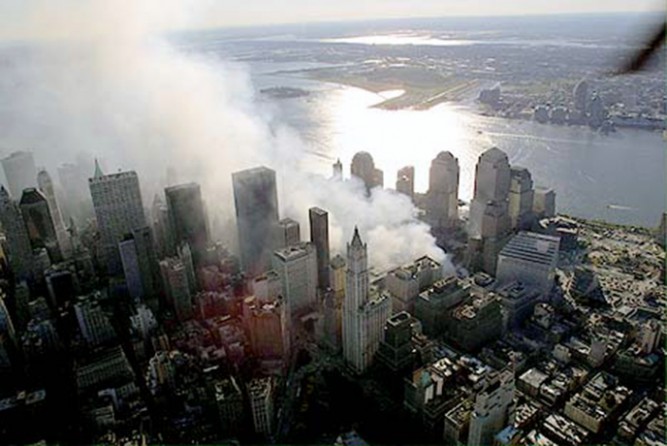
Smoke continues to rise from the destroyed World Trade Center on September 15, 2001, four days later, in New York. (Keith Meyers, The New York Times - September 15, 2001)