For a distinguished book of the year upon the history of the United States, Seven thousand five hundred dollars ($7,500).

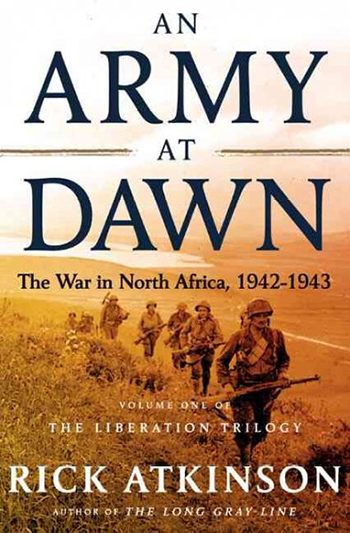
An Army at Dawn: The War in North Africa, 1942-1943, by Rick Atkinson (Henry Holt and Company)

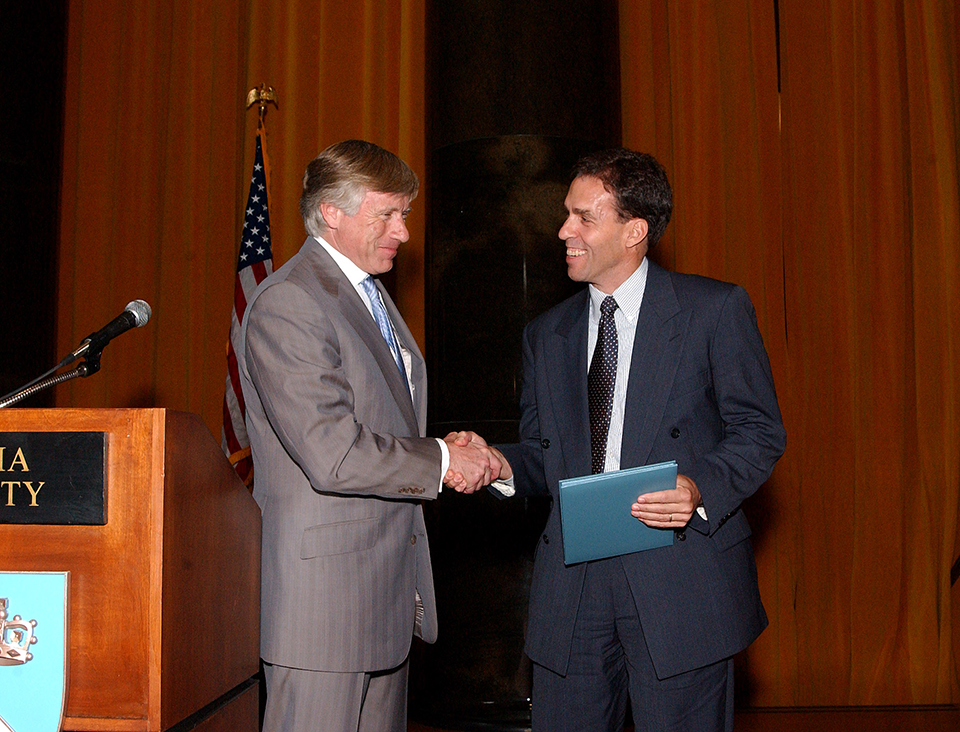
Lee Bollinger and Rick Atkinson

Columbia University President Lee C. Bollinger (left) presents Rick Atkinson with the 2003 Pulitzer Prize in History.

Winning Work

An Army at Dawn: The War in North Africa, 1942-1943

The liberation of Europe and the destruction of the Third Reich is an epic story of courage and calamity, of miscalculation and enduring triumph. Now, sixty years after America joined this titanic struggle, Rick Atkinson shows why no modern reader can understand the ultimate victory of the Allied powers without a grasp of the great drama that unfolded in North Africa in 1942 and 1943.

Atkinson's narrative begins on the eve of Operation TORCH, the daring amphibious invasion of Morocco and Algeria. After three days of hard fighting against the French, American and British troops push deeper into North Africa.

But the confidence gained after several early victories soon wanes; once Allied forces engage the Germans, it becomes apparent that they have more than met their match. Casualties mount rapidly, battle plans prove ineffectual, and hope for a quick and decisive victory evaporates. The Allies -- particularly the Americans -- discover that they are woefully unprepared to fight and win this war, in part due to lack of experience, in part due to an unwillingness to pay the necessary price in blood. North Africa then becomes a proving ground: it is here that American officers learn how to lead, here that soldiers learn how to hate, here that an entire army learns what it will take vanquish a formidable enemy.

Most of the West's great battle captains emerged in North Africa, including men whose names remain familiar generations later -- Eisenhower, Patton, Bradley, and Montgomery. Atkinson brings these commanders and others vividly to life, along with enemy generals such as Rommel and Kesselring. He also takes us right to the front lines of every major battle -- from Oran to Kasserine to Tunis -- and his gripping accounts of soldiers fighting and dying makes the war horrifyingly real. Gradually, we come to understand the profound accomplishments of this bloody campaign. In North Africa, the Allied coalition came into its own, the enemy forever lost the initiative, and the United States -- for the first time -- began to act like a great power.

Even as he weaves a compelling narrative of a heroic victory, Atkinson casts a clear eye on the dark tragedies that haunt every war. The first volume of the Liberation Trilogy, An Army At Dawn is history of the highest order -- brilliantly researched, rich with new material and surprising insights, the deeply human story of a monumental battle for the future of civilization.

(From the book jacket)
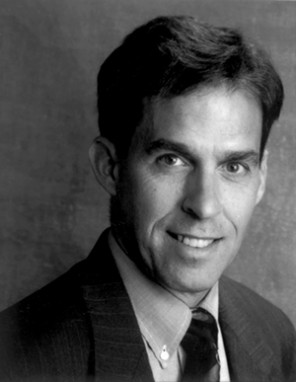


Biography

Rick Atkinson is on book leave from The Washington Post,where he most recently served as assistant editor for investigations, a position that gave him responsibility for investigative reporting at the newspaper. Atkinson’s career in journalism began at The Pittsburg (KS) Morning Sun in 1976; in 1977, he moved to The Kansas City Times, where he worked for six years as a suburban police reporter, city desk reporter, and a national reporter based first in the Midwest and then in Washington. In 1983, he joined the national staff of The Washington Post as a general assignment reporter, and subsequently covered the Pentagon and the 1984 presidential election. He served for two years as deputy national editor, supervising reporters responsible for defense, diplomacy, and other national security beats. After return from a book leave in 1989, he worked as a reporter on the newspaper’s investigative staff, producing series on the B-2 bomber, public housing, and the savings and loan scandal. In 1991, he wrote most of the newspaper’s lead stories on the Persian Gulf War. Following another book leave, in 1993 he became the Post’s Berlin bureau chief, covering not only Germany and NATO, but also spending considerable time in Somalia and Bosnia. He returned from Europe to become assistant managing editor in 1996.

Born in Munich, in the Federal Republic of Germany, Atkinson is the son of a U.S. Army officer and grew up on military posts. He holds a master of art degree in English literature from the University of Chicago. He is the author of two best-selling books, The Long Gray Line, a narrative account about West Point’s class of 1966, and Crusade, a narrative history of the Persian Gulf War. His awards include the 1982 Pulitzer Prize for national reporting and the 1999 Pulitzer Prize for public service, awarded to The Post for a series of investigative articles conceived, directed, and edited by Atkinson on shootings by the District of Columbia police department. Other awards include the 1983 Livingston Award for international reporting, the 1989 John Hancock Award for Excellence, the 1990 George Polk Award for national reporting, and a 1990 PEN special citation for non-fiction.

Atkinson currently is working on subsequent volumes in the Liberation Trilogy, a narrative history of the American Army in North Africa, Italy, and Western Europe during World War II. He and his wife, Dr. Jane Atkinson, assistant dean and professor of oral medicine at the University of Maryland dental school, live with their two children in the District of Columbia.


Finalists

Nominated as finalists in History in 2003:

The Jury

William H. Goetzmann(chair )*

Jack S. Blanton Sr. Chair in History

Jean Harvey Baker

professor of history

Michael J. Birkner

Benjamin Franklin Professor of Liberal Arts

Winners in History

2003 Prize Winners

Diana K. Sugg

For her absorbing, often poignant stories that illuminated complex medical issues through the lives of people.