The Washington Post, by Dana Priest
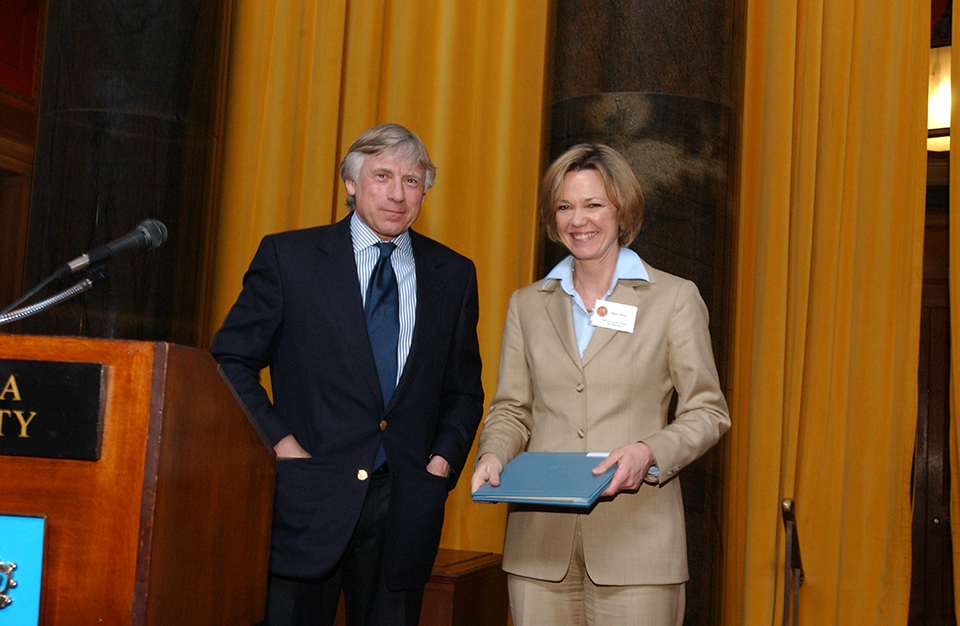
Columbia University President Lee C. Bollinger presents Dana Priest with the 2006 Pulitzer Prize in Beat Reporting.
Winning Work
Debate Is Growing Within Agency About Legality and Morality of Overseas System Set Up After 9/11
By Dana Priest
Washington Post Staff Writer
In late 2002 or early 2003, the CIA brokered deals with other countries to establish black-site prisons. One of these sites -- which sources said they believed to be the CIA's biggest facility now -- became particularly important when the agency realized it would have a growing number of prisoners and a shrinking number of prisons.
The CIA has been hiding and interrogating some of its most important al Qaeda captives at a Soviet-era compound in Eastern Europe, according to U.S. and foreign officials familiar with the arrangement.
The secret facility is part of a covert prison system set up by the CIA nearly four years ago that at various times has included sites in eight countries, including Thailand, Afghanistan and several democracies in Eastern Europe, as well as a small center at the Guantanamo Bay prison in Cuba, according to current and former intelligence officials and diplomats from three continents.
The hidden global internment network is a central element in the CIA's unconventional war on terrorism. It depends on the cooperation of foreign intelligence services, and on keeping even basic information about the system secret from the public, foreign officials and nearly all members of Congress charged with overseeing the CIA's covert actions.
The existence and locations of the facilities -- referred to as "black sites" in classified White House, CIA, Justice Department and congressional documents -- are known to only a handful of officials in the United States and, usually, only to the president and a few top intelligence officers in each host country.
The CIA and the White House, citing national security concerns and the value of the program, have dissuaded Congress from demanding that the agency answer questions in open testimony about the conditions under which captives are held. Virtually nothing is known about who is kept in the facilities, what interrogation methods are employed with them, or how decisions are made about whether they should be detained or for how long.
While the Defense Department has produced volumes of public reports and testimony about its detention practices and rules after the abuse scandals at Iraq's Abu Ghraib prison and at Guantanamo Bay, the CIA has not even acknowledged the existence of its black sites. To do so, say officials familiar with the program, could open the U.S. government to legal challenges, particularly in foreign courts, and increase the risk of political condemnation at home and abroad.
But the revelations of widespread prisoner abuse in Afghanistan and Iraq by the U.S. military -- which operates under published rules and transparent oversight of Congress -- have increased concern among lawmakers, foreign governments and human rights groups about the opaque CIA system. Those concerns escalated last month, when Vice President Cheney and CIA Director Porter J. Goss asked Congress to exempt CIA employees from legislation already endorsed by 90 senators that would bar cruel and degrading treatment of any prisoner in U.S. custody.
Although the CIA will not acknowledge details of its system, intelligence officials defend the agency's approach, arguing that the successful defense of the country requires that the agency be empowered to hold and interrogate suspected terrorists for as long as necessary and without restrictions imposed by the U.S. legal system or even by the military tribunals established for prisoners held at Guantanamo Bay.
The Washington Post is not publishing the names of the Eastern European countries involved in the covert program, at the request of senior U.S. officials. They argued that the disclosure might disrupt counterterrorism efforts in those countries and elsewhere and could make them targets of possible terrorist retaliation.
The secret detention system was conceived in the chaotic and anxious first months after the Sept. 11, 2001, attacks, when the working assumption was that a second strike was imminent.
Since then, the arrangement has been increasingly debated within the CIA, where considerable concern lingers about the legality, morality and practicality of holding even unrepentant terrorists in such isolation and secrecy, perhaps for the duration of their lives. Mid-level and senior CIA officers began arguing two years ago that the system was unsustainable and diverted the agency from its unique espionage mission.
"We never sat down, as far as I know, and came up with a grand strategy," said one former senior intelligence officer who is familiar with the program but not the location of the prisons. "Everything was very reactive. That's how you get to a situation where you pick people up, send them into a netherworld and don't say, 'What are we going to do with them afterwards?' "
It is illegal for the government to hold prisoners in such isolation in secret prisons in the United States, which is why the CIA placed them overseas, according to several former and current intelligence officials and other U.S. government officials. Legal experts and intelligence officials said that the CIA's internment practices also would be considered illegal under the laws of several host countries, where detainees have rights to have a lawyer or to mount a defense against allegations of wrongdoing.
Host countries have signed the U.N. Convention Against Torture and Other Cruel, Inhuman or Degrading Treatment or Punishment, as has the United States. Yet CIA interrogators in the overseas sites are permitted to use the CIA's approved "Enhanced Interrogation Techniques," some of which are prohibited by the U.N. convention and by U.S. military law. They include tactics such as "waterboarding," in which a prisoner is made to believe he or she is drowning.
Some detainees apprehended by the CIA and transferred to foreign intelligence agencies have alleged after their release that they were tortured, although it is unclear whether CIA personnel played a role in the alleged abuse. Given the secrecy surrounding CIA detentions, such accusations have heightened concerns among foreign governments and human rights groups about CIA detention and interrogation practices.
The contours of the CIA's detention program have emerged in bits and pieces over the past two years. Parliaments in Canada, Italy, France, Sweden and the Netherlands have opened inquiries into alleged CIA operations that secretly captured their citizens or legal residents and transferred them to the agency's prisons.
More than 100 suspected terrorists have been sent by the CIA into the covert system, according to current and former U.S. intelligence officials and foreign sources. This figure, a rough estimate based on information from sources who said their knowledge of the numbers was incomplete, does not include prisoners picked up in Iraq.
The detainees break down roughly into two classes, the sources said.
About 30 are considered major terrorism suspects and have been held under the highest level of secrecy at black sites financed by the CIA and managed by agency personnel, including those in Eastern Europe and elsewhere, according to current and former intelligence officers and two other U.S. government officials. Two locations in this category -- in Thailand and on the grounds of the military prison at Guantanamo Bay -- were closed in 2003 and 2004, respectively.
A second tier -- which these sources believe includes more than 70 detainees -- is a group considered less important, with less direct involvement in terrorism and having limited intelligence value. These prisoners, some of whom were originally taken to black sites, are delivered to intelligence services in Egypt, Jordan, Morocco, Afghanistan and other countries, a process sometimes known as "rendition." While the first-tier black sites are run by CIA officers, the jails in these countries are operated by the host nations, with CIA financial assistance and, sometimes, direction.
Morocco, Egypt and Jordan have said that they do not torture detainees, although years of State Department human rights reports accuse all three of chronic prisoner abuse.
The top 30 al Qaeda prisoners exist in complete isolation from the outside world. Kept in dark, sometimes underground cells, they have no recognized legal rights, and no one outside the CIA is allowed to talk with or even see them, or to otherwise verify their well-being, said current and former and U.S. and foreign government and intelligence officials.
Most of the facilities were built and are maintained with congressionally appropriated funds, but the White House has refused to allow the CIA to brief anyone except the House and Senate intelligence committees' chairmen and vice chairmen on the program's generalities.
The Eastern European countries that the CIA has persuaded to hide al Qaeda captives are democracies that have embraced the rule of law and individual rights after decades of Soviet domination. Each has been trying to cleanse its intelligence services of operatives who have worked on behalf of others -- mainly Russia and organized crime.
Origins of the Black Sites
The idea of holding terrorists outside the U.S. legal system was not under consideration before Sept. 11, 2001, not even for Osama bin Laden, according to former government officials. The plan was to bring bin Laden and his top associates into the U.S. justice system for trial or to send them to foreign countries where they would be tried.
"The issue of detaining and interrogating people was never, ever discussed," said a former senior intelligence officer who worked in the CIA's Counterterrorist Center, or CTC, during that period. "It was against the culture and they believed information was best gleaned by other means."
On the day of the attacks, the CIA already had a list of what it called High-Value Targets from the al Qaeda structure, and as the World Trade Center and Pentagon attack plots were unraveled, more names were added to the list. The question of what to do with these people surfaced quickly.
The CTC's chief of operations argued for creating hit teams of case officers and CIA paramilitaries that would covertly infiltrate countries in the Middle East, Africa and even Europe to assassinate people on the list, one by one.
But many CIA officers believed that the al Qaeda leaders would be worth keeping alive to interrogate about their network and other plots. Some officers worried that the CIA would not be very adept at assassination.
"We'd probably shoot ourselves," another former senior CIA official said.
The agency set up prisons under its covert action authority. Under U.S. law, only the president can authorize a covert action, by signing a document called a presidential finding. Findings must not break U.S. law and are reviewed and approved by CIA, Justice Department and White House legal advisers.
Six days after the Sept. 11 attacks, President Bush signed a sweeping finding that gave the CIA broad authorization to disrupt terrorist activity, including permission to kill, capture and detain members of al Qaeda anywhere in the world.
It could not be determined whether Bush approved a separate finding for the black-sites program, but the consensus among current and former intelligence and other government officials interviewed for this article is that he did not have to.
Rather, they believe that the CIA general counsel's office acted within the parameters of the Sept. 17 finding. The black-site program was approved by a small circle of White House and Justice Department lawyers and officials, according to several former and current U.S. government and intelligence officials.
Deals With 2 Countries
Among the first steps was to figure out where the CIA could secretly hold the captives. One early idea was to keep them on ships in international waters, but that was discarded for security and logistics reasons.
CIA officers also searched for a setting like Alcatraz Island. They considered the virtually unvisited islands in Lake Kariba in Zambia, which were edged with craggy cliffs and covered in woods. But poor sanitary conditions could easily lead to fatal diseases, they decided, and besides, they wondered, could the Zambians be trusted with such a secret?
Still without a long-term solution, the CIA began sending suspects it captured in the first month or so after Sept. 11 to its longtime partners, the intelligence services of Egypt and Jordan.
A month later, the CIA found itself with hundreds of prisoners who were captured on battlefields in Afghanistan. A short-term solution was improvised. The agency shoved its highest-value prisoners into metal shipping containers set up on a corner of the Bagram Air Base, which was surrounded with a triple perimeter of concertina-wire fencing. Most prisoners were left in the hands of the Northern Alliance, U.S.-supported opposition forces who were fighting the Taliban.
"I remember asking: What are we going to do with these people?" said a senior CIA officer. "I kept saying, where's the help? We've got to bring in some help. We can't be jailers -- our job is to find Osama."
Then came grisly reports, in the winter of 2001, that prisoners kept by allied Afghan generals in cargo containers had died of asphyxiation. The CIA asked Congress for, and was quickly granted, tens of millions of dollars to establish a larger, long-term system in Afghanistan, parts of which would be used for CIA prisoners.
The largest CIA prison in Afghanistan was code-named the Salt Pit. It was also the CIA's substation and was first housed in an old brick factory outside Kabul. In November 2002, an inexperienced CIA case officer allegedly ordered guards to strip naked an uncooperative young detainee, chain him to the concrete floor and leave him there overnight without blankets. He froze to death, according to four U.S. government officials. The CIA officer has not been charged in the death.
The Salt Pit was protected by surveillance cameras and tough Afghan guards, but the road leading to it was not safe to travel and the jail was eventually moved inside Bagram Air Base. It has since been relocated off the base.
By mid-2002, the CIA had worked out secret black-site deals with two countries, including Thailand and one Eastern European nation, current and former officials said. An estimated $100 million was tucked inside the classified annex of the first supplemental Afghanistan appropriation.
Then the CIA captured its first big detainee, in March 28, 2002. Pakistani forces took Abu Zubaida, al Qaeda's operations chief, into custody and the CIA whisked him to the new black site in Thailand, which included underground interrogation cells, said several former and current intelligence officials. Six months later, Sept. 11 planner Ramzi Binalshibh was also captured in Pakistan and flown to Thailand.
But after published reports revealed the existence of the site in June 2003, Thai officials insisted the CIA shut it down, and the two terrorists were moved elsewhere, according to former government officials involved in the matter. Work between the two countries on counterterrorism has been lukewarm ever since.
In late 2002 or early 2003, the CIA brokered deals with other countries to establish black-site prisons. One of these sites -- which sources said they believed to be the CIA's biggest facility now -- became particularly important when the agency realized it would have a growing number of prisoners and a shrinking number of prisons.
Thailand was closed, and sometime in 2004 the CIA decided it had to give up its small site at Guantanamo Bay. The CIA had planned to convert that into a state-of-the-art facility, operated independently of the military. The CIA pulled out when U.S. courts began to exercise greater control over the military detainees, and agency officials feared judges would soon extend the same type of supervision over their detainees.
In hindsight, say some former and current intelligence officials, the CIA's problems were exacerbated by another decision made within the Counterterrorist Center at Langley.
The CIA program's original scope was to hide and interrogate the two dozen or so al Qaeda leaders believed to be directly responsible for the Sept. 11 attacks, or who posed an imminent threat, or had knowledge of the larger al Qaeda network. But as the volume of leads pouring into the CTC from abroad increased, and the capacity of its paramilitary group to seize suspects grew, the CIA began apprehending more people whose intelligence value and links to terrorism were less certain, according to four current and former officials.
The original standard for consigning suspects to the invisible universe was lowered or ignored, they said. "They've got many, many more who don't reach any threshold," one intelligence official said.
Several former and current intelligence officials, as well as several other U.S. government officials with knowledge of the program, express frustration that the White House and the leaders of the intelligence community have not made it a priority to decide whether the secret internment program should continue in its current form, or be replaced by some other approach.
Meanwhile, the debate over the wisdom of the program continues among CIA officers, some of whom also argue that the secrecy surrounding the program is not sustainable.
"It's just a horrible burden," said the intelligence official.
Researcher Julie Tate contributed to this report.
© 2005 The Washington Post Company
Paris's 'Alliance Base' Targets Terrorists
By Dana Priest
Washington Post Staff Writer
The CIA pulled out when U.S. courts began to exercise greater control over the military detainees, and agency officials feared judges would soon extend the same type of supervision over their detainees.
[?] hiding and interrogating some of its most important al Qaeda captives at a Soviet-era compound in Eastern Europe, according to U.S. and foreign officials familiar with the arrangement.
The secret facility is part of a covert prison system set up by the CIA nearly four years ago that at various times has included sites in eight countries, including Thailand, Afghanistan and several democracies in Eastern Europe, as well as a small center at the Guantanamo Bay prison in Cuba, according to current and former intelligence officials and diplomats from three continents.
The hidden global internment network is a central element in the CIA's unconventional war on terrorism. It depends on the cooperation of foreign intelligence services, and on keeping even basic information about the system secret from the public, foreign officials and nearly all members of Congress charged with overseeing the CIA's covert actions.
The existence and locations of the facilities -- referred to as "black sites" in classified White House, CIA, Justice Department and congressional documents -- are known to only a handful of officials in the United States and, usually, only to the president and a few top intelligence officers in each host country.
The CIA and the White House, citing national security concerns and the value of the program, have dissuaded Congress from demanding that the agency answer questions in open testimony about the conditions under which captives are held. Virtually nothing is known about who is kept in the facilities, what interrogation methods are employed with them, or how decisions are made about whether they should be detained or for how long.
While the Defense Department has produced volumes of public reports and testimony about its detention practices and rules after the abuse scandals at Iraq's Abu Ghraib prison and at Guantanamo Bay, the CIA has not even acknowledged the existence of its black sites. To do so, say officials familiar with the program, could open the U.S. government to legal challenges, particularly in foreign courts, and increase the risk of political condemnation at home and abroad.
But the revelations of widespread prisoner abuse in Afghanistan and Iraq by the U.S. military -- which operates under published rules and transparent oversight of Congress -- have increased concern among lawmakers, foreign governments and human rights groups about the opaque CIA system. Those concerns escalated last month, when Vice President Cheney and CIA Director Porter J. Goss asked Congress to exempt CIA employees from legislation already endorsed by 90 senators that would bar cruel and degrading treatment of any prisoner in U.S. custody.
Although the CIA will not acknowledge details of its system, intelligence officials defend the agency's approach, arguing that the successful defense of the country requires that the agency be empowered to hold and interrogate suspected terrorists for as long as necessary and without restrictions imposed by the U.S. legal system or even by the military tribunals established for prisoners held at Guantanamo Bay.
The Washington Post is not publishing the names of the Eastern European countries involved in the covert program, at the request of senior U.S. officials. They argued that the disclosure might disrupt counterterrorism efforts in those countries and elsewhere and could make them targets of possible terrorist retaliation.
The secret detention system was conceived in the chaotic and anxious first months after the Sept. 11, 2001, attacks, when the working assumption was that a second strike was imminent.
Since then, the arrangement has been increasingly debated within the CIA, where considerable concern lingers about the legality, morality and practicality of holding even unrepentant terrorists in such isolation and secrecy, perhaps for the duration of their lives. Mid-level and senior CIA officers began arguing two years ago that the system was unsustainable and diverted the agency from its unique espionage mission.
"We never sat down, as far as I know, and came up with a grand strategy," said one former senior intelligence officer who is familiar with the program but not the location of the prisons. "Everything was very reactive. That's how you get to a situation where you pick people up, send them into a netherworld and don't say, 'What are we going to do with them afterwards?' "
It is illegal for the government to hold prisoners in such isolation in secret prisons in the United States, which is why the CIA placed them overseas, according to several former and current intelligence officials and other U.S. government officials. Legal experts and intelligence officials said that the CIA's internment practices also would be considered illegal under the laws of several host countries, where detainees have rights to have a lawyer or to mount a defense against allegations of wrongdoing.
Host countries have signed the U.N. Convention Against Torture and Other Cruel, Inhuman or Degrading Treatment or Punishment, as has the United States. Yet CIA interrogators in the overseas sites are permitted to use the CIA's approved "Enhanced Interrogation Techniques," some of which are prohibited by the U.N. convention and by U.S. military law. They include tactics such as "waterboarding," in which a prisoner is made to believe he or she is drowning.
Some detainees apprehended by the CIA and transferred to foreign intelligence agencies have alleged after their release that they were tortured, although it is unclear whether CIA personnel played a role in the alleged abuse. Given the secrecy surrounding CIA detentions, such accusations have heightened concerns among foreign governments and human rights groups about CIA detention and interrogation practices.
The contours of the CIA's detention program have emerged in bits and pieces over the past two years. Parliaments in Canada, Italy, France, Sweden and the Netherlands have opened inquiries into alleged CIA operations that secretly captured their citizens or legal residents and transferred them to the agency's prisons.
More than 100 suspected terrorists have been sent by the CIA into the covert system, according to current and former U.S. intelligence officials and foreign sources. This figure, a rough estimate based on information from sources who said their knowledge of the numbers was incomplete, does not include prisoners picked up in Iraq.
The detainees break down roughly into two classes, the sources said.
About 30 are considered major terrorism suspects and have been held under the highest level of secrecy at black sites financed by the CIA and managed by agency personnel, including those in Eastern Europe and elsewhere, according to current and former intelligence officers and two other U.S. government officials. Two locations in this category -- in Thailand and on the grounds of the military prison at Guantanamo Bay -- were closed in 2003 and 2004, respectively.
A second tier -- which these sources believe includes more than 70 detainees -- is a group considered less important, with less direct involvement in terrorism and having limited intelligence value. These prisoners, some of whom were originally taken to black sites, are delivered to intelligence services in Egypt, Jordan, Morocco, Afghanistan and other countries, a process sometimes known as "rendition." While the first-tier black sites are run by CIA officers, the jails in these countries are operated by the host nations, with CIA financial assistance and, sometimes, direction.
Morocco, Egypt and Jordan have said that they do not torture detainees, although years of State Department human rights reports accuse all three of chronic prisoner abuse.
The top 30 al Qaeda prisoners exist in complete isolation from the outside world. Kept in dark, sometimes underground cells, they have no recognized legal rights, and no one outside the CIA is allowed to talk with or even see them, or to otherwise verify their well-being, said current and former and U.S. and foreign government and intelligence officials.
Most of the facilities were built and are maintained with congressionally appropriated funds, but the White House has refused to allow the CIA to brief anyone except the House and Senate intelligence committees' chairmen and vice chairmen on the program's generalities.
The Eastern European countries that the CIA has persuaded to hide al Qaeda captives are democracies that have embraced the rule of law and individual rights after decades of Soviet domination. Each has been trying to cleanse its intelligence services of operatives who have worked on behalf of others -- mainly Russia and organized crime.
Origins of the Black Sites
The idea of holding terrorists outside the U.S. legal system was not under consideration before Sept. 11, 2001, not even for Osama bin Laden, according to former government officials. The plan was to bring bin Laden and his top associates into the U.S. justice system for trial or to send them to foreign countries where they would be tried.
"The issue of detaining and interrogating people was never, ever discussed," said a former senior intelligence officer who worked in the CIA's Counterterrorist Center, or CTC, during that period. "It was against the culture and they believed information was best gleaned by other means."
On the day of the attacks, the CIA already had a list of what it called High-Value Targets from the al Qaeda structure, and as the World Trade Center and Pentagon attack plots were unraveled, more names were added to the list. The question of what to do with these people surfaced quickly.
The CTC's chief of operations argued for creating hit teams of case officers and CIA paramilitaries that would covertly infiltrate countries in the Middle East, Africa and even Europe to assassinate people on the list, one by one.
But many CIA officers believed that the al Qaeda leaders would be worth keeping alive to interrogate about their network and other plots. Some officers worried that the CIA would not be very adept at assassination.
"We'd probably shoot ourselves," another former senior CIA official said.
The agency set up prisons under its covert action authority. Under U.S. law, only the president can authorize a covert action, by signing a document called a presidential finding. Findings must not break U.S. law and are reviewed and approved by CIA, Justice Department and White House legal advisers.
Six days after the Sept. 11 attacks, President Bush signed a sweeping finding that gave the CIA broad authorization to disrupt terrorist activity, including permission to kill, capture and detain members of al Qaeda anywhere in the world.
It could not be determined whether Bush approved a separate finding for the black-sites program, but the consensus among current and former intelligence and other government officials interviewed for this article is that he did not have to.
Rather, they believe that the CIA general counsel's office acted within the parameters of the Sept. 17 finding. The black-site program was approved by a small circle of White House and Justice Department lawyers and officials, according to several former and current U.S. government and intelligence officials.
Deals With 2 Countries
Among the first steps was to figure out where the CIA could secretly hold the captives. One early idea was to keep them on ships in international waters, but that was discarded for security and logistics reasons.
CIA officers also searched for a setting like Alcatraz Island. They considered the virtually unvisited islands in Lake Kariba in Zambia, which were edged with craggy cliffs and covered in woods. But poor sanitary conditions could easily lead to fatal diseases, they decided, and besides, they wondered, could the Zambians be trusted with such a secret?
Still without a long-term solution, the CIA began sending suspects it captured in the first month or so after Sept. 11 to its longtime partners, the intelligence services of Egypt and Jordan.
A month later, the CIA found itself with hundreds of prisoners who were captured on battlefields in Afghanistan. A short-term solution was improvised. The agency shoved its highest-value prisoners into metal shipping containers set up on a corner of the Bagram Air Base, which was surrounded with a triple perimeter of concertina-wire fencing. Most prisoners were left in the hands of the Northern Alliance, U.S.-supported opposition forces who were fighting the Taliban.
"I remember asking: What are we going to do with these people?" said a senior CIA officer. "I kept saying, where's the help? We've got to bring in some help. We can't be jailers -- our job is to find Osama."
Then came grisly reports, in the winter of 2001, that prisoners kept by allied Afghan generals in cargo containers had died of asphyxiation. The CIA asked Congress for, and was quickly granted, tens of millions of dollars to establish a larger, long-term system in Afghanistan, parts of which would be used for CIA prisoners.
The largest CIA prison in Afghanistan was code-named the Salt Pit. It was also the CIA's substation and was first housed in an old brick factory outside Kabul. In November 2002, an inexperienced CIA case officer allegedly ordered guards to strip naked an uncooperative young detainee, chain him to the concrete floor and leave him there overnight without blankets. He froze to death, according to four U.S. government officials. The CIA officer has not been charged in the death.
The Salt Pit was protected by surveillance cameras and tough Afghan guards, but the road leading to it was not safe to travel and the jail was eventually moved inside Bagram Air Base. It has since been relocated off the base.
By mid-2002, the CIA had worked out secret black-site deals with two countries, including Thailand and one Eastern European nation, current and former officials said. An estimated $100 million was tucked inside the classified annex of the first supplemental Afghanistan appropriation.
Then the CIA captured its first big detainee, in March 28, 2002. Pakistani forces took Abu Zubaida, al Qaeda's operations chief, into custody and the CIA whisked him to the new black site in Thailand, which included underground interrogation cells, said several former and current intelligence officials. Six months later, Sept. 11 planner Ramzi Binalshibh was also captured in Pakistan and flown to Thailand.
But after published reports revealed the existence of the site in June 2003, Thai officials insisted the CIA shut it down, and the two terrorists were moved elsewhere, according to former government officials involved in the matter. Work between the two countries on counterterrorism has been lukewarm ever since.
In late 2002 or early 2003, the CIA brokered deals with other countries to establish black-site prisons. One of these sites -- which sources said they believed to be the CIA's biggest facility now -- became particularly important when the agency realized it would have a growing number of prisoners and a shrinking number of prisons.
Thailand was closed, and sometime in 2004 the CIA decided it had to give up its small site at Guantanamo Bay. The CIA had planned to convert that into a state-of-the-art facility, operated independently of the military. The CIA pulled out when U.S. courts began to exercise greater control over the military detainees, and agency officials feared judges would soon extend the same type of supervision over their detainees.
In hindsight, say some former and current intelligence officials, the CIA's problems were exacerbated by another decision made within the Counterterrorist Center at Langley.
The CIA program's original scope was to hide and interrogate the two dozen or so al Qaeda leaders believed to be directly responsible for the Sept. 11 attacks, or who posed an imminent threat, or had knowledge of the larger al Qaeda network. But as the volume of leads pouring into the CTC from abroad increased, and the capacity of its paramilitary group to seize suspects grew, the CIA began apprehending more people whose intelligence value and links to terrorism were less certain, according to four current and former officials.
The original standard for consigning suspects to the invisible universe was lowered or ignored, they said. "They've got many, many more who don't reach any threshold," one intelligence official said.
Several former and current intelligence officials, as well as several other U.S. government officials with knowledge of the program, express frustration that the White House and the leaders of the intelligence community have not made it a priority to decide whether the secret internment program should continue in its current form, or be replaced by some other approach.
Meanwhile, the debate over the wisdom of the program continues among CIA officers, some of whom also argue that the secrecy surrounding the program is not sustainable.
"It's just a horrible burden," said the intelligence official.
Researcher Julie Tate contributed to this report.
© 2005 The Washington Post Company
Joint Facilities in Two Dozen Countries Account for Bulk of Agency's Post-9/11 Successes
By Dana Priest
Washington Post Staff Writer
"All of the sudden our enemy became common," Sanabani said. "That's why Yemen and the United States reached out to one other."
The CIA has established joint operation centers in more than two dozen countries where U.S. and foreign intelligence officers work side by side to track and capture suspected terrorists and to destroy or penetrate their networks, according to current and former American and foreign intelligence officials.
The secret Counterterrorist Intelligence Centers are financed mostly by the agency and employ some of the best espionage technology the CIA has to offer, including secure communications gear, computers linked to the CIA's central databases, and access to highly classified intercepts once shared only with the nation's closest Western allies.
The Americans and their counterparts at the centers, known as CTICs, make daily decisions on when and how to apprehend suspects, whether to whisk them off to other countries for interrogation and detention, and how to disrupt al Qaeda's logistical and financial support.
The network of centers reflects what has become the CIA's central and most successful strategy in combating terrorism abroad: persuading and empowering foreign security services to help. Virtually every capture or killing of a suspected terrorist outside Iraq since the Sept. 11, 2001, attacks -- more than 3,000 in all -- was a result of foreign intelligence services' work alongside the agency, the CIA deputy director of operations told a congressional committee in a closed-door session earlier this year.
The initial tip about where an al Qaeda figure is hiding may come from the CIA, but the actual operation to pick him up is usually organized by one of the joint centers and conducted by a local security service, with the CIA nowhere in sight. "The vast majority of successes involved our CTICs," one former counterterrorism official said. "The boot that went through the door was foreign."
The centers are also part of a fundamental, continuing shift in the CIA's mission that began shortly after the 2001 attacks. No longer is the agency's primary goal to recruit military attaches, diplomats and intelligence operatives to steal secrets from their own countries. Today's CIA is desperately seeking ways to join forces with other governments it once reproached or ignored to undo a common enemy.
George J. Tenet orchestrated the shift during his tenure as CIA director, working with the agency's station chiefs abroad and officers in the Counterterrorist Center at headquarters to bring about an exponential deepening of intelligence ties worldwide after Sept. 11.
Beneath the surface of visible diplomacy, the cooperative efforts, known as liaison relationships, are recasting U.S. dealings abroad.
The White House has stepped up its criticism of Uzbek President Islam Karimov in the past year for his authoritarian rule and repression of dissidents. But joint counterterrorism efforts with Tashkent continued until recently. In Indonesia, as the State Department doled out tiny amounts of assistance to the military when it made progress on corruption and human rights, the CIA was pouring money into Jakarta and developing intelligence ties there after years of tension. In Paris, as U.S.-French acrimony peaked over the Iraq invasion in 2003, the CIA and French intelligence services were creating the agency's only multinational operations center and executing worldwide sting operations.
The CIA has operated the joint intelligence centers in Europe, the Middle East and Asia, according to current and former intelligence officials. In addition, the multinational center in Paris, codenamed Alliance Base, includes representatives from Britain, France, Germany, Canada and Australia.
"CTICs were a step forward in codifying, organizing liaison relationships that elsewhere would be more ad hoc," a former CIA counterterrorism official said. "It's one tool in the liaison tool kit."
The CIA declined to comment for this article. The Washington Post interviewed more than two dozen current and former intelligence officials and more than a dozen senior foreign intelligence officials as well as diplomatic and congressional sources. Most of them spoke on the condition that they not be named because they are not authorized to speak publicly or because of the sensitive nature of the subject.
The CTICs are entirely separate from the covert prisons, known in classified documents as "black sites," that the CIA has run at various times in eight countries. Legal experts and intelligence officials have said that the prisons -- whose existence was disclosed in a Washington Post report earlier this month -- would be considered illegal under the laws of several host countries. The CTICs, by contrast, are an expansion of the hidden intelligence cooperation that has been a staple of foreign policy for decades.
Deepening Ties
The intelligence centers were modeled on the CIA's counternarcotics centers in Latin America and Asia. Faced with corrupt local police and intelligence services, in the 1980s the CIA persuaded the leaders of these countries to let it select individuals for the assignment, pay them and keep them physically separate from their own institutions.
Officers from the host nations serving in the newer CTICs are vetted through background checks and polygraphs. They are usually supervised by the CIA's chief of station and augmented by officers sent from the Counterterrorist Center at Langley. Such daily interaction with U.S. personnel, say intelligence officials, helps keep the foreign service focused.
The first two CTICs were established in the late 1990s to watch and capture Islamic militants traveling from Saudi Arabia, Yemen, Egypt and Chechnya to join the fighting in Bosnia and other parts of the former Yugoslavia, two former intelligence officers said.
Days after the Sept. 11 attacks, Tenet outlined a global campaign against terrorism to President Bush. It included invading Afghanistan to wipe out al Qaeda's main base of operations as well as a "Worldwide Attack Matrix" detailing operations against terrorists in 80 countries. The matrix also listed priority countries where al Qaeda leaders in Afghanistan were likely to flee during a U.S. invasion.
"If you brought a big hammer down on Afghanistan," as a former CIA official described it, "there weren't too many areas where people could squirt out" and hide. The most likely were Yemen, Saudi Arabia, urban areas of Pakistan, and Indonesia.
On Sept. 17, 2001, Bush signed a classified Presidential Finding that authorized an unprecedented range of covert operations. The overall counterterrorism program included authorization of lethal measures against terrorists and the expenditure of vast funds to coax foreign intelligence services into a new era of cooperation with the CIA, current and former intelligence officials said.
To beef up operations in the priority countries and elsewhere, the agency dispatched officers from its proliferation, counternarcotics, Europe, Africa, Asia and Middle East divisions, said several current and former intelligence officials. It sent paramilitary teams from its tiny Special Activities Division and enlisted the military's Special Operations Forces to augment the teams.
But agency officials knew that a surge of hundreds of CIA officers would not be adequate to solidify the new worldwide infrastructure that Tenet and his top aides envisioned. The agency quickly turned to dozens of sometimes reluctant foreign intelligence services, which had much more intimate knowledge of local terrorist groups and their supporters.
The agency had extensive inducements to offer foreign services once Congress opened the spigot, which it quickly did. "The money was just flowing," said one CIA case officer. In fact, the budget for the CIA's operations increased in the first two years by 2 1/2 times what it had been before Sept. 11, according to two government experts.
The Counterterrorist Center at CIA headquarters, which manages the CTICs and all other counterterrorism efforts, bought its friends SUVs, night-vision equipment, automatic weapons and push-to-talk radios for countries where intelligence services were starved for even basic material. It sent instructors in surveillance, data analysis and military Special Forces tactics to teach hostage rescue, VIP protection and counterterrorist assault. Foreign countries sent officers to the CIA's training school for weeks-long courses in counterterrorism operations and analysis.
The new cooperative ventures depended as well on loosening U.S. rules for sharing electronic eavesdropping and other precious "signals intelligence," which experts estimate provides 80 to 90 percent of the information the United States gathers about terrorist networks. Tenet ordered streamlined regulations.
The National Security Agency, which manages, analyzes and distributes electronic intercepts, quickly became a new partner in the joint centers, and established a Foreign Affairs Directorate that now handles sharing information and equipment with 40 countries.
Tenet Courts Yemen
Persuading foreign presidents and intelligence chiefs to begin or deepen relationships with the CIA often took the personal intervention of Bush, Vice President Cheney and the secretary of state. But closing a deal was left to the CIA's chiefs of station, other top officials, and foremost, Tenet, "the master of liaison," as one longtime intelligence officer dubbed him.
Gregarious and comfortable in foreign settings, Tenet by Sept. 11 had earned a reputation among Muslim countries as an honest broker in the Arab-Israeli dispute and for his role in training Palestinian security forces.
He was a natural at bonding with foreign chiefs of service, current and former intelligence officials said. Once, during a dinner for a foreign service chief, the guests asked Tenet about Bush, whom Tenet briefed every morning. "He would tell them what time he gets up. He'd say, 'The president calls me Jorge.' It was really human-being-to-human-being," said a former intelligence official. "He didn't give away anything classified, but they felt important and could go back to their president and say, 'The president calls him Jorge.' "
"George Tenet is a charming man, but also a very tough cookie," said a senior French official.
Yemen, with its terrorist training camps and al Qaeda presence, was one of Tenet's most significant successes. Its president, Ali Abdullah Saleh, had little control over the northern border with Saudi Arabia, which had turned into a haven for extremists, and even less over his violent rivals.
Faris Sanabani, a Yemeni presidential adviser, said Tenet's trips to Yemen after Sept. 11 helped persuade Saleh to work with the CIA in a way that would have been unthinkable before. "He made an effort to reach out when people were really scared of Yemen," said Sanabani, who sat in on meetings between Tenet and Saleh. "He's the kind of person who doesn't work from a report or from behind the office desk."
In the wake of the U.S. invasion of Afghanistan, Saleh thought Yemen was next on the target list, said one current and one former intelligence official. Tenet did not disabuse him of this idea, they said. "You don't take anything off the table," one said.
At the same time, Tenet "listened to him, took his views seriously and did not rebuke him. He sought to meet Saleh's needs," he said.
Tenet provided millions of dollars for Yemen's cooperation. He gave helicopters, eavesdropping equipment, weapons and bulletproof vests. He brought in 100 Army Special Forces trainers to help Yemen create an antiterrorism unit.
Tenet also won Saleh's approval to fly Predator drones armed with Hellfire missiles over the country to hunt and kill al Qaeda figures. In November 2002, the CIA killed six al Qaeda operatives driving in the desert, including Abu Ali al-Harithi, suspected mastermind of the 2000 attack on the USS Cole.
"All of the sudden our enemy became common," Sanabani said. "That's why Yemen and the United States reached out to one other."
Indonesia
Countering terrorism has overshadowed just about all other foreign policy concerns, including "making friends with the sorts of characters you would not have been in the same room with before," one former foreign intelligence official said.
In Indonesia, the most populous Muslim country and the center of gravity for an al Qaeda affiliate, Jemaah Islamiyah, that meant befriending Lt. Gen. Abdullah Hendropriyono, then head of the intelligence service.
Sporting black hair lacquered with hairspray and colorful jackets with matching ties and socks, Hendropriyono was more flamboyant than most chiefs. A former Indonesian special forces commander trained at the U.S. Army Command and General Staff School at Fort Leavenworth, Kan., Hendropriyono was accused by human rights activists of ordering attacks that killed more than 100 unarmed villagers in 1989, according to Associated Press and other published reports. In 2004, he threatened action against foreign humanitarian groups monitoring human rights issues, published reports said.
Hendropriyono replaced an intelligence chief who had conducted surveillance against U.S. and Australian officials, according to U.S. and Australian sources. Al Qaeda leader Omar Farouq had the U.S. Embassy under surveillance and U.S. Ambassador Robert S. Gelbard believed that the Indonesians had purposely blown an operation meant to capture a bombing team targeting the U.S. compound in Jakarta.
In August 2001, Hendropriyono was "a breath of fresh air," said one CIA officer who worked with him. "He was focused, very controversial, but very dynamic." Unlike his predecessor, he was willing to work with the Americans, at a price.
Besides phone calls and office visits, Tenet worked hard on Hendropriyono's requests for goods and services. "These guys had 1970s technology," the CIA officer said. "They were dying for equipment, surveillance, wiretaps."
Tenet came through on two of Hendropriyono's personal requests as well: to provide seed money for a regional intelligence school, the International Institute of Intelligence on Batam Island, and to get a relative of Hendropriyono's into a top-rated American university. When his grades proved an obstacle, the CIA director arranged for him to attend the National War College at Fort McNair, four sources said.
Hendropriyono proved his willingness to cooperate by arresting Muhammad Saad Iqbal Madni, a Egyptian who the CIA believed was linked to British failed shoe bomber Richard C. Reid. He also agreed to allow the CIA to take Madni to Egypt for interrogation under a process known as "rendition."
Hendropriyono agreed to expand the cooperation, and officers arrested a few dozen Indonesians suspected of links to terrorism. He began efforts to close down terrorist financing.
Then he secured the approval of his political leadership to apprehend Farouq, believed to be a top al Qaeda figure in Southeast Asia. "He forced [the Indonesian security services ] to work with us and we started picking up the bigger fish," Gelbard said. Attempts to reach Hendropriyono were unsuccessful.
The Goss Era
Porter J. Goss, who succeeded Tenet as CIA director just over a year ago, could hardly be more different. For all of Tenet's gregariousness, Goss is the picture of reserve. And there are indications that Goss may not place as much emphasis on combining forces with others overseas.
When Goss took over, he said he valued these partnerships but announced a goal of improving what he called "unilateral" intelligence collection and operations. "We have gotten more unilateral, though still not as much as I'd like," he told employees in a staff meeting. "It's getting the right kind of people trained in the right places under the right cover against the right targets."
There are plans to send more case officers into the field and to increase deep-cover positions that would require officers to spend longer periods, and perhaps their careers, in one country, integrated into the culture and, in some cases, cut off from the traditional embassy-based CIA station.
Stories about Goss's reluctance to meet with his foreign counterparts are rife, fueled in part by a cable from headquarters to overseas station chiefs, saying appointments with foreign services should be arranged for Tuesdays or Thursdays. The memo, CIA officials have said, was not meant to discourage such meetings but to assure officers that Goss would set aside time for such important visitors.
During a recent trip to the U.S. Special Operations Command base in Qatar, Goss did not meet with the head of the country or Qatar's intelligence chief. Intelligence officials say that is because Goss had met with them recently. Others say Tenet would never had flown so far and missed a chance to schmooze.
In any case, current and former intelligence officials predicted that the new, deeper relationships with foreign intelligence agencies will endure because the countries involved have a strong, common interest in confronting terrorism. And they said CIA station chiefs will continue to cultivate and encourage the ties, given the success they've yielded thus far.
"Most of these relationships are built on the ground," said a former intelligence official who spent most of his career overseas.
Researcher Julie Tate contributed to this report.
© 2005 The Washington Post Company
German Citizen Released After Months in 'Rendition'
By Dana Priest
Washington Post Staff Writer
In May 2004, the White House dispatched the U.S. ambassador in Germany to pay an unusual visit to that country's interior minister. Ambassador Daniel R. Coats carried instructions from the State Department transmitted via the CIA's Berlin station because they were too sensitive and highly classified for regular diplomatic channels, according to several people with knowledge of the conversation.
Coats informed the German minister that the CIA had wrongfully imprisoned one of its citizens, Khaled Masri, for five months, and would soon release him, the sources said. There was also a request: that the German government not disclose what it had been told even if Masri went public. The U.S. officials feared exposure of a covert action program designed to capture terrorism suspects abroad and transfer them among countries, and possible legal challenges to the CIA from Masri and others with similar allegations.
The Masri case, with new details gleaned from interviews with current and former intelligence and diplomatic officials, offers a rare study of how pressure on the CIA to apprehend al Qaeda members after the Sept. 11, 2001, attacks has led in some instances to detention based on thin or speculative evidence. The case also shows how complicated it can be to correct errors in a system built and operated in secret.
The CIA, working with other intelligence agencies, has captured an estimated 3,000 people, including several key leaders of al Qaeda, in its campaign to dismantle terrorist networks. It is impossible to know, however, how many mistakes the CIA and its foreign partners have made.
Unlike the military's prison for terrorist suspects at Guantanamo Bay, Cuba -- where 180 prisoners have been freed after a review of their cases -- there is no tribunal or judge to check the evidence against those picked up by the CIA. The same bureaucracy that decides to capture and transfer a suspect for interrogation-- a process called "rendition" -- is also responsible for policing itself for errors.
The CIA inspector general is investigating a growing number of what it calls "erroneous renditions," according to several former and current intelligence officials.
One official said about three dozen names fall in that category; others believe it is fewer. The list includes several people whose identities were offered by al Qaeda figures during CIA interrogations, officials said. One turned out to be an innocent college professor who had given the al Qaeda member a bad grade, one official said.
"They picked up the wrong people, who had no information. In many, many cases there was only some vague association" with terrorism, one CIA officer said.
While the CIA admitted to Germany's then-Interior Minister Otto Schily that it had made a mistake, it has labored to keep the specifics of Masri's case from becoming public. As a German prosecutor works to verify or debunk Masri's claims of kidnapping and torture, the part of the German government that was informed of his ordeal has remained publicly silent. Masri's attorneys say they intend to file a lawsuit in U.S. courts this week.
Masri was held for five months largely because the head of the CIA's Counterterrorist Center's al Qaeda unit "believed he was someone else," one former CIA official said. "She didn't really know. She just had a hunch."
The CIA declined to comment for this article, as did Coats and a spokesman at the German Embassy in Washington. Schily did not respond to several requests for comment last week.
CIA officials stress that apprehensions and renditions are among the most sure-fire ways to take potential terrorists out of circulation quickly. In 2000, then-CIA Director George J. Tenet said that "renditions have shattered terrorist cells and networks, thwarted terrorist plans, and in some cases even prevented attacks from occurring."
The Counterterrorist Center
After the September 2001 attacks, pressure to locate and nab potential terrorists, even in the most obscure parts of the world, bore down hard on one CIA office in particular, the Counterterrorist Center, or CTC, located until recently in the basement of one of the older buildings on the agency's sprawling headquarters compound. With operations officers and analysts sitting side by side, the idea was to act on tips and leads with dramatic speed.
The possibility of missing another attack loomed large. "Their logic was: If one of them gets loose and someone dies, we'll be held responsible," said one CIA officer, who, like others interviewed for this article, would speak only anonymously because of the secretive nature of the subject.
To carry out its mission, the CTC relies on its Rendition Group, made up of case officers, paramilitaries, analysts and psychologists. Their job is to figure out how to snatch someone off a city street, or a remote hillside, or a secluded corner of an airport where local authorities wait.
Members of the Rendition Group follow a simple but standard procedure: Dressed head to toe in black, including masks, they blindfold and cut the clothes off their new captives, then administer an enema and sleeping drugs. They outfit detainees in a diaper and jumpsuit for what can be a day-long trip. Their destinations: either a detention facility operated by cooperative countries in the Middle East and Central Asia, including Afghanistan, or one of the CIA's own covert prisons -- referred to in classified documents as "black sites," which at various times have been operated in eight countries, including several in Eastern Europe.
In the months after the Sept. 11 attacks, the CTC was the place to be for CIA officers wanting in on the fight. The staff ballooned from 300 to 1,200 nearly overnight.
"It was the Camelot of counterterrorism," a former counterterrorism official said. "We didn't have to mess with others -- and it was fun."
Thousands of tips and allegations about potential threats poured in after the attacks. Stung by the failure to detect the plot, CIA officers passed along every tidbit. The process of vetting and evaluating information suffered greatly, former and current intelligence officials said. "Whatever quality control mechanisms were in play on September 10th were eliminated on September 11th," a former senior intelligence official said.
J. Cofer Black, a professorial former spy who spent years chasing Osama bin Laden, was the CTC's director. With a flair for melodrama, Black had earned special access to the White House after he briefed President Bush on the CIA's war plan for Afghanistan.
Colleagues recall that he would return from the White House inspired and talking in missionary terms. Black, now in the private security business, declined to comment.
Some colleagues said his fervor was in line with the responsibility Bush bestowed on the CIA when he signed a top secret presidential finding six days after the 9/11 attacks. It authorized an unprecedented range of covert action, including lethal measures and renditions, disinformation campaigns and cyber attacks against the al Qaeda enemy, according to current and former intelligence officials. Black's attitude was exactly what some CIA officers believed was needed to get the job done.
Others criticized Black's CTC for embracing a "Hollywood model" of operations, as one former longtime CIA veteran called it, eschewing the hard work of recruiting agents and penetrating terrorist networks. Instead, the new approach was similar to the flashier paramilitary operations that had worked so well in Afghanistan, and played well at the White House, where the president was keeping a scorecard of captured or killed terrorists.
The person most often in the middle of arguments over whether to dispatch a rendition team was a former Soviet analyst with spiked hair that matched her in-your-face personality who heads the CTC's al Qaeda unit, according to a half-dozen CIA veterans who know her. Her name is being withheld because she is under cover.
She earned a reputation for being aggressive and confident, just the right quality, some colleagues thought, for a commander in the CIA's global war on terrorism. Others criticized her for being overzealous and too quick to order paramilitary action.
The CIA and Guantanamo Bay
One way the CIA has dealt with detainees it no longer wants to hold is to transfer them to the custody of the U.S. military at Guantanamo Bay, where defense authorities decide whether to keep or release them after a review.
About a dozen men have been transferred by the CIA to Guantanamo Bay, according to a Washington Post review of military tribunal testimony and other records. Some CIA officials have argued that the facility has become, as one former senior official put it, "a dumping ground" for CIA mistakes.
But several former intelligence officials dispute that and defend the transfer of CIA detainees to military custody. They acknowledged that some of those sent to Guantanamo Bay are prisoners who, after interrogation and review, turned out to have less valuable information than originally suspected. Still, they said, such prisoners are dangerous and would attack if given the chance.
Among those released from Guantanamo is Mamdouh Habib, an Egyptian-born Australian citizen, apprehended by a CIA team in Pakistan in October 2001, then sent to Egypt for interrogation, according to court papers. He has alleged that he was burned by cigarettes, given electric shocks and beaten by Egyptian captors. After six months, he was flown to Guantanamo Bay and let go earlier this year without being charged.
Another CIA former captive, according to declassified testimony from military tribunals and other records, is Mohamedou Oulad Slahi, a Mauritanian and former Canada resident, who says he turned himself in to the Mauritanian police 18 days after the 9/11 attacks because he heard the Americans were looking for him. The CIA took him to Jordan, where he spent eight months undergoing interrogation, according to his testimony, before being taken to Guantanamo Bay.
Another is Muhammad Saad Iqbal Madni, an Egyptian imprisoned by Indonesia authorities in January 2002 after he was heard talking -- he says jokingly -- about a new shoe bomb technology. He was flown to Egypt for interrogation and returned to CIA hands four months later, according to one former intelligence official. After being held for 13 months in Afghanistan, he was taken to Guantanamo Bay, according to his testimony.
The Masri Case
Khaled Masri came to the attention of Macedonian authorities on New Year's Eve 2003. Masri, an unemployed father of five living in Ulm, Germany, said he had gone by bus to Macedonia to blow off steam after a spat with his wife. He was taken off a bus at the Tabanovce border crossing by police because his name was similar to that of an associate of a 9/11 hijacker. The police drove him to Skopje, the capital, and put him in a motel room with darkened windows, he said in a recent telephone interview from Germany.
The police treated Masri firmly but cordially, asking about his passport, which they insisted was forged, about al Qaeda and about his hometown mosque, he said. When he pressed them to let him go, they displayed their pistols.
Unbeknown to Masri, the Macedonians had contacted the CIA station in Skopje. The station chief was on holiday. But the deputy chief, a junior officer, was excited about the catch and about being able to contribute to the counterterrorism fight, current and former intelligence officials familiar with the case said.
"The Skopje station really wanted a scalp because everyone wanted a part of the game," a CIA officer said. Because the European Division chief at headquarters was also on vacation, the deputy dealt directly with the CTC and the head of its al Qaeda unit.
In the first weeks of 2004, an argument arose over whether the CIA should take Masri from local authorities and remove him from the country for interrogation, a classic rendition operation.
The director of the al Qaeda unit supported that approach. She insisted he was probably a terrorist, and should be imprisoned and interrogated immediately.
Others were doubtful. They wanted to wait to see whether the passport was proved fraudulent. Beyond that, there was no evidence Masri was not who he claimed to be -- a German citizen of Arab descent traveling after a disagreement with his wife.
The unit's director won the argument. She ordered Masri captured and flown to a CIA prison in Afghanistan.
On the 23rd day of his motel captivity, the police videotaped Masri, then bundled him, handcuffed and blindfolded, into a van and drove to a closed-off building at the airport, Masri said. There, in silence, someone cut off his clothes. As they changed his blindfold, "I saw seven or eight men with black clothing and wearing masks," he later said in an interview. He said he was drugged to sleep for a long plane ride.
Afghanistan
Masri said his cell in Afghanistan was cold, dirty and in a cellar, with no light and one dirty cover for warmth. The first night he said he was kicked and beaten and warned by an interrogator: "You are here in a country where no one knows about you, in a country where there is no law. If you die, we will bury you, and no one will know."
Masri was guarded during the day by Afghans, he said. At night, men who sounded as if they spoke American-accented English showed up for the interrogation. Sometimes a man he believed was a doctor in a mask came to take photos, draw blood and collect a urine sample.
Back at the CTC, Masri's passport was given to the Office of Technical Services to analyze. By March, OTS had concluded the passport was genuine. The CIA had imprisoned the wrong man.
At the CIA, the question was: Now what? Some officials wanted to go directly to the German government; others did not. Someone suggested a reverse rendition: Return Masri to Macedonia and release him. "There wouldn't be a trace. No airplane tickets. Nothing. No one would believe him," one former official said. "There would be a bump in the press, but then it would be over."
Once the mistake reached Tenet, he laid out the options to his counterparts, including the idea of not telling the Germans. Condoleezza Rice, then Bush's national security adviser, and Deputy Secretary of State Richard L. Armitage argued they had to be told, a position Tenet took, according to one former intelligence official.
"You couldn't have the president lying to the German chancellor" should the issue come up, a government official involved in the matter said.
Senior State Department officials decided to approach Interior Minister Schily, who had been a steadfast Bush supporter even when differences over the Iraq war strained ties between the two countries. Ambassador Coats had excellent rapport with Schily.
The CIA argued for minimal disclosure of information. The State Department insisted on a truthful, complete statement. The two agencies quibbled over whether it should include an apology, according to officials.
Meanwhile, Masri was growing desperate. There were rumors that a prisoner had died under torture. Masri could not answer most questions put to him. He said he steadied himself by talking with other prisoners and reading the Koran.
A week before his release in late May 2004, Masri said he was visited in prison by a German man with a goatee who called himself Sam. Masri said he asked him if he were from the German government and whether the government knew he was there. Sam said he could not answer either question.
"Does my wife at least know I'm here?" Masri asked.
"No, she does not," Sam replied, according to Masri.
Sam told Masri he was going to be released soon but that he would not receive any documents or papers confirming his ordeal. The Americans would never admit they had taken him prisoner, Sam added, according to Masri.
On the day of his release, the prison's director, who Masri believed was an American, told Masri that he had been held because he "had a suspicious name," Masri said in an interview.
Several intelligence and diplomatic officials said Macedonia did not want the CIA to bring Masri back inside the country, so the agency arranged for him to be flown to Albania. Masri said he was taken to a narrow country road at dusk. When they let him off, "They asked me not to look back when I started walking," Masri said. "I was afraid they would shoot me in the back."
He said he was quickly met by three armed men. They drove all night, arriving in the morning at Mother Teresa Airport in Tirana. Masri said he was escorted onto the plane, past all the security checkpoints, by an Albanian.
Masri has been reunited with his children and wife, who had moved the family to Lebanon because she did not know where her husband was. Unemployed and lonely, Masri says neither his German nor Arab friends dare associate with him because of the publicity.
Meanwhile, a German prosecutor continues to work Masri's case. A Macedonia bus driver has confirmed that Masri was taken away by border guards on the date he gave investigators. A forensic analysis of Masri's hair showed he was malnourished during the period he says he was in the prison. Flight logs show a plane registered to a CIA front company flew out of Macedonia on the day Masri says he went to Afghanistan.
Masri can find few words to explain his ordeal. "I have very bad feelings" about the United States, he said. "I think it's just like in the Arab countries: arresting people, treating them inhumanly and less than that, and with no rights and no laws."
Staff researcher Julie Tate contributed to this article.
© 2005 The Washington Post Company
Afghan's Death Took Two Years to Come to Light; Agency Says Abuse Claims Are Probed Fully
By Dana Priest
Washington Post Staff Writer
In November 2002, a newly minted CIA case officer in charge of a secret prison just north of Kabul allegedly ordered guards to strip naked an uncooperative young Afghan detainee, chain him to the concrete floor and leave him there overnight without blankets, according to four U.S. government officials aware of the case.
The Afghan guards--paid by the CIA and working under CIA supervision in an abandoned warehouse code-named the Salt Pit--dragged their captive around on the concrete floor, bruising and scraping his skin, before putting him in his cell, two of the officials said.
As night fell, so, predictably, did the temperature.
By morning, the Afghan man had frozen to death.
After a quick autopsy by a CIA medic--"hypothermia" was listed as the cause of death--the guards buried the Afghan, who was in his twenties, in an unmarked, unacknowledged cemetery used by Afghan forces, officials said. The captive's family has never been notified; his remains have never been returned for burial. He is on no one's registry of captives, not even as a "ghost detainee," the term for CIA captives held in military prisons but not registered on the books, they said.
"He just disappeared from the face of the earth," said one U.S. government official with knowledge of the case.
The CIA case officer, meanwhile, has been promoted, two of the officials said, who like others interviewed for this article spoke on the condition of anonymity because they are not authorized to talk about the matter. The case is under investigation by the CIA inspector general.
The fact that the Salt Pit case has remained secret for more than two years reflects how little is known about the CIA's treatment of detainees and its handling of allegations of abuse. The public airing of abuse at Abu Ghraib prompted the Pentagon to undertake and release scathing reports about conduct by military personnel, to revise rules for handling prisoners, and to prosecute soldiers accused of wrongdoing. There has been no comparable public scrutiny of the CIA, whose operations and briefings to Congress are kept classified by the administration.
Thirty-three military workers have been court-martialed and an additional 55 received reprimands for their mishandling of detainees, according to the Defense Department. One CIA contractor has been charged with a crime related to allegations of detainee abuse. David A. Passaro is on trial in federal court in North Carolina, facing four assault charges in connection with the death of Abdul Wali, a prisoner who died while at a U.S. military firebase in Afghanistan in June 2003.
The CIA's inspector general is investigating at least half a dozen allegations of serious abuse in Iraq and Afghanistan, including two previously reported deaths in Iraq, one in Afghanistan and the death at the Salt Pit, U.S. officials said.
A CIA spokesman said yesterday that the agency actively pursues allegations of misconduct. Other U.S. officials said CIA cases can take longer to resolve because, unlike the military, the agency must rely on the Justice Department to conduct its own review and to prosecute when warranted.
"The agency has an aggressive, robust office of the inspector general with the authority to look into any CIA program or operation anywhere," said a CIA representative who spoke on the condition of anonymity. "The inspector general has done so and will continue to do so. We investigate allegations of abuse fully." The spokesman declined to comment on any case.
The Salt Pit was the top-secret name for an abandoned brick factory, a warehouse just north of the Kabul business district that the CIA began using shortly after the United States invaded Afghanistan in October 2001. The 10-acre facility included a three-story building, eventually used by the U.S. military to train the Afghan counterterrorism force, and several smaller buildings, which were off-limits to all but the CIA and a handful of Afghan guards and cooks who ran the prison, said several current and former military and intelligence officers.
The CIA wanted the Salt Pit to be a "host-nation facility," an Afghan prison with Afghan guards. Its designation as an Afghan facility was intended to give U.S. personnel some insulation from actions taken by Afghan guards inside, a tactic used in secret CIA prisons in other countries, former and current CIA officials said.
The CIA, however, paid the entire cost of maintaining the facility, including the electricity, food and salaries for the guards, who were all vetted by agency personnel. The CIA also decided who would be kept inside, including some "high-value targets," senior al Qaeda leaders in transit to other, more secure secret CIA prisons.
"We financed it, but it was an Afghan deal," one U.S. intelligence officer said.
In spring 2004, when the CIA first referred the Salt Pit case to the Justice Department for possible prosecution, the department cited the prison's status as a foreign facility, outside the jurisdiction of the U.S. government, as one reason for declining to prosecute, U.S. government officials aware of the decision said.
The case officer who was put in charge of the Salt Pit was on his first assignment. Described by colleagues as "bright and eager" and "full of energy," he was the kind of person the agency needed for such a dismal job. The officer was working undercover, and his name could not be learned.
"A first-tour officer was put in charge because there were not enough senior-level volunteers," said one intelligence officer familiar with the case. "It's not a job just anyone would want. More senior people said, 'I don't want to do that.' There was a real notable absence of high-ranking people" in Afghanistan.
Besides, the intelligence officer said, "the CIA did not have a deep cadre of people who knew how to run prisons. It was a new discipline. There's a lot of room to get in trouble."
Shortly after the death, the CIA briefed the chairmen and vice chairmen of the House and Senate intelligence committees, the only four people in Congress whom the CIA has decided to routinely brief on detainee and interrogation issues. But, one official said, the briefing was not complete.
The Afghan detainee had been captured in Pakistan along with a group of other Afghans. His connection to al Qaeda or the value of his intelligence was never established before he died. "He was probably associated with people who were associated with al Qaeda," one U.S. government official said.
The brick factory has since been torn down, and the CIA has built a facility somewhere else.
A team of federal prosecutors in the Eastern District of Virginia recently convened to handle allegations of detainee abuse is now taking a second look at the case.
The pace of the CIA investigations has tested the patience of some in Congress, as was evident two weeks ago when Sen. Carl M. Levin (D-Mich.), a member of the Senate intelligence panel, asked CIA Director Porter J. Goss when the inspector general's inquiry would be complete and available to the oversight committees.
"I haven't asked him what day he's going to finish all these cases," Goss replied.
"Or a month?" shot back Levin.
"As soon as they are through," Goss answered. ". . . I know there is still a bunch of other cases."
In recent weeks, the ranking Democrats on the House and Senate intelligence panels have asked their Republican chairmen to investigate the CIA's detention and interrogations. Sen. Pat Roberts (R-Kan.) has declined the request from Sen. John D. Rockefeller IV (D-W.Va.).
The CIA inspector general, meanwhile, recently completed a review of detention procedures in Afghanistan and Iraq and gave Goss 10 recommendations for improving administrative procedures for holding, moving and interrogating prisoners. The recommendations included more detailed reporting requirements from the field, increased safeguards against abuse and including more CIA officials in decisions affecting interrogation tactics.
Two have been fully adopted, officials said.
Researcher Julie Tate contributed to this report.
© 2005 The Washington Post Company
By Dana Priest
"There's none of that . . . this is pretty abnormal."
Before a CIA paramilitary team was deployed to snatch a radical Islamic cleric off the streets of Milan in February 2003, the CIA station chief in Rome briefed and sought approval from his counterpart in Italy, according to three CIA veterans with knowledge of the operation and a fourth who reviewed the matter after it took place.
The previously undisclosed Italian involvement undercuts the accusation, which has fueled public resentment in Italy toward the United States, that the CIA brashly slipped into the country unannounced and uninvited to kidnap an Italian resident off the street.
In fact, former and current CIA officials said, both the CIA and the Italian service agreed beforehand that if the unusual operation was to become public, as it has, neither side would confirm its involvement, a standard agreement the CIA makes with foreign intelligence services over covert operations.
Last Thursday, an Italian magistrate issued arrest warrants for 13 U.S. intelligence operatives. The warrants charged that they kidnapped a suspected terrorist, Hassan Mustafa Osama Nasr -- also known as Abu Omar -- held him hostage at two U.S. military bases and then flew him to Cairo, where he alleged to his wife in a phone call that he was tortured under interrogation.
The CIA "told a tiny number of people" about the action, said one intelligence veteran in the management chain of the operation when it took place. "Certainly not the magistrate, not the Milan police."
It is unclear how high in the Italian intelligence service the information was shared or whether the office of Prime Minister Silvio Berlusconi was aware. It was not shared with the magistrate issuing the warrants, who works independently from the national government.
The Italian court case offers an accidental glimpse into how U.S. and foreign intelligence agencies coordinate and communicate on sensitive counterterrorism matters in ways that are expressly kept secret, even from other parts of their governments. This bifurcation between stated policies and secret practices has become more common since the Sept. 11, 2001, attacks, as the CIA has sought cooperation from other governments to covertly apprehend and transport suspected terrorists to undisclosed locations without legal hearings.
The CIA has conducted more than 100 of these apprehensions, known as extraordinary rendition, since Sept. 11, according to knowledgeable intelligence officials.
In Italy, the justice department and public have been demanding answers from the United States and their own government since Nasr disappeared as he was walking to a mosque on Feb. 17, 2003. And justice departments and government investigators in other countries have begun to unearth information about their governments' roles in apprehensions once thought to be the work of the CIA alone.
In Sweden, an inquiry discovered that Swedish ministers had agreed to apprehend and expel two Egyptian terrorism suspects in 2002 but called the CIA for help in flying them out of the country when they could not charter a flight quickly to take the suspects to Egypt.
A former CIA official said the covert operation was exposed after the CIA paramilitaries drew attention to it by arriving commando-style, in semi-opaque masks, and "went through the standard drill as if they were arresting Khalid Sheik Mohammed," the architect of the Sept. 11 attacks.
In Canada, a government inquiry has revealed a greater role by Canadian intelligence in the Justice Department's secret 2002 "expedited removal" of a Syrian-born Canadian citizen to Syria after he was detained as he changed flights at a New York airport.
The CIA and a spokesman for the Italian Embassy in Washington yesterday declined to comment on the Milan case or this article.
Officials involved in the Milan operation at the time said it was conceived by the Rome CIA station chief, organized by the CIA's Counterterrorism Center, and approved by the CIA leadership and by at least one person at the National Security Council. The station chief has since retired but remains undercover.
The Italian operation was highly unusual even in the context of 100 renditions.
In most, if not all, other post-Sept. 11 renditions, the security service of the foreign country has apprehended the suspect, then transferred him into CIA custody. In the Italian case, operatives from the CIA's paramilitary branch, the Special Activities Division, were dispatched, making the risk of disclosure much higher.
Two of the CIA veterans said the operatives became directly involved because, by 2003, counterterrorism operations had become the main thing the agency's leadership and the White House cared about. "Everyone wanted into the game," a CIA officer said. "The CIA chief in Italy wanted to have a notch in his belt."
Current and former CIA officials offered conflicting accounts of whether anyone outside the Rome station chief's counterpart at Sismi, as Italy's military intelligence unit is known, was informed.
One U.S. government official involved with the operation said the Italians approved it "at the national level, among senior people."
But another CIA officer who reviewed the operation after it took place said it was highly unusual because "it should have been the head of service to the head of service" -- meaning then-CIA Director George J. Tenet speaking directly to his counterpart, Gen. Nicolo Pollari. "There's none of that . . . this is pretty abnormal."
Sometime after his apprehension on the night of Feb. 17, 2003, Nasr was secretly transported to Egypt, where he was detained on terrorism-related charges. When Egyptian authorities released him and placed him under house arrest, he called his wife in Italy, asserting that he had been tortured and describing his abduction. Nasr's whereabouts are unknown. People familiar with the case believe he is likely back in custody.
According to court records, the CIA operatives left paper and electronic trails that allowed Italian prosecutors and police to track their movements and associations as if they were pursuing an organized crime network, and to identify at least one CIA officer, the base chief in Milan, by his real name.
The chief left the country shortly after the operation was discovered, according to several CIA veterans. The paramilitary team and other CIA operatives who participated are also long gone, and it is highly unlikely the U.S. government would confirm their identities or extradite them for trial.
"They just won't be able to go back to Europe," quipped one CIA veteran.
Researcher Julie Tate contributed to this report.
© 2005 The Washington Post Company
Prisoners Say Countries Break No-Torture Pledges
By Dana Priest
Washington Post Staff Writer
The system the CIA relies on to ensure that the suspected terrorists it transfers to other countries will not be tortured has been ineffective and virtually impossible to monitor, according to current and former intelligence officers and lawyers, as well as counterterrorism officials who have participated in or reviewed the practice.
To comply with anti-torture laws that bar sending people to countries where they are likely to be tortured, the CIA's office of general counsel requires a verbal assurance from each nation that detainees will be treated humanely, according to several recently retired CIA officials familiar with such transfers, known as renditions.
But the effectiveness of the assurances and the legality of the rendition practice are increasingly being questioned by rights groups and others, as freed detainees have alleged that they were mistreated by interrogators after the CIA secretly delivered them to countries with well-documented records of abuse.
President Bush weighed in on the matter for the first time yesterday, defending renditions as vital to the nation's defense.
In "the post-9/11 world, the United States must make sure we protect our people and our friends from attack," he said at a news conference. "And one way to do so is to arrest people and send them back to their country of origin with the promise that they won't be tortured. That's the promise we receive. This country does not believe in torture. We do believe in protecting ourselves." One CIA officer involved with renditions, however, called the assurances from other countries "a farce."
Another U.S. government official who visited several foreign prisons where suspects were rendered by the CIA after the attacks of Sept. 11, 2001, said: "It's beyond that. It's widely understood that interrogation practices that would be illegal in the U.S. are being used."
The CIA inspector general recently launched a review of the rendition system, and some members of Congress are demanding a thorough probe. Canada, Sweden, Germany and Italy have started investigations into the participation of their security services in CIA renditions.
The House voted 420 to 2 yesterday to prohibit the use of supplemental appropriations to support actions that contravene anti-torture statutes. The measure's co-author, Rep. Edward J. Markey (D-Mass.), singled out renditions, saying "diplomatic assurances not to torture are not credible, and the administration knows it."
Rendition, a form of covert action that is supposed to be shrouded in the deepest secrecy, was first authorized by President Ronald Reagan in 1986 and was used by the Clinton administration to transfer drug lords and terrorists to the United States or other countries for military or criminal trials.
After the 2001 attacks, Bush broadened the CIA's authority and, as a result, the agency has rendered more than 100 people from one country to another without legal proceedings and without providing access to the International Committee of the Red Cross, a right afforded all prisoners held by the U.S. military
The CIA general counsel's office requires the station chief in a given country to obtain a verbal assurance from that country's security service. The assurance must be cabled back to CIA headquarters before a rendition takes place.
CIA Director Porter J. Goss told Congress a month ago that the CIA has "an accountability program" to monitor rendered prisoners. But he acknowledged that "of course, once they're out of our control, there's only so much we can do."
Asked to explain Goss's statement, an intelligence official said: "There are accountability procedures in place. For example, in some cases, the U.S. government is allowed access and can verify treatment of detainees." The official declined to elaborate.
Attorney General Alberto R. Gonzales said in an interview last week that, once a transfer occurs, "we can't fully control what that country might do. We obviously expect a country to whom we have rendered a detainee to comply with their representations to us. If you're asking me 'Does a country always comply?,' I don't have an answer to that."
In practice, though, the CIA has little control over prisoners once they leave CIA custody, said three recently retired CIA officials and other intelligence officials who have dealt with foreign intelligence services on detainee matters.
"These are sovereign countries," said Michael Scheuer, a recently retired CIA officer who favors the use of renditions to disrupt terrorist networks. "They are not going to let you into their prisons."
"Once they are in the jurisdiction of another country, we have no rights to follow up," said Edward S. Walker Jr., a former assistant secretary of state for Near Eastern affairs and now president of the Middle East Institute.
The U.S. official who visited foreign detention sites said the issue "goes far beyond" the assurance: "They say they are not abusing them, and that satisfies the legal requirement, but we all know they do."
For a country offering assurances, following up could imply the United States does not trust its leaders.
"We wouldn't accept the premise that we would make a promise and violate it," said the Egyptian ambassador to the United States, Nabil Fahmy, whose country has accepted rendered terrorism suspects. He denied that Egyptian officers employ torture in interrogations. "I don't accept the premise that if you want to torture someone, you send them to Jordan or Egypt. That would be the exception to the rule." Egypt, he added, "is becoming more and more rigorous" in prosecuting officers who use excessive force.
At a news briefing, President Bush defended the practice of transferring suspected terrorists to countries of origin. (Bill O'Leary/The Washington Post)
But Mamdouh Habib, an Australian citizen, has alleged he was tortured in Egypt for six months after U.S. officials sent him there. Habib had been detained in Pakistan in October 2001 as a suspected al Qaeda trainer. In Egypt, he alleges, he was hung by his arms from hooks, shocked, nearly drowned and brutally beaten. He was then sent to the U.S. military prison at Guantanamo Bay, Cuba, and was released in February.
Another Arab diplomat, whose country is actively engaged in counterterrorism operations and shares intelligence with the CIA, said it is unrealistic to believe the CIA really wants to follow up on the assurances. "It would be stupid to keep track of them because then you would know what's going on," he said. "It's really more like 'Don't ask, don't tell.' "
Questions about assurances have stalled the release of prisoners from Guantanamo.
Guarantees of humane treatment by Yemen notwithstanding, a federal court in the District of Columbia prohibited on Saturday the transfer of 13 Yemeni prisoners from Guantanamo to Yemen until a hearing is held on their attorneys' assertion that they could be tortured if returned there.
And despite assurances by China, State Department officials have been unwilling to send 22 Chinese Muslims from Guantanamo to China for fear they would be tortured.
Researcher Julie Tate contributed to this report.
© 2005 The Washington Post Company
By Dana Priest
Washington Post Staff Writer
Administration officials are preparing long-range plans for indefinitely imprisoning suspected terrorists whom they do not want to set free or turn over to courts in the United States or other countries, according to intelligence, defense and diplomatic officials.
The Pentagon and the CIA have asked the White House to decide on a more permanent approach for potentially lifetime detentions, including for hundreds of people now in military and CIA custody whom the government does not have enough evidence to charge in courts. The outcome of the review, which also involves the State Department, would also affect those expected to be captured in the course of future counterterrorism operations.
"We've been operating in the moment because that's what has been required," said a senior administration official involved in the discussions, who said the current detention system has strained relations between the United States and other countries. "Now we can take a breath. We have the ability and need to look at long-term solutions."
One proposal under review is the transfer of large numbers of Afghan, Saudi and Yemeni detainees from the military's Guantanamo Bay, Cuba, detention center into new U.S.-built prisons in their home countries. The prisons would be operated by those countries, but the State Department, where this idea originated, would ask them to abide by recognized human rights standards and would monitor compliance, the senior administration official said.
As part of a solution, the Defense Department, which holds 500 prisoners at Guantanamo Bay, plans to ask Congress for $25 million to build a 200-bed prison to hold detainees who are unlikely to ever go through a military tribunal for lack of evidence, according to defense officials.
The new prison, dubbed Camp 6, would allow inmates more comfort and freedom than they have now, and would be designed for prisoners the government believes have no more intelligence to share, the officials said. It would be modeled on a U.S. prison and would allow socializing among inmates.
"Since global war on terror is a long-term effort, it makes sense for us to be looking at solutions for long-term problems," said Bryan Whitman, a Pentagon spokesman. "This has been evolutionary, but we are at a point in time where we have to say, 'How do you deal with them in the long term?' "
The administration considers its toughest detention problem to involve the prisoners held by the CIA. The CIA has been scurrying since Sept. 11, 2001, to find secure locations abroad where it could detain and interrogate captives without risk of discovery, and without having to give them access to legal proceedings.
Little is known about the CIA's captives, the conditions under which they are kept -- or the procedures used to decide how long they are held or when they may be freed. That has prompted criticism from human rights groups, and from some in Congress and the administration, who say the lack of scrutiny or oversight creates an unacceptable risk of abuse.
Rep. Jane Harman (D-Calif.), vice chairman of the House intelligence committee who has received classified briefings on the CIA's detainees and interrogation methods, said that given the long-term nature of the detention situation, "I think there should be a public debate about whether the entire system should be secret.
"The details about the system may need to remain secret," Harman said. At the least, she said, detainees should be registered so that their treatment can be tracked and monitored within the government. "This is complicated. We don't want to set up a bureaucracy that ends up making it impossible to protect sources and informants who operate within the groups we want to penetrate."
The CIA is believed to be holding fewer than three dozen al Qaeda leaders in prison. The agency holds most, if not all, of the top captured al Qaeda leaders, including Khalid Sheik Mohammed, Ramzi Binalshibh, Abu Zubaida and the lead Southeast Asia terrorist, Nurjaman Riduan Isamuddin, known as Hambali.
CIA detention facilities have been located on an off-limits corner of the Bagram air base in Afghanistan, on ships at sea and on Britain's Diego Garcia island in the Indian Ocean. The Washington Post reported last month that the CIA has also maintained a facility within the Pentagon's Guantanamo Bay complex, though it is unclear whether it is still in use.
In contrast to the CIA, the military produced and declassified hundreds of pages of documents about its detention and interrogation procedures after the Abu Ghraib prison scandal. And the military detainees are guaranteed access to the International Committee of the Red Cross and, as a result of a U.S. Supreme Court ruling, have the right to challenge their imprisonment in federal court.
But no public hearings in Congress have been held on CIA detention practices, and congressional officials say CIA briefings on the subject have been too superficial and were limited to the chairman and vice chairman of the House and Senate intelligence committees.
The CIA had floated a proposal to build an isolated prison with the intent of keeping it secret, one intelligence official said. That was dismissed immediately as impractical.
One approach used by the CIA has been to transfer captives it picks up abroad to third countries willing to hold them indefinitely and without public proceedings. The transfers, called "renditions," depend on arrangements between the United States and other countries, such as Egypt, Jordan and Afghanistan, that agree to have local security services hold certain terror suspects in their facilities for interrogation by CIA and foreign liaison officers.
The practice has been criticized by civil liberties groups and others, who point out that some of the countries have human rights records that are criticized by the State Department in annual reports.
Renditions originated in the 1990s as a way of picking up criminals abroad, such as drug kingpins, and delivering them to courts in the United States or other countries. Since 2001, the practice has been used to make certain detainees do not go to court or go back on the streets, officials said.
"The whole idea has become a corruption of renditions," said one CIA officer who has been involved in the practice. "It's not rendering to justice, it's kidnapping."
But top intelligence officials and other experts, including former CIA director George J. Tenet in his testimony before Congress, say renditions are an effective method of disrupting terrorist cells and persuading detainees to reveal information.
"Renditions are the most effective way to hold people," said Rohan Gunaratna, author of "Inside al Qaeda: Global Network of Terror." "The threat of sending someone to one of these countries is very important. In Europe, the custodial interrogations have yielded almost nothing" because they do not use the threat of sending detainees to a country where they are likely to be tortured.
© 2005 The Washington Post Company
Anti-Terror Effort Continues to Grow
By Dana Priest
Washington Post Staff Writer
CIA and Office of Legal Counsel lawyers also determined that it was legal for suspects to be secretly detained in one country and transferred to another for the purposes of interrogation and detention -- a process known as "rendition."
The effort President Bush authorized shortly after Sept. 11, 2001, to fight al Qaeda has grown into the largest CIA covert action program since the height of the Cold War, expanding in size and ambition despite a growing outcry at home and abroad over its clandestine tactics, according to former and current intelligence officials and congressional and administration sources.
The broad-based effort, known within the agency by the initials GST, is compartmentalized into dozens of highly classified individual programs, details of which are known mainly to those directly involved.
GST includes programs allowing the CIA to capture al Qaeda suspects with help from foreign intelligence services, to maintain secret prisons abroad, to use interrogation techniques that some lawyers say violate international treaties, and to maintain a fleet of aircraft to move detainees around the globe. Other compartments within GST give the CIA enhanced ability to mine international financial records and eavesdrop on suspects anywhere in the world.
Over the past two years, as aspects of this umbrella effort have burst into public view, the revelations have prompted protests and official investigations in countries that work with the United States, as well as condemnation by international human rights activists and criticism by members of Congress.
Still, virtually all the programs continue to operate largely as they were set up, according to current and former officials. These sources say Bush's personal commitment to maintaining the GST program and his belief in its legality have been key to resisting any pressure to change course.
"In the past, presidents set up buffers to distance themselves from covert action," said A. John Radsan, assistant general counsel at the CIA from 2002 to 2004. "But this president, who is breaking down the boundaries between covert action and conventional war, seems to relish the secret findings and the dirty details of operations."
The administration's decisions to rely on a small circle of lawyers for legal interpretations that justify the CIA's covert programs and not to consult widely with Congress on them have also helped insulate the efforts from the growing furor, said several sources who have been involved.
Bush has never publicly confirmed the existence of a covert program, but he was recently forced to defend the approach in general terms, citing his wartime responsibilities to protect the nation. In November, responding to questions about the CIA's clandestine prisons, he said the nation must defend against an enemy that "lurks and plots and plans and wants to hurt America again."
This month he went into more detail, defending the National Security Agency's warrantless eavesdropping within the United States. That program is separate from the GST program, but three lawyers involved said the legal rationale for the NSA program is essentially the same one used to support GST, which is an abbreviation of a classified code name for the umbrella covert action program.
The administration contends it is still acting in self-defense after the Sept. 11 attacks, that the battlefield is worldwide, and that everything it has approved is consistent with the demands made by Congress on Sept. 14, 2001, when it passed a resolution authorizing "all necessary and appropriate force against those nations, organizations, or persons [the president] determines planned, authorized, committed, or aided the terrorist attacks."
"Everything is done in the name of self-defense, so they can do anything because nothing is forbidden in the war powers act," said one official who was briefed on the CIA's original cover program and who is skeptical of its legal underpinnings. "It's an amazing legal justification that allows them to do anything," said the official, who like others spoke on the condition of anonymity because of the sensitivity of the issues.
The interpretation undergirds the administration's determination not to waver under public protests or the threat of legislative action. For example, after The Washington Post disclosed the existence of secret prisons in several Eastern European democracies, the CIA closed them down because of an uproar in Europe. But the detainees were moved elsewhere to similar CIA prisons, referred to as "black sites" in classified documents.
The CIA has stuck with its overall approaches, defending and in some cases refining them. The agency is working to establish procedures in the event a prisoner dies in custody. One proposal circulating among mid-level officers calls for rushing in a CIA pathologist to perform an autopsy and then quickly burning the body, according to two sources.
In June, the CIA temporarily suspended its interrogation program after a controversy over the disclosure of an Aug. 1, 2002, memorandum from the Justice Department's Office of Legal Counsel that defined torture in an unconventional way. The White House withdrew and replaced the memo. But the hold on the CIA's interrogation activities was eventually removed, several intelligence officials said.
The authorized techniques include "waterboarding" and "water dousing," both meant to make prisoners think they are drowning; hard slapping; isolation; sleep deprivation; liquid diets; and stress positions -- often used, intelligence officials say, in combination to enhance the effect.
Behind the scenes, CIA Director Porter J. Goss -- until last year the Republican chairman of the House intelligence committee -- has gathered ammunition to defend the program.
After a CIA inspector general's report in the spring of 2004 stated that some authorized interrogation techniques violated international law, Goss asked two national security experts to study the program's effectiveness.
Gardner Peckham, an adviser to then-House Speaker Newt Gingrich (R-Ga.), concluded that the interrogation techniques had been effective, said an intelligence official familiar with the result. John J. Hamre, deputy defense secretary under President Bill Clinton, offered a more ambiguous conclusion. Both declined to comment.
The only apparent roadblock that could yet prompt significant change in the CIA's approach is a law passed this month prohibiting torture and cruel and inhumane treatment of prisoners in U.S. custody, including in CIA hands
It is still unclear how the law, sponsored by Sen. John McCain (R-Ariz.), will be implemented. But two intelligence experts said the CIA will be required to draw up clear guidelines and to get all special interrogation techniques approved by a wider range of government lawyers who hold a more conventional interpretation of international treaty obligations.
"The executive branch will not pull back unless it has to," said a former Justice Department lawyer involved in the initial discussions on executive power. "Because if it pulls back unilaterally and another attack occurs, it will get blamed."
The Origins
The top-secret presidential finding Bush signed six days after the Sept. 11 attacks empowered the intelligence agencies in a way not seen since World War II, and it ordered them to create what would become the GST program.
Written findings are required by the National Security Act of 1947 before the CIA can undertake a covert action. A covert action may not violate the Constitution or any U.S. law. But such actions can, and often do, violate laws of the foreign countries in which they take place, said intelligence experts.
The CIA faced the day after the 2001 attacks with few al Qaeda informants, a tiny paramilitary division and no interrogators, much less a system for transporting terrorism suspects and keeping them hidden for interrogation.
Besides fighting the war in Afghanistan, the agency set about to put in place an intelligence-gathering network that relies heavily on foreign security services and their deeper knowledge of local terrorist groups. With billions of dollars appropriated each year by Congress, the CIA has established joint counterterrorism intelligence centers in more than two dozen countries, and it has enlisted at least eight countries, including several in Eastern Europe, to allow secret prisons on their soil.
Working behind the scenes, the CIA has gained approval from foreign governments to whisk terrorism suspects off the streets or out of police custody into a clandestine prison system that includes the CIA's black sites and facilities run by intelligence agencies in other countries.
The presidential finding also permitted the CIA to create paramilitary teams to hunt and kill designated individuals anywhere in the world, according to a dozen current and former intelligence officials and congressional and executive branch sources.
In four years, the GST has become larger than the CIA's covert action programs in Afghanistan and Central America in the 1980s, according to current and former intelligence officials. Indeed, the CIA, working with foreign counterparts, has been responsible for virtually all of the success the United States has had in capturing or killing al Qaeda leaders since Sept. 11, 2001.
Bush delegated much of the day-to-day decision-making and the creation of individual components to then-CIA Director George J. Tenet, according to congressional and intelligence officials who were briefed on the finding at the time.
"George could decide, even on killings," one of these officials said, referring to Tenet. "That was pushed down to him. George had the authority on who was going to get it."
The Lawyers
Tenet, according to half a dozen former intelligence officials, delegated most of the decision making on lethal action to the CIA's Counterterrorist Center. Killing an al Qaeda leader with a Hellfire missile fired from a remote-controlled drone might have been considered assassination in a prior era and therefore banned by law.
But after Sept. 11, four former government lawyers said, it was classified as an act of self-defense and therefore was not an assassination. "If it was an al Qaeda person, it wouldn't be an assassination," said one lawyer involved.
This month, Pakistani intelligence sources said, Hamza Rabia, a top operational planner for al Qaeda, was killed along with four others by a missile fired by U.S. operatives using an unmanned Predator drone, although there were conflicting reports on whether a missile was used. In May, another al Qaeda member, Haitham Yemeni, was reported killed by a Predator drone missile in northwest Pakistan.
Refining what constitutes an assassination was just one of many legal interpretations made by Bush administration lawyers. Time and again, the administration asked government lawyers to draw up new rules and reinterpret old ones to approve activities once banned or discouraged under the congressional reforms beginning in the 1970s, according to these officials and seven lawyers who once worked on these matters.
Gen. Michael V. Hayden, deputy director of national intelligence, has described the administration's philosophy in public and private meetings, including a session with human rights groups.
"We're going to live on the edge," Hayden told the groups, according to notes taken by Human Rights Watch and confirmed by Hayden's office. "My spikes will have chalk on them. . . . We're pretty aggressive within the law. As a professional, I'm troubled if I'm not using the full authority allowed by law."
Not stopping another attack not only will be a professional failure, he argued, but also "will move the line" again on acceptable legal limits to counterterrorism.
When the CIA wanted new rules for interrogating important terrorism suspects the White House gave the task to a small group of lawyers within the Justice Department's Office of Legal Counsel who believed in an aggressive interpretation of presidential power.
The White House tightened the circle of participants involved in these most sensitive new areas. It initially cut out the State Department's general counsel, most of the judge advocates general of the military services and the Justice Department's criminal division, which traditionally dealt with international terrorism.
"The Bush administration did not seek a broad debate on whether commander-in-chief powers can trump international conventions and domestic statutes in our struggle against terrorism," said Radsan, the former CIA lawyer, who is a professor at William Mitchell College of Law in St. Paul, Minn. "They could have separated the big question from classified details to operations and had an open debate. Instead, an inner circle of lawyers and advisers worked around the dissenters in the administration and one-upped each other with extreme arguments."
At the CIA, the White House allowed the general counsel's job, traditionally filled from outside the CIA by someone who functioned in a sort of oversight role, to be held by John Rizzo, a career CIA lawyer with a fondness for flashy suits and ties who worked for years in the Directorate of Operations, or D.O.
"John Rizzo is a classic D.O. lawyer. He understands the culture, the intelligence business," Radsan said. "He admires the case officers. And they trust him to work out tough issues in the gray with them. He is like a corporate lawyer who knows how to make the deal happen."
These lawyers have written legal justifications for holding suspects picked up outside Afghanistan without a court order, without granting traditional legal rights and without giving them access to the International Committee of the Red Cross.
CIA and Office of Legal Counsel lawyers also determined that it was legal for suspects to be secretly detained in one country and transferred to another for the purposes of interrogation and detention -- a process known as "rendition."
Lawyers involved in the decision making acknowledge the uncharted nature of their work. "I did what I thought the best reading of the law was," one lawyer said. "These lines are not obvious. It was a judgment."
Credit and Blame
One way the White House limited debate over its program was to virtually shut out Congress during the early years. Congress, for its part, raised only weak and sporadic protests. The administration sometimes refused to give the committees charged with overseeing intelligence agencies the details they requested. It also cut the number of members of Congress routinely briefed on these matters, usually to four members -- the chairmen and ranking Democratic members of the House and Senate intelligence panels.
John D. Rockefeller IV (W.Va.), ranking Democrat on the Senate Select Committee on Intelligence, complained in a 2003 letter to Vice President Cheney that his briefing on the NSA eavesdropping was unsatisfactory. "Given the security restrictions associated with this information, and my inability to consult staff or counsel on my own, I feel unable to fully evaluate, much less endorse, these activities," he wrote.
Rockefeller made similar complaints about the CIA's refusal to allow the full committee to see the backup material supporting a skeptical report by the CIA inspector general in 2004 on detentions and interrogations that questioned the legal basis for renditions.
Some former CIA officers now worry that the agency alone will be held responsible for actions authorized by Bush and approved by the White House's lawyers.
Attacking the CIA is common when covert programs are exposed and controversial, said Gerald Haines, a former CIA historian who is a scholar in residence at the University of Virginia. "It seems to me the agency is taking the brunt of all the recent criticism."
Duane R. "Dewey" Clarridge, who directed the CIA's covert efforts to support the Nicaraguan contras in the 1980s, said the nature of CIA work overseas is, and should be, risky and sometimes ugly. "You have a spy agency because the spy agency is going to break laws overseas. If you don't want it to do those dastardly things, don't have it. You can have the State Department."
But a former CIA officer said the agency "lost its way" after Sept. 11, rarely refusing or questioning an administration request. The unorthodox measures "have got to be flushed out of the system," the former officer said. "That's how it works in this country."
Researcher Julie Tate contributed to this report.
© 2005 The Washington Post Company
Biography
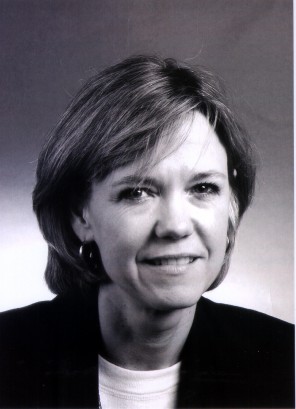
Dana Priest covers the intelligence world and national security issues for The Washington Post.
In 2005, she was a finalist for the Pulitzer Prize in two categories: in Beat Reporting, for her work covering U.S. intelligence agencies, and in National Reporting, as part of a Post team that abuses at Iraq's Abu Ghraib prison. In 2004, her book, The Mission: Waging War and Keeping Peace With America's Military, was a Pulitzer Prize finalist in General Nonfiction.
Priest has worked at The Post for 19 years. She has written extensively about intelligence lapses before the attacks of Sept. 11, 2001; about the failure of prewar intelligence in Iraq; Washington's covert war against suspected terrorists; and the CIA's secret detention practices. Before moving to the intelligence beat, she was The Post's Pentagon correspondent and then wrote about the military as an investigative reporter. She has traveled widely with Army Special Forces in Asia, Africa and South America and has reported from Iraq, Afghanistan, Bosnia and Kosovo.
Priest holds a bachelor's degree in political science from the University of California at Santa Cruz. She lives in Washington, DC, with her husband and two children.