Finalist: Vinson Cunningham of The New Yorker
Nominated Work
On ESPN’s “College GameDay” and on his own program, “The Pat McAfee Show,” the talk-show host offers an idealized new vision of the American personality.
If, on a cool weekend morning in autumn, you happen to be watching “College GameDay,” on ESPN, don’t worry about figuring out which of the broadcasters behind the improbably long desk is Pat McAfee. He’s the one with the roast-pork tan, his hair cut high and tight, likely tieless among his more businesslike colleagues. The rest of the on-air crew—Lee Corso, Rece Davis, Kirk Herbstreit, Desmond Howard, and, newly, the former University of Alabama coach Nick Saban—tend to look and dress and talk like participants in an old-school Republican-primary debate. McAfee, though, favors windowpane checks on his jackets and a slip of chest poking out from behind his two or three open buttons. If the others are politicians, he’s the cool-coded megachurch pastor who sometimes acts as their spiritual adviser.
This Saturday-morning getup—little brother gets sharp—counts as downright dressy for McAfee, who, in the course of the past few years, has become one of ESPN’s most visible sports-talking stars. In 2019, two years after retiring from the N.F.L., where he had been a punter for the Indianapolis Colts for eight years, he started his own program, “The Pat McAfee Show.” On the current version of the show—which he began licensing to ESPN last fall, and now runs for two hours every weekday afternoon—he typically wears only a tank top and a thin gold chain. It’s all about context: wherever McAfee appears, he’s always trying—he’s never effortless, that’s not his thing—to be underdressed by a few noticeable degrees. That style rule is symbolic of his broader meaning on sports TV. He’s there to loosen things up.
College football, which you might translate as “sports for kids,” retains a paradoxical sheen of formal presentation when it’s televised. “College GameDay” is a dude-rock version of “Good Morning America” or “The View”: it’s a vehicle for respectable fun. It opens with an arena-worthy country song, wailed by Darius Rucker, Lainey Wilson, and the Cadillac Three. Each episode is shot in a different football-obsessed town; behind the big, horseshoe-shaped outdoor desk sit thousands of cheering fans, many holding signs about the game, about “GameDay” itself, and, sometimes, about Jesus Christ. One function of the show is to emphasize the localities—often Southern—in which undergraduate athletics reign supreme. Another is to further heroize the icons of the sport. “GameDay” is dotted with beautifully produced profiles of coaches and star athletes, serving them up for amiable scrutiny by the masses tuning in as their chili warms on the stove.
Maybe the greatest facility of the show, though, is to project an ideal vision of the American personality. College football’s emphasis on regions and their various celebratory customs makes a program like “College GameDay” a kind of aggregate—throw all these attitudes together, represented by all the guys behind the desk, and out pops a proxy upstanding dad. Until McAfee arrived on the scene, the resulting image was somebody with a flawless smile, a straight back, and, implicitly, a formidable handshake. He was older and white, but drew his energy from—and imposed his benignly strict ethics on—the young, largely Black athletes tossing themselves around from down to down. Maybe this guy comported himself a bit like Mitt Romney—or, for that matter, like Nick Saban.
McAfee—who has also been a commentator for W.W.E. since 2018—means something else. His rise has occurred alongside huge structural changes to college football: the “name, image, and likeness” rule, which allows athletes to be compensated for appearing in commercials and other media; the increasingly transactional “transfer portal,” which makes it possible for players to bounce between schools like pros on the move. Formerly unforgivably exploitative, college football is now more brash and individualistic than ever. Similarly, “The Pat McAfee Show” departs entirely from sports TV’s respectable consensus.
The “progrum,” as McAfee calls it, has a fly-by-night feel: McAfee hangs out in a big, goofily decorated room with a half-dozen friends, chattering in circles about the games. Aaron Rodgers, the vax-hesitant hallucinogen advocate who also happens to play quarterback for the New York Jets, is a frequent (and, it turns out, paid) guest. Not long ago, while stumbling through a complex point about the W.N.B.A. rookie star Caitlin Clark and the dramatic, often racialized discourse that surrounds her interactions with other players, McAfee referred to her as a “white bitch,” meaning it, strangely, as a compliment. He cleaned up after himself on Twitter:
I shouldn’t have used “white bitch” as a descriptor of Caitlin Clark. No matter the context . . . even if we’re talking about race being a reason for some of the stuff happening. I have way too much respect for her and women to put that into the universe.
On his own show, this all contributes to an atmosphere of slightly off-the-rails entertainment. On “College GameDay,” it’s the basis for a culture war fought on generational grounds. The first “GameDay” episode of the new season, which was broadcast from Dublin, Ireland, where Georgia Tech faced off against Florida State, found McAfee exploring the meaning of the Irish saying “What’s the craic?,” or, in his Americanized translation, “What’s the story?” “The story last night for me was thirty Guinnesses,” he said. The day before, on “The Pat McAfee Show,” he’d been pounding them back. Last season, many fans, online and elsewhere, expressed their distaste for McAfee’s antics. A poll by the Athletic found that nearly forty-nine per cent of the site’s respondents felt negatively about him, which McAfee addressed, again on Twitter:
To the 49%, I have some great news . . . I have heard you all very loud and clear since the beginning of my stint with GameDay. It’s one of the biggest reasons why I have not resigned a contract with the legendary show. I’m not right for some crowds and the “distinguished” College Football folks are definitely one of those.
***
But you can’t so easily keep a fellow like McAfee down. Perhaps to the chagrin of the old guard of viewers, he’s back in his seat on “GameDay,” creating uneasy contrasts with his every move. In one video, shot during a commercial break, he’s wearing an electric-blue jacket and a bolo tie, dancing along to the song “Snap Yo Fingers” by Lil Jon. Next to him sits Saban, who seems to be looking off regretfully into space. McAfee and Saban, in fact, have great onscreen chemistry, and later, on McAfee’s show, joked about the way the video made them look—the conservative icon bugged almost to death by the uncouth up-and-comer. “I’m thinking about, When are you going to ask me to dance?” Saban joked.
If the video’s humor was more symbolic than actual, that doesn’t mean that it wasn’t somewhat true. McAfee appearing on “GameDay” heralds the emergence of a new kind of guy. He’s always been around—you probably know him from college, or from a job you only sort of liked, or from the brand of politics that has kicked stiffs like Romney out on their asses, maybe for good—but, until recently, he hadn’t been front and center on the national stage, representative of a growing disposition. He talks his way into success, and sometimes out of it. If he’s a bit rough around the edges, you’ll have to deal. Couth and manners feel passé when he speaks; his currency is volume. His parents might have gone to church, but, with him, religion never comes up. He wants to laugh and kick back and feel free. You know he’s telling the truth by how little he seems to stop and think. Even if you’d prefer not to, he’s good at getting you to laugh.
A couple of weeks ago, while delivering a highly climactic prediction that Texas A. & M. would win its matchup against Notre Dame—Notre Dame ended up winning—McAfee ripped off his shirt to reveal his reddish barrel of a torso. He called out a “big-ass American flag” in the crowd, hyping himself and everybody else up. There at the desk, soaking in the cheers, making the guys in the suits seem ancient, he looked like a weathervane for the American mood.
In his work with the Daily Wire and in a new movie, the conservative podcaster and activist tries to expose the hypocrisies of the left.
I can’t tell you how disappointed I was when I learned, a few days ago, that the Kips Bay AMC didn’t have any real human beings working at its ticket counter, and that I’d have to buy my ticket for “Am I Racist?”—the new film produced by Ben Shapiro’s reactionary media outfit, the Daily Wire—from a big, bright, silent screen. I’d been fantasizing all day about strolling up to a box-office attendant and asking, as if prompted by a sudden seizure of conscience, “ ‘Am I Racist?,’ please?” It’s a big question, one for which most Americans, in their innermost hearts, would love to have a periodic answer. I thought it might be nice to get it off my chest, out loud.
The movie, directed by Justin Folk, is supposed to be a comic documentary about the opportunistic follies of the Diversity, Equity, and Inclusion industry—something a red-pilled Sacha Baron Cohen might make. The podcaster and commentator Matt Walsh interviews professional anti-racists and, eventually donning a (bad) disguise, infiltrates D.E.I. seminars and tries to push them toward absurdity. In one of the film’s opening scenes, Walsh sits in a sunny diner. He’s got a boxy, bearded face, a sharp nose, and wears glasses. You might think, on first look, that his eyebrows are set naturally high, in constantly questioning arches, but really he’s just always squeezing them upward: he thinks this is how a human face makes a joke.
He muses about how, when he was growing up in the nineties, he was never—as opposed to now—made to think about race. He means this in a nostalgic way; this was good. Never mind that in the nineties, that halcyon decade, there were bloody race riots in South Central L.A. and in Crown Heights, Brooklyn, or that the single most significant mass-cultural event of the period was a highly polarized criminal trial over whether a famous Black running back had slaughtered his blond, white wife, bringing centuries of racist imagery distressingly to life. Walsh didn’t notice, so all was peace. Anyway, he’s being helped by a Black waitress, and he gets squeamish about ordering his coffee how he likes it, without milk. You know, black? Saying black to a Black lady? How that might make some progressive weenies feel nervous? You get it? That’s one of the zingers in this movie.
This is the first theatrical release by the Daily Wire. (An earlier movie, “What Is a Woman,” from 2022—which, well, I think you already get that one, too—also features Walsh, and was released directly to Daily Wire subscribers.) For the most part, Walsh is a small-screen presence. On his podcast, video clips of which he posts on Facebook, he’s an often sincere, frankly moralizing presence. “Adults don’t have time to be sick,” he advised recently. Taking sick days from work, he added, “should be embarrassing.” He also wants to tell you, here in 2024, what have been the negative effects of changing the name of the football team in Washington, D.C., from the Redskins to the Commanders, after dropping the former name in 2020. When the Miami Dolphins wide receiver Tyreek Hill was recently jostled by Miami-Dade policemen, reliably, Walsh was there to break down the footage and show you how the whole thing was Hill’s fault. In the videos, he addresses the camera directly, lowering one eye or another toward the lens whenever he’s got an especially grave point to get across. He usually wears a dad-plaid shirt: if you put him on mute, you might think he was one of the Prius-driving lefties, living in Portland or Seattle, one of those whose hackles his whole career is organized around raising.
Walsh is also the host of a Daily Wire show called “Judged by Matt Walsh”: a conventional court-style show, “Judge Judy” with a less congenial, less telegenic host. The first episode starts out with a spoof about how Walsh descends from a long line of eminent justices, all obsessed with doling out the death penalty. He wishes that he could send people to death row on this show, he jokes, but oh, well. That he’d make an anodyne product like this and put it behind Shapiro’s paywall is evidence of an apparently sincerely held belief: Walsh thinks that conservatives have forfeited the culture war by not trying their hand at mainstream entertainment. “The safest way to avoid criticism is to be boring, which is why so little conservative art has made a lasting cultural impact,” he wrote in a recent Facebook post. “Art shapes culture, and if we’re not creating our own, we’re not really fighting a culture war.”
***
Walsh’s culture-war art, as epitomized by “Am I Racist?,” is about exposing left-leaning idiocies. He sits down with a D.E.I. professional for an interview. She’s a white redhead wearing a statement muumuu accented with lime-green shapes; exactly the kind of hippy-dippy-looking progressive Walsh hopes to skewer. Walsh gets her to speculate on whether it’s good that a white child might like Moana more than white Disney princesses, then tries to trip her up over whether that kid should dress up as Moana for Halloween and run the risk of appropriating the cartoon’s culture. He goes to a seminar on “White Grief,” whose moderator, we’re told, charges thirty thousand dollars per session. She tells the white attendees that she’s making herself vulnerable to racial danger by being the only Black person in this kind of “space”; Walsh ceaselessly interrupts the meeting as its participants try to proceed. After that meeting’s participants get wise and figure out who he is—he’s asked to leave—he starts to don a disguise, a conservative wolf in woke clothing. The whole getup is not much more than a wig.
Maybe the biggest coup of “Am I Racist?” is the interview that Walsh scores with Robin DiAngelo, the author of the now-infamous best-selling anti-racist manual “White Fragility.” DiAngelo—who accepted a fifteen-thousand-dollar fee to do the interview, thinking it was sympathetic to her viewpoint—tells Walsh, now sporting a man bun, about her consulting work with corporations like Netflix and Amazon. Then, after doing some silly role-play—about how, for instance, to deal with a Black co-worker who thinks you have “over-smiled” at her—she is goaded by Walsh into giving his Black friend some cash as a form of instant, individual reparations. You can tell that she’s uncomfortable, but she goes through with it.
There is a quite narrow truth at the heart of the film: yes, many grifters have flourished under the guise of “diversity work,” descending like vultures upon guilty—or H.R.-constrained—white people hungry to be lashed for (and then duly absolved of) their supposed racial sins. To hear some of these so-called D.E.I. consultants speak is to want to rip your ears off. They speak a fuzzy, specialist language, meant to be minimally refutable and maximally emotionally manipulative. If this is anti-racism—in fact, it isn’t—you might find yourself quietly resolving to give racism another chance. But the message is oddly timed: D.E.I. jobs, which peaked after George Floyd’s death, in 2020, are already on a steep decline. Affirmative action—the great forerunner and governing context of conservative panic over the word “diversity”—was nixed in college admissions by the Supreme Court last year, opening the door for companies to follow suit. Whichever war Walsh thinks he’s fighting is old news.
Toward the end of the movie, Walsh takes his act to two working-class communities. One is a largely white biker bar. “Don’t Tread on Me,” a patch on somebody’s jacket says. There’s a small Confederate flag on one of the walls. Walsh is still playing a character, one who has been increasingly radicalized by the logic of D.E.I.—he’s gone online and got some chintzy certification. When he asks these tough, pool-playing bikers if they’ve started to “decenter” their “whiteness,” they’re bewildered. Why would you do that? They get along with Blacks just fine. They try not to see color.
Then Walsh goes to see some Black people, whose vibe vis-à-vis race is sort of similar to that of the bikers. “We’re all one in God’s sight,” one woman says. When Walsh asks another guy whether he’s heard of Robin DiAngelo, the guy laughs. “I don’t read them kind of books,” he says. Instead, he’s got a Bible in his car. He doesn’t think too much about race.
These scenes are the most revealing of the film, but Walsh doesn’t know why. He thinks that he’s merely pointing out how divorced the language of Big Anti-Racism is from the lives of everyday folks. He misses, though, a grand irony: even when he’s in character, supposedly parodying D.E.I., he is stunningly fluent in its rhythms. None of the working-class people profess to know what he means when he says “structural”—the answers he offers would go over just fine in the same precincts of Twitter that Walsh wants to troll. This gives away the game, and it shows Walsh to be just as much of a grifter as the admittedly quite shameless DiAngelo and her well-paid, lesser-known ilk. Just like them, he is playing to a small audience of largely white professionals, often deranged by paying too much attention to the worst and stupidest parts of the Internet. If the high-priced-workshop crowd has the left flank covered, Walsh is shoring up the right. But these two types often work at the same corporation or selective university and follow the same Twitter accounts. They clash over politics, then send their kids to the same schools.
If Walsh really wanted to investigate the attitudes of the Black working class—and figure out whether he, of all people, might find some harmonious feeling with it—he might start by asking his new churchgoing Black friends what they think about his recent column at the Daily Wire, in which he throws piles of dirt on the character of Marcellus Williams, the Black man recently (and, according to the Innocence Project, wrongly) executed by the state of Missouri.
A gag that comes up a couple of times during “Am I Racist?” is Walsh’s encounter with the 2002 book “Nigger,” by the brilliant legal scholar Randall Kennedy. The joke is that it’s hard for a white person to buy the book because of how it’s hard to say the title. Get it? But Walsh never cracks the book. If he were to give Kennedy’s work a try, he might find a probing, refreshing antidote to the thinking set forward by DiAngelo’s simplistic, overly binary, and often quite patronizing work—and a total refutation of the blithe, resentful attitude of quick-twitch cultural reaction that produces a world view like his own. It would account for the treatment of a man like Williams, and for how real anti-racism might end the sickening practice of capital punishment. And, anyway, if Walsh wants to say the title of that book, joking or not, he should just go for it. As my mom used to say: Try it. You might like it.
The Netflix docuseries “Mr. McMahon” explores the sordid history of the W.W.E. and the man who made it what it is.
Something’s bugging me about the way political happenings unfold these days. How do we—all of us who, during the past decade or so, have been baptized in the waters of public unreality—come to process passages of history which feel like heedless locomotion through plot points that make no sense? Take the last several months: An aging President loses control of his cognition on television, prompting questions about a coverup, and a national referendum on whether he should continue his pursuit of a second term. He surrenders the nomination, and a fresh surrogate steps in with choreographed speed. A different candidate, a former President (almost as old as the deposed one), chooses a running mate with the rhetoric of a cartoon Nazi: something about unwanted visitors abducting and ingesting pets. Somewhere in there, somebody tries to kill the former President and almost succeeds. And then somebody tries again.
We should be alarmed—beyond alarmed. But most of my friends grimace and then, after a rueful joke, move on to other topics. I wondered, watching “Mr. McMahon”—the new Netflix documentary miniseries about Vince McMahon, the crude, bombastic, devilishly clever impresario of World Wrestling Entertainment—whether the surreal story logic of professional wrestling had engulfed, for good, our feeling for plot, and, on a deep level, our understanding of how real life on the national stage should feel.
The series advertises itself as a close look at a big figure—McMahon, in all his muscular strangeness. And, indeed, in a potted way, we learn some biographical facts. McMahon’s father, Vince, Sr., was also a honcho in the world of pro wrestling, before this particularly American form of lowbrow “sports entertainment” went national. His World Wrestling Federation promotion was confined to the Northeast, part of a loose patchwork of territories kept within boundaries by a noninterventionist code of honor. If you lived in Louisiana and wanted to see a metal chair smashed over the head of a dizzy athlete, you’d do it at a local event, organized by a company headquartered close to home. In his early years, the younger McMahon didn’t know his father. He lived with his mother and stepfather, in poverty, and suffered abuse at their hands, both physical and sexual, apparently; he mentions being beaten up and alludes to incest. His way of coping was to just be grateful when the violence was over. He’d survived.
When he finally met his withholding father, he jumped eagerly into the business of wrestling, eventually buying his father out, then hastening to encroach on the other territories, stealing their wrestlers and staging events in their towns. “If you can’t compete with me—it’s America!” McMahon says, reminiscing grandly. “Tough!” The rude new businessman—acting a lot like the characters who strutted around the ring, garnering the rabid love of the crowd—upset a genteel arrangement and won big.
Beyond these moments, though, “Mr. McMahon” zooms out and presents a miniature history of professional wrestling—one that doubles as a harrowing history of storytelling in America. In the eighties, coming off the heels of the Iran hostage crisis, wrestling audiences thrilled to the clash between Hulk Hogan—an extreme American hero with the sheen and obvious power of a motorcycle engine, played, for almost a lifetime, by Terry Bollea—and a wrestler called the Iron Sheik. The Iron Sheik, whose real name was Hossein Khosrow Ali Vaziri, was an Iranian American who portrayed his character with colorful xenophobic glee, sometimes speaking in a made-up gibberish meant to sound vaguely Middle Eastern. McMahon and his employees had a salt-of-the-earth understanding of their fans—these people just wanted to “let out their aggression while also watching a morality play,” the wrestler Bret Hart says. “Our business is no different than a play, a movie, books,” McMahon says.
But McMahon also used a sophisticated, if frequently racist, strategy of mirroring current events, doubling them in a form demotic enough to capture the attention of the beer-drinking crowd. It was good for business—“business” being McMahon’s favorite word, which he talks about the way some people talk about God—until it wasn’t. When the audiences got too bloodthirsty, McMahon dialled back the enmity between Hulk and the Iron Sheik. Missteps notwithstanding, McMahon turned wrestling into a true American pastime. Aretha Franklin once sang at “WrestleMania,” the W.W.E.’s answer to the Super Bowl. Andy Warhol shows up onscreen. “Oh, I’m speechless,” he says. “It’s just so exciting, I don’t know what to say.”
***
I thought about Donald Trump far more than I would have liked while watching “Mr. McMahon.” The association is obvious: Trump, like McMahon, is obsessed with generating attention-grabbing “heat,” has a habit of dismissively denying lawsuits—especially the sort that allege sexual assault—and continues to erect money and its pursuit as a kind of gilded god. As the series reminds us, Trump has also appeared on W.W.E. broadcasts, playing an even more brightly caricatured version of himself, a rich-asshole foil to the ultimate rich asshole, Mr. McMahon—Vince McMahon’s long-running character, perhaps the most well-developed “heel” (wrestling-speak for “villain”) in history.
I kept thinking back to July 13th, when Trump was shot at a Pennsylvania rally. By now, the episode is a montage: Trump crumples to the floor and is dragged away by Secret Service officers, who have arrived too late to stop the shooting but soon enough to cover the former President’s body. Blood leaks all over Trump’s head. For all anyone knows, there’s a shooter on the loose, but Trump exposes his face to the crowd, pumps a fist, imploring his followers to fight. Fight whom? At the moment, it didn’t matter. The “good guy” had been attacked.
If that surreal passage had taken place in a wrestling ring, we would have dismissed it as a “work”—the insider term for a fake job. In saner times, we’d still be talking about the attempted assassination; it would be the sole interpretive angle on the election under way, for good or ill. But these are not sane times. The rapid procession of domestic political absurdities—over which Trump continues to officiate like a McMahon-style circus master—and mind-shredding global catastrophes has made us punch-drunk, concussed like a wrestler whose head has bounced on the mat after taking flight off the top rope. Everything looks like a “work” when you’re this dizzy.
Another part of McMahon’s strategy is manic activity—fast movement from one crisis to another. Earlier this year, he resigned from the company he so gaudily built. A former staffer alleged that he’d sexually trafficked and assaulted her, forcing her into sexual scenarios with himself and some of his employees; he has denied this. Others, all along, have made similar claims, which he has also denied. McMahon’s a nasty guy and barely tries to hide it. He deceives his way through corporate battle. “You just have to throw things out there,” he says, evidently satisfied with his slimy tactics. (He stopped coöperating with the filmmakers after the sex-trafficking allegations against him were made public.)
The most popular period of W.W.E.’s history came in the late nineties and early two-thousands, during what’s called the Attitude Era. The matches were no longer between good guys and bad guys but between bad guys and worse guys. The first big hero of the moment was the beer-swilling, leather-wearing, foulmouthed Stone Cold Steve Austin, who appropriated a famous Bible verse for his own purposes. Here’s John 3:16: “For God so loved the world that he gave his only begotten Son, that whosoever believeth in him should not perish, but have everlasting life.” Here’s Austin 3:16, intoned by middle schoolers of my generation with devotional glee: “I just whipped your ass.” Maybe we’re living in America’s Attitude Era. Somebody, please, God, change the channel.
In her commercials, Kamala Harris walks a line between illuminating the issues and acknowledging the world-historic craziness of her opponent; Donald Trump targets his base.
On a mid-October Sunday not long ago—sun high, wind cool—I was in Harrisburg, Pennsylvania, for a book festival, and I took a stroll. There were few people on the streets—like the population of a lot of capital cities, Harrisburg’s swells on weekdays with lawyers and lobbyists and legislative staffers, and dwindles on the weekends. But, on the façades of small businesses and in the doorways of private homes, I could see evidence of political activity. Across from the sparkling Susquehanna River, there was a row of Democratic lawn signs: Malcolm Kenyatta for auditor general, Bob Casey for U.S. Senate, and, most important, in white letters atop a periwinkle not unlike that of the sky, Kamala Harris for President. Loose pamphlets were scattered over the ground. Behind a screen door on a side street, I saw a Sharpied message scribbled with evident irritation: "NO Political Flier.”
I was looking for a sports bar, both to watch the Eagles play the Browns—when in Rome—and to look out for any ads that might be running with the swing-state crowd in mind. The current political season, dense with incident and overcast with grim premonitions, feels more difficult than usual to take in at just a glance. Too much is happening. No ad-maker in the world could be expected to keep up with the waterfall of events: assassination attempts, abrupt abrogations, morbid rallies with ominous lighting foreshadowing a future in which the nation is one big L.E.D.-lit Death Star. And the rapid fracturing of what we’re still straining to call mass media makes it so that you can’t really be sure whether what you’re seeing on TV is the story your fellow-citizens are also following.
Sometimes, when I take a YouTube tour through the small rotation of rambling, male-centric podcasts hosted by bombastic former rappers that keep me up to date on the doings in contemporary hip-hop, I’ll get a Harris ad that seems targeted to people like me: Black men who want her to win and who feel disillusioned by the news. Harris, in the ad, looks wan and stern, even slightly annoyed—possibly it was the last bit of work in a long day. “Don’t forget that little thing for the Black manosphere,” some staffer might have said, prompting a weary sigh from the Vice-President. “Polls show us this is the closest Presidential campaign in sixty years,” she tells viewers. “We might be the underdogs in this race, but I believe in you, I believe in our team, and let’s get to work.” The title of the video is gently catastrophist: “We Are Falling Behind.” I doubt that the suburban moms of Philadelphia, Atlanta, Milwaukee, Raleigh, and Tucson—those mega-voters whose votes matter so much more than mine, in New York City—get bureaucratic business, both panicked and encouraging, like this. Maybe watching TV in a more consequential state, I thought, would help me understand a bit better.
I found the right bar—the crowd didn’t conform to any type that I could discern. The bartenders had tattoos down to their wrists and up to their necks; one woman wore glasses and a black-and-white kaffiyeh, telegraphing her support for Palestinians in Gaza under siege; a guy had a gray hoodie on beneath an Eagles jersey. When the Browns blocked an Eagles field goal, got the ball, and ran it back for a touchdown, the hoodie guy had an angry fit. “That is the most Philadelphia shit I’ve ever seen,” he shouted as he settled his tab.
If an ad for either candidate ran, nobody noticed it.
***
In New York, we get bombarded with barbs by local pols. Mike Lawler, the Republican congressman who represents Rockland and Putnam counties, wants you to know that Mondaire Jones, his Democratic challenger, has been endorsed by Alexandria Ocasio-Cortez. One of his ads portrays Jones as a radical, his color washed out, with the words “Defunding Police” beneath his face. Gotcha. Lawler never mentions Donald Trump, and his choice of issue, public safety, makes the ad almost quaint, like it could have been plucked from the pre-Trump era—say, 2012, when the paint-by-numbers Republican Mitt Romney was at the top of the ticket.
There’s an increasingly loony, dark, semi-fascist faction within the Republican House, to be sure—you might even call it the ruling faction. Famous names like Marjorie Taylor Greene, Lauren Boebert, and Matt Gaetz get so much press and screen time that they appear to have successfully taken over their party. But guys like Lawler, stranded in blue states, seem to be sticking their fingers into their ears and hoping for the chaos to pass over like a long storm. (Without a rare and sustained display of conscience from them, it won’t.)
Sometimes I detect a hint of a similar sort of poll-tested nostalgia in Harris’s commercials, or, more precisely, a struggle between acknowledging Trump’s world-historic strangeness and sticking to the issues that feel native to a Presidential campaign. One ad starts out showing kids on their bikes and elders at a kitchen table—then there’s a menacing angle on some imposing buildings down on Wall Street. It’s a swift, reproachful reading of Project 2025, the much ballyhooed blueprint for a second Trump term. The warnings, in bold letters, pour forward with total clarity. Trump means “higher costs on groceries” and “cuts to Social Security and Medicare” and “tax breaks for billionaires” and a “national abortion ban.” That stuff is scary and, by my lights, probably true, but it also represents a fairly standard line of attack by a Democrat against any Republican candidate of the past quarter century. And, yes: part of Trump’s danger is how, even amid his exotic behaviors and promises of novelty, he can quite easily conform to the broken, often fatal status quo that preceded his Presidency. But then the commercial ends with a litany of exceptional adjectives describing Trump in all his uniqueness, only notionally connected to the issues, in a foreboding stack: “Unhinged / Unstable / Unchecked.”
Which: true. But the ad, just like the candidate behind it, is trying to do so much work—to speak to frazzled parents and to worried seniors and, crucially, to women eager to preserve sovereignty over their bodies and lives. But you’ve also got to talk about the crazy, right? The crazy’s too important to bracket off in its own commercial, I guess. The impression the ad leaves, though, is of a campaign overstretched by the miasmic spread of its opponent’s toxicity.
The bureaucratic and technical competency of Harris’s campaign is one of the stronger cases for her candidacy. Her team excels at raising money, making more or less slick ads like the “Unhinged” one, setting up energetic-looking rallies with optimally diverse cross-sections from the crowd placed just behind the podium. At the biggest moment of her public career, Harris is evidently able to run a smooth operation, largely devoid of internal drama. But in her rhetoric, both personal and commercial, she reminds me of a decent free safety on an otherwise bad defensive unit, zagging back and forth, overcome by potential disasters to tamp down. She’s not alone in this: no Democrat since 2015—no primary-tortured Republican, either—has landed on a single, all-encompassing anti-Trump message to hit and hammer home.
Trump, on the other hand, seems to be communicating in a language that only his biggest fans can decipher completely. Implicitly, his crowd cries out like the speaker of Robert Frost’s poem “Choose Something Like a Star”: “Talk Fahrenheit, talk Centigrade. / Use language we can comprehend.” Trump never fails to answer in the affirmative, even if it means that nobody else can pick up the signal. If Harris is still opening her arms, in search of new constituencies to persuade, Trump is drilling his way down a narrow path, apparently content to stick with his true pals and keep playing the hits.
If he ends up casting a wide net—chipping away at some groups of Black and Latino men—it’s because more kinds of Americans are willfully imagining themselves into comradeship with him, not the other way around. Trump does Trump and dares you to join in. Surely this confidence in the loyalty of his audience is why, just the other day, in Latrobe, Pennsylvania, he felt comfortable enough to go on for more than ten minutes about its home-town golf god, Arnold Palmer, punctuating the hagiographic reminiscence—itself an advertisement for the days of the “good old boy”—with a wisecrack about the size of Palmer’s, well, club?
“This is a guy that was all man,” Trump said, playing to his primarily male voter base, near and far. “I refuse to say it”—no, he didn’t—“but, when he took showers with the other pros, they came out of there, they said, ‘Oh, my God, that’s unbelievable.’ ” Then he laughed at his own joke sincerely, the way you do when you’re surrounded by friends.
The same insider logic is at work in Trump’s campaign ads. During the World Series, a bizarre commercial ran. It starts off with DJ Envy and Charlamagne tha God—the co-hosts of the radio show “The Breakfast Club” and notable Harris supporters—quizzically reading about her policy to support “taxpayer-funded sex changes for prisoners.”
“Hell no, I don’t want my taxpayer dollars going to that!” Charlamagne shouts.
Soon, a narrator out of a movie trailer begins in a rumbling voice meant to convey peril and light humor all at once: “Kamala is for they/them. President Trump is for you.” The ad ends with a total non sequitur: Trump hugging an elderly Black woman. The U.S. Capitol sits behind them. Guys who look like law-enforcement officers stand nearby. The woman’s eyes are squeezed shut, and her hand grasps at Trump’s elbow. Her face is placid and grateful, set in ecstasy or prayer. Presumably, she’s happy, too happy for feeble words, that Donald Trump shares her unprompted dislike for trans people, but the ad doesn’t make that clear. She’s a hugger and her President is, too—that’s all. (“The Breakfast Club” ’s producers have issued a cease-and-desist order to Trump’s campaign.) And so there you are, taking in the ballgame with your kids, hoping to transmit to them the beauties of America’s pastime but also impatiently waiting to hear some vile slurry, apropos of nothing, about transitioning behind bars. The ad refuses—just as Trump himself refuses—to leave its watchers lukewarm.
***
One source of Trump’s instinctive, inimitable political talent is that, for him, oratory and advertisement are entirely coeval domains. If he’s talking, he’s selling. He never commits to one activity and forgets about the other. His recent three-hour conversation with the podcaster and notional comedian Joe Rogan was a master class in this regard—it was more infomercial than interview. Even at this late date in the campaign, Trump was still busily branding. “The word ‘tariff,’ ” he said, beaming proudly, as if he’d coined it. “It’s more beautiful than ‘love.’ ” Blockheaded protectionism never sounded so sweet.
During his already infamous rally at Madison Square Garden, Trump, at times, surrendered himself to the quick-cut propulsion of televised ads. The rally was an extravaganza during which Hulk Hogan ripped his shirt off, Dr. Phil sold snake oil, and Tucker Carlson giggled all the way through a block of quasi-Nazi text—just a bunch of dudes displaying skills that they’ve honed down the years.
But I was most riveted and confused at the moments when Trump, after making some mendacious claim, would veer away from his speech and let a nativist video about immigration play. It seemed like a tacit acknowledgment of what so many of us feel: that this campaign is a watershed in our nation’s already magical-realist political history, that speech—elliptical and wild like Trump’s, or nervously surveilled like Harris’s—is often unequal to the emergencies of the moment, that some things must be seen, high up on the screen, to be believed.
As the 2024 Games come to a close, taking stock of watching Noah Lyles, Nic Fink, Sha’Carri Richardson, and more through NBC’s lens.
Ic an’t be the only one who is delighted and amused but also, on a deep level, totally baffled—like a museumgoer at an early exhibition of Surrealist art—by the constant televisual presence of Snoop Dogg at the Olympics. It seems like every time you turn on NBC or one of its affiliates, there he is, dressed up, for instance, in full equestrian gear with his hair pulled back, playing twinsies with his TV work wife—seriously, why are they always together?—Martha Stewart. Their helmets matched and their high boots gleamed. Snoop sounded out the term for the maneuver called “passage,” riding that final vowel sound like a fleet horse, and—probably for the first time in history—the word sounded not only snooty but sleek, plus truly hilarious. “That’s a hell of a crip walk,” he said after a particularly nice horsy move. Then, later, Snoop was sitting courtside next to the basketball genius A’ja Wilson, cheering on the puerile high jinks of Joel Embiid, the huge, hyper-skilled U.S.A. center who, at the moment, seemed to be making a series of chopping gestures in the direction of his crotch. (Embiid, born in Cameroon, is in an ongoing battle with the crowds in France—he was granted French citizenship in 2022, but declined to represent the country in the Olympics—and Snoop Dogg knows from stylish feuds.) When Simone Biles and her teammates won the gymnastics team gold, Snoop, far away from the diminutive prodigies but prominently placed among the crowd, smoothly danced in celebration, all shoulders and swaying torso. Biles saw him and smiled—a Snoop dance is its own kind of medal—and danced right back in his direction.
If you happened to be watching highlights of the doubles badminton match between the Chinese and American teams, you might have heard Snoop’s kinetic, super-quick commentary on a particularly energetic series of volleys. He used the diction of a rapper and displayed the processing power of a supercomputer:
Oh, I love this badminton right here, this is a great rally right here between China and the U.S. right here. As you see it don’t stop till the casket drop—they rockin’ and rollin’, back and forth, gimme that, no I need that, nope: over here, nope: over there, what about over there?, nope!, what about there?, nope!, gimme that, I need that, that, too, nope: sit down somewhere, get down, wait a minute hold it—way up in the sky!—now down, back up, over there, now over here, get out the way!, move!, I told you: we need that!
Breathless, half-sensical, repetitive in service of rhythm, emphases everywhere, interested in everything—he sounded, to my ear, just a little bit like Gertrude Stein, from her “Stanzas in Meditation”:
He said paths she had said paths
All like to do their best with half of the time
A sweeter sweetener came and came in time
Tell him what happened then only to go
Snoop’s astounded broadcast partner, the ur-straight-man Mike Tirico, could only laugh. “That was a good point,” he said about the rally, encapsulating straightforwardly a fact that Snoop had already propounded in pure sound. This is uncontroversial: Snoop is amazing. He’s oozing with personal style, physical and verbal. He is preternaturally comfortable in his own skin, and deserves some sort of acting award, maybe a Lifetime Achievement Emmy, for a crazily durational performance—never a doubt-inducing flicker—as himself. When I think of “Good TV,” an image of Snoop floats to mind first. Wherever he is, he somehow belongs. He is, I’m sorry, fucking cool.
Still, every time I see Snoop being Snoop in Paris, I wonder what exactly the execs at NBC are trying to tell me—to tell Americans—by making him the Pied Piper of the Olympics as they appear on Stateside screens. The last round of Summer Olympics, which took place under the depressing cloud of covid, suffered in the ratings. (Not that I would have known this then: I shoved them down my gullet greedily like I have every Olympics, Summer or Winter, since I was a kid admiring the elegance of Nancy Kerrigan in ’92.) In 2020, the ethos and aesthetics of Olympic competition—an always curious synthesis of rivalry and coöperation, nationalism and borderless affection—felt strained in a world whose collaborations against disease had fallen flat. The idea now is, Let’s add a layer of pure personality and let the good times roll! Sports are themselves entertainments, but maybe we need an entertainer to remind us what’s so fun about competition in the first place. According to a Twitter-fuelled rumor started by the venture capitalist Henry McNamara (who apparently got the dish from an “NBC exec” over dinner), NBC is paying Snoop five hundred thousand dollars per day to be a “special correspondent.” And why not?
***
I like that the Olympics happen on election years: both enterprises make us ponder anew what it means to belong to a place—what it’s really like to be a citizen and have your personality conditioned, at least in part, by where you’re from. Maybe Snoop’s job is really to be an idealized American. Once vaguely disreputable—early in his career, he was acquitted after a lengthy, very public murder trial; I remember trying to buy his first and still best album, “Doggystyle,” when I was a kid and being roundly denied by my mom—he now crackles with the music of clean fun: a West Coast Gatsby without the sad business at the end of the story. He’s confident, charming, funny, and knows how generous it can be to be seen having a great time.
Even beyond the presence of Snoop, NBC’s coverage of the Olympics—radically U.S.-centric unless you happen to pay for the inexhaustible open fire hose of NBC’s streaming service, Peacock—has been a survey of American archetypes. There’s the braggadocious divo sprinter Noah Lyles, who seems to have decided that the way to keep track and field relevant is to display an ego large enough to blanket the whole country, sea to sea. He talks shit constantly, almost every time he’s anywhere near a mike. His nerdy, whining voice, bright eyes, and big, protrusive teeth seem to have been designed for the sole purpose of getting across the message that he’s the best. NBC’s soft-focus coverage reminds us that he was a sick kid, suffering terribly from asthma and other ailments, but the cameras tell the real story: they’re always catching him gabbing away. When he won the hundred-metre dash by a handful of thousandths of a second—an endlessly rewatchable race and result—he pulled off his nametag and waved the name “Lyles” in the air for all to see. On Thursday, he ran the two hundred and came in third, good for bronze, and then collapsed so troublingly that he needed medical attention. When he’d recovered, Lyles revealed that he’d been diagnosed with COVID two days before. “I’ve never been more proud of myself for being able to come out here,” he said. That’s the America I know: heedlessly insistent on carrying on, germs be damned.
Then there’s the multitasking swimmer Nic Fink, a fitting figure for our overworked, underpaid age. Before his first race, we learned that he also has a nine-to-five job as a project manager at an electrical-engineering firm. Rivetingly, he sits at a computer and talks to his colleagues on a video-conference app that looks suspiciously like Zoom, fits in meals, and always makes it to his training sessions. Turns out you don’t have to take a sabbatical to train for the Olympics. It also turns out that being an Olympian doesn’t necessarily protect you from the drudgeries of remote work. We’re supposed to admire Fink for his hyperproductivity, his quotidian collage of normalcy and heroism, but the story bums me out. Employers everywhere are probably asking, So why do my people need so much time off? Still, I was rooting for Fink and celebrated with him when he got silver in the hundred-metre breaststroke—his first medal, a long time coming for a thirty-one-year-old guy. He purports to like his job, but I sort of hope this moment of glory makes him shut the laptop, at least for a while. Can’t the Wheaties people cut this guy a check?
Sha’Carri Richardson, the doe-eyed sprinter with long, curlicued hair—like a carnival streamer once she’s picked up speed and caught wind—is a comeback kid, after a deeply disappointing last go-round. This time, she was upset by the St. Lucian Julien Alfred, a marvel of muscle and focus, in the women’s hundred metres, but seeing her medal at all felt like the kind of redemptive catharsis that we come to the Games to see. Simone Biles’s return to the gymnastics mats—even more successful; she nabbed three gold medals—is a similar All-American culmination, as refreshing as stone fruit in summer. She survived the dreaded “twisties”—a chronic feeling of lostness in the air—and weathered rafts of online criticism for “quitting” her last Olympics. Now she’s flipping freely again, making emancipated airborne patterns, winning profligately, and, between victories, making sportsmanlike overtures toward other athletes, especially the Brazilian dynamo Rebeca Andrade, who won gold for her artistic-gymnastics floor routine, alongside Biles’s silver and Jordan Chiles’s bronze.
The dominance of the men’s and women’s U.S. basketball teams is, by now, unsurprising. Especially on the men’s side, some of the other nations are slowly catching up—an echo of our increasingly multipolar geopolitics—but on the global stage hoops is still a front-running sport for a country that feels most comfortable when appreciably ahead. (They almost lost a semifinal game to a Serbian team led by the multivalent center Nikola Jokić, and you could see their suddenly jittery nerves on full display.) My favorite personality among the players belongs to Anthony Edwards, the charismatic young guard who recently celebrated his twenty-third birthday in Paris. He jumps as if thrown, dunks as if settling a vendetta, and, not unlike Snoop Dogg, always has a smile to flash. He talks trash, but he seems to have less to prove than Lyles—he just wants to chop it up and tell tall tales about himself, like a latter-day Davy Crockett. There’s a video of him charming the U.S. women’s table-tennis team. They informed him that any one of them would shut him out with the paddles. “I don’t believe it,” Edwards said. “I’m not having it. Eleven to zero? I’m scoring one point!” Later on, Edwards gamely went to sit in the crowd and watch his new friend Lily Zhang play. It was all in fun.
Maybe Edwards will one day be our new Snoop—all jokes and no worries. Bombast without the hint of a care in the world. Like Whitman, the kid celebrates himself and sings himself. Like Emerson, he does his own thing, answers to the call of his own genius, and seems to walk the world guided by whim. Oh, if only this were all it meant to be an American! For a few days longer, we can tune in and pretend.
The Netflix murder mystery recalls a time when TV wasn’t supposed to be art.
If you’ve watched more than a handful of movies over the past few years, you’ve undoubtedly seen a disconcerting ad for AMC Theatres, extolling not only that company but the beauty of the movies more broadly. It’s called “We Make Movies Better,” and Nicole Kidman is the only actor in it. First, she’s outside on a wet day, perhaps moments after the last drops of a downpour, stepping high-heeled into a puddle in which a bright-red neon AMC sign is reflected. Her coat has a hood, but, before she’s safely inside the theatre, she peels it off slowly, the better to smile up at the marquee. Then Kidman’s inside, coat gone, walking the cinema’s empty halls wearing a glittering, sequin-heavy pin-striped suit. She waxes poetic about the movies, about how “we need that, all of us—that indescribable feeling we get when the lights begin to dim, and we go somewhere we’ve never been before.” The light from the projectionist’s booth haloes out from behind her head in warm, sanctifying rays, electrifying strands of her hair.
Then she sits and crosses her legs neatly—every seat but hers is empty and pristinely clean, not a loose kernel of popcorn in sight—and delivers, in her breathy Aussie twang, a couplet of sentence fragments, defining cinema itself: “Dazzling images on a huge silver screen. Sound that I can feel,” she says. She’ll get no argument from me. Then a bid for the emotions: “Somehow, heartbreak feels good in a place like this.”
The first time I saw this ad, it was the summer of 2022, just as the worst of the COVID restrictions were easing, and Americans were being encouraged, en masse, to get back to their rightful roles as enthusiastic moviegoers. It played before an early afternoon showing of “Top Gun: Maverick.” The hit flick had been out for several months by then, and, like Kidman, I was mysteriously alone. The ad gave me an uncanny feeling of companionship with the veteran actress: I was there to see something starring Tom Cruise, Kidman’s previous husband of eleven years, and it still felt strange and—yeah, she had a point!—quite miraculous to be at the movies. Part of the ad’s purpose was to welcome us screen-lovers back home, that was obvious. But its larger effect, that day, was to make me realize, all over again, just how powerful celebrity can be. I knew this woman—her personal past, the whole history of her famous roles. She looked like she could pop right through the screen and sparkle her way over to the seat right next to mine.
This kind of familiarity—a way of talking through the screen, jostling past even the most interesting particulars set forward in a script—can make a performer a kind of alien, companionate presence onscreen. Yes, they’re saying their lines and making the right faces and getting the story, image by dazzling image, across to the crowd. But they are also, implicitly, at your shoulder as you watch, pointing out the fun of their performance, and of the whole medium conveying it. Kidman’s one of these types—maybe the foremost among them. And, although AMC paid her to talk about the movies, it’s possible that her powers, these days, are best exploited on TV.
***
Take Kidman’s performance in the new silly-sloshy Netflix murder mystery “The Perfect Couple.” She plays a very prolific, very wealthy novelist named Greer Garrison Winbury. She’s married to Tag (Liev Schreiber), a stylish, nonchalant trust-fund patriarch, who is constantly indulging in pot and booze instead of lowering himself to the indignity of holding a job. Their son Benji (Billy Howle) is about to get married to the relatively proletarian Amelia (Eve Hewson). The family’s big, yawning estate on Nantucket is attractively, if coldly, decorated for the occasion. But after a rehearsal dinner that stretches late into the night before the wedding, Amelia’s best friend and maid of honor, Merritt (Meghann Fahy), washes up dead on the beach just outside the Winbury home. The show, based on a book by Elin Hilderbrand and directed by Susanne Bier, isn’t subtle in its use of contemporary archetypes: we know that Merritt is an “influencer” type because she’s on Instagram a lot. You don’t need to look much more closely to realize that she’s been having an affair with Tag, and that she’s recently realized that she’s pregnant. (If you’re worried about “spoilers” for a show like this, please believe me: you’re missing the point.)
The story unfolds lopsidedly in terms of perspective. Often, we’re over Amelia’s shoulder, experiencing the murder mystery as an unfolding of class privilege under pressure. She’s not as in love with Benji as she probably ought to be: one of the last things she confides to Merritt is that she’s got something like cold feet. Perhaps this bit of distance helps her to see the way the Winburys close rank—and also, often, pull rank—when the authorities come looking for answers about the dead body on their property. “This’ll all be a distant memory in a couple weeks,” Tag says, not because he knows anything we don’t but because he can’t imagine being too seriously inconvenienced. Signs of the family’s social standing are everywhere—Groton and Deerfield come up in conversation. The writers want us to know that they’re hip to the Northeast boarding-school scene. “Nantucket red” is seldom missing from an outfit.
But “The Perfect Couple” is also trying to be a loose, panoramic comedy from multiple perspectives: in the early episodes, information—accompanied by lots of broad, hit-or-miss jokes—is dispensed during interrogations conducted by the officers Nikki Henry (Donna Lynne Champlin) and Dan Carter (the always funny, always intelligently present Michael Beach). Nikki is the classic out-of-towner who comes to a new precinct, mildly galled by how much influence the rich exert over the Nantucket police. Dan knows the game and plays it with a genial cynicism. It takes Nikki’s goading to fill him with enough class antagonism to chase down the truth. Each of their interrogations takes us closer to the inner workings of the family, past the surface jerkiness of, say, Benji’s brother Thomas (Jack Reynor), who steals people’s meds and then downs them indiscriminately, in a game he calls “pill roulette,” and into the particulars of Thomas’s relationship with his ruthless, money-hungry wife, Abby, who is played with sharp-witted fun by Dakota Fanning.
We’re never really invited, though, into Greer Winbury’s subjectivity. Of course, the show teases us, all the while, with the prospect of her complicity—if not outright guilt—in Merritt’s killing. But Kidman’s mere presence makes her legible to the point of transparency to the audience. On some level, “The Perfect Couple” is a kind of genre collage, making us think of other more serious-minded—if also quite soapy—shows about rich people and their often fatal foibles. Greer’s mutually destructive, sometimes marginally sexy relationship with Tag reminds us of Kidman’s role in “Big Little Lies,” as the equally prosperous, equally blond Celeste, who is in an obviously abusive, occasionally sadomasochistic relationship with her vaguely fascist husband Perry, played by Alexander Skarsgård. This effect of doubling past media—not critiquing it so much as wearing its hand-me-downs and more or less pulling off the look—is intensified by the presence of Fahy, who had a prominent role in the most recent season of the resort-core hit “The White Lotus.”
Kidman knowingly symbolizes this whole world of televisual interest in the rich. She’s got a face like one of the slinkier, sexier, more elusive species of big cat—a puma, say, or a lynx—one of those vague, quick, elegant eminences you hear not so much roaring as crooning from a nearby range of hills and hope not to see up close. Yeah, there’s a dead girl, but that won’t stop her from putting on her silky pink-on-salmon outfit and doing a softball interview with a fawning reporter from People magazine. Why should it? “With these kind of people, it’s always about the money,” some cop says toward the end of the show. He’s right as far as it goes—about the Winburys, but about us watchers, too. Kidman’s playing an archetype—tough, rich, delightfully mean—and playing it like Lynyrd Skynyrd plays “Free Bird” or Billy Joel plays “Piano Man”: because we’re all asking for it, and because we won’t stop. Greer’s disdainful, stuck-up lines ooze out of Kidman’s mouth. Yes, she’s trying to offend Amelia, but, more to the point, she’s offering a stage whisper to the audience: “Yep, it’s that kind of show. The kind you liked before TV was supposed to be art—when we were all just friends. Didn’t you like that? Don’t you like it all over again?”
In his book “Growing Up Urkel,” Jaleel White details how “Family Matters,” for good or ill, brought a new Black male archetype to the culture’s doorstep.
Toward the end of Jaleel White’s new memoir, “Growing Up Urkel,” the actor runs through a list of regrettable life experiences. There’s an agent he wishes he’d never worked with, and another he wishes he’d followed to the ends of the earth. He wishes he’d pursued a small part in a Jim Carrey vehicle. He didn’t really need to finish college, but he did so at the urging of his parents. If he could do it again, he’d consider getting into U.C.L.A. “the win,” quickly move on, and stop splitting the attention that rightly belonged on his career. As soon as he felt the “creeping sense of dislocation” that estranged him from his fellow-students, try as he might to act “normal,” he should have packed his bags and gone back to his admittedly unconventional life.
The name of that chapter is “There Are No Do-Overs,” but the book vibrates with palpable regret. “I’m not bitter,” White says. Then, reversing himself: “Okay . . . maybe a little.” White, who grew up acting, was already on a career path before he’d developed a mechanism to make his own choices. The term “child star,” with its intimations of troubled glamour, doesn’t always convey how much of a grind such kids endure. Starting at the age of four—he learned to read early, which helped him get gigs—White starred in commercials for Pepsi, Oreos, and Jell-O Pudding Pops. His job on the sitcom “Family Matters” was supposed to be a quick guest role. But, as the earnest, klutzy, tenderhearted nerd Steve Urkel, White hit it off with audiences and found himself suddenly at the center of the star-making machine.
“Family Matters” premièred in 1989. It was a spinoff of the show “Perfect Strangers,” whose workplace setting was a Chicago newspaper. Harriet Winslow, played by the versatile Jo Marie Payton, works as an elevator operator there. “Family Matters” began as a formulaic sitcom following the doings of the Winslow family. Harriet’s husband, Carl (Reginald VelJohnson), is a Chicago police officer who watches the family’s budget like a hawk and occasionally, under stress, blows his top. Their children Eddie (Darius McCrary) and Laura (Kellie Shanygne Williams) are regular, warm-blooded products of sitcom America: he pines for girls, and she frets over her grades. In early episodes—before Urkel, the next-door neighbor, takes over the focus and the direction of the show—the Winslows talk a surprising amount about bills.
“Family Matters” started out as a working-class answer to “The Cosby Show” (whose now disgraced creator, Bill Cosby, became a kind of distant mentor to White). It wasn’t the first time a not so tony Black family had appeared in a sitcom: the popular Norman Lear show “Good Times,” which premièred in 1974, took place in a housing project, also in Chicago. Nor would it be the last: the undersung early-nineties show “Roc” featured the brilliant Charles S. Dutton as a sanitation worker in Baltimore. Had Jaleel White never shown up, it’s possible that “Family Matters”—which at first struggled to find a voice and a tone—would have flopped. Or perhaps it would have deepened its connection to the socioeconomic moorings of its characters. A show about a hotheaded Black urban cop—a reflection of Lear’s interest in adapting social and political themes to the necessities of TV situation comedy—might have had plenty to say, in the fullness of time, to the America of Rodney King and O. J. Simpson, in Los Angeles, and the Crown Heights riots, in Brooklyn.
In an uncanny turn, though, “Family Matters” echoed, if only cosmetically, a different quirk of Lear’s televisual career. The unsparing social realism of “Good Times” was increasingly undercut by the exuberance of J. J. Evans, played by the comedian Jimmie Walker. J.J.—the son of Florida and James Evans, played with pathos and cold humor by Esther Rolle and John Amos—is a jive talker, a peacocking dispenser of bombast whose catchphrase, “Dyn-o-mite!,” became a constant refrain on the show. It could sometimes feel as if J.J. were in a different show than Florida and James, and soon Rolle and Amos expressed their discontent with the arc of Walker’s character. J.J., they thought, was a buffoon, a big joke, a cooning distraction from the show’s urgent originary idea.
***
Much like Jimmie Walker, Jaleel White delivered a performance that would, for good or ill, turn the meaning of an entire sitcom on its axis, and bring a new Black male archetype to the culture’s doorstep. Don’t ask me how I know, but it was just about impossible for a bookish, bespectacled Black kid in the nineties to show up to school and avoid being called Urkel. Steve was sweet and smart and brave, especially in his constant, seasons-long, vaguely Pepé Le Pew-ish romantic pursuit of Laura Winslow. He snorted when he laughed and was always knocking shit over. He wore suspenders and saddle shoes and improbably tight jeans. He was a whiz at math and always seeking friends, but almost nobody—especially tempestuous Carl—seemed too jazzed to have him underfoot.
Urkel was a walking social death. And yet his constant good cheer, powered by White’s admirable comic timing and shameless mugging, made him a favorite of audiences and, quickly, a permanent member of the cast. White, who was twelve when the show began, was a middle-class kid from Southern California whose biggest concerns were basketball and Sega Genesis. He had large feet for his age and had recently got braces—the better to portray the world’s most famous nerd. He hadn’t been thinking about Jimmie Walker when figuring out how to play Urkel: he’d have been too young to notice any similarity between the two figures. (White doesn’t mention J. J. Evans or “Good Times” in his book.) Instead, he used as models other dorky eccentrics of the moment—Rick Moranis, Pee-wee Herman, and Martin Short’s “Saturday Night Live” character Ed Grimley. He perfected an unwieldy, bowlegged walk and hiked his pants past his navel; he made his face stretch in all kinds of inscrutable ways. He had his own catchphrase, songlike and nasal: “Did I do that?”
Soon, White was famous, and had no idea how to handle it. Now, in “Growing Up Urkel,” he mostly remembers the downsides. He noticed how adults would offer him perks like courtside seats at N.B.A. games, only to use their proximity to him to achieve their own social-climbing ends. He recalls how the parents of the other young stars on the show became jealous of his increasingly large role. He devotes several pages to his co-star Jaimee Foxworth, who played Judy, the younger Winslow daughter. According to White, her mom didn’t value the important things in life—the stuff beyond show biz—as much as his did. “Gwyn Foxworth and Gail White could not have been more diametrically opposed as mothers,” he writes. “Education didn’t seem to be of high importance to Gwyn Foxworth.” Jaimee took cues from her mom and tried to ostracize White, making fun of him on the set. According to White, Foxworth left “Family Matters” after expressing in no uncertain terms her lack of interest in the show’s mandatory schooling for minors. “If Jaimee were as funny in the role of Judy Winslow as she was in our studio classroom, she would have never left,” White says.
White’s got barbs for other castmates, too, several of whom have, in later years, labelled him “difficult” to work with. He makes a meal, for instance, of Jo Marie Payton’s increasingly improbable excuses for being late to table reads. He doesn’t seem to have much enjoyed his co-workers.
***
Those digs notwithstanding, White trains most of his attention on Hollywood’s backstage—those purgatorial offices where decisions get made. He was—and evidently remains—besotted with powerful executive types like Les Moonves, of CBS, and the Disney honcho Bob Iger. He contrasts their tough, frank speech, decisive action, and relative fairness with a far more common show-business condition—weak leadership and dishonest talk. When he describes a high-school basketball coach who didn’t, in White’s opinion, give him a fair shake (he sat on the bench), he compares the man with Iger, and asserts that “the dichotomy of those two leadership experiences is precisely what makes me uniquely who I am.”
White catalogues, at length, how agents left loose language in his contract, costing him hundreds of thousands of dollars, and how the naïveté of his parents sometimes set him back. “My deal on ‘Family Matters’ was a home run deal for a kid whose parents couldn’t see past college,” he writes. By the end of the show, in 1998, at the point of peak Urkel-mania—dolls, billboards, cereal boxes—he focussed on being a “trooper,” doing promotional events that would never yield him a profit. He wanted to write and produce, but nothing ever seemed to work. And, because of Urkel’s popularity, he’d lost control over the one thing that felt like it might be truly his: the world-famous performance that had made his name.
In one harrowingly awkward scene, White writes, with the wincing pacing of a horror movie, about a U.C.L.A. course he took called History of Broadcast Journalism in America:
It was a huge class, with close to two hundred students packed into the lecture hall, and it was taught by a woman of color. I was diligently taking notes, head bent over my spiral-bound notebook.
The TA was going through the history of television, and she got to the shows of TGIF: Full House; Step by Step; Hangin’ with Mr. Cooper; Sister, Sister; Boy Meets World, and yes, Family Matters. . . .
She started describing Steve Urkel as a “sambo” that was designed to cater to white audiences in a non-offensive and entertaining way. She said that the character was created to make white viewers more comfortable watching a show about a Black family . . . In my opinion, that lady had the thinnest of grasps on what she was talking about.
The moment is easily the most revealing of the book. White can’t see himself clearly, he can’t see Urkel, and nobody on the outside can see them, either. It’s an echoing reiteration of an earlier scene, when the grownup White watches a home video of himself, as a kid, being obnoxious to his parents as they settle into a penthouse suite at the Plaza Hotel. “You used to get beside yourself sometimes,” his mother said. He hadn’t remembered. Fame, here, is a way to lose your sight. In a moment of despair, White tells a reporter, “If you ever see me do that character again, take me out and put a bullet in my head and put me out of my misery.”
***
He’s had a downright weird life: He once played basketball against an erratic R. Kelly, whom he was trying to recruit to star in a rom-com White wrote, called “R. Kelly Stole My Girlfriend.” (Between Kelly and Cosby, he had too many brushes, at far too young an age, with sexual abusers of the worst kind. He doesn’t claim that anything bad ever happened to him, but the names of these awful men constitute a warning all their own.) He took a date by limo to the Mall of America, for a late-night showing of “Schindler’s List.” Everybody’s always calling him Urkel. Now he’s selling cannabis.
A book more historically angled might have dwelled longer on Steve Urkel’s lasting TV legacy: a mathematically inclined eccentric like Sheldon, Jim Parsons’s character on “The Big Bang Theory,” carries some of his DNA. And it’s possible that multivalent newcomers such as Quinta Brunson, the creator, writer, and star of “Abbott Elementary,” have learned from him—if only by photonegative contrast—to maintain tighter control of their art, closer contact with their dignity.
The book isn’t just a lament. White tells the story of a meeting with a TV executive who wants to make a reboot of “Family Matters.” Steve would be a grownup, finally married to Laura, and they’d be raising a conspicuously Urkel-ish kid. White’s not interested. Instead, he’d like to cast some kid to play himself, to finally tell the world how hard it was to go to public school while making “Family Matters,” how strange his life on TV was. The executive isn’t interested. The book, it’s clear, is not so much literature as a work of proto-TV, a barely disguised treatment for the show to come. I’m sure we’ll hear, one of these days, how he got the deal done.
Biography
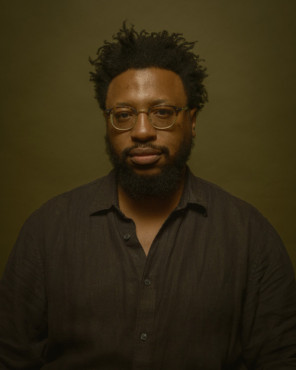
Vinson Cunningham joined The New Yorker as a staff writer in 2016. Since 2018, he has served as a critic for the magazine, writing about theatre, television, and more. He was a finalist for the Pulitzer Prize for criticism in 2024, and was awarded the George Jean Nathan Award for Dramatic Criticism for 2021-2022. And, in 2020, he was a finalist for a National Magazine Award for his Profile of the comedian Tracy Morgan. He teaches at the Yale School of Art and Columbia University’s School of the Arts, and is a co-host of Critics at Large, The New Yorker’s weekly podcast about culture and the arts. His début novel, “Great Expectations,” came out in 2024.