Pulitzer-Winning Books on Black History

The Biography, History and General Nonfiction prize categories offer a variety of lenses through which to view race in the U.S. and African-American experiences.
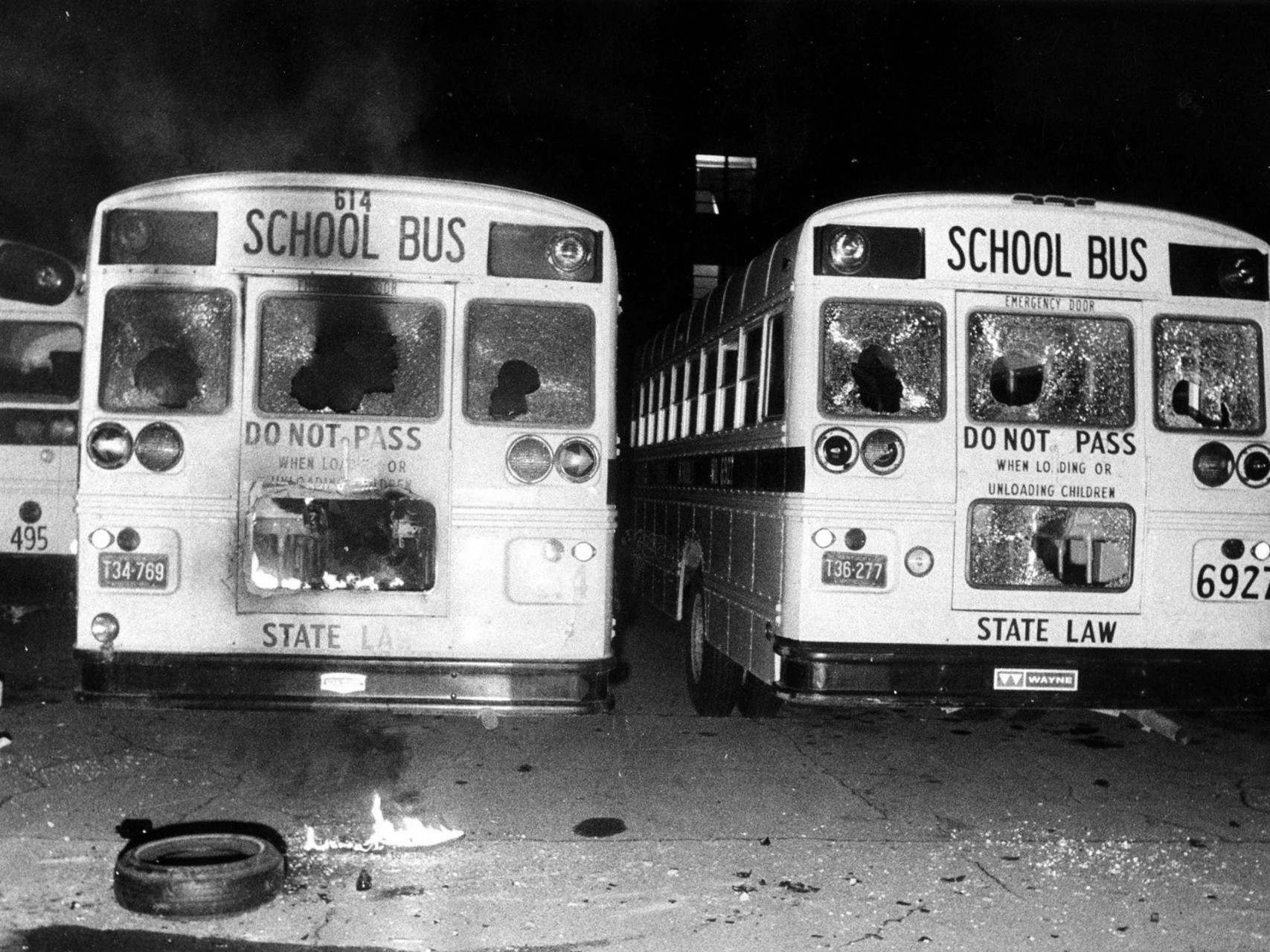
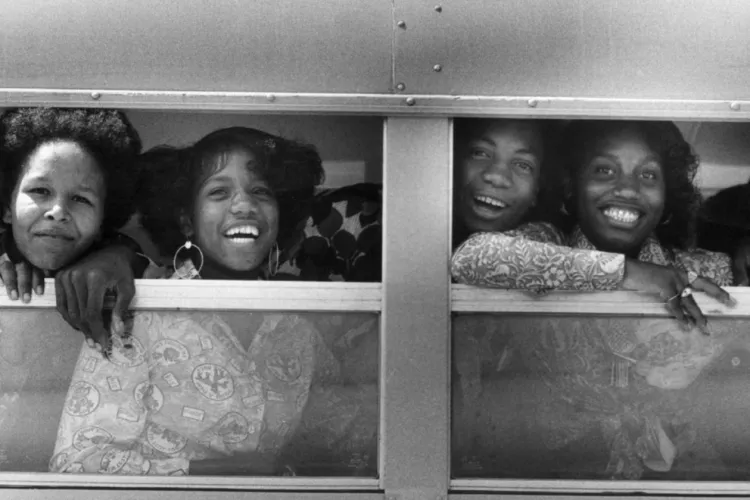
An image from the Louisville Courier-Journal and Times' 1976 Feature Photograph Prize-winning portfolio, about the city's busing initiatives. These school buses had been damaged by protestors at a high school parking lot.

In honor of Black History Month, take a look through some of the books that examine the struggles and triumphs of African Americans, whether by deeply studying thought leaders such as W.E.B. Dubois or Malcolm X, parsing events such as the Southern Christian Leadership Conference, or piecing together facts to tell broader stories, on subjects ranging from Reconstruction to mass incarceration.

1.

W.E.B. Du Bois: The Fight for Equality and the American Century, 1919-1963

15 years in the making, David Levering Lewis' biography stunningly re-created the second half of W.E.B. Du Bois's charged and brilliant career. Beginning with the return of World War I African-American veterans to the riots and lynchings of the "Red Summer" of 1919 and ending with Du Bois's self-imposed exile and death in Ghana 44 years later, Lewis charts the dramatic evolution of the premier architect of the Civil Rights movement from Talented Tenth elitist to internationalist and proponent of economic as well as racial democracy for all people of color.

2.

W.E.B. Du Bois: Biography of a Race 1868-1919, by David Levering Lewis

Both volumes of David Levering Lewis' portrait of W.E.B. Dubois were awarded Pulitzer Prizes in Biography.

3.

Bearing the Cross: Martin Luther King Jr. and the Southern Christian Leadership Conference

In a 1986 New York Times review of David J. Garrow's book, Howell Raines wrote: "In its account of King's career and the history of his organization, the Southern Christian Leadership Conference, ''Bearing the Cross'' is a foundation document. Through tireless interviewing, through skillful use of the Freedom of Information Act and, not least, through his principled refusal to submit to F.B.I. entreaties to suppress details of the bureau's spying on King, Mr. Garrow has provided the fundament of fact on which future King biographies must rest, both in regard to King's public and private lives."

4.

Booker T. Washington: The Wizard of Tuskegee, 1901-1915

In addition to penning this biography, Louis R. Harlan founded the Booker T. Washington Papers project, which, according to a 2010 remembrance in the American Historical Association's Perspectives newsmagazine, "Harlan launched with the backing of the National Historical Publications and Records Commission and the National Endowment for the Humanities, represented the first effort to treat the papers of an African American with the same documentary thoroughness as those of the Founding Fathers, presidents, and military leaders."

5.

Malcolm X: A Life of Reinvention

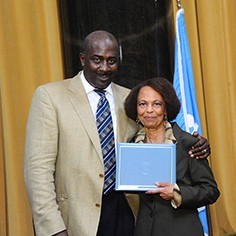
Gregory Moore and Leith Mullings
The Pulitzer Board described Manning Marable's 2012 History winner as, "an exploration of the legendary life and provocative views of one of the most significant African Americans in U.S. history, a work that separates fact from fiction and blends the heroic and tragic."

6.

The Fiery Trial: Abraham Lincoln and American Slavery
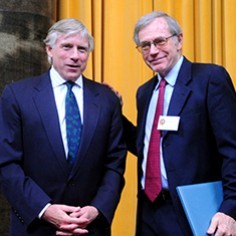
Lee Bollinger and Eric Foner
The citation for Eric Foner's book read: "A well orchestrated examination of Lincoln's changing views of slavery, bringing unforeseeable twists and a fresh sense of improbability to a familiar story." In an essay for Pulitzer.org titled "Home-schooled in History," he wrote, "much of my writing has been inspired by a desire to understand how social change happens and why it sometimes succeeds and sometimes fails."

7.

The Hemingses of Monticello: An American Family
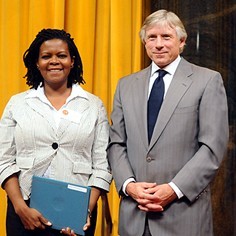
Lee Bollinger and Annette Gordon-Reed
Annette Gordon-Reed's book looks at race in an intimate context — an American family. The Pulitzer Board described her work as, "a painstaking exploration of a sprawling multi-generation slave family that casts provocative new light on the relationship between Sally Hemings and her master, Thomas Jefferson."

8.

The Race Beat: The Press, the Civil Rights Struggle, and the Awakening of a Nation

Lee Bollinger, Hank Klibanoff and Wiley Guillott
The publisher described Gene Roberts' and Hank Klibanoff's work thusly when submitting it for prize consideration: "This is the story of how America awakened to its race problem, of how a nation that longed for unity after World War II came instead to see, hear, and learn about the shocking indignities and injustices of racial segregation in the South — and the brutality used to enforce it. It is the story of how the nation's press, after decades of ignoring the problem, came to recognize the importance of the civil rights struggle and turn it into the most significant domestic news event of the 20th century."

9.

A Nation Under Our Feet: Black Political Struggles in the Rural South from Slavery to the Great Migration
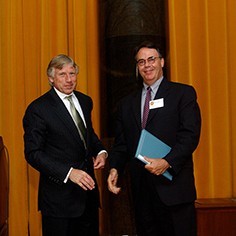
Lee Bollinger and Steven Hahn
Prior to joining the Pulitzer Prize Board, of which he currently serves as co-chair, Steven Hahn won the History Prize for his book, which "demonstrates [how] rural African-Americans were central political actors in the great events of disunion, emancipation, and nation-building."

10.

The Dred Scott Case

The Dred Scott decision not only resolved the fate of an elderly black man and his family: Dred Scott v. Sanford was the first instance in which the Supreme Court invalidated a major piece of federal legislation — and is referred to as "the most frequently overturned decision in history." Don E. Fehrenbacher looks at its broad implications for American law and politics.

11.

Neither Black Nor White

Carl N. Degler examines the differences between slavery in the United States and Brazil, and how they affected race relations for generations.

12.

Locking Up Our Own: Crime and Punishment in Black America

The Pulitzer board called James Forman Jr.'s book, "An examination of the historical roots of contemporary criminal justice in the U.S., based on vast experience and deep knowledge of the legal system, and its often-devastating consequences for citizens and communities of color." In a recent interview with Pulitzer.org, Forman noted: "One in three African Americans is under some form of criminal justice supervision."

13.

Devil in the Grove: Thurgood Marshall, the Groveland Boys, and the Dawn of a New America
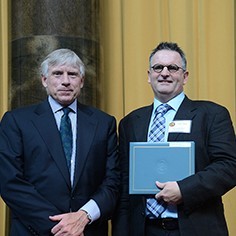
Lee Bollinger and Gilbert King
The four young black men falsely accused of raping a white woman in 1949, whose stories Gilbert King tells in his book, recently were formally pardoned by Florida government officials. King helped set the pardon in motion, and when it happened called it "a great moment in government."

14.

Slavery by Another Name: The Re-Enslavement of Black Americans from the Civil War to World War II

Lee Bollinger and Douglas A. Blackmon
The Pulitzer Board called Douglas Blackmon's work: "A precise and eloquent work that examines a deliberate system of racial suppression and that rescues a multitude of atrocities from virtual obscurity."

15.

Carry Me Home: Birmingham, Alabama, the Climactic Battle of the Civil Rights Revolution
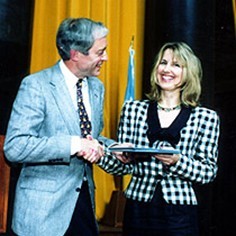
George Rupp and Diane McWhorter
In an essay on Pulitzer.org titled "Life as a Normal White Person," Diane McWhorter wrote about growing up in Birmingham, Alabama, where she grew up: "Even in those final days of American apartheid, upper-middle-class whites didn’t believe they played any active role in the system."

16.

The Problem of Slavery in Western Culture
David Brion Davis examines the social and psychological tensions around slavery, and the growth of the abolitionist movement.

Learn More