Finalist: Roy S. Johnson of Alabama Media Group, Birmingham
Nominated Work
I didn’t know Bonita Carter.
When I moved to Birmingham from New York in 2014, I—like too many others, who aren’t from 'round here—had never heard the young woman’s name. Never heard her story. Never heard of her tragic death and how it inalterably changed this city.
Though as I came to know her, as I began to research her life and death, after being asked to co-host “Unjustifiable”, a podcast on her journey with my Pulitzer prize-winning colleague John Archibald, I realized I knew her a lot better than I thought. I knew her, in fact, too well.
Because Bonita Carter was Sandra Bland. She was Korryn Gaines. She was Tanisha Anderson. She was Michelle Cusseaux. She was Charleena Lyles. Se was Duanna Johnson. She was India Kager. She was Rekia Boyd. She was Eleanor Bumpers. She was Shelly Frey.
She was Breonna Taylor.
She lived and died a generation before the more than 50 Black women killed by the police since 2014. In 1979, she was felled by bullets from the gun of Birmingham police officer George Sands. Killed for nothing more than being in the wrong place at the very wrong time.
Yet she is their spiritual sister. Bonita Carter. Say her name, too.
On June 22, 1979, Carter, then 20, and a few friends rode their bikes to Jerry’s convenience store in the Stockham-Kingston area in East Birmingham. Soon, a disturbance broke out inside, a dispute between the store clerk and a guy from the neighborhood Carter knew. The man left then returned with a gun, fired a threatening shot into the air then ran away, leaving his car behind, halfway out of the parking lot.
Amid the chaos, Sands and his partner just happened to be pulling up at Jerry’s. They were informed of a robbery in progress.
As a favor, Carter jumped in the driver’s seat of the neighborhood man’s car and attempted to drive it to his home. Sands ignored the loud voices in the crowd screaming there was a girl in the car, not the man police sought. He fired into the car, hitting Carter in the back, killing her.
Her death sparked outrage (sound familiar?) and ignited seismic change. Later that year, Birmingham elected the professorial City Councilman Richard Arrington as its first Black mayor, long before many here thought it would happen.
Carter’s murder also led to the dismantling of a police department with a history of shootings, shootings of Black people, that were almost always declared “justifiable.” Even if the victim was running away and unarmed.
Having grown up in and around Birmingham, John Archibald knew of Bonita Carter, knew her story. Or thought he did. The story he heard in his youth was that Carter was complicit, that she somehow did something wrong. That she must have.
I know that well, too. How the narratives on injustices perpetrated against Black people in this nation are twisted and molded to implicate the innocent and placate those who support the guilty. Or even erased.
I know that well.
By now, you may have heard of the Tulsa Race Massacre—three days of terror in May of 1921 when whites, angry over a lie that a Black man had assaulted a white woman in a downtown store, marched to the segregated north side of the city, burned to the ground its thriving Black business district (known nationwide as Back Wall street) and murdered, according to some historians, up to 300 African American men, women and children.
It remains the deadliest race massacre in U.S. history.
Tulsa is my birthplace and was my hometown until I left for college. Yet I didn’t hear of the massacre until I was an adult. I didn’t hear of it because it was erased—deliberately and almost literally. Search microfilm archives of Tulsa newspapers for those infamous three days and you’ll find a black hole where any stories written on the massacres were once published. They were sliced away.
For decades no one in Tulsa spoke of it--whites nor Blacks. No one dared. When they did, it was referred to as a “race riot.” The inference was that Blacks were somehow complicit in an event that obliterated a generation Black wealth (insurance companies refused to pay for losses of businesses and homes) and senselessly ended countless innocent lives. Many of which were interred in unmarked mass graved.
Black Wall emerged from those ashes. At least somewhat. Mired under Jim Crow for another four-plus decades, Blacks still needed their own—their own businesses, their own churches, their own neighborhoods. Their own. A few enterprises were rebuilt, and new ones emerged, including a drug store/soda fountain called Kyle’s' Sundry. It was owned by my father.
Veola French was barely out of college when she began to work for him. She lived with her grandmother. Upon arriving home on a day when rumblings about a “race riot” found her ear, the young woman asked: “Have you heard anything about a race riot?”
Veola recently shared her grandmother’s response: “Don’t ever ask about that again.”
No one did until some of the last survivors finally agreed to share their memories and their pain. Their stories, told now in numerous documentaries and books, helped revive and rewrite the long-twisted narrative. Finally, the horrific three days were recast from a “riot” to the “massacre” it was.
Today, on the cusp of commemorating a century since the massacre occurred, city and state officials solemnly embrace the grim event as a vital part of their history. Earlier this year, the Oklahoma Board of Education announced the massacre will be incorporated into school curriculums statewide. Last month, archeologists in Tulsa discovered 12 coffins in a previously unknown mass grave that could be connected to victims of the massacre.
Soon, we may know them, too. Just as I hope you’ll come to know Bonita Carter.
Hear the story of Bonita Carter on #Unjustifiable from Reckon Radio: https://podcasts.apple.com/.../reckon-radio/id1420215603.
This is what happens when you’ve had your knee on my neck for so long.
This is what happens when you’ve silenced, ignored, and diminished my voice for so long.
This is what happens when you make it so hard for me to vote, when you replace the jelly-bean test with subtle, though no-less-intimidating, disenfranchising hurdles for so long.
This is what happens when you think I’ve done something wrong, then hunt me down and kill me—accidentally or not—for so long.
This is what happens when you’ve drained well-paying jobs, quality education, equitable opportunity, and hope from my neighborhood for so long.
This is what happens when I am pulled over for driving through your (our) neighborhood and asked if I’m lost for so long.
This is what happens when you close the hospitals and deny me access to quality healthcare for so long.
This is what happens when you see the color of my skin as a threat to your well-being for so long.
This is what happens when you describe me as articulate for so long.
This is what happens when you incarcerate me for a bag of weed then coddle your pill-popping cousin for having the disease of addiction and send them to rehab for so long.
This is what happens when you assume I was an athlete when you hear I have a college degree for so long.
This is what happens when you deny me promotions because I don’t fit your image of what a CEO looks like for so long.
This is what happens when I walk into the showroom and you assume I’m going to pay for that pricey car with cash for so long.
This is what happens when you question whether I belong in the—fill in the blank—gym, the designer store, the neighborhood where you live, in first-class, in the swimming pool, on the golf course, in a seat at the table for so long.
This is what happens when you get red-faced mad when I become President of the United States, then direct your anger towards me for so long.
This is what happens when you pack the poorest among me into prison-like “communities” then wonder why we struggle to escape it for so long.
This is what happens when you claim me as a friend but never invited me to your home for so long.
This is what happens when you say I got the job because of my skin color for so long.
This is what happens when I don’t have a teacher who looks like me for so long.
This is what happens when you rail about young black men turning to violence, most often against other black men, then turn a deaf ear to any civil discussions about the causes and conditions that led them to do so—let alone seek to address and eradicate those causes and conditions—for so long.
This is what happens when your first instinct is to call 911 rather than reach out to shake my hand, introduce yourself, and ask my name for so long.
This is what happens when you say, “what’s slavery got to do with today” for so long.
This is what happens when you question my child’s high test score or presume they’re not as smart as their white classmates for so long.
This is what happens when justice is denied and denied and denied for so long.
This is what happens when you assume you’re smarter than me, better than me, for so long.
This is what happens when I finally, finally, finally get sick and tired of being tired.
Minneapolis is still smoldering from a night of anger, a night of unbridled tension, a night when citizens representing every race and ethnic group in the city showed they were tired of being tired.
I feel deeply for the innocents caught in the crossfire: The man shot and killed by a store owner who thought the man was robbing his business; citizens struck by police while exercising their constitutional right to protest (unlike the snarling, gun-wielding folks who recently stormed state capitols across the nation); small business owners whose life’s dream is now a nightmare of ashes and broken glass.
This is what happens, though.
When you’ve had your foot on my neck for so long.
The words struck me like lightning on a clear day—suddenly, unexpectedly, and emphatically. And they certainly knocked me back.
Mother’s owner.
Every African American knows they have ancestors who were enslaved. Somewhere. Ancestors who were owned by someone. Ancestors who endured this nation’s greatest evil.
I never knew, though, the names of any of my enslaved ancestors. Until I saw those words.
My father was born in 1902, my mother in 1920. I knew the names of their parents, as well as my maternal great-grandparents. That was as far down the genealogical rabbit hole as I ever dove. Until recently.
Until curiosity—hey, everyone needed a Covid-19 project—became a shovel and I began digging.
I didn’t have much to work with: my father’s original social security card application from 1936 and a World War II draft registration card. That was about it. I knew little about my grandparents (whom I never knew), not much more than stark dates of their birth and death inscribed on tombstones marking their resting places in a Tulsa, Okla. cemetery. The city of my birth.
The in-between? (That’s what Black preachers call the dash nestled between those dates at funerals.)
Blank.
I sent a request to the Oklahoma Historical Society for whatever they could find about those who came before me, with what little I could give them. In time, an envelope arrived stuffed with papers. There were school records. Marriage licenses. (With dates that inferred enough entanglements to inspire a Tyler Perry series.) And pages from old Tulsa directories Family trees with notes written carefully by hand. Names. Dates. Nicknames even.
And those words: Mother’s owner Sinia Pickens.
They were written just above the name of Jane Pickens, my great-great-grandmother. She was the first enslaved ancestor—the first enslaved blood—I have known.
I paused and stared at the words. Maybe because I wasn’t expecting to find such a discovery. Maybe because slavery—suddenly, emphatically, and unexpectedly—became a whole lot more personal than it had ever been. It wasn’t an Alex Haley “Roots” moment, discovering the ancestor who was snatched from their African home, endured the horror that was the Middle Passage, and brought to our shores to be enslaved.
It was a moment, though—one I did not know whether to celebrate or mourn.
Those pages also contained the names of other ancestors—and who owned them.
Lottie Williams (born Shields), a great grandmother, owned by Siney Miller.
Bob Johnson, a great-great grandfather, owned by Sampson Folsom.
William Harrison, a great grand in-law, owned by Daniel Harrison.
Emeline Jackson, another great grand in-law, owned by Mary Ellis and family.
Each discovery was a moment. A moment to celebrate their discovery, to know—and say out loud—their names, after so many years. After so much blank. A moment to mourn what they endured.
Then there was this discovery: Their owners were Native Americans.
That stunned me. I didn’t know Native Americans owned slaves. I’m still trying to discern whether that is because our long-flawed education system never taught me that fact, or if, after 64 years of living, I just plain forgot, folks!
The curiosity shovel went into hyper-drive, of course. I learned (or re-learned) that Native Americans were slaves, too, before and during the mid-1800s when Blacks were enslaved, and that they, indeed, later became slaveowners. Eagerly so.
Paul Chaat Smith, associate curator of the National Museum of the American Indian (and a Comanche), told Smithsonian magazine in 2018, “The Five Civilized Tribes were deeply committed to slavery, established their own racialized black codes, immediately reestablished slavery when they arrived in Indian territory, rebuilt their nations with slave labor, crushed slave rebellions, and enthusiastically sided with the Confederacy in the Civil War.”
Tiya Miles is an African American professor of history at the University of Michigan. In that same article, she said owning Black slaves helped Native Americans inculcate themselves to Southern whites, who yet still considered them to be “noble savages”.
“[Native Americans] were working hard to comply with government dictates that told [them] that in order to be protected and secure in their land base, they had to prove their level of ‘civilization,’” Miles said.
She added: “The Cherokee owned slaves for the same reasons their white neighbors did… In truth, the Civilized Tribes were not that complicated. They were willful and determined oppressors of Blacks they owned, enthusiastic participants in a global economy driven by cotton, and believers in the idea that they were equal to whites and superior to blacks.”
It was a moment. A long moment. Another moment of celebration. Of mourning. Capped by this: I learned that I am a descendant of the Choctaw nation.
Growing up in Oklahoma, the narrative I recall was that I likely had Indian blood in my veins because Blacks escaping the South after emancipation arrived at what was then known as Indian Territory (now Oklahoma), met “friendly” people of color, and settled there. Intermingled there. Married there.
That’s laughable now.
This is the truth: My ancestors were owned by Choctaw and were tribal members. Freedman members, they were called. Their names inscribed on Choctaw Dawes Freedman Rolls created between 1898 and 1914 when the American government chronicled members of the five tribes in order to divvy up lands designated for ownership.
Call it the Native American census.
The names of my father, his parents, and other ancestors are listed on those rolls. My father, also named Roy, is listed as a one-year-old on Card 501, not far below from the name of his father, James, then just 22. His mother, then 19-year-old Sarah Jane Williams, is recorded as Choctaw Freedman on Card 498.
Among those papers in that envelope, too, were copies of records of the U.S. Census from as far back as 1910. Records that helped fill the blank, the blank that was my father’s life—a whole lot of life from a not-even-yet-a-toddler on the Choctaw Freedman Roll to a first-time father at the age of 54.
The deadline for filling out the 2020 U.S. Census was extended yet again, to the end of October. If for no other reason—if not for the billions in federal funding at stake that could improve your neighborhood, or for equitable representation in the U.S. Congress—fill it out for your descendants. For blood you may never know. For someone who may just meet you generations from now.
Someone who may just want to fill in a blank. And say your name. Emphatically.
“Can you spell your name?”
Of course, Martha Mae Ophelia Moon Tucker could spell her name. She was 36 years old and married to Lehman for more than a decade. Yet it was 1963, and she was a Black woman. In Birmingham.
A Black woman who wanted to register to vote.
“Do you have parents? Do you know their names?”
Inside, Martha seethed. She seethed for all the Black people who had to guess the number of jellybeans in a jar. Who had to know how many county courthouses there were in Alabama. Who had to pass an insipid rigged test the governor would flunk. Just to register to vote.
She seethed but answered the questions. Each of them. Correctly.
Voting was vital to Tucker—as vital as the air she still breathes after 93 years.
“There were no voting rights for blacks,” she told me this week. Not in 1963. Not in Birmingham. “I felt it was my right and duty. I wanted to be counted. I didn’t want to be a nobody.”
Tucker also felt it was her right to help others vote. So, in 1963—after she signed that crisp, new voter registration card—she signed up to work the polling place for the local precinct at Booker T. Washington K-8 in the Titusville neighborhood where she and Lehman lived since they bought a home there in 1957. She was the assistant chief inspector under Arthur Jordan.
She hasn’t missed serving as a poll leader in any election since. Not a state, county, or city election. Certainly not a presidential election. Not as the precinct moved from Washington to Center Street Middle School to Sixth Ave Baptist Church where voters will cast their ballots on November 3.
“Not one year, not one day, not one hour not one second,” she said—as empathically as she probably spelled her name 57 years ago.
Tucker became the precinct’s chief inspector after Jordan passed some years ago. She’s still in that role for state and city elections; daughter Rita is chief inspector for city elections.
“It’s a family business,” daughter Audrey says with a laugh.
The Voting Rights Act of 1965 finally banned the questions, eliminated the most blatant barriers (emphasis intended) long planted between Black people and the voting booth. Tucker wanted to join the protesters who marched, who endured. Risking their lives. For the right to vote. She couldn’t. Not in 1963. Not in Birmingham. Doing so would have cost Lehman his job.
Instead, the couple took protestors into their home. Protected them from nightly terrors. From beatings and shootings. From the Klan. Or the police. (Often one in the same.)
“We hid them,” Tucker says. “Then let them out when the sun came up.”
Tucker doesn’t watch the news much during these trying days of racial animus. Sometimes, she listens, through what she’s heard in the last few months “disturbs me,” she said. “I feel better about the country but it’s still a struggle. We still don’t have freedom.”
Tucker embodies why standing in line as long as it takes to vote is the very least we can do.
She encourages young people to register to vote—has been since, well, 1963. “I’ve been pushing them: If you’re not a registered voter, you’re not a citizen,” she said. “Whenever they get to the age of 18, I try to get them to the courthouse to become a registered voter—so their voice can be heard.”
Barriers to the polls are more subtle now—or maybe not: Closing government offices where citizens, mostly Black and brown citizens, may register; purging voter rolls, sowing doubt about the U.S. Post Office’s ability (or desire) to deliver absentee ballots, or your local election leader’s ability to even count them; and fueling baseless voter fraud theories.
Anything to make us think our vote won’t matter.
“The easiest way to suppress the vote is to keep people from showing up; these strategies are designed to make people think their vote won’t count,” says Nia Weeks, founder of Citizen SHE United, a Louisiana-based advocacy organization that is convening Black women to push for policies that address their needs. "It eliminates the need for litigation. If the vote happens to be there, oh well. They had a chance and didn’t show it.
“It’s an easy lift.”
“We’ve only had right to vote for 56 years,” Weeks adds. "Before then, for 400 years, everything done to Blacks was an effort to suppress our ability to participate as full citizens. It will go on in perpetuity. They’re not going to give up.
“We’ve got to stay consistently vigilant. Everyone has to show up [in November]. We will participate in a government that does not want us to do so.”
Tucker will certainly keep participating. He endured too much not to. November will be her final election as chief inspector at the local precinct. She’s passing the baton—Rita will, of course, assume the role in the “family business”—but not the ballot.
“I’m gonna vote as long as they let me vote,” she said. “As long as I have breath in my body. That’s the only way Ill not vote, but I’ll still be fighting.”
“Sorry” is a good start. A noble start. A necessary start.
Yet it’s just a start.
Sarah Collins Rudolph, the “fifth little girl” in the 1963 KKK bombing of Sixteenth Street Baptist Church received a “sincere, heartfelt apology” from Gov. Kay Ivey last week for the role of former state leaders in sparking the “egregious injustice that has yielded pain and suffering over the ensuing decades.”
Gov. George Wallace emboldened white supremacists with his fiery words, emboldening them to unleash bombings targeting Blacks throughout Birmingham and ultimately bomb the church, killing the four little girls we’ve all come to know and severely injuring Rudolph. Three KKK members were ultimately convicted for the evil crime.
“There should be no question,” Ivey told Rudolph, “that the racist, segregationist rhetoric used by some of our leaders during that time was wrong.”
Sarah and sister Addie Mae were in the ladies' lounge in the church’s basement on the Sunday morning of September 15th, 57 years ago, as she shared with AL.com’s Shauna Stuart in 2018. They’d just been joined by Cynthia Wesley, Carole Robertson, and Carole Denise McNair. Denise asked Addie to tie the sash on the back of her dress as Sarah stood near the sink.
“We all stood there,” Rudolph told Stuart. “You know, looking to see her tie it. And she reached her hand out like that. And that’s when the bomb went off... boom! So, we didn’t get a chance to see her tie it.”
Glass and shrapnel penetrated her face, leaving her blind in one eye—and dousing Rudoplh’s dream of becoming a nurse.
Wesley, Roberston, McNair, and Addie Mae Collins, as we all sadly know, were murdered that Sunday morning. Ivey also extended the apology to their families.
A good start. A noble and necessary start.
Yet just a start.
Rudolph, through attorneys, is seeking compensation from the state for “the loss of her beloved sister and for the pain, suffering and lifetime of missed opportunities resulting from the bombing,” her lawyers said.
She deserves it, as do the still-grieving families of our four little girls. So, too, do the myriad victims of our state’s violent past whose lives and livelihoods were decimated by so many racist travesties.
Travesties such as the government-sanctioned buying and selling of enslaved humans near the ports of Mobile and Montgomery, the immoral institution that girded the state’s economic roots, the more than 300 Black Alabamians lynched over 66 heinous years, and the spate of bombings in and around the city that came to be known as Bombingham.
I’m not afraid to say it: Black Alabamians deserve reparations. Deserve something for still bearing the weight of the state’s egregious past. For still suffering from its reverberations.
From immoral disparities in health outcomes, education, employment, and economic opportunity. From conditions that lead to us too often tragically killing our own.
Now breathe, I’m not looking for a check in my mailbox. Nor do I believe reparations should take that form. I do believe we must be brave enough to intelligently and civilly explore what reparations could and should look like. Especially now—at this time of national reckoning on race and its role in shaping us.
One state is finally doing just that. On Wednesday, California Gov. Gavin Newsom signed AB 3121, a bill establishing a nine-member task force to study the impact of slavery in the state—yes, in California— and explore what reparations could or should look like for residents impacted by the institution.
California is the first state in the nation to be so bold. Alabama, we must be so bold, too.
AB 3121 was crafted and championed by California Assemblywoman Shirley Weber, who chairs the state’s Legislative Black Caucus. Who among our Black legislators might be so bold?
Of course, I’d leave it to this historic task force to render its recommendations for what reparations in Alabama could and should look like. But if I could slip a list under the door during its deliberations, here are some suggestions it might contain:
- Increase ongoing funding of the state’s historically black colleges and universities, particularly addressing digital access and education, and the needs of students from low-income families, who too often drop out due to financial pressures at home
- Free tuition at state colleges (w qualifications) for Black high-school graduates who meet academic qualifications. Call it Alabama Promise
- Expand Medicaid. Time to stop acting politically petulant about an action that would benefit working families across the state, regardless of race, and potential save the state money, as its done in other states.
- Invest in addressing health and other disparities in the Black Belt, particularly improving access to quality and affordable healthcare
- Eliminate the state’s arcane and stifling bid law and commit to specific spending goals with Black-owned businesses (and other Disadvantaged and Minority Enterprises) on all state construction projects, and with DBEs on other state spending. Additionally, invest in the growth and sustainability of Black-owned businesses; in 2017, my colleague John Archibald revealed that only three percent of the state’s businesses were Black-owned. The impact of boosting Black-owned businesses would vital in transforming families and neighborhoods in dire need of hope.
- Commit to closing the digital divide that still impacts children in too many low-income neighborhoods within three years. The state’s recent $100 million investment of federal CARES Act funds in internet vouchers for families as students pursued remote learning was, yes, a good start.
- Help transform libraries in Black neighborhoods into human development centers, providing workforce training, access to basic healthcare needs (including mental health), healthy food options, as well as books and other educational resources.
There’s so much more we could and should do, so many other areas where reparations would ultimately lift us all. Would make us a better state.
These would be, collectively, a good start. A noble and necessary start.
Yet just a start.
How can I help?
I’ll try to make this as easy as I can, although the task—fixing the brokenness in our nation—is far from easy.
The fissures are deep and numerous, and we haven’t been able to fix them for 526 years. Not even close. We cannot stop trying, though. Especially now.
Now, as we’re being swallowed by fatigue, frustration, and, yes, anger. An anger that is choking us.
As George Floyd was choked.
I’m heartened by the responses of many whites—some I know, most I do not—to the incidents of recent days. If there’s someone who wasn’t disgusted, angered and hurt watching a handcuffed, unarmed black man plea for life-giving air as a now-fired-and-charged-with-murder Minneapolis police officer planted a knee into his neck while he laid prostrate on a public street, they are mercifully being silent. Mostly.
White people everywhere spoke up and many showed up. They spoke against the murder and showed up to protest.
Many of the protests spawned by Minneapolis were more diverse than any civil actions against racism, injustice, and inequality we’ve seen since young people of all hues boarded buses as Freedom Riders. Since whites and blacks fought for voting rights and marched across the Edmund Pettis Bridge. Since a snapshot of our nation sat before the steps of the Lincoln Memorial—and dreamed.
Some whites shared their emotions on social media, with heartfelt posts and videos. Many reached out to me via email and text, saying they, too, were weary, hurt, frustrated, and angry. And asking:
How can I help? What can I do?
Black folks, by the way, know what to do: We’ll, as we always do, battle on. We’ll honor our parents, grandparents, and the greats before them who battled heinous injustices and travesties. Some of which evoke as much pain as the site of George Floyd dying in the street.
Whites? The ones ready to battle beside us—like some of your parents, greats, and greats before them?
I got you.
- Check on your black friends. They’re likely still hurting, still confused, still exhausted. They’ll appreciate hearing from you.
- Acknowledge your privilege. Good for you if you rose from a poor background to achieve success. Don’t tell us you did it “all on your own.” You did it without anyone trying to block your path, deny you access to places of power, then diminish you once you’ve walked through the door. Privilege is real. Not faulting you for it. Just don’t use it in some kind of “bootstraps” argument. You may be speaking with someone who had no boots.
- Broaden your circle. Especially if everyone who’s been to your home looks like you. Even if everyone who’s been to your home—except one couple—looks like you. Reach out to that co-worker whom you call a friend, but don’t know where they were born, how many siblings they have or their favorite hobby.
- Listen. Friendships are built and strengthened as people genuinely share their respective journeys with each other. Their high and especially their lows. Just because I may have reached a certain status in life does not mean I don’t have wounds still not healed.
- Educate yourself and your children. Read books by black and brown authors (ask your new black friend for suggestions). Most importantly, insist that your local school system teaches the full breadth of American history—with all its warts. Not the whitewashed version many systems perpetrate, particularly those in predominantly white areas. The more your children know about everyone, then less likely they’ll side-eye my children when they encounter one another in an AP class, an honors program, or in the workplace.
- Help for the less privileged. Somewhere near you, someone is in need. Find an organization that fills a need meaningful to you—children, mothers, adolescents, poor families, elderly—and contribute your time and/or money. Not just once. We’re talking about fixing a country here.
- Advocate for justice for George Floyd. Be part of the chorus trying to ensure all of the officers involved in his death are held accountable. Use social media, as many have already done, to share your support. When you are in a room where everyone looks like you and the conversation slides towards words like “them” and “the riots”, steer it back toward justice. Be our spies in those rooms. Silence is no longer an option.
- Choose wisely. From now on, when you go to the polls, select leaders, at any level, not based on party but purpose. Not because of what they do for you, but on what they can do for us. Not us, black people. Us as a nation. Select leaders who will battle for equal justice, for equity in our schools. In opportunity. In hope. Leaders who won’t dismiss an idea because it emanated from a colleague across the aisle—or created by a president who did not look like them. Leaders who promise to lift the nearby neighborhood you’ve never visited, not just yours. Leaders who’ll embrace the child who does not look like yours—the family without your privilege.
This isn’t everything you can do, of course. It’s a start.
It is how you can march with us now and beyond what transpires in Minneapolis. How you can help transform our neighborhoods, cities, and states to help close the gaps that sit like a concrete wedge between us now.
It’s not just how you can help, it’s how you must.
What if we really taught our kids?
Taught them what happened. What really happened?
What if we taught them the real, sometimes hard truths of history? Our state’s history.
All of it. Not Black history. Not white history. History.
The good, the bad, and the gruesomely ugly. The pages some Alabamians lift with pride, the pages some stubbornly choose to ignore, but especially the pages some blithely rip out and toss into the trash bin of ignorance.
The most painful pages.
We’re clearly not doing so now, as Al.com colleague, Jonece Starr Dunigan, uncovered a deep look at how Alabama teaches black history. Essentially, she summarized, the state’s education leaders provide only “bare minimum” standards for teaching social studies, which do include black history, leaving the breadth of the curriculum up to local teachers.
What if we taught them—all of our children, from grade school onward—the full breadth and depths of slavery. Its atrocities and inhumanity. Yet, too, how it girded us economically, how it helped build us.
What if we taught them the full breadth and depths of the Confederacy? The pride it engendered in its deeply faithful, and the roots, the hard, truthful roots, of its existence. Why it existed, and how its deeply faithful treated (or better, mistreated, at best) others in our state.
What if we taught them the full breadth and depths of the Civil War? Why it was actually fought, how it pitted brothers against brothers. What we lost because of it. What it cost us.
Why, right now, some descendants of the deeply faithful cling to it like a lifeline to their truth. To their family. To their heritage. To their core.
What if we taught our children what really happened?
Many of you know I grew up in Tulsa, Oklahoma, through the last remnants of what was known as Black Wall Street, an all-black economically vibrant and self-sustaining portion of the city that was borne out of legal segregation. Other cities, including some here in Alabama, had similar black business districts.
Yet there was but one Black Wall Street.
Over two days, in June 1921, almost a century ago, whites tried to destroy it. A marauding mob burned business to the ground, firebombs dropped from the sky—in America—and hundreds of men, women, and children were killed. Because of a lie. Of jealousy. Of hatred. Of God knows what.
The Tulsa Race Massacre of 1921 remains, through today, the largest race slaughter in U.S. history.
You should know about it. But you likely don’t. Because no one talked about it. No one black; no one white. A complicit conspiracy of silence that lasted for decades.
I don’t recall the first time I heard about it, though it was after I graduated high school and left Tulsa. That, I know.
Late last year, during a visit home, I interviewed my Aunt Veola—a “play” aunt; some of y’all know what that means—about her memories of working for father in his store on Greenwood Avenue, Black Wall Street’s core thoroughfare.
I also asked her about the massacre. “I came home one day after hearing someone whispering about a ‘riot’ and asked my grandmother about it,” she said. “Grandma said, ‘Don’t ever ask me about that again. I didn’t.”
Of course, no one learned about it in school. Though soon, they will.
Last month, the Oklahoma State Board of Education said students from grade school onward will learn about the massacre. In April, the board will unveil a “framework” for (ahem) integrating the massacre into curriculums statewide. It will include funding for teacher training and supplies.
The move was embraced by state and national lawmakers and educators at all levels.
State Superintendent Joy Hofmeister said: “What we want to ensure is ... we are teaching in a grade-appropriate level those facts that have not been taught in a way they should have been taught in Oklahoma. This is ... our history and we should know it."
Oklahoma U.S. Senator James Lankford told KFOR: “For decades, Oklahoma schools did not talk about it. In fact, newspapers didn’t even print any information about the Tulsa Race [Massacre]. It was completely ignored. It was one of those horrible events that everyone wanted to just sweep under the rug and ignore.”
All agreed: It’s not just time stop ignoring this egregious yet significant episode in the state’s history, but time to begin teaching their children the full truth about it.
What if we taught our children—all of them—our full truths, too?
Here’s what: They’ll be smarter. They’ll be more knowledgeable about who we were, who we are and how we got here.
Perhaps, too, they’ll grow up with empathy for peers of a different race or faith—rather than curiosity or even animosity. With more of an understanding of their journey, a journey too long swept under the rug and ignored in our state
All of which just might enable them to engage in civil discussions about who we were, who we are and how we got here.
Something too many of us never learned.
Biography
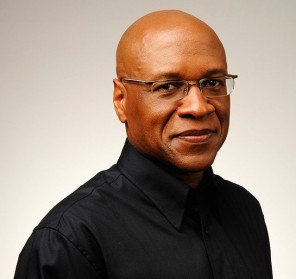
Journalist Roy S. Johnson – a statewide columnist for the Alabama Media Group -- is a unique voice in the South. Writing with passion and purpose, he launches conversations that are uncomfortable to some—and outrage many—raises issues that scrutinize leaders throughout the state, and challenge all to be better. Better cities. A better state. A better nation. Better people.
Before joining the AMG in 2014, Roy was an editorial leader at several prominent publications, including Men’s Fitness and mensfitness.com (VP, Editor-in-Chief), Sports Illustrated (Asst. Managing Editor) Fortune (Editor-at-Large), including History Channel magazine/digital (Editor-in-Chief), and Savoy (founding Editor-in-Chief). He covered major sports worldwide for several decades, writing for The New York Times (Reporter) and The Atlanta Journal-Constitution (Columnist). A recognized chronicler of the National Basketball Association, Roy has been featured in several sports documentaries—most recently in The Last Dance, the popular six-part series on Michael Jordan’s final season with the Chicago Bulls.
Roy also co-Executive Produced “Bernie and Ernie”, an ESPN 30-for-30 documentary chronicling the careers of NBA stars Ernie Grunfeld and Hall of Famer Bernard King, and co-authored autobiographies with NBA Hall of Famers Earvin (Magic) Johnson and Charles Barkley and former NBA player and Coach Avery Johnson.
A native of Tulsa, Oklahoma, Roy lives in Birmingham.