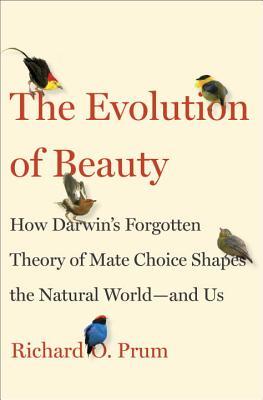
Finalist: The Evolution of Beauty: How Darwin’s Forgotten Theory of Mate Choice Shapes the Animal World—and Us, by Richard O. Prum (Doubleday)

A fascinating, nuanced and compelling account of the potentially unsettling implications surrounding sexual selection.

Nominated Work

The Evolution of Beauty: How Darwin’s Forgotten Theory of Mate Choice Shapes the Animal World—and Us

A major reimagining of how evolutionary forces work, revealing how mating preferences--what Darwin termed "the taste for the beautiful"--create the extraordinary range of ornament in the animal world. In the great halls of science, dogma holds that Darwin's theory of natural selection explains every branch on the tree of life: which species thrive, which wither away to extinction, and what features each evolves. But can adaptation by natural selection really account for everything we see in nature?

Yale University ornithologist Richard Prum--reviving Darwin's own views--thinks not. Deep in tropical jungles around the world are birds with a dizzying array of appearances and mating displays: Club-winged Manakins who sing with their wings, Great Argus Pheasants who dazzle prospective mates with a four-foot-wide cone of feathers covered in golden 3D spheres, Red-capped Manakins who moonwalk. In thirty years of fieldwork, Prum has seen numerous display traits that seem disconnected from, if not outright contrary to, selection for individual survival. To explain this, he dusts off Darwin's long-neglected theory of sexual selection in which the act of choosing a mate for purely aesthetic reasons--for the mere pleasure of it--is an independent engine of evolutionary change.

Mate choice can drive ornamental traits from the constraints of adaptive evolution, allowing them to grow ever more elaborate. It also sets the stakes for sexual conflict, in which the sexual autonomy of the female evolves in response to male sexual control. Most crucially, this framework provides important insights into the evolution of human sexuality, particularly the ways in which female preferences have changed male bodies, and even maleness itself, through evolutionary time. 

"The Evolution of Beauty" presents a unique scientific vision for how nature's splendor contributes to a more complete understanding of evolution and of ourselves.

-- from the publisher
Biography

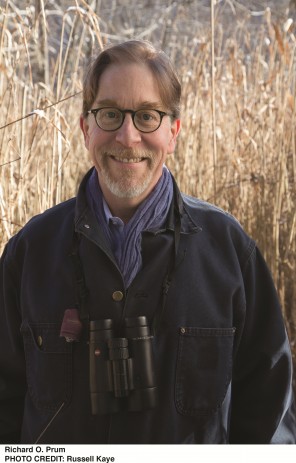
Richard O. Prum is William Robertson Coe Professor of Ornithology at Yale University, and Head Curator of Vertebrate Zoology at the Yale Peabody Museum of Natural History. He has conducted field work throughout the world, and has studied fossil theropod dinosaurs in China. He received a MacArthur Fellowship in 2010.

Winners

Prize Winner in General Nonfiction in 2018:

James Forman Jr.

An examination of the historical roots of contemporary criminal justice in the U.S., based on vast experience and deep knowledge of the legal system, and its often-devastating consequences for citizens and communities of color. General Nonfiction

Finalists

Nominated as finalists in General Nonfiction in 2018:

Suzy Hansen

A brave and disturbing account of what it means to be an American in the world during the first decades of the 21st century.

The Jury

Ann Fabian(Chair)

Distinguished Professor Emerita of History

Laurent Dubois

Professor of Romance Studies

Elizabeth Kolbert*

Staff Writer

Winners in General Nonfiction

Matthew Desmond

For a deeply researched exposé that showed how mass evictions after the 2008 economic crash were less a consequence than a cause of poverty.

Joby Warrick

A deeply reported book of remarkable clarity showing how the flawed rationale for the Iraq War led to the explosive growth of the Islamic State.

Elizabeth Kolbert

An exploration of nature that forces readers to consider the threat posed by human behavior to a world of astonishing diversity.

Dan Fagin

A book that deftly combines investigative reporting and historical research to probe a New Jersey seashore town's cluster of childhood cancers linked to water and air pollution.

2018 Prize Winners

Staff of The Washington Post

For purposeful and relentless reporting that changed the course of a Senate race in Alabama by revealing a candidate’s alleged past sexual harassment of teenage girls and subsequent efforts to undermine the journalism that exposed it.