Finalist: Ned Parker and a team from Reuters

For intrepid reports of the disintegration of Iraq and the rise of ISIS, linking the developing catastrophe to a legacy of sectarianism, corruption and violence seeded by the U.S. invasion.

Nominated Work

October 14, 2014

Baghdad blames one general for the loss of the strategic city. A Reuters investigation finds responsibility for the debacle goes higher
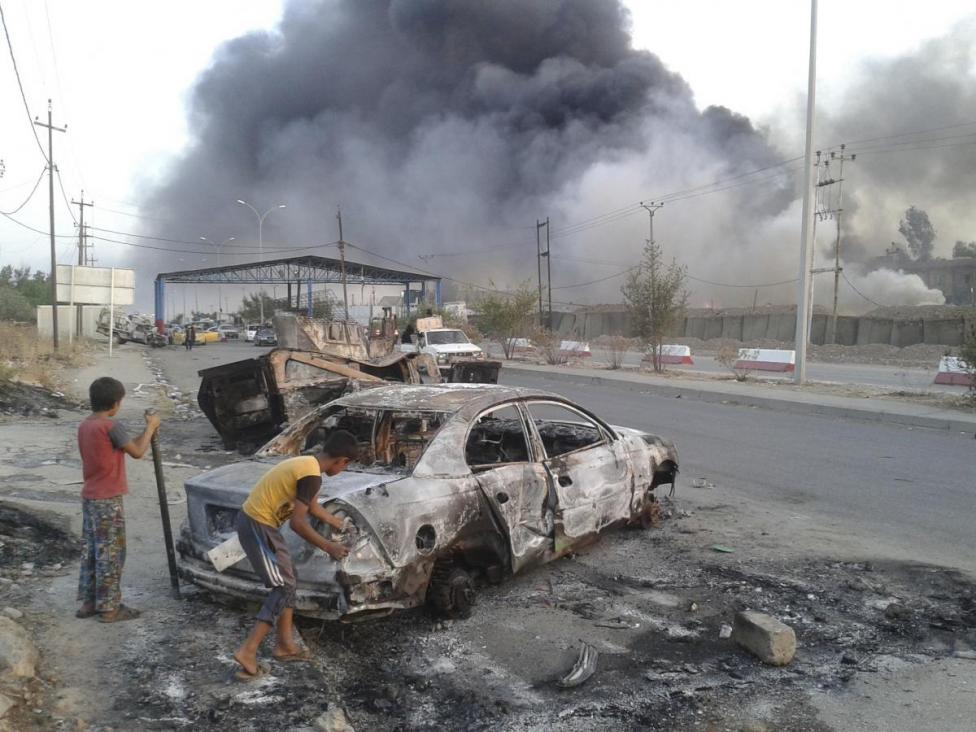
Civilian children stand next to a burnt vehicle during clashes between Iraqi security forces and al Qaeda-linked Islamic State in Iraq and the Levant (ISIL) in the northern Iraq city of Mosul, in this June 10, 2014 file photo. REUTERS/Stringer/Files

By Ned Parker, Isabel Coles and Raheem Salman
 
Lieutenant General Mahdi Gharawi knew an attack was coming.
 
In late May, Iraqi security forces arrested seven members of militant group Islamic State in Mosul and learned the group planned an offensive on the city in early June. Gharawi, the operational commander of Nineveh province, of which Mosul is the capital, asked Prime Minister Nuri al-Maliki's most trusted commanders for reinforcements.
 
With Iraq's military overstretched, the senior officers scoffed at the request. Diplomats in Baghdad also passed along intelligence of an attack, only to be told that Iraqi Special Forces were in Mosul and could handle any scenario.
 
On June 4, federal police in Mosul under Gharawi's command cornered Islamic State's military leader in Iraq, who blew himself up rather than surrendering. Gharawi hoped the death might avert an attack. He was wrong.
 
At 2:30 a.m. on June 6, Gharawi and his men returned to their operations room after an inspection of checkpoints in the city of two million. At that moment, convoys of pickup trucks were advancing from the west, driving across the desert that straddles Iraq's border with Syria. Each vehicle held up to four IS fighters. The convoys shot their way through the two-man checkpoints into the city.
 
By 3:30 a.m., the militants were fighting inside Mosul. Within three days the Iraqi army would abandon the country's second-biggest city to its attackers. The loss triggered a series of events that continues to reshape Iraq months later.
 
It unleashed a two-day charge by IS to within 95 miles (153 km) of Baghdad that caused the collapse of four Iraqi divisions and the capture or deaths of thousands of soldiers. It helped drive Maliki from office. And it pushed Western powers and Gulf Arab nations into launching air strikes on the Islamist militants in both Iraq and Syria.
 
But how Mosul was lost, and who gave the order to abandon the fight, have, until now, been unclear. There has been no official version: only soldiers' stories of mass desertions and claims by infantry troops that they followed orders to flee.
 
In June, Maliki accused unnamed regional countries, commanders and rival politicians of plotting the fall of Mosul, but has since remained quiet.
 
Nevertheless, Baghdad has pinned the blame on Gharawi. In late August, he was charged by the defense ministry with dereliction of duty. He is now awaiting the findings of an investigative panel and then a military trial. If found guilty, he could be sentenced to death. (Four federal police officers who served under Gharawi are also in custody awaiting trial, and could not be reached.) Parliament also plans to hold hearings into the loss of Mosul.
 
An investigation by Reuters shows that higher-level military officials and Maliki himself share at least some of the blame. Several of Iraq's senior-most commanders and officials have detailed for the first time how troop shortages and infighting among top officers and Iraqi political leaders played into Islamic State's hands and fueled panic that led to the city's abandonment. Maliki and his defense minister made an early critical mistake, they say, by turning down repeated offers of help from the Kurdish fighting force known as the peshmerga.
 
Gharawi's role in the debacle is a matter of debate. A member of the country's dominant Shi'ite sect, he alienated Mosul's Sunni majority before the battle, according to the provincial governor and many citizens. That helped give rise to IS sleeper cells inside Mosul. One Iraqi officer under his command faulted Gharawi for not rallying the troops for a final stand.
 
For his part, Gharawi says he stood firm, and did not give the final order to abandon the city. Others involved in the battle endorse that claim and say Gharawi fought until the city was overrun. It was only then that he fled.
 
Gharawi says three people could have given the final order: Aboud Qanbar, at the time the defense ministry's deputy chief of staff; Ali Ghaidan, then commander of the ground forces; or Maliki himself, who personally directed his most senior officers from Baghdad. The secret of who decided to abandon Mosul, Gharawi says, lies with these three men. Gharawi says a decision by Ghaidan and Qanbar to leave Mosul's western bank sparked mass desertions as soldiers assumed their commanders had fled. A senior Iraqi military official backs that assertion.
 
None of the three men have commented publicly on their decisions in Mosul. Maliki has declined Reuters requests for an interview for this article. Qanbar has not responded, while Ghaidan could not be reached.
 
Lieutenant General Qassim Atta, a military spokesman with close ties to Maliki, told Reuters last week that Gharawi "above all others ... failed in his role as commander." The rest, he said, "will be revealed before the judiciary." 
 
In many ways, Gharawi's story is a window into Iraq. The Shi'ite general has been a key figure since 2003, when the Shi'ites began gaining power after the United States toppled Saddam Hussein and his Sunni-dominated Baath Party. Shi'ite leaders once saluted Gharawi as a hero, while Sunnis see him as a murderer who used Iraq's war on extremism as a cover for extorting money from businesses and menacing innocent people with arrests and killings.
 
Gharawi rose through a military riven by sectarian splits, corruption and politics. He is now trapped by those same forces. The decision to punish him and ignore the role of higher-level figures shows not just that rebuilding the military will be difficult, but also why the country risks breakup. As Mosul proved, the Iraqi army is a failed institution at the heart of a failing state.
 
Gharawi, in his own telling, has become a scapegoat, a victim of the deal-making and alliances that keep Iraq's political and military elite in place. Ghaidan and Qanbar, longtime confidantes of Maliki, have been dispatched to a pensioned retirement. Gharawi, who is living in his home town in the south of Iraq, says his bosses are pinning the faults of a broken system on him.
 
"They want just to save themselves from these accusations," he told Reuters during a visit to Baghdad two weeks ago. "The investigation should include the highest commanders and leadership ... Everyone should say what they have, so the people know."
 
Gharawi expected Mosul to be hell. In the years after the U.S.-led invasion of Iraq, the city had become an epicenter for the al Qaeda and Sunni insurgency. Former Baathists and military commanders lived in the province of Nineveh. The Kurds also had a foothold in the city; after Saddam's fall they came to dominate the security forces and local government.
 
In 2008, two years after he became prime minister, Maliki began to assert his power there. Seeing the Kurds as potentially disloyal, he began to purge Kurdish officers from Mosul's two army divisions and insert his own men to protect Baghdad's interests. He appointed a string of commanders who antagonised local Kurds and Sunnis. In 2011, he tapped Gharawi.
 
The general was already a survivor of Iraq's political system. Despite the fact he was a Shi'ite, he had been a member of Saddam's Republican Guard. In 2004, after Saddam's fall, Washington had backed Gharawi to lead one of Iraq's new National Police Divisions.
 
It was a brutal period. The Shi'ite-dominated security forces – including the police – were connected to a spate of extrajudicial killings. The Americans accused Gharawi of running his police brigades as a front for Shi'ite militias blamed for the murder of hundreds of people, mostly Sunnis. U.S. and Iraqi officials investigated Gharawi for his command of Site Four, a notorious Baghdad jail where prisoners were allegedly tortured or sold to one of the biggest and most brutal Shi'ite militias.
 
In late 2006, U.S. officials moved to stop the killings, pressuring Maliki to dismiss Gharawi and try him for torture. Maliki reassigned Gharawi but would not try him. U.S. Ambassador Ryan Crocker recalled a near shouting match with Maliki over the general. "One of my many disappointments was not getting that sorry-assed failure," Crocker said in 2010.
 
Gharawi says he did nothing wrong during that period and has nothing to apologize for. It was civil war, he said. The Sunni insurgency was bent on demolishing the Shi'ite-led government. Gharawi's brother was killed by Sunni militants. "We worked under special circumstances. We prevented civil war. We actually stopped it. Where are our mistakes?"
 
After his demotion, Gharawi bided his time, a gloomy figure in his dim-lit Green Zone villa, decorated with old photos, including a few of him with U.S. senators and Donald Rumsfeld. He was given a series of minor jobs. Maliki's office regularly proposed him for higher positions only to be blocked by U.S. officials. As the U.S. military prepared to leave Iraq, Maliki appointed Gharawi the top federal police commander in Mosul.
 
There, Gharawi recaptured his glory. State television showed him standing on Nineveh's sweeping plains in blue camouflage as he announced a successful operation against a terror plot. Maliki rewarded him with property in an affluent Baghdad neighborhood.
 
In his house in the capital on a short leave from Mosul last December, Gharawi sat proudly on a leafy green couch, surrounded by cream-coloured walls, a faux leopard skin rug, and shiny tiled floors. An oil portrait of himself hung on the wall. He bragged about arrests and flipped through pictures of jihadists his men had captured.
 
Despite his triumphs, he was frank about the insurgency that re-emerged last year as Sunnis grew frustrated with Maliki's sectarian rule. The war was at best a stalemate, Gharawi said. Al Qaeda – the Islamic State's parent organization at the time, before it split this year – was gaining ground. "I have to confess, al Qaeda is stronger than they have ever been. Qaeda needs Mosul. They think of Mosul as their emirate," he said.
 
Gharawi said he lacked the troops to secure the province. He also faced growing opposition from Sunnis in Mosul, who accused him and his men of extra-judicial killings, allegations Gharawi rejected.
 
In March, Maliki appointed him Nineveh's operational commander. Security in Iraq was deteriorating. In Anbar province, to Nineveh's southwest, violence had drawn in three military divisions against IS militants and angry Sunni tribes. The government had lost control of the highways from Baghdad to the north. IS militants regularly set up fake checkpoints and ambushed vehicles.
 
As IS fighters raced towards Mosul before dawn on June 6, the jihadists hoped only to take a neighborhood for several hours, one of them later told a friend in Baghdad. They did not expect state control to crumble. They hurtled into five districts in their hundreds, and would, over the next few days, reach over 2,000 fighters, welcomed by the city's angry Sunni residents.
 
The first line of Mosul's defense was the sixth brigade of the Third Iraqi army division. On paper, the brigade had 2,500 men. The reality was closer to 500. The brigade was also short of weapons and ammunition, according to one non-commissioned officer. Infantry, armor and tanks had been shifted to Anbar, where more than 6,000 soldiers had been killed and another 12,000 had deserted. It left Mosul with virtually no tanks and a shortage of artillery, according to Gharawi.
 
There was also a problem with ghost soldiers – men on the books who paid their officers half their salaries and in return did not show up for duty. Investigators from the defense ministry had sent a report on the phenomenon to superiors in 2013. Nothing was heard back, a sergeant who was based in Mosul told Reuters.
 
In all, there were supposed to be close to 25,000 soldiers and police in the city; the reality, several local officials and security officers say, was at best 10,000. In the district of Musherfa, one of the city's main entry points, there were just 40 soldiers on duty the night of June 6.
 
As the militants infiltrated the city, they seized military vehicles and weapons. The sergeant based there said they also hanged soldiers and lit them ablaze, crucified them, and torched them on the hoods of Humvees.
 
On the western edge of Tamoz 17 neighborhood, police from the fourth battalion saw two Humvees and 15 pickup trucks approach, spraying machine gun fire.
 
"In my entire battalion we have one machine gun. In each pickup they had one," said head of the battalion, Colonel Dhiyab Ahmed al-Assi al-Obeidi.
 
Gharawi ordered his forces to form a defensive line to cordon off the besieged western Mosul neighbourhoods from the Tigris River. Gharawi said he received a call from Maliki to hold things until the arrival of Qanbar, the deputy chief of staff at the defense ministry, and Ghaidan, who commanded Iraqi ground forces.
 
Qanbar is a member of Maliki's tribe, while Ghaidan had long assisted Maliki in security operations, according to senior officers and Iraqi officials. The two men outranked Gharawi and automatically took formal charge of the Mosul command on June 7.
 
On the morning of June 8, Gharawi met Nineveh governor Atheel Nujaifi. The governor was no friend – he had previously accused Gharawi of corruption, an allegation the general rejected.
 
Now the city's fate hinged on Gharawi. One of Nujaifi's advisers asked the general why he had not counter-attacked.
 
"There are not enough forces," Gharawi told them.
 
General Babakir Zebari was Gharawi's superior and chief of staff for Iraq's armed forces back in Baghdad. He agrees there were not enough men to defeat the jihadists. And Maliki had already rejected a chance to change that.
 
On June 7, Kurdistan President Massoud Barzani had offered to send Kurdish peshmerga fighters to help. The offer went all the way up to Maliki, who rejected it twice through his defense minister, according to Zebari.
 
United Nations and U.S. diplomats also attempted to broker an arrangement acceptable to Maliki, who remained suspicious of the Kurds' intent. Maliki insisted there were more than enough Iraqi forces. Barzani's office confirmed Kurdish offers of help were rejected.
 
On the afternoon of June 8, the Islamic State surged. More than 100 vehicles, carrying at least 400 men, had crossed to Mosul from Syria since the start of the battle. Sleeper cells hiding in the city had been activated and neighbourhoods rallied to them, according to police and military.
 
The insurgents bombed a police station in the al-Uraybi neighborhood and charged into the area around the Mosul Hotel, an abandoned building on the western bank of the Tigris transformed into a battle post for 30 men from SWAT, an emergency police unit.
 
Gharawi and his federal police pounded Islamic State-controlled areas with artillery.
 
For a moment, "the morale of Mosul got higher," Gharawi said.
 
Within hours, though, Gharawi's command was thrown into disarray. Multiple military sources say Ghaidan and Qanbar sacked a divisional commander after he refused to send men to defend the Mosul Hotel. The sacked general, who reported to Gharawi, theoretically commanded 6,000 men, though many were AWOL.
 
General Zebari calls the order another huge mistake: "In crisis, you can't replace the commander."
 
By June 9, the fourth battalion's Colonel Obeidi and 40 of his men were among the very last local police fighting to hold back the jihadists in western Mosul. The rest had either joined the jihadists or run away.
 
Just before 4:30 p.m., a military water tanker raced towards the Mosul Hotel where Obeidi and his men were stationed. The police fired at the tanker, which detonated, setting off a massive fireball and hurtling shrapnel. "I didn't feel anything," said Obeidi, whose leg was ripped open by the blast. "The sound shook the whole of Mosul but I didn't hear a thing."
 
Clutching his handgun, Obeidi vowed to fight on. Police carried him to a boat to cross the Tigris to safety. Military officers, local officials, and even U.S. officials later testifying to Congress said the hotel attack was what broke the army and police in Mosul. After that, the defensive line in the west of the city melted away.
 
Barely three hours later, as reports spread of federal police burning their camps and discarding their uniforms, the Nineveh governor and his adviser met with Qanbar and Ghaidan in the Operation Command near the airport.
 
The adviser, Khaled al-Obeidi, was himself a retired general and a newly elected lawmaker. (He is unrelated to police Colonel Obeidi). He urged the commanders to go on the offensive with the Second Division, which sat relatively untouched across the river in eastern Mosul.
 
Qanbar said that they had a plan. Nujaifi's adviser then urged Gharawi to attack. Gharawi said he could not risk moving the soldiers and federal police he had left.
 
"We can get you the force," the adviser said.
 
Qanbar interrupted. The governor and adviser should do their work, he said. "We will do ours."
 
The governor and his adviser left the base at 8:25 p.m., unsure of what the military's plan was.
 
Shortly before 9:30 p.m., Qanbar and Ghaidan told Gharawi they were withdrawing across the river.
 
"They said goodbye and that's it. They didn't give me any information or any reason," Gharawi said.
 
They stripped Gharawi of 46 men and 14 pickup trucks and Humvees – the bulk of his security detail – say Gharawi and other officers. The two senior generals moved the city's command to a base on the city's eastern edge, according to multiple accounts.
 
Ghaidan and Qanbar's retreating convoy created the impression that Iraq's security forces were deserting, Gharawi said. "This is the straw that broke the camel's back. This was the biggest mistake."
 
Soldiers assumed their leaders had fled and within a couple of hours most of the Second Division had deserted the city's east, Nujaifi, the governor, told Reuters.
 
Gharawi and 26 of his men stayed hidden in their operations base in the west, which swarmed with insurgents. That night, Gharawi said, Ghaidan phoned him and assured him the army was holding eastern Mosul.
 
Ghaidan and Qanbar both left Mosul overnight, arriving in Kurdistan on June 10, according to Zebari, the chief of staff back in Baghdad.
 
"Of course once the commander leaves the soldier behind, why would you want to fight?" asked Zebari. "The senior commander is the brains of operation. Once he runs, the whole body is paralysed."
 
Zebari says he doesn't know who gave the order to leave. Qanbar and Ghaidan were bypassing the defense ministry and reporting directly to Maliki, Zebari told Reuters.
 
Early the next morning, Zebari rang Gharawi and urged him to leave the operation command center. "You are going to get killed. Please withdraw," both men remember Zebari saying.
 
Gharawi refused and insisted he needed approval from Maliki's military office to leave.
 
Soon after, Gharawi decided to fight his way across a bridge to eastern Mosul. He rang Ghaidan to tell him. "I am going to be killed. I am surrounded by all directions. Send the prime minister my greetings. Tell the prime minister I have done everything possible that I can do."
 
He and his men crammed into five vehicles and headed across the river. On the east bank, their five vehicles were set ablaze. They dodged bullets and stones. Three of the men were shot dead. It was every man for himself, Gharawi said.
 
In the east, Gharawi and three of his men commandeered an armoured vehicle with flat tires and headed north to safety.
 
By August, Gharawi was back in his ancestral home in southern Iraq, looking after his children, unsure what to do next. One day he received a call from a friend in the defense ministry: He was under investigation for dereliction of duty in Mosul.
 
At the same time, Maliki promoted Qanbar and moved to protect Ghaidan. After the prime minister resigned on Aug. 15, though, the two men were also forced into retirement.
 
It marked an effort by Haider al-Abadi, the new prime minister, to start to clean and rebuild the Iraqi forces. Abadi has closed the office Maliki used to direct commanders and has quietly retired officers seen as loyal to his predecessor. Purging the security institutions of their sectarianism, money-making schemes and political manoeuvrings will take years.
 
And for now, Gharawi must take the blame for Mosul. Zebari believes that's unfair. "Gharawi was an officer doing a job, but his luck ran out just like many other officers," he said. "All of us have to shoulder some of the responsibility. Every one of us."
 
Two weeks ago in Baghdad, face unshaven, voice hoarse, Gharawi indicated a begrudging acceptance of his fate, whatever it might be.
 
"Maybe I'll be pardoned, maybe I'll be imprisoned, maybe I'll be hanged," he said.
 
(Parker reported from Baghdad and Arbil, Salman from Baghdad, and Coles from Arbil; With additional reporting by Ahmed Rasheed and Saif Hameed in Baghdad; Edited by Simon Robinson)
March 20, 2014

Militant fighters in Iraq have long boasted of how brutally they treat foes. Now some Iraqi forces say they are paying them back

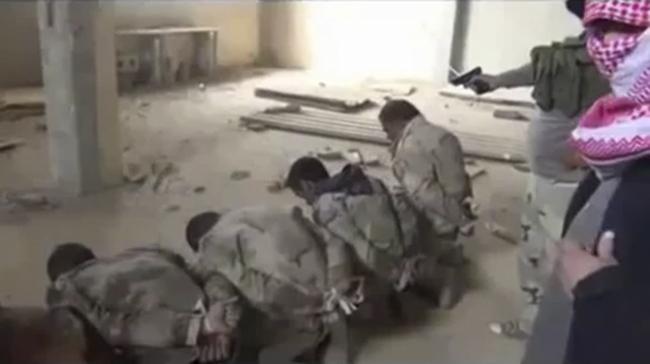
A still image made from undated footage posted on the YouTube social media website shows a suspected member of the al Qaeda-linked Islamic State in Iraq and the Levant (ISIL) group holding a pistol as he prepares to execute a row of what is believed to be Iraqi soldiers. REUTERS/YouTube

By Ned Parker, Ahmed Rasheed and Suadad Al-Salhy

The video shows a male corpse lying in the dirt, one end of a rope tied around his legs, the other fastened to the back of an armored Humvee.
 
Men in Iraqi military uniforms mingle by the vehicle. Someone warns there might be a bomb on the body. One hands another his smartphone. Then he stands over the body, smiles, and offers a thumbs-up as his comrade takes a photo. The Humvee starts to move, dragging the dead man behind it into the desert.
 
The short video was shown to Reuters last week by an Iraqi national police officer. It captures what appear to be Iraqi soldiers desecrating the corpse of a fighter from the Islamic State of Iraq and Levant (ISIL), a group reconstituted from an earlier incarnation of al Qaeda in Iraq.
 
"This is very normal," said the Baghdad-based police officer, who has many friends now fighting around the Sunni city of Ramadi. "Our guys get killed at the hands of al Qaeda. Why don't we do the same to them? This is self-defense."
 
Almost three months after Prime Minister Nuri al-Maliki declared war on Sunni militants in Iraq's western Anbar province, the fighting seems to have descended into a series of brutal atrocities, often caught on video and in photographs by both militants and Iraqi soldiers.
 
Iraqi soldiers say they are bogged down in a slow, vicious fight with ISIL and other Sunni factions in the city of Ramadi and around Falluja. They describe a hellish world in which Iraqi forces are running low on tank shells, lack aerial cover, are short of armored vehicles, and have been hit by high casualties and desertion rates. More than 380,000 people have fled their homes to escape the fighting, according to the United Nations.
 
Sunni militants regularly post videos and photos of executions and torture of government troops. Now, according to the police officer, an army officer, a general and an Iraqi Special Forces member, some Iraqi troops have begun replying in kind, carrying out extra-judicial executions, torture and humiliations of their enemy and posting images of the results online.
 
The images and disturbing accounts from Anbar are testament to the sectarian fervor sweeping Iraq. The security forces, who are mostly Shi'ite, and the Sunni militants often see themselves as players in a larger regional and sectarian battle. The brutalities are in turn deepening those divisions and risk turning Iraq's Sunni region into a permanent battlefield. Already the fighting is bleeding into the civil war in neighboring Syria.
 
A senior general in Baghdad acknowledged that soldiers working for Iraqi counter-terrorism units, or Special Forces, had carried out extra-judicial killings but called them isolated cases. He blamed the killings on a lack of training for new soldiers rushed out to replace wounded and slain colleagues.
 
"It is a field reaction, no more, no less," said the general. Like most of the Iraqi officials who spoke to Reuters for this story, he declined to be identified. "Usually, this happens when there is a military confrontation. The soldiers are finishing off the wounded militants, shooting them many times to express their anger."
 
He said the last case he knew of occurred just over two weeks ago in Khalidiya, a town near Ramadi, where Special Forces killed several ISIL members.
 
A spokesman for the Iraqi Counter-Terrorism Service strongly denied the accounts of executions.
 
"Allegations of executing unarmed terrorists are baseless and false. I think the victory our forces achieved has annoyed those who are issuing such accusations and forging videos in a way that smears our forces' reputation," said spokesman Sabah al-Noumani. "We are holding our soldiers accountable if they violated the simplest rules of engagement. We will not accept any violations."
 
The interior ministry, which has police stationed in Ramadi, told Reuters it took the allegations seriously. "If some mistakes happened, or human rights standards were violated during one of the battles, keep in mind it is not systemic," said spokesman Sa'ad Ma'an. "If it happened, whoever committed it will be investigated, held accountable and sent to a military court."
 
The U.S. government has rushed nearly 100 Hellfire missiles, M4 rifles, ammunition and surveillance drones to the Iraqi military since the start of fighting in January. The Obama administration has also started training Iraqi Special Forces in Jordan. Before the U.S. military withdrawal in late 2011, the military trained, equipped and conducted operations with Iraqi Special Forces.
 
Told about the alleged executions, a U.S. embassy official said: "Such allegations should be investigated by the (government). If confirmed, those responsible should be held accountable."
 
Reuters could not independently verify the images posted on the Internet, some of which were made available by Iraqi security personnel; others are to be found on public social media websites popular with the army, special forces and police.
 
Ramadi and Falluja first erupted in protest in December 2012. Iraq's Sunni minority has long accused the security forces of torture and other abuses; Sunnis were also frustrated about joblessness and the jailing of thousands of Sunni men and women on terrorism charges. The movement spread across the Sunni region to the west, north and east of Baghdad.
 
Prime Minister Maliki and his deputy Saleh Mutlaq, a Sunni, presented a package to address Sunni grievances last spring, only to have rivals block it in parliament.
 
The insurgent group ISIL, energized by its successes in Syria, then exploited an incident in which Iraqi security forces, reacting they said to gunfire, shot dead at least 50 unarmed protesters. ISIL launched a blistering campaign of suicide and car bombings that made last year Iraq's deadliest since 2008.
 
By late December 2013, the government had begun fighting back, targeting Ramadi and Falluja, which quickly became war zones.
 
In Ramadi, the Iraqi Special Forces - which fall under the command of the prime minister's military office - have fought their way to a tentative hold on the city centre. But rank-and-file Iraqi soldiers struggle to defend ground that the elite counter-terrorism forces have seized. One day the Golden Division, the most prominent of Iraq's Special Forces, takes land and hands it to the army. The next, Sunni rebels push them back.
 
Falluja, meantime, is surrounded by Iraqi troops but held by Sunni groups - ISIL, angry tribes and insurgent factions. Al Qaeda-linked groups have terrorized Iraq's Shi'ite majority since 2003.
 
"Maliki says that he is controlling Anbar ... but I am challenging any official to come visit Ramadi," said Sheikh Rafei Mashhin al-Jumaili, an anti-government fighter from Garma, a Sunni rebel hotbed. "The sons of tribes are fighting."
 
Western diplomats and Iraqi officers say that until Ramadi is secure, Iraqi troops will be unable to marshal an effective fighting force to enter Falluja and avoid being pinned down in both cities.
 
"Can they get ISIL out of Falluja, Ramadi and the surrounding area or does the conflict just become a sort of trench warfare that goes on indefinitely?" a Western diplomat asked. "You've got a standoff where nothing is really moving."
 
In the absence of territorial gains, the conflict is becoming more vicious by the day.
 
A Special Forces soldier on a break in Baghdad this month showed Reuters images on Facebook that are popular with the Iraqi military. The photos showed what he said were dead ISIL fighters in Ramadi. One was splattered in blood. Slogans boasted that the Iraqi forces had "trampled on ISIL's sniper rats."
 
Just back from the front, the soldier - hair dirty, voice tired - used his smartphone to pull up another Facebook picture of a soldier standing over a corpse. The dead man's body was splayed out in black jeans, his arms stretched above his head in the dirt. A slogan read: "The Golden Division keep trampling them."
 
"Whoever we capture now as a terrorist we kill him on the spot except for someone we want to investigate," the soldier said matter-of-factly.
 
"I've watched dozens executed."
 
The soldier flicked to a picture of a friend shot dead in Ramadi, dressed in his green Iraqi uniform, and fell silent. He said he saw 62 dead soldiers carried back to Baghdad one week; 40 the next.
 
He pulled up another picture on Facebook. This one showed an ISIL fighter's face mutilated by a bullet hole. He pointed to the AK on the ground by the fighter and said: "After we kill them, then we plant the weapon by his side."
 
The slang term the soldiers use for executions is "article five terrorism", the soldier said and the Facebook pages show. It's a play on Article Four Terrorism, a clause in the actual legal code that allows the security forces to arrest people on a blanket terrorism charge.
 
"Article Four is to arrest and Article Five is killing," said the soldier, grinning at the logic of the slang.
 
Iraqi army soldiers know about ISIL's videos of executions and of dead Iraqi soldiers, he said. He described his peers as tired and wanting to fight back. "Whoever ISIL captures, they execute him, so we are doing the same."
 
Commanders don't want to know, he added. Nobody asks questions.
 
"We believe it is correct because they (the militants) are Kuffars (Infidels)," he said, explaining the views of his brothers-in-arms. "It is the right thing to do. All of the military is doing it."
 
The soldier said he didn't care if this caused scandal. "Let people be angry," he said. "We are defending Iraq."
 
The militants are just as brutal. In one video posted online by ISIL followers and then circulated by enraged soldiers and pro-government activists, a militant cocks his pistol over a line of soldiers kneeling on the floor.
 
A voice is heard: "I beg oh God accept this sacrifice. Accept it from us. Oh God, accept it from us."
 
The militant pulls the trigger; a soldier slumps and the other soldiers tremble. The militant shoots again. Another gunman joins in and then a final one, shooting each soldier in turn. The screen goes black.
 
Now some Iraqi troops have adopted the same tactics.
 
An officer in an Iraqi army unit assigned to Ramadi since February said he first suspected the killings were happening within weeks of his arrival. He had been sitting at a lunch with officers from the army and the Golden Division, who have borne the brunt of casualties. "They were saying, 'We are suffering huge losses. We want to terrorize the terrorists. We want to smash and break their morale.'"
 
Soon after, the officer said, he witnessed his first execution: Two young men, blindfolded and hands tied, were brutally kicked and then shot by rank-and-file Golden Division members.
 
"I asked the soldier, ‘What's wrong with you?' The soldier said, ‘Sir, if they catch us they will cut us to pieces and throw our flesh to the dogs. At least we are not doing the same thing. We are only giving them bullets.'"
 
(Edited by Simon Robinson and Sara Ledwith)
June 30, 2014

Washington has been unwilling or unable to influence Iraqi politicians, in particular the man they helped bring to power

By Warren Strobel, Missy Ryan, David Rohde and Ned Parker
 
In November 2010, the United States faced a painful dilemma in Iraq. The man Washington had picked from near-obscurity four years earlier to be Iraq's prime minister, Nuri al-Maliki, had narrowly lost an election but was, with help from Iran, maneuvering to stay in power.
 
The clock was ticking as a U.S. troop drawdown gathered pace. American diplomats and Iraqi politicians cast about for alternatives to lead Iraq. But Iraqis had elected a hung parliament and there were no candidates with clear-cut support. Fearing chaos, Washington settled again on Maliki.
 
In a tense meeting in Baghdad's heavily fortified Green Zone, two U.S. diplomats sat down with Maliki, Kurdish chief Massoud Barzani, and Iyad Allawi, the politician whose bloc had won the most seats in the election and whose support was needed to finalize any deal. Earlier that day, U.S. President Barack Obama had phoned Allawi and pledged his support for a government that included all Iraq’s main sects.
 
In the meeting, tempers flared. Both Allawi and Maliki threatened to walk out, and Barzani at one point physically blocked Allawi from leaving the room, according to two people with first-hand knowledge of the meeting. The Americans encouraged them to set aside their differences. At last, the Iraqis agreed a final deal which was spelled out in a handwritten note.
 
The agreement finalized that day was the last real power-sharing accord Iraq had, and it failed almost immediately. Thanks to Maliki and his opponents' intransigence, the deal was never implemented and the country's sectarian divides widened. Maliki has governed more as a defender of the Shi’ites than as an inclusive national leader.
 
Now, as violent Sunni militants from the Islamic State of Iraq and the Levant (ISIL) cement their hold over western Iraq, declare a Caliphate, and threaten a new civil war, Washington has again demanded that Iraq's leaders form an inclusive government encompassing the country's minority Sunnis and Kurds.
 
But former officials and even some in the current Obama administration say that effort may also founder. Maliki had been expected to be named prime minister for a third term after his coalition won April elections, but as security deteriorates pressure is mounting even from within his Shi'ite power base for him to go. Even if he is pushed aside, Washington will likely struggle to exert much sway over the situation.
 
More than a dozen former and current diplomats say the relationship between Washington and Baghdad has been marred by repeated missteps by both Obama and his predecessor President George W. Bush. Washington, the diplomats say, has been unwilling or unable to influence Iraqi politicians and in particular the man they helped bring to power.
 
While Maliki lost the 2010 elections, he emerged stronger, said Emma Sky, a British Middle East scholar who was a political adviser to U.S. commander Gen. Raymond Odierno from 2007-2010. Maliki then "faced no consequences when he reneged on his commitments" to integrate Sunnis into the government, she said.
 
Ali Khedery, a long-serving adviser to multiple U.S. ambassadors in Baghdad, said he resigned after warning in an October 2010 memorandum that U.S. backing for Maliki's premiership would lead to dictatorship, renewed civil war and Iranian hegemony in Iraq. Other U.S. and British officials who shared his view had left Baghdad by the fall of 2010, he said, but his memo reached top White House officials, who overruled him.
 
To be fair, Maliki took some early positive steps, including facilitating the U.S. surge and confronting Shi'ite militiamen in Basra, according to former U.S. ambassador to Baghdad Zalmay Khalilzad. But his rule has proved increasingly divisive.
 
Maliki's office declined to comment for this story, citing the demands on his time from the war campaign and efforts to choose a new government. Maliki has long blamed his opponents for sabotaging him, and feels let down by Washington.
 
"There is a bitterness in Maliki's tone when he talks ... about the American role, even what is going on in DC, with speeches in Congress and Obama's speech," longtime Maliki ally Sami Askari said about his mood in recent weeks. "He ... has no hope. He says we have to rely on ourselves."
 
To some officials, the painful arc of U.S.-Iraq relations speaks less about one man, Maliki, than it does about the limits of American military and political power to bring democracy or exert decisive influence in the Middle East.
 
After decades of rule by autocrats, often supported by Washington, the region remains riven with rivalries and distrust. Despite the Arab Spring, a generation of politicians like Maliki are skeptical that political compromise can ever be reached or fair elections held.
 
James Jeffrey, the U.S. ambassador in Baghdad from 2010-2012, said the American effort to remake Iraq was never realistic or sustained enough to succeed. The Bush administration failed to explain to the U.S. public the scope of the effort needed and the Obama administration frittered away the limited influence it had, he said.
 
"This all operates on the assumption that we have the skill, the patience, the national interest, and the support from the American people to keep an occupation force in a country and to do long-term nation building a la Japan and Germany in an area that is far less fertile," Jeffrey said. "I challenge the underlying assumption that we could do this."
 
Robert Ford, who twice served as a senior American diplomat in Baghdad, said Washington was often impatient for Iraqi politicians "to finish their tiresome and long political negotiations." At the same time "you’ve got to give them time to work out compromises that are sustainable."
 
Obama, elected in 2008 on a platform to end the war, has visited Iraq just once as president. Having blessed Maliki's continuation in power, he completed Bush’s plan to withdraw U.S. troops and quickly refocused attention elsewhere, ending the frequent video conferences Bush held with Maliki and handing the Iraq portfolio to Vice President Joe Biden.
 
The White House declined repeated requests to discuss the U.S. relationship with Maliki.
 
Maliki, who has visited Washington twice in the last three years, has grown mistrustful of America's inconstancy.
 
"I think he has a very hard time figuring us out, because we do a lot of things that don’t seem consistent to him. I think he finds us very frustrating, and very difficult to read," said Ken Pollack, a former White House and CIA official, and long-time Iraq specialist.
 
Pollack, who met Maliki in March and later briefed U.S. officials on his trip, said the Iraqi leader appeared obsessed with marginalizing his political opponents after April's national elections. He showed little interest in discussing reconciliation or economic development, Pollack said.
 
"We were trying as hard as we could to get him to talk about something other than a pogrom against his opponents," said Pollack, now at the Brookings Institution think tank. "He just wouldn't do it, no matter how much bait we gave him."
 
Maliki is no American creation. He spent years in exile as a member of a secretive Shi'ite dissident group known as the Dawa, eluding assassins from Iraqi dictator Saddam Hussein's Sunni-led Baath Party. But Washington did have a hand in the stern-faced 64-year-old premier's final ascent.
 
In 2006, as a Sunni insurgency raged, Iraq’s then-Prime Minister Ibrahim al Jaafari, a Shi’ite, found himself untrusted by Shi'ite, Kurd and Sunni leaders alike, as well as by Washington.
 
Eager to bolster the U.S. public’s belief in the war and Iraq’s future, Bush officials turned to Maliki as a compromise candidate. Secretary of State Condoleezza Rice arrived in Baghdad on a surprise visit and met Maliki and other Iraqi leaders.
 
At the residence of U.S. ambassador Khalilzad, Maliki told American officials that his first goal would be to ease the mistrust between Iraq's religious groups.
 
"He was regarded as an Arab nationalist," Khalilzad told reporters recently. "He was clean with maybe the potential to  be a strong leader."
 
But Ford, the former diplomat, said the Americans misjudged Maliki. 
 
"When we supported Maliki in 2006 to become the new prime minister we didn't realize how capable a politician he could be," Ford said, "and we didn't realize how strong a survivor he could be."
 
Over time, it became increasingly clear that Maliki viewed the world in stark terms shaped by his own fight against Baathists, whom he compared to the Nazi party in Germany. At the same time, he gradually amassed power in the prime minister's office.
 
Maliki set up operational commands that circumvented the regular military hierarchy, which the United States had insisted include Sunnis and Kurds. In his second term, he took the posts of defense and interior minister for himself and named loyalists to senior military positions as the United States was trying to strengthen Iraq’s army.
 
"Over the years, we didn't strongly react to these moves," Ford said, "as various key elements of the Iraqi body politic grew ever more alienated from Maliki and his team."
 
By 2009, Maliki had set up an elite army unit which reported directly to his military office and had been accused of abuses. One of the most notorious cases came in 2010 when human rights inspectors discovered that at least 400 Sunni men had been picked up from Mosul in military sweeps and then held without charges and allegedly tortured in an undeclared facility at a Baghdad military airport base. Maliki said he did not know about the detainees until rights inspectors informed him. He blamed the detentions and abusive conditions on Baathists who had infiltrated his security forces.
 
Christopher Hill, who served as the American ambassador in Iraq in 2009 and 2010, said the United States did try to push Maliki to end his sectarian rule, but failed. The 2007 "surge" and Sunni Arab uprising against al Qaeda-allied militants weakened the insurgency but did nothing to resolve Iraq’s sectarian divisions, Hill said. "Nothing was squared away in 2007."
 
He recalled how Maliki resisted paying Sunni tribal fighters whose support was crucial to end the worst of the sectarian killing unleashed in 2003.
 
"I had to go to him, sometimes on a weekly basis, just to make sure the check was indeed in the mail," Hill said. "Just looking at his body language, he didn't believe in the whole venture."
 
Many U.S. and British officials directly involved in the events cite March 2010 as the moment when Iraq began to become unglued again, and U.S. relations with Maliki became more troublesome.
 
By then, Iraq's sectarian war had eased, and the parliamentary polls that month were both relatively peaceful and fair. Maliki's State of Law coalition came in a very close second behind a largely Sunni slate led by Allawi, a secular Shi'ite who had acted as interim prime minister.
 
Maliki leaned on Iraq's Supreme Court to produce a ruling that allowed him, not Allawi, to try to form a government, according to these officials. Allawi's bloc had won 91 seats compared to Maliki's 89, and the ruling appeared to violate Iraq's constitution, which U.S. experts had helped to draft.
 
Sky, the former adviser, said U.S. national security aides differed on how to respond. Some argued that Washington should back Allawi's right to form a government, strengthening Iraq's political system.
 
"I think if the U.S. had agreed on this approach, it might have led to an agreement among the elites on real power sharing," Sky, now at Yale University, said in an e-mail.
 
Hill, U.S. ambassador at the time, said the lingering sectarian divide made it impossible for Allawi to become prime minister. After the election, Shi'ite religious parties that made up a majority in parliament refused to support him.
 
"It wasn’t going to happen," said Hill. "There is absolutely no way we could have affected that short of a 1950s style, Latin American coup."
 
Allawi could not be reached for comment for this story. And some Western diplomats and military officials criticized the Obama administration for choosing Hill, who had little Middle East experience, as their envoy.
 
Jeffrey, who took over from Hill as ambassador in August 2010, said that as the process of choosing a prime minister dragged on U.S. diplomats used every bit of influence they had to try to broker a deal, even as they looked out for an alternative to Maliki.
 
"There was a lot of opposition to him, particularly among the American military, so I was willing to try to delay this thing and see if we could find alternatives," Jeffrey said. "We never found one."
 
It took almost 10 months, until late December 2010, to finalize a government. U.S. officials worried the continued political vacuum could unleash chaos right in the middle of the U.S. troop withdrawal.
 
Eventually, Sky said, Washington and Iran made it clear Maliki was their choice.
 
Khedery, the adviser to U.S. ambassadors, said Shi’ite Iran and the chief of Tehran's covert Qods Force, Gen. Qassem Suleimani, played a central role in cementing other Shi'ite leaders' backing for Maliki. Iran pressured a key Shi’ite group loyal to firebrand cleric Moqtada al-Sadr, who had feuded with Maliki, to support him.
 
A year later, the last U.S. combat troops left Iraq, taking with them much of Washington's remaining clout in the country and leaving behind a flawed leader.
 
"Not only was this predictable, but it was predicted - it was preventable," Khedery said of Iraq's current catastrophe.
 
On December 15th, 2011, then-U.S. Defense Secretary Leon Panetta watched as U.S. soldiers at Baghdad's heavily fortified airport lowered the flag of American forces in Iraq, marking the end of Washington's Iraq adventure.
 
"Challenges remain, but the United States will be there to stand by the Iraqi people," Panetta said at a modest ceremony notable for the absence of Iraq's most senior politicians, who portrayed the withdrawal as a victory for Iraqi sovereignty.
 
How closely the Obama administration stood by after 2011 to prevent the worsening of Iraq's sectarian divisions is open to debate.
 
Even as Panetta spoke, government forces had surrounded the home of Vice President Tareq al-Hashemi, Iraq's highest-ranking Sunni official, suspected by Maliki and other officials of ties to killings and bombings, links he has always denied.
 
Four days later, Iraq's Interior Ministry issued an arrest warrant for Hashemi. He fled Baghdad for Iraqi Kurdistan and was later sentenced to death in absentia.
 
The U.S. response was muted, partly because Obama administration officials believed allegations against Hashemi's entourage had merit and because not many Sunnis rushed to defend Hashemi, the officials said.
 
U.S. officials were more troubled by Maliki's move a year later against another of the country's top-ranking Sunnis, popular Finance Minister Rafie al-Essawi, for alleged ties to militants. In December 2012, government forces detained a number of Essawi's bodyguards, provoking protests in Anbar, Essawi's home province. Essawi resigned in March 2013.
 
"Essawi was a different story. There was a lot of concern about that. We made our concern well known," a U.S. official said on condition of anonymity. But the incident barely registered publicly in Washington, where the White House was focused on the worsening conflict in Syria.
 
The U.S. embassy saw Essawi, a former surgeon, as a moderate Sunni with whom they could do business. Sky said U.S. intelligence officials looked into accusations against Essawi and judged him innocent.
 
In the Essawi case and others, U.S. diplomats sought to stop Maliki and other politicians inflaming sectarian tensions, the official said.
 
"We’ve prevented them from doing some things, but some things (we) haven't been able to," he said. "And I think that’s kind of what’s led us to where we are today."
 
Critics say the Obama administration was not bold enough.
 
"We should have been standing up and naming and shaming," Pollack said. "The White House said nothing, or talked out of both sides of its mouth, and came up with all these excuses to do nothing, because in truth they didn’t want to do it."
 
Today, as Obama seeks to push Iraqi political leaders together to repel ISIL, he will have to overcome skepticism from Iraqis who believe the United States has continued to back Maliki even as he sidelined Sunnis and Kurds. The Kurds, whose leader Barzani supported Maliki in 2010, feel particularly aggrieved. They now accuse Maliki of walking away from the terms of the deal.
 
With Iraq facing possible disintegration, former U.S. ambassador Jeffrey said the fundamental problem was born during American occupation: Democracy empowered a Shi’ite majority that fears its former Sunni rulers.
 
"We’re all about democracy, that’s what we were doing there, and democracy produced this result."
 
(Warren Strobel and Missy Ryan reported in Washington, David Rohde in New York, and Ned Parker in Baghdad; Additional reporting by Mark Hosenball in Washington; Editing by Jason Szep and Simon Robinson)
October 1, 2014

Islamic State sees itself as both army and government. That shapes its policies on everything from oil to wheat.

Villagers harvest wheat in a field in Albu Efan, southwest of Falluja, 50 km (30 miles) west of Baghdad, in this May 2, 2008 file photo.

By Maggie Fick

For Salah Paulis, it came down to a choice between his faith and his crop.

A wheat farmer from outside Mosul, Paulis and his family fled the militant group Islamic State early last month. The group overran the family farm as part of its offensive that captured vast swathes of territory in northern Iraq. Two weeks later, Paulis, who is a Christian, received a phone call from a man who said he was an Islamic State fighter.
 
“We are in your warehouse. Why are you not here working and taking care of your business?” the man asked in formal Arabic. “Come back and we will guarantee your safety. But you must convert and pay $500.”
 
When Paulis refused, the man spelled out the penalty. “We are taking your wheat,” he said. “Just to let you know we are not stealing it because we gave you a choice.”
 
Other fleeing farmers recount similar stories, and point to a little-discussed element of the threat Islamic State poses to Iraq and the region.
 
The group now controls a large chunk of Iraq’s wheat supplies. The United Nations estimates land under IS control accounts for as much as 40 percent of Iraq’s annual production of wheat, one of the country’s most important food staples alongside barley and rice. The militants seem intent not just on grabbing more land but also on managing resources and governing in their self-proclaimed caliphate.
 
Wheat is one tool at their disposal. The group has begun using the grain to fill its pockets, to deprive opponents – especially members of the Christian and Yazidi minorities – of vital food supplies, and to win over fellow Sunni Muslims as it tightens its grip on captured territory. In Iraq’s northern breadbasket, much as it did in neighboring Syria, IS has kept state employees and wheat silo operators in place to help run its empire.
 
Such tactics are one reason IS poses a more complex threat than al Qaeda, the Islamist group from which it grew. For most of its existence, al Qaeda has focused on hit-and-run attacks and suicide bombings. But Islamic State sees itself as both army and government.
 
“Wheat is a strategic good. They are doing as much as they can with it,” said Ali Bind Dian, head of a farmers’ union in Makhmur, a town near IS-held territory between Arbil and Mosul.
 
“Definitely they want to show off and pretend they are a government.”
 
The Sunni militants and their allies now occupy more than a third of Iraq and a similar chunk of neighboring Syria. The group generates income not just from wheat but also from “taxes” on business owners, looting, ransoming kidnapped Westerners and, most especially, the sale of oil to local traders. Oil brings in millions of dollars every month, according to estimates by Luay Al-Khatteeb, a visiting fellow at the Brookings Doha Center in Qatar. That helps finance IS military operations – and is why IS-held oilfields in Syria are targets in U.S.-led airstrikes.
 
“Islamic State presents itself as exactly that, a state, and in order to be able to sustain that image and that presentation, which is critical for continued recruitment and legitimacy, it depends on a sustainable source of income," said Charles Lister, another visiting fellow at the Brookings Doha Center.
 
In early August, Kurdish farmer Saeed Mustafa Hussein watched through binoculars as armed IS militants shovelled wheat onto four trucks, then drove off in the direction of Arab villages. Hussein said he does not know what became of his wheat. But he knows that IS runs flour mills in areas it controls and he believes that his wheat was likely milled and sold.
 
He had 54 tonnes of wheat on his farm in the village of Pungina, northeast of Arbil, wheat he had been unable to sell to a government silo or private traders because of fighting in the area.
 
The militants also took 200 chickens and 36 prized pigeons.
 
"What made it worse was that I was helpless to prevent this, I couldn’t do anything. They took two generators from the village that we had recently received from the Kurdish government after a very long process," said Hussein.
 
Residents are too scared to return even though Kurdish fighters are now in control. "We think the Islamic State laid mines to keep us from going back," said neighbor Abdullah Namiq Mahmoud.
 
There are scores of similar stories at displacement camps across Kurdistan.
 
"We escaped with our money and gold but left our wheat and furniture and everything else," said farmer and primary school teacher Younis Saidullah, 62, a member of the tiny Kakaiya minority.
 
"Everything we built for 20 years using my salary and our farming: It's all gone. We are back to zero," he said, sitting on the floor of a tent at a United Nations-run camp on the outskirts of Arbil.
 
After Saddam Hussein’s 1990 invasion of Kuwait triggered Western sanctions, the then-Iraqi dictator built a comprehensive subsidised food distribution system in Iraq. That was expanded under the United Nations’ Oil-for-Food program. Joy Gordon, a political philosophy professor at Fairfield University in Connecticut and author of the 2010 book “Invisible War: The United States and the Iraq Sanctions,” estimates that two-thirds of Iraqis “were dependent primarily or entirely” on food subsidies between 1990 and 2003.
 
The system survived the U.S. invasion and years of violence. Now fully run by the Iraqi government, it has been plagued in recent years by “irregular (food) distributions” that have cut dependency, according to a June report by the United Nations' Food and Agriculture Organization. A former U.S. Department of Agriculture economist estimates that about quarter of Iraqis living in rural areas were dependent on subsidised food before the latest violence, while another quarter used it to top up food they bought.
 
IS is demonstrating that controlling wheat brings power. As its fighters swept through Iraq’s north in June, they seized control of silos and grain stockpiles. The offensive coincided with the wheat and barley harvests and, crucially, the delivery of crops to government silos and private traders.
 
IS now controls all nine silos in Nineveh Province, which spans the Tigris river, along with seven other silos in other provinces. In the three months since overrunning Nineveh’s provincial capital Mosul, IS fighters have forced out hundreds of thousands of ethnic and religious minorities and seized hundreds of thousands of tonnes of wheat from abandoned fields.
 
One target was the wheat silo in Makhmur, a town between the cities of Mosul and Kirkuk. The silo has a capacity of 250,000 tonnes, or approximately 8 percent of Iraq’s domestic annual production in 2013.
 
IS attacked Makhmur on August 7. But even in the weeks before that, the group had found a way into the silo and the Iraqi state procurement system.
 
Abdel Rizza Qadr Ahmed, head of the silo, believes that IS forced local farmers to mix wheat produced in other, IS-controlled areas into their own harvest. The farmers then sold it to Makhmur as if it all had been grown locally. In the weeks before the attack, the silo purchased almost 14,000 more tonnes than it had in 2013. That extra wheat is worth approximately $9.5 million at the artificially high price Baghdad pays farmers.
 
Ahmed believes IS was looking to make money from the wheat and ensure there was bread available for Sunnis in the areas it controlled.
 
Ahmed said it was not his job to investigate the source of the grain, just to buy it. “We just take the wheat from the farmers and we don't ask 'Where did you get this from?'" he said.
 
Huner Baba, local director general of agriculture, said he too believed that traders and farmers had sold wheat from outside the region.
 
But Baghdad usually pays its wheat farmers around two months after they deposit their produce and so wheat farmers around Makhmur  – and therefore IS – had not yet been paid by the time IS militants entered the town on June 7 and, according to Baba, headed for the silo.
 
The militants were met by Iraqi Kurdish fighters, known as Peshmerga, and fighters from the Kurdistan Worker’s Party (PKK). After IS took the silo, Baba said, they installed snipers there. He speculates that the militants believed U.S. warplanes would not strike the facility, which is in the center of town.
 
“They want to get people on their side especially the Arabs. Maybe that’s why they didn’t do anything to the wheat, not to anger people,” he said.
 
IS held Makhmur for three days before the Kurdish fighters and U.S. air strikes on IS positions – though not on the silo – drove them out. U.S.-led air strikes did hit grain silos in the northern Syrian town of Manbij on Sept 28. A group monitoring the war said the aircraft may have mistaken the mills and grain silos for an Islamic State base. There was no immediate comment from Washington.
 
In many ways, IS is replicating in Iraq strategies it developed in Syria. In the year it has controlled the town of Raqqa in northeastern Syria, for instance, IS militants say they have allowed former employees from Assad’s regime to continue to run its mills. The group has set up a wheat "diwan," or bureau, in charge of the supply chain, from harvesting the crop to distributing flour.
 
The same push to keep things running smoothly can be seen in Iraq. IS fighters have regularly avoided destroying government installations they have captured. When IS took over Iraq's largest dam it kept employees in place and even brought in engineers from Mosul to make repairs.
 
Baghdad, too, has tried to minimise upheaval.
 
Hassan Ibrahim, head of Iraq's Grain Board, the Trade Ministry body responsible for procuring Iraq’s wheat internationally and from local farmers, said that government employees in IS-held areas keep in regular touch with head office. Some staff in IS areas even come to Baghdad every couple of weeks, he said.
 
In the past few weeks, he said, IS fighters had disappeared from some areas in Mosul and Kirkuk because of the U.S.-led air strikes. “The situation is stable,” he said, with IS fighters mostly happy to allow state employees to continue to run the silos.
 
“I give instructions to my people to try to be quiet and smooth with those people because they are very violent people. It is not good to be violent with violent people because they will come to kill you. Our aim is to keep the wheat.”
 
After IS’s June offensive, Ibrahim was ordered to suspend salaries for workers in IS areas. “But this troubled me," he said. "I cannot have the mills stopping. I need people to stay there like guards to convince the Islamic State that wheat is important for everybody.”
 
Ibrahim says he convinced his bosses to keep paying salaries. A Trade Ministry spokesman confirmed that all government employees in Mosul had been paid their salaries “through state banks in Kirkuk, as it’s safer and under government control.”
 
Ibrahim is now worried about farmers who have not been paid for the wheat they delivered in the weeks before the grain was seized by IS.
 
He said the Grain Board and the Trade Ministry were trying to pay farmers either living in IS-held areas or recently displaced from them. "We would like to help the farmers, but not IS," he said.
 
In some places, the IS stranglehold on wheat appears to be winning support among Sunnis.
 
Ahsan Moheree, chairman of the government-affiliated Arab Farmers Union in Hawija, says IS has gained in popularity since its fighters took over. Baghdad’s dismissive attitude towards the country’s Sunni Arabs had forced people towards IS, he said. But IS’s ability to provide food had also helped.
 
“They distribute flour to the Arabs in the area. They get the wheat from the Hawija silo ... And they run the mill and they distribute to people in a very organised way,” he said.
 
Even those who have fled IS see wheat as one reason for the group’s strength. 
 
“Nowadays a kilo of wheat is 4,000 or 5,000 dinars ($3.45 - $4.30). It used to be 10,000 to 11,000 dinars,” said Joumana Zewar, 54, a farmer who now lives in Baharka camp outside Arbil. IS and Sunni Arabs are selling the wheat they stole “for very cheap. It’s cheap because they stole it.”
 
Zewar called a friend in Mosul to check on the latest prices.
 
“The price of foods and bread is very cheap,” the friend said. Islamic State had taken control, and as in Syria, was dictating prices. “They are the government here now. They are going to the bakeries and saying, ‘Sell at this price.’”
 
The big worry now is next season’s crop. In Nineveh province, home to the capital of the group’s self-declared caliphate, 750,000 hectares (1.8 million acres) should soon be sown with wheat and 835,000 hectares with barley, an Iraqi agriculture ministry official said.
 
The official said that the province normally has 100,000 farmers. But thousands have fled.
 
Iraqi farmers normally get next season’s seeds from their current harvest, keeping back some of the wheat for that purpose. IS controls enough wheat so finding seeds should not be a problem. It also controls Ministry of Agriculture offices in Mosul and Tikrit which should have fertilizer supplies.
 
But getting the seeds and fertilizer into the right hands will be a problem. Mohamed Diab, director of the World Food Program's Regional Bureau for the Middle East, North Africa, Central Asia and Eastern Europe, said that it is "highly unlikely" that displaced farmers would return.
 
"The picture is bleak regarding agriculture production next year," he said. "The place where displacement has happened is the main granary of the country."
 
That’s especially true for non-Sunni Arab farmers. Those who have remained on their land just outside IS-held territory fear the militants will soon take their villages, and their harvested but unsold crops.
 
Even if that does not happen, they say, they will not plant after the first rain, which typically comes at the end of September or in early October.
 
Farmers in the town of Shekhan, nestled among sun-bleached wheat fields, say they have no hope of getting the seeds, fertilizer and fuel needed to plant because the provincial government in Mosul is under IS control.
 
"The real problem is how to get seeds to those inside Mosul and surrounding areas,” said Nineveh Governor Atheel Nujaifi, who believes production will drop next season.
 
Bashar Jamo, head of a local farmers' cooperative, is also worried. “The most important thing to us is agriculture, not security. Maybe (IS) will have a state, maybe an army, but all we need is to be able to farm.”
 
(Additional reporting by Ned Parker and Ahmed Rasheed in Baghdad, Maha El Dahan in Abu Dhabi and Mariam Karouny in Beirut; Editing by Michael Georgy and Simon Robinson)
December 3, 2014

The biggest U.S. oil company’s deal with Iraqi Kurdistan was a boon, not just financially but also politically.

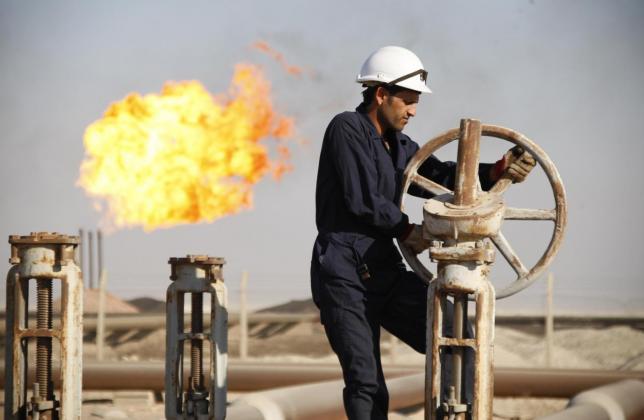
A worker adjusts the valve of an oil pipe at West Qurna oilfield in Iraq's southern province of Basra in this November 28, 2010 file photo. REUTERS/ATEF HASSAN/FILES

By Dimitry Zhdanikov, Isabel Coles and Ned Parker

In January 2011, Exxon hired one of the best connected men in Iraq: Ali Khedery, an American of Iraqi descent who had served in Baghdad as a special assistant to five U.S. ambassadors and a senior adviser to three U.S. generals.
 
At a meeting with Exxon a few months later to analyse Iraq's future, Khedery laid out his thoughts.
 
Iraq under Prime Minister Nouri al-Maliki was moving towards dictatorship and civil war, he said he told the session. "We will see a rise in violence and a total paralysis in Baghdad," he recalled saying. Iraq was likely to align itself more closely with Iran, which will "have an adverse impact on U.S. companies."
 
The gloomy scenario grabbed the attention of Exxon executives. Just two years earlier, they had signed a $25 billion deal with Iraq to develop West Qurna, one of the largest oil fields in the country.
 
"No one wanted to hear that they had negotiated a multi-billion dollar deal in a country which will soon implode," said Khedery, who has detailed to Reuters the meeting and subsequent events for the first time.
 
He suggested an alternative: Kurdistan, a semi-autonomous region in northern Iraq that was politically stable, far from the chaos in the south, and had, by some estimates, oil reserves of 45 billion barrels.
 
Less than a year later, Exxon signed a deal with Kurdistan. The story of how that happened explains much about the would-be nation's growing power.
 
Interviews with key players in the secret 2011 negotiations - the talks involved not just Exxon but also fellow Western oil giant Royal Dutch Shell - show how Exxon's decision to invest infuriated both Washington and Baghdad, and helped propel Kurdistan closer to its long-held goal of independence.
 
Kurds like to say they are the world's largest ethnic group without a state. Numbering some 35 million, they inhabit a band that stretches from Syria across southern Turkey and northern Iraq and into Iran. Most follow Sunni Islam and speak their own distinct languages.
 
The Exxon deal fueled Kurdish self-belief. The presence of the biggest U.S. oil company has helped not just financially but also politically and even psychologically.
 
"Part of the process of building our region has to do, of course, with dealing with oil, signing contracts, negotiations with various countries," Fuad Hussein, chief of staff to Kurdistan's president, told Reuters. The Exxon deal validated smaller oil deals Kurdistan had already signed and was "a big victory for us."
 
Exxon declined to comment.
 
Despite the deal, Kurdistan's path to nationhood is far from certain. Independence is opposed by Washington, Baghdad, neighbouring Turkey and Iran. It also remains unclear whether the Kurds have the strength to stand alone in this volatile region. As militant group Islamic State (IS) advanced through Iraq this summer, Baghdad's troops melted away, leaving the Kurdish fighters known as peshmerga to halt the extremists. When IS threatened to take Arbil, Iraqi Kurdistan's capital, the United States bailed out the Kurds with a bombing campaign. On Tuesday, a temporary agreement between Baghdad and Arbil to end their dispute over oil exports and budget payments looked, at first glance, like Kurdistan returning to the Iraqi capital's control.
 
But the deal does nothing to resolve the issues between Arbil and Baghdad, while forcing the Iraqi capital to effectively acknowledge Arbil's development of its energy resources with Exxon, other foreign companies and Turkey. Arbil has compromised, but it has also locked in the progress of the past three years.
 
Oil companies have been interested in Kurdistan for years. But after the United States toppled Iraqi strongman Saddam Hussein in 2003, a series of governments in Baghdad made clear that to get a slice of the biggest prize - the huge reserves in Iraq's south - firms should not cut separate deals with the Kurds.
 
The fear: Letting the Kurds control the oil would rob central government of billions of dollars in revenue and bring a breakup of the country closer.
 
Western firms' reluctance began to melt after Kurdistan passed more business-friendly oil legislation in 2007. Mid-sized firms began to invest, though the biggest players remained on the sidelines.
 
Baghdad finally divvied up the oil concessions in Iraq's south in 2009 and 2010, and oil majors rushed to sign. But terms were tough and many firms, including Exxon, were soon frustrated.
 
Quietly, in late 2010, Exxon began putting out feelers to the Kurdish regional government. Proper talks began in early 2011, according to Hussein, the Kurdish president's chief of staff. Khedery had resigned from the U.S. administration the previous year to protest against U.S. policies in Iraq, which he thought were hurting Washington's interests in the region.
 
In the oil world, filled with Texas oilmen and former U.S. military types, Khedery stood out. Young, rail thin and with the bearing of an academic, he appeared confident and well connected. He had been privy to many of the backroom political deals in Iraq since 2003, and had a direct channel to the president of Kurdistan.
 
"He knew almost every official from the American side in Baghdad and he used to know every Iraqi leader," said Hussein, who had befriended Khedery when they worked together as advisers to the U.S. occupation authorities in Baghdad.
 
Exxon began to rethink its approach to Kurdistan when a small group of company officials met long-time CEO Rex Tillerson and his deputies a few times in the spring of 2011.
 
The first meeting took place at Exxon's headquarters near Dallas. The small Exxon team briefed Tillerson in his huge conference room. The oil boss listened quietly to the presentations, most of which focused on technology and geology, with a brief talk on Iraqi politics. Afterwards, most of Tillerson's questions were about politics. That's when Khedery spoke up.
 
"I told him everything I thought would happen in Iraq," Khedery said. "I said that if you want to manage risk, then the last place you want to be is in Baghdad or southern Iraq." Those zones, he warned, were filled with Shi'ite militias, who had killed and maimed thousands of American troops, as well as "neo-Baathist insurgents, al Qaeda sleeper cells, and Iranian Revolutionary Guards."
 
He pointed instead to Kurdistan, which was "more peaceful, more predictable, and overwhelmingly pro-American."
 
Serious talks with the Kurds began soon after, with a call from Khedery to Hussein, according to the presidential chief of staff. The two sides met secretly in London, Dubai and Arbil.
 
On the Kurdish side, the main negotiator was Oil and Gas Minister Ashti Hawrami. But Kurdistan President Massoud Barzani also tapped Hussein to attend discussions. Unusually, the president even joined some meetings himself. Exxon was represented by senior executives from Texas.
 
But it was not just Exxon and the Kurds talking. Europe's biggest oil major, Shell, was also involved, according to Hussein. Shell was Exxon's junior partner in the West Qurna field and had a separate deal with Baghdad to invest tens of billions of dollars in southern Iraq's Majnoon field. Exxon and Shell believed that teaming up - they had a combined market capitalisation of more than $600 billion - would make it hard for Baghdad to throw them out of the south even if they cut a deal with Kurdistan.
 
The first meeting was in Arbil, which is dominated by a central citadel that is one of the oldest continuously inhabited settlements in the world. The Exxon team, concerned about Kurdistan's relationship with Baghdad, and longterm stability, quizzed Barzani on his views of Iraq.
 
"They wanted to know how my president is thinking, what is his vision," Hussein said. The chief of staff said Barzani called Prime Minister Maliki's policies damaging to Iraq. "(Barzani said) that if it will continue this is bad for the country, this is dangerous, the path must be changed."
 
Barzani and Maliki both declined to comment.
 
In the summer of 2011, as negotiations continued, Kurdistan sold two oil blocks to Hess, a U.S. company. Exxon and Shell had been keen to get the blocks, and the surprise sale nearly ended the talks, according to Hussein. To show Arbil was still serious, Barzani promised more attractive terms, according to both Khedery and Hussein.
 
A signing ceremony in Arbil was planned for mid-October, but another complication arose. Shell was in the final stages of talks with Baghdad to obtain exclusive rights to process all natural gas produced in Iraq's south, a deal worth $17 billion. If Shell signed with Arbil, Baghdad might scuttle the gas deal.
 
At a meeting with Barzani in the Imperial hotel in Vienna, where the Kurdish president was on holiday, Exxon executives said they were committed to signing. Shell's executives, though, seemed less sure.
 
What Barzani and Exxon did not know was that Shell's CEO Peter Voser was in Baghdad, meeting Maliki to clinch the gas deal in southern Iraq. Just three days before the Kurdish deal was to be signed, Shell told Exxon it was no longer interested.
 
A Shell spokesman declined to answer questions about the Kurdistan deal. "Today our focus is on delivering the Basrah Gas Company project and the Majnoon Oil Field development, both of which are projects of critical importance to the reconstruction and economic development of (Iraq)," the spokesman said.
 
Exxon pushed ahead. The firm believed that rivals such as Chevron and Total would follow suit.
 
The Texans kept things low key, though. An Exxon delegation flew to Arbil to sign the deal. Tillerson stayed in Dallas.
 
The six blocks Exxon won were scattered around the autonomous region. One block was near Turkey and another near the border with Iran. The three most controversial were along the line that divides Kurdistan and the rest of Iraq, straddling areas whose control is disputed between Arbil and Baghdad. The Kurds included the blocks in the deal and later managed to bring the governor of Nineveh, one of the provinces affected, on board.
 
To some, it looked as if Arbil was using Exxon to consolidate its borders. Hussein said Arbil already controlled the disputed territories and did not need Big Oil's legitimacy. Barzani, though, has since described the presence of companies such as Exxon as a form of insurance for Kurdistan.
 
When news of the deal leaked in early November 2011, both Baghdad and Washington were furious. Maliki wrote a letter to President Barack Obama demanding he push Exxon to scrap the deal. Iraq's deputy prime minister for energy affairs summoned Exxon executives to explain.
 
To Washington, the deal was an embarrassment. The U.S. strategy was built on support for Maliki and its 'one Iraq' policy of a unified nation under a strong central government. Now one of America's most powerful corporations had undermined that approach.
 
A former U.S. diplomat told Reuters the U.S. government had less than a day's notice of Exxon's deal. U.S. Ambassador to Iraq James Jeffrey was livid, said the former diplomat. "My understanding is that (Jeffrey) dropped a few F-bombs," he said. "He was less than amused."
 
Hussein remembers a tense meeting he and the Kurdish oil minister, Ashti Hawrami, had with Jeffrey in Baghdad soon after the deal. "He was very angry," Hussein said. "We were trying to explain that what we are doing is in the interest of Iraq, what we are doing is in the interest of Kurds, what we are doing is legal."
 
Hawrami declined to comment. Jeffrey has since left the State Department. He is reported to be a consultant to Exxon, but declined to comment for this story.
 
Despite the anger, the deal was a political triumph for the Kurds. Exxon had shown Arbil could attract oil majors regardless of what Baghdad thought. Hawrami unveiled the deal at an Arbil energy conference in late 2011. Kurdistan had initially signed contracts with "small and beautiful" companies, he said. Now it was working with "the giant and magnificent."
 
Within a few months, both Chevron and Total signed deals, further strengthening Kurdistan. A pact with Russia's Gazprom followed.
 
"What really binds Kurdistan to Baghdad is money," said Robert Ford, who retired from his post as U.S. ambassador to Syria in February and previously served three stints for the State Department in Iraq. "The more the Kurds have an independent source of income, especially from energy, the more it feeds into their desire to establish greater autonomy if not independence from Baghdad."
 
In January 2013, Exxon CEO Tillerson made his first and so far only visit to Iraq, travelling to Baghdad to mend fences with the central government. It isn't clear what happened in that meeting, but Baghdad has not cancelled its own contract with the Texas firm. Arbil has even built a pipeline to Turkey, which makes it easier to export its oil.
 
The Iraqi capital remains riven by strife, but things are looking up for Exxon. The firm's main Iraqi critics - Maliki and two other senior politicians - were pushed from power this year in elections. The men who replaced them are more amenable to a compromise, as this week's agreement with Arbil shows.
 
Khedery, who has since set up his own consultancy, is not surprised. "I think for Exxon," he said, "with their 125 years in business, the opposition from Maliki was simply seen as something that could be managed and eventually mitigated."
 
(Zhdannikov reported from London, Coles from Arbil, Parker from Baghdad; Edited by Simon Robinson)
November 12, 2014

Three Iranian-backed Shi’ite militias have together become the most powerful military force in Iraq

By Babak Deghanpisheh
 
Among the thousands of militia fighters who flocked to northern Iraq to battle militant group Islamic State over the summer was Qais al-Khazali.
 
Like the fighters, Khazali wore green camouflage. But he also sported a shoulder-strapped pistol and sunglasses and was flanked by armed bodyguards. When he was not on the battlefield, the 40-year-old Iraqi donned the robes and white turban of a cleric.
 
Khazali is the head of a militia called Asaib Ahl al-Haq that is backed by Iran. Thanks to his position he is one of the most feared and respected militia leaders in Iraq, and one of Iran's most important representatives in the country.
 
His militia is one of three small Iraqi Shi'ite armies, all backed by Iran, which together have become the most powerful military force in Iraq since the collapse of the national army in June.
 
Alongside Asaib Ahl al-Haq, there are the Badr Brigades, formed in the 1980s during the Iran-Iraq War, and the younger and more secretive Kataib Hezbollah. The three militias have been instrumental in battling Islamic State (IS), the extremist movement from Islam's rival Sunni sect.
 
The militias, and the men who run them, are key to Iran's power and influence inside neighboring Iraq.
 
That influence is rooted in the two countries' shared religious beliefs. Iran's population is overwhelmingly Shi'ite, as are the majority of Iraqis. Tehran has built up its influence in the past decade by giving political backing to the Iraqi government, and weapons and advisers to the militias and the remnants of the Iraqi military, say current and former Iraqi officials.
 
That was clear this summer, when fighters from all three militias took on IS. During IS's siege of one town, Amerli, Kataib Hezbollah helicoptered in 50 of its best fighters, according to Abu Abdullah, a local Kataib Hezbollah commander. The fighters set up an operations room to coordinate with the Iraqi army, the other militia groups, and advisers from the Quds Force, the branch of Iran's Islamic Revolutionary Guard Corps that handles operations outside Iran and oversees Tehran's Iraqi militias. Over days of fierce fighting in August, and with the help of U.S. bombing raids – a rare example of Iran and the United States fighting a common enemy – those forces successfully expelled IS.
 
Tehran's high profile contrasts sharply with Washington's. Both Iran and the United States are preparing for a long battle against IS. But Iraqi officials say the two take very different views of Iraq.
 
"The American approach is to leave Iraq to the Iraqis," said Sami al-Askari, a former member of Iraq's parliament and one-time senior adviser to former prime minister Nuri al-Maliki. "The Iranians don't say leave Iraq to the Iraqis. They say leave Iraq to us."
 
The danger, Iraqi officials say, is that Iran's deep influence will perpetuate sectarian conflict in Iraq. Many Iraqi Sunnis complain that Maliki, who was Iraq's leader until he was forced out in August, was beholden to Tehran and prevented Sunnis from getting greater political power. Maliki has denied sidelining Sunnis.
 
Former Prime Minister Ayad Allawi, a secular Shi'ite who left office in 2005, told Reuters that "Iran is interfering in Iraq. Foreign forces are not welcome here. And militias controlled by foreign powers are not welcome also."
 
Iraq's Shi'ite militias have certainly fueled sectarian violence. In the past few months they have taken revenge on Sunnis thought to be sympathetic to IS, burned homes and threatened to stop Sunnis returning to their towns. Shi'ite fighters have kidnapped or killed civilians, say Sunni family members.
 
"The militias are a problem," said Askari, the former Maliki adviser. "What do you say after Islamic State ends? Thank you very much and go home?"
 
The main body funding, arming, and training the Shi'ite militias is Iran's Quds Force. The model it uses is Hezbollah in Lebanon. Created by Tehran in the early 1980s, and operating as both a military outfit and political party, Hezbollah has grown to become the most powerful force in Lebanon.
 
Like Hezbollah, Iran's three big Iraqi militias have political wings and charismatic leaders.
 
Coordinating the three is Quds Force commander Qassem Soleimani, who, at least until the IS victories in Iraq this summer, had gained a reputation as one of the region's most effective military leaders.
 
After the collapse of the Iraqi military in June, Soleimani visited Iraq several times to help organize a counter-offensive. He brought weapons, electronic interception devices and drones, according to a senior Iraqi politician.
 
"Soleimani is an operational leader. He's not a man working in an office. He goes to the front to inspect the troops and see the fighting," said one current senior Iraqi official. "His chain of command is only the Supreme Leader. He needs money, gets money. Needs munitions, gets munitions. Needs materiel, gets materiel."
 
The Supreme Leader, Ayatollah Ali Khamenei, is the most senior religious authority in Iran and wields huge constitutional power.
 
Soleimani, who Reuters was unable to reach, knows the heads of the three big Iraqi militias personally, Iraqi officials say. A picture posted on a Facebook page in August shows him in an olive shirt and khaki pants next to Khazali, who is in clerical robes. A picture on Facebook and Twitter late last month showed Soleimani and the leader of the Badr Brigades grinning and wrapped in a tight hug after what was reportedly a victory against IS.
 
In an interview with Iranian state television in September, a senior Revolutionary Guard commander, General Amir Ali Hajizadeh, said that Soleimani, with a force of only 70 men, had prevented IS from overrunning Arbil. "If Iran hadn't helped, Daesh would have taken over Kurdistan," he said, using a common Arabic name for IS.
 
The way Iran and Soleimani work is "completely the opposite of Saudi intelligence that just gives money but are not on the ground," said the current senior Iraqi official. "Soleimani sees a target and he has the powers to go after it."
 
Iran's oldest proxy in Iraq is the Badr Brigades, which is headed by Hadi al-Amri, a veteran of both combat and politics. The group renamed itself the Badr Organisation once it entered politics.
 
Amri fought alongside Iran's Revolutionary Guard against Saddam's army during the Iran-Iraq war in the 1980s. After the U.S. invasion of Iraq in 2003, he won a seat in parliament and served as Minister of Transportation during Maliki's second term.
 
Amri, who could not be reached for comment, is feared and loathed by many Sunnis for his alleged role in running death squads in recent years. In July, Human Rights Watch accused Badr forces of killing Sunni prisoners.
 
In recent battles with IS, Amri replaced his suit with a military uniform and transformed into a battlefield commander overnight, giving television interviews from the frontlines.
 
"Look at Amri's uniform and then compare it to any Iraqi uniform ... It's completely different," said a senior former security official. "Look for the uniform of the IRGC" – Iran's Islamic Revolutionary Guard Corps - "it's exactly one of them."
 
The head of Iran's second proxy, Kataib Hezbollah, goes by the nom de guerre Abu Mahdi al-Mohandes. Many Iraqi officials simply call him al-Mohandes, or "the Engineer."
 
Mohandes, who could not be reached for comment for this story, is Iran's most powerful military representative in Iraq, according to senior Iraqi officials. At 60, he has distinctive white hair and a white beard. He studied engineering in Basra and joined Dawa, a political party banned by Saddam, according to a Facebook page set up in his name.
 
He began working with Iran's Revolutionary Guard in Kuwait in 1983, organizing attacks against embassies of countries that supported Saddam in the war against Iran. He has repeatedly denied involvement in such attacks.
 
Following the first Gulf War, Mohandes lived in exile in Iran. After the United States invaded Iraq, he returned home and was elected to parliament. Even then, it was clear where his allegiances lay. On a 2006 trip to Tehran, when protocol dictated that the Iranian and Iraqi delegations sit apart, "he sat with the Iranians," said Askari, the former Maliki adviser. "This was not normal."
 
Kataib Hezbollah is the most secretive of Iraq's militias, and the only one the U.S. Treasury labels a terrorist organization. In 2009 the Treasury sanctioned Mohandes for his alleged role in committing and facilitating attacks against U.S. and Iraqi forces. Mohandes has denied those charges, though his group's website features several video clips showing improvised explosive devices blowing up American Humvees.
 
He has a house in Baghdad's Green Zone close to Maliki, Iraqi officials say. In recent years, he occasionally delivered messages between Maliki and Iranian officials. He frequently visits Iran, where his family lives, according to a former senior Iraqi official.
 
When Ayatollah Ali Sistani, Iraq's most powerful cleric, called on Shi'ites to rise up and fight IS earlier this year, Mohandes took charge of the tens of thousands of new volunteers. "He's involved in everything: administration, funding, logistics and planning," said a senior Iraqi security official.
 
The third big Iraqi militia, Asaib Ahl al-Haq, started as a splinter group of the Mahdi Army, a paramilitary force formed by anti-American Shi'ite leader Moqtada al-Sadr during the U.S. occupation.
 
Under leader Khazali, Asaib gained notoriety for kidnapping and killing Sunni civilians and carrying out attacks against U.S. forces.
 
In 2007 he was arrested by U.S. military forces for his alleged role in an attack on an Iraqi government compound in Karbala, which left five American soldiers dead. Khazali managed to use a kidnapped British consultant as a bargaining chip to win his own release. (British and U.S. military denied striking such a deal.)
 
Askari, the former Maliki adviser, played a key role in negotiations. When a senior British commander was skeptical that Khazali could wield power from Camp Cropper, the high security facility where he was imprisoned, Khazali asked for a phone. "They brought him a phone and he made a call," said Askari. "Within two weeks the attacks stopped."
 
Asaib has grown stronger in recent years. Sunnis say Maliki allowed Shi'ite militias, particularly Asaib, to kidnap and kill ordinary Sunnis to solidify his grip on power. Some Sunnis began to see Asaib as Maliki's personal militia.
 
Khazali was not available to be interviewed. At Asaib's offices in an upscale Baghdad neighborhood, the group's spokesman, Naim al Aboudi, denied that Asaib is closely linked with Maliki or that the group targeted Sunni civilians. "We are ... working toward building a more stable country," he said.
 
Fighters from all three militias have sharpened their combat skills in Syria in recent years. In late 2011, as the Syrian conflict grew, Iran stepped in to defend Syrian President Bashar al-Assad. Assad is a follower of the Alawite faith, an offshoot of Shi'ism.
 
Iraqi Shi'ite fighters also flocked to Syria. Billboards and posters in Baghdad praise Iraqi "martyrs" in the conflict.
 
Syria has also helped militia fighters hone their media skills. Internet videos set to a booming soundtrack of Shi'ite militant religious songs show fighters shooting rocket-propelled grenades, sniping from rooftops and firing heavy machine guns from pickup trucks.
 
Some Iraqi Shi'ite militia commanders concede that defending Assad has been unsavory. But they argue that fighting in Syria was necessary for broader regional reasons, namely the struggle that Iran and its allies are waging against Israel.
 
"Bashar is a dictator," said Abu Hamza, a burly commander from Kataib Hezbollah who has fought in Syria. "But his presence there preserves the line of resistance."
 
One of the biggest rallying points in recent months was Amerli, an Iraqi town of some 15,000 Shi'ites, which was besieged by IS for two months. Most residents there are Turkmen, not Arabs, but that did not change the symbolism of the conflict for Shi'ites. Graffiti sprayed outside the town in August read "Amerli is the Karbala of the age" – a reference to a seventh century battle that is a defining moment for Shi'ites.
 
Iran helped train Kataib fighters in the use of AK-47 assault rifles, heavy machine guns, mortars, rockets and IEDs, according to Abu Abdullah, the Kataib commander. Kataib fighters also used a camera-equipped drone to gather information on IS positions. A Reuters reporter met two men who spoke Farsi, the language of Iran, accompanying Asaib fighters during the battle. A third man said he had come from Iran to train police.
 
When the battle began in late August, Shi'ite militias teamed up with Kurdish fighters to attack IS positions, as American aircraft bombed around the town.
 
The importance of the battle for Iran was underscored when photographs and videos surfaced on the Internet that allegedly showed Revolutionary Guard commander Soleimani in the town.
 
In early September, a group of Shi'ite fighters and Kurdish peshmerga fought to protect a small village near Amerli called Yangije. Some 50 IS fighters had attacked the village in the early morning. After nearly eight hours of fighting, the Shi'ites and Kurds pushed the fighters out.
 
The next morning, Shi'ite and peshmerga fighters went house-to-house to check IS had cleared out. They came across an IS fighter hiding beneath a blanket. The man shot and killed one peshmerga and detonated a suicide belt, injuring several others.
 
Around midday, the burned and mangled body of the IS fighter was lying in the sun when a group of Shi'ite fighters approached. A Reuters team saw one Shi'ite fighter behead the corpse with a large knife while a handful of fighters filmed with their phones. The dead fighter's head was mounted on a knife, and one Shi'ite fighter shouted, "This is revenge for our martyrs!"
 
The Shi'ite fighters put the head in a sack and took it away with them.
 
(Additional reporting by Ned Parker, Isabel Coles and Ahmed Rasheed; Edited by Simon Robinson)
December 17, 2014

The battle for the rural belt around Baghdad is helping to define the future of Iraq

By Ned Parker and Ahmed Rasheed
 
Shi'ite militias and Iraqi security forces, engaged in an all-or-nothing struggle with radical Sunni group Islamic State, are blasting the Sunni farmlands that encircle Baghdad with heavy weapons. Military officers call their target areas in the rural belt "killing zones."
 
"In these parts, there are no civilians," said Lieutenant Colonel Haider Mohammed Hatem, deputy commander of the armed forces around Abu Ghraib, just west of the capital. "Everyone in these killing zones we consider Islamic State."
 
The death zones now scar the more than 200 km-long (124 mile) Baghdad Belt, as it is commonly known. Since January, at least 83,000 people, the vast majority of them Sunnis, have abandoned their homes in the rural area around the capital, according to the International Rescue Committee, an aid group. The figure could be higher, but is impossible to confirm because of the poor security situation.
 
The exodus has turned the farmlands, where Shi'ites and Sunnis once lived side by side, into a no-man's land controlled by the government-backed militias and Shi'ite-dominated army.
 
Prime Minister Haider Abadi, a moderate Shi’ite Islamist who was sworn into office in September, has sought to curb the violence carried out under his predecessor Nuri al-Maliki. One of Abadi’s first actions was to ban indiscriminate fire against Islamic State fighters in places civilians are also present.
 
But most ordinary Sunnis have already fled the Belt's rural areas for the capital or big towns, leaving the military and militias to continue to hammer places they consider to be jihadist bastions.
 
One such killing zone, the Sunni district of Jurf al-Sakhar, was cleared in late October. By then, most civilians had run away after months of fighting, and mortar, rocket and aerial bombardments. The military has now barred residents of the district, which lies close to the Islamic State's stronghold of western Anbar province, from returning.
 
A Reuters correspondent witnessed Shi'ite militiamen setting homes ablaze during their October offensive. Militia fighters kicked and hit three suspected IS members, and then executed the men with gunshots to the head.
 
The battle for the Baghdad Belt will help define the future of Iraq and whether it will break up in all but name.
 
If Islamic State wins control of the Belt, it could launch an assault on the capital and try to bring down the government. The group has already carried out suicide bombings in Baghdad and the Shi’ite south, mortared Shi'ite communities, and ambushed soldiers and militia fighters. It is also killing or expelling moderate Sunnis who reject the group.
 
If the Shi'ite militias and security forces prevail, their tactics risk permanently purging Sunnis from around Baghdad and parts of Diyala province - a mixed region to the capital's east - in effect creating a majority Shi'ite territory divorced from war-torn Sunni regions.
 
Both Shi'ite and Sunni tribal figures as well as Iraqi security officials say the militias have decided to rid the capital's hinterlands of its Sunni majority for good.
 
"The militias ... are trying to change the demography," said a senior Iraqi defense ministry official. "They are carrying out acts of revenge and it is out of control. The military cannot restrain them."
 
Lawmakers and government officials defend the militias' tactics. Some argue the displacement of thousands of Sunnis is an unfortunate but necessary evil.
 
"It's not possible to allow all these families to return back to their house even if Islamic State was kicked out and clashes stopped," said Hanin al-Qaddo, deputy head of parliament's committee on displacement and a member of Prime Minister Haider al-Abadi's political bloc. "Why? Because most of these families in Baghdad Belt were providing a safe haven to Islamic State."
 
The government deployed the militias them to secure the capital's main entrances, protect roads and guard flashpoints around the Belt. In the Sunni farming district of Tarmiyah, north of the capital and not far from several Shi’ite towns, homes have been destroyed by both militias and Islamic State. The military there has now walled off villages with berms to trap Islamic State, which sees the area as a stronghold.
 
Last week, after a suicide attack on a security headquarters, at least 250 families abandoned their homes as fighting erupted between Islamic State and the army and militias, according to a tribal leader. Having fled his own farm for Tarmiyah's center in July, the sheikh told Reuters: "I am sitting home and praying to God for help."
 
In all, hundreds of Sunni residents have disappeared in recent months, their fates mostly unknown. Shi'ite and Sunni tribal figures believe many were detained and possibly killed by the militias, while others were likely executed by Islamic State. They complain no one is held to account.
 
Several militia fighters interviewed by Reuters confirmed that Shi'ite paramilitaries had carried out kidnappings, killings and robberies.
 
On two occasions, once in July and once in October, mass graves with dozens of dead have been uncovered in the north of Babel province, which serves as a bridge between Baghdad and the Shi'ite sect's southern heartland. In the October discovery, 35 corpses were found inside the sewage tank of an Iraqi army base by the town of Mahaweel. Both Shi'ite and Sunni tribal leaders blame the militias for the killings. A defense ministry official told Reuters the discovery of the corpses was under investigation.
 
On Dec. 15 the body of the mayor of Khan Bani Saad, a Sunni town northeast of Baghdad, was found riddled with bullets days after men in army uniforms grabbed him off a highway.
 
The violence has also hit food production. "More than 75 percent of the farmland areas have fallen out of use after they became war zones," said agriculture ministry official Jameel Ibrahim. "Farms in these areas are ghost farms."
 
In the largely Sunni neighborhood of Dura in southwest Baghdad several weeks ago, provincial council member Mushtaq al-Shammari sat in a cramped office that lay behind a furl of razor wire and greeted scores of families who had arrived in Baghdad and wanted to collect the one million dinars ($866) in compensation the government provides to displaced people.
 
"The families are caught between two fires: Islamic State, which asks allegiance, and then the security forces and militias," Shammari said. "If they feel safe and secure, they will go home. If militias and security forces stay in control, they will not."
 
Abu Hussein is a 45-year-old Sunni farmer from Karaghoul, 32 km south of Baghdad. Normally, more than 1,000 families live in the village, nestled among date palms along the Euphrates River. Now the place is deserted and Abu Hussein lives in a cramped house in Dura. Younger men are too scared to leave the slum, he said, because the security forces might pick them up and accuse them of being terrorists.
 
Karaghoul began its drift toward peril last winter when war broke out between Prime Minister Maliki, a Shi'ite, and Sunni tribes in Anbar. When Islamic State stepped up its activities in the Baghdad Belt, Maliki called up the Shi'ite militias, heralding them as more effective than the army.
 
Soon after, Sunni families began reporting assassinations at the hands of the militias.
 
In June, as the Iraqi army crumbled in northern Iraq, Islamic State seized large swathes of land along the Euphrates, including Karaghoul. The army and militias began to hit the village with mortars, artillery and barrel bombs. 
 
The villagers decided to leave in late July, at the end of the holy month of Ramadan. By then the bombardment was intense, Abu Hussein said. One man was wounded by shrapnel and bled to death the night before hundreds of villagers, including women and children, cleared out on foot. The fleeing families left their tractors and farm animals behind, taking with them a bag of clothes at best.
 
They stuck to back roads and waded through canals, afraid of both Islamic State and government fighters. After spending a night in a village that had already been abandoned, the villagers met relatives from Dura on the main highway into the capital. An old man Abu Hussein carried to Baghdad died just over a week later.
 
One of Abu Hussein's neighbors, an elderly woman who now sleeps on a kitchen floor in Dura, returned to Karaghoul for a few hours in October armed with a formal letter from the Iraqi security command granting her permission to visit the village. She saw army and militia patrols, she said, and a collection of scorched homes. "There were no animals left," she said. "Just total destruction and burned houses."
 
Abadi’s spokesman, Rafid al-Jaboori, says the new prime minister is working hard to protect Sunni civilians and bring the militias under formal command. He said Abadi stood against any efforts – whether Sunni or Shi’ite – to cleanse areas of one sect or the other.
 
“In June, we all thought when this conflict broke out.... there will be a major sectarian cleansing in Baghdad.... this did not happen,” Jaboori said. “What happened is the Iraqis managed to form a national unity government pursuing an agenda of reform.”
 
But in private, some Shi’ite and Western officials concede that with the army so weak, Abadi faces a tough task. "This is a country in the middle of a brutal civil war," a Baghdad-based foreign diplomat said. "I am sure Abadi would love to bring the militias under control. But how can he when they are defending Baghdad against Islamic State?"
 
One day in October, two Sunni cousins in the town of Latifiyah, about 38 km south of Baghdad and close to important Shi'ite religious shrines, described how Islamic State moved in. The sound of artillery pounding the nearby town of Jurf al-Sakhar echoed in the distance, a huge woomph every five minutes or so. A government Humvee with shattered windows cruised by.
 
Islamic State fighters arrived in the cousins' neighborhood in the spring, they said. They appeared at night, patrolling the village. "They talked sweetly," one of the men recalled.
 
The night after Islamic State captured the northern Iraqi city of Mosul, the group held a parade and slaughtered lambs to win over the community. The fighters told young men that Baghdad would soon fall, handed out dark robes to the male villagers, and blew up 10 homes as a warning to local farmers. Residents felt they had no choice but to collaborate or risk prison or death.
 
In July, the government and militias began to target local farms with mortars and artillery. By the second week of July, most people had left. "We took the families. We locked our houses. We left the cows and sheep and drove."
 
The military now says people can move back. But most houses are damaged, date palms bulldozed, and people worry about the militias, who have said they suspect some villagers of links to Islamic State. Last week, militia fighters blew up 35 houses in two abandoned villages close by.
 
In more normal times, people would turn to traditional leaders for protection. But Sunni tribal heads in the Belt have been targeted as well.
 
One such leader, Moayad al-Alwani, was a towering man, well over 1.8 meters tall, and stocky. In June, he appeared terrified as he described how Islamic State blew up the homes of Sunnis who did not support the group, and killed moderates who spoke in favor of reconciliation. Government security forces and militias also operated in his area, he said, and were also responsible for brutal attacks. 
 
"The country is full of gangsters," Alwani said. "The criminals who kill the people, hundreds of different types of groups, they are all bad and the same. They are all killing innocent people."
 
Two weeks after speaking with Reuters, Alwani disappeared in the Belt south of Baghdad as he drove along a road controlled by militias and security forces. Shi'ite tribal figures who knew Alwani described him as a moderate. They believe militia fighters, not Sunni extremists, grabbed him. They do not believe he is alive.
 
(With additional reporting by Saif Hameed, Michael Georgy and Yara Bayoumy in Baghdad; Edited by Simon Robinson)
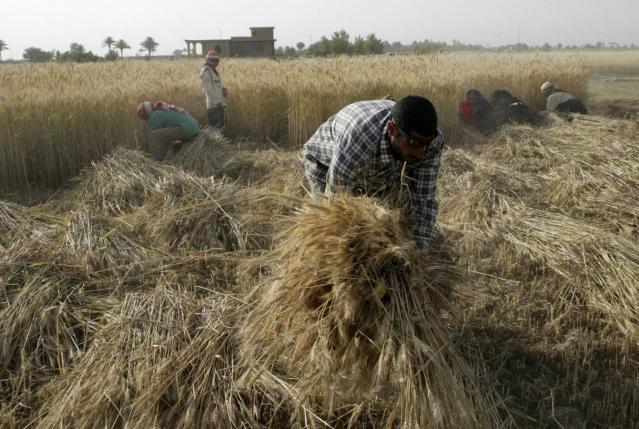
December 29, 2014

The new Iraq is being forged block by block, house by house, often out of sight of the government

Iraqi Shi'ite men play pool in Sadr City in Baghdad in this April 29, 2014 file photo.    REUTERS/Ahmed Jadallah/Files

Iraqi Shi'ite men play pool in Sadr City in Baghdad in this April 29, 2014 file photo. REUTERS/AHMED JADALLAH/FILES

By Isabel Coales, Ahmed Rasheed and Ned Parker

The machine gun poking out from between a framed portrait of a Shi'ite imam and a stuffed toy Minnie Mouse was trained on anyone who approached the checkpoint.
 
Like dozens of other communities in Iraq, this small Sunni settlement in northern Salahuddin province’s Tuz Khurmatu district has been reduced to rubble. In October, Shi'ite militiamen and Kurdish peshmerga captured the village from the Sunni militant group Islamic State. The victors then laid it to waste, looting anything of value and setting fire to much of the rest. Residents have still not been allowed to return.
 
"Our people are burning them," said one of the Shi'ite militiamen when asked about the smoke drifting up from still smouldering houses. Asked why, he shrugged as if the answer was self evident.
 
The Shi'ite and Kurdish paramilitary groups now patrol the scorched landscape, eager to claim the most strategic areas or the few houses that are still intact. For now, the two forces are convenient but uncomfortable allies against the nihilist Islamic State.
 
This is how the new Iraq is being forged: block by block, house by house, village by village, mostly out of sight and control of officials in Baghdad.
 
What is emerging is a different country to the one that existed before June. That month, Iraq's military and national police, rotten with corruption and sectarian politics, collapsed after Islamic State forces attacked Mosul. The militant group's victory in the largest city in the north was one step on its remarkable dash across Iraq.
 
Islamic State's campaign slowed towards the end of the summer. But it has left the group in charge of roughly one-third of Iraq, including huge swathes of its western desert and parts of its war ravaged central belt. It also shattered the illusion of a unified and functioning state, triggering multiple sectarian fractures and pushing rival groups to protect their turf or be destroyed.
 
The far north is now effectively an independent Kurdish region that has expanded into oil-rich Kirkuk, long disputed between the Kurds and Iraqi Arabs. Other areas in the north have fallen to Shi'ite militias and Kurdish peshmerga fighters, who claim land where they can.
 
In Baghdad's rural outskirts and in the Diyala province to the east and north towards Samarra, militias, sometimes backed by Iraqi military, are seizing land and destroying houses in Sunni areas.
 
Last there is Baghdad and Iraq's southern provinces, which are ostensibly still ruled by the country's Shi'ite-led government. But the state is a shell of what it once was. As respect for the army and police has faded, Iraqis in the south have turned to the Shi'ite militia groups who responded to the rallying cry of Iraq's most senior clergy to take on Islamic State.
 
Prime Minister Haider al-Abadi, a Shi'ite moderate who became Iraq's new leader in September, four months after national elections, hopes that the country can be stitched back together. Abadi has tried to engage the three main communities, taking a more conciliatory tone than that of his predecessor Nuri al-Maliki, who was often confrontational and divisive. Abadi, the Kurds and even some Sunni politicians now all speak of the need for federal regions, so the country's communities can govern themselves and remain part of a unified state.
 
Iraq, though, has been splintered  into more than just three parts, and the longer those fragments exist on their own the harder it will be to rebuild the country even as a loose federation. Such an arrangement would require the defeat of Islamic State, a massive rebuilding programme in the Sunni regions, unity among Iraq's fractious political and tribal leaders, and an accommodation between the Kurds and Baghdad on the Kurds' territorial gains.
 
Even the optimists recognise all that will be difficult. Finance Minister Hoshiyar Zebari, a Kurd who wants Iraq to stay united, says he can picture Iraq eventually regaining its "strength and balance." But, he concedes, "the country is severely fractured right now."
 
Ali Allawi, a former minister of trade, defence and finance, and author of two books on Iraqi history, agrees. "There is so much up in the air," he said. "There are the trappings of a functioning state, but it is like a functioning state lying on a sea of Jello...The ground is so unstable and shifting."
 
Iraq's Kurds often see opportunity in times of trouble. This year they moved quickly to take lands long disputed with Arab Iraqis, including Kirkuk. For a while, talk of secession increased, but then quieted after Islamic State mounted a successful attack into Kurdistan in August. Since then, buoyed by U.S. air strikes designed to hurt Islamic State, the Kurds have recaptured areas they lost and forged an agreement to export oil from Kirkuk and its own fields for Baghdad.
 
Kurdish business tycoon Sirwan Barzani, a nephew of Iraqi Kurdish President Masoud Barzani, sees this as a moment to advance his people's nationalist dream.  He was in Paris chairing a board meeting of the telecom company he founded in 2000 when he received news that Islamic State militants had overrun Mosul. A former peshmerga fighter in the 1980s, he cancelled his holiday plans in Marbella and rushed back to Kurdistan to help prepare for war, taking command of peshmerga forces along a 130 km (81 mile) stretch of the Kurds' front line with Islamic State.
 
Washington sees the Kurds as its most dependable ally in Iraq. For Barzani and other Kurds, though, the fight against Islamic State is simply the continuation of a long struggle for an independent nation.
 
Before leading an offensive last month to drive Islamic State militants back across the river Zab towards Mosul, Barzani said he met with an American general to talk strategy and coordinate airstrikes.
 
"They asked about my plan," Barzani told Reuters in a military base on the frontline near Gwer, 48 kilometres (30 miles) south of the Iraqi Kurdish capital Arbil. "I said, 'My plan is to change the Sykes-Picot agreement'" – a reference to the 1916 agreement between France and Britain that marked out what would become the borders of today's Middle East.
 
"Iraq is not real," Barzani said. "It exists only on the map. The country is killing itself. The Shi'ites and Sunnis cannot live together. How can they expect us to live with them? Our culture is different. The mentality of Kurds is different. We want a divorce."
 
Where Kurds saw opportunity in 2014, Iraq's Sunnis saw endless turmoil and new oppression. Residents in the western and northern cities of Mosul, Tikrit and Falluja – all now controlled by Islamic State – complain about fuel and water shortages, and Islamic State directives that women cover themselves and smokers be fined. They tell stories about the destruction wrought by shelling by the Iraqi government and U.S. forces.
 
In places where Sunnis themselves are battling Islamic State, the brutality can be unrelenting. Many wonder what will be left when the war finishes and whether it will be possible for Sunnis to reconcile even among themselves. 
 
Sheikh Ali Abed al-Fraih has spent months fighting Islamic State. A tribal soldier in Anbar province, he has sunken, tired eyes and a frown. His clothes are one size too big for him. He sees the conflict as an internal battle among the Anbar tribes. Some have chosen to join Islamic State, others to fight the group. Some of his enemies, he says, are from his own clan. The fight will not end even if areas around his town of Haditha and other Anbar cities are cleared, he says. All sides will want revenge. "Blood demands blood. Anbar will never stop."
 
Fraih flew to Baghdad in late December to beg the government to send help to Haditha, which is pinned to the west and east by Islamic State and defended by a five km-long (3 mile) berm. Fraih could only reach Baghdad by military plane. The government had promised for two months to send food and medicine, but no help had come. The week before Christmas the government told him help would come in a week. Fraih tried be polite about the promise, but it's hard. "It's all words," he said.
 
Every day, tribal fighters and Iraqi soldiers in Haditha stop Islamic State assaults and defend the city's massive dam. If Islamic State take the dam they could flood Anbar and choke off water supplies to the Shi'ite south. The army, in particular, is struggling, he said. "In every fight the army loses 50 soldiers. Their vehicles get destroyed, they are short on fuel, and no new vehicles are coming. They are hurting more than my own men." 
 
The city's one lifeline to the outside world is a huge government airbase called Ain al-Assad, some 36 km (22 miles) south. Fraih recently met U.S. Special Forces there. They assured him that if Islamic State breaks through the barriers to Haditha, the U.S. will carry out air strikes. The logic confuses Fraih. "They know the people have no food, no weapons, no ammunition, nothing. We are sinking. If you are not going to help us, at least take us to the south and north. We are dying now."
 
His faith in getting help from anyone has almost vanished.
 
"What is left of Iraq if it keeps moving this way?" he asked.
 
In a house on the outskirts of Baghdad, a Shi'ite tribal leader sat and imagined his world as "a dark tunnel with no light" at its end.
 
"Iraq is not a country now," he said. "It was before Mosul."
 
The sheikh, who spoke on condition of anonymity, would like to see his country reunited but suspects Abadi is too weak to counter the many forces working against him. Now the Shi'ite militias and Iran, whom the sheikh fought in the 1980s, are his protectors. It is a situation he accepts with a grim inevitability.
 
"We are like a sinking ship. Whoever gives you a hand lifting you from the sea whether enemy or friend, you take it without seeing his face because he is there."
 
Iranian-advised paramilitaries now visit his house regularly. He has come to enjoy the Iranian commander of a branch of the Khorasani Brigades, a group named for a region in northeastern Iran. The commander likes to joke, speaks good Arabic and has an easy way, while other fighters speak only Persian, the sheikh said.  He expresses appreciation for their defence of his relatives in the Shi'ite town of Balad, which is under assault from the Islamic State.
 
The sheikh's changing perceptions are shared by other Iraqi Shi'ites. They once viewed Iran as the enemy but now see their neighbour as Iraq's one real friend. The streets of Baghdad and southern Iraq are decorated with images of Iran's supreme leader Ayatollah Ali Khamenei.
 
The sheikh, though, does not believe he can rely on Iran altogether. He is sure some Iranian-backed militiamen would happily kill him. He has heard of one case in Diyala where a militia leader shot dead the son of a popular Shi'ite tribal leader. He has also watched as militia fighters aligned with police and army officers kidnapped a cousin and a friend for ransom. "I feel threatened by their bad elements," he said of the militias.
 
If the state doesn't rebuild its military quickly and replace the multiple groups now patrolling the lands, the sheikh fears Shi'ite parts of Iraq will descend further into lawlessness. "It will be chaos like the old times, where strong tribes take land from the weak tribe. Militias fight militias," he said. "It will be the rule of the jungle, where the strong animal eats the weak."
 
(Edited by Simon Robinson)


January 16, 2015
January 16, 2015
 
To the judges:
 
In 2014, Iraq fell apart. By year’s end, more than a third of the country was controlled by jihadists, the national army had collapsed and the United States was back conducting airstrikes.
 
In a series of deeply reported, often harrowing stories, a Reuters team led by bureau chief Ned Parker documented the country’s disintegration – the rapid rise of Islamic State, Iraq’s growing dependence on Iran and the utter failure of Iraqi leaders to bridge a sectarian divide.
 
The atrocities committed by the jihadists are by now well known. But in March, months before Islamic State’s surge across northern Iraq, Reuters revealed how Iraqi troops had engaged in their own extra-judicial executions and torture, and had posted images of the brutality online. The story also described how Iraqi government forces lacked armored vehicles, tank shells and aerial cover, and had been suffering high casualties and desertion rates.
 
The article was prescient: Less than three months later, it was those factors that led to the fall of Mosul, Iraq’s second-largest city, to the Islamic militants. The defeat marked a turning point in Iraq’s breakup that helped drive its prime minister from office and pushed Western powers and Gulf Arab nations into launching air strikes on the Islamic militants.
 
Exactly how Mosul was lost was at first unclear. But a subsequent investigation by Reuters showed in meticulous detail what had gone wrong: Troop shortages and infighting among top officers and Iraqi political leaders had played into Islamic State’s hands and fueled panic that led to the city’s abandonment. In a dramatic reconstruction of the battle and the finger-pointing that followed, the story revealed that the jihadists had never expected to conquer the city, and that Prime Minister Nuri al-Maliki and his defense minister had rejected repeated offers of help from the Kurdish fighting force known as the peshmerga.
 
In another special report, Reuters showed one of the disturbing consequences of the fall of Mosul and the collapse of the Iraqi army – the increasing sway of its neighbor and one-time enemy, Iran. The story explained how three small Iraqi Shi’ite armies, all financed and armed by Iran and modeled on Hezbollah in Lebanon, have suddenly become the most powerful military force in Iraq. 
 
Iraq’s sectarian strife is extraordinarily complex and not simply a case, as it is often described, of Shi’ite versus Sunni. It also involves tribes. Through a profile of a powerful Sunni tribal leader, Reuters showed how more moderate tribesmen and other disenfranchised Sunnis had reluctantly formed an alliance with Islamic State through their mutual hatred of Iraq’s Shi’ite government.
 
The awkward alliance is a key factor in the sudden rise of Islamic State. So, too, it turns out, is wheat. Another special report revealed the surprising role the grain has played in how the jihadists maintain control of captured territory and persecute religious minorities. Remarkably, Islamic State keeps state employees involved in wheat production in place – while the Iraqi government continues to pay them.
 
Another special report revealed for the first time how a U.S. oil giant, Exxon, played a significant role in the fragmenting country’s changing balance of power. Exxon’s decision to cut an oil deal with semi-autonomous Kurdistan – through a series of secret negotiations – emboldened the Kurds to seek greater independence from Baghdad, infuriating both the central government and Washington. But Kurdistan later emerged to play a central role in the international fight against Islamic State.
 
Reporting in Iraq remains extremely dangerous. To produce these and other exclusive stories, Parker and his colleagues traveled to conflict zones around the country, sometimes at grave personal risk. They managed to report and craft their in-depth reports while having to maintain our news agency’s 24-7 real-time news operation. This, too, they did with great distinction - not only chronicling the daily toll of war but also breaking a string of important scoops. Reuters was the first to report that Baghdad had signed a deal with Iran to buy arms
and ammunition; the first to report that Iran was considering dropping its support for Prime Minister Maliki and backing an alternative candidate; and the first to report that Sunni tribal leaders might consider joining a new Shi’ite-led government.
 
Reuters reporting in Iraq in 2014 provided readers with a deep and rich understanding of extremely complicated events with global impact. I am proud to nominate this coverage for a Pulitzer Prize for International Reporting. 
 
Sincerely,
 
Stephen J. Adler
Editor-in-Chief
Reuters


Biography

Ned Parker joined Reuters as their Baghdad bureau chief in February 2014.

Winners

Prize Winner in International Reporting in 2015:

The New York Times Staff

For courageous front-line reporting and vivid human stories on Ebola in Africa, engaging the public with the scope and details of the outbreak while holding authorities accountable. International Reporting

Finalists

Nominated as finalists in International Reporting in 2015:

Richard Marosi and Don Bartletti

For reporting on the squalid conditions and brutal practices inside the multibillion dollar industry that supplies vegetables from Mexican fields to American supermarkets.

The Jury

Hannah Allam(Chair )

national correspondent

Philip Bennett

Eugene C. Patterson Professor and director, De Witt Wallace Center for Media and Democracy

S. Mitra Kalita

managing editor for editorial strategy

Lydia Polgreen

deputy international editor

Michael Williams

global enterprise editor

Winners in International Reporting

Jason Szep and Andrew R.C. Marshall

For their courageous reports on the violent persecution of the Rohingya, a Muslim minority in Myanmar that, in efforts to flee the country, often falls victim to predatory human-trafficking networks.

David Barboza

For his striking exposure of corruption at high levels of the Chinese government, including billions in secret wealth owned by relatives of the prime minister, well documented work published in the face of heavy pressure from the Chinese officials.

Jeffrey Gettleman

For his vivid reports, often at personal peril, on famine and conflict in East Africa, a neglected but increasingly strategic part of the world.

Clifford J. Levy and Ellen Barry

For their dogged reporting that put a human face on the faltering justice system in Russia, remarkably influencing the discussion inside the country.

2015 Prize Winners

Anthony Doerr

An imaginative and intricate novel inspired by the horrors of World War II and written in short, elegant chapters that explore human nature and the contradictory power of technology.

Julia Wolfe

A powerful oratorio for chorus and sextet evoking Pennsylvania coal-mining life around the turn of the 20th Century.

Stephen Adly Guirgis

A nuanced, beautifully written play about a retired police officer faced with eviction that uses dark comedy to confront questions of life and death.

David I. Kertzer

An engrossing dual biography that uses recently opened Vatican archives to shed light on two men who exercised nearly absolute power over their realms.