The New York Times, by David Barboza
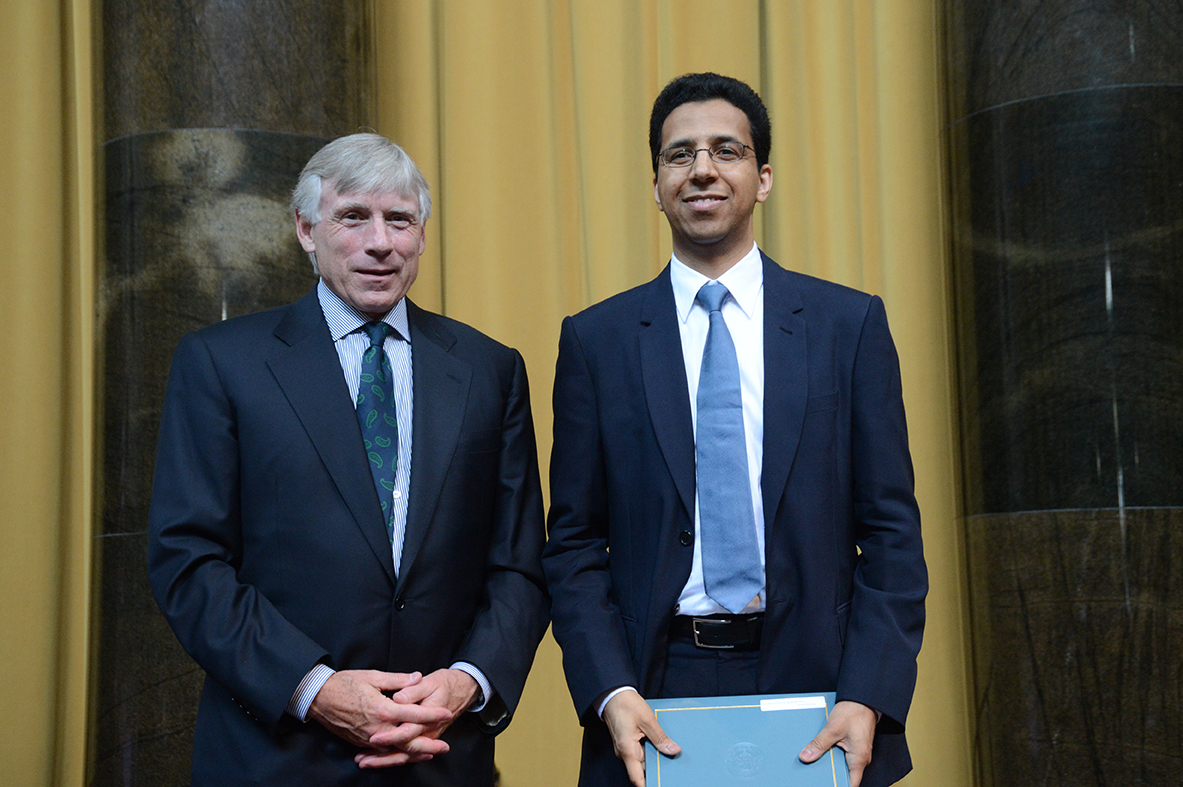
Lee C. Bollinger, President of Columbia University (left), presents the 2013 International Reporting prize to David Barboza of The New York Times.
Winning Work
By David Barboza
BEIJING — The mother of China’s prime minister was a schoolteacher in northern China. His father was ordered to tend pigs in one of Mao’s political campaigns. And during childhood, “my family was extremely poor,” the prime minister, Wen Jiabao, said in a speech last year.
But now 90, the prime minister’s mother, Yang Zhiyun, not only left poverty behind, she became outright rich, at least on paper, according to corporate and regulatory records. Just one investment in her name, in a large Chinese financial services company, had a value of $120 million five years ago, the records show.
The details of how Ms. Yang, a widow, accumulated such wealth are not known, or even if she was aware of the holdings in her name. But it happened after her son was elevated to China’s ruling elite, first in 1998 as vice prime minister and then five years later as prime minister.
Many relatives of Wen Jiabao, including his son, daughter, younger brother and brother-in-law, have become extraordinarily wealthy during his leadership, an investigation by The New York Times shows. A review of corporate and regulatory records indicates that the prime minister’s relatives — some of whom, including his wife, have a knack for aggressive deal making — have controlled assets worth at least $2.7 billion.
In many cases, the names of the relatives have been hidden behind layers of partnerships and investment vehicles involving friends, work colleagues and business partners. Untangling their financial holdings provides an unusually detailed look at how politically connected people have profited from being at the intersection of government and business as state influence and private wealth converge in China’s fast-growing economy.
Unlike most new businesses in China, the family’s ventures sometimes received financial backing from state-owned companies, including China Mobile, one of the country’s biggest phone operators, the documents show. At other times, the ventures won support from some of Asia’s richest tycoons. The Times found that Mr. Wen’s relatives accumulated shares in banks, jewelers, tourist resorts, telecommunications companies and infrastructure projects, sometimes by using offshore entities.
The holdings include a villa development project in Beijing; a tire factory in northern China; a company that helped build some of Beijing’s Olympic stadiums, including the well-known “Bird’s Nest”; and Ping An Insurance, one of the world’s biggest financial services companies.
As prime minister in an economy that remains heavily state-driven, Mr. Wen, who is best known for his simple ways and common touch, more importantly has broad authority over the major industries where his relatives have made their fortunes. Chinese companies cannot list their shares on a stock exchange without approval from agencies overseen by Mr. Wen, for example. He also has the power to influence investments in strategic sectors like energy and telecommunications.
Because the Chinese government rarely makes its deliberations public, it is not known what role — if any — Mr. Wen, who is 70, has played in most policy or regulatory decisions. But in some cases, his relatives have sought to profit from opportunities made possible by those decisions.
The prime minister’s younger brother, for example, has a company that was awarded more than $30 million in government contracts and subsidies to handle wastewater treatment and medical waste disposal for some of China’s biggest cities, according to estimates based on government records. The contracts were announced after Mr. Wen ordered tougher regulations on medical waste disposal in 2003 after the SARS outbreak.
In 2004, after the State Council, a government body Mr. Wen presides over, exempted Ping An Insurance and other companies from rules that limited their scope, Ping An went on to raise $1.8 billion in an initial public offering of stock. Partnerships controlled by Mr. Wen’s relatives — along with their friends and colleagues — made a fortune by investing in the company before the public offering.
In 2007, the last year the stock holdings were disclosed in public documents, those partnerships held as much as $2.2 billion worth of Ping An stock, according to an accounting of the investments by The Times that was verified by outside auditors. Ping An’s overall market value is now nearly $60 billion.
Ping An said in a statement that the company did “not know the background of the entities behind our shareholders.” The statement said, “Ping An has no means to know the intentions behind shareholders when they buy and sell our shares.”
While Communist Party regulations call for top officials to disclose their wealth and that of their immediate family members, no law or regulation prohibits relatives of even the most senior officials from becoming deal-makers or major investors — a loophole that effectively allows them to trade on their family name. Some Chinese argue that permitting the families of Communist Party leaders to profit from the country’s long economic boom has been important to ensuring elite support for market-oriented reforms.
Even so, the business dealings of Mr. Wen’s relatives have sometimes been hidden in ways that suggest the relatives are eager to avoid public scrutiny, the records filed with Chinese regulatory authorities show. Their ownership stakes are often veiled by an intricate web of holdings as many as five steps removed from the operating companies, according to the review.
In the case of Mr. Wen’s mother, The Times calculated her stake in Ping An — valued at $120 million in 2007 — by examining public records and government-issued identity cards, and by following the ownership trail to three Chinese investment entities. The name recorded on his mother’s shares was Taihong, a holding company registered in Tianjin, the prime minister’s hometown
The apparent efforts to conceal the wealth reflect the highly charged politics surrounding the country’s ruling elite, many of whom are also enormously wealthy but reluctant to draw attention to their riches. When Bloomberg News reported in June that the extended family of Vice President Xi Jinping, set to become China’s next president, had amassed hundreds of millions of dollars in assets, the Chinese government blocked access inside the country to the Bloomberg Web site.
“In the senior leadership, there’s no family that doesn’t have these problems,” said a former government colleague of Wen Jiabao who has known him for more than 20 years and who spoke on the condition of anonymity. “His enemies are intentionally trying to smear him by letting this leak out.”
The Times presented its findings to the Chinese government for comment. The Foreign Ministry declined to respond to questions about the investments, the prime minister or his relatives. Members of Mr. Wen’s family also declined to comment or did not respond to requests for comment.
Duan Weihong, a wealthy businesswoman whose company, Taihong, was the investment vehicle for the Ping An shares held by the prime minister’s mother and other relatives, said the investments were actually her own. Ms. Duan, who comes from the prime minister’s hometown and is a close friend of his wife, said ownership of the shares was listed in the names of Mr. Wen’s relatives in an effort to conceal the size of Ms. Duan’s own holdings.
“When I invested in Ping An I didn’t want to be written about,” Ms. Duan said, “so I had my relatives find some other people to hold these shares for me.”
But it was an “accident,” she said, that her company chose the relatives of the prime minister as the listed shareholders — a process that required registering their official ID numbers and obtaining their signatures. Until presented with the names of the investors by The Times, she said, she had no idea that they had selected the relatives of Wen Jiabao.
The review of the corporate and regulatory records, which covers 1992 to 2012, found no holdings in Mr. Wen’s name. And it was not possible to determine from the documents whether he recused himself from any decisions that might have affected his relatives’ holdings, or whether they received preferential treatment on investments.
For much of his tenure, Wen Jiabao has been at the center of rumors and conjecture about efforts by his relatives to profit from his position. Yet until the review by The Times, there has been no detailed accounting of the family’s riches.
His wife, Zhang Beili, is one of the country’s leading authorities on jewelry and gemstones and is an accomplished businesswoman in her own right. By managing state diamond companies that were later privatized, The Times found, she helped her relatives parlay their minority stakes into a billion-dollar portfolio of insurance, technology and real estate ventures.
The couple’s only son sold a technology company he started to the family of Hong Kong’s richest man, Li Ka-shing, for $10 million, and used another investment vehicle to establish New Horizon Capital, now one of China’s biggest private equity firms, with partners like the government of Singapore, according to records and interviews with bankers.
The prime minister’s younger brother, Wen Jiahong, controls $200 million in assets, including wastewater treatment plants and recycling businesses, the records show.
As prime minister, Mr. Wen has staked out a position as a populist and a reformer, someone whom the state-run media has nicknamed “the People’s Premier” and “Grandpa Wen” because of his frequent outings to meet ordinary people, especially in moments of crisis like natural disasters.
While it is unclear how much the prime minister knows about his family’s wealth, State Department documents released by the WikiLeaks organization in 2010 included a cable that suggested Mr. Wen was aware of his relatives’ business dealings and unhappy about them.
“Wen is disgusted with his family’s activities, but is either unable or unwilling to curtail them,” a Chinese-born executive working at an American company in Shanghai told American diplomats, according to the 2007 cable.
China’s ‘Diamond Queen’
It is no secret in China’s elite circles that the prime minister’s wife, Zhang Beili, is rich, and that she has helped control the nation’s jewelry and gem trade. But her lucrative diamond businesses became an off-the-charts success only as her husband moved into the country’s top leadership ranks, the review of corporate and regulatory records by The Times found.
A geologist with an expertise in gemstones, Ms. Zhang is largely unknown among ordinary Chinese. She rarely travels with the prime minister or appears with him, and there are few official photographs of the couple together. And while people who have worked with her say she has a taste for jade and fine diamonds, they say she usually dresses modestly, does not exude glamour and prefers to wield influence behind the scenes, much like the relatives of other senior leaders.
The State Department documents released by WikiLeaks included a suggestion that Mr. Wen had once considered divorcing Ms. Zhang because she had exploited their relationship in her diamond trades. Taiwanese television reported in 2007 that Ms. Zhang had bought a pair of jade earrings worth about $275,000 at a Beijing trade show, though the source — a Taiwanese trader — later backed off the claim and Chinese government censors moved swiftly to block coverage of the subject in China, according to news reports at the time.
“Her business activities are known to everyone in the leadership,” said one banker who worked with relatives of Wen Jiabao. The banker said it was not unusual for her office to call upon businesspeople. “And if you get that call, how can you say no?”
Zhang Beili first gained influence in the 1990s, while working as a regulator at the Ministry of Geology. At the time, China’s jewelry market was still in its infancy.
While her husband was serving in China’s main leadership compound, known as Zhongnanhai, Ms. Zhang was setting industry standards in the jewelry and gem trade. She helped create the National Gemstone Testing Center in Beijing, and the Shanghai Diamond Exchange, two of the industry’s most powerful institutions.
In a country where the state has long dominated the marketplace, jewelry regulators often decided which companies could set up diamond-processing factories, and which would gain entry to the retail jewelry market. State regulators even formulated rules that required diamond sellers to buy certificates of authenticity for any diamond sold in China, from the government-run testing center in Beijing, which Ms. Zhang managed.
As a result, when executives from Cartier or De Beers visited China with hopes of selling diamonds and jewelry here, they often went to visit Ms. Zhang, who became known as China’s “diamond queen.”
“She’s the most important person there,” said Gaetano Cavalieri, president of the World Jewelry Confederation in Switzerland. “She was bridging relations between partners — Chinese and foreign partners.”
As early as 1992, people who worked with Ms. Zhang said, she had begun to blur the line between government official and businesswoman. As head of the state-owned China Mineral and Gem Corporation, she began investing the state company’s money in start-ups. And by the time her husband was named vice premier, in 1998, she was busy setting up business ventures with friends and relatives.
The state company she ran invested in a group of affiliated diamond companies, according to public records. Many of them were run by Ms. Zhang’s relatives — or colleagues who had worked with her at the National Gemstone Testing Center.
In 1993, for instance, the state company Ms. Zhang ran helped found Beijing Diamond, a big jewelry retailer. A year later, one of her younger brothers, Zhang Jianming, and two of her government colleagues personally acquired 80 percent of the company, according to shareholder registers. Beijing Diamond invested in Shenzhen Diamond, which was controlled by her brother-in-law, Wen Jiahong, the prime minister’s younger brother.
Among the successful undertakings was Sino-Diamond, a venture financed by the state-owned China Mineral and Gem Corporation, which she headed. The company had business ties with a state-owned company managed by another brother, Zhang Jiankun, who worked as an official in Jiaxing, Ms. Zhang’s hometown, in Zhejiang Province.
In the summer of 1999, after securing agreements to import diamonds from Russia and South Africa, Sino-Diamond went public, raising $50 million on the Shanghai Stock Exchange. The offering netted Ms. Zhang’s family about $8 million, according to corporate filings.
Although she was never listed as a shareholder, former colleagues and business partners say Ms. Zhang’s early diamond partnerships were the nucleus of a larger portfolio of companies she would later help her family and colleagues gain a stake in.
The Times found no indication that Wen Jiabao used his political clout to influence the diamond companies his relatives invested in. But former business partners said that the family’s success in diamonds, and beyond, was often bolstered with financial backing from wealthy businessmen who sought to curry favor with the prime minister’s family.
“After Wen became prime minister, his wife sold off some of her diamond investments and moved into new things,” said a Chinese executive who did business with the family. He asked not to be named because of fear of government retaliation. Corporate records show that beginning in the late 1990s, a series of rich businessmen took turns buying up large stakes in the diamond companies, often from relatives of Mr. Wen, and then helped them reinvest in other lucrative ventures, like real estate and finance.
According to corporate records and interviews, the businessmen often supplied accountants and office space to investment partnerships partly controlled by the relatives.
“When they formed companies,” said one businessman who set up a company with members of the Wen family, “Ms. Zhang stayed in the background. That’s how it worked.”
The Only Son
Late one evening early this year, the prime minister’s only son, Wen Yunsong, was in the cigar lounge at Xiu, an upscale bar and lounge at the Park Hyatt in Beijing. He was having cocktails as Beijing’s nouveau riche gathered around, clutching designer bags and wearing expensive business suits, according to two guests who were present.
In China, the children of senior leaders are widely believed to be in a class of their own. Known as “princelings,” they often hold Ivy League degrees, get V.I.P. treatment, and are even offered preferred pricing on shares in hot stock offerings.
They are also known as people who can get things done in China’s heavily regulated marketplace, where the state controls access. And in recent years, few princelings have been as bold as the younger Mr. Wen, who goes by the English name Winston and is about 40 years old.
A Times review of Winston Wen’s investments, and interviews with people who have known him for years, show that his deal-making has been extensive and lucrative, even by the standards of his princeling peers.
State-run giants like China Mobile have formed start-ups with him. In recent years, Winston Wen has been in talks with Hollywood studios about a financing deal.
Concerned that China does not have an elite boarding school for Chinese students, he recently hired the headmasters of Choate and Hotchkiss in Connecticut to oversee the creation of a $150 million private school now being built in the Beijing suburbs.
Winston Wen and his wife, moreover, have stakes in the technology industry and an electric company, as well as an indirect stake in Union Mobile Pay, the government-backed online payment platform — all while living in the prime minister’s residence, in central Beijing, according to corporate records and people familiar with the family’s investments.
“He’s not shy about using his influence to get things done,” said one venture capitalist who regularly meets with Winston Wen.
The younger Mr. Wen declined to comment. But in a telephone interview, his wife, Yang Xiaomeng, said her husband had been unfairly criticized for his business dealings.
“Everything that has been written about him has been wrong,” she said. “He’s really not doing that much business anymore.”
Winston Wen was educated in Beijing and then earned an engineering degree from the Beijing Institute of Technology. He went abroad and earned a master’s degree in engineering materials from the University of Windsor, in Canada, and an M.B.A. from the Kellogg School of Business at Northwestern University in Evanston, Ill., just outside Chicago.
When he returned to China in 2000, he helped set up three successful technology companies in five years, according to people familiar with those deals. Two of them were sold to Hong Kong businessmen, one to the family of Li Ka-shing, one of the wealthiest men in Asia.
Winston Wen’s earliest venture, an Internet data services provider called Unihub Global, was founded in 2000 with $2 million in start-up capital, according to Hong Kong and Beijing corporate filings. Financing came from a tight-knit group of relatives and his mother’s former colleagues from government and the diamond trade, as well as an associate of Cheng Yu-tung, patriarch of Hong Kong’s second-wealthiest family. The firm’s earliest customers were state-owned brokerage houses and Ping An, in which the Wen family has held a large financial stake.
He made an even bolder move in 2005, by pushing into private equity when he formed New Horizon Capital with a group of Chinese-born classmates from Northwestern. The firm quickly raised $100 million from investors, including SBI Holdings, a division of the Japanese group SoftBank, and Temasek, the Singapore government investment fund.
Under Mr. Wen, New Horizon established itself as a leading private equity firm, investing in biotech, solar, wind and construction equipment makers. Since it began operations, the firm has returned about $430 million to investors, a fourfold profit, according to SBI Holdings.
“Their first fund was dynamite,” said Kathleen Ng, editor of Asia Private Equity Review, an industry publication in Hong Kong. “And that allowed them to raise a lot more money.”
Some of Winston Wen’s deal-making, though, has attracted unwanted attention for the prime minister.
In 2010, when New Horizon acquired a 9 percent stake in a company called Sihuan Pharmaceuticals just two months before its public offering, the Hong Kong Stock Exchange said the late-stage investment violated its rules and forced the firm to return the stake. Still, New Horizon made a $46.5 million profit on the sale.
Soon after, New Horizon announced that Winston Wen had handed over day-to-day operations and taken up a position at the China Satellite Communications Corporation, a state-owned company that has ties to the Chinese space program. He has since been named chairman.
The Tycoons
In the late 1990s, Duan Weihong was managing an office building and several other properties in Tianjin, the prime minister’s hometown in northern China, through her property company, Taihong. She was in her 20s and had studied at the Nanjing University of Science and Technology.
Around 2002, Ms. Duan went into business with several relatives of Wen Jiabao, transforming her property company into an investment vehicle of the same name. The company helped make Ms. Duan very wealthy.
It is not known whether Ms. Duan, now 43, is related to the prime minister. In a series of interviews, she first said she did not know any members of the Wen family, but later described herself as a friend of the family and particularly close to Zhang Beili, the prime minister’s wife. As happened to a handful of other Chinese entrepreneurs, Ms. Duan’s fortunes soared as she teamed up with the relatives and their network of friends and colleagues, though she described her relationship with them involving the shares in Ping An as existing on paper only and having no financial component.
Ms. Duan and other wealthy businesspeople — among them, six billionaires from across China — have been instrumental in getting multimillion-dollar ventures off the ground and, at crucial times, helping members of the Wen family set up investment vehicles to profit from them, according to investment bankers who have worked with all parties.
Established in Tianjin, Taihong had spectacular returns. In 2002, the company paid about $65 million to acquire a 3 percent stake in Ping An before its initial public offering, according to corporate records and Ms. Duan’s graduate school thesis. Five years later, those shares were worth $3.7 billion
The company’s Hong Kong affiliate, Great Ocean, also run by Ms. Duan, later formed a joint venture with the Beijing government and acquired a huge tract of land adjacent to Capital International Airport. Today, the site is home to a sprawling cargo and logistics center. Last year, Great Ocean sold its 53 percent stake in the project to a Singapore company for nearly $400 million.
That deal and several other investments, in luxury hotels, Beijing villa developments and the Hong Kong-listed BBMG, one of China’s largest building materials companies, have been instrumental to Ms. Duan’s accumulation of riches, according to The Times’s review of corporate records.
The review also showed that over the past decade there have been nearly three dozen individual shareholders of Taihong, many of whom are either relatives of Wen Jiabao or former colleagues of his wife.
The other wealthy entrepreneurs who have worked with the prime minister’s relatives declined to comment for this article. Ms. Duan strongly denied having financial ties to the prime minister or his relatives and said she was only trying to avoid publicity by listing others as owning Ping An shares. “The money I invested in Ping An was completely my own,” said Ms. Duan, who has served as a member of the Ping An board of supervisors. “Everything I did was legal.”
Another wealthy partner of the Wen relatives has been Cheng Yu-tung, who controls the Hong Kong conglomerate New World Development and is one of the richest men in Asia, worth about $15 billion, according to Forbes.
In the 1990s, New World was seeking a foothold in mainland China for a sister company that specializes in high-end retail jewelry. The retail chain, Chow Tai Fook, opened its first store in China in 1998.
Mr. Cheng and his associates invested in a diamond venture backed by the relatives of Mr. Wen and co-invested with them in an array of corporate entities, including Sino-Life, National Trust and Ping An, according to records and interviews with some of those involved. Those investments by Mr. Cheng are now worth at least $5 billion, according to the corporate filings. Chow Tai Fook, the jewelry chain, has also flourished. Today, China accounts for 60 percent of the chain’s $4.2 billion in annual revenue.
Mr. Cheng, 87, could not be reached for comment. Calls to New World Development were not returned.
In the winter of 2007, just before he began his second term as prime minister, Wen Jiabao called for new measures to fight corruption, particularly among high-ranking officials.
“Leaders at all levels of government should take the lead in the antigraft drive,” he told a gathering of high-level party members in Beijing. “They should strictly ensure that their family members, friends and close subordinates do not abuse government influence.”
The speech was consistent with the prime minister’s earlier drive to toughen disclosure rules for public servants, and to require senior officials to reveal their family assets.
Whether Mr. Wen has made such disclosures for his own family is unclear, since the Communist Party does not release such information. Even so, many of the holdings found by The Times would not need to be disclosed under the rules since they are not held in the name of the prime minister’s immediate family — his wife, son and daughter.
Eighty percent of the $2.7 billion in assets identified in The Times’s investigation and verified by the outside auditors were held by, among others, the prime minister’s mother, his younger brother, two brothers-in-law, a sister-in-law, daughter-in-law and the parents of his son’s wife, none of whom is subject to party disclosure rules. The total value of the relatives’ stake in Ping An is based on calculations by The Times that were confirmed by the auditors. The total includes shares held by the relatives that were sold between 2004 and 2006, and the value of the remaining shares in late 2007, the last time the holdings were publicly disclosed.
Legal experts said that determining the precise value of holdings in China could be difficult because there might be undisclosed side agreements about the true beneficiaries.
“Complex corporate structures are not necessarily insidious,” said Curtis J. Milhaupt, a Columbia University Law School professor who has studied China’s corporate group structures. “But in a system like China’s, where corporate ownership and political power are closely intertwined, shell companies magnify questions about who owns what and where the money came from.”
Among the investors in the Wen family ventures are longtime business associates, former colleagues and college classmates, including Yu Jianming, who attended Northwestern with Winston Wen, and Zhang Yuhong, a longtime colleague of Wen Jiahong, the prime minister’s younger brother. The associates did not return telephone calls seeking comment.
Revelations about the Wen family’s wealth could weaken him politically.
Next month, at the 18th Party Congress in Beijing, the Communist Party is expected to announce a new generation of leaders. But the selection process has already been marred by one of the worst political scandals in decades, the downfall of Bo Xilai, the Chongqing party boss, who was vying for a top position.
In Beijing, Wen Jiabao is expected to step down as prime minister in March at the end of his second term. Political analysts say that even after leaving office he could remain a strong backstage political force. But documents showing that his relatives amassed a fortune during his tenure could diminish his standing, the analysts said.
“This will affect whatever residual power Wen has,” said Minxin Pei, an expert on Chinese leadership and a professor of government at Claremont McKenna College in California.
The prime minister’s supporters say he has not personally benefited from his extended family’s business dealings, and may not even be knowledgeable about the extent of them.
Last March, the prime minister hinted that he was at least aware of the persistent rumors about his relatives. During a nationally televised news conference in Beijing, he insisted that he had “never pursued personal gain” in public office.
“I have the courage to face the people and to face history,” he said in an emotional session. “There are people who will appreciate what I have done, but there are also people who will criticize me. Ultimately, history will have the final say.”
By David Barboza
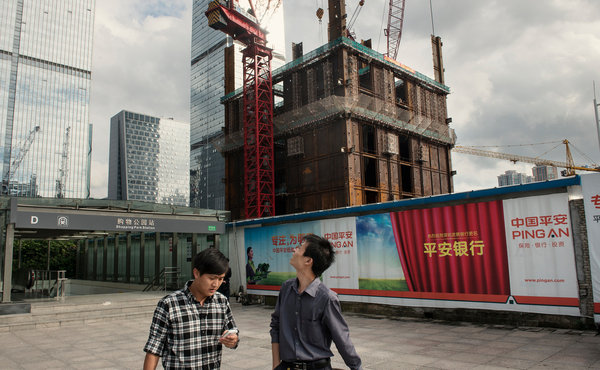
Ping An, one of China’s largest financial services companies, is building a 115-story office tower in Shenzhen. The company is a $50 billion powerhouse now worth more than A.I.G., MetLife or Prudential. (The New York Times)
SHENZHEN, China — The head of a financially troubled insurer was pushing Chinese officials to relax rules that required breaking up the company in the aftermath of the Asian financial crisis.
The survival of Ping An Insurance was at stake, officials were told in the fall of 1999. Direct appeals were made to the vice premier at the time, Wen Jiabao, as well as the then-head of China’s central bank — two powerful officials with oversight of the industry.
“I humbly request that the vice premier lead and coordinate the matter from a higher level,” Ma Mingzhe, chairman of Ping An, implored in a letter to Mr. Wen that was reviewed by The New York Times.
Ping An was not broken up.
The successful outcome of the lobbying effort would prove monumental.
Ping An went on to become one of China’s largest financial services companies, a $50 billion powerhouse now worth more than A.I.G., MetLife or Prudential. And behind the scenes, shares in Ping An that would be worth billions of dollars once the company rebounded were acquired by relatives of Mr. Wen.
The Times reported last month that the relatives of Mr. Wen, who became prime minister in 2003, had grown extraordinarily wealthy during his leadership, acquiring stakes in tourist resorts, banks, jewelers, telecommunications companies and other business ventures.
The greatest source of wealth, by far, The Times investigation has found, came from the shares in Ping An bought about eight months after the insurer was granted a waiver to the requirement that big financial companies be broken up.
Long before most investors could buy Ping An stock, Taihong, a company that would soon be controlled by Mr. Wen’s relatives, acquired a large stake in Ping An from state-owned entities that held shares in the insurer, regulatory and corporate records show. And by all appearances, Taihong got a sweet deal. The shares were bought in December 2002 for one-quarter of the price that another big investor — the British bank HSBC Holdings — paid for its shares just two months earlier, according to interviews and public filings.
By June 2004, the shares held by the Wen relatives had already quadrupled in value, even before the company was listed on the Hong Kong Stock Exchange. And by 2007, the initial $65 million investment made by Taihong would be worth $3.7 billion.
Corporate records show that the relatives’ stake of that investment most likely peaked at $2.2 billion in late 2007, the last year in which Taihong’s shareholder records were publicly available. Because the company is no longer listed in Ping An’s public filings, it is unclear if the relatives continue to hold shares.
It is also not known whether Mr. Wen or the central bank chief at the time, Dai Xianglong, personally intervened on behalf of Ping An’s request for a waiver, or if Mr. Wen was even aware of the stakes held by his relatives.
But internal Ping An documents, government filings and interviews with bankers and former senior executives at Ping An indicate that both the vice premier’s office and the central bank were among the regulators involved in the Ping An waiver meetings and who had the authority to sign off on the waiver.
Only two large state-run financial institutions were granted similar waivers, filings show, while three of China’s big state-run insurance companies were forced to break up. Many of the country’s big banks complied with the breakup requirement — enforced after the financial crisis because of concerns about the stability of the financial system — by selling their assets in other institutions.
Ping An issued a statement to The Times saying the company strictly complies with rules and regulations, but does not know the backgrounds of all entities behind shareholders. The company also said “it is the legitimate right of shareholders to buy and sell shares between themselves.”
In Beijing, China’s foreign ministry did not return calls seeking comment for this article. Earlier, a Foreign Ministry spokesman sharply criticized the investigation by The Times into the finances of Mr. Wen’s relatives, saying it “smears China and has ulterior motives.”
After The Times reported last month on the family’s wealth, lawyers representing the family said the article contained unspecified errors and that the family reserved the right to take legal action.
In addition, the Chinese government blocked access to the English-language and Chinese-language Web sites of The Times in China — and continues to do so — saying the action was “in accordance with laws and rules.”
Neither Mr. Wen, who is expected to retire in March, nor Mr. Dai, who is now the head of the National Social Security Fund, could be reached for comment.
Western and Chinese bankers and lawyers involved in Ping An’s 2004 Hong Kong stock listing and a subsequent 2007 listing in Shanghai said they did not know that relatives of Mr. Wen had acquired large stakes in the company.
Executives at Morgan Stanley and Goldman Sachs, which once held sizable stakes in Ping An and served as lead underwriters for the Hong Kong public offering, also said they were never told of the holdings. At Ping An’s urging, the two investment banks had also appealed in 2000 to Mr. Wen and other regulators for the waiver from the breakup rule. The private equity divisions of the two investment banks sold their combined stakes to HSBC in 2005 for about $1 billion — a 14-fold increase on their initial investment.
Thousands of pages of publicly available corporate documents reviewed by The Times suggest that the Ping An stakes held by the prime minister’s relatives were concealed behind layers of obscure partnerships rather than being held directly in their names.
In an interview last month, Duan Weihong, a wealthy Wen family friend, said that the shares in Ping An actually belonged to her and that it was an accident that Mr. Wen’s relatives appeared in shareholding records. The process involved borrowing their government identity cards and obtaining their signatures.
China and Hong Kong have detailed regulations on the disclosure of corporate information deemed material to a publicly listed company’s operation, like the identities of large shareholders and details about whether companies controlling large stakes are related parties. But legal experts say enforcement is often lax, particularly inside China. There is also, they say, a culture of nominee shareholders — when one person holds shares on behalf of someone else — that is difficult for even the most seasoned lawyers and accountants to penetrate.
The Times found no indication such regulations or any law was broken, nor any evidence that Mr. Wen held shares in Ping An under his own name.
After reviewing questions from The Times, the Securities and Futures Commission of Hong Kong and the Hong Kong Stock Exchange declined to comment. The China Securities Regulatory Commission in Beijing did not respond to inquiries.
HSBC, today Ping An’s largest shareholder with about 15.5 percent of its stock, declined to comment. The company announced last week that it is considering selling its stake in Ping An as part of a broad effort to raise capital.
Ping An today is a hugely successful conglomerate with revenue of $40 billion last year and about 500,000 insurance agents across China. It is China’s only fully integrated financial institution, with the second largest insurer, a trust company and brokerage house.
In late 2010, Ping An added more firepower, announcing a $4 billion deal that has since given it control of the Shenzhen Development Bank, one of China’s midsize commercial banks. Ping An is now building a new headquarters here in Shenzhen, a spectacular 115-story office tower that was designed by the New York architectural firm Kohn Pedersen Fox.
Ping An’s Close Call
Ma Mingzhe, the Ping An chairman and chief executive, was a high school graduate who got his start as an aide to Yuan Geng, a pioneering figure in some of China’s earliest economic reforms and an early leader of Ping An.
Impressed with Mr. Ma’s intellect, Mr. Yuan put him in charge of human resources at a state-managed industrial park, and eventually at a new insurance firm, Ping An, which took root in Shenzhen, a coastal boomtown.
Mr. Ma’s timing was opportune. China was just beginning to restructure its state-led economy. The government began dismantling the iron rice bowl system, which had guaranteed pensions, social insurance and living quarters to Communist Party cadres.
Although Ping An was founded as a state entity, it was one of the first Chinese insurance companies to experiment with Western management systems, including the use of actuaries and back-office operations, as well as foreign shareholders.
Mr. Ma helped manage the tiny company when it was founded in 1988. Several years later, he was looking for big-name shareholders from the United States.
In 1994, the private equity divisions of Morgan Stanley and Goldman Sachs each paid about $35 million to acquire 7.5 percent interests in Ping An. At the time, they were the largest foreign investments ever made in a Chinese financial institution.
Much of the company’s early success was attributed to Mr. Ma, a hard-charging executive who was admired for his management and political skills — and for taking risks.
“He had all the qualities of a great entrepreneur,” says Yan Feng, who helped run Ping An’s Shanghai office in the 1990s. “He was a quick learner, knew how to adapt to new situations and was really determined. He’d do whatever it takes to get what he wants.”
But the company’s growth drive ran into trouble in the late 1990s, when China’s economy weakened after the 1997 Asian financial crisis.
The bloated state sector began to collapse, and by 1998, some of the nation’s biggest banks were nearly insolvent.
Ping An’s hard-won fortunes were also evaporating. Like most big Chinese insurers, Ping An had won new clients with investment products that guaranteed big returns over long periods based on the high interest rates banks offered for deposits during a time of inflation. When interest rates plummeted in the mid-1990s, losses piled up.
In 1999, senior executives at Ping An began to acknowledge that the company could soon be insolvent. As a joint-stockholding company, Ping An had big institutional investors, mostly state companies. But many of them refused to come to the company’s aid by purchasing additional shares, which would have provided needed capital.
“They weren’t sure Ping An would survive,” said one former Ping An executive who spoke on the condition of anonymity.
There was also mounting pressure from the government. Worried about systemic risks to the financial system, regulators in Beijing stepped up their enforcement of laws that required financial institutions to limit the scope of their business activities.
Banks were told to sell their stakes in brokerage houses or trust companies; and insurance companies had to choose to operate in life or property insurance, but not both.
After China’s new insurance regulatory agency was established in 1998, it began pressing Ping An to shed its trust and securities business, and to split its life and property insurance divisions into separate companies.
At a news conference in November 1999, Ma Yongwei, then the chairman of the China Insurance Regulatory Commission, said the agency had already drawn up plans to split up Ping An and other insurers.
“The separation plans have been submitted to the State Council for approval,” Ma Yongwei told the media, adding that they would “deepen reform of the insurance system.”
Pushing Back the Regulators
With his company about to be broken up, Ma Mingzhe, also known as Peter Ma, fired off letters to leaders in Beijing, dictated memos reminding himself to “buy golf clubs” for high-ranking officials, and kept detailed charts outlining the lobbying responsibilities of each top executive at Ping An, according to a copy of those records verified by former Ping An executives.
Mr. Ma focused much of his personal energy on China’s highest government administrative body, the State Council, a 38-member group whose senior leaders were Prime Minister Zhu Rongji and Wen Jiabao, then vice premier. The company also sought the support of Dai Xianglong, the nation’s central bank chief, who also had oversight over the insurance industry.
Mr. Wen was in a unique position. He was head of China’s powerful Central Financial Work Commission, which had been established in 1998 to oversee the country’s banking, securities and insurance regulators, as well as China’s biggest financial institutions.
When Mr. Ma met regulators, he told them his company was facing insolvency and asked them to help shore up the company’s balance sheet by approving a Hong Kong stock offering, according to transcripts of Ping An meetings and interviews with participants.
“Now, Ping An’s life insurance is in a loss, and property insurance and the trust company have thin margins,” Mr. Ma wrote in the Sept. 29, 1999, letter to Mr. Wen. The contents were confirmed by two former top Ping An executives.
Rather than an out-and-out breakup, Mr. Ma offered a middle road. After seeking advice of other investors, Mr. Ma proposed the formation of a holding company that would effectively separate life insurance from property but keep them under one corporate umbrella, along with the securities and trust division.
The company, he said, would re-establish itself as the Ping An Group, according to Ping An documents reviewed by The Times. He then began looking for allies to promote his proposal.
In January 2000, with Mr. Ma’s backing, executives from Morgan Stanley and Goldman Sachs wrote a joint letter to Mr. Wen arguing that a breakup would “violate China’s policy to encourage and protect foreign investment,” according to a copy of the letter reviewed by The Times. The letter’s authenticity was verified by former executives at the two investment banks.
The American investment banks warned that “as a listed company in the U.S., we could be required to disclose our losses relating to the investment in Ping An, which would not be helpful for the image of China’s policy of reform and opening to the outside.”
The letter came after months of aggressive lobbying on the part of Ping An executives and the two American banks to persuade other high-ranking officials in Beijing, including the central bank and the insurance regulator, to hold Ping An together, according to corporate documents reviewed by The Times.
As early as 1999, executives at Ping An also began making contact with the relatives of Mr. Wen.
Hu Kun, a former Ping An employee who served as Mr. Ma’s staff assistant from 1997 to 2000, recalled a 1999 meeting between Mr. Ma and Zhang Beili, the wife of Mr. Wen.
Mr. Hu said he was not told what transpired at the meeting, but he recalled his boss’s reaction. “Because of that meeting, Chairman Ma got very excited,” said Mr. Hu, who is now living in the United States and who has quarreled with Ping An over 52,000 shares he claimed he was owed.
Corporate records reviewed by The Times indicate that Mr. Ma held an afternoon meeting and then dinner with the prime minister’s wife and Li Chunyan, who ran Ping An’s office in Beijing, on June 17, 1999.
It is not known what they discussed, but the relationship seemed to flourish. Around the same time, a diamond company partly controlled by the relatives of Ms. Zhang began occupying office space at the Ping An office tower in Beijing, according to records the diamond company filed with regulators. Later, a start-up co-founded by Wen Yunsong, the son of Ms. Zhang and the prime minister, won a lucrative technology contract from Ping An, according to interviews with former Ping An executives.
Mr. Ma, who is 56 and still runs Ping An, declined to comment for this article. Interviews with four senior executives who worked with Mr. Ma and Mr. Hu at the corporate headquarters in Shenzhen during the same period corroborate Mr. Hu’s recollections and the content of the documents reviewed by The Times concerning Ping An’s lobbying efforts and meetings with the relatives of Mr. Wen.
In addition, Li Chunyan, who ran the Beijing office, confirmed in a telephone interview that during that period he had brought Ms. Zhang to meet the Ping An chairman, Mr. Ma.
The documents and interviews shed no light on whether those meetings played a role in the decision by government regulators to abandon plans to split up Ping An. But in April 2002, the nation’s top regulators delivered their verdict. With approval of the State Council and insurance regulators, Ping An began the process of transforming itself into a financial conglomerate.
The company was not only allowed to retain property and life insurance licenses, but also licenses that permitted it to operate a brokerage and a trust company. It was also allowed to obtain a bank license.
Together, analysts say, the licenses were worth a fortune in China’s tightly regulated marketplace.
“They were one of the few who got to enjoy these gold-digging benefits,” said Bob Leung, a longtime insurance analyst at UBS in Hong Kong.
By late 2002, Ping An had not simply survived the downturn, its prospects had begun to look bright. The company’s restructuring bolstered revenue and profits. In October of that year, one of the world’s biggest banks, HSBC, agreed to pay $600 million to acquire a 10 percent stake in the company from Ping An. Just over a year later, regulators approved the company’s application to list and sell shares on the Hong Kong Stock Exchange.
While Ping An was preparing for its listing in Hong Kong, a group of investors with close ties to senior officials in Beijing, including Wen Jiabao, were quietly accumulating large blocks of Ping An stock.
Buying Into Ping An
On Dec. 26, 2002, Ping An filings show, a company run by Duan Weihong, a Wen family friend from the prime minister’s hometown, acquired Ping An stock through a company called Taihong. Soon after, the relatives of Mr. Wen and colleagues of his wife took control of that investment vehicle, the records show.
According to documents Ping An filed ahead of its Hong Kong listing, Taihong acquired 77.7 million shares of Ping An from the China Ocean Shipping Company, a global shipping giant known as Cosco, and 2.2 million more shares from Cosco’s Dalian subsidiary. A two-for-one stock split doubled the number of shares Taihong owned. So in June 2004, just before Ping An’s Hong Kong offering, Taihong held 159.8 million shares, or about 3.2 percent of Ping An’s stock, according to public filings.
In an interview, Ms. Duan said she had paid about 40 cents a share at current exchange rates, or a total of $65 million, to acquire the shares.
The price seems to have been a huge and unusual discount, analysts say, since HSBC had two months earlier acquired its 10 percent stake for about $1.60 a share, according to public filings.
Cosco did not return calls seeking comment.
For Taihong, it was a blockbuster purchase. By 2007, when the price of Ping An’s stock peaked, the 159 million shares were valued at $3.7 billion — though by 2007 Taihong had already significantly reduced its stake, according to public filings.
While Taihong was the shareholder of record, the beneficiaries of the Ping An deal were cloaked behind more than a dozen investment vehicles controlled by the relatives of Mr. Wen, including two brothers-in-law, a sister-in-law, as well as several longtime colleagues and business partners of his wife, Zhang Beili, according to corporate and regulatory documents. All of them were listed, along with Ms. Duan, as the owners of Taihong.
And by 2007, the prime minister’s mother, who is now 91, was listed on public documents as holding $120 million worth of Ping An stock through a pair of investment companies linked to Taihong.
Ms. Duan, who says she got to know the prime minister’s family in 2000, said that she bought the Ping An shares for her own personal account. The Wen relatives only appear in the Taihong shareholding records, she said, because her company borrowed the government-issued identity cards of other people — mistakenly, she said, from relatives of the prime minister — to help mask her own Ping An stake from the public.
“In the end,” Ms. Duan said, “I received 100 percent of the returns.”
The Fallout
In 2001, China issued new regulations that put restrictions on trading in listed shares by Communist Party members and their families.
For instance, the rules barred party officials in charge of a state-owned company from using their parents, children — or even their children’s spouse’s relatives — to trade stocks of a listed state-owned company.
The Times found no indication that Mr. Wen shared inside information with family members.
But there are many unanswered questions about the relatives’ holdings, analysts consulted by The Times said, like who might have known about the relatives’ purchases and whether anyone had a legal obligation to disclose that information.
Executives at Morgan Stanley and Goldman Sachs say they were unaware of the share purchases and were not involved in the transactions.
The companies also said that a typical I.P.O. process is unlikely to uncover the ultimate identity of shareholders who are hiding behind layers of investment vehicles using unrecognizable names.
According to regulations in Hong Kong and China, publicly listed companies and their professional partners who help sell shares to the public are legally obligated to disclose the identities of only those shareholders controlling a stake larger than 5 percent. The Times found that at its peak, Taihong, the investment vehicle tied to the Wen family, never held more than a 3.2 percent stake.
Another question that remains unanswered is how Taihong was able to buy shares of Ping An at a price that appears to have been highly discounted. By late 2002, Ping An had already become a hot I.P.O. prospect following a big investment by HSBC.
The answers to some of the questions, legal experts say, may turn on who was involved in brokering the deal that led to the relatives’ acquiring shares in Ping An in the period before the company’s public offering in 2004, and whether the deal-makers were seeking to gain favors from the regulators.
“The key questions are: why were these people chosen, and on what terms did they get the shares?” said Jerome A. Cohen, a professor at New York University Law School and an expert on China’s legal system. “Obviously, everyone would like to get in before a hot I.P.O.”
The story was explosive, rattling the entire government, a Chinese version of the Pentagon Papers: China’s own legal documents showed that relatives of Prime Minister Wen Jiabao — a man who had boasted that “my family was extremely poor” — had amassed a secret wealth of $2.7 billion.
Corruption is whispered in China, but this article was different: despite great efforts to use nominees and private holdings to hide their ownership, rigorous documentation showed that Wen’s wife, son, brother and other relatives had used his position to acquire lucrative stakes in jewelry, finance, insurance and communications companies. It was, as The Economist called it, “a tour de force.”
The article, one of four about Chinese leaders and their families veering out of control, took David Barboza of The New York Times more than a year to piece together. Barboza, a veteran Shanghai correspondent who knows his finance, discovered that China’s financial system has obscure ways to look up corporate ownership and obtain documents about ultimate shareholders. He figured out novel approaches to discovering family connections, including examining gravestones in villages and circulating photos from government ID cards to confirm identities.
Barboza persevered at considerable personal risk. He collected ten thousand pages of documents. Officials threatened him with “war” and expulsion from China. He received veiled telephone threats and visits from state security. His translator was interrogated many times.
At one point, for Barboza’s safety, The Times temporarily relocated him to Japan. When he sought official comment for the article about the prime minister’s family, it was demanded that he return to Beijing, which he did only after securing a guarantee of safe passage. Chinese representatives met with the publisher and executive editor of The New York Times in New York, insisting that the article be killed.
The article about Wen caused a sensation. It revealed not only that the prime minister’s family members were secret billionaires. It also laid bare the weakness of China’s entire political system: the system was a show, its egalitarian pretenses a myth, and the calls for a crackdown on corruption profoundly hypocritical.
Barboza wrote a second article about Wen’s wealth, meticulously showing how the discretion that Chinese political leaders have over the fate of companies makes them obvious targets for corporate outreach. But this isn’t conventional lobbying or anything so tawdry as a suitcase of cash. Rather, it’s a methodical system of hiring the leaders’ children to gain a friend in court or opening lucrative stock purchases to relatives and their surrogates.
How does this work in practice? Barboza, working with Sharon LaFraniere, chronicled how relatives of many senior Chinese politicians — including President Hu Jintao, two former prime ministers, a former vice president and several Politburo members — have accumulated wealth. The Hollywood studio DreamWorks Animation ballyhooed a plan to enter China’s protected film industry. What it didn’t mention was that one of its partners is the son of Jiang Zemin, the former president. Time and again, such “princelings” use their status as middlemen to get rich. In his final article, Barboza applied the same scrutiny to the family of a top financial official, Dai Xianglong, whose relatives made billions investing in companies under his regulatory authority.
In a year of extraordinary political drama in China, other news organizations took on sensitive subjects. But even in this distinguished field, Barboza’s work stood apart for its bravery, ingenuity and enormous impact. High-level Chinese officials confide that the articles mesmerized people in the government like no other piece of journalism. The first Wen article was e-mailed back and forth among officials. It was discussed at Politburo meetings. Some party insiders say Barboza’s findings led to increasing calls for China to tighten its rules on disclosing personal assets, long rejected by party leaders.
David Remnick of The New Yorker wrote Barboza and said his reporting was “astonishing” and “among the best I’ve ever seen.” The Guardian’s media critic, Michael Wolff, said Barboza’s revelations may be the “most direct challenge to a sitting government” by The Times since the Pentagon Papers in 1971. Barboza’s work “is the type of journalism that not only catches the powerful in flagrante delicto, but that revivifies the paper’s reason for being.”
In an extraordinary response, Prime Minister Wen himself asked the top party leadership to investigate his family’s business dealings and publicize the results. In a letter, Wen offered to submit to punishment if he had violated laws or disciplinary rules that, in theory, hold top leaders responsible for family members who trade on their proximity to power.
In a speech captured on amateur video, Wen passionately defended his integrity but ended by asking the Chinese people to forget him after his retirement, referring cryptically to failings he didn’t identify. Many Chinese took Barboza’s revelations as the subtext: “In the pursuit of truth, I would die nine times without regret,” Wen said, paraphrasing Qu Yuan, an ancient Chinese statesman and poet who took his own life to protest imperial corruption 2,300 years ago.
The truth-telling came at great cost to The Times. The paper had just started a Chinese-language Web site in China. Traffic soared far past expectations in its first months. But minutes after Barboza’s first article was posted, China blocked both The Times’s Chinese and English-language sites. Nonetheless, Barboza’s articles reached countless Chinese through e-mail or virtual private networks that get around censorship. The Times also became the victim of a sophisticated and sustained cyberattack on its servers that American experts traced to the People’s Liberation Army. The attack was trolling for e-mails or other data to reveal sources of Barboza’s reporting on the Wen family.
We have no regrets. To the contrary, we burst with pride to have published these historic revelations. The exclusive coverage did more than show how China’s leaders actually operate. More damningly, it underscored profound inequities and hypocrisies in the ruling class of the world’s largest country.
Barboza nailed this work so well that the evidence was unarguable. We believe his revelations have few parallels in foreign correspondence. We are proud to nominate him for the Pulitzer Prize for International Reporting.
Biography
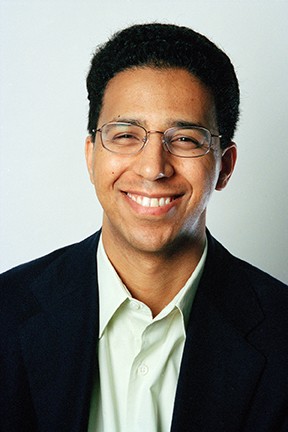
David Barboza has been a correspondent for The New York Times based in Shanghai, China, since November 2004. Mr. Barboza writes primarily for the Business section but also writes often for the Culture section about art, film, television and dance in China. In addition, Mr. Barboza reports on Fortune 500 companies operating in China, Chinese trends and economics.
Mr. Barboza was a freelance writer and a research assistant for The New York Times before being hired in 1997 as a staff writer. For five years, he was the Midwest business correspondent based in Chicago. Since 2008, he has served as the paper’s Shanghai bureau chief.
Mr. Barboza won two awards in The Society of American Business Editors and Writers (SABEW) 2007 Best in Business Journalism Contest: one for a New York Times article, "A Chinese Reformer Betrays His Cause, and Pays." He was also part of the team that won the 2008 Grantham Prize for environmental reporting for the series "Choking on Growth: China’s Environmental Crisis." In 2002, he was part of a team that was named a finalist for a Pulitzer Prize for coverage of the Enron scandal.
In 2008, Mr. Barboza won The Times’s internal business award, the Nathaniel Nash Award. He has twice won the Gerald Loeb Award for business reporting.
Mr. Barboza graduated from Boston University with a bachelor's degree in history and attended Yale University Graduate School.
He lives in Shanghai with his wife, Lynn Zhang.