For a distinguished and appropriately documented book of nonfiction by an American author that is not eligible for consideration in any other category, Fifteen thousand dollars ($15,000).

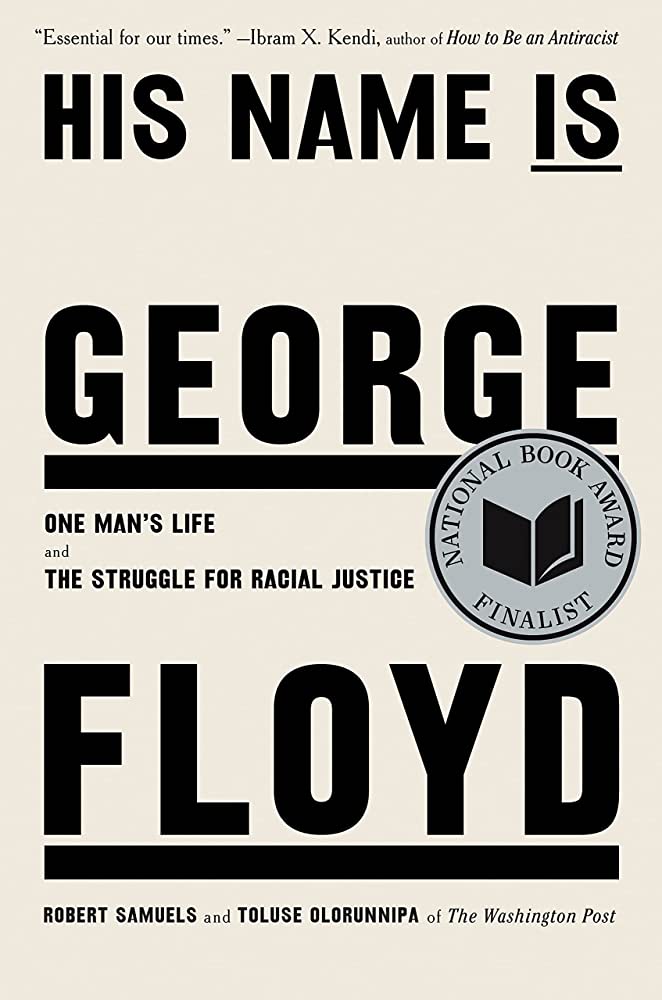
His Name Is George Floyd: One Man’s Life and the Struggle for Racial Justice, by Robert Samuels and Toluse Olorunnipa (Viking)

An intimate, riveting portrait of an ordinary man whose fatal encounter with police officers in 2020 sparked an international movement for social change, but whose humanity and complicated personal story were unknown. (Moved by the Board from the Biography category.)
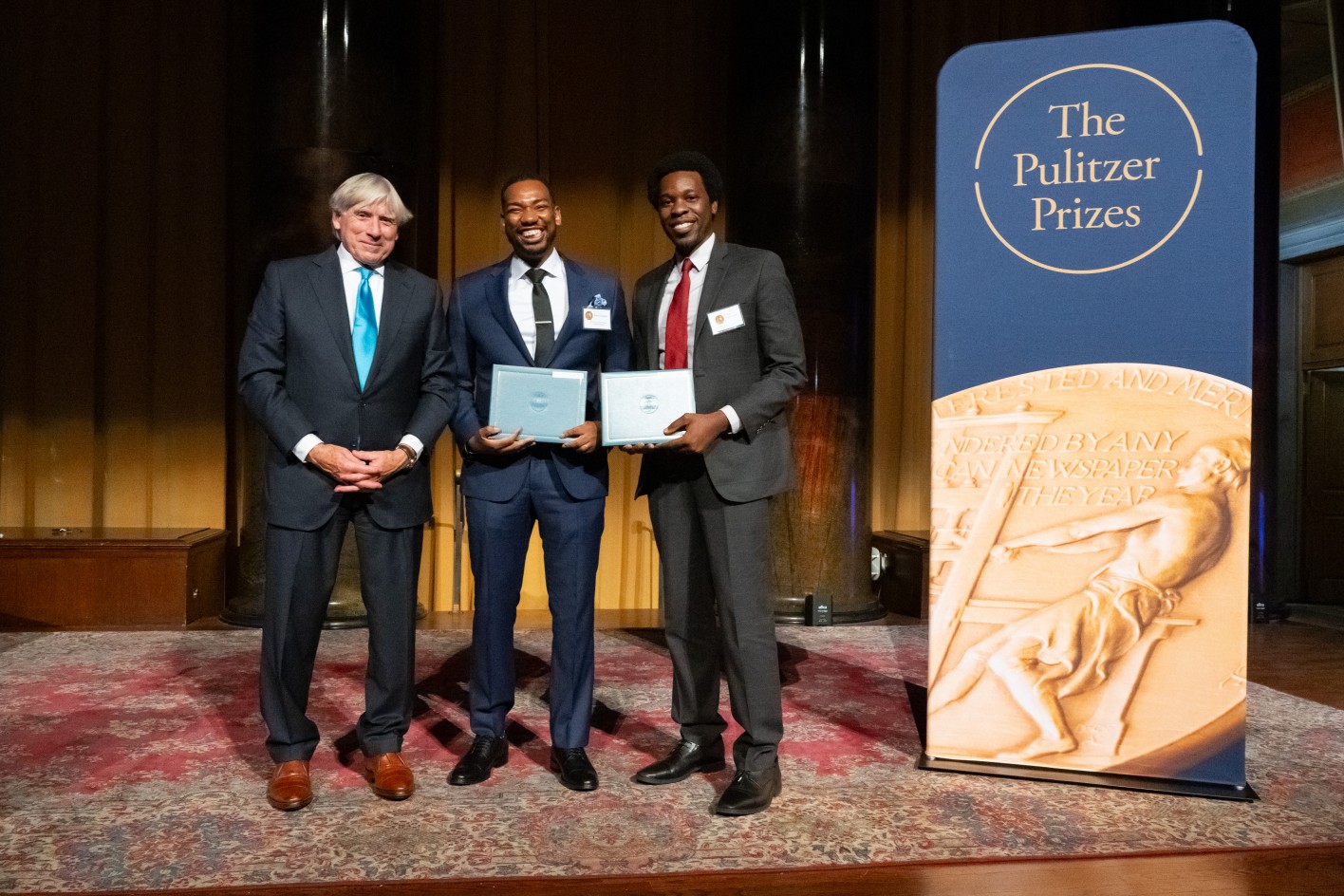
Robert Samuels (center) and Toluse Olorunnipa (right) accept the 2023 Pulitzer Prize for General Nonfiction from Columbia University President Emeritus Lee Bollinger. (Diane Bondareff/The Pulitzer Prizes)

Winning Work

His Name is George Floyd

FINALIST FOR THE NATIONAL BOOK AWARD AND LOS ANGELES TIMES BOOK PRIZE; FINALIST FOR THE J. ANTHONY LUKAS PRIZE; A BCALA 2023 HONOR NONFICTION AWARD WINNER.

A landmark biography by two prizewinning Washington Post reporters that reveals how systemic racism shaped George Floyd’s life and legacy—from his family’s roots in the tobacco fields of North Carolina, to ongoing inequality in housing, education, health care, criminal justice, and policing—telling the story of how one man’s tragic experience brought about a global movement for change.

“It is a testament to the power of His Name Is George Floyd that the book’s most vital moments come not after Floyd’s death, but in its intimate, unvarnished and scrupulous account of his life . . . Impressive.”
—New York Times Book Review (Editors’ Choice)

“Since we know George Floyd’s death with tragic clarity, we must know Floyd’s America—and life—with tragic clarity. Essential for our times.”
—Ibram X. Kendi, author of How to Be an Antiracist
 
“A much-needed portrait of the life, times, and martyrdom of George Floyd, a chronicle of the racial awakening sparked by his brutal and untimely death, and an essential work of history I hope everyone will read.”
—Henry Louis Gates, Jr., author of The Black Church: This Is Our Story, This Is Our Song

The events of that day are now tragically familiar: on May 25, 2020, George Floyd became the latest Black person to die at the hands of the police, murdered outside of a Minneapolis convenience store by white officer Derek Chauvin. The video recording of his death set off the largest protest movement in the history of the United States, awakening millions to the pervasiveness of racial injustice. But long before his face was painted onto countless murals and his name became synonymous with civil rights, Floyd was a father, partner, athlete, and friend who constantly strove for a better life.
 
His Name Is George Floyd tells the story of a beloved figure from Houston’s housing projects as he faced the stifling systemic pressures that come with being a Black man in America. Placing his narrative within the context of the country’s enduring legacy of institutional racism, this deeply reported account examines Floyd’s family roots in slavery and sharecropping, the segregation of his schools, the overpolicing of his community amid a wave of mass incarceration, and the callous disregard toward his struggle with addiction—putting today’s inequality into uniquely human terms. Drawing upon hundreds of interviews with Floyd’s closest friends and family, his elementary school teachers and varsity coaches, civil rights icons, and those in the highest seats of political power, Washington Post reporters Robert Samuels and Toluse Olorunnipa offer a poignant and moving exploration of George Floyd’s America, revealing how a man who simply wanted to breathe ended up touching the world.
Biography

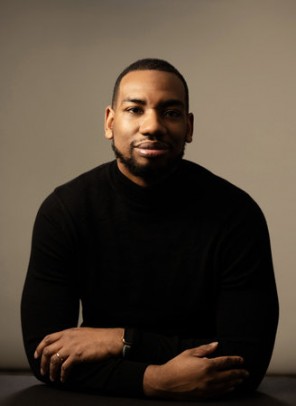
Robert Samuels is a national political enterprise reporter for The Washington Post who focuses on the intersection of politics, policy, and people. He previously wrote stories about life in the District for the Post’s social issues team. Samuels joined the Post in 2011 after spending nearly five years working at the Miami Herald.

Toluse Olorunnipa is the White House Bureau Chief of The Washington Post. He joined The Post in 2019 and has covered the last three presidents. He previously worked at Bloomberg and the Miami Herald, where he reported on politics and policy from Washington and Florida.

Finalists

Nominated as finalists in General Nonfiction in 2023:

David George Haskell

An insightful and revelatory work that scientifically reconsiders natural sound as a wonder of evolution, voicing concern that noisy human progress may return us to silence.

Jing Tsu

A beguiling and original geopolitical account of how China’s international prominence was made possible by the preservation and modernization of the Chinese language and the integration of Mandarin into global communication.

Linda Villarosa

A morally urgent and elegantly rendered work drawing on history, medical research and years of reporting to document how racism infects the American healthcare system, a call to action that also offers some solutions.

The Jury

Roxane Gay(Chair)

Gloria Steinem Endowed Chair in Media, Culture and Feminist Studies, Rutgers University

Ethan Bronner

Senior Editor, Bloomberg News

Matthew Desmond*

Maurice P. During Professor of Sociology, Princeton University

Susan Orlean

Staff Writer, The New Yorker

Luis Urrea

Distinguished Professor of Creative Writing, University of Illinois Chicago

Winners in General Nonfiction

Andrea Elliott

An affecting, deeply reported account of a girl who comes of age during New York City’s homeless crisis–a portrait of resilience amid institutional failure that successfully merges literary narrative with policy analysis.

David Zucchino

A gripping account of the overthrow of the elected government of a Black-majority North Carolina city after Reconstruction that untangles a complicated set of power dynamics cutting across race, class and gender.

Greg Grandin

A sweeping and beautifully written book that probes the American myth of boundless expansion and provides a compelling context for thinking about the current political moment. (Moved by the Board from the History category.)

Eliza Griswold

A classic American story, grippingly told, of an Appalachian family struggling to retain its middle class status in the shadow of destruction wreaked by corporate fracking.

2023 Prize Winners

Kyle Whitmire of AL.com, Birmingham

For measured and persuasive columns that document how Alabama's Confederate heritage still colors the present with racism and exclusion, told through tours of its first capital, its mansions and monuments–and through the history that has been omitted.

Staff of The Wall Street Journal

For sharp accountability reporting on financial conflicts of interest among officials at 50 federal agencies, revealing those who bought and sold stocks they regulated and other ethical violations by individuals charged with safeguarding the public’s interest.