For a distinguished and appropriately documented book of nonfiction by an American author that is not eligible for consideration in any other category, Fifteen thousand dollars ($15,000).

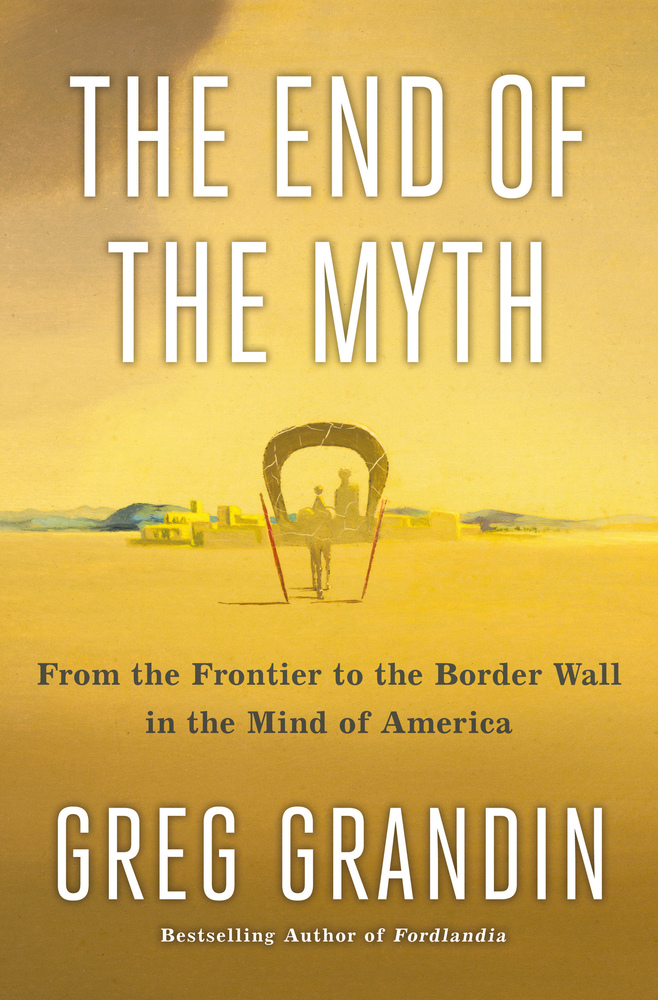
The End of the Myth: From the Frontier to the Border Wall in the Mind of America, by Greg Grandin (Metropolitan Books)

A sweeping and beautifully written book that probes the American myth of boundless expansion and provides a compelling context for thinking about the current political moment. (Moved by the Board from the History category.)

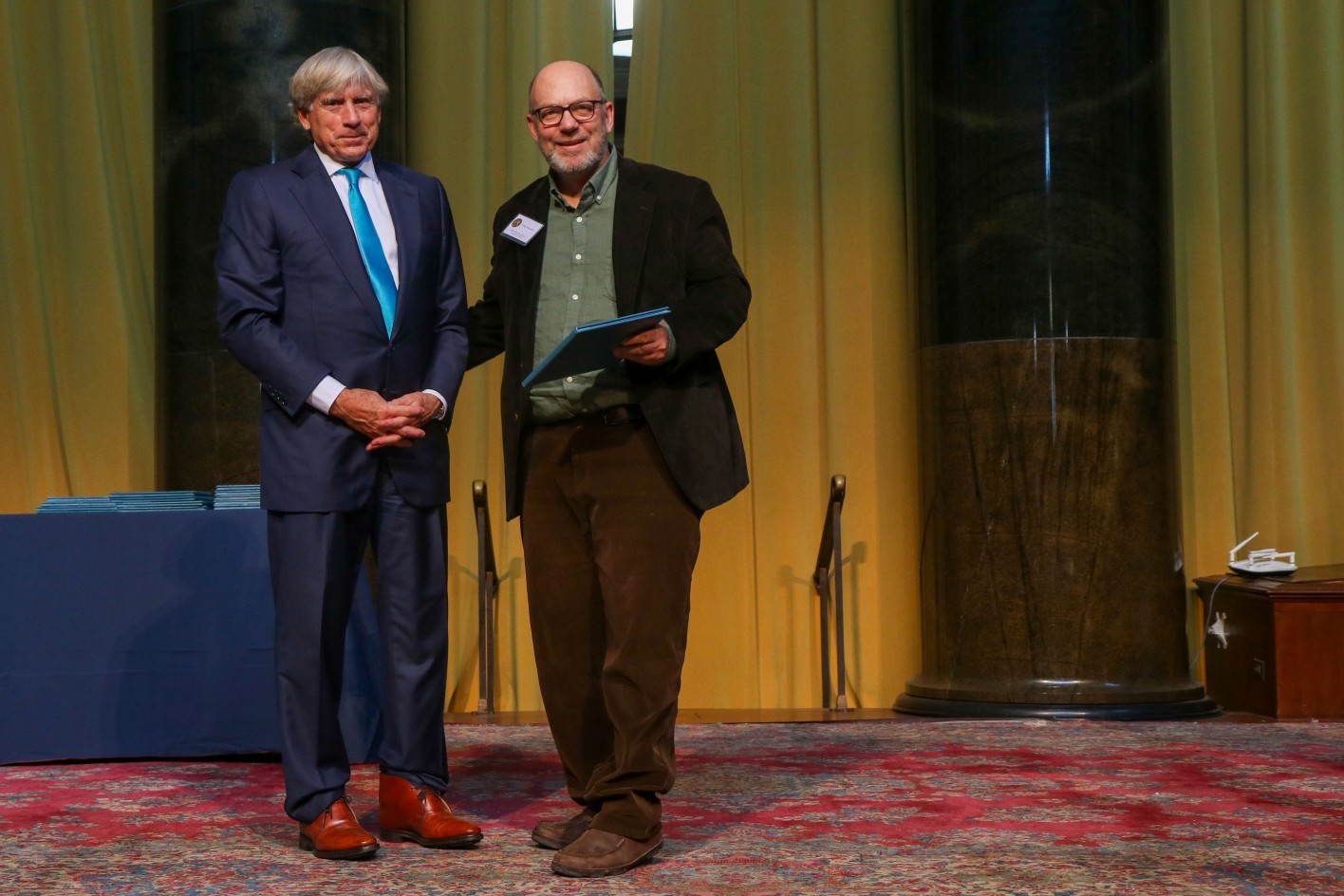
Greg Grandin accepts a 2020 Pulitzer Prize for General Nonfiction from Columbia University President Lee Bollinger. (Jose Lopez/The Pulitzer Prizes)

Winning Work

The End of the Myth


From a Pulitzer Prize finalist, a new and eye-opening interpretation of the meaning of the frontier, from early westward expansion to Trump’s border wall.

Ever since this nation’s inception, the idea of an open and ever-expanding frontier has been central to American identity. Symbolizing a future of endless promise, it was the foundation of the United States’ belief in itself as an exceptional nation—democratic, individualistic, forward-looking. Today, though, America hasa new symbol: the border wall.

In The End of the Myth, acclaimed historian Greg Grandin explores the meaning of the frontier throughout the full sweep of U.S. history—from the American Revolution to the War of 1898, the New Deal to the election of 2016. For centuries, he shows, America’s constant expansion—fighting wars and opening markets—served as a “gate of escape,” helping to deflect domestic political and economic conflicts outward. But this deflection meant that the country’s problems, from racism to inequality, were never confronted directly. And now, the combined catastrophe of the 2008 financial meltdown and our unwinnable wars in the Middle East have slammed this gate shut, bringing political passions that had long been directed elsewhere back home.

It is this new reality, Grandin says, that explains the rise of reactionary populism and racist nationalism, the extreme anger and polarization that catapulted Trump to the presidency. The border wall may or may not be built, but it will survive as a rallying point, an allegorical tombstone marking the end of American exceptionalism.

-- from the publisher

Biography

Greg Grandin is the author of Fordlandia, a finalist for the Pulitzer Prize, the National Book Award, and the National Book Critics Circle Award. A professor of history at Yale University, Grandin has published a number of other widely acclaimed books, including Empire's Workshop, Kissinger's Shadow, and The Empire of Necessity, which won the Bancroft Prize.

Finalists

Nominated as finalists in General Nonfiction in 2020:

Albert Woodfox with Leslie George

An unflinching indictment of Louisiana's most notorious prison and the racist criminal justice system as told through an innocent man's redemptive journey faced with a life sentence in solitary confinement.

Louise Aronson

An empathetic and nuanced critique, informed by the author’s decades of experience as a geriatrician, of the ways in which our society and healthcare system neglect, stereotype and mistreat the elderly.

The Jury

Gilbert King(Chair)*

Author, New York City

Christopher Carduff

Books Editor, The Wall Street Journal

Anne Fadiman

Francis Writer-in-Residence, Yale University

Anand Gopal

Assistant Research Professor, Center for the Study of Religion and Conflict, Arizona State University

John Leland

Author; Metro Reporter, The New York Times

Winners in General Nonfiction

Eliza Griswold

A classic American story, grippingly told, of an Appalachian family struggling to retain its middle class status in the shadow of destruction wreaked by corporate fracking.

James Forman Jr.

An examination of the historical roots of contemporary criminal justice in the U.S., based on vast experience and deep knowledge of the legal system, and its often-devastating consequences for citizens and communities of color.

Matthew Desmond

For a deeply researched exposé that showed how mass evictions after the 2008 economic crash were less a consequence than a cause of poverty.

Joby Warrick

A deeply reported book of remarkable clarity showing how the flawed rationale for the Iraq War led to the explosive growth of the Islamic State.

2020 Prize Winners

Nikole Hannah-Jones of The New York Times

For a sweeping, provocative and personal essay for the ground-breaking 1619 Project, which seeks to place the enslavement of Africans at the center of America’s story, prompting public conversation about the nation’s founding and evolution.

Christopher Knight of the Los Angeles Times

For work demonstrating extraordinary community service by a critic, applying his expertise and enterprise to critique a proposed overhaul of the L.A. County Museum of Art and its effect on the institution’s mission.