For distinguished musical composition by an American that has had its first performance or recording in the United States during the year, Fifteen thousand dollars ($15,000).

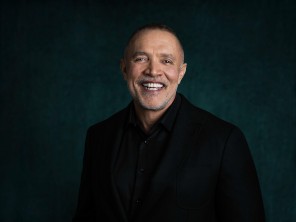
Omar, by Rhiannon Giddens and Michael Abels

Premiered on May 27, 2022 at the Spoleto Festival USA in Charleston, S.C., an innovative and compelling opera about enslaved people brought to North America from Muslim countries, a musical work that respectfully represents African as well as African American traditions, expanding the language of the operatic form while conveying the humanity of those condemned to bondage.
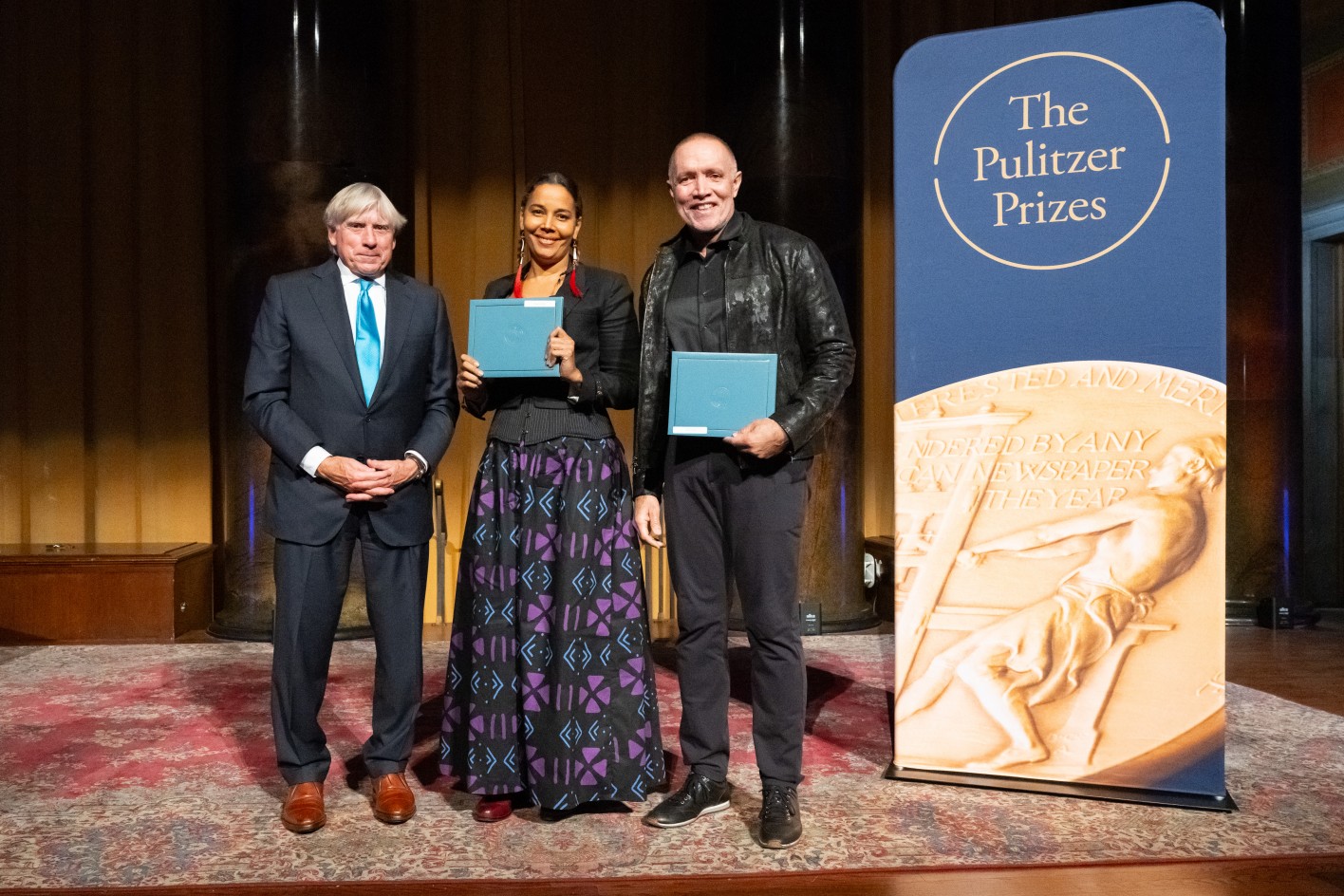
Rhiannon Giddens (center) and Michael Abels (right) accept the 2023 Pulitzer Prize for Music from Columbia University President Emeritus Lee Bollinger. (Diane Bondareff/The Pulitzer Prizes)

Winning Work

Omar

A day after its May 27 premiere at the 2022 Spoleto Festival USA, 'Omar' composers Rhiannon Giddens and Michael Abels discussed the work with CBS News correspondent Martha Teichner in a segment of the Festival's 'Conversations with' series.

What does it mean to tell a story? How do we reckon with the gaps in our history? 

These questions animate the North Carolina premiere of Omar, an opera from Southern Futures at CPA Artist-in Residence Rhiannon Giddens and acclaimed composer Michael Abels. This sweeping new work draws inspiration from the 1831 autobiography of Omar ibn Said, beginning long before the West African scholar was forced to board a ship bound for Charleston, South Carolina — the site of his initial enslavement. Pulling from a wealth of sources—including historical texts found in Carolina’s Louis Round Wilson Library—Omar tells a profound story of strength, resistance, and religious conviction in the face of harrowing circumstances. And, according to Giddens, it goes beyond a simple retelling to tackle issues that will resonate with a wide range of contemporary audiences. 

Though Said’s memoir ends some 30 years before his eventual death in Fayetteville, North Carolina, Omar transcends bare biographical facts to fully realize the record of his life and his steadfast Muslim faith. The rich, bubbling score combines West African traditions and traditional opera instrumentation to illuminate the lives of Omar ibn Said and those who came into his orbit. 

Sung in English with some Arabic; English supertitles.

Omar is co-commissioned and co-produced by Spoleto Festival USA and Carolina Performing Arts at The University of North Carolina at Chapel Hill. Carolina Performing Arts’ participation in this project is made possible through the support of the William R. Kenan, Jr. Charitable Trust.

Additional co-commissioners include LA Opera, Boston Lyric Opera, San Francisco Opera, and Lyric Opera of Chicago. From A Muslim American Slave: The Life of Omar Ibn Said translated with an introduction by Ala Alryyes. Reprinted by permission of the University of Wisconsin Press. © 2011 by the Board of Regents of the University of Wisconsin System. All rights reserved. 
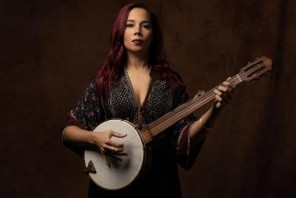
-- from Carolina Performing Arts’ production page

Biography

The acclaimed musician Rhiannon Giddens uses her art to excavate the past and reveal bold truths about our present. A MacArthur “Genius Grant” recipient, Giddens co-founded the Grammy Award-winning Carolina Chocolate Drops. She most recently won a Grammy Award for Best Folk Album for They’re Calling Me Home, which she made with multi-instrumentalist Francesco Turrisi. Giddens is now a two-time winner and eight-time Grammy nominee for her work as a soloist and collaborator.

They’re Calling Me Home was released by Nonesuch last April and has been widely celebrated by The New York Times, NPR Music, NPR, Rolling Stone, People, Associated Press, and far beyond, with No Depression deeming it “a near perfect album…her finest work to date.” Recorded over six days in the early phase of the pandemic in a small studio outside of Dublin, Ireland—where both Giddens and Turrisi live—They’re Calling Me Home manages to effortlessly blend the music of their native and adoptive countries: America, Italy, and Ireland. The album speaks of the longing for the comfort of home as well as the metaphorical “call home” of death.

Giddens’ lifelong mission is to lift up people whose contributions to American musical history have previously been erased, and to work toward a more accurate understanding of the country’s musical origins. Pitchfork has said of her work, “few artists are so fearless and so ravenous in their exploration,” and Smithsonian Magazine calls her “an electrifying artist who brings alive the memories of forgotten predecessors, white and Black.”

Among her many diverse career highlights, Giddens has performed for the Obamas at the White House and received an inaugural Legacy of Americana Award from Nashville’s National Museum of African American History in partnership with the Americana Music Association. Her critical acclaim includes in-depth profiles by CBS Sunday Morning, The New York Times, The New Yorker, and NPR’s Fresh Air, among many others.

Giddens was featured in Ken Burns’s Country Music series, which aired on PBS, where she spoke about the African American origins of country music. She is also a member of the band Our Native Daughters with three other black female banjo players, Leyla McCalla, Allison Russell, and Amythyst Kiah, and co-produced their debut album Songs of Our Native Daughters (2019), which tells stories of historic black womanhood and survival.

Giddens is in the midst of a tremendous 2022. Her first book, Build a House was published in October; Lucy Negro Redux, the ballet Giddens wrote the music for, had its premiere at the Nashville Ballet; and the libretto and music for Giddens’ original opera, Omar, based on the autobiography of the enslaved man Omar Ibn Said, premiered at Spoleto Festival USA in May. Giddens is also curating a four-concert Perspectives series as part of Carnegie Hall’s 2022–2023 season. Named Artistic Director of Silkroad Ensemble in 2020, Giddens is developing a number of new programs for that ensemble, including one inspired by the history of the American transcontinental railroad and the cultures and music of its builders.


Two-time Emmy-nominated composer Michael Abels is known for his genre-defying scores for the Jordan Peele films Get Out and Us, for which Abels won a World Soundtrack Award, the Jerry Goldsmith Award, a Critics Choice nomination, and multiple critics awards. The hip-hop influenced score for Us was short-listed for the Oscar, and was named “Score of the Decade” by The Wrap. Other recent projects include the films Bad EducationNightbooksFake Famous, and the docu-series Allen v. Farrow. Current releases include BeautyBreaking, and Nope, his third collaboration with Jordan Peele, now nominated for a Saturn Award. Upcoming projects include ChevalierThe Burial, and Landscape with Invisible Hand.

Abels’ creative output also includes many concert works, including At War with Ourselves for the Kronos Quartet, Isolation Variation for Hilary Hahn, and the opera Omar, co-composed with Grammy-winning singer/songwriter Rhiannon Giddens. His scores have been performed by the New York Philharmonic, the Chicago Symphony, the Los Angeles Master Chorale, and many others. Some of these pieces are available on the Cedille label, including Delights & Dances and Winged Creatures. Current commissions include Emerge for the National Symphony, and a guitar concerto Borders for Grammy-nominated artist Mak Grgic.

Abels is co-founder of the Composers Diversity Collective, an advocacy group to increase visibility of composers of color in film, gaming and streaming media.

Finalists

Nominated as finalists in Music in 2023:

Jerrilynn Patton

Recording by Third Coast Percussion released on May 13, 2022 by Cedille Records, an artful work that uses technology to create a musical language of shifting textures, driving grooves and floating melodies that morph over seven movements, generating connectivity as well as difference.

Tyshawn Sorey

First premiered on February 19, 2022 at the Rothko Chapel, Houston, Texas, an exquisitely crafted composition that balances density with fragile detail using chords and singing, particularly a strong bass voice, a masterful blend of sound and contemplative silence.

The Jury

John V. Brown, Jr.(Chair)

Vice Provost for the Arts and Professor of the Practice of Music, Duke University

Raven Chacon*

Composer, Red Hook, N.Y.

Du Yun*

Composer, New York, N.Y.

Arturo O’Farrill

Founder/Artistic Director, Afro Latin Jazz Alliance; Professor, Global Jazz Studies, University of California, Los Angeles

Carol J. Oja

William Powell Mason Professor of Music, Harvard University

Winners in Music

Raven Chacon

Premiered on November 21, 2021 in Milwaukee, Wis., a mesmerizing, original work for organ and ensemble that evokes the weight of history in a church setting, a concentrated and powerful musical expression with a haunting visceral impact.

Tania León

Premiered at David Geffen Hall, Lincoln Center, New York City on February 13, 2020, a musical journey full of surprise, with powerful brass and rhythmic motifs that incorporate Black music traditions from the US and the Caribbean into a Western orchestral fabric.

Anthony Davis

Premiered on June 15, 2019 at the Long Beach Opera, a courageous operatic work, marked by powerful vocal writing and sensitive orchestration, that skillfully transforms a notorious example of contemporary injustice into something empathetic and hopeful. Libretto by Richard Wesley.

Ellen Reid

A bold new operatic work that uses sophisticated vocal writing and striking instrumental timbres to confront difficult subject matter: the effects of sexual and emotional abuse. Libretto by Roxie Perkins. Prism was commissioned and produced by Beth Morrison Projects in association with Trinity Wall Street, presented in a rolling world premiere with LA Opera and the PROTOTYPE Festival.

2023 Prize Winners

Kyle Whitmire of AL.com, Birmingham

For measured and persuasive columns that document how Alabama's Confederate heritage still colors the present with racism and exclusion, told through tours of its first capital, its mansions and monuments–and through the history that has been omitted.

Staff of The Wall Street Journal

For sharp accountability reporting on financial conflicts of interest among officials at 50 federal agencies, revealing those who bought and sold stocks they regulated and other ethical violations by individuals charged with safeguarding the public’s interest.