Fiction, Poetry and Drama Winners To Read This Black History Month
From the first African-American Pulitzer winner — Gwendolyn Brooks in 1950 — to more recent winners such as Tyehimba Jess, Lynn Nottage and Colson Whitehead, these writers' creative interpretations of black life are rooted in research and history.
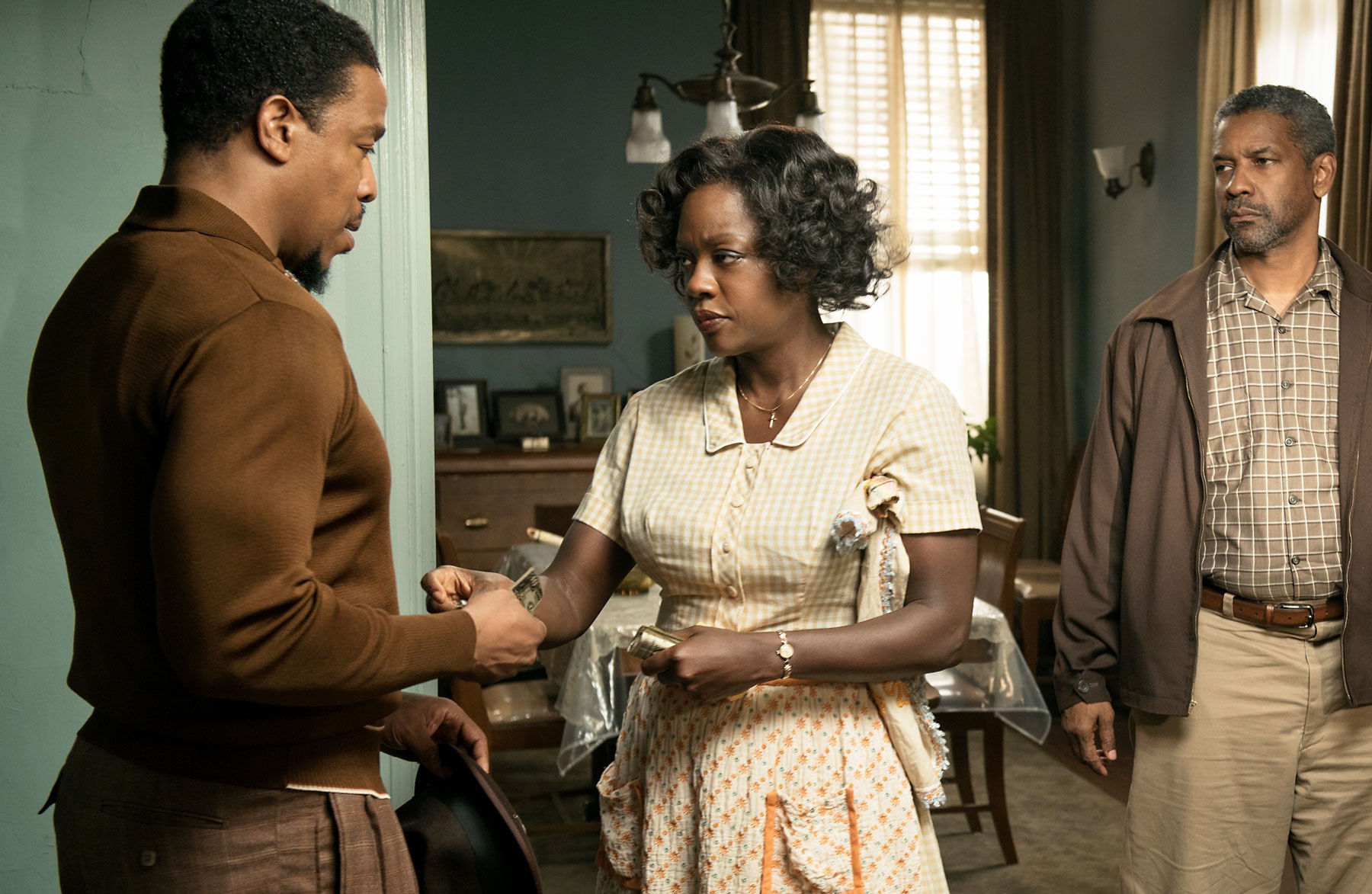
A scene from Denzel Washington's 2016 film adaptation of August Wilson's "Fences." Wilson was a two-time Pulitzer winner in Drama.
While nonfiction prize winners such as Manning Marable and Annette Gordon-Reed capture the facts of America's reckoning with race, fictional works in Drama, Poetry and Fiction capture truths through nuanced storytelling.
1.
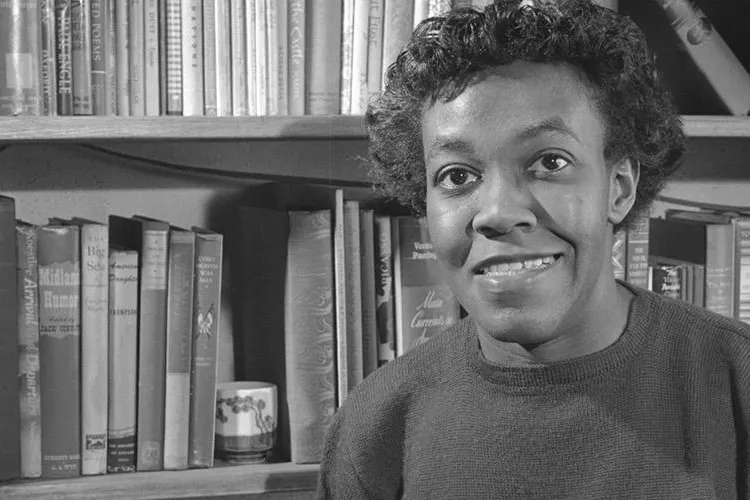
Annie Allen (1950)
“They are hard and real, right out of the central core of Black Belt Negro life in urban areas. ... There is no self-pity here, not a striving for effect. She takes hold of reality as it is and renders it faithfully. There is not so much an exhibiting of Negro life to whites in these poems as there is an honest human reaction to the pain that lurks so colorfully in the Black Belt. ... She easily catches the pathos of petty destinies; the whimper of the wounded; the tiny incidents that plague the lives of the desperately poor, and the problem of color prejudice among Negroes. ... Only one who has actually lived and suffered in a kitchenette could render the feeling of lonely frustration as well as she does: — of how dreams are drowned out by the noises, smells, and the frantic desire to grab one’s chance to get a bath when the bathroom is empty. Miss Brooks is real and so are her poems,” wrote "Native Son" author Richard Wright when a Harper and Brothers editor asked his opinion of Brooks' work.
2.
Neon Vernacular: New and Selected Poems (1994)
Yusef Komunyakaa begins his poem "The Great Migration": "Where’s the forty acres & a mule/in the long, great getting-up/morning?" In an essay on Pulitzer.org, the poet, who grew up in Bogalusa, La., recalls workshopping poetry at the Provincetown Fine Arts Work Center 30 years ago with fellow prize winner Alan Dugan, who "said he expected to see more of the South in my work." Komunyakaa since has often written of rural Southern life before the Civil Rights era, as well as his time in the military during the Vietnam War.
3.
Native Guard (2007)
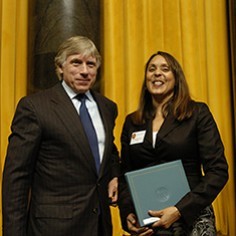
Natasha Tretheway grew up in Gulfport, Miss., and learned of Civil War-era black soldiers stationed in her hometown. "The title poem imagines the life of a former slave stationed at the fort, who is charged with writing letters home for the illiterate or invalid POWs and his fellow soldiers," her publisher wrote. As a child of a black mother and white father whose marriage was illegal in 1966 when she was born, Tretheway also explores intimate relationships, and "is haunted by the intersection of national and personal experience."
4.
Life on Mars (2012)
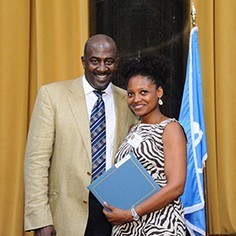
Currently serving as the 22nd Poet Laureate of the United States, Tracy K. Smith was born in Massachusetts, raised in California and attended Harvard, but draws on her family's history in Alabama in her broad-ranging work. The Pulitzer Board described Life on Mars as "A collection of bold, skillful poems, taking readers into the universe and moving them to an authentic mix of joy and pain."
5.
Digest (2015)
The Pulitzer Board praised Gregory Pardlo's volume for its "clear-voiced poems that bring readers the news from 21st Century America, rich with thought, ideas and histories public and private. " In an essay for PEN in 2010, Pardlo considered the implications of writing about race as an African-American person, writing: "The extent to which we employ race as a theme in our work, however, is the extent to which it will mock the tidiness of any uniform appraisal. The real racial mountain, then, just might be our reluctance to discuss openly what are the implications of our ambitions, what these portend for the ideology of race altogether."
6.
Olio (2017)
Tyehimba Jess tells the stories of African-American creatives of the past in "Olio," a book the Pulitzer Board called, "a distinctive work that melds performance art with the deeper art of poetry to explore collective memory and challenge contemporary notions of race and identity."
7.
The Color Purple (1983)
Alice Walker's novel has been adapted both as a film, by Steven Spielberg with Whoopi Goldberg in the role of Celie, and as a Broadway musical, with a book by Marsha Norman and music and lyrics by Brenda Russell, Allee Willis, and Stephen Bray. In a 2007 Guardian interview about the book, Walker said: ""It's a book mostly about women, and what they're doing, and how they're carrying on no matter what the men are doing ... I think that for many men at that time it was a shock that you could actually write a novel with women at the center."
9.
The Underground Railroad (2017)
Colson Whitehead, who used actual slave narratives collected by the U.S. government to ground his work, told the Fader, "I didn’t see any particular value in doing a straight historical novel. The use of certain fantastical elements was just a different way to tell a story. If I stuck to the facts then I couldn’t bring in the Holocaust, and the KKK, and eugenic experiments. I was able to achieve a different effect by altering history."
12.
Topdog/Underdog (2002)
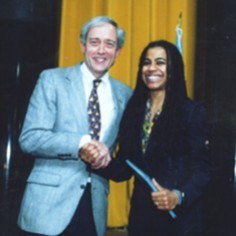
Suzan-Lori Parks also was a Pulitzer finalist for "Father Comes Home From the War" and "In the Blood." Of her prize-winning play, which centers on two African-American brothers, she said it addresses, "who the world thinks you’re going to be, and how you struggle with that."
14.
Sweat (2017)
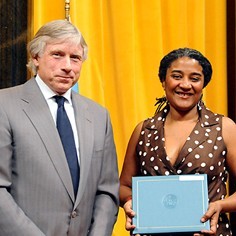
Nottage became a two-time Pulitzer winner with "Sweat," which explored themes closer to home. Her Prize citation reads: "A nuanced yet powerful drama that reminds audiences of the stacked deck still facing workers searching for the American dream." Set in a struggling Pennsylvania town — Nottage spent months in Reading, Pa., where the dying steel industry has taken a toll on the community, researching the work — The NewYorker called "Sweat" "the first theatrical landmark of the Trump era."
15.
Roots (1977)
Alex Haley was awarded a Special Citation for "Roots" in 1977. The "Saga of an American Family" begins in the Gambia, crosses the Atlantic and from there crosses generations and traverses the broader U.S. landscape. The book spent 46 weeks on the New York Times best seller list, 22 at No. 1.