For a distinguished and appropriately documented book on the history of the United States, Fifteen thousand dollars ($15,000).

Combee: Harriet Tubman, the Combahee River Raid, and Black Freedom During the Civil War, by Edda L. Fields-Black (Oxford University Press)

A richly-textured and revelatory account of a slave rebellion that brought 756 enslaved people to freedom in a single day, weaving military strategy and family history with the transition from bondage to freedom.

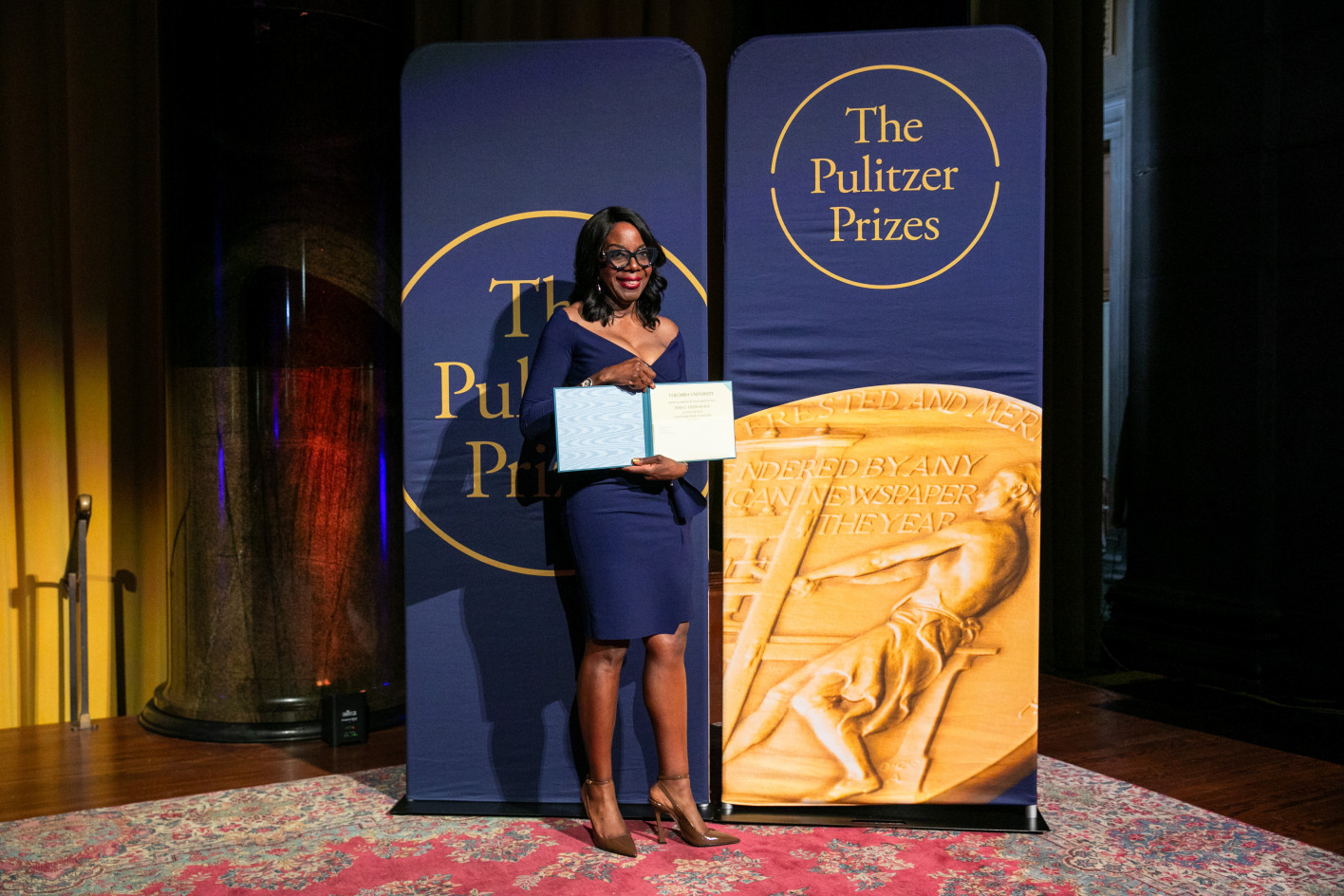
Edda L. Fields-Black accepts a 2025 Pulitzer Prize for History. (David Dini/The Pulitzer Prizes)

Winning Work

Combee: Harriet Tubman, the Combahee River Raid, and Black Freedom During the Civil War

The story of the Combahee River Raid, one of Harriet Tubman's most extraordinary accomplishments, based on original documents and written by a descendant of one of the participants.

Publishers Weekly Starred Review
Library Journal Starred Review
Booklist Top Ten History Books of 2024

Most Americans know of Harriet Tubman's legendary life: escaping enslavement in 1849, she led more than 60 others out of bondage via the Underground Railroad, gave instructions on getting to freedom to scores more, and went on to live a lifetime fighting for change. Yet the many biographies, children's books, and films about Tubman omit a crucial chapter: during the Civil War, hired by the Union Army, she ventured into the heart of slave territory--Beaufort, South Carolina--to live, work, and gather intelligence for a daring raid up the Combahee River to attack the major plantations of Rice Country, the breadbasket of the Confederacy.

Edda L. Fields-Black--herself a descendent of one of the participants in the raid--shows how Tubman commanded a ring of spies, scouts, and pilots and participated in military expeditions behind Confederate lines. On June 2, 1863, Tubman and her crew piloted two regiments of Black US Army soldiers, the Second South Carolina Volunteers, and their white commanders up coastal South Carolina's Combahee River in three gunboats. In a matter of hours, they torched eight rice plantations and liberated 730 people, people whose Lowcountry Creole language and culture Tubman could not even understand. Black men who had liberated themselves from bondage on South Carolina's Sea Island cotton plantations after the Battle of Port Royal in November 1861 enlisted in the Second South Carolina Volunteers and risked their lives in the effort.

Using previous unexamined documents, including Tubman's US Civil War Pension File, bills of sale, wills, marriage settlements, and estate papers from planters' families, Fields-Black brings to life intergenerational, extended enslaved families, neighbors, praise-house members, and sweethearts forced to work in South Carolina's deadly tidal rice swamps, sold, and separated during the antebellum period. When Tubman and the gunboats arrived and blew their steam whistles, many of those people clambered aboard, sailed to freedom, and were eventually reunited with their families. The able-bodied Black men freed in the Combahee River Raid enlisted in the Second South Carolina Volunteers and fought behind Confederate lines for the freedom of others still enslaved not just in South Carolina but Georgia and Florida.

After the war, many returned to the same rice plantations from which they had escaped, purchased land, married, and buried each other. These formerly enslaved peoples on the Sea Island indigo and cotton plantations, together with those in the semi-urban port cities of Charleston, Beaufort, and Savannah, and on rice plantations in the coastal plains, created the distinctly American Gullah Geechee dialect, culture, and identity--perhaps the most significant legacy of Harriet Tubman's Combahee River Raid.
Biography

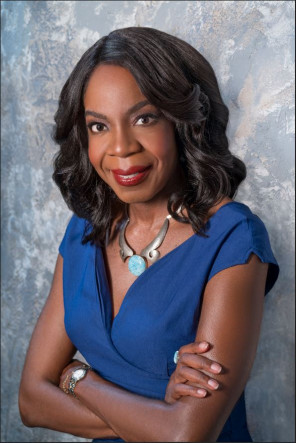
Edda L. Fields-Black is the author of Deep Roots: Rice Farmers in West Africa and the African Diaspora and was executive producer and librettist of Unburied, Unmourned, Unmarked: Requiem for Rice (with Emmy® Award-winning composer John Wineglass), reflecting her long involvement with the interconnective story of rice cultivation in pre-colonial West Africa and on antebellum Lowcountry South Carolina and Georgia plantations. She has been a consultant at the Smithsonian National Museum of African American History and Culture, the International African American Museum, and the Senator John Heinz History Center. Fields-Black lives with her family in Pittsburgh, where she teaches history at Carnegie Mellon University.
 

Finalists

Nominated as finalists in History in 2025:

Seth Rockman

A layered analysis of the manufacture and movement of tools and other everyday products between the North and South–from New England businesses to Southern planters and their enslaved workers–and how they created a shared economy.

The Jury

Jefferson Cowie(Chair)

James G. Stahlman Professor of History, Vanderbilt University

Daina Ramey Berry

Michael Douglas Dean of Humanities and Fine Arts, University of California, Santa Barbara

Julio Capó Jr.

Associate Professor of History, Florida International University

Julian Lim

Arthur Eisenberg and Susan Engel Associate Professor of History, Johns Hopkins University

Sarah Pearsall

Professor of History, Johns Hopkins University

Winners in History

Jacqueline Jones

A breathtakingly original reconstruction of free Black life in Boston that profoundly reshapes our understanding of the city’s abolitionist legacy and the challenging reality for its Black residents.

Jefferson Cowie

A resonant account of an Alabama county in the 19th and 20th centuries shaped by settler colonialism and slavery, a portrait that illustrates the evolution of white supremacy by drawing powerful connections between anti-government and racist ideologies.

Ada Ferrer

An original and compelling history, spanning five centuries, of the island that became an obsession for many presidents and policy makers, transforming how we think about the U.S. in Latin America, and Cuba in American society.

Marcia Chatelain

A nuanced account of the complicated role the fast-food industry plays in African-American communities, a portrait of race and capitalism that masterfully illustrates how the fight for civil rights has been intertwined with the fate of Black businesses.

2025 Prize Winners

Staff of The Wall Street Journal

For chronicling political and personal shifts of the richest person in the world, Elon Musk, including his turn to conservative politics, his use of legal and illegal drugs and his private conversations with Russian President Vladimir Putin.