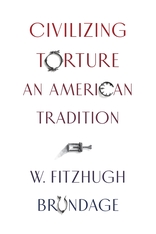
Finalist: Civilizing Torture: An American Tradition, by W. Fitzhugh Brundage (Belknap Press of Harvard University Press)

A morally engaging investigation of torture that measures American ideals of democracy and equality against a dark, uncomfortable reality.

Nominated Work

Civilizing Torture: An American Tradition

Most Americans believe that a civilized state does not resort to torture, and yet, as W. Fitzhugh Brundage reveals in this essential and disturbing study, there is a long American tradition of excusing as well as decrying its use.

The pilgrims and merchants who first came to America from Europe professed an intention to create a society free of the barbarism of Old World tyranny and New World savagery. But over the centuries Americans have turned to torture during moments of crisis at home and abroad and have debated its legitimacy in defense of law and order.

From the Indian wars to Civil War POW prisons and early penitentiaries, from “the third degree” in police stations and racial lynchings to the War on Terror, U.S. institutions have proven to be far more amenable to torture than the nation’s professed commitment to liberty would suggest. Legal and racial inequality fostered many opportunities for state agents to wield excessive power, which they justified as essential for American safety and well-being.

Reconciling state violence with the aspirations of Americans for social and political justice is an enduring challenge. By tracing the historical debates about the efficacy of torture and the attempt to adapt it to democratic values, Civilizing Torture reveals the recurring struggle to decide what limits Americans are willing to impose on the power of the state. At a time of escalating rhetoric aimed at cleansing the nation of the undeserving, as well as ongoing military involvement in conflicts around the world, the debate over torture remains a critical and unresolved part of America’s tradition.

-- from the publisher
Biography

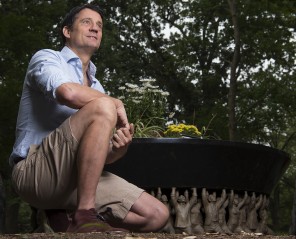
W. Fitzhugh Brundage is William B. Umstead Professor of History at the University of North Carolina at Chapel Hill. He received a Guggenheim Fellowship for his present work on torture in American history. Brundage has written extensively on racial inequality and violence, from segregation to lynching.


Winners

Prize Winner in History in 2019:

David W. Blight

A breathtaking history that demonstrates the scope of Frederick Douglass’ influence through deep research on his writings, his intellectual evolution and his relationships. History

Finalists

Nominated as finalists in History in 2019:

Victoria Johnson

A beautiful restoration of the world of botanist and surgeon Dr. David Hosack whose forward-looking views embodied early American ambitions in transatlantic scientific discourse.

The Jury

Annette Gordon-Reed(Chair)*

Charles Warren Professor of American Legal History; Professor of History, Faculty of Arts and Sciences

Tiya Miles

Professor of History and Radcliffe Alumnae Professor

Marcus Rediker

Distinguished Professor of History

Winners in History

Jack E. Davis

An important environmental history of the Gulf of Mexico that brings crucial attention to Earth’s 10th-largest body of water, one of the planet’s most diverse and productive marine ecosystems.

Heather Ann Thompson

For a narrative history that sets high standards for scholarly judgment and tenacity of inquiry in seeking the truth about the 1971 Attica prison riots.

T.J. Stiles

A rich and surprising new telling of the journey of the iconic American soldier whose death turns out not to have been the main point of his life. (Moved by the Board from the Biography category.)

Elizabeth A. Fenn

An engrossing, original narrative showing the Mandans, a Native American tribe in the Dakotas, as a people with a history.

2019 Prize Winners