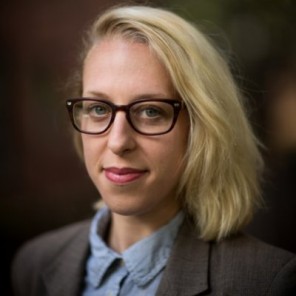
Finalist: Meribah Knight of WPLN, contributor, and Ken Armstrong of ProPublica

For their enterprising and empathetic account of 11 Black children in Tennessee who were arrested for a crime that doesn’t exist.

Nominated Work

Biography

Meribah Knight is the reporter and host of the Peabody Award-winning podcast “The Promise,” an immersive series from Nashville Public Radio about inequality and the people trying to rise above it. She is currently a fellow in ProPublica’s Local Reporting Network.

Her writing has appeared in The New York Times; The New Yorker; O, The Oprah Magazine; and The Chicago Reader. Her radio and multimedia work has been featured on NPR, “Marketplace,” “Here & Now,” WBEZ, “PBS NewsHour” and Chicago Public Television.

A native of Cambridge, Massachusetts, Meribah has a masters of journalism from Northwestern University and a BA from New York University. She lives in Nashville with her husband, a photojournalist with The Tennessean, their toddler son and the family’s five cats.

Ken Armstrong joined ProPublica in 2017. He previously worked at The Marshall Project, where his collaboration with ProPublica’s T. Christian Miller, about a woman charged with lying about being raped, won the 2016 Pulitzer Prize for Explanatory Reporting. That story also became a “This American Life” episode; a book, “A False Report”; and a Netflix series, “Unbelievable.”

At The Seattle Times, Armstrong won the 2012 Pulitzer Prize for Investigative Reporting for a series with Michael Berens that showed how Washington state steered Medicaid patients and others to a cheap but unpredictable painkiller linked to more than 2,000 deaths. He also shared in two staff Pulitzers for breaking news.

At the Chicago Tribune, Armstrong’s work with Steve Mills helped prompt the Illinois governor to suspend executions and empty death row. He has been honored with four George Polk Awards and the John Chancellor Award from Columbia University for lifetime achievement. His book with Nick Perry, “Scoreboard, Baby,” won the Edgar Allan Poe Award for nonfiction. Armstrong, a graduate of Purdue University, has been a Nieman Fellow at Harvard and the McGraw Professor of Writing at Princeton.

Winners

Prize Winner in Feature Writing in 2022:

Jennifer Senior of The Atlantic

For an unflinching portrait of a family’s reckoning with loss in the 20 years since 9/11, masterfully braiding the author's personal connection to the story with sensitive reporting that reveals the long reach of grief. Feature Writing

Finalists

Nominated as finalists in Feature Writing in 2022:

Anand Gopal, contributing writer, The New Yorker

For his account, published shortly after the U.S. announced its departure from Afghanistan, of Afghan women who have been forgotten in the dominant narrative about the war.

The Jury

Kit Rachlis(Chair)

Senior Editor, ProPublica

Anne Hull*

Journalist and Writer, Washington, D.C.

Samuel Jacobs

Deputy Editor, Time

Roy S. Johnson

Columnist, AL.com, Birmingham, Ala.

Stephen Reiss

Deputy Editor, The Undefeated

Monica Rhor

Story Editor, Chalkbeat

Swati G. Sharma

Editor-in-Chief, Vox

Winners in Feature Writing

Ben Taub of The New Yorker

For a devastating account of a man who was kidnapped, tortured and deprived of his liberty for more than a decade at the Guantanamo Bay detention facility, blending on-the-ground reporting and lyrical prose to offer a nuanced perspective on America's wider war on terror.

Hannah Dreier of ProPublica

For a series of powerful, intimate narratives that followed Salvadoran immigrants on New York’s Long Island whose lives were shattered by a botched federal crackdown on the international criminal gang MS-13.

Rachel Kaadzi Ghansah, freelance reporter, GQ

For an unforgettable portrait of murderer Dylann Roof, using a unique and powerful mix of reportage, first-person reflection and analysis of the historical and cultural forces behind his killing of nine people inside Emanuel AME Church in Charleston, S.C.

2022 Prize Winners

Jennifer Senior of The Atlantic

For an unflinching portrait of a family’s reckoning with loss in the 20 years since 9/11, masterfully braiding the author's personal connection to the story with sensitive reporting that reveals the long reach of grief.