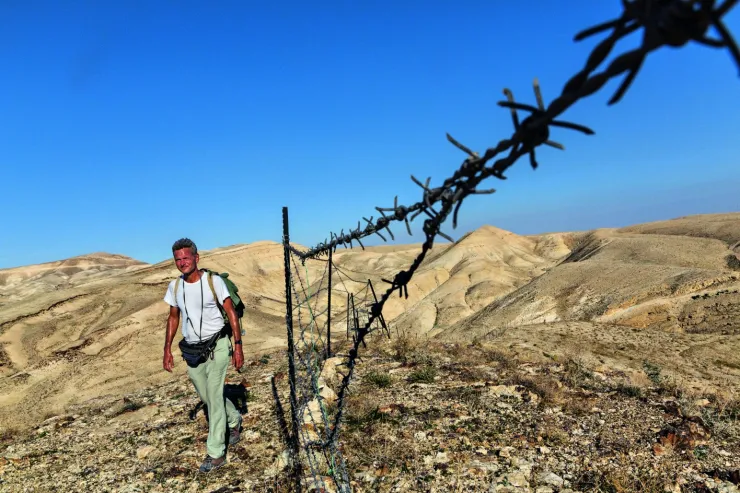
It’s a startling thing to be sipping chai in a shepherd’s hut on the wind-scythed grasslands of Central Asia and hear the word “Poo-leet-zeer” burble up in a torrent of conversational Kazakh. This is particularly true when the rather antique topics at hand involve buying cargo horses, locating water wells and fending off wolves.
Yet the obscure factoid that I had been honored twice by the Pulitzer Board was exchanged last week by rough men whose own concepts of journalism were notional at best. (True, they confused the award, as many people do, with a Nobel.) And this made me quietly proud of our beleaguered trade: Here, among sheep pastoralists descended from warriors who’d fought off Genghis Khan and dozens of other invaders, journalism was being recognized as a force for good. (Sadly, this wasn’t always the case back home.) Moreover, it gave me a tiny moral edge in negotiating the price of a lively three-year-old pony. Who says journalism prizes can’t be parleyed into tangible rewards?
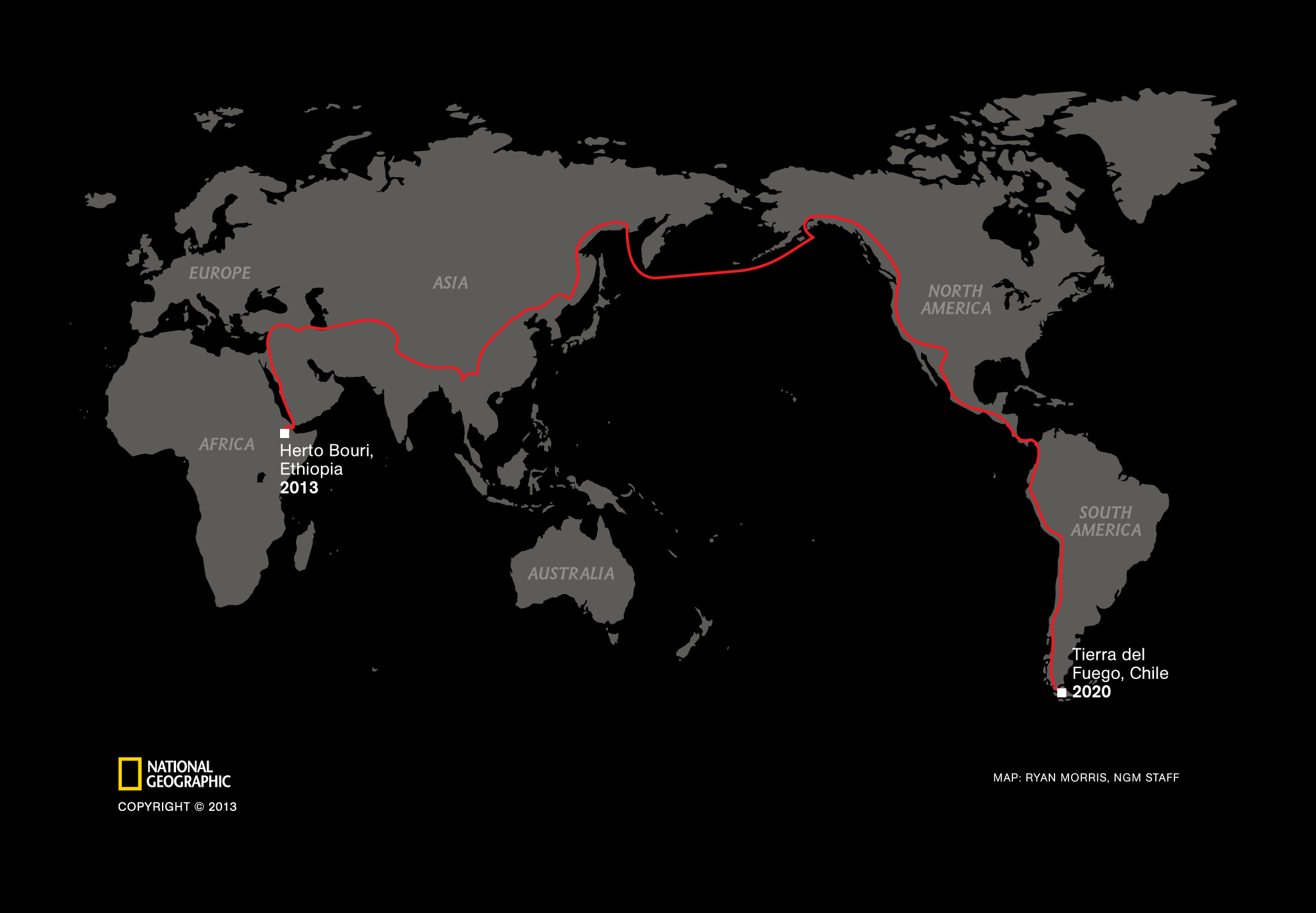
Salopek's planned route. The National Geographic Fellow currently is in Central Asia.
I am a foreign correspondent. I am walking across the planet. I began my foot journey in Ethiopia in 2013, and for the next six or seven years I’ll be plodding east through Asia and Siberia. After taking a ship across the north Pacific, I’ll trek south from Alaska toward Tierra del Fuego, at the tip of South America. This 22,000-mile route corresponds with the ancient pathways of migration that our ancestors blazed as they dispersed out of Africa in the Stone Age. Along the way, I’m reporting on the global stories of our time slowly, intimately, from boot level. I’m knitting my journey’s immersive stories — on war, migration, poverty, climate change, cultural survival — into a linear narrative that hopefully helps make our braided fates clearer in a globalizing world. I’m urging my readers to slow down with me — asking them to pause for a few minutes in their daily sprint through the nano-headlines of the day, and absorb some literary journalism. My project is called the “Out of Eden Walk.”
There’s little doubt that two free lunches at the Low Library at Columbia University helped empower these ideas. The recognition that came with my Pulitzers allowed me to migrate into the newsroom of my choice: a walked world.
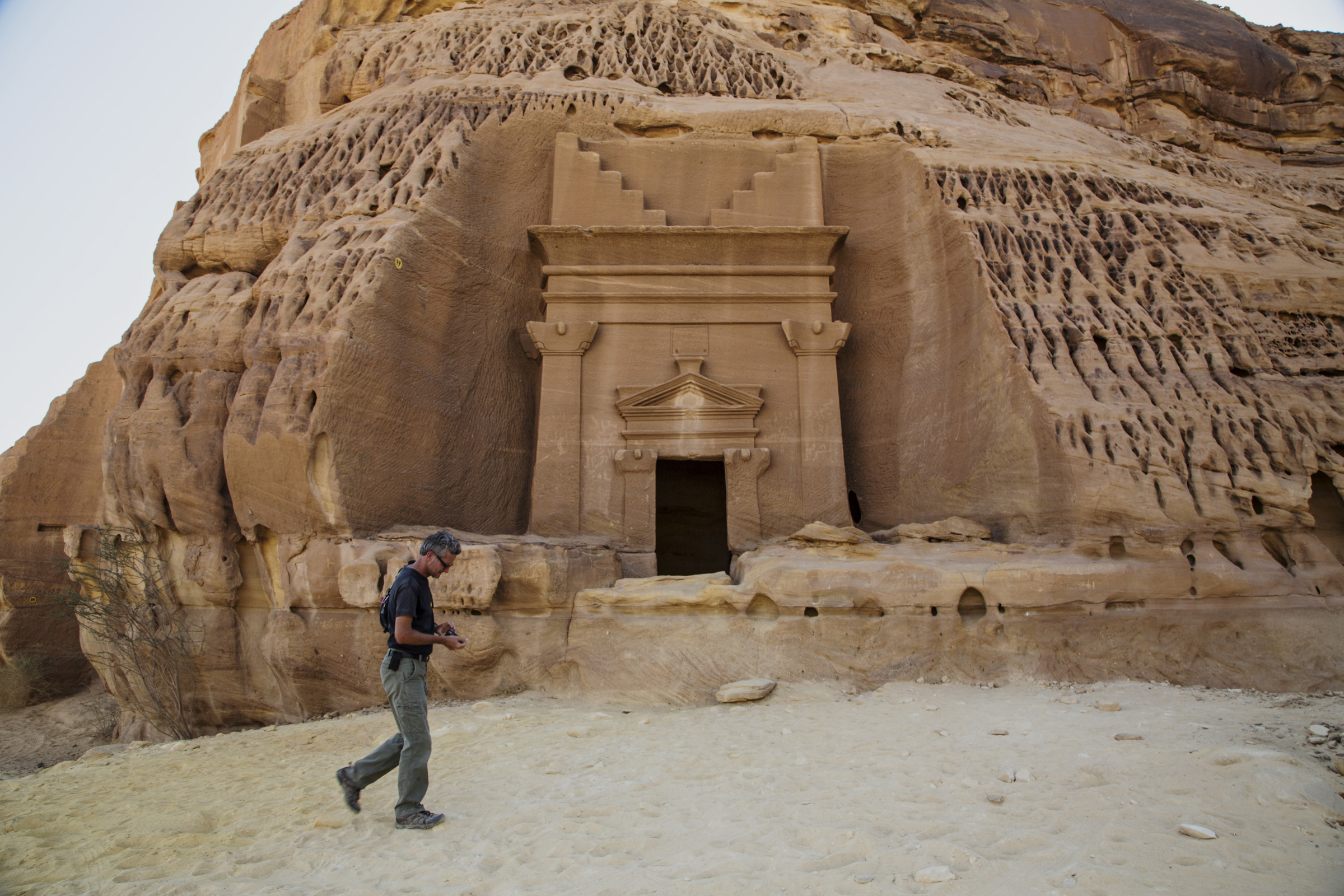
Salopek wanders through the ancient Nabataean ruins of Madain Salih, carved into sandstone outcrops some 2,000 years ago. Photo: John Stanmeyer/National Geographic
The fact is, I’d been using my body as my main tool for reportage for many years before my current assignment. While covering wars in Africa, I always tried moving through the conflicts at the human pace of those low-tech killing fields, once paddling a canoe for five weeks through the Congo. To report on the tectonic changes shaking up rural Mexico over the past generation, I rode a mule for nine months through the Sierra Madre Occidental. To understand how a plague of overfishing has destroyed the oceans’ ecology, I used my hands as well as my words, working alongside Angolan open-boat anglers who were competing hopelessly with factory ships from Europe and China.
I have been extraordinarily lucky in working with superb editors — principally at the Chicago Tribune and National Geographic — who saw value in such time investments. Winning two Pulitzers both validated this long-wave approach to reporting and elevated the public awareness of the difficult, often unpopular issues I was covering.
The Pulitzer Prizes themselves have had to change with the digital times. New technologies and methods must be embraced. Just as I try to deploy almost every new media tool available — all in the service of attracting a younger audience to longer-form international journalism — so the Pulitzers are adapting, too. We work in exciting times. The vast revolution in our missions as journalists is nothing to walk away from. Just the opposite: We must walk into it.
The only thing that remains unchanged, whether shambling on deadline at three-miles-per hour or at the speed of an electron, is the destination: quality.
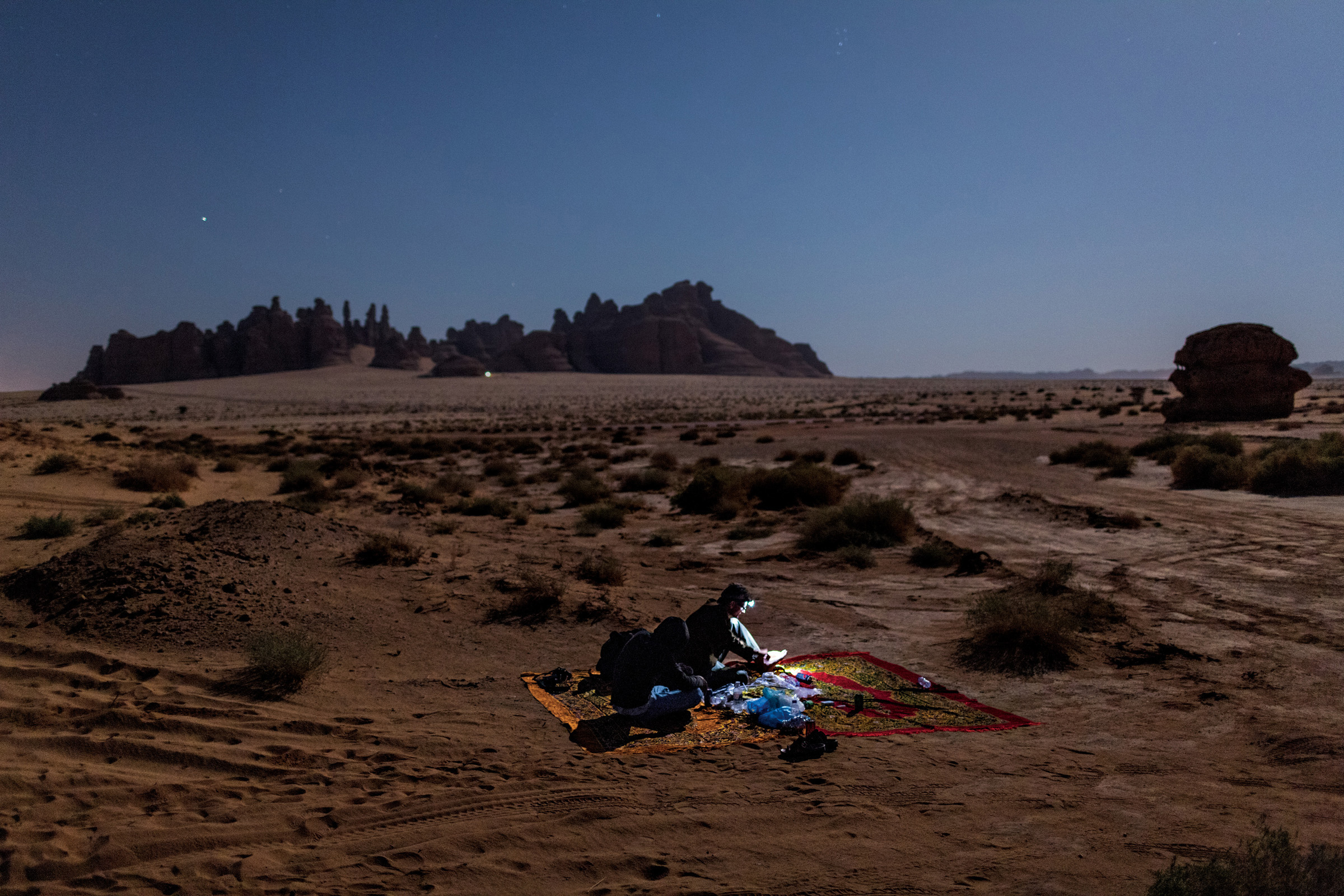
Surrounded by the ghosts of travelers who came before him, the author camps at Madain Salih. Photo: John Stanmeyer/National Geographic.