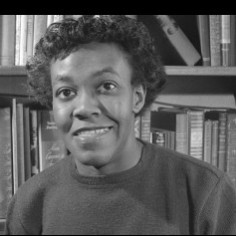
Frost? Williams? No, Gwendolyn Brooks
The year she became the first African-American to win a Pulitzer Prize, Brooks told her editor that in a life filled with housework, writing 'is the only work in which I am interested.'
The year she became the first African-American to win a Pulitzer Prize, Brooks told her editor that in a life filled with housework, writing 'is the only work in which I am interested.'
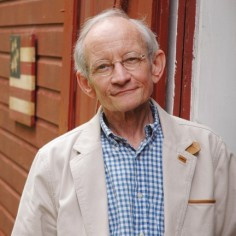
A longtime Pulitzer Poetry jury chair — and former Connecticut governor — issues a proclamation to celebrate 'the blessings that have been our common lot.'
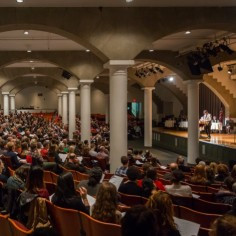
The Poetry Society of America brought together 11 Pulitzer-winning poets to read their own and other prize winners' work at Cooper Union in New York City.
As part of the Pulitzer Centennial Campfires Initiative, the South Dakota Humanities Council commissioned a series of essays about prize winners. Christine Stewart-Nuñez writes about her poetry teacher.
The Nieman Foundation hosted the final Pulitzer Centennial Marquee event, commemorating 9/11 and addressing power and accountability
No less an authority than Harriet Monroe had her doubts about the way the winner was chosen.
'Devotional,' 'felt,' 'transparent,' 'transcendent' — Pulitzer jurors often reach for the adjectives to describe the poetry they like.
2001 Poetry winner Stephen Dunn died on June 24 at the age of 82. In 2016, he wrote about his influences in this reminiscence for the Pulitzer Prize centennial.
A snail-mail debate gave three Pulitzer Prize-winning poets time to dig in their heels over who should win the 1967 Poetry Prize. The drama lasted right up till the final curtain.
The prize-winning poet was born on this day in 1905. A hundred years later, he was still writing and publishing poetry. Listen to him read some of his work.