
Here’s a peek inside the Pulitzer files at poetry jury reports between 1993 and 2005.
As now, the three members of any jury in those years were asked to reach consensus on three finalists for the prize. Their next task was to write a report recommending each of the three for the prize. The Pulitzer Prize Board then chose the winner from among the jury’s choices.
These excerpts convey the jurors’ views of what turned out to be the winning books during this 13-year stretch.
1993
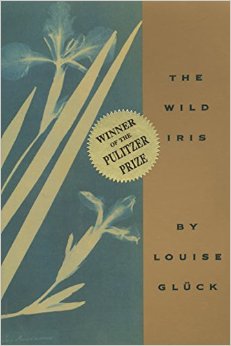
The Wild Iris
Louise Glück, The Wild Iris (Ecco): “Louise Glück’s The Wild Iris is a book with a solitary, almost monastic vision. A kind of devotional poetry, it recalls the metaphysical tradition of the early 1600s, particularly the poet George Herbert. The poems themselves take place entirely within a garden, with the Christian motif of suffering and redemption, death and resurrection much in evidence. It is a book of intense inward rapture where lyric values, pure lyric values of voice and spiritual meditation, predominate, and its appearance secures for Glück a high place indeed in contemporary American poetry.”
(Jury: Charles Wright, Bonnie Costello and Frank Bidart)
1994
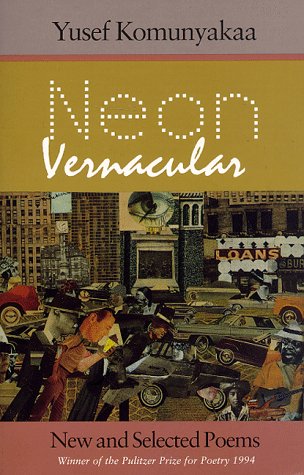
Neon Vernacular
Yusef Komunyakaa, Neon Vernacular (Wesleyan University Press): “The poems of Yusef Komunyakaa are deeply felt and experienced, often narrating the author’s memory of childhood, his time in Vietnam, or an emotion — often melancholy — that is salved by music and/or love. His poems resonate with vigorous vocables, with great musical range and nuance; his poetic navigations of intense quiet and gentleness move subtly by leaps of truth-telling and song.”
(Jury: Mary Oliver, Calvin Bedient and Michael S. Harper)
1995
“To Philip Levine for his book The Simple Truth (Alfred A. Knopf) in which small domestic loss and the grand erasures of time seem inextricable. Mr. Levine, whose gifts have never seemed more evident, has combined narrative grace and humor to form one of the most moving sequences of elegies in recent American poetry. “
(Jury: Mark Strand, Louise Glück and Charles Wright)
1996
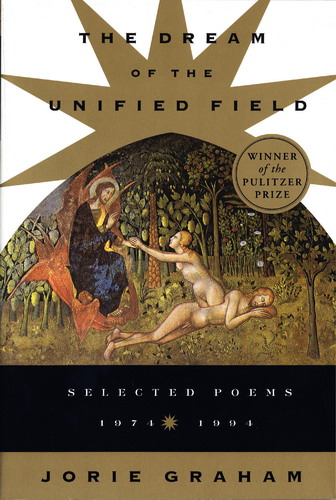
The Dream of the Unified Field
Jorie Graham, The Dream of the Unified Field (The Ecco Press): Jorie Graham’s The Dream of the Unified Field, selected from work published from 1974 to 1994, is a significant volume in its own right. It clarifies the superb achievement of one of America’s most accomplished writers — the boldness of Graham’s aesthetic innovation, the freshness with which she explores the central themes that have from the beginning dominated her work. No contemporary has explored more subtly or movingly the conflict between idea (“perfection”) and manifestation (at best “perfect instances”), or invented with greater resource a prosody adequate to it.
(Jury: Frank Bidart, Bonnie Costello and John Wheatcroft)
1997
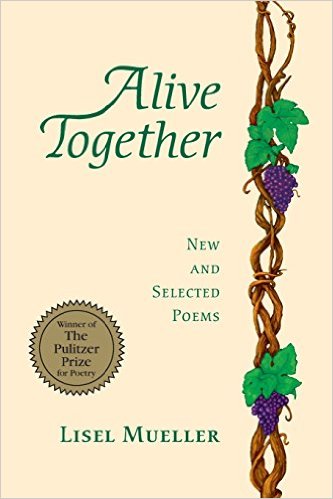
Alive Together
Lisel Mueller, Alive Together (Louisiana State University Press): “Mueller often writes about intense psychological states or perceptions. But her best work is transcendent in a lyric mode that evokes Rilke. She uses vivid imagery to augment linguistic and philosophical truths in forms that are both precise and super poetic — the language and what’s being said are impossible to unravel. In “Snow,” the whiteness of earth and heaven join at the poem’s end – a breath-taking turn that brings a backwash of insight: ‘We are covered with stars./Feel how light they are, our lives.’ She’s also capable of meditative brilliance, as in ‘Place and Time,’ which begins offhandedly with listening to a radio talk show, then leaps into more metaphysical ponderings: ‘[T]he lives we live/before the present moment/are graves we walk away from/Except we don’t. We’re all/pillars of salt. My life began/with Beethoven and Schubert/on my mother’s grand piano . .../[It] burned with our city in World War II.’ Here as elsewhere, she sets average memory next to historical horror, the metaphysical next to the quotidian. Her political poems never fall into being pedantic, and her flourishes of linguistic wit are worthy of Pope. Her virtuosity rests partly in unadorned speech, for Mueller does not indulge in linguistic embroidery for its own sake. Her emotional intention is more radical than that: She often writes as if to inspire spiritual hope. These subtle poems grow more resonant with rereading.”
(Jury: Rita Dove, Mary Karr and Alan Williamson)
1999
Mark Strand, Blizzard of One (Knopf): “Mark Strand, in his early poems, taught an entire generation of poets a different way of looking at things, and gave it a new language to talk about experience with. As W.H. Auden was to his generation, Strand is to his. To borrow Stephen Spender’s phrase, ‘He is the cleverest of us all.’ Strand’s best poems, and their achievements, are one of the yardsticks his generation will be measured by. Some of those poems can be found here in this new book, Blizzard of One. This book is a splendid accomplishment and ranks with his best, which makes it very good indeed.”(Jury: Charles Wright, Molly Peacock and David St. John)
2002
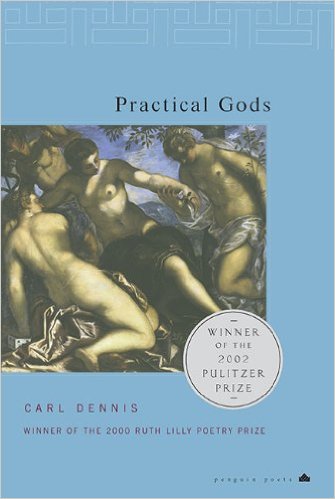
Practical Gods
Carl Dennis, Practical Gods (Penguin): “There is an old proverb that warns against the man whose God is in the sky. In Practical Gods, Carl Dennis explores the challenges of morality and belief in human experience right on the ground. The poems of this book mix together fallible gods and prophets of the past with flawed men and women of the present who resemble our own acquaintances and neighbors; their moving stories of moral failure and guilt, deluded faith, longing for other worlds, and acceptance of the worlds they have, tell in the end the larger story of humanity’s spiritual struggle. Only a poet of great compassion and insight could reveal the moral significance of the apparently unimportant lives Dennis chooses to write about. Only a master of style could make each poem seem (in the words of one) ‘like a casual conversation/That tests our powers of empathy, not cleverness.’ Most books of poetry are mere collections of disparate entries; this unusual and beautiful volume presents an integrated vision of our existence — not the life we might wish for, but the life we actually live.
(Jury: Wendy Lesser, Donald Justice and Wesley McNair)
2005
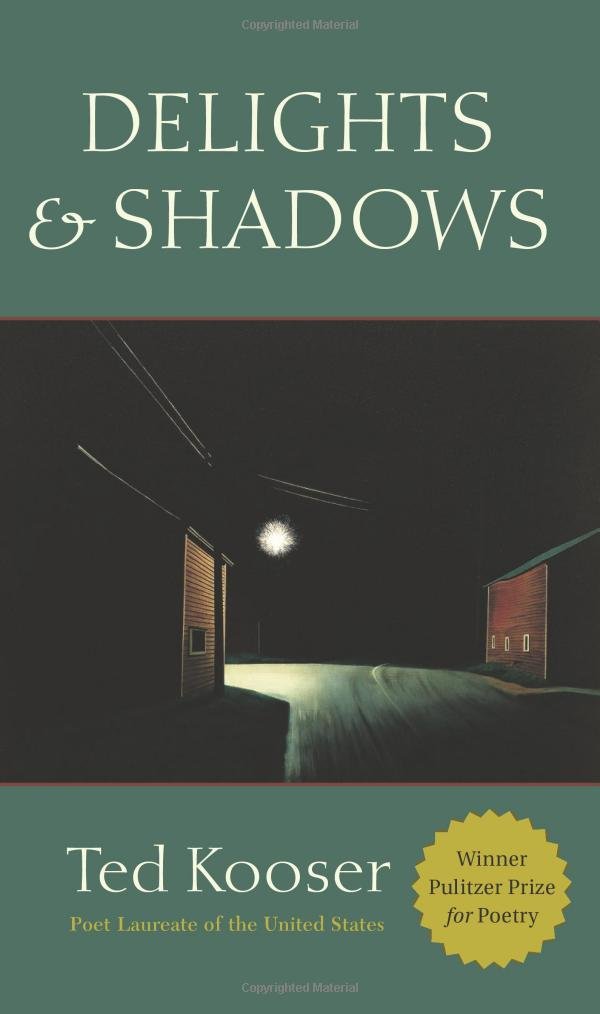
Delights and Shadows
Ted Kooser, Delights and Shadows (Copper Canyon Press): “The poetic mastery of Ted Kooser in Delights & Shadows may at first elude readers because it is so transparent. His is the high art of creating the illusion there is no art, in poems that explore and celebrate ordinary life. What could be simpler than his description of the woman in ‘Skater,’ who moves across the ice with ‘feathery fingers spread’ and leaps ‘into the air the way a crane leaps, blue gloves/lifting her lightly.’ Yet at the poem’s end, where the skater comes down out of the wind from a half-turn with her arms wide as if metamorphosed into a bird, then skates backward ‘smiling back at the woman she’d been just an instant before,’ we realize Kooser has delivered a small reflection on the transformations and pleasures of artistic performance.”
(Jury: Linda Gregerson, James Baker Hall and Wesley McNair)