For a distinguished and appropriately documented book of nonfiction by an American author that is not eligible for consideration in any other category, Ten thousand dollars ($10,000).

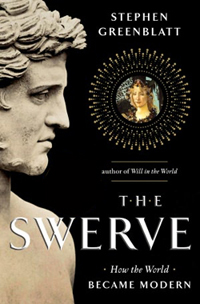
The Swerve: How the World Became Modern, by Stephen Greenblatt (W.W. Norton & Company)

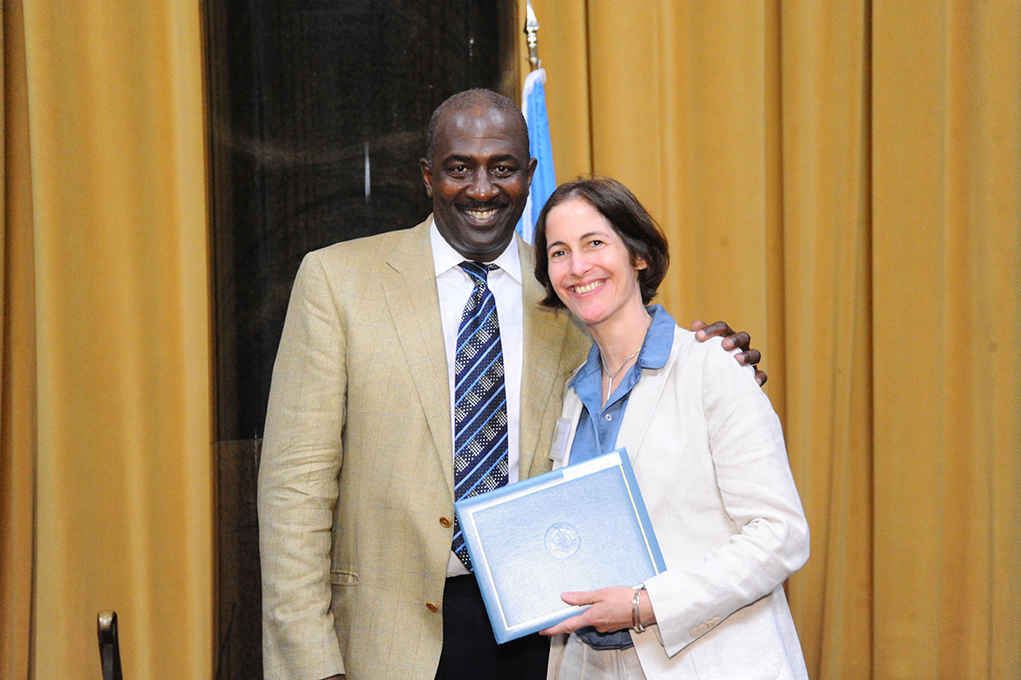
Gregory Moore and Alane Mason

Gregory Moore, co-chair of The Pulitzer Prize Board, presents the 2012 General Nonfiction Prize to Alane Mason, Stephen Greenblatt's editor.

Winning Work

The Swerve: How the World Became Modern

The Swerve: How the World Became Modern

One of the world's most celebrated scholars, Stephen Greenblatt has crafted both an innovative work of history and a thrilling story of discovery, in which one manuscript, plucked from a thousand years of neglect, changed the course of human thought and made possible the world as we know it.

Nearly six hundred years ago, a short, genial, cannily alert man in his late thirties took a very old manuscript off a library shelf, saw with excitement what he had discovered, and ordered that it be copied. That book was the last surviving manuscript of an ancient Roman philosophical epic, On the Nature of Things, by Lucretius-a beautiful poem of the most dangerous ideas: that the universe functioned without the aid of gods, that religious fear was damaging to human life, and that matter was made up of very small particles in eternal motion, colliding and swerving in new directions.

The copying and translation of this ancient book-the greatest discovery of the greatest book-hunter of his age-fueled the Renaissance, inspiring artists such as Botticelli and thinkers such as Giordano Bruno; shaped the thought of Galileo and Freud, Darwin and Einstein; and had a revolutionary influence on writers such as Montaigne and Shakespeare and even Thomas Jefferson.

-- from the publisher
Biography

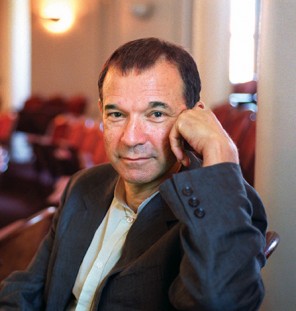
Stephen Greenblatt (Ph.D. Yale) is Cogan University Professor of the Humanities at Harvard University. Also General Editor of The Norton Shakespeare, he is the author of eleven books, including The Swerve: How the World Became Modern; Shakespeare’s Freedom; Will in the World: How Shakespeare Became Shakespeare; Hamlet in Purgatory; Practicing New Historicism; Marvelous Possessions: The Wonder of the New World;and Learning to Curse: Essays in Early Modern Culture. He has edited seven collections of criticism, including Cultural Mobility: A Manifesto, and is a founding coeditor of the journal Representations. His honors include the MLA’s James Russell Lowell Prize for Shakespearean Negotiations: The Circulation of Social Energy in Renaissance England, the Distinguished Humanist Award from the Mellon Foundation, the Wilbur Cross Medal from the Yale University Graduate School, the William Shakespeare Award for Classical Theatre, the Erasmus Institute Prize, two Guggenheim Fellowships, and the Distinguished Teaching Award from the University of California, Berkeley. He was president of the Modern Language Association of America and is a fellow of the American Academy of Arts and Sciences, the American Philosophical Society, and the American Academy of Arts and Letters.

Finalists

Nominated as finalists in General Nonfiction in 2012:

Diane Ackerman

A resilient author's account of caring for a stricken husband, sharing fears and insights as she explores neurology and ponders the gift of words.

Mara Hvistendahl

An evocative, deeply researched book probing the causes and effects of a global imbalance in the gender ratio.

The Jury

Roy Peter Clark(Chair )

senior scholar

Deborah Blum*

science writer and professor of journalism

Andrew Ross

professor of social and cultural analysis

Winners in General Nonfiction

Siddhartha Mukherjee

An elegant inquiry, at once clinical and personal, into the long history of an insidious disease that, despite treatment breakthroughs, still bedevils medical science.

David E. Hoffman

A well documented narrative that examines the terrifying doomsday competition between two superpowers and how weapons of mass destruction still imperil humankind.

Douglas A. Blackmon

A precise and eloquent work that examines a deliberate system of racial suppression and that rescues a multitude of atrocities from virtual obscurity.

2012 Prize Winners

Manning Marable

An exploration of the legendary life and provocative views of one of the most significant African-Americans in U.S. history, a work that separates fact from fiction and blends the heroic and tragic.

John Lewis Gaddis

An engaging portrait of a globetrotting diplomat whose complicated life was interwoven with the Cold War and America's emergence as the world's dominant power.

Tracy K. Smith

A collection of bold, skillful poems, taking readers into the universe and moving them to an authentic mix of joy and pain.