Associated Press, by Staff
Winning Work
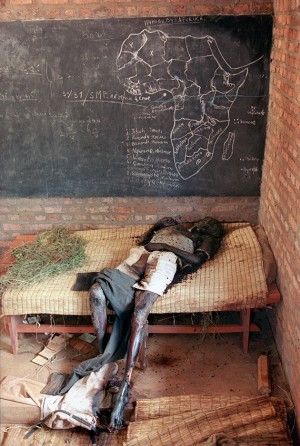
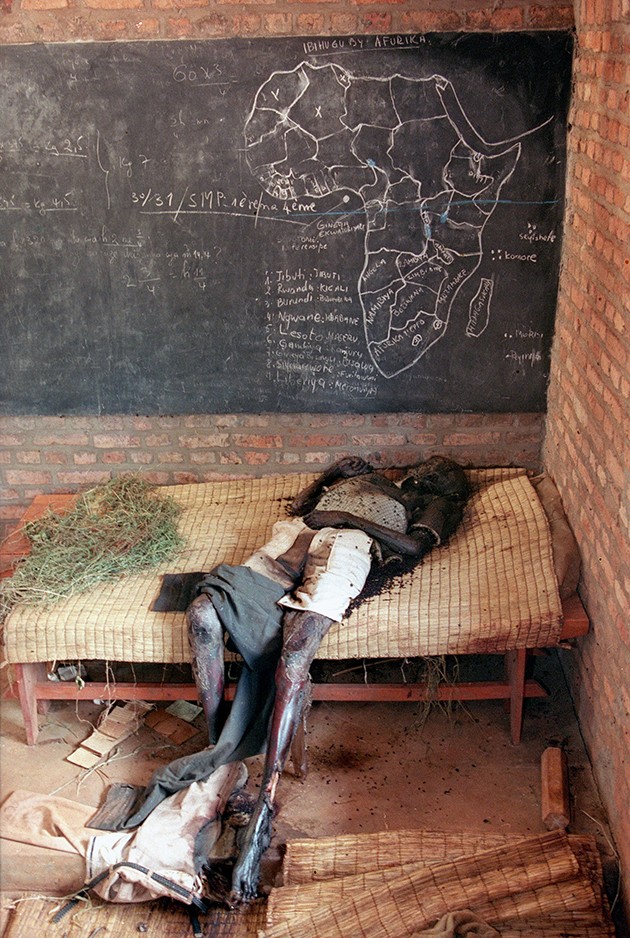
The body of a man, who survivors say was a primary school teacher, lies beneath a blackboard drawing of Africa in a classroom at a school in Karubamba, some 27 miles northeast of the Rwandan capital of Kigali, Friday, May 13, 1994. The man was among hundreds of people in the small Rwandan village that were massacred in recent weeks. (AP Photo/Jean-Marc Bouju)
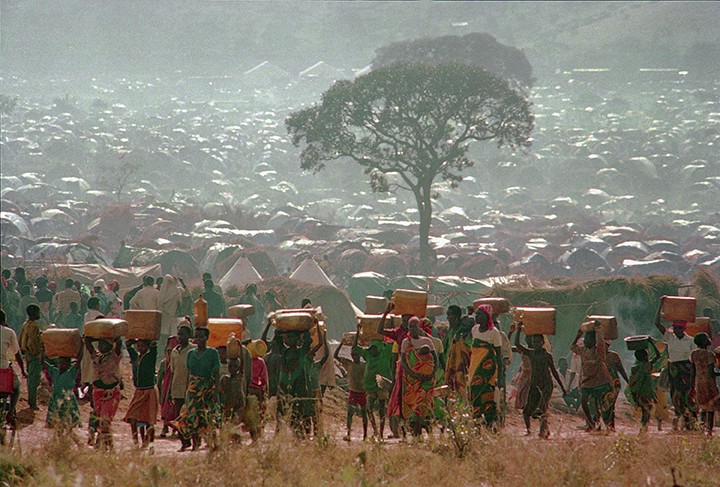
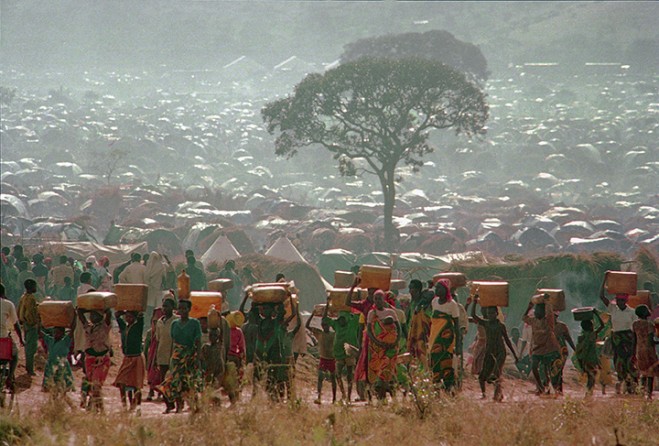
Refugees carrying water containers make their way back to their huts at the Benaco Refugee Camp in Tanzania, near the Rwandan border, East Africa, Tuesday, May 17, 1994. Benaco, with a population surpassing 300,000, is the largest refugee settlement in the world. Aid agencies are having difficulty feeding, doctoring and sheltering refugees who are fleeing the ethnic bloodbath in neighboring Rwanda. (AP Photo/Karsten Thielker)
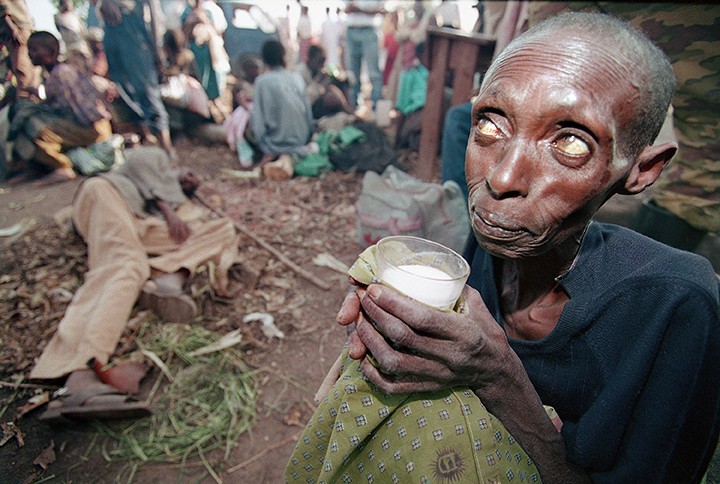
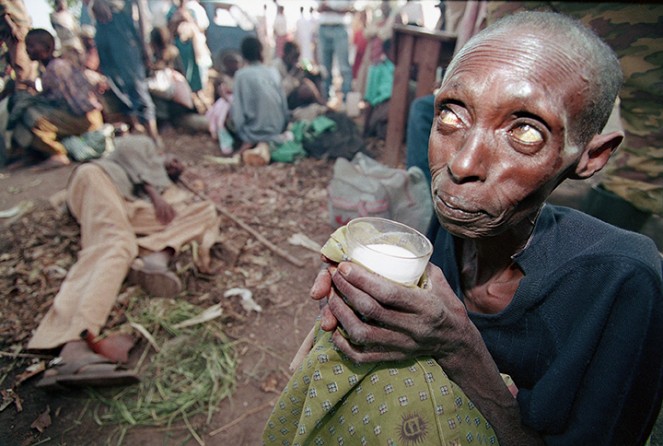
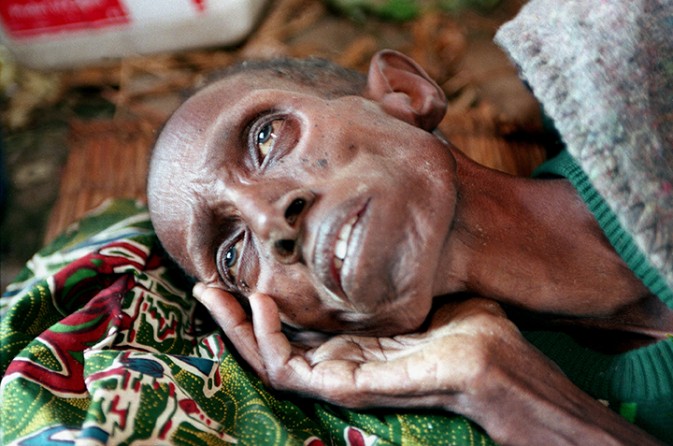
A starving woman sips milk at a makeshift health clinic in Ruhango, 30 miles southwest of Kigali, Rwanda, Monday, June 6, 1994. Thousands of civilians caught in the fighting between government troops and the Rwanda Patriotic Front rebels have taken refuge in Ruhango, but have no access to sufficient medial care. Doctors say 20 to 25 people die every day in Ruhango from disease and hunger. (AP Photo/Jean-Marc Bouju)
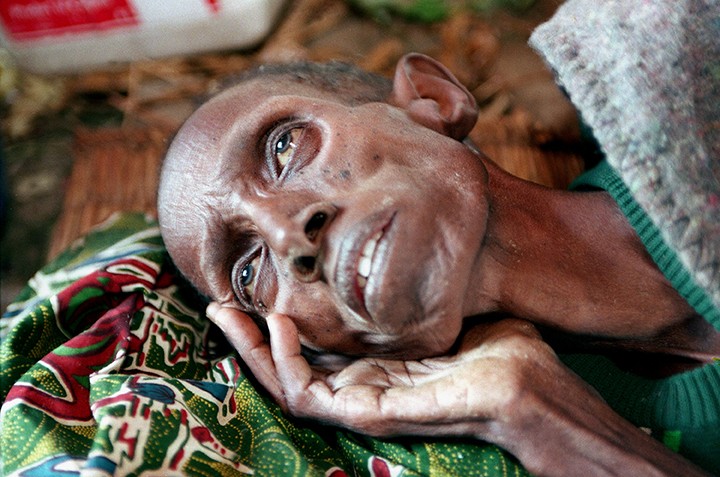
A man lies starving at a makeshift health clinic in Ruhango, 30 miles southwest of Kigali, Rwanda, Monday, June 6, 1994. Thousands of civilians caught in fighting between government troops and the Rwanda Patriotic Front (RPF) rebels have taken refuge in Ruhango, but have no access to sufficient medical care. Doctors say that 20-50 people die every day in Ruhango from disease and hunger. (AP Photo/Jean-Marc Bouju)
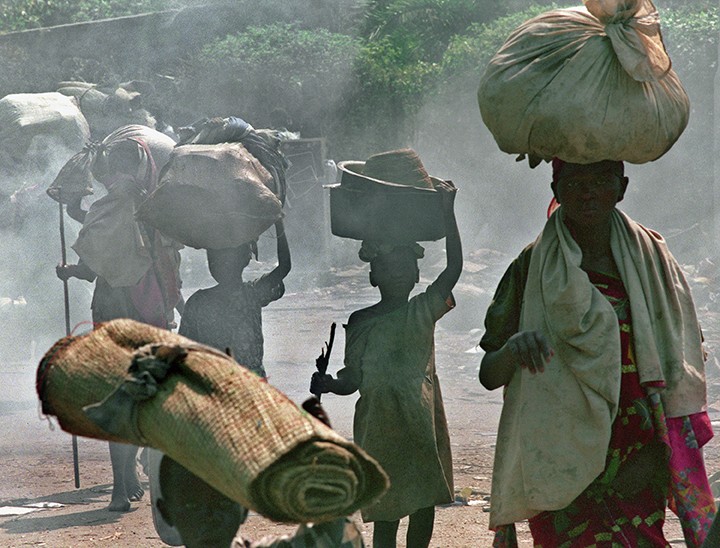
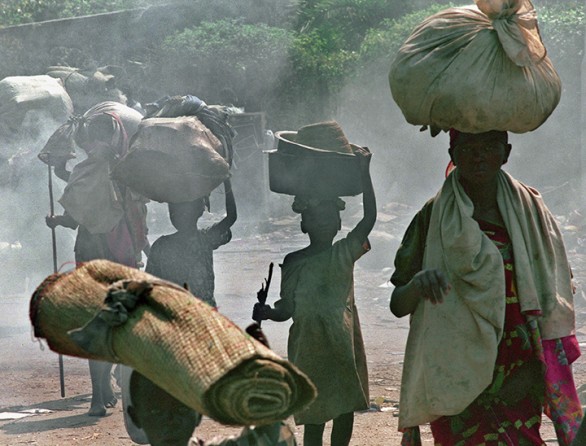
A line of Rwandan refugees cross the border back into Gisenye, Rwanda, from Goma, Zaire, Sunday, July 24, 1994. The border was opened today and the first of many refugees are returning home to the rebel-controlled country. (AP Photo/Javier Bauluz)
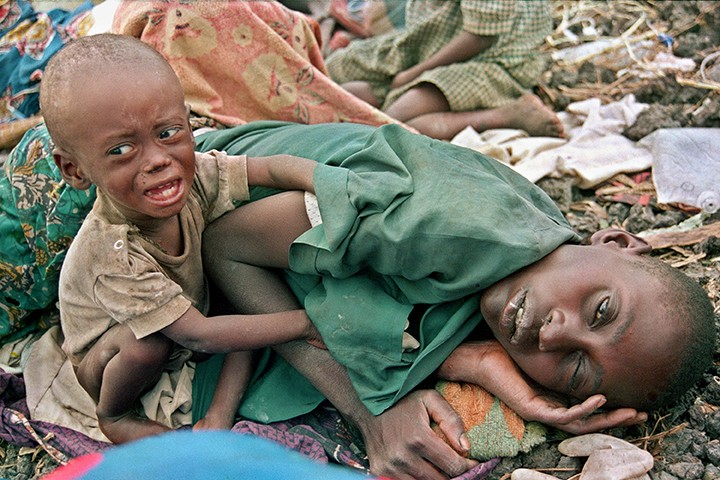
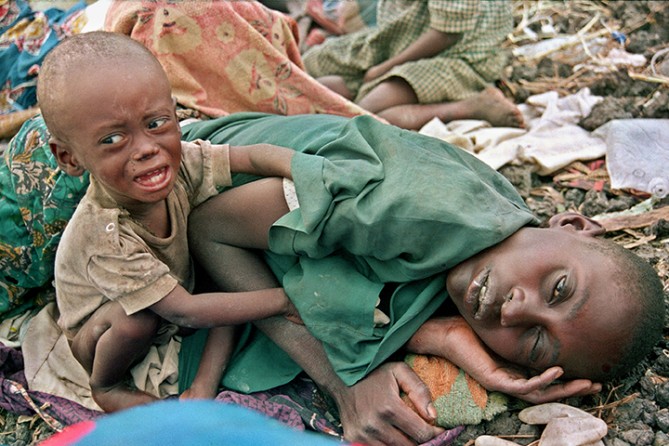
A Rwandan Hutu child desperately tries to waken his mother from a diseased sleep in the Munigi camp outside Goma, Zaire, Wednesday, July 27, 1994. Despite the efforts of aid agencies, hundreds are still dying of cholera. Distribution of water from recently set up water purification plants has been slowing due to lack of trucks to carry it to the refugees. (AP Photo/Javier Bauluz)
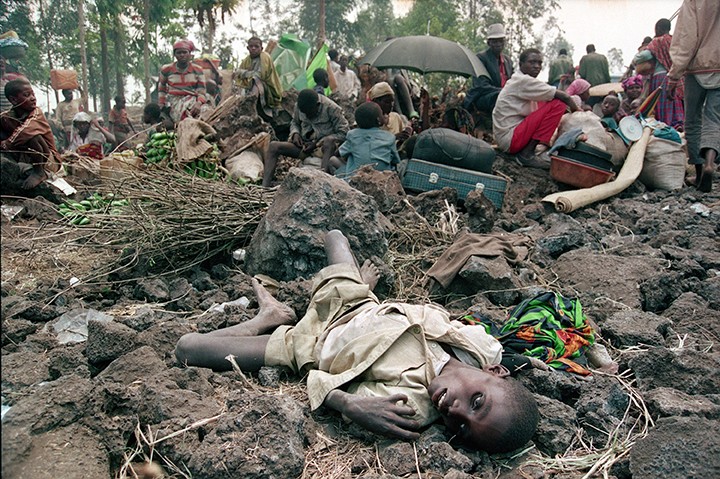
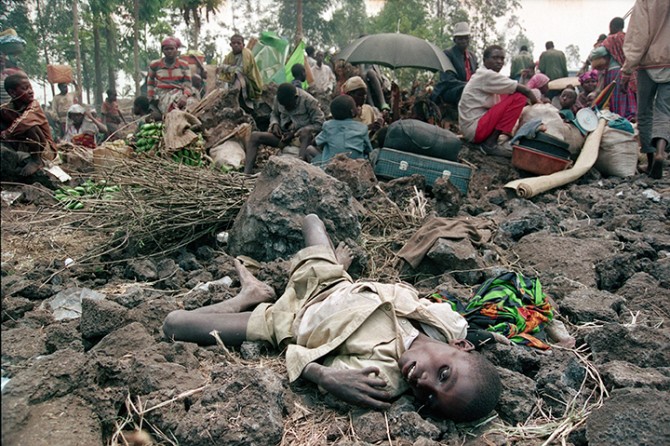
A Rwandan Hutu boy lies dead at the Mugunga refugee camp, outside Goma, eastern Zaire, Wednesday, July 27, 1994. The rush to get clean water to cholera-ravaged refugees hit a snag Wednesday when the Goma airport was shut down to large aircraft for repairs. Although American soldiers have set up water purification plants, the United Nations sent ony two leaky beat-up trucks to transport clean water. (AP Photo/Javier Bauluz)
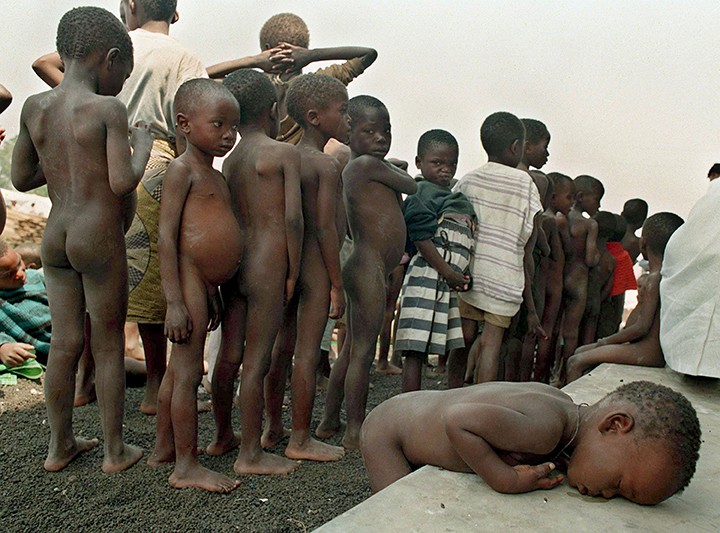
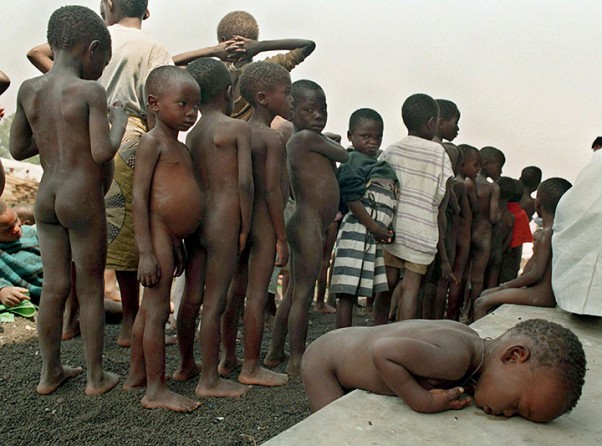
A Rwandan child, too weak from malnutrition to stand in line for vaccination, rests his head on a ledge at a crowded refugee camp for orphaned children in Ndosho, Zaire, near Goma July 28, 1994. (AP Photo/Jacqueline Arzt)
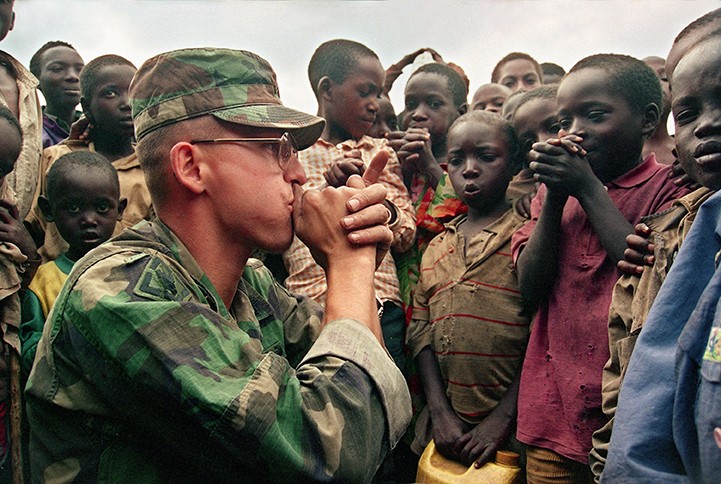
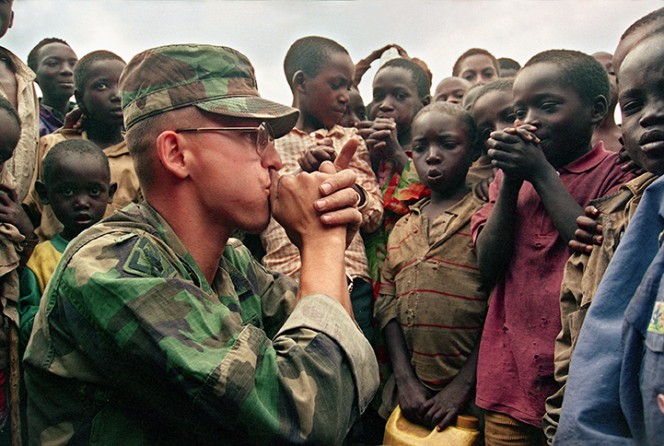
Sgt. Mark Mullins from Alabama, U.S.A., demonstrates whistling techniques for children at the Kibumba refugee camp near Goma, Zaire, Tuesday, Aug. 2, 1994. The American troops were delivering water to the refugees. Officials estimate more than 300 tons of food and medical supplies are arriving daily to help the Rwandan refugees. (AP Photo/Javier Bauluz)
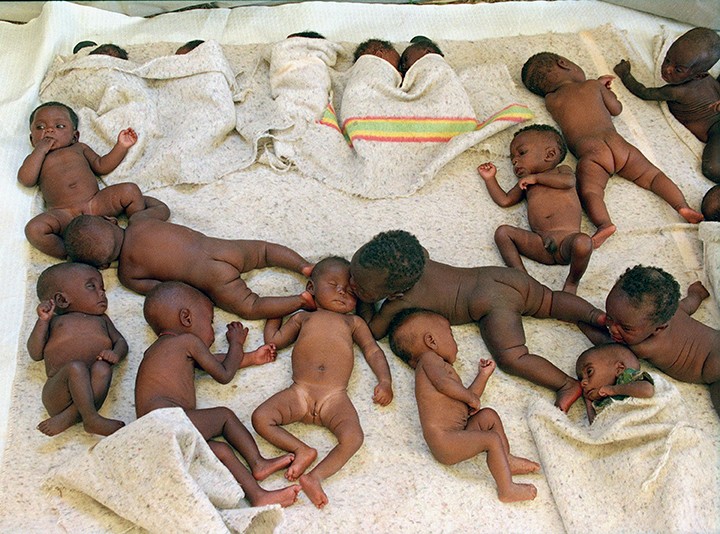
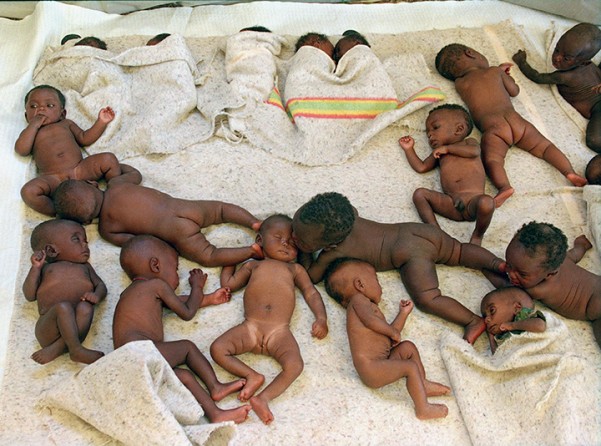
Babies lay on the floor of a makeshift orphanage in the Kibumba camp near Goma, Zaire, Wednesday, Aug. 3, 1994. Relief officials estimate as many as 20,000 children have been displaced in the exodus of Rwandan Hutu refugees into Zaire. United Nations aid officials said that Tuesday's meeting with elders and community leaders of the nearly 1 million Rwandan refugees failed to persuade them it was safe to return to their farms and homes. (AP Photo/Jacqueline Arzt)
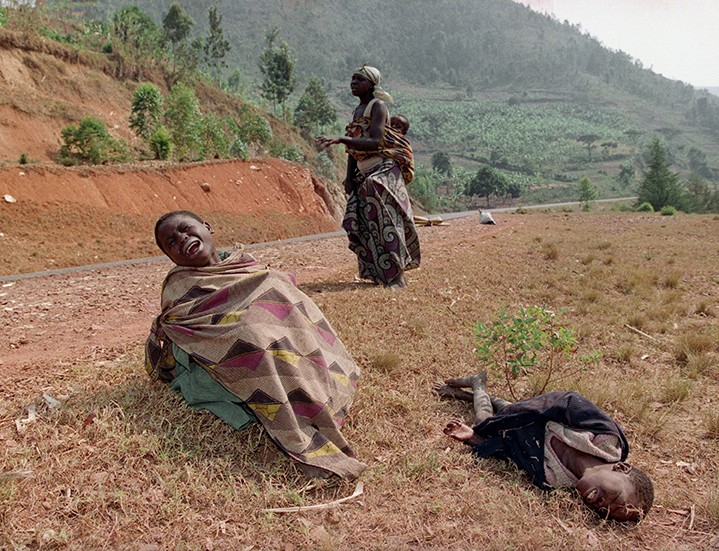
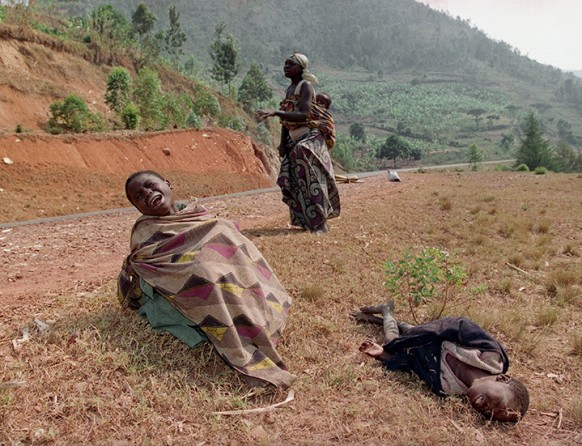
A brother and sister of the Bicamumpaca family grimace in pain after being hit by a car which never slowed down on the road halfway between Goma, Zaire, and Kigali, Rwanda, Friday, Aug. 5, 1994. The single mother of the children stands by in background. The family was returning to Rwanda from the refugee camps in Zaire when the accident occurred. The children were later taken to a hospital in Kigali and reported in stable condition. (AP Photo/Jean-Marc Bouju)
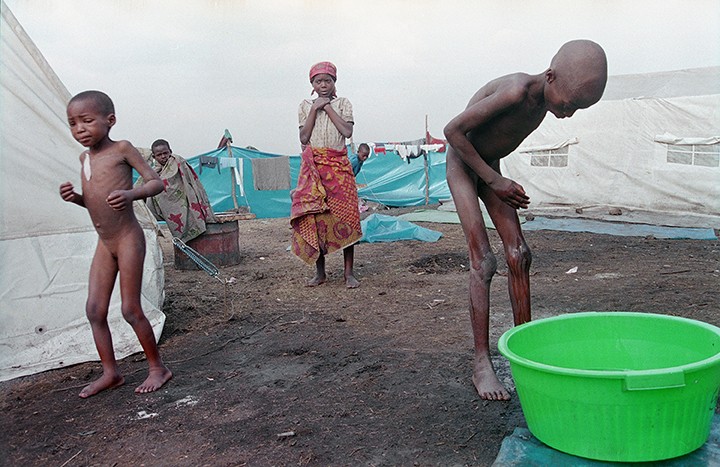
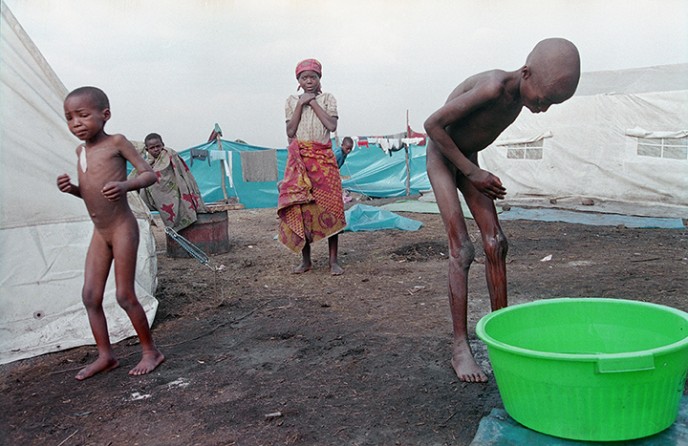
A Rwandan refugee child, right, washes himself at a Doctors Without Borders field hospital at the Mugunga camp near Goma, Zaire, Thursday, Aug. 11, 1994. Rwandan refugees in Goma's disease-ridden camps face a new killer, typhus spread by the lice infesting their ragged clothes and ramshackle shelters. (AP Photo/Javier Bauluz)
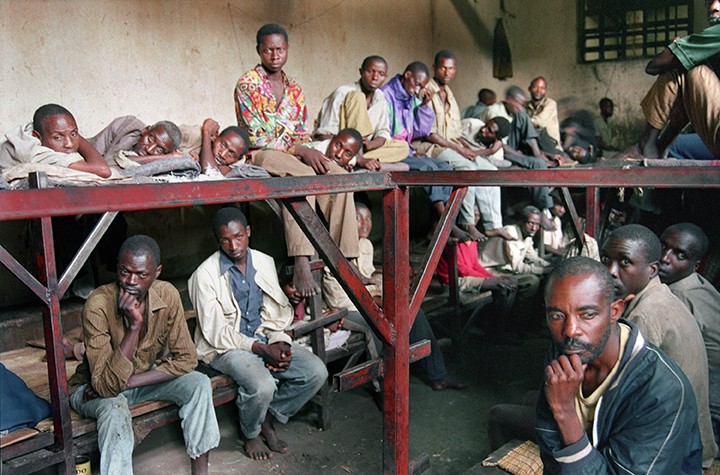
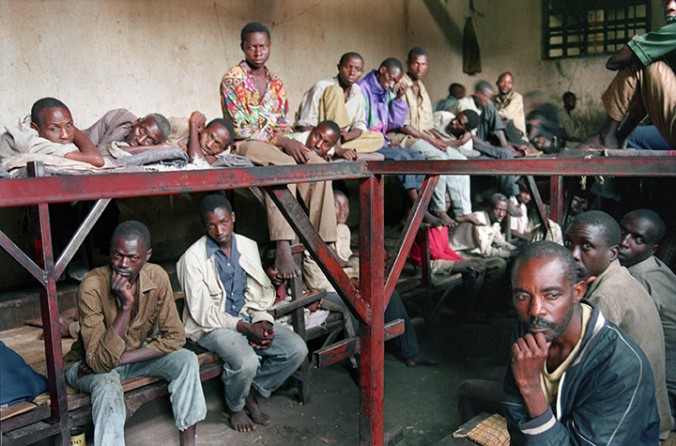
Inmates accused of war crimes sit in a prison in Kibungo, Rwanda, Wednesday, Aug. 17, 1994. The 334 prisoners have been accused of participating in the genocide in which, according to United Nations estimates, up to 500,000 Rwandans were massacred with machetes, guns and grenades. While most of the prisoners are willing to describe their bloody deeds in detail, they eagerly shift the blame, claiming they had to follow orders or face severe punishment, including death. (AP Photo/Javier Bauluz)
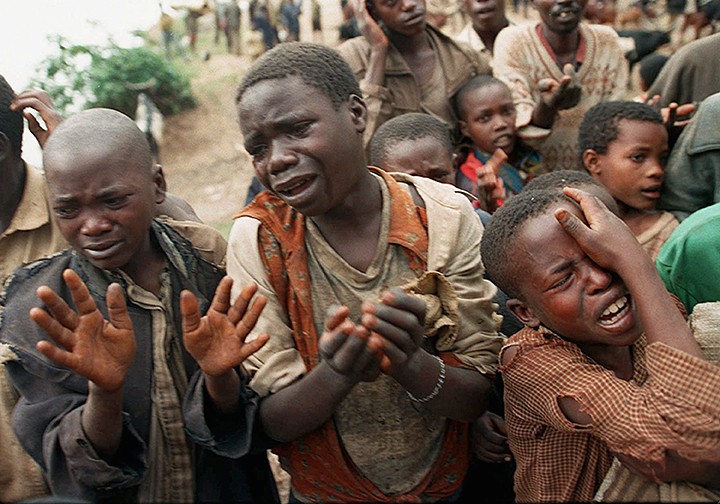
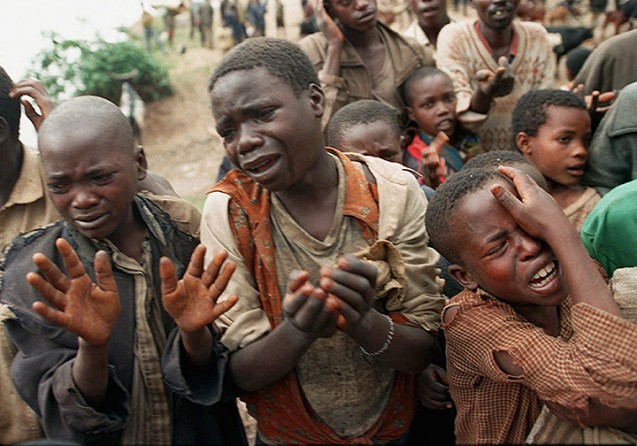
Rwandan refugee children plead with Zairean soldiers to allow them across a bridge separating Rwanda and Zaire where their mothers had crossed moments earlier before the soldiers closed the border on Aug. 20, 1994. As new, independent African nations, Rwanda and Burundi have experienced a succession of ethnic slaughter. For years, majority Hutus and minority Tutsis lived peaceably, side by side, only to explode in homicidal violence in which 500,000 people, most of them Tutsi, were massacred. Millions of other Rwandans fled as refugees. (AP Photo/Jean-Marc Bouju)
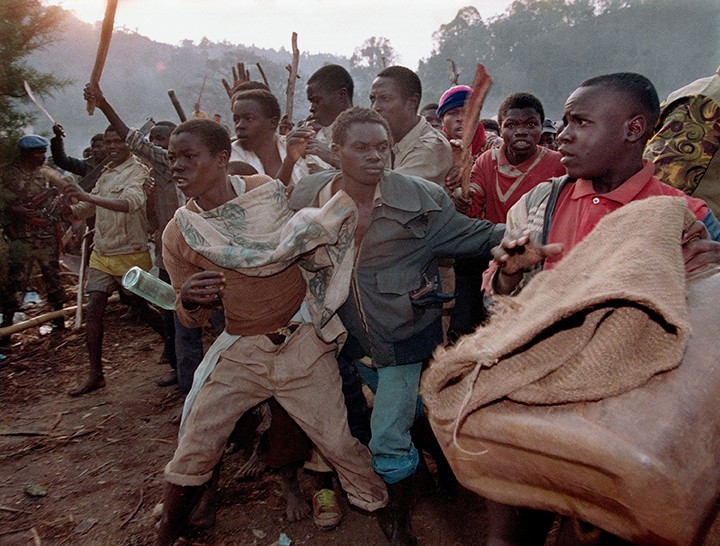
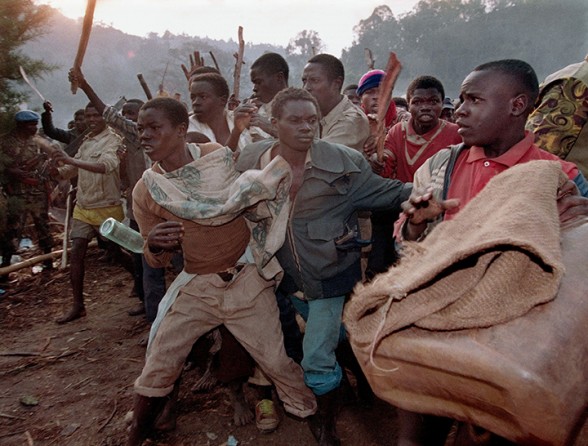
A crowd of Rwandan refugees angered by the closing of the border run to the border bridge to force their way into Zaire, Sunday, Aug. 21, 1994. (AP Photo/Jean-Marc Bouju)
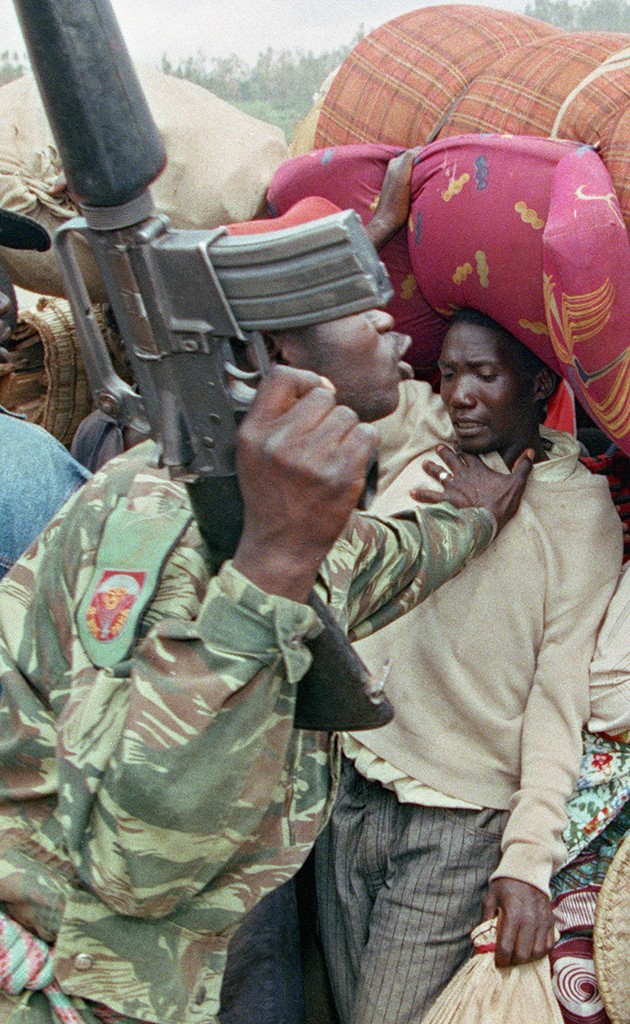
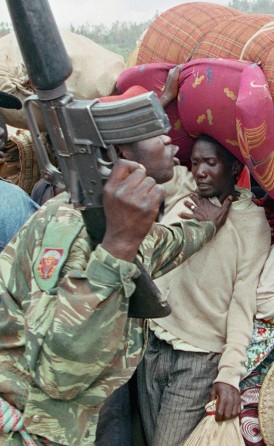
A Zairian soldier pushes back a Rwandan refugee from the Zaire-Rwanda border at Bukavu, Zaire, Wednesday, Aug. 24, 1994. Soldiers are letting refugees cross the bridge in small groups after thousands fled across last week in fear of reprisal killings by Tutsis once the final French troops withdrew on Monday from southwest Rwanda. Most of the refugees are of the majority Hutu ethnic group, who fear the Tutsi-led government will kill them in revenge for the massacres of an estimated 500,000 mostly Tutsi civilians from April through July. (AP Photo/Jean-Marc Bouju)
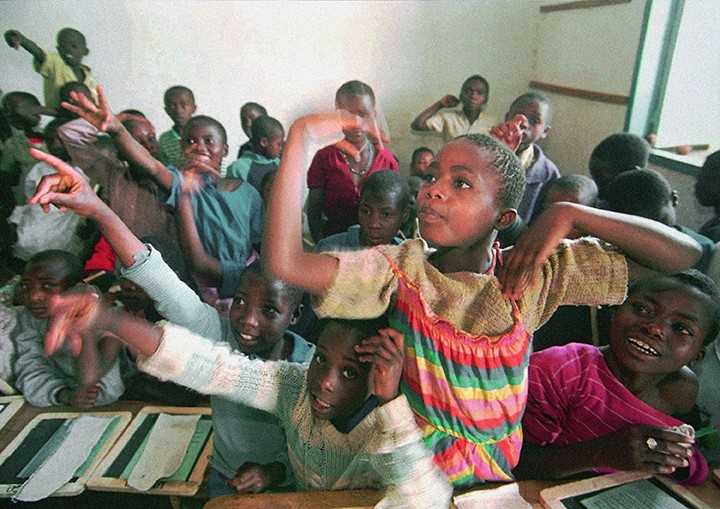
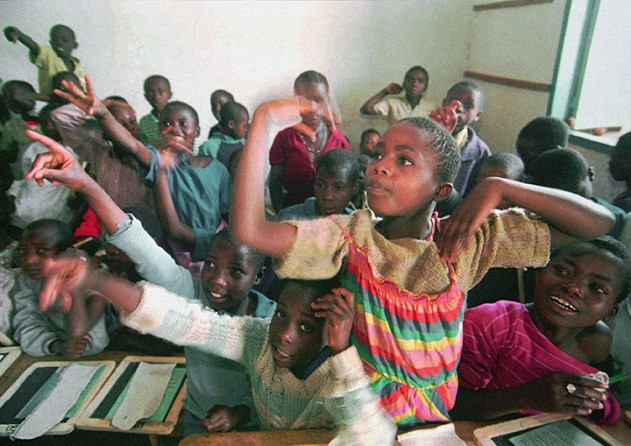
Rwandan primary school children answer their teacher's question with enthusiasm on their first day back at Nyamagumba School in Ruhengeri, 60 miles northwest of Kigali, Rwanda, Monday, Sept. 19, 1994. The school reopens after being shut down during tribal warfare which started in April. The students will study with school supplies donated by UNICEF and UNESCO. One third of the former students showed up for school while many of their classmates were killed in ethnic massacres and others fled with their families to Zaire. (AP Photo/Jean-Marc Bouju)
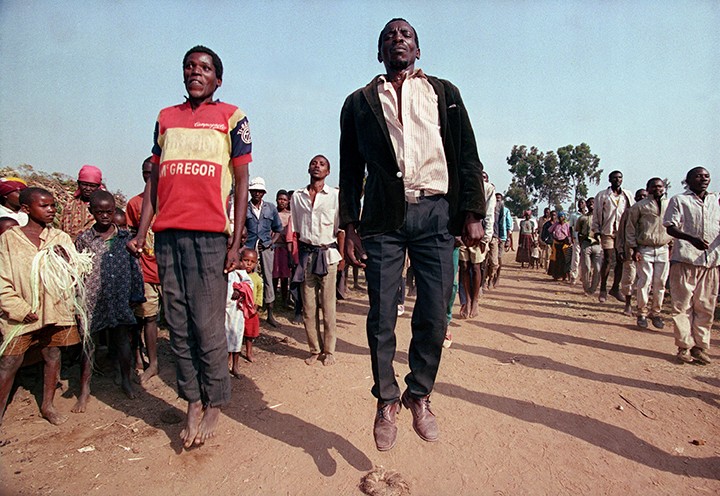
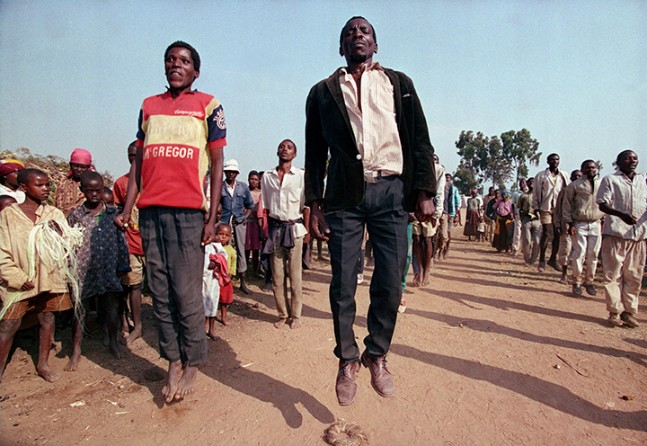
Displaced Hutu civilians in Cyanika, 50 miles southwest of Kigali, jump in the air as part of government training of new Hutu militias in Rwanda, Monday, June 17, 1994. Hutu militias are blamed by many observers for most of the over 250,000 people massacred in Rwanda since April 6. The presence of French forces in Rwanda has boosted morale of government forces. (AP Photo/Jean-Marc Bouju)
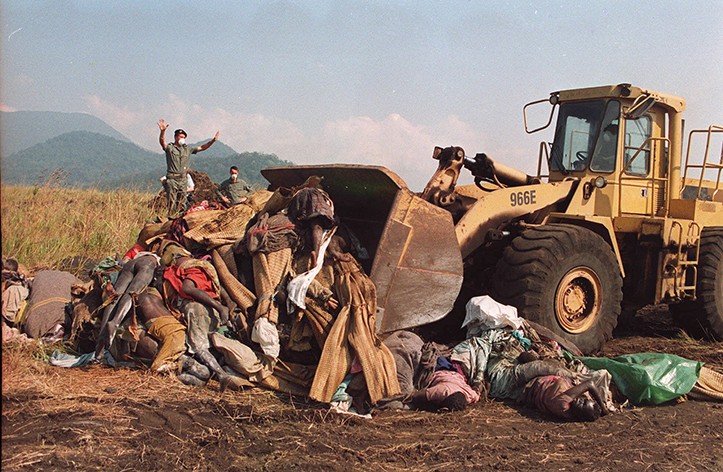
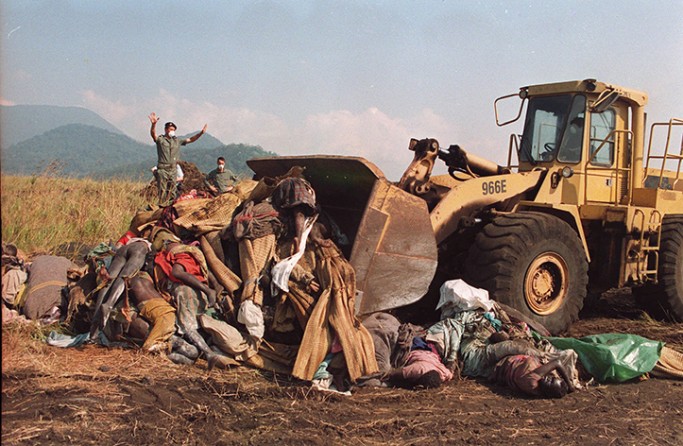
A French army payloader pushes bodies towards a mass grave at the Kimbumba refugee camp near Goma, Zaire, Monday, Aug. 1, 1994. The United Nations estimates cholera and other diseases have killed more than 20,000 of the 1.2 million Rwandan refugees in Zaire in the past two weeks. While aid organizations reported this weekend that the cholera epidemic is under control, relief workers now fear dysentery may be the new killer epidemic. (AP Photo/Jacqueline Arzt)