For a distinguished volume of original verse by an American author, Fifteen thousand dollars ($15,000).

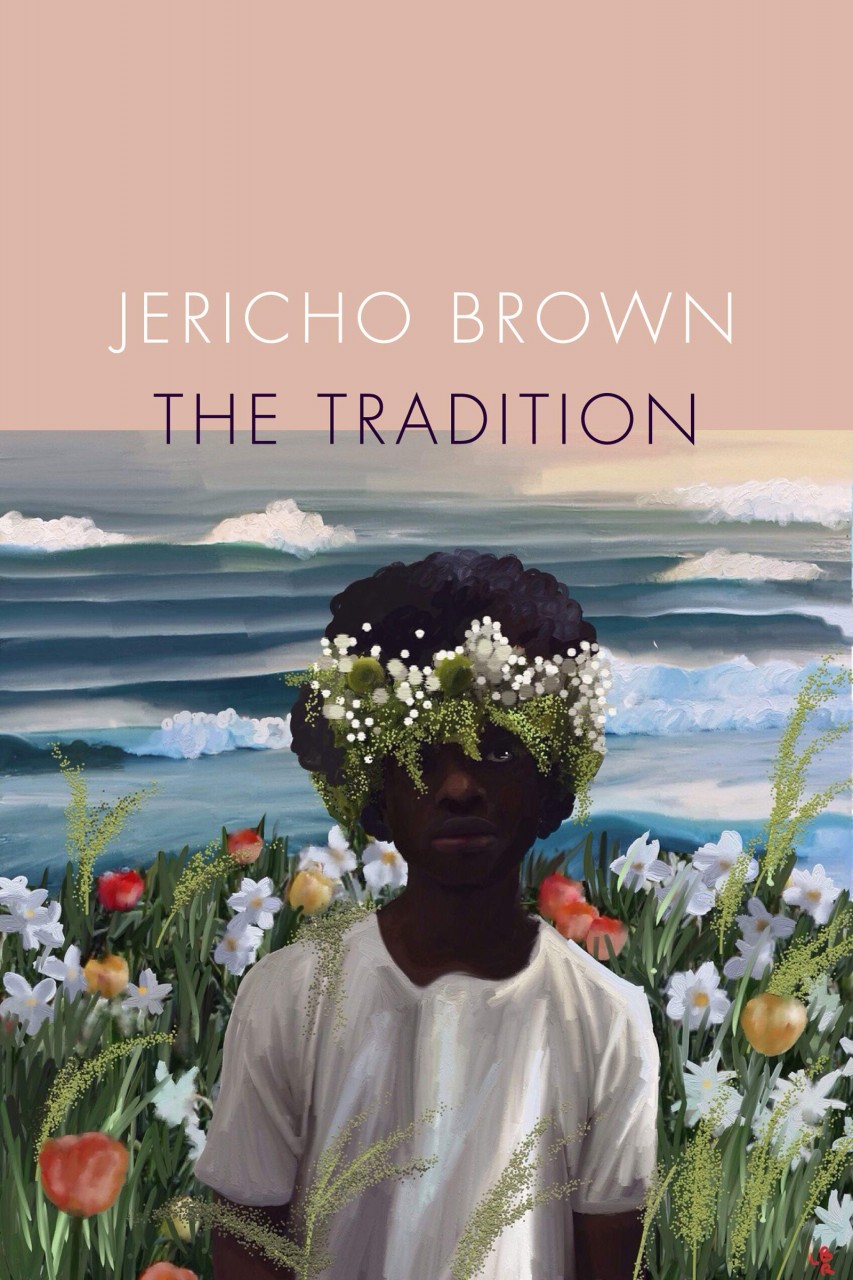
The Tradition, by Jericho Brown (Copper Canyon Press)

A collection of masterful lyrics that combine delicacy with historical urgency in their loving evocation of bodies vulnerable to hostility and violence.

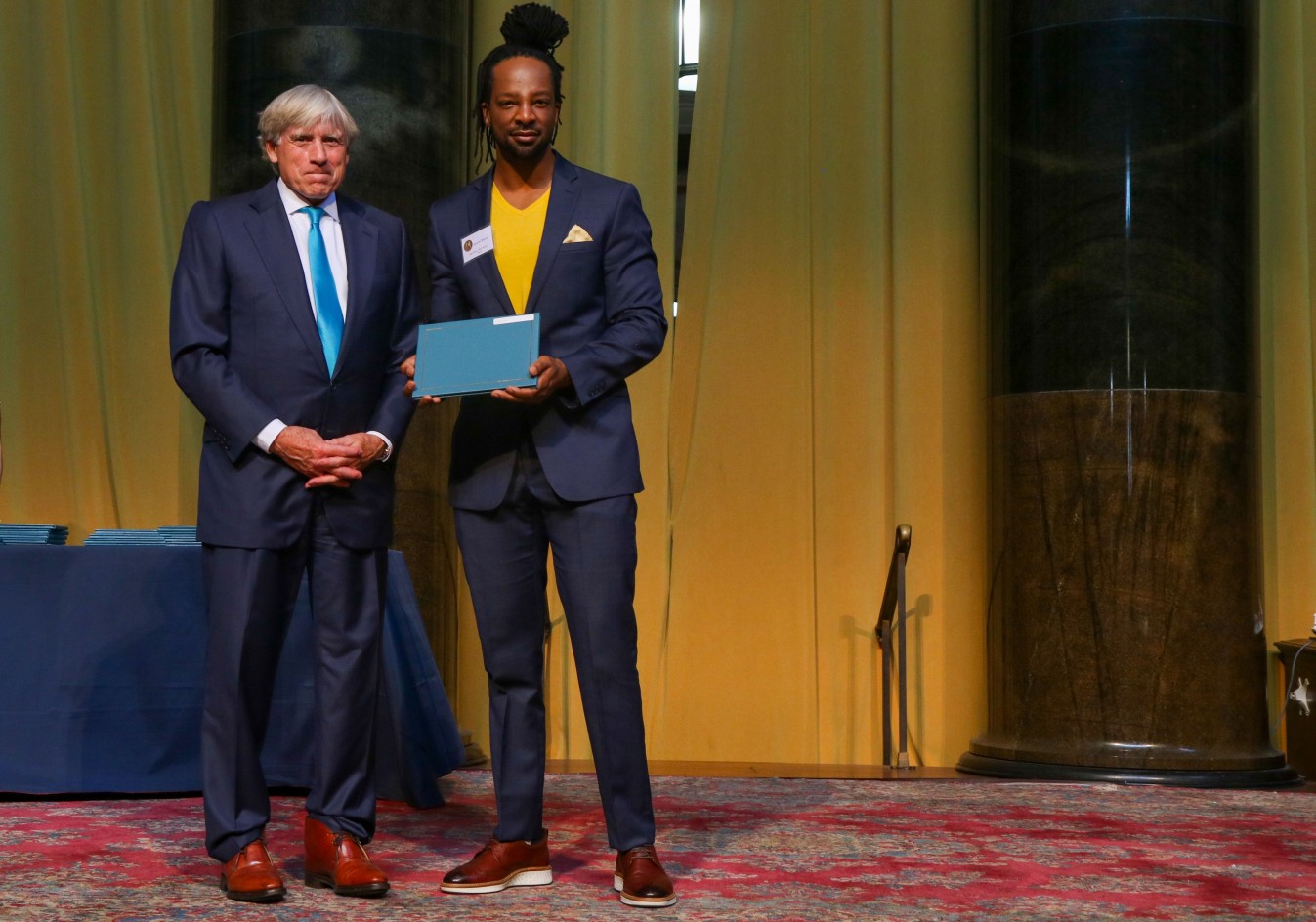
Jericho Brown accepts the 2020 Pulitzer Prize for Poetry from Columbia University President Lee Bollinger. (Jose Lopez/The Pulitzer Prizes)

Winning Work

The Tradition

Beauty abounds in Jericho Brown’s daring new poetry collection, despite and inside of the evil that pollutes the everyday. A National Book Award finalist, The Tradition questions why and how we’ve become accustomed to terror: in the bedroom, the classroom, the workplace, and the movie theater. From mass shootings to rape to the murder of unarmed people by police, Brown interrupts complacency by locating each emergency in the garden of the body, where living things grow and wither—or survive. In the urgency born of real danger, Brown’s work is at its most innovative. His invention of the duplex—a combination of the sonnet, the ghazal, and the blues—is an all-out exhibition of formal skill, and his lyrics move through elegy and memory with a breathless cadence. Jericho Brown is a poet of eros: here he wields this power as never before, touching the very heart of our cultural crisis.

-- from the publisher
Biography

Jericho Brown has received fellowships from the Guggenheim Foundation, the Radcliffe Institute for Advanced Study at Harvard, and the National Endowment for the Arts, and he is the winner of a Whiting Award. Brown’s first book, Please (New Issues, 2008), won the American Book Award. His second book, The New Testament (Copper Canyon, 2014), won the Anisfield-Wolf Book Award. His third collection is The Tradition (Copper Canyon, 2019). His poems have appeared in Bennington Review, BuzzFeed, Fence, jubilat, The New Republic, The New York Times, The New Yorker, The Paris Review, TIME, and several volumes of The Best American Poetry. He is an associate professor and the director of the Creative Writing Program at Emory University.

Finalists

Nominated as finalists in Poetry in 2020:

Dorianne Laux

Poetic narratives of plainspoken authenticity with characters whose breadth spans the wide range of American life.

Mary Ruefle

Poems of wildness and wit that swerve away from the predictable as they balance comedy and melancholy. 

The Jury

Adam Kirsch(Chair)

Poet and Literary Critic, New York City

Marilyn Chin

Poet; Professor Emerita of English, San Diego State University

Patrick Phillips

Poet; Professor of English, Stanford University

Winners in Poetry

Forrest Gander

A collection of elegies that grapple with sudden loss, and the difficulties of expressing grief and yearning for the departed.

Frank Bidart

A volume of unyielding ambition and remarkable scope that mixes long dramatic poems with short elliptical lyrics, building on classical mythology and reinventing forms of desires that defy societal norms.

Tyehimba Jess

For a distinctive work that melds performance art with the deeper art of poetry to explore collective memory and challenge contemporary notions of race and identity.

Peter Balakian

Poems that bear witness to the old losses and tragedies that undergird a global age of danger and uncertainty.

2020 Prize Winners

Nikole Hannah-Jones of The New York Times

For a sweeping, provocative and personal essay for the ground-breaking 1619 Project, which seeks to place the enslavement of Africans at the center of America’s story, prompting public conversation about the nation’s founding and evolution.

Christopher Knight of the Los Angeles Times

For work demonstrating extraordinary community service by a critic, applying his expertise and enterprise to critique a proposed overhaul of the L.A. County Museum of Art and its effect on the institution’s mission.