For a distinguished example of feature photography in black and white or color, which may consist of a photograph or photographs, a sequence or an album, Seven thousand five hundred dollars ($7,500).

Los Angeles Times, by Don Bartletti
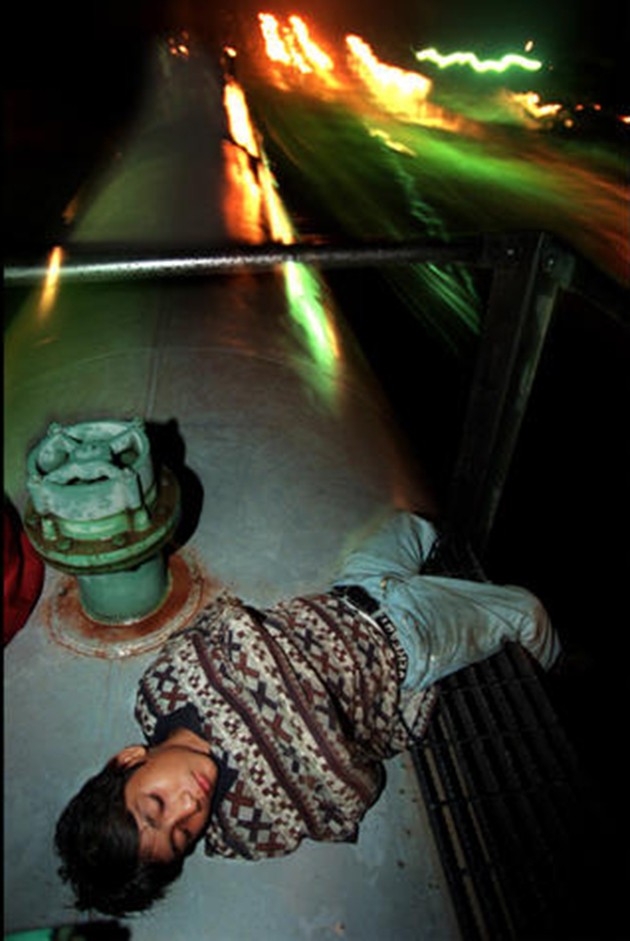
For his memorable portrayal of how undocumented Central American youths, often facing deadly danger, travel north to the United States.
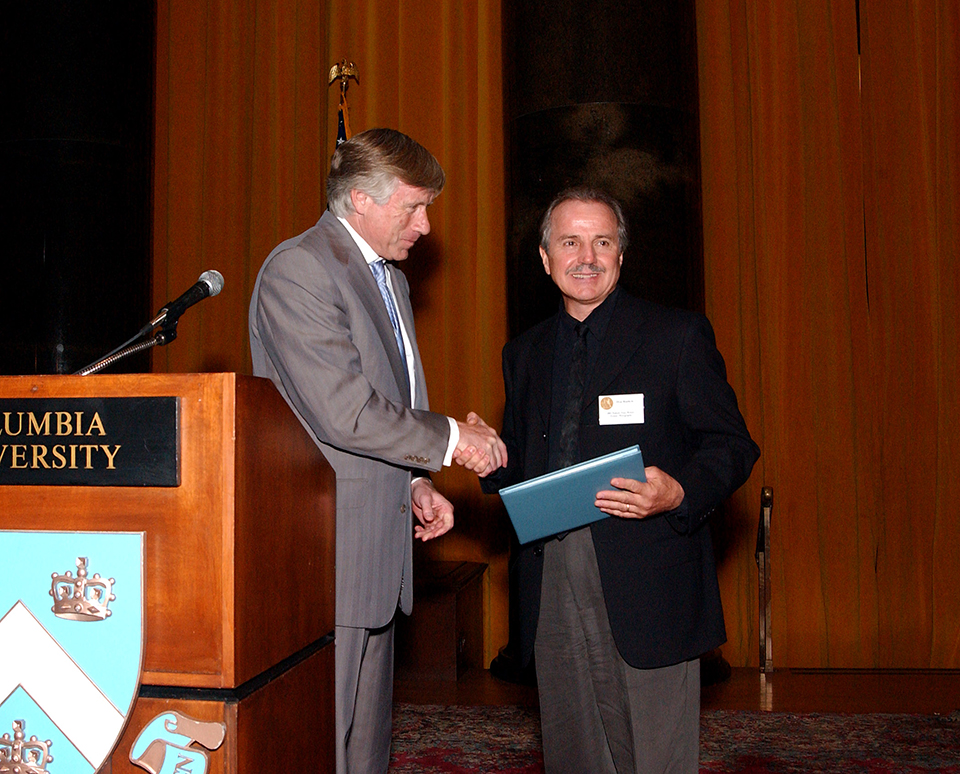
Lee Bollinger and Don Bartletti

Columbia University President Lee C. Bollinger (left) presents Don Bartletti with the 2003 Pulitzer Prize in Feature Photography.

Winning Work
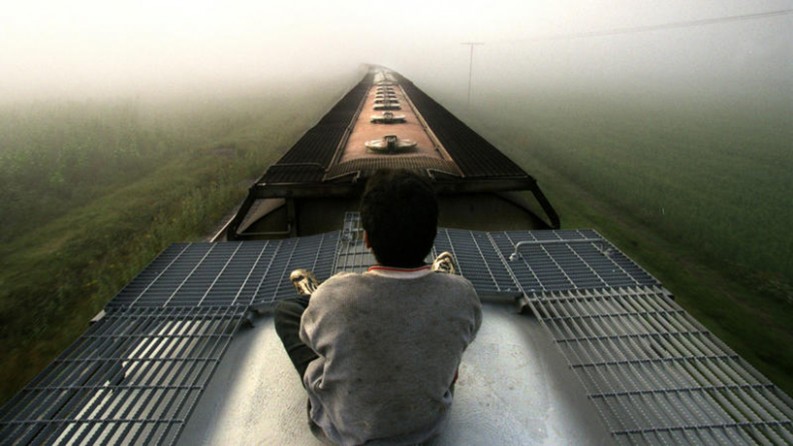
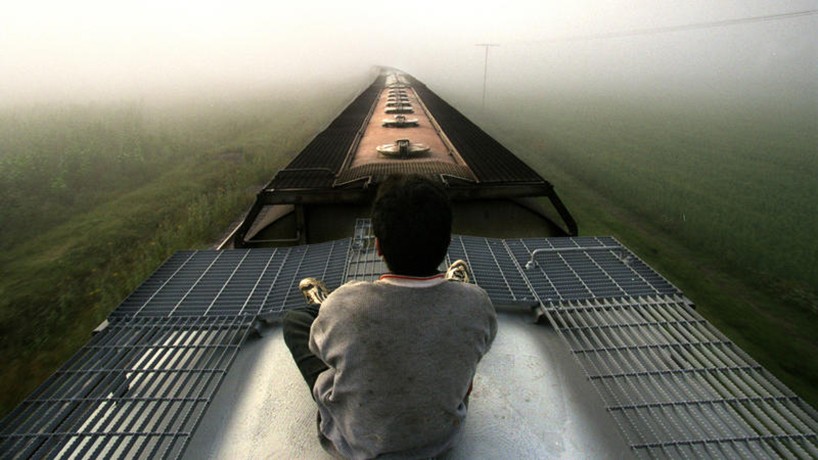
In the vast migration that is changing the US, a Honduran boy rides a freight through Mexico. Each year thousands of undocumented Central Americans stow away for 1,500 miles on the tops and sides of trains. Some are parents desperate to escape poverty. Many are children in search of a parent who left them behind long ago. Only the brave and the lucky reach their goal. (Don Bartletti, Los Angeles Times)
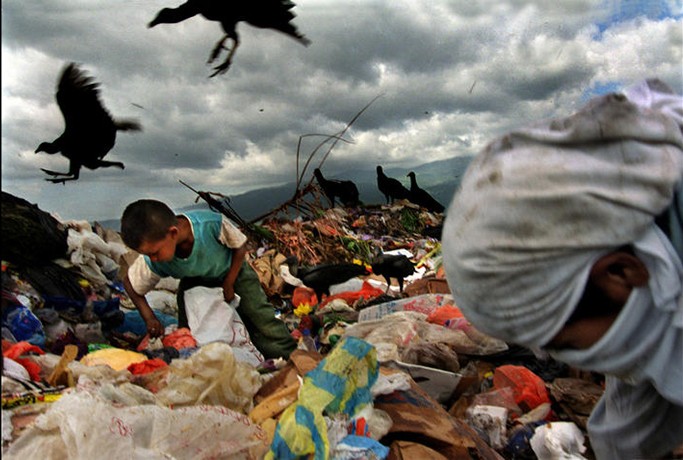
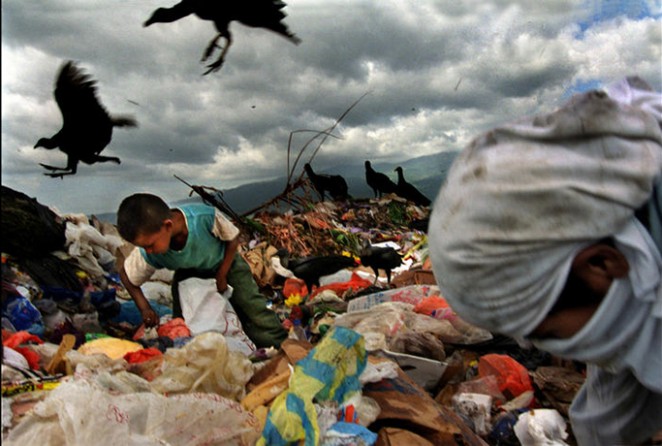
Buzzards and children compete for scraps at the Tegucigalpa, Honduras, landfill. Boys scavenge for anything they can eat or sell. Northbound freight trains through Mexico are crowded with Hondurans fleeing poverty and in search of work or a relative in the U.S. (Don Bartletti, Los Angeles Times)
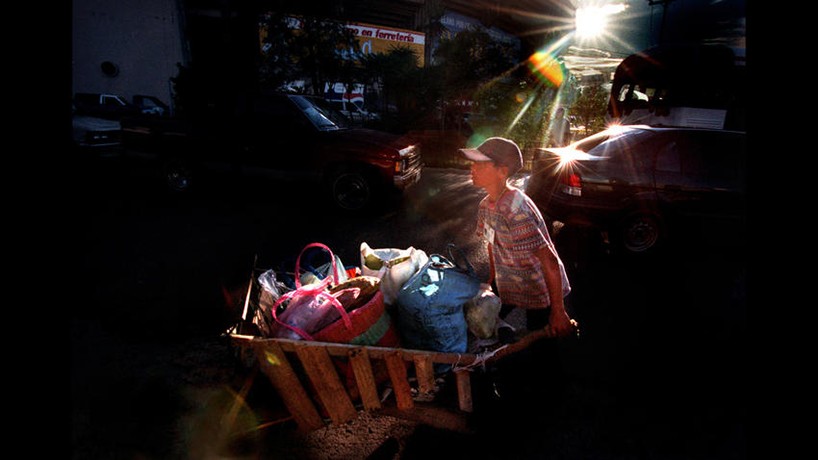
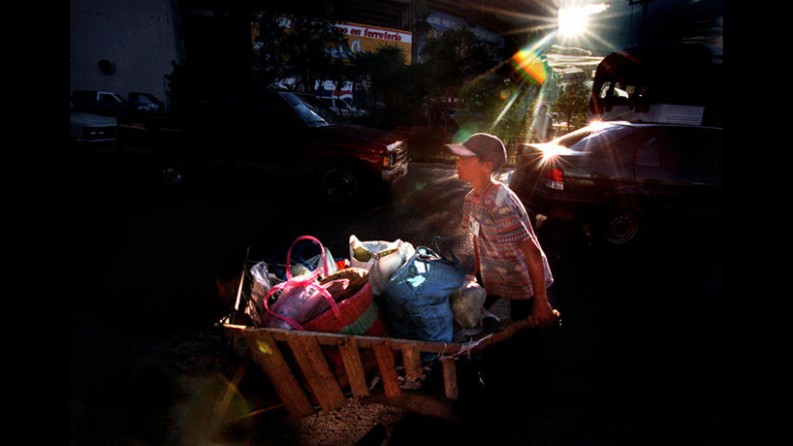
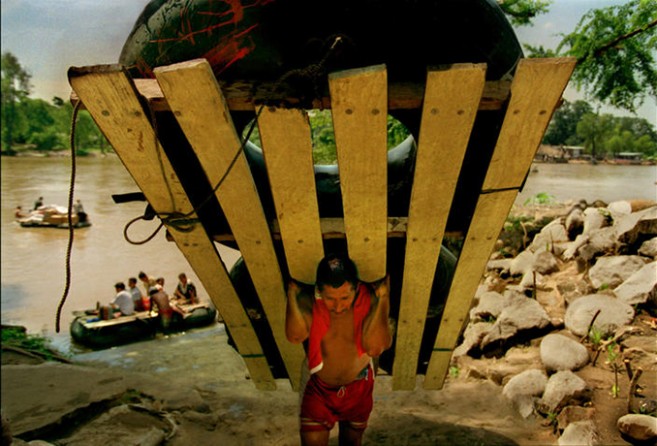
Elio Trujillo Martinez, 13, works for tips in an outdoor market in Tegucigalpa, hauling goods in a handmade wheelbarrow. Independence comes at an early age in impoverished Honduras. Each year the country loses thousands of children who flee to the United States in search of parents who left them behind. (Don Bartletti, Los Angeles Times)

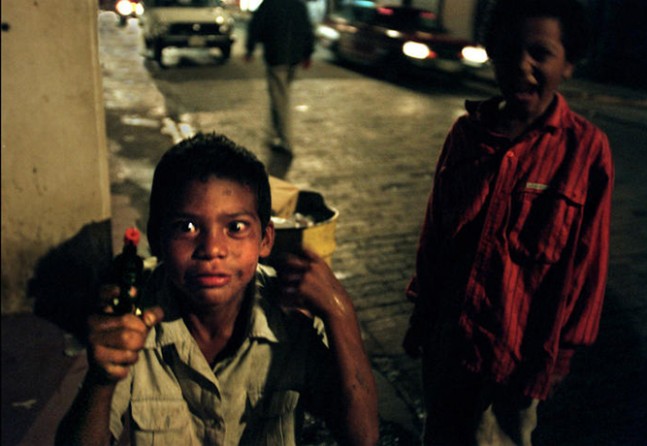
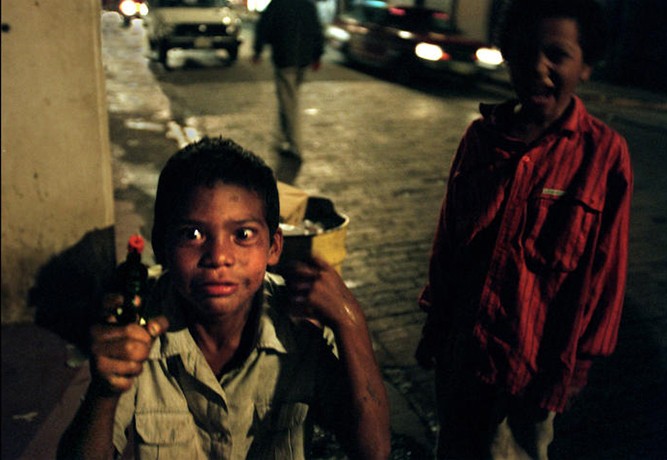
Richard Alberto Funez waves a toy pistol and acts like a tough guy, to the amusement of his buddy, Alexis Joel Sanchez. In Richard's other hand is a soda can full of glue. Both ten-year-old orphans are addicted to the fumes. They roam Tegucigalpa to scavenge food and beg for money. Local outreach volunteers say many street urchins were left behind by a parent who went to the U.S. (Don Bartletti, Los Angeles Times)
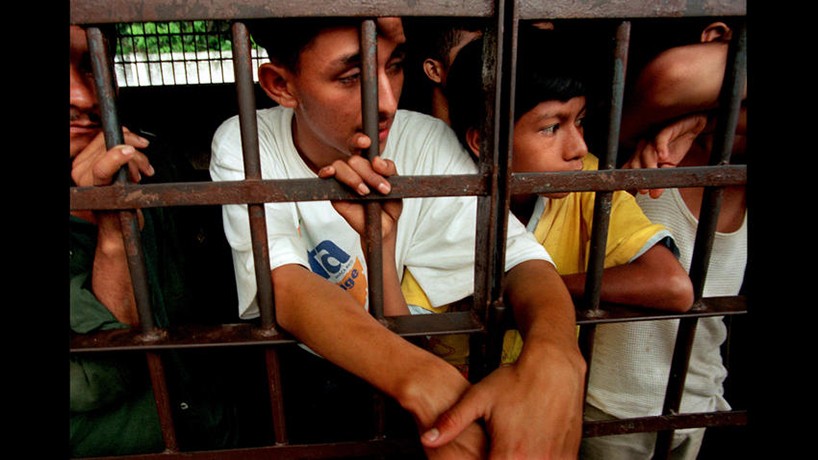
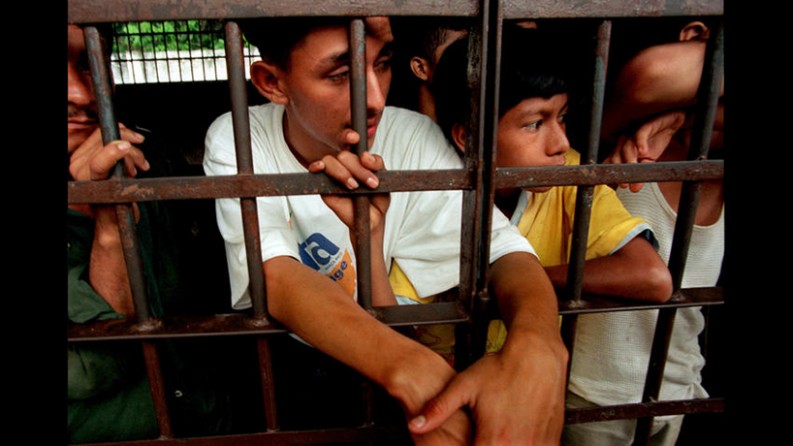
Teenage boys peer out of a jail cell crowded with stowaways captured in Chiapas, Mexico. Next stop, deportation to the Guatemala border. Many undocumented Central Americans make numerous attempts to reach the U.S. border aboard freight trains. (Don Bartletti, Los Angeles Times)
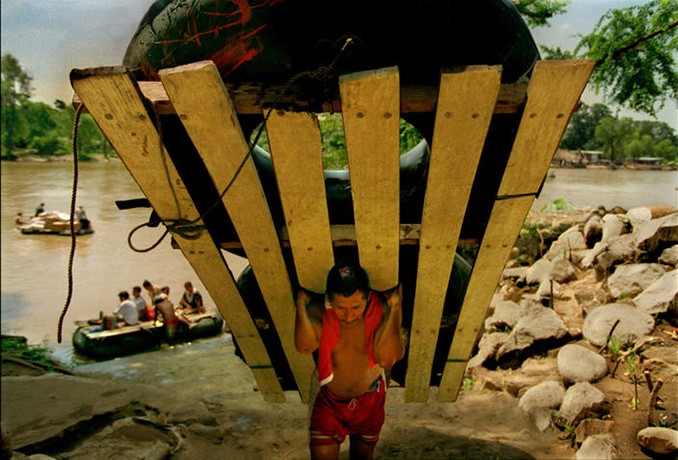
Some migrants cross the Suchiate River on the Guatemala-Mexico border on crude rafts like this one being hauled out on the Mexican side. Here in the state of Chiapas, undocumented Cental American migrants are hunted by authorities and gangsters with equal ferocity. (Don Bartletti, Los Angeles Times)
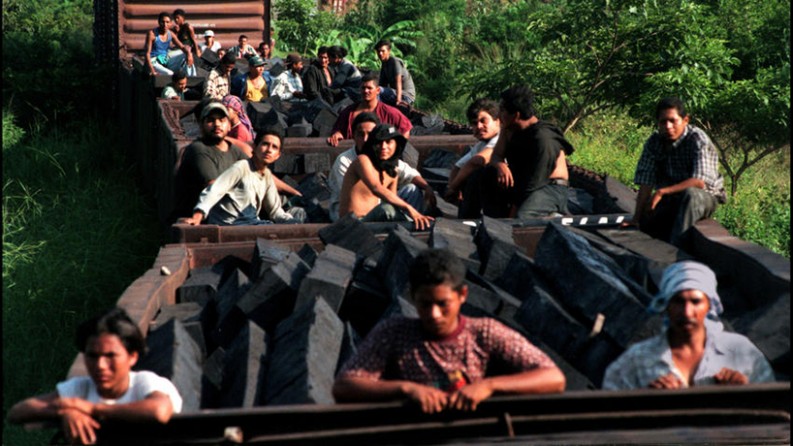
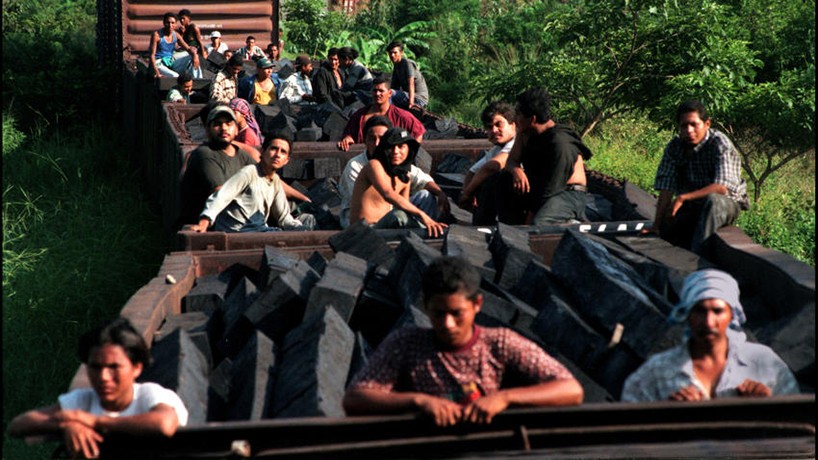
Undocumented Central Americans crowd the tops of freight train cars in Mexico. They will be treated as lawbreaking foreigners if caught, but cargo rail lines have become a major passageway north to the U.S. border. (Don Bartletti, Los Angeles Times)

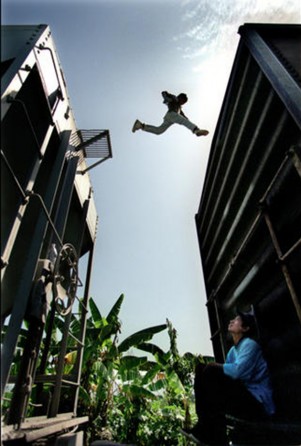
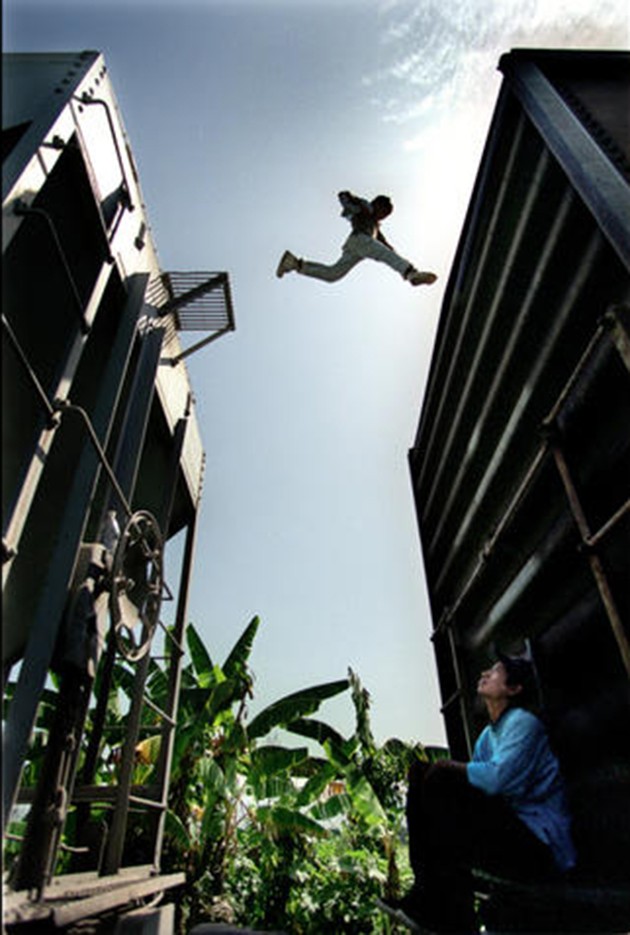
Even pauses on the trek are filled with risk as a twelve-year-old makes a daredevil leap from one freight care to another. He hopes to eventually reach San Diego, where his mother is working. (Don Bartletti, Los Angeles Times)

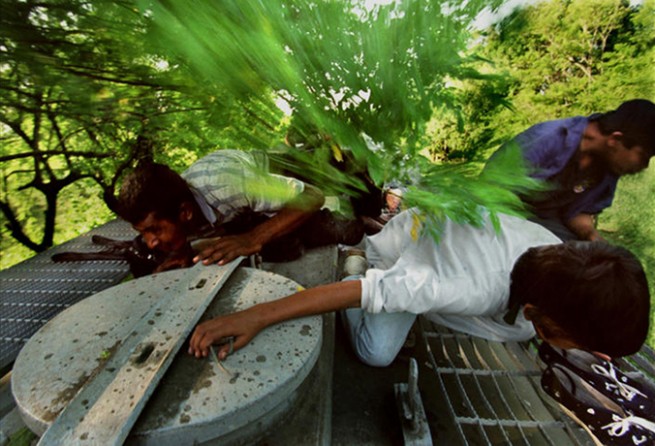
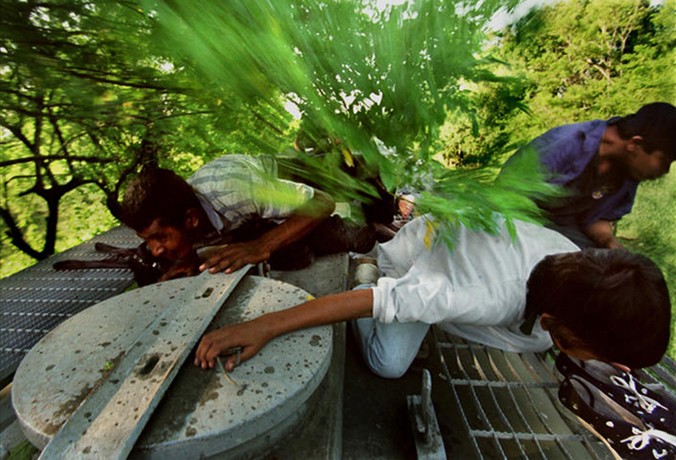
Clinging to the top of a speeding freight train migrants duck under dangerously close tree branches. Honduran stowaways call the migration route through Mexico "the beast" for its life-threatening hazards. (Don Bartletti, Los Angeles Times)

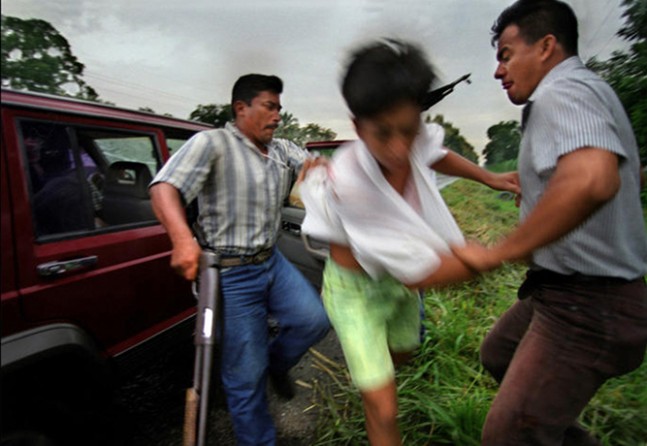
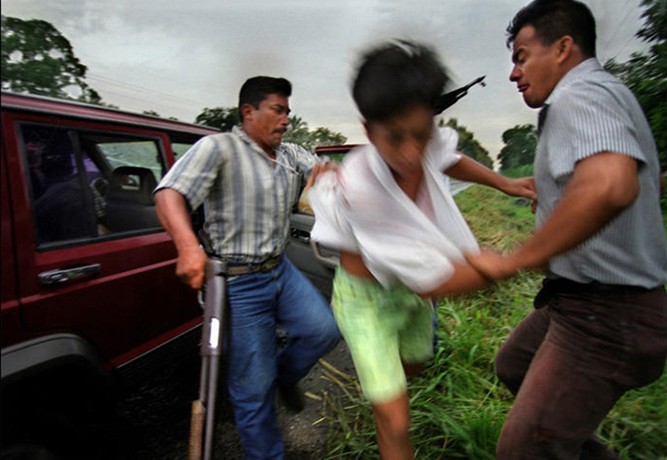
Groupo Beta undercover police agents grab a youth near an immigration checkpoint in Chiapas, Mexico. Along the rail line, Beta agents pursue robbers who prey upon hapless migrants. (Don Bartletti, Los Angeles Times)

Twelve-year-old Dennis Ivan Contrares, two weeks out of Honduras, has only his mother's San Diego phone number to go on. After a fitful night on the northbound Mexican freight he says his dreams are always the same: "find mama, go to school, learn English and help other children. I would help the street children because I walk the streets and they die in the streets." (Don Bartletti, Los Angeles Times)

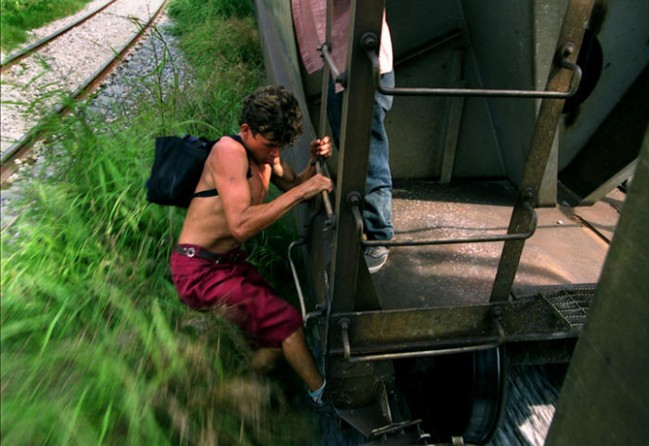
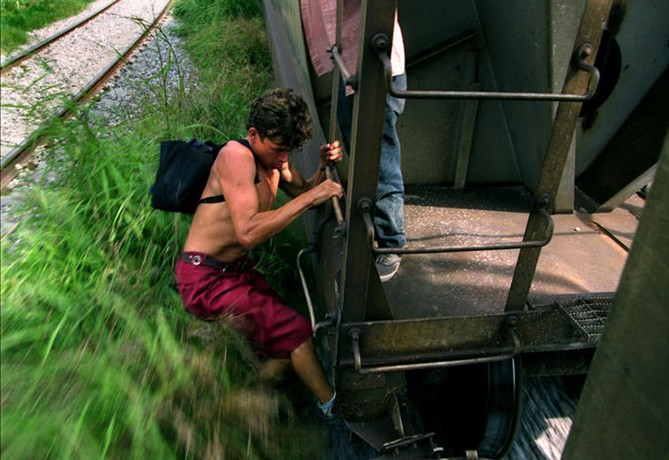
A Honduran teenager wearing a school backpack gets a toehold on a moving freight train in Vera Cruz, Mexico. To avoid authorities, migrants hide until the train picks up speed. The dangerous tactic increases the chance of slipping on the gravel or falling under the wheels. (Don Bartletti, Los Angeles Times)

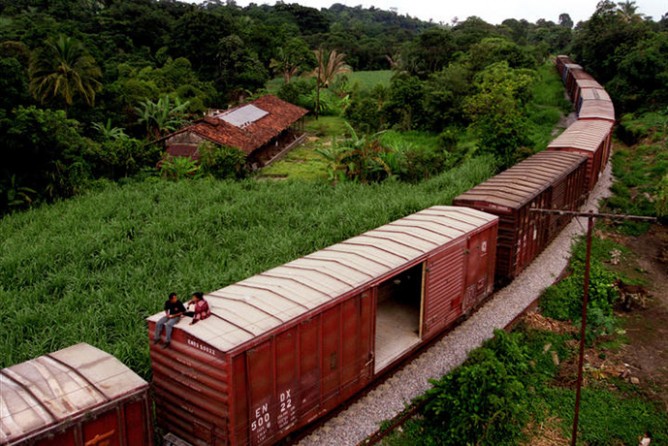
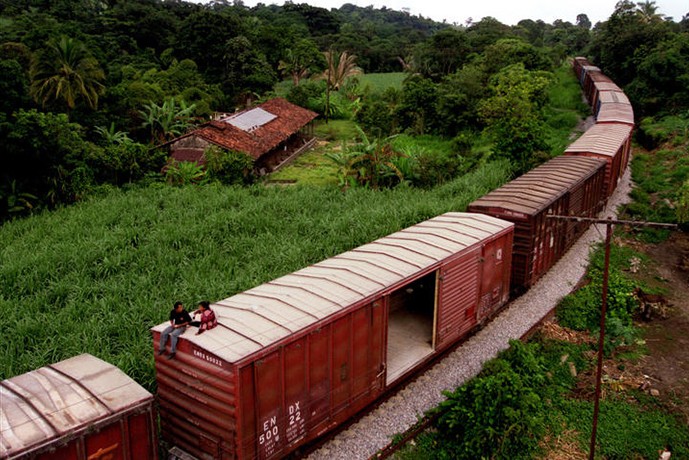
A northbound freight glides through the verdant landscape in Veracruz. (Don Bartletti, Los Angeles Times)
 

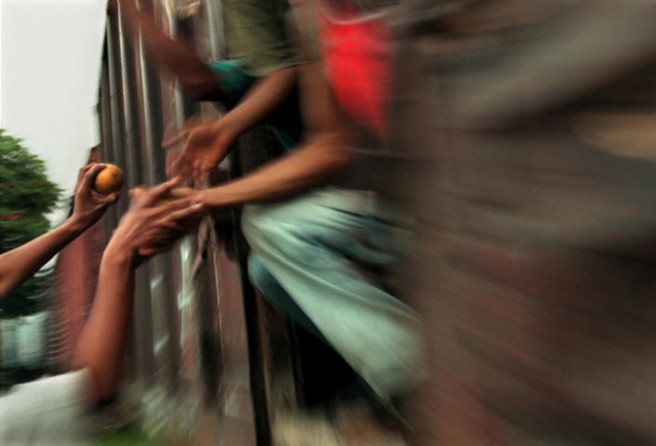
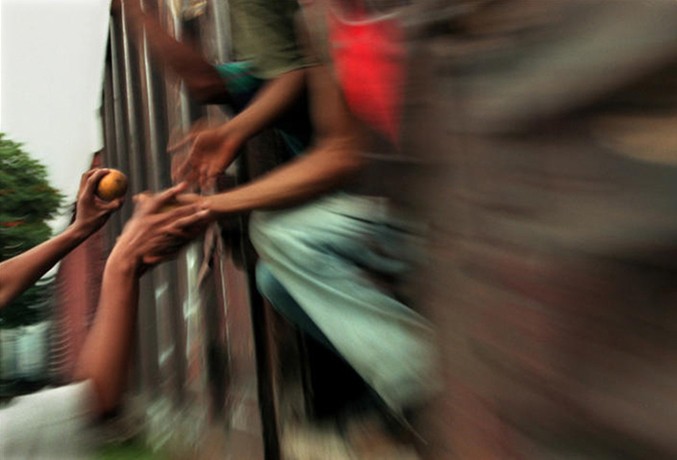
The hands of Central American migrants and those of Mexicans passing them food meet as a train passes through Fortin de las Flores, Mexico. The simple generosity of the poor residents along the tracks through Vera Cruz state is legendary among train-riding stowaways. (Don Bartletti, Los Angeles Times)

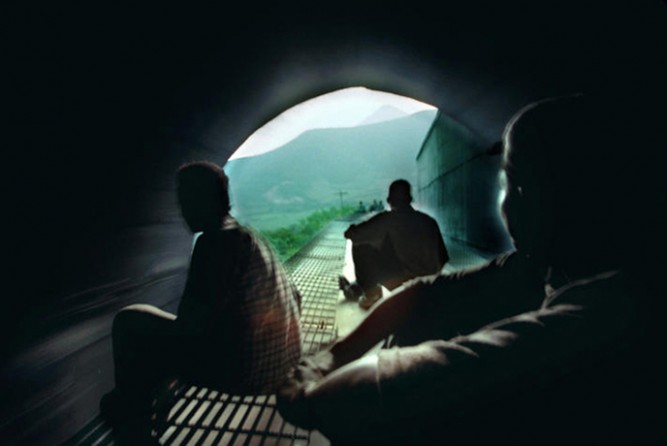
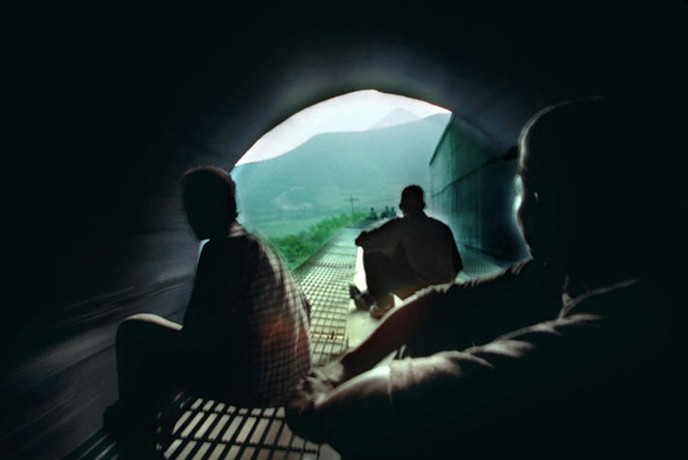
Nearing the halfway point in their 1,500 mile journey through Mexico, Guatemalans ride through a mountain tunnel en route to Mexico City. Migrants become more hopeful once they have conquered "the beast," the brutal ride through Mexico's southern states. (Don Bartletti, Los Angeles Times)
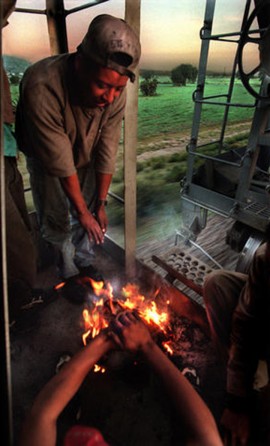
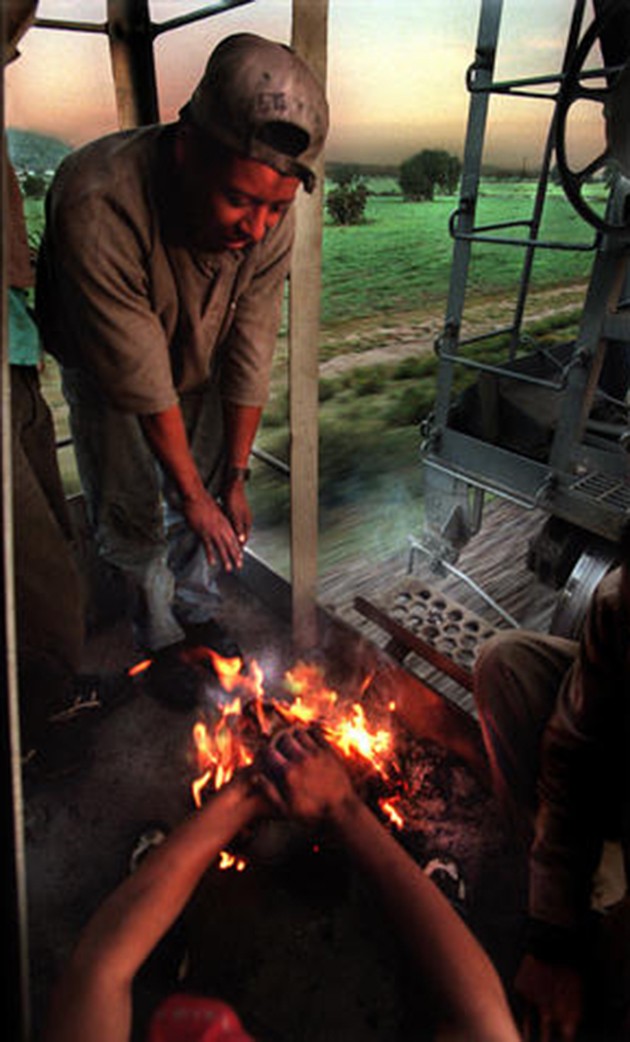
Dawn breaks near Mexico City, and teenage travelers huddle next to burning scraps of clothing and trash. Dressed as they were when they left tropical Honduras weeks ago, they were unprepared for the cold nights in the mountains. (Don Bartletti, Los Angeles Times)
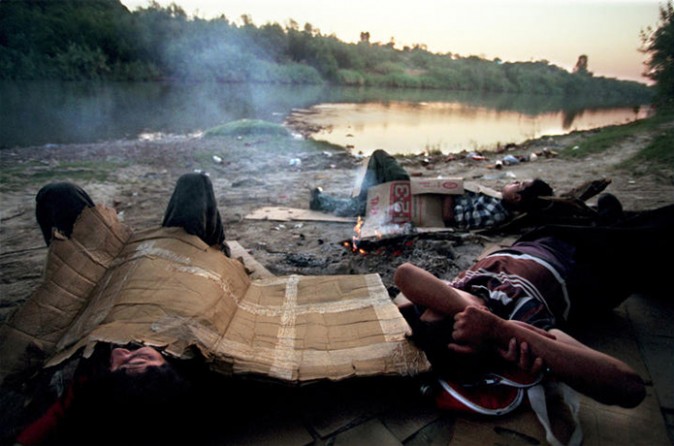
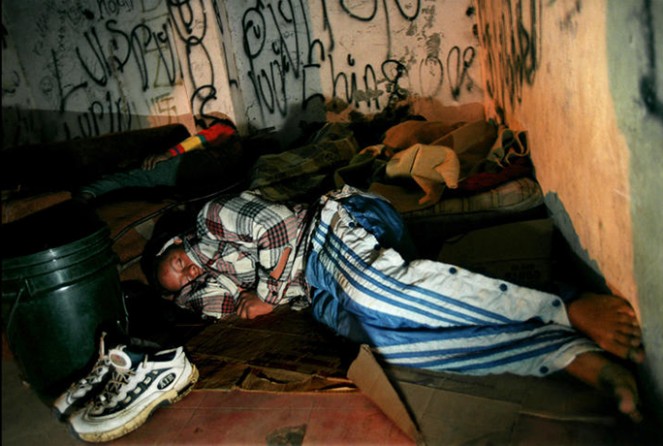
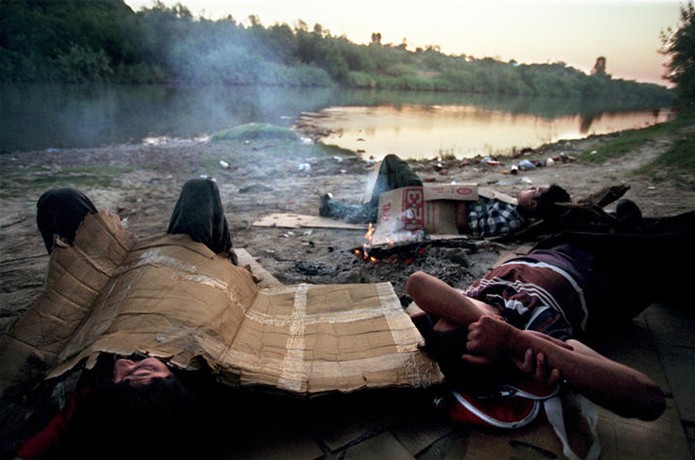
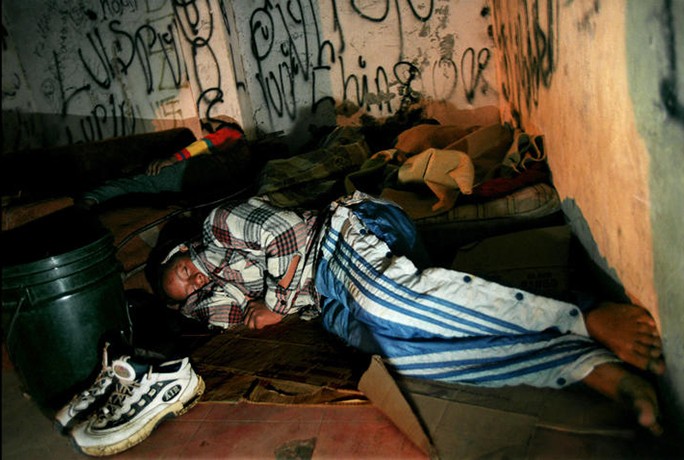
With hundreds of miles of rail travel behind them, Honduran migrants slumber by the Rio Grande in Nuevo Laredo, Mexico. Migrants often stall here; U.S. Border Patrol agents across the river in Texas thwart many attempts to enter the U.S. illegally. (Don Bartletti, Los Angeles Times)
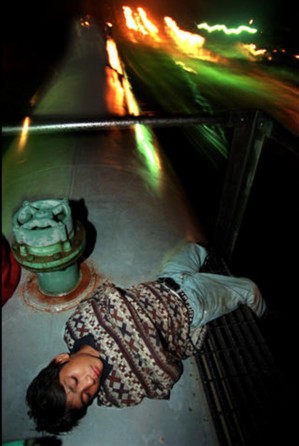
With his car-washing bucket by his head, Honduran migrant Enrique, 17, spends the night in an abandoned house in Nuevo Laredo. He has been working on the streets for weeks struggling to save enough to make a $5 telephone call to his mother in the U.S. (Don Bartletti, Los Angeles Times)
 
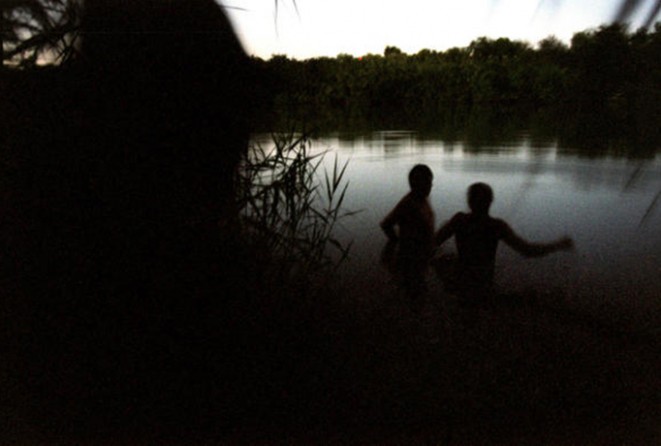
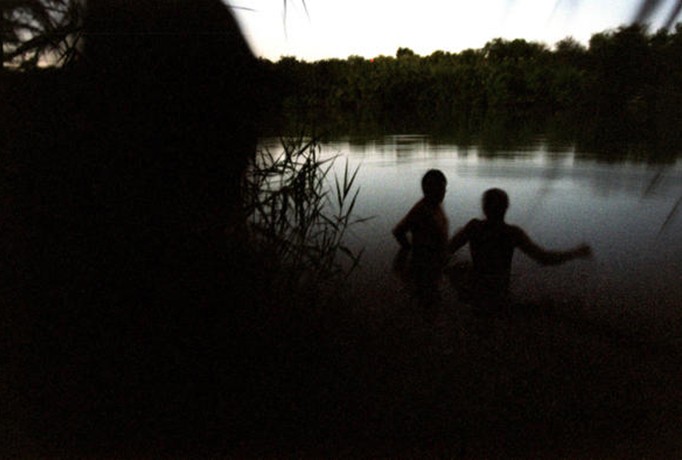
After a trip on the rails through the length of Mexico, two Central American youths slip quietly into the Rio Grande. Seventy-five yards across the murky river is their long-sought dream: the United States. (Don Bartletti, Los Angeles Times)
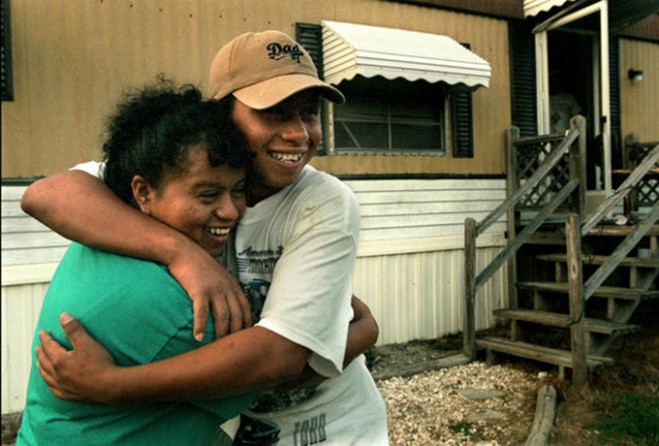
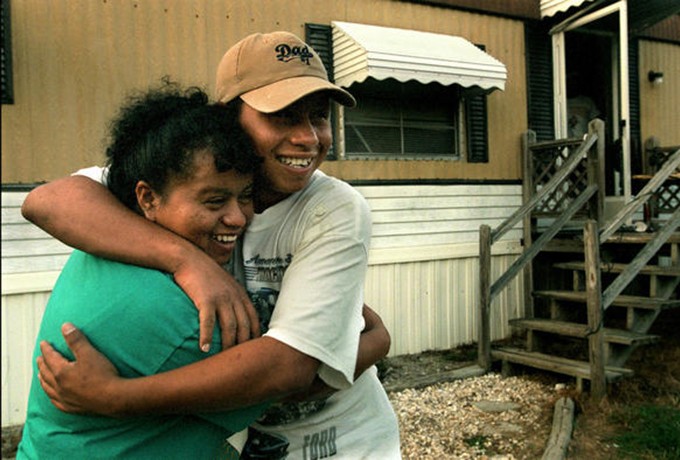
Reunited after seven years, Enrique and his mother embrace in North Carolina. "This is my son," she says. "It's a miracle he's here." Enrique survived three months on the rails to reach her. Experts estimate that 48,000 children from Central America and Mexico enter the U.S. each year illegally and without either of their parents. (Don Bartletti, Los Angeles Times)
Biography
EXPERIENCE

Los Angeles Times, photographer, Orange County Edition, 1992-present; photographer, San Diego Edition, 1983-92.

San Diego Union, photographer, 1977-83.

Oceanside (CA) Blade Tribune, photographer, 1976-77.

Freelance photographer, 1975-77.

Vista (CA) Press, photographer, 1972-75.

EDUCATION

Palomar College, San Marcos, CA, A.A., Art, 1968.

PERSONAL

Born: Dec. 29, 1947, Philadelphia, PA.

Married: Diana

Children: Adrienne, born 1974, and Jay, born 1976.

MILITARY

U.S. Army, 1968-71, First Lieutenant Infantry, Vietnam.

AWARDS

Over 40 career awards including: Pictures of the Year, World Press Photo, Inter-American Press Assn., Ruben Salazar Award, National Assn. Of Hispanic Journalists, National Press Photographers Assn., AP, UPI, Sigma Delta Chi, San Diego Press Club, Los Angeles Press Club, Orange County Press Club, Copley Newspapers, Los Angeles Times Editorial Awards, Society of Newspaper Design.


Finalists

Nominated as finalists in Feature Photography in 2003:

Brad Clift

For "Heroin Town," his dramatic pictures that spotlighted heroin addiction in a Connecticut city and helped produce positive change.

Matt Black

For his striking images that documented the little known legacy of black sharecroppers who migrated to California's San Joaquin Valley during the Depression.

The Jury

Michel duCille(chair )*

picture editor

Patrick Dougherty

editor and vice president

John Glenn

assistant managing editor/photography

Larry C. Price*

assistant managing editor/photography

Zachary Stalberg

executive vice president and editor, Philadelphia Newspapers Inc.

Winners in Feature Photography

Staff

For its photographs chronicling the pain and the perseverance of people enduring protracted conflict in Afghanistan and Pakistan.

Matt Rainey

For his emotional photographs that illustrate the care and recovery of two students critically burned in a dormitory fire at Seton Hall University.

Photo Staff

For its striking collection of photographs of the key players and events stemming from President Clinton's affair with Monica Lewinsky and the ensuing impeachment hearings.

2003 Prize Winners

Diana K. Sugg

For her absorbing, often poignant stories that illuminated complex medical issues through the lives of people.