The Washington Post, by Carol Guzy, Michael Williamson and Lucian Perkins
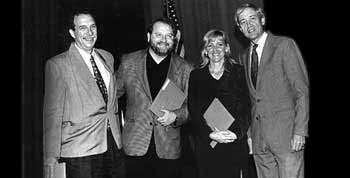
Columbia University President George Rupp (right) presents Carol Guzy, Michael Williamson (center) and Lucian Perkins (left) with The 2000 Pulitzer Prize for Feature Photography.
Winning Work
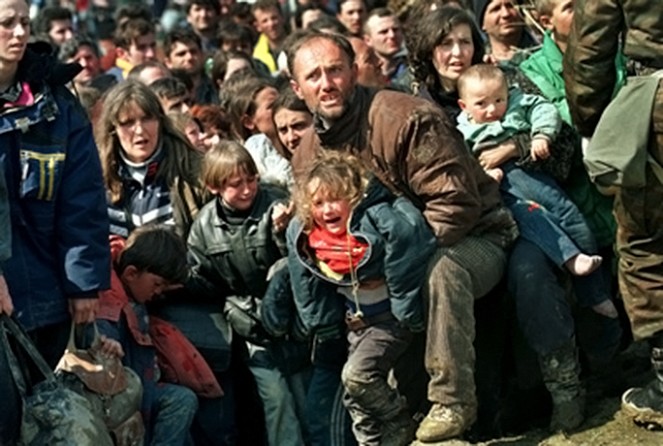
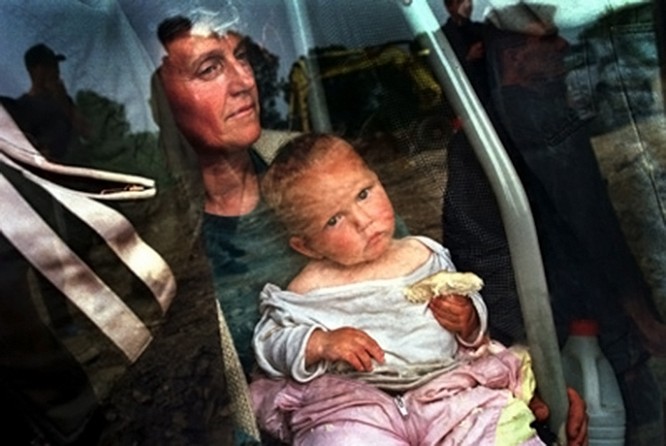
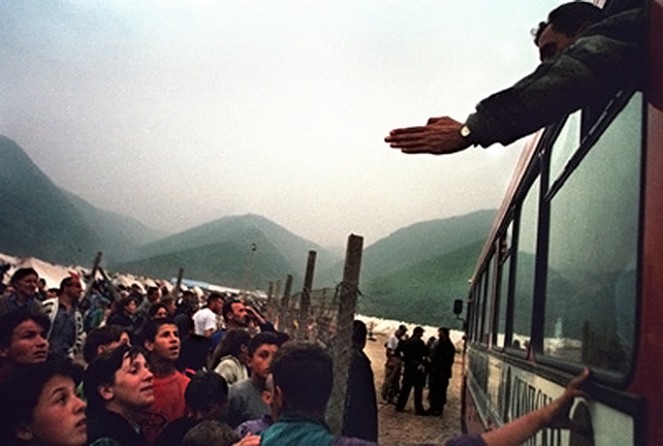
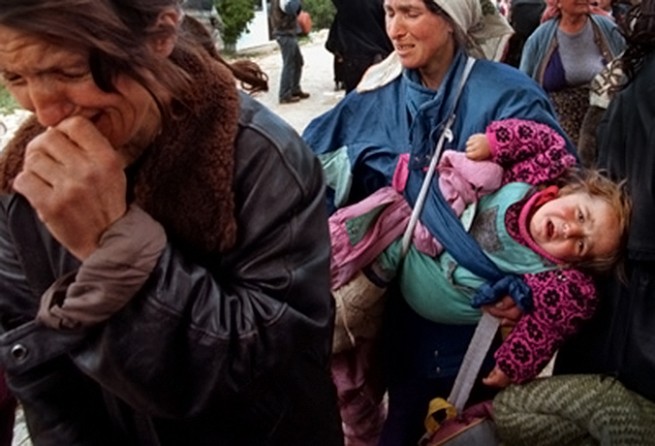
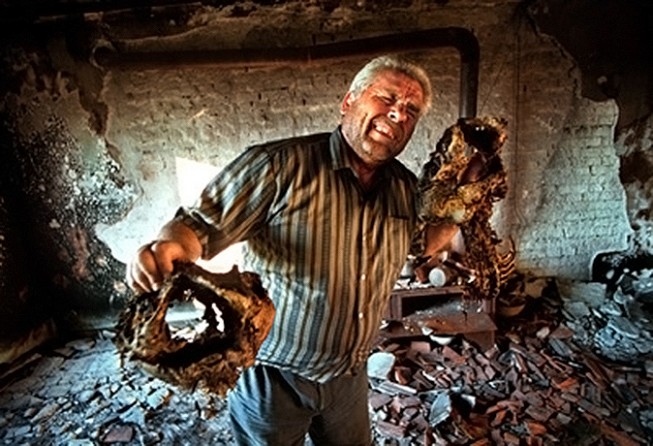
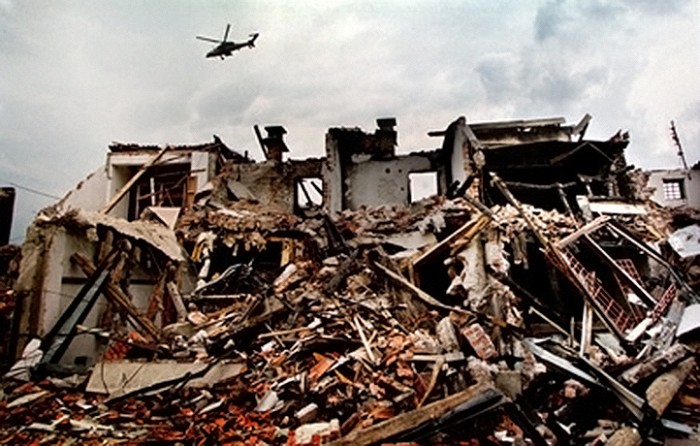
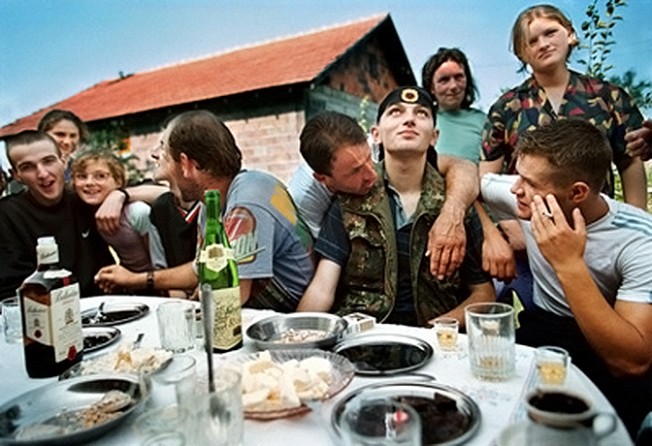
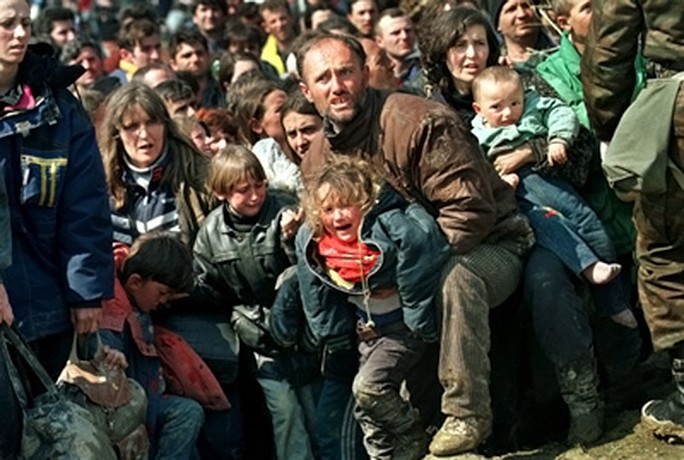
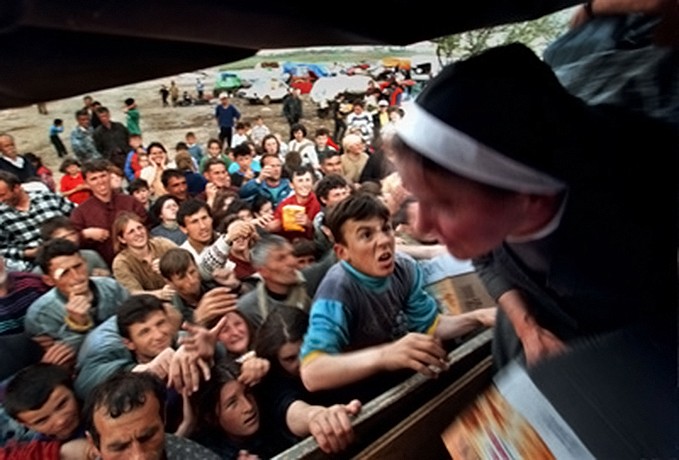
At the Macedonian border a man tries to get his daughter onto a bus to a new refugee camp. (Lucian Perkins/The Washington Post)
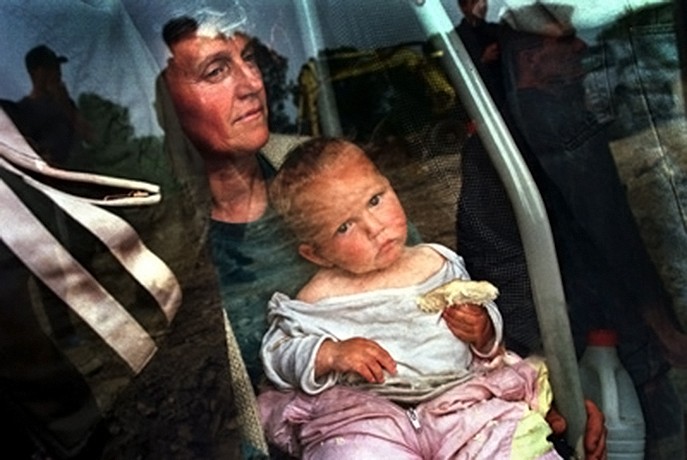
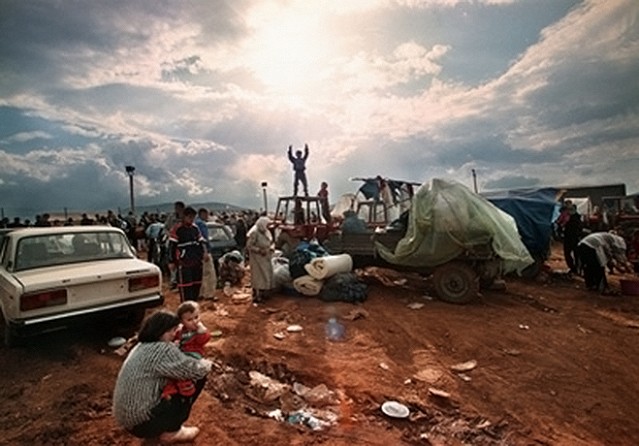
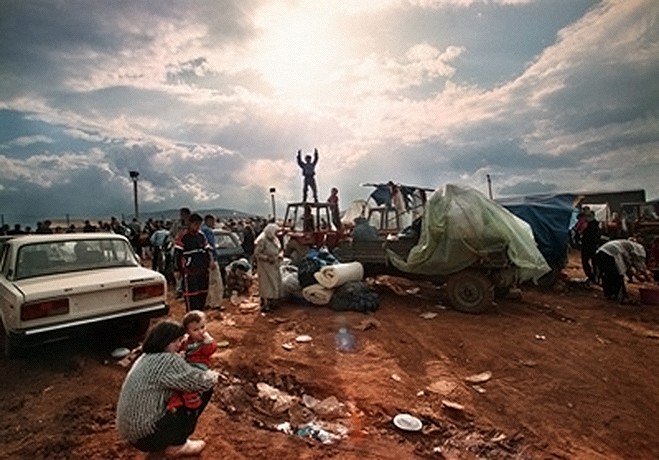
Refugees wait for their bus to be unloaded in the Senokos refugee camp in Macedonia, after a journey from the border. (Lucian Perkins/The Washington Post)
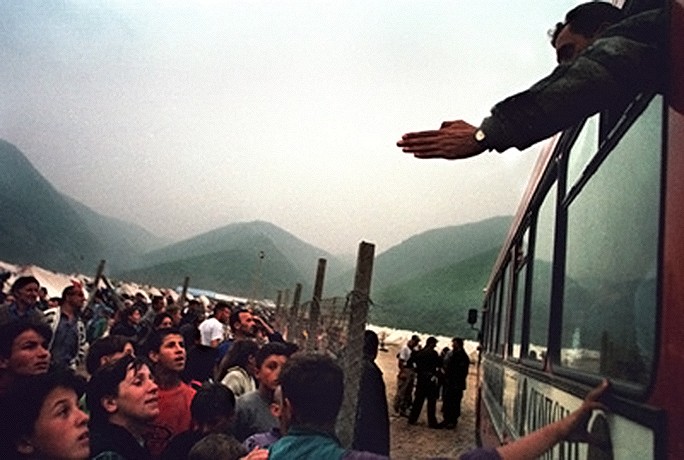
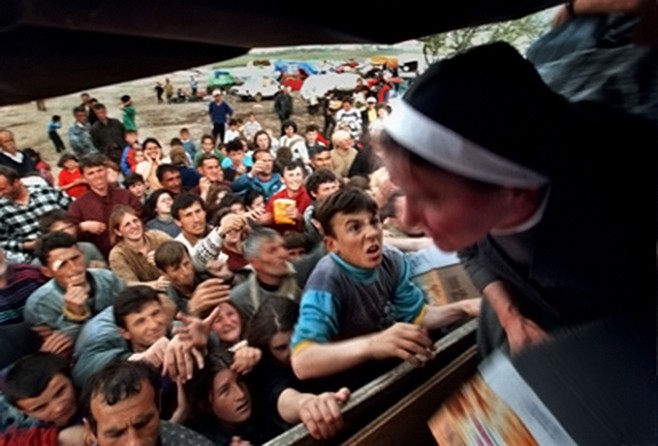
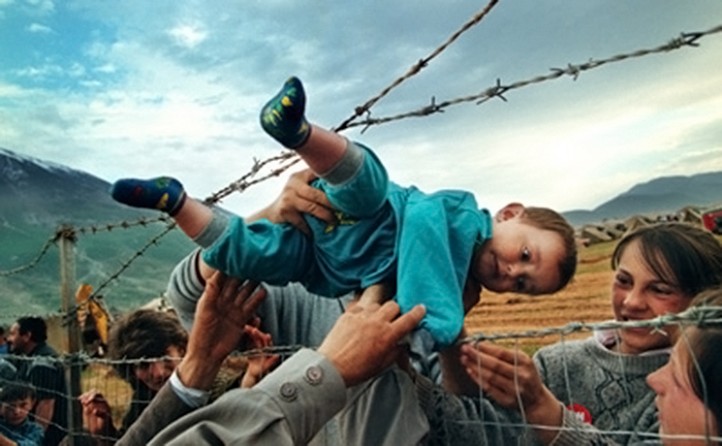
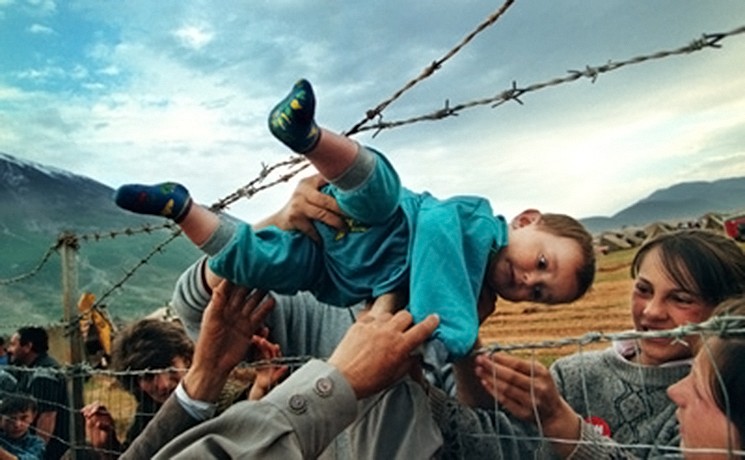
Cegrane camp residents, seeking word of friends and family left behind, crowd the fences as buses bring more displaced Kosovo Albanians from Blace. (Lucian Perkins/The Washington Post)
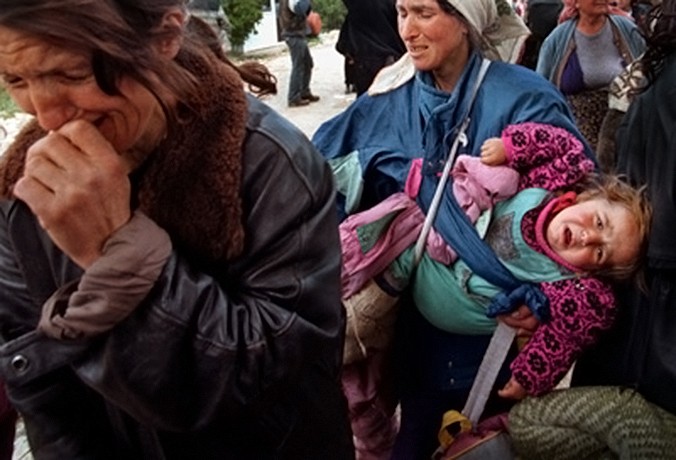
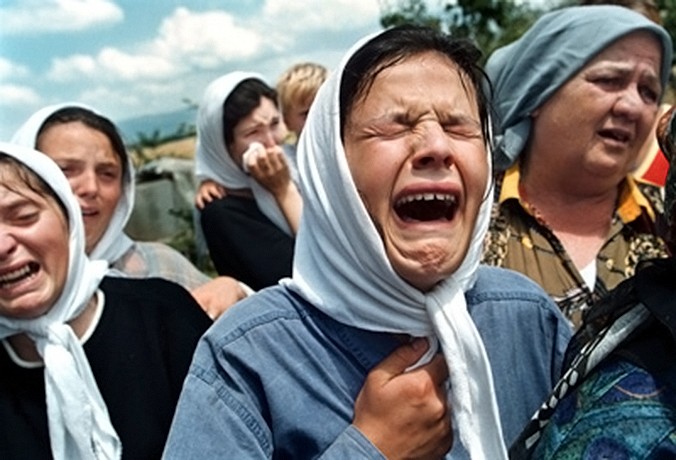
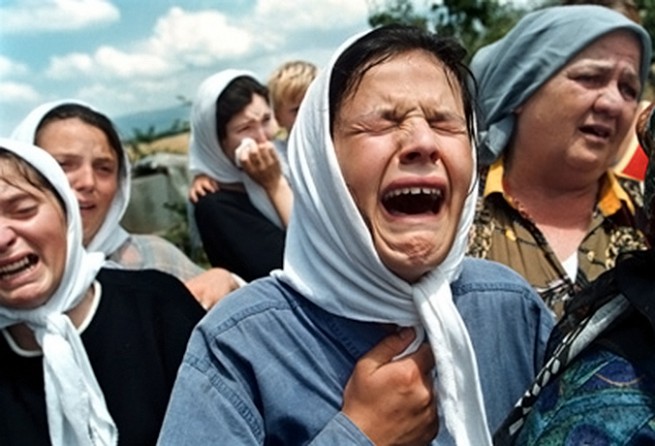
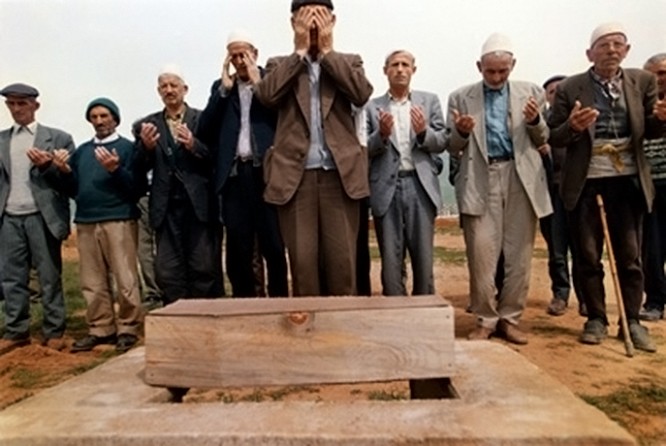
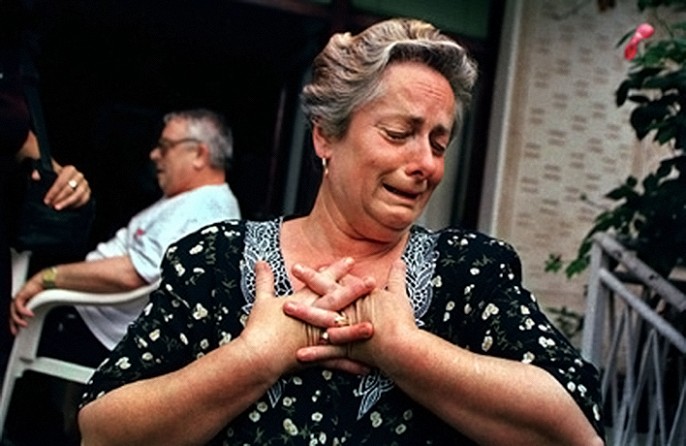
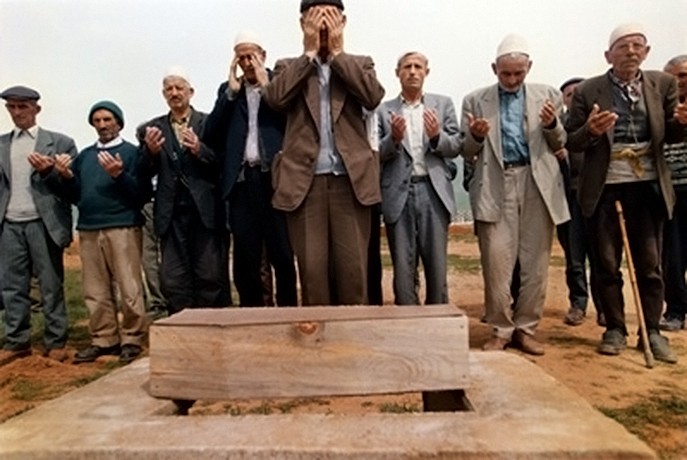
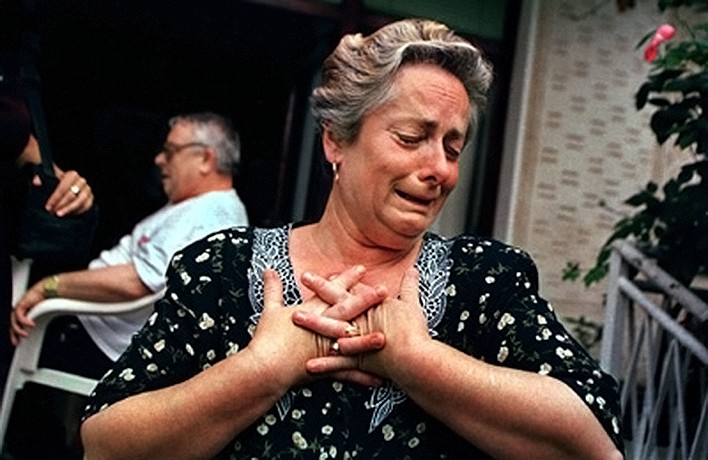
A returning Kosovo Albanian refugee shrieks with grief at the funeral of her uncle, whose body was found in a mass grave. In villages across Kosovo, returnees are being confronted by the grisly remains of loved ones. (Carol Guzy/The Washington Post)
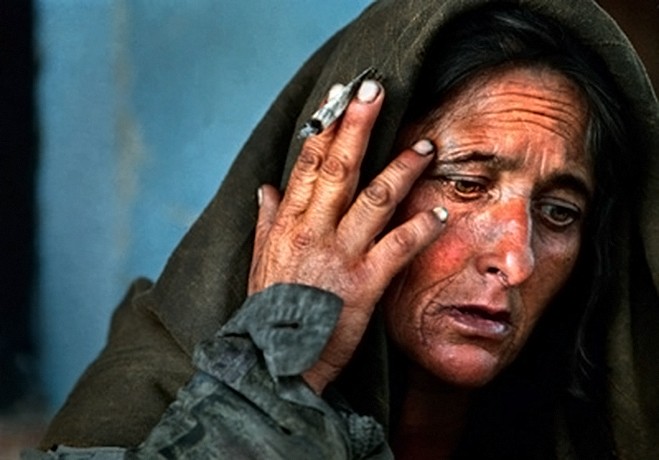
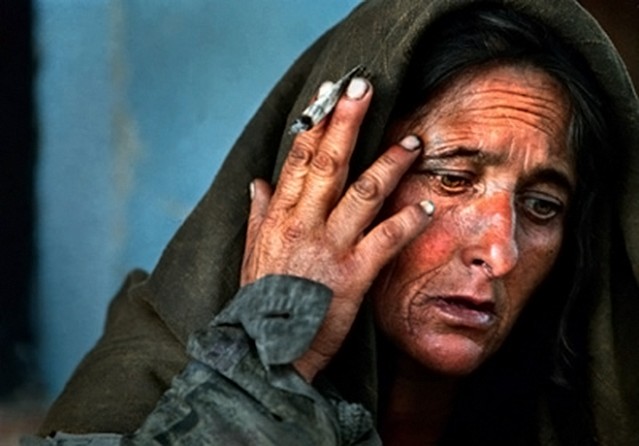
Velina, a Gypsy woman, ponders the future near the Kosovo city of Pec. She said her home was burned by Ethnic Albanian refugees returning home. (Michael Williamson/The Washington Post)
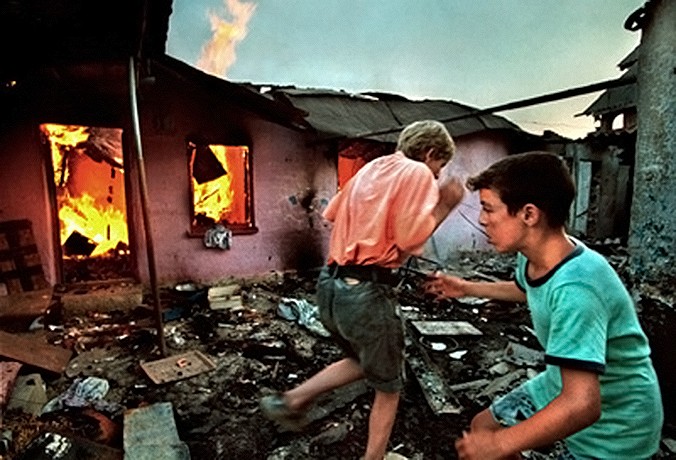
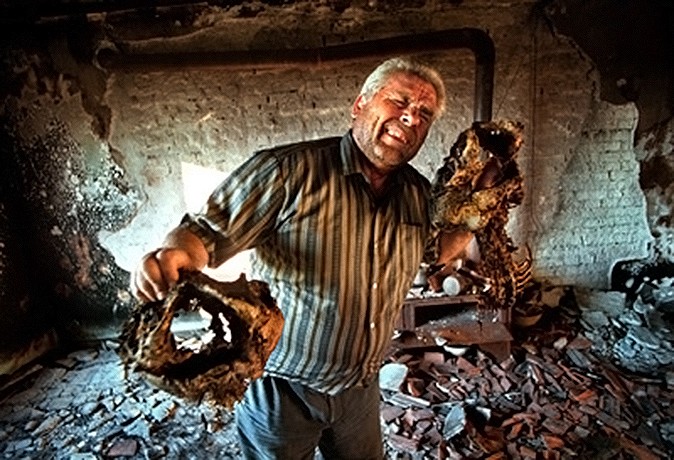
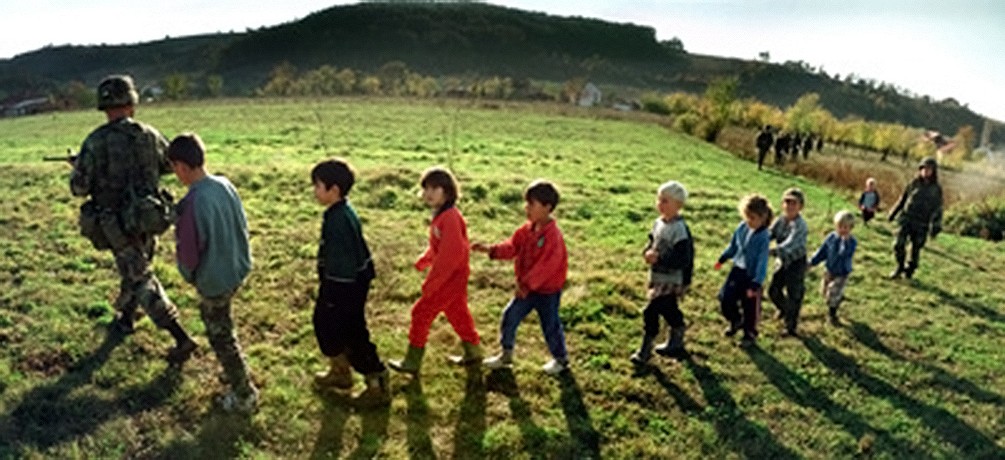
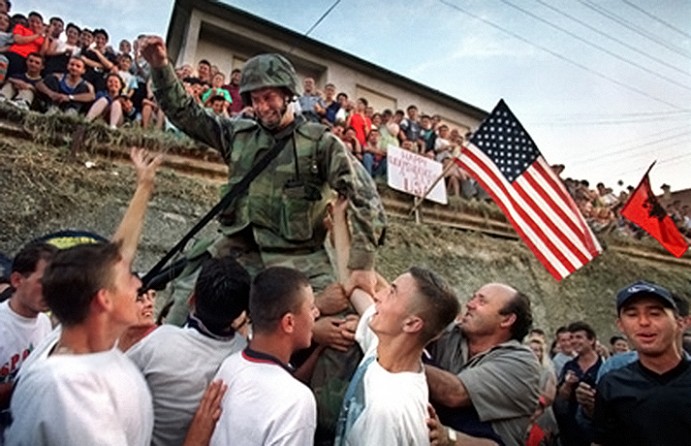
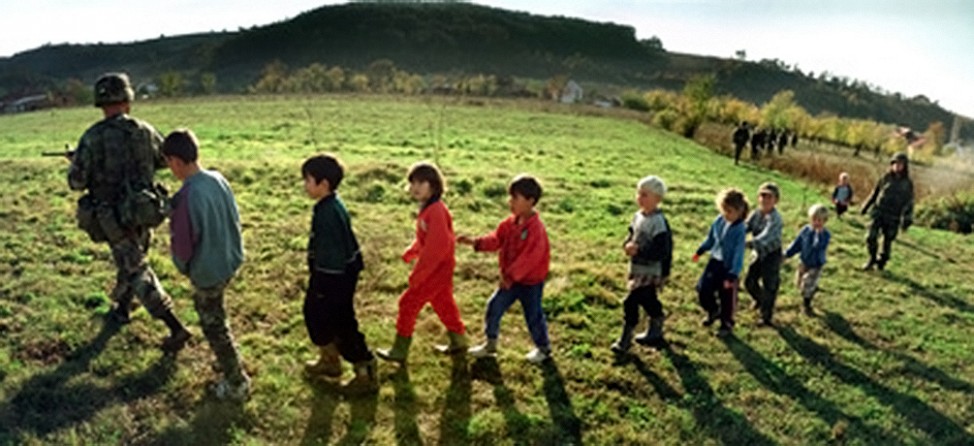
Children from the village of Podgorce follow U.S. Army Sgt. Stephen Cagle as he and his men patrol the area where they live. American soldiers have taken on a series of civilian tasks while trying to keep the peace in the divided province. (Lucian Perkins/The Washington Post)
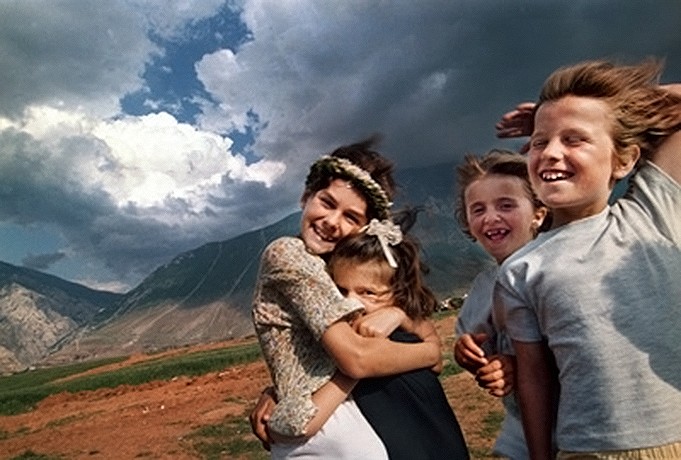
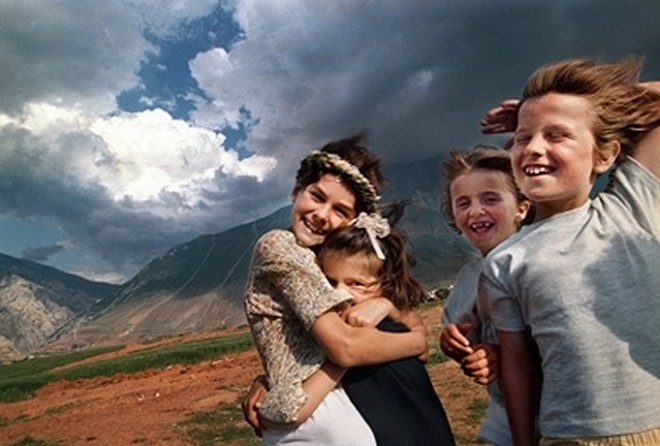
Four young girls find comfort with one another. (Carol Guzy/The Washington Post)
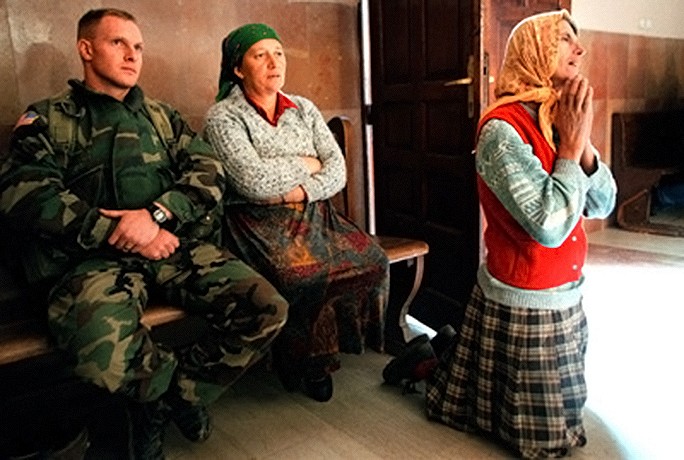
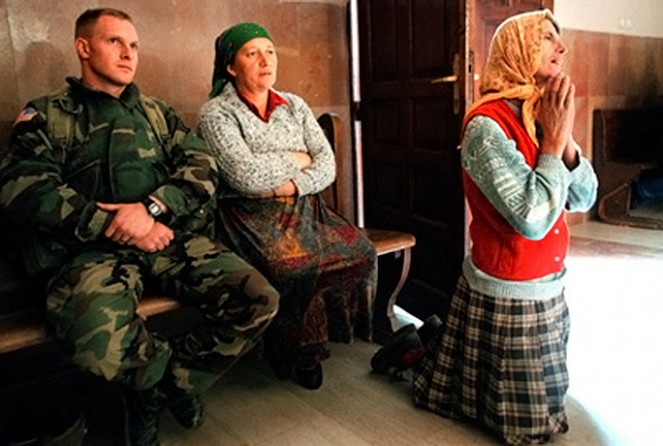
U.S. Army Lt. Chris Stevens attends services at the Roman Catholic church in Letnica, Kosovo, where about 80 of the 300 Croats who once lived there remain. Stevens later met with the Croats to discuss how to protect them. Ethnic enmities are a major problem American peacekeepers in Kosovo have to deal with. (Lucian Perkins/The Washington Post)
Biography
Staff photographer Carol Guzy, 43, was born in Bethlehem, PA. She completed her studies at Northampton County Area Community College, graduating with an Associate's degree in Registered Nursing. A change of heart led her to the Art Institute of Fort Lauderdale in Florida to study photography. She worked at The Miami Herald from 1980 to 1988 and she has been a staff photographer at The Washington Post since 1988.
Guzy's numerous photography awards include the Pulitzer Prize for Spot News Photography in 1995 for coverage of the military intervention in Haiti and the Pulitzer Prize for Spot News Photography in 1986, which she shared with Michel duCille, for their work during the mudslide in Armero, Colombia. She has also been named National Press Photographers Association Photographer of the Year for 1989, 1992 and 1996 and White House News Photographers Association Photographer of the Year 1991, 1993, 1994, 1995, 1996, 1997 and 1998 and 2000. She lives in Arlington, VA with her dog Molly.
Staff photographer Michael S. Williamson, 42, was born in Washington, D.C. and raised in several foster homes before settling with a permanent foster family in his early teens. He joined The Washington Post in 1993. He previously worked at The Sacramento Bee (1975-1991) and taught at Western Kentucky University (1991-1993).
Williamson has covered a variety of global events in the last 25 years, including the wars in El Salvador and Nicaragua, the Philippine revolution, strife in the Middle East, the Gulf War, and conflicts in Africa and the Balkans.
In 1994 he won the Crystal Eagle Award, a national award that recognizes photography that has had a documented effect on society. He won the award for a 15-year project on homelessness in America. His work on the homeless yielded three books, including And Their Children After Them (co-authored with Dale Maharidge) which won the Pulitzer Prize for non-fiction book in 1990. Another book, (also with Maharidge) Journey to Nowhere, the Saga of the New Underclass, is currently being produced by HBO Pictures as a movie slated to air in late 2000.
The National Press Photographers Association named Williamson "Photographer of the Year" in 1995. He lives in Silver Spring, Maryland, with his wife Michelle and daughters Sophia and Valerie.
Lucian Perkins, 47, is a staff photographer for The Washington Post. He graduated from the University of Texas at Austin with a degree in biology and worked on the student newspaper, The Daily Texan. While there, he studied under photographer Garry Winogrand. In 1979 Perkins received an internship at The Washington Post. Later that year he was hired full time based partially on a photo story about the first women admitted to the U.S. Naval Academy that won the National Headliners award and was published in major magazines and newspapers throughout the world.
In 1996 Perkins won World Press Photo of the Year for a photograph he took of a young boy peering out the back window of a bus leaving a war-torn area of Chechnya. In 1995 he and Post reporter, Leon Dash, were awarded a Pulitzer Prize for their four-year study on the effects of poverty on three generations of a Washington, D.C. family through the eyes of the family's matriarch, Rosa Lee Cunningham. In 1994 he received "Newspaper Photographer of the Year" by the National Press Photographers Association for a portfolio that included projects in Russia and a "behind-the Scenes" look at the New York fashion shows. Perkins has covered many of the major events that occurred over the last twenty years including Russia since 1988, the war in Bosnia, the Palestinian uprising in the West Bank, and the Gulf War. He has also covered may of the daily and political events in Washington, D.C. and the U.S.
Over the last five years, Perkins has been working with Russian photographers to organize exhibitions and exchange programs between Russia and the U.S. In the spring of 1995, he founded and helped organize InterFoto95, the first international photojournalism conference in Moscow. This event is now a highly successful annual festival, which included a "Russian Photography of the Year" contest organized by InterFoto. In 1996 and 1997 Perkins curated an exhibition of Russian photography "Russia: Chronicles of Change" that traveled to museums in the U.S. Perkins' first book, Runway Madness, was published in October of 1998 by Chronicle Books. It is an inside and often-humorous look at the New York fashion shows. The Newseum traveled an exhibition of this work in the U.S.