Los Angeles Times, by Diana Marcum

Mike Pride, Pulitzer Prize Administrator (left), and Lee C. Bollinger, President of Columbia University (center), present the 2015 Feature Writing Prize to Diana Marcum.
Winning Work
For the farmworking communities of the San Joaquin Valley, a third year of little rain puts their livelihoods in jeopardy
By Diana Marcum
Reporting from Huron, Calif.
The two fieldworkers scraped hoes over weeds that weren’t there.
“Let us pretend we see many weeds,” Francisco Galvez told his friend Rafael. That way, maybe they’d get a full week’s work.
They always tried to get jobs together. Rafael, the older man, had a truck. Galvez spoke English. And they liked each other’s jokes.
But this was the first time in a month, together or alone, that they’d found work.
They were two men in a field where there should have been two crews of 20. A farmer had gambled on planting drought-resistant garbanzo beans where there was no longer enough water for tomatoes or onions. Judging by the garbanzo plants’ blond edges, it was a losing bet.
Galvez, 35, said his dream is to work every day until he is too bent and worn, then live a little longer and play with his grandchildren. He wants to buy his children shoes when they need them. His oldest son needed a pair now.
Most of all, he wants to stay put.
But the slowly unfurling disaster of California’s drought is catching up to him. Each day more families are leaving for Salinas, Arizona, Washington — anywhere they heard there were jobs.
Even in years when rain falls and the Sierra mountains hold a snowpack that will water almonds and onions, cattle and cantaloupes, Huron’s population swells and withers with the season.
These days in Huron — and Mendota and Wasco and Firebagh and all the other farmworker communities on the west side of the San Joaquin Valley — even the permanent populations are packing up.
“The house across the street from us — they all left yesterday,” Galvez said. “Maybe this town won’t be here anymore?”
Since the days of the Dust Bowl, these have been the places where trouble hits first and money doesn’t last.
Before the drought moved into Year Three, Galvez paid the rent and bought his children school supplies. When he left for the fields, his wife, Maya, would send him off with a lunch of tortillas and beans and fruit.
It was late afternoon on this April day. He hadn’t eaten since the night before.
He was more than a month behind on his $850-a-month rent, but his landlord had agreed to let him pay a little each week.
The month before, when Maya told him she was pregnant, she apologized.
“She told me she is worried for me because there is no work,” he said. “But I told her, ‘A baby is a happy thing. Don’t worry, we’ll handle it. I will try. I will do my best.’”
Galvez’s house is ranch-style, three bedrooms. There’s a prancing Chihuahua named Mommy and a crate of oranges in the corner — a farmer gave Galvez permission to gather fruit on the ground.
The walls are freshly painted and hung with school class photos and a calendar with scenes of Yosemite and scripture. But some windows are cracked and there’s almost no furniture.
The people who broke in on the same day Galvez learned his wife was pregnant took everything, even the beds. They left one wooden chair.
The neighbors across the street brought over a big-screen TV and a soft chair. Galvez borrowed money from his brother in Texas to fix the largest window. His brother, he said, is the type of person who expects to be paid back promptly.
The garbanzo field yielded two days of work. It was now two weeks later and Galvez hadn’t found any other jobs. He said the fields are his only choice. In Oaxaca, he left school after fourth grade to work. He’s been in California since he was 17, but he is not a U.S. citizen.
Rafael, a man who has worked under many last names, knows a lot of contractors and used to be able to line up work ahead of time.
But now, in the early mornings, long before sunrise, they go to the parking lot in front of the panaderia where they can no longer afford to buy Mexican sweetbread and coffee. They wait with other day laborers for a contractor to drive up and bark an offer.
The week before the going rate was $8 an hour, minus $8 to $12 a day for a ride in the van to fields 45 minutes away. So many people have fled town that farmers were hurting for workers and the offer on this day had gone up to $8.50 an hour. Still, Galvez hadn’t been hired. He went home when he wanted to be working.
His two youngest girls, a tangle of giggles, played leapfrog in the empty living room. Manuel, 16, the oldest of six children, was in his room studying.
Galvez is proud of Manuel for avoiding the streets.
“He comes straight home from school. He works out, watches TV and stays inside. He wants to join the Navy someday,” Galvez said. “I tell the other ones, ‘Be like your brother.’”
Shyly, lowering his head, Galvez recalled that recently Manuel gave him a playful punch in the arm and they tussled the way they did when his son was small.
“He told me he was proud of me. He told me he wanted to be like me,” Galvez said. “I said, ‘I don’t want you to be like me. You have to be better than me.’”
By late April, the air held the warmth of growing season.
Water flowed in concrete canals. Precisely set sprinklers sent their spray ch-ch-ch-ing over fields. A high school runner in red shorts stood out against miles of blue-green onion fields.
The illusion of lushness was there. But without the rains, even California’s vast system of buying, selling, pumping and moving trillions of gallons of water from the Sacramento Delta to this dry, clay-bottom plain — even pumping so much groundwater that parts of the Central Valley sink a foot a year — wasn’t enough to keep Huron working.
The main drag was as sleepy as the stray dogs napping in every shady doorway. Two men in cowboy hats gossiped on a bench. A daily afternoon poker game was languidly being played in a window booth at a near-empty cafe.
“Only for fun, no money,” the waitress said, though there were clearly stacks of bills on the table.
Huron already whispered of the ghost town it could soon be: It has a $2-million deficit.
Only about 1,000 people in a town with a permanent population of 7,000 are registered to vote, and of those, only some 200 actually do.
No one has declared for the two open City Council seats — including the incumbents. Each week at school, Galvez’s children have fewer classmates.
Antonio Chavarrias, a fieldworker, said the drought is different from other natural disasters because it doesn’t end. This is the third year of drought but, he said, just the beginning of the hardships.
“It’s going to get worse,” he said. “They’re not planting. Think what it will be like at harvest.”
Chavarrias came from El Salvador, where, he said, people make $6 for five hours of work. He supports a 22-year-old daughter and a 20-year-old son going to college there.
“They’re in my heart,” he said. He hasn’t seen them in 10 years.
Galvez is determined that the one sacrifice he won’t make for his family is leaving them.
Once before when times were hard, he went alone to Texas to work. He was gone more than three years.
There was another man. He almost lost his wife.
“I lose time with the children. I lose everything,” he said. “I don’t want to do it again.”
But if they stay, he doesn’t have work. The family now owed almost two months’ back rent.
“It’s breaking my head, wondering what are we going to do, what are we going to do?” he said.
Mormons were at Galvez’s house — two blond, Spanish-speaking women from Utah who had been coming weekly.
Down the street, a man in a crisp plaid shirt was walking around in the heat, shaking hands and introducing himself to everyone he passed. He was an evangelical pastor from Lemoore.
The drought is bringing a lot of religion to Huron. Ministers walk the streets; bars notorious for violence and prostitution are empty.
“We’ve been having less problems downtown,” said Police Chief George Turegano, a retired Capitola officer. “People have less money in their pocket. They’re saving it to move to the next town, the next job.”
When Turegano took the job two years ago — the 10th police chief in about as many years — he told his friends in law enforcement that Huron was like the Wild West.
“Not too many bedroom communities have the level of nightly shootings, prostitution and domestic abuse as these small Westside towns,” he said. “But it’s calmer lately.”
At Galvez’s house the lead missionary was encouraging Galvez’s middle daughter, 12-year-old Dianey, in prayer.
“Just say what’s in your heart,” she told her.
Dianey haltingly gave thanks for waking up in the morning, and that her grandmother hadn’t been sick lately. She didn’t pray for rain as numerous signs across the Central Valley suggest.
Galvez, who was raised Catholic, has been going to several different churches.
“I like what they say. They all say the same thing: ‘If your mind is right you can talk to God and he will tell you what to do,’” he said. “I still have to learn how to make my mind right.”
In May, a season when Huron’s population once doubled with workers planting and picking, Galvez had found three days of work in two weeks.
The family was down to the amount of his last check: $256. They had stocked up on huge bags of beans and rice. The Mormon missionaries had brought misshapen cupcakes, the cake not reaching to the top of the cups and canned chocolate frosting three times higher. Two family friends had brought over bags of sweet breads and cilantro from their garden.
Galvez and Maya called a family meeting. Galvez said they told the children they would probably be moving to Texas soon.
The 15-year-old, Itzel, said no, she had a boyfriend. The 11-year-old, Francisco, said no, he liked his school. The oldest son, Manuel, said not a word. He only put a hand on his father’s shoulder.
Barber-turned-farmer Fred Lujan was ready to see his pistachio trees bear their first full crop. Then he lost his water supply.
By Diana Marcum
Reporting from Terra Bella, Calif.
At first they called Fred Lujan a gentleman farmer.
The retired barber washed his tractor every night and parked it in the garage, a source of gentle amusement to the veteran growers around him. He called his pistachio trees his babies, his girls, and gave them names.
“Come on, Suzanne,” he’d say to his wife in the evenings. “Let’s have a glass of wine and sit outside and watch our girls grow.”
Back when he was still learning to take corners while tilling, he sliced one of the saplings. The other farmers told him to pull it out, the tree wouldn’t make it. But he wrapped the trunk in mud and water and tape the way his grandfather, born on an Indian reservation, had taught him.
He named the tree Survivor.
Eight years later, Survivor and the other trees were ready to give their first mature crop. In February, the 10-acre orchard was sprouting spring leaves.
Then a man from the irrigation district came and sealed off Lujan’s water meter. A green tag read “No Irrigation Water Is Available This Year.” There was a $10,000 fine for breaking the seal.
For the first time in the more than half a century that the federal government had been diverting Sierra Nevada water to farmers, there would be no deliveries to most Central Valley irrigation districts. In the third year of drought, there wasn’t enough water to go around.
It was a blow to the entire region, but a possible death knell to Terra Bella, whose pistachio and citrus groves are watered only by rain and the government’s canals.
“How am I supposed to just sit here and watch everything turn brown and die?” asked Lujan, 68.
Still, it was February and pistachio trees are drought-resistant. It just had to rain during March and April. He was sure it would.
***
Sean Geivet had known the news was going to be bad. It had been the driest 13-month period in more than 100 years on the winter day the U.S. Bureau of Reclamation announced water allocations. The Terra Bella Irrigation District manager ran through options in his head.
If the feds said a 25% allocation, most of the area’s 700 citrus growers could still bring in a crop. If it was 10%, that was enough to at least keep the trees alive and try again next year.
He was so lost in thought that a deputy pulled him over for speeding.
“There must have been something in my face — he asked me what had happened. I told him I was about to hear for the first time in our history that we wouldn’t have water,” Geivet said.
He didn’t get a ticket, but 20 minutes later he sat in his office trying to digest news worse than he’d imagined.
“With zero percent, there are no options. The citrus trees are dead by July,” he said. “The nut trees stop producing.”
Growers began dropping off checks with Geivet, authorizing him to buy emergency water from wherever he could, for up to $1,200 an acre foot, six times the usual price. (An acre foot is the amount it takes to cover one acre of ground a foot deep in water or enough to supply two households for a year.)
“Geez Louise! Twelve hundred dollars,” Lujan said. “Who has that kind of money? That’s only for the big boys.”
It rained in March — barely.
“It smelled so good. It sounded so pretty,” Lujan said.
It’s the last time he saw rain.
***
The Lujans put a bucket in the shower b to catch the water while it warmed up and used that to water the three fruit trees — peach, nectarine and plum — at the side of the house. They bought bottled water to drink and used tap water to keep their small garden alive.
Two weeks after irrigation water was cut, domestic water was rationed. Most of the 6,000 people who live in Terra Bella and whose children attend school here are immigrant farmworkers. They would have drinking water — about half the amount they usually got — but little work.
“There’s so many worse off than us,” Suzanne said. “But we tried so hard to do everything right, to plan ahead.”
The couple once lived in a two-story house in the city of Porterville. They had a swimming pool and a Jacuzzi, new cars in the garage. They went to Hawaii on their 50th anniversary.
They had saved for retirement. But as they watched Fred’s mother grow older and face ill health, they decided their nest egg wouldn’t be enough. They downsized to the small house in Terra Bella and invested in pistachios. Lujan had several cancer operations, and this year he had heart surgery. Their retirement savings dwindled, but the orchard was their safety net.
***
In May, Survivor and the other trees had blossoms.
The orchard looked more like a Zen garden than a working farm. Fred keeps everything pristine — he and Suzanne doing all the work themselves, other than picking the crop.
“Farming is the most amazing thing you can do,” he said. “The ground out here is hard. You put a shovel in there and it bounces right back. But we put these little sticks in the ground next to cardboard protectors. Our granddaughters — they were so little then — gave them one teaspoon of fertilizer a month.
“And now I just want to see them give what they are meant to give. Gosh, who doesn’t love a pistachio?” he asked, breaking off a bud and pulling it back to show a small white pod that would become a nut.
The heat was coming. In the summer, Central Valley temperatures rise well into triple digits. To bring in a crop, the Lujans usually needed 14 acre-feet of water. They had none.
On the back porch, Suzanne served plastic bottles of ice-cold water and took stock. Their truck was paid for and they could let her car go back to the dealer if they had to.
“If only I’d known this drought was coming, I wouldn’t have quit my job,” said Suzanne, a retired administrator with a health network. Fred touched her hand.
“No Suzie, it was time. It won’t be like this forever.”
His hair brushed his collar — something that usually never happened to the former barber. That week his cardiologist had measured his heart rate at over 200 beats per minute.
Fred said he’d been thinking a lot lately about his dad and grandfather.
“Grandpop always said if you didn’t treat the earth well enough, she wouldn’t give anything back,” he said, beginning to sob. “Did I do wrong? I never used to think about water. I’d wash our cars and boats and ...”
Suzanne, whom he met in eight grade, interrupted in a gentle voice.
“Take a breath, get up and walk around, then come back,” she told him.
After he left, she looked out over the trees.
“I think everything is just getting to him. He’s not normally like this. This isn’t him,” she said.
Ethan, their 4-yearold grandson, arrived from next door for a visit. Evan, his overweight Labrador retriever, trotted beside him.
Suzanne bounced a big ball with Ethan against a garage wall.
The ball rolled into the orchard and Ethan and Evan chased after it. “That makes your day no matter what,” Fred said. “I guess whatever happens, happens.”
***
Survivor died in June.
Not having water during the first heat spell was too much stress for the injured tree. Lujan took it hard. It seemed like a harbinger.
He planned to look for a job the next week, beginning on Tuesday — barbershops are closed on Mondays.
“You can never quit,” he said. “I’ll beg, borrow or steal to keep my trees alive.”
Driving to town, he noticed Setton Farms, which had a pistachio-processing plant in Terra Bella, had planted new trees — about all the way to Bakersfield, it seemed to Lujan.
Back when Lujan still had his barber shop, one of his clients was a lifelong farmer, Mike Smith. He had always liked Smith because he had a big laugh and a hard handshake.
Three years ago, Smith started a job as liaison between growers and Setton Farms. Lujan decided to talk to him.
“He’s an up-and-up guy. I figured if he can help, he will, and if not, he’ll tell me.”
Smith delivered Lujan’s plea, and Setton Farms agreed to advance the Lujans 10 acre-feet of the emergency water the company had bought, and let them pay for it after harvest.
“I was ecstatic to be able to help Fred. He’s real. Just a very genuine person, and you may have noticed he’s never met a stranger,” Smith said. “But in my heart of hearts, I know this is only a band-aid. What happens next year? What if it doesn’t rain? The small guys can’t hang on.”
In his job, Smith drives from one end of the Central Valley to the other.
“I see the dying trees, the burned-out shrubs. I talk to all the other Freds — there are a lot of them,” he said. “My fear — and it’s a real fear — is that if it doesn’t rain next year, this valley will face a reality that will rival the Great Depression.”
But at the Lujans’, Fred was happy again.
He was back in the orchard, shouting at Evan the dog to stop being naughty and chasing the school bus.
“Mikey, my oldest grandson, just came back from Afghanistan. My trees, my babies, are alive,” he said. “Now, I’m just waiting for it to rain.”
He was sure it would.
For the Central Valley town of Stratford, where the water table has fallen 100 feet, survival isn’t a given
By Diana Marcum
Reporting from Stratford, Calif.
Beneath this small farm town at the end of what’s left of the Kings River, the ground is sinking.
Going into the fourth year of drought, farmers have pumped so much water that the water table below Stratford fell 100 feet in two years. Land in some spots in the Central Valley has dropped a foot a year.
In July, the town well cracked in three places. Household pipes spit black mud, then pale yellow water. After that, taps were dry for two weeks while the water district patched the steel well casing.
In September, the children of migrant farmworkers who usually come back to Stratford School a few weeks late, after the grape harvest, never came back at all.
By October, there were new faces in the drought relief line in front of the school, picking up boxes of applesauce, canned tomatoes, peanut butter, rice.
If rain doesn’t come soon to California, cities and suburbs will survive, with maybe fewer flower beds or more expensive lettuce.
But in Stratford — where the school has had some of the same teachers for 40 years, the auto parts store doubles as a coffeehouse and first names change but last names don’t — survival isn’t a given.
Even above ground, the town is sinking.
Arches at both ends of the town square spell out S-T-R-A-T-FO-R-D in the shape of a rainbow. Years ago there was a population sign, but people argue over the last number it gave. There are about 900 people left now.
The glory days, when the arches were entrances to burger joints and gas stations for Central Valley residents driving to Pismo Beach, faded decades ago.
“But nothing like this,” said Josh Orton, manager of the farm equipment store his great-great-grandfather started in 1906. “There’s just no water.”
Two doors down at Hardin’s Grocery, the inventory has evaporated to a puddle of chips, drinks, tobacco and pregnancy tests near the cash register.
Customers push open the door to the dim store and its empty shelves, hollering “Hey ya, Kenny, or “ Hola, Kenny” over the door chimes.
“Oye, Carnal” — “hey, dude” — the Yemeni store owner with tired eyes answers in Spanish slang.
His name is Mahmod Alrihimi, but they’ve been calling him Kenny for 24 years, ever since he leased the business from Mr. Hardin, who still lives in a trailer behind the grocery. (“I don’t know why ‘Kenny.’ Maybe it is easier for them to say?”)
Each day Alrihimi opens the store at 8 a.m. and closes at 10 p.m. If he’s really tired he’ll go home a half-hour early, but people invariably knock on his door and say, “Kenny, can you come out? We just need a bottle of milk.”
He doesn’t mind. He likes feeling needed. “I really love this town. I know so many families,” he said.
A man put two packages of hot dog buns and a roll of paper towels on the counter.
“Hey, Kenny, OK if I pay for these after Friday?” he asked, lowering his voice.
Alrihimi nodded. But his stomach dropped. This was a man who had never asked for credit before.
The store owner had 29 receipts that constituted the week’s IOUs. On the backs of two torn-up cigarette cartons, he wrote the running accounts: the ones where they owed $34, paid $12, then charged $8.
“It’s too sad to say no. I think of their kids,” said Alrihimi, a father of five.
“They don’t have any money. I don’t have any money. We’re all trying to get through, little-by-little-bit.”
When he has to run errands, Darlene Lacey watches the store. She’s been helping out since her husband died 13 years ago.
Alrihimi worries about her.
“I think that when people can’t pay, she takes money out of her own pocket and puts it in the cash register,” he said. “She is a very good-heart lady. But she has too little money.”
Later that afternoon, when Alrihimi was at the bank, Lacey rang up two sodas for an elderly couple who asked for credit. Then she slipped $2 in the cash register.
“Kenny is hanging on by a thread,” she said. “And, oh my gosh, our little town needs him.”
Next door at the post office, a wall of boxes have “closed” stickers over them. They belong to families who’ve moved or haven’t paid their bills.
The lone employee, Rick Kimball, is bending the rules and keeping mail for those still in town. (“They’re working their tails off to get by. Seems like the least I can do.”)
He likes learning about people by paying attention to their mail.
“The Hamiltons? Nice folks. All the women’s first names start with “S” and all the men are named Tony,” he said.
Johnny Caldeira, 36, picked up a package, then leaned his elbows on the counter to chat.
“I’m beginning to feel like a bartender,” Kimball, a former parole officer and truck driver, told him.
“You’re the hangout spot now,” Caldeira said. “There aren’t any other places left.”
Caldeira went to Stratford School. Most of the classmates he graduated with in eighth grade are still in town.
“Adrian teaches fourth grade, Danny’s in the reserves. The Meyers — George and Charlie — farm,” Caldeira said. “They just lost their grandfather, old man Meyers. I think he was 100. We just lost Mr. Henry.”
His former seventh-grade teacher, William Henry, persuaded Caldeira to go to college after he returned from the war in Iraq. This month the graduate takes the test for his credentials. He wants to teach in Stratford like the man who pushed him.
“Mr. Henry used to be in the Navy before he was a teacher, so when I came back, I could actually talk to him. He had seen things too.
“At first it was, ‘How you doing? When you going back to school?’ Then one day he comes in, slams down a college application and says, ‘Now get your ass in school before I kick it.’ That’s a cleaned-up version. Mr. Henry had a mouth.”
Each spring, the seventh- and eighth-graders still dance around a maypole, and there’s always a festa at the Portuguese Hall.
But it’s the Constitution Day Parade that is really something to behold, said David Orton, Josh’s father.
A couple of farmers pull kindergartners on flatbed trucks. The Ortons add a tractor and Stratford School Principal Bill Bilbo rides his motorcycle — a crowd favorite.
“There are so many people in the parade that it leaves about 20 people watching,” Orton said, shaking with laughter. “And the next year, we do it again. This town has a way of holding on.”
The Orton family first came to farm in Stratford in the 1800s, when they got pushed off their Lemoore land by railroad barons.
Back then, their farm was on the edge of Tulare Lake — “the lake that once was.” It had been the largest body of fresh water west of the Mississippi, some four and a half times bigger than Lake Tahoe. But the four Sierra rivers that flowed to the lake — the Kings, Kern, Kaweah and Tule — were dammed, diverting water that powerful landowners could own and sell. The tule fog that rises from the ground and blankets the Central Valley in a blinding thickness each winter is said to be a Yokut Indian curse that the stolen waters shall haunt this place forever.
The drought is affecting even eternal curses. There seems to be less fog each year. Farmers fear it could hurt the moisture-loving, high-value nut crops that are quickly replacing fields of alfalfa, tomatoes and cotton.
At the Ortons, they still grow row crops, but they planted only 18 of their 100 acres. Now two wells are out and they don’t have water for what they planted.
“We’re growing dirt,” David Orton said. “It’s a very popular crop around here right now.”
On a Wednesday morning when the sky was still dawn-pink, Allyson Lemons and JD, her husband of 62 years, walked to the auto parts store. She carried a plate of fresh-baked chocolate chip cookies.
With all the town’s cafes long gone, Chris Rodriques always puts on a pot of coffee at his family’s store. On Wednesdays, Allyson and JD bring cookies. Last week it was her cornflake recipe.
The couple took their place at a long table with floral-patterned dinette chairs, where a group of neighbors had already settled in.
A couple of farmers read the Wall Street Journal. Dick Newton, 67, stretched out long legs while he checked college football scores in the local paper.
Newton is one of the old families by dint of his mother’s side, who settled in the area in 1905. His father’s family didn’t come till 1911.
They got to chatting about that time when Newton and his brother were water-skiing on the Kings River — there was water in it then — and from the far bank, Newton’s brother shot an arrow at one of the Lemons’ chickens. The arrow went right through the bird’s neck and carried it to the front porch.
“You remember that?” Newton asked.
“Oh, do I,” said Allyson Lemons. “I heard something. Came to the door. And it landed right at my feet. I cooked it up for dinner.”
The Newton brother who shot the chicken is now farming marijuana on Orcas Island in Washington state, where the crop is legal.
Newton had a text from a farmer who said that 70% of his crop of pistachios were blanks — no nuts inside.
No one knew the reason for sure, but when the snows don’t come and rain doesn’t fall and even the fog thins, things go wrong.
On the other side of the square, Alrihimi opened for the day. Three years ago he’d had a deli in back, with lines of field workers out the door twice a day. Now, he owed “so, so much money.”
The other week, a farmer had put a hand on his shoulder and said, “Kenny, when the rain comes, the money comes.”
“I pray every day the water is coming back,” he said. “I don’t want to leave here.”
He sat on a milk crate in the doorway of the store. Lacey pulled out a crate and joined him in the sunshine of another cloudless day.
Central Valley neighbors try to prosper in the drought.
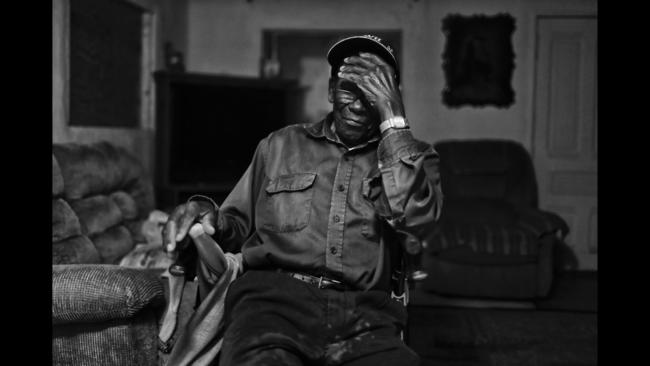
Up and down rural Madera roads almond trees were going in, wells were going dry and farmers were putting debt-heavy bets on a crop that requires twice as much water as thirsty cotton. This is California's almond rush, told through the stories of a 91-year-old black farmer who's owned his piece of land for 67 years, and an Indian immigrant who's trying to fulfill a dream. (Michael Robinson Chávez)
When a man of 91 is downright cantankerous and has been on his land longer than most everyone else has been alive, he wastes no time speaking his mind.
So after his new neighbor started sinking a well to plant a water-sucking almond orchard in the middle of the worst drought he’d ever seen, James Turner hurried over.
“How deep you going to dig your well?”
Five hundred feet, Davinder Singh told him.
“My well is 300 feet. Why, you’re going to take my water!”
Singh, a man of gentle humor, gave no answer on that warm day last winter. Yet he took an instant liking to the fierce old man.
Turner reminded him of his 85-year-old father back in India — he’d been a police officer who stubbornly refused every bribe, guaranteeing his family grew up in poverty in a region known for corrupt authorities.
Now Singh was chasing prosperity in California’s almond rush.
Up and down these rural Madera roads with fractional names — Avenue 19, Avenue 19½, Avenue 20 — nut trees were going in, wells were going dry and farmers were putting debt-heavy bets on a crop that requires twice as much water as thirsty cotton.
They’re doing it not just in spite of the drought, but because of it: Almonds may be California’s last crop valuable enough to make a profit if the drought doesn’t end.
Turner thought the folks buying up swaths of land for orchards — some of them investment fund managers who had never farmed a day in their lives — were missing the bigger picture.
“You pump all the water out, the land collapses, see? All those pockets where the water is supposed to go, they won’t be there when it does rain,” he said.
“I’ve seen so much stupid in my years that I can’t remember all of it. But pumping the earth dry? We’re killing ourselves, plain and simple.”
All through the summer, Turner’s daughter Lorna — he still called her “Lil Bit,” like he had since the day she was born — couldn’t sleep.
“I’d hear that pump roaring over at Dave’s all night every night,” she said.
Driving to her job as an accountant at a women’s prison in Chowchilla or over to Fairmead to visit her Aunt Zel, she’d gape at a land so quickly transformed.
“Growing up, there was nothing but grapevines, cotton fields, a few animals grazing and then, overnight, nothing but nut trees,” she said.
Zelma Baker, 91, had come to California during the great Dust Bowl migration of the 1930s.
“I don’t know nothing about anything called the Dust Bowl,” said Baker, Lorna’s maternal aunt. “But I do know we left Okemah, Okla., on April 7, 1936, and we arrived in California on Oct. 20.”
Turner’s family, sharecroppers, had come from Oklahoma 10 years earlier. He was only 3, but he still has an accent thick as butter on corn bread, like many of those raised in the Central Valley.
He bought the farm the year he married and paid off the land in seven years — he didn’t believe in owing money. Growing cotton and alfalfa on the 20 acres didn’t feed five children, so he worked construction and grew grapes and fruit trees.
In late April, Turner’s well went dry. Across the street, his neighbor, a beekeeper, also ran out of water.
“He told me, ‘James, we’re looking at a reverse Dust Bowl.’”
Turner had water trucked in. Lorna washed the dishes as quickly as possible and made her 15-year-old son, Travon, keep his showers to four minutes.
Turner’s daughter and grandson had moved in after his wife, Ernestine, died in 2008.
“We’d been married 60 years when she died,” he said. “We never split. Not once. She was a good woman. She helped me a lot.”
On the day he spoke of Ernestine, he was hauling wood in a cart hooked to his 1955 tractor and listening to a news station on a transistor radio of apparently similar vintage. The topic turned to unrest over an unarmed black teenager killed by a police officer in Ferguson, Mo. Turner — a black man — turned off the radio.
Rage was one of the things Ernestine had helped him with. He was a soldier about to ship off to the Pacific Theater during World War II when the train stopped in Texas and he got off to get a hamburger.
“I was clean, pressed — I believed in having my clothes nice,” he said. “I had a bruise on my shoulder from sharpshooter practice. I could feel the spot. A man in a dirty shirt looked at me and said, ‘You want anything to eat, then you go over there and get it,’ and he pointed to a corner that said ‘Negroes.’ There I was in Uncle Sam’s uniform maybe going to die for him and this man wouldn’t sell me a hamburger.”
Turner said if he’d had his rifle, he would have shot the man dead. He kept thinking about that until he told Ernestine.
“She wasn’t one to let people walk over her, but she could make a man look forward instead of back,” he said. “I miss her.”
Abruptly, he changed his attention to a fluffy dog darting around.
“I don’t like dogs, never have,” he said.
“Lil Bit and T., they sneak this one in the house at night. They think I don’t know. I’m old, see? So they think I’m stupid. But I know.”
Turner couldn’t remember a hotter year. It ended up being the hottest on record in California.
The grapevines growing at the edge of his property had leaves that were dark and curled, but the stress somehow made the Thompson grapes taste better. He told Singh to help himself to the fruit, and he did.
Singh’s wife, Balwinder, offered Turner cups of fragrant, sweet chai, which he always refused. He thought it was strange they drank hot tea in the summer.
He paid almost $400 to have water trucked in every few weeks. He had the delivery man fill a 2,500-gallon tank and sprinkle a bit on the garden.
Turner loved his rosebushes best.
In 1979, when he was recovering from a heart attack, Ernestine brought him a single-stemmed red rose from the grocery store.
“I’m laying in the hospital bed and I looked at that rose and I said, ‘Boy, that rose is pretty.’ That made me love my wife even more. I said to myself, ‘If I get out of this hospital I’m going to plant me a garden of roses.’”
In July, his rosebushes were dry and had few blooms, but they were alive.
In the almond groves, harvest was starting when the nuts should have been just cracking open. The clouds of pink and white blooms had arrived at the beginning of February, earlier than anyone could recall. Farmers ran pumps throughout the ominously warm spring as well as the summer.
You could say almonds, heralded as an anti-aging super nut (technically a seed), are a doomsday food: If aquifers in the world’s farming regions continue to go down and food supplies falter, they’re a source of protein that requires fewer resources than meat or dairy.
Prices were already around $4 a pound — or about $120,000 an acre even with low yield.
“Everything is going up, up, up — except the water table,” Singh said. At the end of July, when the heat hung still and heavy, Turner decided to stop watering.
There was no guarantee the fall rains would come. His well driller had a waiting list so long that he didn’t expect to get to the wells that had run out in April until December.
Turner went to a family reunion in New Orleans, and when he was gone, Singh looked across and saw the shriveling vines, the brown shrubs.
“What’s going on over there?” he asked his workers. They said the family was gone for a few weeks and their well was dry.
Singh halted work on the orchard and hooked up a hose to his domestic well. He dragged it over and watered Turner’s plants.
When Turner returned, Singh told him he should have let him know he was out of water. They were neighbors. He would fill his tank for him every few weeks.
The gesture hasn’t saved Singh from Turner’s occasional scoldings.
In October, Singh invited Turner on a trip to Home Depot. Turner found out it was in part to use his military discount on $3,000 worth of farm equipment.
“Why, you had me out after dark. I don’t stay out after dark. I have a cold now,” Turner told him sternly through a closed screen door the next time his neighbor visited. Singh looked down at his feet, hiding a smile during the chiding.
They don’t know a lot about each other.
Singh doesn’t know that Turner’s children talked him into a reverse mortgage so he and Ernestine could travel in their senior years. Instead, the money went to Ernestine’s hospital bills and, now, a well.
Turner doesn’t know that Singh drove a truck for someone else, then bought his own truck, then a fleet, saving for years to fulfill a dream of raising his family on a large farm, the way his wife had grown up in India.
But as to why Singh gives water to Turner, and how Turner feels about the neighbor delivering water, they give the same answer: “He’s a good man.”
It smelled like it was about to rain — a sweet, earthy musk rising from the ground, a fresh breeze beginning to stir.
Singh and his workers and family sat outside drinking chai and looking at the orchard on a December day. In less than a year, the trees had gone from slender, foottall sticks to taller than a person.
Turner watched from his dining room window.
“Them trees sure look pretty. Green, topped off nice and straight,” he said. “And hot tea makes sense today.”
One or two storms wouldn’t make a dent in the drought. By most measures, there would have to be a good soaking every three days for the next six months to fill California’s reservoirs. Snow would have to pile up on the Sierra mountains, shining white well into spring, before a vast system of aqueducts and canals would deliver promised water.
California had recently passed the first legislation to manage its groundwater, but Turner said he wasn’t putting much store by that. It didn’t kick in until 2040.
He hadn’t felt right about using the water Singh gave him for anything but household necessities. One orange tree in the garden had survived, but was struggling. He missed the way it usually looked this time of year. Covered with bright orange balls, shining like Christmas lights.
He was pretty sure his favorite rosebush — the one out by the mailbox, that grew big red roses just like the one Ernestine gave him — was dead.
But he’d noticed a speck of green down at the bottom. January was the best month to cut back roses. He’d read that once in a newspaper gardening column. Come the new year he was going to cut it all the way down. Maybe it could still come back.
Drought has given one woman a new mission in life
By Diana Marcum
Reporting from East Porterville, Calif.
The grandmother sat outside in her Sunday best next to a house with peeling paint, her canned iced tea resting on top of a washing machine that didn’t work. She’d been without running water for four months.
Up an easy-to-miss dirt road, a 70-year-old woman moved 5-gallon jugs of water into her single-wide trailer. It was hard because she was weak from chemotherapy. Her water had stopped coming out of the tap three months ago.
At the elementary school, a kitchen worker talked about all the children who were coming to school dirty.
This scattered Tulare County community may be the hardest-hit place in California’s punishing drought. Of its 7,300 people, almost 1,000 have no running water.
But few knew that until Donna Johnson, 72, started counting.
During a week when the temperature reached 106, Johnson drove her purple PT Cruiser past “Beware of dog” signs and up side roads that looked long-deserted. She found mobile homes hidden behind other buildings. She said to her newfound neighbors, “Hi. Do you have water?”
Again and again, the answer was no.
***
When Johnson’s well ran dry in June, she and her husband, Howard, had no idea they were part of something bigger.
“I’d heard ‘California drought!’ on the news,” she said. “But I guess I was just oblivious to how bad it had gotten.”
At the local gas station where everyone stops for a cold soda, Johnson tuned in to the conversations.
“It was all, ‘So-and-so’s well ran dry,’ ” she said.
No public agency was keeping track. Until this week, California was the only Western state that didn’t regulate groundwater, including an estimated 600,000 private, domestic wells mostly in more rural regions such as the Central Valley. Groundwater levels here have plunged by 60 feet or more in some spots, and tens of thousands of wells are in danger.
In July, Johnson decided to put together a list of people out of water in East Porterville. She figured that while she was at it, she should bring them water.
The Porterville Recorder ran an article that gave her phone number and address and said she was collecting bottled water for drought victims. The next day there were pallets of plastic bottles under her tarp carport.
Johnson deputized Matt Rogers, a 19-year-old former neighbor, as her righthand man to make the deliveries. The calls from people needing water came as quickly as the donated bottles.
“Families would call at midnight and say, ‘We’re completely out of water,’ and we’d go take them some,” Rogers said. “I’d tell them it was a lot of work for a 72-year-old woman, but Donna got mad and told me to stop telling people her age.”
Still, the growing numbers and nonstop deliveries were taking a toll.
“I’d come home at night and cry,” Johnson said. “I thought ‘What are these people supposed to do?’ They could be dying for lack of water and just get brushed under the carpet.”
***
For months, scores of people had called the county, the next-door city of Porterville and the local water district to report dry wells. The answer was always the same: This agency isn’t responsible for wells on private property.
But officials hadn’t realized how many people were desperate.
Last month, volunteers, firefighters and county workers delivered a three-week emergency supply of drinking water to 300 homes.
In front of an East Porterville fire station, a storage tank was filled with water from a city hydrant that residents could use for bathing and flushing toilets. Signs warned in English and Spanish: “Do not use this water for drinking.”
Nonprofit agencies began coordinating donations, grants and deliveries. Johnson was no longer a solo force. But she didn’t stop her daily water runs.
“They’re working their bejesus off at County Emergency Services,” Johnson said. “But you’ve got to understand a place like East Porterville. Not everyone is going to fill out paperwork, and some people are hard to find.”
On a day when the heat was pressing down like a waffle iron, Johnson and Rogers loaded up shrink-wrapped cases of bottled water.
Johnson pulled her lace-trimmed cowboy hat low. Her sunglasses had zebra stripes and rhinestones. She had elephants on her shirt and an elephant hanging from her rear-view mirror.
“Elephants this week. Next week it might be angels or horses,” she said.
She used to be fickle about men too, until she married Howard, a physical therapist who prefers to stay in the background. They share a love of horses and 20 years ago bought a place with a corral in East Porterville, outside city limits.
“Did you guys even know that they say if you live on the east side, you’re nothing?” Rogers asked her.
“Nobody’s nothing,” Johnson answered.
***
On a lawn as pale and scratchy as a hay bale, 9-year-old Destiny Carrillo attempted a cartwheel while her grandfather, Raul Carrillo, a house painter, watched.
“Hi, do you have water?” Johnson asked, pulling into their driveway.
“A little,” he said. “But if two people take a shower, it’s done.”
Eight people lived in the tidy home. Destiny’s mother, Veronica Carrillo, stepped out on a porch decorated with a small pot of geraniums.
“Thank you for the water. We didn’t know where to go. We’re grateful,” she said, smoothing her daughter’s hair.
On the next block, Manuel Dominguez, 84, didn’t answer his door right away.
“Is he OK? He’s old. He’s always at home,” Johnson said, adding another “Yoohoo!”
Dominguez came around the corner from the backyard, where he had been working on the pump of his well.
“He still doesn’t want to believe that the ground is out of water,” said his girlfriend, Gloria Acosta, 65, coming up the driveway with a stack of bottled water.
She used to bring 3 gallons of drinking water a day from her home in Porterville, but her landlord found out and put a stop to it. He was afraid it would run up his water bill. Now she has bought three cases of 24 bottles of water on sale for $7.98.
“Plus $2.38 CRV,” she said. You keep track of stuff like that when you live on Social Security and baby-sitting money. Johnson added another 24-pack of water.
Dominguez’s daughter Angie Nunagray came through the door with a 5-gallon jug of water for washing dishes. She cleans her father’s house every day, being sure not to disturb his stacks of books, the loaded rifles propped in the corner or his collection of scissors covering one wall — because a man can never have too many scissors.
“I vacuum and dust, but you can’t get it really clean without water,” she said.
Dominguez pulled out a splintered guitar and sang Mexican waltzes. Acosta rolled her eyes.
“She thinks I’m loco, but she loves me,” he said.
***
Down a dirt road, a schoolgirl carrying a flute case unchained a dog and they went for a walk, kicking up dust. A man washed his hands in a bucket of water. Places lucky enough to have a small pool of underground water had green lawns.
Marcella Ramirez, 70, had heard Johnson’s car coming and was waiting with an ancient dolly outside her trailer. Wire flowers sprouted from the top of a chain-link fence. An American flag windsock drifted from a sagging carport. A miniature wishing well — it was dry — sat on bare dirt.
“Matt can carry it in,” Johnson told her.
Ramirez agreed, but emphasized that she was strong enough to wheel the water in herself if she had to. She said she was a lucky woman. The last year was tough — her brother died, she fought cancer and the well ran dry in June. But she feels healthy now, her hair grew back, and look at her nice SUV.
“I didn’t go to school or nothing and I got a car and a driver’s license,” she said. “I made a good deal and I can’t even read or write.”
Johnson’s eyebrows lifted.
“Marcella, do you have those forms from the county for water deliveries? Do you need help filling them out?”
On the hood of Ramirez’s car they puzzled over which boxes to check.
“Are you multiethnicity?” Johnson asked.
“Multi what?” Ramirez said. “I don’t know what that means.”
Back on the road, Johnson talked about the last time she’d seen rain.
“It was months ago. I was where I used to have lavender and so many flowers. I watched it dry up before it hit the ground.”
On the main road through town, a mother gave her 6-year-old daughter a bath — in her clothes, in a blue plastic drum of nonpotable water. The girl giggled and ducked her head underwater to get out the shampoo.
Nearby, a tree swing swayed in a stir of hot air. Stairs led to the place where a trailer had once been, until a well ran dry and another family moved away to search for water.
To the Judges:
As the disaster of California’s drought story unfolded, journalists set out to find the story. News writers captured cities’ efforts at rationing. Science writers explained shifting weather patterns. Business writers added up the monetary losses.
Los Angeles Times staff writer Diana Marcum took a drive.
Marcum wandered down rural roads with numbers for names — Avenue 19, Avenue 19 ½, Avenue 20 — to meet the families of California’s Central Valley. In towns such as Huron, Stratford and Terra Bella — mostly a blur from the interstate — livelihoods were evaporating, being reduced to dust.
But, as Marcum writes, these are places “where trouble hits first and money doesn’t last.”
She brought this epic event to life in a series of remarkable portraits, both subtle and stunning, that are a modern retelling of the stories we often associate with the chroniclers of California’s past. John Steinbeck and Dorothea Lange are in good company.
Here, under cloudless skies, town wells have cracked. Pipes spit mud and yellow water. Taps go dry. People joke that they grow dirt.
“We’re looking at a reverse Dust Bowl,” one neighbor tells another.
Marcum paints pictures of a never-easy life made worse, capturing workers in the fields, in their homes and on Main Street. Pistachio grower Fred Lujan lovingly gives names to his trees — his babies — and then finds his life upended when the local irrigation district seals off his water meter. Fieldworker Francisco Galvez prepares his wife and children for the move to Texas where there’ll be more work. Grocery store owner Mahmod Alrihimi measures his town’s decline by the number of IOUs he’s collecting.
Her stories prove that the best feature writing values the most ordinary moments for their points of revelation, and her work is evidence of the rewards of slow and patient reporting. In her hands, the story of the drought is as dramatic as the ground sinking over a depleted water table. It is as poignant as the death of a beloved rose.
When Fred Lujan starts to cry, Marcum hears his wife confide, “He’s not normally like this. This isn’t him.” When summer temperatures hit 106, she joins Donna Johnson delivering water bottles to nearly 1,000 residents who struggle to pay for water with Social Security checks and baby-sitting money.
For a lyrical, searing portrait of these Californians and their tenacity, The Times would like to nominate Diana Marcum for a Pulitzer Prize in Feature Writing.
Sincerely,
Davan Maharaj
Biography

Diana Marcum covers the Central Valley and the Sierra for the Los Angeles Times. She focuses on personal, narrative tales that play out against the broader sweeps of poverty, immigration and, most recently, drought. Marcum has been writing her stories of rugged, distinctive landscapes and voices for the Los Angeles Times since 2010 and became a staff writer in 2011.