The Birmingham (AL) News, by Brett Blackledge
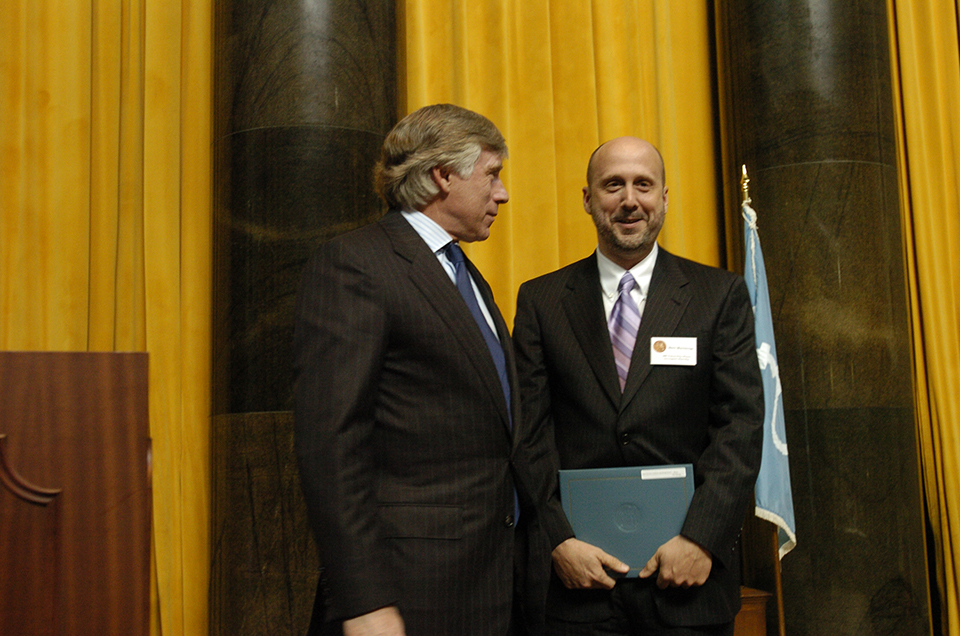
Columbia University President Lee C. Bollinger (left) presents Brett Blackledge with the 2007 Pulitzer Prize in Investigative Reporting.
Winning Work
By Brett J. Blackledge
News Staff Writer
W.L. Langston, the former Alabama Fire College chief who resigned last month, helped set up tens of thousands of dollars in contracts and scholarships for his children and those of administrators who run the state's two-year college system, records show.
Fire college records show Langston's influence reached far beyond the small training academy in Tuscaloosa for firefighters and paramedics. Among the actions Langston took as head of the fire training school:
AT A GLANCE
- He gave a $200,000 emergency medical services training contract in 2003 to Gadsden State Community College. About the same time, Gadsden State gave Langston's son a $42,000 consulting contract, one that records showwas drafted by Langston's staff.
- As head of a private foundation created for the fire college, he gave a $15,000 scholarship in 2004 to the daughter of Debra Dahl, the Alabama two-year college system's top finance official. Dahl, whose daughter attended the University of Alabama at Birmingham, had authorized sending $300,000 in state money a year earlier to Langston's foundation, which later built him a new home, records show.
- He set up a fire college job for the granddaughter of a member of a state board that supervised him, records show. The arrangement was made just before federal investigators raided the fire college, and abruptly ended soon after the raid, records show.
Langston also set up a $36,000-a-year job for his daughter to work at Shelton State Community College just before the federal raid in 2004, records show. Contract records from the fire college, which shares its campus with Shelton, show Langston's staff wrote the contract for his daughter's job. Shelton State President Rick Rogers said he discussed the job with Langston, but Langston's daughter was never hired.
Langston's actions offer more insight into how the fire college was managed and how he spent some of the millions in state funds the college received each year. Most of the college's $6 million budget comes from the state's education fund.
The financial records show Langston often helped the friends and relatives of fire college officials and some of the most influential leaders of the state's two-year college system, including Alabama College System Chancellor Roy Johnson.
Langston gave Johnson's two adult children jobs at the fire college. He hired Johnson's daughter on a $21,424-a-year contract to work from her Ope-lika home, more than 175 miles from the Tuscaloosa campus. The job, which she still holds, also provides her benefits from the teachers retirement system and the state's health insurance program, records show.
Johnson's son worked for more than a year at the fire college, but transferred to Lawson State Community College after federal investigators raided the fire college in 2004.
Federal investigators seized dozens of boxes of records from the fire college and foundation as part of a review of activity at the campus.
Johnson has defended the jobs his children received from Langston as arrangements made before he became chancellor, based on his children's work experience and ability. He said last week he learned recently about the scholarship Dahl's daughter received. Johnson said Dahl, who was his top finance director, told him about the scholarship a few days ago. Dahl declined to be interviewed by The Birmingham News about the payment from Langston's foundation.
"I did not ask her further questions because I'd like an opportunity to review the records," Johnson said.
Others who served on the private foundation with Langston said he did not provide details about scholarship recipients, only the number of scholarships awarded and the total amount for all scholarships. Rogers, who served on the private foundation board, said he never saw names of scholarship recipients and did not know if recipients studied firefighting or EMS skills.
Johnson has said he was not aware of the fire college's activi-ties before problems at the campus surfaced in recent months. Some commissioners tried to remove Langston from his job after they became concerned about actions he had taken.
Johnson said he helped broker a deal to have Langston re-tire with a $190,000 buyout agreement and then move to a job under Johnson in the two-year system.
Johnson took over management of the college after Langston's forced departure, putting his own interim director in place and removing the appointee named by the state board that oversees the college.
Didn't know
Some members of the Alabama Fire College and Personnel Standards Commission have said Langston did not tell them about many contracts and other arrangements he made as director. They also did not know about a home that Langston's foundation built for him in Millbrook for nearly $350,000.
After federal investigators took records from the fire college, Langston did not move into the house and the foundation sold it for less than it cost.
Commissioners have said they have not been provided records they've sought from the private nonprofit that he led, the Alabama Fire College Foundation.
Some commissioners, including those appointed in recent years by Gov. Bob Riley, have said they are concerned about Johnson's move to take over the college. They have asked Riley and Attorney General Troy King to help resolve differences with Johnson over who should run the college.
Some commissioners said they were not aware of jobs and other financial arrangements that Langston provided to Johnson's children and others.
Job arrangements
Records show that Langston planned to give a part-time job in 2004 to Kristin Peoples, the granddaughter of Commissioner Emory Peoples, who was appointed to the commission in 1979 and is the longest-serving board member. Langston listed her in the fire college payroll briefly before she started work at Shelton State, records show.
Commissioner Peoples declined last week to discuss his granddaughter's job arrangements with Langston. Efforts to reach Kristin Peoples for comment failed.
Fire college budget records show that Langston listed Kristin Peoples in the fire college pay-roll for the fiscal year that began in September 2004. The records show a $244.38 payment for her in the fire college planning budget before she left to work at Shelton, which was at about the same time as the federal raid.
Rogers said last week he was not aware of her employment, but he confirmed through his business office that she still works part time at Shelton.
Fire college records also show that Langston's staff drafted a consulting contract between his son and Gadsden State in August 2003. Teresa Stone, who works in the fire college's finance office, drew up the contract on Aug. 27, 2003, records show.
Langston's son, W.L. Langston Jr., received $42,000 from Gadsden, paid in monthly checks of $3,500 each starting in October 2003 and ending in September 2004, Gadsden finance records show. His contract said the payments were for "consultant services to the president" of Gadsden.
About eight months later, Langston signed a $200,000 contract with Gadsden to provide "EMS educational related activities," records show. The fire college paid Gadsden $200,000 on June 15, 2004, finance records show.
Efforts to reach Gadsden State President Renee Culverhouse for comment last week failed.
Jim Prucnal, Gadsden's dean of financial services, said he was not familiar with the contracts with Langston's son or the fire college. He said Gadsden has had an EMS training program for more than 15 years, although he was not aware of funding agreements with the fire college. It would not be unusual, however, for Gadsden to have such agreements with other campuses, he said.
Efforts to reach Langston and his son for comment also failed.
John Blue, the Gadsden State administrator appointed by Johnson as the fire college's interim director, referred questions to the chancellor's office last week.
Johnson said he was not aware of the contracts with Langston's son or Gadsden State, but he said they would be reviewed as part of a broader internal assessment of fire college matters.
Langston's staff also drafted a contract for his daughter in July 2004 to work as a part-time coordinator at Shelton State, records show. The contract called for Lynn Abrell, Langston's daughter, to receive $36,000 a year, records show.
Several weeks later after the contract was drafted, federal investigators began collecting information from fire college and Shelton State officials. FBI agents raided the fire college in September 2004.
Rogers said he discussed the job with Langston for his daughter, but she was never hired.
© 2006 The Birmingham News
By Brett J. Blackledge
News Staff Writer
A Tuscaloosa lawmaker sent some of his legislative discretionary money to the Alabama Fire College Foundation, which later gave scholarships to his daughter.
State Rep. Bryant Melton Jr., D-Tuscaloosa, sent $85,000 of his discretionary money to the private foundation from 2000 to 2003, state finance records show.
Melton on Friday said his daughter received $60,000 to $65,000 in scholarships from the foundation at about the same time. "Yes, she was in medical school at the time," he said.
Melton works as associate dean for human resources at Shelton State Community College, earning more than $76,000 in annual salary. Shelton State is the home site of the Fire College.
Hours after he discussed the scholarships and legislative grants in a brief telephone interview with The Birmingham News, Alabama College System Chancellor Roy Johnson placed him on administrative leave with pay and directed that the matter be sent for review by the Alabama Ethics Commission.
"Our action today is the result of uncovering new information that we believe raises serious questions about possible violations of ethics standards or inappropriate use of public funds," Johnson said in a prepared statement. "Any person in the employ of the Alabama College System found to violate these standards or the public trust will be dealt with swiftly and firmly."
During his interview Friday, Melton did not discuss the details of the scholarships to his daughter or his legislative grants to the foundation, saying he wanted to collect documentation for them. "I need to verify the amounts."
When asked how he learned of the prospect of obtaining foundation scholarships for his daughter, Emily, Melton said, "I recognized there was an opportunity for us to get some funding for her schooling."
Efforts to reach Melton later Friday for more information failed. Efforts to reach Emily Melton for comment Friday also failed.
Johnson learned of the scholarships to Melton's daughter Friday, said Amanda Vaughan, Johnson's spokeswoman. Melton contacted Shelton State President Rick Rogers, and Rogers then contacted Johnson, Vaughan said.
Ethics Commission
Johnson sent Rogers a letter Friday afternoon, saying he was concerned that Melton's actions could amount to receiving personal benefit from his office, which could violate state law. Johnson told Rogers to send the matter to the Ethics Commission.
Friday's developments are the latest in a series of controversies regarding the Alabama Fire College and the private foundation. The foundation was run by W.L. Langston, who was forced to retire earlier this year as director of the Alabama Fire College.
Langston gave jobs at the fire college to Johnson's children and he gave a foundation scholarship to the daughter of Debra Dahl, the two-year college system's vice chancellor for fiscal and administrative services. Dahl's daughter attended the University of Alabama at Birmingham.
Dahl signed a payment request in 2003 to send $300,000 to Langston's foundation, which later built him a new home. The payment was made in error, Johnson has said, and 16 months later, the money was transferred from the foundation to the fire college.
Langston also helped arrange jobs for his children in the twoyear system and helped the children of other officials.
Melton said his daughter attended medical school at UAB and is now in Wisconsin completing her residency in obstetrics and gynecology. Grants in '00, '02, '03
Melton sent three legislative grants to the fire college foundation, finance records show. Each lawmaker is given money that can be sent to schools and groups in their district.
Melton sent $15,000 to the foundation in November 2000 "to purchase computer software for Alabama Fire College students," according to his grant documentation. The grant request said it would "provide service for over 300 students."
Melton sent $40,000 in January 2002 "to provide scholarships for volunteer firefighters and to purchase additional software for the Alabama Fire College," an effort that would "benefit 450 students," according to his grant records.
He sent $30,000 in April 2003 "to provide scholarships for students in the West Alabama service area." His grant request said the money would benefit 2,000 students.
Melton said his daughter began receiving her scholarships from the foundation in late 2000 or early 2001 and she received her last payment in 2003. He said he couldn't recall the total she received, but it was between $60,000 and $65,000.
He declined to discuss the legislative grants or the scholarships further without collecting more documentation.
Melton was elected to the House in 1982 and serves on the Government Finance and Appropriations Committee.
© 2006 The Birmingham News
By Brett J. Blackledge
News Staff Writer
"It's become a family business and it's been quite lucrative," board member Stephanie Bell said. "I think it sends a very bad message. It's a poor example."
Alabama community college system Chancellor Roy Johnson and his immediate family received more than $560,000 for jobs and contracts they held last year with the state's twoyear colleges, records show.
Johnson in recent weeks has discussed jobs his son and daughter held at the Alabama Fire College in Tuscaloosa. Last week, his son-in-law canceled three contracts totaling $6,000 a month with community colleges after those agreements were reported by The Birmingham News.
In addition, Johnson's wife and daughter-in-law also work in the system, finance records show. Linda Johnson, Johnson's wife and executive assistant to the Southern Union Community College president in Opelika, received more than $90,000 in salary last year.
Luann Johnson, who owns a home with her husband in Helena, received more than $47,000 as a recruiter for the Opelika college, according to payroll records.
Roy Johnson, who earns more than $237,000 a year as chancellor, said there is nothing unusual or improper about his family's work in the system. "We are a family of educators," Johnson said.
But one state Board of Education member said she is concerned about the connections Johnson's relatives have to the system. "It's become a family business and it's been quite lucrative," board member Stephanie Bell said. "I think it sends a very bad message. It's a poor example."
Board members received a complaint in 1996 about Johnson's daughter-in-law, claiming she was paid by the Opelika campus but did not work, Bell said.
"I was concerned then about this and I'm concerned now," Bell said. "I was told at the time that it would be investigated, but I never heard anything further."
First, the fire college
The issue of jobs for Johnson's family surfaced after questions were raised about problems at the firefighter training school in Tuscaloosa. The former executive director, W.L. Langston, had hired Johnson's daughter, Malinda Morgan, and his son, Steve Johnson.
Malinda Morgan still works for the fire college, drawing more than $21,000 a year and receiving state health and retirement benefits. Morgan also works in her husband's Opelika law office.
State records show she also receives money from another two-year college program. Morgan has a $4,000-a-month contract with Southern Union and the Central Alabama Skills Training Consortium.
The contract calls for her to work in a program aimed at targeting non-custodial parents in the Lee County area, assisting in court visits, counseling coordination, job placement and other services.
Southern Union President Joanne Jordan on Friday said she does not supervise Malinda Morgan in the program. Jordan referred questions to Claude McCartney, the training consortium's director. Efforts to reach McCartney failed.
Morgan has helped bring non-custodial parents into the program for services, said Amanda Vaughan, a spokeswoman for the two-year college system. "It's been very, very successful," she said. Efforts to reach Malinda Morgan last week failed.
Ends contracts
Malinda Morgan's husband, Greg Morgan, canceled his contracts with three colleges Friday. He had earned $24,000 a year from each - for a total of $72,000 a year - to be available as needed to college presidents who have legal questions.
Steve Johnson, the chancellor's son, left the fire college in 2004 to work at Lawson State Community College in Birmingham, earning more than $49,000 a year to oversee capital projects at the campus. He and his wife, Luann, list their residence in Helena.
Luann Johnson receives a salary from the Opelika campus for recruiting, which includes working with students in Jefferson and Shelby counties to consider attending Southern Union.
Lawson and Jefferson State Community College serve students in Jefferson and Shelby counties. But Roy Johnson, who was Southern Union's president before becoming chancellor in 2002, said it's not unusual for Southern Union to attract students from across the state. Efforts to reach Luann Johnson Friday failed.
Board's interest
Bell said she and other state board members received a complaint in 1996 claiming that Luann Johnson "has been paid for the last two years while not actually working." The complaint noted that she was enrolled full-time at the University of Montevallo while on the Opelika campus payroll.
Bell said that, at the very least, board members should consider whether this type of employment - paying employees who live so far away - is the best use of system resources. "We have to deliver what we say we're going to deliver in a cost-effective way," she said.
Johnson said he hired Luann as a recruiter before she married his son. She worked initially at Opelika State Vocational Technical College before it merged with Southern Union in the early 1990s, Johnson said. She stayed on as a recruiter even after she and her husband moved out of the area, Johnson said.
Johnson said he was not aware of the 1996 complaint. He said no one, including thenChancellor Fred Gainous, talked to him about the claims.
Effect of merger
Johnson said he has never hired his relatives and has never given them special treatment. "The standard is, 'do you hire your own relatives and do you somehow give them preferential treatment.' The answer is no, I have not," he said.
Johnson said his wife worked under him as an administrator at Southern Union after the Opelika technical school merged with Southern Union. "I inherited her through the merger," he said.
He said his wife had established her own career at Southern Union before she fell under his supervision.
Bell said she is concerned that administrators at different campuses might be hesitant to discipline relatives of the chancellor. "He obviously has the authority over those presidents who would have hiring responsibility over people so close to him," Bell said.
Johnson said there is nothing improper about his relatives working in the system and they should not be denied jobs because of him. Spouses and children often work at the same education institutions, he said.
"It's not unique to our system," he said.
© 2006 The Birmingham News
By Brett J. Blackledge
News Staff Writer
Contractors who received work from two-year colleges helped former Postsecondary Chancellor Roy Johnson build a $1 million home in Opelika, according to records and interviews with contractors.
Johnson has not paid the Anniston architectural firm Jenkins Munroe Jenkins for its work, valued at $34,595, said Julian Jenkins. The company designed Johnson's house and monitored its construction in 2004 with the agreement that he would pay for the services when he sold it sometime in the future, Jenkins said.
"I don't see any impropriety whatsoever," Jenkins said. Tommy Tucker, an Opelika painter, said he painted Johnson's new house before he began doing work in 2004 for two-year colleges without having to offer competitive bids for the jobs.
Tucker said Johnson paid him for the work at his house, although he declined to say how much he received.
"Everything I did was legit," Tucker said.
Johnson, who was fired this month by state school board members, moved into the house of more than 5,000 square feet in 2004. The red-brick, four-bedroom, 4 1/2-bath house sits on more than an acre in north Opelika near Lake Sougahatchee in the Sanders Creek subdivision.
The house is valued at more than $1 million, property records show.
Efforts to reach Johnson last week for comment failed. Johnson came under fire from the state Board of Education after The Birmingham News reported that his relatives had received jobs and contracts in the two-year system. Board members unanimously voted to fire him, placing him on paid leave for eight months.
Johnson could receive more than $450,000 in salary and retirement payments by the time he leaves the two-year college payroll next year.
Southern Union's work
Jenkins Munroe Jenkins has handled much of the architectural and construction management work at Southern Union Community College, where Johnson was president before he became system chancellor in 2002, records show.
The company received more than $2.4 million in work from two-year colleges from October 2003 to September 2005, including $1.2 million from Southern Union, finance records show.
Jenkins said his company's work for the system had nothing to do with the work he did on Johnson's home. He said his company has worked at Southern Union and other two-year colleges for decades.
"We were working for that system long before Roy Johnson ever came along," he said.
Jenkins said he offered Johnson the agreement to defer payment on the services for his Opelika home just as he offers contractors and developers similar arrangements, allowing them to pay after they find a buyer for the house.
"We're pretty generous in our residential work," he said. Jenkins Munroe Jenkins works mostly on government and commercial projects, he said; residential jobs make up 30 percent to 40 percent of the company's business.
Jenkins said he could understand why some would view his arrangement with Johnson as improper.
"I guess you could interpret it that way. It would be an incorrect interpretation," he said.
Jenkins said he also reviewed construction plans for a Lake Martin house being built by Joanne Jordan, who was Southern Union president after Johnson became chancellor. Johnson promoted her recently to a vice chancellor's position in the Department of Postsecondary Education.
Jenkins said he did not charge Jordan for the work because he considered it insignificant.
"I looked at those plans with her and I gave her some advice," Jenkins said. "I did not consider it of value, worthy of reimbursement."
Efforts to reach Jordan for comment last week failed.
$25 an hour
Tucker said Johnson paid him personally for the painting work he did at Johnson's house. "He paid me out of his own checking account."
Tucker worked mostly on weekends and holidays at Central Alabama Community College and Southern Union after painting Johnson's house, records show. He received $26,325 from the colleges in payments from March 2005 through June this year, finance records show.
Tucker painted inside buildings on the colleges' Childersburg, Alexander City and Opelika campuses, records show.
Ben and Andy Jordan, brothers who are business managers at Southern Union and Central Alabama, respectively, said Tucker's contract work was not awarded with competitive bids because state law did not require it. Tucker worked for the maintenance departments of the colleges under a contract that paid him $25 an hour.
The brothers, sons of Joanne Jordan, said it's not unusual for colleges to hire some help on an hourly basis, including maintenance and repair crews. "As long as you don't go over $50,000, you don't have to bid it," Ben Jordan said.
Tucker submitted handwritten timesheets for payment, most of which were not signed by a campus official before payment, records show. The timesheets recorded more than 1,000 hours of work since March 2005, according to the records.
Tucker declined to discuss how he learned of work at the campuses. He said the maintenance departments gave him a list of work that needed to be done. He said he discussed his work at times with Susan Salatto, who was president of Central Alabama at the time, and Joanne Jordan, who was at Southern Union.
He said his work for the colleges had nothing to do with his work for Johnson.
"I've been knowing Dr. Johnson for years," he said. "That didn't have anything to do with Southern Union."
Efforts to reach Salatto for comment last week failed.
© 2006 The Birmingham News
By Brett J. Blackledge
News Staff Writer
MONTGOMERY - Some of Alabama's two-year colleges have spent millions of dollars on lobbyists and their firms since October 2003 despite a policy that prohibits the schools from hiring lobbyists, state records show.
Most of the lobbying firms hired by colleges are tied to former college administrators. One lobbyist was a close friend of fired Chancellor Roy Johnson and who started a consulting business after retiring from the system, records show.
Contracts and college finance records show that 15 campuses spent nearly $2 million from October 2003 through September 2005 on a total of 50 contracts to lobbyists and lobbying firms.
Although the contracts are with lobbying firms, some of the agreements state they are not for lobbying services. Most list their services broadly as consulting, research, grants development or strategic planning for that particular campus.
Andre Taylor, spokesman for the two-year system, declined to comment on the contracts, referring questions to the colleges that approved them.
State Board of Education member Stephanie Bell said she was concerned about the amount of money that was spent and that a select few firms seem to be used repeatedly.
"It has reached the point of being ridiculous," Bell said. "When you look at the amounts that are being paid, they are certainly out of line when you consider the Legislature is not in place full time."
Some colleges gave more than $410,000 in contracts to Jimmie Clements, a longtime friend of Johnson's, and to lobbying firms that hired Clements.
The colleges had contracts with Franklin Resource Group, a firm created by lobbyist Johnny Crawford. Franklin received nearly $340,000 in two-year college contracts from October 2003 through September 2005, finance records show.
Clements is listed with the state Ethics Commission as a lobbyist for Franklin Resource Group.
Several colleges had contracts with a company created by Clements. Clements' D.C. & Associates received $71,500 from October 2003 through September 2005, finance records show.
Mom-and-pop firm
Clements created the lobbying and consulting business with his wife, Dana Clements, who earns $81,496 a year as a top administrator at Southern Union Community College in Opelika.
Jimmie Clements met Johnson more than 30 years ago when Johnson worked for Clements, who was principal of Holt High School at the time. Clements led Johnson's political campaigns when he served in the Legislature from the Tuscaloosa area, and Clements and his wife followed Johnson to Opelika when Johnson went to work for the two-year system.
Clements and his wife worked with Johnson and his wife at Southern Union, where Johnson was president before becoming chancellor in 2002. Clements retired in 1996 to work full time as a consultant to two-year colleges.
He continued to receive payments from Southern Union, records show. Clements received nearly $50,000 in part-time salary and expense payments from Southern Union from October 2003 through September 2005, school finance records show.
Contract records show that immediately after Clements' contract through D.C. & Associates ended, some colleges signed contracts with Franklin Resource Group. At Snead State Community College in Boaz, former President Devin Stephenson canceled a contract with Clements' firm in January 2004 and weeks later signed a contract with Franklin, records show.
Johnson picked D.C. and Associates for a $2,000-a-month contract to review special-education programs at J.F. Ingram State Technical College at Deatsville, according to state records. A July 5, 2005, letter from Johnson to Ingram President J. Douglas Chambers directs Chambers to hire the firm to review the program to ensure its compliance with a consent decree.
Clements declined last week to comment, other than to say, "I have been told by my attorney if I receive any calls to have them contact him." Efforts to reach Clements' lawyer, Ron Wise of Montgomery, last week were unsuccessful.
Former Shelton State Community College President Thomas Umphrey, accused by state Rep. Bryant Melton of helping develop a plan for Melton to funnel state money for personal use through the Alabama Fire College Foundation, also received contracts from colleges and works with lobbying firms that received contracts, records show.
From October 2003 through September 2005, Umphrey received $67,000 in contracts with colleges for his firm, Thomas E. Umphrey & Associates. Umphrey also is listed in state Ethics Commission records with several lobbying firms that received more than $740,000 in contracts during the period, including Tom Coker & Associates, Southeast Consultants and Jackie Mitchell & Associates, records show.
Umphrey had a contract with Wallace State Community College in Hanceville for "working with the college for potential funding." Umphrey also had contracts with Ingram State for "resource development services."
Wallace State paid Thomas E. Umphrey & Associates $19,000 a year and Ingram paid the firm $24,000 a year, contract records show.
Umphrey's contract with Ingram indicates he was paid $2,000 a month to work with the college on potential funding sources, to be the president's representative at meetings and to work with the president on special projects. Umphrey submitted monthly reports that listed his activities, including attending legislative meetings and providing the president with an analysis of literature about funding sources.
Umphrey declined to comment when contacted last week, referring questions about his contracts to the schools.
Links to foundation
Clements and Umphrey have ties to the controversy at the Alabama Fire College Foundation, the nonprofit fund-raising group that is part of ongoing state and federal investigations. The two men, and some of the lobbying firms they work with, received contracts from ousted Fire College Director W.L. Langston, whose activities are under review by a federal grand jury, according to witnesses who have testified recently.
Melton, a Tuscaloosa Democrat and Shelton State Community College employee, has told investigators Umphrey suggested he send his legislative grant money through the Fire College foundation so Langston could give it back to him as scholarships for his daughter.
Melton has agreed to plead guilty to state and felony criminal charges after admitting he used the $68,000 in state money to pay personal debts, including gambling expenses. Melton also is cooperating with authorities.
It's not clear what services Umphrey and Clements, or the lobbying firms they represented, provided through their contracts with the colleges. In most cases, the consultants and the lobbying firms were not required to produce a written report or explanation of their services.
Coker's firm filed periodic billing-status reports with Langston, tracking legislation of interest to the Fire College. The report, typically a few pages, came with a form letter describing the material and a page with the bill listed and its status.
Ban imposed in '95
The state Board of Education has a policy that "expressly prohibits any institution under its authority, direction and control from paying with state funds for the services of a lobbyist on a contract or consulting basis."
State board members approved the no-lobbying policy in 1995 after a report requested by Bell showed that at least six campuses employed lobbyists or sent employees to Montgomery to lobby the Alabama Legislature.
Bell said she wants the board to revisit the issue and she believes the payments are evidence that campuses are violating that policy. "I think it's crucial to get to the bottom of it when they are in violation of a state policy," she said.
However, Leigh Hays, a spokeswoman for Shelton State, said the school is allowed to employ consultants to assist with governmental affairs and business relations.
Shelton State paid five lobbyists or lobbying firms during the two-year period, according to contract records. Hays said Coker's firm worked as an adviser to the college president on funding sources for special projects, and Southeast Consultants helped Shelton obtain grants from the Alabama Department of Economic and Community Affairs and other government agencies. Other firms kept the campus officials aware of federal initiatives and helped with strategy and program development, she said.
"Each of these consultants has been instrumental in helping Shelton State Community College raise needed funds and to secure contracts and grants at the federal, state and local level," Shelton President Rick Rogers said in a written statement.
"Most colleges and universities, at all levels, find that to be competitive in today's environment, consultants are valuable resources in identifying and obtaining additional funding opportunities," Rogers said.
Lobbyist Johnny Crawford confirmed he has contracts with three schools, but referred questions to school administrators, citing confidentiality.
Crawford's current contract with Snead State - like similar contracts at other colleges - expressly says his firm does not serve "in a lobbying capacity."
Snead pays Crawford's firm, Franklin Resources, $2,000 a month to "render advice relating to governmental policies and procedures, and to use its best efforts to keep Snead informed by new policies and events relating to the legislative and executive branches of state government," according to the contract.
Rep. Alvin Holmes, D-Montgomery, who has criticized state universities for hiring lobbyists, said taxpayer money should not be used to pay lobbyists.
"If they have done so, it is the worst form of throwing away state funds that I have ever seen," Holmes said.
© 2006 The Birmingham News
By Brett J. Blackledge
News Staff Writer
An Opelika contractor who worked on properties owned by fired two-year college Chancellor Roy Johnson and lobbyist Jimmie Clements said he was paid by Alabama Contract Sales, a company that has received more than $1.2 million in business from two-year colleges in recent years.
Phillip Lynn, an owner of House Dressings window treatments and designs, estimated that he completed as much as $20,000 worth of work on condominiums and homes owned by Johnson and Clements, a longtime friend of Johnson's. Lynn said he got the jobs over at least a 10-year period from Alabama Contract Sales of Opelika and was told by company officials to send the invoices for payment to the company.
"Roy never wrote a check to me for anything," Lynn said. Clements also did not pay him for his work, he said.
Alabama Contract Sales is owned by Pete and Tim Turnham. Pete Turnham, the former 40-year veteran and one-time dean of the Alabama Legislature, serves as president of the family business. His son, Tim, manages the business and serves as a corporate officer.
Pete Turnham's other son, Joe Turnham, left the company in 1999, but worked in the family business during some of the period that Lynn said he did the work for Johnson and Clements. Lynn said he recalled dealing with Tim Turnham on the jobs.
Alabama Contract Sales, which sells interior furnishings to schools, has received more than $1.2 million in business since 2004 from at least seven two-year colleges, including Southern Union State Community College, where Johnson once served as president, system financial records show.
Federal investigators recently subpoenaed records of Southern Union payments to Alabama Contract Sales, said Ben Jordan, the school's head of finance.
Joe Espy, a Montgomery lawyer representing Johnson, declined comment when contacted Friday. Efforts to contact Clements and his lawyer, Ron Wise of Montgomery, failed.
Efforts to reach Pete and Tim Turnham for comment also failed. Joe Turnham, now chairman of the Alabama Democratic Party, said in a written statement that he was not aware of any business relating to Johnson and Clements.
"I have not had a financial interest in that company since 1997," Joe Turnham said in the statement. "I am neither an officer nor director of that company. Further, I have not in the conduct of my own business, or in the conduct of anyone else's business, had any involvement with Roy Johnson or Jimmie Clements, nor have I done any work for the Department of Postsecondary Education."
Ongoing investigation
The Birmingham News, in a series of articles in recent months, has reported that other contractors hired by two-year colleges worked on Johnson's new Opelika home. Other articles have outlined payments to Johnson's relatives by companies hired by colleges and twoyear college jobs that his family received.
The News also has reported that Clements and his consulting company received more than $262,000 in contracts from two-year colleges in recent years; that he personally loaned Johnson $125,000 last year; and that he received regular expense and part-time salary payments from Southern Union until several months ago.
The state Board of Education fired Johnson in July, citing concerns about payments and jobs given to his family. An ongoing state and federal investigation also is looking into those payments and jobs, along with other two-year college issues, according to witnesses who have testified before a federal grand jury in Birmingham.
Lynn said the Turnhams' company sent him to Johnson's Gulf Shores condo and a Johnson condo in Gatlinburg, Tenn., to work on window treatments.
"That was probably 10 years ago when I did that," Lynn said.
He said he also worked on Johnson's new home, built last year in Opelika, estimating that he provided more than $10,000 worth of designs and window treatments for the $1 million home.
"I've done a lot at that house," Lynn said.
He said he was paid for all of the work on Johnson's properties by Alabama Contract Sales. The company also paid him for work he did at a Franklin, N.C., condominium that Clements owns, Lynn said.
It wasn't unusual for Tim Turnham to contact him to work as a subcontractor on a job for Alabama Contract Sales, Lynn said. He said he worked as a subcontractor for the company at jobs at Southern Union, Bevill State Community College's Hamilton campus, and at elementary and secondary schools across the state.
Lynn initially declined to discuss his work with Alabama Contract Sales when contacted by The News, but later agreed to be interviewed. The assignment of jobs at properties owned by Johnson and Clements didn't appear that unusual, Lynn said, until he started reading news accounts in recent months about other contractors hired on twoyear college contracts who also worked on Johnson's new Opelika home.
"I never even thought of them because they were normal transactions really," Lynn said of his work through Alabama Contract Sales. "And then all this stuff started coming out."
© 2006 The Birmingham News
By Brett J. Blackledge
News Staff Writer
"I met all the requirements they were looking for," Ross said. "Now the argument would have to be, what is more qualified?"
Alabama's two-year college system has paid more than three dozen state lawmakers or their relatives in recent years, including several legislators who received paychecks from two different colleges, system records show.
One quarter of the 140 members of the current Legislature, elected since 2002, has financial ties to the system, the records show. There are 28 legislators who were on community college payrolls; five whose wives were on payrolls; two legislators whose businesses received work; one whose brother was on the payroll; and one legislator whose business and wife were paid, records show.
Most of those jobs or contracts went to legislators after they were elected, records show.
The payments, made since 2002, ranged from $162,930 a year to Rep. Yvonne Kennedy as president of Bishop State Community College in Mobile to $2,340 paid to Rep. Charles O. Newton for history classes he taught in 2003 at Lurleen B. Wallace Community College in Andalusia.
Some of the Legislature's most powerful lawmakers received money. They include House Speaker Seth Hammett, who received $122,242 in 2002 before he retired that year as president of Lurleen B. Wallace, and House Speaker Pro Tem Demetrius Newton, who received $1,100 a month for legal services last year from Lawson State Community College in Birmingham.
In some cases, the wives of powerful legislators received pay, records show. Johna Lindsey, the wife of House Education Budget Committee Chairman Richard Lindsey, receives more than $25,000 a year as an employee of Gadsden State Community College; and Susan Barron, wife of Senate President Lowell Barron until their divorce last year, receives $54,506 a year from Northeast Alabama Community College in Rainsville, records show.
Need to earn living
Legislators defended the payments they received from the two-year college system, noting they need to earn a living. The lawmakers said they receive just over $30,000 a year in part-time salary and expenses from the Legislature.
"I'm just a small-town boy that works for a living," said Rep. Ralph Howard, D-Greensboro, who received a job at Shelton State Community College months after he won a special election in May 2005. "I'm not one of those people tied to any of those political machines or shenanigans."
Howard, who used to work for the Bibb County Board of Education, earns $45,423 a year as an adult education instructor with Shelton. He made about the same in Bibb County.
The payments to legislators and their relatives are the latest in a series of two-year college issues examined by The Birmingham News. Among other issues reported were system jobs and contracts given to relatives of administrators, including fired Chancellor Roy Johnson; payments and benefits given to Johnson and his relatives from businesses hired by the system; system jobs given to state Board Of Education members; and millions of dollars in lobbying contracts paid to former system administrators and firms they represent.
The News obtained the payment information concerning legislators from system payroll records, vendor payment records, contract records compiled for the state school board and financial disclosure forms filed by legislators.
When possible, the review included records dating back to 2002. The vendor payment information included expenses provided by 12 colleges from October 2003 through September 2005.
Separate paychecks
In three cases, legislators received pay from two colleges, records show.
House Majority Leader Ken Guin, a Carbon Hill Democrat who has a law practice, receives $49,677 annually from Shelton State Community College as a special population services coordinator and $48,721 annually from Bevill State Community College as an auxiliary services coordinator, records show.
Guin said his work for Shelton State in Tuscaloosa and Bevill State, based about 60 miles north in Sumiton, includes lobbying work in Washington, seminars on ethics and other issues for government leaders, and some fund raising.
"I provide a good service to the colleges," Guin said in a telephone interview from his law office. "I don't see it as a problem. I'm sitting here working."
Guin's work in the system came under scrutiny in 2000 when he received a separate contract from Bevill State to do $10,000 of legal work for the school. Guin, who had been on Bevill's payroll since 1999, withdrew the contract after being criticized for it, school records show.
Efforts to reach Shelton State President Rick Rogers and Bevill State President Harold Wade for comment last week failed. Shelton State spokeswoman Leigh Hays said Guin's salary was justified because "you have to remember, he's an attorney." Guin, however, said his school salary doesn't include legal work for the colleges.
"I would imagine the skills and expertise that he brings to the position would justify his salary," Hays said.
Colleges split pay
Rep. Todd Greeson, an Ider Republican who worked on the family farm when he was elected in 2002, is paid $22,260 annually by Northeast Alabama Community College as an industrial training coordinator and $22,260 annually by Athens State University as a recruiter, records show.
Greeson said his jobs with Northeast and Athens State, which is about 80 miles west in Athens, are possible because of an agreement the two schools have for his work. The two split his salary, and he splits his time on issues for both, working out of his office at Northeast.
"It was a job opening. I applied for it. I have the qualifications," said Greeson, who said he still does "a little farming" when possible.
Rep. Terry Spicer, an Elba Democrat, received $66,526 from Enterprise-Ozark Community College in Enterprise as executive assistant to the president in 2005 and $38,757 that same year from Lurleen B. Wallace as a dean, payroll records show.
Spicer said he was paid by two colleges in 2005 as he was leaving Lurleen B. Wallace to start a new job at Enterprise-Ozark. System payroll records show Spicer earned $42,698 in 2004 as a director of community services and continuing education at MacArthur State Technical College before its merger with Lurleen B. Wallace.
The next year, Spicer received more than $105,000 total from Lurleen B. Wallace and Enterprise-Ozark. Spicer said nearly $20,000 of that amount was for annual leave he earned while working 18 years at MacArthur and Lurleen B. Wallace.
"I had accumulated that much and they paid it to me," he said.
Spicer said he worked in the two-year college system before he was elected in 1998. "I put in more than a 40-hour week for the college," he said.
But most of the lawmakers working in the system received their jobs after their election. Sen. Quinton Ross, D-Montgomery, began working in the system a few months after his 2002 election. He earns $81,496 as director of adult education at Trenholm State Technical College in Montgomery.
The two-year system is facing an employment lawsuit from a former Trenholm employee who argues he was unfairly bypassed for the job so that Ross could be hired. Ross said the claim comes from a disgruntled employee who wants his job.
"I met all the requirements they were looking for," Ross said. "Now the argument would have to be, what is more qualified?"
Businesses got work
In several cases, legislators' businesses received work from two-year colleges. Rep. James Thomas, a Selma Democrat who is a high school principal, also is listed as an officer of Thomas Construction Co. The family's construction business received more than $31,000 in work from Trenholm in 2005, according to school payment records.
Thomas said he hasn't received payments from the company. "I'm not involved in the day-to-day business," he said. "Sometimes we have meetings and I'll sit in just to see what's going on with the business."
But Thomas reported receiving payments from the company in his latest financial disclosure form, filed earlier this year. Thomas checked the box for income of $1,000 to $10,000, noting it was a commission payment.
Gadsden State officials decided to stop doing business with a local insurance company after Rep. Craig Ford was elected, said Garry Tucker, a former employee in the school's business office. Tucker said the insurance business was given to Ford's company.
His company, Hodges Ford Insurance Agency, received more than $32,000 from Gadsden in 2005, school payment records show. Ford's wife, Gwen, receives $43,387 as an instructor at the school, payroll records show.
Ford said he wasn't aware of Tucker's claim, but he said his company offered the lowest bid on insurance for Gadsden.
"We have to follow the bid law. If we're not low bidder, we don't get it," Ford said. "I can promise you, $32,000 isn't enough to get in trouble over."
Retired from system
Sen. Bobby Denton, a Muscle Shoals Democrat known as the dean of the Senate, said he left a consulting job with Northwest-Shoals Community College earlier this year because of concerns he had about recent developments in the two-year system. Denton retired from his full-time job at Northwest-Shoals in 2004 as a development director after working in the system 19 years.
After retiring, he received part-time annual pay of $18,000. He also received a consulting contract from the school in 2005, earning an additional $1,500 a month until the contract expired earlier this year, payroll and contract records show.
Denton said he was asked to help newly appointed President Humphrey Lee make contacts in the community. "You probably won't believe me, but they had asked me to stay on. But I really wanted to retire," he said.
Denton said he's glad he left, now that he's seen the extent of problems surfacing in the system.
"I think now is a little different story than when I began working," Denton said. "I've been quite surprised at some of the things I've read. I hope that we can restore the system's image."
© 2006 The Birmingham News
By Brett J. Blackledge
News Staff Writer
Roy Johnson carved out more than $80 million from the education budget for his use after becoming chancellor of Alabama's two-year colleges in 2002, taking control of the money with approval from legislators who had financial ties to the system, records show.
The arrangement gave Johnson discretion over the money for special projects, contracts and programs, records show. The change also allowed legislators to place millions of dollars in the two-year system's budget that Johnson later could send to projects in their districts.
"That's exactly what happened," Interim Chancellor Thomas Corts said.
Corts said his staff is trying to identify how more than $57 million of this discretionary money is supposed to be spent this fiscal year, which began Oct. 1. Most of the deals Johnson made to spend the money are not in writing, and Corts said he is attempting to identify where the money goes.
The staff already has identified about $17 million in projects that must be funded, Corts said.
In most cases, the system already is committed to certain projects "whether we like it or not" because of deals Johnson made, Corts said. Some of those projects came at the request of legislators who wanted to send money to their districts.
"Some of the money has very specific intentions," Corts said.
Ties to Legislature
About a third of Alabama's House and Senate members have financial ties to the twoyear system, with those members, their relatives or their businesses receiving payments since 2002, records show.
Rep. Richard Lindsey, the House Education Budget Committee chairman, said this week that Johnson helped his wife obtain a part-time job with a Jasper computer company that also had hired Johnson's daughter.
"He recommended it as a place of possible employment for part-time work," Lindsey said.
Johna Lindsey, who receives more than $25,000 a year at Gadsden State Community College, also received $2,000 a month from The Access Group for a 10-month contract that ended last year, Lindsey said. She did the work at home "through faxing and computer and e-mail and those type of things," he said. "It was primarily proofreading tests and doing those kinds of things."
Lindsey said he didn't think Johnson was trying to gain favor with him by helping his wife with the Access job. "I certainly would hope not, because I never have shown any favor to him or anyone else."
Access' business in the twoyear system more than doubled during Johnson's tenure, totaling more than $6.5 million since 2002. The company hired Johnson's daughter, Malinda Morgan, in 2004 after Johnson made changes that led to Access taking over the state's GED grading program.
Gave Johnson control
Johnson, himself a House speaker pro tempore when he represented the Tuscaloosa area in the Legislature decades ago, persuaded Lindsey and other lawmakers to change the education budget in 2003 to give him control over millions, records show. Lawmakers also increased the state's two-year college budget significantly at a time when Johnson's relatives and friends were receiving jobs in the system, records show.
Since 2002, legislators have increased by 50 percent, $128 million, the two-year system's budget, state budget records show. The budget legislators approved months after Johnson took over in 2002 was $253.5 million in state funds; the current budget is $381.5 million, records show.
About $47.5 million of the added money since 2003 paid for employee raises and increased costs for state health insurance and retirement, records show. Johnson had discretion over more than $80 million of that increase, including the existing $57 million before he was fired in July.
Some of the increased funding went to technology and workforce training programs that the system took over during his tenure. But legislators gave Johnson authority to dole out the money, at first in 2004 saying the money should go to emergency medical services and workforce development programs. The current budget includes language that gave Johnson broader authority, allowing him also to distribute it generally for "college operations and maintenance allocations."
Too much authority
Corts said this is an example of how the office of chancellor, under Johnson's tenure, received too much authority. He said members of the state Board of Education were not aware of many of the deals Johnson made to spend leftover money in the system's budget.
The largest budget increase came this year, giving the system $57 million in discretionary money that Corts said he discovered when he took over in August. The day before Johnson was fired by state board members in July, he sent letters to each of the state's two-year colleges, telling them how much of the $57 million they would receive this year.
System officials told college presidents days later to ignore those letters. Even before officially taking over on Aug. 15, Corts began meeting with lawmakers, community leaders and others across the state to hear their claims on the money for projects in their areas.
Corts said he soon learned that the amount of commitments far exceeded the available money.
"We've not unraveled all of the commitments," Corts said. "This is definitely a work in progress."
Lindsey said his understanding is that much of that money came at the request of fellow lawmakers who were helping colleges in their areas tap into more state money. "I would think that would be most of the things that Dr. Johnson had designated," Lindsey said.
Leftover money
Johnson also persuaded lawmakers to give him control of system money that was not distributed to the state's colleges. Legislators agreed to change the education budget language in the first session after Johnson became chancellor, giving him control of the leftover money, Lindsey said.
"He had the cooperation, as he explained to us, of the presidents to put emphasis on one campus to do a project and then move on to another campus," Lindsey said. "That way, he had the flexibility to use the monies at his discretion.
"We had gotten no complaints from the presidents in how the money was being used. In fact, we had gotten a lot of positive comments about improvements that were being made," Lindsey said.
But state Rep. Mike Hubbard, a Republican who also serves on Lindsey's education budget committee, said he and other GOP members complained when the language was changed. They criticized the move as giving Johnson too much control over two-year college money, but were outnumbered by committee Democrats.
"There's no doubt that the chancellor had way too much discretion," Hubbard said. "You could just build yourself a big war chest, a slush fund or whatever you want to call it."
COLLEGE CONNECTIONS
Nearly a third of Alabama's Legislature has financial ties to the state's two-year college system, with payments going to 43 lawmakers or their relatives or businesses since 2002. Members of the House and Senate education budget committees agreed to give Chancellor Roy Johnson, who has since been fired, control of more than $80 million in discretionary money beginning in 2002. Nine of 17 members of the Senate budget committee have ties to the system; seven of 15 members of the House budget committee have ties to the system.
HOUSE EDUCATION BUDGET COMMITTEE
Chairman Richard J. Lindsey, DCentre: wife, Johna, $25,414 in 2006, office manager, Gadsden State Community College.
Rep. Tommy Carter, D-Elkmont: son, Tom, $67,134 in 2006, director of admissions, Northwest Shoals Community College; daughter, Lisa, $66,066 in 2006, counselor, Athens State University.
Rep. Betty Carol Graham, D-Alexander City: $109,828 in 2006, dean, Central Alabama Community College; son, Jeff, $60,000 in 2006, Alabama Technology Network.
Rep. Todd Greeson, R-Ider: $22,260 in 2006, recruiter, Athens State University; $22,260 in 2006, industrial training coordinator, Northeast Alabama Community College.
Rep. Yvonne Kennedy, D-Mobile: $162,930 in 2006, president, Bishop State Community College.
Rep. Terry Spicer, D-Elba: $66,526 in 2005, assistant to the president, Enterprise-Ozark Community College; $38,757 in 2005, dean, Lurleen B. Wallace Community College.
Rep. James L. Thomas, D-Selma: $31,036 in 2005, construction contract, Thomas Construction Co., Trenholm State Technical College.
SENATE EDUCATION BUDGET COMMITTEE
Chairman Hank Sanders, D-Selma: $41,514 in 2005, contract for National Voting Rights Museum, Wallace State Community CollegeSelma.
Sen. Lowell Barron, D-Fyffe: wife, Susan (divorced 2005), $54,506 in 2006, recruiter, Northeast Alabama Community College.
Sen. Jimmy Holley, D-Elba: brother, Joey, $52,952 in 2006, recruiter, Enterprise-Ozark Community College.
Sen. Bobby Denton, D-Muscle Shoals: $81,281 in 2004, development director; $18,000 in 2005, consulting, Northwest Shoals Community College.
Sen. Hinton Mitchem, D-Albertville: wife, Judy, $61,510 in 2005, technical program coordinator, Snead State Community College; son, Todd, $4,440.07 in 2006, part-time instructor, Northeast Alabama Community College.
Sen. Rodger M. Smitherman, D-Birmingham: law firm, $6,000 in 2004, legal services, Jefferson State Community College.
Sen. Quinton Ross, D-Montgomery: $81,496 in 2006, adult education director, Trenholm State Technical College.
Sen. Ted Little, D-Auburn: $37,482 in 2005, development coordinator, Chattahoochee Valley Community College.
Sen. Tom Butler, D-Madison: daughter, Robin King, $12,631 in 2006, instructor, Drake State Technical College.
© 2006 The Birmingham News
By Brett J. Blackledge
News Staff Writer
The money came pouring into The Access Group of Jasper, nearly $7 million paid by Alabama's two-year colleges after Roy Johnson took over as chancellor of the postsecondary system in 2002.
The company doubled its annual revenue from the state's community colleges to nearly $1.2 million and nearly doubled its client list, transforming a small software provider into a multimillion-dollar business. Much of the two-year college business came without Access Group's having to bid for the work.
The growth came in part from Johnson's big ideas and the new software lines the company created to make them happen, records show.
When Johnson wanted software to manage the system's adult-education program, Access Group got the contract, even though the company had to design the new product. The system paid the company to design it and then agreed to pay $610,000 to use it, records show.
When Johnson wanted software to manage the system's GED testing program, the contract went to Access Group. Again, the company had to design the software, and the system paid to do it. Johnson approved paying $200,000 to use the product.
When Johnson wanted a new company grading GED tests, Access Group got that $40,000 contract, too, even though it had not previously offered test-grading services.
Access Group didn't compete with others for the new software contracts or for the other services. Johnson and other system officials argued that Access Group was the only company capable of handling the job, so they didn't seek competitive bids.
With Access Group's business booming, the company hired more staff - Johnson's daughter; the wife of a powerful legislator; the wife of a two-year college president; the brother of another college president.
Now, Access Group finds itself in the middle of a criminal investigation of Alabama's twoyear system; its founder has been identified as a federal witness; and the company is implicated in a contract scheme used to steal state money.
Efforts in recent weeks to reach Access Group executives have failed.
Interim Chancellor Thomas Corts said last week that he has not reviewed the no-bid contracts approved by Johnson for GED and adult-education services. The new disclosures raise more questions about the company's dealings with the system, Corts said.
The big problem, Corts and others said, is that most of the state's two-year colleges have spent millions on computers and software from Access Group that could become useless if the company's future is jeopardized by the federal criminal investigation. Corts said he is looking for options in software and computer services.
"We're trying to put together a summit of our top technology people, looking at converting to a more standard provider," Corts said.
Corts recently discovered another software contract negotiated by Johnson. The state school board in February approved spending $450,000 at Johnson's request for instructional software that Johnson said did not have to be competitively bid because no other company produced it.
Corts told the board last week the software actually costs $862,500 and that similar products are available from competing vendors. Board members on Thursday stripped Johnson of his paid leave after learning he misled them about that contract.
Corts said he's not sure if the software business with Access Group raises similar concerns, but it's something he will look into.
Y2K contract the first
Access first surfaced publicly after then-Gov. Don Siegelman gave the company a $1.3 million contract in 1999 to monitor Y2K issues for the state. Winston Hayes, the company's founder, gave Siegelman $12,000 in campaign contributions for his 1998 race for governor, pitched in $5,000 to help cover Siegelman's 1999 inaugural expenses and, a few months later, gave $10,000 to Siegelman's lottery campaign, records show.
Access Group owes the bulk of its success to Alabama's twoyear colleges. Hayes created the company in 1994 and notes on the company's Web site that Bevill State Community College at Sumiton was the first customer to buy its management software. Today, 22 of the 28 clients listed on the Web site are Alabama two-year colleges. The company in the past year signed up its first out-of-state clients.
Access Group has made most of its money from software designed to manage school finances and student information for the state's two-year colleges. Corts said some college presidents have complained they had to buy the software at Johnson's urging, and they believe they paid too much.
The company's business really picked up after Johnson became chancellor in 2002, in part from the new software line the system paid the company to create. Bevill State paid the company and then billed the two-year college system for the cost of handling GED grading and for software to manage GED records and Adult Education programs, college finance records show.
By allowing Bevill rather than the Department of Postsecondary Education in Montgomery to handle the systemwide contracts, the agreements did not have to go before the Legislature's contract-review committee, system officials have said.
Bevill State's response
Bevill State President Harold Wade, whose brother James Wade was hired by Access Group in 2004, has declined requests for interviews. Harold Wade issued a written statement when asked about the Access Group contracts. He said he hired the company after Johnson directed Bevill State to find someone to develop GED and adult-education software in 2003.
"We entered into an agreement with the Department of Postsecondary Education, and the agreement was approved as proper and legal by the department attorney," Wade's statement said. "Since this was a Department of Postsecondary Education initiative, any further questions should be directed to the department."
Bob Romine, the department's head of adult education who approved Bevill's agreements when Johnson was chancellor, initially referred all questions about the contracts back to Bevill. Romine declined to be interviewed, but later agreed to answer questions about the Access Group work through department spokesman Andre Taylor.
Romine and others have said Johnson ultimately decided how to handle the Access contracts, Taylor said. "Essentially, that was a decision made by the chancellor."
Romine has said the two-year college system didn't have "the skill set in-house" to oversee the software contracts, while Bevill State did, Taylor said.
System officials have stopped using Access Group to grade the GED essays, Taylor said. "We're moving toward bringing it all inhouse," he said.
Relatives paid
In 2004, the company hired Johnson's daughter, Malinda Morgan, and Connie Branch, the wife of Faulkner State Community College President Gary Branch, to grade the essays. The Branches divorced last December.
Access Group also gave work to Johna Lindsey, the wife of House Education Budget Committee Chairman Richard Lindsey. The Democratic lawmaker from Centre said his wife received $2,000 a month from the company to proofread company materials at home.
Access Group was paid for other services, records show. In one case, Northwest Shoals Community College paid the company $4,300 for "labor relations." The school hired Access Group months after Johnson became chancellor in 2002, and Access Group used the money to pay lobbyist and longtime Johnson friend Jimmie Clements as a consultant, records show.
In another case, prosecutors allege that Access Group was part of a criminal scheme that entailed using bogus contracts to send money to a system official. A plea agreement filed this month in U.S. District Court accuses Access Group officials of helping to arrange bogus contracts at the Alabama Fire College in Tuscaloosa, agreeing to pay a former Fire College official with money the company received on consulting contracts.
Prosecutors said Access Group never performed any work under its contract with the Fire College. And Robert Nix, the former Fire College official who entered the guilty plea, admitted he didn't do any work for the $92,000 Access Group paid him.
ACCOUNTING FOR $1 MILLION-PLUS
After Roy Johnson became chancellor of the two-year college system in 2002, The Access Group LLC of Jasper received nearly $7 million in contracts. Part of that total came from more than $1.1 million in new, no-bid software and service contracts.
The system paid Access Group $72,000 to design the software, and the company then charged the system more than $1 million to use it. Johnson told Bevill State Community College officials to handle the contracts for the system and he supplied system money to pay the costs, records show.
September 2003: Johnson signed an agreement with Bevill, authorizing the college to handle software purchases for the system. Bevill gave Access Group a $32,000 contract to design an Internet-based adult education reporting program for the college system.
January 2004: Bevill gave Access Group a $20,000 contract to work on the system's "web-based adult education information."
February 2004: Bevill signed a $610,000 contract with Access Group to use adult education software.
April 2004: Bevill gave Access Group a $20,000 contract to develop an Internet-based program to manage information from the GED testing program for those seeking a high-school diploma equivalent.
August 2004: Bevill signed a $200,000 contract with Access Group for Web-based GED testing and administration services.
October 2004: Bevill signed a $40,000 contract with Access Group to grade GED essays for the system. Bevill signed a $226,000 contract with Access Group for additional work on the system's adult education software.
© 2006 The Birmingham News
By Brett J. Blackledge
News Staff Writer
Alabama Attorney General Troy King asked Roy Johnson late last year to hire a friend's mother while King's office was investigating the state's two-year college system and Johnson, its chancellor.
King said Saturday, when contacted about the request, that he didn't think much of it at the time. But now that the issue has become public, he will step aside from the investigation of Johnson, who was fired in July. King said he will ask St. Clair County District Attorney Richard Minor to oversee his staff's work.
"Looking back now, it probably was not the best decision," King said. "If I had it to do over again, I wouldn't do it."
King asked Johnson to find a job for Ann Hinderer, whose son Marc Bass is a deputy attorney general for King. King said he and Bass are friends, and Bass was a top aide working on special projects for King and traveling with him.
Hinderer was hired Jan. 3 at Southern Union State Community College for $20,980 a year as a cashier in the business office, records show.
It's not clear from Southern Union records available last week if Hinderer, 56, had to compete with other candidates for the job.
Johnson, who previously had been Southern Union president, said Friday he did not want to discuss Hinderer's hiring. "I'm just not commenting on that," Johnson said. He praised King as "an honest, Christian guy. I have the highest regard for him."
Johnson would say only that after he became chancellor in 2002, many people contacted him for help with getting jobs or finding work for their friends and relatives.
The state school board fired Johnson following revelations by The Birmingham News about jobs and contracts that Johnson's family received in the system. Part of a joint investigation under way by King and federal prosecutors involves jobs and contracts given to Johnson's relatives and friends.
Efforts to reach Bass and Hinderer for comment failed.
King said he didn't see anything wrong with helping Bass find a job for his mother.
"He asked me if I'd be willing to get her resume to Dr. Johnson, and I did," King said.
Inquiry dates to '04
King, who this month was elected to a full four-year term, was appointed attorney general by Gov. Bob Riley in March 2004. State and federal prosecutors have been investigating Alabama's two-year college system for some time, dating back to at least September 2004, when federal agents raided the Alabama Fire College in Tuscaloosa.
The firefighter-training school, on the Shelton State Community College campus, has been under intense scrutiny, and investigators have expanded their work into other areas of the two-year college system since the raid, according to court filings and interviews with system officials who have appeared before a federal grand jury.
The investigation has led to a state lawmaker resigning his post and pleading guilty; a guilty plea from a former Fire College official; and indictments of a Jasper banker and two Fire College employees.
King said he would not discuss how much he knew about the investigation's focus on Johnson when he contacted him about Hinderer's job. "I was aware that there was an investigation ongoing into parts of postsecondary education," he said, declining to elaborate.
King said he called Johnson and asked for his help in finding a job for Hinderer, who he said previously worked for a veterinary clinic. "If there was anything available based on what I knew about her son, I thought she would work hard for the state," he said.
"Roy called back," King said. "He said he thought it might work out."
'No quid pro quo'
King said he never discussed exchanging favors with Johnson when Hinderer was hired. "There was no suggestion of any quid pro quo," King said. "It's not really an uncommon thing. A lot of people I know, a lot of people I don't know, I try to help."
King hired Bass, 33, as a deputy attorney general last year, placing Bass in the executive division as an aide who worked directly with him. Bass received his Alabama law license in 2004. He now writes criminal appeals briefs for the state, King said.
King said he also contacted Johnson in the early part of 2005 to ask his help in finding a job in the two-year system for Virginia Rogers, whom King said he knew from her days as Gov. Fob James' commissioner of the Department of Mental Health and Mental Retardation. King said he did not know if Johnson found Rogers a job.
Personnel records from the two-year system available last week did not show Rogers on the system payroll. Efforts to reach Rogers for comment Saturday failed.
King said he had other conversations with Johnson after his office began its work with U.S. Attorney Alice Martin's staff in the criminal investigation. But he said, "I never talked to him about the investigation."
King said he believes he still may be able to work on other parts of the two-year college investigation that don't involve Johnson. "We'll be making decisions in conjunction with the U.S. attorney's office about what is proper and what is improper," he said.
Efforts to reach Martin for comment failed.
King said he didn't do anything improper in his dealings with Johnson. He said he understood his actions could be perceived as inappropriate.
"It's unfortunate in Montgomery that no good deed goes unpunished," he said.
© 2006 The Birmingham News
Biography
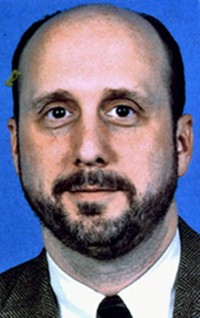
Brett Blackledge, 43, is a native of Baton Rouge, LA. He earned a journalism degree from Louisiana State University in 1986.
Blackledge began his career with the Associated Press in New Orleans and later worked for AP bureaus in Jackson, MS, and Tulsa, OK. He worked for The Journal Newspapers in suburban Washington, DC, covering crime, local government and the Maryland and Virginia legislatures. He then wrote about national education issues for Education Daily, covering the White House, U.S. Congress and U.S. Department of Education.
Blackledge moved to Alabama in 1993, joining The Mobile Register as a local government reporter. He also covered education and state government. He has worked at The Birmingham News since 1998 as a general assignment and special projects reporter.
Blackledge is married to a veterinarian and has an 11-year-old daughter.
(Note: This entry was moved by the Board from the Public Service category.)