
For a distinguished and appropriately documented biography by an American author, Fifteen thousand dollars ($15,000).

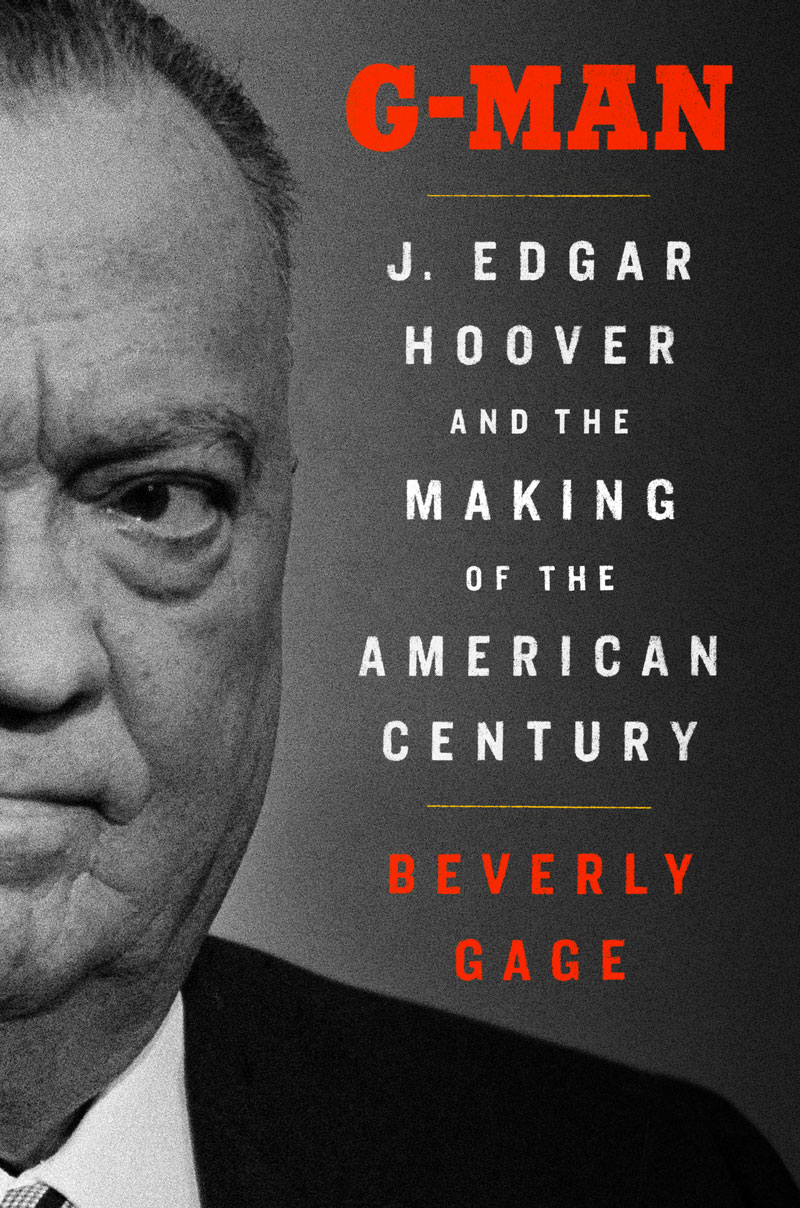
G-Man: J. Edgar Hoover and the Making of the American Century, by Beverly Gage (Viking)

A deeply researched and nuanced look at one of the most polarizing figures in U.S. history that depicts the longtime FBI director in all his complexity, with monumental achievements and crippling flaws.
Beverly Gage accepts the 2023 Pulitzer Prize for Biography from Columbia University President Emeritus Lee Bollinger. (Diane Bondareff/The Pulitzer Prizes)

Winning Work

G-Man: J. Edgar Hoover and the Making of the American Century


Winner of the 2022 National Book Critics Circle Award in Biography, the 2023 Bancroft Prize in American History and Diplomacy, and the 43rd LA Times Book Prize in Biography | Finalist for the 2023 PEN/Jacqueline Bograd Weld Award for Biography

Named a Best Book of 2022 by The AtlanticThe Washington Post and Smithsonian Magazine and a New York Times Top 100 Notable Books of 2022

“Masterful…This book is an enduring, formidable accomplishment, a monument to the power of biography [that] now becomes the definitive work”—The Washington Post

“A nuanced portrait in a league with the best of Ron Chernow and David McCullough.”—The Wall Street Journal

A major new biography of J Edgar Hoover that draws from never-before-seen sources to create a groundbreaking portrait of a colossus who dominated half a century of American history and planted the seeds for much of today’s conservative political landscape.


We remember him as a bulldog–squat frame, bulging wide-set eyes, fearsome jowls–but in 1924, when he became director of the FBI, he had been the trim, dazzling wunderkind of the administrative state, buzzing with energy and big ideas for reform. He transformed a failing law-enforcement backwater, riddled with scandal, into a modern machine. He believed in the power of the federal government to do great things for the nation and its citizens. He also believed that certain people–many of them communists or racial minorities or both– did not deserve to be included in that American project. Hoover rose to power and then stayed there, decade after decade, using the tools of state to create a personal fiefdom unrivaled in U.S. history.  

Beverly Gage’s monumental work  explores the full sweep of Hoover’s life and career, from his birth in 1895 to a modest Washington civil-service family through his death in 1972. In her  nuanced and definitive portrait, Gage shows how Hoover was more than a one-dimensional tyrant and schemer who strong-armed the rest of the country into submission. As FBI director from 1924 through his death in 1972, he was a confidant, counselor, and adversary to eight U.S. presidents, four Republicans and four Democrats.  Franklin Roosevelt and Lyndon Johnson did the most to empower   him, yet his closest friend among the eight was fellow anticommunist warrior Richard Nixon.  Hoover was not above blackmail and intimidation, but he also embodied conservative values ranging from anticommunism to white supremacy to a crusading and politicized interpretation of Christianity. This garnered him the admiration of millions of Americans. He stayed in office for so long because many people, from the highest reaches of government down to the grassroots, wanted him there and supported what he was doing, thus creating the template that the political right has followed to transform its party.

G-Man places Hoover back where he once stood in American political history–not at the fringes, but at the center–and uses his story to explain the trajectories of governance, policing, race, ideology, political culture, and federal power as they evolved over the course of the 20th century.

Biography

Beverly Gage is professor of 20th-century American history at Yale. She is the author of The Day Wall Street Exploded, which examined the history of terrorism in the late 19th and early 20th centuries. She writes frequently for the New York Times, the Washington Post, the New York Times Magazine and The New Yorker, among other publications.

Finalists

Nominated as finalists in Biography in 2023:

Jennifer Homans

A sweeping, eloquent, and deeply insightful portrait of the choreographer who reinvented ballet as an American art form, a man whose life was full of urgent passions and faults.

Robert Samuels and Toluse Olorunnipa

An intimate, riveting portrait of an ordinary man whose fatal encounter with police officers in 2020 sparked an international movement for social change, but whose humanity and complicated personal story were unknown. (Moved by the Board to the General Nonfiction category.)

The Jury

Adam Cohen(Chair)

Author; Co-Editor, National Book Review

Keisha N. Blain

Professor of Africana Studies & History, Brown University

Max Boot

Columnist, The Washington Post; Senior Fellow, Council on Foreign Relations

Barbara Demick

Author/Journalist, New York, N.Y.

Janice P. Nimura

Biographer/Scholar, New York, N.Y.

Winners in Biography

the late Winfred Rembert as told to Erin I. Kelly

A searing first-person illustrated account of an artist’s life during the 1950s and 1960s in an unreconstructed corner of the deep South–an account of abuse, endurance, imagination, and aesthetic transformation.

the late Les Payne and Tamara Payne

A powerful and revelatory account of the civil rights activist, built from dozens of interviews, offering insight into his character, beliefs and the forces that shaped him.

Benjamin Moser

An authoritatively constructed work told with pathos and grace, that captures the writer’s genius and humanity alongside her addictions, sexual ambiguities and volatile enthusiasms.

Jeffrey C. Stewart

A panoramic view of the personal trials and artistic triumphs of the father of the Harlem Renaissance and the movement he inspired.

2023 Prize Winners

Kyle Whitmire of AL.com, Birmingham

For measured and persuasive columns that document how Alabama's Confederate heritage still colors the present with racism and exclusion, told through tours of its first capital, its mansions and monuments–and through the history that has been omitted.

Staff of The Wall Street Journal

For sharp accountability reporting on financial conflicts of interest among officials at 50 federal agencies, revealing those who bought and sold stocks they regulated and other ethical violations by individuals charged with safeguarding the public’s interest.