Finalist: Nanna Heitmann, contributor, Tyler Hicks, David Guttenfelder and Nicole Tung, contributor, of The New York Times
Nominated Work
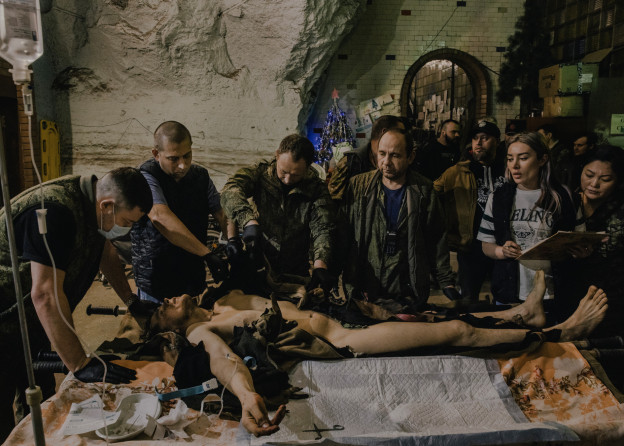
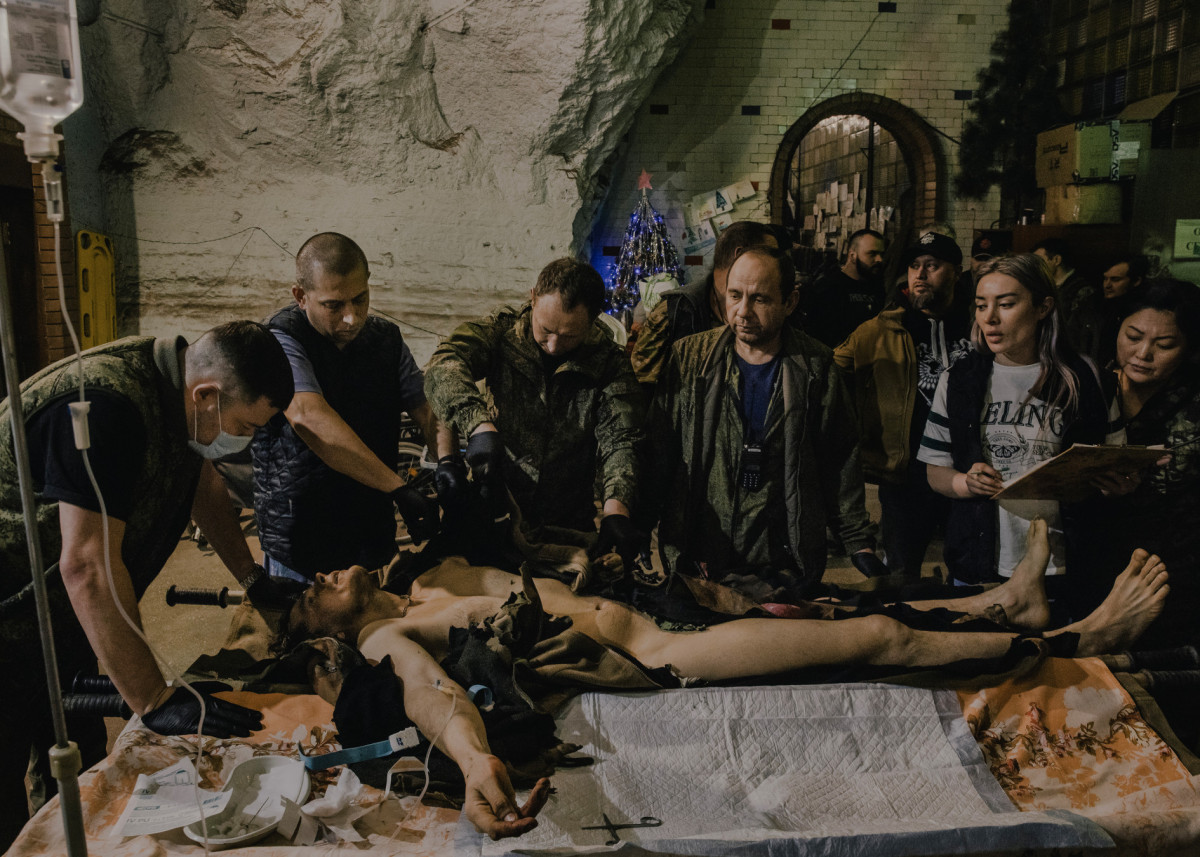
Alexander, a wounded Ukrainian soldier who was conscripted to fight for Russia, on Jan. 22, 2024, at a field hospital in an underground winery in the Bakhmut region of Ukraine. The soldier is originally from Artyomovsk, a Ukrainian town that has been under the control of Russian-backed separatist forces since 2014. He was later transferred to a hospital farther from the front lines—but not before both an arm and a leg were amputated. A year later, he awaits prostheses that will help him walk and adjust to his new life. (Nanna Heitmann for The New York Times)
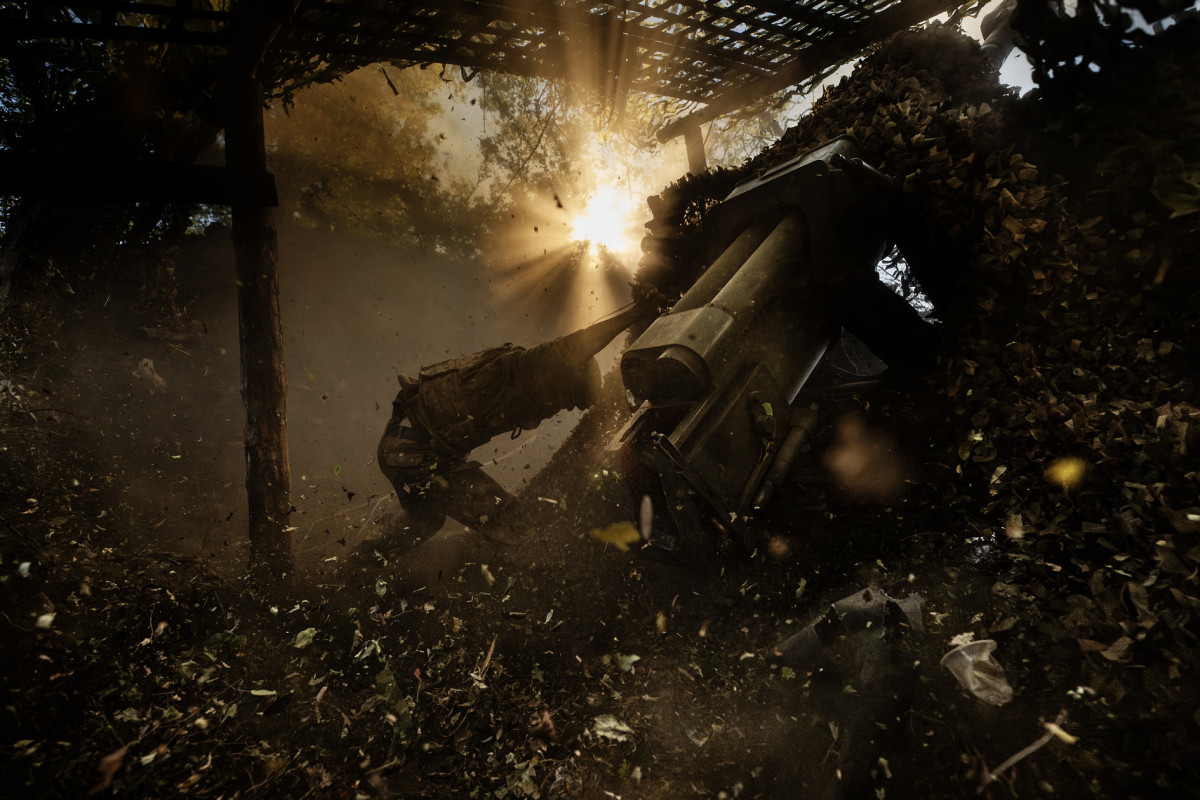
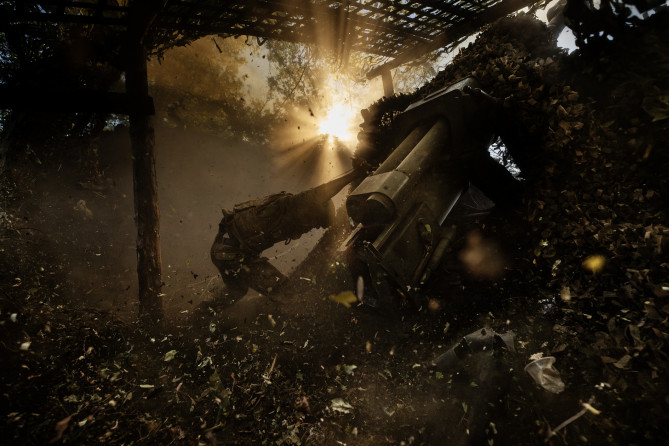
An artillery unit of the 95th Separate Air Assault Brigade fires a howitzer as Russian troops stormed the city of Toretsk in eastern Ukraine. The thunder of cannons rarely ceases along a vast front line carving a jagged scar hundreds of miles across Ukraine from the Russian border to the Dnipro river. (Tyler Hicks/The New York Times)
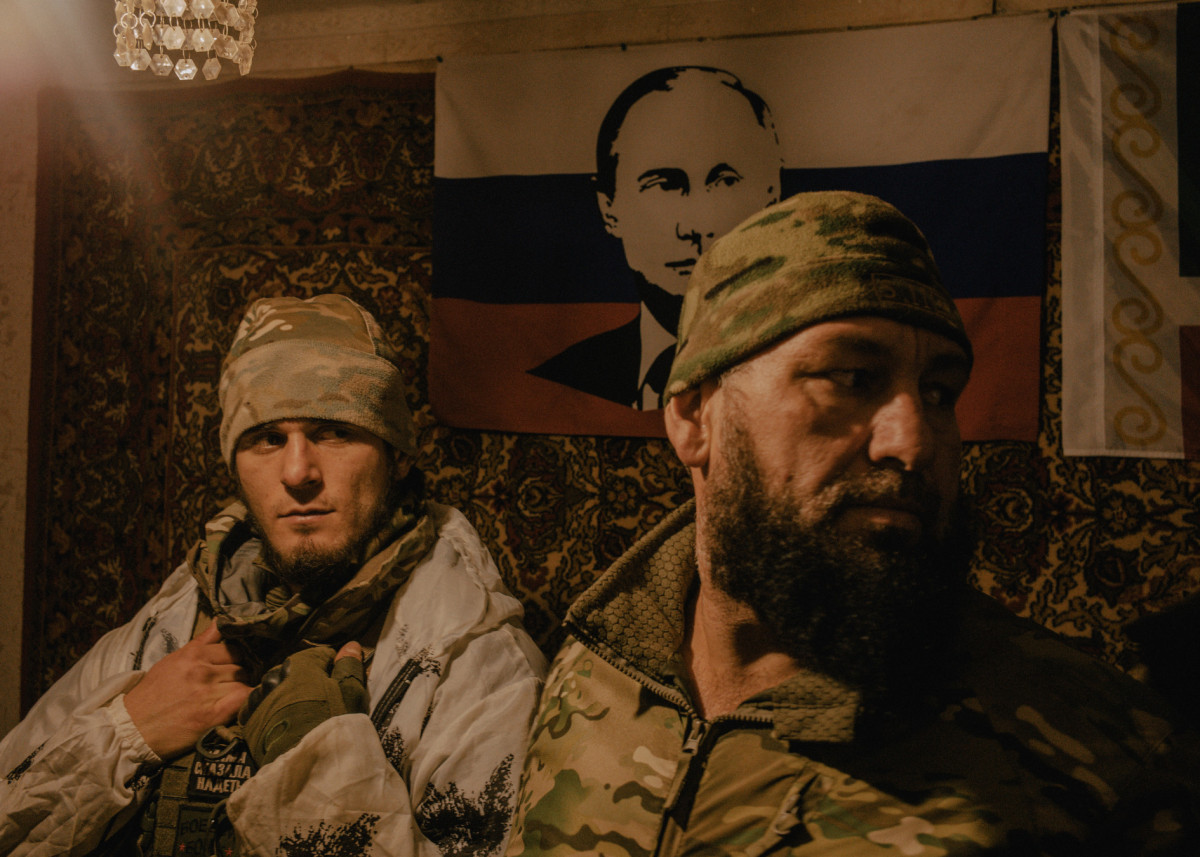
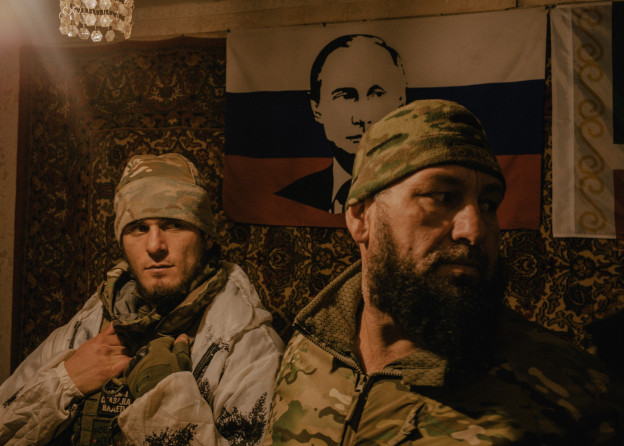
Soldiers of the Akhmat North Chechen battalion before a combat mission. Russia’s advantage in manpower has allowed them to make costly but steady advances in eastern Ukraine over the past year. (Nanna Heitmann for The New York Times)
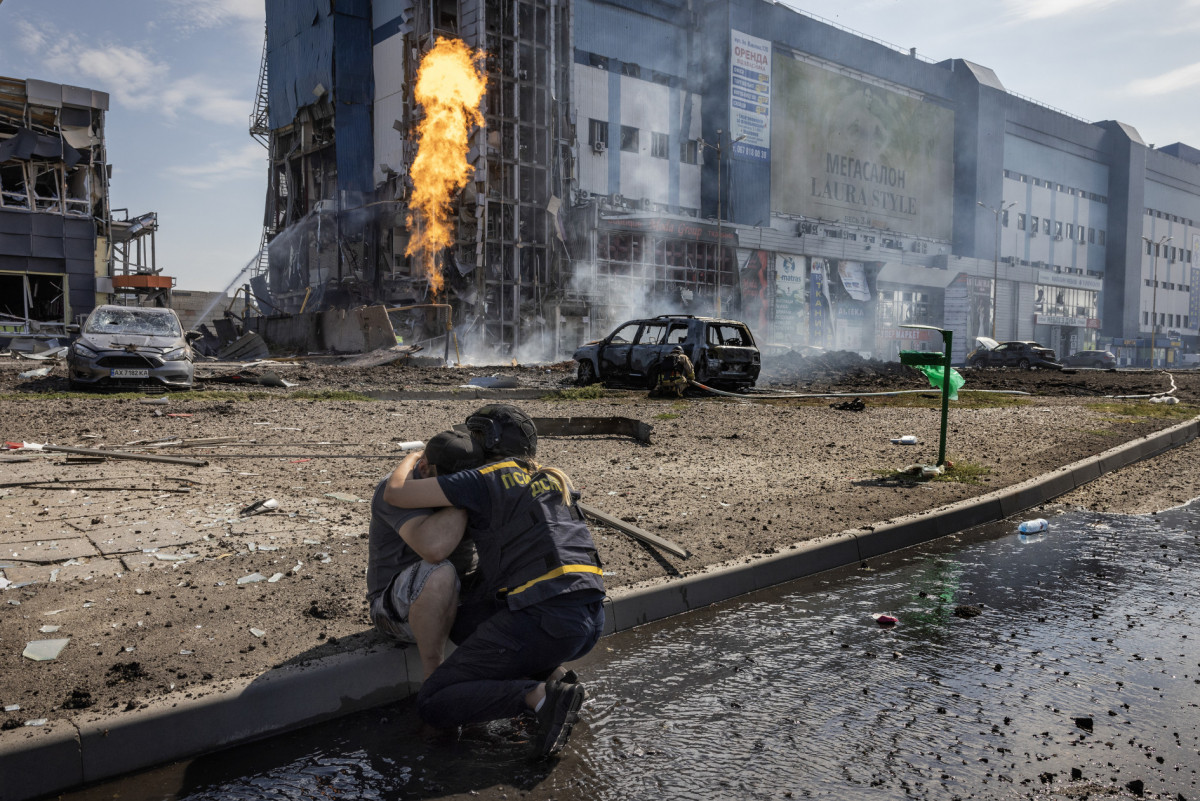
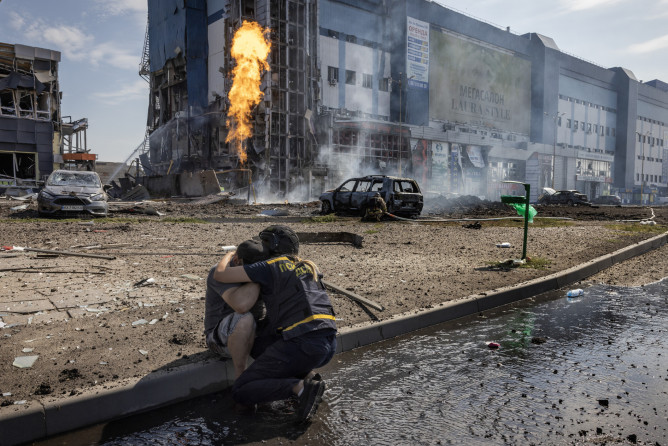
A rescue worker comforting a man who survived a Russian strike on Kharkiv, Ukraine, last fall. The Russian tactic of targeting the same location twice—with a short pause to allow time for emergency crews to arrive—has made the already dangerous work of firefighters, paramedics and police even more deadly. (David Guttenfelder for The New York Times)
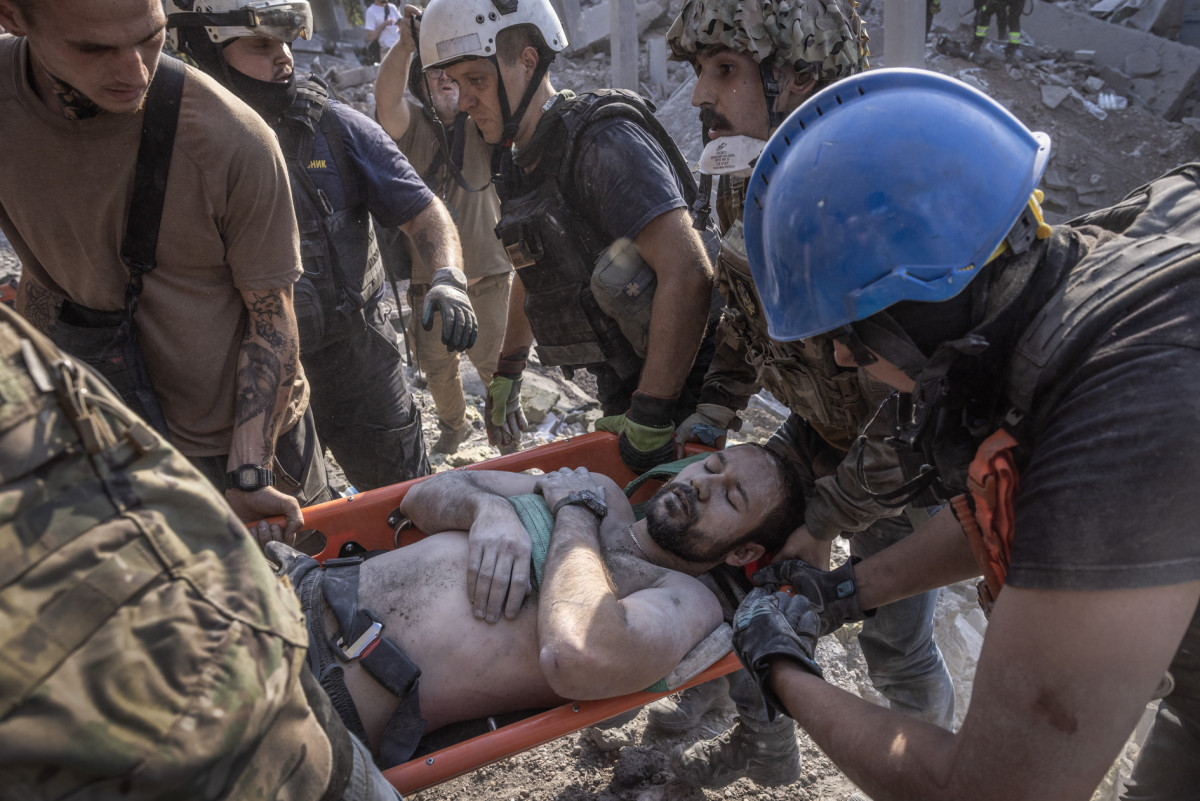
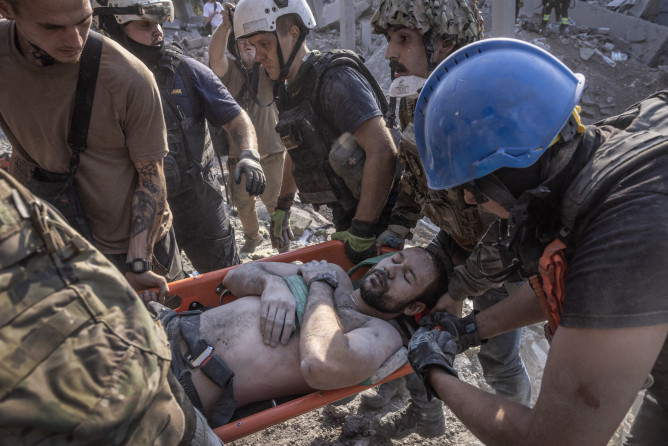
Ukrainian rescue workers carrying a man who had been buried under rubble for hours after a Russian missile strike on a sports complex in Kharkiv this fall. While Ukrainian forces drove the Russians back from Kharkiv in the first year of the war, it has been subjected to relentless bombardment ever since. (David Guttenfelder for The New York Times)
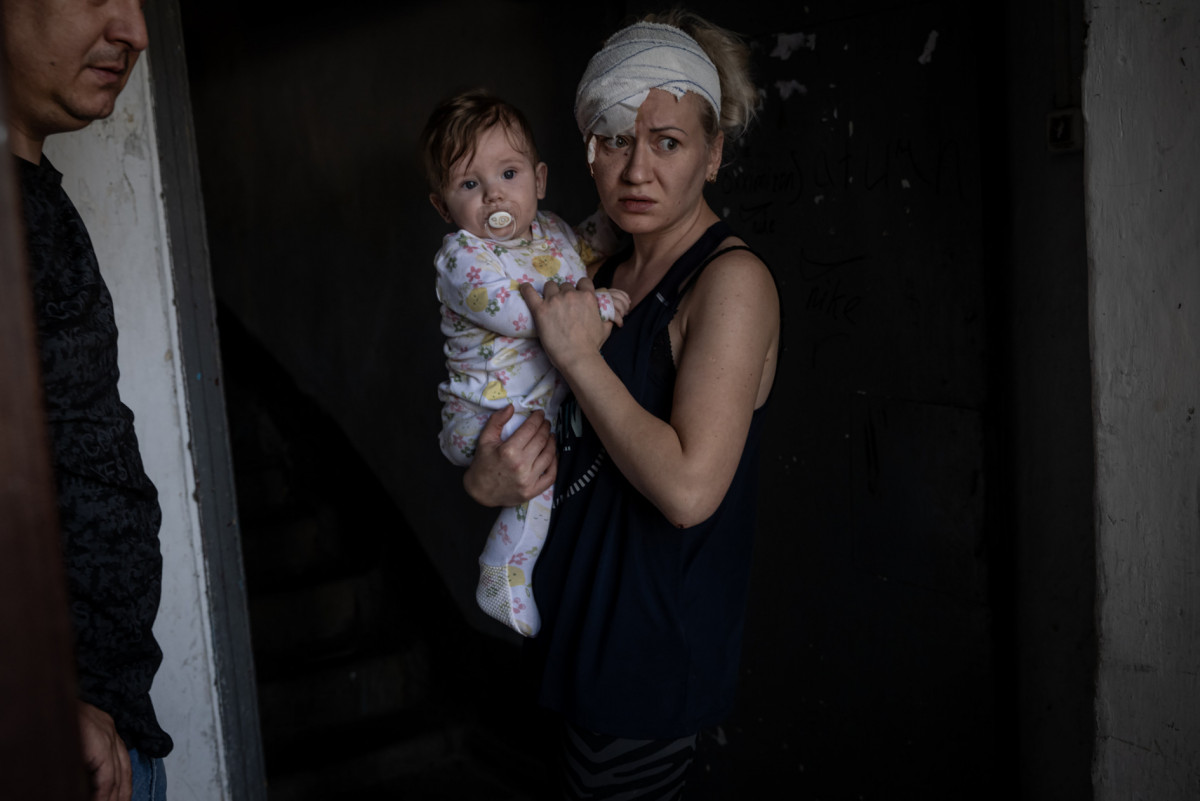
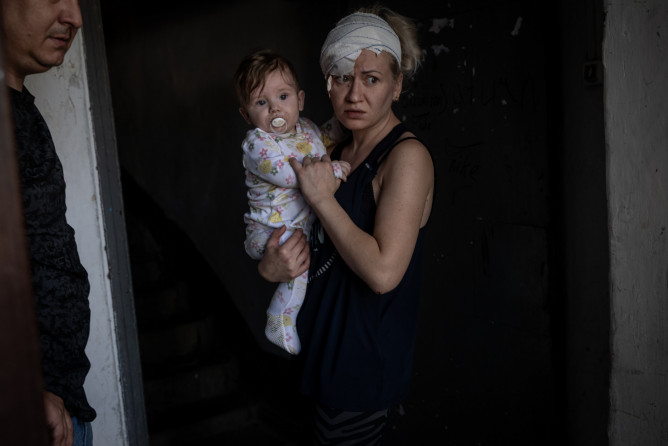
An injured resident with her baby in the hallway of her apartment after five missiles struck in Pavlohrad in central Ukraine this fall. No part of Ukraine is out of reach of Russian missiles and drones. Nearly every day, Ukrainian civilians are killed and injured in strikes. (Nicole Tung for The New York Times)
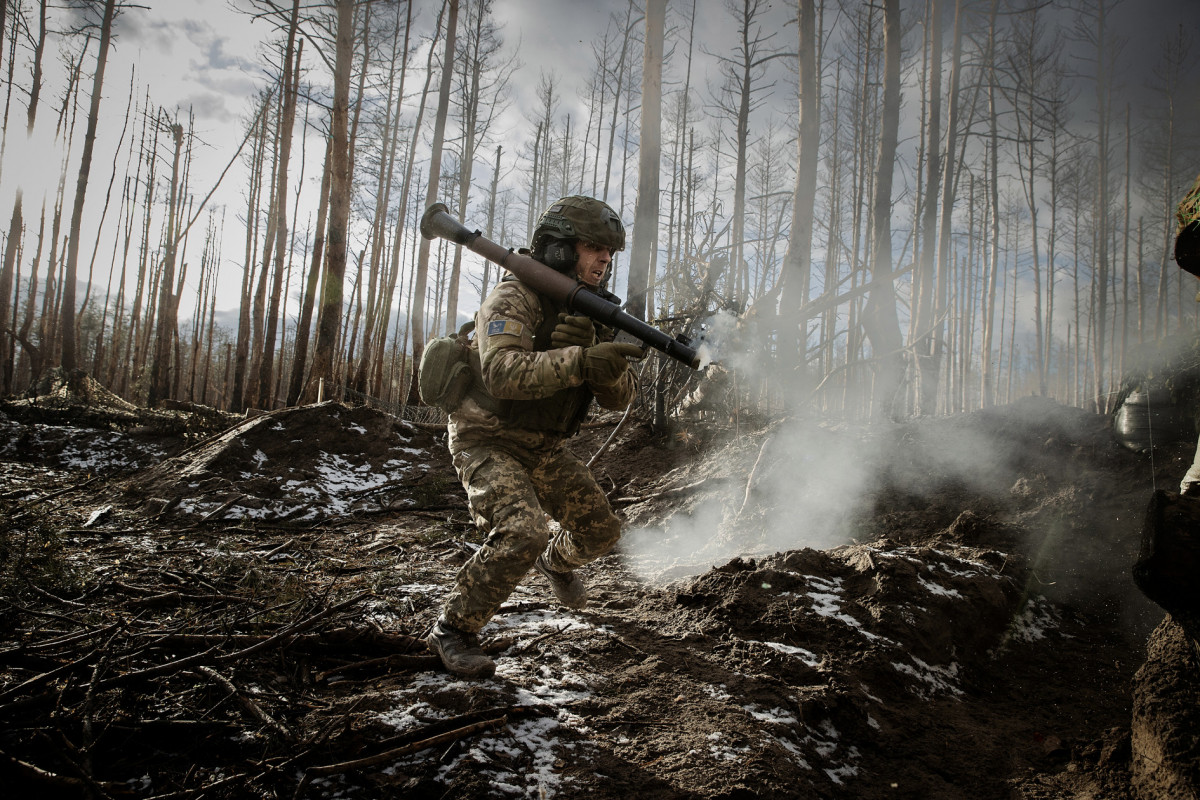
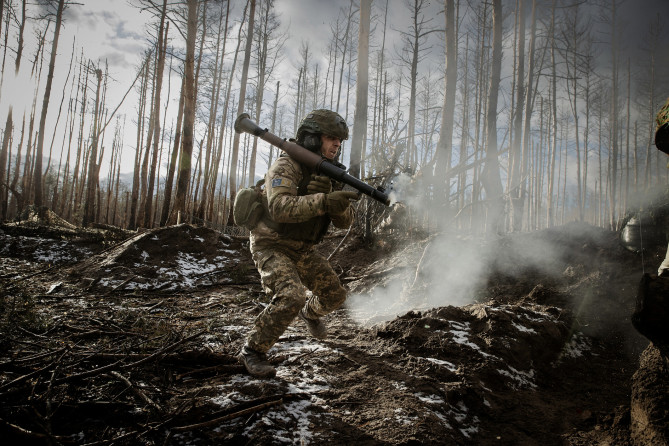
A Ukrainian soldier retreats after firing a rocket-propelled grenade at a Russian position only a few hundred feet away. Close-quarter combat has become a feature of the war as Russian forces spent the past year engaging in relentless headlong assaults aimed at capturing Ukrainian positions. (Tyler Hicks/The New York Times)
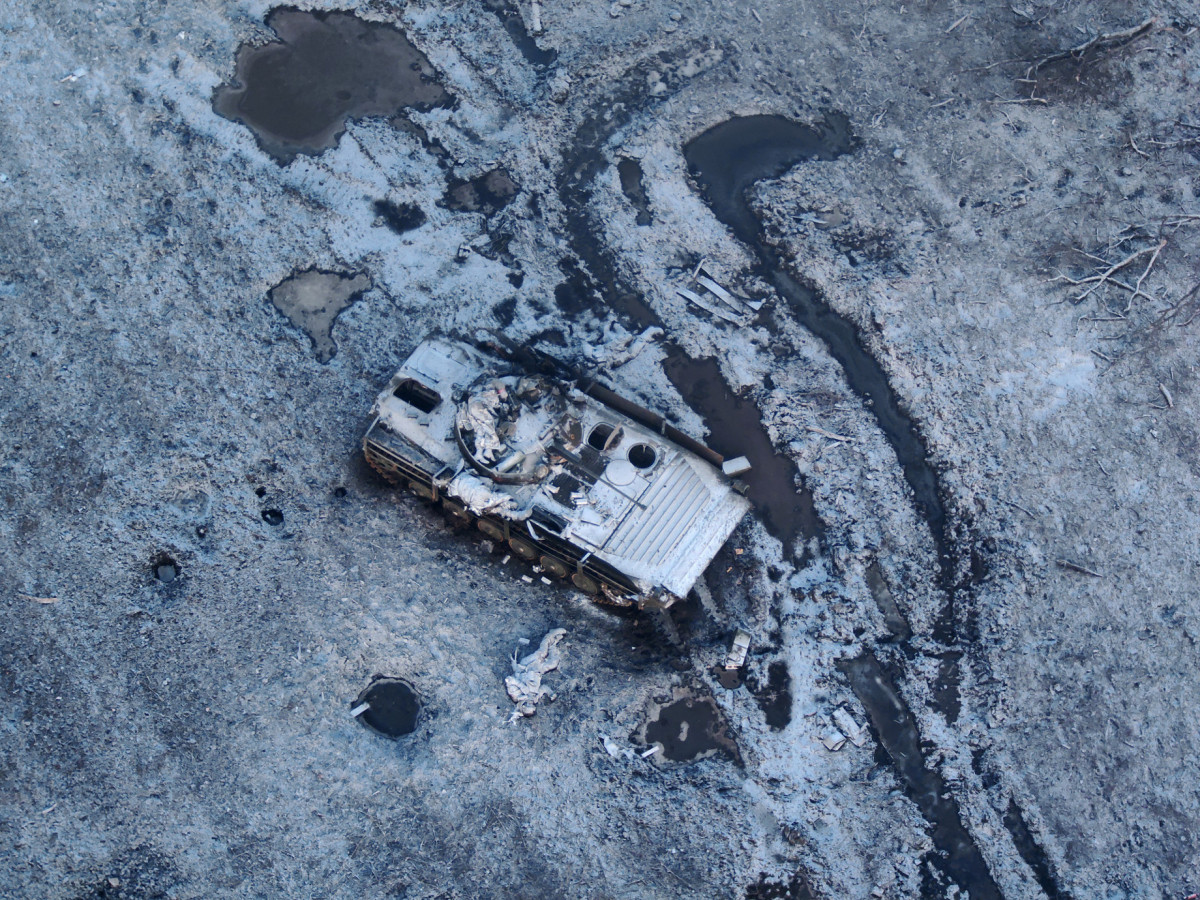
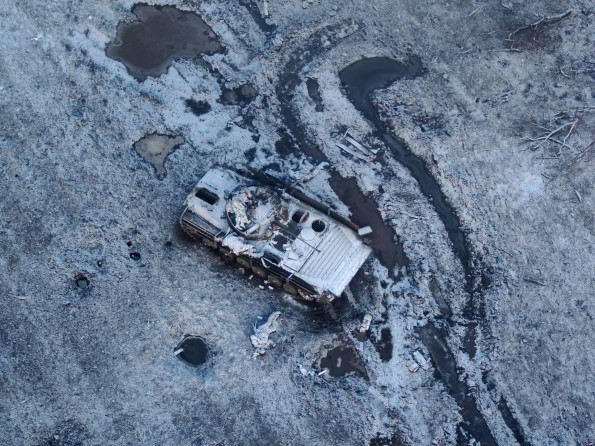
Russian soldiers killed on the battlefield in eastern Ukraine. The photograph, taken using a drone, offers a searing window into the deadliest conflagration in Europe since the end of World War II. (Tyler Hicks/The New York Times)
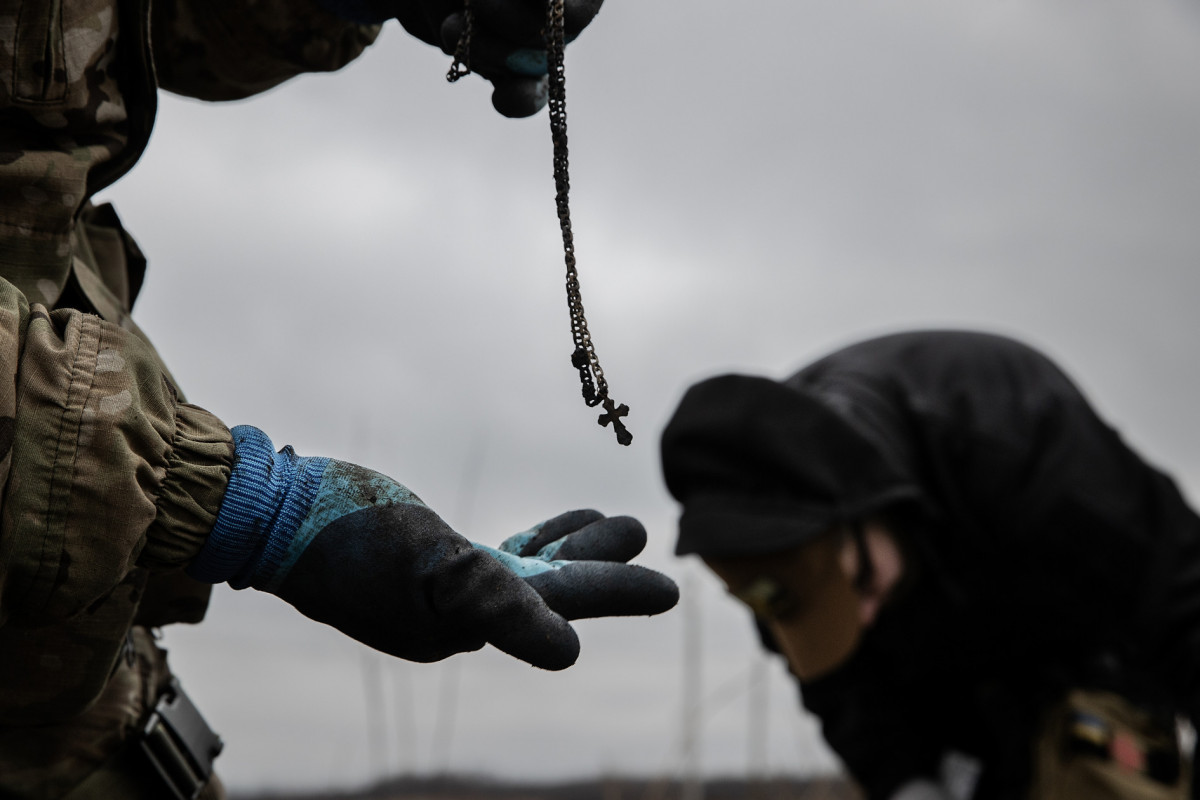
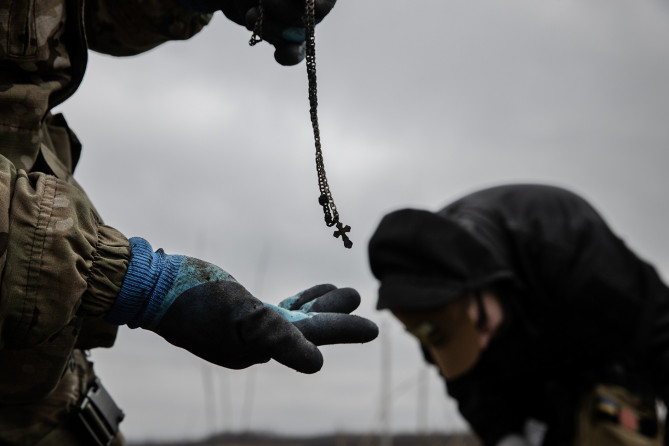
Death is ubiquitous on the battlefield. Ukrainian volunteers collect the remains of the dead from both sides of the war, hoping to help identify the soldiers who fell in battle, offering grieving families a small bit of solace. (Tyler Hicks/The New York Times)
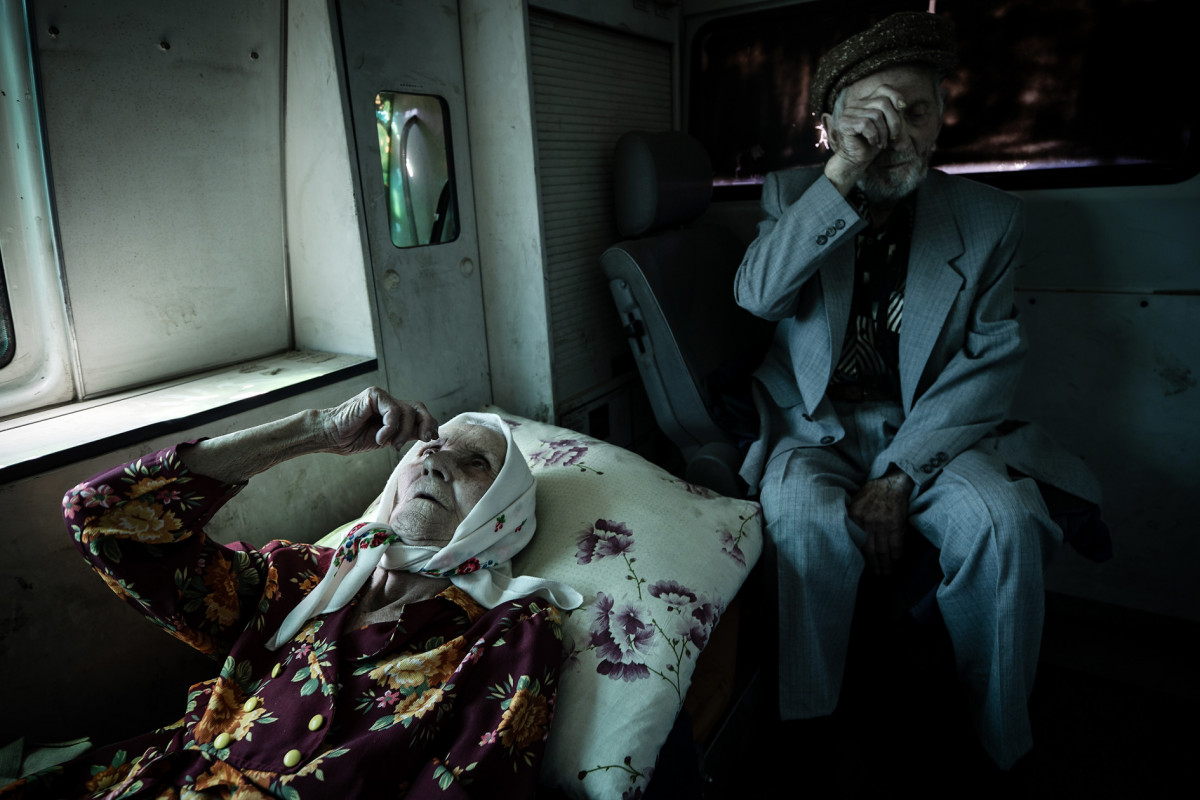
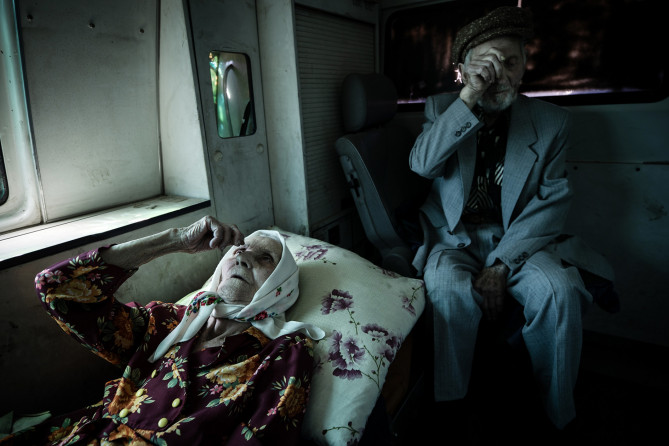
Svitlana Yakivna, 82, and Mykola Pylypovych, 86, were evacuated from their home as Russian forces bombarded their village. The Russians seized some 1,600 square miles of Ukrainian land in 2024, carving a new path of destruction in the southern Donbas region. (Tyler Hicks/The New York Times)
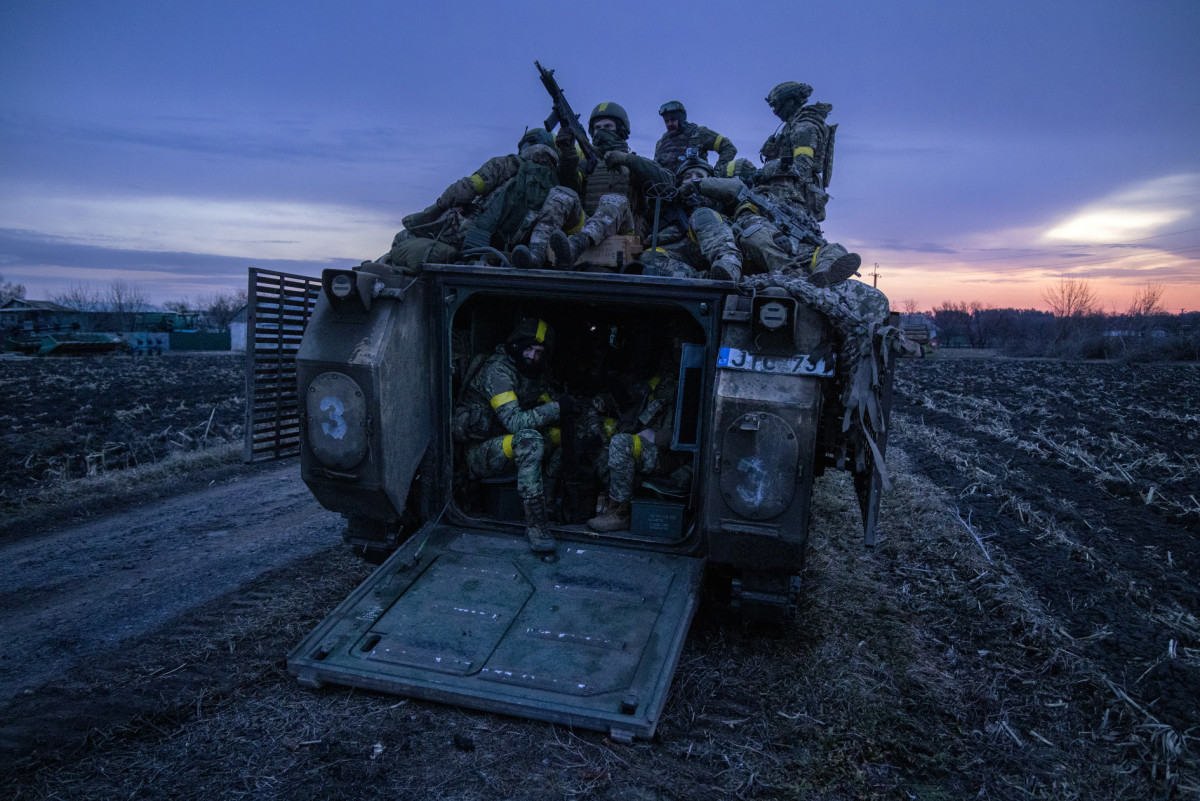
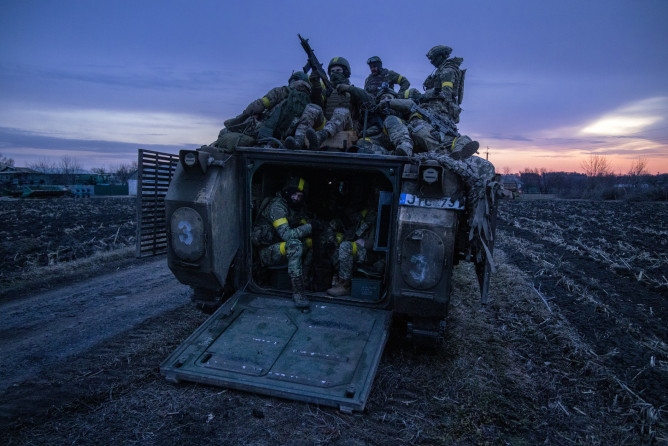
Former Russian soldiers who are now fighting for Ukraine riding atop an armored vehicle in preparation for a planned incursion across the border into Russia in March. It was a prelude to a large-scale Ukrainian offensive later that summer in the Kursk region. (David Guttenfelder for The New York Times)
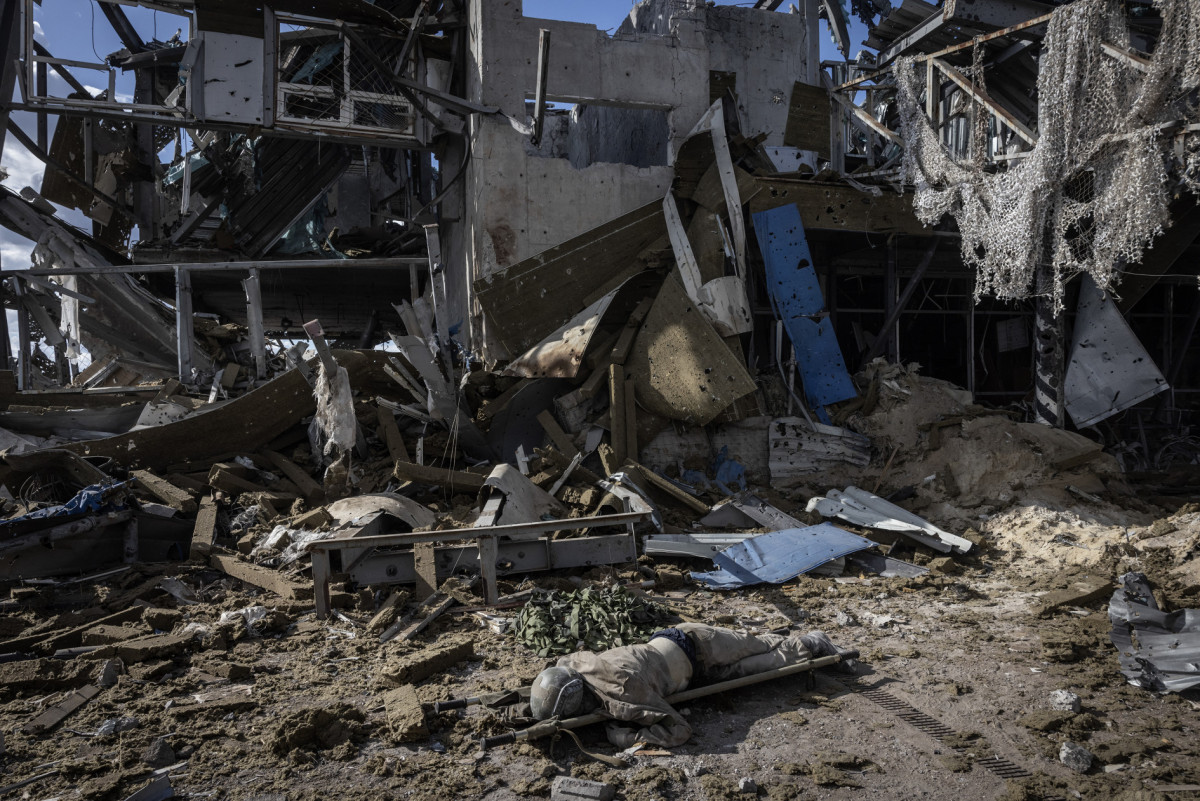
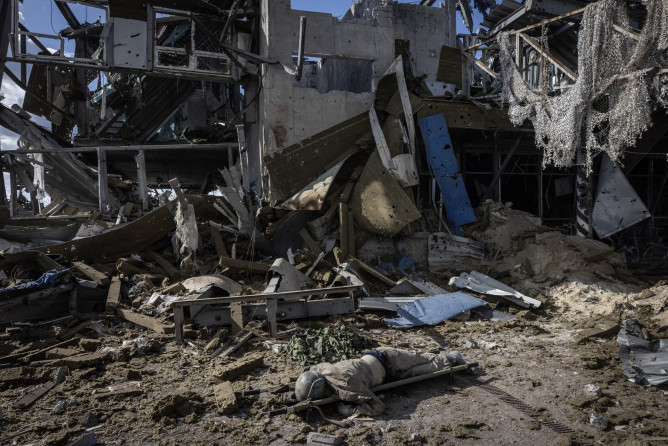
The body of a Russian soldier in front of the destroyed Sudzha Border Crossing post. Ukrainian forces swept into the Kursk region of Russia in August, the first land invasion of Russia since World War II. This was one of the first images documenting how the top secret campaign had succeeded in its initial objective. (David Guttenfelder for The New York Times)
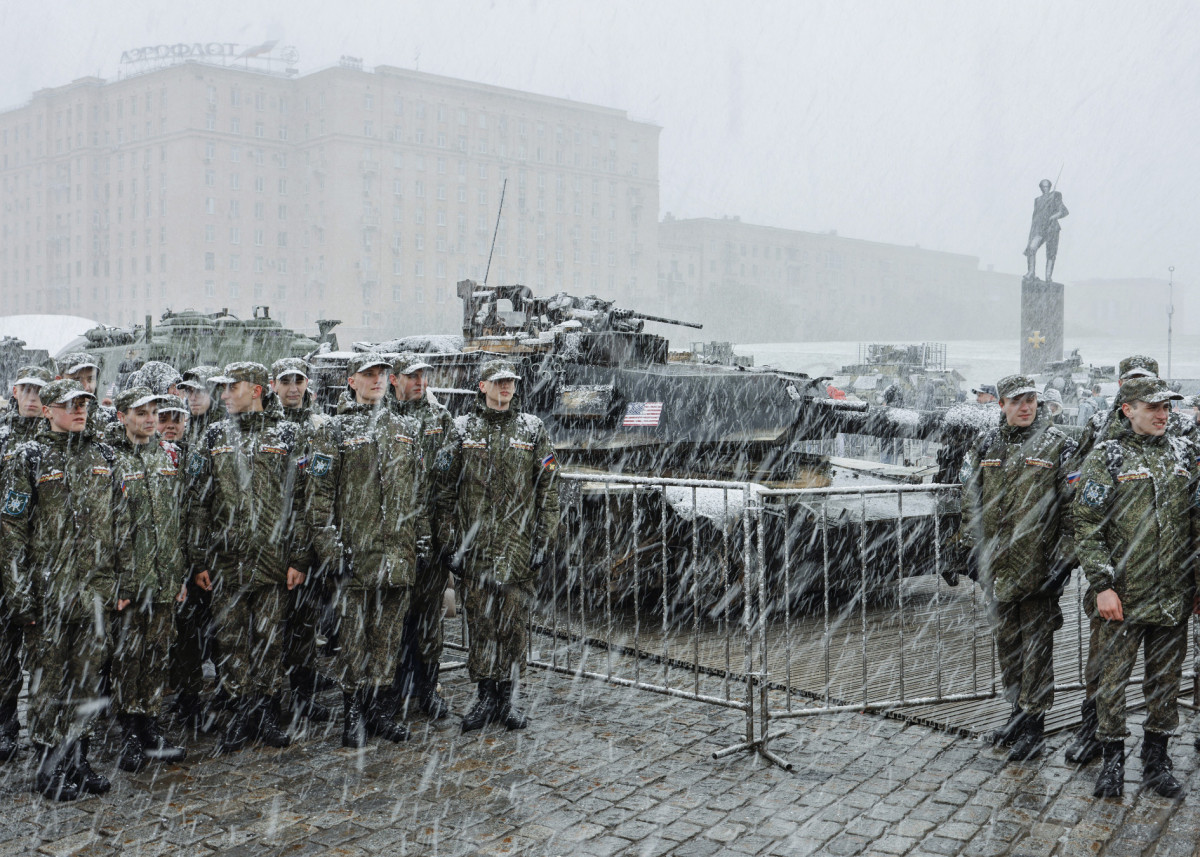
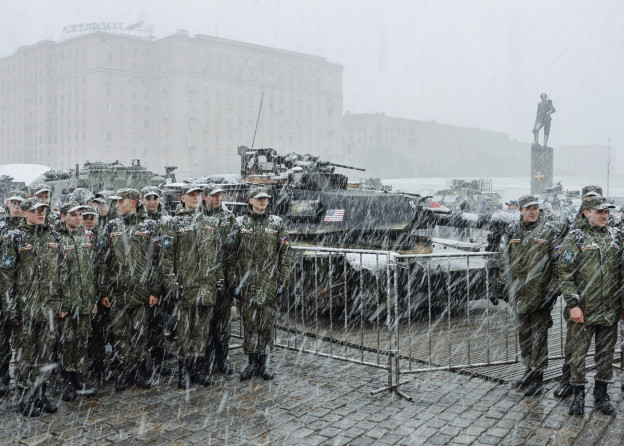
Russian students at an exhibition of captured military hardware from NATO countries displayed at a university in Moscow. President Vladimir Putin has portrayed his invasion of Ukraine as part of a larger struggle against the American-led world order. (Nanna Heitmann for The New York Times)
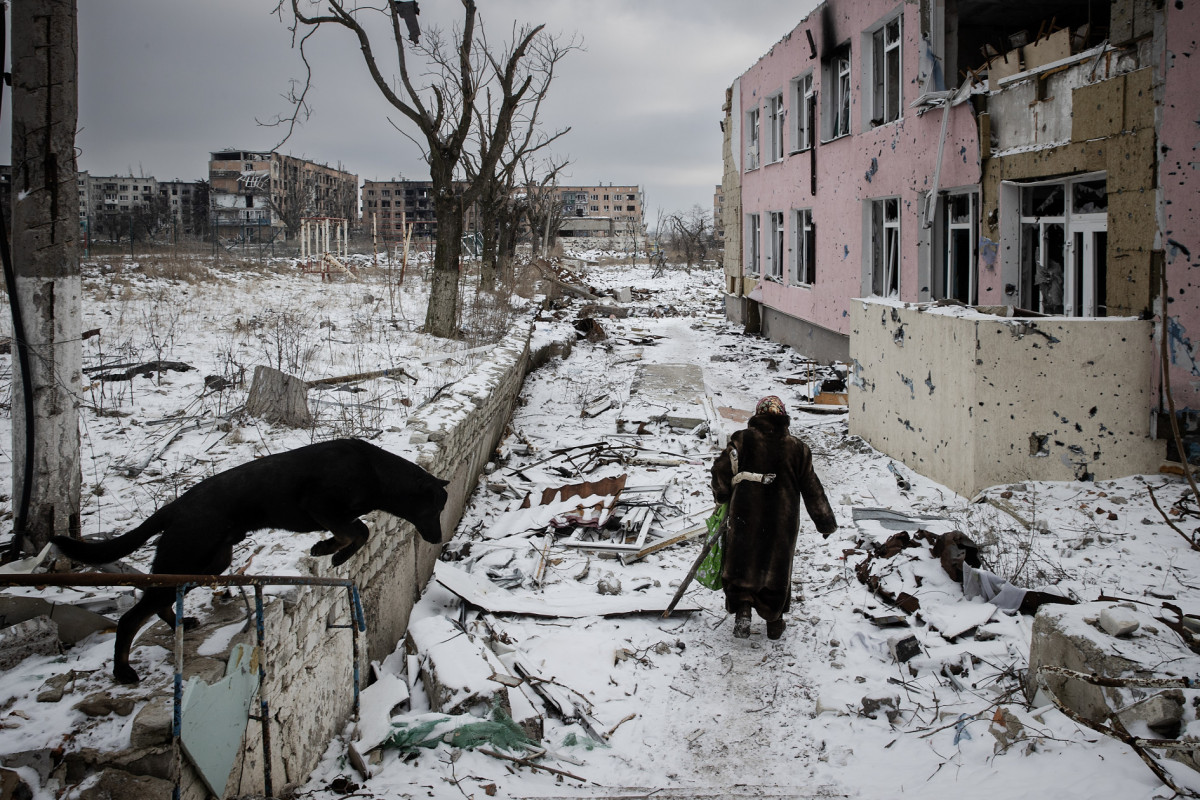
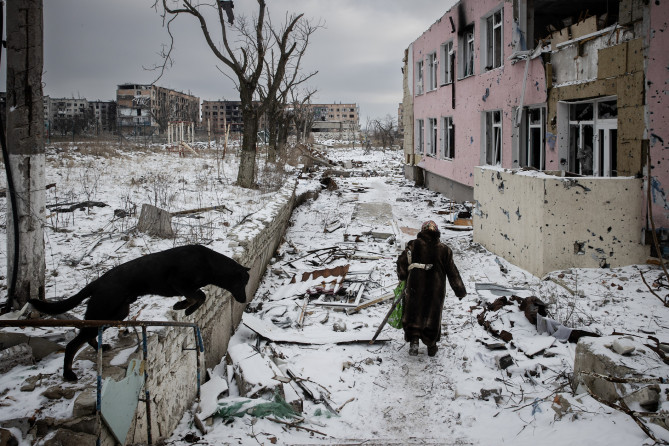
A woman with her dog collecting firewood in the bombed-out mining town of Vuhledar. Ukrainian forces would soon be driven from the area as yet another Ukrainian town was reduced to ashes. (Tyler Hicks/The New York Times)
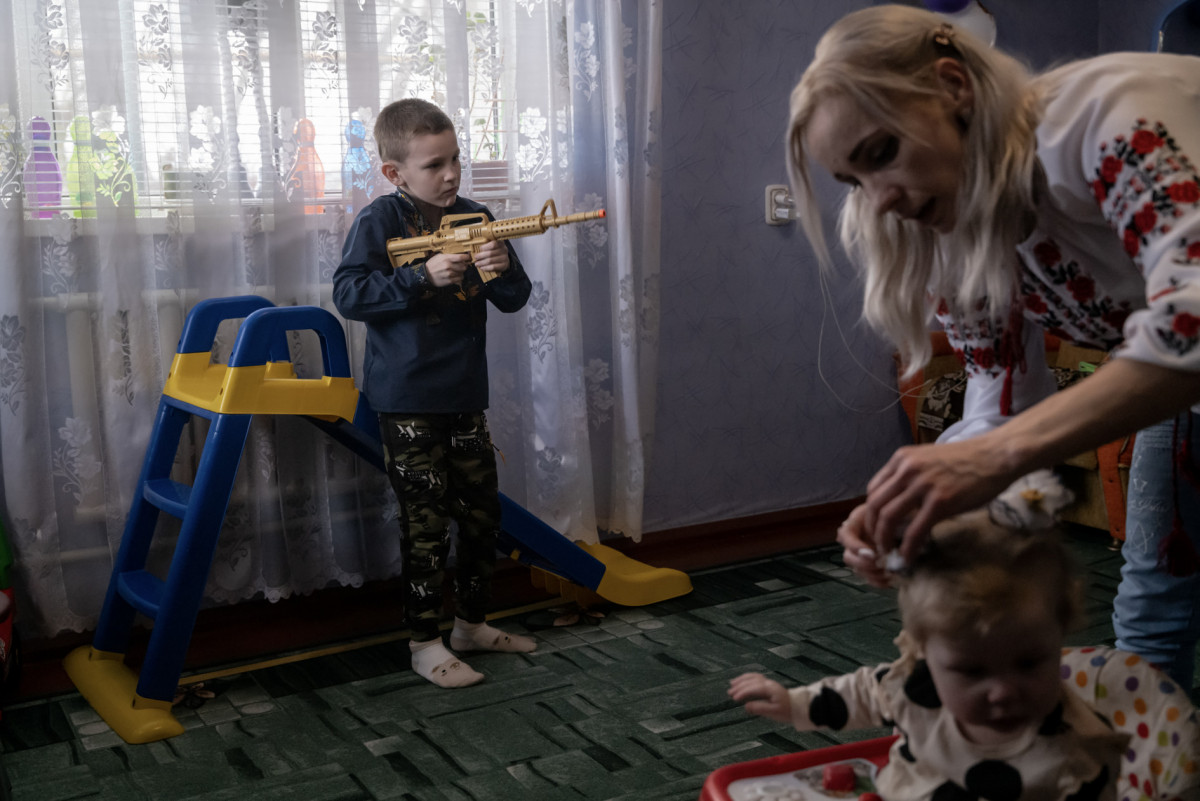
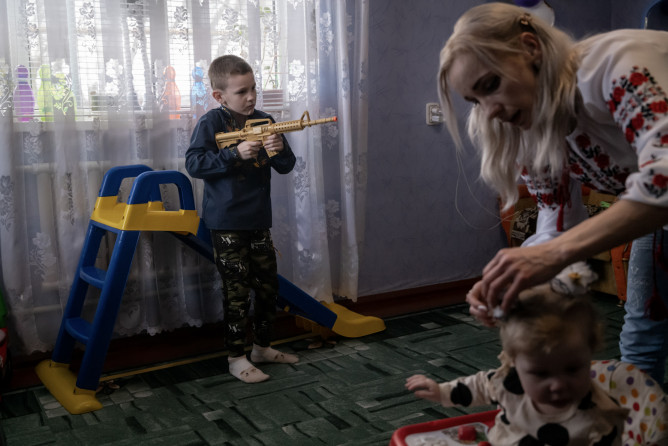
Far from the thunder of cannons echoing across the front, loss for many families lingers in the silence. Anastasiia Lykova was four months pregnant when her husband, Vitaly, was killed in combat, just three days after going to the front. Now she is raising her daughter, Uliana, 9 months, and son Tymur, 6, alone. (Nicole Tung for The New York Times)
Biography
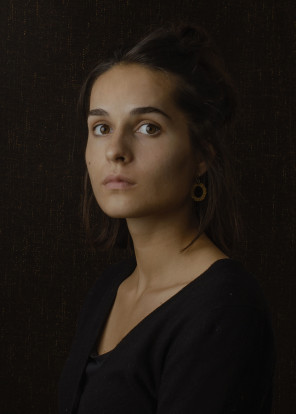
Born in Ulm, Germany, Nanna Heitmann covers current events, such as the invasion of Ukraine, while pursuing long-term projects that often focus the way people respond to and interact with their environment.
Ms. Heitmann has documented the effects of climate change, such as catastrophic forest fires and melting permafrost in Siberia (As Frozen Lands Burn), as well as the peatlands of the Congo Basin, which serve as the world’s largest carbon reservoir (Beneath The Trees). She has been published by National Geographic, Time, and M Le Magazine du Monde, among others, and contributes to The New York Times and the New Yorker. Her visual journalism has been recognized with numerous prizes, including the Olivier Rebbot Award for her work on Russia’s Covid experience, and a World Press Photo Award for her story on forest fires.
Ms. Heitmann became a Magnum nominee in 2019, joining on the strength of two bodies of personal work that both deal with issues of isolation — physical, social and spiritual. Weg vom Fenster (“Gone From the Window”), focused upon the inhabitants of Germany’s last operating coal mine. And for Hiding From Baba Yaga — a project whose title is inspired by the witch of Slavic folklore — Ms. Heitmann followed the world’s longest river from the Republic of Tuva northward through Siberia, photographing the lives of people living on the remote banks of the Yenisei River. Her gaze conveys the dignity and humanity of these people and allows the viewer to look at them with curiosity and empathy.
Ms. Heitmann became a full member of Magnum in 2023. She was a Pulitzer Prize finalist in 2024.
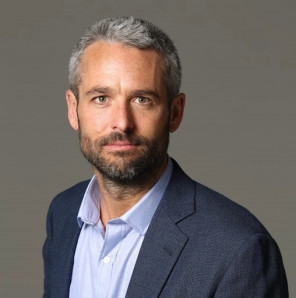
Tyler Hicks is a senior photographer for The New York Times.
He came to The Times as a contract photographer in Kenya in 1999, photographing news stories in East and West Africa. After the Sept. 11 terrorist attacks, Mr. Hicks went to Afghanistan for The Times and reached Kabul as the Northern Alliance liberated the city from Taliban control.
In 2001, Mr. Hicks received the ICP Infinity Award for Photojournalism for coverage of Afghanistan, as well as other awards, including World Press and Pictures of the Year and Visa Pour L’image in Perpignan, France. In 2009, Mr. Hicks was part of the Times team that won the Pulitzer Prize for International Reporting in Afghanistan and Pakistan. He was named Newspaper Photographer of the Year by Pictures of the Year International for his work in 2006.
On March 16, 2011, Mr. Hicks and three other journalists were taken hostage in Libya, on assignment for The Times covering the revolution. After six days in captivity, Mr. Hicks and his colleagues were released.
In 2014, he won the Pulitzer Prize for Breaking News Photography for his coverage of the massacre at the Westgate Mall in Nairobi, Kenya. In 2016, Mr. Hicks was a member of a team of photographers who won the Pulitzer Prize for Breaking News for coverage of the European migrant crisis.
Mr. Hicks has covered the war in Ukraine since it began in 2022.
Mr. Hicks graduated in 1992 with a B.A. in journalism from Boston University. He was born in São Paulo, Brazil.
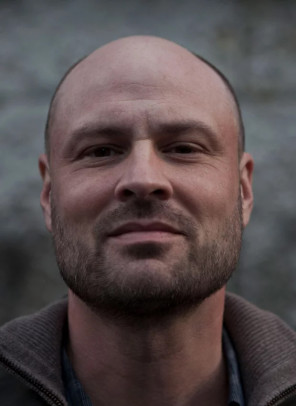
David Guttenfelder is a staff visual journalist at The New York Times.
Before joining the staff of The New York Times, Mr. Guttenfelder was a National Geographic Explorer. He has spent more than 25 years as a photojournalist and documentary photographer based in Japan, India, Israel, Ivory Coast and Kenya covering world events. In 2011, he helped open a bureau in Pyongyang for The Associated Press, the first Western news agency to have an office in North Korea.
Mr. Guttenfelder is an eight-time World Press Photo Award winner and a seven-time finalist for the Pulitzer Prize. He was awarded the ICP Infinity Prize for Photojournalism. The Overseas Press Club of America has recognized him with the John Faber, Olivier Rebbot, & Feature Photography awards. Pictures of the Year International and the NPPA have named him Photojournalist of the Year.
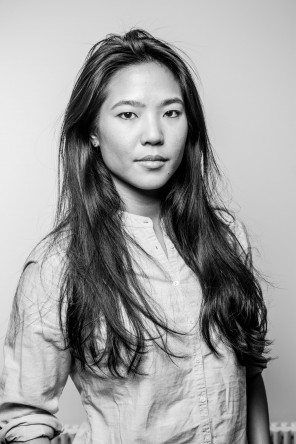
Nicole Tung is a freelance photojournalist, born in Hong Kong. She graduated from New York University in 2009, and freelances for international publications and NGOs, primarily covering the Middle East region.
She has covered the conflicts in Libya and Syria extensively from 2011, focusing on the plight of civilians, the lives of Native American war veterans in the U.S., the pro-democracy protests in Hong Kong, and the aftermath of ISIS in Iraq and Syria. Her work often explores those most affected by conflict and the consequences of war. Ms. Tung has documented the Russian invasion of Ukraine since 2022 for publications including Harper's Magazine, The Washington Post and The New York Times, and the aftermath of devastating earthquakes in Turkey and Syria in 2023.
Her work has been exhibited at various festivals worldwide and has received multiple awards for her work. She is based in Istanbul.