Exploring the nature and origins of conflict — whether through journalism, history or the arts — has been a theme of Pulitzer-winning work throughout the prizes' 100-year history. The second Pulitzer Centennial marquee event centered on, "War, Migration and the Quest for Peace," and took place at Los Angeles' Ebell Theatre May 19 and 20.
The first night, actors performed scenes from Ayad Akhtar's 2013 prize winning play, Disgraced, and Quiara Alegría Hudes' Elliot, A Soldier's Fugue, part of the same trilogy as her 2012 prize winner, Water by the Spoonful.
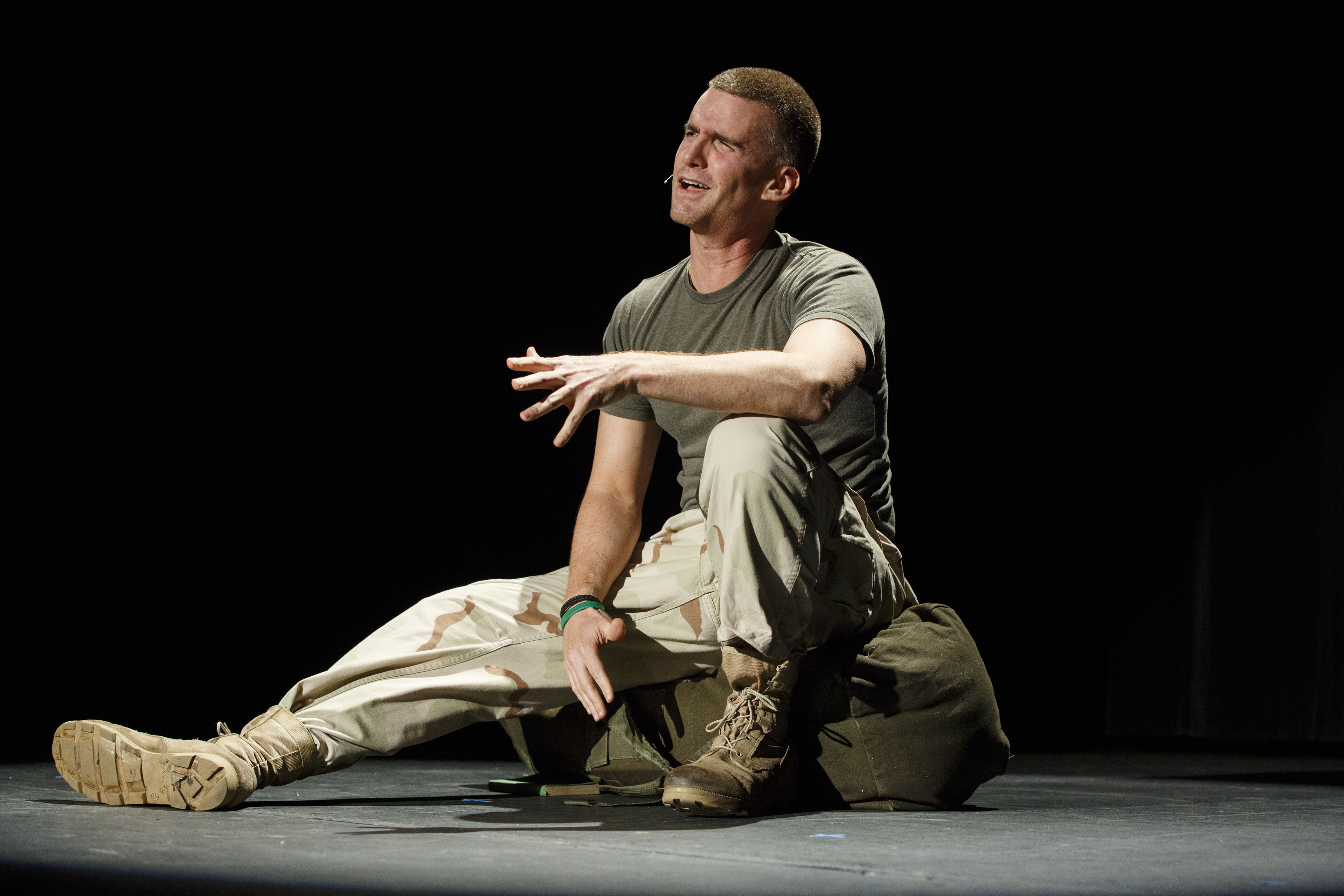
Armando Riesco performs a scene from Quiara Alegría Hudes' Elliot, a Soldier's Fugue. Photo: Patrick T. Fallon/Los Angeles Times.
Hudes spoke onstage with her cousin Elliot Ruiz, an Iraq war veteran who inspired the plays. As Ruiz told The New York Times in a 2012 piece about Hudes: “I feel like I’m really lucky that I’ve gotten to clear things in my mind.
“Seeing these plays Quiara put together was the cherry on top.”
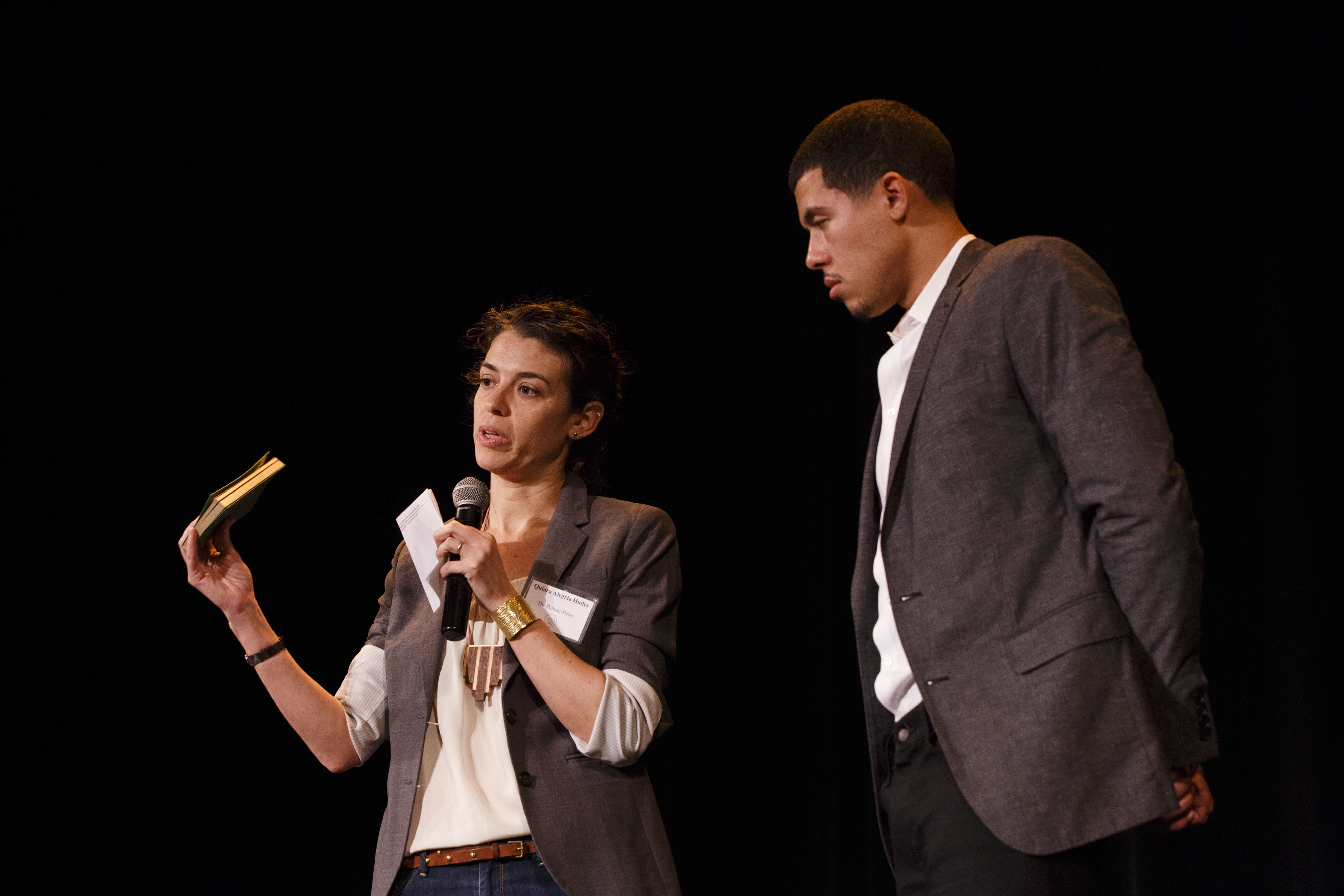
Quiara Alegría Hudes and Elliot Ruiz. Photo: Patrick T. Fallon/Los Angeles Times.
The keynote program blended historical, fictional and journalistic takes on war.
Looking back to the 1960s, this year’s fiction winner, Viet Thanh Nguyen, spoke about his book The Sympathizer and what it means to view the Vietnam war as a Vietnamese-American. Fredrik Logevall, 2013 history winner for Embers of War: The Fall of an Empire and the Making of America's Vietnam, brought an entirely different perspective to the same conflict.
Sebastian Junger rounded out the conversation with tales from Afghanistan and Russia. Kim Murphy of the LA Times was the moderator.

Viet Thanh Nguyen speaks as part of the keynote program. Photo: Patrick T. Fallon/Los Angeles Times.
The following morning, Murphy returned, along with photographer Carolyn Cole and reporters Shirley Christian and David Rohde.
Rohde shared his experience of having been taken captive by Christian Bosnian Serbs — and his abduction 13 years later by Muslim members of the Taliban. He had imagined his contribution to uncovering the deaths of 8,000 Bosnian Muslims might elicit sympathy from his Taliban captors. Not so.
"I'm abducted by this commander, he thinks I'm a CIA agent, and I remember telling them I did all this reporting in Bosnia, I was arrested by the Bosnian Serbs who were Christians, I exposed thousands of deaths, these mass executions. And I'm telling this to Taliban commanders, and the response from Taliban commanders was: 'Oh, that's good. That means you're worth more money.'"
As during the Dallas marquee event on The People, The Presidency and the Press, the journalists discussed who owns the narrative in the age of social media. In Dallas, reporters discussed how the White House can "completely skip over the press." In L.A., it was about terrorist organizations releasing their own imagery in an attempt to control the storyline.
At lunchtime, prize-winning photographers led gallery tours of their work.
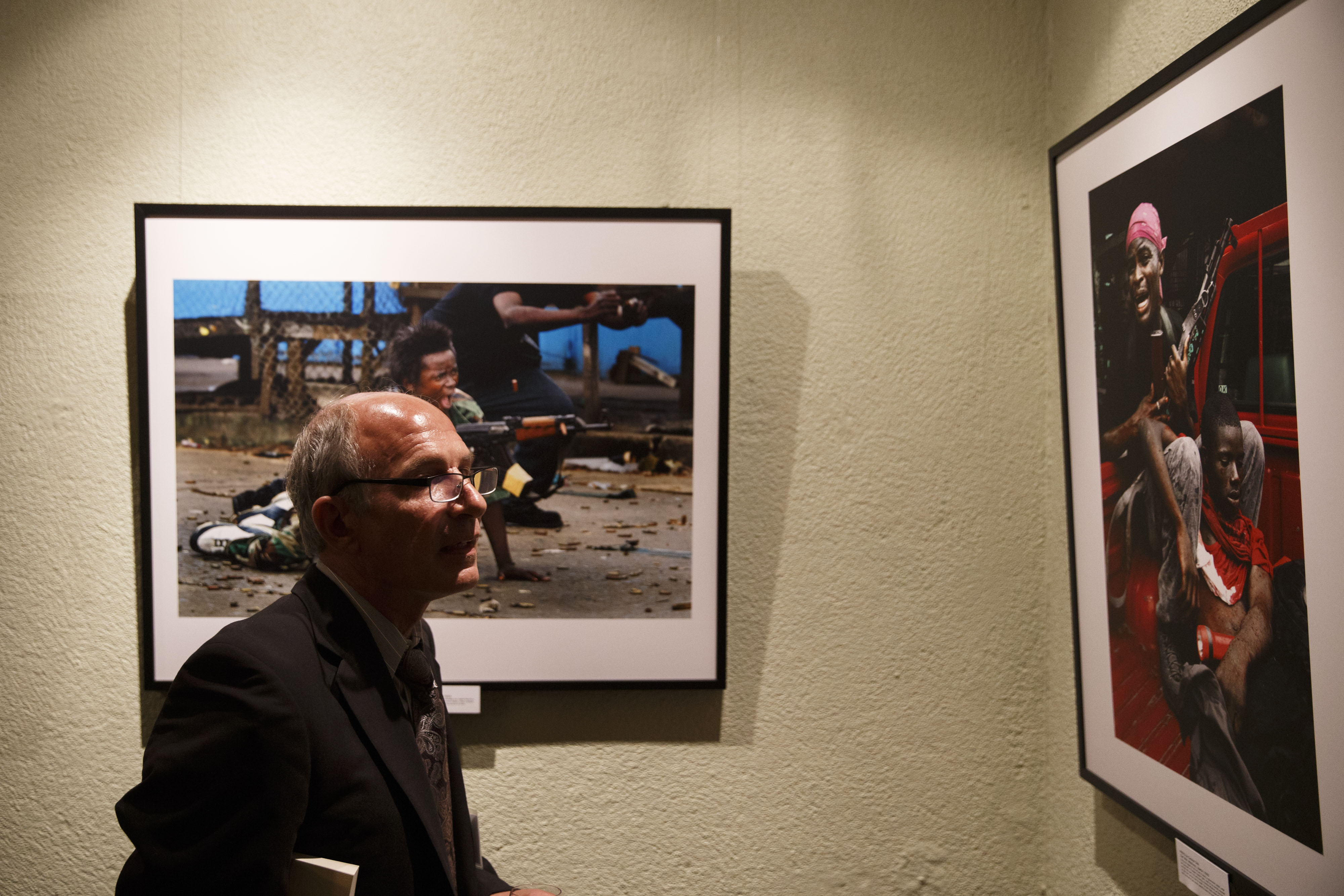
The photo gallery at "War, Migration and the Quest for Peace" in L.A. Photo: Patrick T. Fallon/Los Angeles Times.
Don Bartletti, Craig Walker, Nick Ut, Cole and David Hume Kennerly together represented four decades of war photography.
Further panels on "Migration" and "Veterans" united even more prize-winners. The event was cohosted by the USC Annenberg School for Communication and Journalism and Los Angeles Times.
The fourth and final Pulitzer Marquee event, "Power: Abuse and Accountability," will take place September 10-11 in Cambridge, Mass.