Finalist: Maggie Steber and Lynn Johnson of National Geographic

For a compelling, dignified photo narrative that provides an intimate look at the youngest face transplant recipient in the U.S.

Nominated Work

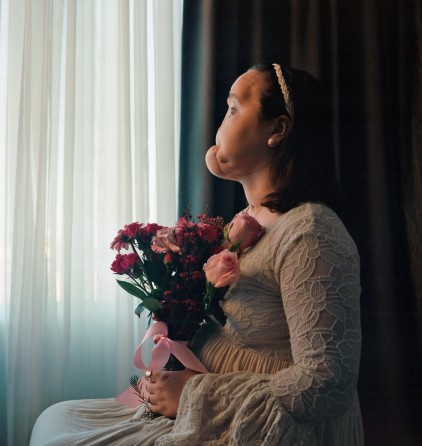
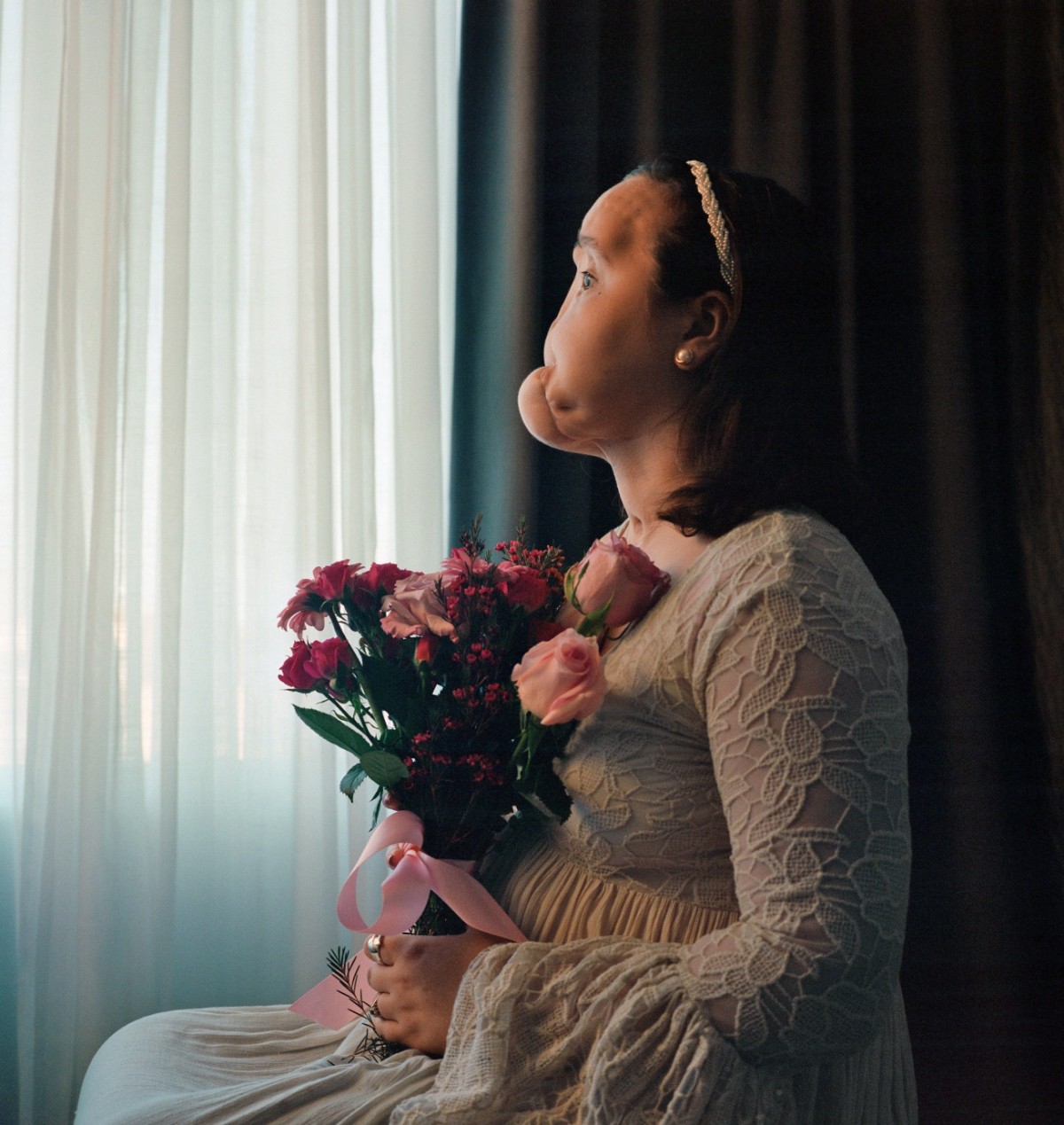
9 months, 22 days before Katie Stubblefield’s transplant: This story is difficult to look at. Yet we are asking you to go on the remarkable journey of how a young woman received a face transplant because it reveals something profound about our humanity. Our face conveys who we are, telegraphing a kaleidoscope of emotions. It’s our doorway to the sensory world, allowing us to see, smell, taste, hear, and feel the breeze. Are we our faces? Katie Stubblefield lost hers when she was 18. When she was 21, doctors gave Katie a new face. This is a story of trauma, identity, resilience, devotion, and amazing medical miracles. Photo by Maggie Steber. (All photos published in the September 2018 issue.)
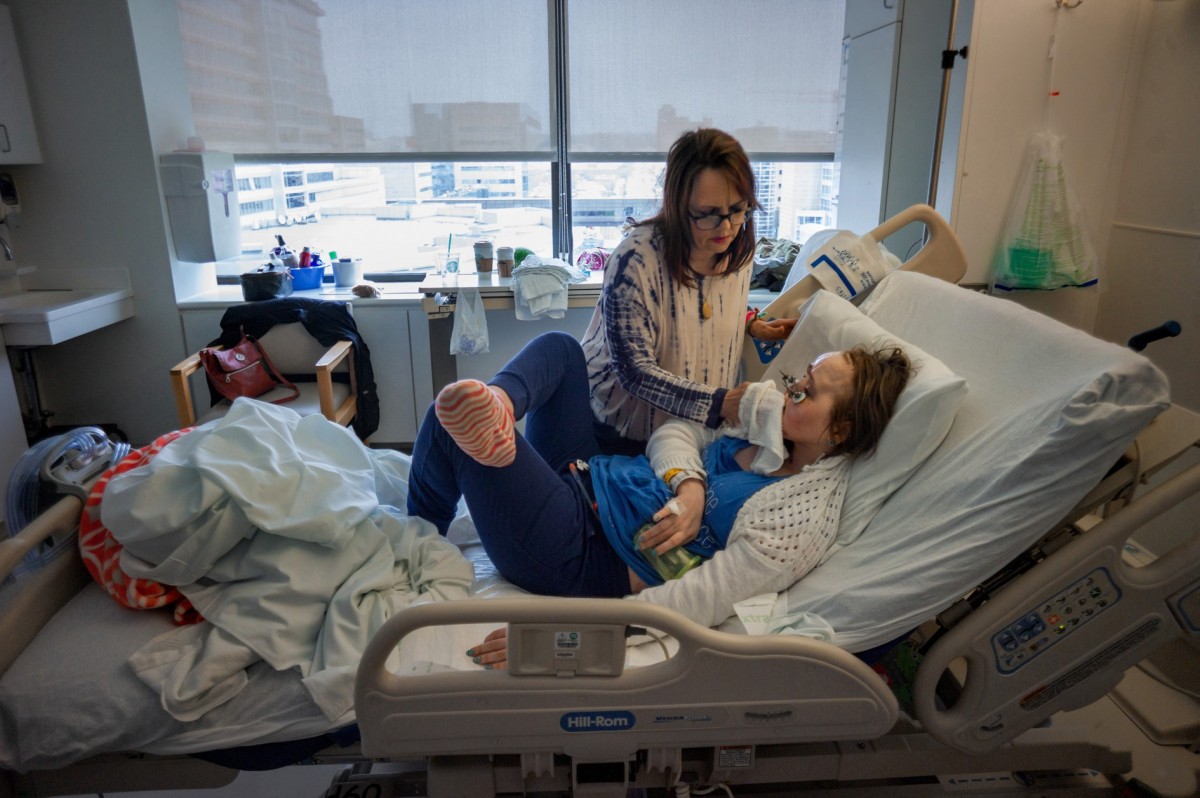
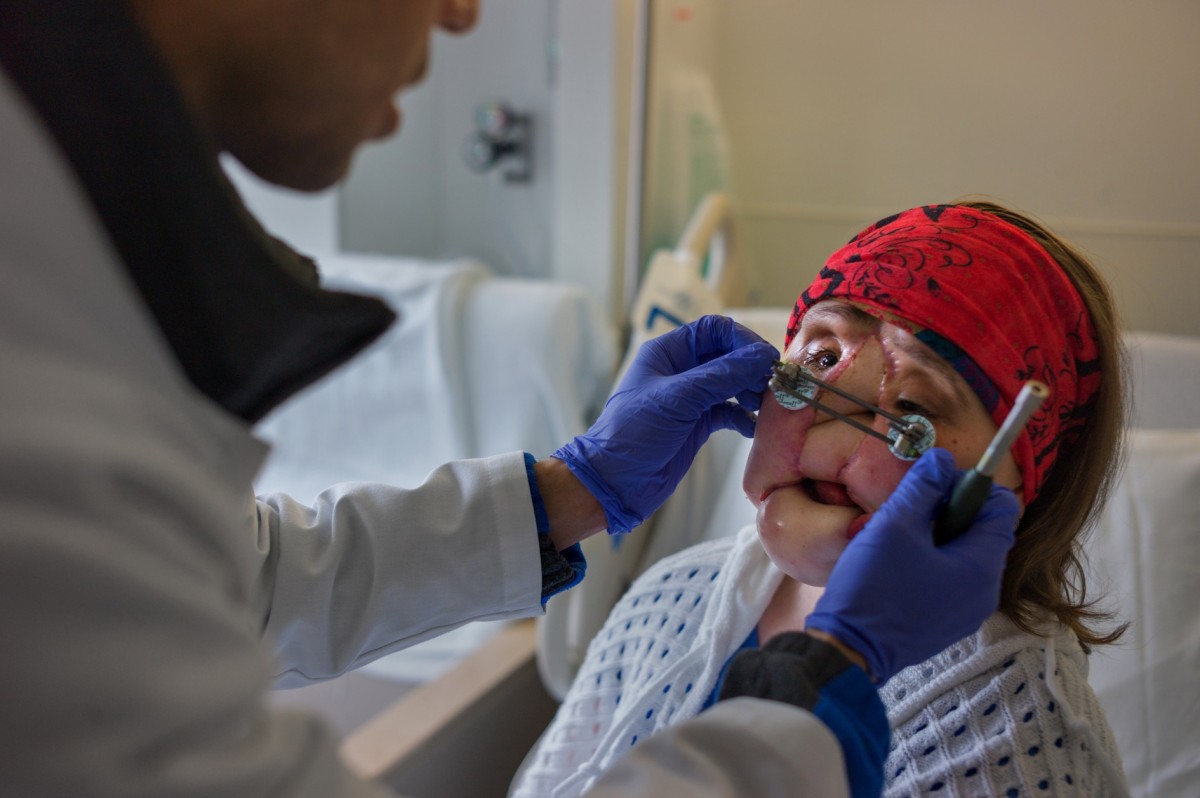
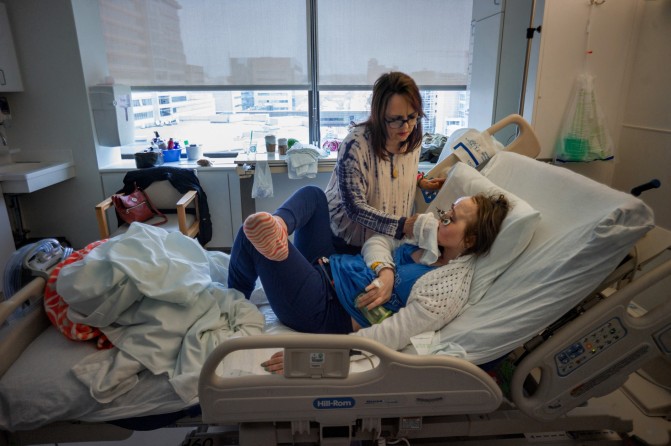
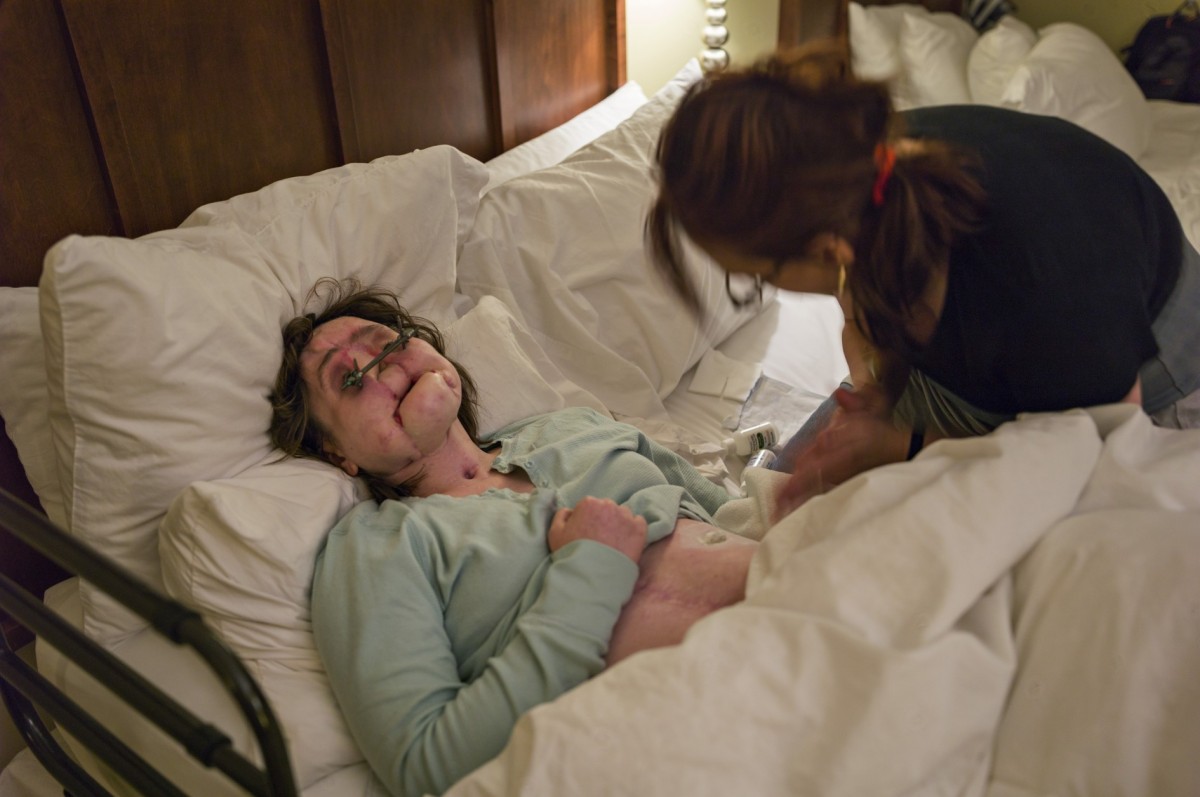
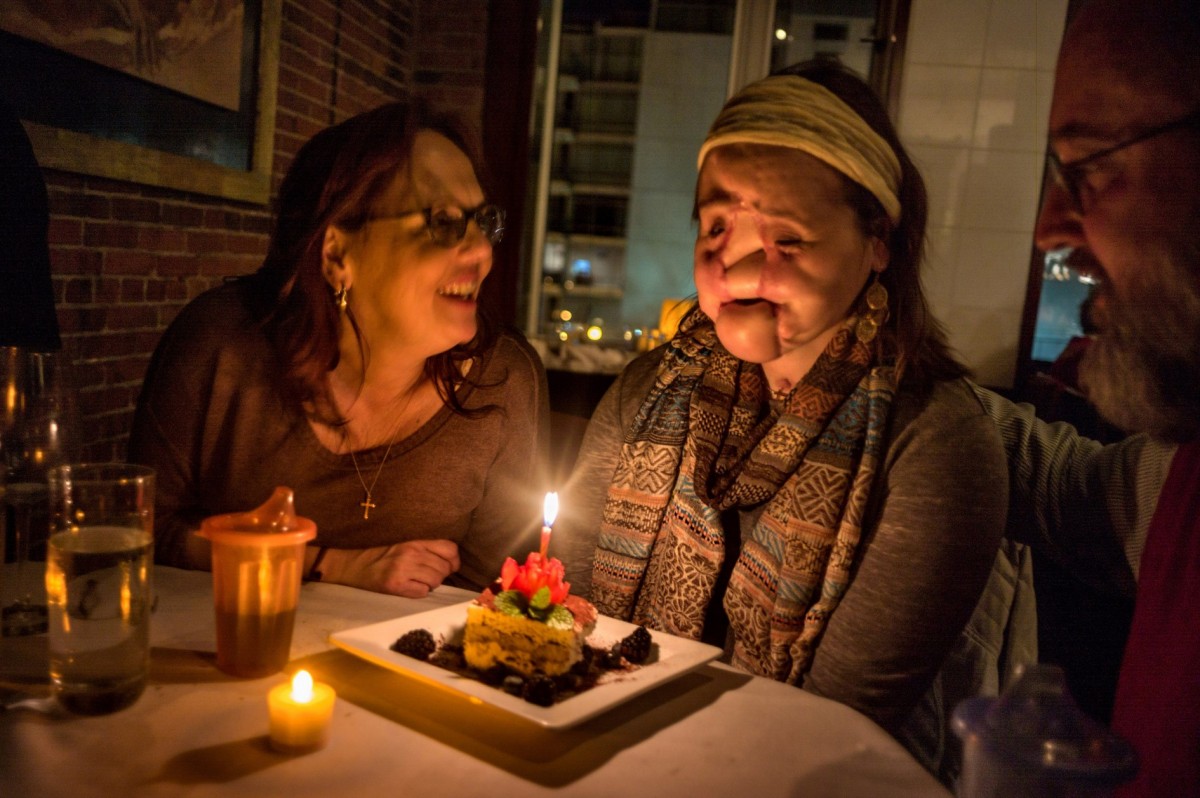
1 year, 2 days before Katie’s transplant: During one of Katie’s hospital stays, Alesia cleans and comforts her following a meal. Katie drank from a sippy cup because without lips, she had a hard time keeping liquids from dribbling out. To move her eyes closer, a doctor would come each day to adjust the distraction device, which was attached to her maxilla, the bone in the center of the face. Photo by Maggie Steber.
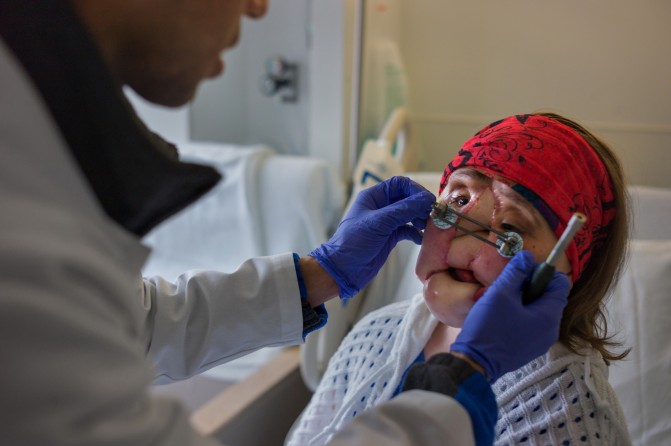
1year, 2 days before Katie’s transplant: To move her eyes into better alignment, surgeons carefully broke Katie’s maxilla, the bone in the center of the face, and then attached a distraction device. A doctor would come each day top adjust it to stretch the breaks, which fill in by natural healing. Photo by Maggie Steber.
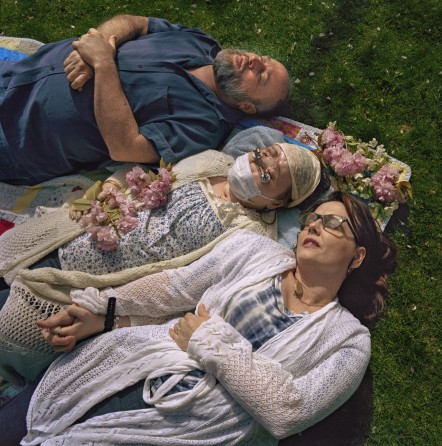
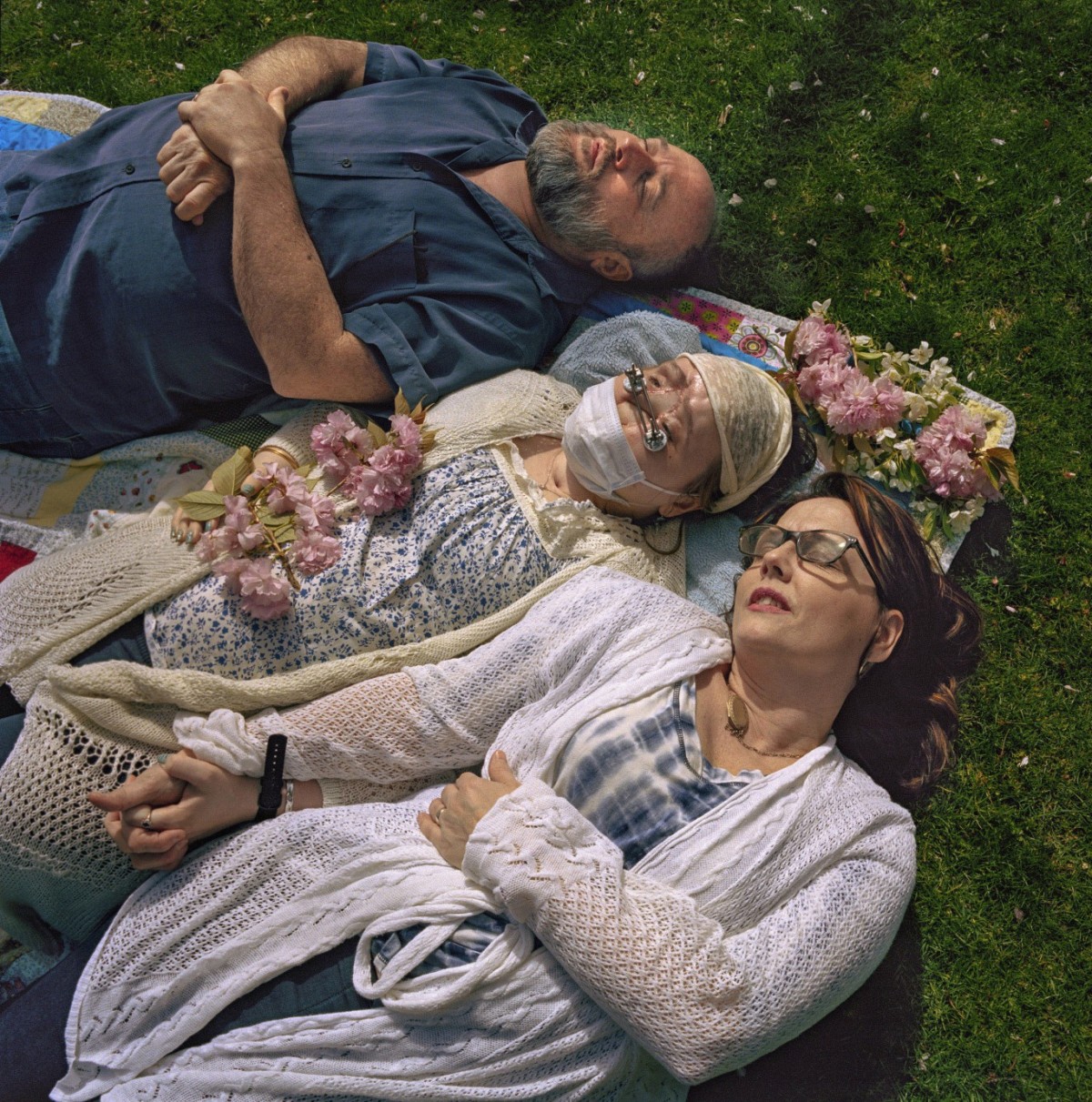
1 year, 1 day before Katie’s transplant Taking advantage of a sunny spring day, Katie and her parents, Robb and Alesia Stubblefield, indulge in a nap in a park near the Cleveland Clinic. With Katie in a wheelchair, the three explored the park, wandering amid blossoming trees and singing birds. The outing came after Katie had spent a month in the hospital. To reposition her eyes, she had surgery to implant what’s known as a dis- traction device. In the three years before her transplant, Katie was hospitalized more than a dozen times. Photo by Maggie Steber.
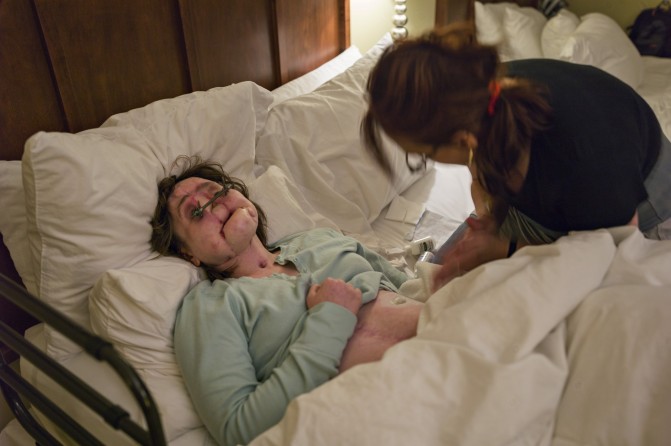
11 months, 26 days before Katie’s transplant: Alesia puts Katie to bed in the family’s apartment at the Ronald McDonald House in Cleveland, inserting the medication she was taking nightly into a tube that led to her stomach. Photo by Maggie Steber.
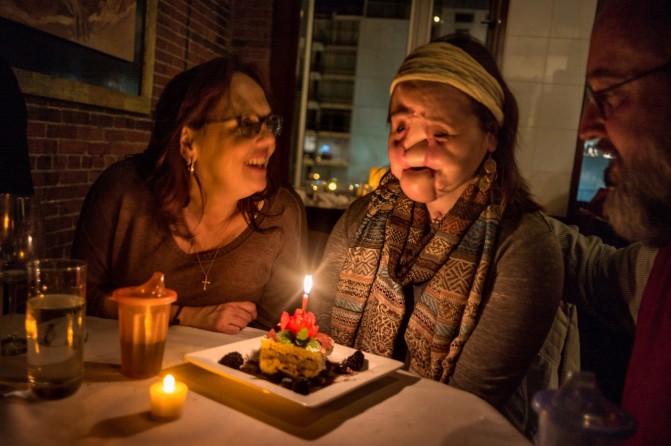
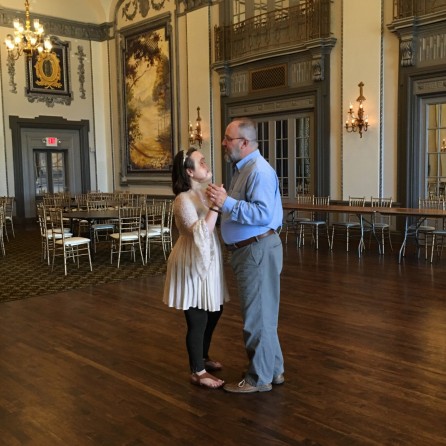
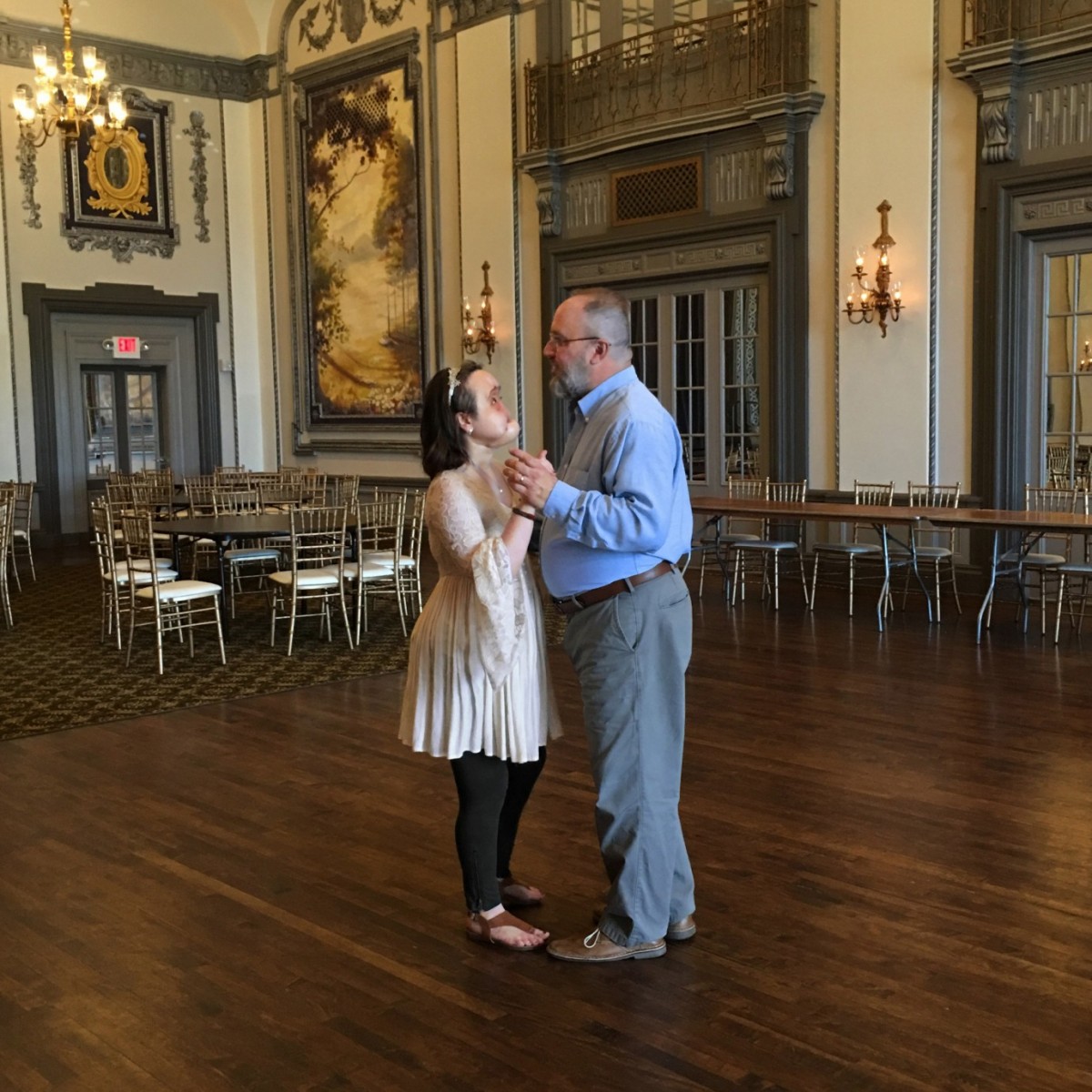
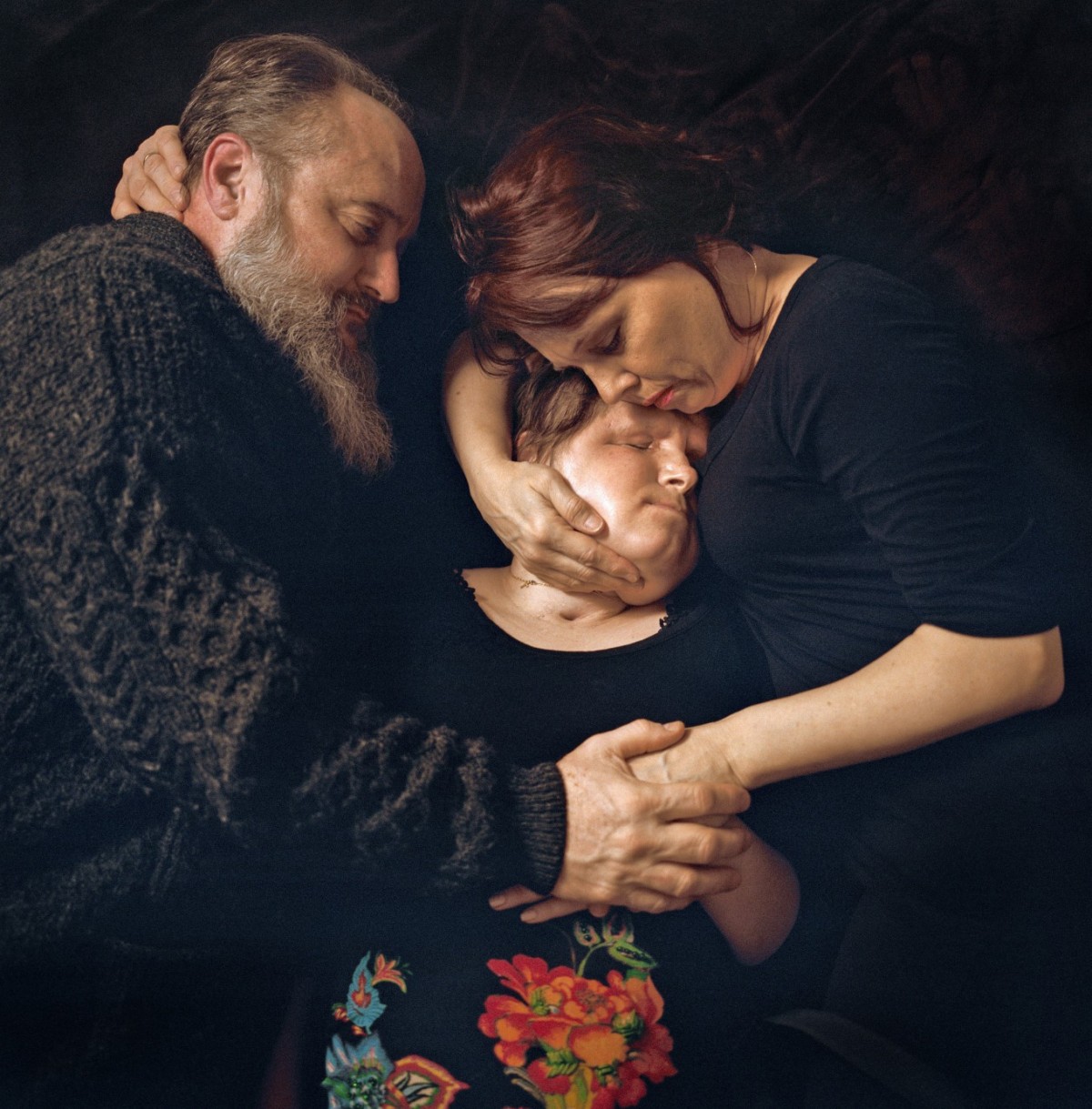
9 months, 22 days before Katie’s transplant: At Cleveland’s Tudor Arms Hotel, Katie and her father sing “Have I Told You Lately That I Love You?” as they share a dance. “Before this, I never spent so much time with my parents,” said Katie, who credits their love and devotion with helping to save her life. “Are we still broken over this whole thing? Oh my gosh, yes,” Robb said. “Things happen in life that shatter us to pieces, but I think it’s where we go from there.” Photo by Maggie Steber.
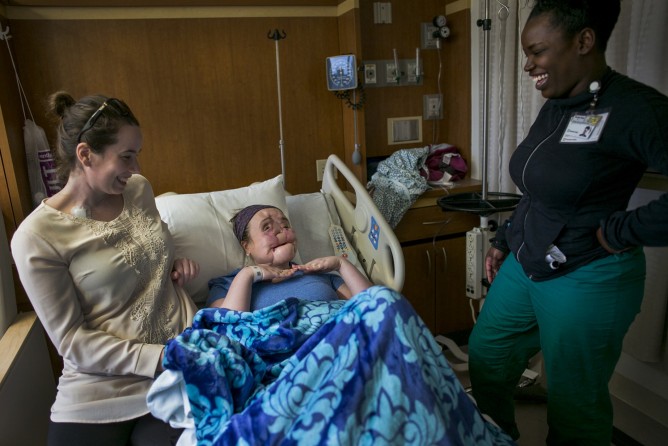
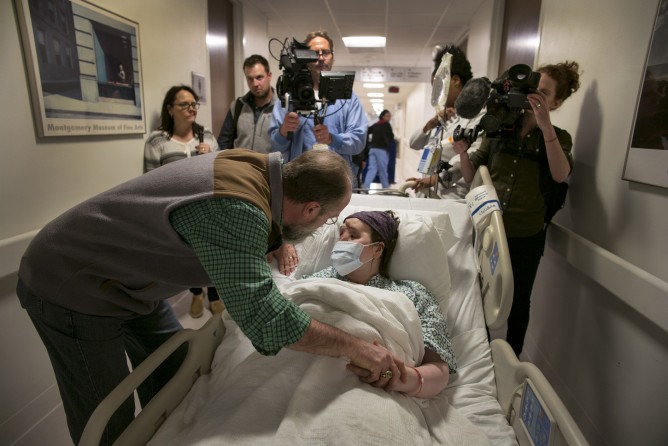
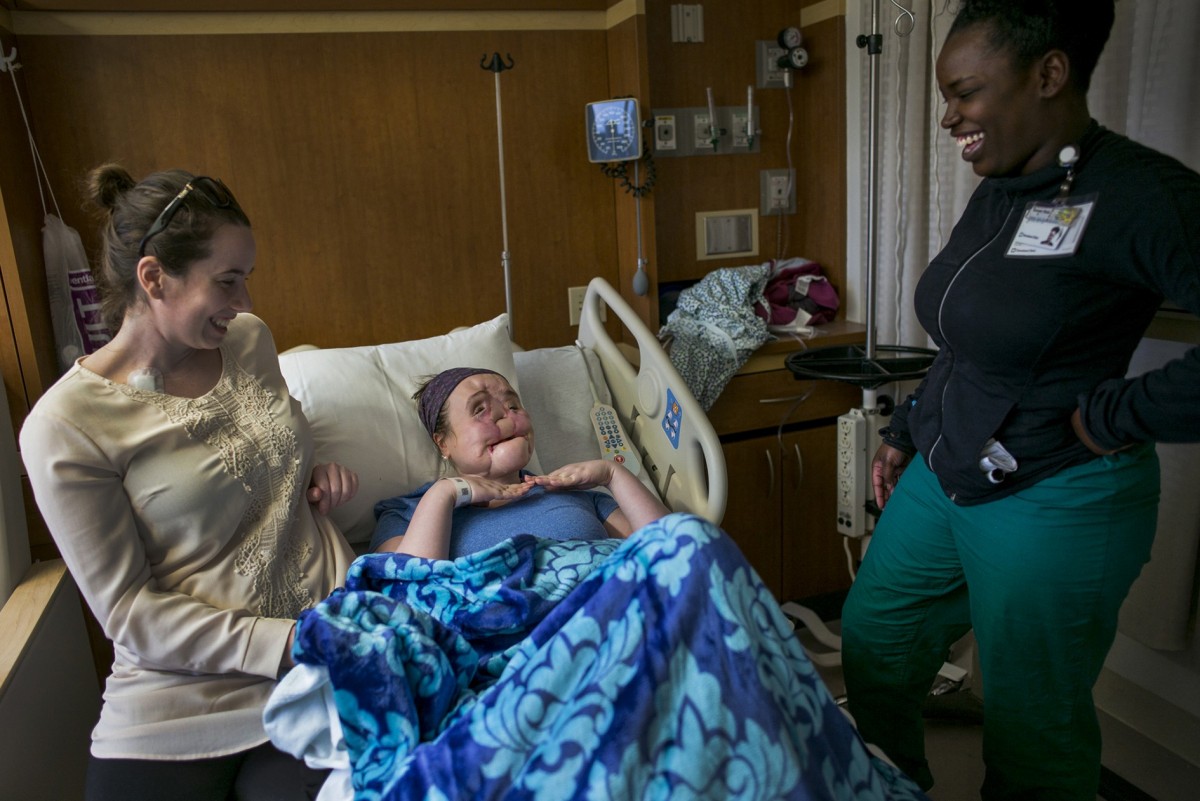
The evening before surgery, Katie, whose damaged face was reconstructed, gestures to show that she’s excited to be getting a new one. She shares the lighthearted moment with Diana Donnarumma, a friend she made at the Ronald McDonald House, and nursing assistant Karnyia Wade. Photo by Lynn Johnson.
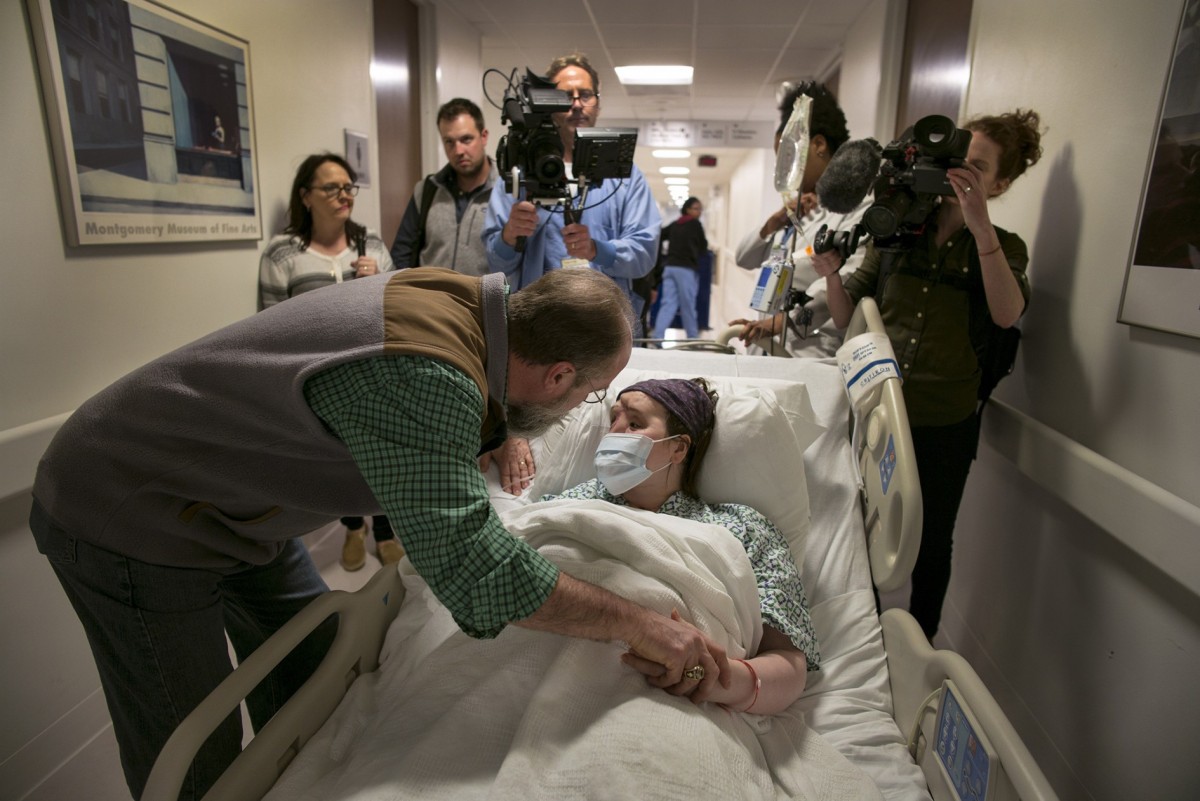
As Katie heads into the operating room, Robb offers encouragement. “You’re doing great, OK? We’re just around the bend. All right? And you’re in great hands.” He tells her he loves her, and then Alesia and Katie’s brother, Robert, do the same. Photo by Lynn Johnson.
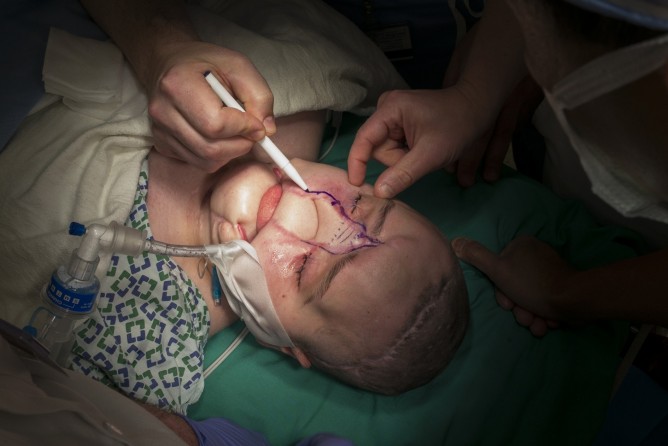
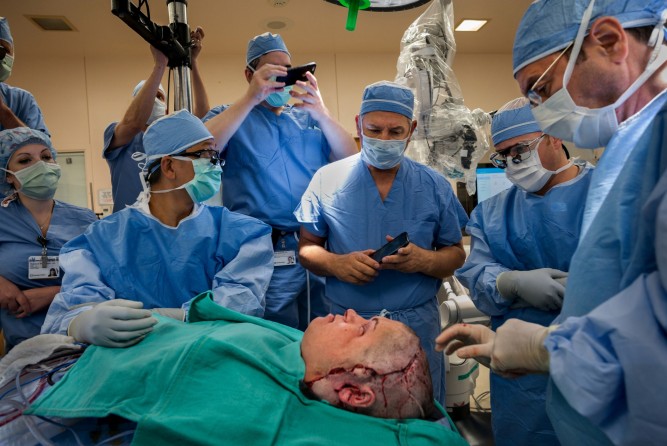
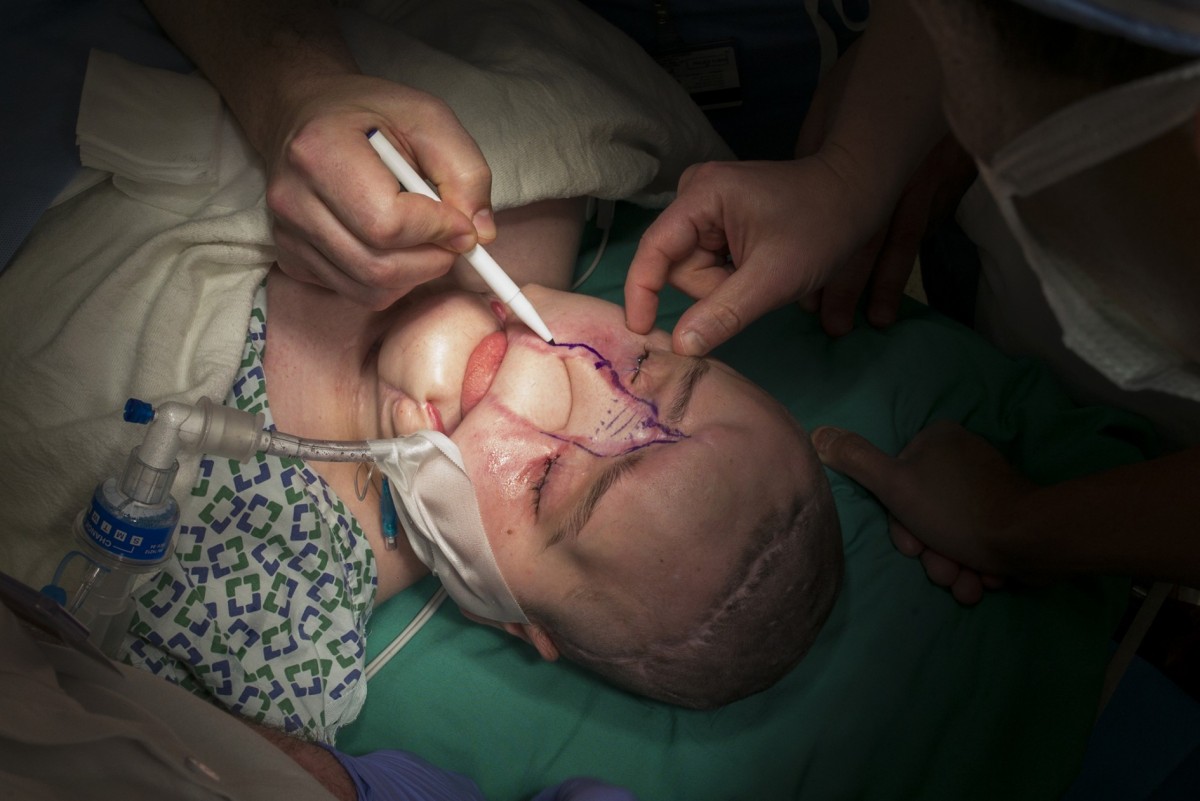
While surgeons work to remove the donor's face in one operating room, surgeons in an adjoining one map out which parts of Katie's face they plan to remove. Photo by Lynn Johnson.
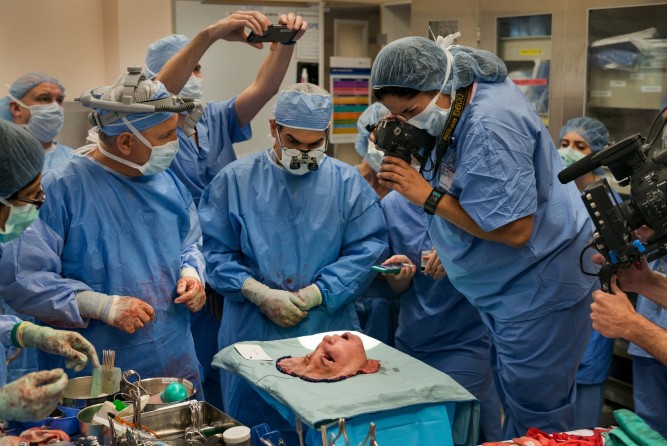
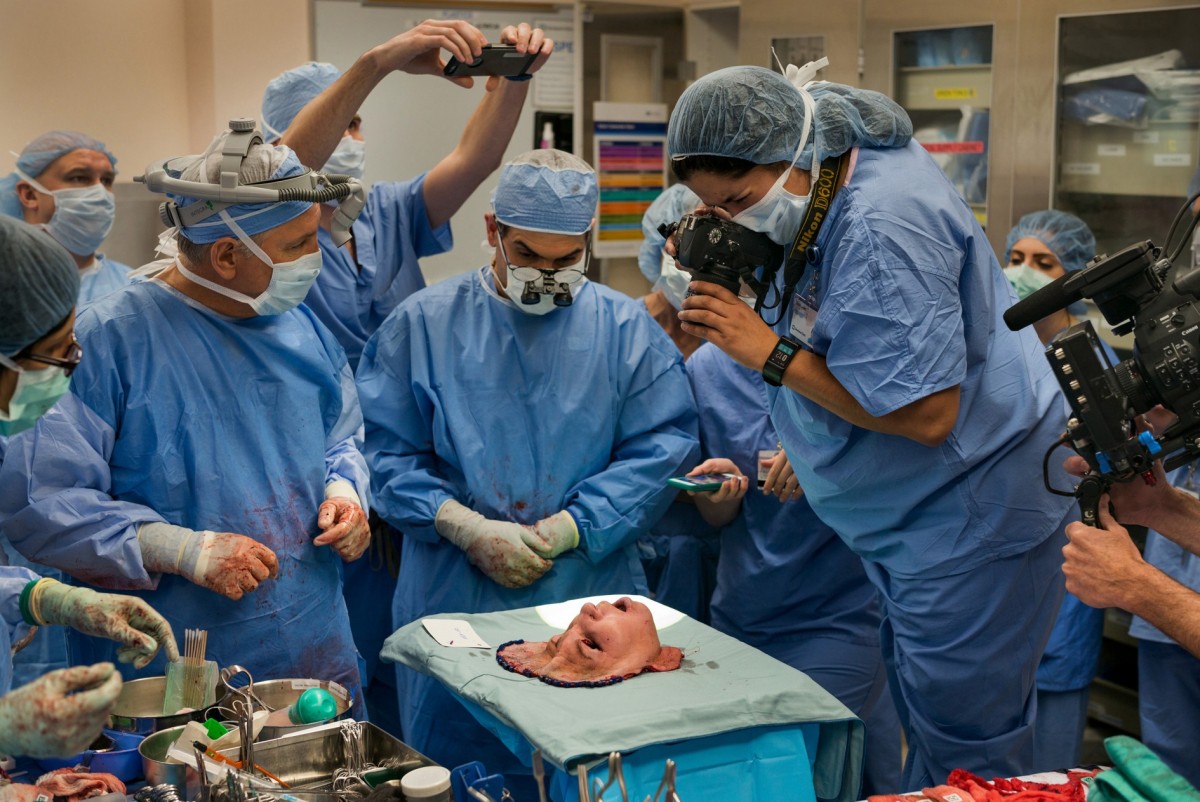
Sixteen hours into a transplant operation at the Cleveland Clinic in Ohio, surgeons finish the intricate task of removing the face from an organ donor. Awed by the sight and by the gravity of their work, the team falls suddenly silent as staff members document the face in between its two lives. The surgeons would spend 15 more hours attaching the face to Katie Stubblefield. Photo by Lynn Johnson.
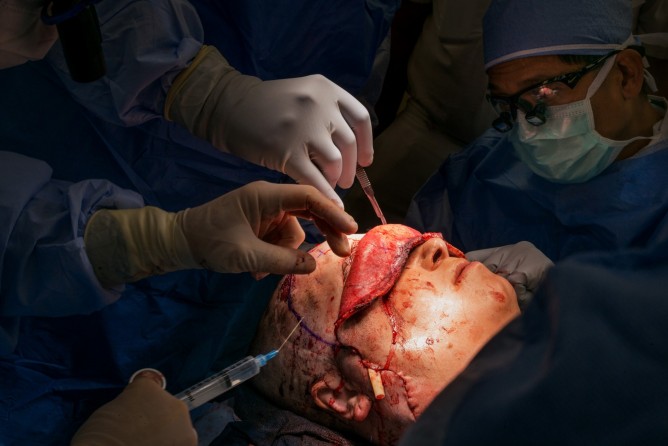
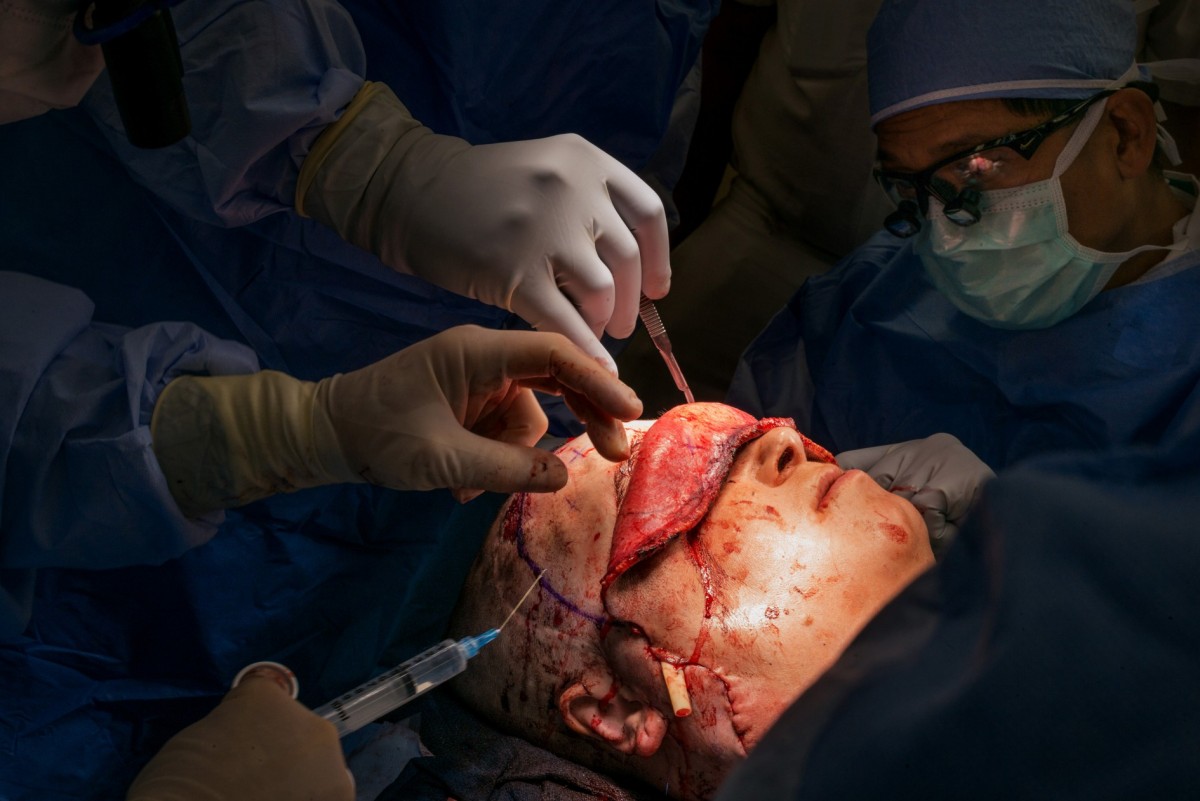
With the donor’s face almost completely attached, surgeons prepare to cut away Katie’s forehead, following the line drawn on her skin. To transplant the face, they had started from her neck and worked up, connecting blood vessels, bones, and nerves. To stitch the blood vessels and nerves, microsurgeons used sutures the size of a human hair. Photo by Lynn Johnson.
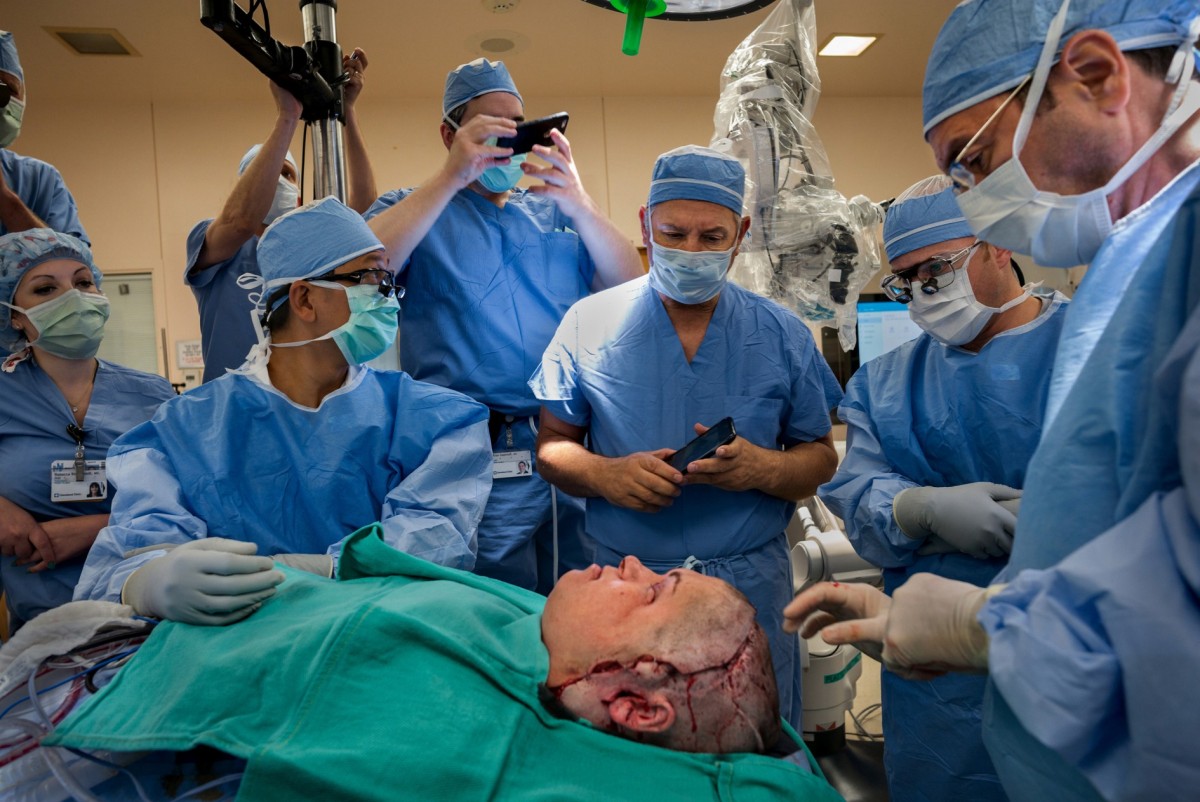
Katie’s main doctors, Brian Gastman (rear) and Frank Papay (center) had planned to perform a partial transplant, keeping her cheeks, eyebrows, and forehead. But as the operation progressed, they realized she might look better with a full transplant because the donor’s face was larger and darker in skin tone. To show Katie’s parents how this would look, Gastman and Papay take photos with the new face in place. Photo by Lynn Johnson.
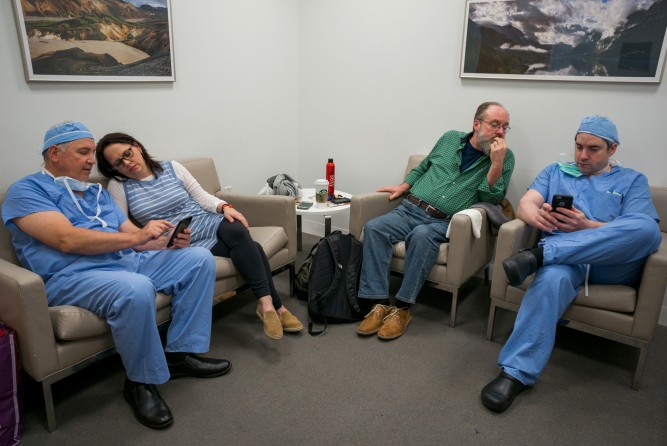
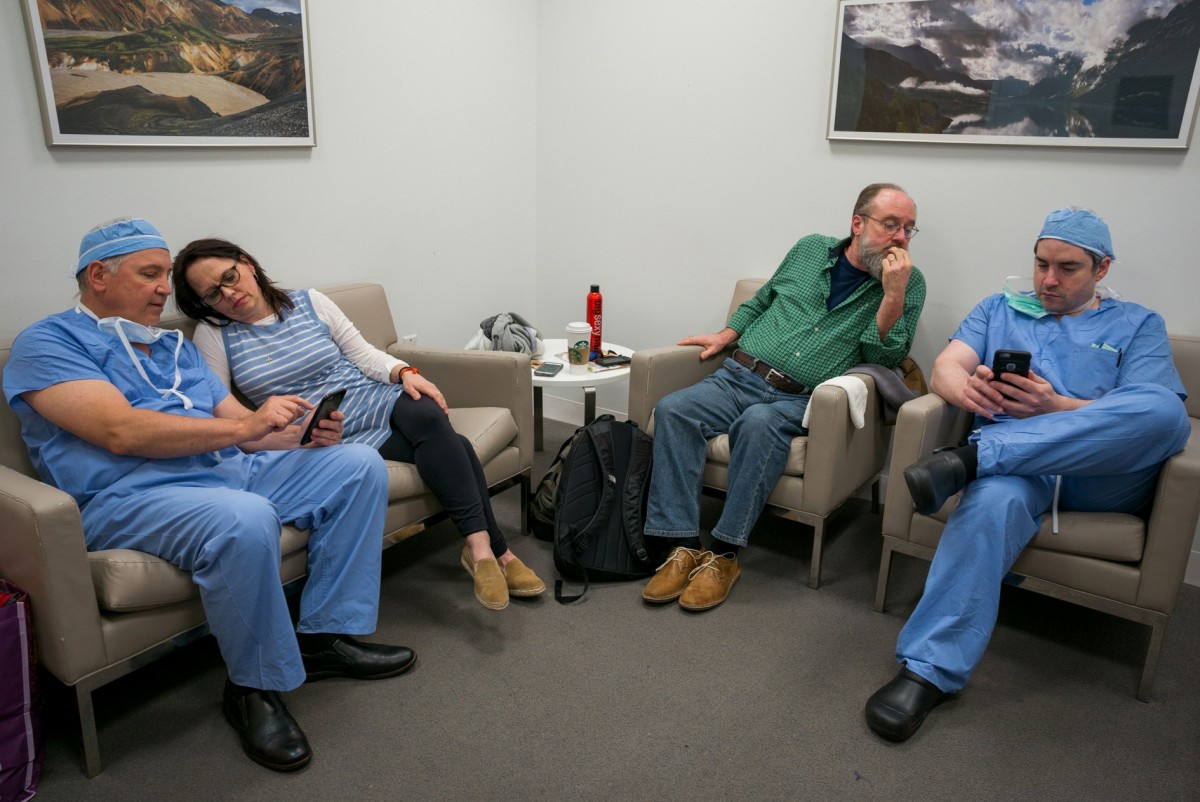
Stepping away from the operating room, Papay, seated next to Alesia, and Gastman, next to Robb, show photos they just took of Katie and discuss the advantages and risks of using the donor’s entire face. A full transplant would look better, helping Katie feel more comfortable in social situations. But transplanting that much skin could increase the risk of rejection. Robb and Alesia decided Katie would want to look as good as she possibly could. Photo by Lynn Johnson.
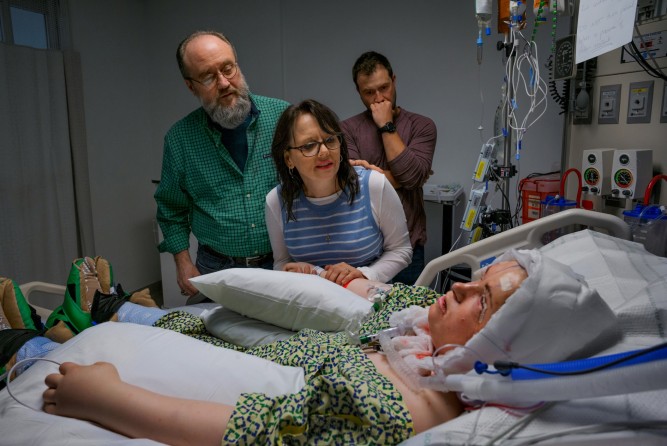
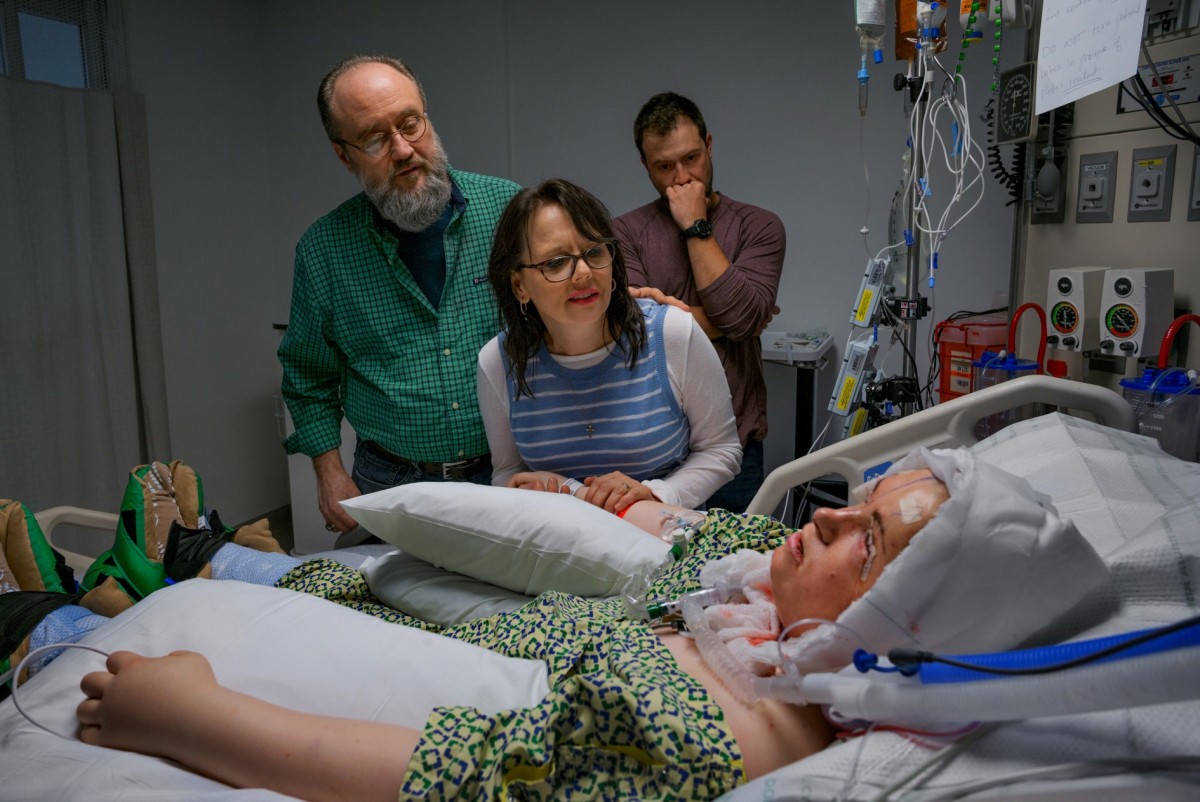
Shortly after the operation, Robb, Alesia, and Katie’s brother, Robert, gaze at Katie’s new face for the first time as she remains sedated in the ICU. Standing at her bedside, they whisper to each other about her appearance. Robb said later that he found it surreal to see his daughter with the third face of her life. Alesia thought she looked really good, not as swollen as she’d expected, but she also wondered, “Where’s Katie?” Robert noted a new feature: a dimple on her chin. Photo by Lynn Johnson.
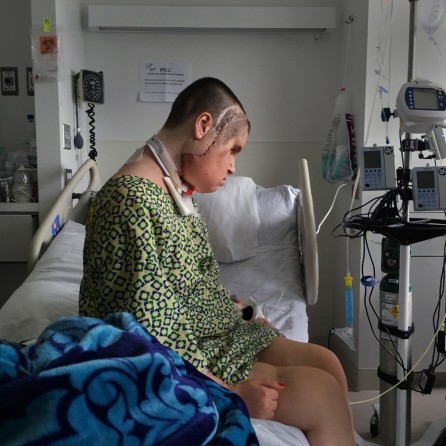
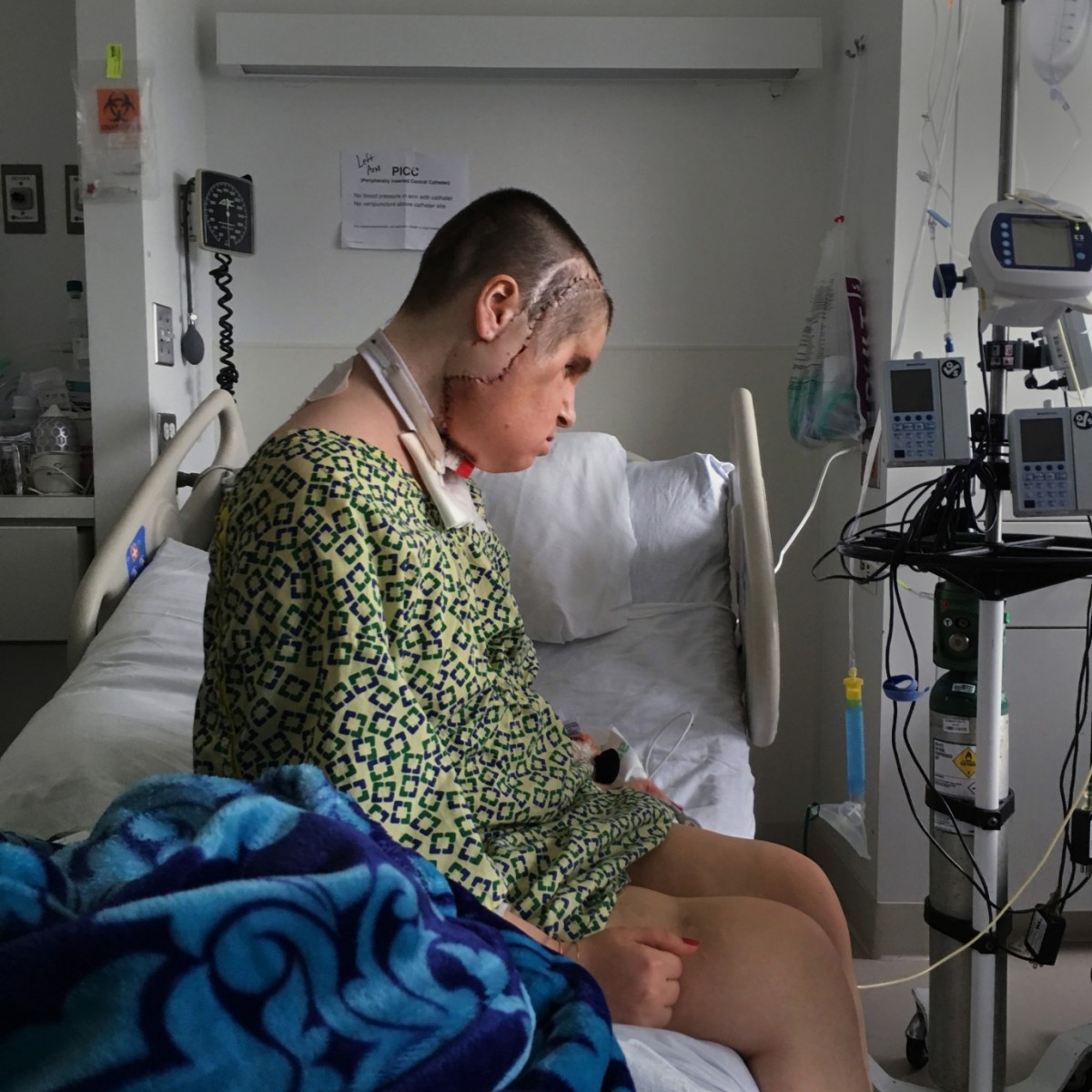
19 days after Katie’s transplant: Katie takes a moment for herself in her room, a rare occurrence in the hospital, as doctors and others frequently stopped by to check on her progress. Her new face, with the sutures still in, remains quite swollen. Photo by Maggie Steber.
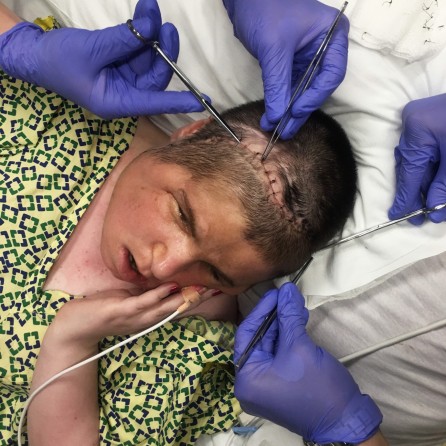
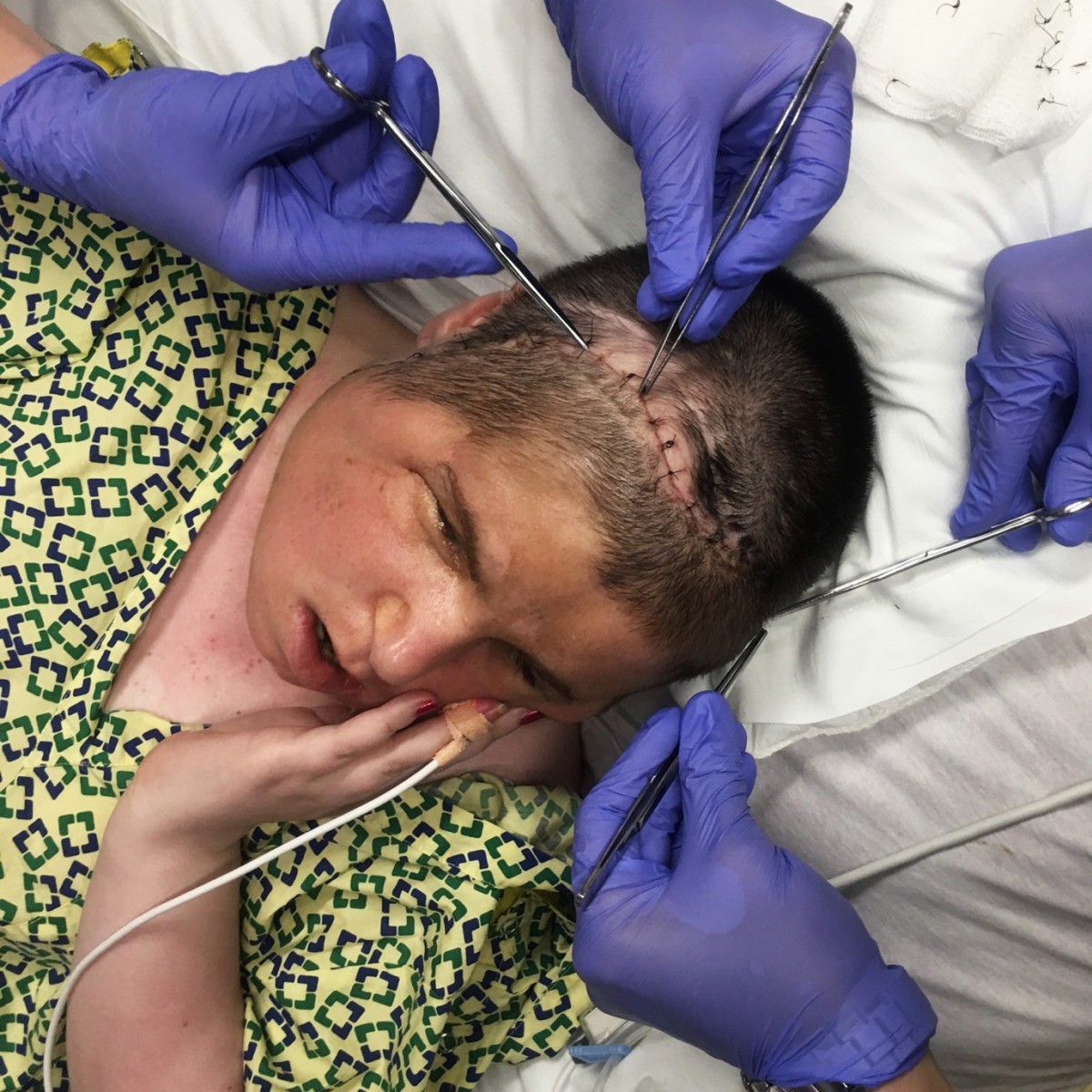
19 days after Katie’s transplant: Doctors remove every other stitch joining Katie’s new face to her scalp. She found the procedure painful and cried out for her mother, who wasn’t there. Photo by Maggie Steber.
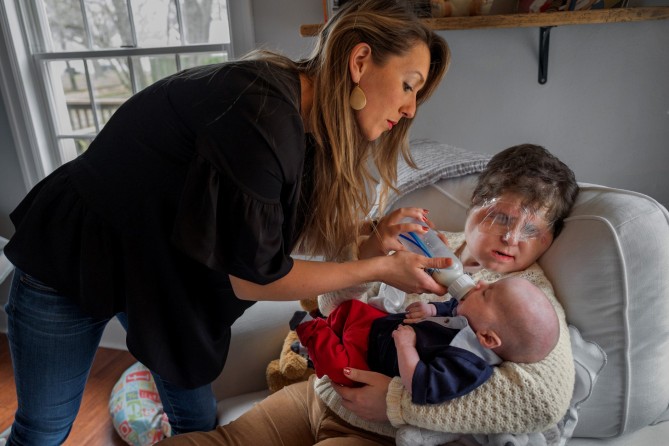
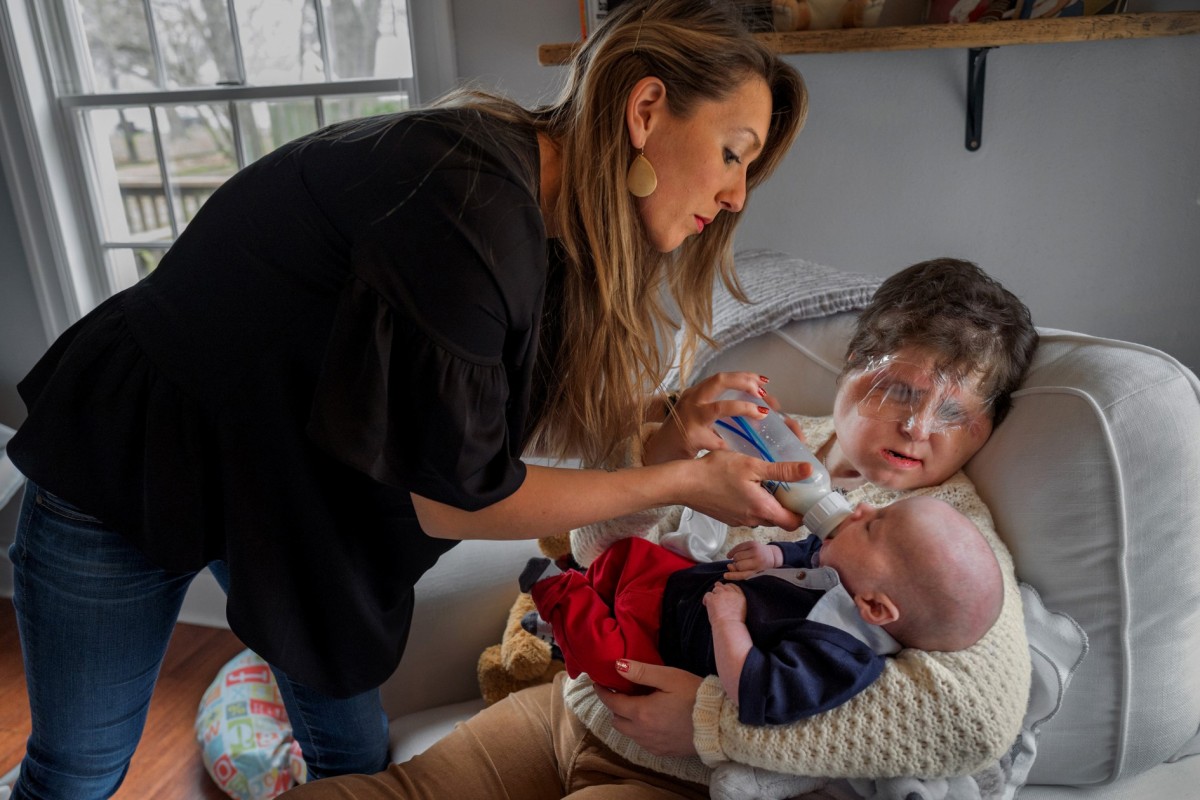
7 months, 16 days after Katie’s transplant: On her first long trip away from the Cleveland Clinic and the Ronald McDonald House, Katie visits her sister, Olivia McCay, in Peoria, Illinois. She holds her nephew, Luke. Olivia had Luke almost six months after Katie’s face transplant. “I’m hoping I’ll continue to heal,” Katie said, “so he won’t be scared when he sees me.” Katie’s eyes are often dry and painful, so she sometimes wears a protective plastic film over them to keep moisture in. Photo by Lynn Johnson.
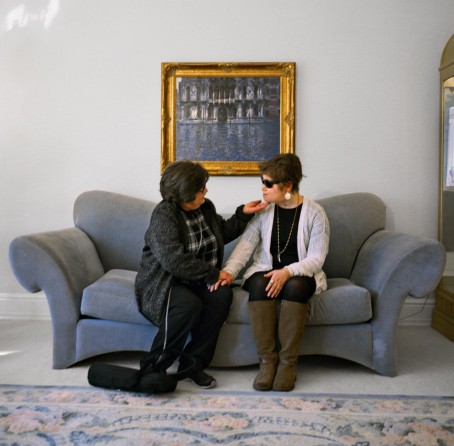
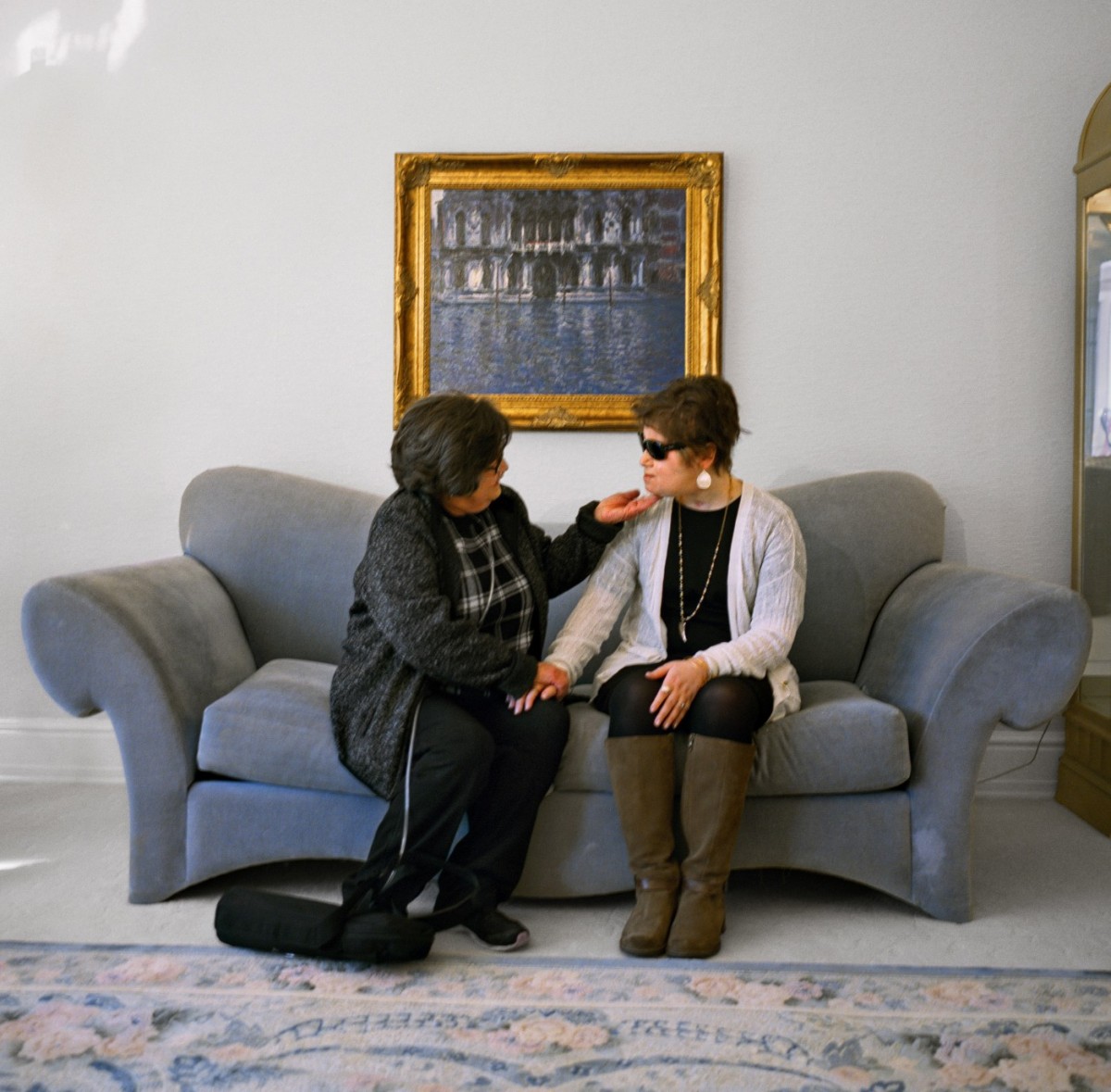
8 months, 22 days after Katie’s transplant: Meeting Katie for the first time, Sandra Bennington studies her face, which had been her granddaughter’s. “You look beautiful,” Sandra says. Katie didn’t look exactly like her granddaughter, Adrea Schneider, but Sandra could see Adrea in her nose and mouth. Before they met, Katie had cried because she was nervous. Afterward, she said, “I felt like she was my grandmother. I felt very loved.” Sandra later said she wanted to tell Katie to call her Amma, the name Adrea had given her. Photo by Maggie Steber.
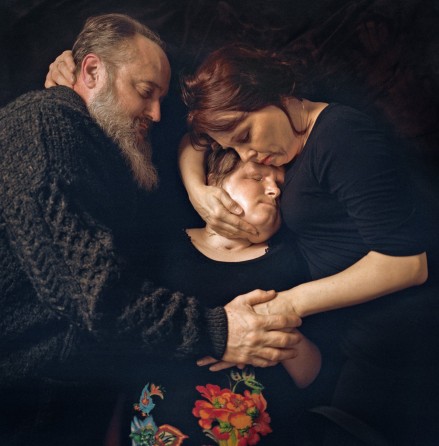
8 months, 23 days after Katie’s transplant: Determined to help Katie live a life as normal and valuable as possible, Robb and Alesia put their own lives on hold for more than four years. Pushing through exhaustion, relying on their faith in God, they accompany their daughter to endless appointments and therapy sessions. They’re already looking into ways to improve Katie’s vision, including the possibility of eye transplants. They expect to remain in Cleveland near the clinic and Katie’s doctors for the near future. Photo by Maggie Steber.

Biography

Photographer Maggie Steber has worked in 64 countries focusing on humanitarian, cultural, and social stories. Her honors include the Leica Medal of Excellence, World Press Photo Foundation, the Overseas Press Club, Pictures of the Year, the Medal of Honor for Distinguished Service to Journalism from the University of Missouri, the Alicia Patterson and Ernst Haas Grants, and a Knight Foundation grant for the New American Newspaper project.

For over three decades, Steber has worked in Haiti. Aperture published her monograph, DANCING ON FIRE. In 2013 Steber was named as one of eleven Women of Vision by National Geographic Magazine, publishing a book and touring an exhibition in five American cities. Steber has served as a Newsweek Magazine contract photographer and as the Asst. Managing Editor of Photography and Features at The Miami Herald, overseeing staff projects that won the paper a Pulitzer and two finalist recognition. Her work is included in the Library of Congress, The Richter Library and in private collections. She has exhibited internationally. Clients include National Geographic Magazine, The New York Times Magazine, Smithsonian Magazine, AARP, The Guardian, and Geo Magazine among others. Steber teaches workshops internationally including at the World Press Joop Swart Master Classes, the International Center for Photography, Foundry Workshops and and the Obscura Photo Festival.
Lynn Johnson is a regular contributor to National Geographic magazine who has photographed the global human condition for the past 35 years. Lynn has documented celebrities and tragedies alike, bringing a subtle perspective to tough issues—from the scourge of land mines and the value of threatened languages to living with HIV. She has led numerous photo workshops, including National Geographic’s Photo Camps, which use photography to help at-risk youth around the world to develop their own voices. Her work has been published in more than 25 stories for National Geographic magazine, as well as in publications such as Life magazine and Sports Illustrated. Lynn was recently selected by her peers as the winner of the 2013 National Geographic Photographer’s Photographer award, a prestigious annual honor given to the photographer who has most inspired fellow photographers to "expand the possibilities of the medium." She is also one of 11 featured photographers in the National Geographic book and traveling exhibition, Women of Vision: National Geographic Photographers on Assignment, which profiles the lives and work of important photojournalists and goes behind the lens of their individual assignments.

Winners

Prize Winner in Feature Photography in 2019:

Lorenzo Tugnoli of The Washington Post

For brilliant photo storytelling of the tragic famine in Yemen, shown through images in which beauty and composure were intertwined with devastation. (Moved by the jury from Breaking News Photography, where it was originally entered.) Feature Photography

Finalists

Nominated as finalists in Feature Photography in 2019:

Craig F. Walker of The Boston Globe

For superb photography and sophisticated visual storytelling that brought understanding to the story of a young boy living with a complex developmental disability.

The Jury

Danese Kenon(Chair)

Director, Photography & Video

J. David Ake

Director, Photography

Jonathan Bachman

freelance photographer, New Orleans, La.

Darcy Eveleigh

photo editor/visual journalist, Glen Ridge, N.J.

Michele McDonald

Photo Editor

Winners in Feature Photography

Photography Staff of Reuters

For shocking photographs that exposed the world to the violence Rohingya refugees faced in fleeing Myanmar. (Moved by the Board from the Breaking News Photography category, where it was entered.)

E. Jason Wambsgans

For a superb portrayal of a 10-year-old boy and his mother striving to put the boy’s life back together after he survived a shooting in Chicago.

Jessica Rinaldi

For the raw and revealing photographic story of a boy who strives to find his footing after abuse by those he trusted.

2019 Prize Winners