Finalist: Craig F. Walker of The Boston Globe

For superb photography and sophisticated visual storytelling that brought understanding to the story of a young boy living with a complex developmental disability.

Nominated Work

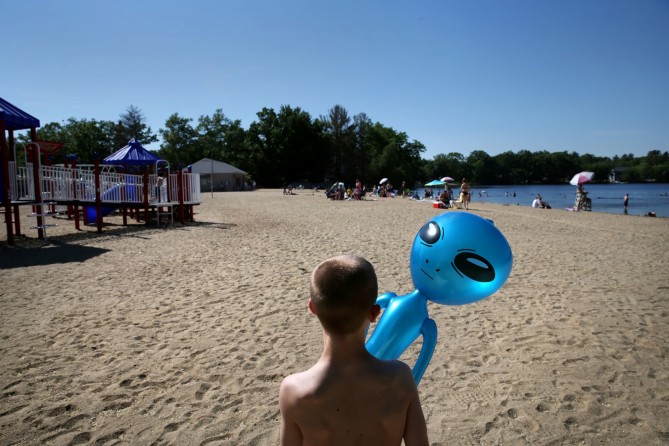
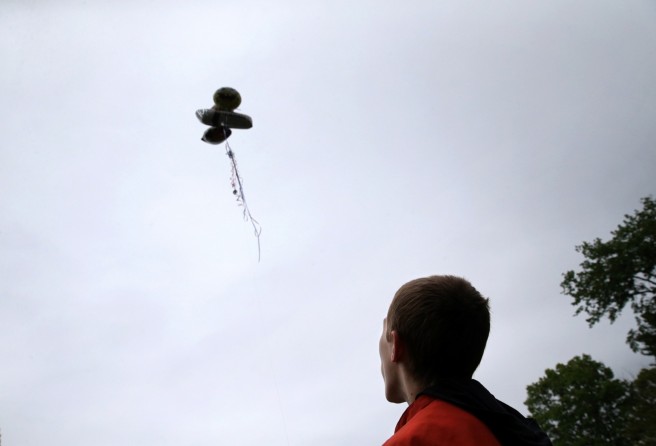
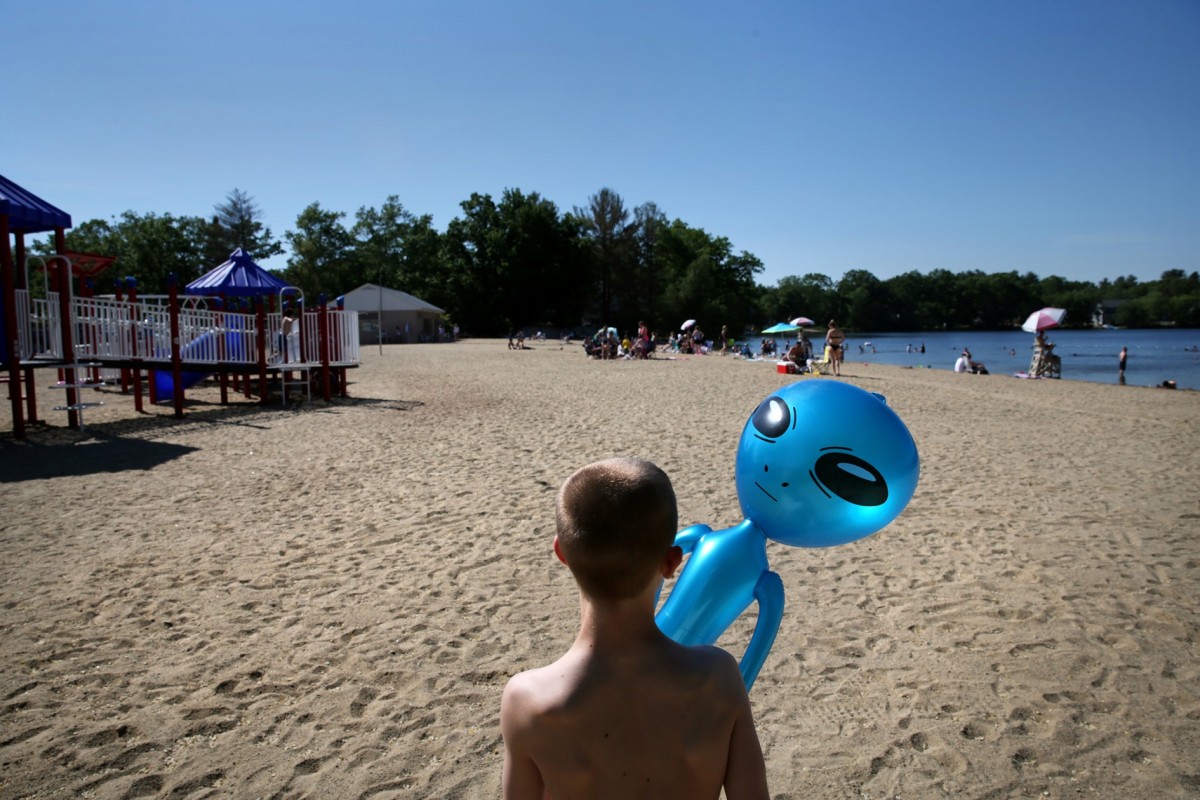
He is moody and unpredictable. He is easy to love, affectionate, and friendly. Vulnerable, sweet, devoted to family. Impulsive, strong, and overflowing with emotion. Dreaming of home, always. Never quite at home, anywhere. This is Connor Biscan, a puzzle his family and caregivers have worked long and hard to solve, a boy who lives at the intersection of autism and mental illness. It isn't so much a rare place-as many as half of autistic children suffer from mental health problems-but it can be a deeply baffling one. The overlap between these afflictions is hard to untangle; diagnosis and treatment can be very difficult. And a health care system meant to help can instead be frustrating, even harsh. Connor Biscan walks the beach with an alien balloon while visiting Silver Lake with his family in Wilmington, MA. His mother, Roberta Biscan, suspected soon after Connor was born that something was wrong, but her family thought she was being dramatic. He had rituals, such as counting ceiling fan blades, and an obsession with balloons. He was diagnosed with autism at age two. (May 6, 2018)
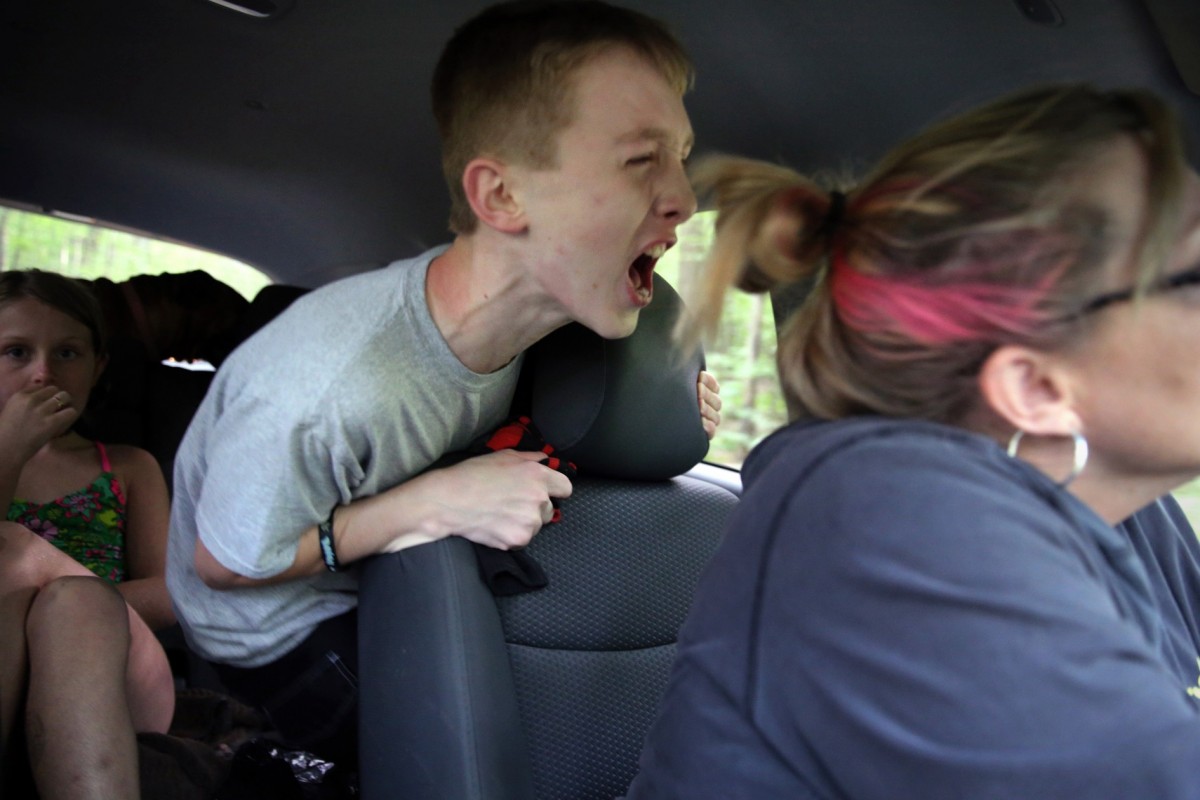
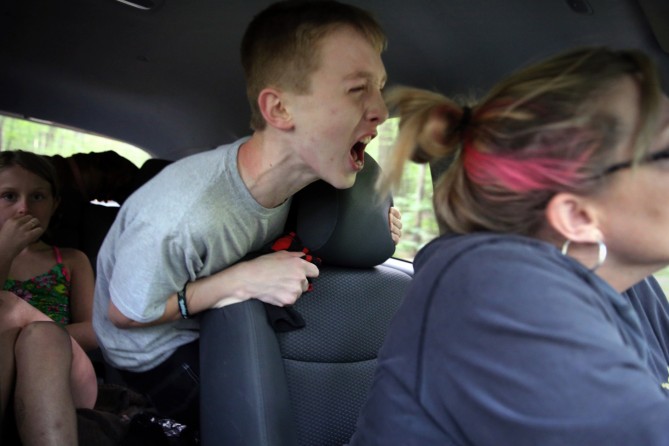
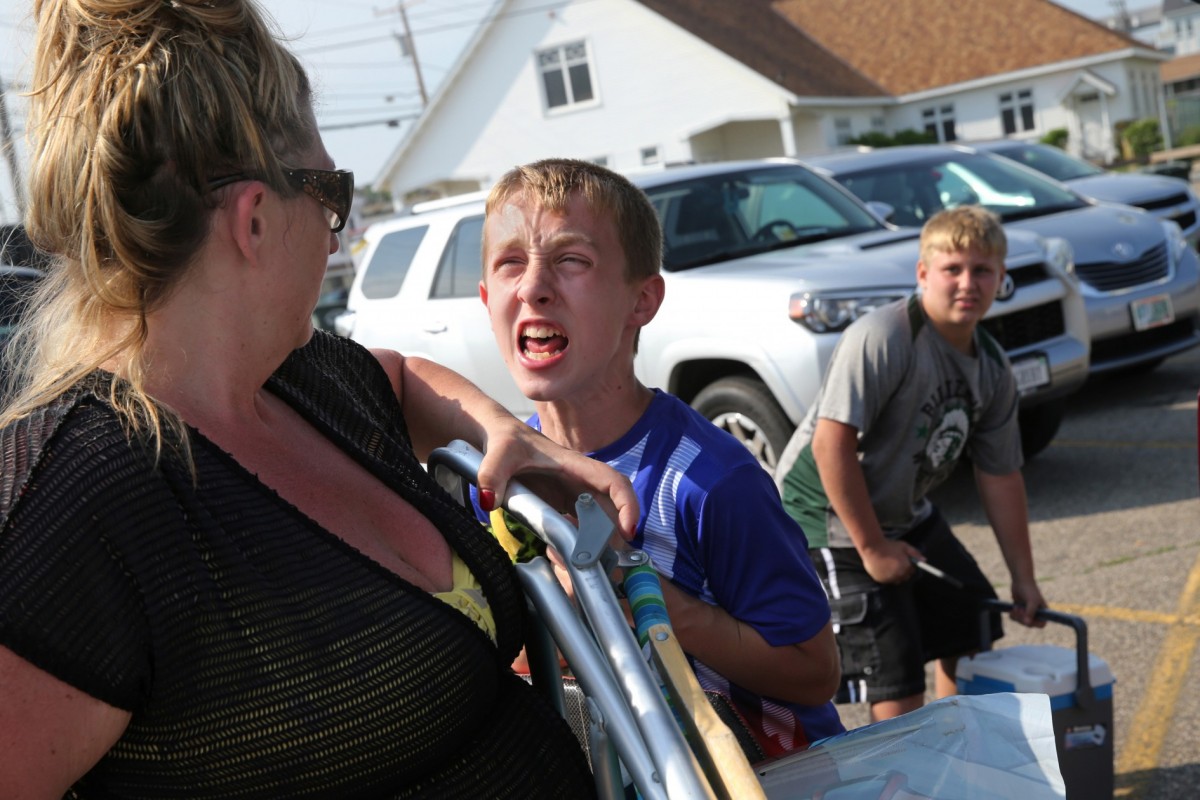
Connor yelled at his mother, Roberta Biscan, as they returned from an excursion during a family gathering in Nelson, N.H. Connor had shouted an expletive at his sister, resulting in his first warning from his mother for the weekend. Ten warnings and Connor has to return to his residential facility. He begged his mother to take it back. "Take it back, please take it back," he screamed in his mother's ear. Connor is a child who struggles to manage his powerful reactions to disappointments, often taking out his anger on his mother. (May 6, 2018)
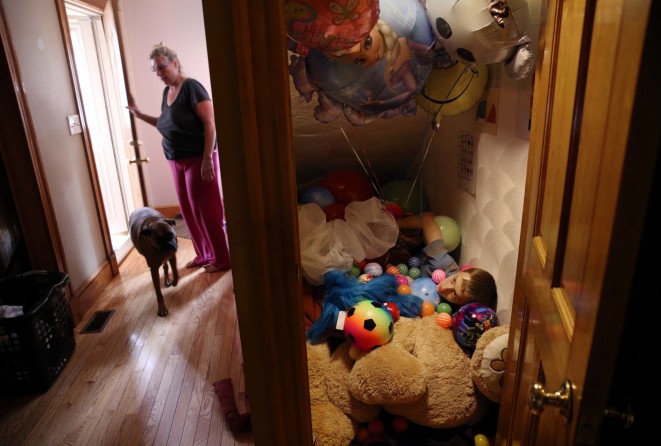
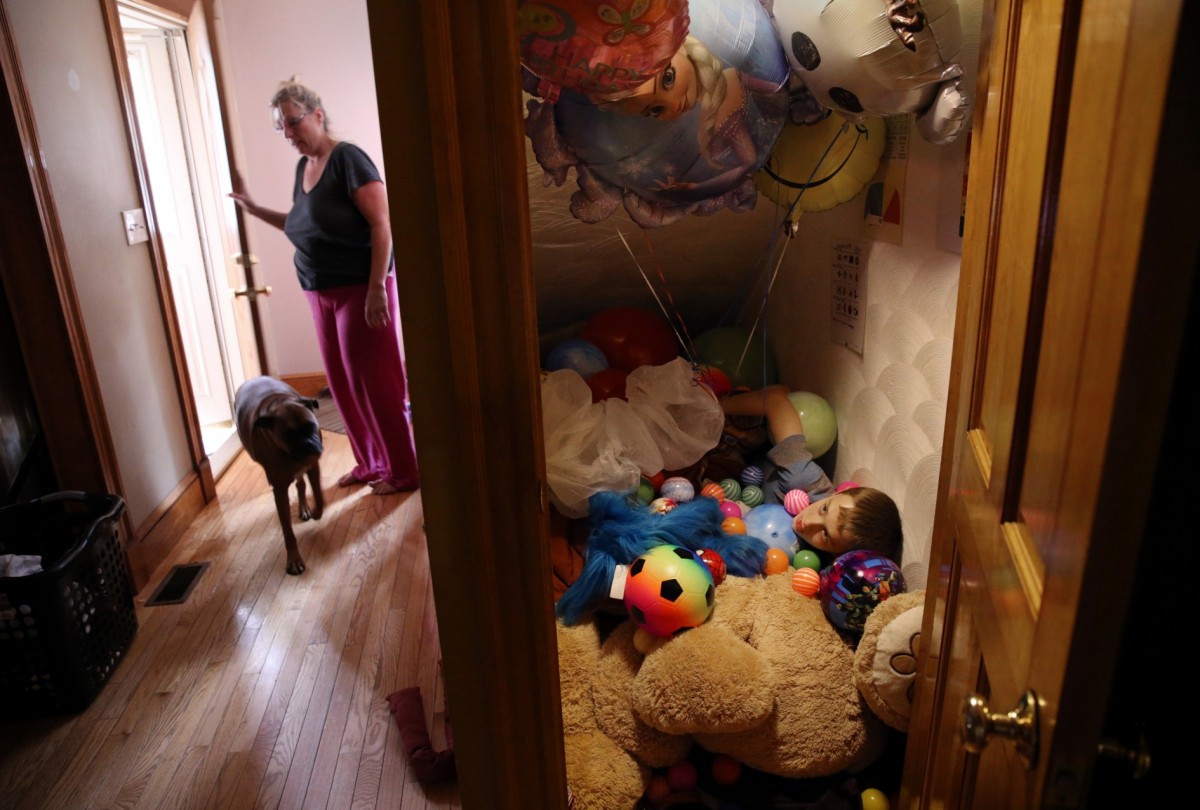
Connor rested in his "sensory closet," while his mother let the dog in at their home. Roberta explained that Connor suffers from sensory processing disorder, meaning "he doesn't know where his body is in space." The closet under the stairs is filled with comforting objects: pillows, blankets, stuffed animals, toys, and balloons. He buries himself among his favorite things. Roberta said their weight signals his nervous system to calm down. "He can stay in there for hours," she said. (May 6, 2018)
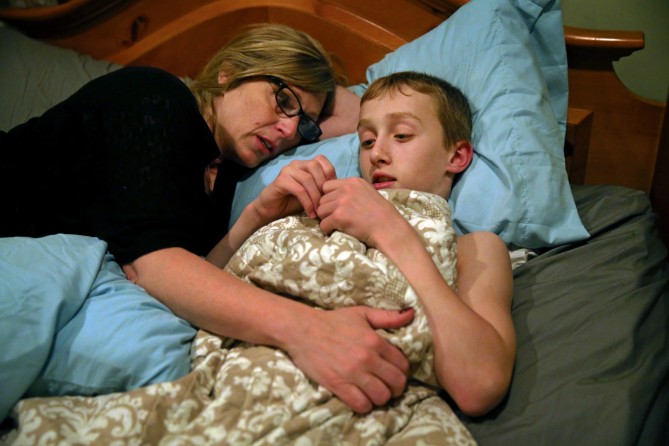
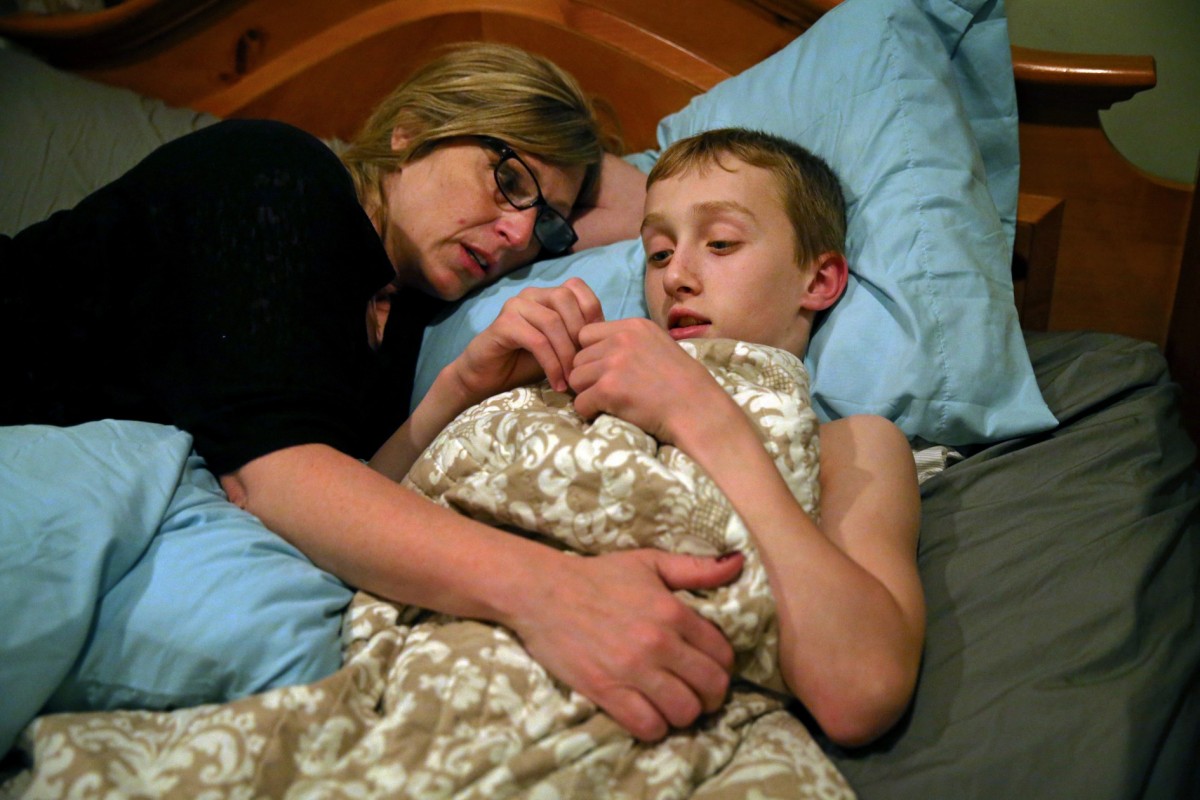
Roberta said goodnight to Connor after his 13th birthday party. Earlier, he had a conversation with an imaginary friend, of sorts, about why he couldn't move back home. "You've been too unsafe," he said. "You could really hurt Mom." But later, in bed, Connor told his mother he really wanted to come home. It's a familiar conversation. "I tell him that it's not safe for anyone right now, including him, but when it is, he can come home," she said. (May 6, 2018)
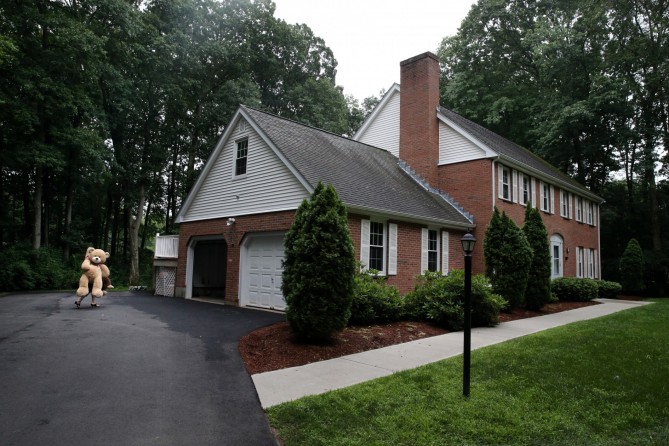
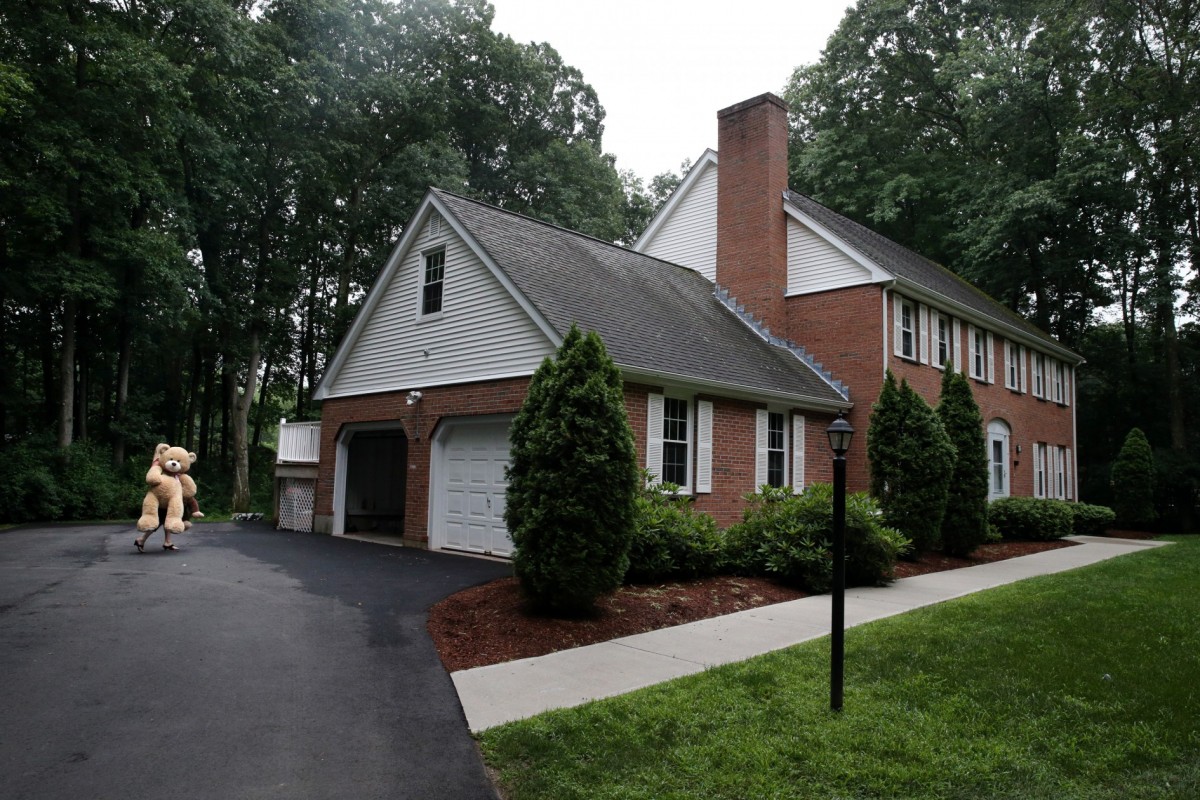
Roberta carried "Mr. Bear" into her son’s new home owned by the New England Center for Children in Hopkinton, MA. Connor would live there with eight other boys with autism, all of whom attended the center’s residential school. It would be Connor’s second live-in school - and his family fervently hoped it would be a good fit. As Roberta moved in her son’s belongings, including his extensive collection of stuffed animals, she reflected on her decision. “I want him home but I know right now I can’t provide what he needs. It’s bittersweet. I didn’t give up on Connor. I can honestly say I tried everything,” she said. (May 4, 2018)
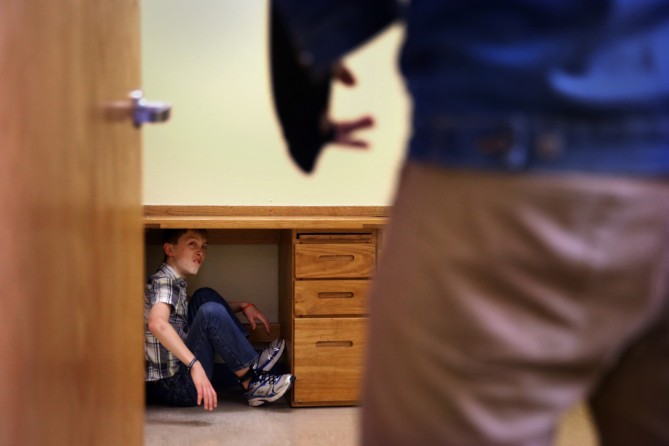
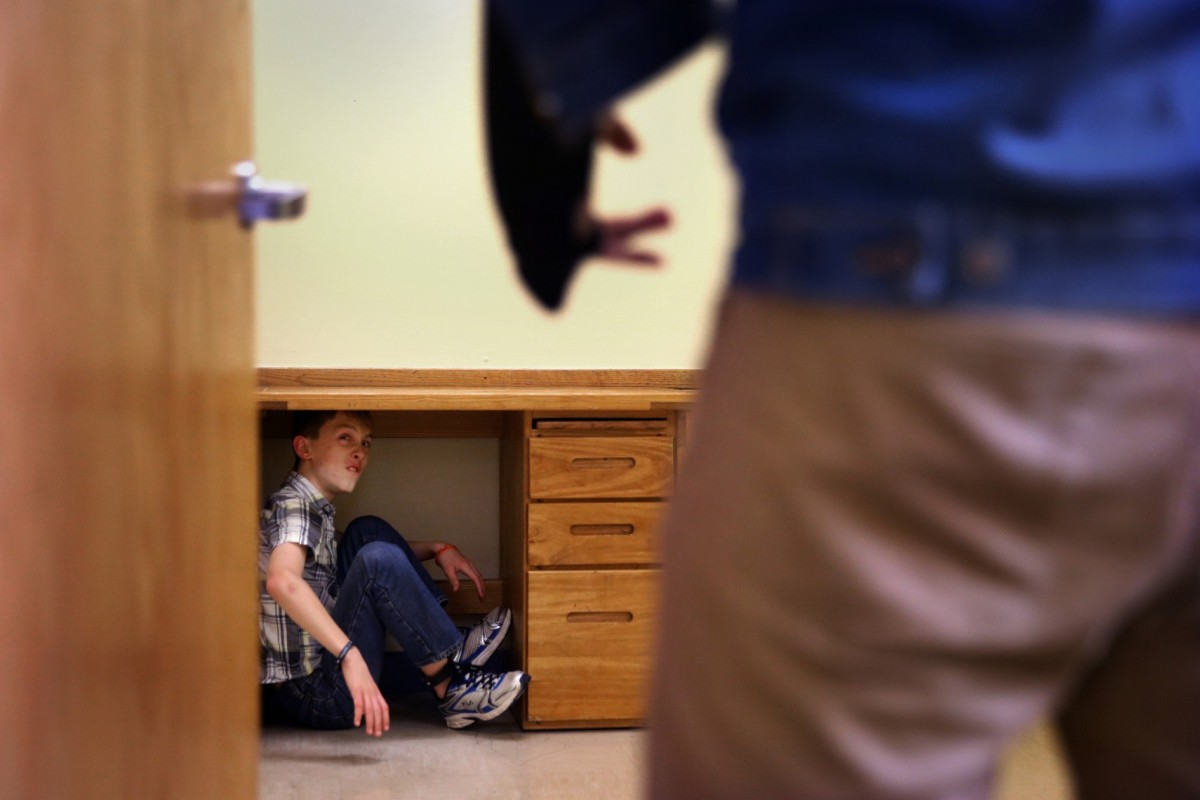
Connor swore at his teacher, Matt Souza, after a misunderstanding at the New England Center for Children. Connor had tried to punch Souza and later threw chairs, then retreated under a desk. Souza was eventually able to calm Connor and they cleaned up the room. "You can't get flustered," Souza said later. "You never know when it's going to come. When it does you have to know how to react." (May 6, 2018)
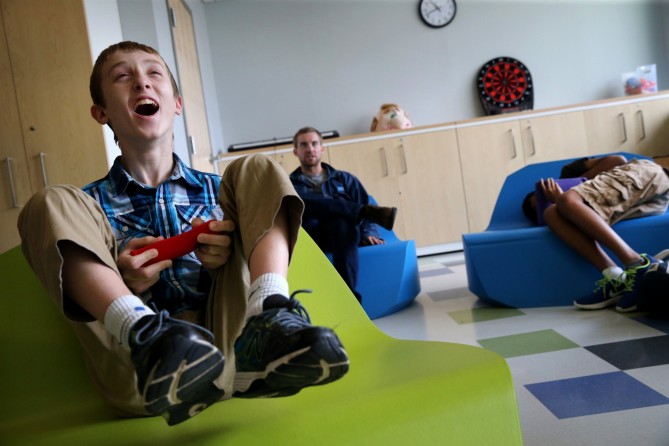
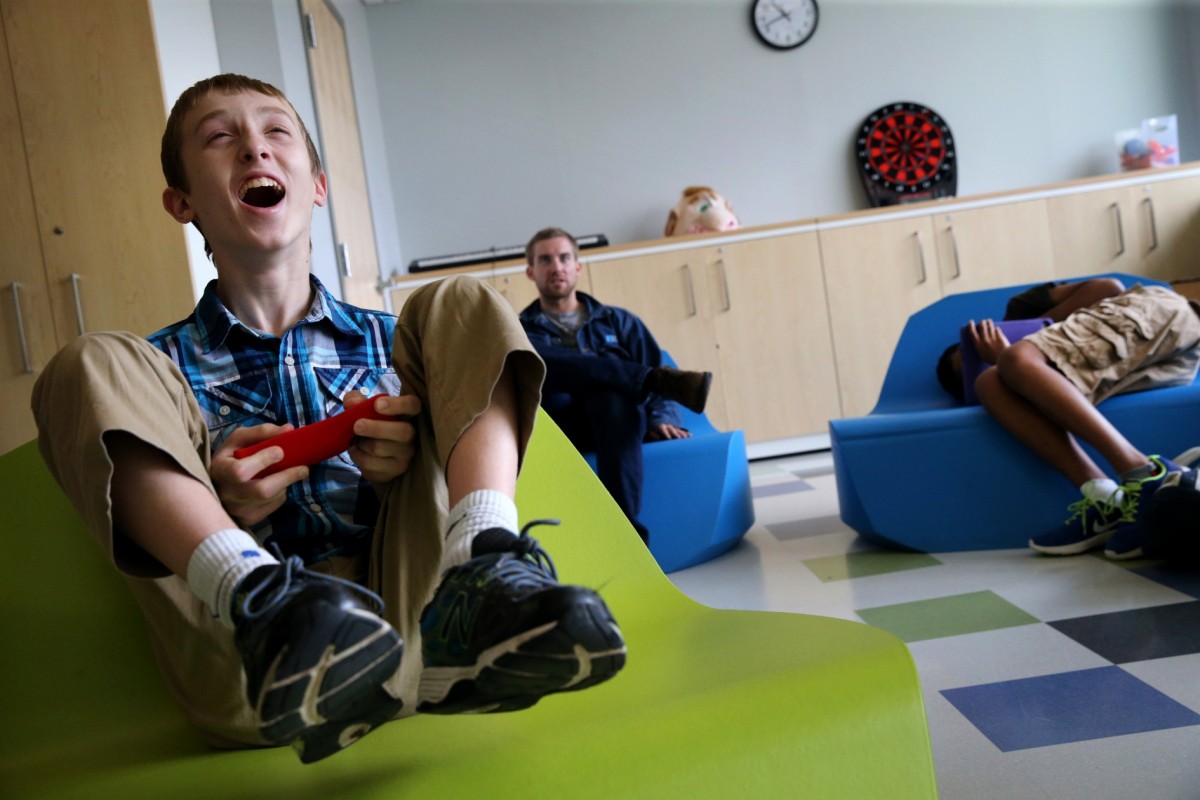
Connor played a Super Mario Brothers video game in the leisure center at the New England Center for Children in Southborough, MA. At the residential school for children with autism, even play time is an opportunity for adults to teach students social skills. Teachers talk through game strategy and cheer successful moves to encourage the boys to follow directions and to promote good sportsmanship. Other schools may try a range of treatments, but NECC is wedded to applied behavior analysis, a patient but firm approach that breaks down desirable conduct into steps. The reward for the child is something they badly want, like iPad time. It is an approach that has its critics, who think it too rigid, but here it seems often to work. (May 6, 2018)
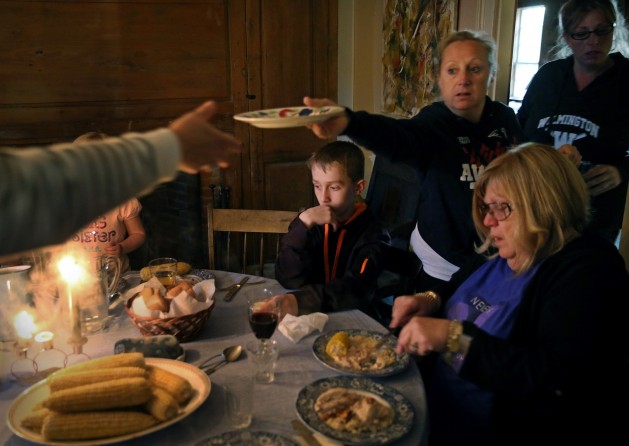
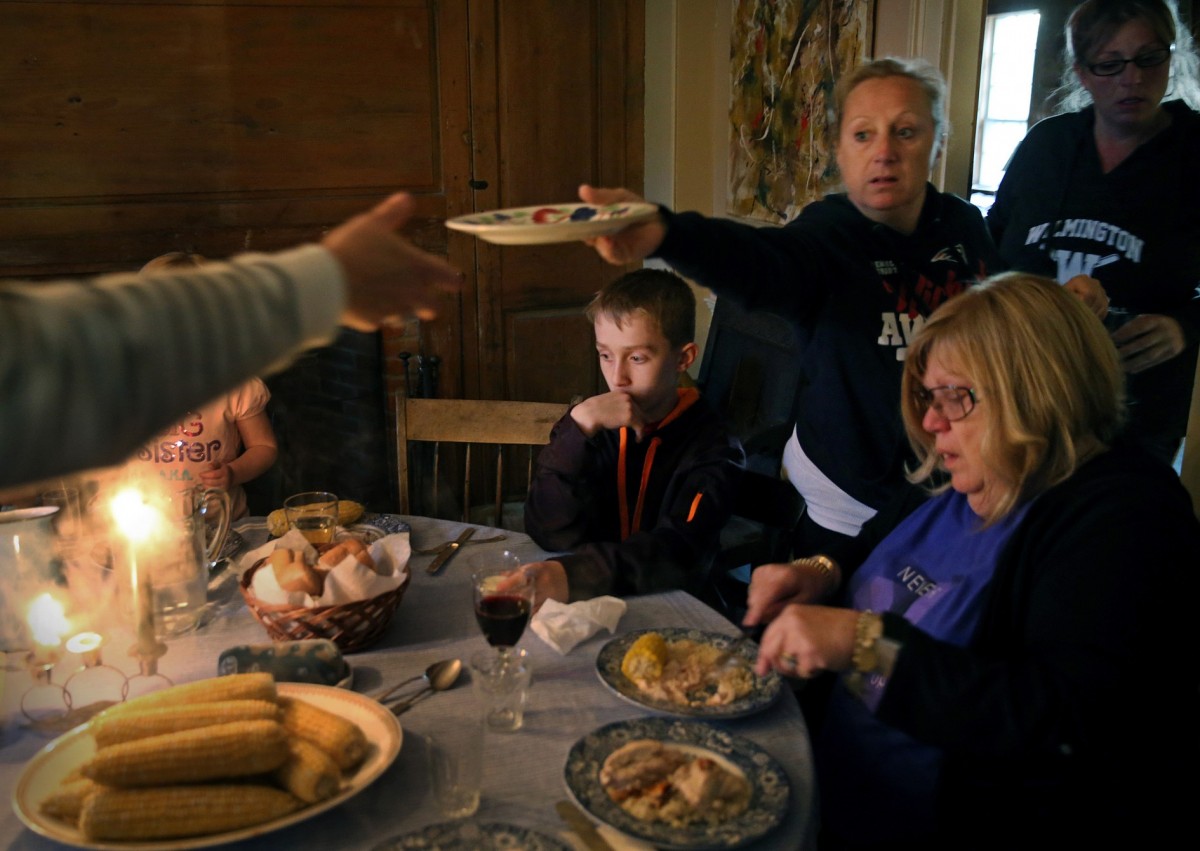
Connor sat quietly next to his grandmother, Karen Francis, as his aunt, Shawna Bickford served dinner during a family gathering in Nelson, N.H. Connor was worried about his mother after a family disagreement. He said he was concerned "she might have a heart attack." (May 4, 2018)
Connor flew balloons he attached to a kite string at his 13th birthday party. He has loved balloons since he was a baby, in fact it was his first word. When one blew away outside his home in Wilmington, he started a dialogue with his alter ego, a sort of imaginary friend. “Once it’s gone it’s gone,” he said. “But I want it back. I want that balloon back. It’s gone, dude, it flew up to heaven.” (May 6, 2018)
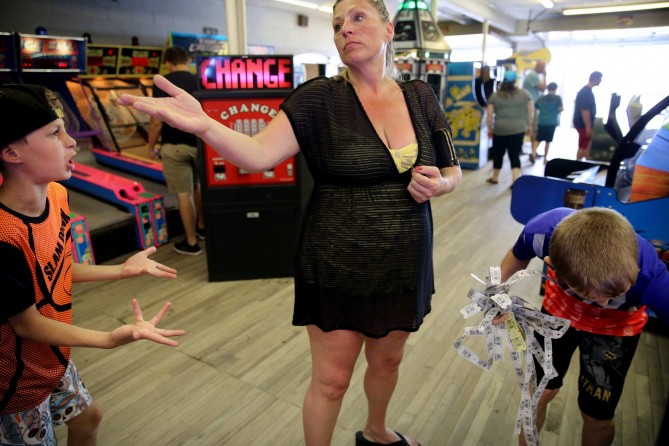
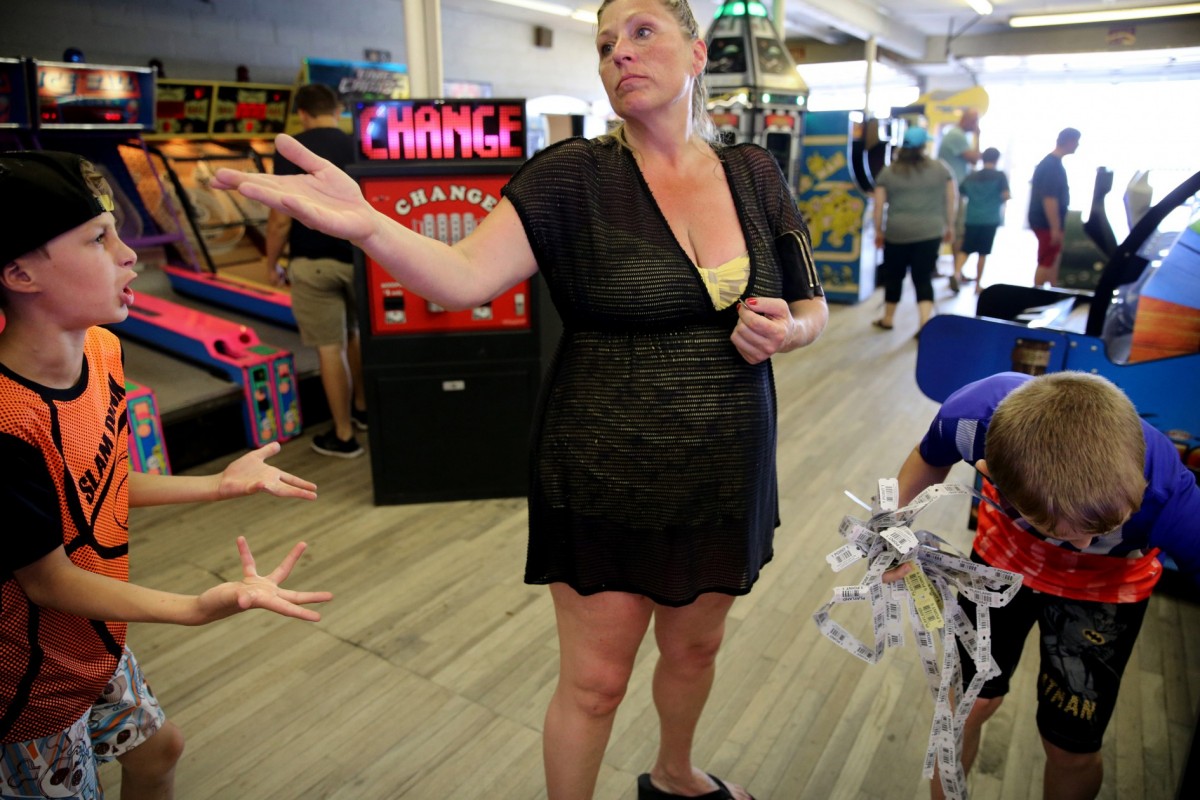
Will Biscan, 11, left, complained to his mother after she gave her winnings of 250 tickets to his brother, Connor, while visiting the Playland Arcade at Hampton Beach, N.H. Will, who used to share a bedroom with Connor, has struggled with his brother's autism diagnosis. "Will feels that Connor gets a lot more than he does," his mother said. (May 4, 2018)
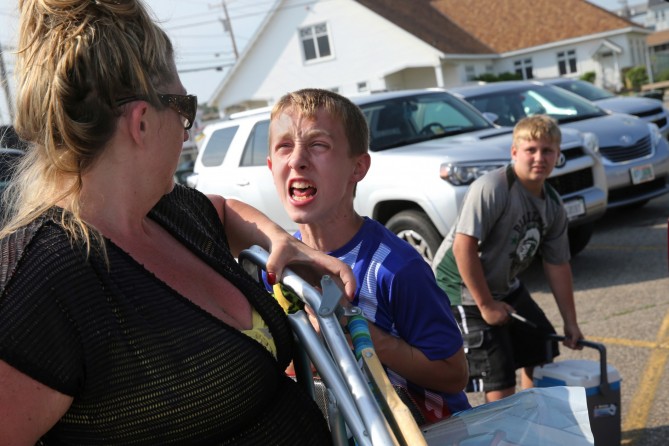
Connor yelled at his mother as they left Hampton Beach. When it was time to leave, Connor quickly picked up his boogie board and his kite. He grew impatient as the rest of the family got dressed and gathered their belongings. The conversation escalated and Connor exploded, a typical scenario that creates stress in his family. Later, Roberta explained that "ending any type of activity and transitioning into something different conjures up a lot of anxiety. Maybe the fact that we were leaving caused a lot of emotions that he didn't know how to deal with, he just became frustrated and that's how it comes out," she said. (May 4, 2018)
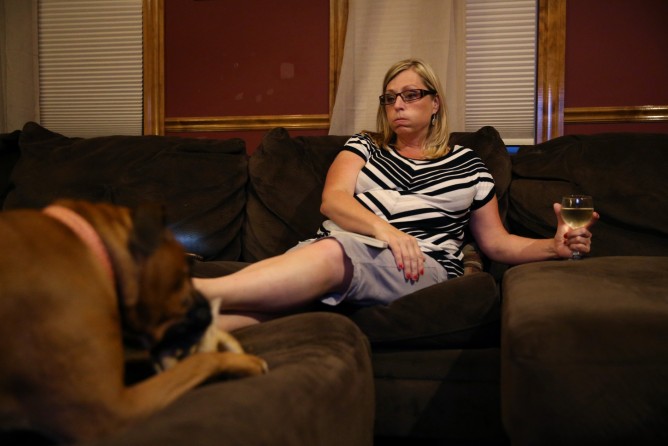
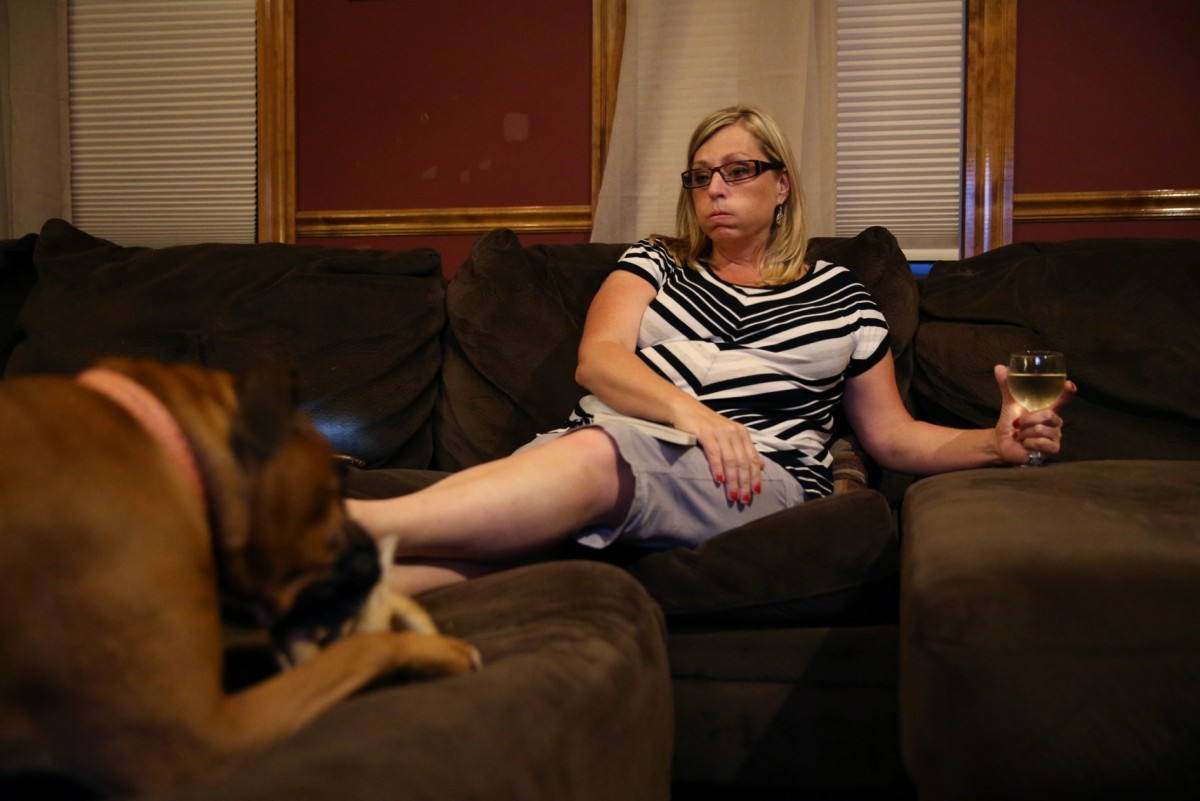
Roberta decompressed after putting Connor to bed at their home in Wilmington. It was a stressful day, Connor had yelled and sworn at her when she said balloons were not allowed at his new school. Her family worries about the impact of Connor's behavior on her. "She handled more than most people could ever handle," said her sister, Shawna Bickford. "She was close to the breaking point" before Connor moved out. Now her stress level "is not at a ten constantly. She is at five," she said. (May 6, 2018)
 
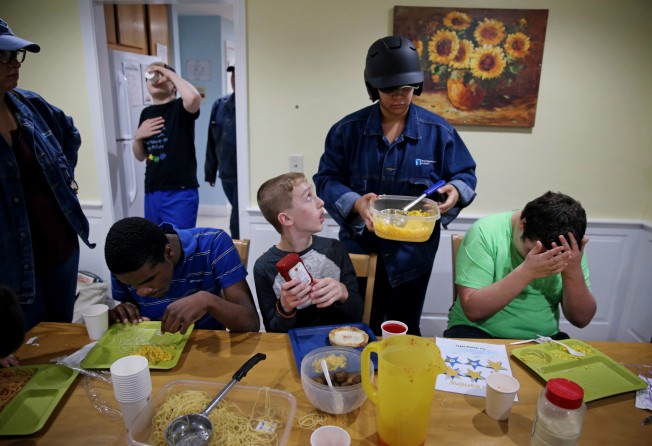
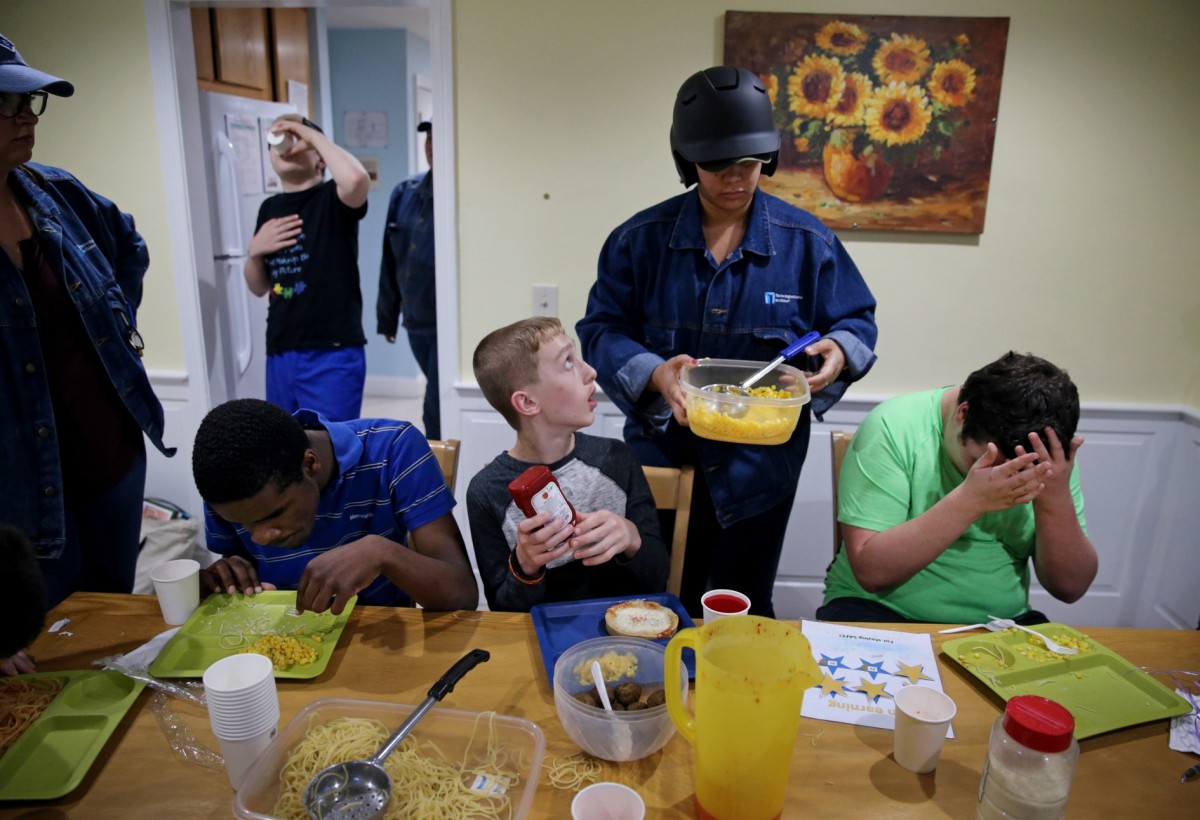
Teacher Kelsey Richardson served Connor corn during dinner at his group home in Hopkinton, MA. Connor lives with eight teenage boys, all with autism. The New England Center for Children takes on some of the most challenging autism cases in the world. Parents can spend years fighting to get their public school systems to pay the tuition for NECC's residential school, whose 130 students live in 17 group homes scattered throughout the suburbs. (May 4, 2018)
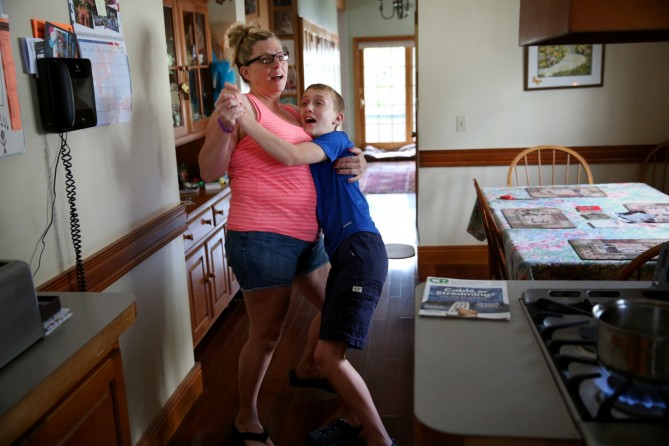
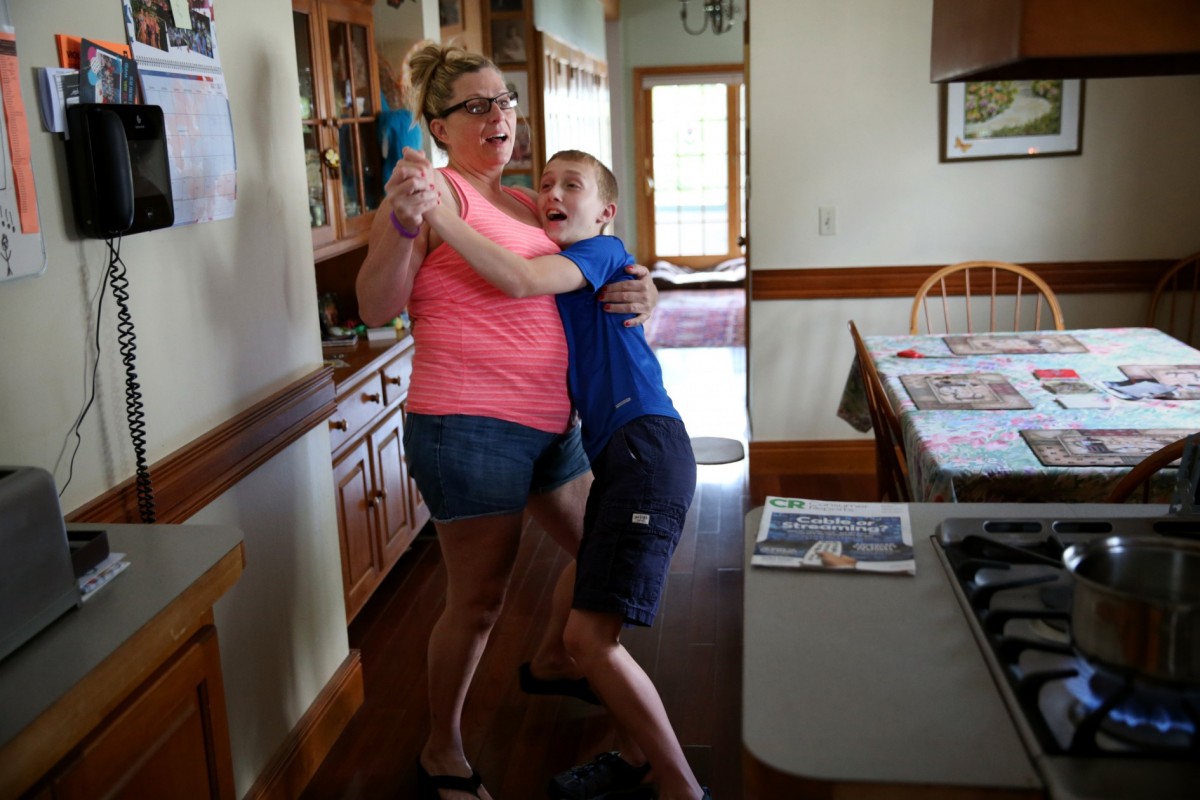
Roberta and Connor danced before saying goodbye at her parents' home in Malden, MA. Karen and Jeff Francis agreed to babysit for the night so she could attend a New Kids on the Block concert at Fenway Park with her sisters. "Thank God I have the parents I do," Roberta said. "No matter how challenging things can be with Connor, they're consistently there to help." She was excited about doing something fun for herself. "It helps me not to lose it completely," she said. "I only get these opportunities once in a while so I have to take advantage of them." (May 6, 2018)
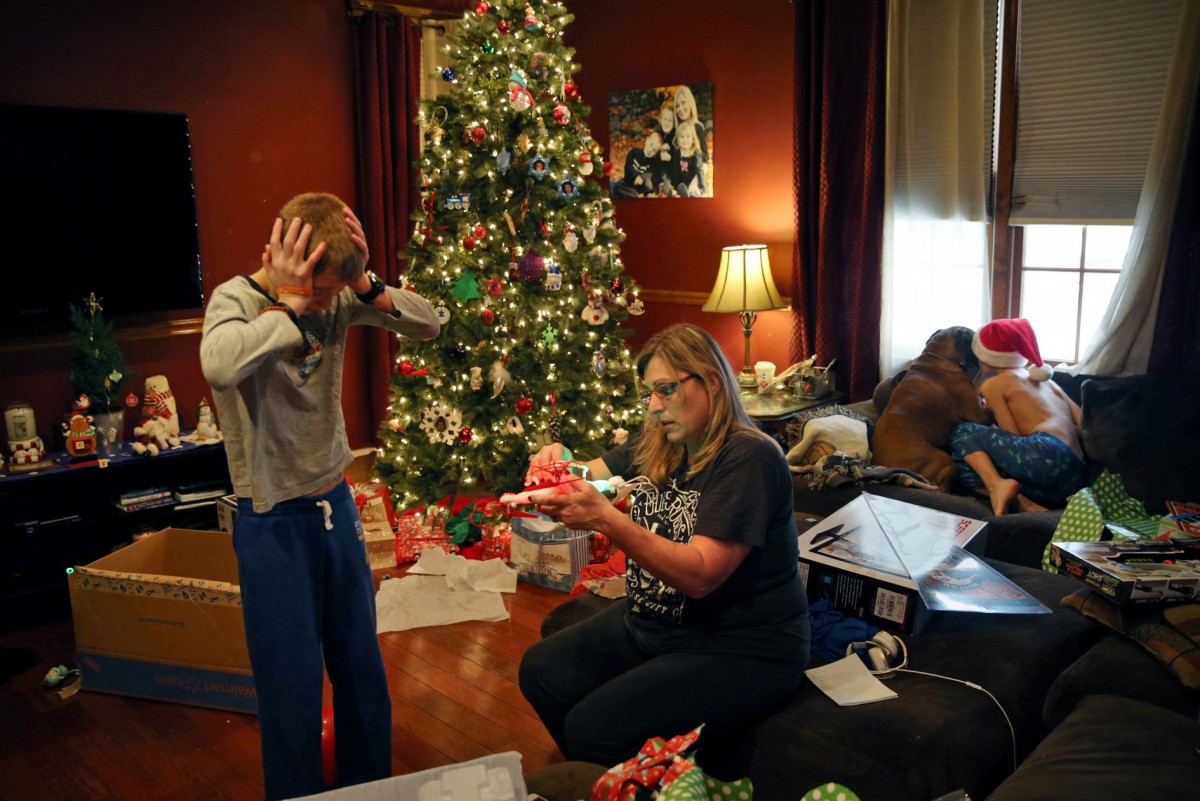
Connor grew anxious and upset as his mother, Roberta, tried to fix the drone he received on Christmas morning at their home in Wilmington. Connor is easily frustrated, and even fleeting annoyances can explode into anger. (May 6, 2018)
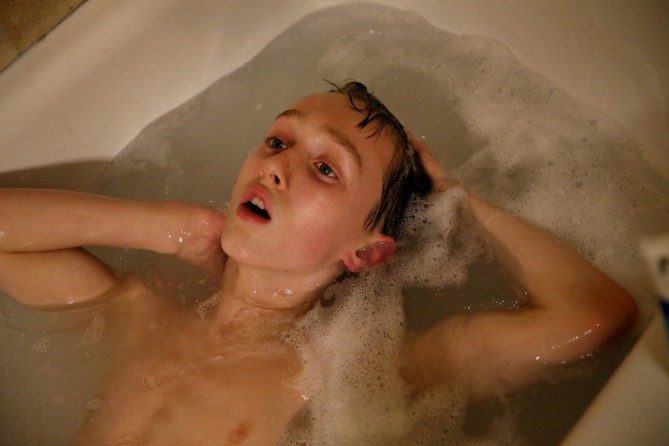
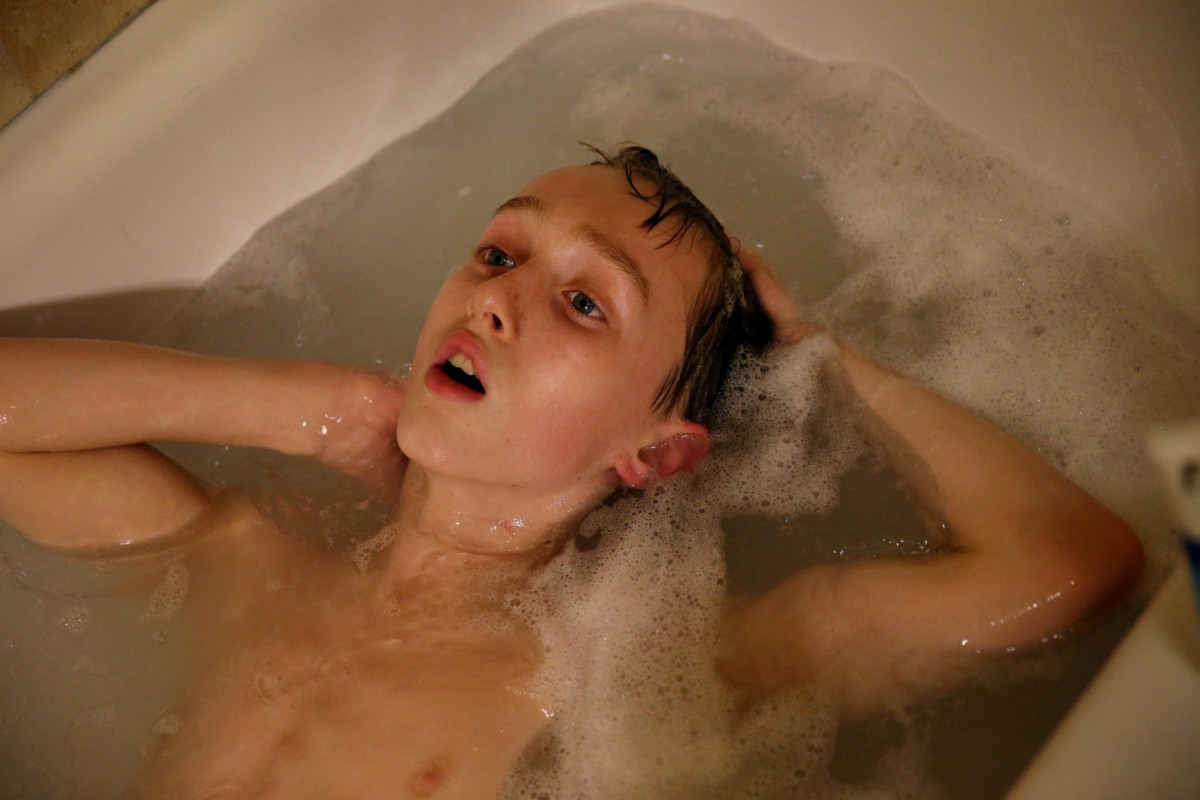
Connor soaked in the bathtub at home. He has been diagnosed with autism, a mood disorder, and attention deficit hyperactivity disorder. As many as half of children with autism also have a mental health disorder, and the combination makes treatment more complicated. (May 4, 2018)
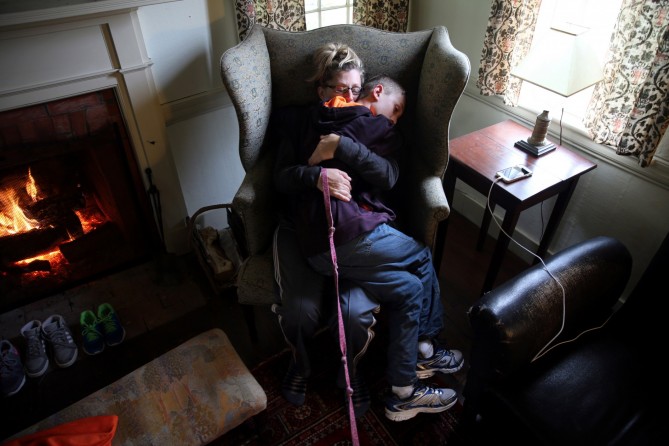
After a stressful weekend at his grandparents' house, Roberta and Connor embraced while resting by the fire. While Connor throws punches and objects when he’s angry, he is also loving and sweet toward his family, especially his mother. (May 4, 2018)

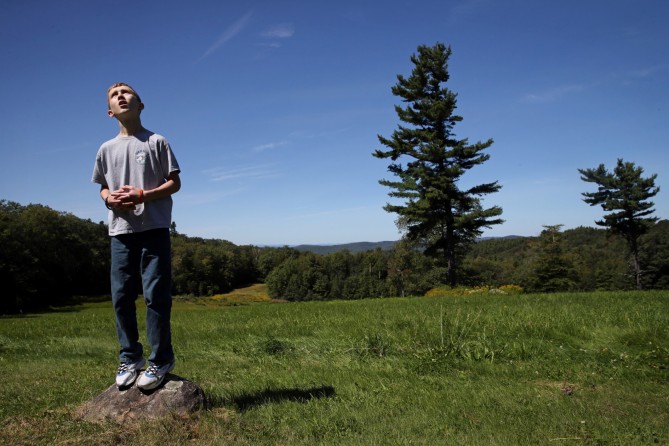
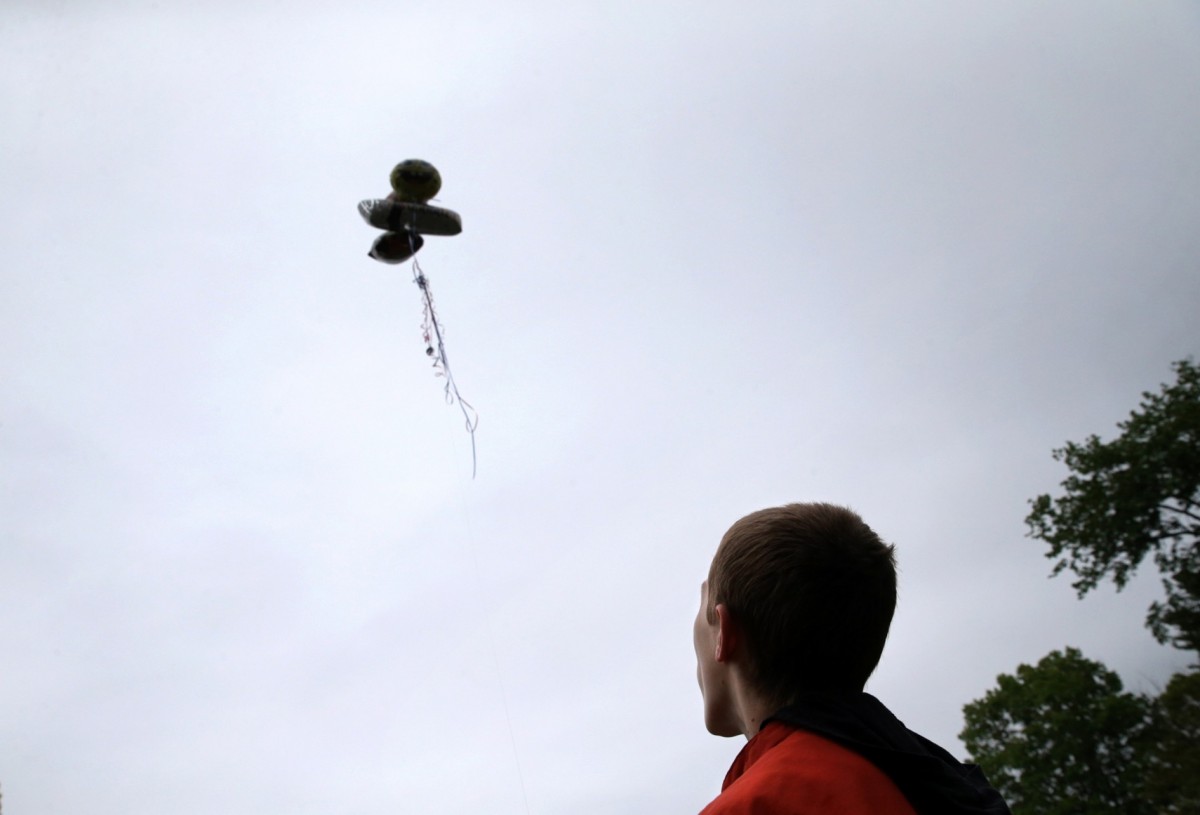
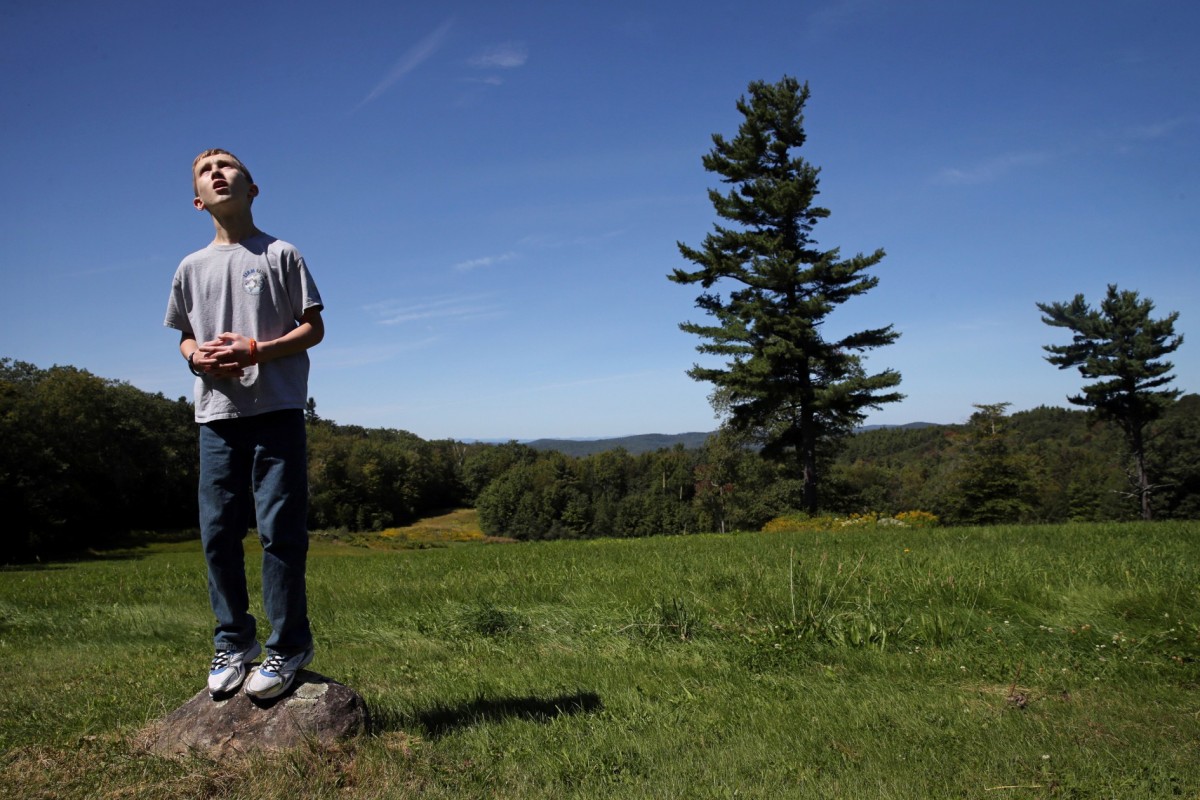
Connor Biscan stood atop a small rock and searched the sky for the balloons he had lost at a family gathering in Nelson, N.H. on Labor Day weekend. Connor had flown the balloons in an open field behind his great-grandfather’s house. When the string broke and the balloons snagged on a tree, Connor became anxious. His mother, Roberta, praised him for remaining calm. While Connor is making progress, his future is uncertain. For everyone in Connor's world, from caregivers to his family, the goal is the same. They want him to return home, but no one has any idea how long that will take. (May 6, 2018)

Biography
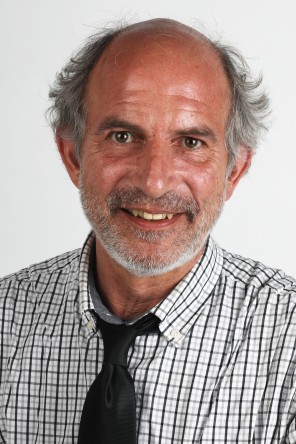
Craig F. Walker joined the staff of The Boston Globe in June of 2015. During his 30-year career he has covered a broad range of stories including the aftermath of the collapse of the World Trade Center in New York, the wars in Afghanistan and Iraq, the United States military, post-traumatic stress disorder, the Occupy movement and the refugee migration crisis in Europe. 

Raised in York, Pennsylvania, Craig graduated from the Rhode Island School of Photography and began his career working for the Marlborough Enterprise and the Berkshire Eagle in Massachusetts. In 1998 he started working at The Denver Post in Colorado. 

While at the Denver Post, in 2010, Craig's photo essay Ian Fisher: American Soldier, an "intimate portrait of a teenager who joins the Army at the height of insurgent violence in Iraq, poignantly searching for meaning and manhood," won the Pulitzer Prize for Feature Photography. Craig's work was exhibited at The International Photojournalism Festival of Perpignan in 2010.

In 2012, Craig was awarded a second Pulitzer Prize for Feature Photography for Welcome Home, The Story of Scott Ostrom, a "compassionate chronicle of an honorably discharged veteran, home from Iraq and struggling with a severe case of post-traumatic stress, images that enable viewers to better grasp a national issue." Craig was also named Newspaper Photographer of the Year in the Pictures of the Year International competition. 

Craig's photography has also been honored by the Sidney Hillman Foundation, Harry Chapin Media Awards, National Press Photographer's Association Best of Photojournalism Contest, National Headliner's Awards, Unicef Photo of the Year Contest, American Society of News Editors and Society of News Design.

Craig now lives in Marshfield, MA with his wife, Jamie, and their son, Quinn.

Winners

Prize Winner in Feature Photography in 2019:

Lorenzo Tugnoli of The Washington Post

For brilliant photo storytelling of the tragic famine in Yemen, shown through images in which beauty and composure were intertwined with devastation. (Moved by the jury from Breaking News Photography, where it was originally entered.) Feature Photography

Finalists

Nominated as finalists in Feature Photography in 2019:

Maggie Steber and Lynn Johnson of National Geographic

For a compelling, dignified photo narrative that provides an intimate look at the youngest face transplant recipient in the U.S.

The Jury

Danese Kenon(Chair)

Director, Photography & Video

J. David Ake

Director, Photography

Jonathan Bachman

freelance photographer, New Orleans, La.

Darcy Eveleigh

photo editor/visual journalist, Glen Ridge, N.J.

Michele McDonald

Photo Editor

Winners in Feature Photography

Photography Staff of Reuters

For shocking photographs that exposed the world to the violence Rohingya refugees faced in fleeing Myanmar. (Moved by the Board from the Breaking News Photography category, where it was entered.)

E. Jason Wambsgans

For a superb portrayal of a 10-year-old boy and his mother striving to put the boy’s life back together after he survived a shooting in Chicago.

Jessica Rinaldi

For the raw and revealing photographic story of a boy who strives to find his footing after abuse by those he trusted.

2019 Prize Winners