Finalist: Elizabeth Bruenig of The Washington Post
For eloquent reflections on the exile of a teen sexual assault victim in the author’s Texas hometown, delving with moral authority into why the crime remained unpunished.
Nominated Work
September 23, 2018
Biography
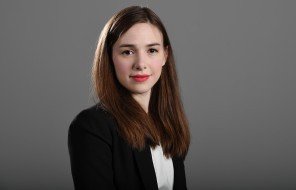
Elizabeth Bruenig is an opinion columnist at The Washington Post, where she writes on Christianity, politics, and public life.
Bruenig was born and raised in Arlington, Texas. She received her MPhil in Christian theology at the University of Cambridge, where she studied as a Marshall Scholar.
Previously, she was an editor for the Post’s Outlook and PostEverything sections, and a staff writer at The New Republic. Her essays and reviews have appeared in The Post, The Nation, The Atlantic, The Boston Review, Jacobin Magazine, First Things, and many more. She lives with her husband and daughter in Washington D.C.
Winners
Prize Winner in Feature Writing in 2019:
Hannah Dreier of ProPublica
For a series of powerful, intimate narratives that followed Salvadoran immigrants on New York’s Long Island whose lives were shattered by a botched federal crackdown on the international criminal gang MS-13.
Feature Writing
Finalists
Nominated as finalists in Feature Writing in 2019:
Deanna Pan and Jennifer Berry Hawes of The Post and Courier, Charleston, S.C.
For a deeply moving examination of racial injustice in South Carolina that led to the execution of a 14-year-old black boy wrongfully convicted of killing two white girls, and that ultimately exonerated him seven decades after his death.
The Jury
The Jury
Felecia D. Henderson(Chair)
Assistant Managing Editor/Features
Anne Fulenwider
Editor-in-Chief
Rachel Kaadzi Ghansah*
essayist and freelance reporter, Brooklyn, N.Y.
Jeffrey Goldberg
Editor in Chief
Ann Marie Lipinski*
Curator, Nieman Foundation
Peter Maass
Senior Editor
Mary Schmich*
Metro Columnist
Winners in Feature Writing
Rachel Kaadzi Ghansah, freelance reporter, GQ
For an unforgettable portrait of murderer Dylann Roof, using a unique and powerful mix of reportage, first-person reflection and analysis of the historical and cultural forces behind his killing of nine people inside Emanuel AME Church in Charleston, S.C.
C. J. Chivers
For showing, through an artful accumulation of fact and detail, that a Marine’s postwar descent into violence reflected neither the actions of a simple criminal nor a stereotypical case of PTSD.
Kathryn Schulz
For an elegant scientific narrative of the rupturing of the Cascadia fault line, a masterwork of environmental reporting and writing.
Diana Marcum
For her dispatches from California's Central Valley offering nuanced portraits of lives affected by the state's drought, bringing an original and empathic perspective to the story.
2019 Prize Winners
South Florida Sun Sentinel
For exposing failings by school and law enforcement officials before and after the deadly shooting rampage at Marjory Stoneman Douglas High School.
David Barstow, Susanne Craig and Russ Buettner of The New York Times
For an exhaustive 18-month investigation of President Donald Trump’s finances that debunked his claims of self-made wealth and revealed a business empire riddled with tax dodges. (Moved by the Board from the Investigative Reporting category, where it was also entered.)
Matt Hamilton, Harriet Ryan and Paul Pringle of the Los Angeles Times
For consequential reporting on a University of Southern California gynecologist accused of violating hundreds of young women for more than a quarter-century.
Carlos Lozada of The Washington Post
For trenchant and searching reviews and essays that joined warm emotion and careful analysis in examining a broad range of books addressing government and the American experience.