Finalist: Dieu Nalio Chery and Rebecca Blackwell of Associated Press
Nominated Work








Demonstrators run away from police who were shooting in their direction, as a car burns during a protest demanding the resignation of Haitian President Jovenel Moise in Port-au-Prince, Haiti, Tuesday, Feb. 12, 2019. (Dieu Nalio Chery)

A demonstrator seeks help for a woman who was shot during clashes with national police officers as the demonstrators demanded the resignation of President Jovenel Moise in Port-au-Prince, Haiti, Thursday, Feb. 7, 2019. (Dieu Nalio Chery)

A police officer points his gun at residents of Delmas 95 district during a protest demanding the resignation of Haiti's president Jovenel Moise in Port-au-Prince, Haiti, Monday, Nov. 18, 2019. (Dieu Nalio Chery)

Looters run away from a store as national police arrive during a protest demanding the resignation of Haitian President Jovenel Moise in Port-au-Prince, Haiti, Tuesday, Feb. 12, 2019. (Dieu Nalio Chery)

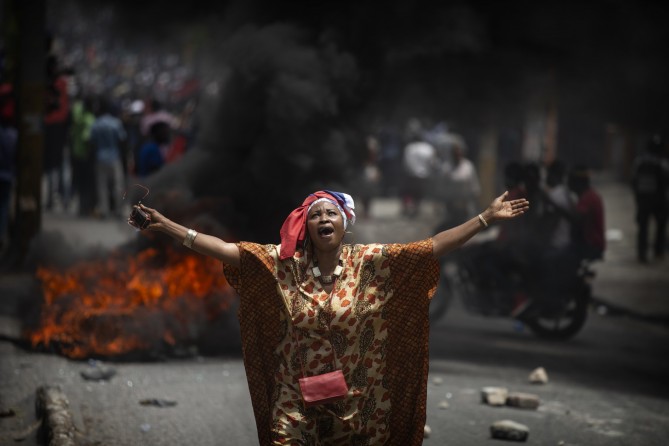
A protester yells anti-government slogans in Port-au-Prince, Haiti, June 9, 2019. Protesters denouncing corruption paralyzed much of the capital as they demanded the removal of President Jovenel Moise. (Dieu Nalio Chery)

A moto-taxi driver takes two women past a burning barricade set up by people protesting fuel shortages in Petion-ville, Haiti, Sunday, Sept. 15, 2019. (Dieu Nalio Chery)

Demonstrators drag the body of a fellow protester toward police, as a form of protest after police shot into the crowd in which he died, during a demonstration demanding the resignation of Haitian President Jovenel Moise near the presidential palace in Port-au-Prince, Haiti, Tuesday, Feb. 12, 2019. (Dieu Nalio Chery)

Onlookers peer at the body of a man who was dragged through the street and struck with machetes as the body lies on the road in Gressier, Haiti, after he was lynched for allegedly shooting and killing a man in nearby Leogane to steal his motorcycle, Sunday, Oct. 6, 2019. (Rebecca Blackwell)
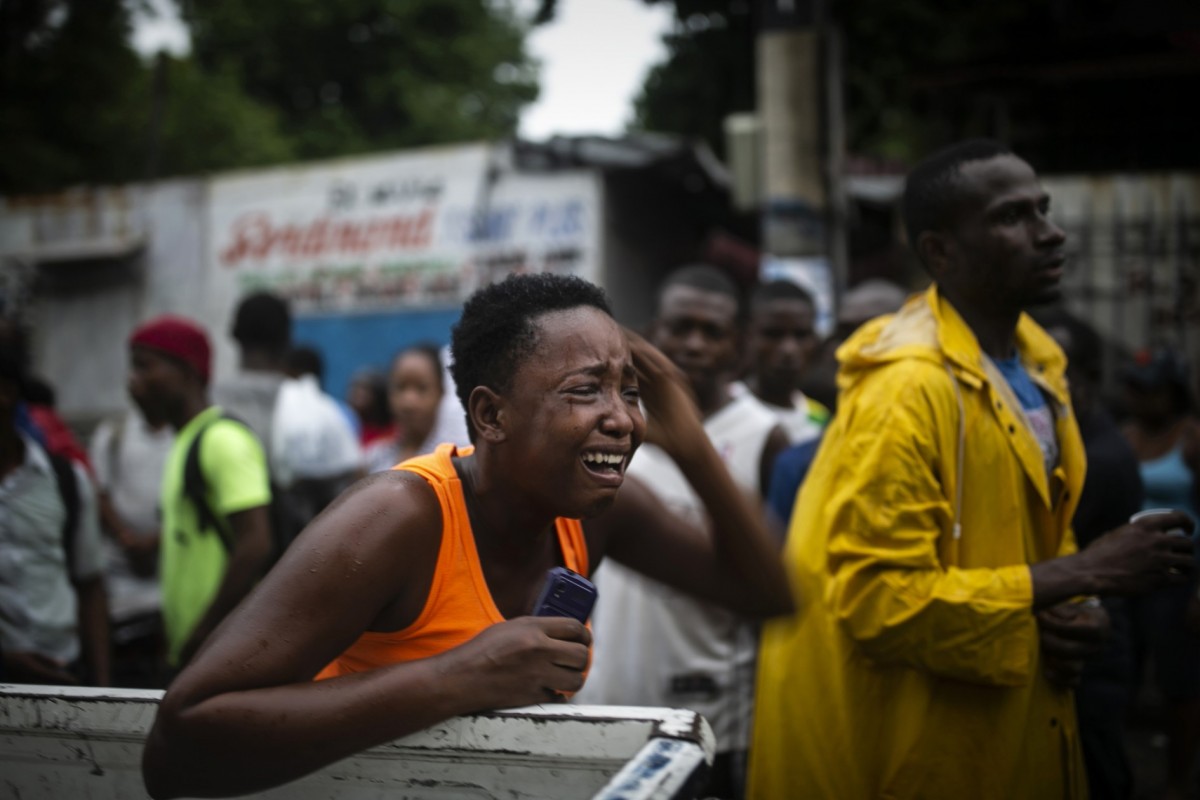
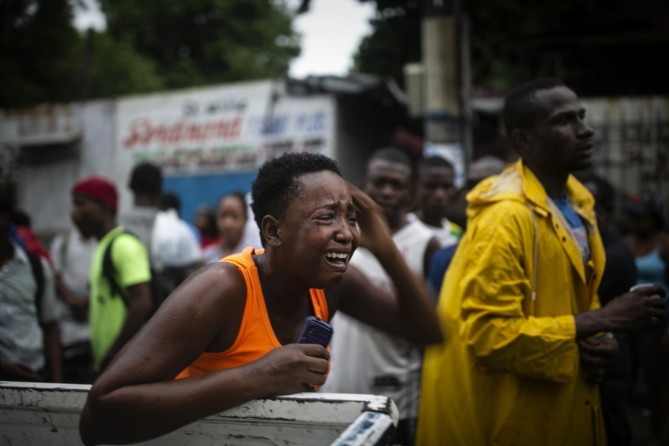
A relative of Rigueur Pierre Richard, who was killed in a drive-by shooting two blocks from the national palace, is overcome with grief, during a protest against fuel shortages and demanding the resignation of President Jovenel Moise in Port-au-Prince, Haiti, Friday, Sept. 20, 2019. (Dieu Nalio Chery)

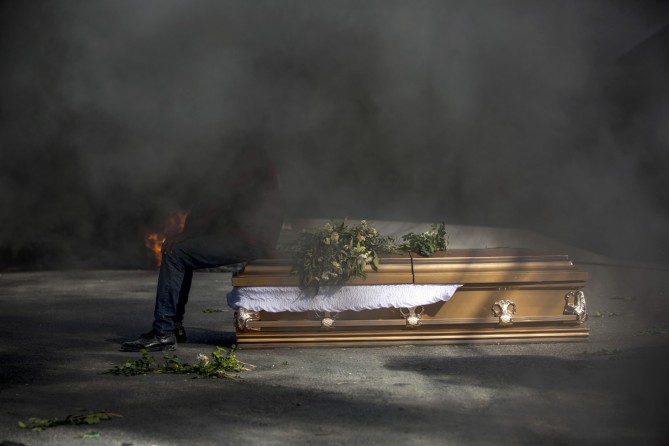
A demonstrator sits on the coffin containing the body of a protester who was killed during previous protests in Port-au-Prince, Haiti, Monday, March 4, 2019. (Dieu Nalio Chery)

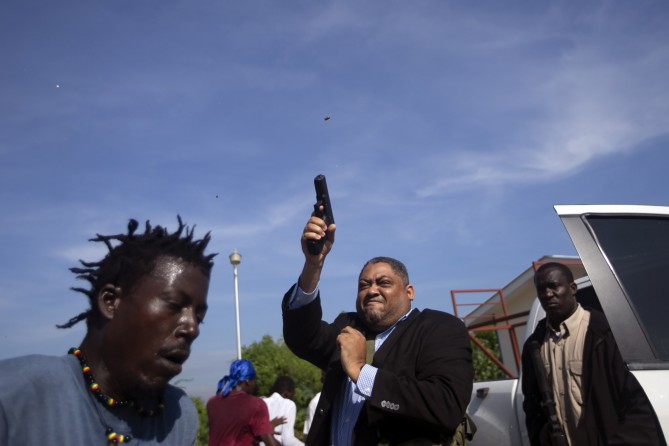
Opposition Senator Ralph Fethiere fires his gun outside Parliament as he arrives for a ceremony to ratify Fritz William Michel's nomination as prime minister in Port-au-Prince, Haiti, Monday, Sept. 23, 2019. Opposition members confronted ruling-party senators, and Fethiere pulled a pistol when protesters rushed at him and members of his entourage. (Dieu Nalio Chery)

People take cover after presidential guards opened fire to disperse mourners after clashing with protesters attending a public funeral for two people killed in recent protests, in Port-au-Prince, Haiti, Wednesday, Oct. 16, 2019. (Rebecca Blackwell)

Gang members stand guard and hold guns six months after a massacre in the La Saline slum of Port-au-Prince, Haiti, May 31, 2019. “Gangs are multiplying because the government is weak,” said Paul Eronce Villard, Haiti’s general prosecutor, who estimates there are more than 50 gangs now operating in the country. “It’s a real challenge for police.” (Dieu Nalio Chery)
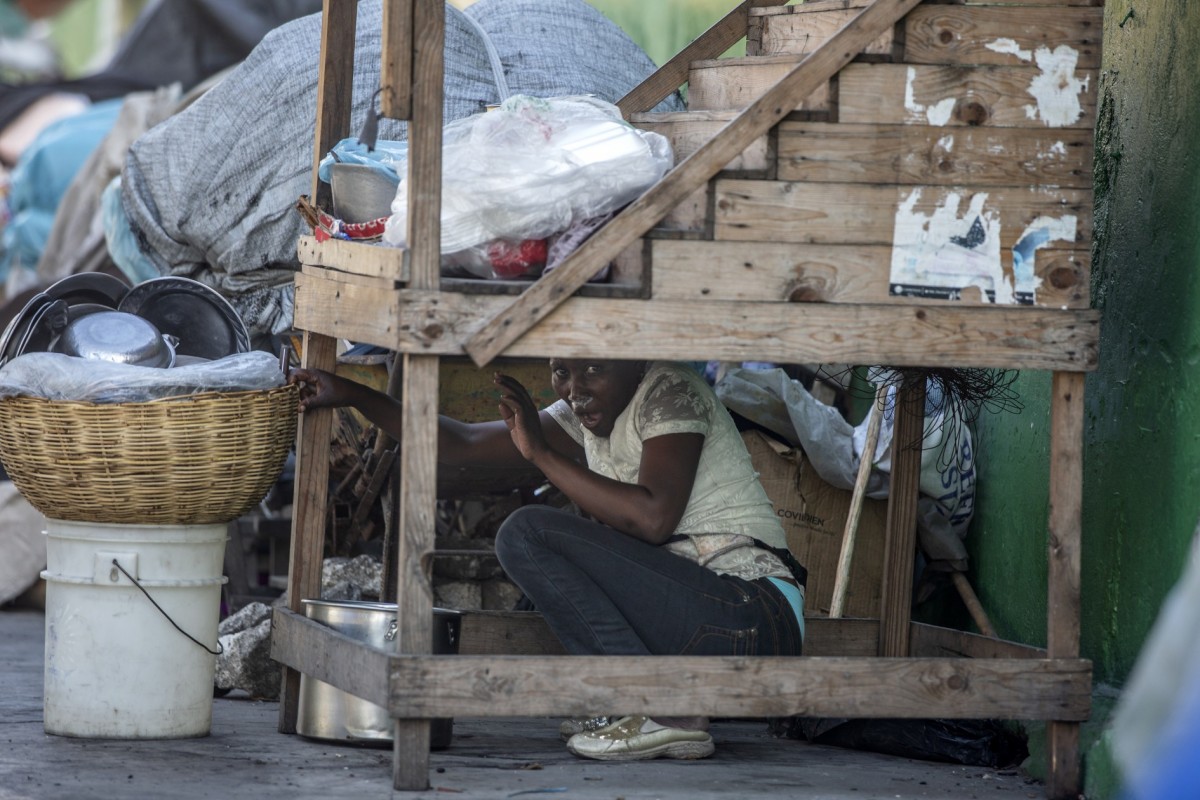
A street vendor hides during clashes between protesters and national police officers as the protestors demanded the resignation of President Jovenel Moise in Port-au-Prince, Haiti, Saturday, Feb. 9, 2019. (Dieu Nalio Chery)

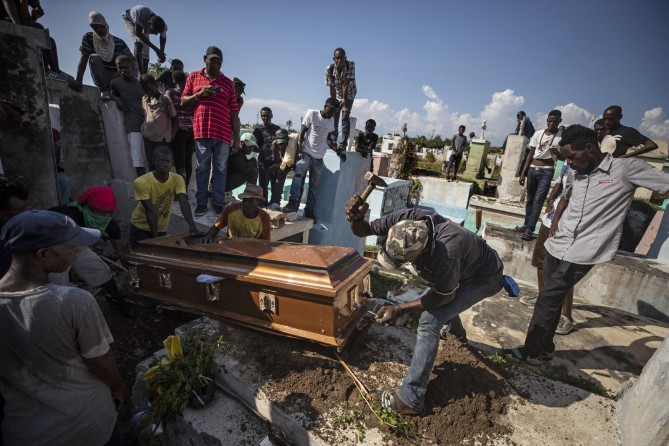
A man uses a hammer to remove pieces of a coffin to make it fit inside the grave during the burial of a person killed during a month of demonstrations aimed at ousting Haitian President Jovenel Moise, at a cemetery in central Port-au-Prince, Haiti, Wednesday, Oct. 16, 2019. (Rebecca Blackwell)
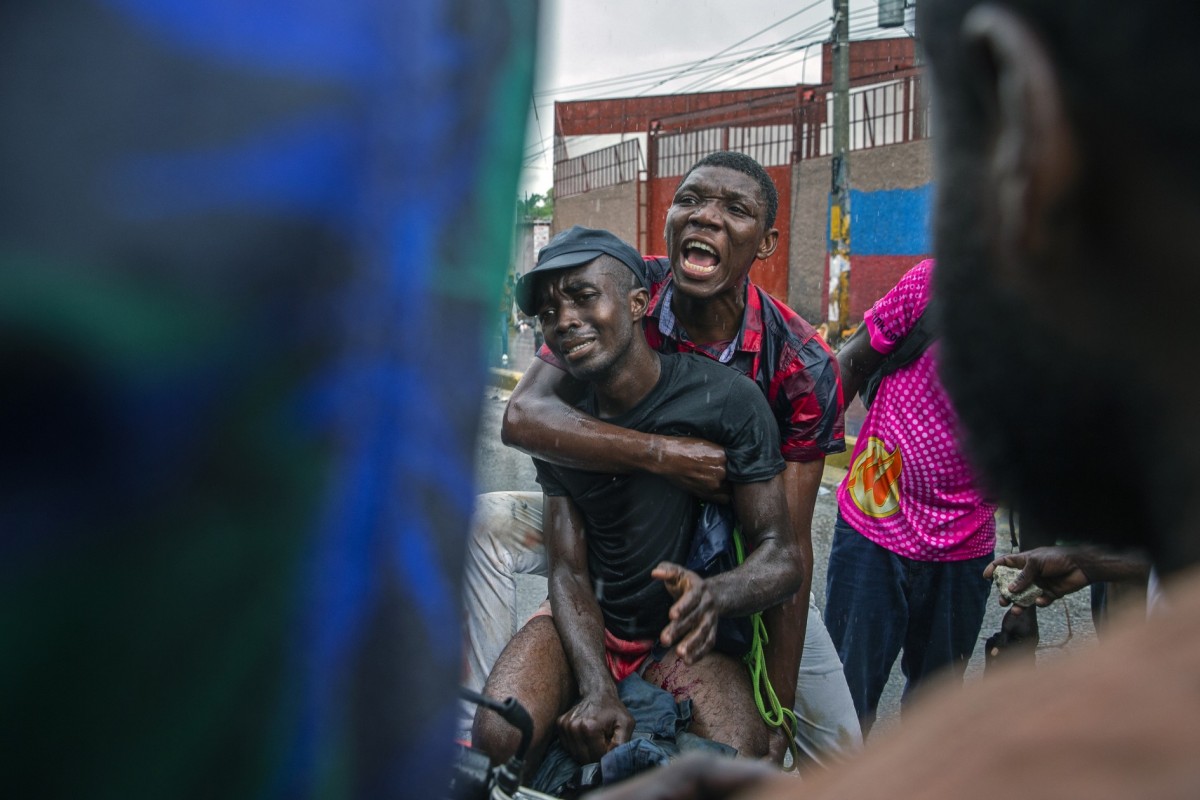
A protestor who was hit in the leg by police fire is helped onto a motorcycle to be taken to the hospital, as police clash with demonstrators in Port-au-Prince, Haiti, Monday, Sept. 30, 2019. (Rebecca Blackwell)
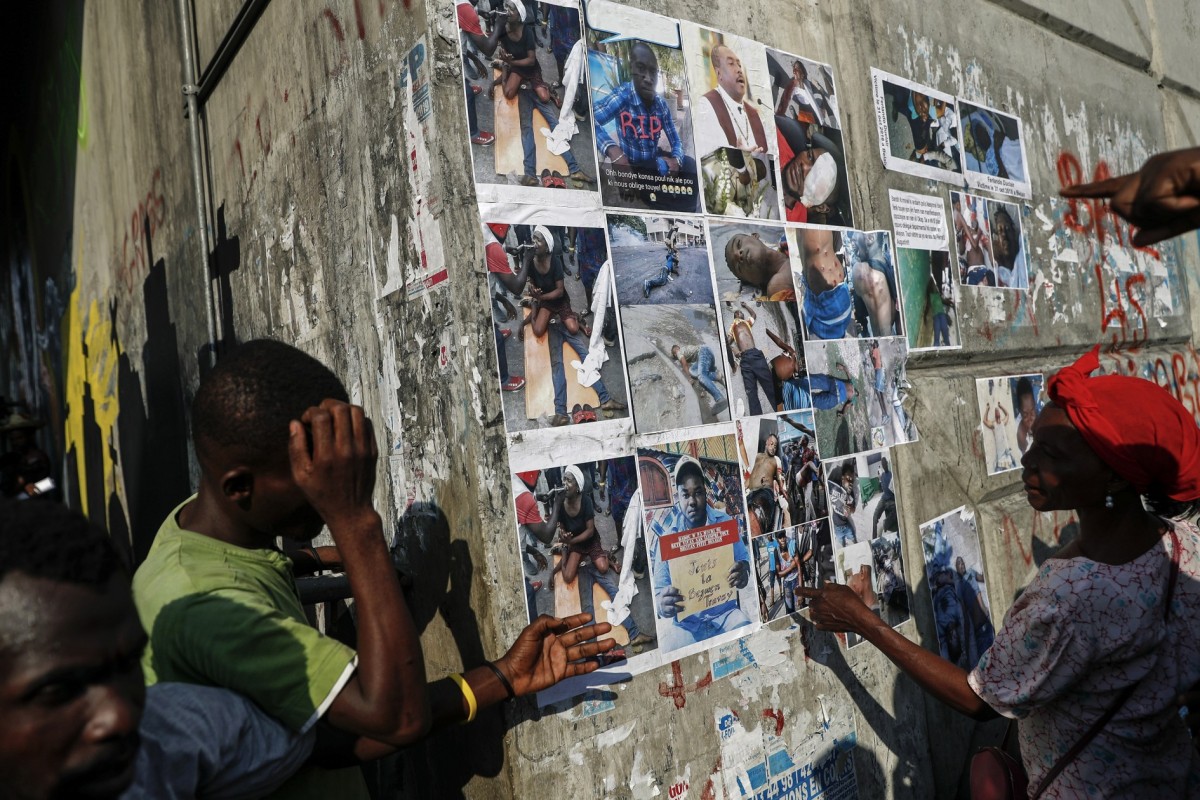
Protesters and passerby look at images on a wall of people said to have been injured or killed during the past month of protests calling for the resignation of President Jovenel Moise, in Port-au-Prince, Haiti, Tuesday, Oct. 15, 2019. (Rebecca Blackwell)
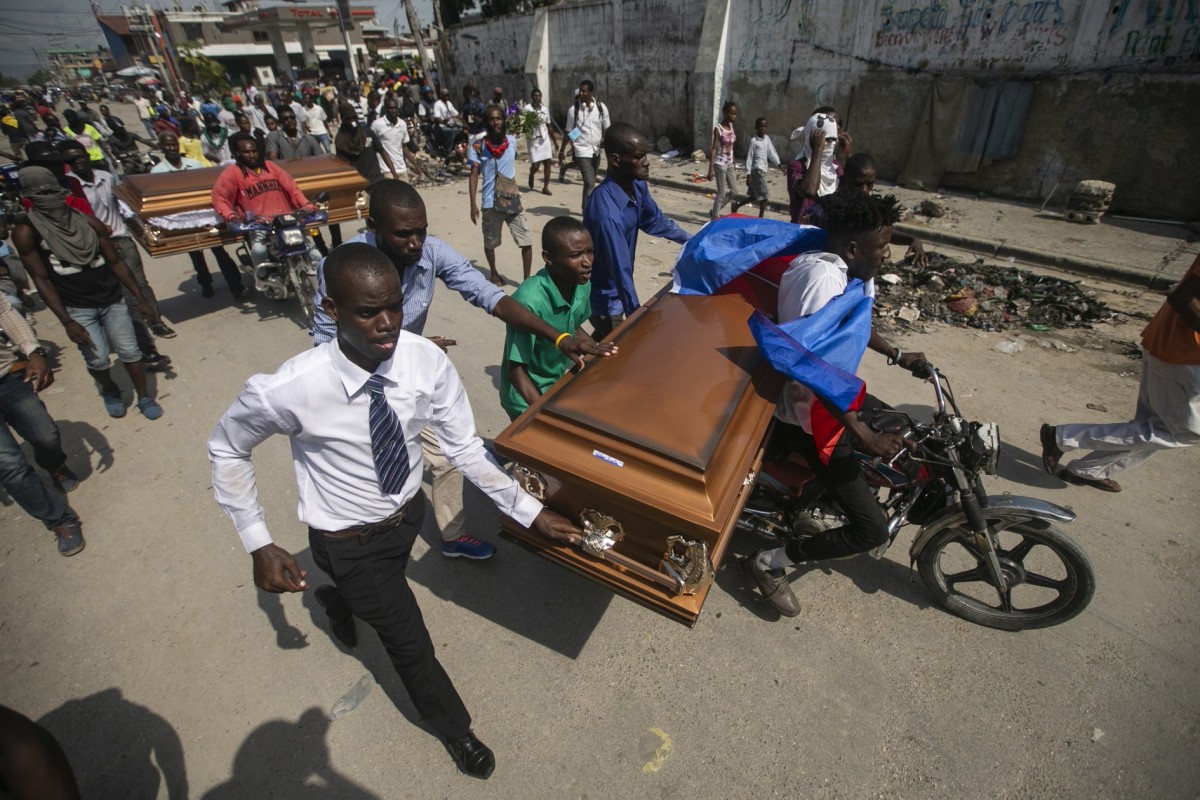
Family and friends transport the coffins containing the remains of protesters recently killed, in Port-au-Prince, Haiti, Tuesday, Nov. 19, 2019. (Dieu Nalio Chery)

Relatives of murdered community leader Josemano "Badou" Victorieux mourn during Victorieux's funeral in Port-au-Prince, Haiti, Wednesday, Oct. 16, 2019. Victorieux was killed in recent violence related to protests calling for the resignation of President Jovenel Moise. (Rebecca Blackwell)

A churchgoer drops to the ground and prays in the street near burning tires lit by protesters, during a march called by religious leaders in Port-au-Prince, Haiti, on Oct. 22, 2019. (Rebecca Blackwell)
Biography
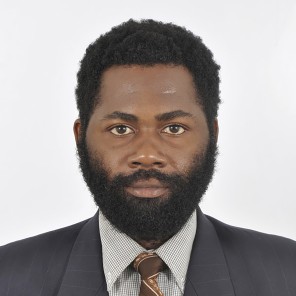
Dieu Nalio Chery was born in Haiti in 1981. He started shooting in his uncle's photo studio when he was twenty as a commercial photographer from 2002 to 2004 and as a freelance photographer from 2004 to 2010 as he dealt with a local agency named Alerte Haiti. When former President Jean Bertrand Aristide went to exile in 2004, he decided to show in images the human right abuses and social injustices of people living in the slums. The 2010 earthquake aftermath saw an increase of all major categories of crimes, including murder, kidnapping and violence of all sorts. When he saw how the authorities treated the victims without any respect of their rights, he decided to pursue a career in photojournalism and joined Associated Press that same year.
In 2011 Chery was selected for a full scholarship in a photojournalism workshop in Argentina and then worked in Mexico for Associated Press as a photojournalist for some time in 2012. In Haiti, where he is currently based for Associated Press, a vast majority of the people are illiterate and photography means more than a thousand words: it's very strong to convey your message through a picture and photography documents the daily life of a nation.
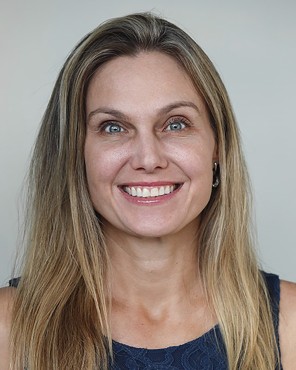
Rebecca Blackwell is an Associated Press staff photographer based in Mexico City since 2014. Her work has spanned a wide range of subjects, including immigration, natural disasters, and multiple Olympics and World Cups. Blackwell joined AP’s staff in 2007 while living in Dakar, Senegal, where she spent 10 years covering social issues, elections, coups, and the occasional conflict, across two dozen African countries.