Finalist: Dave Philipps of The New York Times
Nominated Work
Many U.S. troops who fired vast numbers of artillery rounds against the Islamic State developed mysterious, life-shattering mental and physical problems. But the military struggled to understand what was wrong.
By Dave Philipps
Photographs by Matthew Callahan
When Javier Ortiz came home from a secret mission in Syria, the ghost of a dead girl appeared to him in his kitchen. She was pale and covered in chalky dust, as if hit by an explosion, and her eyes stared at him with a glare as dark and heavy as oil.
The 21-year-old Marine was part of an artillery gun crew that fought against the Islamic State, and he knew that his unit’s huge cannons had killed hundreds of enemy fighters. The ghost, he was sure, was their revenge.
A shiver went through him. He backed into another room in his apartment near Camp Pendleton in California and flicked on the lights, certain that he was imagining things. She was still there.
A few days later, in the barracks not far away, a 22-year-old Marine named Austin Powell pounded on his neighbor’s door in tears and stammered: “There’s something in my room! I’m hearing something in my room!”
His neighbor, Brady Zipoy, 20, searched the room but found nothing.
“It’s all right — I’ve been having problems, too,” Lance Corporal Zipoy said, tapping his head. The day before, he bent down to tie his boots and was floored by a sudden avalanche of emotion so overwhelming and bizarre that he had no words for it. “We’ll go see the doc,” he told his friend. “We’ll get help.”
All through their unit — Alpha Battery, 1st Battalion, 11th Marines — troops came home feeling cursed. And the same thing was happening in other Marine and Army artillery units.
An investigation by The New York Times found that many of the troops sent to bombard the Islamic State in 2016 and 2017 returned to the United States plagued by nightmares, panic attacks, depression and, in a few cases, hallucinations. Once-reliable Marines turned unpredictable and strange. Some are now homeless. A striking number eventually died by suicide, or tried to.
Interviews with more than 40 gun-crew veterans and their families in 16 states found that the military repeatedly struggled to determine what was wrong after the troops returned from Syria and Iraq.
All the gun crews filled out questionnaires to screen for post-traumatic stress disorder, and took tests to detect signs of traumatic brain injuries from enemy explosions. But the crews had been miles away from the front lines when they fired their long-range cannons, and most never saw direct fighting or suffered the kinds of combat injuries that the tests were designed to look for.
A few gun-crew members were eventually given diagnoses of P.T.S.D., but to the crews that didn’t make much sense. They hadn’t, in most cases, even seen the enemy.
The only thing remarkable about their deployments was the sheer number of artillery rounds they had fired.
The United States had made a strategic decision to avoid sending large numbers of ground troops to fight the Islamic State, and instead relied on airstrikes and a handful of powerful artillery batteries to, as one retired general said at the time, “pound the bejesus out of them.” The strategy worked: Islamic State positions were all but eradicated, and hardly any American troops were killed.
But it meant that a small number of troops had to fire tens of thousands of high-explosive shells — far more rounds per crew member, experts say, than any American artillery battery had fired at least since the Vietnam War.
Military guidelines say that firing all those rounds is safe. What happened to the crews suggests that those guidelines were wrong.
The cannon blasts were strong enough to hurl a 100-pound round 15 miles, and each unleashed a shock wave that shot through the crew members’ bodies, vibrating bone, punching lungs and hearts, and whipping at cruise-missile speeds through the most delicate organ of all, the brain.
More than a year after Marines started experiencing problems, the Marine Corps leadership tried to piece together what was happening by ordering a study of one of the hardest-hit units, Fox Battery, 2nd Battalion, 10th Marines.
The research was limited to reviewing the troops’ medical records. No Marines were examined or interviewed. Even so, the report, published in 2019, made a startling finding: The gun crews were being hurt by their own weapons.
More than half the Marines in the battery had eventually received diagnoses of traumatic brain injuries, according to a briefing prepared for Marine Corps headquarters. The report warned that the experience in Syria showed that firing a high number of rounds, day after day, could incapacitate crews “faster than combat replacements can be trained to replace them.”
The military did not seem to be taking the threat seriously, the briefing cautioned: Safety training — both for gun crews and medical personnel — was so deficient, it said, that the risks of repeated blast exposure “are seemingly ignored.”
Despite the concerns raised in the report, no one appears to have warned the commanders responsible for the gun crews. And no one told the hundreds of troops who had fired the rounds.
Instead, in case after case, the military treated the crews’ combat injuries as routine psychiatric disorders, if they treated them at all. Troops were told they had attention deficit disorder or depression. Many were given potent psychotropic drugs that made it hard to function and failed to provide much relief.
Others who started acting strangely after the deployments were simply dismissed as problems, punished for misconduct and forced out of the military in punitive ways that cut them off from the veterans’ health care benefits that they now desperately need.
The Marine Corps has never commented publicly on the findings of the study. It declined to say who ordered it or why, and would not make the staff members who conducted it available for interviews. Officers who were in charge of the artillery batteries declined to comment for this article, or did not respond to interview requests.
The silence has left the affected veterans to try to figure out for themselves what is happening.
Many never have.
Lance Corporal Powell, who was hearing things in his room, left the Marines and became a tow-truck driver in Kentucky, but he kept having paralyzing panic attacks on the road. In 2018, a year and a half after returning from Syria, he shot himself.
His neighbor in the barracks, Lance Corporal Zipoy, moved back to his parents’ house in Minnesota and started college. In 2020 he began hearing voices and seeing hidden messages in street signs. A few days later, in the grips of a psychotic delusion, he entered a house he had never been in before and killed a man he had never met.
When the police arrived, they found him wandering barefoot in the driveway. As they handcuffed him, he asked, “Are you going to take me to the moon?”
He was found not guilty of murder by reason of mental illness in 2021 and was committed to a locked ward of the Minnesota Security Hospital. He is still there today.
“Oh my God, I was out of my mind — there was no understanding of what was happening,” he recalled in a recent interview from the hospital, rubbing his fists against his temples.
“I’m angry, because I tried to get help in the Marines,” he said. “I knew something was wrong, but everybody just kind of blew it off.”
‘Damaged, very damaged’
When Lance Corporal Ortiz started seeing a ghost a few days after returning from Syria in 2017, it didn’t occur to him that he had been hurt by his own cannon. Instead, he was convinced that the enemy had put a hex on him.
He tried to purify himself by lighting a fire on the beach near Camp Pendleton and burning his old combat gloves and journal from the deployment. But after the ashes cooled, the ghost was still there.
For the next four years, he tried to play down his problems and make a career in the Marine Corps. He started a family. He was promoted to sergeant. He received a diagnosis of P.T.S.D. and was given various medications, but his panic attacks and hallucinations persisted. He started to have problems with his heart and digestion, too.
He eventually asked for a transfer to a special medical battalion set up to give Marines who are wounded in combat a place to recover. But there was little in his record to suggest that he had seen combat or been wounded. His request was denied.
One Friday night in October 2020, he was having visions that ghosts were trying to pull him into another dimension. He stretched out naked on his kitchen floor, hoping that the cool touch of the tiles would restore his grip on reality. It didn’t work. In a panic, he called a cousin who had served in Iraq. His cousin said that what always worked for his P.T.S.D. was marijuana.
Sergeant Ortiz bought some at a civilian dispensary. Though using marijuana is a crime in the military, he took a few puffs, relaxed and went to sleep.
The next Monday, he admitted to his commanding officer what he had done. He apologized and told her that he had already referred himself to a Marine substance abuse program.
The Marine Corps has regulations to ensure that Marines who break the rules because of P.T.S.D. or brain injuries are not punished for their missteps if their condition makes them unfit for duty. But records show that the Marine Corps decided Sergeant Ortiz had no qualifying injuries.
In 2021, he was forced out for willful misconduct and given an other-than-honorable discharge that cut him off from access to therapy, medication, disability payments and other support intended for wounded veterans.
This spring, he and his family were squatting in a house in Kissimmee, Fla., that was going through foreclosure. The lights were off and the kitchen sink was overflowing with dishes. He stammered as he tried to recount his experiences, with a memory he says is now full of blanks.
He has two young children, and has struggled to hold a job. Bills have piled up. The headaches are crushing, he said, and he feels that his memory is becoming worse. When asked about the apparition of the dead girl, he started to cry and lowered his voice so his wife wouldn’t hear. He admitted that he still saw the ghost. And other things.
“I gave the Marine Corps everything,” he said. “And they spit me out with nothing. Damaged, damaged, very damaged.”
Unseen risks
Firing weapons is as fundamental to military service as tackling is to football. And research has started to reveal that, as with hits in football, repeated blast exposure from firing heavy weapons like cannons, mortars, shoulder-fired rockets and even large-caliber machine guns may cause irreparable injury to the brain. It is a sprawling problem that the military is just starting to come to grips with.
The science is still in its infancy, but evidence suggests that while individual blasts rippling through brain tissue may not cause obvious, lasting injury, repeated exposure appears to create scarring that eventually could cause neural connections to fail, according to Gary Kamimori, a senior Army blast researcher who retired recently after a career studying the problem.
“Think of it like a rubber band,” he said. “Stretch a rubber band a hundred times and it bounces back, but there are micro tears forming. The hundred-and-first time, it breaks.”
Those blasts might never cause a person to see stars or experience other signs of concussion, but over time they may lead to sleeplessness, depression, anxiety and other symptoms that in many ways resemble P.T.S.D., according to Dr. Daniel Perl, a neuropathologist who runs a Defense Department tissue bank that preserves dead veterans’ brains for research.
“It’s common to mistake a blast injury in the brain for something else, because when you walk into a clinic, it looks like a lot of other things,” Dr. Perl said.
His lab has examined samples from hundreds of deceased veterans who were exposed to enemy explosions and blasts from firing weapons during their military careers. The researchers found a unique and consistent pattern of microscopic scarring.
Finding that pattern in living veterans is another matter. There is currently no brain scan or blood test that can detect the minute injuries, Dr. Perl said; the damage can be seen only under microscopes once a service member has died. So there is no definitive way to tell whether a living person is injured. Even if there were, there is no therapy to fix it.
The lab hasn’t examined any brains from artillery units sent to fight the Islamic State, but Dr. Perl said that he would not be surprised if many of them were affected. “You have a blast wave traveling at the speed of sound through the most complex and intricate organ in the body,” he said. “Wouldn’t you think there would be some damage?”
The military for generations set maximum safe blast-exposure levels for eardrums and lungs, but never for brains. Anything that didn’t leave troops dazed was generally considered safe. But that has recently changed.
Over the last decade, veterans suffering from brain injury-like symptoms after years of firing weapons pressured Congress to rethink the potential dangers, and lawmakers passed a number of bills from 2018 to 2022 ordering the Pentagon to start a sprawling “Warfighter Brain Health Initiative” to try to measure blast exposure and develop protocols to protect troops.
“There is an absolutely clear awareness this can be considered a brain health threat,” said Kathy Lee, director of casualty management for the Office of Health Affairs at the Defense Department, who oversees the initiative.
In response to questions from The Times, both the Army and Marine Corps acknowledged that some gun crew members were injured by blasts during the fight against the Islamic State. In part because of that experience, the branches say they now have programs to track and limit crews’ exposure.
But a Marine officer currently in charge of an artillery battery questioned whether that was accurate. He said recently that he has never seen or heard of the new safety guidelines, and that nothing was being done to document his troops’ blast exposure.
The officer, who asked that his name not be used because he was not authorized to speak publicly, said he was experiencing splitting headaches and small seizures, but was worried that his injuries would not be acknowledged because there was no documentation that he was ever exposed to anything dangerous.
In short, he said, there is little in military regulations now that might stop what happened to the artillery troops in Syria and Iraq from happening again.
A secret task force
Paradoxically, the point of sending artillery batteries to Syria was to avoid American casualties.
Islamic State fighters overran vast swaths of Syria and Iraq in 2014, taking over some of the region’s largest cities and using their self-proclaimed caliphate to organize attacks on civilian targets across the region and beyond. American military planners knew they needed to confront the Islamic State, but also knew that the American public was weary of long wars in the Middle East.
Artillery offered a lot of bang with hardly any U.S. boots on the ground. A battery with four howitzers and about 100 troops could deliver a torrent of fire, day or night, in any weather. But keeping the troop count to a bare minimum meant there would be no relief shifts. Each battery would have to do the work of many.
“The people running this war made a choice,” said Lt. Col. Jonathan O’Gorman, a Marine officer who oversaw artillery operations in the offensive and now teaches strategy at the U.S. Naval War College, “and choices have consequences.”
Alpha battery troops set up their big guns in March 2017 in a dirt field in Syria within sight of the enemy-controlled city of Raqqa and almost immediately started firing. They rarely stopped for the next two months.
Night and day they hurled rounds, using some of the military’s most sophisticated cannons, M777A2 howitzers. The 35-foot-long guns had modern, precisely designed titanium parts and a digital targeting system, but when it came to protecting the crew the design had changed little in a century. Gun crews still worked within arm’s reach of the barrel and fired the gun by pulling a simple cord.
The resulting blast was several times louder than a jet taking off, and unleashed a shock wave that hit the crews like a kick to the chest. Ears rang, bones shivered, vision blurred as eyeballs momentarily compressed, and a ripple shot through every neuron in the brain like a whipcrack.
“You feel it in your core, you feel it in your teeth,” said Carson Brown, a corporal from Idaho who pulled the firing cord for hundreds of shots. “It’s like it takes a year off your life.”
The relentless firing was being driven by a small, top-secret Army Delta Force group called Task Force 9. President Donald J. Trump had given the task force broad authority to use heavy firepower, and the task force applied it with savage enthusiasm, often bending the rules to hit not just enemy positions, but also mosques, schools, dams and power plants.
Sometimes, artillery crew members said, the task force ordered them to fire in a grid pattern, not aiming at any specific target but simply hurling rounds toward Raqqa, to keep the enemy on edge.
The military’s Central Command, which oversaw the task force, did not respond to requests for comment.
The demands of Task Force 9 led to rates of artillery fire not seen in generations.
During Operation Desert Storm in 1991, artillery crews fired an average of 70 rounds during the entire six-week campaign, said John Grenier, a historian at the Army’s Field Artillery School. During the initial months of the invasion of Iraq in 2003, crews fired an average of 260 rounds. In Syria, each gun in Alpha battery shot more than 1,100 rounds in two months — most of them using high-powered charges that produce the strongest shock waves. Some guns in Fox battery, which replaced Alpha, fired about 10,000 rounds each.
“It’s shocking, insane,” Mr. Grenier said.
Under the relentless tempo, Marines would wake up feeling hung over and stagger to the guns like zombies. Their sense of taste changed. Some threw up. Crews grew irritable and fights broke out.
The symptoms were telltale signs of concussion, but also what anyone might feel after a string of stressful 20-hour workdays in the desert, sleeping in foxholes and eating rations from plastic pouches. Medics came around daily to check on the crews but never intervened. And Marines trained to endure didn’t complain.
A 20-year-old Marine from Missouri named Brandon Mooney was doing maintenance on his gun when he began to realize that he could no longer figure out how to put the pieces back together.
“It got to a point where you knew the firing was affecting you, but what could you do? Refuse to do the mission?” he said in an interview.
When he returned home, screening tests said he was fine, but he was tormented by anxiety, sleep paralysis and hallucinations of a black demon standing over his bed.
After he left the Marine Corps, he became depressed and suicidal. He went to a veterans’ hospital for help. Though he never experienced anything he considered particularly traumatic in Syria, his nightmares and anxiety were diagnosed as P.T.S.D.
“From what, though?” he said in the interview. “I could never understand it.”
Misunderstood injuries
In the spring of 2017, two months after coming home from firing thousands of rounds in Iraq, Sgt. First Class Tyler Chatfield went missing in Kentucky.
He was a senior soldier in Charlie Battery of the Army’s 1st Battalion, 320th Field Artillery Regiment. The battery had fired a stunning number of rounds against the Islamic State and then returned to Fort Campbell, Ky., in February 2017, just as the Marines were deploying.
At Fort Campbell, soldiers were struggling to sleep, and were stalked by hard-edged anxiety that sometimes veered into panic.
Everyone was screened for P.T.S.D. and brain injury. The tests showed nothing unusual.
Iraq was Sergeant Chatfield’s third deployment, and his wife knew that homecomings could be rough, but this one seemed OK. He was relaxed, loving, engaged. He was coaching Little League and building a chicken coop in the backyard.
Then one morning he was at the gym and his heart started racing like a jack rabbit. Cold sweat poured down his neck, and he started to vomit. He was sure he was having a heart attack. He was 26 years old.
His wife took him to the hospital but, other than some inflammation, cardiologists found nothing wrong. He went home, and a few days later had another attack.
Maybe it’s anxiety, a doctor suggested; he prescribed Xanax.
Traumatic brain injuries can have profound effects on parts of the body that are nowhere near the skull, because the damage can cause communication with other organs to malfunction. Dozens of the young veterans interviewed by The Times said they now had elevated, irregular heartbeats and persistent, painful problems with their digestion.
Sergeant Chatfield never thought to mention the blasts he had endured to the doctors, his wife said. And the doctors didn’t ask.
The next few days for the sergeant were quiet. He took his pills and rested. He roasted marshmallows in the backyard with his boys.
Then he was gone. He wasn’t in bed when his wife woke up on the Thursday morning after the attack. He wasn’t at work, either. The Army and local police went out looking for him.
His wife was sure he would show up to coach his sons’ afternoon baseball game. But in the ninth inning, she was still scanning the parking lot.
She felt so uneasy by the end of the game that she asked another soldier to escort her home. The soldier went into the house first and emerged a few minutes later shaking his head. He had found Sergeant Chatfield’s body in the garage, behind a stack of boxes. The sergeant had taken his own life.
He left a short goodbye text, but said nothing that shed light on his decision. The Army investigated, but didn’t uncover anything that his wife, Janae’ Chatfield, felt could explain it.
“None of it made any sense,” she said in an interview. “I don’t know why it happened. I don’t think I ever will.”
All four of the artillery batteries examined by The Times have had at least one suicide — a striking pattern, since death by suicide is rare even in high-risk populations. Some batteries have had several, and many service members said in interviews that they had tried to kill themselves.
A friend of Sergeant Chatfield’s, Staff Sgt. Joshua James, changed from an easygoing young father into an alcoholic, afflicted by anxiety and headaches.
He seemed to grow worse every year. In 2021, an M.R.I. detected an abnormality deep in his brain, but doctors said they were not sure what caused it or what could be done. In November 2022, he was on a road trip with his family when he got into an argument with his wife. With no warning, he shot himself in the drive-through of a fast-food restaurant.
“The man who deployed never really came back,” Lindsey James, the sergeant’s wife, said in an interview at her home in Tennessee. “He was a different person. He never understood what was happening to him. I don’t think the Army did, either.”
Damage at a nano scale
The Defense Department has spent more than a billion dollars in the last decade to research traumatic brain injury, but it still knows very little about what might have happened to the artillery crews. Nearly all of the research has focused on big explosions from roadside bombs and other enemy attacks, not the blast waves from the routine firing of weapons.
Still, as that research progressed and studies tried to define the threshold at which an explosion caused brain damage, a growing amount of data suggested that the level was much lower than expected — so low, in fact, that it wasn’t much different from what troops experienced when they pulled the cord on an artillery cannon.
In 2016, while the U.S. military was exposing gun crews in Iraq and Syria to repeated artillery blasts, a research team was doing something similar to lab mice at the University of Missouri.
In a series of tests, the team placed mice a few feet from a lump of C4 explosive that was sized to produce a blast just above the military’s official safety level.
After the blast, the mice were returned to their cages and started scampering around, apparently unaffected.
“We were very disappointed — we didn’t see anything abnormal,” said Dr. Zezong Gu, who led the research.
But the picture changed over the next few days. Mice instinctively build nests, and researchers use the quality of their nests as a benchmark of well-being. The blasted mice built only ramshackle nests, often leaving them unfinished.
In later experiments, blasted mice were put through mazes. They made more wrong turns than healthy mice, and sometimes froze, refusing to explore the mazes at all.
The team then dissected the animals’ brains. At first they found almost no damage.
“Everything looked fine until we looked at a nano scale,” Dr. Gu said.
Under an electron microscope, a ravaged neural landscape came into focus. Sheaths of myelin, vital for insulating the biological wiring of the brain, hung in tatters. In key parts of the brain that control emotion and executive function, large numbers of mitochondria — the tiny powerhouses that provide energy for each cell — were dead.
“It was remarkable — the damage was very widespread,” Dr. Gu said. “And that was just from one explosion.”
Of course, the brains of mice and humans are very different. Dr. Scott Cota, a Navy captain and brain injury expert, said it was unclear whether the same damage would occur in human brains. Researchers can’t expose humans to damaging blasts, and then dissect them the way they can mice, he said. And techniques are not yet available to detect microscopic trauma in living brains.
“It’s very hard to study,” Dr. Cota said. “And unfortunately, we can only do it post-mortem at this point.”
‘Scared to death’
The artillery gun crews present a rare and valuable chance to understand how blasts affect the brain, but no researchers are tracking them. It’s not clear if anyone in a position to learn from them is even aware that this unique group of combat veterans exists.
Most of the crew members have drifted out of the military to corners of the country where they continue to quietly grapple with headaches, depression and confusion that they don’t understand.
Two soldiers who worked side by side on the same gun under Sergeants James and Chatfield have failed to find stability, even years later.
Andrew Johnson, a tall, strong ammunition loader who stood right behind a cannon for thousands of shots, came home speaking with a noticeable delay, as if on a bad phone line. He was seeing flashes of light he couldn’t explain. He grew suspicious of fellow soldiers and stayed isolated in his room. A year after coming home, he tried to overdose with sleeping pills.
“I can’t even remember what I was dealing with,” Mr. Johnson said in an interview in Jackson, Miss., where he now lives. “I didn’t drink, didn’t smoke. I had a girlfriend. But I just couldn’t function. I had this deep feeling of being all alone.”
The Army started him on therapy for depression and gave him pills to help with nightmares.
He was transferred to a new unit that knew nothing about his blast exposure in Iraq. He acquired a reputation for being unstable, and was reprimanded for saying inappropriate things to other soldiers and shoving a medic. Last year, the Army forced him out for misconduct and gave him an other-than-honorable discharge.
He got a string of jobs but lost them. He tried to go to school twice and failed. He went to a veterans’ hospital seeking help, but was turned away because his discharge barred him from receiving care there.
He is now homeless and sleeps in his car. Recently, he said, he attempted suicide again.
Earlier this year, he started seeing things. Shadows cast by streetlights seemed to be crawling. At first, there were transient flickers of motion on the edge of his vision. Then came full hallucinations of creatures moving through the darkness.
“Now they are very close, like at arm’s length, and very real,” he said in a phone call from his car one night. “Honestly, I see it right now, and it’s freaking me out.”
Alex Sabol loaded charges right next to Mr. Johnson in Iraq. He had many advantages that Mr. Johnson never did. He was honorably discharged and given a monthly veterans’ pension. His family pays for a private psychotherapist. Even so, he has struggled.
After the deployment, he felt as though his moods had gone feral. The Army gave him a diagnosis of anxiety, depression, attention-deficit disorder and P.T.S.D.
“My friends, my family, I don’t think they understood why I couldn’t hold it together,” he said in an interview.
He is now in college. He tries to eat well and exercise. On a spring morning, a pair of rock-climbing shoes hung by the door of the light-filled cabin where he lives in the Appalachian Mountains.
But he has terrifying mood swings. Last year, he started punching himself. In the fall, he found himself in tears in his kitchen, in a push-up position hovering over a butcher knife, unsure why he had an overwhelming urge to plunge it into his heart.
He is trying to move on from Iraq, but a lurking darkness keeps pulling him off course.
This spring, he tried to hang himself. His girlfriend cut him down. She has since moved out.
“I’m scared to death,” he said in an interview at his cabin. “I don’t want to die. And I don’t get why I get into those horrible places.”
If you are having thoughts of suicide, call or text 988 to reach the 988 Suicide and Crisis Lifeline or go to SpeakingOfSuicide.com/resources for a list of additional resources. Go here for resources outside the United States.
Daniel S. Johnson contributed reporting from North Carolina.
The relentless U.S. artillery bombardment that broke the Islamic State in Syria and Iraq also took a shattering toll on the troops who fired the cannons. Here is what to know.
By Dave Philipps
When American military planners launched a ground offensive against the Islamic State in Iraq and Syria in 2016, they knew that the American public was weary of long wars in the Middle East, and that the operation would have to make do with very few Americans troops on the ground. So they relied on a strategy that had not been used much in decades: intensive bombardment by heavy artillery.
Military guidelines said that firing all those high-powered artillery rounds was safe for the gun crews. But an investigation by The New York Times, including interviews with more than 40 gun-crew veterans and their families, found that the troops came home plagued by insomnia, confusion, memory loss, panic attacks, depression and, in some cases, hallucinations, among other symptoms. And because the military thought the blast waves were safe, it repeatedly failed to recognize what was happening to the troops.
Here are five takeaways from the Times investigation.
To defeat ISIS, the United States relied on artillery crews firing more intensively than any had in generations.
The big howitzers used in the height of the offensive against the Islamic State in Syria and Iraq, from 2016 to 2017, could hurl a 100-pound round 15 miles, and gun crews fired them almost nonstop, day and night for weeks on end.
The strategy worked as intended, and the Islamic State was soon smashed to near oblivion. But keeping the number of U.S. troops involved to a minimum meant that each gun crew had to fire thousands of high-explosive shells — far more rounds than any American gun crew had fired at least since the Vietnam War. Some troops fired more than 10,000 rounds in just a few months.
Many members of the gun crews developed devastating and puzzling symptoms.
Each howitzer blast unleashed a shock wave that shot through the bodies of the troops standing near the gun, vibrating bones, punching lungs and hearts, and whipping at cruise-missile speeds through the most delicate organ of all, the brain.
Members of the gun crews started to have memory and balance problems, nausea, irritability and crushing fatigue. Those symptoms were signs of concussion, but also what anyone might feel after working 20-hour days in the desert and sleeping in foxholes. Crews trained to endure didn’t complain.
The crews were screened for signs of brain injuries after deployment, but those screenings were designed to spot the effects of much larger explosions from enemy attacks — not repeated exposure to blast waves from routine firing of weapons. Few of the troops screened positive.
Crew members who were told they were healthy struggled to understand why they were stalked by panic and sleeplessness. Some thought they were going insane.
When the troops started to act strangely, they were often treated ineffectively or punished.
Nothing in the gun crew members’ records suggested they had ever been exposed to damaging blasts in combat, so when some sought medical help from the military, doctors repeatedly failed to consider the possibility of a brain injury.
Instead, the troops were often told they had attention deficit disorder, depression or post-traumatic stress disorder. Many were given potent psychotropic drugs that made it hard to function and failed to provide much relief.
When job performance deteriorated or behavior turned erratic, many crew members were seen not as wounded, but as problems. They were passed over for promotion or punished for misconduct. Some were forced out of the service with punitive discharges and cut off from veterans’ health care.
Their problems have spilled over into civilian life, wrecking marriages and making it hard to hold down jobs. Some are now homeless. A striking number have died by suicide. Many still have no idea that their problems may stem from blast exposure.
Studies are starting to reveal the risk posed by blast exposure, but progress is slow.
Research suggests that repeated exposure to the blast waves generated by firing heavy weapons like cannons, mortars, shoulder-fired rockets and even large-caliber machine guns may cause irreparable microscopic damage to the brain. Vast numbers of military veterans may have been affected.
But the damage is nearly impossible to document, because no brain scan or blood test now in use can detect those minute injuries in a living brain. Making diagnosis more complicated, many of the symptoms can be identical to those of P.T.S.D.
As things now stand, the microscopic damage from blast exposure can only be definitively documented by examining thin slices of brain tissue under a microscope once someone has died. Tissue samples taken from hundreds of deceased veterans who were exposed to blasts during their military careers show a unique and consistent pattern of microscopic scarring.
The military says it now has safeguards to protect from blasts, but it is not clear that much has changed.
Congress, at the behest of veterans’ groups, recently ordered the Pentagon to start assessing the blast threat posed by firing weapons and to develop protocols to protect troops. But the work is still in progress. Fundamental questions about what level of blast can cause injury and how repeated exposure may amplify the risk still have no answers.
The Army and the Marine Corps both say that they now have programs to track and limit daily exposure for troops. But Marines in the field say they have not seen the new safety programs, and troops throughout the military are still training with weapons that the Defense Department is concerned may pose a risk.
By Dave Philipps, Matthew Callahan, Rebecca Suner and Ruru Kuo
A secret U.S. offensive in 2016 and 2017 used an unusual strategy to fight the Islamic State: Put a minimal number of American troops on the ground and have them pound the enemy with artillery fire. What no one foresaw was the toll it would take on the troops who did the firing.
Pentagon researchers say weapons like shoulder-fired rockets expose troops who fire them to blast waves far above safety limits, but they remain in wide use.
By Dave Philipps
Photographs by Kenny Holston
Reporting from Fort Chaffee, Ark.
A blast shattered the stillness of a meadow in the Ozark Mountains on an autumn afternoon. Then another, and another, and another, until the whole meadow was in flames.
Special Operations troops were training with rocket launchers again.
Each operator held a launch tube on his shoulder, a few inches from his head, then took aim and sent a rocket flying at 500 miles an hour. And each launch sent a shock wave whipping through every cell in the operator’s brain.
For generations, the military assumed that this kind of blast exposure was safe, even as evidence mounted that repetitive blasts may do serious and lasting harm.
In recent years, Congress, pressed by veterans who were exposed to these shock waves, has ordered the military to set safety limits and start tracking troops’ exposure. In response, the Pentagon created a sprawling Warfighter Brain Health Initiative to study the issue, gather data and propose corrective strategies. And last year, for the first time, it set a threshold above which a weapon blast is considered hazardous.
Despite the order, though, things have hardly changed on the ground. Training continues largely as it did before. Troops say they see little being done to limit or track blast exposure. And weapons like shoulder-fired rockets that are known to deliver a shock wave well above the safety threshold are still in wide use.
The disconnect fits a pattern that has repeated for more than a decade: Top leaders talk of the importance of protecting troops’ brains, but the military fails to take practical steps to ensure safety.
“It’s extremely frustrating,” said Paul Scharre, a former Army Ranger and a policy expert at the Center for a New American Security who published a report in 2018, funded by the Defense Department, about the dangers of repeated blasts from firing weapons. “We’ve known for years that these weapons are dangerous. There are simple things we can do to protect people. And we’re not doing them.”
Nowhere is that disconnect more clear than on the firing range at the military training center in the Ozarks, Fort Chaffee in Arkansas.
With flames still leaping from the meadow, a few of the Special Operations troops walked to a pair of air-conditioned trailers just behind the firing line, where a research team drew blood samples, strapped sensors to their heads and ran tests, searching for evidence of brain injuries.
Measurements taken by the team from scores of troops over three years showed that in the days after firing rockets, they had worse memories and reaction times, worse coordination, lower cognitive and executive function, and elevated levels of proteins in their blood that are markers of brain injury.
Sensors placed on the operators’ helmets and body armor showed that the rocket launcher they were firing — the Carl Gustaf M3 — delivers a blast that is often twice the recommended safety threshold.
But when the research team finished running tests, the operators walked right back out and started firing again.
Dr. Michael Roy, the lead researcher, said he designed the five-year study to deliver the kind of empirical data that could help the military make better decisions.
“The question is, does this affect performance?” he said. “We are seeing it does.” He added, “If you are on a mission and you can’t remember things and your balance is off, that could be a real problem.”
Research by his team and others suggests that troops appear to recover after a few days or weeks, just as people recover from concussions. But, as with concussions, there is growing concern that repeated exposure may lead to permanent brain damage and serious long-term consequences for mental health.
Two recent Navy studies, which examined the records of more than 2 million service members and veterans in all, found that those who were in career fields with more blast exposure had an increased risk of developing anxiety disorders, depression, migraines, substance abuse problems, dementia and a number of psychiatric disorders including schizophrenia. And an investigation by The New York Times found that many soldiers and Marines who were exposed to blast waves from firing heavy artillery in Syria and Iraq came home with life-shattering mental and physical problems.
Special Operations Command said in response to questions from The New York Times that it plans to keep using the Carl Gustaf rocket launcher, but sparingly, because of its “potential negative effects.” But the command has taken steps to reduce blast exposure for instructors and assistant gunners, it said, and now requires them to stand farther away when a gunner fires.
During the recent training observed by The Times, none of those safety steps could be seen.
“It’s really negligent, given everything the Pentagon knows, that they haven’t taken action,” said David Borkholder, a professor of engineering at Rochester Institute of Technology.
In 2010, at the request of the military, Mr. Borkholder and a team from the Defense Advanced Research Projects Agency developed a small, wearable gauge to measure blast exposure.
The agency fielded the blast gauge on about 10,000 troops sent to Afghanistan in 2011, intending to measure blast exposure from roadside bombs. But researchers analyzing the data instead found that 75 percent of the troops’ exposure was coming from their own weapons.
“It was hugely, hugely surprising,” Mr. Borkholder said. “The danger was us. We were doing it to ourselves.”
At the same time, other studies were showing that these kinds of blasts were strong enough to cause brain injuries — even though they packed just a fraction of the punch of an enemy bomb.
One 2009 study by the Swedish military used pigs to assess brain damage from blast exposure, and found that ones placed in the firing position of the Carl Gustaf and exposed to the blasts from three shots developed large numbers of tiny brain hemorrhages. Subsequent studies in military personnel going through explosives and sniper training found evidence of temporary negative effects on brain function.
Rather than expand the blast gauge program, though, the Army quietly shelved it in 2016. The Army said at the time that it did so because the gauges did not provide consistent and reliable data.
Mr. Borkholder, who founded a company that makes blast gauges but left in 2021 and now has no financial stake, said he thought the gauges were shelved because the data told leaders something they didn’t want to hear.
For two years, he pressed the Army surgeon general and members of Congress to revive the program. Without real-time monitoring, he argued, the military was blind to the risks. He said he made no progress.
Merely issuing the gauges to service members might reduce exposure significantly, several researchers said. Time and again in recent studies that equipped troops with gauges and let them see their exposure, the troops have changed their behavior on their own to avoid blasts.
“The enlisted folks are smart,” Mr. Borkholder said. “Give them the tools, often they can solve the problem.”
That has yet to happen. Though a congressional mandate passed in 2018 requires monitoring of blast exposure, the Pentagon is still studying how to go about it. Special Operations Command said in 2019 that it would start issuing gauges to all its operators, but four years later, only those taking part in research studies have them.
Special Operations Command told The Times that its blast gauge program was in the “final development stage.”
Frank Larkin, a former Navy SEAL and Secret Service agent who lobbied lawmakers to create the congressional mandate, said in an interview that blast exposure “is an insidious threat that is absolutely affecting our force, and we have to act.”
During the wars in Iraq and Afghanistan, Mr. Larkin worked on a Pentagon team assigned to figure out how to counter the threat of roadside bombs. He realized only years later, he said, that he had missed a major threat.
His son Ryan Larkin was a SEAL deployed in combat at that time. He was in a number of firefights in Iraq and Afghanistan and was decorated for valor, but, as his father later realized, almost all of the blasts in his career came from his own weapons: Carl Gustafs, sniper rifles and explosives used to blow holes in walls.
“We think 80 percent of the blasts he experienced happened in training,” Frank Larkin said.
After 10 years of service, his father said, Ryan Larkin had been exposed to so many blasts that he could barely function. He couldn’t sleep and had panic attacks, headaches, memory problems and a growing dependence on alcohol.
The Navy gave him a diagnosis of post-traumatic stress disorder and treated his symptoms with a host of strong medications. No brain injury was diagnosed.
“He kept saying there was something wrong with his head, but no one was listening,” his father recalled.
Ryan Larkin grew increasingly erratic, and was involuntarily committed to a psychiatric hospital after making threats against an officer. Soon after that, he left the Navy when his enlistment ended.
A few months later, in 2017, he died by suicide.
“It is my greatest burden,” Frank Larkin said as he recalled his son’s death. “I spent a career trying to protect people, and couldn’t protect my own son.”
Frank Larkin gave his son’s brain to a Defense Department brain tissue bank set up to study traumatic brain injuries. Researchers found that Ryan Larkin’s brain showed a distinct pattern of damage unique to people exposed to blast waves.
Frank Larkin pushed to get mandates into military appropriations bills that now require the military to create safety standards, to track and document individual troops’ blast exposure and to put that data in the troops’ medical records. But he said the military has resisted.
“There is a battle against how we have always done things,” he said.
In the field, troops say they see things changing, but not enough.
Cory McEvoy was a Special Operations medic who left the Army in August. While in uniform, he pressed for better tracking of blast exposure so that when career special operators started to fall apart, the military might recognize their conditions as an injury caused by their service.
He said in a recent interview that he was disappointed that there was still no system in place.
“At a policy level, they are talking about all this incredible stuff,” he said. “But at my level, I never saw any of it. And if I’m not seeing it, you can be sure a regular infantry platoon isn’t seeing it.”
Biography
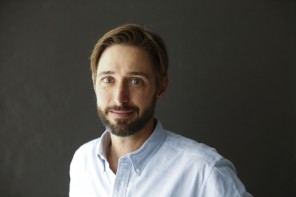
Dave Philipps reports about war, the military and veterans for The New York Times.
His reporting often focuses on the working people far from the Pentagon who make up the military, and how decisions made in Washington affect individual lives and communities.
Dave's first job was delivering his hometown newspaper on his bike and his first real job, after graduating from the Columbia University Journalism School, was working for that newspaper, The Gazette in Colorado Springs. He has covered the military for more than 15 years, and twice has been awarded the Pulitzer Prize for reporting that revealed the unintended fallout of the United States’ wars abroad. He still lives in Colorado Springs, a city filled with military bases and veterans that helps keep his reporting grounded.
His latest book, “Alpha, Eddie Gallagher and the War for the Soul of the Navy SEALs,” is an account of a Navy SEAL platoon that accused its commander of war crimes and the legal battle that exposed problems in how elite forces operate.