Neither the title character nor the author of Scarlet Sister Mary, the Pulitzer-winning novel for 1928, was a likely heroine of modern fiction.
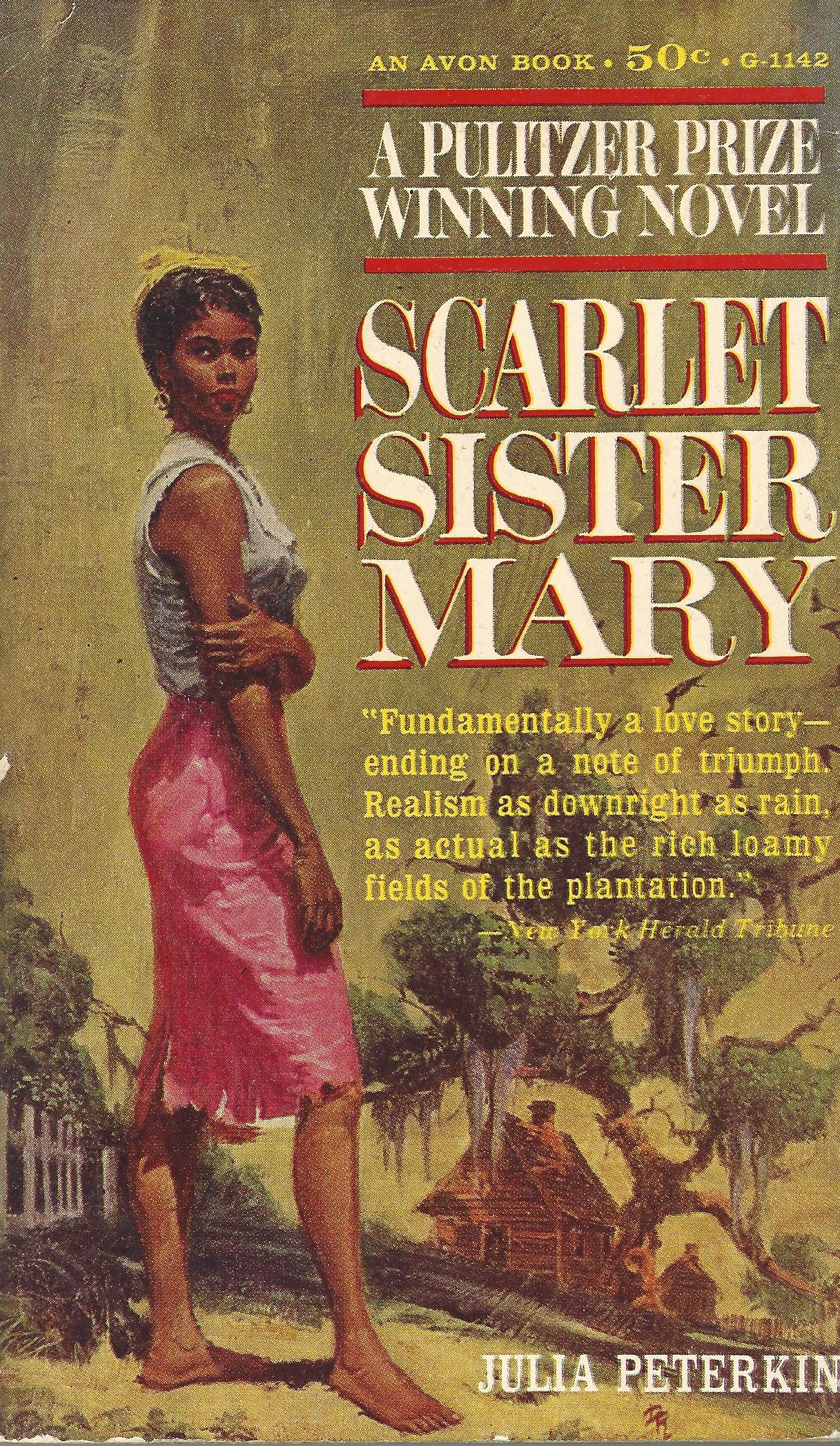
Scarlet Sister Mary, Julia Peterkin’s third book, would sell more than a million copies, its notoriety fueled by tensions between Pulitzer jurors and the Advisory Board of the Columbia University School of Journalism, an overhyped library ban and a stage adaptation starring one of America’s most famous actresses.
Reading Scarlet Sister Mary today, a reader might wonder why it raised eyebrows during the bright lights and blaring sounds of the Jazz Age. The story centers around a young black woman on a coastal South Carolina plantation who is abandoned by her husband and ostracized by her church for her sinful ways. Aided by a love charm she obtains from the local conjurer, Mary bears a houseful of children by different men. Although she eventually returns to the fold of Heaven’s Gate Church, Mary refuses to give up her love charm, claiming “E’s all I got now to keep me young.”
After the Pulitzer Prizes were announced in the spring of 1929, The Chicago Journal of Commerce tut-tutted that a “promiscuous Negress with seven illegitimate children can hardly be regarded as falling under the ‘highest standards’ synonymous with the award.”
Despite such caviling, most newspapers, including many in the Deep South, praised the novel and commended the heroine’s independent spirit. After all, this was the age of the flapper. Women had been guaranteed the right to vote since ratification of the 19th Amendment in 1920, and more and more they were deciding for themselves whether to smoke, drink alcohol or ignore traditional sexual mores.
Indeed, Peterkin’s stories of black farm workers had been popular for years. Her first novel, Black Thursday (1927), received serious consideration by Pulitzer jurors that year. Three years earlier, in announcing that the local public library had obtained Green Thursday, a collection of her short stories, The Charlotte (N.C.) Observer stated: “Her negro stories have long impressed those who know the south, both for their clear insight into negro character and for their literary excellence.”
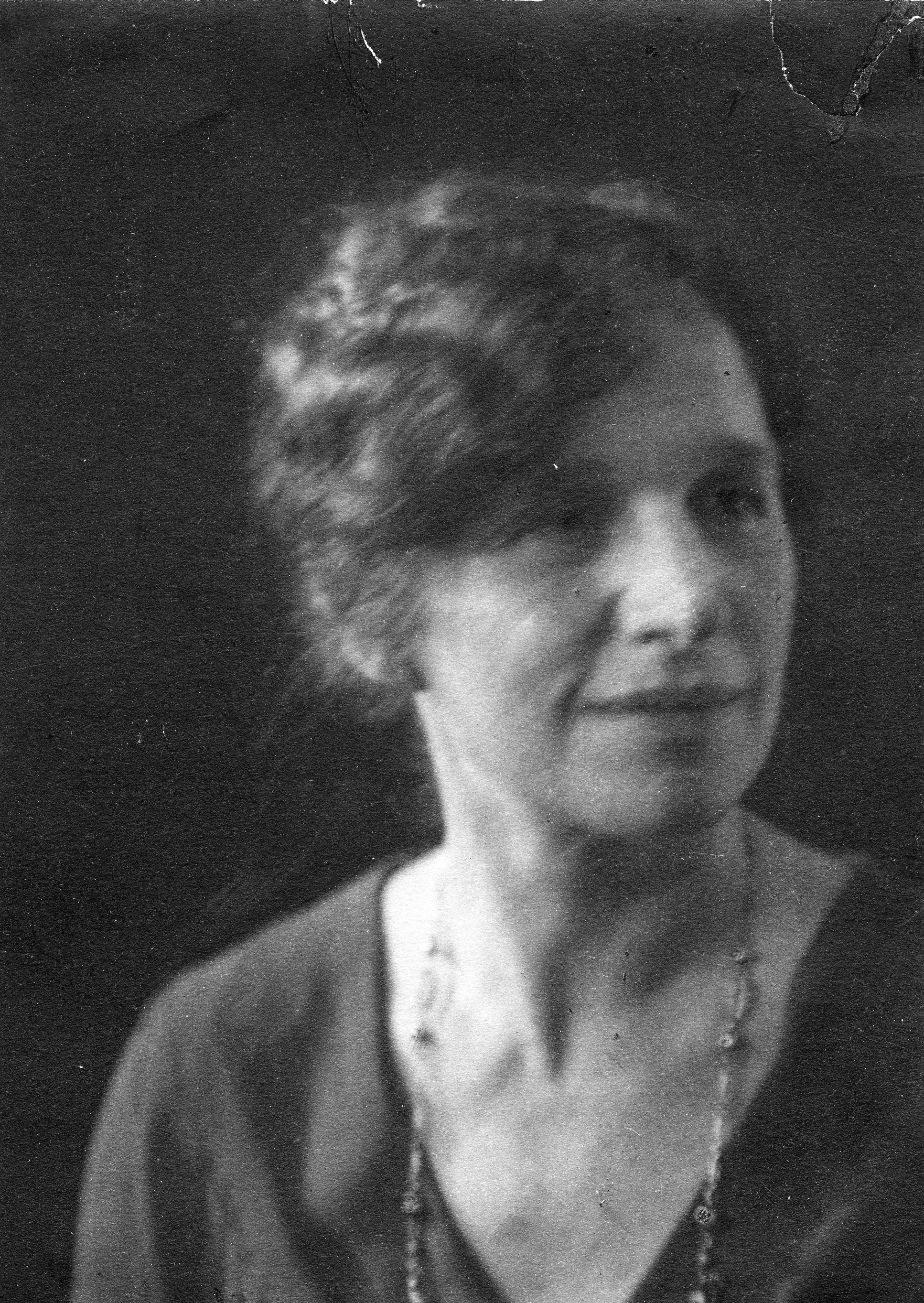
Julia Mood Peterkin
Reviewers were taken by Peterkin’s ability to capture the Gullah dialect of Lowcountry blacks and to convey their customs and superstitions. Although plantation stories had long been a staple of Southern writers, black characters typically had been treated condescendingly or as humorous caricatures, such as Uncle Remus in works by Joel Chandler Harris.
Peterkin didn’t start writing until she was 40, but her ear for black dialect had been honed from childhood. Her mother died when she was a toddler, and she lived with her grandparents. As was common among middle-class white families of the time, she was raised by a black nanny. As a young woman, she married William Peterkin, heir to a 1,500-acre plantation near Fort Motte, S.C., home to a handful of whites and several hundred blacks. After a difficult birth and a surgical procedure that left Peterkin sterilized, another black woman was instrumental during her extended recuperation. Understandably, those experiences helped the white plantation mistress empathize with her illiterate, folk-wise neighbors.
Peterkin’s popularity benefited from auspicious timing. During the third decade of the century, America was becoming increasingly sensitized to the plight of Southern blacks. The rise of the Ku Klux Klan in national politics, race riots in major cities and frequent reports of grisly lynchings contributed to the belief that Southern writers lived in a romanticized dream world.
That view had been espoused for years by syndicated columnist H.L. Mencken, notably in his 1917 essay, “The Sahara of the Bozart.” So when the South’s most acerbic critic identified Peterkin and her fellow South Carolinian DuBose Heyward as two new Southern writers of note, mainstream critics took notice.
More surprising is the acceptance Peterkin’s work found among black intellectuals. W.E.B Du Bois wrote, “Peterkin is a southern white woman, but she has the eye and the ear to see beauty and know truth.” She became a favorite of the Harlem Renaissance during a time when most African-American fiction featured middle-class blacks in urban settings. Several authorities credit Peterkin for paving the way for more realistic novels by African-American writers, especially Zora Neale Hurston.
Scarlet Sister Mary’s Pulitzer award certainly would have been less controversial were it not for the indiscretion of the novel committee chairman. Less than a month before the awards for 1928 were announced, Richard Burton gave a talk at the University of Minnesota, during which he gushed over a novel by John R. Oliver, Victim and Victor, describing it as a book “not only for a year but for many years.” A newspaper account of Burton’s talk came to the attention of Publishers’ Weekly, which in its April 13 edition reported that Victim and Victor had won the Pulitzer Prize for novels.
Four days later, The New York Times carried an article in which Frank Fackenthal, Columbia University secretary and head of the Advisory Board, refuted the Publishers’ Weekly article. “There is only one committee authorized to make the award,” he said, “and since that committee has not even held a meeting as yet, it is ridiculous to assume that any particular novelist will get the prize.”
A headline in The New York Times of May 13 declared: “1928 Pulitzer Prize for Peterkin Novel.” Book critics around the country gleefully pointed out that for the first time in history, the Advisory Board had ignored the jurors’ recommendation for the novel prize. A few days later, headlines blurted that Burton had resigned from the committee.
Internal committee memos hint at a long-running disagreement on how to interpret the restrictive wording by which novels were judged: “the American novel published during the year which shall present the wholesome atmosphere of American life, and the highest standard of American manners and manhood." During its 1927 annual meeting, the Advisory Board had substituted the word “whole” for “wholesome.” Whether that change was a factor in the Advisory Board’s choice for 1928 isn’t clear, although Burton indicated to a reporter that Fackenthal had asked the board to choose between Victim and Victor and Scarlet Sister Mary.
On June 10, Time magazine reported (“Scarlet in South Carolina”) that Peterkin’s novel had been banned from the Carnegie Free Public Library in Gaffney, S.C. Fear not, however, as a local weekly newspaper, The Cherokee Times, had obtained permission from Bobbs-Merrill to serialize the novel. Newspapers across the country heaped praise on the courageous young editor, George Lay, only to commiserate a few weeks later when the newspaper folded. Lay later explained that the serialization of Scarlet Sister Mary had no apparent effect of his paper’s fate. “Not a single subscriber stopped the paper due to the publication of the serial,” he wrote in The New York Globe.
Peterkin’s novel would continue to make headlines. Sales jumped from 10,000 to 80,000 immediately after the Pulitzer announcement. Eventually, it sold more than a million copies, in 49 editions, including a paperback version depicting a sultry black woman on the cover.
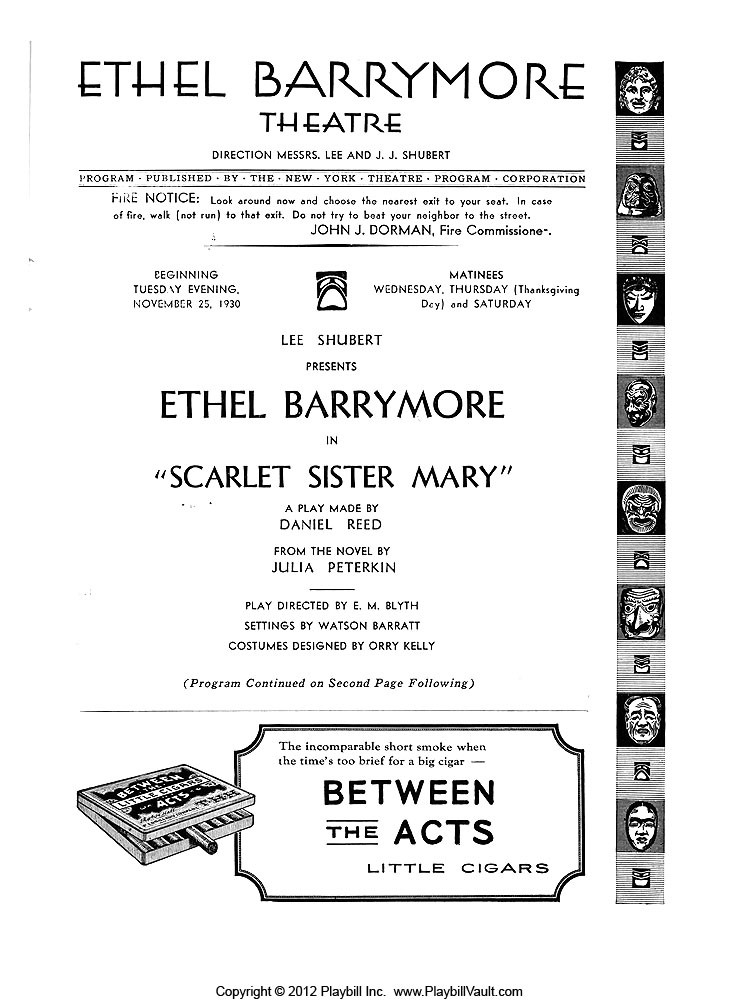
Courtesy of Playbill
An angle that dominated newspapers for months was the highly anticipated Broadway production of Scarlet Sister Mary, starring Ethel Barrymore. After sell-out performances in several cities, the play was panned by New York critics. In a review titled, “Colored Sister Barrymore,” Brooks Atkinson of The New York Times scoffed at the spectacle of white actors performing in black-face. The show closed in December 1930 after 34 performances.
Peterkin’s span as a professional writer lasted 12 years and produced a handful of books, including three novels, a collection of short stories and a photo documentary, “Roll, Jordan, Roll.”
Nevertheless, Peterkin’s novels still deserve to be read. In her biography of Peterkin, A Devil and a Good Woman, Too, Susan Williams writes: “Along with Sherwood Anderson, Willa Cather, Sinclair Lewis, Ernest Hemingway, F. Scott Fitzgerald and Eugene O’Neill, Peterkin helped shape the sexual and racial attitudes of America between the two world wars.”
Two years after Scarlet Sister Mary received its Pulitzer, The New York Times reported the award for 1931 would be for “the best novel published during the year by an American author.”
The Times article gave Sister Mary her due: “More than once the question has been raised as to whether the conditions laid down by Mr. Pulitzer had been followed by the jury in making awards, most notably when the Pulitzer prize was awarded in 1929 to Julia Peterkin for her novel, Scarlet Sister Mary, the story of a Negro mother of seven illegitimate children.”
RELATED:
Watch “Celebrating Pulitzer Novelist Julia Peterkin,” part of the Pulitzer Centennial Campfires programming, sponsored by South Carolina Humanities