In 1980, the Pulitzer Prize Board announced finalists in each award category for the first time. Previously, only winners' names had been shared with the public.
Since then, more than 100 collections — collectively embodying a formidable range of stylistic and poetical diversity — have attained this rare honor.
As the Academy of American Poets' National Poetry Month initiative continues, these five volumes will inspire nuanced insights into the increasingly varied milieu of contemporary poetry while offering a deep sense of spiritual nourishment. Indeed, no less of an authority than William Carlos Williams, the medical doctor and posthumous 1963 Poetry winner who influenced several of these finalists, once said: "When asked, how I have for so many years continued an equal interest in medicine and the poem, I reply that they amount for me to nearly the same thing."
To discover other finalists on Pulitzer.org, please visit each Prize Winners by Year page.
1. Robert Creeley (1992 finalist for "Selected Poems")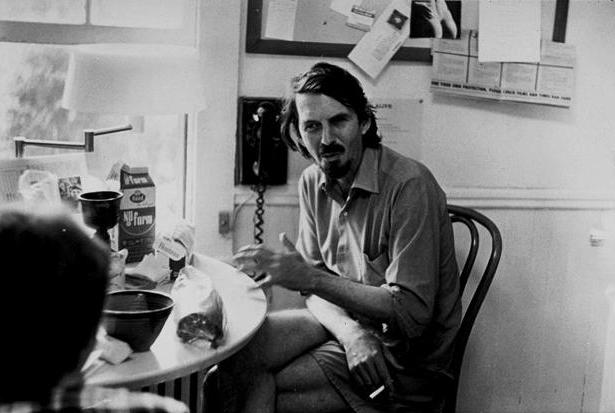
A young Robert Creeley at work. (Wikipedia)
A key figure in 20th century American poetry's avant-garde, Creeley (1926-2005) amalgamated Black Mountain College colleague Charles Olson's interests in early postmodern subjectivity and orality-centered "projective verse" with subtle formalistic elements (including irregular couplets, triplets and quatrains), earning a degree of commercial success with works such as "For Love" in the 1960s.
After replacing Olson at the University at Buffalo in 1967 and settling into a decades-long tenure at the institution, he emerged as an eminence grises, lauded for his approachability and support of younger writers while maintaining a prolific publication schedule. Included in his Pulitzer-nominated "Collected Poems," "The Traveler" encapsulates Creeley's amiable sense of wonder:
Into the forest again
whence all roads depend
this way and that
to lead him back.
Preview "Selected Poems" at the Internet Archive, here.
2. Allen Ginsberg (1995 finalist for "Cosmopolitan Greetings: Poems 1986-1992")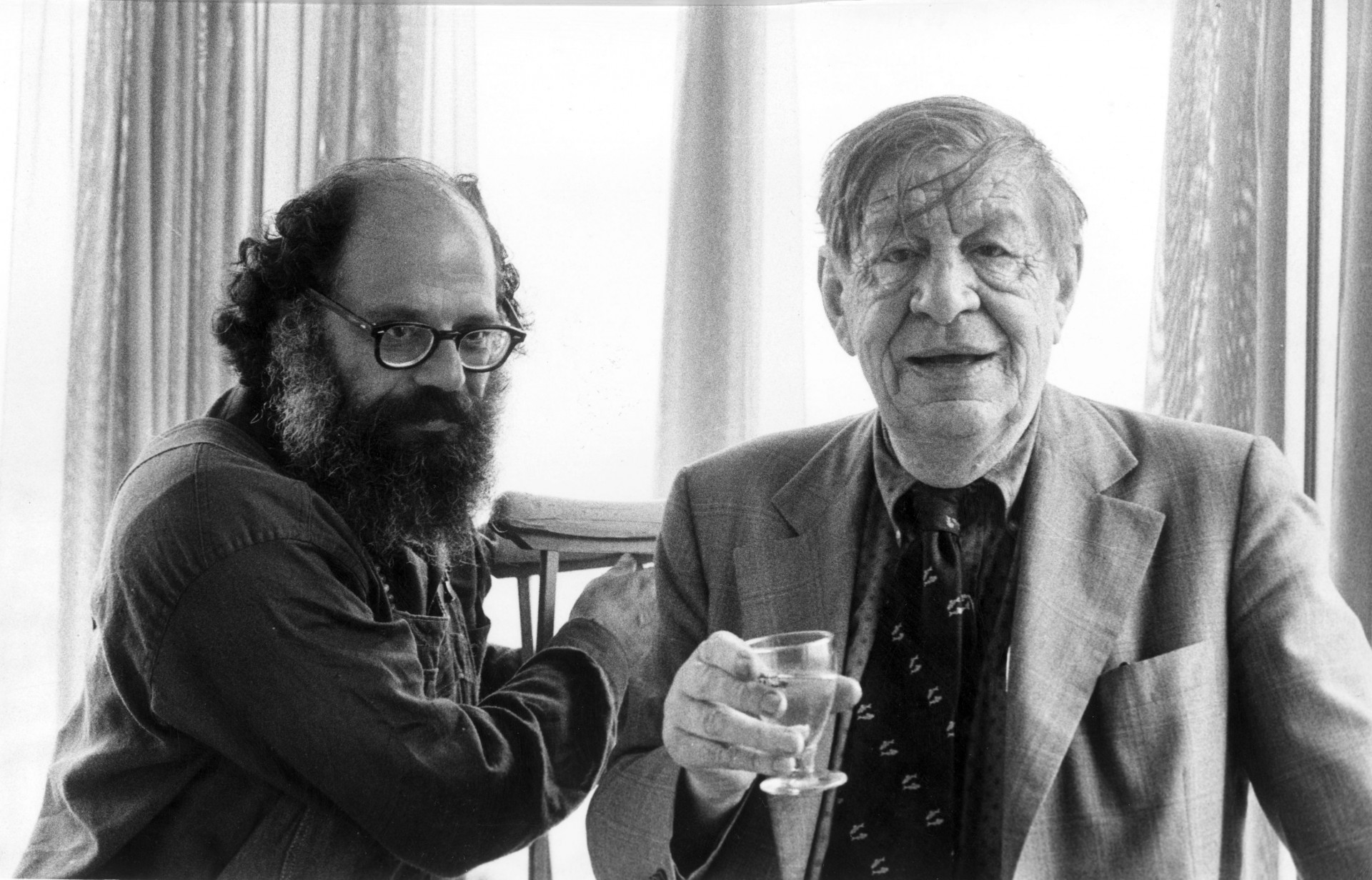
Ginsberg and 1948 Poetry winner W. H. Auden in the mid-to-late 1960s. (File)
Although he arguably was America's best-known living poet by virtue of his media savvy and the ubiquity of "Howl" on college syllabi, Ginsberg (1926-1997) seemingly entered the parlous realm of "being famous for being famous" by the early 1990s, notwithstanding his stalwart presence at the East Village's Ukrainian and Chinese restaurants alongside such longtime cronies as Beat/Black Mountain crossover poet John Wieners and experimental filmmaker/folklorist Harry Smith.
After emphasizing spontaneous musical performances in much of his post-1970 oeuvre (codified by the inclusion of melody sheets in his collections and concerts with accompanists like Steven Taylor and Arthur Russell), the poems in "Cosmopolitan Greetings" (exemplified by the long-germinating, oft-performed "CIA Dope Calypso") find Ginsberg returning to the themes of politics and power that undergirded his National Book Award-winning "Fall of America" (1973). Meanwhile, certain facets of his life — the scourge of AIDS; the retrenchment of intellectual interlocutor William Burroughs; his deteriorating relationship with life partner Peter Orlovsky, who came to identify as heterosexual — remained largely unexplicated.
A late-period masterpiece that seemingly alludes to Orlovsky's cocaine psychosis and neighbor Russell's death from AIDS-related complications in 1991, "The Charnel Ground" comes as close as any of Ginsberg's poems to encapsulating his sense of dislocation in the death-swept, rapidly gentrifying East Village of the early 1990s:
Upstairs Jenny crashed her car & became a living corpse, Jake sold grass, the white-bearded potbelly leprechaun silent climbed their staircase
Ex-janitor John from Poland averted his eyes, cheeks flushed with vodka, wine who knew what
as he left his groundfloor flat, refusing to speak to the inhabitant of Apt. 24
who’d put his boyfriend in Bellevue, calling police, while the artistic Buddhist composer
on sixth floor lay spaced out feet swollen with water, dying slowly of AIDS over a year—
Preview "Cosmopolitan Greetings" at the Internet Archive, here.
3. Lucille Clifton (1988 finalist for "Good Woman: Poems and a Memoir 1969-1980" and "Next: New Poems"
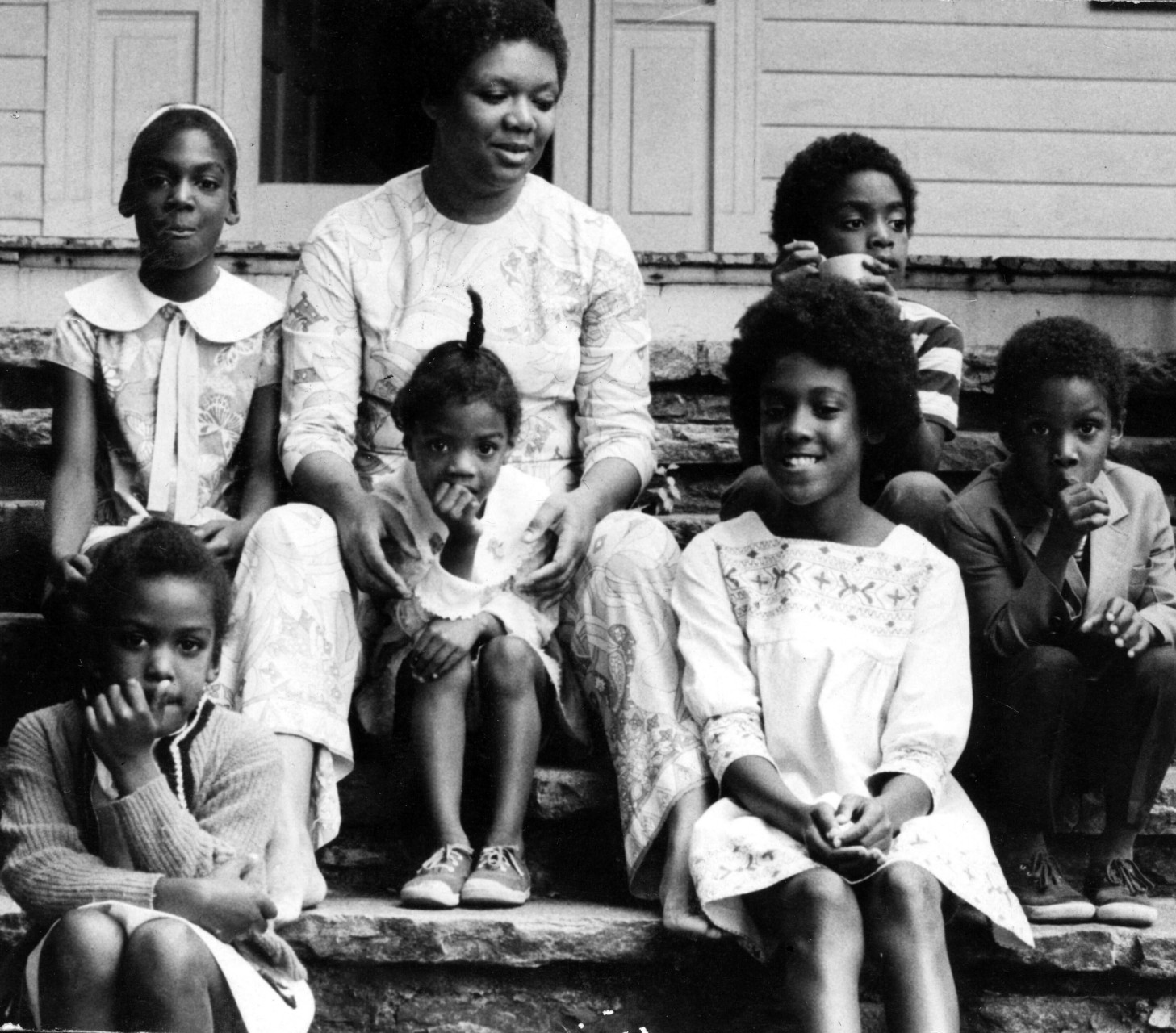
1988 finalist Lucille Clifton and her children, 1969. (Clifton Family/The Brown Bookshelf)
Earning the finalist distinction for two books published in the same year (including the collection "Good Woman: Poems and a Memoir: 1969–1980" and "Next: New Poems"), Clifton (1936-2010) went on to forge an inimitable career as a canonical author of children's literature (exemplified by the Everett Anderson series, among the first works to utilize Black vernacular in the genre) and as a poet who offered "physically small" works "with enormous and profound inner worlds," according to Pulitzer Prize Board member Elizabeth Alexander.
As North American intellectual life transitioned from what communications historian Fred Turner retrospectively characterized as the "democratic surround" of heterodox, body-conscious communications theorists such as Marshall McLuhan and Walter Ong to the discarnate "linguistic turn" precipitated by the multidisciplinary popularization of French cultural theory, Clifton remained an unrepentant exponent of the former approach. In "homage to my hips," perhaps her most influential opus, Clifton gently repudiates the baroque, conspiratorial fantasias of her mentor, the plenipotentiary Ishmael Reed, by offering a pragmatic, ribald and percipient ode to the wonders of everyday life, ultimately presaging contemporary metamodernism's return to the real:
these hips are big hips
they need space to
move around in.
they don't fit into little
petty places. these hips
are free hips.
they don't like to be held back.
Read "homage to my hips" and other poems by Lucille Clifton at the Poetry Foundation, here.
4. Robert Duncan (1985 finalist for "Ground Work: Before the War")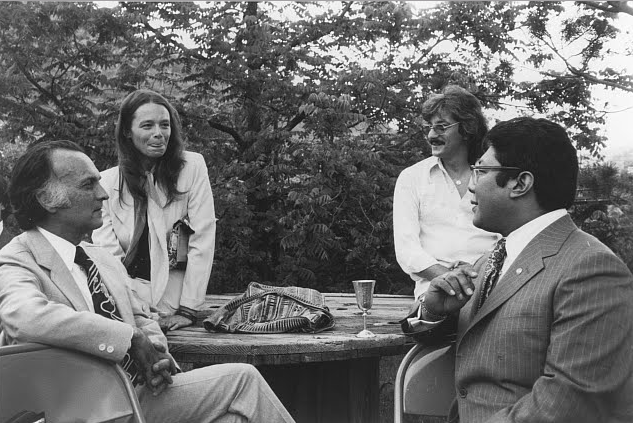
Robert Duncan (left), Anne Waldman, unidentified male, and Chögyam Trungpa, Rinpoche at the Naropa Institute, 1976. (Allen Ginsberg Estate)
With a characteristically ambivalent relationship toward poetry's academic turn in the late 1960s (having attended the University of California, Berkeley and Black Mountain without taking a degree, he clashed vociferously with onetime mentor Charles Olson while teaching at the latter institution as it teetered on the brink of collapse in 1956), Duncan made the decision to effectively cease publishing, confinining his subsequent output to a handful of obscure chapbooks.
More than a decade later, he returned with the Pulitzer-nominated first volume of "Ground Work," which daringly juxtaposed mythopoeic and archetypal concerns against more semiautobiographical insights. In this excerpt from a movement of the epic "Circulations of the Song," Duncan offers an ineffable alembic of esoteric wisdom:
For a moment did Beauty pass over my face?
I did not have to reach for your beauty.
Radiant, it entirely flowd out and thru me.
Were you talking? Were we discussingupon the mercurial Hermes?
The mysteries of quick-silver and thealchemical gold,
the transports of Beauty, dissolve themselves
and are nothing
--are resolved again, everything--
a wave of my own seeing you
in the rapture of this reading
Preview "Ground Work: Before the War" at the Internet Archive, here.
5. Ruth Stone (2009 finalist for "What Love Comes To: New & Selected Poems")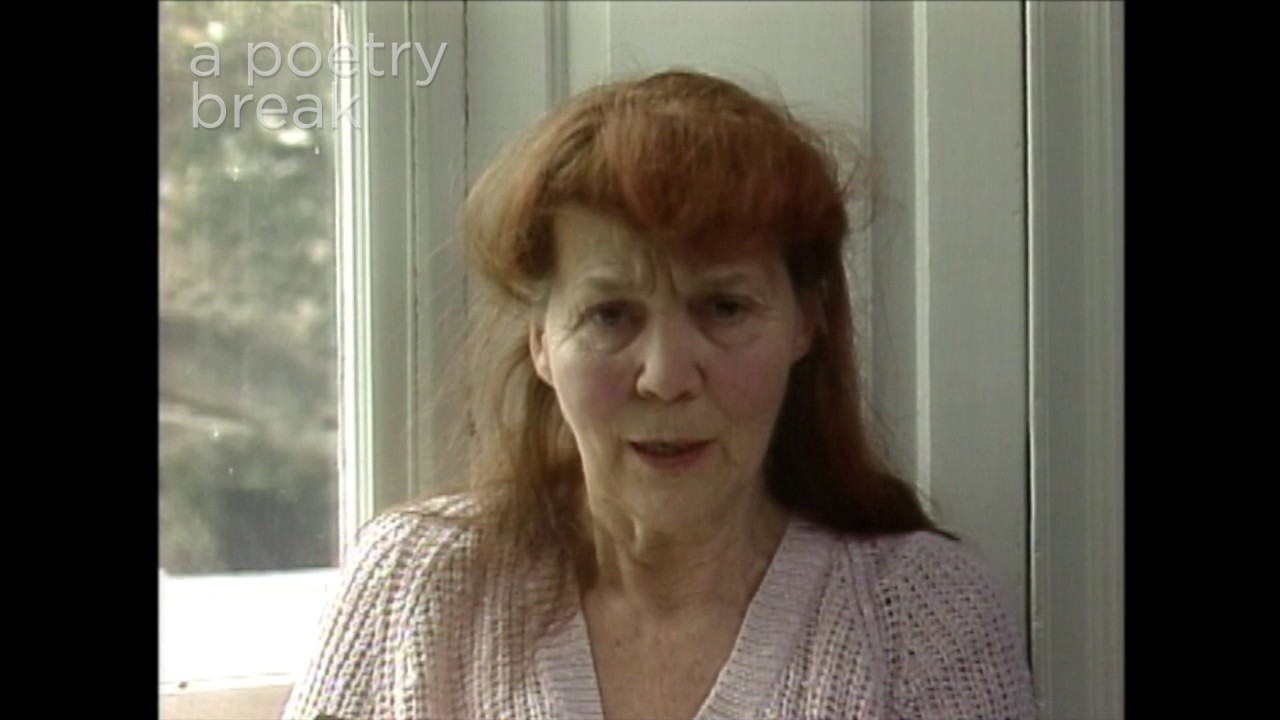
Ruth Stone reads in WGBH's "Poetry Breaks" series, c. 1985-1995. (WGBH)
Stone's (1915-2011) selection as a Pulitzer finalist was the capstone of a unique and peripatetic career. At the brink of a professional breakthrough (and shortly after acquiring a rustic farmhouse in the Green Mountain hamlet of Goshen, Vt. that would serve as her creative sanctuary for the remainder of her life), her husband and fellow writer Walter Stone died by suicide while on leave from Vassar College in 1959, leaving three daughters and no insight into his decision.
With little recourse, Stone (who never remarried) accepted a variety of visiting teaching appointments while continuing to publish intermittently. A stable position at Binghamton University evolved into a tenured appointment when Stone was 77, enabling the late-in-life flowering that produced such works as "In the Next Galaxy" (2002) and "In the Dark" (2004).
Although she was an academic contemporary of the New England-based confessional poets (including Pulitzer winners Robert Lowell and Elizabeth Bishop) and such Midwesterner "stones and bones" exponents as 1972 Poetry winner James Wright, Stone explored a variety of modalities — ranging from memoiristic vignettes of her adolescence in Jazz Age Indianapolis to elegies for her husband and frank discursiveness on the taboos of old age — in a singular style that elicited favorable comparisons to Emily Dickinson.
In "Romance," she reflects on the birth pangs of the key relationship in her life upon returning to a college town that shed much of its plangent pastoralism due to postwar economic growth and Cold War exigencies:
Why did I think I could drag it all back,
the former edge of town where
streets ended in fields under clouds
puffed like the French phrases
he kissed me with in the sucked-in breath
of that illusive happiness.
Coming back, listening, looking;
ready to take your bodies in my hands.
Returning to streets that had poured
heavy shopping malls
over the hay-sweet grass
where he and I lay whispering
Read "Romance" and other poems by Ruth Stone at the Poetry Foundation, here.