A photographer and photo editor at The New York Times for 31 years, freelance journalist Jose R. Lopez has shot presidents, Super Bowls and the end of the Bosnian War. He also contributed to The Times’s 2002 Breaking News and Feature Photography Prize-winning staff entries on the September 11 attacks and the war in Afghanistan.
As has become customary in recent cycles, Lopez covered the various stages of this year's Pulitzer Prize process. To learn more about Lopez and his remarkable career, please visit his website. (All photographs by Jose R. Lopez/The Pulitzer Prizes.)
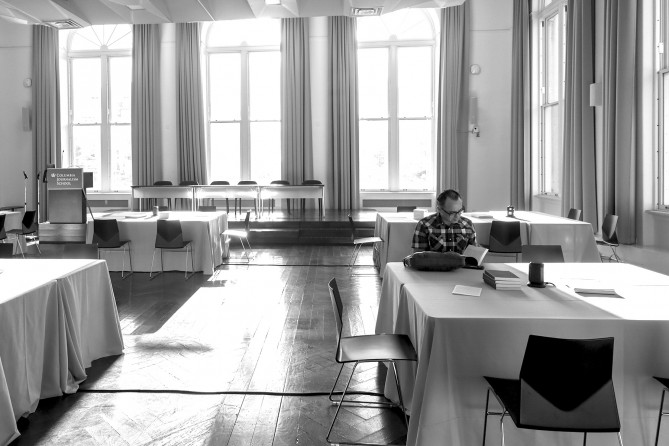
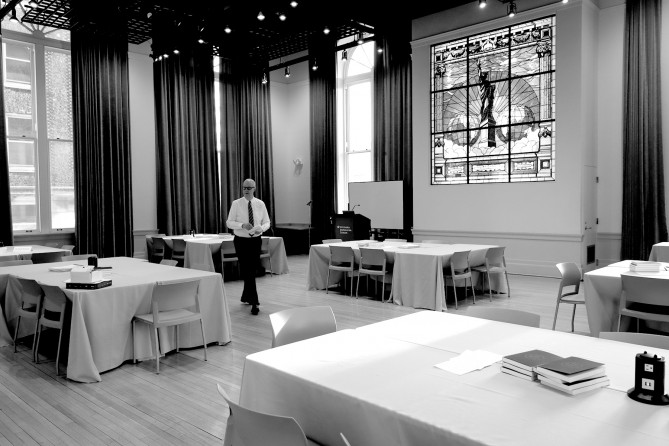
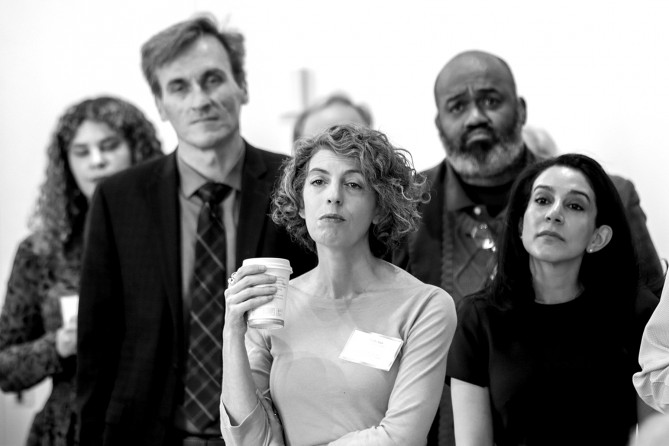
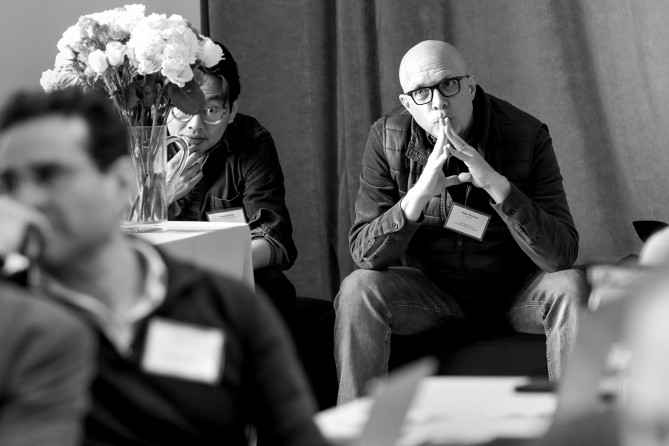
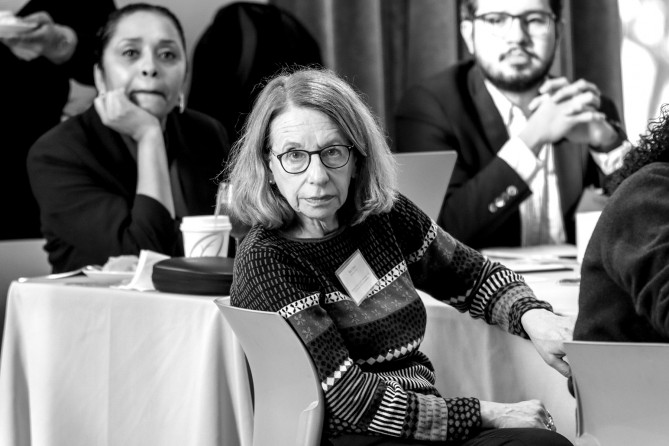
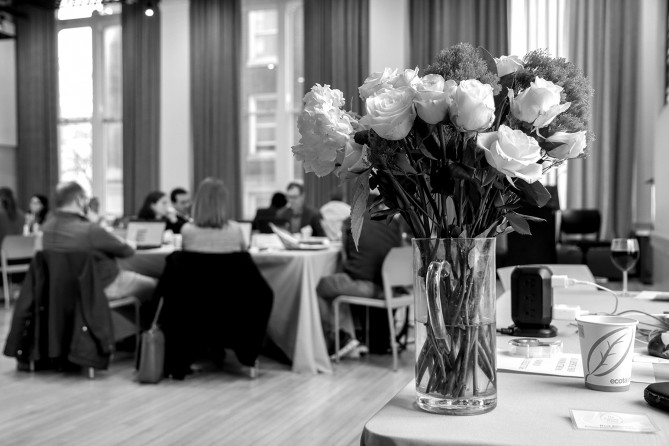


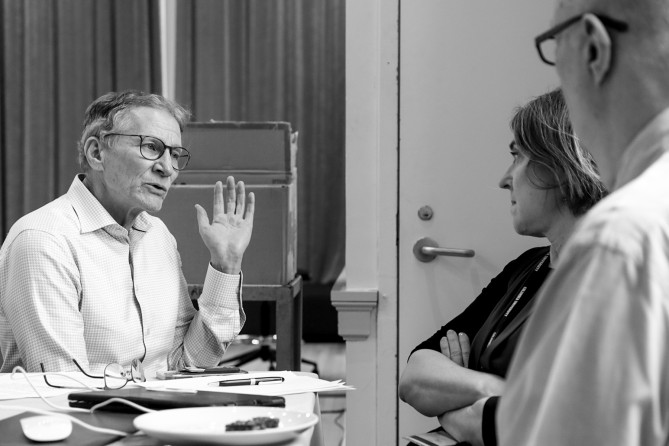
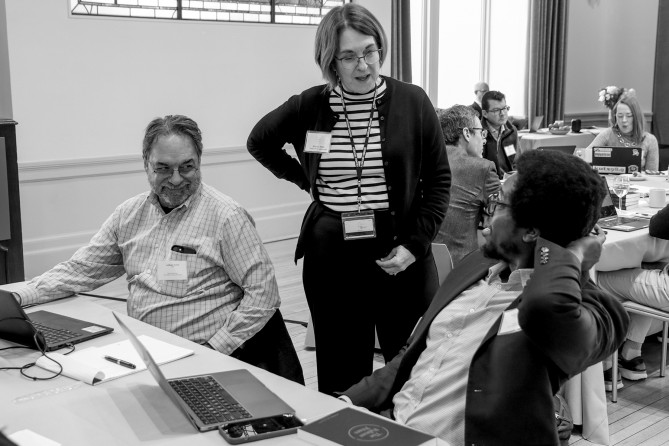
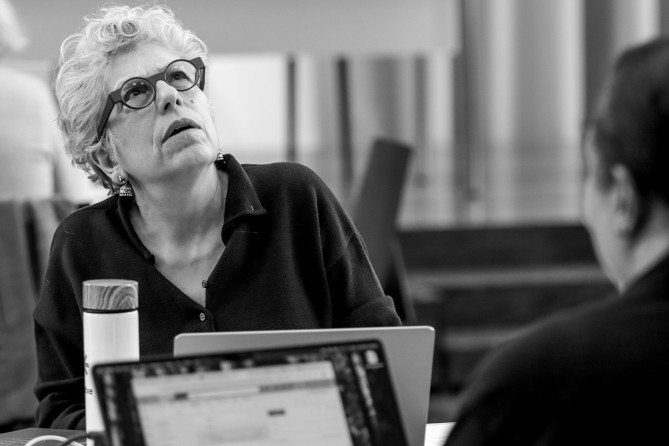
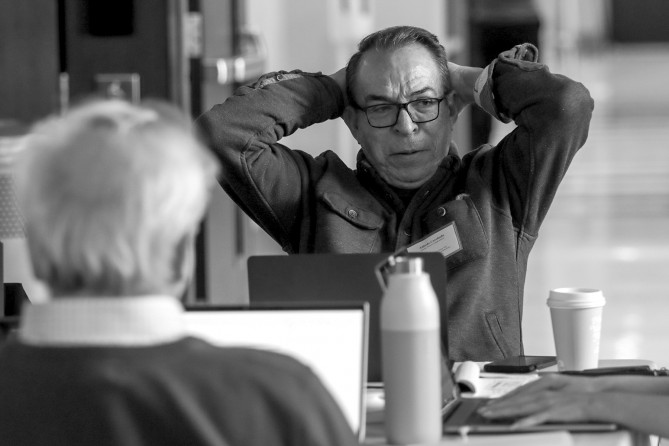


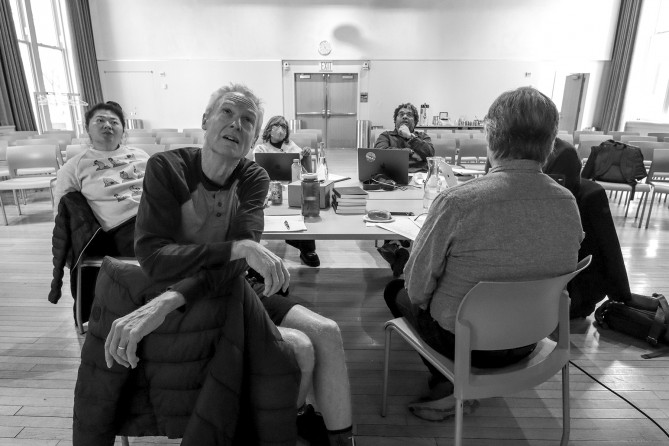
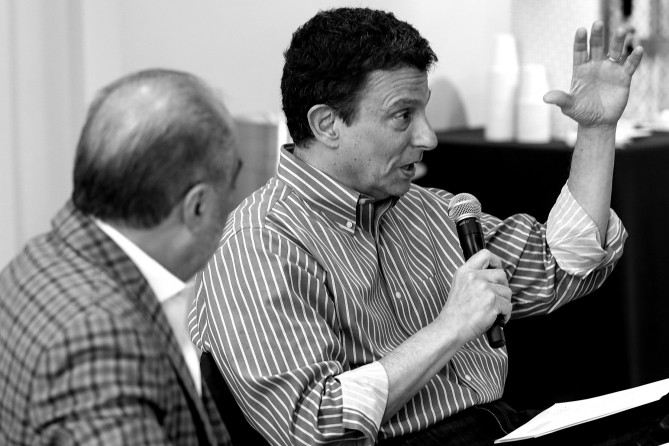
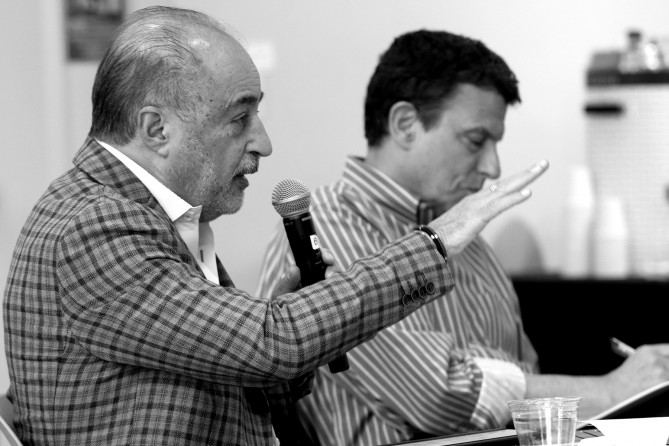
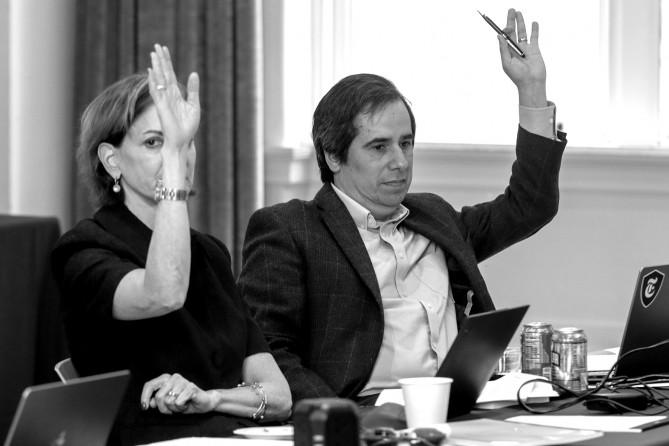
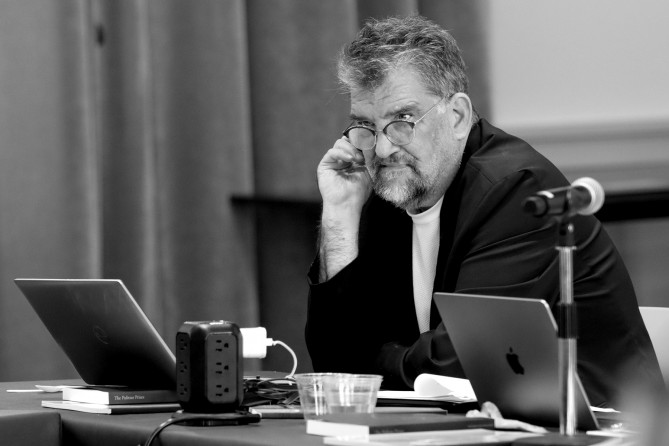

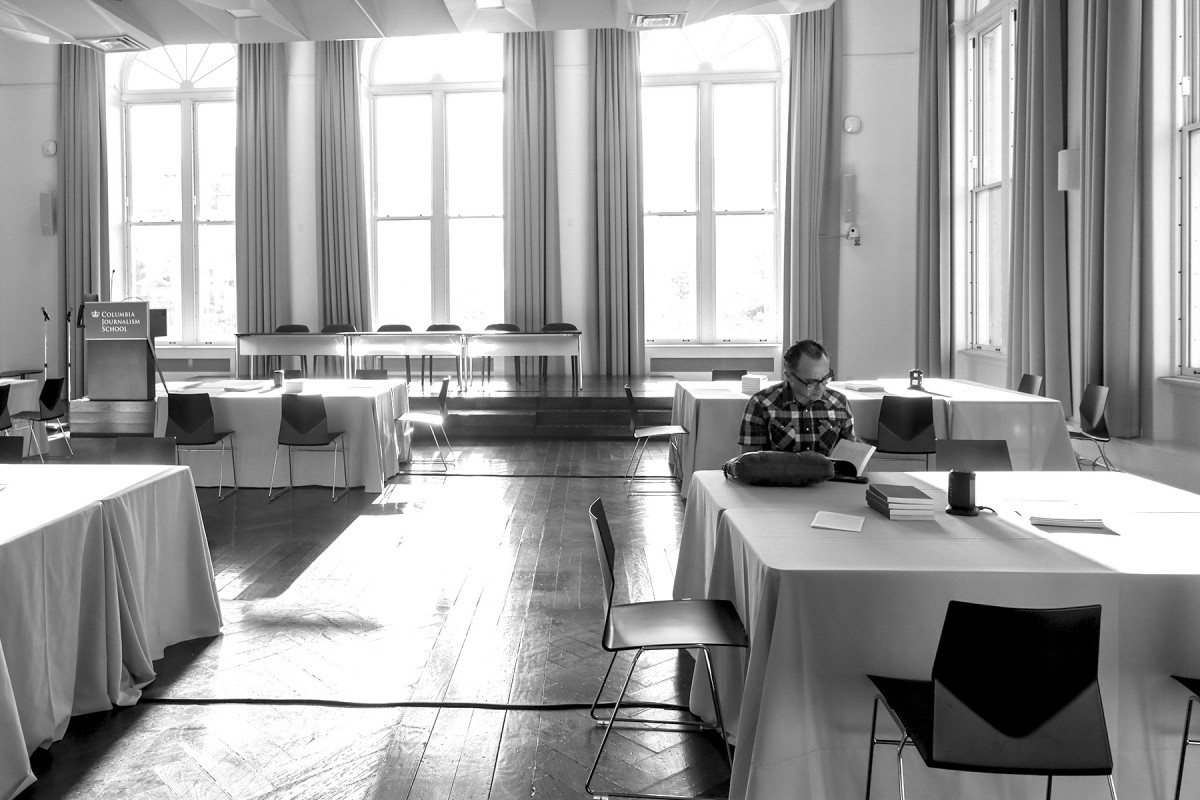
With early morning light pouring into Pulitzer Hall's Joseph D. Jamail Lecture Hall, Criticism juror Gustavo Arellano was the first in the room.
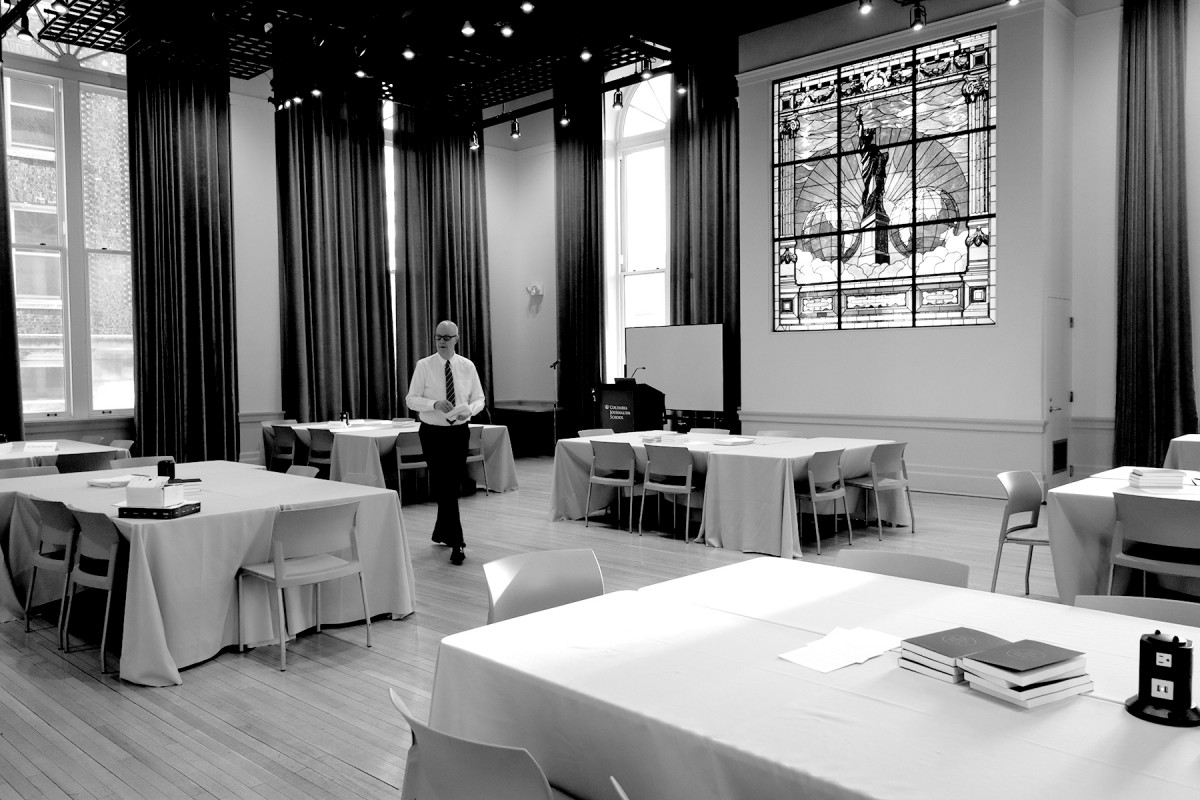
Pulitzer Deputy Administrator Bud Kliment checked the nearby World Room prior to the meetings.
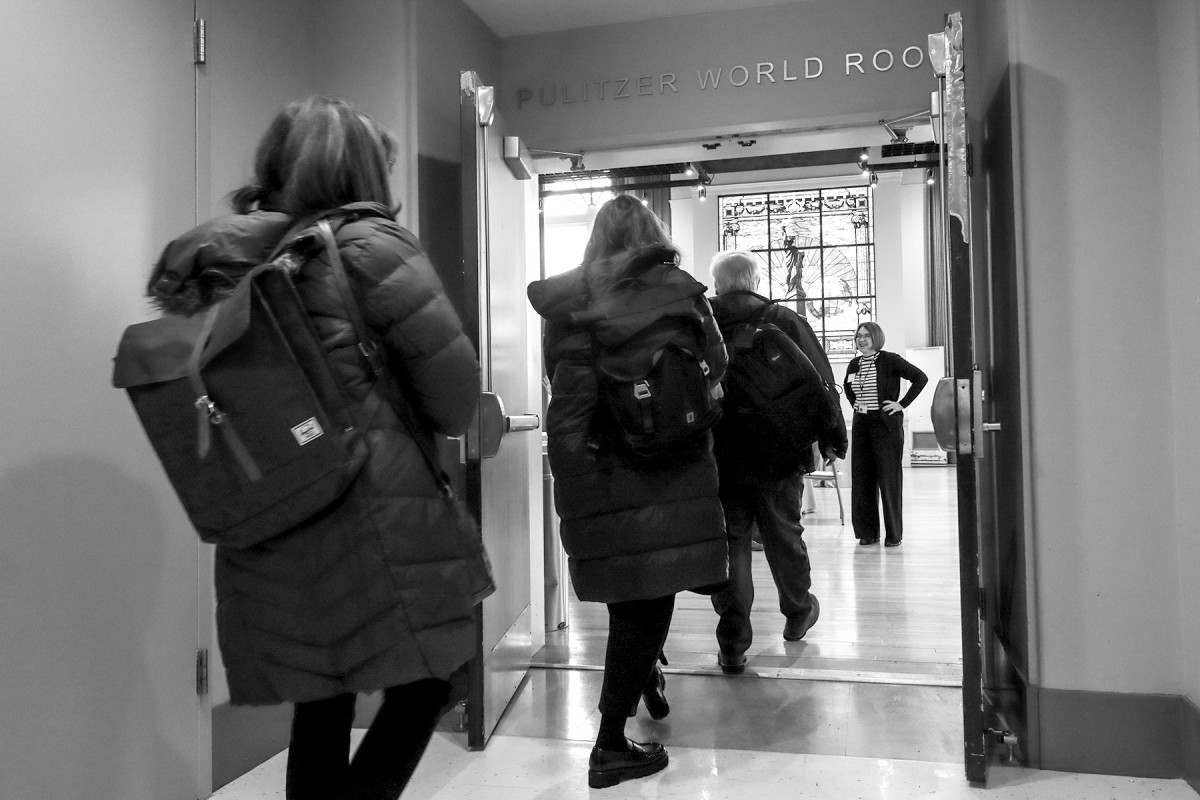
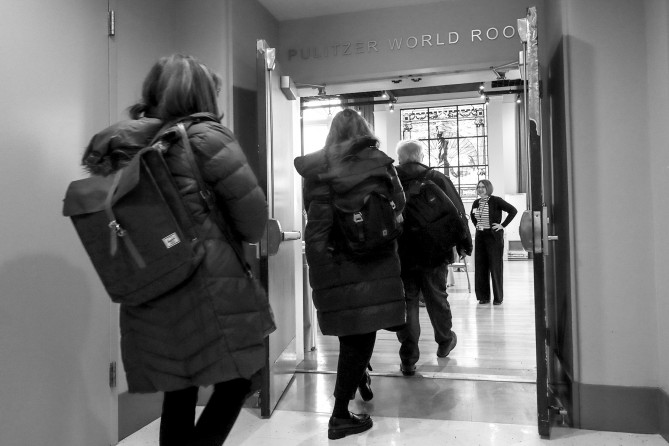
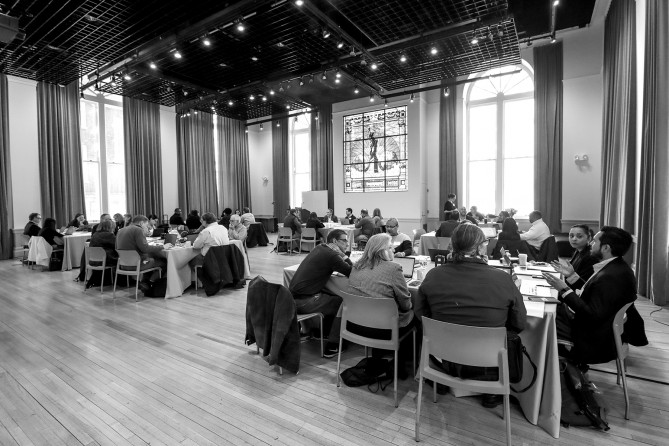
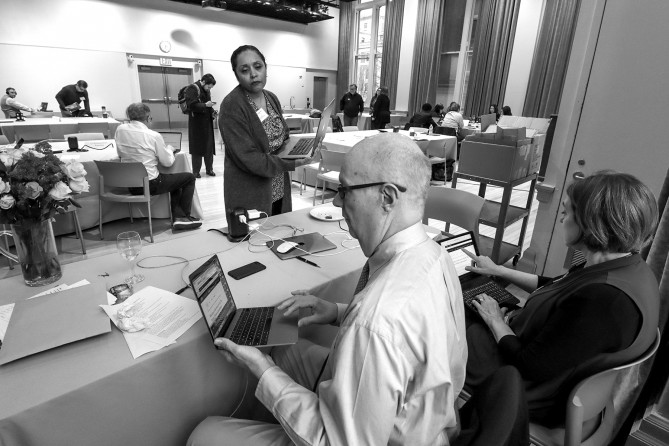
Jurors walked into Pulitzer Hall's World Room, one of the primary facilities used for the 2025 Pulitzer Prize Journalism jury meetings on February 26-27, 2025. Although jurors are granted access to most submissions weeks before the meetings, they are not permitted to vote until they convene at Columbia University.
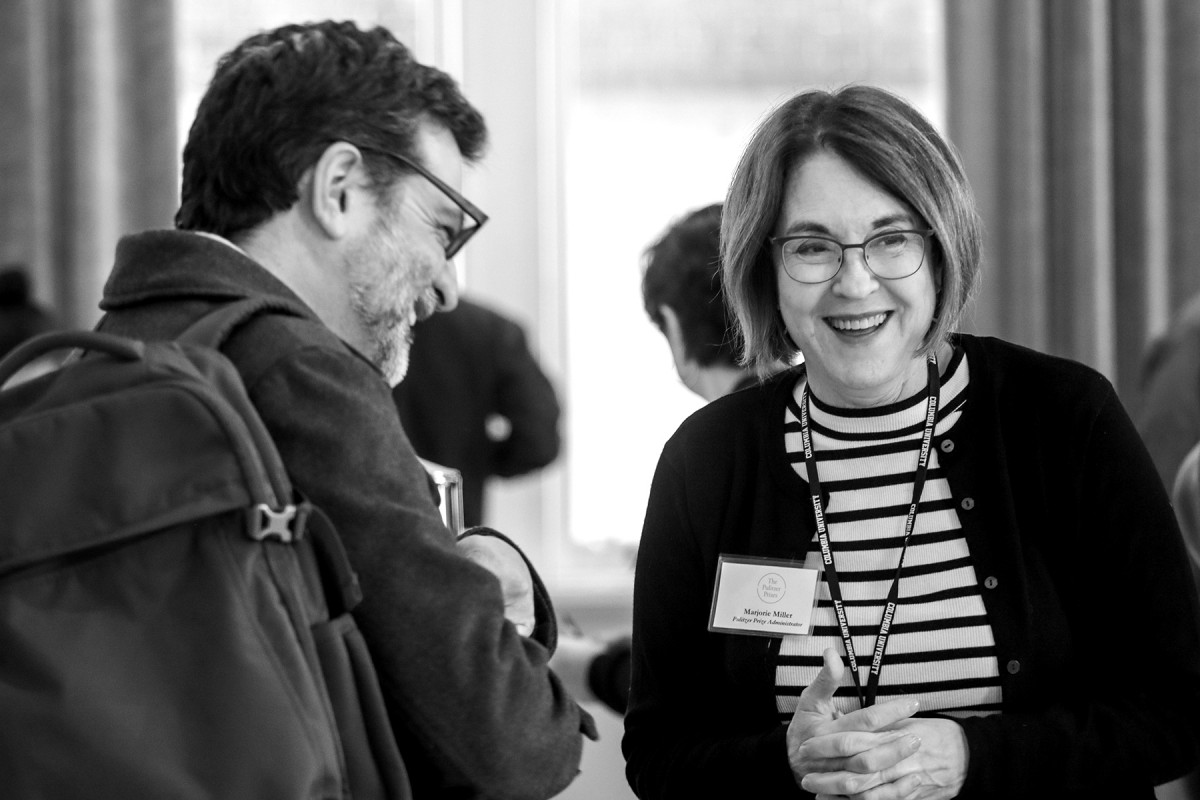
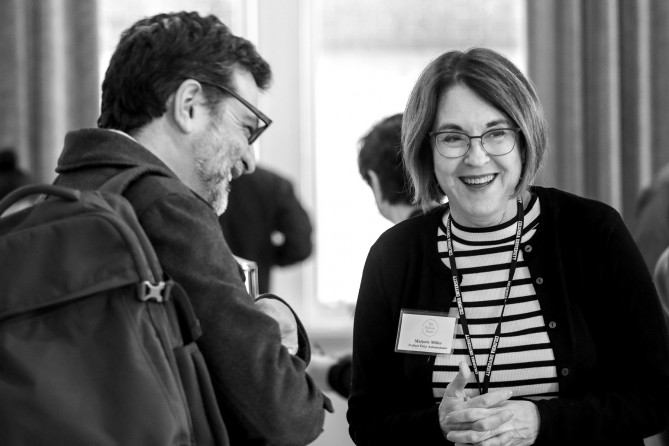
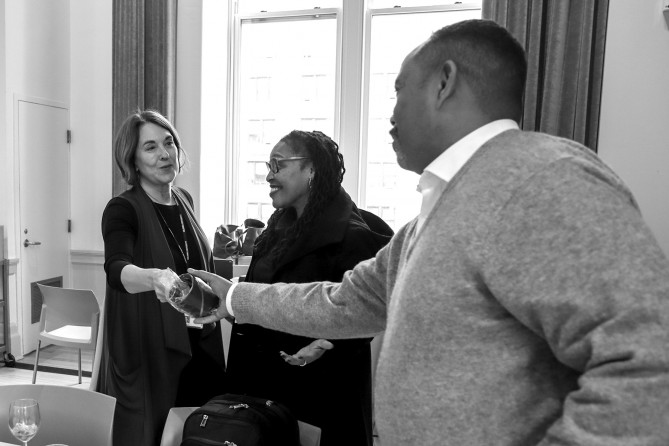
Pulitzer Administrator Marjorie Miller mingled with arriving jurors.
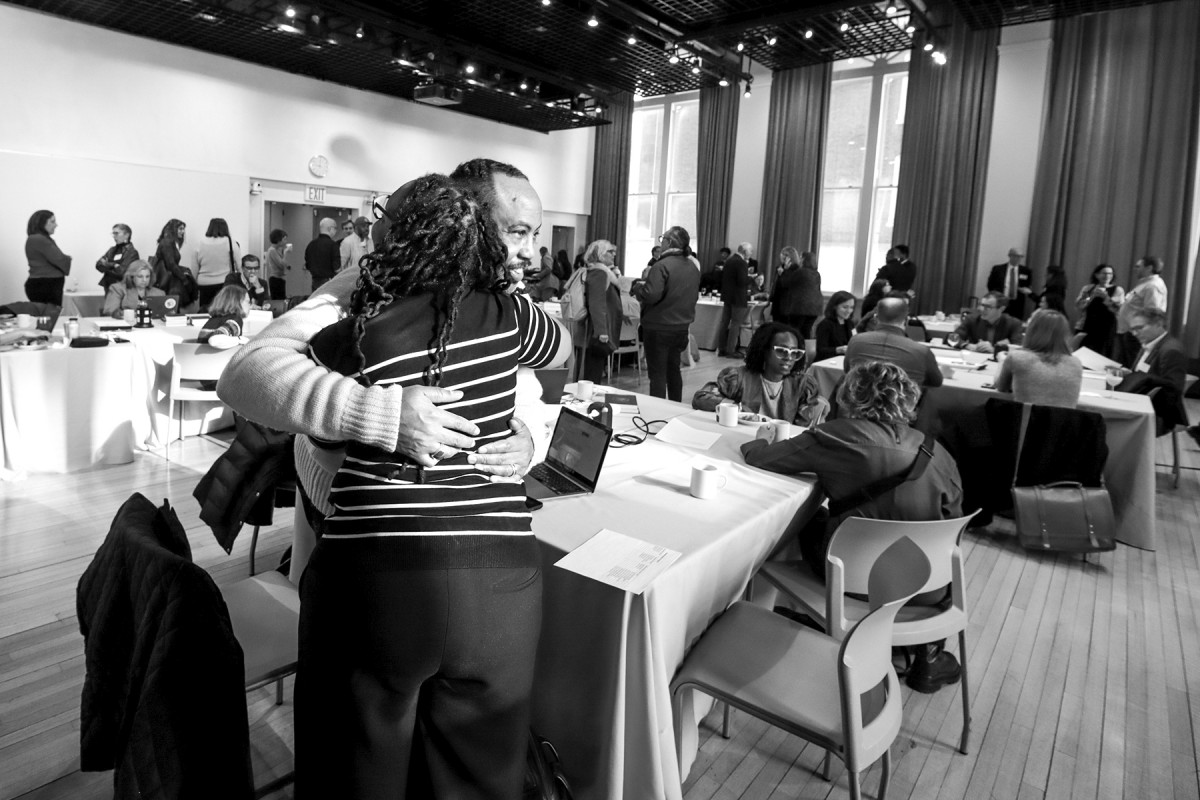
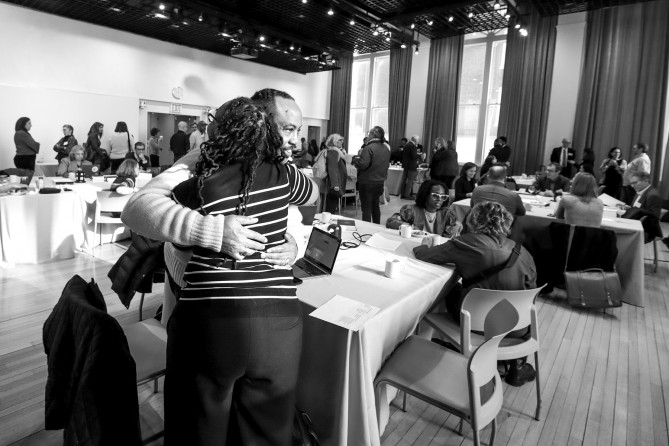
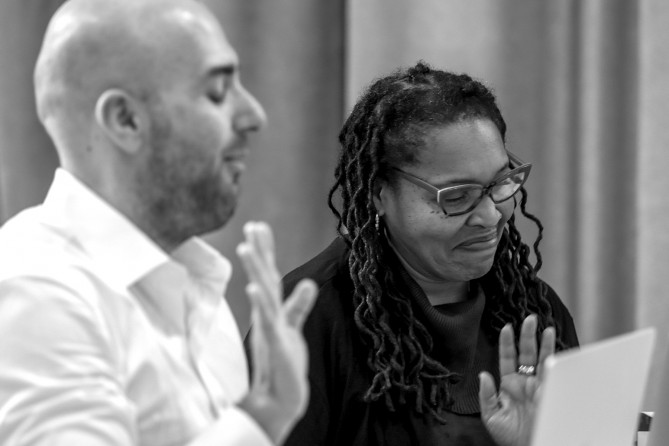
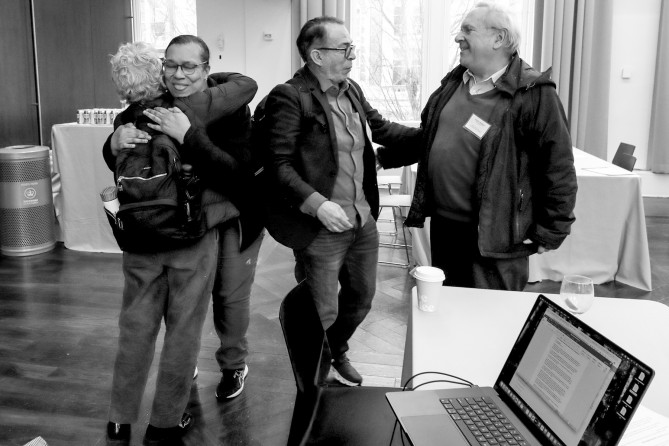
Breaking News Reporting Chair Battinto L. Batts Jr. embraced colleague Karen Hawkins as they settled in for the first day of meetings.
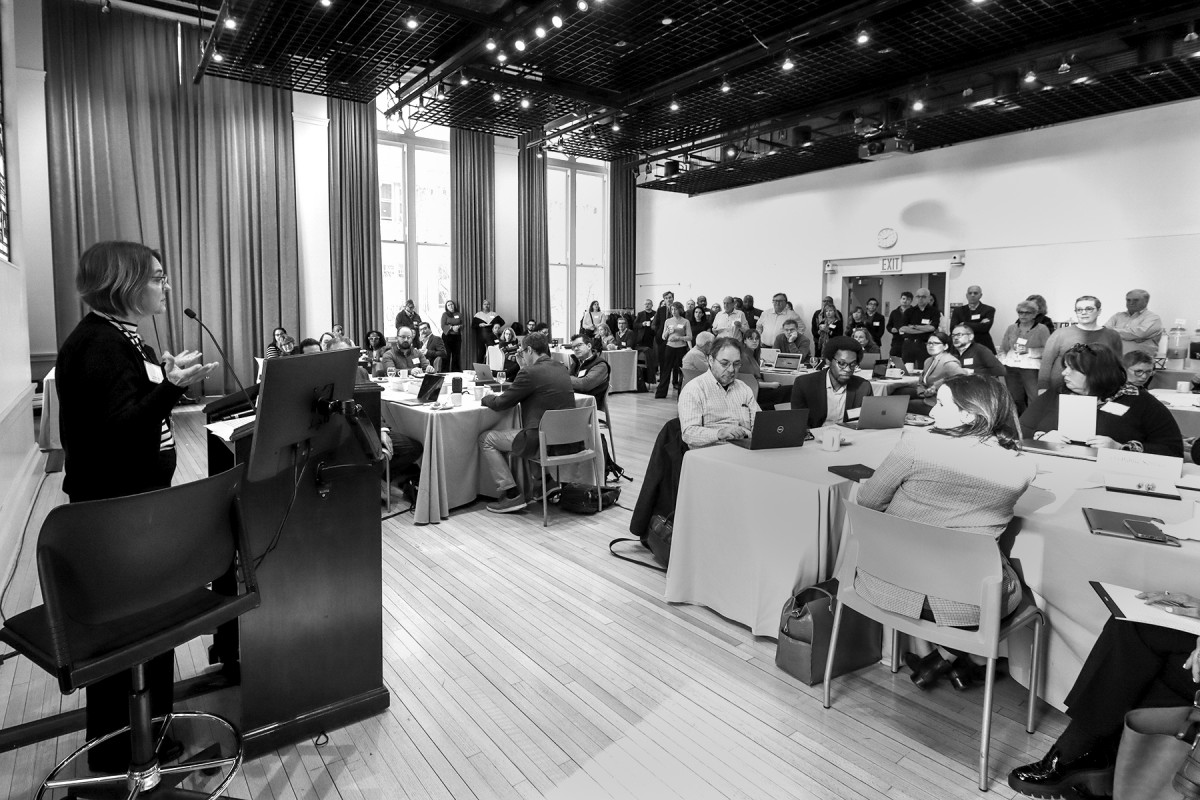
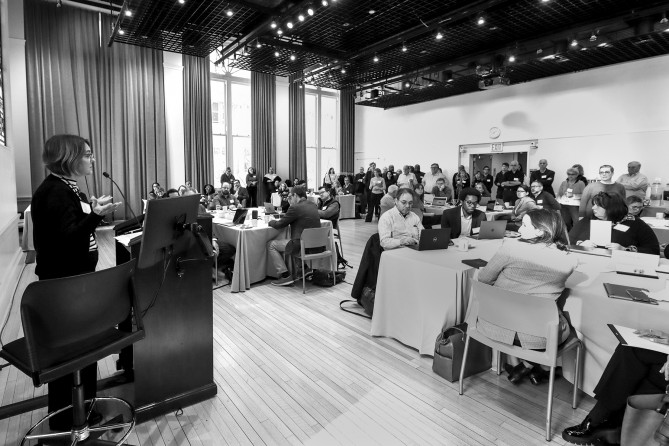
Miller offered welcoming remarks to the jurors.
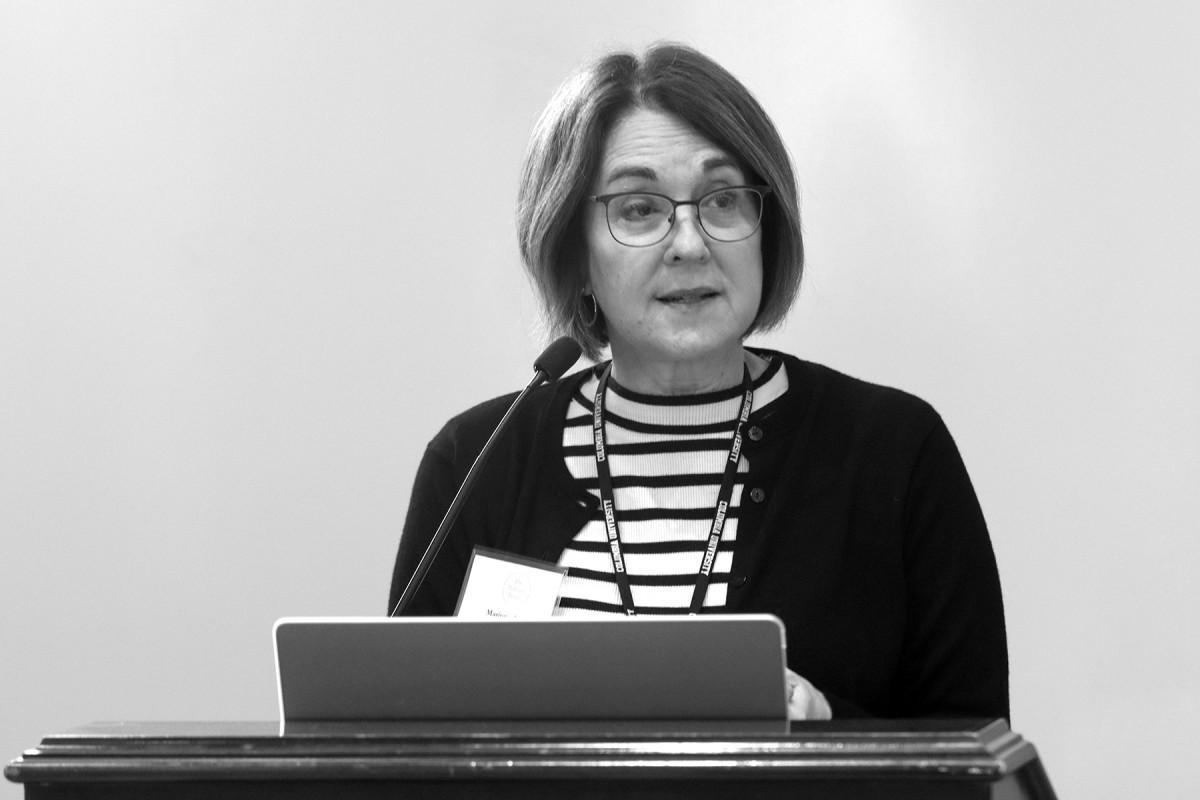
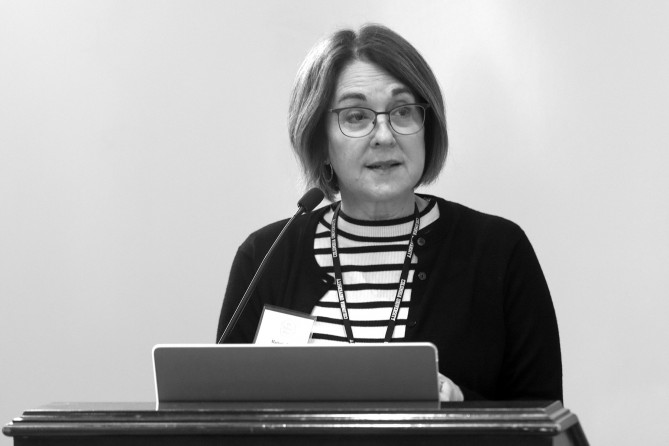
Miller reminded the judges of the importance of their work.
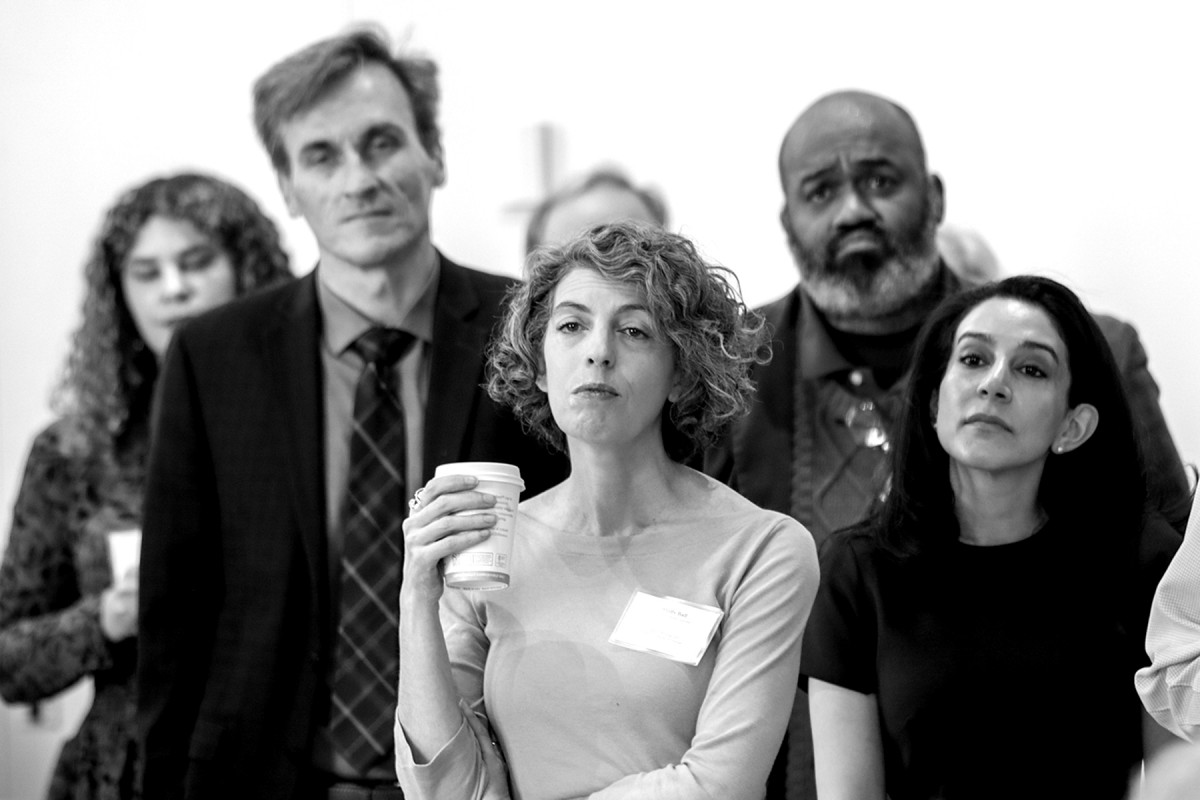
Jurors listened to Miller's remarks.
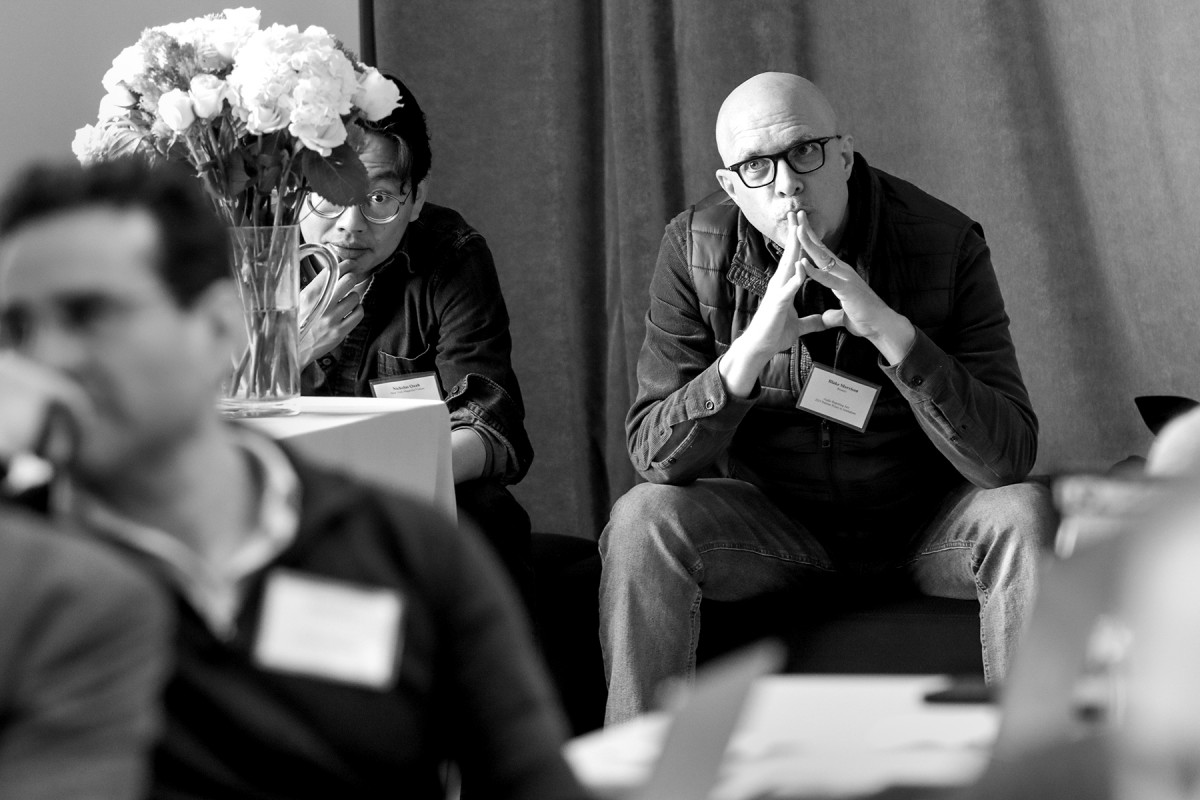
Audio Reporting jurors Nicholas Quah (left) and Blake Morrison listened to Miller's remarks.
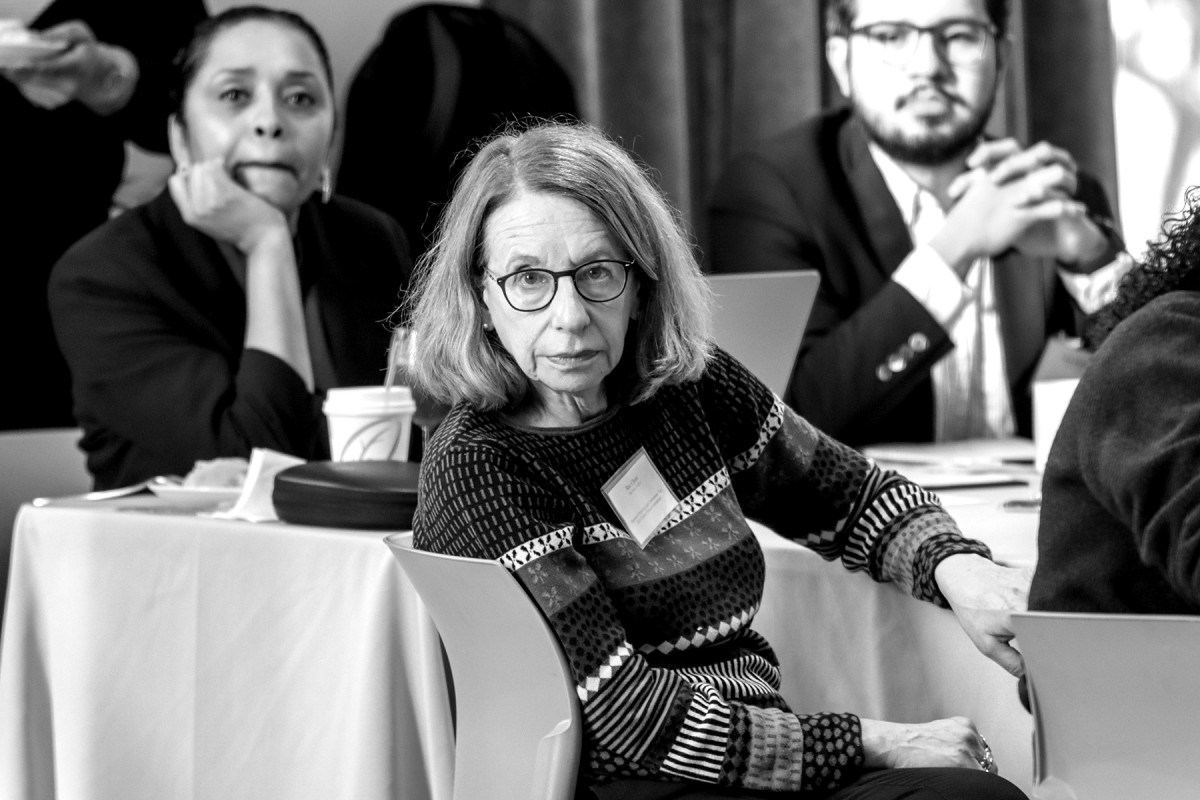
Making her Pulitzer judging debut, Illustrated Reporting and Commentary juror Roz Chast listened intently to Miller's speech.
Fresh cut flowers graced the desk of the Administrator in the World Room.
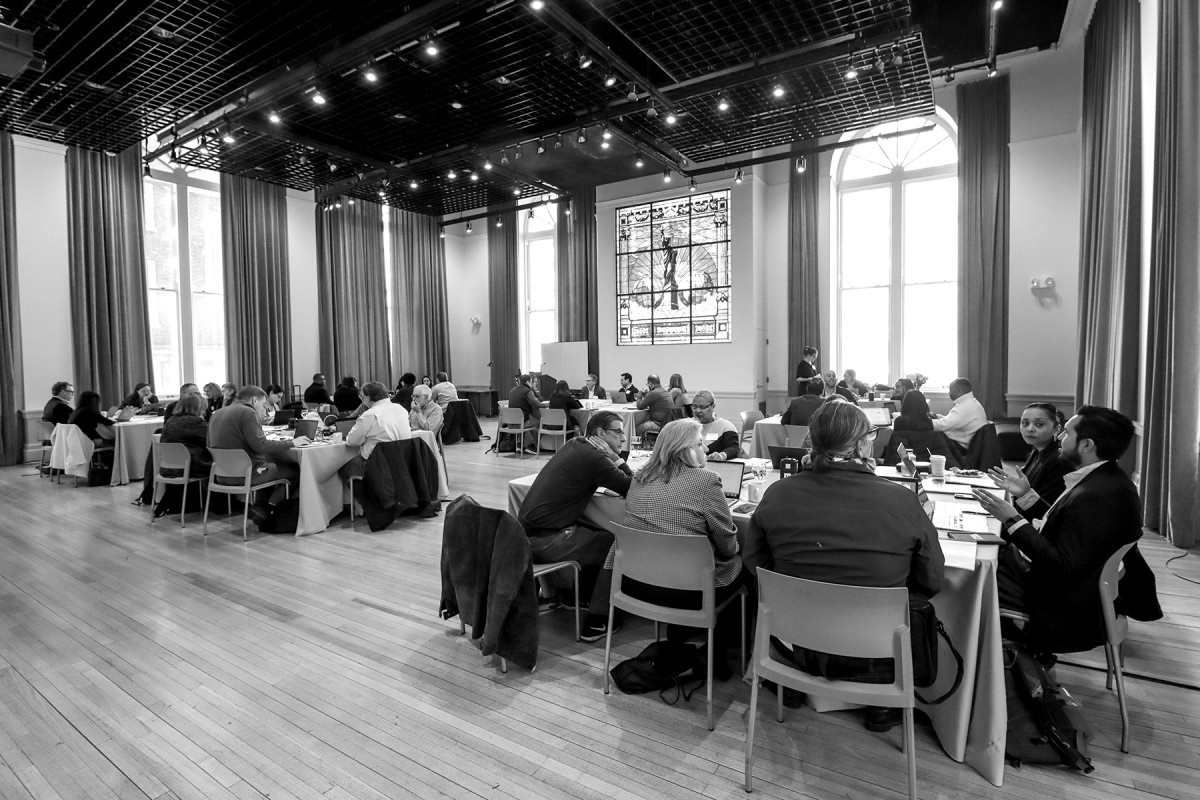
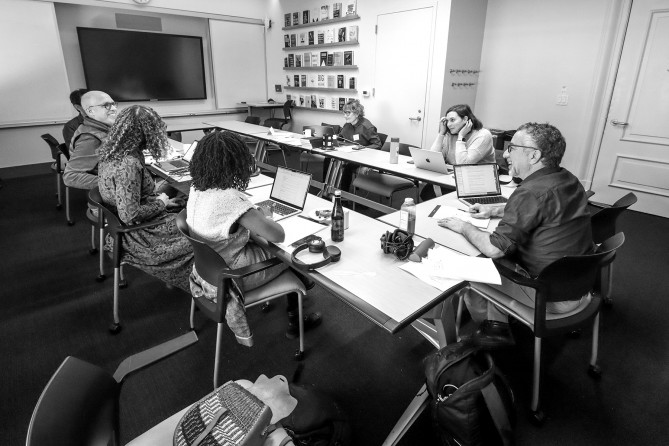
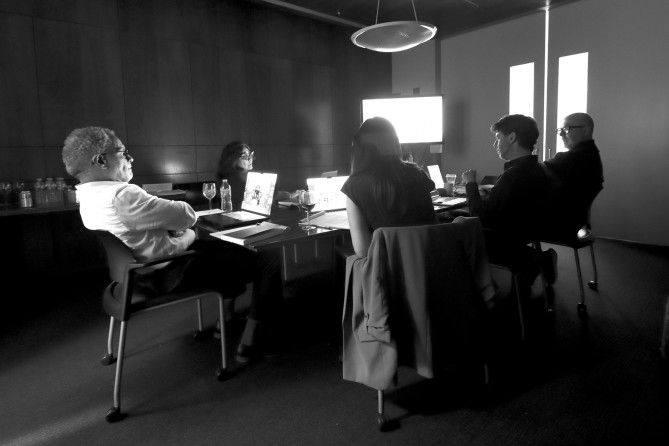
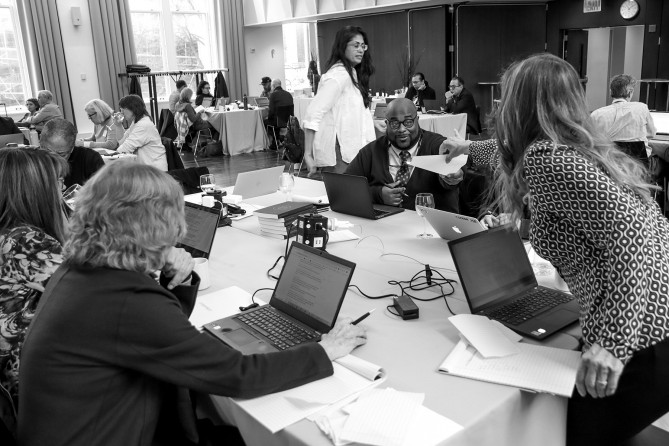
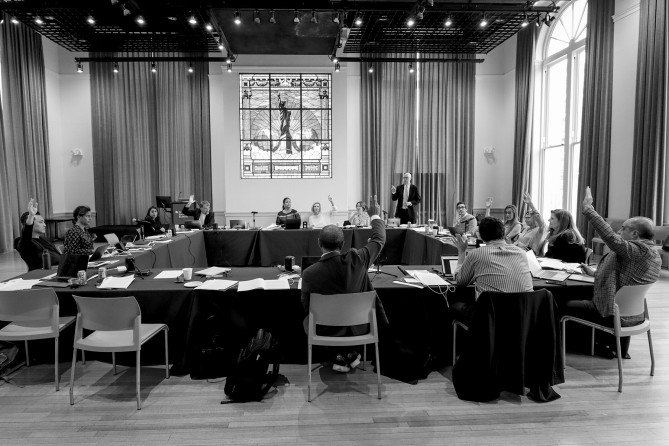
Six juries convened in the World Room, where the Pulitzer Board customarily meets twice every year.
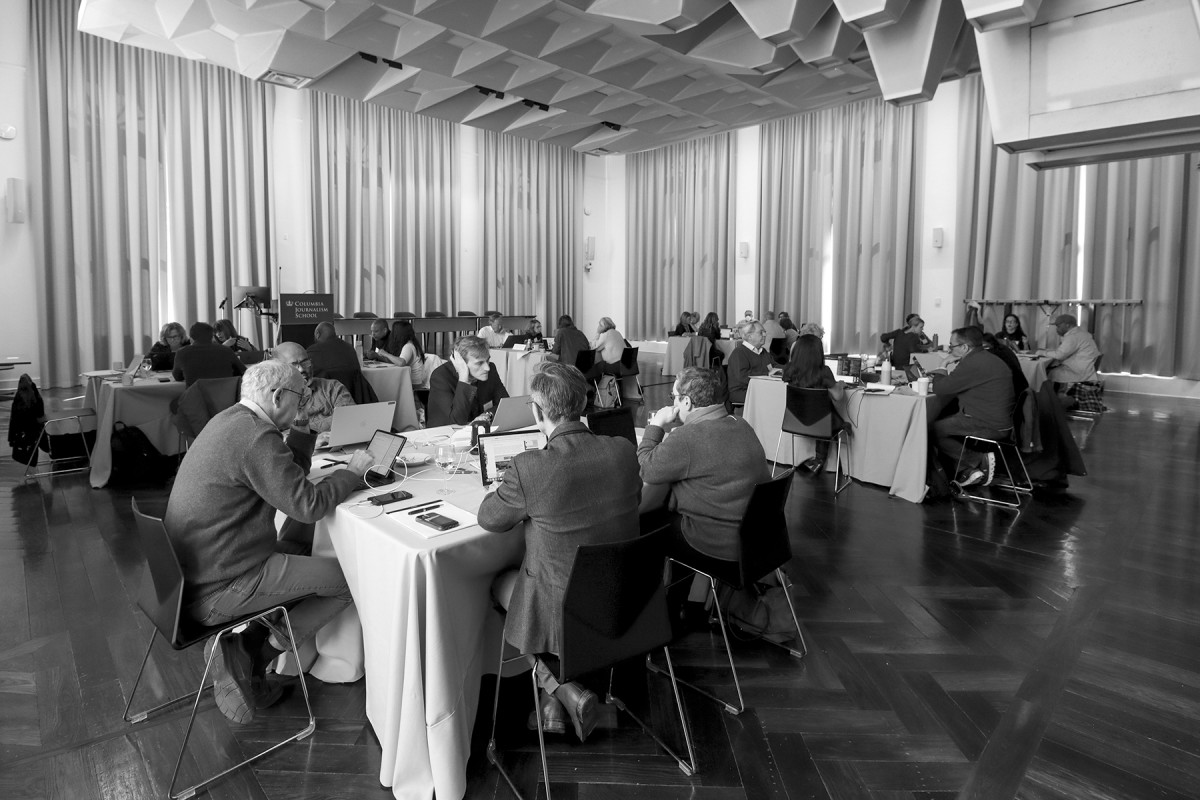
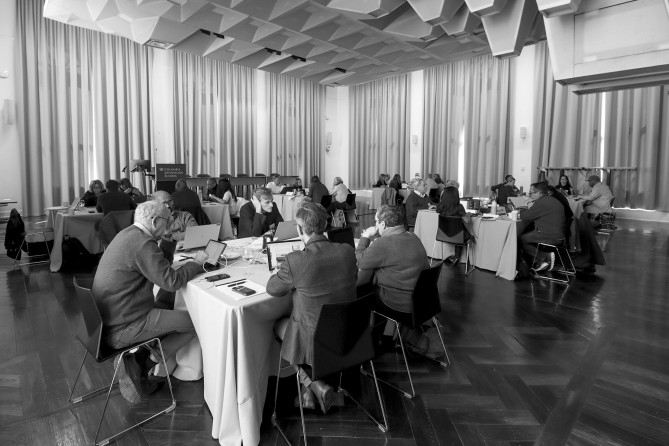
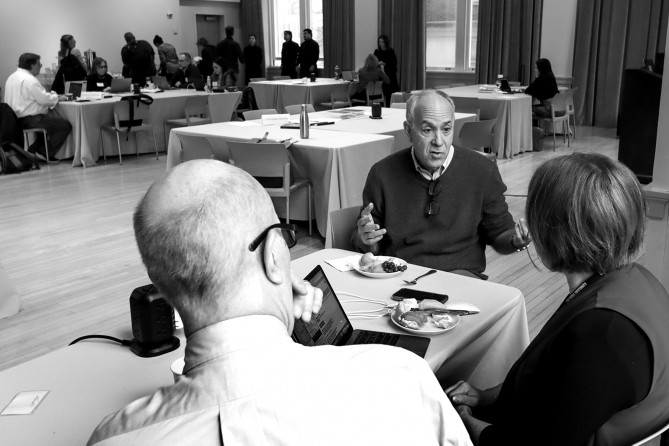
A second cluster of six juries met in the nearby Joseph D. Jamail Lecture Hall.
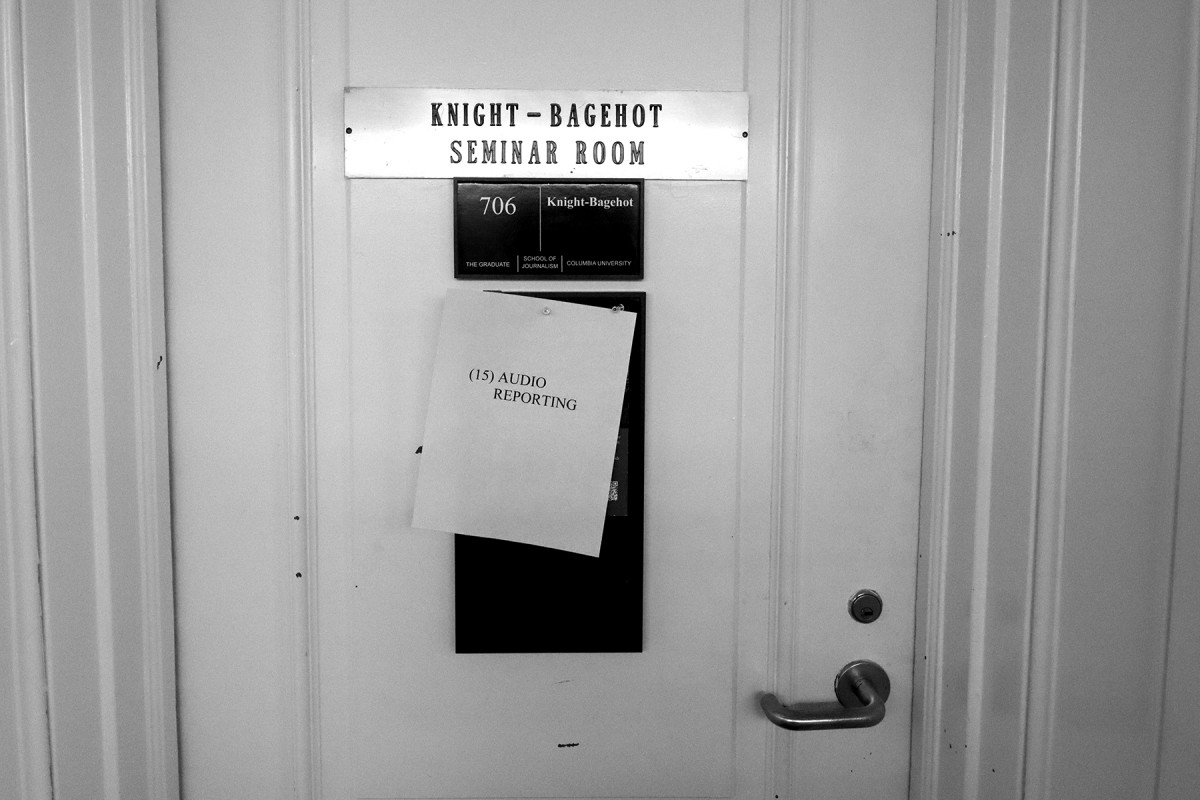
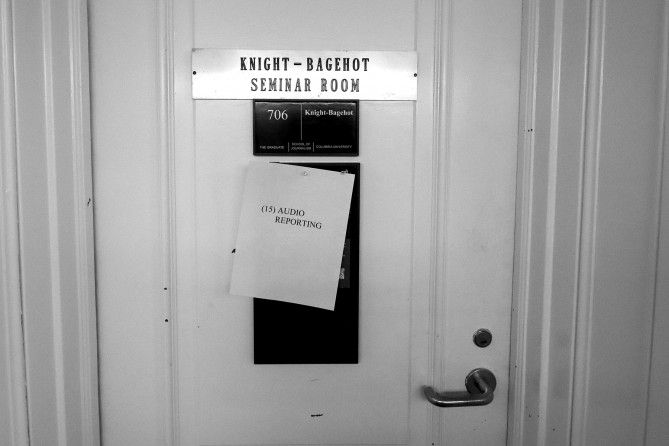
Due to the exigencies of their category, the Audio Reporting jury met privately in a classroom normally occupied by the Knight-Bagehot Fellowship.
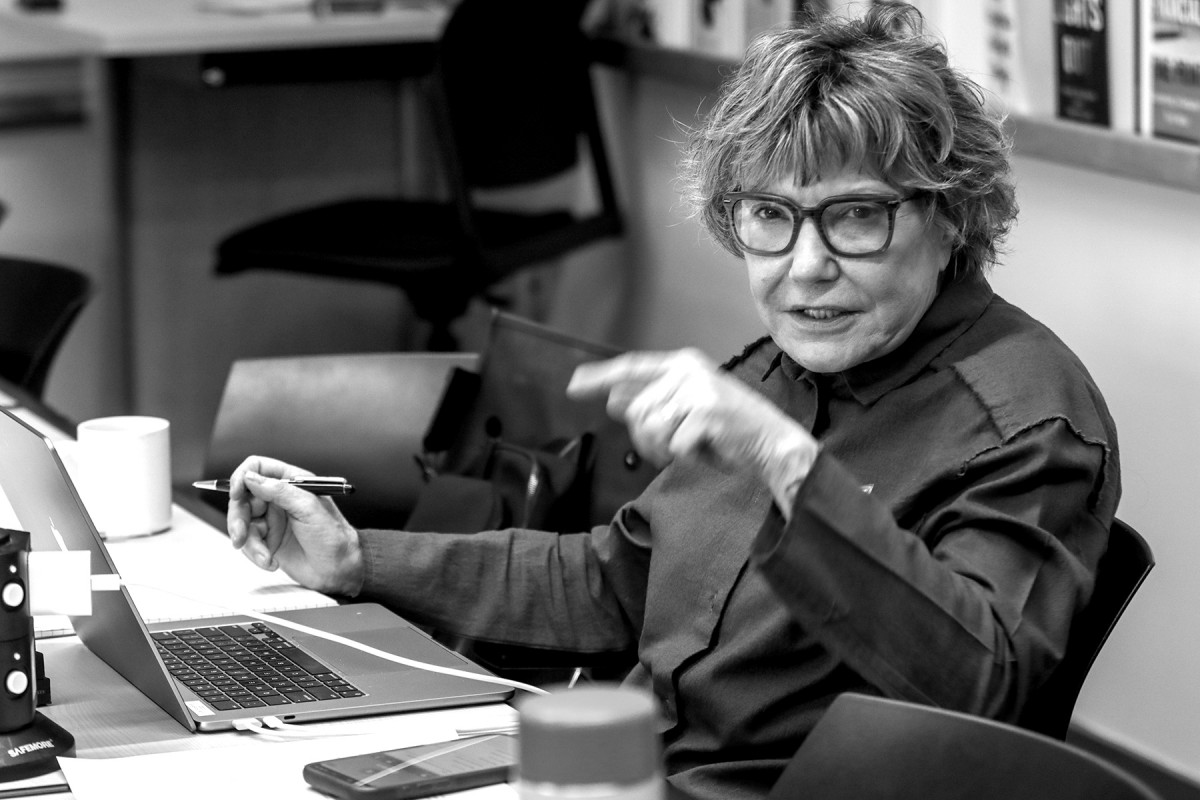
As the meetings commenced, Audio Reporting Chair Deborah Amos spoke with her colleagues.
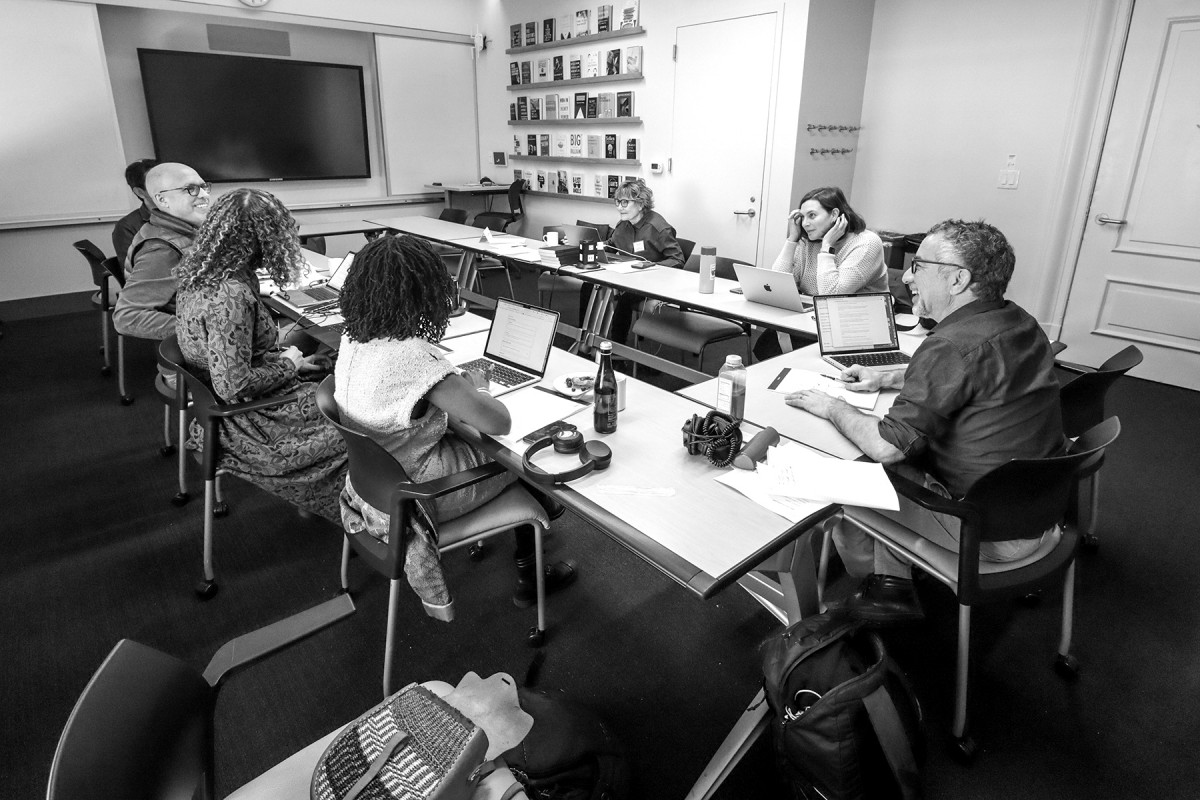
The Audio Reporting jurors continued their work.
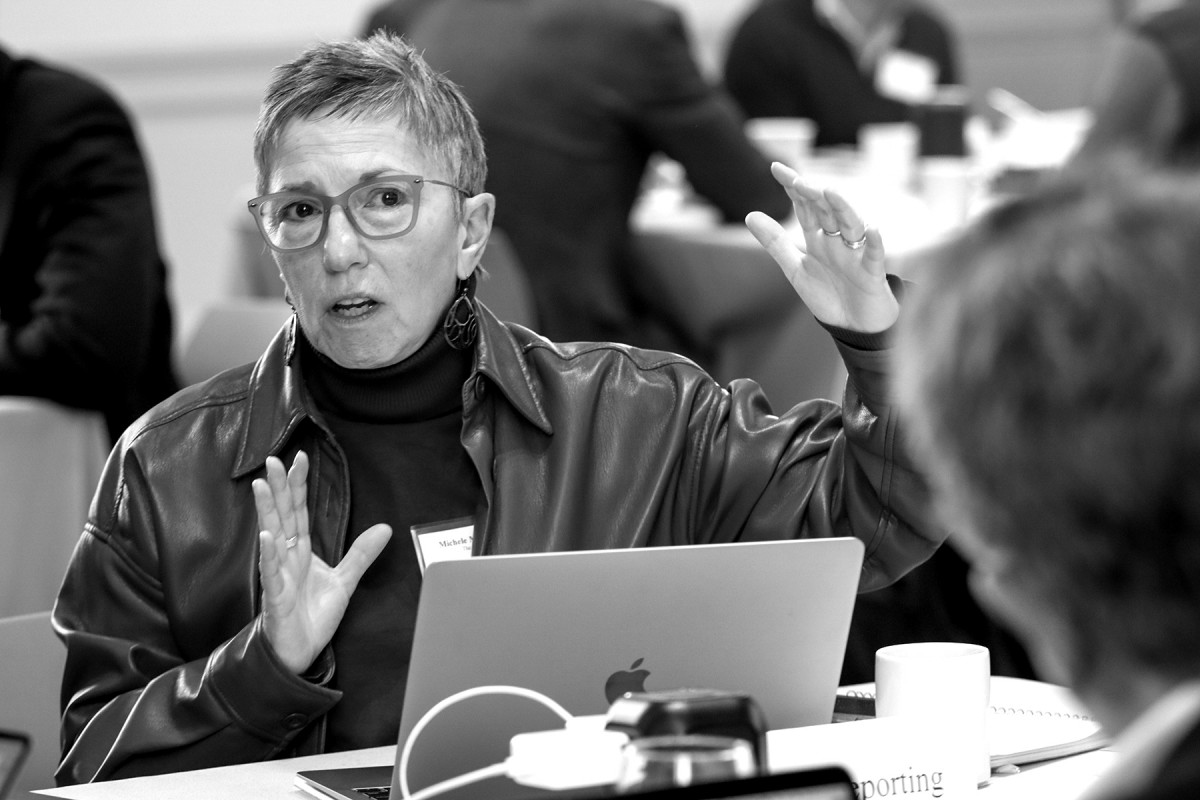
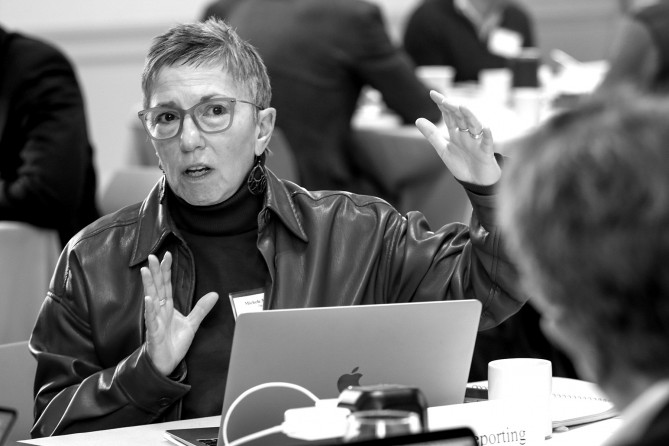
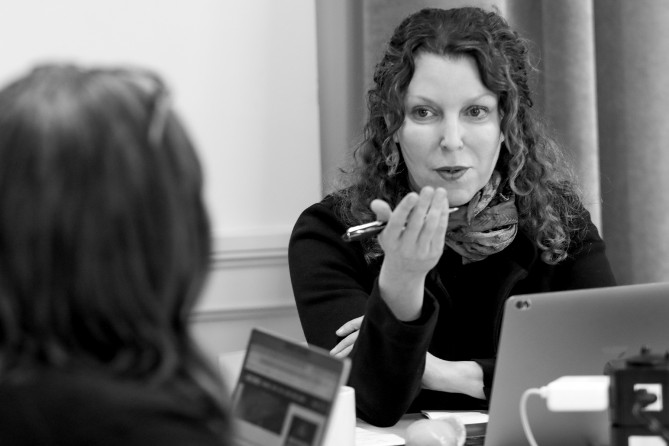
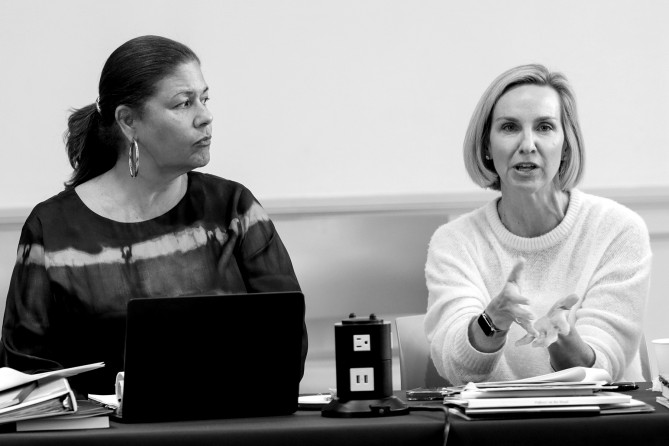
National Reporting Chair Michele Matassa Flores gestured as she shared her thoughts with her colleagues.
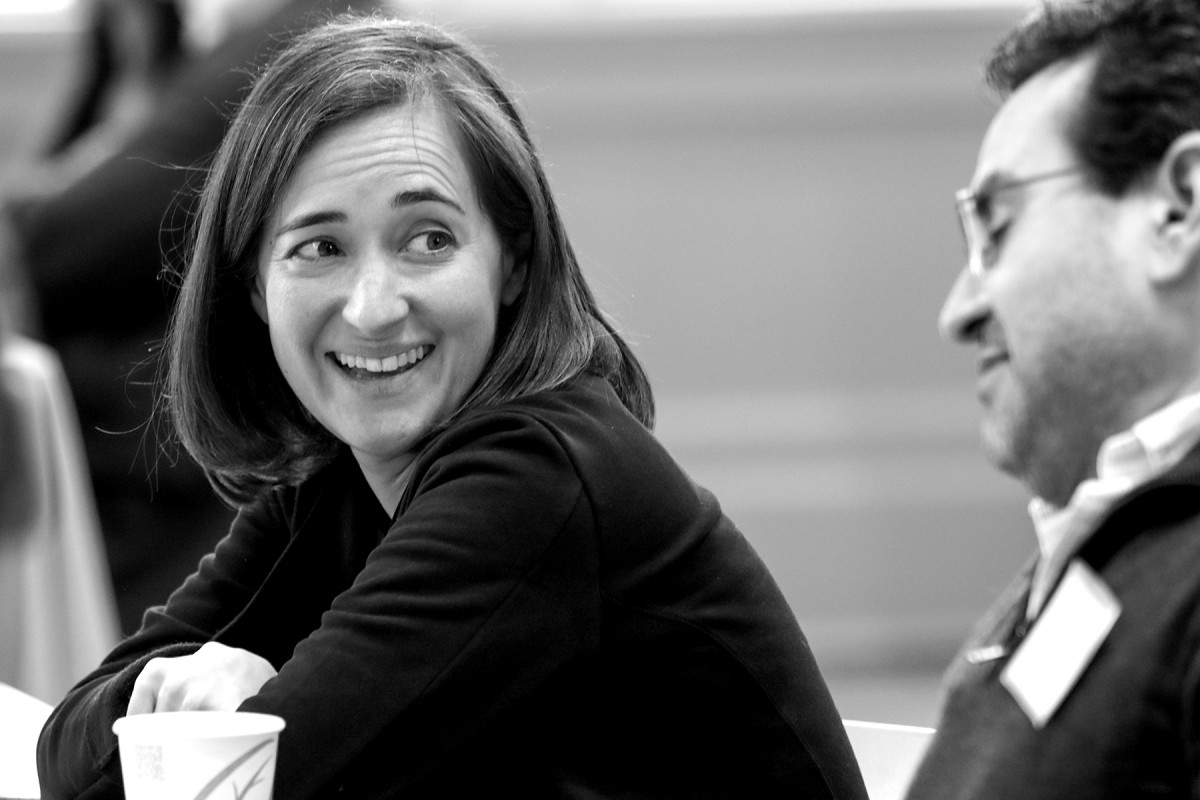
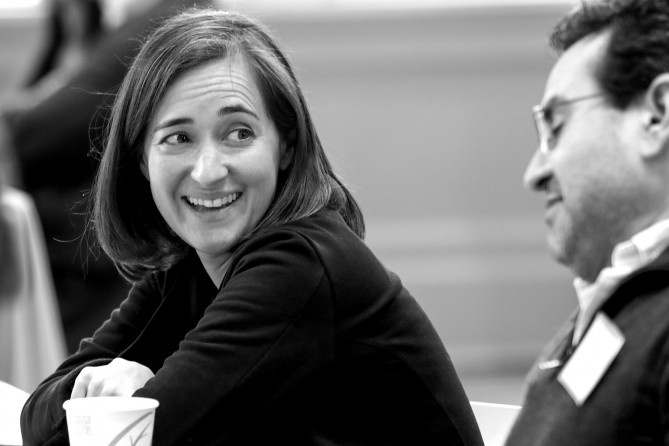
Investigative Reporting juror Alexandra Zayas reacted to observations from colleague Manuel Torres.
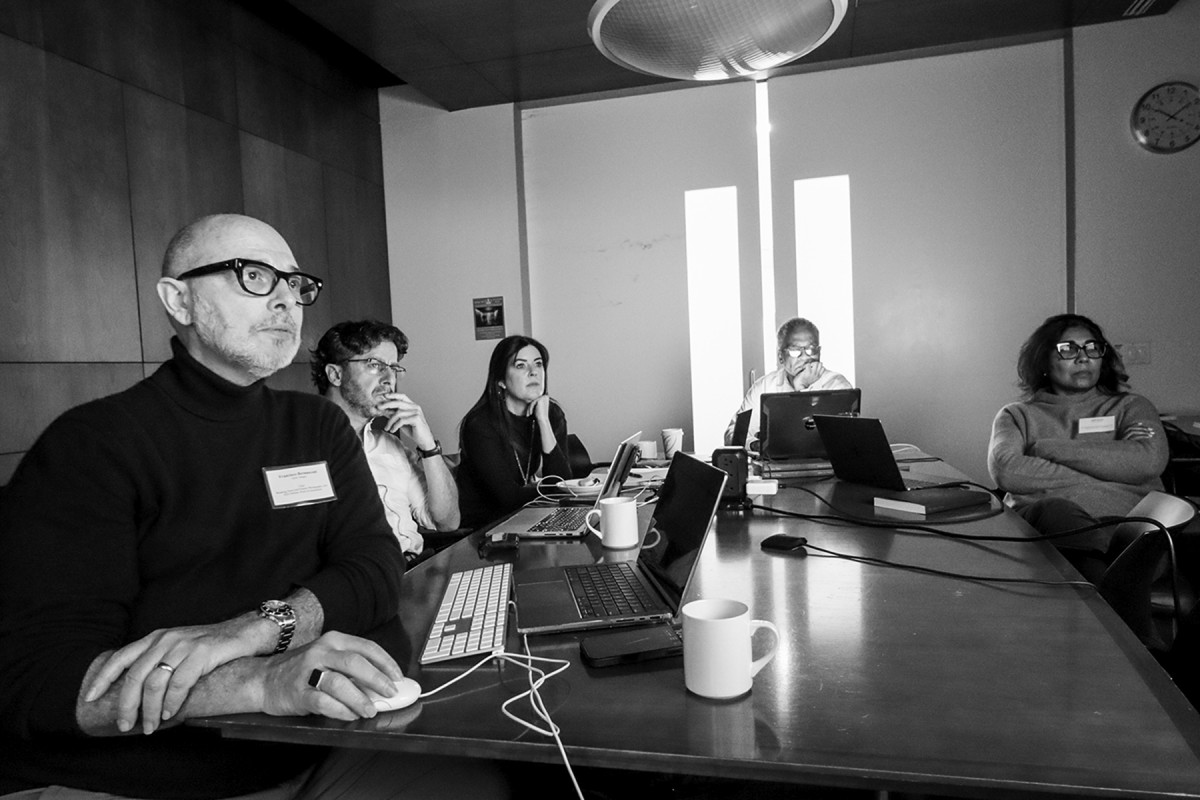
Photography Chair Pancho Bernasconi (at left) reviewed entries (in a private conference room adjacent to the Pulitzer Administrator's Office) with his fellow judges, including Emilio Morenatti (second from left), Lauren Walsh, Irwin Thompson and Nikki Kahn.
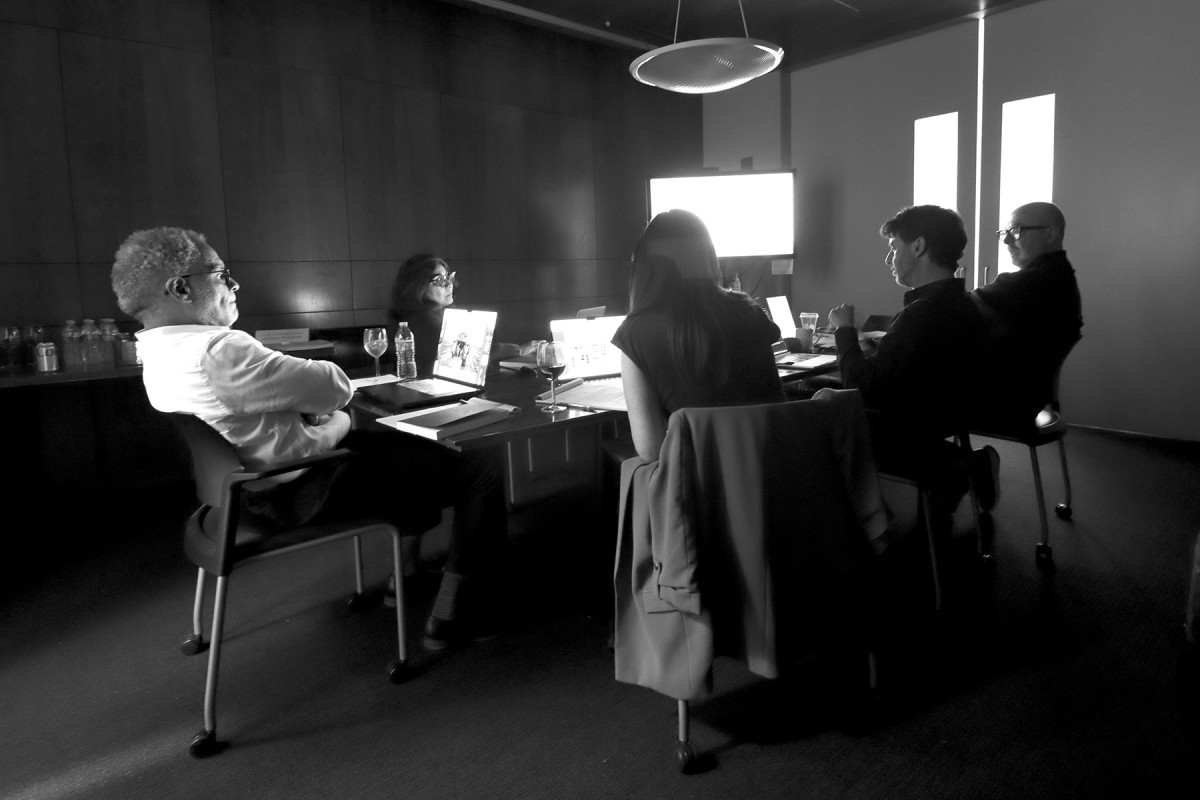
Unlike other panels, the Photography jury nominates finalists in the Breaking News Photography and Feature Photography categories.
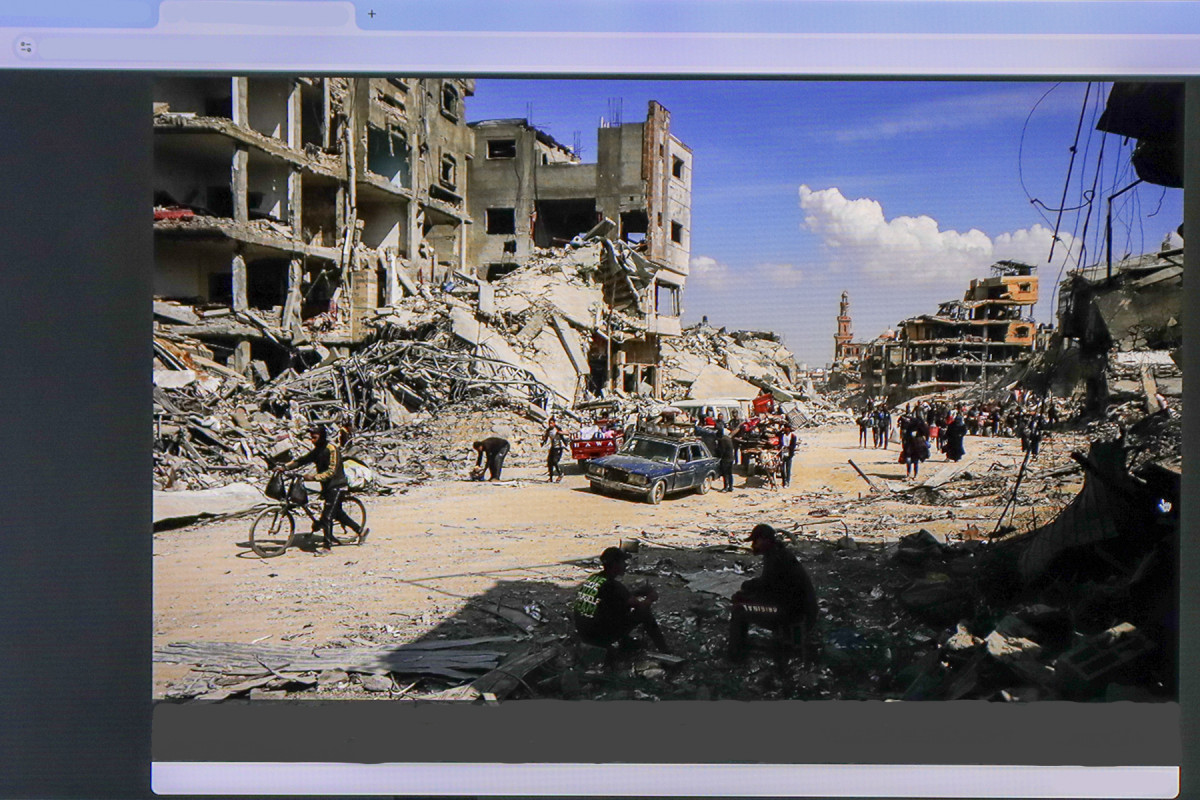
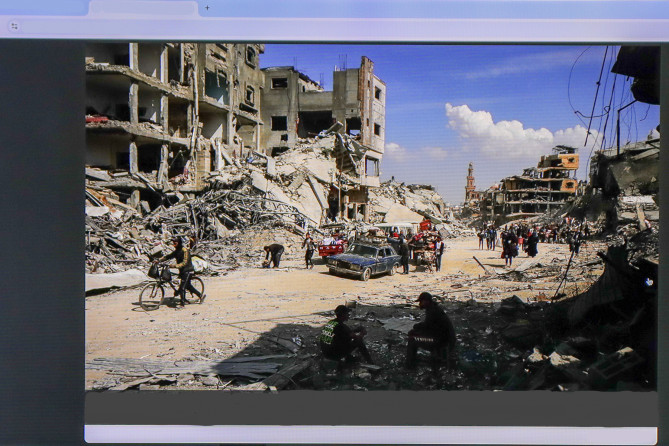
In this photo from the Associated Press's Feature Photography Prize-nominated staff entry on the Israel-Gaza war by Fatima Shbair, Palestinians walked through the destruction in the wake of an Israeli air and ground offensive in Khan Younis, southern Gaza Strip, on April 8, 2024.
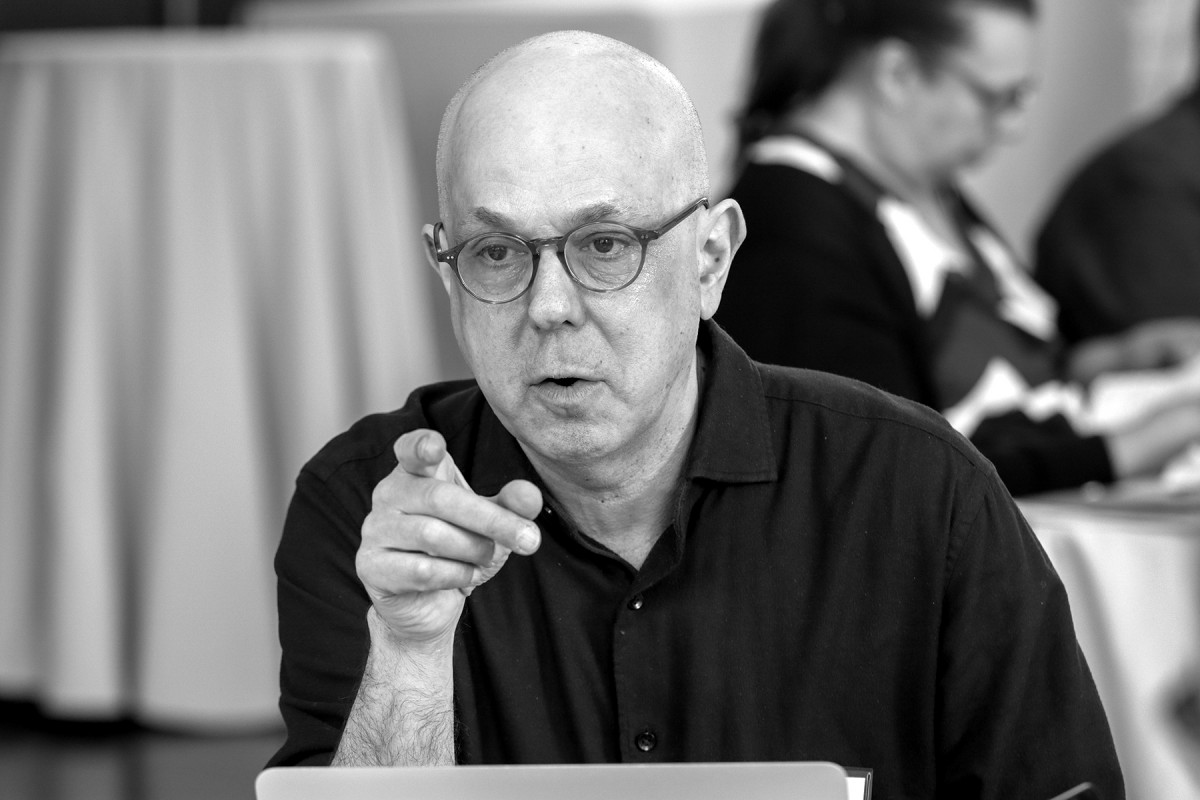
Criticism Chair Michael W. Miller conveyed a point to his colleagues.

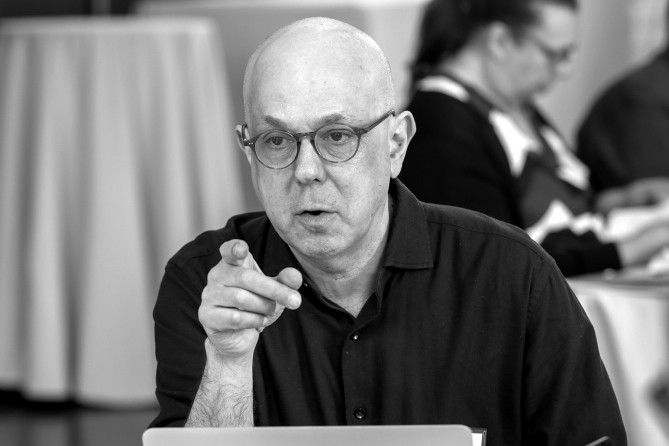
An inimitable force in American journalism for several decades, Explanatory Reporting juror David Barstow discussed the merits of an entry with his colleagues.
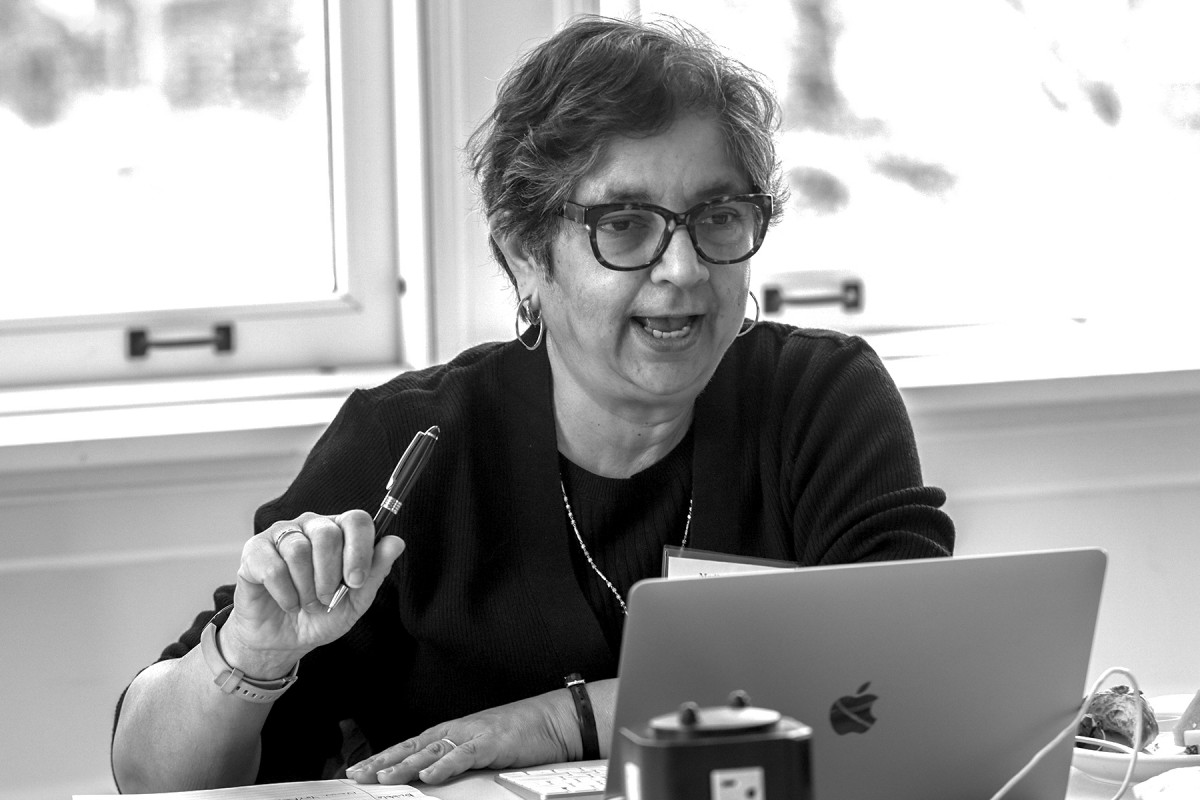
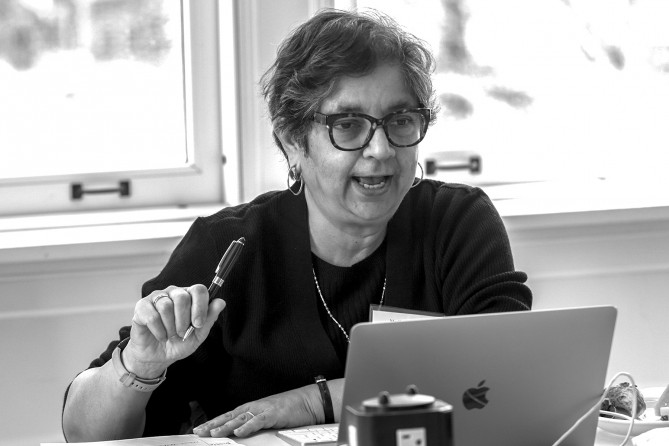
Feature Writing Chair Madhulika Sikka moderated her colleagues' discussion.

Illustrated Reporting and Commentary juror Alberto Cairo gesticulated as he spoke to his colleagues.
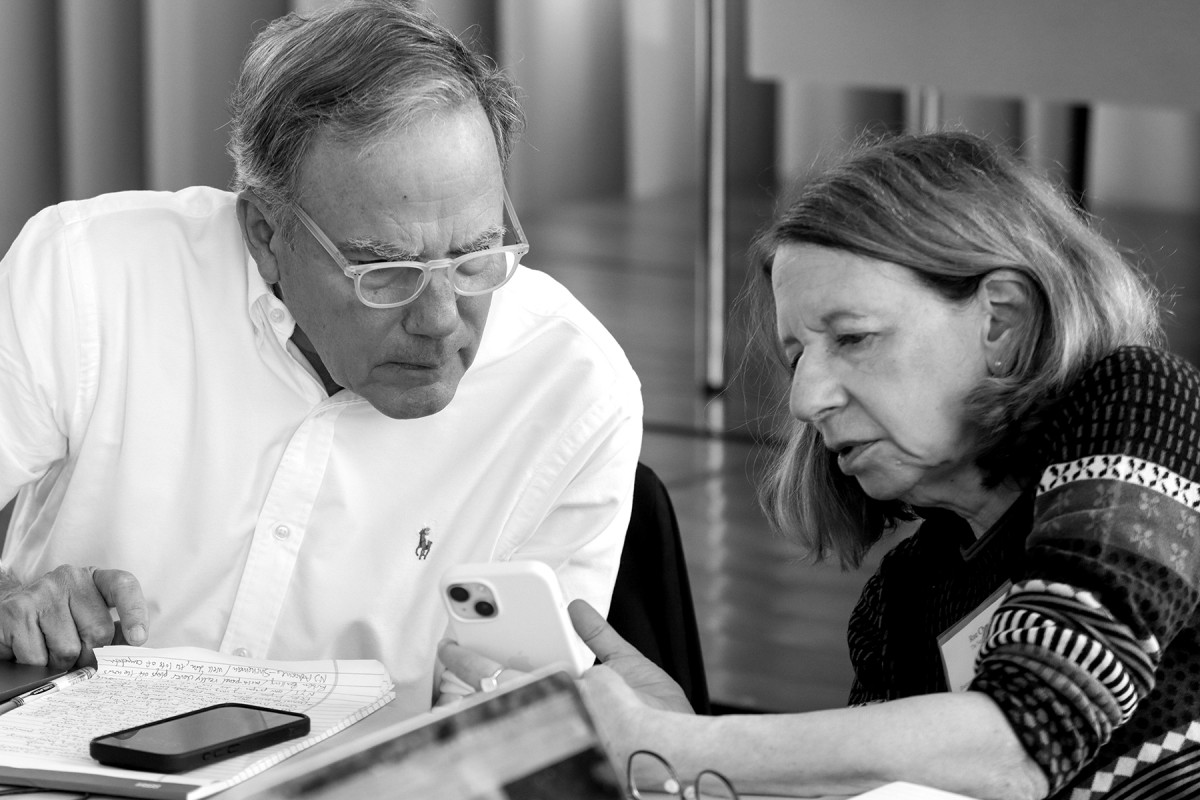
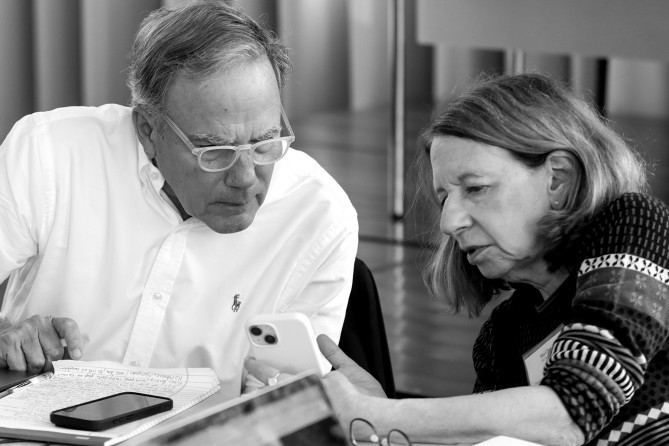
Illustrated Reporting Chair John Diaz and colleague Roz Chast reviewed materials on the first day of meetings.
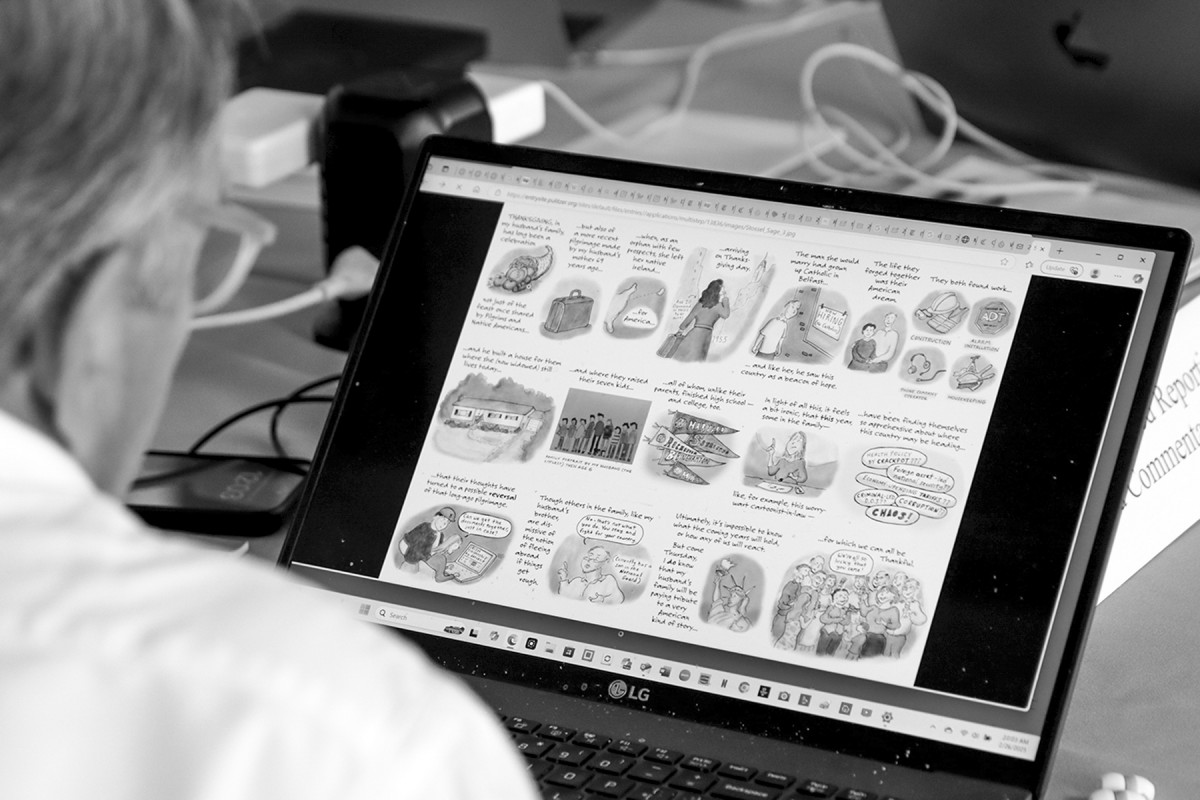
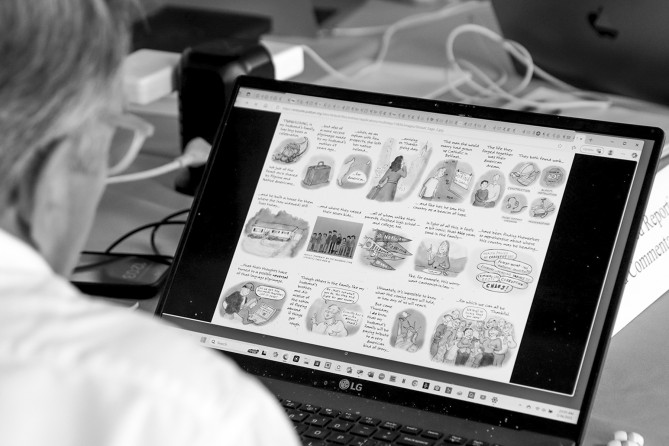
Diaz reviewed another entry on his laptop.
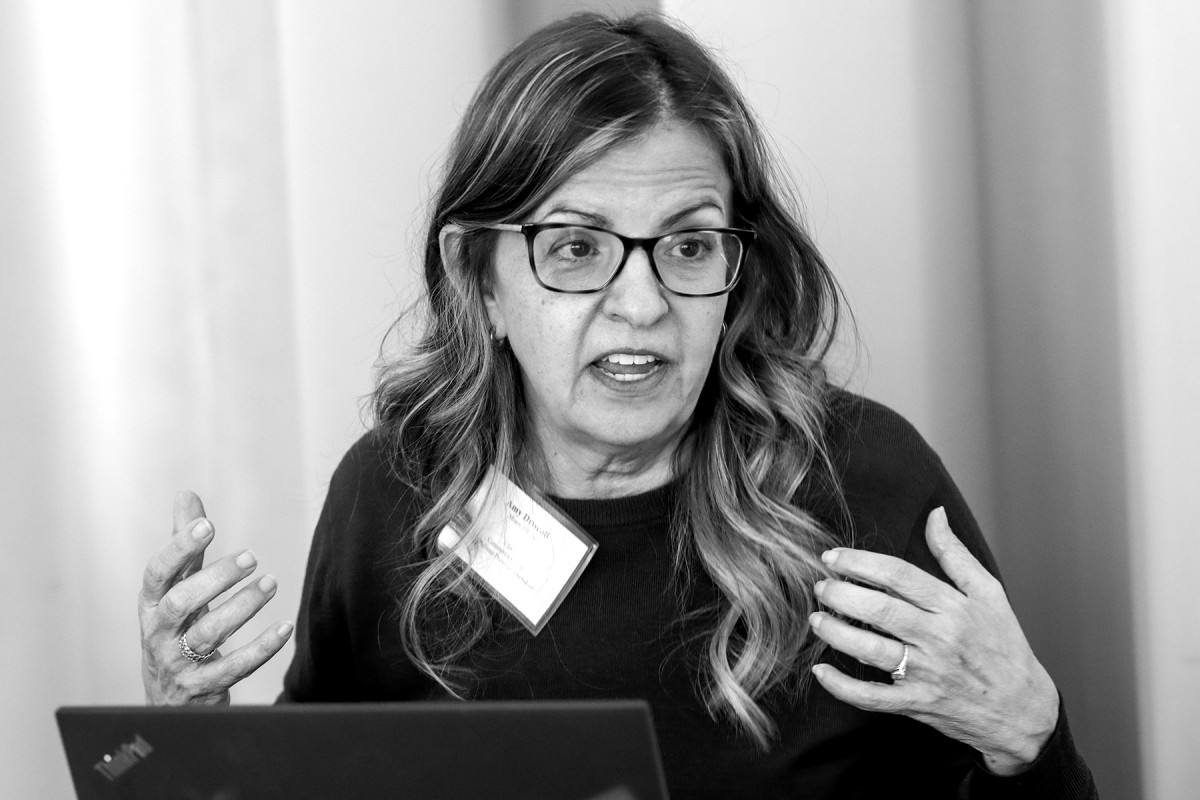
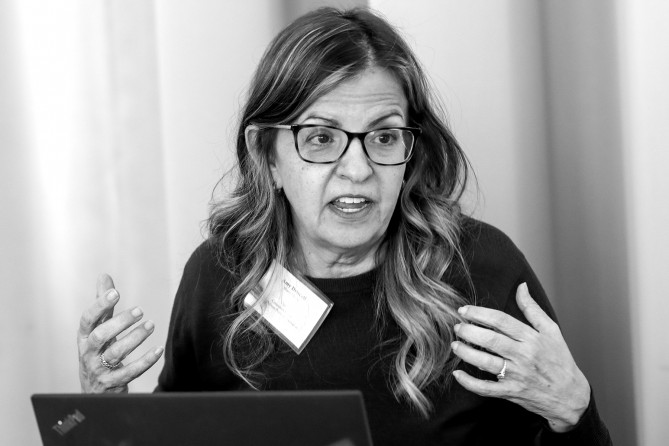
Commentary Chair Amy Driscoll debated the merits of an entry with her colleagues.
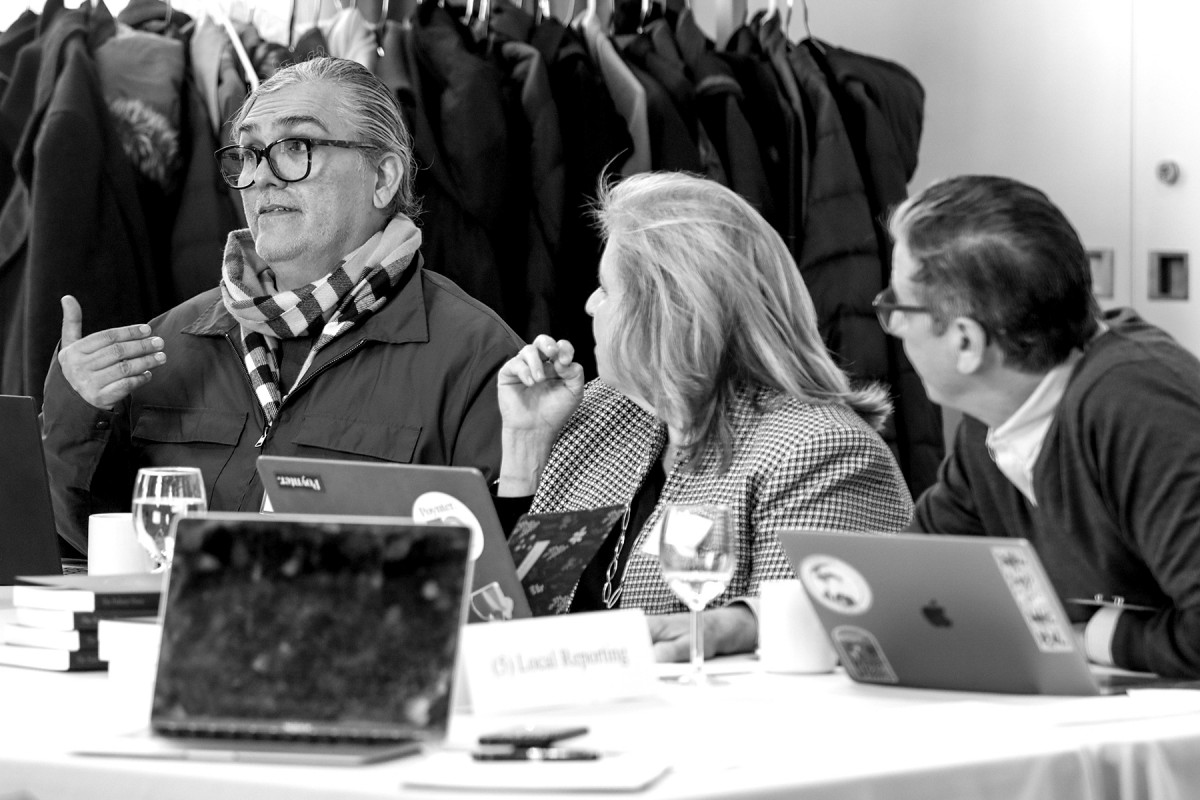
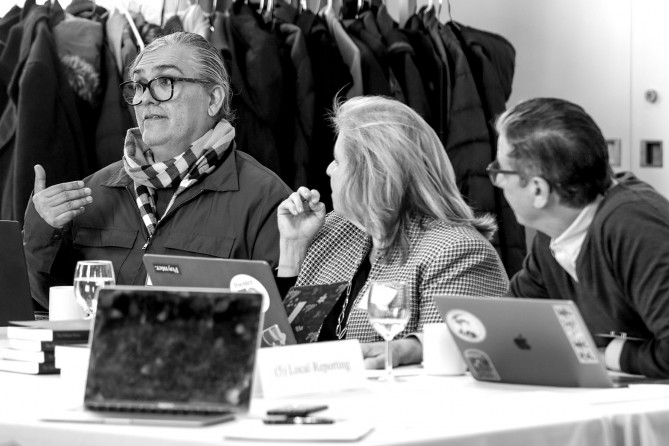
Local Reporting juror Hector Becerra discussed an entry on the first day of meetings.
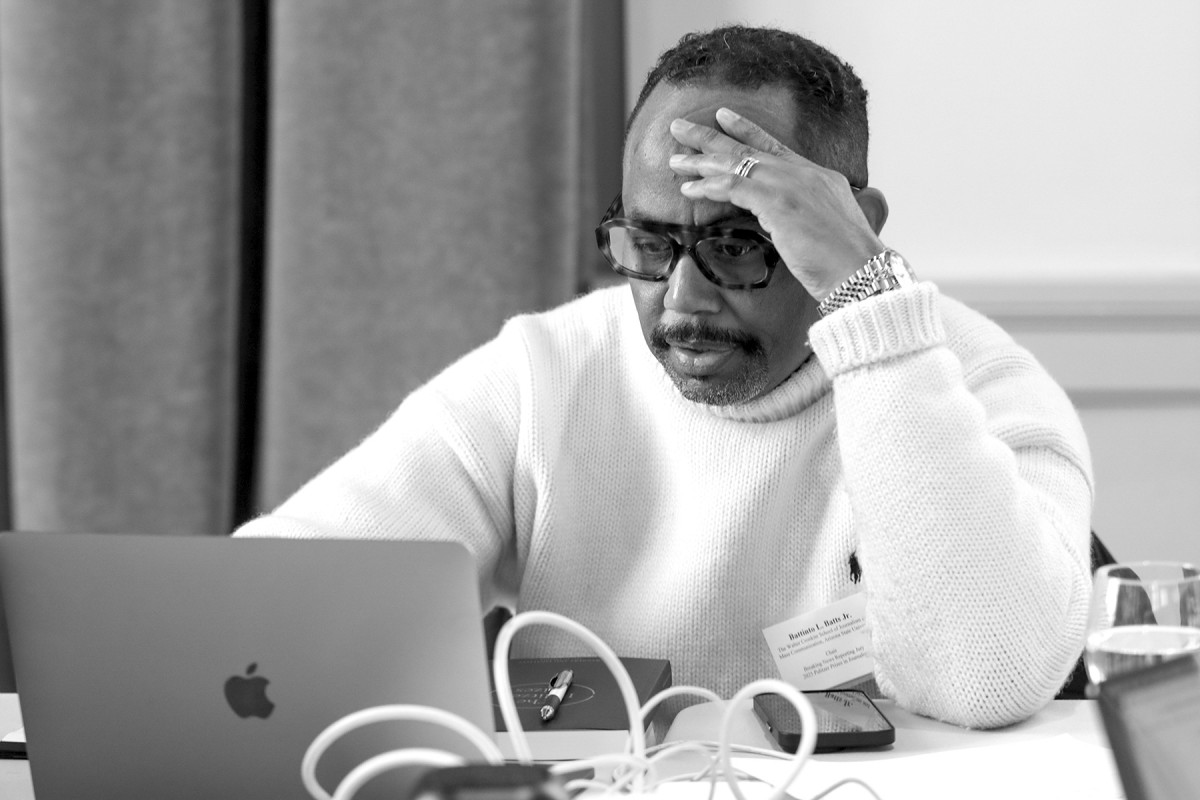
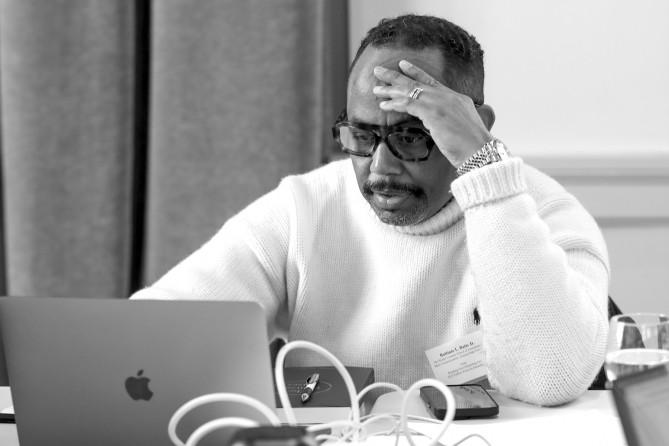
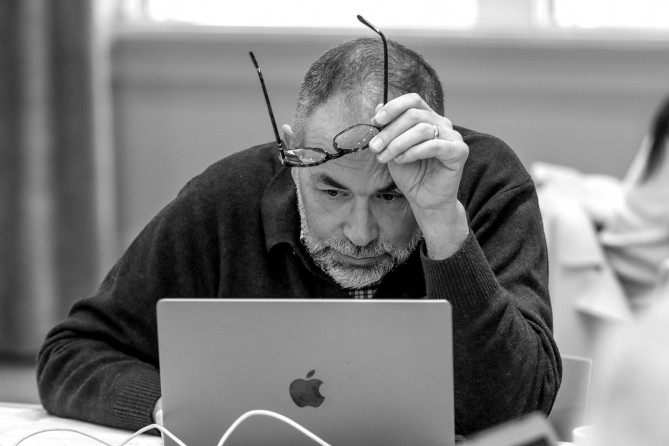
Breaking News Reporting Chair Battinto L. Batts Jr. concentrated as he read over various entries.
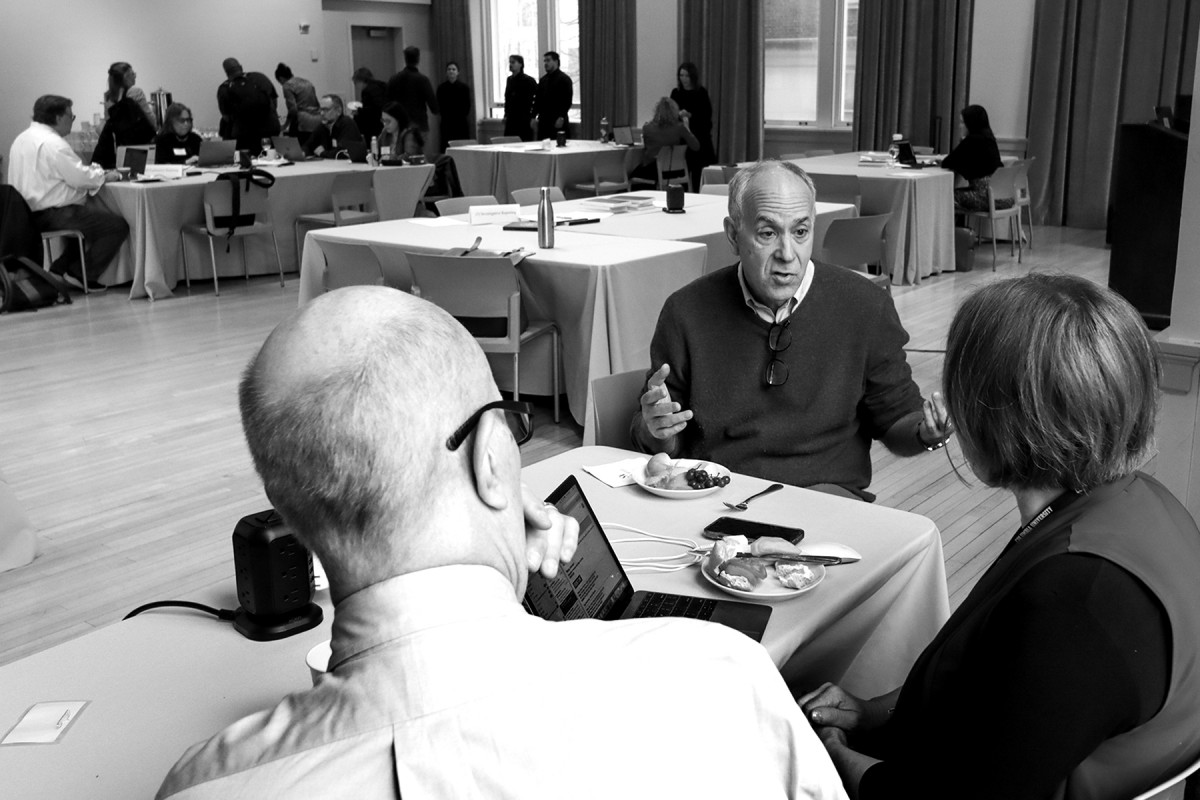
As the day progressed, Editorial Writing Chair Nicholas Goldberg continued to seek guidance on a long-gestating eligibility/administrative matter from Miller and Kliment.
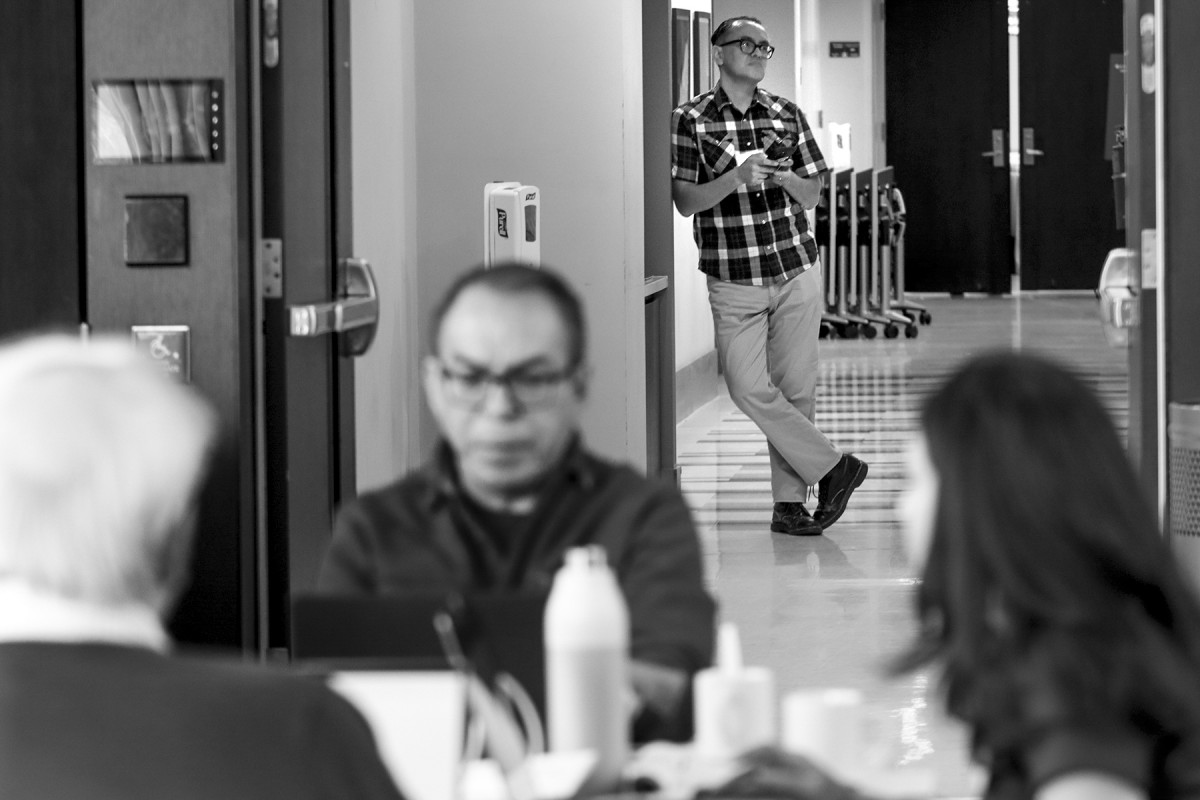
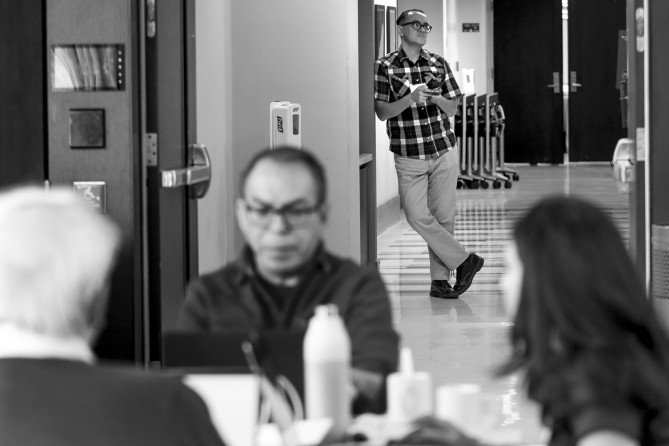
Like their brethren on the Pulitzer Board, nominating jurors must recuse from discussions concerning entries where a potential personal or professional conflict may be perceived. Here, Gustavo Arellano stood in the hallway during a recusal period, far from the table where his fellow Criticism jurors discussed an entry.
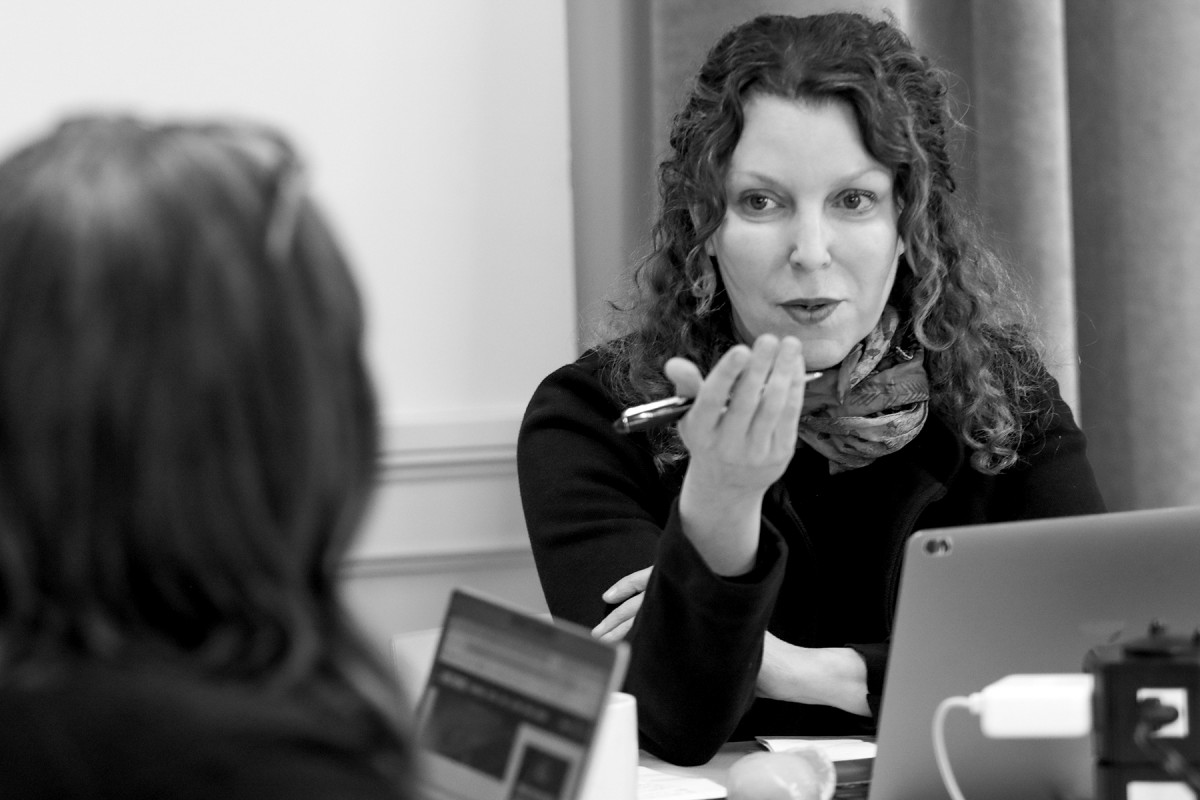
Public Service Chair Raney Aronson-Rath spoke with one of her colleagues.
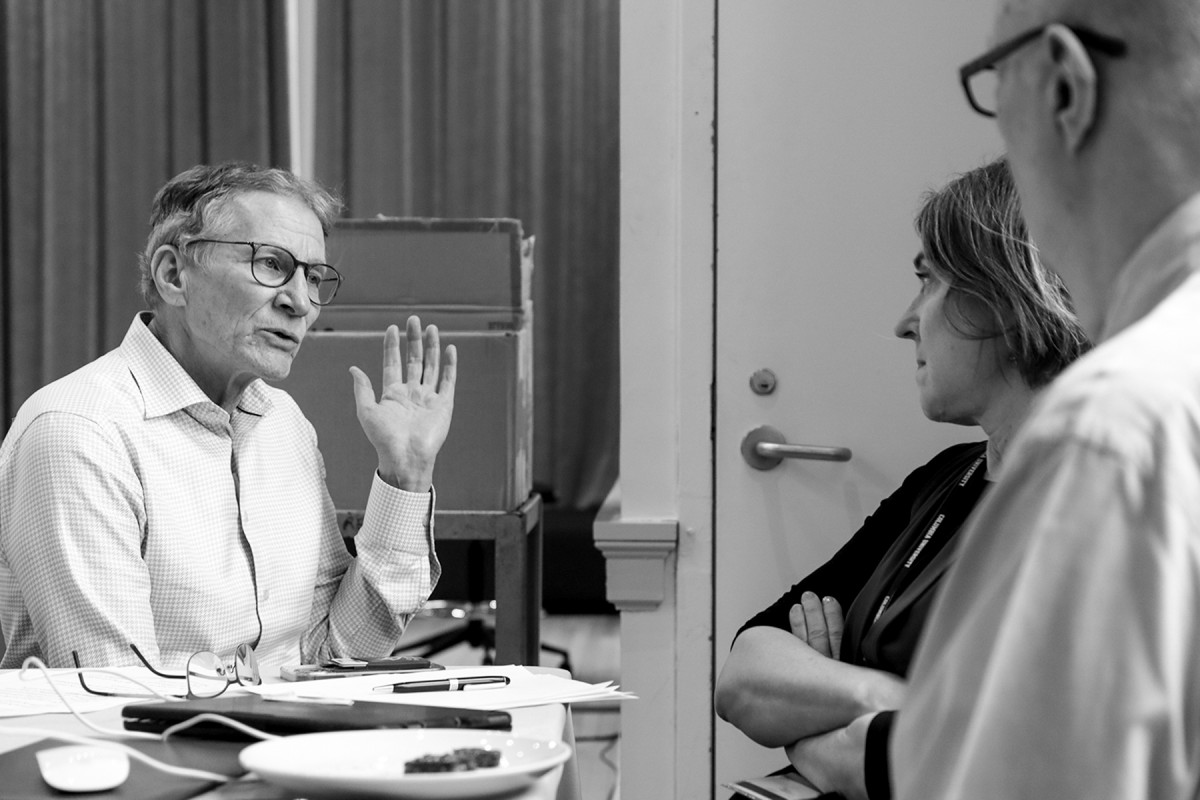
Investigative Reporting Chair Douglas M. Foster spoke with Miller and Kliment on the second day of meetings.
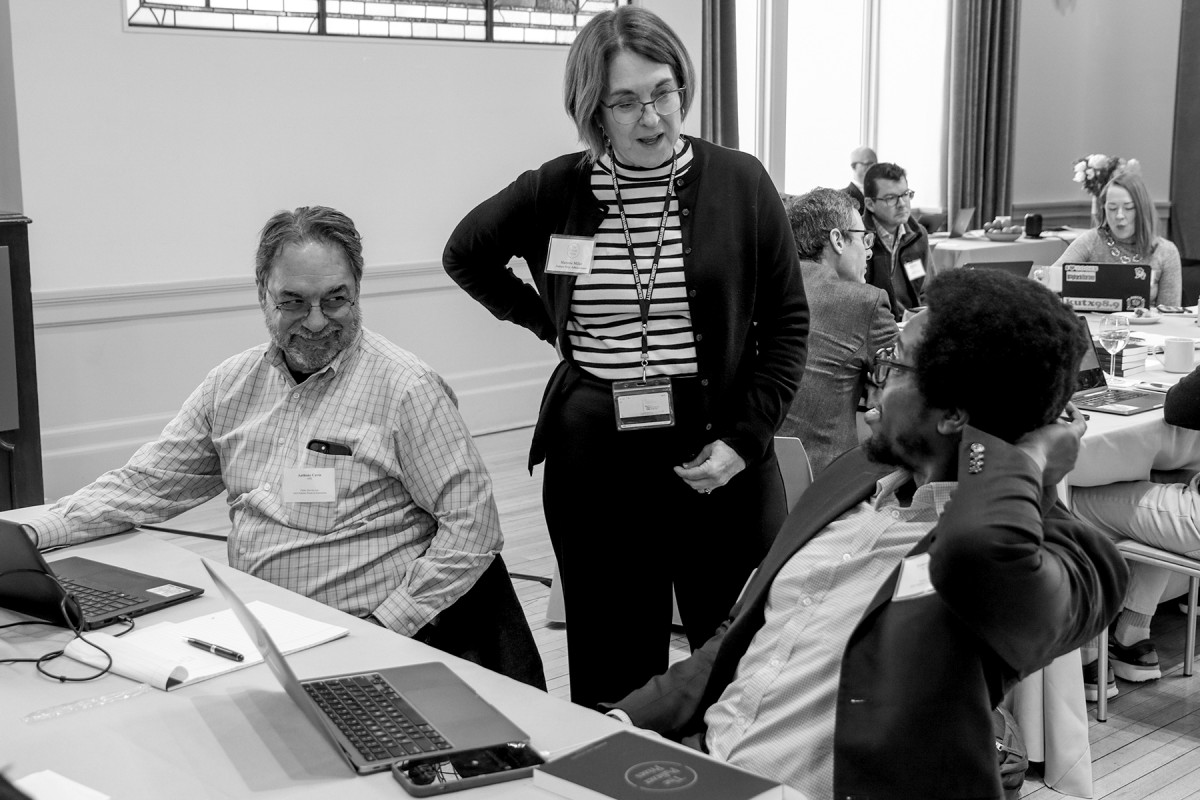
Miller chatted with Public Service jurors Toluse Olorunnipa (right) and Tony Cavin (left) on the second day of judging.
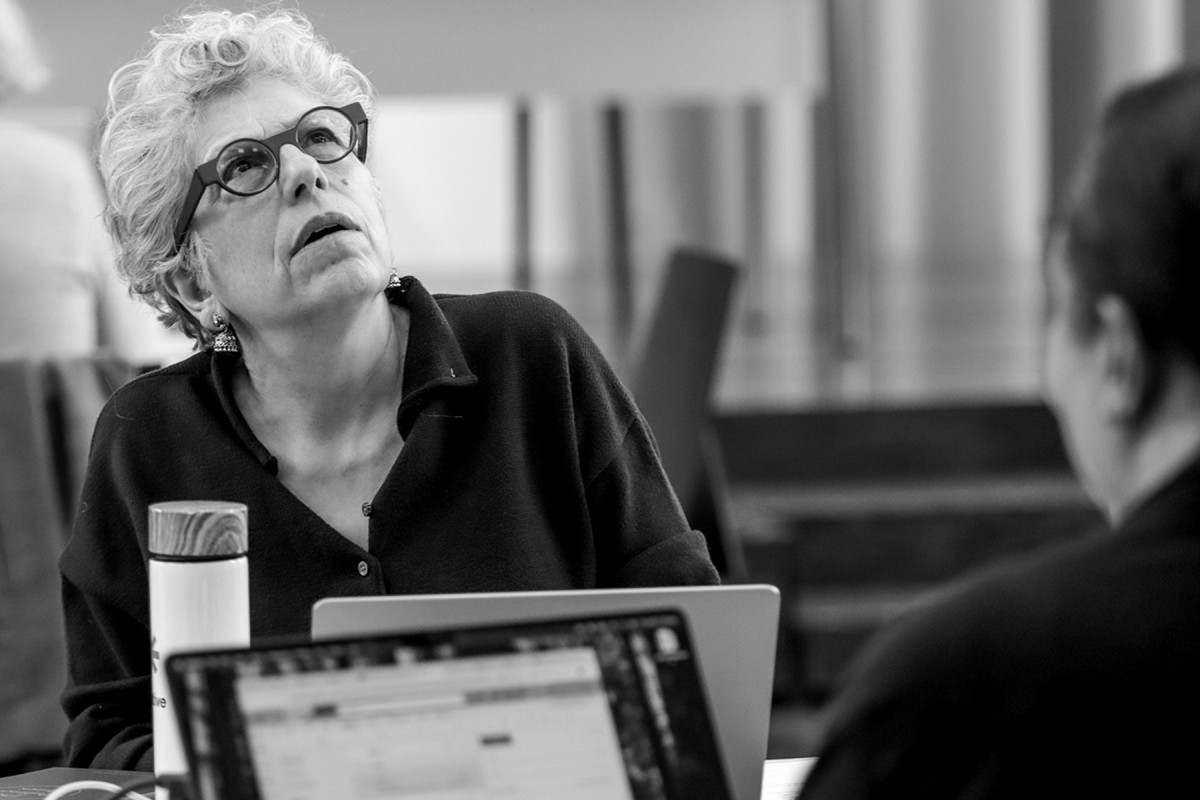
International Reporting Chair Susan Chira listened to her colleagues' points on the second day of meetings.
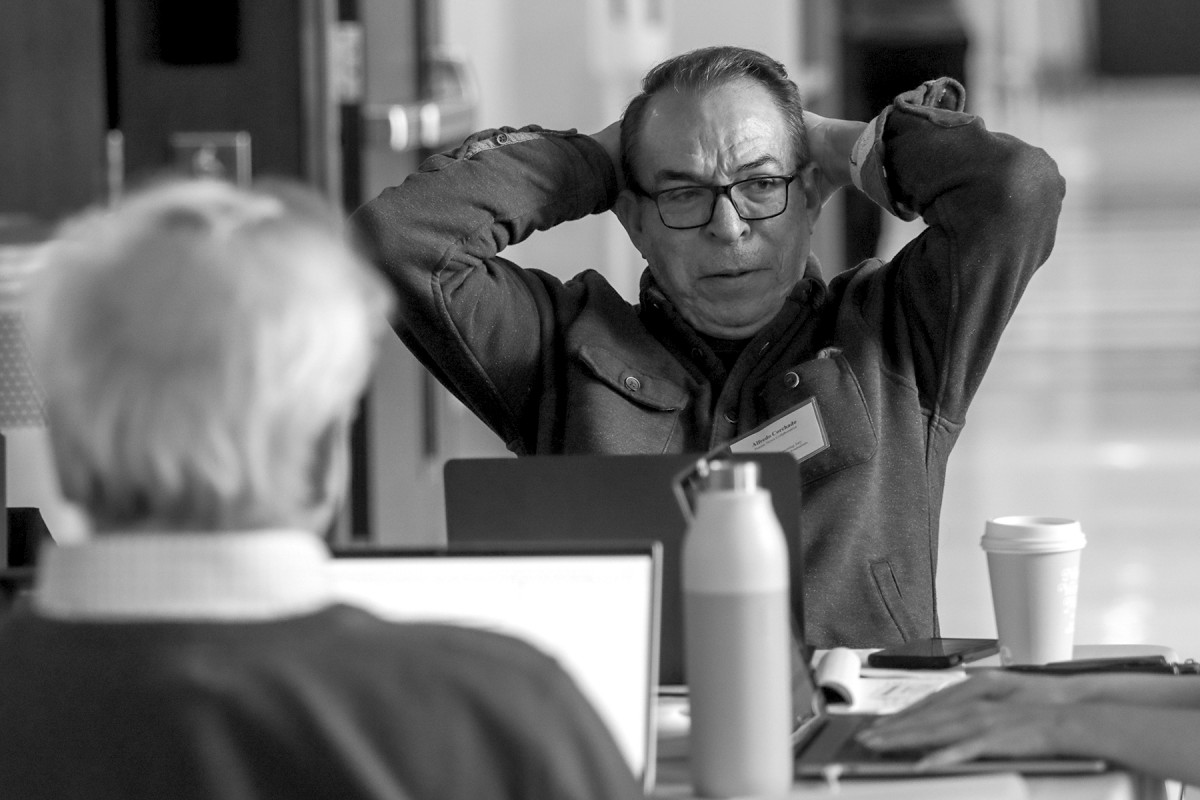
International Reporting juror Alfredo Corchado ruminated on his colleagues' remarks during the second day of meetings.
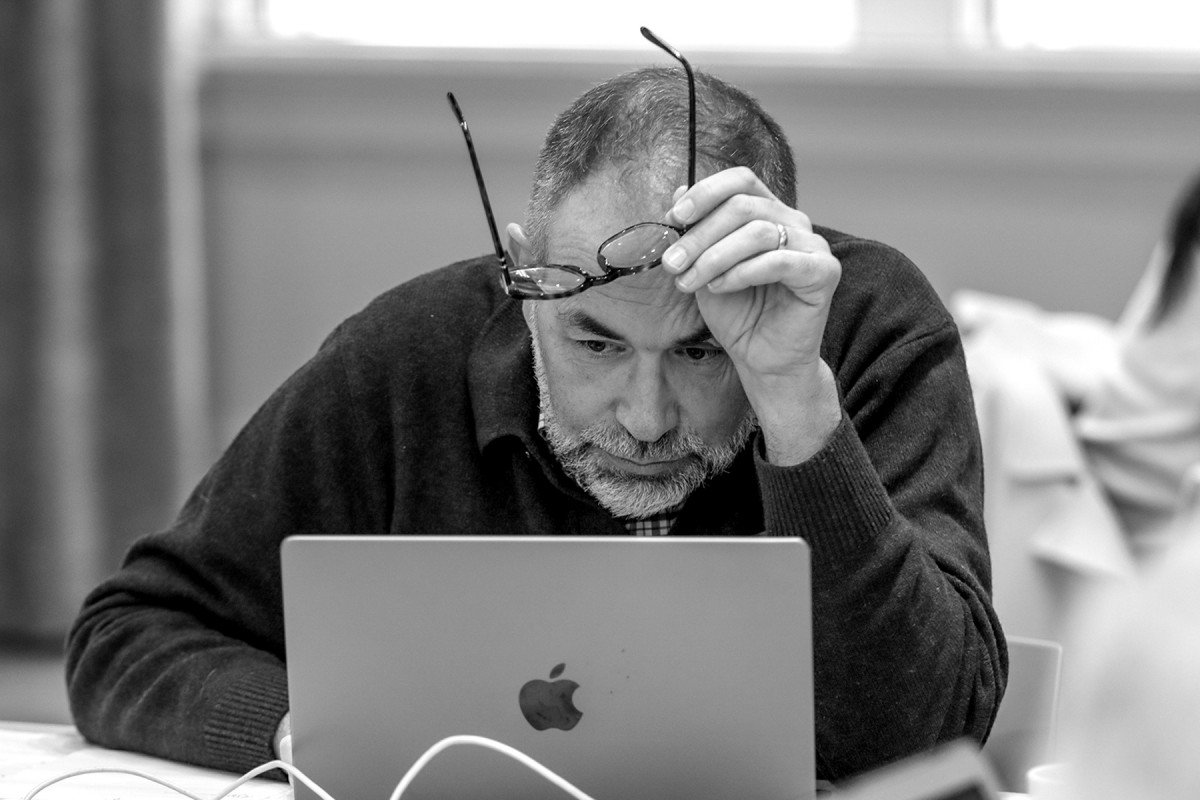
Explanatory Reporting Chair Brian Carovillano studied an entry.
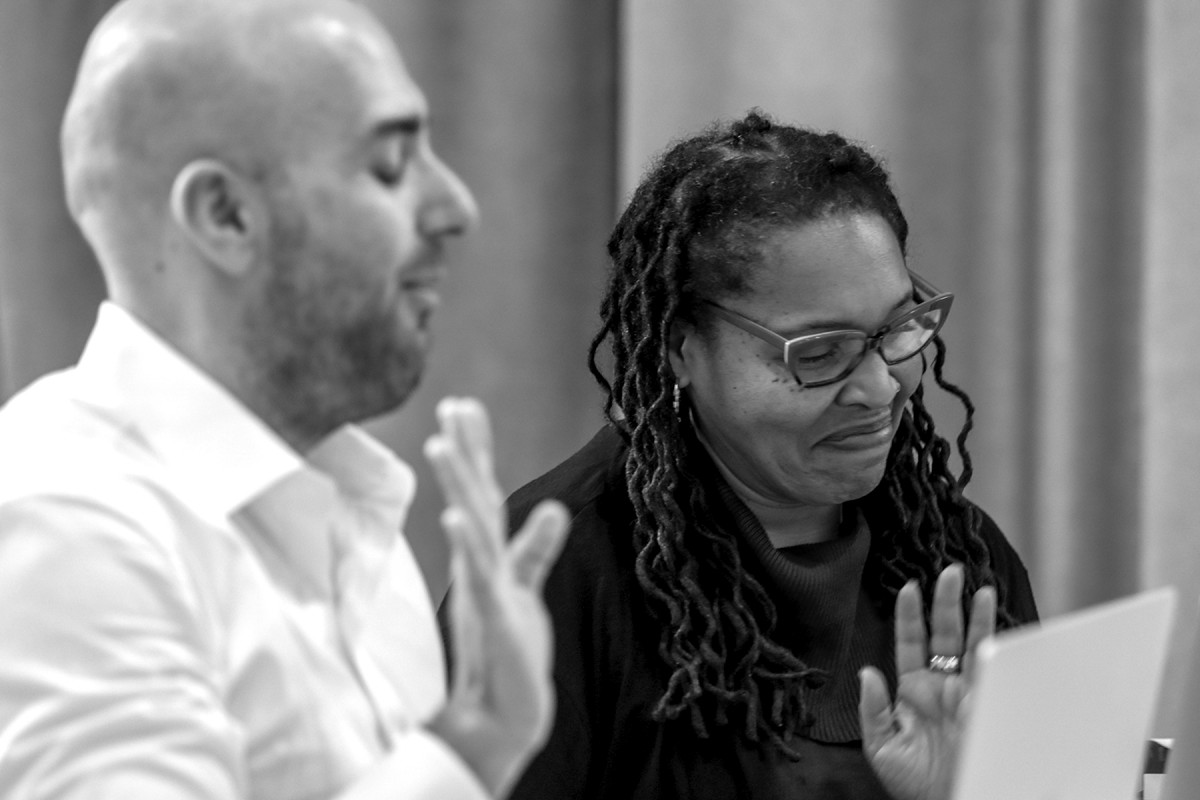
Breaking News Reporting jurors Nic Garcia and Karen Hawkins contributed to a judging discussion.
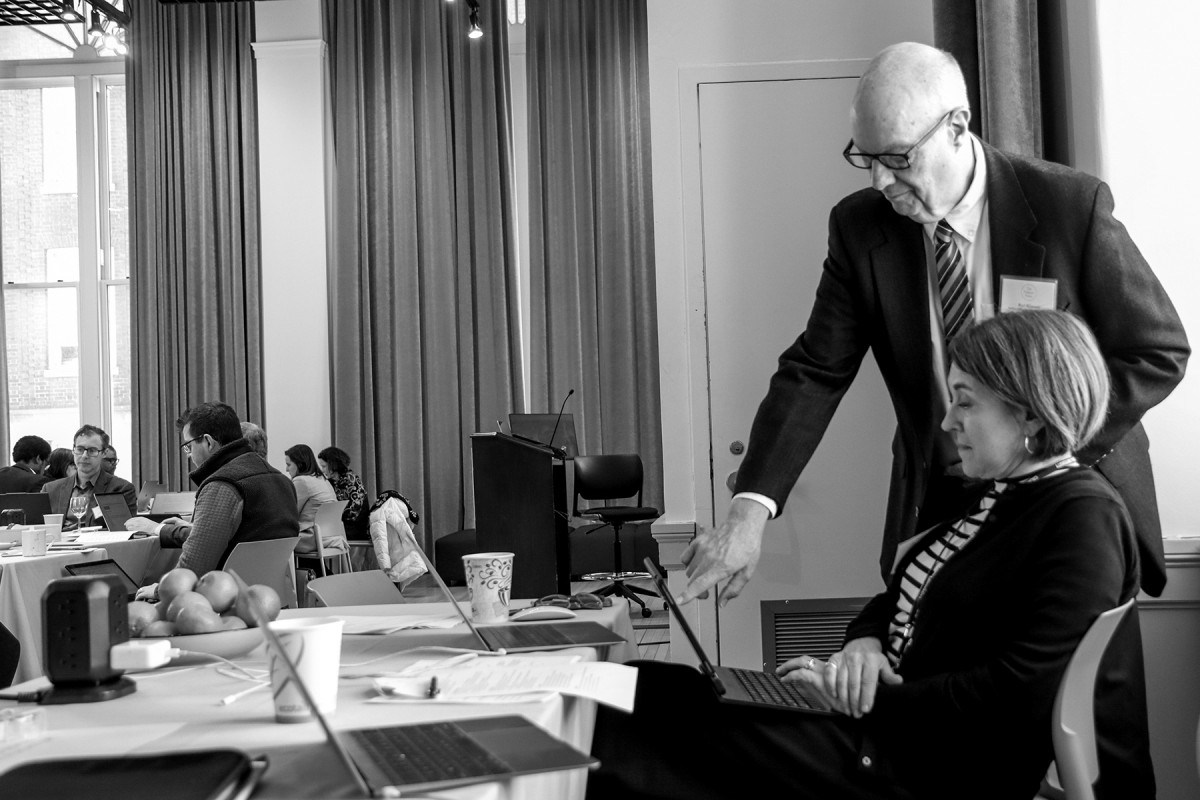
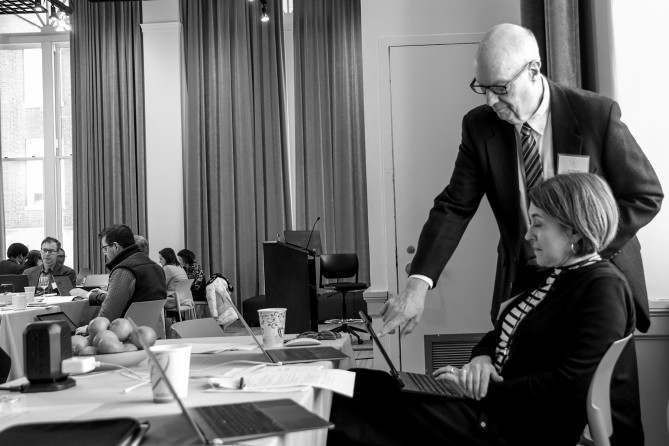
Kliment (standing) and Miller reviewed the status of various categories. Throughout the meetings, they were in constant contact with Senior Manager Sean Murphy (temporarily stationed in a self-described "Old Executive Office Building-style hideaway office" on Pulitzer Hall's fifth floor), who has served as the principal approver for all Pulitzer entries for the past decade. During the meetings, Murphy routed category changes and offered detailed briefings on potentially problematic entries to Miller and Kliment.
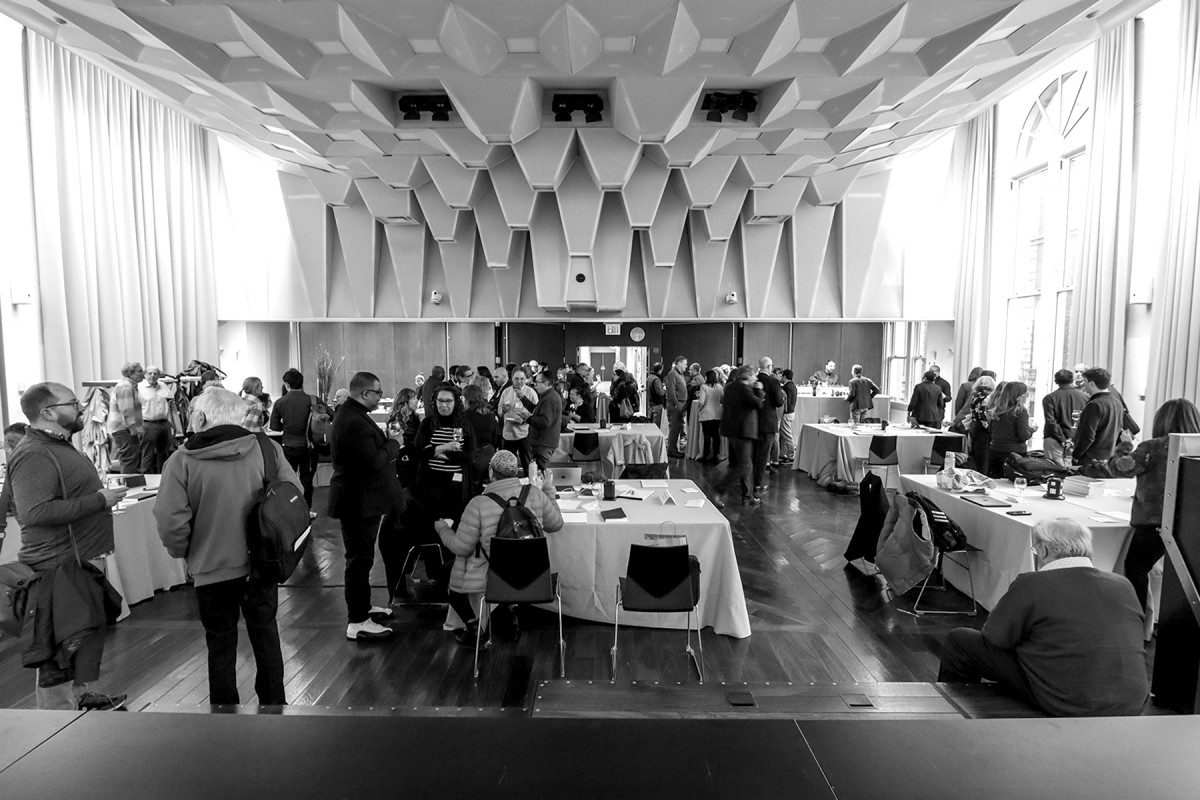
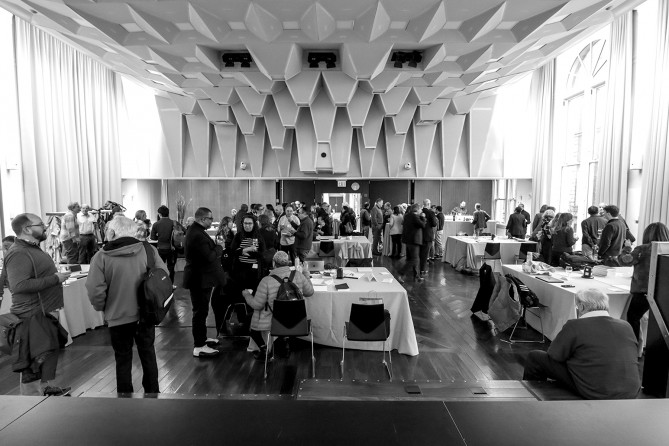
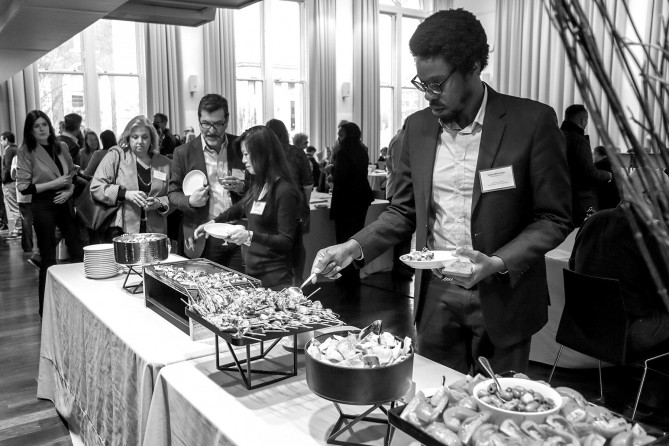
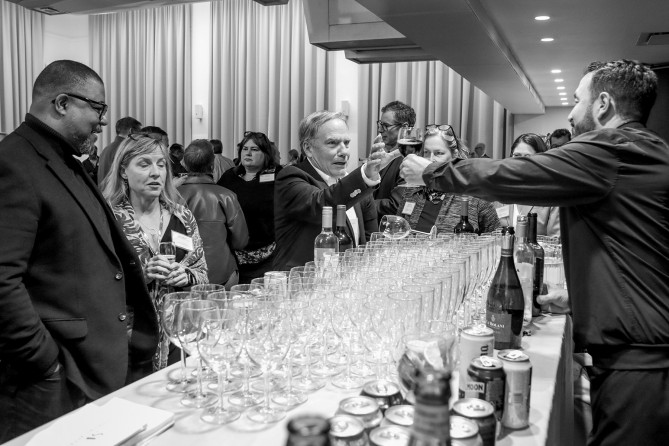
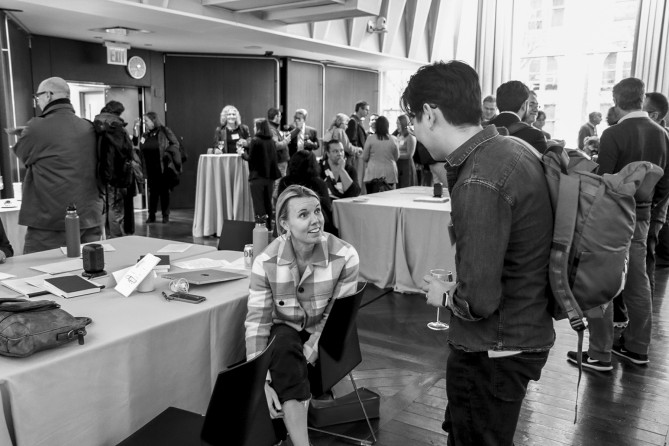
Following the first day of judging, jurors gathered for a festive reception in the Lecture Hall.
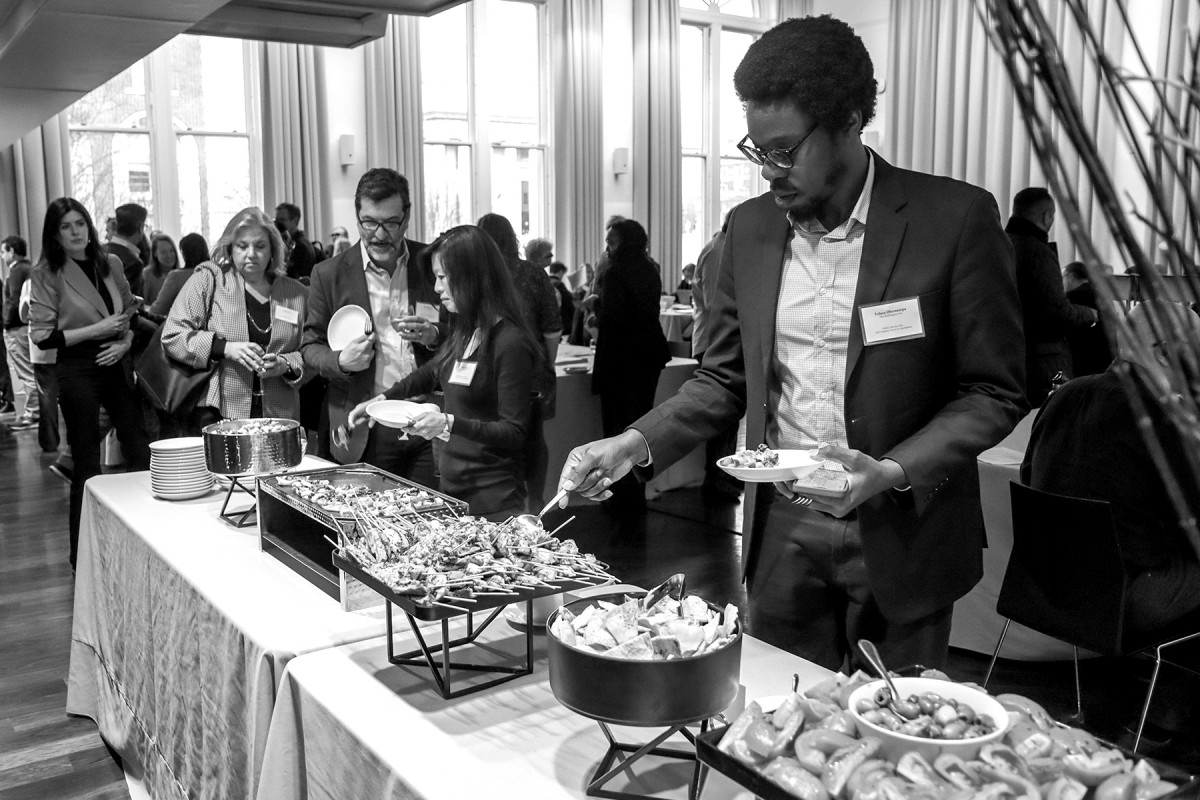
Toluse Olorunnipa helped himself to food during the reception.
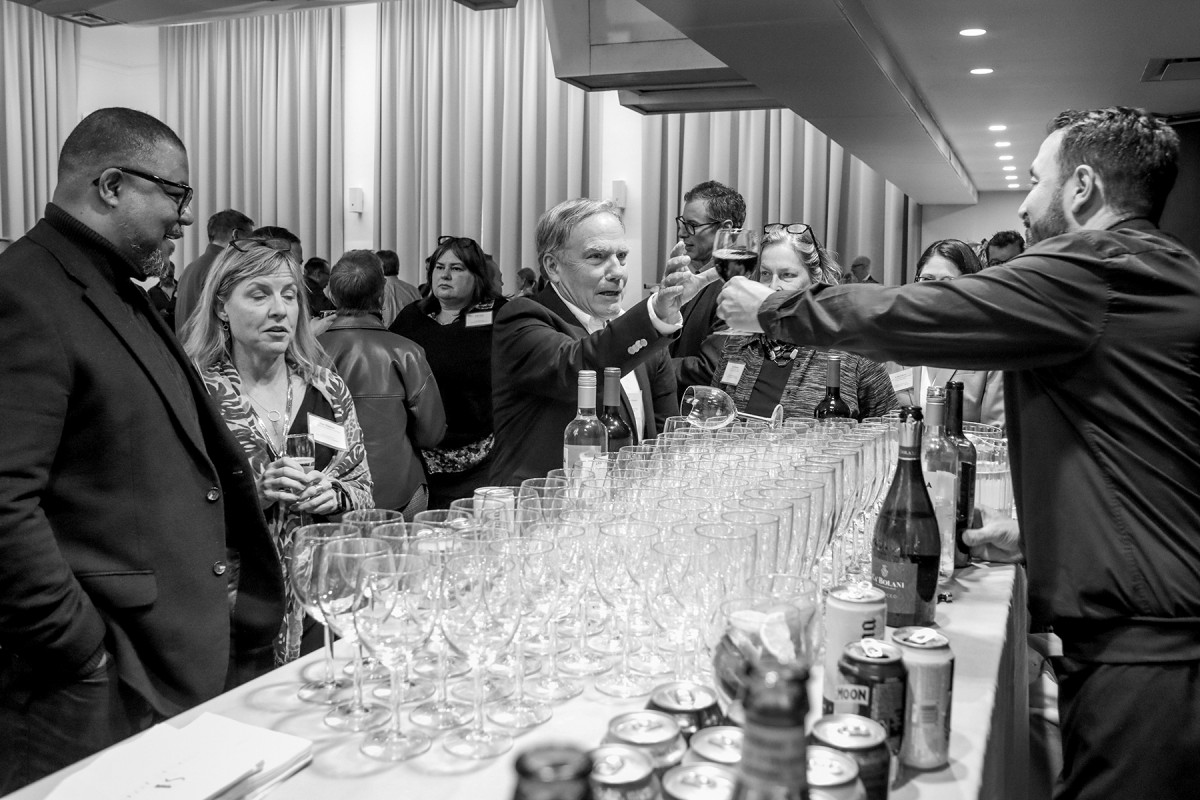
Beer and wine also were served at the reception.
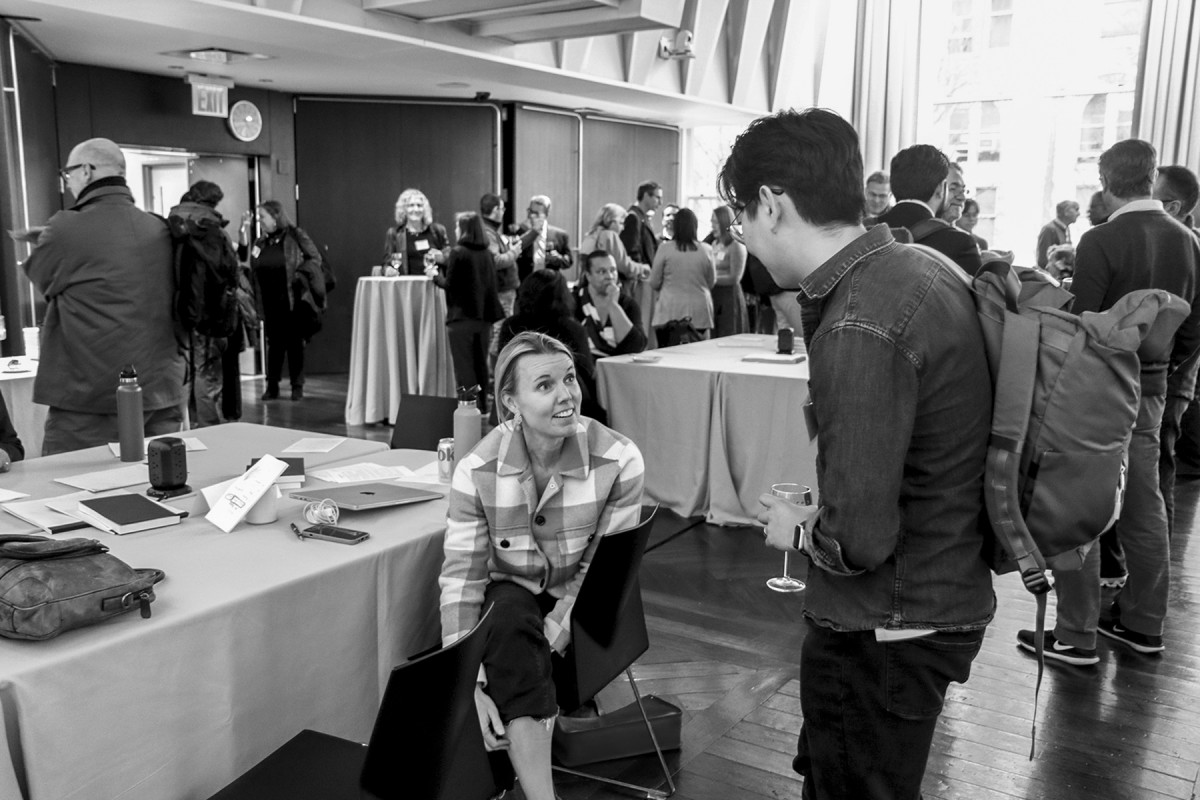
Criticism juror Anne Helen Petersen (sitting) chatted with Audio Reporting juror Nicholas Quah during the reception.
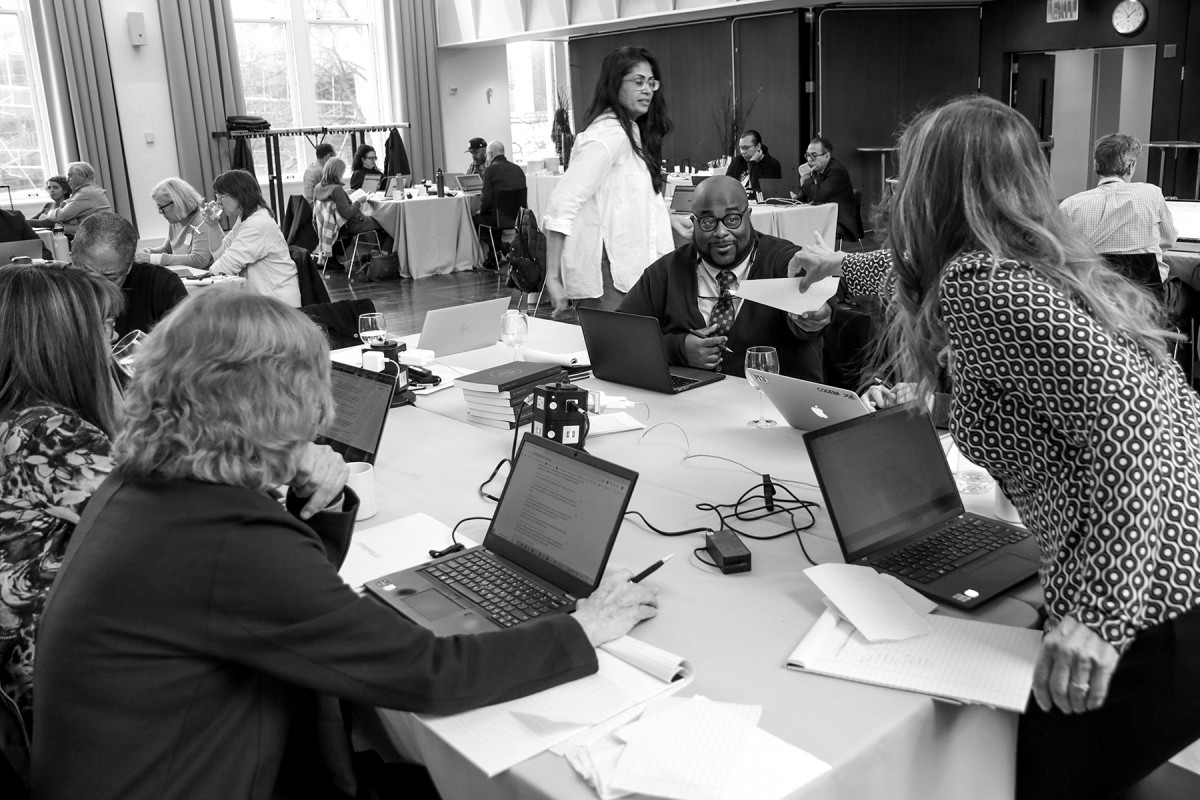
Amy Driscoll reached for a ballot as members of the Commentary jury voted on their final choices to advance to the Pulitzer Board’s consideration.

The hands of International Reporting juror Azmat Khan were a blur as she typed part of her committee's report to the Pulitzer Board.
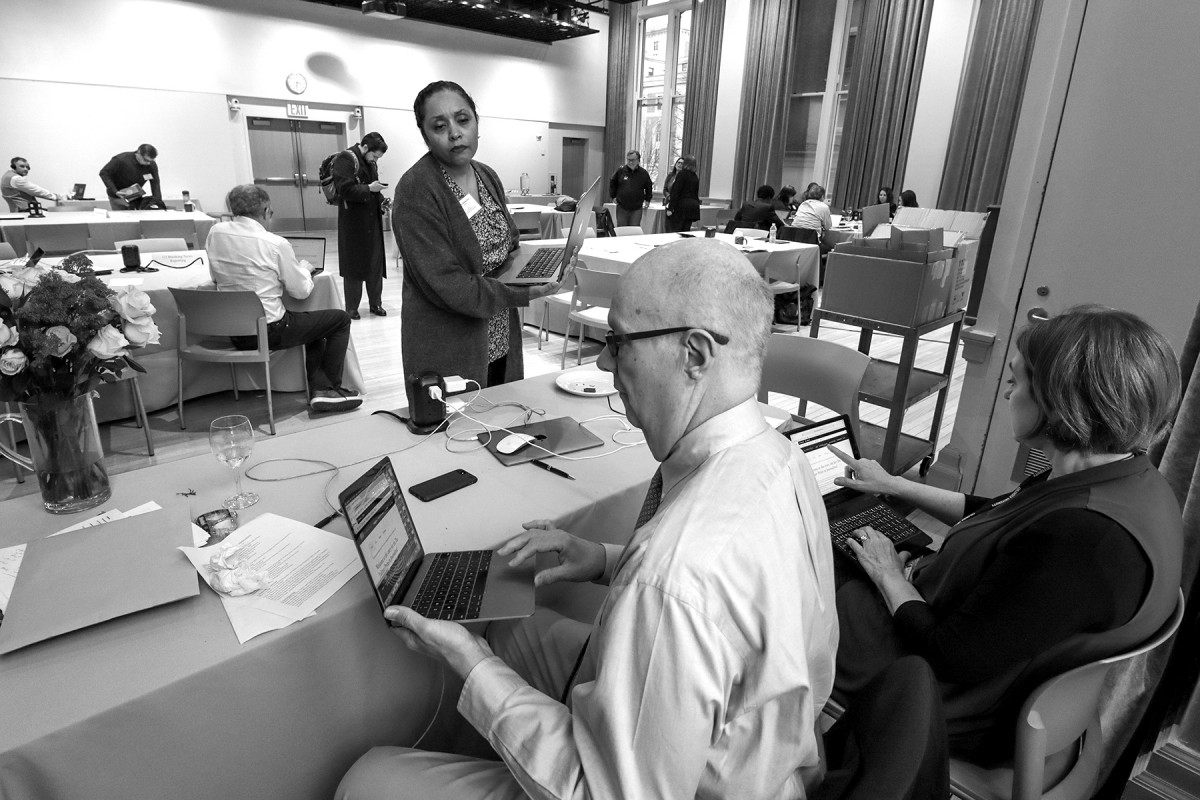
Rochell Bishop Sleets waited for Miller and Kliment to confirm receipt of the Local Reporting jury report.

Sleets worked with CUIT Associate Director Ivan Lozuk (the lead developer of the Pulitzer entry site and the main liaison for technological issues for the duration of the meetings) to ensure the report was properly finalized.
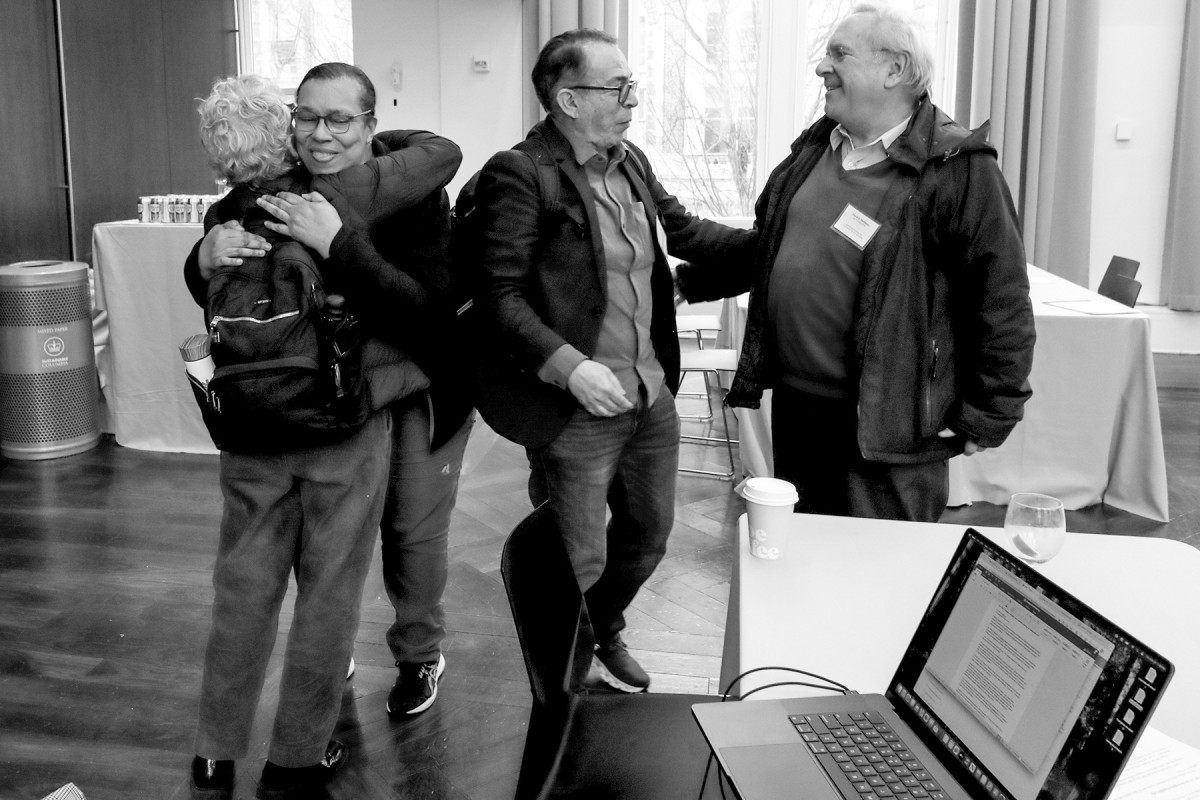
Susan Chira (back to camera) was embraced by Patricia Weems Gaston as Alfredo Corchado said farewell to David E. Hoffman. All were members of the International Reporting jury.
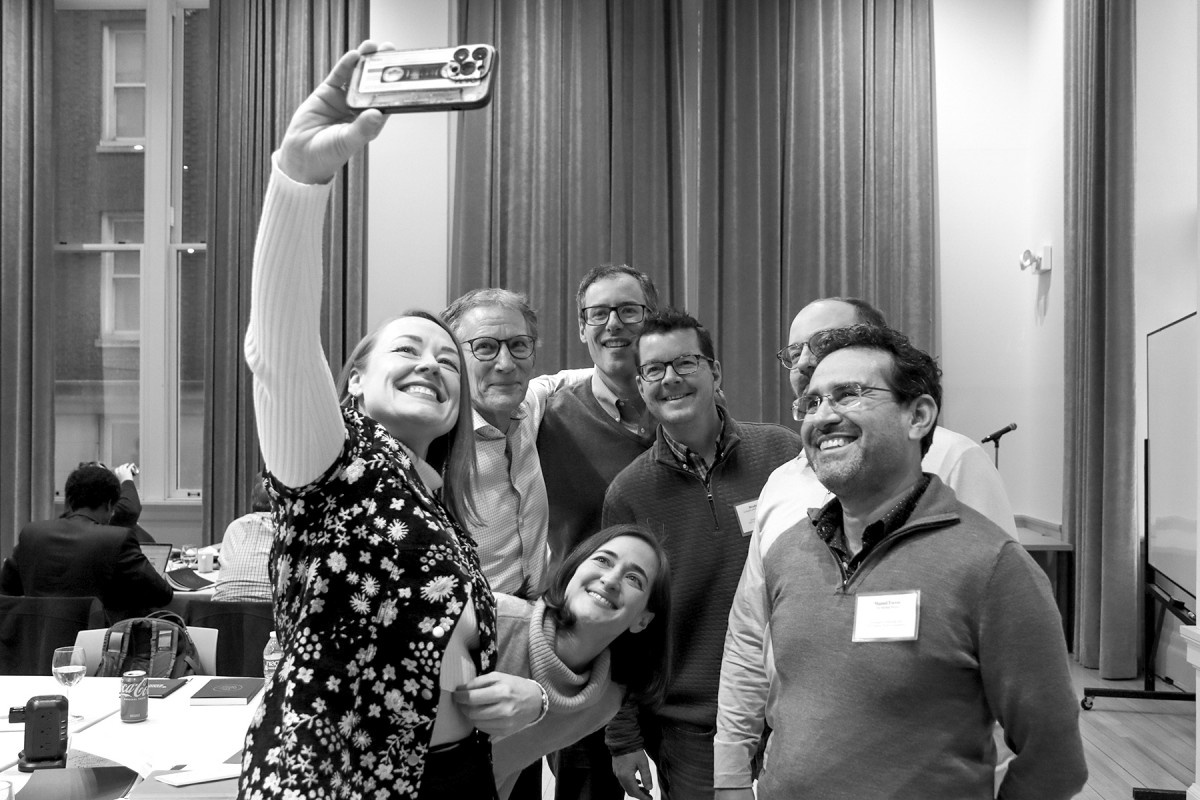
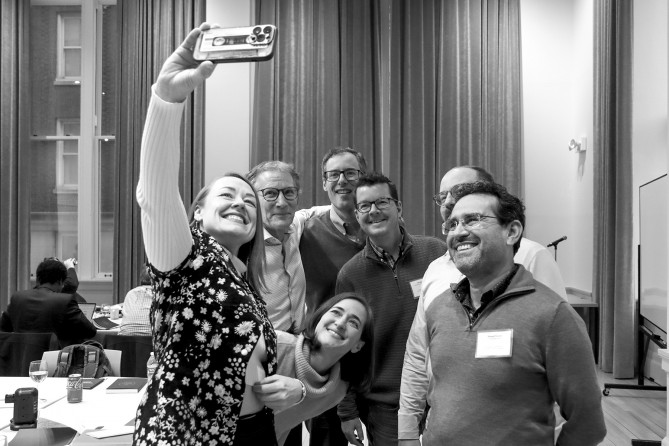
The Investigative Reporting jury posed for a selfie at the end of the second day of judging. Left to right: Lauren McGaughy, Alexandra Zayas, Douglas M. Foster, Zachary Mider, Brody Mullins, Adam Ganucheau and Manuel Torres.
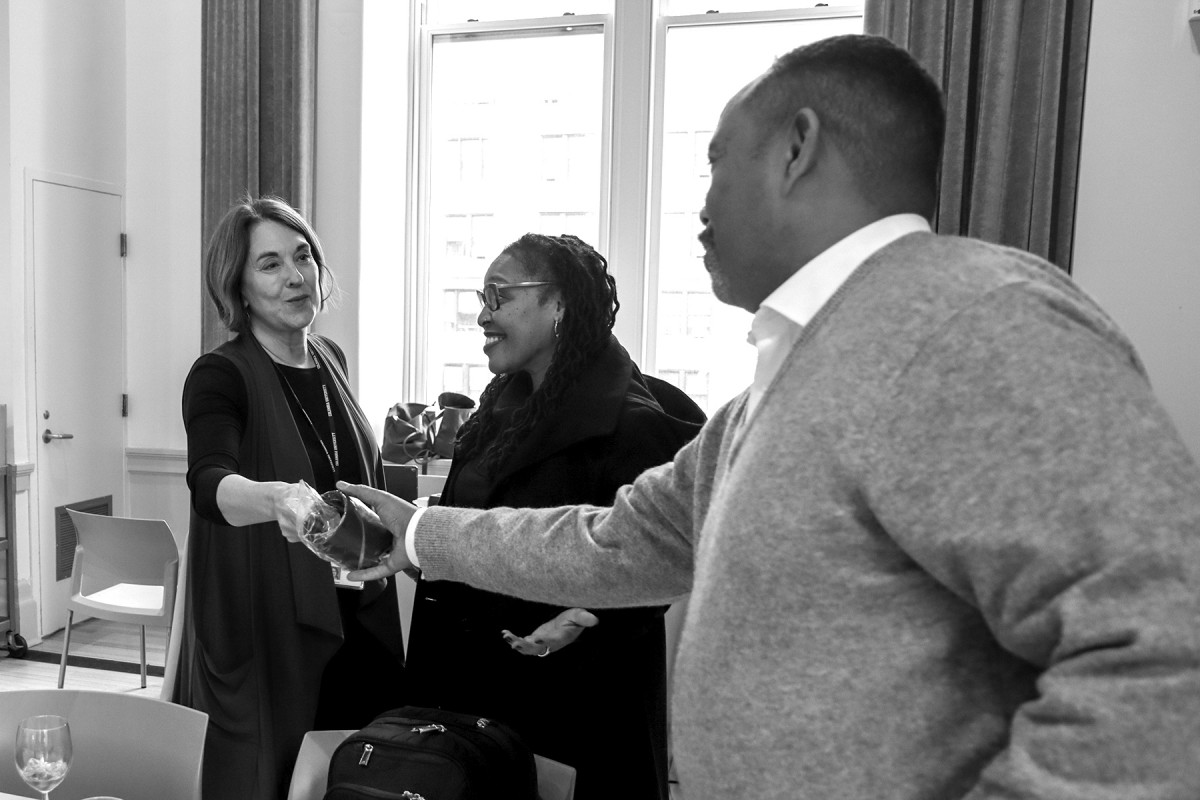
Miller handed Battinto L. Batts Jr. a commemorative Pulitzer Prize coffee mug as Karen Hawkins looked on.
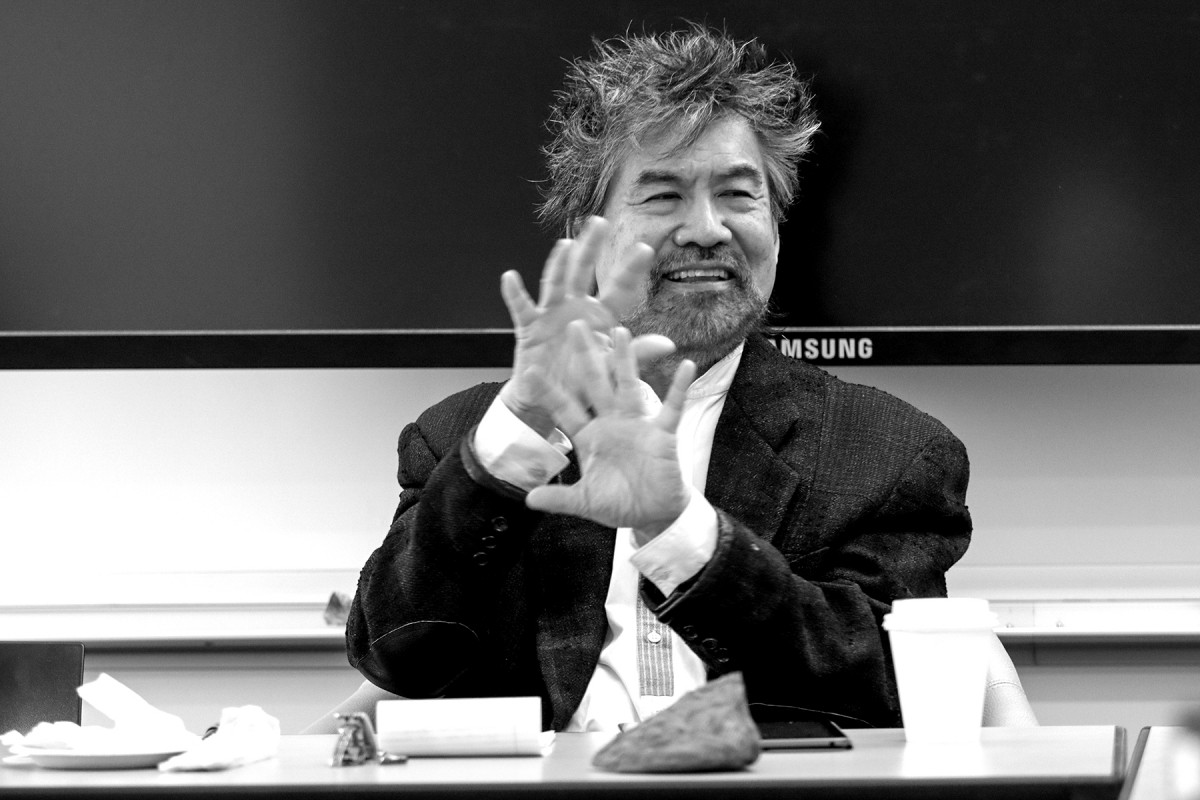
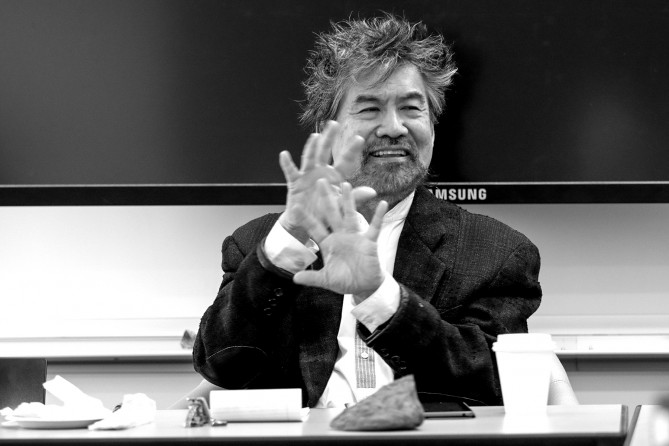
After reviewing playscripts for weeks following the January 3 deadline (with the caveat that they could not vote until their physical meeting), the Drama jury convened at a conference room at Columbia in March. Here, Drama Chair David Henry Hwang gestured as he discussed an entry.
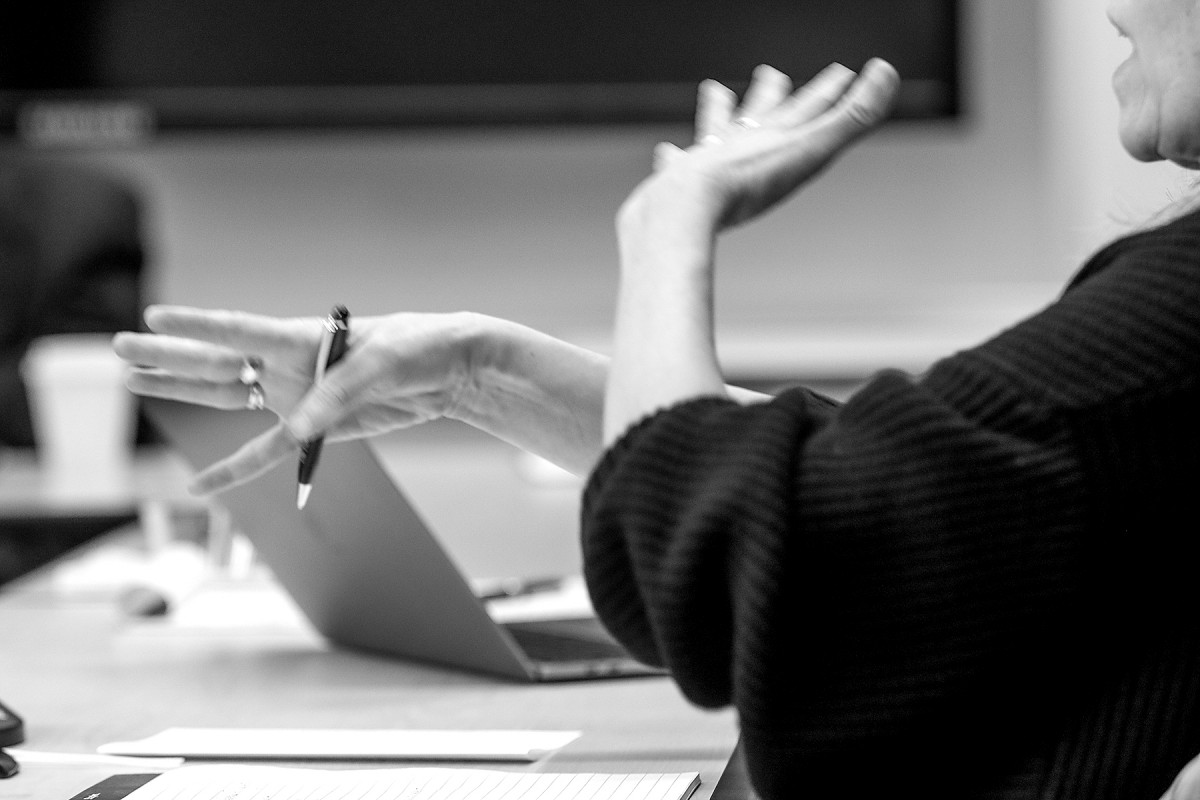
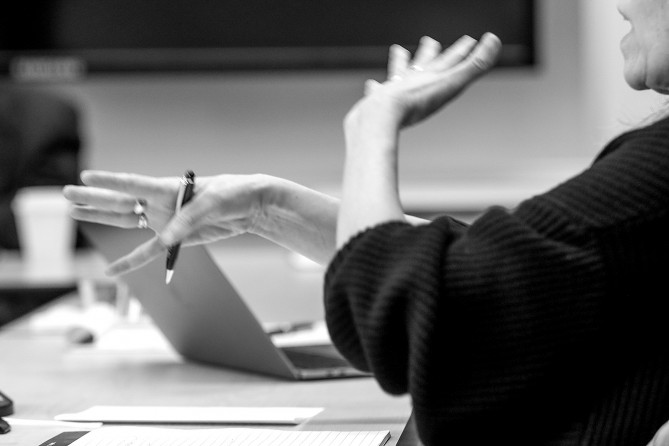
The hands of Rebecca Gilman cut through the air as she expressed her opinion concerning a work under discussion.
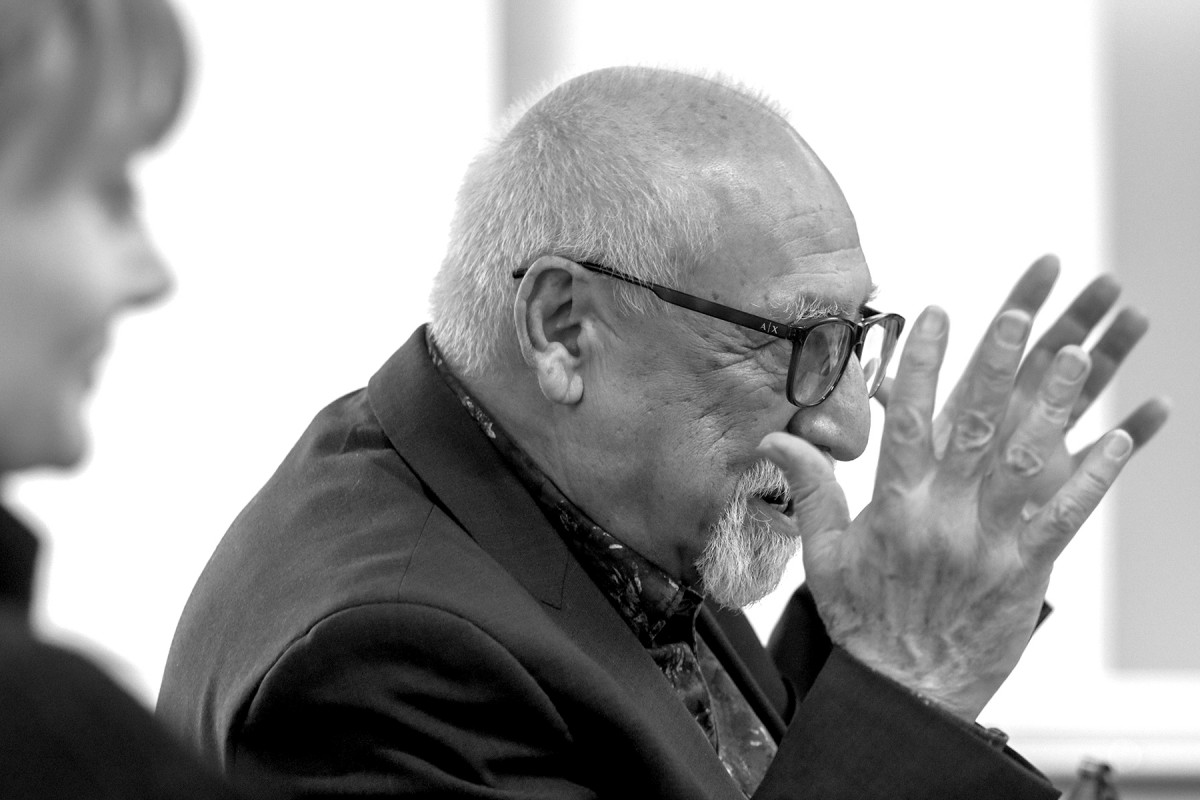
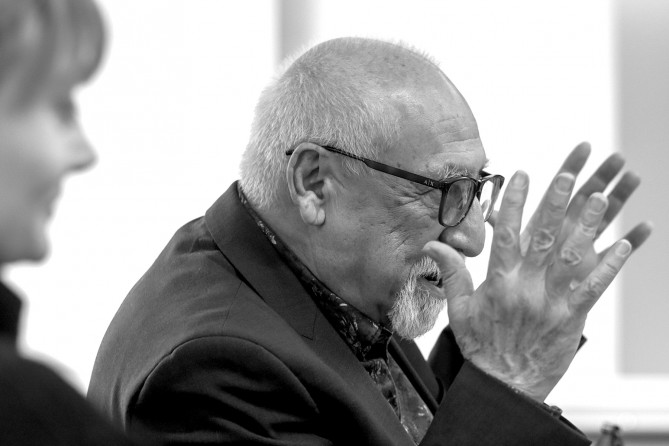
José Luis Valenzuela offered his thoughts on an entry during the discussion.
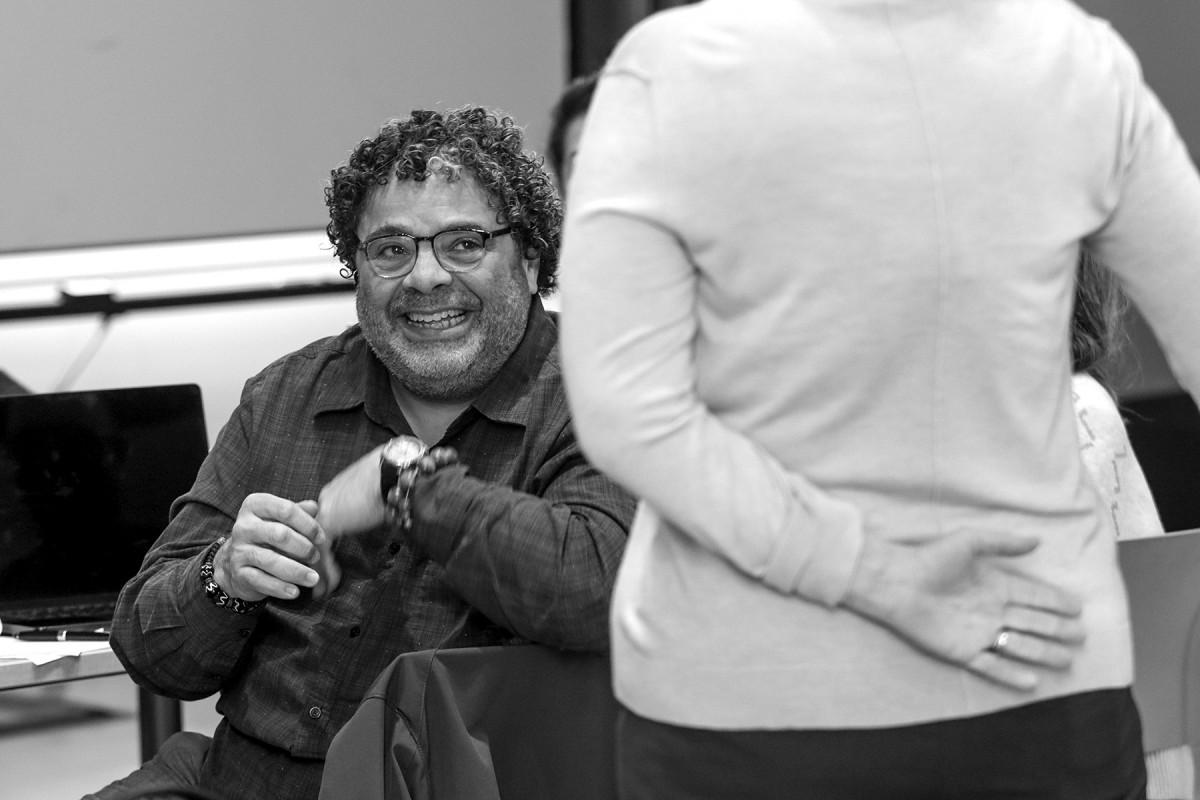
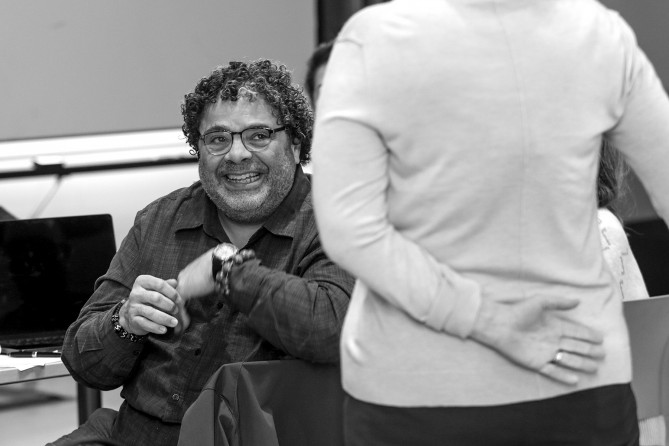
Shortly thereafter, the Music jury met under analogous circumstances at the World Room for a two-day meeting centered around close listening. Category Chair Arturo O’Farrill smiled at Miller as she and Kliment checked in on the panel.
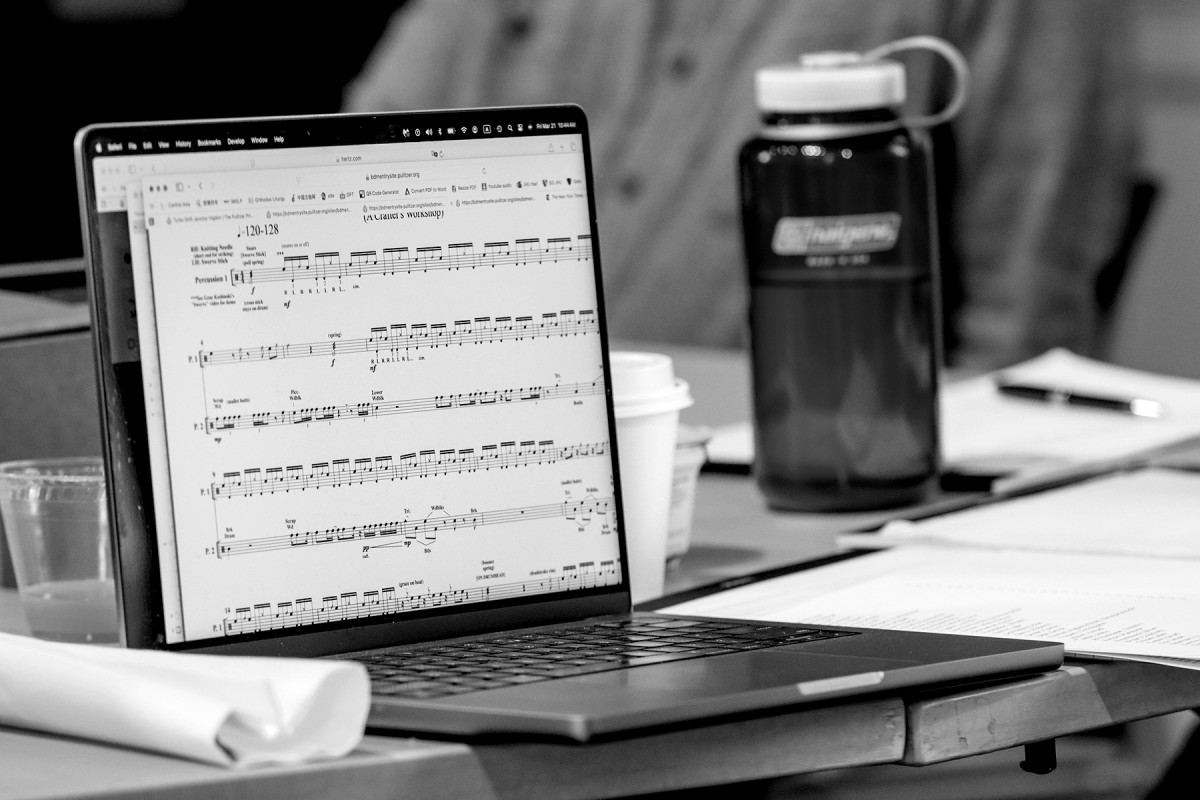
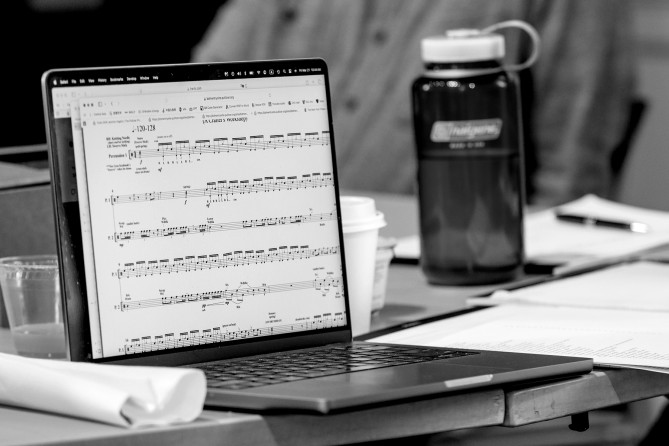
A score reviewed by the jury. Although not required as a component for a Music entry for some time, they can play an integral role in elucidating a composer's intentions in certain forms.
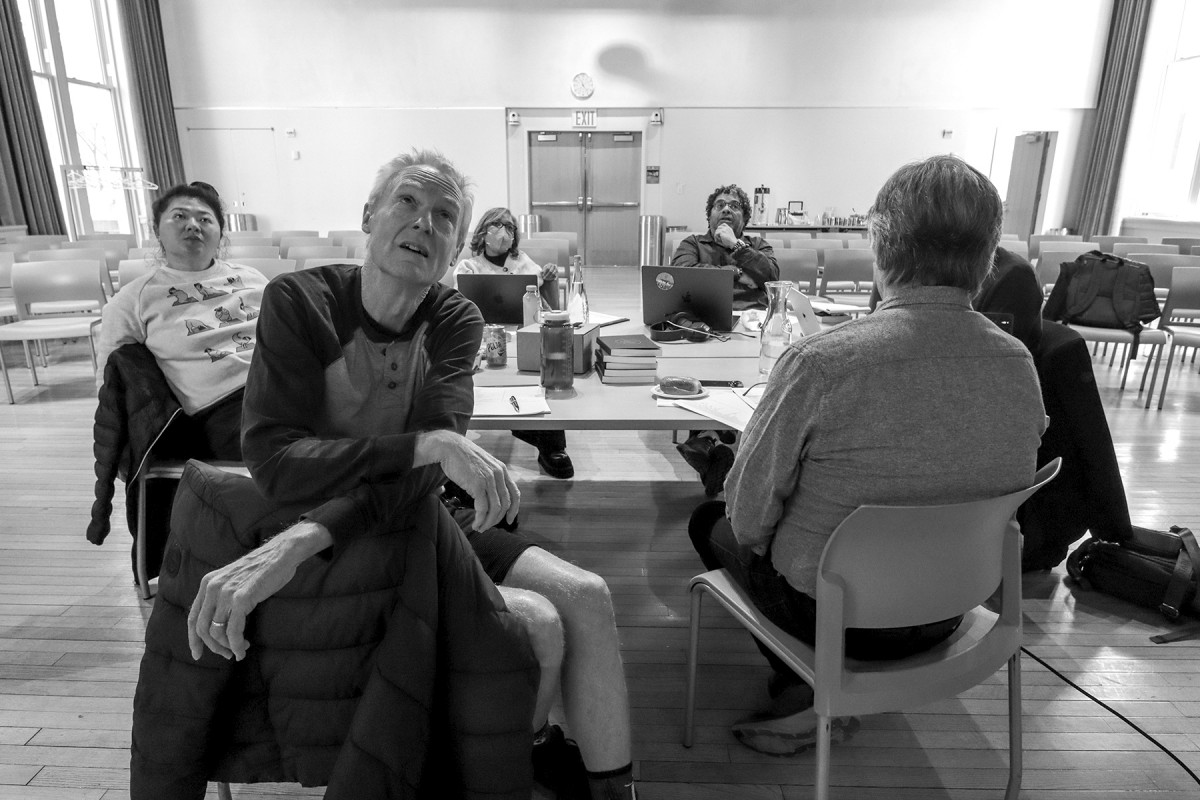
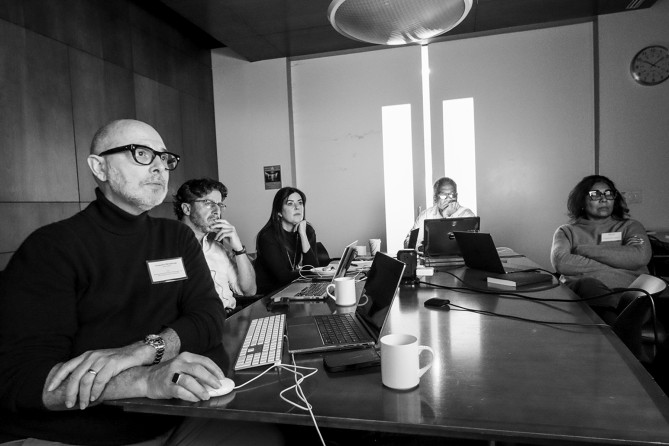
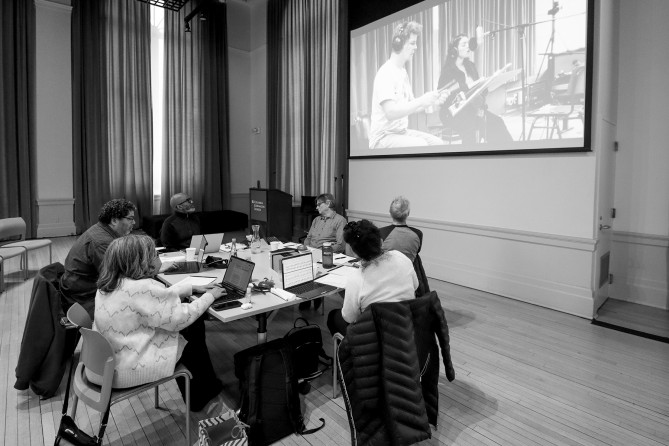
Music jurors (left to right) Du Yun, John Schaefer, Daphne A. Brooks and Arturo O’Farrill looked up at the screen as they listened to an entry that was under consideration.
Facing the door (at right) is Terry Pender, an eclectic composer, performer and musicologist (long affiliated with Columbia's Music Department) who has administered the more specialized aspects of the Music Prize process as Music Secretary for three decades. Prior to the Music jury meetings, entries receive multiple rounds of vetting from Pender and Senior Manager Sean Murphy.
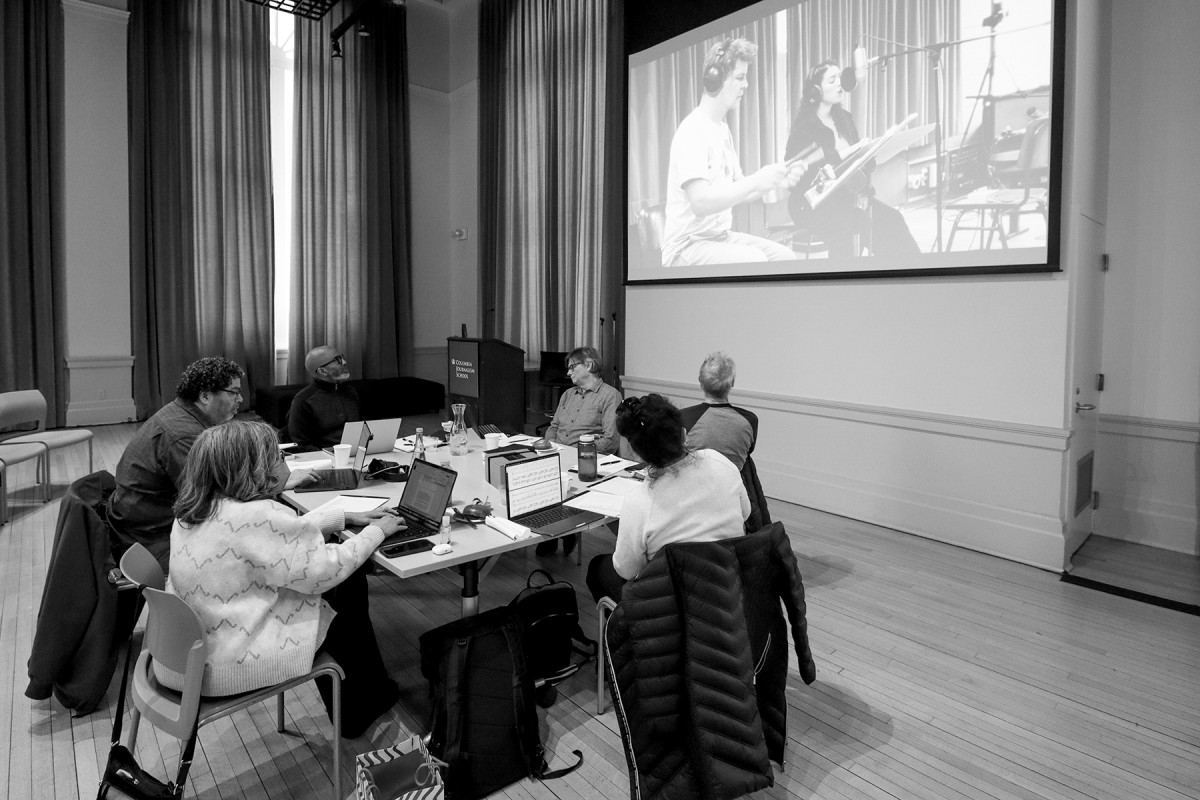
Pender and members of the Music jury reviewed an entry.

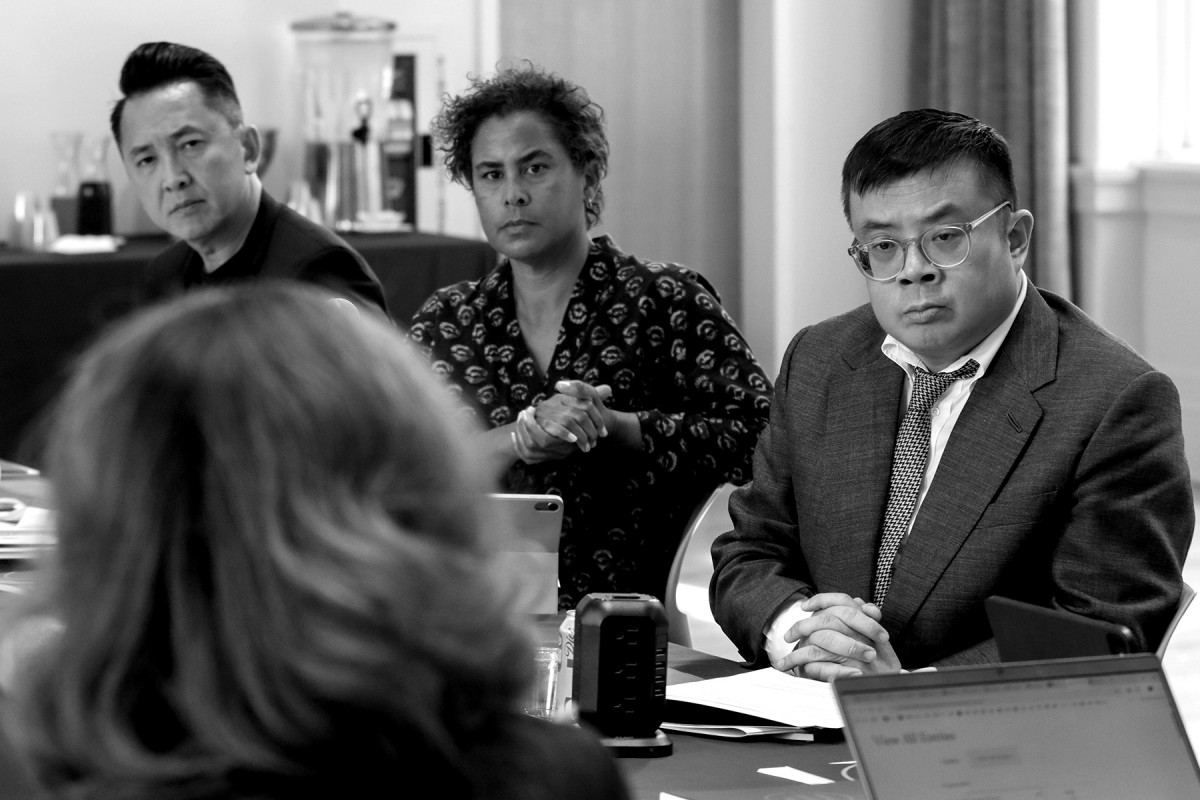
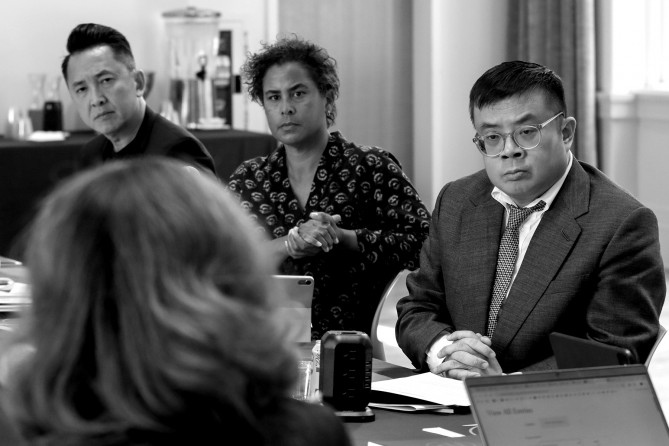
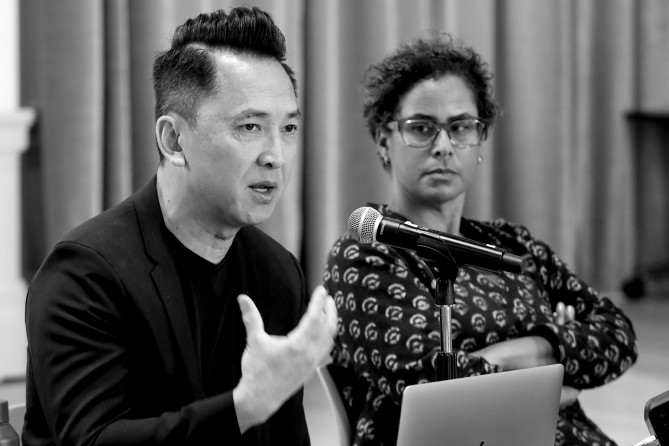
Board members (from left) Viet Thanh Nguyen, Kelly Lytle Hernández and Sewell Chan listened to a discussion.
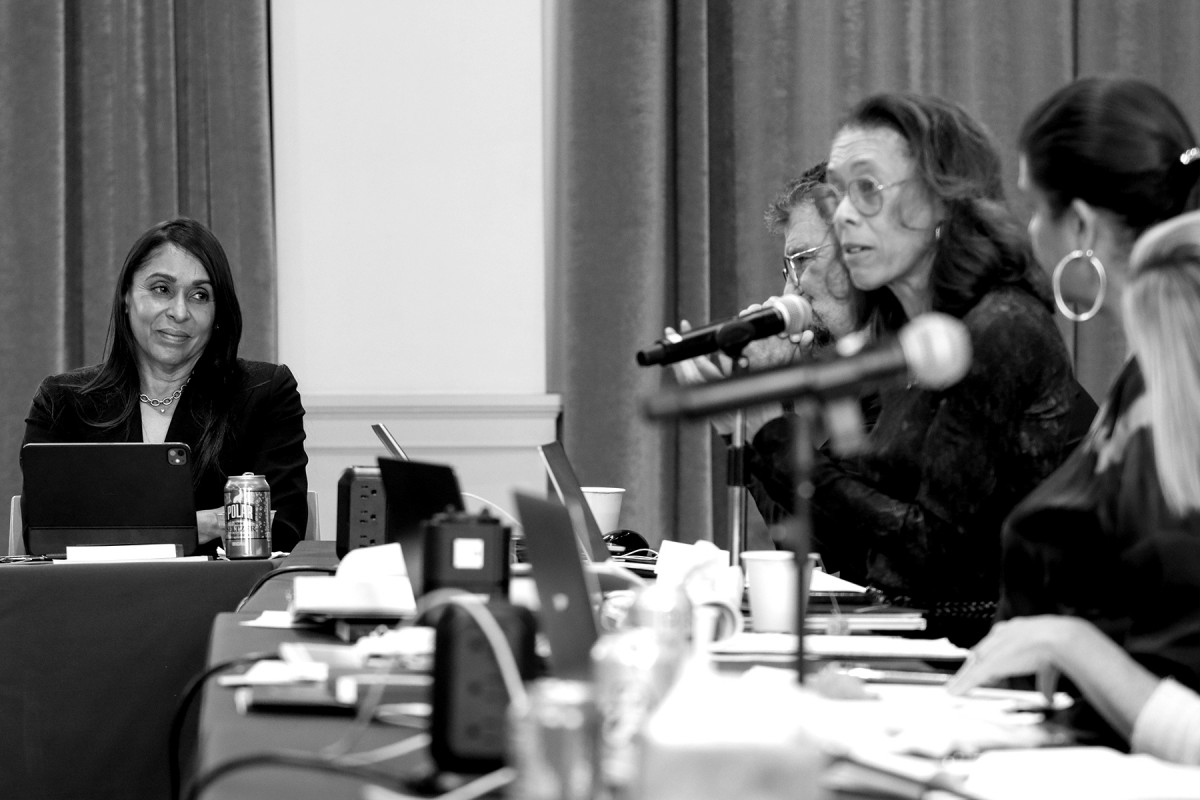
Natasha Trethewey (left) listened to Ginger Thompson (right foreground).
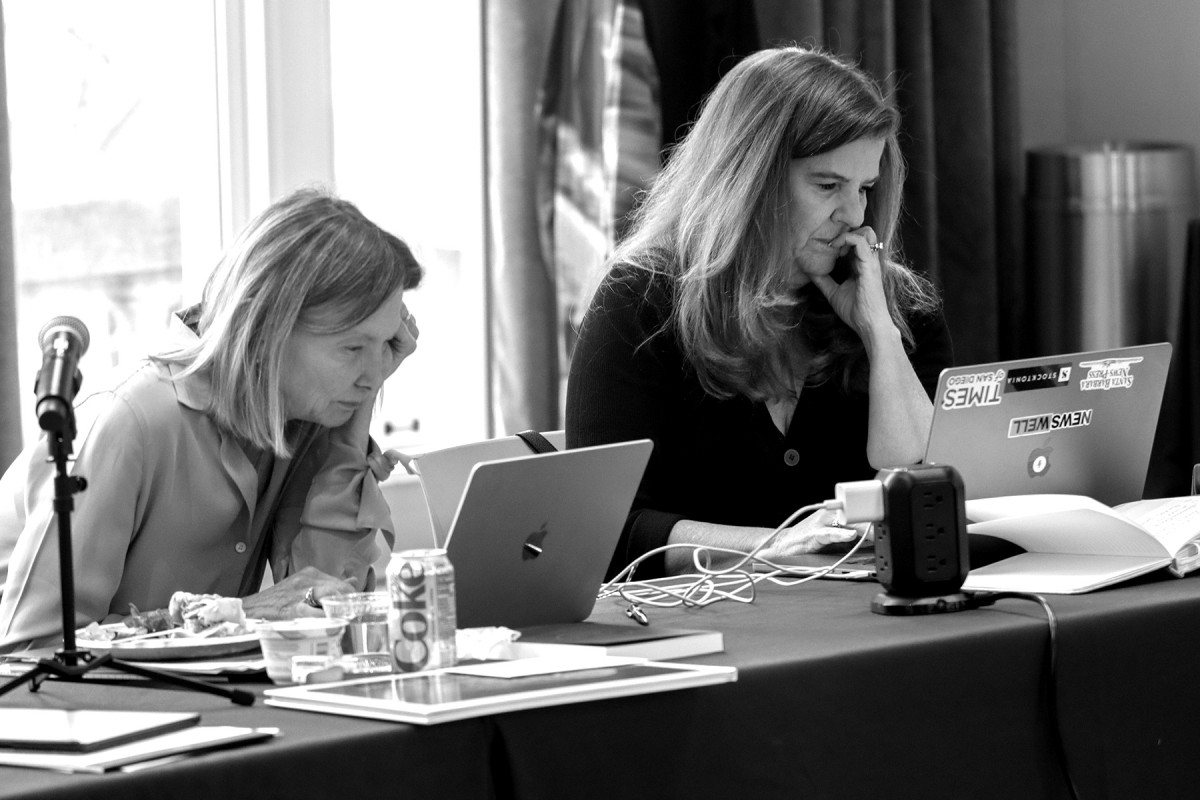
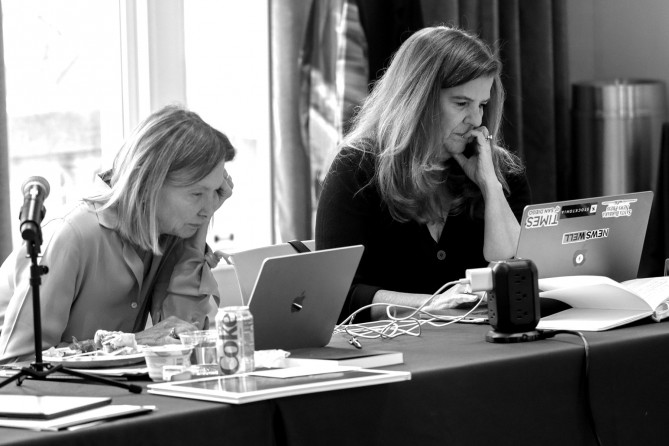
Nancy Barnes (left) and Nicole Carroll reviewed entry materials on their laptops.
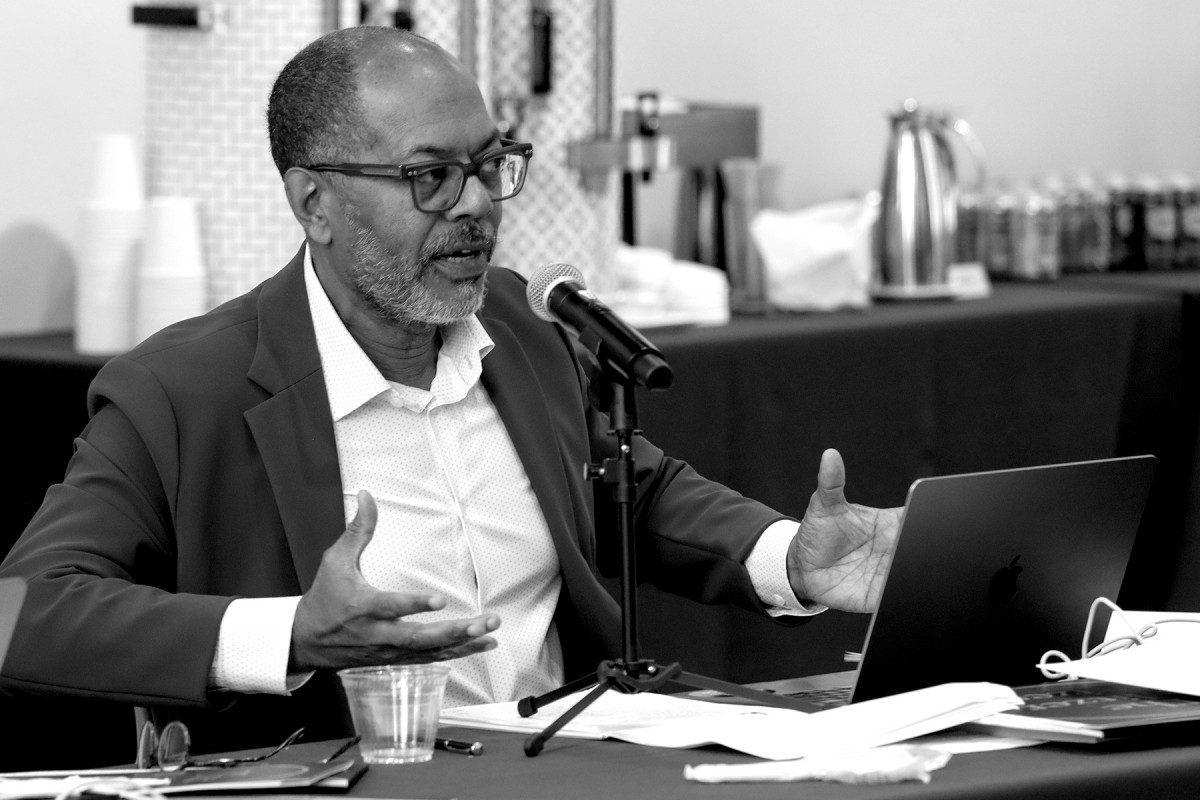
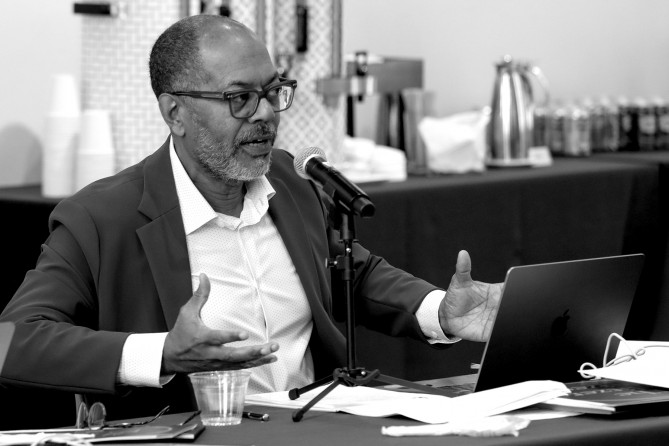
Kevin Merida commented on an entry.
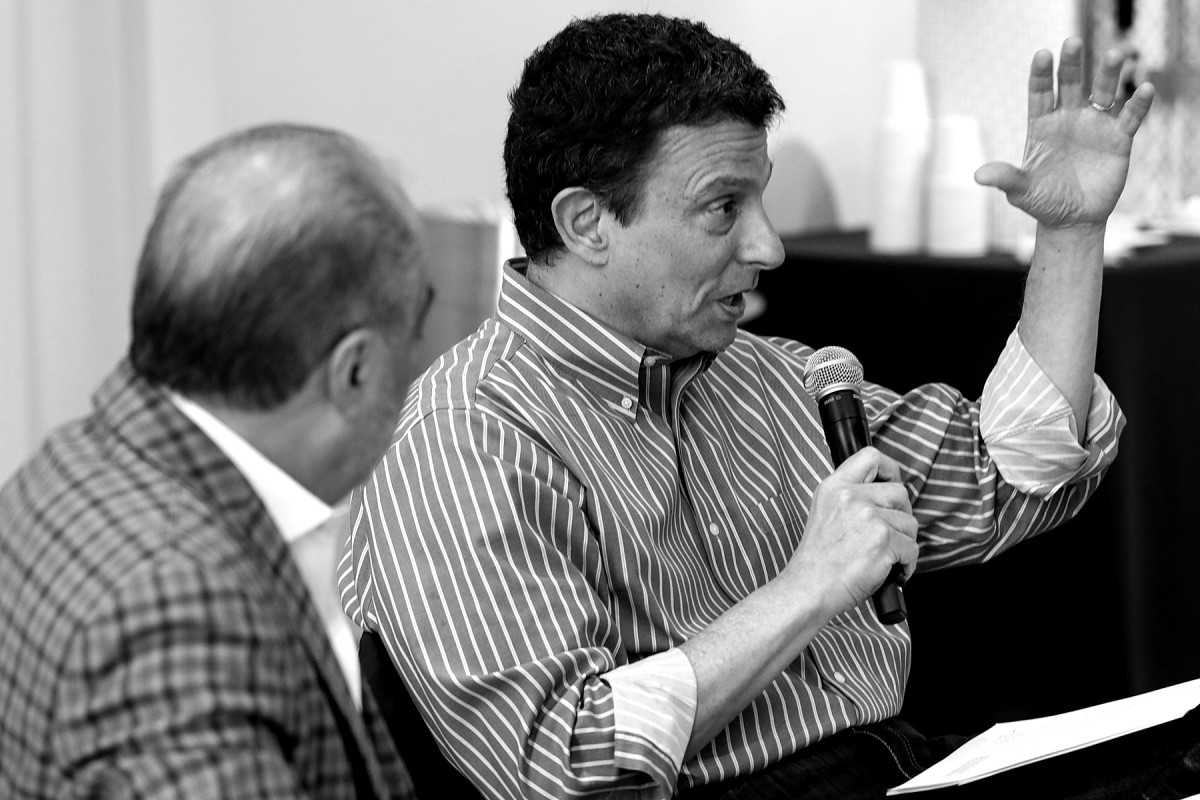
David Remnick (right) gestured during a discussion as Gabriel Escobar looked on.
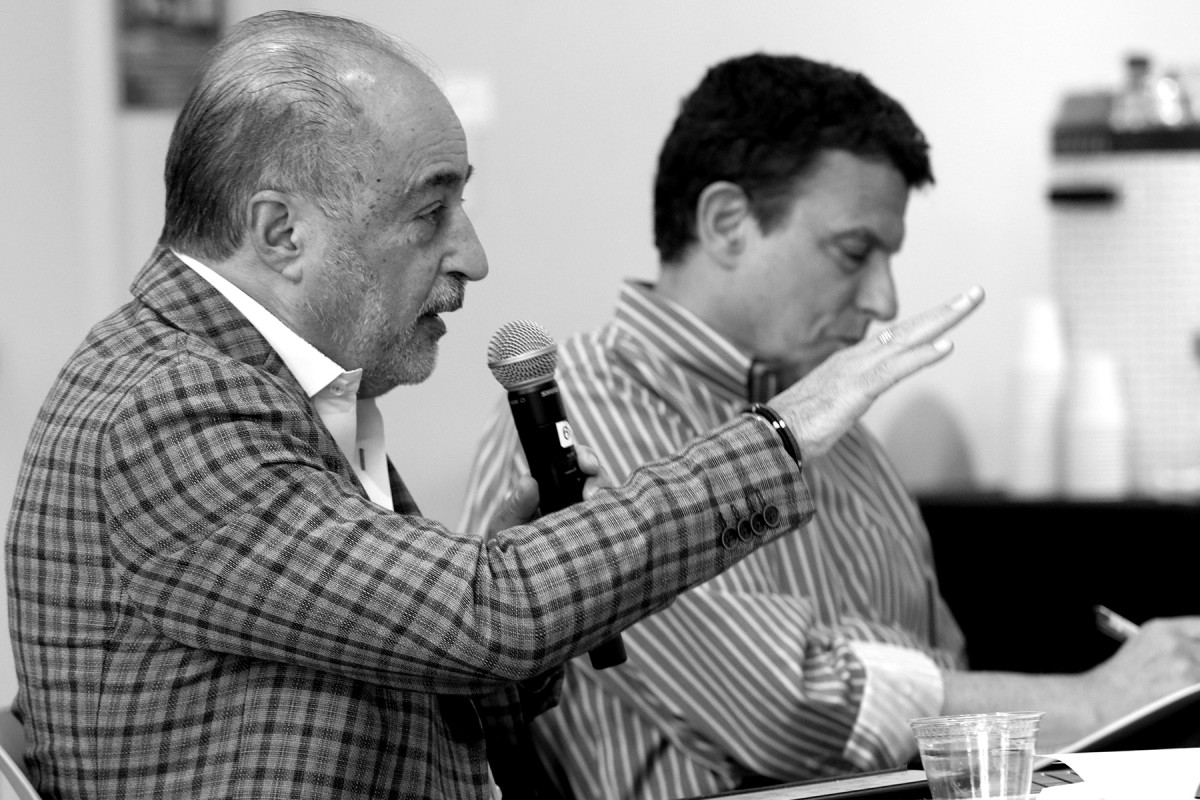
Escobar followed Remnick in the deliberations.
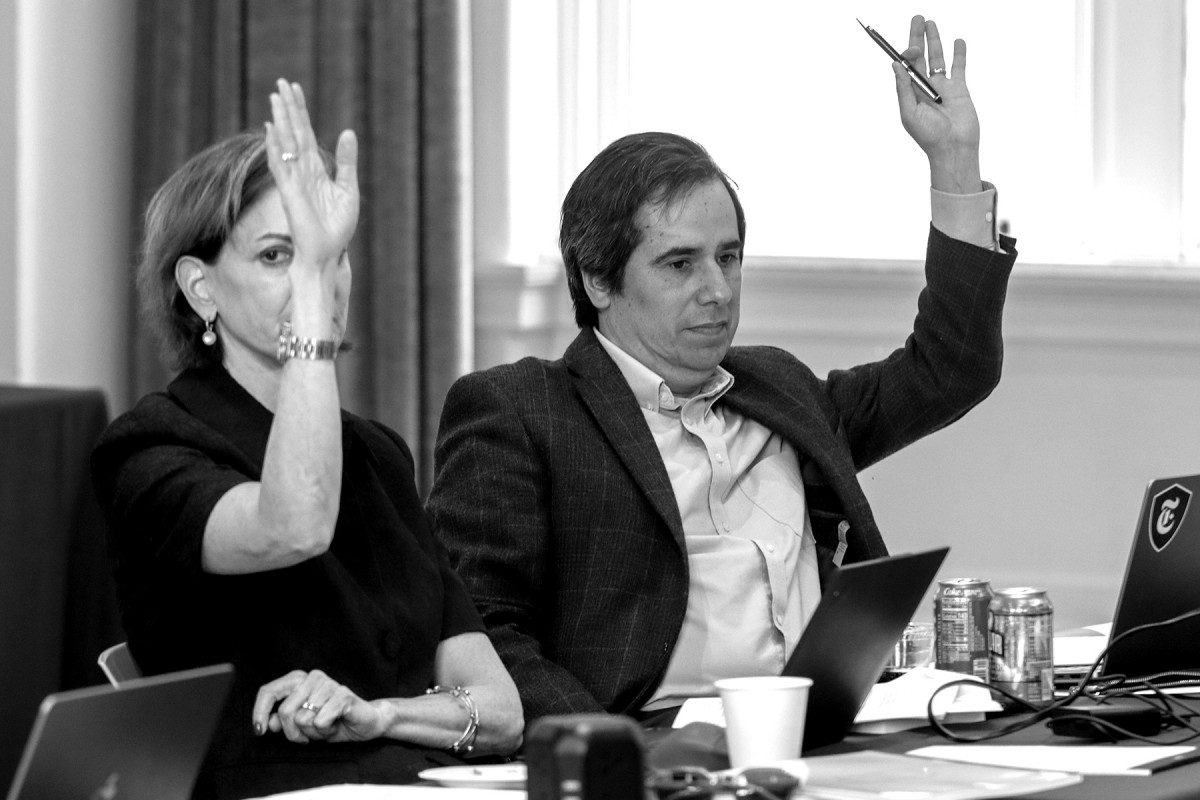
Anne Applebaum (left) and Carlos Lozada (right) voted on an entry.
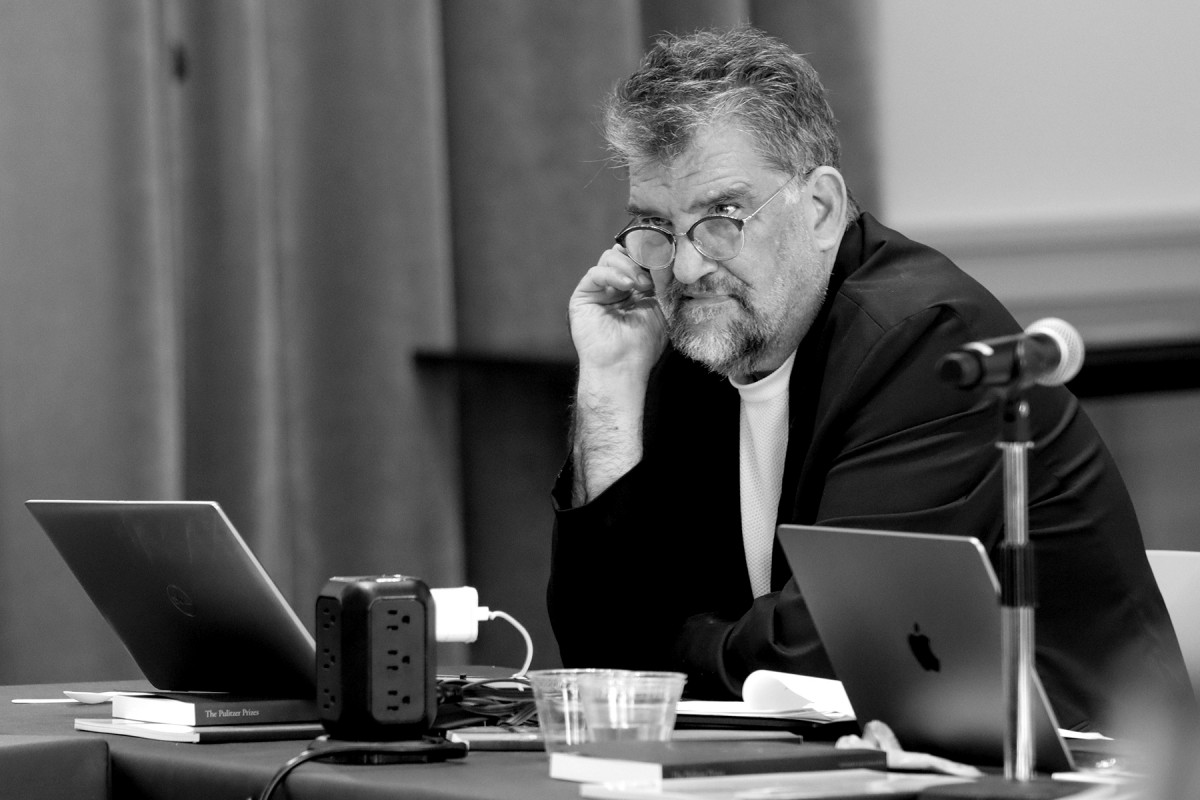
John Archibald listened to the deliberations.
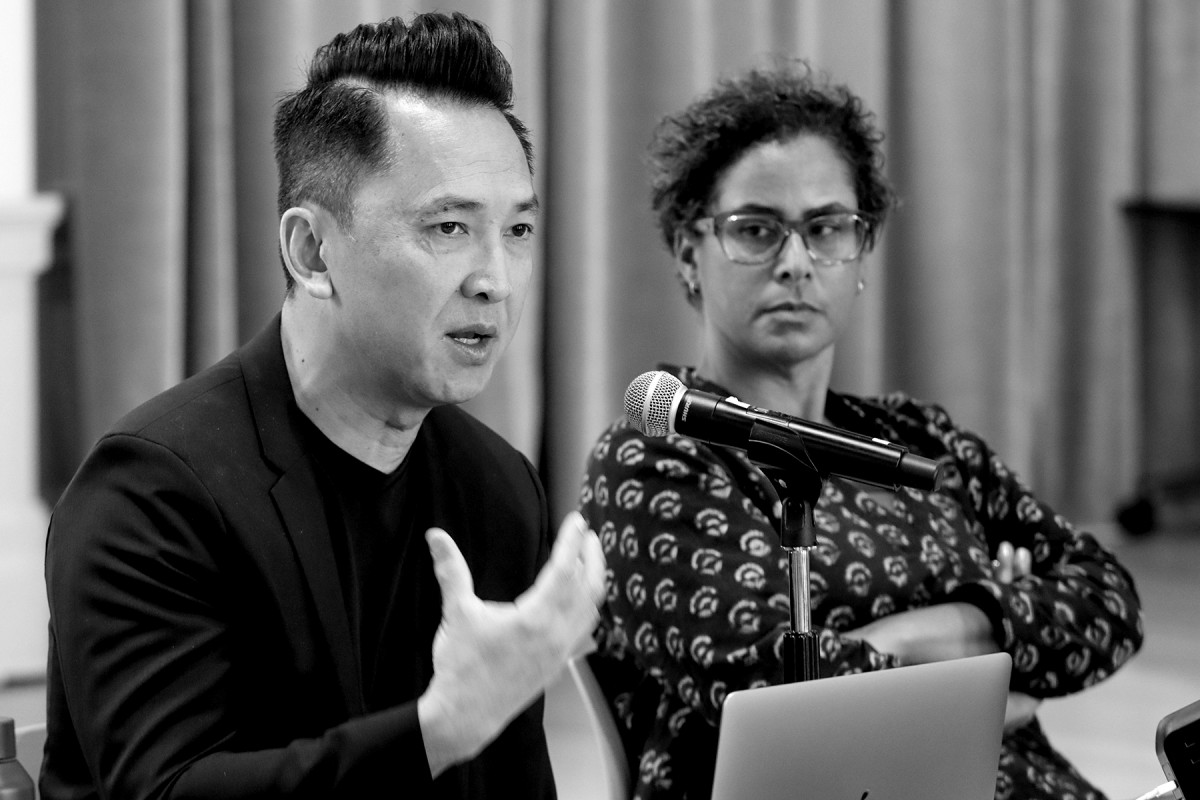
Nguyen commented on an entry as Lytle Hernández looked on.
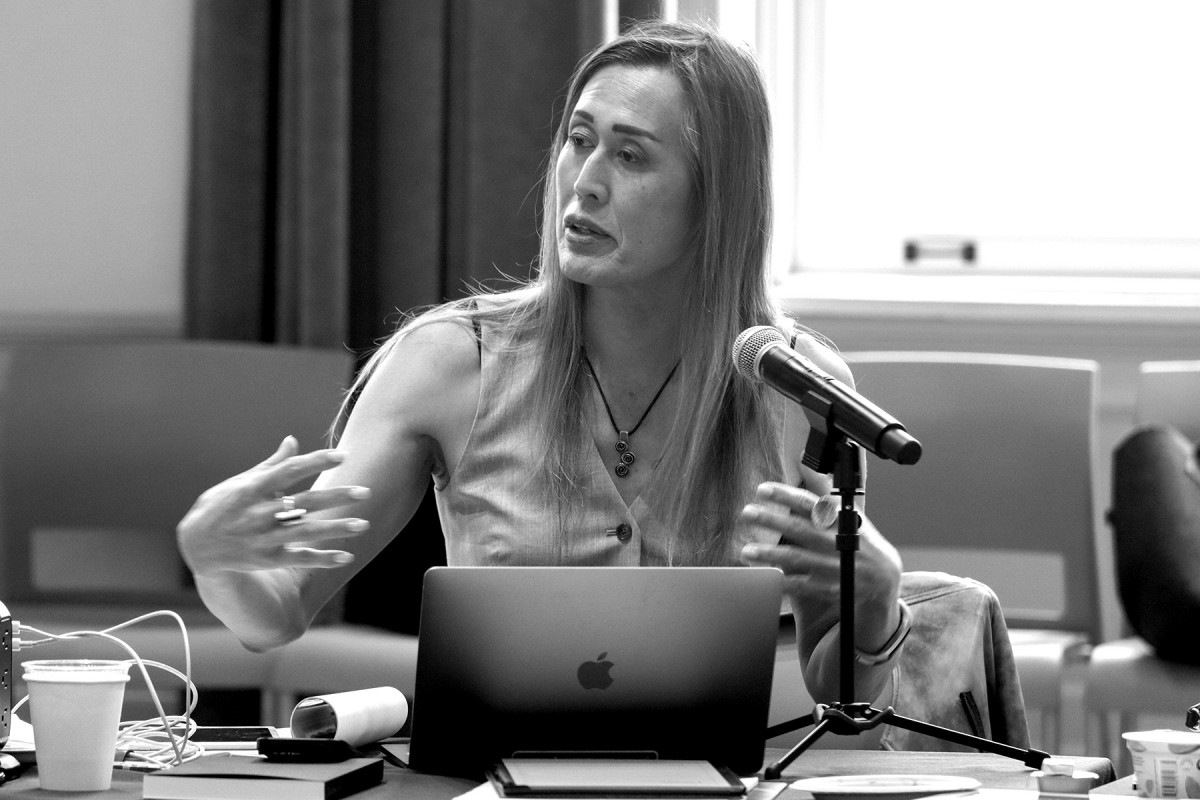
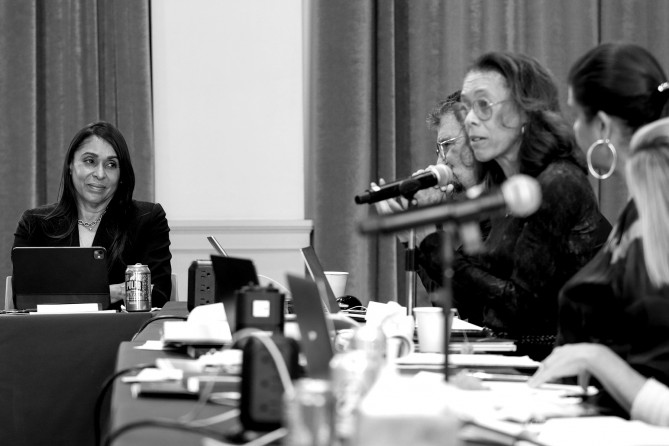
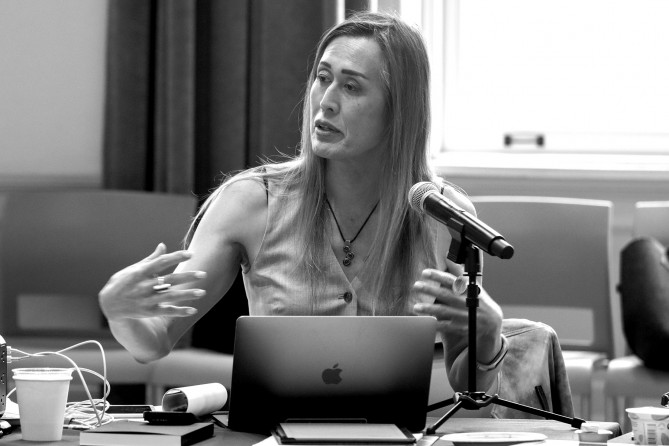
Gina Chua gesticulated as she commented on a nominated work.
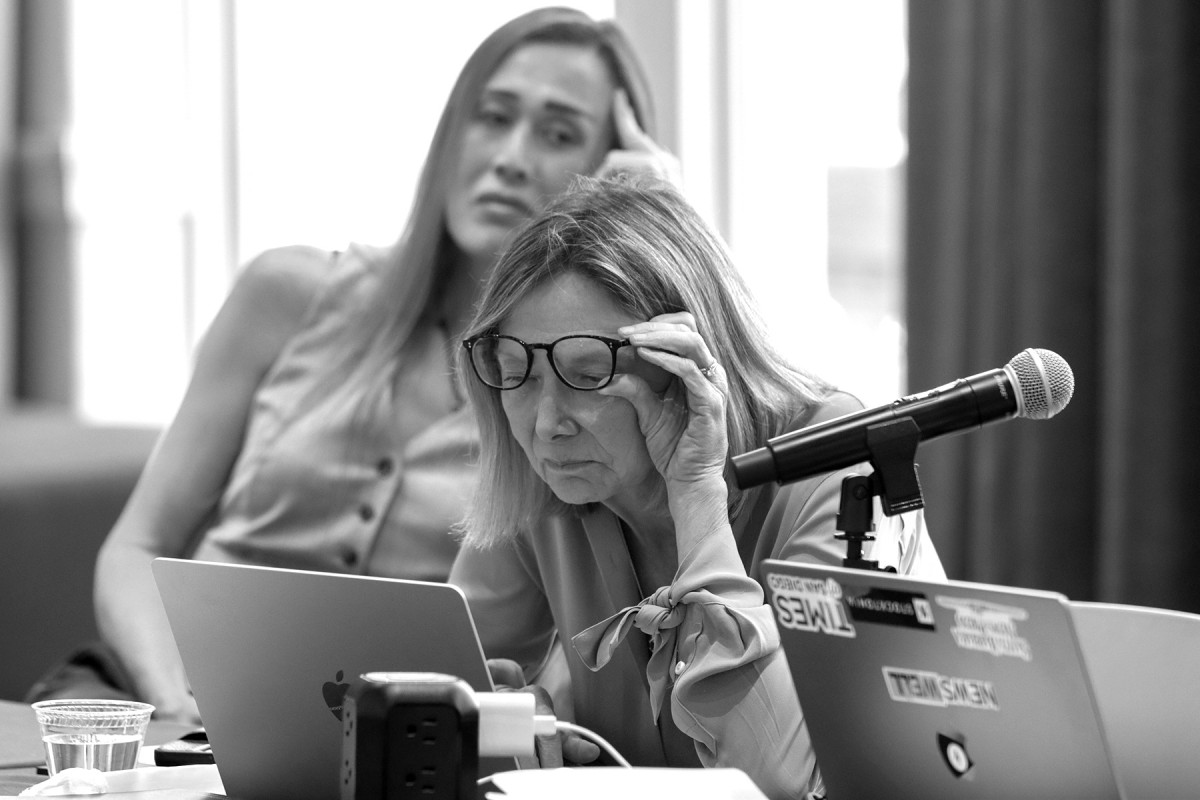
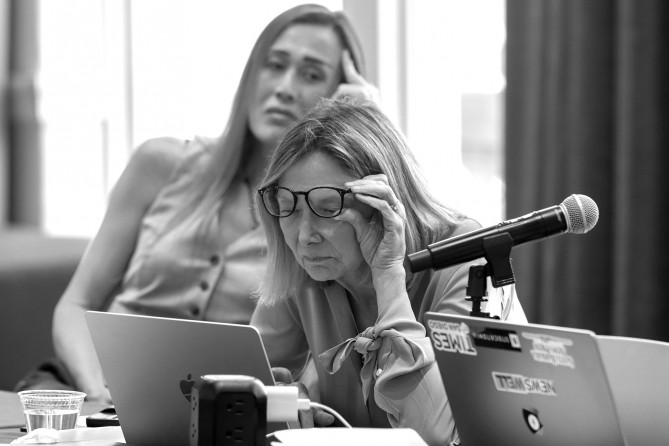
Barnes peered at her screen as Chua looked on.
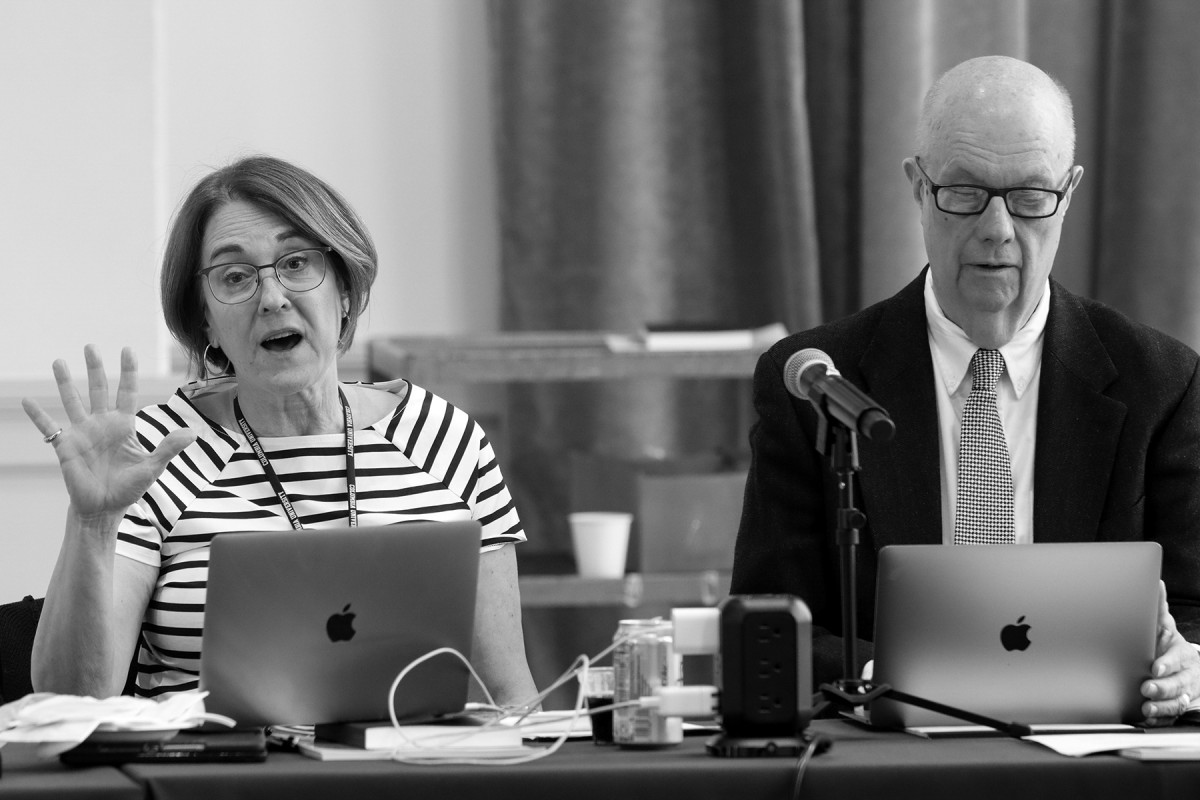
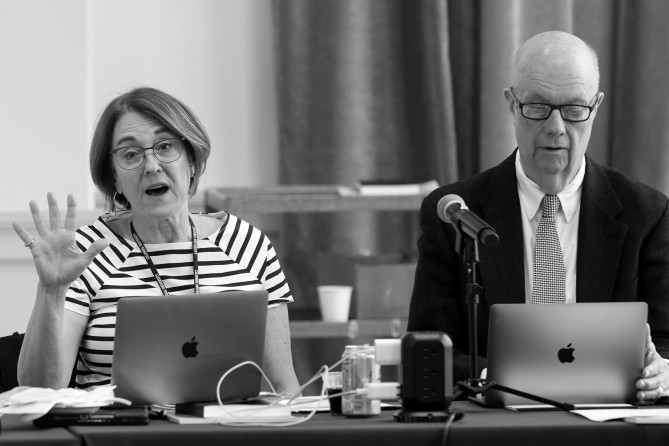
Miller (seated next to Kliment) offered a directive to the Board.
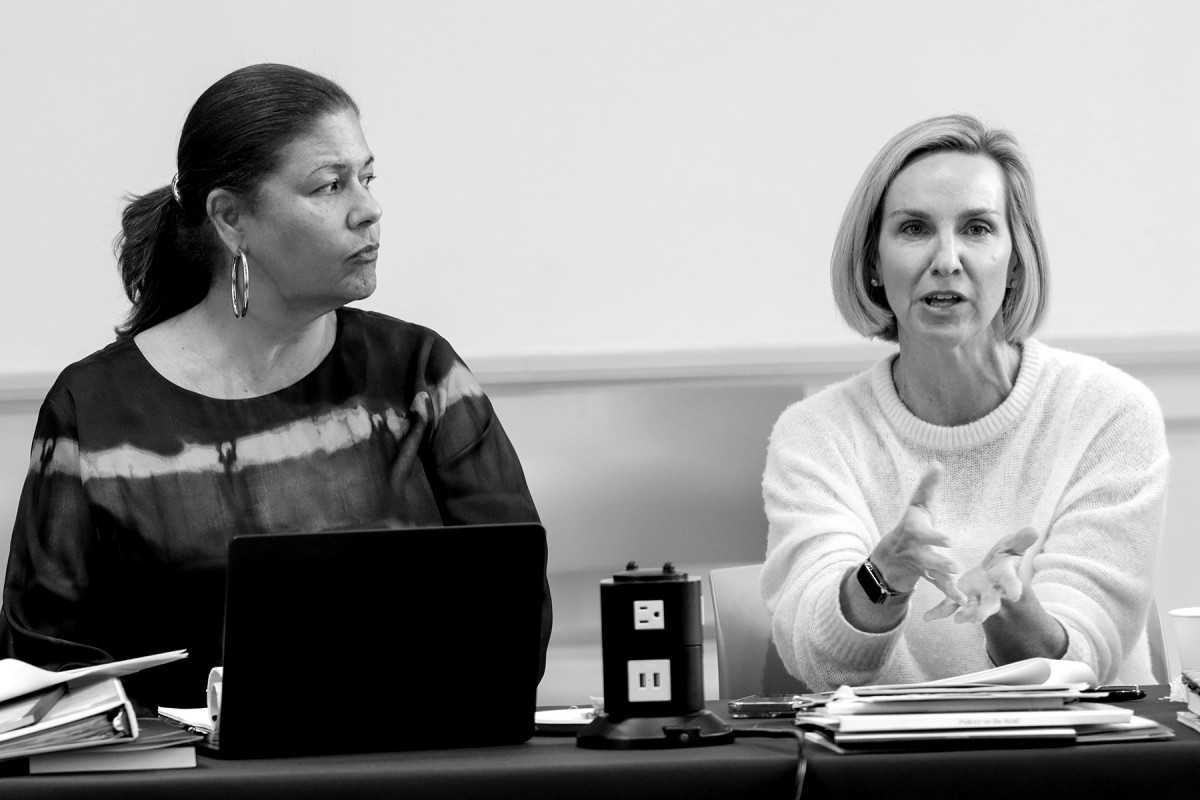
Co-Chair Elizabeth Alexander listened to remarks from fellow Co-Chair Emily Ramshaw.
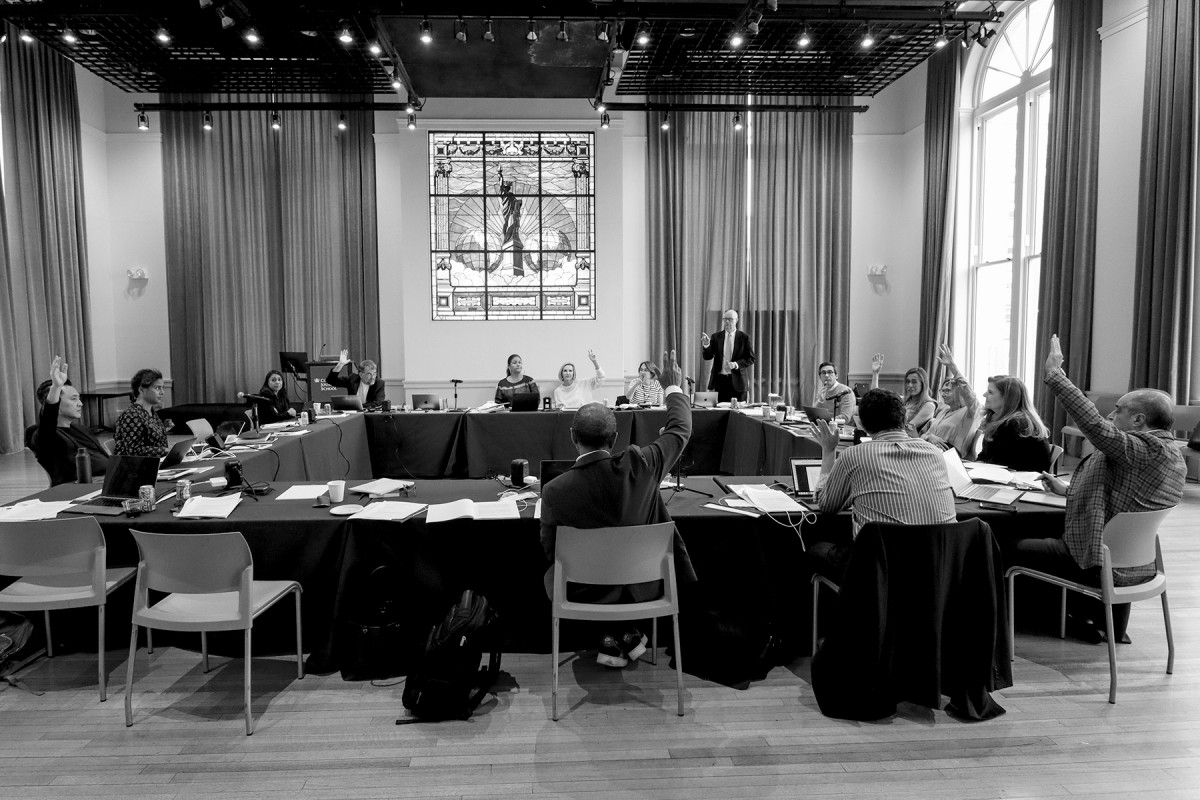
A Board vote is tabulated by Kliment as Miller and Administrative Assistant Joseph O. Legaspi (right foreground) look on.
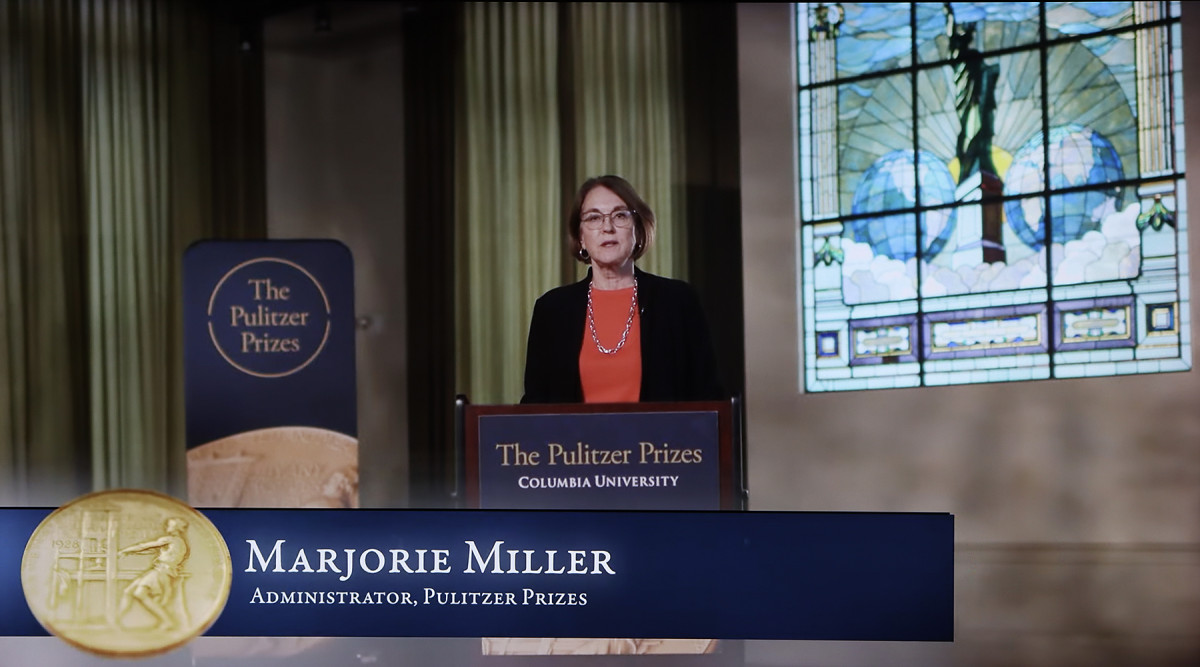
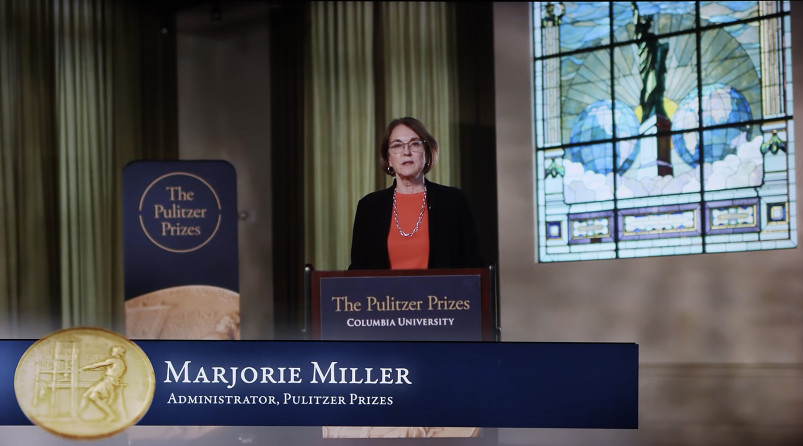
Miller offered brief remarks preceding the livestream announcement of the winners and finalists on May 5 at 3 pm Eastern time.
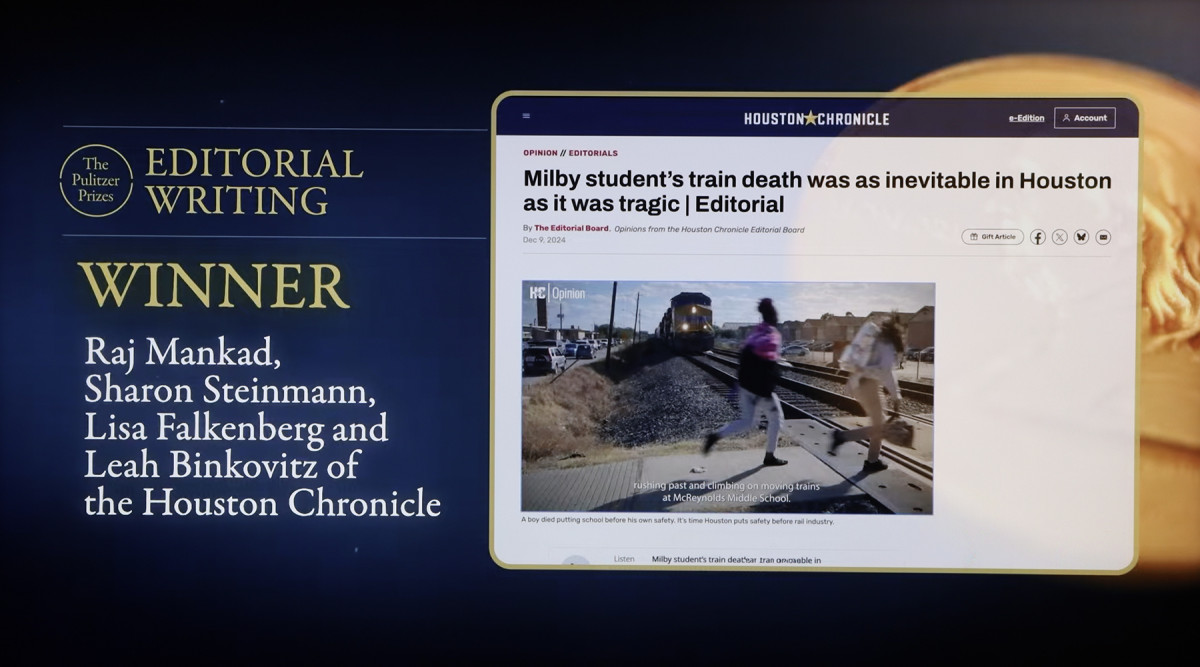
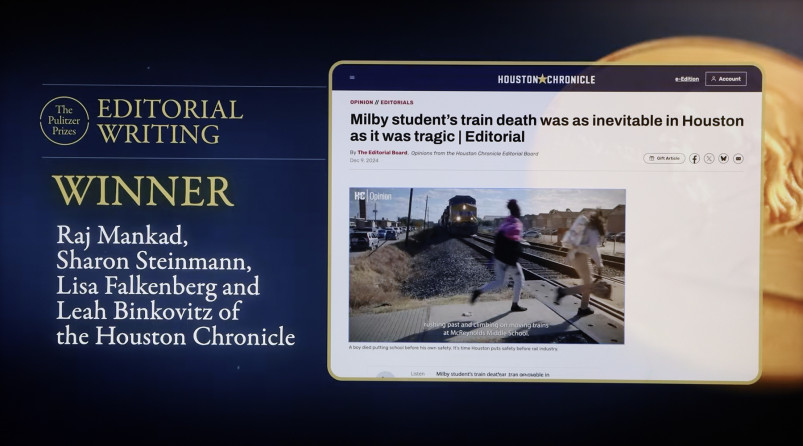
Raj Mankad, Sharon Steinmann, Lisa Falkenberg and Leah Binkovitz of the Houston Chronicle received the 2025 Editorial Writing Prize "for a powerful series on dangerous train crossings that kept a rigorous focus on the people and communities at risk as the newspaper demanded urgent action."
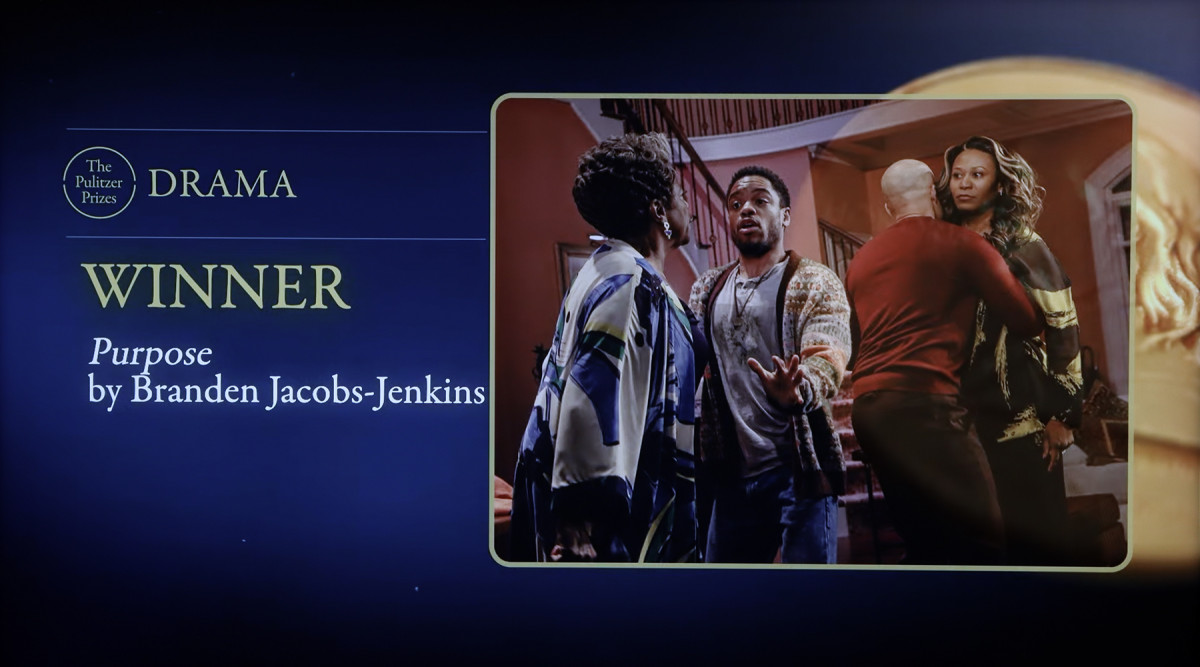
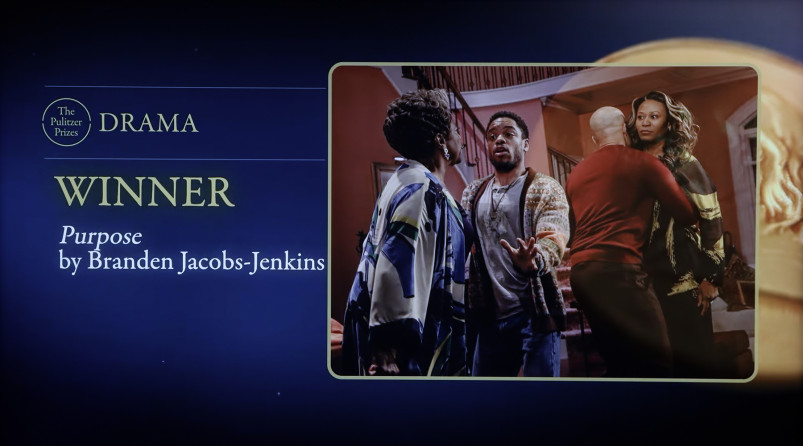
The Drama Prize was awarded to Purpose by Branden Jacobs-Jenkins, "a play about the complex dynamics and legacy of an upper middle class African-American family whose patriarch was a key figure in the Civil Rights Movement" that the Board characterized as "a skillful blend of drama and comedy that probes how different generations define heritage."