
Since their inceptions in 1917 (History and Biography) and 1962 (General Nonfiction), the three Pulitzer Prize nonfiction book categories have included a staggeringly diverse array of winning work. Some winners, such as posthumous 2012 History winner Manning Marable and 1978 Biography winner John Mack, have emerged from relatively conventional academic careers. Others, such as two-time winner Robert Caro, forged individualistic paths that synthesized approaches from various fields.
Below, find advice, insights and ruminations on the creative process from a potpourri of Pulitzer winners.
1. Robert A. Caro (Biography, 1975 and 2003)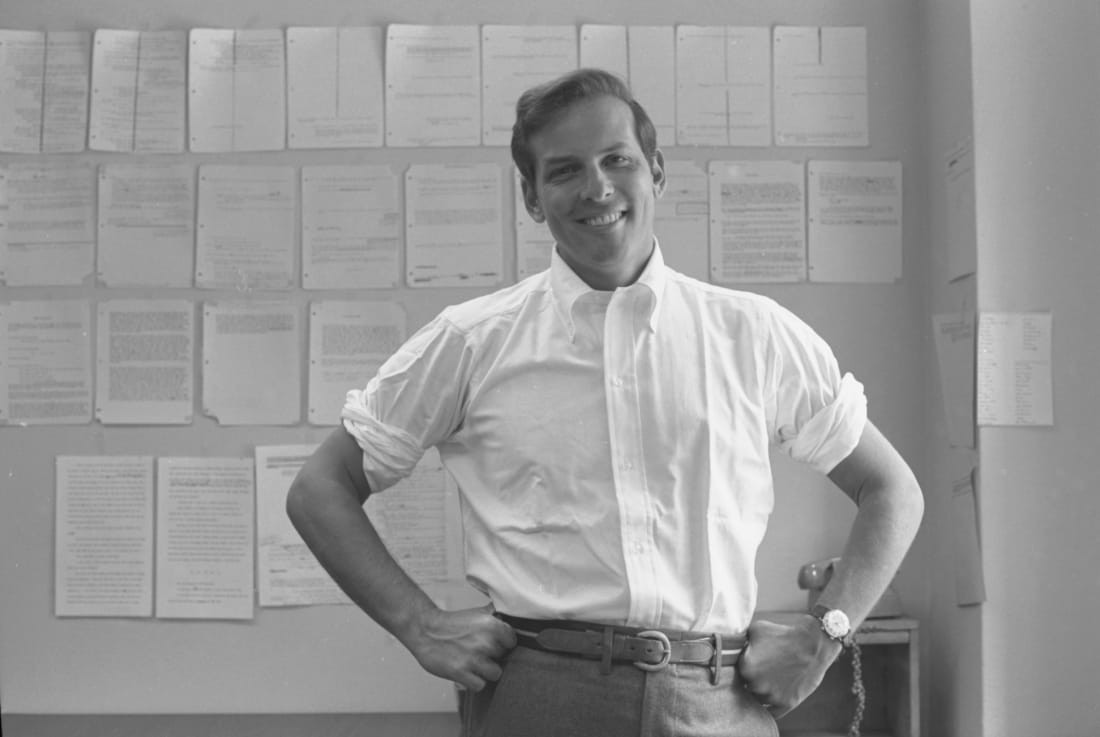
Caro as a young reporter. (Arnold Newman Properties/Getty Images)
With roots in academic literary criticism (including a brief stint as a doctoral student in English at Rutgers University) and shoe-leather journalism (culminating in six years as an investigative reporter at Newsday), few biographers have combined the two fields as seamlessly as two-time Pulitzer winner Robert Caro.
The bulk of his scholarship has centered on two subjects: New York master builder Robert Moses ("The Power Broker") and a projected five-volume life of Lyndon Johnson (including the Pulitzer-winning "Master of the Senate"). Caro has utilized impactful archival discoveries (such as the daily "tally sheets" that Johnson used for whip counts as Senate Majority Leader) and relentless reporting, exemplified by his temporary relocation to Texas to track sources for the first Johnson volume. Following months of research and pavement-pounding in 1986, he located Luis Salas, an 84-year-old political "enforcer" who offered the first on-the-record confirmation that Johnson interfered in the 1948 Democratic Senate primary, effectively initiating his ascendancy to the presidency. While data informs Caro's methodology, it has remained grounded in time-tested journalistic basics.
As Caro observed in a course during his Nieman Fellowship at Harvard, New York City's metropolitan landscape as shaped by Moses defied quantitative reduction by urban planners and environmental engineers. In the manner of "The Wizard of Oz," beneath the depredations and de facto segregation was a vision borne of Edwardian Anglophilia. It was — not just in the notable visage of the decimation of the East Tremont neighborhood of the Bronx, but the multigenerational Suffolk County farms condemned at the whim of Moses' pencil dashes for parkways and ensuing tract developments — power incarnate.
"To really show political power, you had to show the effect of power on the powerless, and show it enough that the reader could feel it," Caro reflected in 1998. The subsequent publication of Craig Steven Wilder's epochal "A Covenant With Color: Race and Social Power in Brooklyn" and Joshua Zeitz's "Building the Great Society," among many other works, attest to the enduring validity of Caro's singular approach.
2. Barbara W. Tuchman (General Nonfiction, 1963 and 1972)
A scion of the prominent Wertheim and Morgenthau families (a first cousin, Kennedy-era Southern District U.S. Attorney and longtime New York County District Attorney Robert Morgenthau, was the husband of 1971 National Reporting winner Lucinda Franks), Barbara Tuchman emerged as the preeminent popular historian of her generation, earning two Pulitzers in the General Nonfiction category for her chronicle of the first month of World War I ("The Guns of August") and an interdisciplinary work that explored the heyday and fall of Nationalist China through the complex life and career of World War II China-Burma-India theater commander Joseph Stilwell ("Stilwell and the American Experience in China"). She also served as a juror in the Biography category in the 1966 and 1971 cycles.
Despite her prodigious output, Tuchman was described as press-averse in a 1989 Washington Post retrospective, yielding to only a handful of interviews that, keeping with her disdain for professionalization, seldom addressed her research methods. However, in October 1978, she made an exception for The New Yorker's Phillip Hamburger.
The Harvard-Radcliffe graduate, who divided her time between a Park Avenue apartment and a house in Greenwich, Conn.'s Cos Cob enclave with her husband, internist Lester Tuchman, revealed that she was most productive in a heated, electrified cabin on the latter property. She primarily relied on texts borrowed from her alma mater and Yale alongside further research at the New York Public Library. For "A Distant Mirror," these resources were supplemented by extensive archival work at the Bibliotheque Nationale, the Ecole de Chartes and the Archives Nationales in France.
For Tuchman, history was anything but the province of pedantry, instead illuminating mysteries of the present. "The 20th century is certainly not the 14th," she told Hamburger, "but this is a time when the norms seem to be crumbling everywhere, where men vigorously take out their aggressions on others, and, perhaps worst of all, when there is a sense that nothing is worth doing. [...] I hope people will not see themselves in the mirror so much as find themselves."
In 2013, Sir Max Hastings offered perhaps the most cogent assessment of her unique, populist historiography: "It came as a shock [...] to hear an academic historian dismiss ["The Guns of August"] as 'hopelessly unscholarly.' It remains nonetheless a dazzling essay in narrative history, which retains the unembarrassed affection of many admirers, including myself."
3. Manning Marable (History, 2012)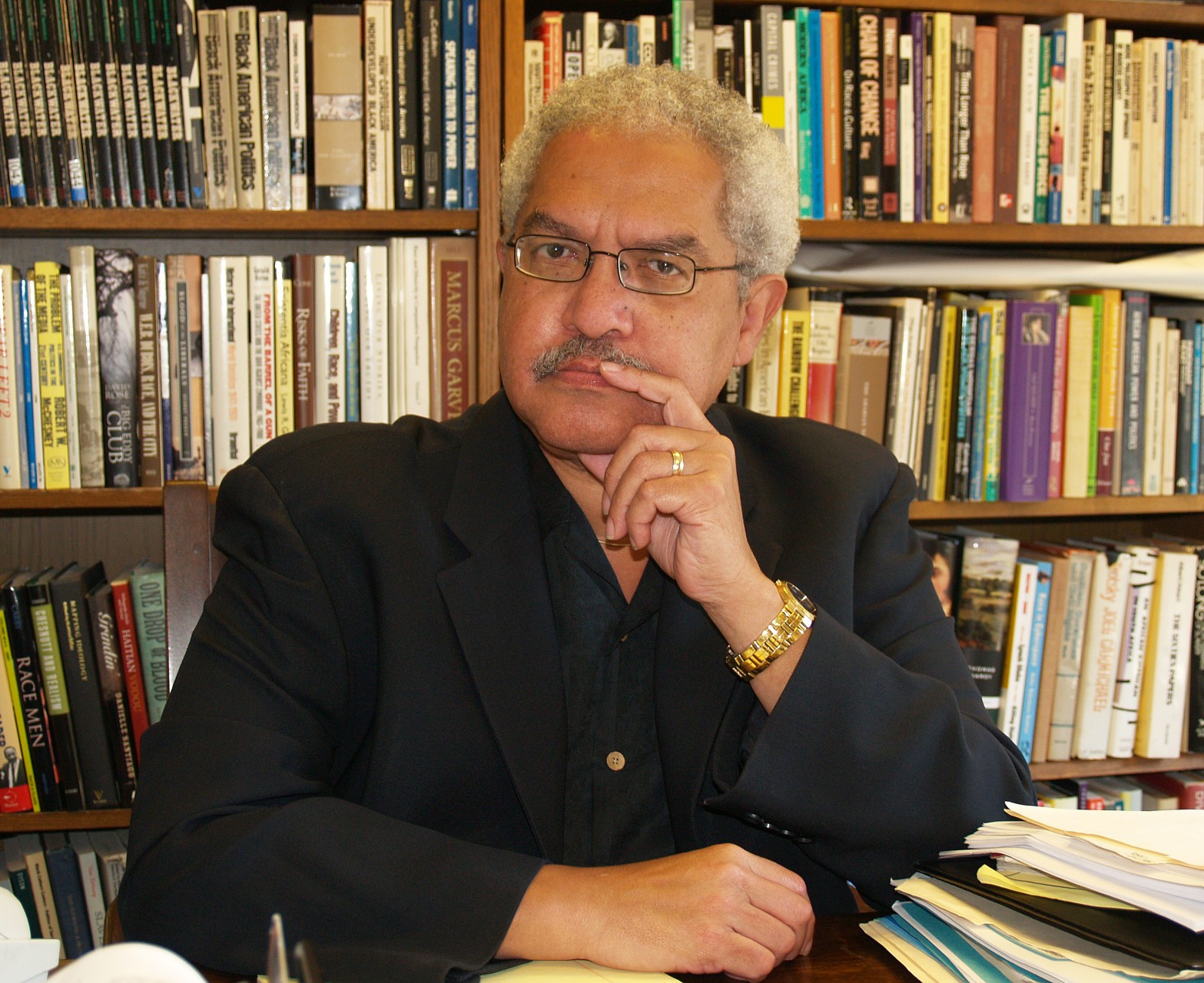
Manning Marable in his Columbia University office in 2007. (David Shankbone/Wikipedia)
Speaking to Democracy Now's Amy Goodman while completing his magnum opus on the fallen civil rights leader in 2005, posthumous 2012 History winner Manning Marable delineated many of the bureaucratic vicissitudes faced by academic researchers in the wake of completing their work.
Born into a scholarly family in Dayton, Ohio (both of his parents were graduates of nearby Central State University, and his mother, a minister, held a Ph.D.), Marable spent much of his career in ethnic studies programs after completing his doctorate in history (with a dissertation on the life of founding South African Native National Congress President John Langalibalele Dube) at the University of Maryland in 1976, culminating in his appointment as M. Moran Weston/Black Alumni Council Professor of African American Studies at Columbia.
Despite these institutional commitments, he abjured the Africana studies movement that coalesced under the likes of Cheikh Anta Diop and John Henrik Clarke before being popularized by Molefi Kete Asante in Temple University's influential Africa- American studies department, maintaining a class-oriented affinity for the writings of Marx and Gramsci and the democratic socialist movement.
This extended from his professional divagations on the subject (including the short pieces collected in "Beyond Boundaries: The Manning Marable Reader" and his first monograph, "How Capitalism Underdeveloped Black America") to practical work as an activist with the New America Movement, the Democratic Socialists of America and the Black Radical Congress. He retained a steadfast commitment to journalism in "Along the Color Line," a syndicated newspaper column that appeared in most of the nation's African-American weeklies. Sadly, Marable died of lung disease three days before the release of his winning work in 2011.
"Throughout his longtime advocacy of an activist black studies intellectual project," said Penny Von Eschen of the University of Michigan, "Marable constantly sought to bridge racial and ideological divides, as well as those between academic and nonacademic audiences, and between older and younger generations." While some of Marable's findings have continued to inspire heated debate among his readership, it could be argued that this was a pivotal and anticipated component of his praxis. "When hope of the New Jerusalem and the possibility of political liberation dies," he once wrote, "part of the spirit dies as well.”
4. Paul Horgan (History, 1955 and 1976)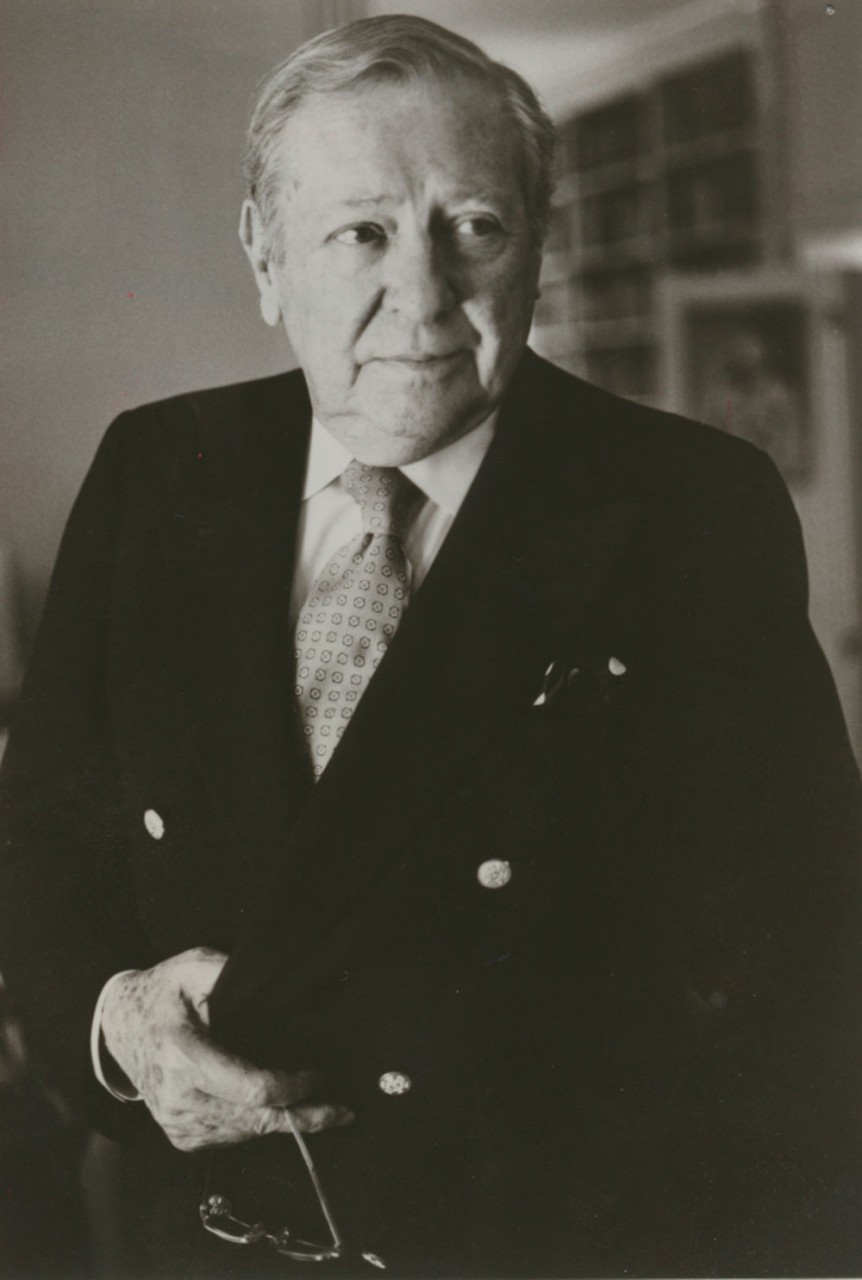
Paul Horgan, c. 1970 (Albuquerque Journal)
Two-time History Prize winner Paul Horgan shared his pupil Perry Barlow's affinity for a picaresque existence — or, as Barlow would say, "hanging out with intent."
Characterized by critic Robert Franklin Gish as a "Yankee plainsman," Horgan relocated from Buffalo to his adopted home state of New Mexico when he was 12 after his father contracted tuberculosis. In 1923, he followed eminent Russian tenor Vladmir Rosing to the University of Rochester's Eastman School of Music, where he completed a year of coursework and ultimately succeeded in convincing the singer to employ him as a set designer despite lacking any relevant experience. Their collaboration would evolve into the American Opera Company and serve as the basis for Horgan's first novel, "The Fault of Angels" (1933).
Save for a stint as the Pentagon-based head of the Army Information Branch during World War II (for which he attained the rank of lieutenant colonel and earned the Legion of Merit), Horgan devoted the balance of his career to a quartet of passions: fiction, exemplified by the prewar Mountain Standard Time and postwar Richard trilogies; a, highly personalized Catholicism reflecting what George Weigel has characterized as "a sacramental sensibility convinced that the ordinary things of this world are the vehicles of grace and the materials of a divinely scripted drama"; university teaching, most notably at Wesleyan University; and the history of the Southwest.
While Horgan's Prize-winning works differ markedly in their composition — "Great River" is a two-volume, comparative history of the Rio Grande as it was envisaged by the four civilizations that have inhabited its environs, while "Lamy of Santa Fe" is a biography of the inaugural archbishop of Santa Fe written with unprecedented cooperation (personally authorized by Pope John XXIII) from the Vatican archives — both share a commitment to what he would evoke in a 1974 essay as "the color of past splendors [...] mixed with the land by the agency of our imaginations; and we pay it tribute, as it nourishes us."
Long before the emergence of postcolonial and environmental discourse, Horgan intuited the potentially destructive impermanence of political institutions and the atavistic primacy of geological boundaries. Indeed, what was deprecated as regionalistic writing in Horgan's time — an accusation similarly levied at his contemporary, 1972 Fiction winner Wallace Stegner — has proved to be all too prescient in an era defined by such concerns as urban hypergentrification (as geographically determined in its own way as the rugged West) and U.S.-Mexico relations. Throughout his neglected oeuvre, the local is a microcosm for the world.
5. John E. Mack (Biography, 1977)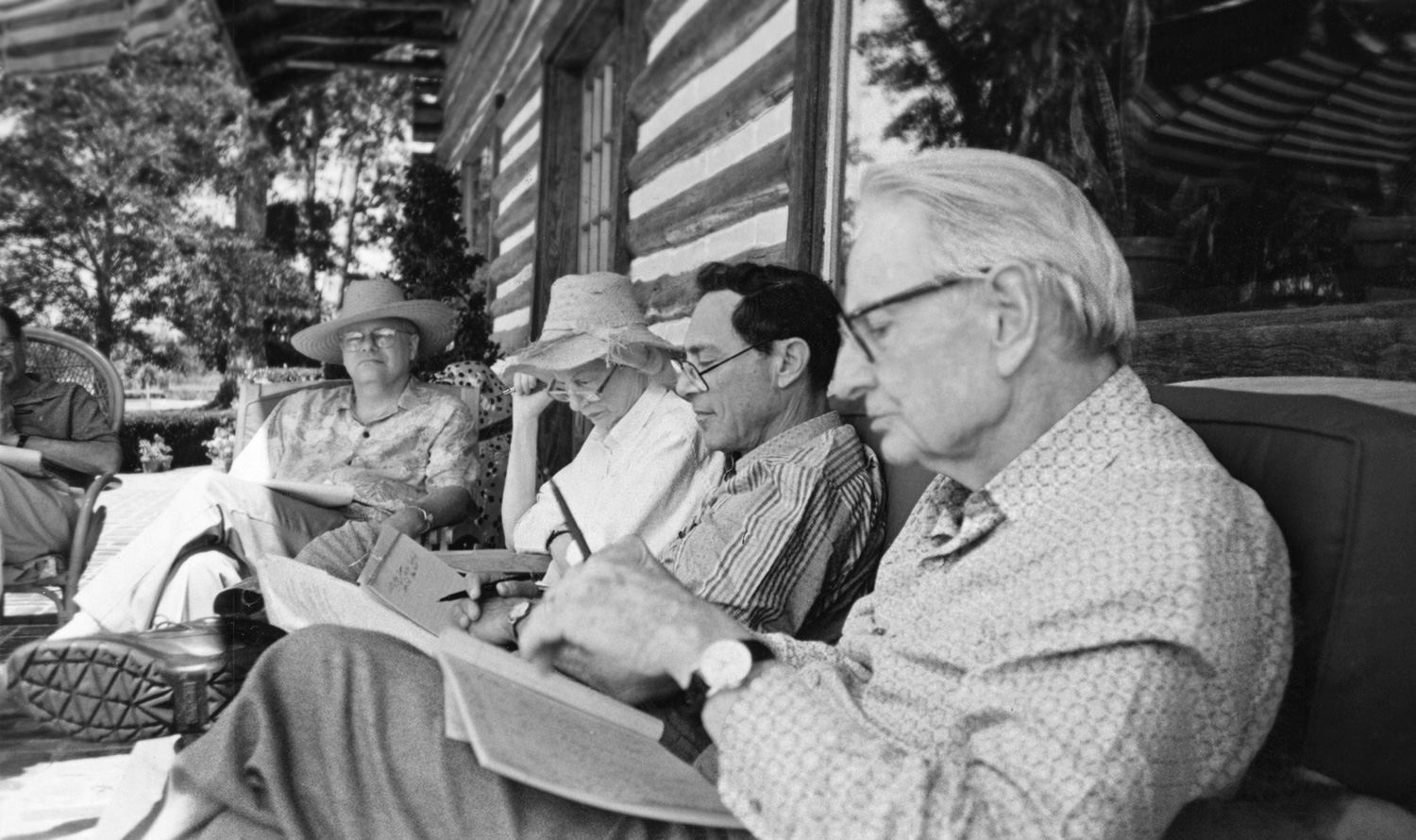
John Mack (third from left) with Laurance Rockefeller (right), Whitley Streiber (left) and Trish Pfeiffer (second from left), c. 1995. (John E. Mack Institute)
The chair of Harvard Medical School's psychiatry department for nearly 30 years, John E. Mack's 1977 Biography Prize was an improbable achievement in a long career that encompassed pioneering scholarship that bridged his discipline with psychoanalysis, an early sociocultural model of opioid addiction, prolific anti-nuclear activism — and, more controversially, research into alleged encounters with extraterrestrial phenomena that elevated his public profile while prompting a confidential review of his work by his alma mater and employer, the first of a tenured professor in Harvard's history.
It was adjudicated in his favor, in part because Mack — who consulted family friend and philosopher of science Thomas Kuhn before initiating the research program — was careful to confine his findings to subjective experiences, "[suspending] judgment" and never indulging in ontological extrapolation. He ultimately retained his position until he was killed by a drunk driver during a conference in 2004.
Documentation on the intricacies of his pre-Pulitzer literary interests is scarce. However, in a post-announcement interview with the Harvard University Gazette published on April 22, 1977, he spoke at length about the gestation of his winning work, a biography of T. E. Lawrence which was strongly influenced by the psychobiographical studies of 1970 General Nonfiction winner Erik Erikson. A largely self-trained developmental psychologist, Erikson was known for his collaborations with anthropologist Gregory Bateson, pediatrician Benjamin Spock and children's television personality Fred Rogers.
"I became hooked by Lawrence because he was extraordinary for a public figure, a military commander, in the degree to which he was involved with exploring his own inner life," he reflected. "Lawrence, himself asked what was propelling him, what was the meaning of what he was doing, what was his own purpose in getting involved with the Arab revolt, how did it relate to his own personal development. He was interested in the relationship of his adult actions to his youthful readings of chivalric romances: how they related to his concerns with the Crusade, his ideas of heroism, redemption, renunciation, self-sacrifice. He explored all of this in 'Seven Pillars of Wisdom,' and in his correspondence. He also had a great gift for psychological insight."
However, he cautioned: "I think psychiatric training and experience in working with psychological histories is helpful in terms of the necessity for interweaving the themes that occur in Lawrence’s life. [...] Psychiatric training does not help you in learning history — that you have to do on your own — but it does help you in interviewing."
Like Fawn Brodie — perhaps the era's most prominent psychobiographer, a UCLA historian known for her popular studies of Joseph Smith and Thomas Jefferson — Mack rooted his findings in an evidentiary wellspring of 12 years of research, including scores of the aforementioned interviews, work at Oxford's Bodleian Library and camel-perched visits to the site of the Battle of Aqaba.
Despite his success, Mack never returned to biography after "A Prince of Our Disorder." But the arresting verisimilitude of his later research was unquestionably shaped by his biographical expertise, initiating a popular resurgence in the controversial field (in part through inspiring the philanthropy of such well-heeled funders as Laurance Rockefeller and Robert Bigelow) after a two-decade lull.