Literature has provided solace to readers in other times of uncertainty for generations. Prominent authors, editors and journalists carefully have selected Pulitzer-winning books by female authors. As people around the world spend more time at home in solitude to fight the COVID-19 pandemic, and in celebration of the last days of Women's History Month, peruse their choices.
All the titles below provide opportunities for reflection, escape and education in timeless fashion. It's a great time to read.
Gloria Steinem, feminist and author
'The Color Purple,' by Alice Walker
'The Color Purple," by Alice Walker (Fiction, 1983)
"My favorite novel is 'The Color Purple' by Alice Walker. It would be my favorite even if there were no Pulitzer Prize. That's because it's the only novel I know that allows its characters to transform themselves, no matter how evil or trivial they may have started out, thus showing readers that we can transform, too. Also it is written in the poetry of everyday speech, and so welcomes every reader in a way that many great novels do not,
For instance, I happened to meet the translators who worked on this novel for publication in China and in Japan. Each one had used the language of their own country people, and each one said this was the first time that the poetry of ordinary speech had been used in a great novel.
As Alice Walker teaches us, if you create one true thing, it will stay true wherever it goes."
Ronan Farrow, 2018 Public Service winner
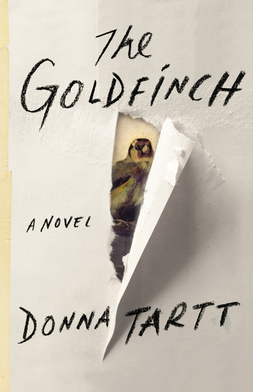
'The Goldfinch,' by Donna Tartt
"The Goldfinch," by Donna Tartt (Fiction, 2014)
"I love 'The Goldfinch' dearly. It was tutt-tutted, on release, for that most terrible sin: being a page turner. (A critic at one highbrow outlet wondered if it was art at all.) But under just about every broad, colorful description of a member of its cast, there’s a well drawn, empathetic characterization. Juxtaposed with the big twists, there are contemplative, deeply researched dives into unexpected and obscure corners of the world. (If you wanted to know more about antique furniture repair, this is the book for you.) It’s a beautiful book, her masterwork, and something that influenced my choice to do a book with her publisher."
Gail Collins, New York Times columnist and Pulitzer Prize Board member
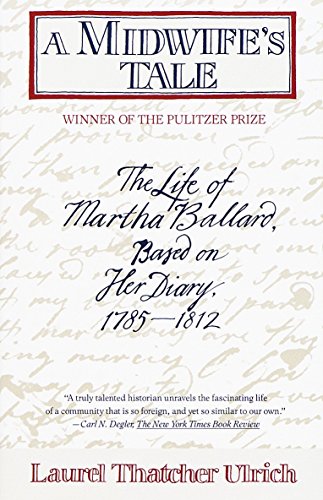
'A Midwife's Tale,' by Laurel Ulrich
"A Midwife's Tale," by Laurel Thatcher Ulrich (History, 1991)
"My current book is a history of older women in America, so I'm making a grateful bow to 'A Midwife's Tale' by Laurel Ulrich. Ulrich's stupendous expansion on the diary written by Martha Ballard, a Maine midwife, between 1785 and 1812, gave me a chance to start out with the story of a 77-year-old woman traveling alone through very cold winter nights to help her clients make it safely through childbirth. And to appreciate the enormous perils for early American women in everything from inheritance laws to housekeeping."
David Remnick, editor of The New Yorker, 1994 General Nonfiction winner and Pulitzer Prize Board member
'Beloved,' by Toni Morison
"Beloved," by Toni Morrison (Fiction, 1988)
"Toni Morrison published no 'apprentice' novels. 'The Bluest Eye' is as fine a first novel as we've ever seen in American literary history. But it may be that 'Beloved,' her phantasmagorical work on America's most painful legacy, is her most mature, her most original, her most powerful novel."
Dana Canedy, Pulitzer Prize Administrator
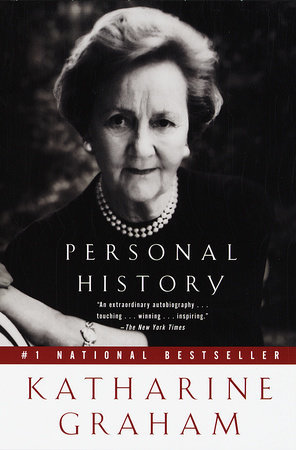
'Personal History,' by Katharine Graham
"Personal History," by Katharine Graham (Biography, 1998)
"If there had been hashtags in her day, Katharine Graham's would have surely been #GirlBoss or #PressPriestess! 'Personal History,' a biography of her extraordinary life and her unexpected ascent to publisher of The Washington Post, is a profile of the intellectual clarity and refined courage of a woman thrust to the top of the male-dominated newspaper industry during one of the most extraordinary eras in American journalism."
Nicholas Kristof, New York Times columnist, 1990 International Reporting winner and 2006 Commentary winner
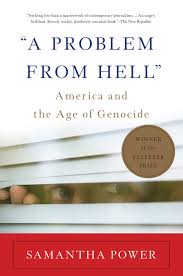
'Problem from Hell,' by Samantha Power
"Samantha Power's 'Problem from Hell' was an extraordinary book because it not only illuminated genocide but also prodded governments and the public to do something about it. This is a book that saved lives."
Tracy K. Smith, U.S. Poet Laureate and 2012 Poetry winner
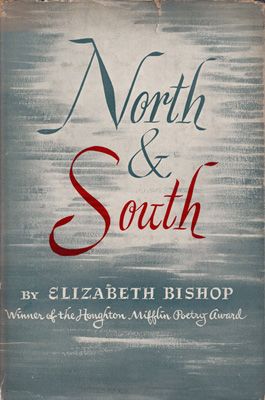
'Poems: North & South — A Cold Spring,' by Elizabeth Bishop
"Poems: North & South — A Cold Spring," by Elizabeth Bishop (Poetry, 1956)
In an interview at the Library of Congress, before she herself was appointed Poet Laureate of the United States, Smith spoke in wonder about sitting at the Library, looking across to the Capitol, just where fellow Pulitzer-winning poet Bishop wrote her poem, "View of the Capitol from The Library of Congress."
The recording is available at the Pulitzer Facebook page, here. The post is public, so no Facebook account is needed to watch the video, though if you are on the social media network, consider liking of following the Pulitzer Prizes' page for more content like this.
Jelani Cobb, 2018 Commentary finalist, Pulitzer juror and Columbia Journalism School professor
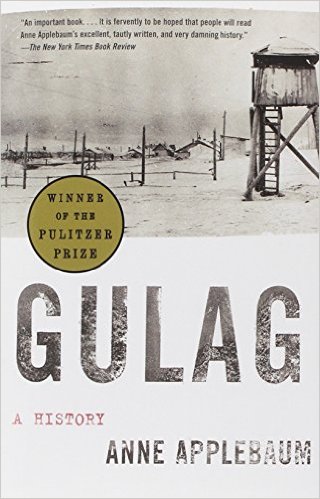
'Gulag,' by Anne Applebaum
"Gulag: A History," by Anne Applebaum (General Nonfiction, 2004)
Applebaum chronicles the history of the labor camps that proliferated following the Russian Revolution, from 1918, expanding under Stalin's rule. More than 18 million people spent time in the camps, an estimated 4.5 million of whom never returned. She examines every facet of life in the camps, for both prisoners and guards, in what the publisher rightly described as "a landmark work of historical scholarship and an indelible contribution to the complex, ongoing, necessary quest for truth."