Although the Pulitzer Prizes led the way in recognizing important works by female writers, some legacies have faded into history. As we celebrate Women's History Month, below are five books worth revisiting.
1. "What's O'Clock" by Amy Lowell (Poetry, 1925)
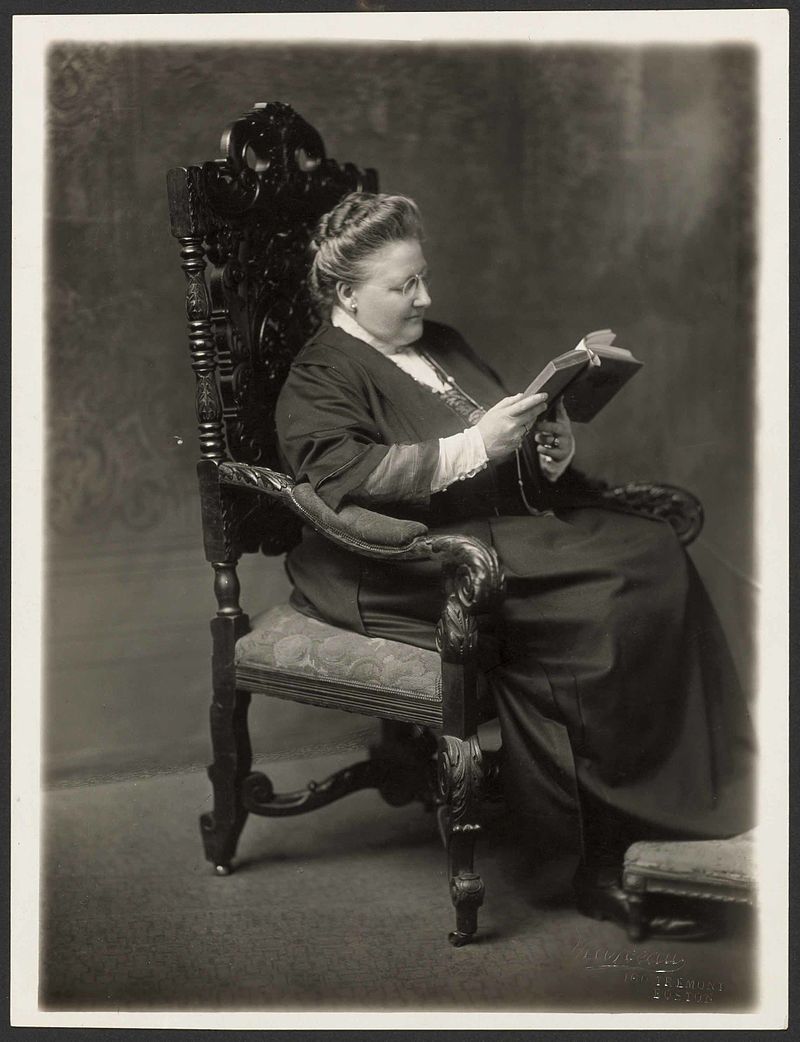
Amy Lowell's Time cover photo. (Courtesy of the Dublin School)
The first woman to receive a bona fide Poetry Prize, Amy Lowell died of a cerebral hemorrhage months before its conferral at the age of 51.
Well known in her time thanks to her media savvy (including an appearance on the cover of Time and her trademark cigars) and sold-out lecture tours, the scion of the Boston Brahmin Lowell family also helped support the work of H. D. and D. H. Lawrence financially. Lowell's reputation was eclipsed by many of her contemporaries, however, notably Ezra Pound, climaxing in Hugh Kenner's 1971 recasting of literary modernism as "The Pound Era."
In Kenner's telling, Lowell was derided as "the hippopoetess" (a slur coined by Pound or another rival, Santa Fe-based litterateur Witter Bynner), a peripheral hanger-on to the Poundian revolution. However, scholars such as Sarah Parker and Hannah Roche have argued that this peculiar turn may be ascribed to institutionalized misogyny, homophobia (Lowell lived openly with her partner, Broadway actress Ada Dwyer Russell) and fatphobia.
Unlike Pound and H. D., Lowell's poetics remained grounded in her devotion to the oeuvre of John Keats and the early modernist paradigm of Imagism, emphasizing concision, sensory experience and the primacy of spoken intonation. While her work would anticipate later currents in the Beat and Black Mountain schools, it was seldom applicable to high modernism's embrace of the epic, including Pound's "Cantos" and fellow Pulitzer winner William Carlos Williams's "Paterson."
"What's O'Clock" included two of Lowell's most enduring works. As an autodidact who was forbidden to attend college by her parents (unlike her accomplished siblings, including astronomer Percival Lowell and longtime Harvard president A. Lawrence Lowell), Lowell wrote two major poems about her intellectual home: the library. In "The Congressional Library," she characterized the institution as a paragon of "vast, confused beauty [...] Afraid of no incongruities/Sublime in its audacity."
With "The Sisters," Lowell offered a dreamscape that explores her femininity and ambivalent relationship to the male-dominated poetic tradition: "Taking us by and large, we're a queer lot/We women who write poetry. And when you think/How few of us there've been, it's queerer still." Decades after her death, "The Sisters" became a manifesto for a new generation of feminist poets.
2. "Jonathan Edwards, 1703–1758: A Biography" by Ola Elizabeth Winslow (Biography; 1941)
Ola Elizabeth Winslow earned undergraduate and master's degrees at Stanford University before completing her Ph.D. in English (with a dissertation on low comedy in medieval and Renaissance drama) from the University of Chicago in 1922 while on the faculty of Goucher College in suburban Baltimore.
Her "union card" secured, Winslow soon gravitated to the burgeoning field of American literature, editing a miscellany of early American writing for Harper (1927) and a similar collection of colonial broadside verse for Yale (1930).
Winslow's Pulitzer-winning 1940 study of Evangelical Revival theologian Jonathan Edwards was the first awarded to a female academic. It immediately established her as a leading authority on Christianity in colonial America, culminating in her appointment to Radcliffe College in 1950. In addition to editing a popular edition of Edwards's work for Signet Classics, she authored biographies of such figures as Rhode Island founder Roger Williams, Puritan preacher and writer John Bunyan and Salem witch trial judge Samuel Sewall.
Although the Revival, also known as the First Great Awakening, dramatically weakened the influence of Congregationalism in New England and greatly impacted women and African Americans, many contemporary historians (led by Jon Butler) have repudiated the once-sacrosanct view that the movement was an direct harbinger of the Revolution and the emergence of Enlightenment thought in America. Nevertheless, Edwards (best known for "Sinners in the Hands of an Angry God," a 1741 sermon) remains a canonical figure in early American literature survey courses, while Winslow's biography was largely definitive until the publication of George Marsden's Bancroft Prize-winning "Jonathan Edwards: A Life" in 2003.
3. "Paul Revere and the World He Lived In" by Esther Forbes (History; 1943)
Best remembered for her classic 1943 young adult novel "Johnny Tremain" (which shared the Revolutionary and prize-winning pedigrees of her winning work, earning the 1944 Newberry Medal), the Worcester, Mass.-based Esther Forbes enjoyed a varied career in publishing, journalism and literary fiction.
Although her postsecondary education only extended to a few courses at the University of Wisconsin, Forbes was the first woman admitted to the American Antiquarian Society; indeed, much of her oeuvre (exemplified by "Revere" and "A Mirror for Witches" [1928], a fictionalized rendering of the Salem witch trials) was characterized by a voluminous grasp of colonial history and a baroque style rooted in the era. By the time of her death in 1967, Forbes had received honorary doctorates from several institutions, including Clark University, Wellesley College and Tufts University.
4. "Collected Poems" by Marianne Moore (Poetry; 1952)
Known as much for her signature ensemble of tricorn hat and cape as for her poetry, Marianne Moore embodied the complexity and contradictions of literary modernism. Heralded by such disparate voices as Ezra Pound, T. S. Eliot, William Carlos Williams, Wallace Stevens, Elizabeth Bishop and John Ashbery, Moore's oeuvre was shaped by her difficult relationship with her mother, an English teacher who forced Moore into a codependent caregiving role after the dissolution of the elder Moore's relationship with her longtime partner, Mary Norcross, in 1910.
For the next 38 years, Moore balanced her filial responsibilities in a series of small apartments (most enduringly at 260 Cumberland Street in Brooklyn's Fort Greene neighborhood) with an evanescent literary output that, for all of what Poetry editor Harriet Monroe would celebrate as "an elliptically musical profundity," was often predicated on the editorial stewardship of her mother. But as the elder Moore's health declined, the hitherto reclusive poet became increasingly prolific, authoring three volumes in the 1940s.
Following Mary Moore's death in 1948, the swarm began in earnest. Over the next two decades, the onetime modernist's modernist, lauded by Ashbery as "our greatest modern poet," would parlay her Pulitzer and National Book Award into appearances on "The Tonight Show" and notable features in Time, Esquire and Sports Illustrated. (A Brooklyn Dodgers, then New York Yankees fan, Moore also enjoyed boxing, even authoring liner notes for a Muhammad Ali album.)
Published shortly after her return to Greenwich Village amid central Brooklyn's economic deterioration and the pitfalls of her own celebrity (Moore had become "obliterated by trespassers" after Time published her address), "Complete Poems" (1967) contained an ominous prefatory note: "Omissions are not accidents."
As early as "Selected Poems" (1935), Moore began to edit her previously published work; this process accelerated with the Pulitzer-winning "Collected" (1951) and reached a crescendo in "Complete," in which her lapidary early poems (exemplified by the drastic attenuation of "Poetry," arguably her definitive opus) were brought into stylistic congruence with the breezy effervescence of her later work.
While her whimsical public persona would endure long after her 1972 death, Moore's self-bowdlerization predictably led to the subordination of her literary profile by adherents of her male contemporaries, including Pound, Eliot and Stevens; as with Amy Lowell, her work is infrequently taught in American literature survey courses.
However, the publication of former Pulitzer juror Linda Leavell's "Holding On Upside Down: The Life and Work of Marianne Moore" (2013) has inspired a Moore revival, leading to the publication of the Heather Cass White-edited "New Collected Poems" (restoring all of the iterations of her work to print for the first time in decades) in 2017. To quote the poet: "Whatever it is, let it be without affectation."
5. "Collected Stories" by Jean Stafford (Fiction; 1970)
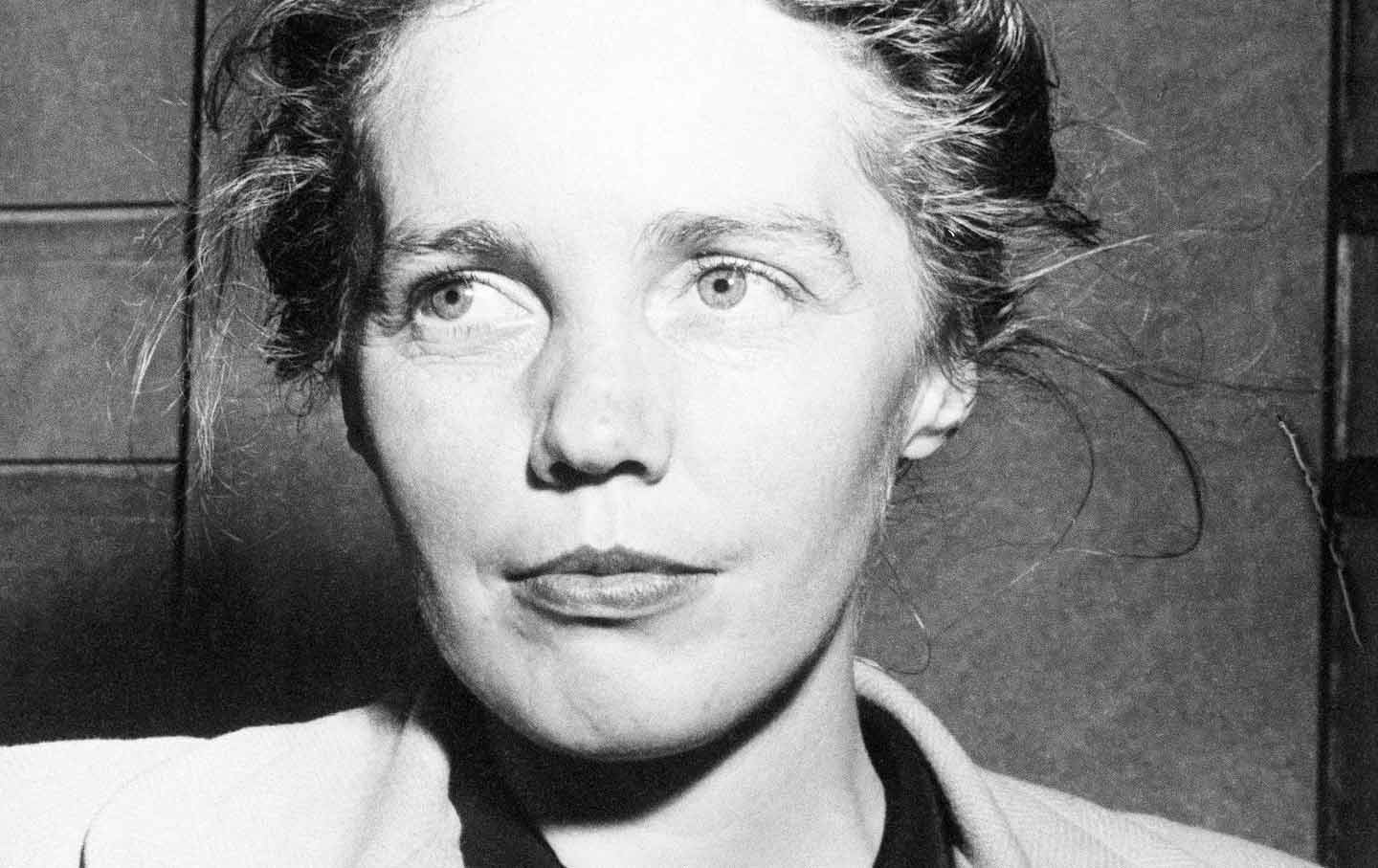
Jean Stafford in 1945. (Associated Press)
A contemporary of 1973 Fiction winner Eudora Welty and 1980 Fiction winner John Cheever, Jean Stafford succumbed to cardiac arrest and malnutrition at the age of 63 at her home in White Plains, N.Y. in 1979. Largely inactive following the death of her husband, storied New Yorker writer A. J. Liebling, in 1963, Stafford's untimely death and litany of tragedies (including her lifelong struggles with alcoholism and depression and a tumultuous first marriage to fellow Pulitzer winner Robert Lowell) came to overshadow her literary output, in which hardscrabble characters of various ages and classes struggle to cope with the vicissitudes of their daily lives, often finding refuge in a lambent, Zen-like interiority. (Appropriately, Stafford's final standalone book, "A Mother in History," was a profile of Marguerite Oswald, the mother of Lee Harvey Oswald.)
Often situated in a vaguely sketched West or New England and bereft of the immersive hooks of Welty's post-Faulknerian South or Cheever's New York commuter towns, Stafford's stories anticipated the "dirty realism" of a generation of university workshop-reared writers, most notably two-time Pulitzer finalist Raymond Carver. But while they found gallows humor in the decrepitude of their surroundings and the banality of their lives, Stafford yearned for transcendence. As she wrote in her most anthologized story, "The Interior Castle" (1946): "There was great pain, but since it could not serve her, she rejected it and she lay as if in a hammock in a pause of bitterness. She closed her eyes, shutting herself up within her treasureless head."