For distinguished musical composition by an American that has had its first performance or recording in the United States during the year, Ten thousand dollars ($10,000).

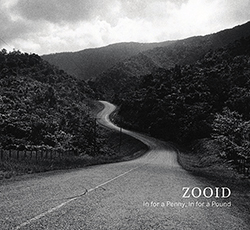
In for a Penny, In for a Pound, by Henry Threadgill (Pi Recordings)

Recording released on May 26, 2015 by Zooid, a highly original work in which notated music and improvisation mesh in a sonic tapestry that seems the very expression of modern American life (Pi Recordings).
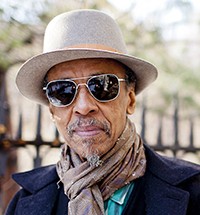
Henry Threadgill

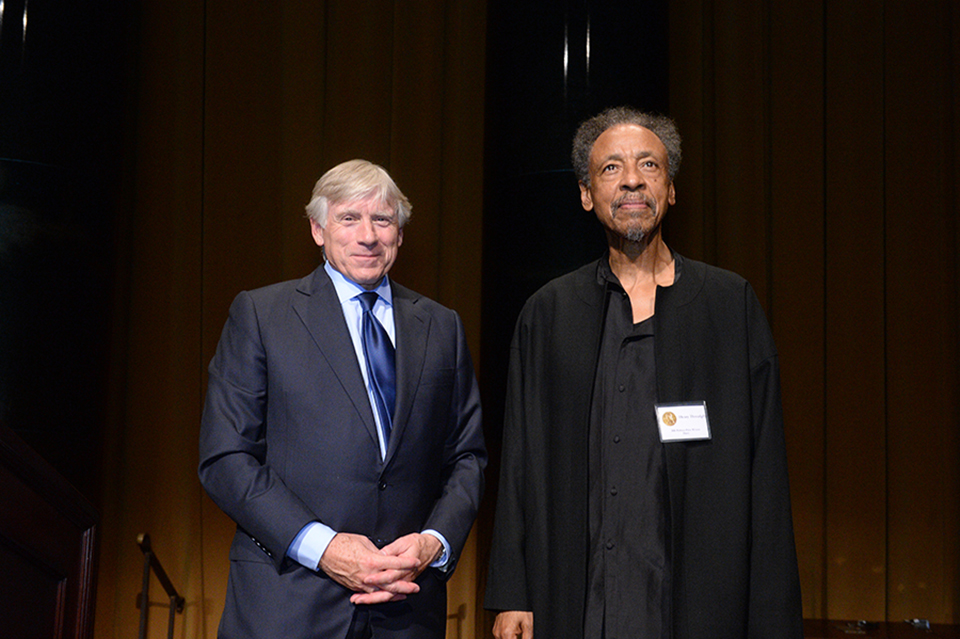
Columbia University President Lee C. Bollinger (left) presents the 2016 Music Prize to Henry Threadgill.

Winning Work

In for a Penny, In for a Pound

(Courtesy of Pi Recordings)
In for a Penny, In for a Pound is the latest installment in saxophonist/flutist/composer Henry Threadgill’s ongoing exploration of his singular system for integrating composition with group improvisation. The music for his band Zooid — Threadgill’s main music-making vehicle for the past fourteen years and the longest running band of his illustrious forty plus-year career — is no less than his attempt to completely deconstruct standard jazz form, steering the improvisatory language towards an entirely new system based on preconceived series of intervals. His compositions create a polyphonic platform that encourages each musician to improvise with an ear for counterpoint and, in the process, creating striking new harmonies.

Threadgill is widely considered to be among the most important artists in jazz. The New York Times called him “one of the most thrillingly elusive composers in and around the jazz idiom: a sly maestro of unconventional timbres, bristling counterpoint and tough but slippery rhythms,” and NPR called him “a true idiosyncratic great.” He is a founding member of the Association for the Advancement of Creative Musicians (AACM), which is celebrating the 50th anniversary of its founding this year, and he continues to adhere to one of that august organization’s basic tenets: that of finding one’s individual path through original music. He continues to create music that is pushing the boundaries for what is possible.

The new work, which Threadgill calls an “epic,” includes four main movements written specifically to feature each of the musicians in Zooid: “Ceroepic” for Elliott Kavee on drums and percussion, “Dosepic” for Christopher Hoffman on cello, “Tresepic” for Jose Davila on trombone and tuba, and “Unoepic” for Liberty Ellman on guitar. They are introduced by an opening shorter piece and sandwich an exordium (“In for a Penny, In for a Pound” and “Off The Prompt Box,” respectively.) Threadgill’s own alto saxophone, flute and bass flute is woven throughout each section. In for a Penny, In for a Pound utilizes, as with all of his music for Zooid, a strategy of Threadgill’s own device: a set of three note intervals assigned to each player that serves as the starting point for improvisation. While this may seem simple on the surface, the juxtaposition of the notes played on each instruments alternately meld and clash, creating surprising chords and harmonies on-the-spot. Not held together by any chordal preconceptions, the result is true, improvised four-part polyphony. Of this music, Liberty Ellman, who will release Radiate, his first new album as a leader since 2006’s Ophiuchus Butterfly later this year, says: “Henry is extending the forms and writing more varied thematic material. There is even more dynamic and timbral contrast with ensemble vignettes turning to sparse monologues or group improvisation on the turn of a dime.” Zooid is certainly the only group able to perform these compositions since they involve a wholly different way of engaging in group improvisation. Thoroughly attuned with each other, the band continues to provide Threadgill with the foundation to expand on his ever evolving musical inspirations.

In all the discussion about the complex terrain of his compositions, it is sometimes easy to lose sight of Threadgill’s power as a player. In his review of Zooid’s performance at the Village Vanguard in 2014 — the first time Threadgill had played at that iconic venue as a leader in almost 25 years — critic Ben Ratliff of the New York Times, who chose it as one of his top ten top concerts of the year, wrote: “The intensifying strokes… were his alto saxophone solos. They were built of epigrammatic phrases, aligned with the moving intervals but pivoting off from them. They were out in front, gestural, actorly, elegant, noisy and tragic. Dealt in short segments, their essence could be absorbed piece by piece, as if he were feeding you with crumbs. They’d often end without traditional resolution, but with a sense of something serious hanging in the air.” A great Threadgill solo sets you on edge: you know that it’s going to be a jab, an uppercut or a body blow, but you never know how or when it’s going to hit you. It’s the same way with his compositions on In for a Penny, In for a Pound: it comes at you from every angle, at different speeds, in infinite combinations. That’s the beauty of Threadgill’s music for Zooid: that sense of constant surprise.
Biography

For over forty years, Henry Threadgill has been celebrated as one of the most forward-thinking composers and multi-instrumentalists in American music. The New York Times has called him “perhaps the most important jazz composer of his generation.” Born in 1944 in Chicago, Threadgill was an early member of the Association for the Advancement of Creative Musicians (AACM). He studied at the American Conservatory of Music in Chicago where he majored in composition along with piano and flute. Threadgill is a recipient of the Guggenheim Fellowship, an Aaron Copland Award in 2009, and named a United States Artists Fellow in 2008. Down Beat Magazine’s International Jazz Critics Poll has distinguished him with its Best Composer Awards in 1988, 1989, 1990, 1991 and 1995 and The Jazz Journalists Association honored him with its Composer of the Year Award in 2002. His orchestral pieces Run Silent, Run Deep, Run Loud, Run High (1987, conducted by Hale Smith) and Mix for Orchestra (1993, conducted by Dennis Russell Davies) received their premieres at the Brooklyn Academy of Music. He has also received commissions from Mordine & Co. Dance Theater (1971, 1989), Carnegie Hall for his Quintets for Strings and Woodwinds (1983, 1985), the New York Shakespeare Festival (1985), Bang On A Can All-Stars (1995), Miller Theatre at Columbia University (2003), Talujon Percussion Ensemble (2008), Junge Philharmonic Salzburg Orchestra for Fly Fliegen Volar, which premiered at the Saalfelden Jazz Festival (2007), the Biennale di Venezia (2004), Roulette (2009), and American Composers Orchestra (2011). He has been composer in residence at UC Berkeley and Atlantic Center of the Arts. Threadgill has led numerous groups, including Air, the Sextett, Very Very Circus, the twenty-piece Society Situation Dance Band, Make a Move, and his current group, Zooid. He has released thirty critically acclaimed albums as a leader with various record labels including Arista Novus, Axiom, Black Saint, Sony/Columbia and Pi Recordings.

In 2015, Threadgill was celebrated with a two-day festival at Harlem Stage in New York City, where works stretching his entire career were performed and reinterpreted by an all-star collection of musicians. He also released In for a Penny, In for a Pound, which the New York Times called “Brilliant…. Henry Threadgill, who at 71 is still a blazingly original composer, bandleader, alto saxophonist and flutist, favors prickly elegance and structural rigor, along with endless mutability.”

Finalists

Nominated as finalists in Music in 2016:

Carter Pann

Recording released on September 8, 2015 by Capitol Quartet, a suite that imagines its four saxophonists as mechanics engaged in a rhythmic interplay of precision and messiness that is by turns bubbly, pulsing, dreamy and nostalgic (Blue Griffin).

Timo Andres

A three-movement piece inspired by Beethoven that takes listeners on a beautiful quest in which they rise and fall with the music's ascending and descending scales.

The Jury

Julia Wolfe(Chair)*

Composer; Artistic Director, Bang on a Can; Associate Professor of Music Composition

William Banfield

recording artist and composer; professor of liberal arts

Scott Cantrell

classical music critic

Regina Carter

jazz violinist

Pamela Tatge

director, Center for the Arts

Winners in Music

Julia Wolfe

A powerful oratorio for chorus and sextet evoking Pennsylvania coal-mining life around the turn of the 20th Century.

John Luther Adams

A haunting orchestral work that suggests a relentless tidal surge, evoking thoughts of melting polar ice and rising sea levels.

Caroline Shaw

A highly polished and inventive a cappella work uniquely embracing speech, whispers, sighs, murmurs, wordless melodies and novel vocal effects (New Amsterdam Records).

Kevin Puts

A stirring opera that recounts the true story of a spontaneous cease-fire among Scottish, French and Germans during World War I, displaying versatility of style and cutting straight to the heart. Libretto by Mark Campbell (Aperto Press).

2016 Prize Winners

William Finnegan

A finely crafted memoir of a youthful obsession that has propelled the author through a distinguished writing career.

T.J. Stiles

A rich and surprising new telling of the journey of the iconic American soldier whose death turns out not to have been the main point of his life. (Moved by the Board from the Biography category.)

Peter Balakian

Poems that bear witness to the old losses and tragedies that undergird a global age of danger and uncertainty.

Viet Thanh Nguyen

A layered immigrant tale told in the wry, confessional voice of a "man of two minds" -- and two countries, Vietnam and the United States.